During the pandemic, Lauren Bauer’s second grader attended a learning pod, a small group of students organized by parents outside of school. The group also included kindergartners.
Bauer noticed that the older students in the pod seemed to struggle with the disruptions more than the younger ones.
Parents had higher expectations of the older students, Bauer says. Kindergartners could just play all day without severe long-term consequences, but the older students were supposed to be learning material that would set them up for the rest of their lives, she adds.
Now, more than a half-decade out from the pandemic, she’s still thinking about that. And students are still struggling. National assessments have returned historic declines in performance in math and English for K-12 students.
Advertisement
But it would be a mistake to think that the pandemic affected all students in the same way.
Bauer, who’s a fellow at the Brookings Institution, a Washington, D.C.-based think tank, believes that there’s a perception that the pandemic was worse for younger students. She’s never fully shaken what she saw in the pod, and now she says she has evidence to back the feeling up. That’s because a recent report from The Hamilton Project at Brookings found that the older a student was when the pandemic hit, the bigger the performance decline following the pandemic closures.
So students who were in fourth grade when the pandemic hit — and likely enrolled in ninth grade this school year — fared worse than students who were in kindergarten back then and now in fourth grade.
Evidence of Absence
Recovery rates from the pandemic have varied.
Advertisement
While some districts have more or less returned to normal, many schools are still recovering from the learning gaps created by the pandemic, researchers note on calls with EdSurge. Worse, the federal recovery dollars have elapsed, leaving schools with fewer resources.
Nationally, it’s not going well. The most recent results from NAEP, known as the “nation’s report card” — delivered with delays amid recent government staff cuts that impact analysis of education data — returned falling scores in reading and math. Those drops were substantial across student groups, revealing a rise in inequality with low-performing students in “free fall,” though experts note these downtrends predate the pandemic. This seemed to confirm previous results from NAEP also showing historic declines in student performance, which some worry will have long-term career impacts.
The latest report from Brookings looked at students who were in kindergarten through seventh grade during the 2019-2020 school year, tracking their learning trajectories since then. Researchers collected proficiency rates from state agencies with an eye toward following groups of students across time, says Eileen Powell, senior research assistant at The Hamilton Project. They ran “counterfactuals” to figure out exactly how much the pandemic had hurt these students.
It exposed declines in both English and math, reinforcing what other assessments have shown, the researchers report. Math revealed deep declines and large gaps when compared to the prepandemic trend, which the researchers speculate could be due to the complexity of the subject matter and the way it builds upon previous concepts.
Advertisement
The report was accompanied by an interactive dataset, showing how the pandemic impacted “learning trajectories” for students, which the researchers say they will continue to update.
Bauer thinks her research suggests it’s important not to focus too much on the youngest students when trying to boost learning postpandemic, she says. Older students, such as those currently in middle school and high school, really need support as well, she notes.
It may also show that changing assessments hasn’t affected declining scores.
Across the country, states are exploring how to update their assessments, trying to get more precise data to help with academic recovery in the wake of the health crisis. At least 13 states are exploring whether to swap traditional standardized tests with testing that occurs throughout the year, according to the think tank Center for American Progress. Some states — for instance, Florida, Texas and Montana — have already embraced this approach. Advocates argue that these tests provide a more measured, accurate barometer of learning, since they don’t rely on a single test result.
Advertisement
But assessment changes can be controversial.
Several states have even come in for criticism for lowering proficiency rates for students in their postpandemic assessments. For instance, Oklahoma, Alaska and Wisconsin have been accused of altering assessment standards in a way that makes it difficult to discern how students are recovering.
The Brookings report accounted for states that have altered their assessments, the researchers say. They found that COVID-19 is swamping any attempts by states to artificially boost proficiency rates, Bauer says. In other words, states may be accused of gaming or cheating these tests, but even if they are, it’s not working: “Learning loss is so substantial that even making the tests easier is not doing what it used to.”
Apple’s iPhone is a product that the world, including potential buyers, critics, and competitors, watches obsessively. Over the years, the Cupertino giant has repeatedly shown up every September, with the best iteration of their smartphone technology, spread across multiple Pro and non-Pro models. However, the iPhone 18 series could change that tradition.
This year could be the first time the company splits its massive September event into two, focusing on different categories of the upcoming iPhones. The premium ones, including the Pro models and the purported Apple foldable, could arrive this fall, while the more affordable models could arrive in spring 2027. That’s why it’s all the more important to know about the purported iPhone 18 series this year, so that you can plan your upgrade (and prepare your wallet) well in advance.
iPhone 18 series: Latest news
Nirave Gondhia / Digital Trends
Apple’s iPhone is one of those evergreen product lineups that attracts rumors and reports year-round. It doesn’t matter whether the iPhone 17 has just dropped or we’re almost half a year away from the expected iPhone 18 series launch time; the news just keeps coming in from all directions.
The iPhone 18 Pro lineup is rumored to feature a 24MP selfie camera, which could further improve selfies. The regular iPhone 18 might stick with its 18MP Center Stage camera, at least for this product cycle.
While the Chinese version of the iPhone 18 Pro Max could feature a 5,000 mAh battery, the version sold in other markets could have a capacity of 5,100-5,200 mAh. This could result in a significant improvement in battery life, especially when combined with the more power-efficient A20 Pro chip.
The split strategy was initially reported by The Information in May 2025, and later, Bloomberg’s Mark Gurmancorroborated it, stating that it will help the company spread its engineering and marketing efforts across its calendar year, from fall to spring.
Price seems to be a sensitive topic this year, not just for the upcoming iPhone 18 series, but for every other smartphone in 2026. The ongoing memory crisis and rising component costs have compelled manufacturers to either raise prices or upsell buyers to higher-memory or storage variants at higher prices.
Expected Release
Starting Price
iPhone 18 Pro
September 2026
~$1,099
iPhone 18 Pro Max
September 2026
~$1,199
iPhone Fold (or Ultra)
September – December 2026
~$2,000 or more
Apple, however, might be in a slightly better position than other manufacturers, as per renowned analyst Ming-Chi Kuo. In January 2026, Kuo claimed that the company could leverage its position to lock in long-term deals with memory suppliers, potentially helping it absorb the higher cost, and, in the process, securing a higher market share as other brands hike prices.
Nirave Gondhia / Digital Trends
The successor to the thinnest iPhone ever, the iPhone Air, could also break cover at the same time. Whether this would be through a live-streamed event, a pre-recorded presentation, or simply via a press release is something we’re yet to find out.
Expected Release
Starting Price
iPhone 18
March 2027
~$799
iPhone 18e
March 2027
~$599
iPhone Air 2
March 2027
~$999
Please keep in mind that the prices mentioned here are mere speculations, and Apple hasn’t confirmed them (yet).
Design and display
Nirave Gondhia / Digital Trends
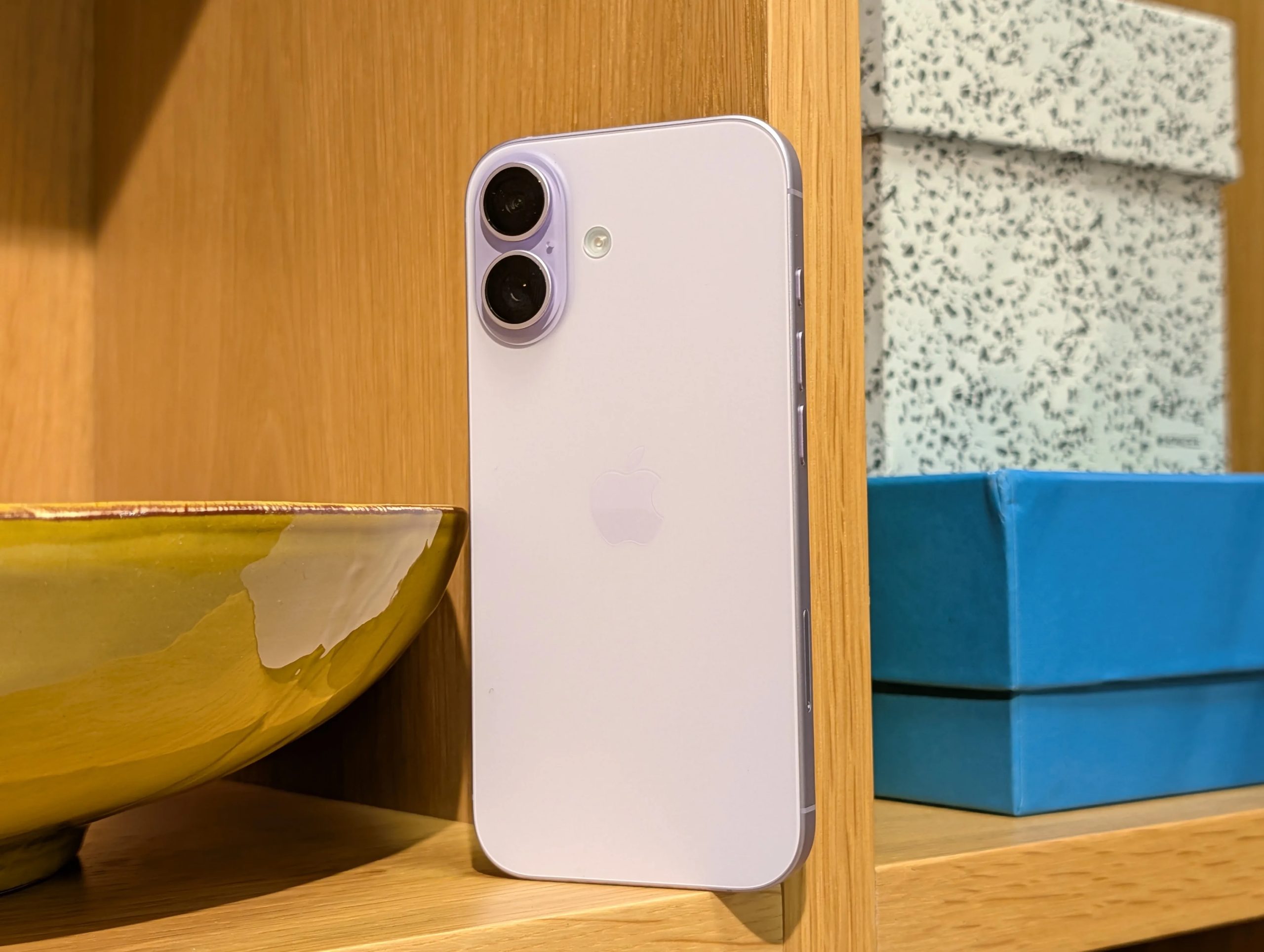
According to the most recent rumor from Fixed Focus Digital (via Weibo), the baseline iPhone 18 could look and feel the same as its predecessor, the iPhone 17. In other words, we could get the same glass-and-aluminum sandwich design with flat edges, rounded corners, the pill-shaped camera module, and a minimal yet premium visual appeal.
The overall dimensions and weight of the handset might remain unchanged, barring any minor modifications. While the handset could still feature a 6.27-inch LTPO OLED screen with a 120Hz refresh rate, perhaps with improvements to peak brightness and always-on efficiency.
Advertisement
Nirave Gondhia / Digital Trends
It might have a smaller Dynamic Island, though newer leaks dispute this, suggesting that a smaller cutout on the screen could be reserved for the Pro models in the iPhone 18 series. The bezels are already quite slim on the baseline iPhone 17, and they might not get any slimmer on the successor.
The iPhone 18 Pro models could also borrow their aluminum unibody (with the camera plateau) and glass (at the rear) chassis from the iPhone 17 Pro models. What could change, however, is the color difference between the metal body and the back glass, in favor of a more seamless look.
MacRumors / MacRumors
In fact, Apple could also double down on more vibrant, fun colors with the iPhone 18 Pro (as the Cosmic Orange finish did quite well). Some leaks claimed Apple might ditch the Dynamic Island entirely and adopt an under-display Face ID module, resulting in punch-hole screens. But for now, a smaller Dynamic Island makes much more sense, given Apple’s slow-paced physical innovation cycle. It would also help with product segmentation.
Beyond that, the handsets will most certainly retain their current dimensions and weight, with minute changes always on the table (perhaps for a bigger battery). The iPhone 18 Pro could sport the same 6.3-inch OLED screen, and the iPhone 18 Pro Max could have the 6.9-inch OLED screen, both capable of a 120Hz ProMotion display, with subtle refinements in the screen-to-body ratio and the anti-reflecting coating.
Performance and software
Apple iPhone 17 Pro models shipped with the A19 Pro (3nm) chipApple
Apart from improvements in raw performance and efficiency, the purported mobile processors from Apple could be based on a new WMCM (Wafer-level Multi-Chip Module) design, as claimed by renowned analyst Ming-Chi Kuo and corroborated by a few other industry sources.
Report: TSMC’s WMCM and SoIC Dual Support Ensures Apple’s Presence in Advanced Packaging
Advanced packaging continues to be a hot topic, and the industry is closely watching not only NVIDIA’s large orders with TSMC, but also Apple’s entry into the fray, with clear plans for…
The design allows the integration of several key components, including the CPU, GPU, and DRAM, into the same package, resulting in enhanced system performance and reduced material costs. Apple could also use the same tech for the upcoming M6 chip, which could break cover on a MacBook Pro later this year.
Even though the current A19 chips are extremely fast, the A20 family could deliver double-digit improvements in both CPU and GPU performance, making it ideal for a future iteration of the MacBook Neo. We’re also expecting better sustained performance from the A20 chips.
@yeux1122 / Naver
The baseline iPhone 18 could get a memory boost to 12GB (up from 8GB), while the iPhone 18 Pro could retain its 12GB memory, but perhaps with faster bandwidth for improved performance. Storage options should remain the same as on the current iPhone 17 lineup. The Pro models could also get better satellite connectivity, perhaps even 5G-via-satellite.
The iPhone 18 series should debut with iOS 27 out of the box, which is expected to rely heavily on AI-driven improvements and under-the-hood refinements rather than any big visual changes (it is also referred to as the “Snow Leopard” update).
Among other major additions could include Health+, an AI-powered health-tracing platform with features like food logging, personal coaching, and an AI-based doctor or consultant. We could also get an improved, AI-integrated Spotlight search experience, better multitasking optimization (especially on the big-screen iPhone Fold), an improved Shortcuts app, and a Liquid Glass slider for tweaking transparency.
Chinese tipster Digital Chat Station claims that the iPhone 18 Pro models could feature a DSLR-like variable aperture for the 48MP primary camera, alongside larger fixed apertures for the ultrawide and telephoto sensors. Simply put, users could get more control over the background blur and overall light in the frame (via the primary camera) and better low-light performance (via other sensors).
Halide
A leak from Instant Digital suggests a slight weight increase for the iPhone 18 Pro Max, possibly to accommodate a larger battery than the current model. In fact, the rumor was corroborated by Digital Chat Station, which stated that the non-Chinese version of the handset could feature a battery with a capacity between 5,100 and 5,200 mAh, a substantial improvement in the battery life.
Claude Cowork is moving beyond early testing and into a wider role at work. On April 9, Anthropic said it became generally available on all paid plans for macOS and Windows, alongside a set of enterprise features meant to support larger rollouts.
That pairing matters more than the availability update by itself. Anthropic is tying the release to role-based access controls for Enterprise, group spend limits, usage analytics, expanded OpenTelemetry support, and tighter connector permissions, all aimed at making Cowork easier to manage across an organization.
Anthropic also made clear that Cowork is no longer being framed as a tool mainly for technical teams. It said most usage already comes from operations, marketing, finance, and legal, which helps explain why this release leans so heavily on governance and monitoring.
Why the oversight tools matter
The most important change is the management layer. Enterprise admins can now set access by provider, model, and feature, while group spending limits give companies a way to control usage across departments instead of leaving budgets to individual employees.
Anthropic is also widening the reporting view. Its dashboard metrics and Analytics API can track sessions, active users, connector activity, and adoption by team, while broader OpenTelemetry support is designed to feed Claude usage into existing monitoring systems.
Where Cowork fits at work
Anthropic’s larger message is about where Cowork fits inside a business. It said most use already comes from non-engineering groups handling project updates, research, and internal collaboration, not just code-focused work.
Anthropic
That shifts the product’s identity in a meaningful way. Cowork is being positioned less as a specialist assistant and more as a shared layer for everyday work that can draw from connectors, internal information, and team-specific workflows.
What happens next
The next test is whether companies treat Cowork as a standard workplace tool or keep it in a narrower lane. General availability gives Anthropic a stronger opening, but broader adoption will depend on whether admins see enough structure around access, costs, and integrations to support daily use.
For companies evaluating the launch, the real question is practical. If Cowork can help multiple departments while staying measurable and manageable for the people running the system, it has a stronger chance of becoming part of regular business operations rather than stalling at the pilot stage.
Welcome to our latest roundup of what’s going on in the indie game space. As always, we’re here to tell you about a bunch of new games you can play this weekend, as well as several upcoming titles.
We also got a release window for Neverway, a life sim with gorgeously creepy pixel art. The prologue is available to play now on Steam, and it doesn’t take long at all before things become delightfully strange. I’ll run through a few of the other Triple-i highlights below.
Before we get to the new releases, though, I want to touch on something I spotted a little too late to include in last week’s roundup. On Reddit, the developer of mixed reality game CoasterMania shared a video showcasing an update that lets players use their hands to build and interact with rollercoasters. I think this looks just swell. This is the most I’ve ever been interested in picking up a Meta Quest headset (which I’d inevitably use for a grand total of about 45 minutes).
Advertisement
New releases
I don’t like to overwork my brain when I’m playing games. I’m focused all day at work and afterwards, I just want to switch off for a bit. That’s a big reason why I play a ton of Overwatch and don’t really gel too well with most puzzle games. Minos, though, hits the sweet spot of brain engagement for me.
In this roguelite from Artificer and publisher Devolver Digital, your aim is to stop glory-seeking adventurers from finding and killing a minotaur. You’ll shape a labyrinth as you see fit in order to defend the beast from these warriors. You can set up the maze by building and knocking down walls, and setting traps. The adventurers will follow a set path to the minotaur’s lair, then make a beeline for the monster when they discover it’s hiding elsewhere.
There are a lot of ways to dispose of the interlopers and you’ll need to be thoughtful about how to set everything up to take out each wave of attackers. Many traps can only be placed on certain spots, so it’s important to work around those. You’ll need to adjust your setup after every wave — you’ll gain more traps and have to re-arrange them to fend off different types of enemies.
Minos is more active than a lot of tower defense and strategy games I’ve played, as the minotaur can reset certain traps after they trigger and, if need be, try to kill the adventurers head-on. I found myself spending quite a bit of time thinking through each enemy’s path through my domain and how I was going to eliminate them. Sometimes, I miscalculated and brought my run to an end. Being able to improve the minotaur’s stats and unlock new powers between runs helped me keep coming back for more.
Advertisement
I’m really enjoying Minos, and I wouldn’t be surprised if this ends up being one of my favorite games of the year. You can snap it up on Steam now for $18. A demo is available too.
Spring has finally bloomed in my neck of the woods. I planned to spend a chunk of my weekend outside after a long winter. But now I might need to bring my Steam Deck with me, because the first DLC for CloverPit, one of my favorite games of last year, suddenly arrived during the Triple-i Initiative showcase.
CloverPit is a Balatro-style incremental roguelite from Panik Arcade and publisher Future Friends Games. It tasks you with breaking the rules of a slot machine to meet increasingly high coin targets in order to pay off a debt. You can pick up charms that modify the machine, and the Unholy Fusion DLC is all about those totems. You’ll be able to use a new device called the Surgery Machine to fuse charms into more powerful items (à la Ball x Pit). It seems like that will free up valuable space for more charms too.
The DLC adds 30 fusion charms, 11 new base charms, a secret ending and other features. I’ve played CloverPit for dozens of hours (I’m far from the only one, as the game’s pulled in more than 5 million players). I suspect I’m about to sink a whole lot more time into this DLC.
Advertisement
The Unholy Fusion DLC usually costs $3, but there’s a 10 percent discount on Steam until April 23. The base game is typically $10, though you can get 30 percent off on Steam until the same date. You’ll save an extra five percent if you buy a bundle with both. CloverPit is also on Game Pass, and you can buy a bundle of the base game and DLC on Xbox Series X/S, Xbox One and Xbox on PC for $11.49. On iOS and Android, you can snag CloverPit for $5 and the DLC for $2.
Another title had a surprise, sudden release during the Triple-i Initiative showcase: battle royale typing game Final Sentence. I really enjoyed the demo for this one, even though I’m not the fastest or most accurate typist around — I made four typos in this sentence alone. Make too many mistakes or fail to beat everyone else who’s bashing away at a typewriter and it’s curtains for you, courtesy of a creepy figure with a revolver that’s standing by your desk.
Final Sentence, from Button Mash and Polden Publishing, is available on Steam. It’ll typically cost $10, but if you pick it up before April 23, you’ll save 10 percent. (Sidenote: I enjoyed a Steam review that read, “finally… a way for millennials to beat Gen Z at a battle royale game.)
One of the most interesting things about People of Note is that Iridium Studios tried to make this musical adventure as approachable as possible. It’s an RPG with turn-based battles, but you can skip the fights if you like. That’s appealing to someone like me, who enjoys story-driven games but often struggles to engage with turn-based combat. Puzzles are skippable too. Great! People should be able to play non-competitive games however they want.
Advertisement
I dug the demo when I played it a while back. The approach to battles here is interesting, as the protagonist, pop singer Cadence, recruits other musicians to join her band — in other words, your party. The combat is based around music, and you can create mashups of battle tracks based on the genres that your collaborators specialize in.
People of Note, from publisher Annapurna Interactive, will normally run you $25, though there’s a 10 percent launch discount. It’s available on PS5 (the discount on that platform is only for PlayStation Plus subscribers), Xbox Series X/S, Xbox on PC,Nintendo Switch 2, Steam and the Epic Games Store.
Tamashika is a fast-paced first-person shooter with a neat twist. The game only has one level available at any time. There are no checkpoints, and it’ll take about 10 minutes to complete a successful run. The level gets a procedurally generated revamp once per day.
A tantō blade, a pistol, your movement and your aim are the only weapons you have to defeat the enemies and reach the goal. I had to watch the trailer a few times to get it, but the quirky hand-drawn aesthetic is growing on me.
Advertisement
Tamashika — from QuickTequila and publisher Edglrd — is available on Steam, PS5, Xbox Series X/S and Switch for $20.
A Hidden Object Fest is running on Steam until April 13, and a few new games have debuted as part of that. One of those is Nippets by Blink Industries. It’s a hand-drawn game with lots of secrets and, at least judging by the trailer, charming animations. It seems like a very relaxing counterpoint to some of the more intense games out this week. It’s pretty digestible too, as it has around two to three hours of gameplay, depending on how sharp your observation skills are.
Nippets is available on Steam and Itch for PC and Mac. It costs $13, though there’s a 10 percent discount on Steam until April 21. A demo is available on both storefronts too.
Upcoming
Dead As Disco has some momentum after 1.2 million players checked out the demo, and this rhythm-based beat ’em up now has an early access release date. It’s coming to Steam and the Epic Games Store on May 5.
Advertisement
At the jump, you’ll be able to play the first arc of a larger narrative and be able to take out bad guys to the beat of a soundtrack that has more than 30 songs, including original tracks, covers and licensed tunes. You can load in your own music as well, though I can’t imagine being able to adeptly play this to the rhythm of Angine de Poitrine’s wild time signature swings.
Brain Jar Games expects the game to remain in early access for around a year as it adds new bosses, moves and other features, and makes adjustments based on player feedback. A co-op mode is planned too. You can get a taste of Dead As Disco now by checking out the Steam demo, though I would argue that disco is still very much alive.
Those looking for a puzzle game of a Lovecraftian persuasion may be interested in Call of the Elder Gods, a sequel to 2020’s Call of the Sea. The follow-up is bound for Steam, PS5, Xbox Series X/S and Switch 2 on May 12. It’ll be available on Game Pass and it’s priced at $25 on the eShop.
You seemingly won’t need to have played Call of the Sea before diving into the sequel, though you’ll surely get more out of Call of the Elder Gods if you have. You’ll switch between two characters — professor Harry Everhart and student Evangeline Drayton — to solve puzzles from a first-person perspective and try to find out what happened to the pair’s missing loved ones.
Advertisement
I’d seen Long Gone at another showcase some time ago, but the name of it slipped from my memory. No such issues after it made an appearance in the Triple-i Initiative stream though, as this project from Hillfort Games and co-publisher Outersloth is now firmly on my Steam wishlist.
It’s a narrative-driven game set amid a zombie outbreak in which you’ll solve environmental puzzles to learn about the lives of people who are no longer around. It’s ostensibly a point-and-click adventure that looks very heavily inspired by a certain post-apocalyptic series from Naughty Dog, right down to the backpack-wearing protagonist. There are platforming sections too.
I’m absolutely going to be interested in any game that smooshes together The Last of Us and the Monkey Island series. I’m really looking forward to playing Long Gone sometime next year.
Spring has certainly sprung here at Engadget. Well, it has in terms of reviews, at least. We’ve put over a dozen devices through their paces since my last roundup, which gives you a lot to catch up on over the weekend. Read on for the rundown of all the reviews you might’ve missed.
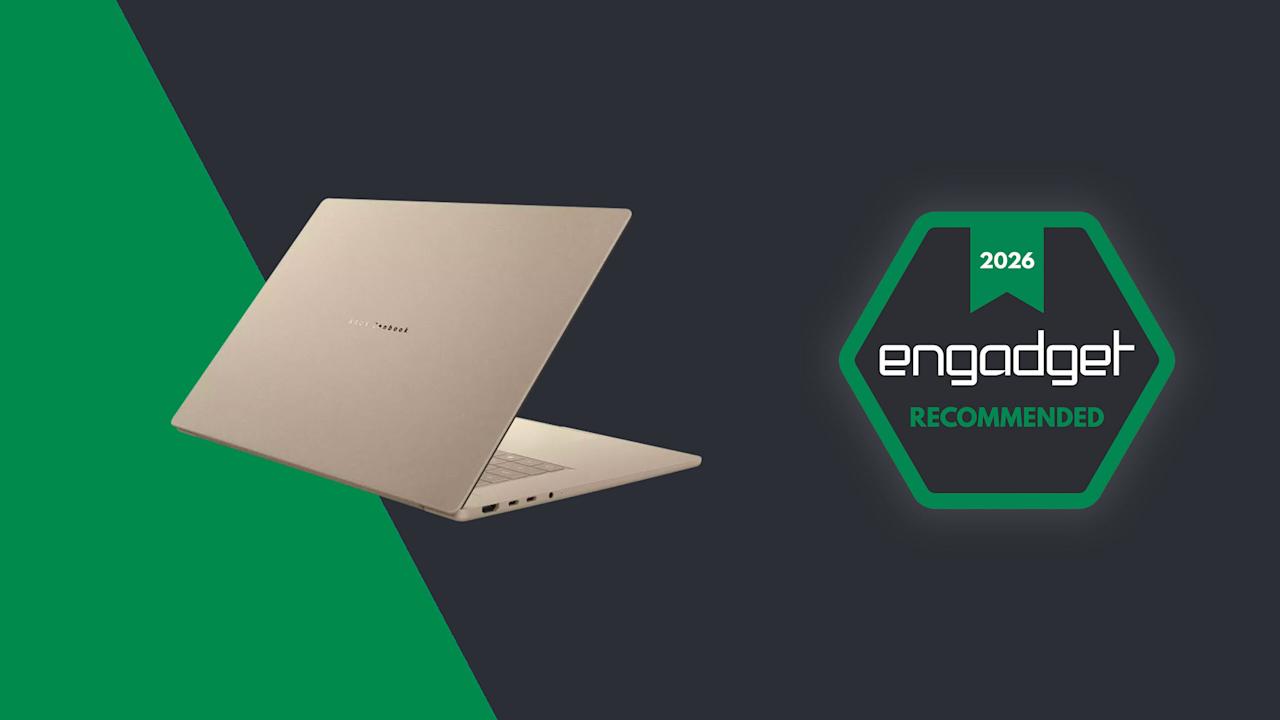
ASUS ZenBook A16
ASUS
The Zenbook A16 is the lightest 16-inch ultraportable we’ve seen yet, and it’s surprisingly capable thanks to Qualcomm’s Snapdragon X2 chips.
Pros
Advertisement
Surprisingly light
Polished design
Excellent OLED screen
Tons of ports
Big performance leap over X1 chips
Cons
Potential Arm incompatibilities
Doesn’t support all PC games
ASUS’ ZenBook A14 didn’t live up to our expectations last year, but now the company is back with a 16-inch machine and a shot at redemption: the A16. “Compatibility issues aside, the ZenBook A16 delivers just about everything I want in an ultraportable,” senior reporter Devindra Hardawar said. “It’s got a gorgeous OLED screen and all of the ports you need. Qualcomm’s Snapdragon X2 Elite chips also give it a much-needed power boost. And best of all, it’s one of the lightest and sleekest 16-inch Windows laptops I’ve come across.”
Apple AirPods Max 2
Apple/Engadget
The H2 chip delivers a host of new features, but it’s time for a comprehensive redesign on these pricey headphones.
Pros
Comfortable
Excellent sound quality
Lots of new features
Cons
Same design, again
Expensive
Only one hearing health feature
Until this year, Apple’s only updates to the AirPods Max were new colors and a USB-C port. The company finally gave its pricey over-ear headphones the powerful H2 chip, delivering a host of handy features from the AirPods Pro. “The H2 chip brings Apple’s over-ear headphones on par with the rest of the AirPods lineup, namely the AirPods Pro 3,” I said. “And since I don’t expect Apple to announce new earbuds this year, that parity should remain for a while.”
Sonos Play
Sonos / Engadget
Advertisement
The Play sounds great, has a wide and versatile feature set and won’t break the bank. It’s a welcome return to form for Sonos.
Pros
Compact design
Great sound quality for its size
Features like line-in and Bluetooth grouping make it extremely versatile
Long battery life
Cons
Doesn’t come with a power adapter
More colors would be welcome
Sonos badly needed a win. Thankfully, the company regained some of its mojo with a new portable speaker that offers the best of Bluetooth and Wi-Fi in the same device. “The latest Sonos speaker offers impressive sound quality, flexibility and portability, and it’s the kind of product that can help Sonos rebuild its reputation after its recent difficulties,” deputy editor Nathan Ingraham said.
LG Sound Suite
LG/Engadget
LG’s latest home theater system offers immersive sound and lots of options. It’s expensive though, and the marquee feature isn’t always easy to use.
Advertisement
Pros
Detailed and expansive home theater audio
Dolby FlexConnect is genuinely useful
Great for music
Easy to use as individual speakers
Cons
Expensive
Frustrating setup and connectivity
Each item is sold separately
Some configurations require LG TVs
After an impressive CES debut, LG’s Sound Suite was my most anticipated review of the year. Despite impressive sound quality and Dolby Atmos FlexConnect, there are still some kinks to work out in both the setup and general use. “There’s no denying that LG has created a powerful and immersive living room experience with its Sound Suite lineup,” I said. “While I did experience some setup and software issues, those are things LG can iron out over time — Sound Suite is still brand new, after all.”
DJI Avata 360, Fender Audio, Nebula X1 Pro and more
Senior reporter Sam Rutherford really took one for the team and spent some time with the Robosen Soundwave Transformers robot. Lastly, Steve took flight with the DJI Avata 360 drone, which is a direct answer to Insta360’s Antigravity A1.
Looking for the most recent Mini Crossword answer? Click here for today’s Mini Crossword hints, as well as our daily answers and hints for The New York Times Wordle, Strands, Connections and Connections: Sports Edition puzzles.
Need some help with today’s Mini Crossword? I found 4-Across to be a stumper for a little while, and I even grew up on a farm! Read on for all the answers. And if you could use some hints and guidance for daily solving, check out our Mini Crossword tips.
If you’re looking for today’s Wordle, Connections, Connections: Sports Edition and Strands answers, you can visit CNET’s NYT puzzle hints page.
It is an old trope in submarine movies. A sonar operator strains to hear things in the ocean but dares not “ping” for fear of giving away the boat’s location. Radar has a similar problem. If you want to find an airplane, for example, you typically send a signal out and wait for it to bounce off the airplane. The downside is that the airplane now knows exactly where your antenna is and, these days, may be carrying missiles to home in on it. In a recent post, [Jehan] explains how radar, like sonar, can be passive.
Even if you aren’t worried about a radar-homing missile taking out your antenna, passive radar has other advantages. You don’t need an expensive transmitter or antenna, a simple SDR can pull it off. You don’t need a license for the frequencies you want to use, either. You are just listening.
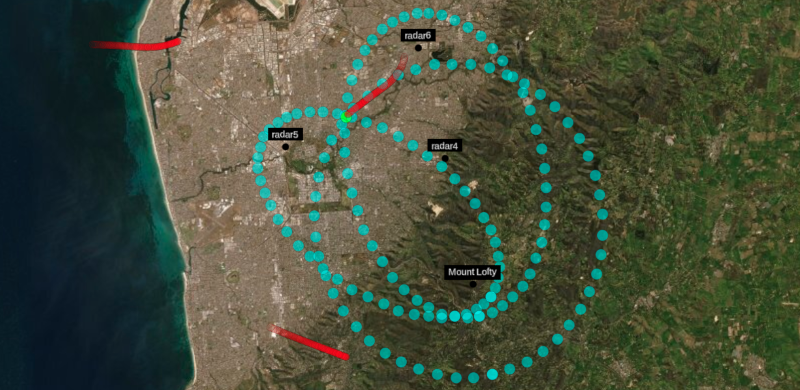
The key is that radar uses two different effects. One is how long it takes for the echo to return. The other is how much the Doppler effect shifts the frequency. Suppose you are using an FM radio station as a passive radar “exciter.” You can pick up the signal directly and also detect the same signal bouncing off the target. You can compare these two and determine the delay added by the reflection and the Doppler shift.
This does have one limitation. In a regular radar installation, you know that a certain signal delay means the target is somewhere on a circle a fixed distance from your antenna. With passive radar, you wind up with an ellipse instead of a circle. You can’t “scan” a passive signal like you do an active one, either.
Advertisement
But all is not lost. Similar to stellar navigation, you just need to get multiple ellipses by using different broadcast stations. With two stations, you’ll probably narrow the position down to two points where the ellipses intersect. Three different fixes are often enough to get a particular point.
Lego-style propaganda videos alleging war crimes are flooding online feeds, echoing the White House’s own turn toward cryptic teaser clips and meme-native visuals. This is not just content drift. It is a new front in the information war, one where speed, ambiguity, and algorithmic reach matter as much as accuracy.
One Iran-linked outlet, Explosive News, can reportedly turn around a two-minute synthetic Lego segment in about 24 hours. The speed is the point. Synthetic media does not need to hold up forever; it only needs to travel before verification catches up.
Last month, the White House added to that confusion when it posted two vague “launching soon” videos, then removed them after online investigators and open source researchers began dissecting them.
The reveal turned out to be anticlimactic: a promotional push for the official White House app. But the episode demonstrated how thoroughly official communication has absorbed the aesthetics of leaks, virality, and platform-native intrigue. Even when official accounts adopt the aesthetics of a leak, questioning whether a record is real or synthetic is the only defensive move left.
Advertisement
Real vs. Synthetic: The New Friction
A zero digital footprint used to signal authenticity. Now, it can signal the opposite. The absence of a trail no longer means something is original—it may mean it was never captured by a lens at all. The signal has inverted. Truth lags; engagement leads.
Open source investigators are still holding the line, but they are fighting a volume war. The rise of hyperactive “super sharers,” often backed by paid verification, adds a layer of false authority that traditional open source intelligence (OSINT) now has to navigate.
“We’re perpetually catching up to someone pressing repost without a second thought,” says Maryam Ishani, an OSINT journalist covering the conflict. “The algorithm prioritizes that reflex, and our information is always going to be one step behind.”
Advertisement
At the same time, the surge of war-monitoring accounts is beginning to interfere with reporting itself. Manisha Ganguly, visual forensics lead at The Guardian and an OSINT specialist investigating war crimes, points to the false certainty created by the flood of aggregated content on Telegram and X.
“Open source verification starts to create false certainty when it stops being a method of inquiry—through confirmation bias, or when OSINT is used to cosmetically validate official accounts or knowingly misapplied to align with ideological narratives rather than interrogate them,” Ganguly says.
While this plays out, the verification toolkit itself is becoming harder to access. On April 4, Planet Labs—one of the most relied-upon commercial satellite providers for conflict journalism—announced it would indefinitely withhold imagery of Iran and the broader Middle East conflict zone, retroactive to March 9, following a request from the US government.
The response from US defense secretary Pete Hegseth to concerns about the delay was unambiguous: “Open source is not the place to determine what did or did not happen.”
Advertisement
That shift matters. When access to primary visual evidence is restricted, the ability to independently verify events narrows. And in that narrowing gap, something else expands: Generative AI doesn’t just fill the silence—it competes to define what’s seen in the first place.
Generative AI Is Getting Harder to Spot
Generative AI platforms have been learning from their mistakes. Henk van Ess, an investigative trainer and verification specialist, says many of the classic tells—incorrect finger counts, garbled protest signs, distorted text—have largely been fixed in the latest generation of models. Tools like Imagen 3, Midjourney, and Dall·E have improved in prompt understanding, photorealism, and text-in-image rendering.
But the harder problem is what van Ess calls the hybrid.
J.D. Power has been running a tire customer satisfaction study annually since 1989, assessing two primary tire-related issues: How loyal new-car owners are to the brands of tires fitted to their cars as standard equipment and how satisfied these owners are with those tires. This study is just one of the many automotive studies the company conducts, with its 2026 U.S. Vehicle Dependability Survey naming the least dependable car brand for 2026.
J.D. Power’s U.S. Original Equipment Tire Customer Satisfaction Study breaks down tires into four different categories by vehicle type. These categories include tires for luxury cars, passenger cars, performance sports cars, and truck/utility vehicles. In J.D. Power’s 2026 U.S. Original Equipment Tire Customer Satisfaction Study, the least-satisfying customer satisfaction score for luxury tires went to Hankook tires, with a score of 756 points out of a possible 1,000. For reference, the top-scoring luxury tire brand was Michelin, which just overtook Goodyear with 833 points, followed by Goodyear with 829. Pirelli came in third with 804, Continental had 801, and Bridgestone scored 791. Except for Michelin and Goodyear, all of the other luxury car tire brands scored below the 806-point average for the luxury segment.
Hankook tires were also included in two other categories, namely passenger car and truck/utility. In the passenger car category, Hankook tires finished in eighth place among 11 tire brands, scoring a below-average score. It finished in last place in the truck/utility category among 10 other tire brands.
Advertisement
How does JD Power score tire brands for this study?
The JD Power U.S. Original Equipment Tire Customer Satisfaction Study starts out with information gathered from vehicle owners in the above-mentioned categories. For the 2026 study, these 38,244 respondents owned vehicles spanning model years 2023 to 2025. This info was compiled from January 2025 to December 2025 and broken down into each category. The J.D. Power tire study checks in on new-car owners twice, after one year and then two years of ownership.
Advertisement
J.D. Power’s tire study also found that differences in overall satisfaction between different powertrains — internal combustion, plug-in hybrid, and battery electric vehicles — were the smallest since the 2023 edition of the study. The 2026 J.D. Power tire study also discovered that while overall brand loyalty to a particular tire brand increased to 54%, owners’ loyalty dropped to 42% if they had to replace at least two of their new car’s tires. The main reason for this drop in loyalty was attributed to tire wear.
The J.D. Power tire study also provides information about other areas of new-car owners’ tire-related satisfaction. These included tire endurance, how good they look, how well they ride, and the tires’ handling and traction. Fortunately, Hankook did not receive the absolute lowest score in the study — another passenger tire brand received J.D. Power’s lowest customer satisfaction score for 2026.
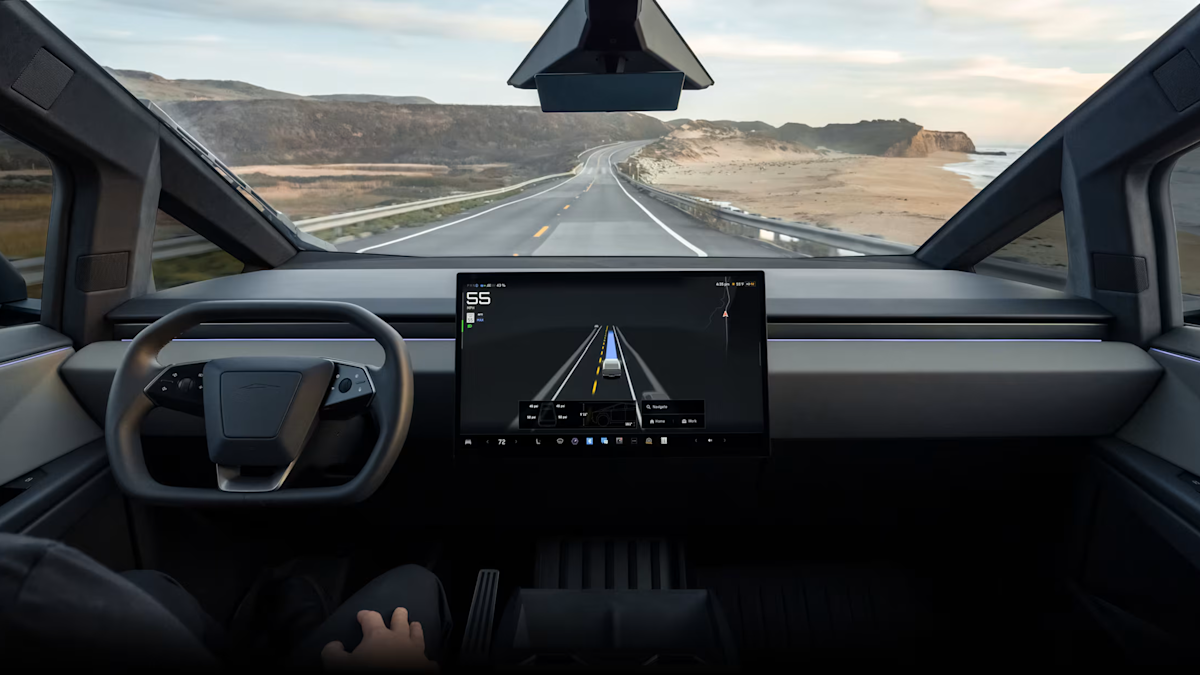
Tesla’s Full Self-Driving (Supervised) is ready to make its European debut, and it’s starting with the Netherlands. According to Tesla Europe, the automaker’s driver assistance system was approved in the Netherlands and will start rolling out shortly. RDW, the country’s regulatory authority on vehicles, confirmed the news with a post on its website about Tesla receiving a type approval for its Full Self-Driving (Supervised) system.
According to the RDW, Tesla’s Full Self-Driving (Supervised) “has been extensively examined and tested for more than one and a half years on our test track and on public roads,” and concluded that it was a “positive contribution” to road safety. However, RDW pointed out that a Tesla with FSD Supervised was not “self-driving,” adding that the “driver remains responsible and must always remain in control.”
With Dutch approvals, Tesla notched its first regulatory green light for FSD use in Europe. The RDW also added that Tesla’s FSD Supervised could get “possible later admittance in all member states of the European Union” thanks to its approvals. Tesla has been working on bringing its automated driving features to other regions, including Europe and China, as detailed in a roadmap posted in 2024. In the meantime, the automaker’s software has been mired in several safety investigations from the National Highway Traffic Safety Administration. The latest development comes from a probe that targets collisions when using FSD, including the supervised version, in reduced road visibility conditions.
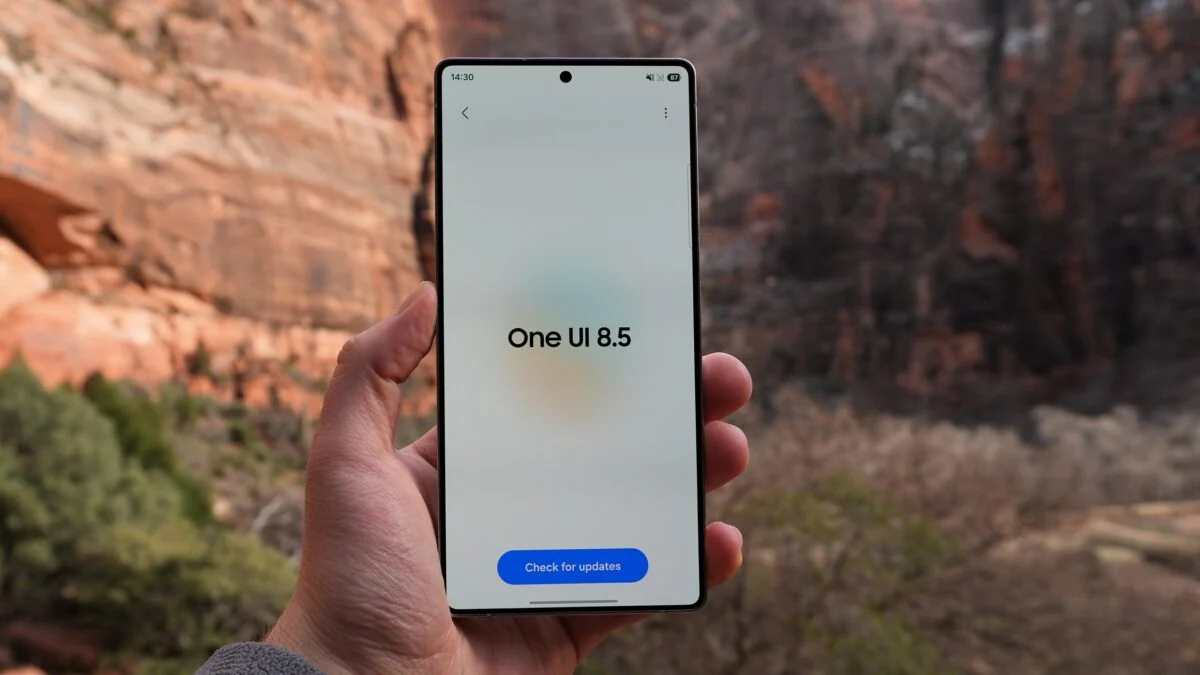
Samsung is widening access to its latest Android skin.
The One UI 8.5 beta is now rolling out to a broader mix of Galaxy devices, and for the first time, that includes a handset from its more affordable A-series.
Following an earlier expansion, Samsung has confirmed that seven additional devices are joining the beta programme. This brings the total number of supported models to more than 20.
The standout addition, however, is the Samsung Galaxy A36. This marks the first time Samsung has brought a One UI beta to an A-series device, and signals a broader push to include mid-range users in early software testing.
Moreover, there are some regional limitations to be aware of. Samsung says the rollout is being handled in phases across the US, UK, India and Korea, but not every device is supported in every market. For example, the Galaxy Z Fold 5 and Flip 5 beta is limited to the US and Korea. Meanwhile, the Galaxy A36 beta is currently exclusive to India.
Meanwhile, the newer Galaxy S25 series is already on its ninth One UI 8.5 beta build, suggesting development is nearing completion. As the beta expands, more users are also gaining access to features like improved Quick Share functionality with broader support for cross-device file sharing.
Advertisement
Those interested in trying the update can sign up via the Samsung Members app. However, as always with beta software, stability may vary. Users should expect occasional bugs, performance inconsistencies, and potential app compatibility issues during everyday use. If that’s not for you, it’s probably worth holding off until the official release in a few months’ time.




























































You must be logged in to post a comment Login