Silicon-carbon batteries have been leading phones to eyebrow-raising battery life, and the Realme P4 Power includes one of the biggest batteries we’ve seen in a phone. It’s setting an even higher benchmark with a 10,001mAh battery. By comparison, this is double the capacity we see in more mainstream phones like the Samsung Galaxy S26 Ultra, which includes a 5,000mAh battery.
The Realme phone surpasses what we’ve seen in other phones with this type of battery, including the OnePlus 15‘s 7,300mAh battery and the RedMagic 11 Pro‘s 7,500mAh battery. Phones with batteries of this scale provide up to two days of use and often have faster charging speeds to go with it.
The Realme P4 Power is currently available in India — it’s unlikely to ever come to the US — but despite its chart-topping battery capacity, it’s relatively inexpensive at INR 25,999, or approximately $285. It’s just a little bigger than the 10,000mAh battery in the Honor Win, which I got to try out last year but didn’t get extended time in order to really test it out.
Advertisement
That’s why I was excited to put my SIM into the Realme P4 Power, during which I was able to test this phone through all of CNET’s battery tests, use it as my primary device and even as a power bank for my iPhone along the way.
All that battery without any major drawbacks
It doesn’t sacrifice on design or features to fit a big battery.
Prakhar Khanna/CNET
The best part about the Realme P4 Power is that it doesn’t sacrifice comfort for additional battery capacity. It isn’t a slim and light phone but at 9.1mm thick and 219g weight, it is lighter than some big flagship phones, including the iPhone 17 Pro Max and Google Pixel 10 Pro XL.
Advertisement
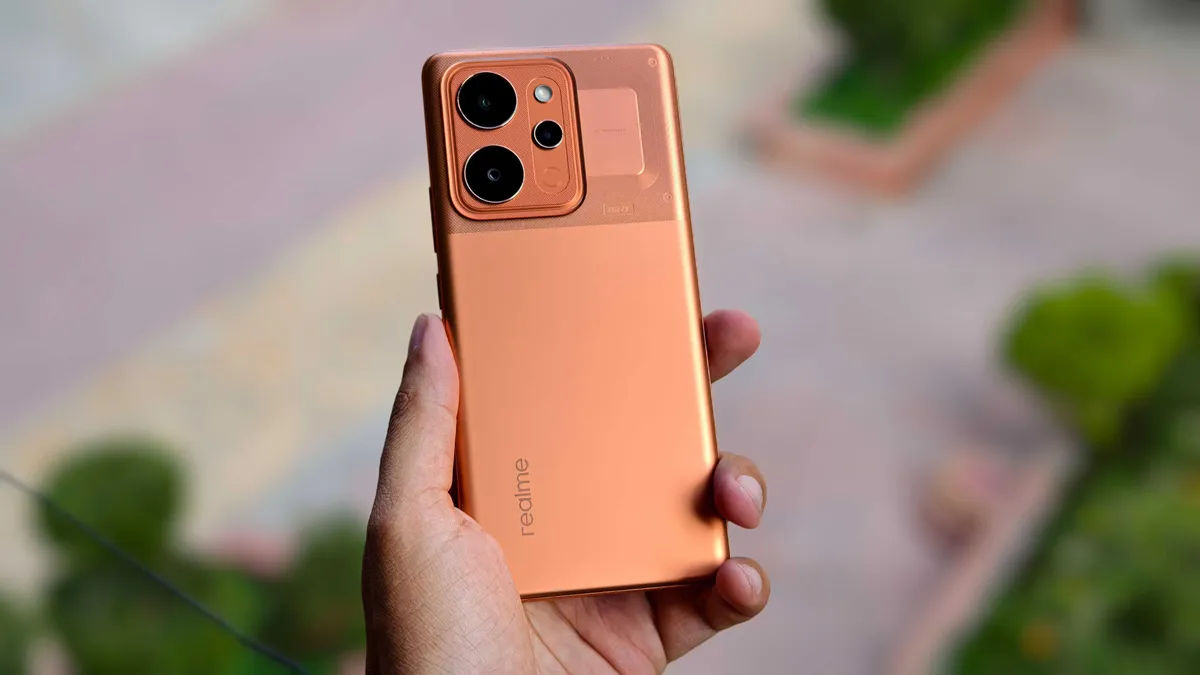
Realme’s TransView Design has a translucent look around the camera module, which accentuates its “Power” branding. I like this distinct design and in-hand feel. It has curved corners as well as slight curves on the back that make it easy to hold. (Please take note, Samsung.)
The Realme P4 Power has a plastic back and frame, while the front is protected by Gorilla Glass 7i. It is also rated for durability with IP66, IP68 and IP69 dust- and water-resistance ratings. This means, it can survive freshwater submersion and high-pressure water jets and is also protected against small dust particles.
On the front, you get a 6.8-inch AMOLED display with a 2,800×1,280-pixel resolution, 144Hz refresh rate, 1,800 nits brightness and 6,500 nits peak brightness for HDR-supported content. Like many phones, you have to manually set it to a higher resolution and refresh rate to take advantage of these features.
Advertisement
The screen is easily legible outdoors.
Prakhar Khanna/CNET
I had no issues with the screen, and using a curved panel after a long time was a refreshing experience. It was easily legible outdoors, and I enjoyed watching videos. However, I don’t like the absence of stereo speakers. The device has just one speaker at the bottom; while it is loud, you’ll need to connect your earbuds for a better movie experience.
I used the Realme P4 Power in day-to-day life, which included doomscrolling on social media apps like Instagram and X, answering emails and messages on Gmail, WhatsApp and Slack navigating on Maps and snapping a few photos. It comfortably lasted me up to two days of regular use and one and a half days on heavy use. And when you do need to charge it, you can use the bundled charger to top up the battery at 80 watts.
To better judge the new Realme phone, I put it through CNET’s 3-hour video streaming test and 45-minute battery endurance test.
Advertisement
Realme P4 Power battery benchmarks
YouTube streaming drain test starting at 100%
45 min battery endurance
Realme P4 Power
1 hr: 97%; 2 hr: 95%; 3 hr: 91% (144Hz)
100% to 99%
Apple iPhone 17 Pro Max
1 hr: 100%; 2 hr: 96%; 3 hr: 91% (1-120Hz)
100% to 99%
OnePlus 15
1 hr: 98%; 2 hr: 94%; 3 hr: 90% (1-120Hz)
100% to 97%
Samsung Galaxy S26 Ultra
1 hr: 97%; 2 hr: 92%; 3hr: 87% (1-120Hz)
100% to 95%
In the video streaming test, where I streamed a video over Wi-Fi with the screen at full brightness and the battery starting at 100%, it lost 3% battery per hour and ended at 91%. This puts it on top of CNET’s charts alongside the iPhone 17 Pro Max, followed by the OnePlus 15 (90%) and iPhone 17 (89%).
It performed similarly well during CNET’s 45-minute endurance test, during which we play games, stream videos, scroll social media and take a video call with the battery starting at 100%. The Realme P4 Power ended up losing just 1% battery, sharing the top spot with the iPhone 17 Pro Max at 99%.
How about everything else?
Advertisement
Realme’s “Power” branding is accentuated by its translucent design around the camera module.
Prakhar Khanna/CNET
The Realme P4 Power has a MediaTek Dimensity 7400 Ultra chipset, paired with up to 12GB RAM and 256GB storage. (The base model has 8GB RAM and 128GB storage.) This is more of a midrange chip that’s in a similar class as the Motorola Razr‘s Dimensity 7400X. It handles day-to-day tasks smoothly, and it has no major flaws. As for minor issues, I did notice apps taking longer than usual to load sometimes and the camera app taking a few seconds to process, but these issues are not a deal-breaker.
Realme’s user interface is smooth, snappy and highly customizable. It is similar to OnePlus and Oppo. However, you get multiple preloaded apps. (I uninstalled them as soon as I set up the phone.) Overall, this Realme UI 7.0 (based on Android 16) is fast and responsive. You’ll get three years of Android OS upgrades and four years of security upgrades.
The Realme P4 Power has two rear cameras and a 16-megapixel selfie shooter on the front. You get a 50-megapixel main camera and an 8-megapixel ultrawide-angle sensor on the back. Plenty of AI-powered tools are available to help you enhance or edit a shot.
Advertisement
The camera system is satisfactory for a budget smartphone.
Prakhar Khanna/CNET
It delivers a satisfactory camera experience. In daylight, the P4 Power can snap some good-looking photos. The colors are mostly accurate, contrast is balanced and the dynamic range is decent. It processes 2x portraits digitally, which works fine for the most part, but at times, certain areas can have a cutout-feel to them — like you’ve been pasted on a background.
Overall, the Realme P4 Power is a great phone for its excellent battery life. I was expecting it to perform well with its 10,001mAh battery, but I didn’t expect it to blow out every other Android phone in our tests. I love it more because this battery innovation is accessible to the masses, thanks to its lower price and not being gatekept on more expensive models.
Advertisement
Watch this: Our Experts’ Favorite Products at MWC 2026 | All Things Mobile
Apple is about to roll out iOS 26.4, and the final release notes suggest this is a feature-heavy update rather than a minor tweak.
With the release candidate now in the hands of developers, the public launch is expected as early as next week.
A big chunk of the update focuses on Apple Music. There’s a new Playlist Playground (beta) feature that builds playlists from simple text prompts, generating everything from the tracklist to a title and description. A new Concerts tool surfaces nearby gigs based on your listening habits.
Meanwhile, offline music recognition means you can identify songs even without a connection, with results appearing once you’re back online. Apple is also adding an Ambient Music widget for quick access to curated playlists. Additionally, you’ll see full-screen animated artwork for a more immersive look.
Advertisement
Advertisement
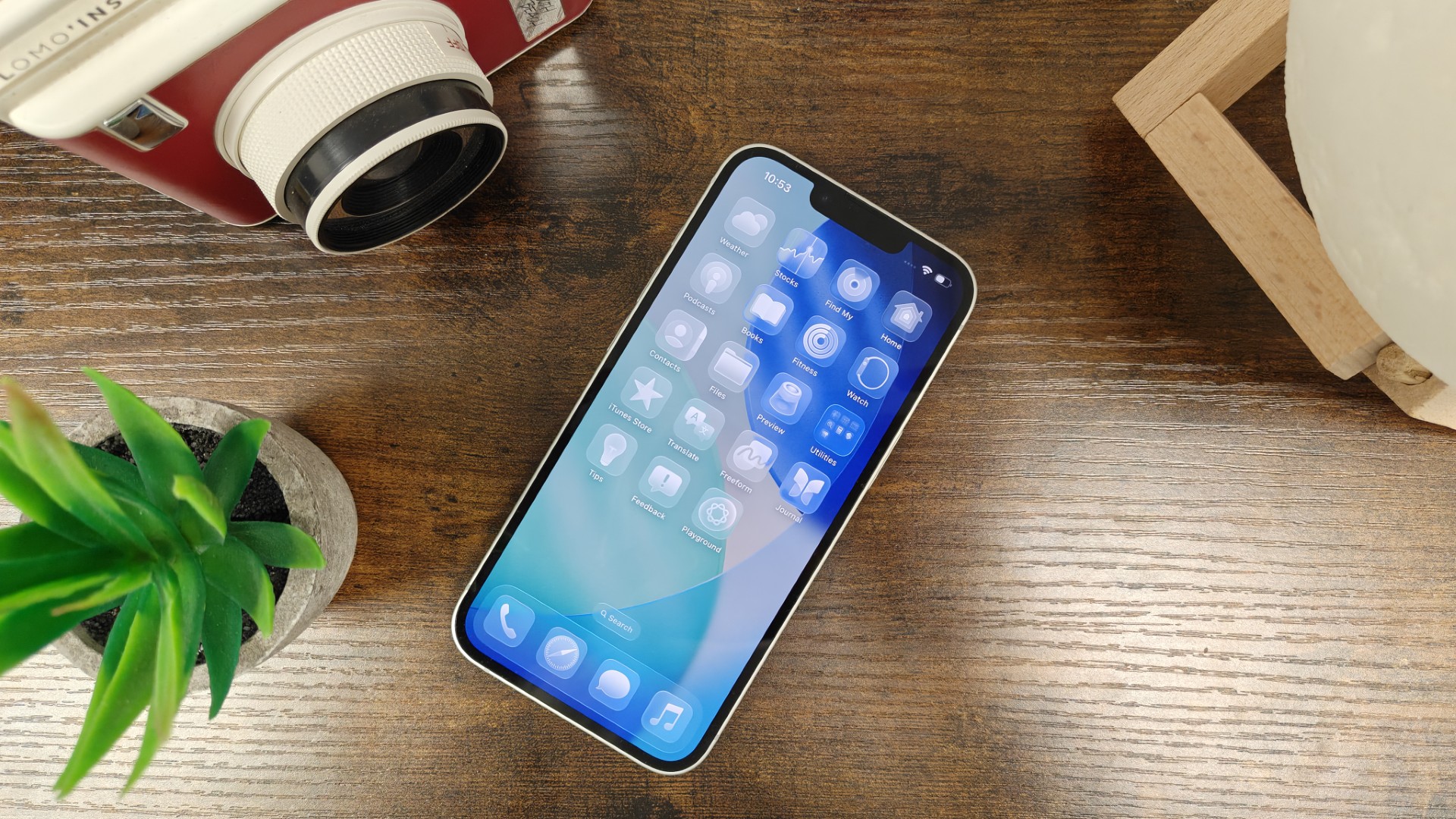
Accessibility also gets a meaningful boost. A new Reduce bright effects setting tones down flashes when interacting with UI elements. Subtitle and caption controls are now easier to access directly from the media player. In addition, Apple has refined its Reduce Motion setting to better limit the movement-heavy Liquid Glass interface introduced in iOS 26.
Elsewhere, iOS 26.4 adds eight new emoji, including an orca, a trombone and a slightly odd, distorted face. The Freeform app is picking up expanded image creation tools and access to a premium content library. Meanwhile, Reminders now lets you mark tasks as urgent and filter them more easily.
There are a few practical upgrades, too. Purchase Sharing allows family members to use their own payment methods within Family Sharing. Apple also says keyboard accuracy has been improved when typing quickly.
Advertisement
As with most updates, some features won’t be available on all devices or in every region. And while Apple continues to support iOS 18 with security updates for now, newer releases like iOS 26.4 make it increasingly clear where the company’s focus lies.
As AI technology continues to develop and evolve, one of the key use cases is set to be robotics, as humans employ some extra assistance across work and home lives.
Nvidia has been one of the biggest proponents of next-gen robotics, with CEO Jensen Huang outlining at its GTC 2026 event how every major company is working with Nvidia in some way.
But what is it actually like to engage with these robots? I got the chance to see the future up close and personal at Nvidia GTC 2026 – here’s how I got on…
Advertisement
Article continues below
Hands-on with the Humanoid
Retail and customer service has been one of the most commonly-mooted use cases for the future of robotics, and on Nvidia’s stand at GTC 2026 was a demo from Humanoid showing just that.
Advertisement
The company’s (slightly terrifying-looking) robots, currently available in wheeled and bidpedal editions have become one of the pace-setters in the industry, with customers already including the likes of Siemens and Schaeffler.
We were confronted with two of the wheeled models, which we saw in action swapping out different products by picking up separate boxes, but their size means you would need a fairly sizeable space for them to operate effectively.
(Image credit: Future / Mike Moore)
We were told to speak into a microphone to pick our order, choosing from a handful of products. The robot server told us it had received the order (a bottle of water and a packet of dried mango fruit), and asked us to confirm, again via the microphone.
Sign up to the TechRadar Pro newsletter to get all the top news, opinion, features and guidance your business needs to succeed!
Advertisement
We were then asked to stand in front of the robot and extend our hand, so it knew where to place the item – we had picked items from two different boxes, so one robot delivered the water, and the other the dried mango.
Overall the order was largely successful – in fact, a little too successful, as the second robot gifted us an extra portion of the dried mango (winner!). The first robot did seem to struggle picking up the water bottle, but once it got its grip, it was delivered successfully.
Start-to-finish, the entire process took around 45 seconds – not too bad, but certainly slower than a human worker would have taken. The technology is clearly still at an early stage, but if this initial demo is anything to go by, we may soon start seeing humanoid robots in a store near you sooner than you might expect.
CEO Hou Zelong anticipates the S$45 million Chinese spa to reach breakeven in four years
When House+ Bubble announced its arrival in Singapore, it quickly became one of the most talked-about spa openings here.
But the buzz has proven short-lived. The S$45 million Chinese spa complex, touted as Singapore’s largest 24-hour facility of its kind, has come under scrutiny over hygiene lapses, inconsistent service, and even allegations of staff mistreatment—issues that have sparked debate online and dampened initial excitement.
Still, CEO Hou Zelong is taking it in stride.
“Though we have received criticism, we humbly accept it and will improve,” he said in a recent interview with The Straits Times, adding that the business continues to see support despite the backlash.
Advertisement
“We still have many supporters; we just have to sort ourselves out.”
Even as the company works to regain footing, its rollout has hit a few bumps.
The spa claims to have an average of 300 visitors per day
Image Credit: House+ Bubble
House+ Bubble is currently operating in a half-open state following its soft launch, during which guests could access the spa, massage services, pools, and dining areas for a S$49 entry fee.
In response to the backlash, the spa temporarily closed its bathing pools on Mar 3 for what it described as “internal facility adjustments,” while reducing the fee to S$39.
Image Credit: House+ Bubble
The spa was initially slated for an official opening in mid-Mar, but this has since been pushed back to an unconfirmed date before May as the team continues to fine-tune operations.
If the May opening goes according to plan, it will span approximately 49,000 sq ft, eventually reaching nearly 100,000 sq ft once fully completed.
Advertisement
Despite the delay, House+ Bubble is already looking ahead. According to Hou, the operator is scouting new locations, confident that demand could support one or two additional outlets.
Currently, the spa claims to welcome an average of 300 visitors each day, about 60% of whom are locals. Hou anticipates the business will reach breakeven within four years.
Earlier this month, reports highlighted that House+ Bubble’s launch had been overshadowed by mounting criticism, just about a week into its operations.
Online reviews and social media posts have highlighted hygiene issues, inconsistent pool temperatures, and misleading advertising—such as claims of “unlimited massages” that only applied to massage chairs during the soft launch.
Bathrooms and shared amenities were also reportedly in poor condition, with combs showing visible dandruff and communal skincare bottles containing stray hairs.
Advertisement
A Google Review accompanying photos shows wet floors and towels left on the ground. The user also claimed that toilet bowls were clogged, and urinals were broken with “water running non-stop,” and a lack of toilet paper or paper towels./ Image Credit: Google Maps
Staffing concerns have also emerged.
Some employees reportedly left after short stints due to “poor management” and limited breaks during long shifts, creating manpower shortages that have compounded operational issues.
While the spa did not respond to Vulcan Post’s queries, Hou told The Straits Times that it has become clear a faithful reproduction of the Chinese spa business model does not translate seamlessly to the Singapore market.
One key change underway is the revamp of its membership scheme.
The original model had tiered memberships starting at S$500, which granted preferential rates on add-ons such as restaurant buffets and a range of treatments—a setup that drew criticism from some early customers.
Advertisement
The new approach will bundle access and remove unpopular add-on costs, aiming to provide clearer value, Hou said.
Close to a month since its soft launch, which served as a testing period, Hou concluded that a simpler and more straightforward approach resonates better with Singaporean customers.
“We are not just a bathhouse or spa”
Adding to House+ Bubble’s challenges is growing competition in Singapore’s wellness scene, with at least 10 recovery-focused venues having opened over the past two years.
Yet, Hou remains unfazed.
Advertisement
“We’re not just a bathhouse or spa. We have attractions for many different groups. It is a comprehensive leisure complex,” he told The Straits Times.
Some of the facilities shown on the House+ Bubble website include private pools and even an esports room./ Image Credit: House+ Bubble
The spa’s current offerings include hot spring pools, steam rooms, and massage services. The women’s section features a Himalayan salt therapy room, while the men’s area offers a mugwort herbal room.
Soon, a VIP KTV room the size of a small apartment and a teppanyaki grill to complement an expanded buffet menu are expected to open.
When fully operational, House+ Bubble will expand its range of offerings to include a cinema, meditation room, and e-sports lounge alongside its hot pools and saunas. It will also introduce kid-friendly zones, ice baths, mixed-gender pools, and a storm bath designed to simulate squalls and lightning.
Read other articles we’ve written on Singaporean businesses here.
Amazon reportedly has plans for another smartphone
The original Fire Phone launched in 2014
AI and shopping are said to be central to the new device
You’d be forgiven for not remembering the Amazon Fire Phone, as it launched in June 2014 and lasted just a year or so before production ceased and sales were discontinued. Well, it appears that Amazon fancies another crack at the smartphone market.
According to Reuters, a device with the codename ‘Transformer’ is in development at Amazon — although it’s not clear from the inside sources speaking to Reuters when this phone might see the light of day or how much it could cost.
One of the main focuses of the handset is said to be AI, as you might expect given that Amazon has recently pushed out its upgraded Alexa+ AI chatbot. Shopping services are also said to be central to the phone, which again isn’t a surprise.
Article continues below
Advertisement
The project is apparently being driven by Amazon founder Jeff Bezos and his desire to create an all-purpose, voice-controlled digital device that wouldn’t look out of place on Star Trek — and it seems Amazon executives think they can succeed second time around.
A minimal second device?
Amazon founder Jeff Bezos is apparently still keen on a phone (Image credit: Getty / Mandel Ngan)
All the Prime services, including Prime Music and Prime Video, would be tightly integrated into the phone, as per the report. There are also hints that on-board AI could remove some of the reliance on specific apps and a traditional app store.
Advertisement
We don’t know too much more about the device yet, but the Reuters report suggests this isn’t a phone that’s guaranteed to launch at this stage. It’s something that’s being actively developed, apparently, but a lot depends on future strategy and financial performance.
One other tidbit suggests that the new handset has been inspired by the minimal Light Phone, which could give us some idea of the direction Amazon is thinking of going in. Maybe this will be more of a secondary device than a primary phone.
Sign up for breaking news, reviews, opinion, top tech deals, and more.
Amazon does of course already make some cheap and cheerful tablets, the Kindle e-readers, and multiple smart speakers. It’s not a complete newcomer to hardware, but taking on Apple, Google, and Samsung is a tough ask even for a company of Amazon’s size.
Remember when Japan sent a spacecraft to an asteroid 180 million miles away to scoop some dirt off the surface? Six years on from its arrival to Earth, that sample has yielded some insights about what may have seeded life on our planet. Read on to learn more about the latest findings, and other science news we found interesting this week.
DNA ingredients on Ryugu
In 2020, a capsule from the Japanese space probe Hayabusa2 returned to Earth with samples collected from the surface of asteroid Ryugu, and scientists have spent the subsequent years analyzing those materials for clues about the conditions that existed in the early solar system. This week, researchers from Japan reported an exciting discovery: the Ryugu samples contain the five building blocks of DNA and RNA. The findings, coupled with those from other recent studies, could put us closer to understanding how the ingredients for life first made it to Earth billions of years ago.
The study, published in the journal Nature Astronomy, found the nucleobases adenine, guanine, cytosine, thymine and uracil — all of which were also found in samples gathered from a different asteroid, Bennu, last year, and before that in meteorites dubbed Murchison and Orgueil. This suggests these nucleobases were widespread in the early solar system, and supports the hypothesis that carbonaceous asteroids like Ryugu and Bennu transported them to Earth, the authors explain in the paper. Ammonia was discovered in the samples as well, which may play a role in how these nucleobases formed.
The discovery of these building blocks “does not mean that life existed on Ryugu,” Toshiki Koga, the study’s lead author from the Japan Agency for Marine-Earth Science and Technology, told AFP. “Instead, their presence indicates that primitive asteroids could produce and preserve molecules that are important for the chemistry related to the origin of life.”
Advertisement
Bacteria collaborate to eat plastic waste
Researchers in Germany have identified a trio of bacteria that can digest a common plastic additive, but only when working together. The study published in the journal Frontiers in Microbiology found that a “consortium” of bacterial strains (two from species in the genus Pseudomonas and one from Microbacterium) was able to break down several phthalate esters (PAEs), which are often used to make plastic materials more flexible. These chemicals are increasingly finding their way into the environment as plastic pollution grows, and research suggests they can have harmful effects on human health and that of wildlife.
The team focused on microbes that could be found right at home in their own lab, taking a sample of biofilm that had formed on the polyurethane tubing of a bioreactor. This sample was then incubated in a growth medium containing the PAE diethyl phthalate (DEP) as the main source of carbon and energy. They eventually ended up with a stable culture of bacteria that could break down DEP, as long as the DEP concentration didn’t exceed 888 milligrams per liter, according to a press release. The consortium could gobble up all the DEP in 24 hours at 30 degrees C. It was also able to grow on the PAEs dimethyl phthalate, dipropyl phthalate and dibutyl phthalate.
The researchers identified the bacteria in the consortium through DNA sequencing, but found that they were not individually able to tackle the PAEs, suggesting they break down the chemicals through a “cooperative process” known as cross-feeding. The consortium could make for another tool in the pollution-fighting toolbox, with potential to help break down PAEs in contaminated areas or speed up the degradation of plastics that contain PAEs by making them more brittle. “This approach may also be effective in treating industrial plastic waste streams,” they note.
Hubble witnesses a breakup
Newly released images from the Hubble Space Telescope show the unexpected breakup of Comet C/2025 K1 (ATLAS) — Comet K1, for short — as it made its way out of the solar system back in November. A team of researchers that initially set out to observe a different comet ended up switching targets due to technical issues, only to catch Comet K1 right after it started crumbling. Hubble captured three 20-second images between November 8 and November 10 2025, the first of which the team estimates was about eight days after the fragmenting started. During the observation period, one of the comet’s smaller pieces began to break up too. Talk about being in the right place at the right time.
Advertisement
“Never before has Hubble caught a fragmenting comet this close to when it actually fell apart,” said John Noonan, a research professor in the Department of Physics at Auburn University, in a statement. “Most of the time, it’s a few weeks to a month later. And in this case, we were able to see it just days after.” You can read more about the rare sighting here.
Before you go, be sure to check these stories out too:
We’re all used to it by now, but I’d just like to reflect on how insanely power-packed lithium ion batteries are, and everything that’s afforded us. I’m trying to think of a gadget, a hobby, or nearly anything in my house that’s not touched by the battery chemistry.
I’m looking at my portable wireless keyboard in front of me, with a LiPo pack inside. Oddly enough, I’m charging it with a LiPo-based power bank, simply because the cable to the nearest USB-C adapter is too short. A gaming console, cell phone, and a DSLR camera are all within arms reach and powered with lithium.
It’s not just consumer stuff either. I fly FPV quads and airplanes for fun when I can, and of course those are made entirely possible by the combination of smaller brushless DC motors and their drivers, and the high-power-density LiPo packs that power them. For field recharging, I have a huge self-made LiIon pack that can keep them all in the air all day. These days, LiPo and LiIon tech is the heart of hacker projects big and small. Heck, we even powered this year’s Hackaday Supercon badge with a LiPo that allowed it to run all weekend on a charge for many folks, where in the past swapping out AAs during the event was commonplace.
The application that still blows my mind is that we recently got a solar installation on our roof, which means a huge LiFePo battery in the basement. And while it’s one thing to power noisy little quads on the battery tech, it somehow seems another to power our entire house, for multiple hours per day, from a battery. Granted it’s not a couple of AAA cells in a little black plastic box, but it’s simply amazing to run a washing machine, the fridge, the stove, and even the heating off of what amounts to a battery pack.
Advertisement
Of course, I’m aware of the costs of producing the cells, both in terms of money and the environmental damage. It’s not a free lunch, and I’m looking forward to both cleaner and cheaper energy storage chemistries in the future. But for now, I’m still in awe of the many options that lithium-based battery chemistry has brought us. May your pillows remain non-spicy!
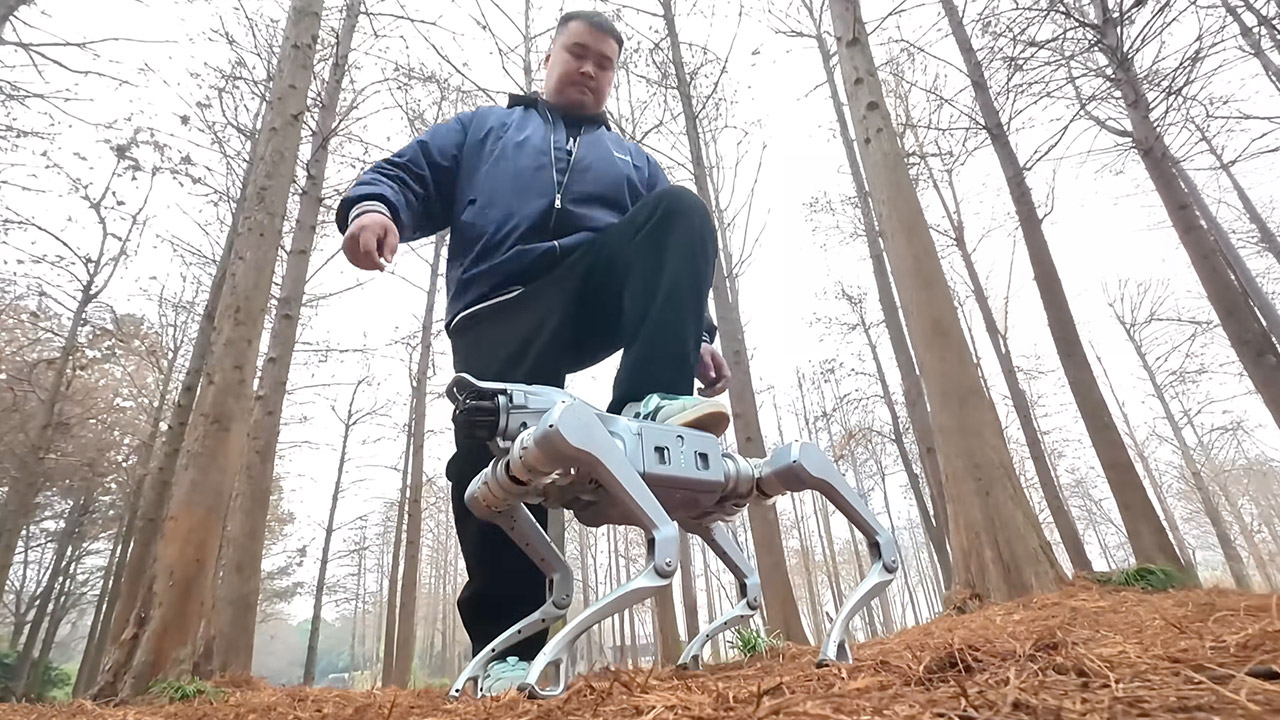
The Unitree As2 is not your typical robot dog. Compact enough to squeeze into spaces where larger machines simply cannot follow, it measures 720 by 378 by 457 millimeters standing upright and tips the scales at just 18 kilograms with the battery fitted, yet it is built to handle the kind of heavy duty work you would not normally expect from something this size.
The As2 moves at speeds of over five meters per second (11.1+ mph) and delivers up to 90 Newton meters of joint torque, giving it the muscle to stay stable under a 65 kilogram (143.3 pound) load or push steadily across uneven ground with 15 kilograms of cargo on its back. Battery life is where things get particularly impressive. The higher end variants will run for over four hours unloaded, and even carrying that 15 kilogram payload it keeps going for more than two and a half hours and covers upwards of 13 kilometers before needing a charge.
Sleek & Durable Design: Standing at 132cm tall and weighing only approx. 35kg, the G1 is constructed with aerospace-grade aluminum alloy and carbon…
High Flexibility & Safe Movement: Boasting 23 joint degrees of freedom (6 per leg, 5 per arm), it offers an extensive range of motion. For safety, it…
Smart Interaction & Connectivity: Powered by an 8-core high-performance CPU and equipped with a depth camera and 3D LiDAR. It supports Wi-Fi 6 and…
The Pro and Edu models carry an IP54 rating, meaning rain, dust, and temperatures anywhere between minus 20 and 50 degrees Celsius are all handled without complaint. Built in lighting and a front facing camera keep things visible in any conditions, and a lidar system clears the path day or night. When person following mode is active it tracks its target with centimeter level accuracy, with side sensors and an onboard eight core CPU working together to keep the movement smooth and consistent. Higher tier models add remote control options and the ability to bolt on additional processing modules as the job demands.
Three variants are on offer, starting with the Air, which handles everyday tasks reliably and serves as the straightforward entry point, while the Pro steps up endurance, speed, as well as weather resistance for more demanding environments. The Edu is aimed squarely at developers who want to build and run their own custom applications on top of the platform. All three share the same core frame, with the hardware scaled to match whatever the job requires.
The As2 is built for a wide range of real world applications, from carrying equipment across difficult terrain and handling delivery routes to conducting industrial inspections and outdoor security patrols. The ability to push through challenging environments without slowing down is one of its strongest selling points. Pricing is handled through direct sales conversations, but early indications suggest it will land well below the six figure territory that most industrial robots occupy. Software updates arrive automatically as well, meaning the machine keeps improving over time without requiring any new hardware.
For decades, humans have sought to harness the power of the stars to generate electricity here on Earth. And for nearly as long, achieving that goal always seemed just a decade away.
Now, a slew of startups are closer than ever before and rushing to build fusion reactors capable of putting power on the grid.
Fusion startups have drawn more than $10 billion in investment, with more than a dozen raising over $100 million. Many large funding rounds have closed in the last year, with investors drawn to the industry as energy demand from data centers ramps up and as fusion startups draw closer to the finish line.
At its core, fusion power seeks to use the energy released from the fusing of atoms to generate electricity. Humans have known how to fuse atoms for decades, from the hydrogen bomb — an example of uncontrolled nuclear fusion — to any of the myriad fusion devices built in labs around the world. Experimental fusion devices have been able to control nuclear fusion, and one has been able to generate more energy than was required to spark the reaction.
Advertisement
But none of them have been able to produce enough of a surplus to make a power plant possible.
To solve that problem, fusion startups are trying a number of different approaches. Experts have varying opinions on which have the best chance of success, though the industry is still in its infancy, so nothing is guaranteed.
Here is a brief overview of the main approaches to fusion power.
Techcrunch event
Advertisement
San Francisco, CA | October 13-15, 2026
Magnetic confinement
Magnetic confinement is one of the most widely used techniques, using strong magnetic fields to confine plasma, the soup of superheated particles that’s at the heart of a fusion device.
Advertisement
The magnets must be tremendously powerful. Commonwealth Fusion Systems (CFS), for example, is assembling magnets that can generate 20 tesla magnetic fields, which is about 13 times stronger than a typical MRI machine. To handle the amount of electricity required, the magnets are made out of high-temperature superconductors, which still need to be cooled to –253˚ C (–423˚ F) using liquid helium.
CFS is currently building a demonstration device called Sparc on a much more accelerated timeline in Massachusetts. The company anticipates turning it on sometime in late 2026, and if all goes well, it will begin construction on Arc, its commercial-scale power plant, in Virginia in 2027 or 2028.
There are two main types of fusion devices that use magnetic confinement: tokamaks and stellarators.
Tokamaks were first theorized by Soviet scientists in the 1950s, and since then, they’ve been widely studied. Tokamaks come in two basic shapes — a doughnut with a D-shaped profile and a sphere with a small hole in the middle. The Joint European Torus (JET) and ITER are two notable experimental tokamaks; JET operated in the UK between 1983 and 2023, while ITER is expected to begin operations in France in the late 2030s.
Advertisement
UK-based Tokamak Energy is working on a spherical tokamak design. Its ST40 experimental machine is currently undergoing upgrades.
Stellarators are the other main type of magnetic confinement device. They’re similar to tokamaks in that they keep the plasma contained within a doughnut-like shape. But unlike tokamak’s geometric sides, stellarators twist and turn. The irregular shape is determined by modeling the plasma’s behavior and tailoring the magnetic field to work with its quirks rather than force it into a regular shape.
Wendelstein 7-X, a large stellarator with modular superconducting coils that is operated by the Max Planck Institute for Plasma Physics. has been operating in Germany since 2015. Several startups are also developing their own stellarators, including Proxima Fusion, Renaissance Fusion, Thea Energy, and Type One Energy.
Inertial confinement
The other main approach to fusion is known as inertial confinement, which compresses fuel pellets until the atoms within fuse.
Advertisement
Most inertial confinement designs use pulses of laser light to compress fuel pellets. Several laser beams fire at once, and their pulses of light converge on the fuel pellet from all angles simultaneously.
So far, inertial confinement is the only approach that has broken a milestone known as scientific breakeven, which is when the reaction releases more energy than it consumed. Those experiments have occurred at the National Ignition Facility (NIF) at the Lawrence Livermore National Laboratory in California. Notably, measurements to determine scientific breakeven do not include things like the electricity required to power the experimental facility.
Still, nearly a dozen startups see enough promise in inertial confinement that they’re designing reactors around it. Focused Energy, Inertia Enterprises, Marvel Fusion, and Xcimer are some notable examples using lasers.
There are two companies that aren’t using lasers, though: First Light Fusion, which proposes using pistons, and Pacific Fusion, which plans to use electromagnetic pulses instead of lasers.
Advertisement
More to come
Those are the two main approaches to fusion power, though they aren’t the only ones. Soon, we’ll add more details about alternative designs including magnetized target fusion, magnetic-electrostatic confinement, and muon-catalyzed fusion.
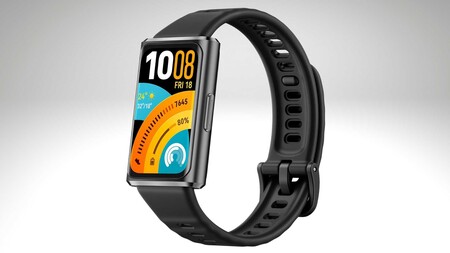
Arguably one of the most feature-packed fitness bands that you can buy right now, the Huawei Band 11 Pro has become a must-have wearable at this price.
If you want a set of features that could give the Apple Watch SE a run for its money, but without spending a fortune, this is the one to go for.
The Huawei Band 11 Pro is less than a month old and already 21% off today
Advertisement
It’s barely been on the market a month, yet the Huawei Band 11 Pro already has a 21% discount today, that’s a rare early price drop for a brand‑new smartwatch.
At the heart of the Band 11 Pro is its bright 1.62-inch AMOLED display, which can reach an incredibly high brightness level of 2000 nits.
Having that level of brightness not only helps to make key pieces of information jump off the display at a glance, but it also helps to keep the display visible when you’re out and about and affected by direct sunlight.
Advertisement
Where the Huawei Band 11 Pro really proves itself is in the level of fitness tracking that it can offer, all of which is fully supported by the inclusion of independent GPS, which allows the watch itself to accurately map your run and not be reliant on a nearby phone.
Whether it’s running, swimming (thanks to a 5 ATM level of water resistance), or any of the other 100+ sports modes that are available, the Band 11 Pro can track your workout and, thanks to heart rate and SpO2 sensors, offer a wide degree of insight into your body after the exercise has taken place.
There’s even an emotional well-being helper in the form of a ‘burst test’ that helps to identify how much work your body has gone through during a workout, allowing you to adjust your training properly.
Every year, millions of tons of sawdust accumulate in mountains as a result of lumber mills around the world producing wood products. The majority of it is either put into a furnace to generate energy or ends up in landfills, where it does nothing but release all of the carbon it has accumulated. However, researchers at ETH Zurich have discovered a technique to convert that garbage into solid panels that will work well as inside walls and partitions.
Photo credit: Dan Vivas Glaser / from Kürsteiner R et al. Chem Circularity 2026, CC BY 4.0 The main ingredient in these panels is struvite, a mineral that occurs naturally in sewage treatment plants. One issue is that it clogs pipes, but that’s not all it does; it also has some built-in fire resistance. There is one catch, though: the mineral is extremely brittle on its own, and mixing it evenly with wood particles is difficult. However, this challenge was overcome when the team discovered that an enzyme extracted from watermelon seeds could be used to help guide how the struvite crystals grow.
The enzyme takes a simple mixture of a mineral precursor called newberyite and a small amount of water and leads it into creating enormous crystals that spread across the gaps between the sawdust particles. This secures everything in place and makes it solid. All the team needs to do is combine the enzyme, struvite, and water, pour the mixture into a mold, and allow it to sit under pressure for two days. After that, simply allow the slabs to air dry at room temperature until ready to use.
The fire safety tests provide a solid indication of how effective these panels are. When untreated spruce wood is exposed to a standard heat source, it will catch fire in about fifteen seconds, but panels made this way will wait for over 45 seconds before ignition even begins, giving people at least three times more time to escape. Once the fire starts, the struvite breaks apart and releases water vapour and ammonia gas, which basically sucks the air right out of the room while also cooling the surface. That results in a thin coating of inorganic debris and burned wood, which effectively protects the rest of the panel.
They’re also quite sturdy, as they can be compressed sideways and hold up far better than raw spruce lumber. They’re also much lighter than traditional cement-bonded particleboards because they use a lot less binder, 40% struvite versus 60-70% cement in those older options, making them a direct replacement for traditional materials in interior partitions where fire codes require some level of protection.
They’ve already got recycling covered. Simply grind up an old panel and heat it to 100 degrees Celsius, then sift out the sawdust to leave behind the mineral precursor, which can then be reused in new batches. If you’re feeling particularly useful, you can even use the leftover newberyite as a slow-release fertilizer for plants. Cement boards, on the other hand, tend to go straight to the tip after the structure they’re in is demolished.
Advertisement
Ronny Kürsteiner developed the method as part of his dissertation at ETH Zurich, in collaboration with colleagues from Empa and the Polytechnic University of Turin, and the team is now considering using raw struvite from sewage plants as a steady supply to keep costs low on a larger scale. Early results look good, and they believe these panels meet the fire safety criteria of today’s cement choices while being lightweight and easy to handle. [Source]


























































You must be logged in to post a comment Login