

Business
Is King Khalid International Airport Open? Airport Remains Open But Faces Ongoing Flight Cancellations


RIYADH, Saudi Arabia — King Khalid International Airport (RUH), Saudi Arabia’s main aviation gateway serving the capital, continues to operate normally as of March 23, 2026, despite widespread regional disruptions stemming from the ongoing U.S.-Israeli conflict with Iran that has roiled Gulf airspace and travel patterns since late February.

Airport authorities and multiple travel advisories confirm the facility remains fully open and operational 24/7, with terminals, runways, check-in, security and baggage services functioning without interruption. The official airport website (kkia.sa) urges passengers to verify flight status via its WhatsApp helpline at 920020090 or airline channels, emphasizing that while the physical infrastructure is unaffected, schedules face significant volatility due to airspace restrictions, security assessments and airline adjustments.
The conflict’s ripple effects have led to patchy operations rather than outright closure. Early March saw major cancellations, with reports from Semafor on March 6 noting most flights grounded one night amid threats and restrictions. Saudi airspace has stayed open as a relative safe corridor compared to neighbors, positioning Riyadh as a key exit and transit point for stranded Gulf travelers. Al Arabiya English highlighted Riyadh’s role in accommodating rerouted passengers, with emergency coordination activated by March 12 to handle influxes from disrupted routes.
Recent updates reinforce this status. As of mid-March, sources including The Traveler and Travel and Tour World described the airport as “open and fully operational” even as commercial flights remain curtailed. Public advisories from March 17-23 point to reduced schedules, late-notice cancellations and extended delays, particularly on international routes to the UAE, Qatar, Kuwait, Bahrain, India and parts of Europe. Airlines like Saudia extended suspensions to select destinations through mid-March, while carriers such as Air France, KLM, Cathay Pacific and LOT Polish Airlines canceled or limited services to Riyadh amid broader Gulf suspensions.
Flight tracking data from platforms like Flightradar24 and FlightAware show activity persisting, albeit at lower volumes than typical for the season. Weather remains clear—scattered clouds, around 84°F (29°C) with light winds—as reported in real-time conditions, posing no additional operational hurdles. No blanket shutdowns or closures appear in official channels or recent news, contrasting with temporary halts elsewhere in the region.
The disruptions trace to heightened risks from missile and drone threats, prompting advisories from bodies like the European Union Aviation Safety Agency (EASA) urging caution in Saudi airspace. Travelers face challenges planning departures or connections, with some stranded for days. Airport staff have worked through backlogs, and Saudi authorities have prioritized logistical support for affected passengers.
Amid the turbulence, positive developments highlight resilience. On March 23, King Khalid International Airport received global acclaim at the Skytrax World Airport Awards in London, named “World’s Most Improved Airport” among over 560 evaluated worldwide. It also earned “Best Airport” in the 30-40 million passengers category, ranked 14th overall on the best airports list, and placed second for “Best Airport Staff in the Middle East.” The awards, announced during the Passenger Terminal Expo, recognize operational enhancements and service improvements under Riyadh Airports Company management.
The recognition coincides with a major infrastructure overhaul completed earlier in 2026. A February terminal reallocation project—the largest in the airport’s history—reassigned airlines across Terminals 1-5, boosting annual capacity from 42 million passengers in 2025 to a projected 56 million by year-end, a more than 33% increase. The transition, executed over 10 days in mid-February, aimed to streamline operations and support Riyadh’s ambition as a global hub.
Travelers are advised to check status repeatedly due to the fluid situation. The U.S. Embassy in Riyadh issued alerts in mid-March urging American citizens to depart via commercial means amid potential threats, while noting major airports like King Khalid remain accessible despite airspace fluctuations.
As the conflict enters its fourth week, King Khalid’s ability to stay open has provided a vital lifeline for regional mobility. While full normalcy remains elusive—with many carriers operating limited or exceptional flights—the absence of closure underscores Saudi Arabia’s strategic positioning in a volatile landscape. Passengers should monitor airline apps, the airport’s official channels and tools like FlightAware for real-time updates before heading to the facility.
The airport’s dual story of disruption and achievement illustrates the broader challenges facing Gulf aviation in 2026: balancing security imperatives with ambitious growth goals. For now, King Khalid International Airport stands ready, its gates open even as the skies above remain unpredictable.

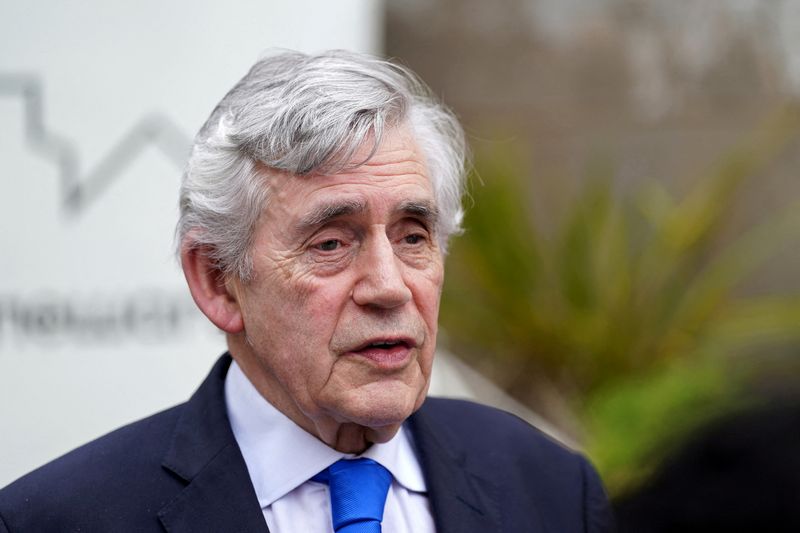

Starmer, aiming for leadership reset, names former UK PM Gordon Brown as adviser

April Jobs Report: Scratch This Surface
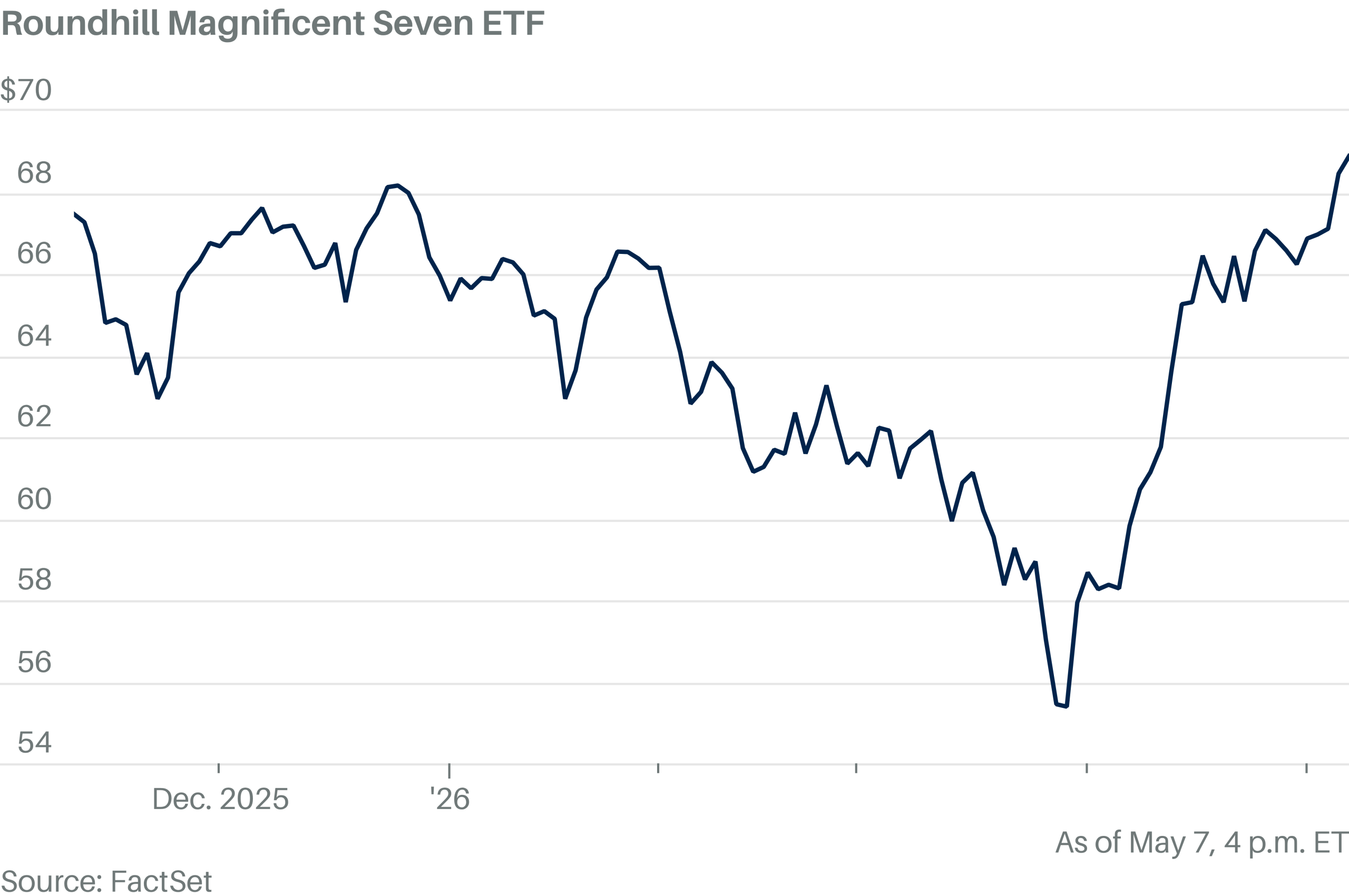
Megacap tech stocks were racking up gains ahead of the opening bell on Friday, putting an exchange-traded fund that tracks the blue-chip on course for a record high.
Roundhill’s Magnificent Seven ETF climbed 0.6% in premarket trading. If it can hold those gains until the close, it would lock in its first all-time high since October 2025.
Each member of the Magnificent Seven was rising in the premarket, with chip designer Nvidia and electric-vehicle maker Tesla up by nearly 1%.
Business
Ignore market noise, India’s long-term story intact, say D-Street bulls Ramesh Damani and Sunil Singhania

Speaking at a fireside session during the Groww India Investor Festival 2026 in Mumbai, both investors urged retail participants to ignore short-term market noise and stay focused on long-term wealth creation through disciplined investing.
“We have become used to markets delivering 15-20 percent returns every year after COVID. Markets do not move in a straight line,” Damani said, cautioning investors against drawing conclusions from short-term corrections or temporary underperformance.
Referring to past market cycles, Damani said benchmark indices across global markets have frequently moved sideways for long stretches, even while fundamentally strong companies continued to steadily create substantial shareholder value beneath the broader market’s muted performance.
“When I started my investing journey, the Sensex was below 1,000. Today it is above 80,000. There is no reason to believe India’s next 10-20 years will not continue to create massive wealth,” he said.

Addressing concerns over persistent foreign institutional investor outflows and India lagging peers such as Korea, Taiwan and the US in recent months, Damani argued that fears of a slowdown in domestic investor participation were overstated.
“Whenever foreigners sell, someone is buying those stocks. Domestic investors understand Indian businesses best, and they are backing Indian companies with conviction,” he said.FIIs have offloaded domestic equities worth Rs 2.06 lakh crore in 2026, remaining net sellers for the third successive month-to-date. They have sold shares worth Rs 14,231 crore, so far this month. In less than five months, foreign investment outflow has surpassed 2025 figures of Rs 1.66 lakh crore.
Also read: FIIs sell over Rs 2 lakh crore worth of Indian equities in 2026. What lies ahead?
Nifty is down over 7% on an year-to-date basis even as its Asian peers like Shanghai Composite (4%), Nikkei 225 (21%) and Kospi (74%) have outperformed the headline index. Its Wall Street rivals like Dow (2.5%) and Nasdaq Composite (13%) have also fared better.
Echoing a similar sentiment, Abakkus Asset Manager Founder Sunil Singhania said India’s economic model remains fundamentally stronger because of its consumption-led growth engine, though he acknowledged that India has not yet emerged as a dominant player in sectors such as semiconductors and deep technology.
“There is no doubt that several global companies have done phenomenally well in AI and semiconductors. But consumption and people ultimately sustain economies, and India remains one of the strongest long-term consumption stories globally,” Singhania said.
Both investors repeatedly stressed the importance of patience and compounding, warning retail investors against chasing speculative returns or shifting between trending asset classes.
“There is no secret to wealth creation. The real secret is compounding,” Damani said during the audience interaction, adding that investors should focus on quality businesses and allow investments time to grow.
Sectoral opportunities
Damani remains bullish on defence, infrastructure, logistics and energy-linked businesses, arguing they could emerge as long-term beneficiaries in an increasingly fragmented geopolitical environment.
“The world has changed. Every country now wants stronger self-defence and supply-chain independence,” he said, adding that investors would need to reposition portfolios for a changing global order.
Asset allocation: Gold/silver
The two investors also pushed back against the growing retail fascination with gold and silver following the sharp rally in precious metals.
Singhania called gold and silver as non-productive assets while emphasising the importance of equities, referring to them as growing assets. He recommended only limited allocation towards precious metals.
(Disclaimer: The recommendations, suggestions, views, and opinions given by the experts are their own. These do not represent the views of The Economic Times.)

Used cars are offered for sale at a dealership on July 11, 2023 in Chicago, Illinois.
Scott Olson | Getty Images
The head of one of the nation’s largest auto finance lenders isn’t overly concerned about rising consumer automotive debt and inflated used car prices leading to longer loans on vehicle purchases.
His main reasoning? The percentage of income consumers are spending on their vehicles has remained relatively flat compared with 2019, before the coronavirus pandemic led to inflated pricing as demand surged but inventories stayed low.
“If I just told you, ‘Car prices going up, interest rates going up, insurance prices going up,’ you would say, ‘You know what, consumers must be paying more as a ratio to the income,’” Capital One Auto President Sanjiv Yajnik told CNBC. “However, if you look at every quintile of salary and earnings of people, the payment-to-income ratio has remained fairly flat.”
While Capital One reports median monthly car ownership payments have jumped from $390 to $525 since 2019, data provided exclusively to CNBC from its automotive unit suggest that vehicle costs have stayed relatively stable compared with income. That’s because, overall, the payment-to-income ratio has remained flat at approximately 10% since 2019, according to the automotive arm of the American bank.
Capital One Auto found 80% of car purchasers who finance a vehicle are below the generally recognized payment to income threshold of 15%.
“The consumer is being cautious. They’re being responsible. This is a much healthier way to do things than the alternative, because it’s not a discretionary spend,” said Yajnik, referring to consumers prioritizing vehicle payments for transportation, including work.
To get to that goal, however, more consumers are taking on longer loans to keep payments affordable.
The auto finance veteran’s view contrasts with others in the industry who view the longer term loans as a detriment to consumers’ pocketbooks.
They argue that so-called “forever loans” of six years or more have led to many buyers, particularly of new vehicles, being underwater on the equity of their cars and trucks. That means they owe more than their vehicle is worth when they decide to trade it in.
Edmunds reports roughly 26% of used vehicles purchased that involved a trade-in vehicle had negative equity this year through April. The amount of negative equity averaged $5,105, a 35% increase from 2019.
“As loan term lengths increase on average, the pace at which consumers make progress paying down their balance slows,” Jessica Caldwell, head of insights for CarMax‘s Edmunds, wrote in a recent online post. “If consumers then trade in their vehicle too soon for any reason, they are increasingly left holding more loan debt.”
Regarding financing for new vehicles during the first quarter, 90.2% of new vehicle loans involving trade-ins with negative equity carried terms of at least 72 months, and 43% extended to 84 months, according to Caldwell. The average negative equity trade-in was $7,183 during the quarter for new vehicles, according to Edmunds.
Those figures have been climbing since 2022, when inflated used vehicle values caused by a pandemic-fueled chip shortage insulated more shoppers from carrying debt into their next vehicle.
Consumers need to keep their vehicles for more time to make the long loans worth it, according to Yajnik. But that can also cause increases in maintenance costs as well as the likelihood that a vehicle needs repairs that exceed its value or has to be scrapped altogether.
“Yes, it takes longer to get your equity, but in the meantime, you get a use of the car, and you’re earning money,” said Yajnik, a 28-year veteran of Capital One who has led the automotive lending division since 2008.
The average listed price of a used vehicle was $25,390 in March, according to Cox’s most recent data. That compares to new vehicles, which depreciate faster, at $48,667.
Cox Automotive reports if all other things are equal on a loan, financing for a $30,000 vehicle at a 9% annual percentage rate would cost $3,100 more on an 84-month term than a 48-month loan. However, there’s a $264 difference in the monthly payments, which Yajnik said makes it more affordable for many consumers, especially those in lower income brackets.
“There’s obviously going to be pockets that have problems, but one has to start from a different place, which is, for which reason are people buying cars, and are they doing so irrationally?” Yajnik said.
Business
Birla Corporation Q4 results: Cons PAT jumps 14% despite marginal revenue uptick; Rs 12.50/share dividend announced

The cement maker posted a marginal uptick in its revenue at Rs 2,836 crore in Q4FY26 was versus Rs 2,815 crore posted by the company in the corresponding quarter of the previous financial year. It was up 0.8%, year-on-year.
The company’s board recommended a dividend of Rs 12.50 per share on 7,70,05,347 ordinary shares for the financial Year 2025-26. It will be paid within 30 days from the date of approval by the shareholders at the company’s upcoming Annual General Meeting.
The PAT surged 459% quarter-on-quarter versus Rs 53 crore in Q3FY26 while the topline grew 31% compared to Rs 2,159 crore in the January-March quarter of FY26.
The company incurred expenses of Rs 2,522 crore in the quarter under review versus Rs 2,064 crore in Q3FY26 and Rs 2,497 crore in Q4FY25. This implies a 22% sequential growth in its expenses and a 1% YoY growth. The expenses were made on material used by the company, purchases of stock-in-trade, employee benefits and finance cost.
The profit before tax (PBT) stood at Rs 380 crore in Q4FY26 versus Rs 80 crore in Q3FY26 and Rs 328 crore in Q4FY25.
For the full financial year, PAT stood at Rs 558 crore versus Rs 295 crore in FY25, recording a jump of 89%. The topline was reported at Rs 9,656 crore in FY26 versus Rs 9,214 crore, a 5% rise.The debt-to-equity ratio in FY26 fell 5 bps to 0.51% versus 0.56% in the previous financial year.
(Disclaimer: The recommendations, suggestions, views, and opinions given by the experts are their own. These do not represent the views of The Economic Times.)

Citi explains why oil prices haven’t gone even higher


Financial analyst by day and a seasoned investor by passion, I’ve been involved in the world of investing for over 15 years and honed my skills in analyzing lucrative opportunities within the market.I specialize in uncovering high quality dividend stocks and other assets that offer potential for long term-growth that pack a serious punch for bill-paying potential. I use myself as an example that with a solid base of classic dividend growth stocks, sprinkling in some Business Development Companies, REITs, and Closed End Funds can be a highly efficient way to boost your investment income while still capturing a total return that follows traditional index funds. I created a hybrid system between growth and income and manage to still capture a total return that is on par with the S&P.
Analyst’s Disclosure: I/we have no stock, option or similar derivative position in any of the companies mentioned, and no plans to initiate any such positions within the next 72 hours. I wrote this article myself, and it expresses my own opinions. I am not receiving compensation for it (other than from Seeking Alpha). I have no business relationship with any company whose stock is mentioned in this article.
Seeking Alpha’s Disclosure: Past performance is no guarantee of future results. No recommendation or advice is being given as to whether any investment is suitable for a particular investor. Any views or opinions expressed above may not reflect those of Seeking Alpha as a whole. Seeking Alpha is not a licensed securities dealer, broker or US investment adviser or investment bank. Our analysts are third party authors that include both professional investors and individual investors who may not be licensed or certified by any institute or regulatory body.


I’m a full-time individual investor with over ten years of experience in the stock market. I look for asymmetric opportunities—situations where the potential upside is much bigger than the downside—even if the timing or exact path is uncertain. I often lean toward classic value ideas, but I’m happy to explore growth or tech opportunities when the risk-reward ratio is compelling. I especially enjoy digging into businesses that are overlooked or out of favor in the current market environment. Writing on Seeking Alpha gives me the chance to share my thoughts and investment ideas with a broader audience. My aim is to provide clear and useful analysis, but I also simply enjoy the process. Investing is something I’m genuinely passionate about, and writing allows me to turn that passion into conversations with other investors.
Analyst’s Disclosure: I/we have a beneficial long position in the shares of SIVEF either through stock ownership, options, or other derivatives. I wrote this article myself, and it expresses my own opinions. I am not receiving compensation for it (other than from Seeking Alpha). I have no business relationship with any company whose stock is mentioned in this article.
Seeking Alpha’s Disclosure: Past performance is no guarantee of future results. No recommendation or advice is being given as to whether any investment is suitable for a particular investor. Any views or opinions expressed above may not reflect those of Seeking Alpha as a whole. Seeking Alpha is not a licensed securities dealer, broker or US investment adviser or investment bank. Our analysts are third party authors that include both professional investors and individual investors who may not be licensed or certified by any institute or regulatory body.

TeraWulf: Entering Execution Phase

Yuzvendra Chahal Vaping In Flight Leaves Ex-India Star Fuming: “Should Be Behind Bars”

MacOS 27 threatens to bury Time Capsule, FOSS brings a shovel

I had a pint of coffee and a great value meal at this hidden village pub

Manchester United reach agreement with Casemiro over contract clause amid transfer speculation

US brings back mandatory military draft registration

Steven Gerrard disagrees with Gary Neville over ‘shock’ Chelsea and Arsenal claim | Football


-
 Crypto World1 day ago
HarrisX Poll Found 52% of Registered Voters Support the CLARITY Act
-

 NewsBeat6 days ago
Channel 5 – All Creatures Great and Small series 7 new post
-

 Crypto World2 days ago
Upbit adds B3 Korean won pair as Base token gains Korea access
-

 Tech5 days ago
Image AI models now drive app growth, beating chatbot upgrades
-

 News Videos6 days ago
AP Dhillon – Old Money (Official Audio)
-
 NewsBeat2 days ago
NCP car park operator enters administration putting 340 UK sites at risk of closure
-

 Fashion19 hours ago
Weekend Open Thread: Marianne Dress
-

 Sports7 days ago
Five killed in Texas plane crash identified as Amarillo pickleball players
-
Entertainment7 days ago
New Netflix Movies in May 2026 — My Top 3 Picks to Stream
-
 Crypto World7 days ago
Pi Network Mandates Protocol 23 Upgrade for All Mainnet Nodes Before May 15 Deadline
-

 Entertainment6 days ago
Melissa Joan Hart and More Stars Attend 2026 Kentucky Derby
-
Entertainment6 days ago
Anna Nicole Smith’s Daughter Attends 2026 Kentucky Derby
-

 Crypto World6 days ago
Bitcoin mining equities rise in 2026 as BTC lags behind
-
Entertainment6 days ago
Venus Williams’ Best Met Gala Looks Over the Years
-

 Business6 days ago
Luka Doncic Injury Update: Doncic’s Hamstring Recovery Slows Lakers’ Hopes Against Thunder: Can He Run Yet?
-
Entertainment6 days ago
“Storage Wars” star Darrell Sheets' ex-wife breaks silence on his death
-

 Sports6 days ago
Is Man United v Liverpool on TV? Channel, streaming and how to watch Premier League fixture
-

 Business7 days ago
Kuwait International Airport Resumes Operations After Closure as Regional Tensions Ease in 2026
-
 Entertainment7 days ago
Netflix’s 10-Part Miniseries Based on a True Story Is a Perfect Weekend Binge
-
Crypto World7 days ago
Q1 2026 Tech Layoffs AI Wave Hits 81,747 as Firms Shift to AI Infrastructure
You must be logged in to post a comment Login