Connect with us
DAPA Banner

Business

AI will supercharge sports team valuations

Published

on

AI will supercharge sports team valuations
Inside Alts: Arctos Partners' Ian Charles on investing in sports

A version of this article appeared in CNBC’s Inside Alts newsletter, a guide to the fast-growing world of alternative investments, from private equity and private credit to hedge funds and venture capital. Sign up to receive future editions, straight to your inbox.

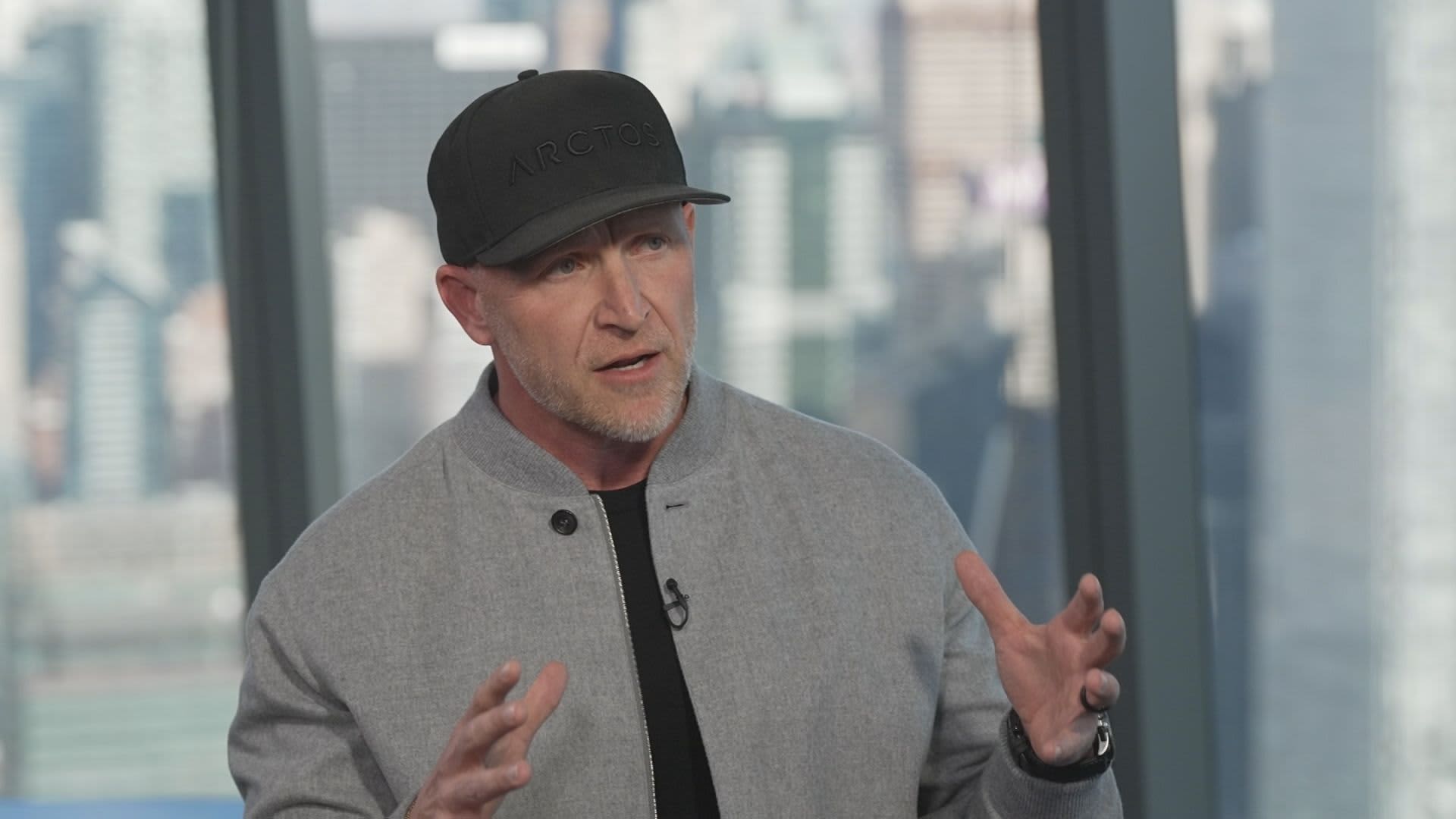
The rise of artificial intelligence is likely to boost the valuations of sports teams and media rights, making sports an even more attractive asset class for investors, according to Ian Charles, managing partner of Arctos Partners.

With AI-generated video and online content becoming more ubiquitous, live sports will become even more important in the battle for attention, Charles told Inside Alts. Since fans will pay more for live experiences and in-person games, team values will continue to climb and generate strong returns, he said.

“Sport is the only must-see, appointment-viewing content,” Charles said. “In a world where people are increasingly lonely and looking for a connection — for the communal, tribal connection you get from watching a sporting event with your friends, being part of your community, crying and screaming and cheering — the value of that to the media landscape and ecosystem is just becoming exponential.”

Advertisement

Get Inside Alts directly to your inbox

Arctos is at the center of an investing boom in sports. With $15 billion in assets under management, the Dallas-based firm has helped pioneer the growing role of private equity in sports team ownership and capital raises. It’s the only private equity firm approved to own equity in teams across all five major North American professional leagues – the NFL, NBA, MLB, NHL and MLS.

The firm has gained such a big lead in sports that it’s become an attractive target for other private equity firms. Bloomberg reported last month that private equity giant KKR has agreed to buy Arctos at a $1 billion valuation, keeping Charles and other top management. Arctos and Charles declined comment on the report.

Yet despite concerns over a bubble in team valuations, Charles said the thesis for sports as an investment is in the early innings.

Team values have two drivers, he said. The first is league revenues, which are distributed among teams and equates to intellectual property. The second is the live entertainment business, driven by stadiums and other revenue that are protected since “no one is allowed to compete with you in your particular form of live entertainment.”

Advertisement

“Those two assets are quite unique,” Charles said. “You have this very durable, very important IP piece, and then this local live entertainment piece.”

Those twin drivers have given major-league sports teams unique characteristics as investments.

Charles said North American sports teams have mostly outperformed public equities during a 3-year, 5-year and 10-year period, with only occasional exceptions. Team values have increased steadily in value, with little volatility. They are also largely uncorrelated with stocks, delivering the elusive “alpha” that many wealthy investors and family offices are always searching for.

Once seen as trophy assets and unprofitable vanity plays for billionaires, sports teams have become more rigorous businesses that are increasingly accessible for investors through private equity funds. In 2024, the NFL voted to approve select PE firms to buy minority stakes in teams, becoming the last of the major U.S. pro leagues to welcome private equity investors. 

Advertisement

Nearly 1 in 5 professional sports teams now has some kind of private equity investment, according to JPMorgan. The cumulative returns of the four big major sports leagues – NFL, NBA, MLB and NHL – have surpassed the S&P 500 since 2014, the bank said.

Charles said sports are also “anti-cyclical,” meaning they are less vulnerable to economic cycles and recessions.

“They’ve got this sort of monopolistic local live-entertainment business in sports, that’s really interesting,” he said. “And 70% to 80% of the total revenue in premium sports is long-term and contracted through sponsorships, through media rights, with guaranteed payments and escalators. So it doesn’t matter if GDP goes down or up.”

Not every team or league is a sure bet, however. Charles said Arctos sticks only to the five major leagues. He said emerging sports, like padel, pickleball, E1 Series electric-powerboat racing and others, have yet to prove themselves as durable investments.

Advertisement

“I have no idea which of the professional pickleball leagues is going to be the premium source of content in 20 years,” he said. “I do know that when there is a Super Bowl in 2045 it’s going to command the attention of the entire world.”

If there is one new leagues that can could break out and become a big business, it’s likely to be in women’s sports, he said.

“I think that one of the women’s sports leagues is going to ascend and command global attention,” he said. “I don’t know which one it is. I don’t know where it will be based. One of them is going to capture the energy and the fandom of the globe.”

Advertisement
Continue Reading
Click to comment

You must be logged in to post a comment Login

Leave a Reply

Business

Schools to get $2.1b in pre-budget splash

Published

on

Schools to get $2.1b in pre-budget splash

More than $2.1 billion has been committed to state school infrastructure funding ahead of the May budget.

Continue Reading

Business

WA govt splashes $3.8m to keep food relief services running

Published

on

WA govt splashes $3.8m to keep food relief services running

A WA government cash injection will keep vital food relief delivery trucks on the road as demand for their services ramps up due to rising fuel bills.

Continue Reading

Business

Concurrent Technologies Plc (COTGF) Discusses Full Year Results and Leadership Transition with Strategic Business Updates Transcript

Published

on

OneWater Marine Inc. (ONEW) Q1 2026 Earnings Call Transcript

Concurrent Technologies Plc (COTGF) Discusses Full Year Results and Leadership Transition with Strategic Business Updates April 17, 2026 6:30 AM EDT

Company Participants

Miles Adcock – CEO & Executive Director
Kim Maria Garrod – CFO & Executive Director

Presentation

Advertisement

Operator

Good morning, and welcome to the Concurrent Technologies Plc Final Results Investor Presentation. [Operator Instructions]

Before we begin, I would like to submit the following poll. And I would now like to hand you over to CEO, Miles Adcock. Good morning to you.

Advertisement

Miles Adcock
CEO & Executive Director

Good morning, and welcome to our full year results for 2025.

Next slide, please. So my name is Miles. I’m the CEO. This is my fourth set of annual results, and I’m joined by Kim, our CFO. And I should note that at the same time as we issued our full year results, we also announced that Kim has decided to retire at the end of this year. My good friend and colleague, Kim, do you want to say a few words?

Advertisement

Kim Maria Garrod
CFO & Executive Director

Yes. So I achieved a milestone birthday this year, and that made me rethink what I was going to do. So I have decided to retire, but I’m in the business until the end of the year. I’m very excited about the business, and I will be watching it very closely after I’ve gone, and I’ll be regularly calling Miles for updates. But I’m fully committed to the business. And as I say, I’ll be taking out for most of this financial year.

Miles Adcock
CEO & Executive Director

Advertisement

Thank you, Kim. And just to note, Kim has generously given us until the end of the year to seek a replacement, and I’ve engaged Korn Ferry this week, and we’re working hard at finding a worthy successor.

Advertisement
Continue Reading

Business

World weighs fate of Mideast ceasefire after US seizes Iranian cargo ship

Published

on

World weighs fate of Mideast ceasefire after US seizes Iranian cargo ship


World weighs fate of Mideast ceasefire after US seizes Iranian cargo ship

Continue Reading

Business

MPLX: A Sound Growth Story Irrespective Of Iran Headlines

Published

on

Atmos Energy: A Stable Income Growth Stock In Uncertain Times (NYSE:ATO)

MPLX: A Sound Growth Story Irrespective Of Iran Headlines

Continue Reading

Business

Budget won't be bonanza for cutting red tape: minister

Published

on

Budget won't be bonanza for cutting red tape: minister

Business groups have urged the government to cut a raft of regulations ahead of the federal budget, but the finance minister says changes have to make sense.

Continue Reading

Business

China leaves lending benchmarks unchanged for 11th month in April

Published

on

China leaves lending benchmarks unchanged for 11th month in April


China leaves lending benchmarks unchanged for 11th month in April

Continue Reading

Business

IPOs could raise up to $25 billion in 2026, too, despite D-St caution

Published

on

IPOs could raise up to $25 billion in 2026, too, despite D-St caution
Mumbai: A clutch of large IPOs is expected to prop up India’s primary market in 2026 even as market uncertainty slows down broader activity compared to the previous two robust years, said Ranvir Davda, co-head of investment banking at HSBC India.

“The number of deals may come down, but the size and aggregate value may still be similar (to the previous years),” said Davda in an interview.

Reliance Industries’ telecom arm Jio Platforms, National Stock Exchange, Zepto, PhonePe, Manipal Hospitals and and SBI Funds Management are among the large issuances expected to hit the market in 2026. Together, these issues could raise ₹1 lakh crore (about $10.8-10.9 billion).

So far this year, 20 companies have raised $2.5 billion, according to Prime Database and ETIG Database. That comes after two record years that saw 94 and 115 mainboard IPOs in 2024 and 2025, raising nearly $21-23 billion.

Advertisement

This year’s IPO fundraise could be between $21 billion and $25 billion.


“This year, a larger percentage of companies are mid to large-sized,” said Davda. “Many of these are backed by large groups or private equity investors and, therefore, have the flexibility to wait, ride volatility, and avoid pressing forward if valuations are not aligned.”
The early part of this year has been slower for the IPO market, with the West Asia conflict weighing on secondary markets, IPO subscriptions and listing gains, prompting several companies to defer offerings. “This year will be volatile. Windows to complete trades will be shorter, so readiness is critical,” Davda said.

At the same time, companies that need capital are showing more willingness to negotiate.

Issuers are increasingly tapping AIFs, family offices and special situations funds alongside traditional investors, while using pre-IPO placements as a bridge to raise capital with visibility to a listing over the next 6-18 months, he said. According to Davda, technology faces sharper scrutiny amid AI disruption, global uncertainty and profitability concerns, though large consumer-tech and fintech offerings are still likely to proceed as “must-own” India exposures.

Advertisement
Continue Reading

Business

Janus Living: Valuation Seems To Have Priced In Near-Term Upsides (NYSE:JAN)

Published

on

Brookdale: Operational Leverage Signals A Major Pivot

This article was written by

I focus on long-term investments while incorporating short-term shorts to uncover alpha opportunities. My investment approach revolves around bottom-up analysis, delving into the fundamental strengths and weaknesses of individual companies. My investment duration is the medium to long-term. Ultimately, I aim to identify companies with solid fundamentals, sustainable competitive advantages, and growth potential.

Analyst’s Disclosure: I/we have no stock, option or similar derivative position in any of the companies mentioned, and no plans to initiate any such positions within the next 72 hours. I wrote this article myself, and it expresses my own opinions. I am not receiving compensation for it (other than from Seeking Alpha). I have no business relationship with any company whose stock is mentioned in this article.

Seeking Alpha’s Disclosure: Past performance is no guarantee of future results. No recommendation or advice is being given as to whether any investment is suitable for a particular investor. Any views or opinions expressed above may not reflect those of Seeking Alpha as a whole. Seeking Alpha is not a licensed securities dealer, broker or US investment adviser or investment bank. Our analysts are third party authors that include both professional investors and individual investors who may not be licensed or certified by any institute or regulatory body.

Advertisement
Continue Reading

Business

FMCG sector set for steady Q4 on rural demand and volume growth

Published

on

FMCG sector set for steady Q4 on rural demand and volume growth
ET Intelligence Group: The FMCG sector is expected to post a steady March-quarter performance, supported by stable rural demand, gradual urban recovery and volume growth even as pricing remains subdued in several segments. While steady raw material costs during most of the quarter are margin supportive, the recent rise in costs of crude-linked inputs such as packaging materials could weigh on margins. Companies with stronger execution, premium portfolios and better distribution reach are expected to outperform, while category-specific challenges and international headwinds may keep performance uneven across the pack.

Hindustan Unilever is expected to report mid-single digit revenue growth led by 4-5% volume growth. Growth is expected to be broad-based, with beauty and wellbeing growing in double-digits, while home care, personal care and foods & beverages are likely to grow in mid-single digits. The demerger of low-margin ice cream business may support operating margin before depreciation and amortisation (Ebitda margin).

ITC may show pressure in the cigarettes segment amid flat volume and higher taxes while displaying resilience in non-cigarette segments. The FMCG and agriculture related business is expected to remain robust, while paperboards business may grow in single digit. The margin for the cigarettes business is likely to contract amid rising leaf tobacco costs and limited pricing hikes.

FMCG Pack Heads for Steady Q4 Despite Patchy Category TrendsAgencies

Books & MARKS HUL, Nestlé and Britannia set for volume-led growth; high tax on cigarettes may weigh on ITC; Dabur may report modest int’l revenue

Nestle India’s consolidated revenue growth is expected to be in double-digits, led largely by volumes in the domestic market while exports may show recovery on a weak base. Normalisation is expected after GST-related disruptions in the previous quarter. However, margin is likely to contract on account of high inflation in the coffee segment.
Asian Paints is likely to report better volume growth for the domestic decorative paints segment on a weak base. Upcoming price increase may boost channel restocking thereby aiding primary sales. International business may be subdued due to the Middle East disruption. Margins are likely to improve on stable raw material prices during the quarter, with the impact of recent crude inflation expected to be limited for the March quarter.

Advertisement


Varun Beverages is expected to report high-single digit revenue growth in the March quarter, with international markets likely to drive momentum through high double-digit volume growth. Ebitda margin is likely to contract, partly due to upsizing in India and ramp-up of snacks in Africa.
Britannia Industries may report double-digit revenue growth led by high-single digit volume expansion due to higher grammage in low-unit packs, which account for about two-third portion of sales. Margins are likely to improve supported by stable raw materials prices, especially in January and February. Dabur India is expected to post modest revenue growth, driven by mid-single digit volume growth in the domestic business. However, its international operations, particularly the Middle East and North Africa (MENA) region, which contributes around 8% of revenue may remain weak amid geopolitical tensions. Within domestic categories, home and personal care is expected to deliver double-digit growth, while healthcare and foods may see low single-digit expansion.

Colgate-Palmolive India is expected to report low single-digit volume growth on a weak base, after three consecutive quarters of declines. The margin could contract due to higher promotions and advertisement spends.

Continue Reading

Trending

Copyright © 2025