

Politics
UK Economy Faces Blow From Trumps Iran Actions


Donald Trump’s war in Iran will deliver a hammer blow to the UK economy, experts have warned.
The OECD think-tank has dramatically downgraded its forecast for Britain’s economic growth in the year ahead, with inflation also set to be far higher than previously thought.
It means Brits will have to brace themselves for higher prices in the shops, a jump in energy bills and soaring mortgage costs.
The findings will pile pressure on chancellor Rachel Reeves to either hike taxes or slash public spending in the next Budget to balance the nation’s books.
Just three months ago, the OECD forecast the UK economy would grow by 1.2% in 2026.
But the Paris-based body has now downgraded that to just 0.7% due to the global uncertainty caused by Trump and Israel’s decision to bomb Iran.
They also said “a prolonged period of disruption could also result in the emergence of significant energy shortages that would lower growth further”.
Meanwhile, the UK rate of inflation is set to hit 4% this year – double the Bank of England’s 2% target and well up on the 2.5% the OECD forecast in December.
It means the UK is set to have the second-highest inflation rate this year in the G7 group of advanced economies, behind only the US.
Reeves said: “The war in the Middle East is not one that we started, nor is it a war that we have joined. But it is a war that will have an impact on our country.”
The OECD report also warned of a sharp increase in fertiliser prices since the war began a month aga, with countries in the Middle East big producers of things like urea and ammonia.
Supply shortages “could increase global food prices, with potentially serious impacts to household finances and inflation expectations”, they said.
Reeves insisted that “in an uncertain world we have the right economic plan”.
But Tory shadow chancellor Mel Stride said: “This downgrade from the OECD is a damning verdict on how vulnerable our economy is thanks to Labour.
“Rachel Reeves has ramped up borrowing, spending and taxes. As a result, we have stagnant growth, while inflation, unemployment, the deficit and debt interest costs have all shot up.
“At the same time, Ed Miliband’s net zero obsession has left us reliant on imported energy instead of using our own supplies in the North Sea.
“Rachel Reeves can blame the world all she wants, but it’s her choices that have weakened our economy at the worst possible moment.”
Daisy Cooper, the Liberal Democrats’ Treasury spokesperson, said: “This dire OECD forecast is a wake-up call that the Government’s anti-growth agenda is leaving families to pick up the tab through soaring food and energy bills.
“The fastest way to break this cycle of stagnation is to get an EU-UK customs union to lower costs, secure our energy future, and finally kickstart real growth.”


The post Is the AI bubble about to burst? appeared first on spiked.
VININGS, Ga. — Brad Raffensperger is fighting to save his political future as MAGA takes hold of the Georgia GOP.
The secretary of state rose to national prominence by defying President Donald Trump’s efforts to overturn the 2020 election, but he is carefully trying to avoid the anti-Trump lane while he runs for governor.
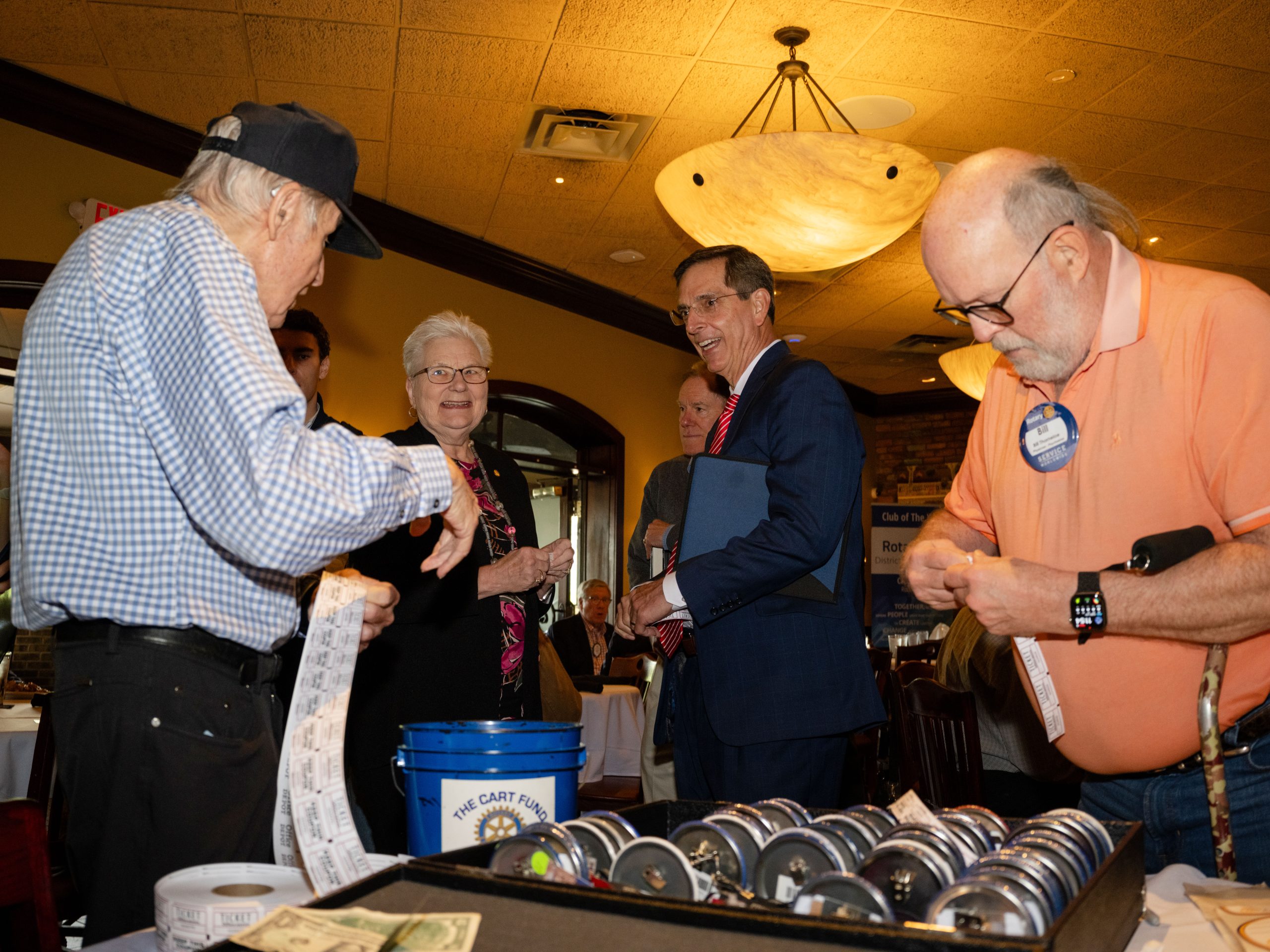
Instead, he’s running an old-school campaign aimed at an old-school Republican Party: He’s holding low-key events compared with his GOP opponents’ flashier rallies, and he’s focusing on bread-and-butter issues, rather than harping on election security. At one Atlanta-area rotary club gathering in April, Raffensperger was all too happy to tout his business background and his pledge to cap property taxes. Everywhere he goes, he drops the word conservative.
“I have my own lane, and I feel good where we are,” Raffensperger told POLITICO after the event. “It’s the lane about being a Christian conservative businessman who’s built a business from scratch.”
At its core, Raffensperger’s candidacy is a test of whether the party’s non-MAGA guard can hold on in one of the nation’s premiere battleground states. He’s defied expectations before, fending off a Trump-backed candidate in 2022 to keep his current position. But 2026 poses a new challenge, as Georgia’s GOP has increasingly shunned its small government roots in favor of aligning with the populist right.

Raffensperger maintains he has a path to victory. Asked whether Trump’s grip on the party is complicating it, he deflected: “I’m doing just fine. I’m going to be in the run-off.”
But the reality is Raffensperger is still struggling to break through in the governor’s race, polling at a consistent third place behind Trump-backed Lt. Gov. Burt Jones and billionaire Rick Jackson ahead of the May 19 primary. Republican strategists and officials in the state were widely skeptical of Raffensperger’s chances of success.
“This is the party of Trump today — like it or not, it is — and I find it very difficult to see someone being able to be anti-Trump in a Republican primary and be successful,” said Casey Cagle, a Republican who served as lieutenant governor from 2007 to 2019. He’s experienced the rise of the MAGA base firsthand and has since tacked further to the right.
“The base has grown far, far greater to the right than what it was in my day,” said Cagle, who is supporting Jones in the governor’s race. “The core of the Republican Party has moved far away from the Chamber of Commerce mindset.”
Before February of this year, Raffensperger seemed poised to draw enough support in the primary to keep Jones under the 50 percent threshold he needed to trigger a run-off election. Then Jackson upended the race with his bombastic spending and MAGA pandering, pushing Raffensperger further down in the polls.

Even if the secretary of state were to make a run-off against either Jones or Jackson, his chances of actually winning the nomination are still slim, said GOP strategist Jeremy Brand, who has worked on Gov. Brian Kemp-aligned committees and is unaffiliated in the governor’s race.
“It’d be incredibly tough,” Brand said. “The edge in a run-off where voters are traditionally more conservative, that are willing to come back out again, I think the odds go to the more conservative candidate.”
2020 election woes
Raffensperger has been battling his own party on various fronts since he first stood up to Trump.
A faction of the Georgia GOP tried to bar him from seeking office again on the Republican ticket. And local party leaders recently broke with precedent to allow the RNC to eschew its neutrality and spend resources on backing Jones in the primary. The MAGA base that failed to oust Raffensperger in 2022 is trying again to end his political career — along with others deemed insufficiently loyal to the president.
Attorney General Chris Carr, like Raffensperger, is also mounting a bid for governor and previously defeated a Trump-backed challenger in 2022. But he’s polling even lower than the secretary of state. And Gabriel Sterling, a former top Raffensperger lieutenant, is locked in a noisy primary in his bid for secretary of state as he faces off against a former Democrat-turned-MAGA acolyte and a GOP state representative who once served as Kemp’s top aide.
The 2020 election has continued to be a key litmus test in Georgia, especially as Trump continues to air his grievances over his loss. Several recounts and extensive litigation have only proven Raffensperger’s case that former President Joe Biden fairly defeated Trump in 2020. But many voters and candidates continue to question the truth of the results in a show of loyalty to the president, further isolating the secretary from the increasingly conservative Republican base.
“I voted for Trump. I wish he’d have won. I think he did win, I’m one of those people,” said Bruce Brooker, 72, outside a Jones campaign event in rural Atkinson County earlier this month.

An April POLITICO Poll found that most respondents who plan to vote for Republicans this midterm are still skeptical: Nearly 40 percent say the 2020 election was stolen, while 25 percent don’t believe it was but have questions about the election’s legitimacy. Just 25 percent say the election wasn’t stolen.
Raffensperger continues to defend his work and the integrity of Georgia’s elections at large — “I’m really proud because we made elections more secure” — and is quick to highlight the changes he and state Republicans made in their 2021 overhaul of how the state conducts elections, which drew ire from Democrats and the MLB alike.
Still, several Georgia Republicans say he’s struggling to play catch-up as the base shifts away from his technocratic approach to politics.
“Brad stands in stark conflict to a party that is at the activist level very much aligned with President Trump, when Raffensperger is anything but,” said one former longtime state GOP official, granted anonymity to speak openly about evolving party dynamics. “His candidacy will be and is a test to determine if that lane still exists in the Georgia Republican Party apparatus.”
Raffensperger’s path forward
On a recent afternoon, Raffensperger, clad in a navy suit and striped red tie, headlined the Vinings-Cumberland Rotary Club’s weekly meeting, shaking hands and chatting with voters before taking his place behind the lectern at the front of the room. The state’s legislative session had ended barely a week earlier.
“What I thought I’d do is tell you where we are right now. We just finished up my last session,” he told the audience, ticking through accomplishments: streamlining professional licensing processes, securing an agreement to have money returned to victims of a local Ponzi scheme, and improving systems to make Georgia elections “free, fair and fast.”
It wasn’t the kind of red meat fodder that Republican politics thrive on in the Trump era, but the type of accolades that resonate with the kind of voters at the meeting, held just over the border from Atlanta’s city limits in suburban Cobb County.

Cobb County is one of several former Republican bastions surrounding metro Atlanta that have flipped blue as the Trump-styled GOP turned off suburban voters. Once the homebase for conservative stalwart former Speaker Newt Gingrich, the county voted overwhelmingly for former Vice President Kamala Harris in 2024 despite her statewide loss to Trump.
It’s still home to plenty of business-focused Republican voters who are not keen on the president — then-Sen. Marco Rubio carried the county over Trump during the 2016 GOP primaries, and former United Nations Ambassador Nikki Haley performed nearly twice as well in the county compared to her statewide returns against the president in 2024. These are the voters Raffensperger is focused on, content to let Jones and Jackson battle it out for the MAGA class.
Jason Shepherd, the former Cobb County Republican chair, said the low-key civic group events have “been the hallmark of Brad Raffensperger’s success” and an emblem of the party’s business-focused past. It’s in sharp contrast with the attention-grabbing rallies that have defined Trump’s dominance of Republican politics.
Raffensperger’s quieter approach has previously served him well, when he overcame a 2022 primary challenge from former Rep. Jody Hice (R-Ga.) who ran with the president’s endorsement. This time is different: Then, he held the power of incumbency and benefited from Trump’s influence waning temporarily in the aftermath of Jan. 6 and his 2020 election defeat.
Now, Trump, back in power, has reaffirmed his iron grip on the party and Raffensperger is up against two MAGA candidates pining for the base’s attention. Add to that the fact he’s being massively outspent: His $4 million has been dwarfed by Jackson’s whopping $61 million and Jones’ $26 million in expenditures, according to an AdImpact analysis.
The Jones and Carr campaigns were quick to dismiss claims that the secretary of state had a path to the run-off and an eventual win. A spokesperson for Jackson did not respond to a request for comment.
If Raffensperger were to lose the primary, his loss would become another nail in the coffin for an old-school GOP that continues to resist MAGA. But his insistence that his lane — and version of the Republican Party — still exists is, for his closest allies, a testament to his persistence.
“Brad Raffensperger never really stopped from 2022 on,” said Sterling, the Raffensperger ally who’s running for secretary of state and has also faced MAGA’s ire for refusing to overturn election results. “He could have set up a foundation, gone around the country and just talked about democracy and he would have been applauded. Instead he chose to go into the battle and fight.”
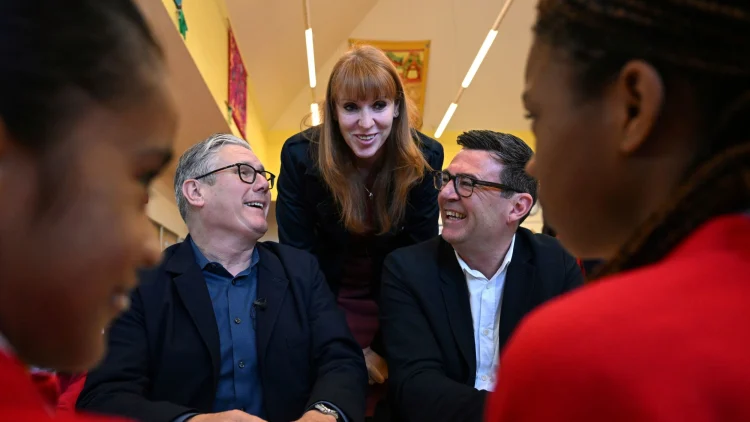
Keir Starmer, left, former deputy prime minister Angela Rayner and Manchester mayor Andy Burnham, April 2026 (Paul Ellis/Pool Photo via AP)
4 min read
Former deputy prime minister Angela Rayner has backed away from challenging Keir Starmer for the leadership herself – but called for Andy Burnham to be allowed back into the parliamentary party.
In a lengthy statement released on Sunday afternoon following a poor set of election results for Labour in England, Wales and Scotland, Rayner warned: “What we are doing isn’t working, and it needs to change. This may be our last chance.”
She added: “We are in danger of becoming a party of the well-off, not working people. The Peter Mandelson scandal showed a toxic culture of cronyism.”
Advising Labour to put “the common interest ahead of factionalism”, the Labour MP for Ashton-under-Lyne called on the leadership “to acknowledge that blocking Andy Burnham was a mistake”.
Rayner has not called directly for a leadership change, nor demanded that Starmer set out a timetable for his departure, as almost 40 Labour MPs have now done.
But her intervention is critical of the Prime Minister and will be interpreted by some as her rowing in behind a Burnham leadership bid.
“We must show we understand the scale of change the moment calls for – that means bringing our best players into Parliament – and embracing the type of agenda that has been successful at a local level, rather than reaching back to an agenda and politics that has failed people,” she said.
“These are the fights we need to have, and the change in direction we need to see. Policy tweaks will not fix the fundamental challenges facing our country. This government needs, at pace, to put measures in place that make people’s lives tangibly better, while fixing the foundations of a system rigged against them.
“The Prime Minister must now meet the moment and set out the change our country needs. Change our economic agenda to prioritise making people better off, change how we run our party so that all voices are listened to, and change how we do politics.
“Labour exists to make working people better off. That is not happening fast enough, and it needs to change – now.”
A Labour MP on the ‘soft left’ of the party told PoliticsHome: “She’s right but also wrong. The PM is a busted flush and needs to go. We need change but Keir Starmer cannot deliver it.”
They added: “I would read it like she is waiting for Burnham to come back.”
An MP on the Labour left said: “If Andy is blocked by the timetable, things will shift. The spanner is Ed Miliband and I’m unclear how that will play out. If Tribune back Ed, she’ll struggle.”
A different ‘soft left’ Labour MP, who backs Burnham, said: “She is keeping her powder dry at the moment. I suspect she will move if Wes does.”
They also described Starmer’s expressed desire in a new Observer interview to continue as PM for 10 years as “a sure sign that it’s over”, adding: “We’ve entered the delusional phase.”
Although Health Secretary Wes Streeting was reported by the Telegraph today as having told Starmer that he is preparing his case to be the next prime minister, a source close to Streeting told PoliticsHome that this relates to an old report about him making preparations in case Starmer’s premiership fell apart.
While neither Rayner nor Streeting have so far made their move, north London MP and former minister Catherine West has reiterated her willingness to launch a leadership challenge if the Cabinet does not take action on Monday.
She told the BBC on Sunday morning: “I will hear what the Prime Minister’s got to say tomorrow and, then if I’m still dissatisfied, I will put out my email to the Parliamentary Labour Party, asking for names.”
Starmer backers are pinning their hopes on a speech by the Prime Minister on Monday to turn things around. PoliticsHome understands that other outwardly loyal Labour MPs are waiting to see what is said and how it lands before voicing their own views on the future of the leadership.
On Sunday Josh Simons, a former minister who previously led Starmerite organisation Labour Together, added his name to the list of MPs calling on Starmer to be replaced.
“I do not believe the Prime Minister can rise to this moment. He has lost the country. He should take control of the situation by overseeing an orderly transition to a new prime minister,” Simons said.
In the statement, Rayner set out her priorities for government, including immediate action to cut costs for households, more sectoral bargaining, a plan to end freehold for good, enhanced devolution and further planning reforms.

Angela Rayner has criticised what she calls a “toxic culture of cronyism” in a 1000-word statement issued after this week’s local elections.
Rayner, who resigned as deputy prime minister in September 2025, has called on the Labour Party to “live up to our name: we must be the party of working people.”
She further warned that Labour was in danger of “becoming a party of the well-off, not working people.”
Rayner argued that the Peter Mandelson vetting debacle had exposed a “toxic culture of cronyism”.

MDU warns Chancellor clinical negligence system ‘not fit for purpose’

Northern Ireland RE curriculum is ‘indoctrination’ – Supreme Court
She called on the prime minister to “meet the moment and set out the change our country needs.”
The former deputy prime minister also described the decision to block Andy Burnham, the Greater Manchester mayor, from standing in the Gorton and Denton by-election as a “mistake.”
Read Rayner’s statement in full below.
Our party has suffered a historic defeat.
Many good Labour colleagues have lost their seats despite working hard for those they represented. We have lost good Labour administrations and lost the chance for more.
What we are doing isn’t working, and it needs to change. This may be our last chance.
The Labour Party must now live up to our name: we must be the party of working people.
We’ve heard the same on the doorstep as we’ve seen in the polls – the cost of living is the top issue for voters of all parties. People have turned to populists and nationalists because we have not done enough to fix it.
Living standards are barely higher than they were a decade and a half ago. People feel hopeless – that the cost of living crisis will never end, and now they see oil and gas companies use global instability to post record profits.
Once again, ordinary people are paying the price for decisions they didn’t make. It’s no wonder that across the UK, working people feel the system is rigged against them.
Things can be so much better than this. Countries including Spain and Canada have shown that economies can grow and people can thrive when governments stay true to labour and social democratic values and put people first. We need to learn from that.
In London, we lost young people who fear they will never afford a home. In my patch and across the north, we lost working people whose wages are too low and costs too high. In Scotland and Wales, people do not currently see Labour as the answer.
We are in danger of becoming a party of the well-off, not working people.
The Peter Mandelson scandal showed a toxic culture of cronyism.
Decisions like cutting winter fuel allowance just weren’t what people expected from a Labour government.
For too long, successive governments have allowed wealth and power to concentrate at the top without a plan to ensure the benefits of economic growth are shared fairly. The result is an economy that does not work for the majority, with wealth concentrated in too few hands. This level of inequality, alongside squeezed living standards, is the outcome of a model built on deregulation, privatisation, and trickle-down economics.
But we have the chance to fix this.
We need immediate action to cut costs for households and put money back into the everyday economy. This can be done within the current fiscal rules, by ensuring those who benefit from the crisis contribute more so that everyone can thrive.
Our Employment Rights Act was just the first step in our plan to Make Work Pay. Now is the time to take the next steps, starting with a Fair Pay Agreement in social care – but not ending there. A rising minimum wage must go alongside our programme to get young people into work.
The investment we secured in social and affordable housing should now unleash a building boom that benefits British business and workers. We must double down on renters’ reform and show leaseholders our action on tackling ground rents and charges was just a first step to ending freehold for good.
Our devolution revolution has begun, but is nowhere near done.
Giving mayors powers to transform planning and licensing can boost local business and good growth, in the interests of local people. They must go alongside economic powers and public services.
Boosting community ownership and stopping the sell-off of local assets from pubs to playgrounds will put power back in local hands, helping restore the pride they feel in the places they live.
We must go further on planning reforms, to build the schools, hospitals, roads and infrastructure the country needs to grow.
We should be unafraid to promote new forms of public, community and cooperative ownership across the board. Buses and trains being brought back into public hands can now operate for the public good, at prices passengers can afford.
Thames Water is an iconic failure of privatisation, which resonates for the same reasons. People are rightly sick of bonuses for bosses who deliver nothing but higher bills. We must face down demands that the public pay the price of private failure.
We must create good jobs that pay decent wages by ensuring defence investment includes a secure manufacturing base. Use our house building programme to boost construction, invest in the green economy, backing SMEs by reforming business rates and increasing support to revive our high streets and local economies, raise the minimum wage and get young people into work.
And then there is politics itself, putting power back into people’s hands so that they are shaping the decisions that impact them. We must tackle the inflow of dodgy money in our politics – something that Nigel Farage, who took 5 million pounds in a secret personal gift from an offshore crypto baron, will never do. We must make politics work for ordinary people.
We can only prove we mean it by putting the common interest ahead of factionalism.
This is bigger than personalities, but it is time to acknowledge that blocking Andy Burnham was a mistake. We must show we understand the scale of change the moment calls for – that means bringing our best players into Parliament – and embracing the type of agenda that has been successful at a local level, rather than reaching back to an agenda and politics that has failed people.
These are the fights we need to have, and the change in direction we need to see. Policy tweaks will not fix the fundamental challenges facing our country. This government needs, at pace, to put measures in place that make people’s lives tangibly better, while fixing the foundations of a system rigged against them.
The Prime Minister must now meet the moment and set out the change our country needs.
Change our economic agenda to prioritise making people better off, change how we run our party so that all voices are listened to, and change how we do politics.
Labour exists to make working people better off. That is not happening fast enough, and it needs to change — now.
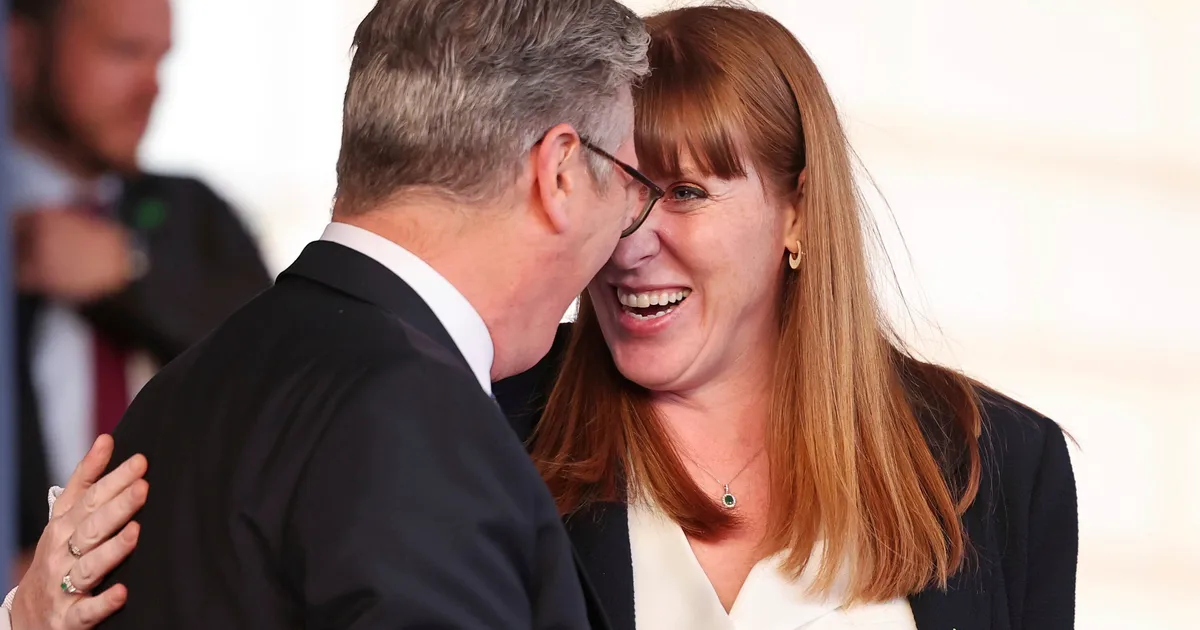
Angela Rayner has told Keir Starmer to “change now” as the prime minister faces the prospect of a leadership challenge within the next 24 hours.
In her first public comments since Labour’s catastrophic performance in last Thursday’s elections, Rayner also threw her weight behind Andy Burnham’s attempt to become an MP again.
She said: “What we are doing isn’t working, and it needs to change. This may be our last chance.”
Rayner, who was forced to resign last September over a tax scandal, condemned Starmer’s handling of the Peter Mandelson row, which she said “showed a toxic culture of cronyism” in the party.
She also said it had been “a mistake” to block Burnham from standing in February’s by-election in Gorton and Denton, which saw Labour lose to the Greens.
Rayner said the Greater Manchester mayor should be allowed to return to Westminster.
“This is bigger than personalities, but it is time to acknowledge that blocking Andy Burnham was a mistake,” she said.
“We must show we understand the scale of change the moment calls for – that means bringing our best players into parliament – and embracing the type of agenda that has been successful at a local level, rather than reaching back to an agenda and politics that has failed people.
“These are the fights we need to have, and the change in direction we need to see. Policy tweaks will not fix the fundamental challenges facing our country.
“This government needs, at pace, to put measures in place that make people’s lives tangibly better, while fixing the foundations of a system rigged against them.
“The prime minister must now meet the moment and set out the change our country needs.
“Change our economic agenda to prioritise making people better off, change how we run our party so that all voices are listened to, and change how we do politics.
“Labour exists to make working people better off. That is not happening fast enough, and it needs to change — now.”
Subscribe to Commons People, the podcast that makes politics easy. Every week, Kevin Schofield and Kate Nicholson unpack the week’s biggest stories to keep you informed. Join us for straightforward analysis of what’s going on at Westminster.
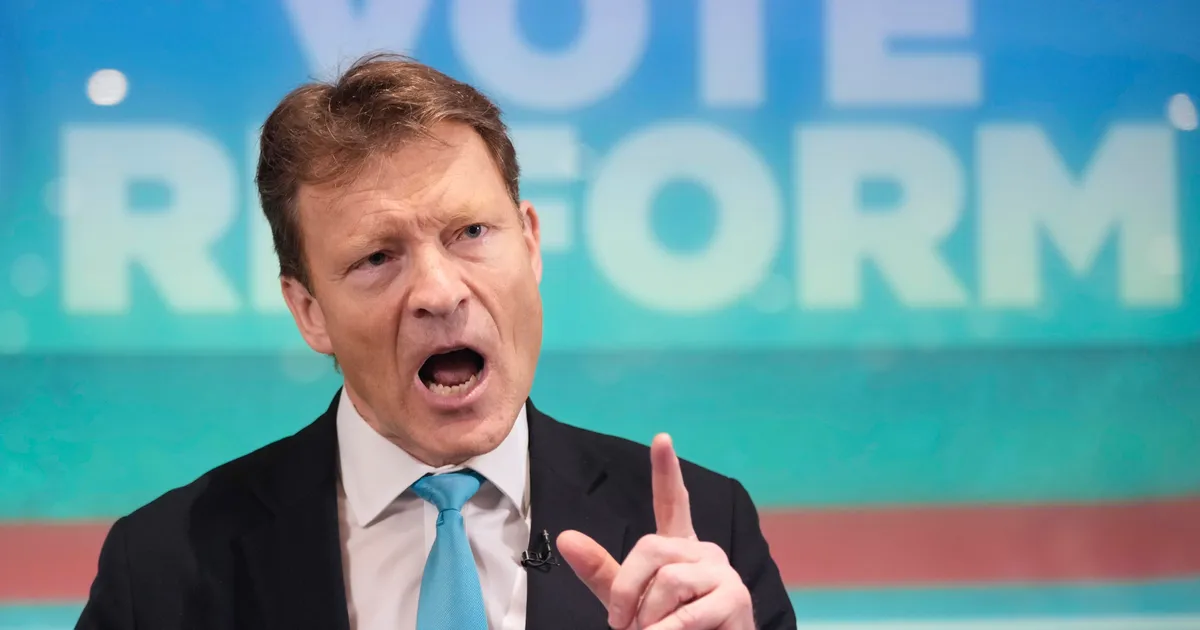
Reform UK deputy leader Richard Tice is facing a mounting backlash after he failed to condemn one of the party’s new councillors who said Nigerans should be melted down to fill potholes”.
Tice was asked repeatedly in a series of interviews to disown the remarks by Glenn Gibbins, who was elected in the Hylton Castle ward in Sunderland in Thursday council elections.
In a post on social media in 2024, he said: “Can’t believe amount of Nigerians in town … should melt them all down and fill in the potholes.”
Reform has launched an investigation into Gibbins, but Tice dismissed the criticism of him as “smearing and sneering”.
On the BBC’s Sunday with Laura Kuenssberg programme, Tice said: “I’m going later to a campaign against the scourge of anti-semitism, which is the greatest threat facing us, particularly in London but elsewhere across the UK. That’s what people are really concerned about. If people have said daft things, of course it’ll be looked at.”
Pressed on Gibbins’ remarks, he said: “Laura, this weekend we are celebrating our incredible successes. Like any party, you have internal processes to look at where people have said or done the wrong thing.”
Asked if he condemned them, Tice said: “I condemn anything that is wrong or inappropriate.”
But when asked if he condemned the councillor’s specific comments, he dodged the question and said: “The key thing is voters have heard all of this smearing and this sneering against all of us and they voted for more Reform because they want action, they want delivery. They’re sick of the failures of the Tories and Labour.”
A Labour spokesman said: “It’s utterly grotesque that Reform can’t even call out clear racism.
“It speaks volumes that Richard Tice tried to brush off these comments. And it speaks volumes that Nigel Farage refused to sack him as a candidate and is now happy to have him represent Reform as a councillor. They’re both a disgrace.
“Labour is the only party that will stand up to the division of Reform.”
Tice also faced a mounting backlash on social media, including from London mayor Sadiq Khan.
Subscribe to Commons People, the podcast that makes politics easy. Every week, Kevin Schofield and Kate Nicholson unpack the week’s biggest stories to keep you informed. Join us for straightforward analysis of what’s going on at Westminster.
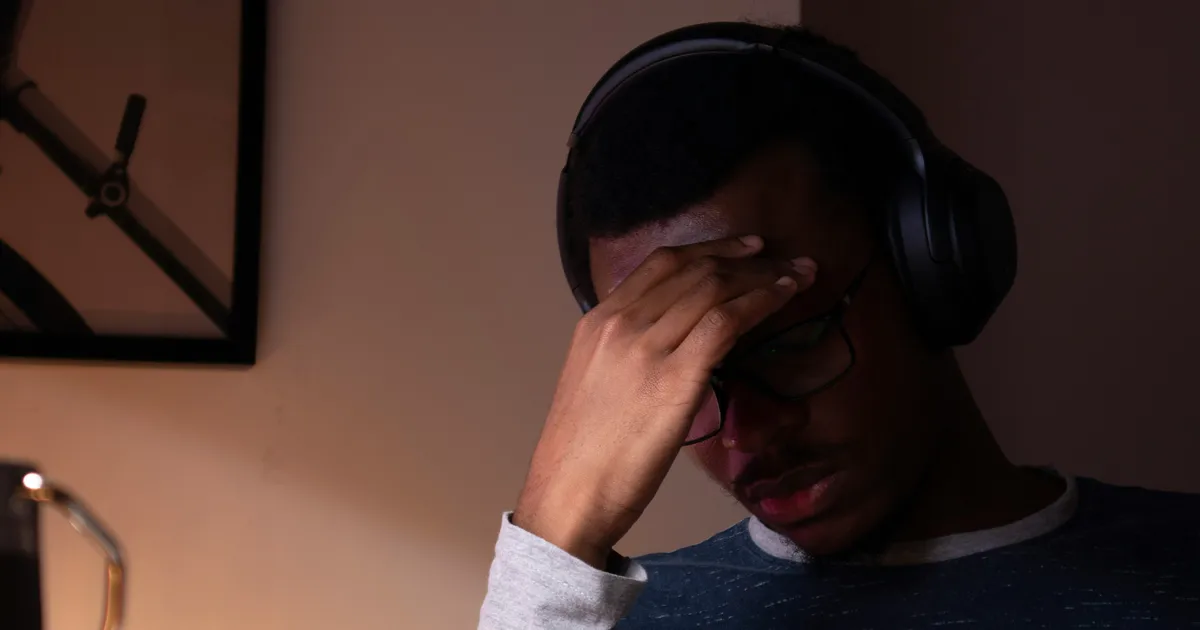
Dreading the return to work after a relaxing weekend is so common it has a name: the Sunday scaries.
And even if it’s not the start of a new working week, feeling less-than-delighted to head to work in the morning isn’t exactly uncommon.
But according to Jackson Parsons, work culture expert and founder of the Duvet Flip, sometimes it can be a red flag.
He explained: “There’s a huge difference between feeling physically tired and emotionally resistant to the life you’re waking up to. Many people mistake burnout, disengagement or emotional exhaustion for laziness because the symptoms often show up first thing in the morning.”
Here, he shared seven signs to look out for:
1) You feel anxious before work has even begun
This, the expert said, might be a sign your body associates your workplace with stress.
“This is very overlooked as people only think anxiety matters once it becomes extreme such as having a breakdown. But low-level dread every morning is still your body sending a warning,” he shared.
2) You constantly fantasise about escaping
“Whether it’s checking job sites during lunch, imagining moving abroad or fantasising about quitting dramatically, escapism usually reveals emotional dissatisfaction early on,” Parsons said.
“Most people don’t daydream about disappearing from their own life if they feel genuinely fulfilled in it. It doesn’t always mean you need to quit immediately, but it often means something important isn’t being met anymore.”
3) You’re always exhausted on weekdays, but perk up on the weekends
Parsons said our bodies are pretty good at telling us what we need, if only we can bring ourselves to listen. And part of that communication system can involve fatigue.
“A major sign your exhaustion is emotional rather than physical is when your energy suddenly returns outside work. If you feel more alive on weekends or holidays, that’s useful information,” he said.
4) Small tasks start to feel overwhelming
A healthy workplace will leave you resilient. But when your job isn’t quite right, replying to emails begins to feel impossible, small requests irritate you, and meetings feel exhausting before they’ve even started, the expert said,
“This often happens when people lose emotional connection to their work.”
5) Feeling guilty for hating your job
If you spent a long time working up to your career, you might feel guilty for hating it now. “A lot of people stay stuck because they feel guilty. Careers often become tied to identity, making dissatisfaction emotionally hard to admit,” Parsons said.
But if a role isn’t right for you, that’s OK; honesty is the first step.
6) Noticing a huge personality shift when you’re out of the office
It’s rare that your “weekend drinks” self is the same as your “replying to emails” self. Still, Parsons told us, if you feel much lighter out of work than you do in it, that might be worth paying attention to.
“Some become quieter, more annoyed, or emotionally flat without even knowing it. When your work environment consistently pulls you away from who you naturally are, your mornings start feeling heavier as your brain already knows it’s about to enter survival mode again.”
7) You feel “lazy” all the time
“One of the most damaging things people do is mistake emotional exhaustion for personal failure. People can be incredibly harsh on themselves. They’ll call themselves lazy or unmotivated instead of asking whether their environment is actually healthy for them anymore,” the work culture expert said.
“Overworking has become so normalised that people ignore warning signs for far too long. We live in a culture where exhaustion is almost treated like a personality trait now.”
What can I do if I have these signs?
Parsons recommended the following steps:
- Stop checking work off the clock. Giving yourself 20 minutes before checking work can help to create healthier boundaries, he said, and avoid late-night email refreshes if you can.
- Get specific about your feelings. “Many people call it ‘work stress’ without identifying the real issues behind it. Targeting whether it is from workload, lack of purpose, burnout or poor management makes the feeling easier to address,” he added.
- Create one part of the day that feels yours. Something as small as a workout can keep you grounded. “You need a moment in your day that reminds you you’re a person, before you’re an employee.”
- Stop normalising exhaustion. “Many people treat burnout like a normal part of success. Constant exhaustion shouldn’t feel like a personality trait or something you simply just have to ‘deal’ with.”
- Get real about what needs to change. Whether that’s better boundaries, more rest or admitting you’ve outgrown your current role.
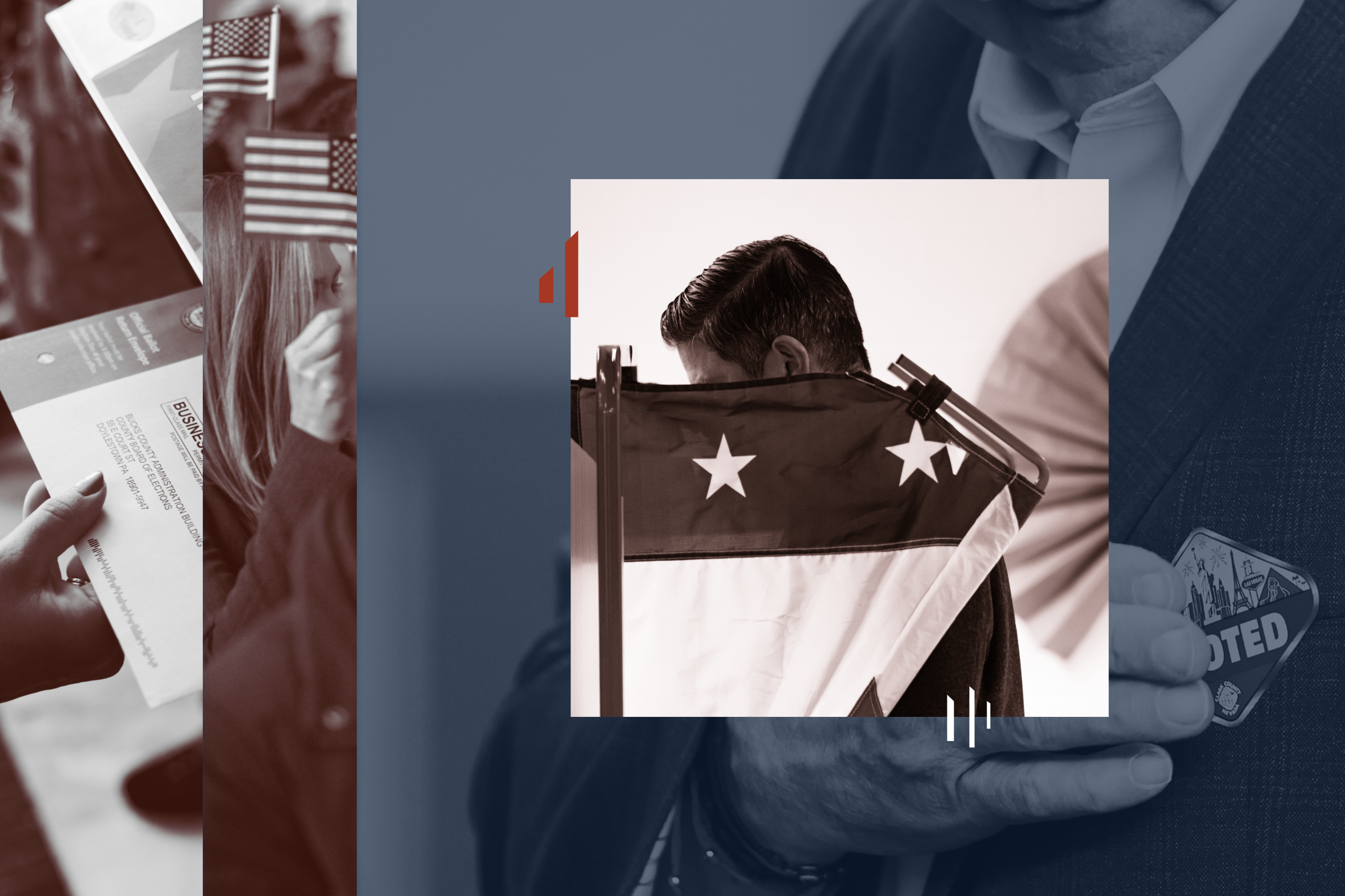

Questions about the integrity of elections have become pervasive in American politics — and new polling reveals the sharp differences in Republican and Democratic fears.
Nearly six years after President Donald Trump and his allies sought to overturn the results of the 2020 election, a recent POLITICO Poll suggests that a notable number of Americans are distrustful of the system heading into November. More than one-third say it is likely the 2026 midterms will be “stolen,” and one in four say they don’t expect the elections to be fair.
But both parties clash strongly over what they believe are the core problems with U.S. elections, complicating any path to restoring voter trust.
Democrats are concerned about voter intimidation and suppression, with 58 percent of those who voted for former Vice President Kamala Harris worried that eligible Americans will be prevented from voting, the survey finds. Meanwhile, Republicans remain focused on the possibility of fraud, with 52 percent of Trump voters saying they are concerned that some ineligible people will be allowed to vote.
The POLITICO Poll asked respondents about 11 common election concerns, ranging from partisan gerrymandering to impounding ballots, and whether people saw them as legitimate parts of the process or a way to rig elections. Of those, Democrats and Republicans had meaningful disagreement or lacked consensus on six.
Take expanding mail-in voting, for example. Once considered a largely routine way to broaden access to voting, a majority of Trump voters now say this can be a way to rig elections. Harris voters feel the opposite: 59 percent say expanding mail-in voting is a normally fair or always fair part of the electoral system.
Then there’s deploying ICE at polling locations. A majority of Harris voters say the practice would more likely be a way to sway election results, even as some Republicans haven’t ruled out such a measure to strengthen election security. A 47 percent plurality of Trump voters say deploying ICE across polling stations would be normally fair or always fair.
The poll results reveal a striking truth as lawmakers continue to battle over election security: Even as a sizable share of Americans believe elections can, or will, be “stolen,” there’s very little agreement on what that even means.
“I don’t think that we have a great working definition of what constitutes … a free and fair election,” said Stephen Richer, a legal fellow at the Cato Institute and former Republican county recorder of Maricopa County, Arizona. “I think it is entirely possible that even within the world that doesn’t think that elections are being hacked by Italian spy satellites, that we have a disagreement as to whether or not we’ve had a free and fair election in 2026.”
Trump often claims the 2020 results were “stolen” and blames mail voting, the lack of strict voter ID and proof of citizenship laws for opening the door to voter fraud — though courts and election officials have repeatedly upheld the legitimacy of those results. Many Democrats, on the other hand, are already bracing for Trump to interfere with the election and strategizing about ways to respond.
“President Trump is committed to ensuring that Americans have full confidence in the administration of elections, and that includes totally accurate and up-to-date voter rolls free of errors and unlawfully registered non-citizen voters,” White House spokesperson Abigail Jackson said in a statement.
Doubt about election proceedings has still not overtaken the electorate — nearly half of Americans say they still expect the 2026 midterms to be fair. But the survey — along with interviews with election experts — underscores how rhetoric from leaders is trickling down to voters.
David Becker, the executive director and founder of the nonpartisan Center for Election Innovation & Research, said the divergence results partly from the strict echo chambers within the Democratic and Republican parties.
“This goes back to the problem where many of us are retreating into our media bubbles, where we hear a reality that only serves to validate our existing opinions,” he said.
For Democrats, their doubts appear to be going up as Trump continues to repeat false claims about the 2020 election and raise alarms about the 2026 midterms.
Nearly 40 percent of Harris voters say it is likely the 2026 midterms will be “stolen,” compared to 16 percent who believed the 2020 election was stolen — though comparing perspectives on a past election to a future one is not an exact measure. That’s roughly the same level as Trump voters who doubt the integrity of the 2020 results or who fear the 2026 midterms will be stolen — both at around 40 percent — according to the poll results.
The survey finds that some of the most significant areas of disagreement or distance between the parties are the prospect of ICE showing up at polls, mail-in voting, and requiring proof of citizenship to register to vote.
Roughly 60 percent of Harris voters say ICE showing up at polling places would normally or always be a way to steal elections, compared to 33 percent of Trump voters who say the same.
The Trump administration has insisted that immigration officers will not be at polling places in November, but many Democrats have still expressed concern over the possibility. In March, nine state secretaries of state wrote a letter to Homeland Security Secretary Markwayne Mullin seeking confirmation that immigration agents would not be present at polling locations in November.
“If you have ICE outside of a handful of voting locations, I think that there are some on the left of the pro-democracy coalition, or the previously existing pro-democracy coalition, who would say that it invalidates the fairness of an election,” Richer said. “And then there are those of us who would say … it’s not ideal, and there are legal remedies, but that doesn’t mean that the election was stolen or should be thrown out.”
The 2020 election marked a major turning point in rhetoric surrounding mail-in voting, when Trump repeatedly criticized the practice during the COVID-19 pandemic — allegations he has continued to press in the years since.
Roughly 55 percent of Harris voters say banning mail-in voting could lead to a rigged election, while Trump voters are split on the issue: 41 percent say banning mail-in voting would largely be fair, while 42 percent say this would be a way to steal an election.
And then there’s the question of voter registration, and whether to require proof of citizenship when voters register — a core objective of Trump’s SAVE America Act. Just under two-thirds of Trump voters say this would always or normally be a fair part of the election process. A plurality of Harris voters agree, but by a much smaller margin: 44 percent say this would be a fair election practice.
Even the idea of voter roll maintenance — a common part of election administration that Trump’s Justice Department has intensified by aiming to strip non-citizens from every state’s rolls — shows a partisan gap. Roughly 60 percent of Harris voters say the practice of “purging voter rolls” is normally or always a way to steal an election, compared to just 46 percent of Trump voters.
There are areas where the parties agree. Pluralities or majorities of both groups agree that same-day voter registration and signing up new voters outside of churches are largely fair.
Majorities of both Trump and Harris voters say partisan gerrymandering can be a way to steal elections, which comes as officials in both parties engage in an intensifying redistricting arms race. There is also a near-majority consensus that seizing or impounding ballots can be a way to rig results. Earlier this year, the FBIseized 2020 election ballots from the Fulton County elections office in Georgia, and a federal judge recently ruled that the Justice Department can keep the election records as part of its search.
Still, election experts say the overall partisan divide is dampening voters’ confidence.
“We’ve now had multiple years in a row of state legislators passing and introducing and passing laws that are targeting voter access — making it harder to participate in the electoral process — where the actual mechanics of elections have been politicized, and that too takes its toll,” said Wendy Weiser, the Brennan Center for Justice’s vice president for democracy.
Today I am volunteering at an outpatient addiction treatment clinic in Baltimore, in what my Uber driver warns me is “a very dangerous neighbourhood”.
It’s a cold Saturday morning in February, and I’ve travelled about an hour from Washington, D.C., where I live. I’m here to share some business management methods and operational tools with the team, based on a class I teach at Georgetown and my job as a management consultant.
The driver drops me off in the parking lot, and as I walk toward the entrance, I see an armed guard at the door. I walk past him into a large open waiting room, which is bright and clean. The right wall is lined with staff sitting behind glass partitions like bank tellers, but big, heavy-looking curtains hang from the ceiling at each window.
I check in and have a seat against the back wall. I try not to stare, but I’m curious about the curtains. I look around at patients coming and going.
A young woman enters the clinic and has the skinniest legs I’ve ever seen, like two drawing pencils in colourful, patterned leggings. She rushes down a hallway like she’s late for something, and I wonder where she’s going.
Most are men in dark, battered jackets that don’t look very warm, with their hoods up and heads down. No one makes eye contact with me. I am suddenly aware of my warm, beige cashmere coat and Stella McCartney bag, and I feel ashamed and ridiculous that I wore these things (that I even have these things). Still, my unconscious bias makes me feel my family’s story is somehow different from those in this waiting room.
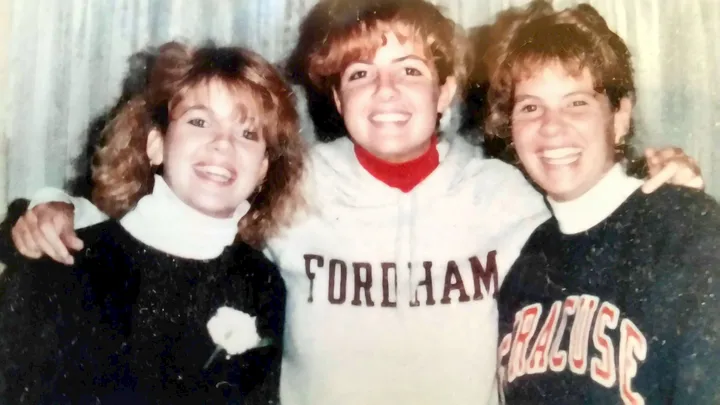
As I’m waiting for my friend, the doctor who runs the clinic, I think about why I’m here: In 2017, my youngest sister, Jenny, died from liver failure due to prolonged use of prescription opioids and alcohol; she was a 44-year-old suburban mother.
Since she died, I’ve tried to learn as much as I can about the opioid crisis and be part of the solution – or, more selfishly, maybe I’m just here to do penance for my role in her death.
I experienced the entirety of my sister’s struggle and death in just six gruesome days at Kenmore Mercy Hospital in Buffalo, New York. That week, my sister Colleen and I stayed in Jenny’s hospital room every night. All day and night, Jenny moaned for Dilaudid, a synthetic opioid she’d previously been prescribed.
For the first three days, I held Jenny’s hand a lot and touched her hair. I don’t think I’d ever touched my sister’s hair before, but now I feel it all the time on my right hand. I put drops in her eyes, rubbed her swollen feet and fed her Ensure. She was in and out of consciousness but never lucid enough to talk with us coherently.
I couldn’t remember the last time I’d had a conversation with her. When was the last time I’d told her I loved her?
When I think about that week, I only remember a series of degrading and horrific incidents, one worse than the next: the first time I saw my sister’s severely jaundiced skin and light green eyes that were covered with bubbles, as a result of liver failure; shuffling Jenny to the bathroom all night long; my mother signing “Do Not Resuscitate” forms; full bags of bloody fluid hanging from Jenny’s bed; and, finally, her death.
I watched my sister die with my parents on either side of her hospital bed, a picture I’ll never be able to unsee. No wake. No funeral. Her estranged husband stole her body from the hospital, without our consent, and left her ashes in a funeral home a few days later, unwilling to pay the bill.
I was on a plane back to Washington, D.C., the day after she died, shocked that I was no longer the oldest of three sisters – just the older of two.

Photo Courtesy Of Kelly O’Connor
The bone-crunching grief of this experience was compounded by the stigma that gets unfairly associated with certain types of death: suicide, drug abuse, alcoholism, mental illness. You see it in euphemistic obituaries with vague explanations like “passed away unexpectedly” or “died after a long struggle,” descriptions that do a disservice to both the living and the dead.
My coping mechanism has always been reading, and there are tons of materials about grieving the death of a parent, spouse, child – even pets! But I found only one book, Surviving the Death of a Sibling, by T.J. Wray, who lost her 43-year-old brother, that captured exactly how I felt on that flight back to D.C.
Wray wrote: “The year my brother died I stopped breathing, but no one noticed.”
Our siblings are with us at the beginning of our lives, and most of us take for granted they will be there as we approach the end. Yet surviving adult siblings are often forgotten mourners; the focus of grief is usually on parents, spouses and children. As a surviving adult sibling, I am the lowest member in the hierarchy of sorrow – well below my parents and Jenny’s two children.
I’ve only recently learned about the psychology of this type of bereavement, called “disenfranchised grief”. It is not openly acknowledged, socially mourned or publicly supported. Immediately following her death, when people asked if I had siblings, I wanted to answer, “I have two sisters. Colleen is great. Her youngest just graduated from college. And … well … Jenny’s dead.” But I never did.
Volunteering and trying to be an advocate have become my version of grieving. I’ve shared our family’s story (at least the parts I know about) as honestly as I can. I’ve written opinion pieces and talked about my mistakes on national television.
I’ve tried to learn about addiction, more accurately referred to as “substance use disorder (SUD),” to understand how our family never realised Jenny had this issue, never had an honest conversation about what was happening to her.
Instead, we rationalised away the warning signs and accepted her increasingly threadbare explanations for them, ultimately enabling her. Jenny didn’t do a single stint in rehab or have any interventions. I’m not ashamed of my sister for struggling with drugs and alcohol, but I’m so ashamed of myself for not being educated about it sooner.

Photo Courtesy Of Kelly O’Connor
In the years since my sister’s death, my swells of grief are usually triggered by childhood memories. For many summers while my two sisters and I were in grammar school, my parents would take us camping in Chautauqua County, New York. Colleen, Jenny and I would build forts, catch fireflies, try to catch sunfish and collect kindling for campfires. But our favourite activity was putting on shows at “the spider,” a metal jungle gym that looked like a gigantic tarantula.
We spent hours planning routines and practicing. Even though Jenny was the youngest and only about four or five years old, she was fearless, doing all the difficult flips with me on the high bars. On “show nights,” my parents would walk down to the spider after dinner, my mom in a Buffalo Bills sweatshirt and my dad in his 82nd Airborne hat. It’s one of my most vivid childhood memories. I can still feel the warm metal behind my knees, hear the crickets and smell the grass.
Another recurring memory is when we girls were ages four, six and eight, and my dad would take us tobogganing during the long Buffalo winters. The four of us scooched to fit on the long sled going down the chute (so fast!) over and over. But only Jenny got the free ride back up the hill with my dad pulling her on the toboggan while Colleen and I waddled back up in our puffy jackets from K-mart.
Since her death, I’ve tried to remember my sister, not in her hospital bed, but flipping fearlessly on the spider or laughing on the toboggan, with her red cheeks and light green eyes, getting pulled up the snowy hill by my dad.
Back in Baltimore, I’m waiting for another Uber at the end of the day, and I’m so glad I came. It’s an amazing operation, and I feel lucky to have been a small part of this dedicated team for a few hours. (I eventually even learned that the long curtains at the glass windows are for privacy as patients take their medications.)
On my way out, I notice a sign on the wall that I didn’t see on my way in. It’s written in multicoloured markers with big artsy letters, advertising a program called, “Women Who Want to Change Their Lives,” meeting on Saturday mornings. I bet that’s where the skinny-legged girl was going! I hope she made it on time.
The sign is so positive and inviting, I want to go with her. But more than anything in the entire world, my heart aches to be able to attend that program with my sister. I feel the tears coming as I get into my Uber, and I realise that nothing about our family’s story is different at all.
Kelly O’Connor is a management consultant and lives in Washington, D.C.; she has been a patient advocate in the opioid crisis since 2017, including a TEDx Talk, “My Introduction to Narcan.”
Help and support:

5 min read
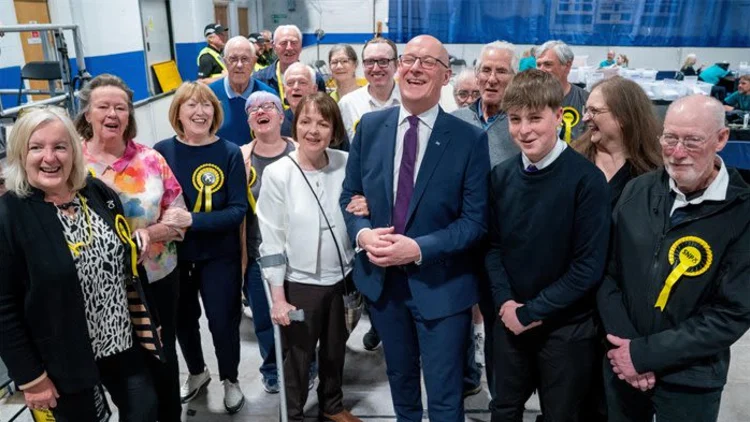
The SNP has decisively won the Scottish Parliament election, securing another five years in office.
The party won 58 seats in total – down from the 64 it won in 2021 and seven seats from a majority, but well ahead of rivals.
Labour and Reform are in joint second place, winning 17 MSPs apiece.
It was a poor set of results for Anas Sarwar, who had been aiming to gain enough MSPs to form the next Scottish Government.
And it’s a significant breakthrough from Malcolm Offord’s party, though not as high as he had hoped after it failed to win any constituencies.
Meanwhile it was a record result for the Scottish Greens, who won their first-ever constituency seats in Glasgow and Edinburgh. Their final tally was 15, putting them in fourth place.
The Conservatives had a dismal day, dropping to just 12 MSPs (a record low) and from second biggest party to second smallest.
The Lib Dems managed to increase its numbers to 10, up by six from 2021.
SNP leader John Swinney described the results as an “emphatic” win for his party. He said: “Once again the people of Scotland have put their trust in us. However you voted today, I promise that I will be a first minister for all of Scotland.
“All of us care about our country’s future. I give you my commitment that I will work every day to improve your life and make Scotland the nation we know it can be.”
He had been aiming to win an outright majority, arguing throughout the campaign this was the only way to pursue a second referendum on Scottish independence.
While denied the seats to make that argument, this parliament has the biggest pro-independence majority – 73 MSPs belong to parties who favour independence.
Scottish Greens co-leader Gillian Mackay said the “seismic result” for her party would help to “change Scotland”.
She said: “People have seen our record, from free bus travel for everyone under 22 to scrapping peak rail fares to ending school meal debt. We did all that with seven MSPs. Now we have doubled that number we can do even more.
“With a failed Labour government on its last legs in Westminster, and with the cost-of-living crisis biting, Green policies are more vital than ever. Throughout this election we urged Scotland to demand better, and that is exactly what we will deliver.”
In an unusual move, Anas Sarwar effectively conceded defeat after fewer than 10 seats were declared.
The party did manage to take Na h-Eileanan an Iar from the SNP, but that was the only bright spot after it failed to take any of its target seats in the central belt.
Sarwar was re-elected on the Glasgow regional list, while his deputy Jackie Baillie held onto her Dumbarton constituency.
But before those results were even announced, he told journalists at the count in Glasgow: “Throughout this election campaign, I have tried to make this election about Scotland. I’m not going to change that today. Is there a national wave though, that we’ve tried to overcome but failed to do so? Yes, but right now, my focus is on what this election means.”
It was a poor set of results for Labour across the UK, with the party ejected from power in Wales and down thousands of council seats across England. Former Welsh first minister Eluned Morgan failed to get re-elected and resigned as leader.
Sarwar has so far not resigned, adding: “My party is hurting today and it’s my job to hold it together.”
Malcolm Offord admitted his party had not done as well as he had hoped, but it had built a “very solid based”. Before the election is only had one MSP – a defection from the Conservatives, Graham Simpson.
On how his new band of MSPs would approach Holyrood, Offord said: “We will be very focused on trying to get Holyrood focused on the day job, on devolved matters and really highlighting the issues that matter to people on the doorsteps: the schools, the roads the day-to-day matters that Holyrood needs to be focused on.”
The Scottish Conservatives were quick to blame Reform for their poor result and for letting the SNP win. Acknowledging the election was “always going to be tough”, Russell Findlay added: “We warned repeatedly during the campaign that Reform were a gift to the SNP – and so it’s proved.
“Despite not winning a single constituency seat, Reform have let the SNP sneak home in several constituencies they would otherwise have lost. I’m sure that’s not the outcome most Reform voters would have wanted but Lord Offord has been John Swinney’s little helper.”
The Liberal Democrats, while remaining the smallest party at Holyrood, had a positive set of results – taking three constituencies from the SNP and bolstering the number with some list seats. It did, however, lose Shetland to the Nationalists.
Alex Cole-Hamilton said: “I am really excited about the new parliamentary group that I will be welcoming to parliament next week.”
He also said he would be willing to work with the SNP government on an issue-by-issue basis.
President Donald Trump has offered his congratulations to Swinney for the victory. Posting on his social media platform Truth Social, Trump said: “Congratulations to John Swinney on winning his re-election for First Minister of Scotland. He is a good man, who worked very hard, along with the King and the Queen of the United Kingdom, with respect to tariff relief for Great Scottish Whiskey [sic] – and deserves this big electoral victory.”
This article originally appeared on Holyrood
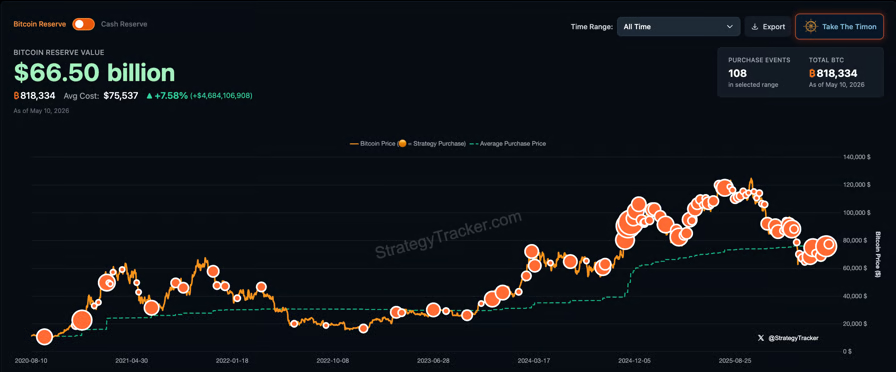
Strategy’s Michael Saylor Signals Impending BTC Buy

Barcelona vs Real Madrid LIVE, El Clasico: Marcus Rashford Scores Stunning Free-Kick, Barcelona Take Early Lead | FCB 1-0 RMA

Anthropic Mythos AI finds thousands of zero-day vulnerabilities as Fed and Treasury convene bank CEOs on cyber rik

Manchester United reach agreement with Casemiro over contract clause amid transfer speculation

US brings back mandatory military draft registration

Steven Gerrard disagrees with Gary Neville over ‘shock’ Chelsea and Arsenal claim | Football


-
 Crypto World2 days ago
HarrisX Poll Found 52% of Registered Voters Support the CLARITY Act
-

 Crypto World3 days ago
Upbit adds B3 Korean won pair as Base token gains Korea access
-

 Fashion2 days ago
Weekend Open Thread: Marianne Dress
-

 Tech6 days ago
Image AI models now drive app growth, beating chatbot upgrades
-
 NewsBeat3 days ago
NCP car park operator enters administration putting 340 UK sites at risk of closure
-
 Business1 day ago
Ignore market noise, India’s long-term story intact, say D-Street bulls Ramesh Damani and Sunil Singhania
-

 Politics2 days ago
Politics Home Article | Starmer Enters The Danger Zone
-

 Crypto World7 days ago
BlackRock Buys $284M In Bitcoin On May 1 As The Best Crypto To Invest In For 2026 Sits Below A Pending Binance Listing
-

 Entertainment7 days ago
Olivia Wilde Reacts To Viral ‘Corpse’ Comparison
-

 Sports7 days ago
Inter Milan Win Serie A Title After Victory Over Parma
-

 Sports7 days ago
La Liga: Vinicius Jr scores twice as Real Madrid win to keep Barcelona waiting for title
-

 Crypto World5 days ago
UAE Free Zone Deploys Blockchain IDs to Verify Registered Firms
-
 Sports7 days ago
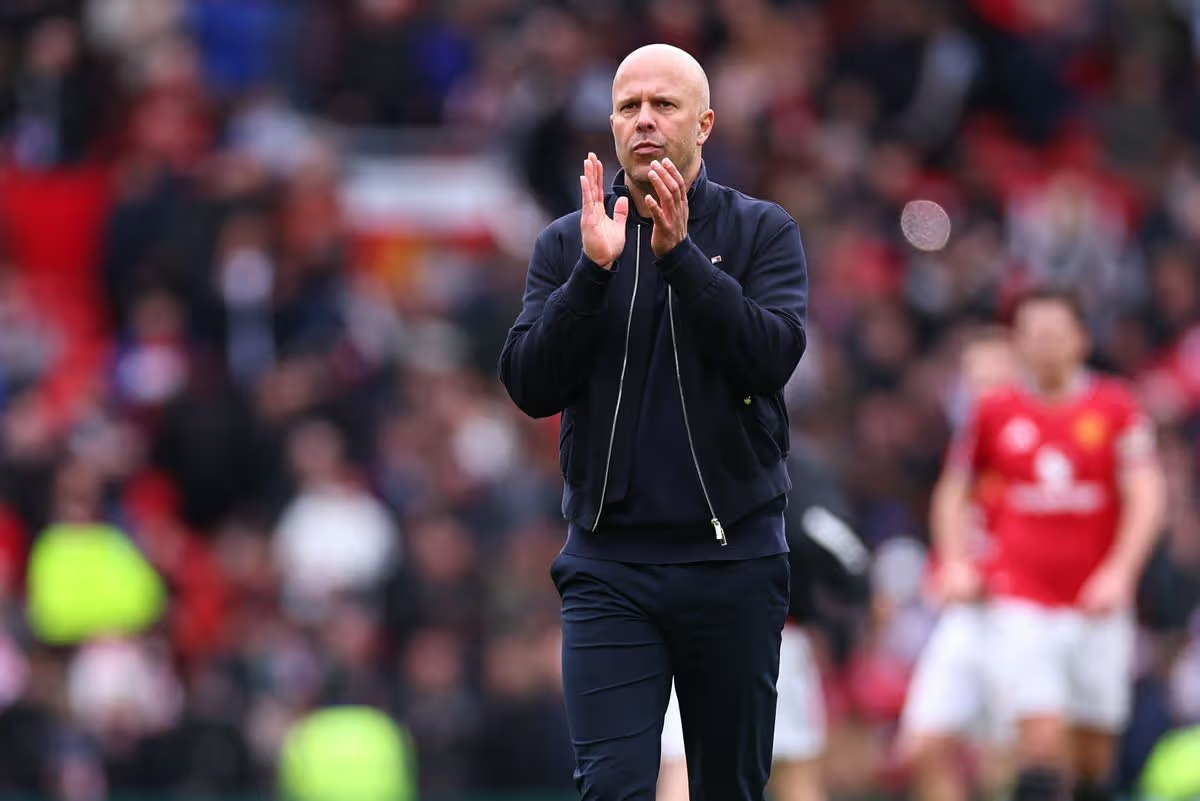
Every word of Arne Slot’s heated rant after Manchester United win vs Liverpool
-

 Sports7 days ago
Joel Embiid urges Sixers fans not to sell playoff tickets to Knicks fans
-
 Sports6 days ago
2026 NHL playoff picks: Second-round predictions, series odds, Stanley Cup bracket
-
Entertainment7 days ago
Jennifer Lawrence’s Mary Jane Sneakers Are Spring’s It-Girl Shoe
-

 Entertainment7 days ago
Moroccan Reacts To Nick Cannon’s Dating Rules For His Sister
-

 Entertainment7 days ago
Kylie Jenner and Timothee Chalamet Hold Hands in NYC Outing
-

 Crypto World4 days ago
BlackRock CEO Larry Fink Discusses a New Asset Class
-
 Crypto World7 days ago
Warren Buffett Calls Stock Market a Casino and Warns U.S. Dollar Is Not Safe in 2026
You must be logged in to post a comment Login