

Crypto World
Warren Buffett Calls Stock Market a Casino and Warns U.S. Dollar Is Not Safe in 2026


TLDR:
- Buffett compared today’s stock market to a church with a casino attached, warning gambling is at a peak level.
- Berkshire Hathaway now holds over $397 billion in cash, signaling Buffett sees no compelling investment opportunity yet.
- Buffett warned the U.S. is not immune to runaway inflation, drawing parallels to the pre-Volcker dollar crisis era.
- He cautioned that real market crashes come from unexpected events, not from risks that investors are already watching.
Warren Buffett, 95, drew global attention at Berkshire Hathaway’s 2026 annual shareholder meeting in Omaha on May 2.
The legendary investor, now serving as chairman after stepping down as CEO in January, did not hold back on his views.
He compared today’s stock market to a casino, warned the U.S. dollar is not immune to runaway inflation, and explained why Berkshire continues to sit on a record cash pile exceeding $373 billion.
Buffett Sees Gambling, Not Investing, in Today’s Markets
During the lunch break, Buffett compared markets to “a church with a casino attached,” drawing a clear line between traditional value investing and the growing enthusiasm for short-term options trading.
He noted the casino side has grown increasingly crowded. The observation came as markets continue to see heavy retail participation in speculative instruments.
Buffett pointed to one-day options as a clear example. “If you’re buying one-day options or selling them, that’s not investing, it’s not speculating — it’s gambling,” he said.
He also cited a recent meme-driven short squeeze in a legacy rental car company as further proof of the mood. The episode mirrored retail-driven volatility seen in earlier years with other struggling companies.
Buffett added, “We’ve never had people in a more gambling mood than now.” That assessment came from a man who has witnessed every major market cycle of the past six decades. His view carries weight precisely because of that experience.
He also acknowledged his own limits in the current environment. Buffett said he understands fewer businesses today, as a percentage of the whole, than he did ten years ago.
He noted that younger people who grew up with newer industries carry an edge he no longer has. That admission explains, in part, why Berkshire has remained largely inactive in deploying capital.
Dollar Vulnerability and the Risk of an Unseen Collapse
Buffett warned that the U.S. is “not immune” from runaway inflation, referencing the period just before Paul Volcker intervened to rescue the dollar.
He described how Americans at that time were borrowing at 12% to invest in farmland earning only 6%, purely on the belief the dollar would lose its value. That mindset led to widespread financial ruin in communities across Nebraska.
“Cash is trash” was the prevailing mentality then, Buffett recalled, noting that large Nebraska farmers collapsed because they bought beyond their earning power and paid interest rates their returns could not support.
He said the loss of faith in a currency transforms a country into something entirely different. The warning drew clear parallels to current conditions where fiscal deficits remain elevated.
Berkshire’s cash and Treasury bill position now stands at $373 billion, a deliberate accumulation built over years of disciplined inaction during expensive markets.
Buffett described cash not as dead weight but as optionality — the ability to act when others cannot. He said Berkshire would deploy capital only in the event of a “big” decline, making clear that the current environment does not meet that threshold.
On the question of a coming crash, Buffett was characteristically measured. “If you saw them, then they wouldn’t happen,” he said, suggesting the greatest risks are always those that go unnoticed.
He compared an unexpected shock to the assassination of Archduke Franz Ferdinand in 1914 — an event nobody anticipated that reshaped the world overnight. That framing was a reminder that preparation, not prediction, defines sound investing.




MoneyGram launched MGUSD on Tuesday, a U.S. dollar-backed stablecoin native to the Stellar blockchain, making the 85-year-old remittance operator the first global cash-payments network to issue its own dollar token on a public chain. The company announced the launch from Dallas and Amsterdam at 5… Read the full story at The Defiant
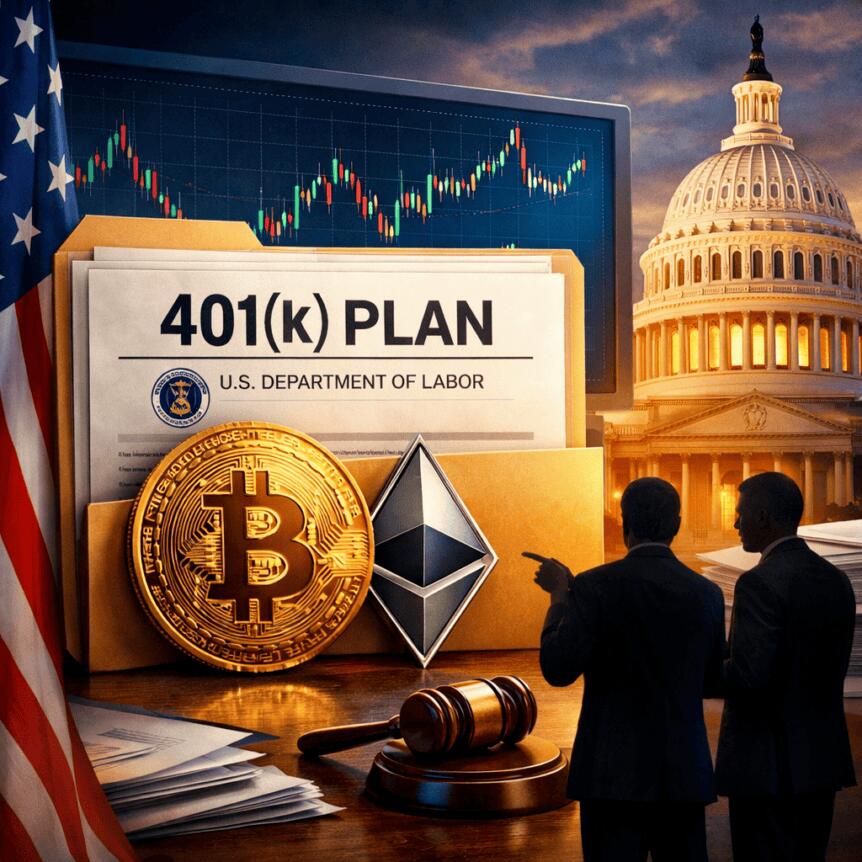
A coalition of senior Democrats on three key U.S. committees has pressed the Labor Department to pause its plans to allow digital assets and other “alternative assets” to be held within Americans’ retirement accounts. In a letter circulated to Acting Labor Secretary Keith Sonderling, Sen. Bernie Sanders, Sen. Elizabeth Warren, and Rep. Bobby Scott urged the department to rescind the March proposal that would permit private equity, digital assets, private credit, and other non-traditional holdings in 401(k) plans.
The lawmakers argued that extending retirement plan exposure to volatile assets such as cryptocurrencies would heighten risk for workers’ savings, citing a lack of robust regulation and safeguards in the crypto sector. They asserted that protections typically afforded to public securities may not be available for crypto assets, potentially leaving investors less shielded from fraud and mismanagement. The letter also framed the move in the broader context of evolving securities-law applications to crypto and the adequacy of current guardrails in protecting retirement plan participants.
The policy proposal was announced by the Labor Department in March and sits within a broader policy push that some lawmakers view as shifting toward broader access to alternative investments. The debate unfolds against a backdrop of high U.S. retirement assets; the Investment Company Institute has reported that Americans held about $10.1 trillion in 401(k) plans as of December 31.
Key takeaways
- The Labor Department’s March proposal would expand 401(k) eligibility to include private equity, digital assets, private credit, and other alternative assets, prompting scrutiny from lawmakers.
- Top Democrats warn that this shift would expose retirement accounts to volatile assets and may rely on insufficient regulatory safeguards, raising investor-protection concerns.
- The letter emphasizes that securities laws’ application to crypto assets is still evolving, and protections available for traditional public securities may not be fully available for digital assets.
- Lawmakers tie the policy to broader ethics and enforcement debates, pointing to perceived conflicts of interest and ongoing discussions around crypto-focused legislation such as the CLARITY Act.
- The policy context includes a recent executive-order-driven push to democratize access to alternative assets, highlighting a potential cross-cut of regulatory approaches and oversight.
Policy proposal and context
The Labor Department’s March proposal envisions allowing a wider range of asset classes in retirement plans, extending beyond traditional equities and fixed income to include alternatives such as private equity and digital assets. Proponents argue that expanding access could broaden diversification and retirement outcomes for workers. Opponents, however, contend that retirement plan fiduciaries would face heightened fiduciary duties and potential conflicts of interest when selecting highly complex, less transparent assets. The policy aligns with a broader government agenda that, in 2025, included an executive order directing agencies to “democratize access to alternative assets,” explicitly mentioning crypto among the instruments to be considered in this framework. As of the end of the last reported period, the 401(k) asset base remains substantial, underscoring the potential scale of any regulatory shift.
Regulatory risk and investor protections
Central to the debate is how crypto assets would be treated under securities laws as they sit within retirement accounts. The lawmakers’ letter contends that the current enforcement posture across major financial regulators, including the Securities and Exchange Commission, has weakened protections for crypto investors. They warn that the application of securities laws to crypto assets is still “rapidly evolving,” and that key investor safeguards associated with traditional public securities may not be available for digital assets. This evolving regulatory landscape raises questions about disclosure, custodial standards, liquidity, valuation, and risk management for plan sponsors and fiduciaries responsible for selecting and monitoring investments in a multi-asset retirement lineup.
Implications for plans, sponsors, and market structure
Allowing digital assets and other alternatives in 401(k) plans would impose new governance and compliance demands on plan sponsors, investment committees, and third-party administrators. Fiduciaries would need to evaluate custody arrangements, due diligence processes, valuation methodologies, operational risk, and ongoing monitoring for assets with limited price discovery and potentially higher fraud risk. Given that a substantial portion of U.S. retirement savings is channeled through 401(k) plans, even incremental changes in eligibility can have outsized implications for risk management practices, disclosure requirements, and regulatory oversight. The conversation also intersects with the broader market structure debate surrounding crypto assets, including how such holdings would interact with banking relationships, KYC/AML requirements, and the appropriate licensing regimes for managers and platforms involved in these assets.
Ethics, conflicts, and broader policy debates
Lawmakers highlighted potential conflicts of interest linked to the current administration’s approach to alternative assets, citing ties to private ventures in the crypto space and a more permissive stance toward crypto within federal policy. The discussion touches on ethics considerations that have shaped legislation such as the CLARITY Act, with Democrats signaling they would not support bills lacking strong ethics provisions. These concerns illustrate how regulatory proposals in the retirement space can become touchpoints for broader debates about regulatory capture, corporate influence, and the balance between investor access and safeguarding public retirement savings.
Looking ahead, policymakers will likely scrutinize how the Labor Department interprets fiduciary duties in the context of alternative assets and how SEC- and CFTC-style oversight would apply to crypto within retirement plans. The intersection of retirement policy, crypto regulation, and ethics rules presents a complex compliance landscape for plan sponsors, asset managers, and financial institutions. Analysts will be watching for any changes to the proposed rule, forthcoming guidance on custody and valuation, and the potential alignment or friction with ongoing federal and cross-border regulatory developments.
Closing perspectives suggest that the evolution of this policy will hinge on clarifying investor protections, establishing robust governance frameworks for plan fiduciaries, and balancing access to innovative asset classes with the safeguarding of long-term retirement security. As the regulatory environment continues to develop, institutions should monitor both domestic enforcement posture and cross-jurisdictional considerations that could influence how such assets are treated in retirement accounts.


A week ago, CoinDesk informed readers of the renewed rotation of funds into dollar equivalents such as tether and USD Coin (USDC) stablecoins as bitcoin pulled back from the early May highs above $80,000. That combination was an early warning sign of potential full-blown risk aversion in the crypto market.
Those early warning signs have now turned into a full-blown trend.
Bitcoin has dropped about 12% over the past week to around $66,800, pulling the broader crypto market lower with it, CoinDesk data show. Bitcoin’s dominance rate, or its share of the total crypto market, has fallen to 58.5%, reversing gains that had pushed it as high as 61.2% in April and early May.
At the same time, tether , the world’s largest dollar-pegged stablecoin, has seen its dominance jump to 8.30%, the highest level since late February. USD Coin (USDC) has also climbed back to levels last seen in early April.
While the two stablecoins still make up just 11% of the overall market, which is paltry compared to bitcoin, their rising share signals a clear flight to dollar liquidity inside crypto. And that shift is getting harder to ignore, as BTC loses ground.
This pattern has played out in previous market swoons, including the sharp sell-off from over $90,000 to nearly $60,000 in January and February.
Bitcoin isn’t alone in the sell-off. Ether (ETH), XRP, and Solana (SOL) have each dropped 8-11% over the past week. Other coins such as BCH, SUI, and RAO have plunged nearly 20%. All of this is seemingly feeding a clear flight into the dollar equivalents.
Interestingly, traditional markets are showing no such flight to the dollar. The Nasdaq and S&P 500 are both trading near record highs, while the U.S. Dollar Index, which measures the greenback against a basket of major currencies, remains stuck in a tight range between 98.50 and 99.50.
Crypto World
Galaxy Launches Institutional OTC Prediction-Markets Desk With $10M Arca Trade on the CLARITY Act


Galaxy, the Nasdaq-listed digital assets firm with a $12 billion market cap, launched an institutional over-the-counter prediction-markets desk on Tuesday, kicking it off with a $10 million event swap on Kalshi that lets crypto hedge fund Arca position itself on the passage of the Digital Asset… Read the full story at The Defiant
Crypto World
Ethereum Researchers Lay Out Post-Quantum Key Registry as First Concrete Migration Step


A team of Ethereum researchers published a design plan on Monday to start protecting the network's validators from future quantum computers. Led by Thomas Coratger, it is the first concrete proposal to move Ethereum's roughly 1 million validators off the cryptography they rely on today — the same… Read the full story at The Defiant
Ripple’s XRP remains under pressure against both the US dollar and Bitcoin, with the price action continuing to respect a broader bearish structure. The daily charts show the token trading below key moving averages while approaching important support zones that could determine the next major directional move.
Ripple Price Analysis: The Daily Chart
Against the US dollar, XRP is trading near $1.26 after another rejection from the descending channel resistance. The asset remains capped below both the 100-day moving average around $1.4 and the 200-day moving average near $1.65, highlighting the lack of bullish momentum on the higher timeframe.
The broader trend continues to favor sellers as XRP remains confined within a well-defined downward channel. Recent attempts to reclaim the 100-day MA failed, leading to another leg lower toward the lower half of the channel. Immediate support is located around the $1.1 to $1.2 demand zone, which has already acted as a significant reaction area earlier in the year.
A breakdown below this region could expose the channel’s lower boundary and potentially trigger a deeper correction.

XRP/BTC Chart
From a relative-strength perspective, the XRP/BTC chart paints a similarly weak picture. The pair remains inside a long-term descending channel while trading beneath both the 100-day and 200-day moving averages. Despite a recent bounce from the local bottom around 1,740 sats, the recovery has so far been limited and remains below the nearest resistance zone around 1,850 sats.
However, the pair is currently testing a nearby supply zone around 1,850 sats. A successful breakout above this level could open the door toward the broader resistance region between 1,950 and 2,050 sats, where the 100-day moving average is also located. Failure to reclaim this area would keep the bearish market structure intact and increase the likelihood of another retest of the recent lows.

The post Ripple Price Analysis: XRP Shows Deeper Correction Signs Against Both USD and BTC appeared first on CryptoPotato.
TLDR:
- Bitwise CIO Matt Hougan says crypto is now a contrarian bet as AI stocks pull capital from digital assets.
- The Clarity Act faces uncertain passage, with approval odds ranging from 5% to 55% among insiders.
- Hyperliquid surged 72% in May 2026, leading a rotation into fundamentals-driven crypto assets.
- Hougan warns crypto cannot thrive amid regulatory limbo, regardless of on-chain market activity.
Bitwise CIO Matt Hougan says the crypto market is transitioning from a momentum-driven trade into a contrarian bet in 2026.
Bitcoin is down 21% year-to-date, while Ethereum, Solana, and XRP have fallen further. ETF outflows and low spot trading volumes reflect fading retail enthusiasm.
With AI stocks drawing capital away from digital assets, Hougan argues that crypto investors must now prioritize fundamentals over sentiment to navigate the current cycle profitably.
AI Dominance and Regulatory Limbo Pressure Crypto Markets
Hougan points to AI stocks as the primary force pulling capital away from crypto. The Nasdaq-100 is up 43% year-over-year, with AI equities, robotics companies, and SpaceX commanding investor attention.
Against that backdrop, crypto has lost its status as the market’s most exciting momentum trade. Hougan wrote in a recent memo that “AI is sucking all the oxygen out of the room,” forcing crypto through a painful but necessary transformation.
The Clarity Act adds another layer of pressure on the asset class. The bill aims to establish a comprehensive regulatory framework for digital assets in the United States.
It recently cleared a Senate hurdle, but Polymarket puts year-end passage odds at just 55%. Hougan noted that Washington insiders he consulted put the odds between 5% and 30%, making approval far from certain.
Hougan framed the institutional dilemma directly: “Imagine you’re an institutional investor today. You can either invest in AI stocks, which seem to set a new all-time high every day, or invest in crypto, knowing there’s an almost 50% chance of a major regulatory setback in the next two months.” That contrast explains why large allocators remain on the sidelines heading into summer.
On the Clarity Act outcome, Hougan was clear about what matters most. “Crypto can survive Clarity failing or rally if Clarity passes,” he wrote.
“But it can’t thrive in the in-between.” Until the legislative picture resolves, major tokens will likely remain under pressure regardless of on-chain activity.
Fundamental Rotation Points to a Maturing Crypto Winter
Hougan noted that the current downturn differs from past crypto winters, where bitcoin typically served as the default safe haven.
This cycle, capital is rotating into smaller assets with credible, revenue-backed narratives. Hyperliquid gained 72% in May 2026 alone, while Zcash rose 50%, Stellar climbed 44%, and BNB added 17% against broad market losses.
Hougan described the pattern as deliberate rather than speculative. “None of them are macro names,” he wrote. “All of them have idiosyncratic stories the market is rewarding.”
Hyperliquid, in particular, has drawn attention for its protocol revenue and transparent on-chain fundamentals, reflecting the kind of asset Hougan says investors now favor.
The Bitwise CIO also used the rotation as a timing indicator for the broader cycle. “In the heart of a crypto winter, everything’s red,” he noted.
“When the green starts to look like real growth, the season is changing.” He argued the current price action suggests the market is closer to the end of winter than the beginning.
Hougan acknowledged the near-term outlook remains uncomfortable, with SpaceX going public and Anthropic filing its S-1 likely to keep AI headlines dominant.
Still, he maintained that contrarian bets reward patience. “It’s probably not going to feel good to add crypto exposure,” he wrote. “But that’s the thing about contrarian investing.”
Crypto World
Robinhood Closes $180M WonderFi Deal, Crossing 1M International Customers as It Enters Canada
Robinhood Markets closed its acquisition of Toronto-listed WonderFi Technologies on Monday, taking direct control of Canada's two longest-running regulated crypto platforms, Bitbuy and Coinsquare, and entering the Canadian market without building a single line of new product code. The all-cash deal… Read the full story at The Defiant
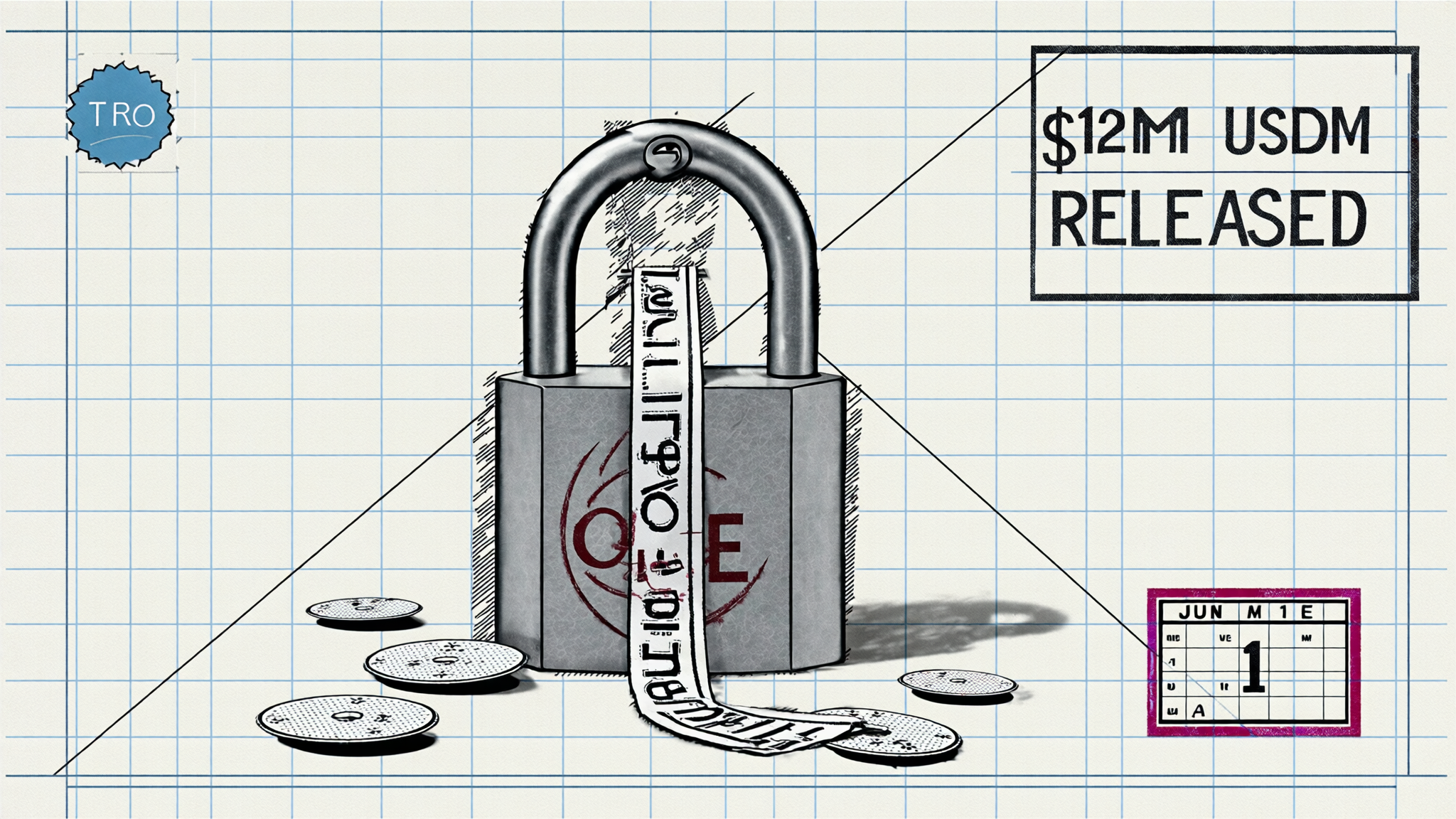
A U.S. federal court reversed the freeze on Zama's confidential USDC contract on Monday, restoring access to roughly $12.5 million in USDC that Circle had blacklisted on May 30 under a temporary restraining order tied to an Overnight Finance treasury suit. Zama co-founder and CEO Rand Hindi… Read the full story at The Defiant
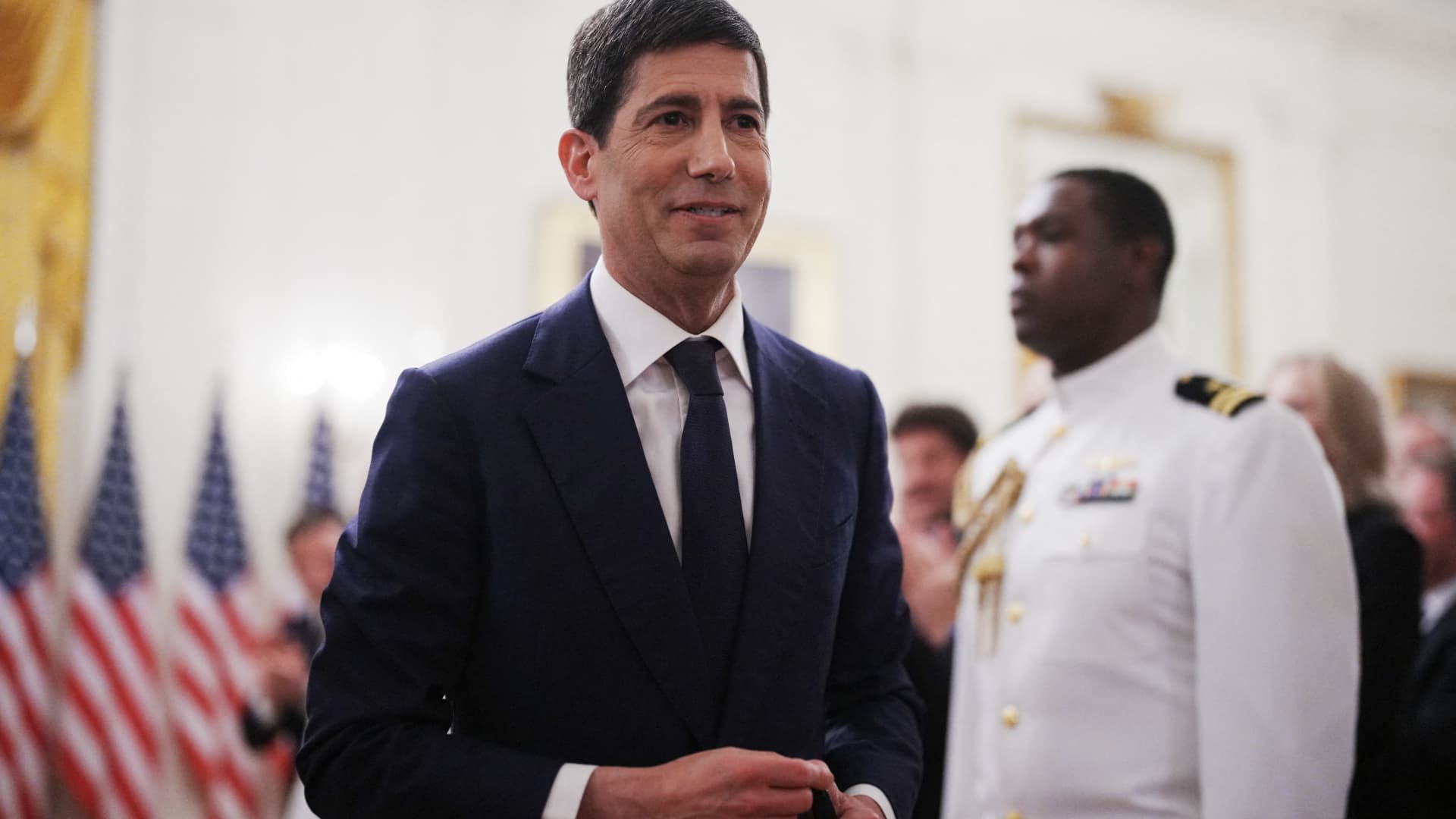
The new Chairman of the Federal Reserve Kevin Warsh departs from the East Room of the White House after a swearing in ceremony in Washington, DC on May 22, 2026.
Aaron Schwartz | AFP | Getty Images
Federal Reserve Chair Kevin Warsh has hired two conservative economic policy researchers to work with him at the central bank, a person familiar with the matter told CNBC.
The two researchers are Paul Winfree, the author of the chapter on the Federal Reserve in the conservative policy blueprint “Project 2025,” and Daniel Heil, a fellow at Stanford’s Hoover Institution think tank, where Warsh held a position before joining the Fed.
The two are “working as temporary contractors to support Warsh in his policy analysis and planning on special projects in the areas in which they have worked with him over time,” the person said. Warsh hasn’t yet made other permanent hires, this person said.
Warsh’s personnel decisions will be closely scrutinized. His broad network of advisers includes many prominent figures, including former Secretary of State Condoleezza Rice, investor Stanley Druckenmiller, and Chevron CEO Mike Wirth, all of whom appeared at his swearing-in last month at the White House.
But Warsh appears to have relatively few close advisers who have worked at the Fed or other major central banks. Warsh has positioned himself as an insider-turned-critic after serving at the Fed as governor during the 2007-2008 financial crisis under Chair Ben Bernanke.
Warsh in seeking the job pledged “regime change” at the Fed, telling an interviewer in 2025 that doing so would require “breaking some heads” at the central bank.
More recently Warsh has tempered his language about the Fed’s staff. At his swearing-in, Warsh said his “goal now is to create an environment in which the best people can do their life’s best work.”
Winfree worked on the Domestic Policy Council in the first Trump administration and more recently founded the Economic Policy Innovation Center, a pro-Trump think tank.
His chapter in “Project 2025” canvassed a range of conservative ideas to reform the Fed, some of which go beyond what Warsh has discussed. Among the ideas Winfree considered were to end the Fed’s so-called dual mandate, its directive from Congress to set interest rates with respect to maximizing employment and stabilizing prices. The Fed should instead focus on “protecting the dollar and restraining inflation,” Winfree wrote.
Warsh at his swearing-in spoke positively about upholding both sides of the dual mandate.
The Federal Reserve declined to comment for this story. The Wall Street Journal earlier reported the hires.
Martin Scorsese endorses AI in filmmaking: 'We have to be open to how it can evolve'

Mystics power past Sky for first home win of season

Today’s NYT Connections: Sports Edition Hints, Answers for June 3 #618



-

 NewsBeat7 days ago
Israel says it has killed new Hamas military leader in Gaza City airstrikes
-

 Tech7 days ago
NASA taps Blue Origin to deliver lunar rovers for Moon Base initiative
-

 News Videos5 days ago
This is BROKEN! INSANE 5x MONEY CAR WASH WEEK! The NEW GTA Online UPDATE Today! (GTA5 New Update)
-

 News Videos7 days ago
XRP *JUST* SUCCEEDED!!!! CLARITY ACT EXPOSED!!! (SHE EXPOSED IT)
-
 Tech4 days ago
SpaceX just won a second Golden Dome contract. This one is $4.16 billion.
-

 Tech5 days ago
Waymo dominates autonomous vehicle registrations as Tesla trails behind
-

 News Videos4 days ago
SHE IS KILLING XRP!!! WATCH URGENT AND ACT FAST
-
 NewsBeat4 days ago
FIRST NIGHT REVIEW: Take That bring the Circus back to life in spectacular sun-soaked style
-

 Business1 day ago
Jade Biosciences, Inc. (JBIO) Discusses Positive Interim Results From JADE101 Phase I Healthy Volunteer Study and Development Plans Transcript
-

 Tech7 days ago
The Samsung pay deal is the moment Korean unions changed register
-
Crypto World4 days ago
CFTC Has Approved the First Regulated Bitcoin Perpetual Contract in the U.S.
-
Crypto World7 days ago
SpaceX’s $2 Trillion IPO: Why Tech Giants Nvidia (NVDA), Apple (AAPL), and Microsoft (MSFT) May Face Pressure
-
 Entertainment7 days ago
The Most Misunderstood Sci-Fi Horror Movie of the Last 10 Years Just Took Over Netflix
-
 NewsBeat4 days ago
Novak Djokovic v Joao Fonseca LIVE: French Open latest scores and results after Jannik Sinner’s shocking collapse
-
 Crypto World4 days ago
Snowflake (SNOW) Stock Rallies on Strong Q1 Results and AI Product Growth
-
 Entertainment4 days ago
Weak ‘Supergirl’ Box Office Tracking Amid Milly Alcock Backlash
-

 Business4 days ago
Is the Spurs Phenom Already Better Than Prime Diesel?
-

 Business4 days ago
Demand Conditions Improve In Chemicals Sector In April 2026
-

 Crypto World4 days ago
MicroStrategy Moves $30 Million in BTC to Coinbase Prime: Is the Bitcoin Sell-Off Already Here?
-
 NewsBeat7 days ago
Energy price cap set for major rise from July as millions face higher bills
You must be logged in to post a comment Login