

Politics
The House Article | We cannot let the state be slowed by its own procedures

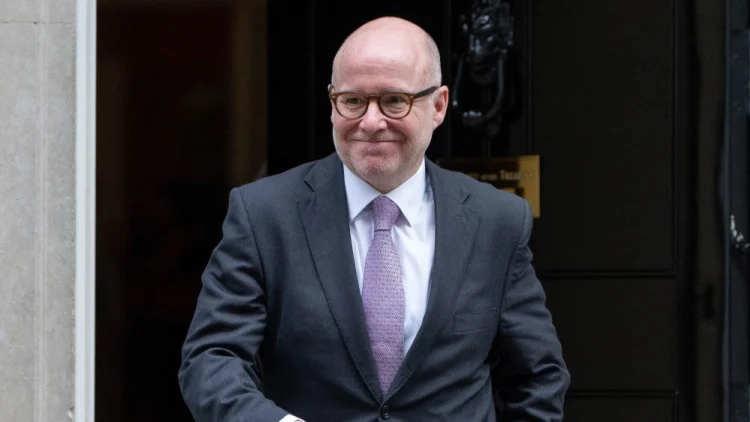
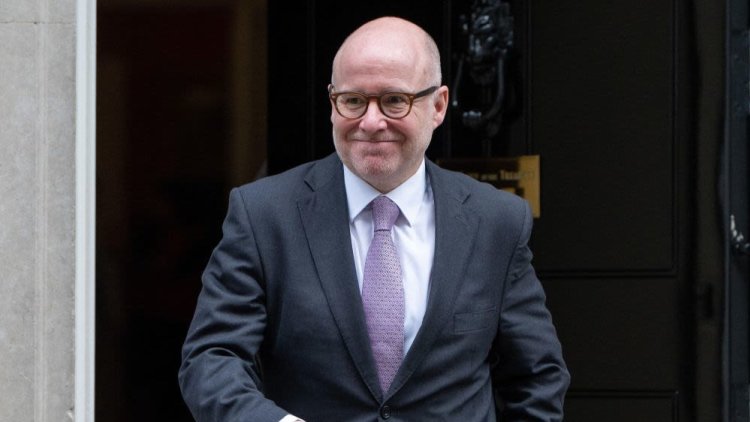
4 min read
Done well, consultations are vital. Done badly, however, which happens too much in Whitehall, they cease to be tools of democracy and instead become obstacles to it.
In 2018, there was a consultation on whether a handful of walkers could pass through a small ground in Lancashire for two hours every Sunday. In 2023, it was decided there was a need for the same consultation again.
The full machinery of government was marshalled in a similar way as it would for policies worth billions.
If you log on to GOV.UK right now, you will find a never-ending list of other government consultations. Many of these are a great way to gather feedback and the views of the public on important issues affecting them and their communities.
Some of them are more questionable.
Taken in the round, they tell a compelling but concerning story. Of good intentions, probably sound individual decisions, spiralling into something else. Layers of bureaucracy that successive governments have allowed to accumulate, each intended to safeguard fairness, yet have instead created a jungle of delay, confusion, and frustration.
And not just from ministers. The civil service is full of dynamic, committed people driven by a deep sense of public service. But they are being slowly suffocated by the system around them, causing stagnation. The previous government introduced an eyewatering number of new legal duties, regulations, and statutory requirements – ironically under the banner of deregulation.
That is absurd, but what is worse is that this absurdity has real consequences: ordinary people feeling that the state is distant, immovable, or worse, not serving their interests.
I came into law not because I thought its purpose was to preserve the status quo, but because I have seen how it can enable change. I came into government to drive forward that work. And I know the Prime Minister did so, too.
We cannot leave the defence of effective government to those who would dismantle it
That is why Nick Thomas Symonds and I have been tasked with helping create a more modern, agile state, working with the new Cabinet Secretary, Antonia Romeo, whom the Prime Minister has tasked with rewiring the state to turbocharge delivery.
Nick and I are lawyers by training, recognising that governing through the law does not mean blindly following endless procedures. Governing through the law means assessing these duties, asking whether they still serve us, and, where they don’t, changing them.
The reforms we are announcing today (Thursday) are about doing exactly that. About ensuring we properly rationalise how government works, and for whom.
We cannot leave the defence of effective government to those who would dismantle it. Those who have a vested interest in talking down the state’s ability to change people’s lives for the better, who want to tear away safeguards for working people.
Good governance is about delivering for the public because the public elected us on a mandate for change.
So, part of this is ending the culture of automatic consultations. Since the start of this year, 122 consultations have been launched – around two a day. Consultations are vital when they are genuine exercises in engagement: testing assumptions, gathering evidence, shaping policy. At their best, they save the public purse, but at their worst, deployed without thought or proportionality, they cease to be tools of democracy and instead become obstacles to it.
We have repeatedly seen the consequences; process overwhelms purpose, and momentum is lost. It’s like setting out to mow the lawn, only to find yourself hacking through a jungle.
We are using the latest advances in AI to assist with identifying and reviewing legal consultation requirements that clog up the system.
But there are many other areas where we will be taking this approach.
Decision-making will be modernised and reviewed to see where routine decisions can be made without excessively burdensome processes that take weeks. New accountability measures for Permanent Secretaries will be introduced to focus on delivering the PM’s priorities, hold civil servants to account for doing so, and ensure change is lasting.
Ultimately, the machinery of government should help ministers make good, effective decisions. Sometimes that means deliberation; sometimes it means acting quickly, within the law, to deliver what people need.
The state must not be slowed by its own procedures. Its purpose is to make decisions that matter for the public we serve.
If trust depends on delivery, and delivery depends on action, then our priority is clear:
cut through the unnecessary thickets, restore the capacity to act, and ensure the state can uphold principle without suffocating under its own processes.
This isn’t the sum of our ambition — it is barely base camp — but it is the first step in a radical climb to rewire the state.
Lord Hermer is the Attorney General

Politics
Trump’s counter-terror czar thinks arch-conservative Tucker Carlson is an extremist Sharia law fanboy


Donald Trump was always a thin-skinned bully-boy. His hypersensitivity informs his worldview. And now his bizarre worldview informs a globe-spanning US counter-terror policy. His administration is now so addled it has decided hyper-conservative podcaster Tucker Carlson is some sort of terrorist-sympathizer.
Why, you might ask? Well, it is a result of Carlson’s criticism of Trumpian policies. Welcome to Trumpland 2026.
US journalist Ken Klippenstein noticed that Trump’s British counter-terror czar, Sebastian Gorka, was doing the rounds on US talk shows. Gorka just authored the new US counter-terrorism policy which brands antifascists, the left and trans people as terrorists.
But Trump’s cronies also see their critics on the right as enemies:
Between grandiose monologues about his vision of a crusade to save Western civilization from “anti-American” and “anti-Christian” extremism, Gorka let slip that the administration’s war on “domestic terrorism” isn’t just aimed at the left.
Klippenstein continued:
It targets anyone who isn’t in line with the broader MAGA agenda. While Trump’s national security directive NSPM-7 explicitly singles out the left with its list of so-called terrorism indicators, many of them could describe people on the right as well.
Asked by Breitbart editor-in-chief Alex Marlow if there’s any “right-wing terror” or “right-wing extremism” threat, Gorka replied by pointing to former Fox News host Tucker Carlson and streamer Nick Fuentes — both of whom have become vocal critics of the Trump administration — arguing they aren’t actually conservatives anyway.
Okay, mate…
Gorka told Marlow:
…I’m not sure that Nick Fuentes or Tucker Carlson are conservatives. If you are lauding Sharia law, if you are saying that there are Muslim states that seem to be better qualitatively than America in terms of freedom and prosperity, I’m not sure that means you’re part of the conservative movement. So if you remove those individuals and you understand that they’re not conservatives, what’s left?”
Carlson supports Sharia law?! Klippenstein posted Carlson’s exact words from the media interview Gorka was citing:
CARLSON: “But you go to a country like Japan or the Emirates or Qatar, Saudi Arabia, and you see that when people are self-confident, when they’re really pleased with what they’re doing, and they believe their system is the right system — that self-confidence results in a kind of welcoming attitude. So you’ll be sitting at dinner in Riyadh, Saudi Arabia, and you’ll say, you know, I just, I’m really kind of pro-Jesus, like I’m a Christian. They’ll be like, ‘That’s so great!’
HOST: And they don’t have the same beliefs?
CARLSON: No, they’re Muslims. It’s a country governed by Sharia law! — [laughs] — I mean, and they’re like, ‘That’s great!’
Klippenstein wrote:
Is Carlson naive for mistaking his Four Season’s experiences in whatever Gulf monarchy with an egalitarian society? Absolutely. But “lauding Sharia law?” Come on.
A quick caveat here. The US and UK right-wing have a massive complex about Sharia law. It’s one of their favourite bogeyman. Here’s a little primer on it from fact-checkers at Factually:
Common misconceptions about Sharia center on it being a single, draconian legal code that uniformly oppresses women and mandates extreme corporal punishments; authoritative analyses show Sharia is a plural, principle‑based system whose interpretation and application vary widely across time, schools, and states.
Not quite so simple, after all.
Klippenstein is right though. Gorka’s comments are a massive, bad-faith reach. But Trump’s henchman is also telling a story we need to hear. Trump’s authoritarian impulses, paired his child-like sensitivity to criticism, are a deadly combination. The primary enemies of the far-right are still the organised working class, the political left and marginalised groups. But right-wing critics are also intolerable to the US regime.
And nobody needs to hear that more than the political right. Nobody is safe from this radical right-wing agenda — not even conservatives. To quote the fash in their own conspiracist terminology: time to wake up, sheeple.
Featured image via LA Times
By Joe Glenton

DAYS THE BUDGET IS LATE: 43
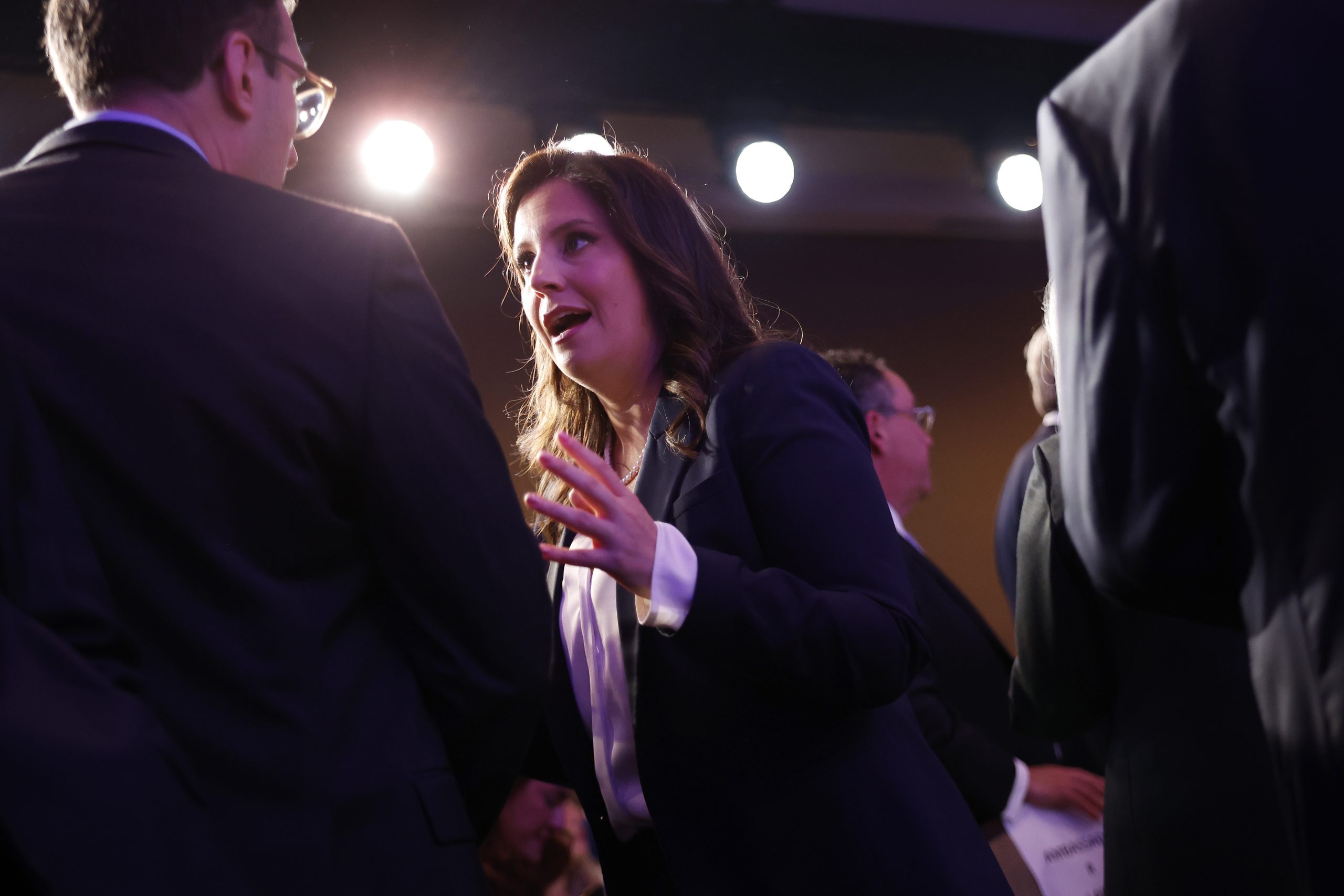
PRIMARY COLORS: Republican Assemblymember Robert Smullen sat down with Rep. Elise Stefanik five years ago to talk about a rural development bill, but instead he made a bold claim: He intended to challenge her in a GOP primary.
The previously unreported meeting, according to two people with direct knowledge of the private conversation who were granted anonymity to discuss it, occurred in July 2021.
Smullen never followed through with a Stefanik primary challenge. And in a statement, he denied ever planning to challenge her for the nomination.
“I’ve never planned to primary Elise Stefanik,” he said in a statement. “I have too much respect for her, her leadership, and the job she has done fighting for NY-21 and Upstate New York.”
According to the people, the sitdown occurred as Republican House members in deep blue New York were bracing for what was expected to be a challenging round of redistricting. Smullen’s primary threat against Stefanik was based, in part, on the potential of her home being drawn out of the sprawling North Country seat she’s represented since 2015.
“To have the audacity to do that — to not read the room, but also not read the polling,” one of the people said. “By the end of the meeting he was set straight.”
It also came months after Stefanik replaced then-Rep. Liz Cheney as the Republican House conference chair following the Wyoming Republican’s emergence as an outspoken critic of President Donald Trump. Stefanik had previously emerged as a prominent Trump ally in Congress.
Yet Smullen over the years has donated frequently to Stefanik’s campaigns — including thousands of dollars between 2020 and 2024.
She also frequently appeared alongside Smullen at events, like at an October 2022 fundraiser for his Assembly reelection campaign as well as a rally a month later.
“I have known Elise personally for years, supported and donated to her campaigns, and appreciated her support for me during my own races,” Smullen said. “Like many elected officials and political allies do over the years, we had conversations about the future and the importance of continuing strong Republican representation for this district someday. That is very different from this narrative POLITICO is trying to create.”
He added, “What is especially disappointing is that my opponent and his operatives are trying to drag Elise into a primary she has made clear she is staying out of so voters can make their own decision.”
Smullen also told Playbook that Stefanik comforted his family when his son was hospitalized and later died after he was struck by a car.
“During the hardest time in my family’s life, Elise was there for us while my son AJ was in the hospital and after we lost him. Those are not the actions of people involved in some fabricated political feud,” Smullen said. “I am focused on earning the support of voters across NY-21 and fighting for the conservative values that unite Republicans across Upstate New York.”
The state lawmaker is now running for the House seat Stefanik is vacating this year, competing for the nomination against Republican Anthony Constantino, the Trump-endorsed candidate in the June 23 primary.
Stefanik has not endorsed in the primary to succeed her. But her support is highly coveted by both Republican candidates.
She’s represented the House district for the last decade, building up a base of ardent supporters and aligning herself closely with the president’s MAGA movement.
Stefanik bowed out of running for reelection after scuttling a short-lived bid for governor.
Her decision not to run for another term has ignited a heated Republican primary to succeed her in a ruby red House seat that Trump has handily won three times.
Constantino, the CEO of the merchandise and printing company Sticker Mule, has marshaled the backing of Trump-allied luminaries like political operative Roger Stone, former New York City Mayor Rudy Giuliani and retired Gen. Michael Flynn.
His candidacy has split Empire State Republicans, however.
The New York Republican Committee in April formally endorsed Smullen — a rare nod by the party’s statewide leadership in a GOP primary. — Nick Reisman
FROM THE CAMPAIGN TRAIL

HOCHUL FILMS VIDEO FOR LASHER: Gov. Kathy Hochul, Rep. Jerry Nadler, Assemblymember Micah Lasher and political strategist Morris Katz all walked into a bagel shop.
It’s not the start of a joke, it’s what happened Tuesday at Tal Bagels on 90th and Broadway.
The three elected officials were spotted with the wunderkind political strategist filming a video together for Lasher’s run for Congress, according to two Playbook spies and a third person who confirmed the events. State Sen. Brad Hoylman-Sigal and Council Member Gale Brewer were also there.
Lasher is running for the Manhattan seat held by Nadler, his former boss, and was already endorsed by Hochul, also his former boss, last month.
But the soon-to-be released video will mark a unique level of involvement for Hochul in the race.
In the 2024 Democratic primaries, Hochul held a strict no-primary-endorsements policy, even though she privately fundraised for some candidates. Now, she’s filming Katzian videos over lox & schmear for Lasher in a competitive primary, where he’s up against Assemblymember Alex Bores, Kennedy scion Jack Schlossberg and anti-Trump commentator George Conway.
The meeting also shows a sort of détente in the political consulting world. In the bruising battle in neighboring NY-10, Katz’s Fight Agency is backing former city comptroller Brad Lander’s primary challenge of Rep. Dan Goldman, whose campaign is powered by consultants Haley Scott and Mark Guma.
Guma and Scott both work on Lasher’s campaign, which now can officially count Katz as a partner.
Behind the scenes, Katz, a key strategist on Mayor Zohran Mamdani’s campaign, has already been boosting Lasher. In February, POLITICO reported Katz was making calls to progressives to line up support for Lasher, identifying himself as “Morris Katz with the mayor” on the phone.
In a statement, Lasher spokesperson Caroline Crowell celebrated how the great bagel confab represented a unity between the rival consultants.
“Team Lasher is thrilled to welcome Fight Agency to our team that includes powerhouses Mark Guma and Haley Scott,” Crowell said. “We can’t wait for you to see what we’ve been cooking up. Stay tuned!” — Jason Beeferman and Irie Sentner
RELATED: It’s unclear if Mamdani is going to wade into the primary for Nadler’s seat — and there haven’t been any significant signs that he will. But in an interview with the New York Editorial Board, Bores said he would “love” to have the mayor’s endorsement.
“I haven’t talked to him about an endorsement,” Bores said, adding that he would “welcome his endorsement, just like I welcome the endorsement of any voter in the district.”
“That’s a little lukewarm,” journalist Ben Smith replied.
“Given the opportunity to ask and, yes, I would love to have his endorsement, but I don’t expect that he will get involved in this race,” Bores, who often likes to mention that he and Mamdani were basketball buddies in Albany, continued.
Bores has raked in some eye-catching progressive endorsements, including from Our Revolution, the group founded by Sen. Bernie Sanders (I-Vt.).
At a recent forum at a synagogue, both Bores and Lasher were asked if they regretted endorsing Mamdani in the general election; neither said no, but both qualified their support for the mayor, who has drawn the ire of some Jewish voters. NY-12 has a prominent Jewish constituency. — Madison Fernandez
From the Capitol

CLOCK’S TICKING: The state Capitol is starting to take on some post-budget vibes — despite the fact that budget talks haven’t yet concluded.
“This is later than usual,” Assemblymember David Weprin said of this year’s spending plan. “It took a long time till we were going to start doing regular bills because we thought we were going to have a budget relatively on time. Once that became a reality, we started taking up more regular bills.”
The advocacy focus in the halls near the Legislature’s chambers has increasingly moved away from last-minute budget pleas to stand-alone bills. Weprin joined former Charlotte Hornets forward Michael Kidd-Gilchrist today to push for more insurance coverage for stuttering. Other groups pushed for bans on data centers, a herbicide prohibition and new regulations on gun safes.
Both houses of the Legislature, meanwhile, are increasingly spending their days plowing through dense agendas.
“Would I have wanted to be at this point in session?” Senate Majority Leader Andrea Stewart-Cousins said while announcing a consumer protection package Tuesday. “No, I would hope as always that we were able to get an on-time budget and that we were able to accomplish what we needed to accomplish sooner than now. But that has not stopped us from paying attention to the things we care about.”
But time is still clearly running out — even if the budget is wrapped up next week, there will only be eight remaining session days. “We’re just going to run out of time,” Assemblymember Anna Kelles said.
And while legislative leaders have been adamant that June 4 will remain the last day, that pinch is stirring talks of overtime.
“I think we will have some special session after our session ends before the end of the year to do some bills we haven’t done,” Weprin predicted. — Bill Mahoney
FROM THE DELEGATION

BELTWAY VITRIOL: Rep. Mike Lawler called antisemitic insults hurled at him by William Paul, the son of Sen. Rand Paul, “reprehensible” and “fucking disgusting.”
NOTUS reported on Wednesday that last night, the younger Paul “confronted Lawler about Rep. Thomas Massie’s GOP primary election in Kentucky next week” and said that if he loses, it’s going to be because of “your people” — which he followed by saying “you Jews.”
Speaking to reporters in Washington, Lawler said Paul “went on a roughly 10 minute diatribe about Israel and about Jews, about Paul Singer and accusing Jews of being responsible for so many things, playing right into the typical antisemitic tropes that so many people rely on.”
Lawler is not Jewish. His district, just north of New York City, has a large Jewish population.
“It speaks to a larger issue, obviously, in society and what we’re seeing among young people and what we see online,” he said. “This is the level of hatred and vitriol, frankly, that some of my Jewish colleagues experience, but many of my constituents experience.”
Paul responded to the incident in an X post, writing that he “had too much to drink and said some things that don’t represent who I really am. I’m sorry and today I am seeking help for my drinking problem.” — Madison Fernandez
IN OTHER NEWS
— WALDEN IN THE WATERS: A coalition of wealthy donors has raised over $1 million to oppose Mamdani’s agenda. (The New York Times)
—COURTSIDE CONGESTION: The Knicks’ playoff run could collide with World Cup transit restrictions, creating a major commuting problem for Penn Station. (Gothamist)
—MAYOR TAKES AIM: Mamdani is urging state regulators to block Western Union’s $500 million merger with Intermex, warning it could raise costs for immigrant New Yorkers. (Semafor)
Missed this morning’s New York Playbook? We forgive you. Read it here.


A new poll has shown that most NHS workers think health secretary Wes Streeting is failing the NHS, badly.
The NHS is suffering, and Streeting is making things worse
YouGov has reported that:
87% of NHS staff describe the NHS as currently being in a weak state
- Wes Streeting specifically has been doing a bad job (53% – up 13% from last year).
- Labour is handling healthcare badly (66% – up 13% from last year).
- A continuation of Labour’s current policies will make the NHS even worse (40% – up 14% from last year).
Streeting — who has the support of millionaire donors and private healthcare lobbyists — has long coveted the job of Labour Party leader. But he barely won his own constituency in 2024, and his race-baiting local party has been haemorrhaging votes ever since.
The new poll of NHS workers, meanwhile, is a damning assessment of Streeting’s record as health secretary. And it should make any Labour MP think twice before trying to force him onto the country as prime minister.
NHS staff increasingly believe Wes Streeting is doing a bad job as health secretary and that the Labour government is handling the NHS badly
Streeting as health secretary Labour handling of NHS — YouGov (@YouGov) May 13, 2026
Good job: 22% (-3 from 19-28 Feb 2025)
Bad job: 53% (+13)
Well: 24% (-6)
Badly: 66%… pic.twitter.com/HCTlxa1kMQ
Stop Wes Streeting. Stop the privatisation.
Only 22% of NHS workers think Streeting has been doing a good job. And most essentially perceive there to have been almost no difference between conditions under the previous Conservative government and conditions under the current Labour government.
That’s hardly surprising when even the Guardian has been saying:
Labour is privatising the NHS in plain sight
EveryDoctor, meanwhile, has been insisting:
The NHS is being privatised, and it is so important that we pay attention to the way money is moving through Westminster…
And if we follow the money, we see that Wes Streeting is at the top of the list, having received at least £224,575 from people and corporations with private healthcare interests. EveryDoctor adds that:
Labour MPs received almost five times as much in donations from donors connected to private healthcare as all other MPs combined, according to EveryDoctor’s analysis of the MPs’ register of financial interests. We must ask why this is happening, at the same time as the Labour government has chosen to divert billions more into the private healthcare sector
Streeting has also been schmoozing with big technology firms, being particularly secretive about the dodgy NHS contract with evil tech giant Palantir.
As NHS staff know all too well, a Streeting government is bad news for the NHS. Because just like Tony Blair’s Labour previously, Labour today is also siphoning money away from the NHS and into the pockets of private healthcare corporations.
To stop this privatisation and save the NHS, we need to stop Wes Streeting.
Featured image via the Canary
By Ed Sykes


Nigel Farage could finally face his comeuppance as the Parliamentary Standards Commissioner launches one investigation, while a further probe may follow after a complaint from the Conservatives.
Following reports and widespread coverage of Farage taking a ‘gift’ of £5m from foreign-based crypto-billionaire Christopher Harborne, which he failed to declare, the commissioner is now finally investigating the Reform UK leader for breaching the code of conduct.
Nevertheless, the millionaire’s woes likely won’t end there — as the Guardian’s Pippa Crerar has said a second investigation by the Electoral Commission might indeed be on its way.
Whether that will take place will be known by the end of this week.
— Politics UK (@PolitlcsUK) May 13, 2026
 BREAKING: Nigel Farage is now being investigated by the Parliamentary Standards Commissioner for not declaring the £5m gift he received from billionaire Christopher Harborne
Followed by:
NEW: A second investigation into Nigel Farage could be on the cards – I'm told the Electoral Commission has told the Tories they are still looking at their complaint and will come back by the end of this week.
— Pippa Crerar (@PippaCrerar) May 13, 2026
When it rains, it pours — eh, Nigel?
This is sure to be a week that the Reform leader would like to forget — not that we will let him, that’s for sure. After all, Farage is well overdue for an investigation and with any justice, be kicked out of British politics. Nevertheless, we will have to see how the investigations play out as to whether we will see this super-rich racist facing accountability in our democracy.
However, officials only agreed to take up this investigation after pretty significant pressure. For instance, we have been reporting for quite a while on the huge, and questionable, funding going into this billionaire-interested business of a party.
Our own Alex/Rose Cocker wrote in March — way before the local elections on May 7:
On 5 March, the Electoral Commission published its records of political donations in the last quarter of 2025. And, surprise surprise, Reform UK has taken yet another massive crypto donation from Thai-based billionaire Christopher Harborne.
Last quarter’s £3m donation joins the record-breaking £9m that the cryptocurrency investor already gifted to the far-right party. Likewise, on top of the £3m, Reform also received a further £2.5m from other sources.
Back in May [2025], Farage told the Las Vegas Bitcoin Conference that his party would launch a “crypto revolution”. On the same day, Reform announced that it would start accepting donations in crypto.
Then, in the very next financial quarter, Harborne’s major £9m donation to Reform rolled in on 1 August. It was the largest ever gift from a private individual to a political party.
At the time, the Canary highlighted that Harborne also donated millions to the Brexit Party in 2019, as well as to the Conservatives between 2001 and 2022. While Harborne is British, he’s now based in Thailand.
Sky News spoke to political donation expert professor Justin Fisher, who told them:
It exposes the fact that this is a person who is a British citizen but is able to influence British politics without being subject to the laws that any Reform government might bring in, any tax arrangements that a Reform might bring in.
This is foreign money by any other name.
When the crypto donation revelation surfaced, Farage insisted that Harbourne “wants nothing from me”.
Farage facing investigation is a welcome sight
Consequently, this announcement of an investigation — and another possibly to come — has come as good news for quite a few.
Not Nige, obviously:
The sun is breaking through the dark clouds ….. https://t.co/RanA87wKo1
— Alan Thompson (@AlanThompson58) May 13, 2026
This would only seem strange to the small minority of people who have never received a no strings attached £5m cash gift from a friend.
It surely can’t be a political bribe…… https://t.co/5YiC2J9fp7
— Brian (@FrenScottish) May 13, 2026
Our own Willem Moore reported on a possible impending by-election in Nigel Farage’s constituency after complainants, including the Tories, submitted allegations to the Electoral Commission and the Parliamentary standards watchdog.
He wrote:
Clearly, voters should know that Farage took £5m from a wealthy crypto-enthusiast given his recent support for the scam-linked financial tech. And as the Observer reported, he now faces:
two possible probes: one by the Electoral Commission, which has been considering whether his failure to declare the sum may have breached electoral law; and a standards commissioner investigation to see whether Farage has breached the members’ code of conduct.
The Electoral Commission will decide whether to launch a formal investigation as early as this week, The Observer understands, with the team weighing up the extent to which the cash was used for Reform party purposes.
No one ‘gifts’ millions for nothing in return
We understand, as it’s pretty obvious, that the super-rich have precious little appreciation for the value of money. However, it’s abundantly clear to everyone else that no one donates over £10m to a political leader unless they are going to get something of far greater value in return. The fact that he was ‘gifted’ it prior to him becoming MP is surely just indicative of the intention to get the far-right businessman a foothold in British politics.
Subsequently, it clearly worked as Farage became an MP. More recently, the millionaire worked to get huge numbers of abusive, racist men — and women — made councillors in the recent local elections. As a result, Reform UK has brought huge instability and division to the UK, and we already know how the super-rich profit from destabilised societies and economies.
Furthermore, we mustn’t forget how super-rich corporates dodge taxes and social justice, whilst the budgets of ordinary people continue to tighten ever further.
Therefore, it is good news that Farage now faces
Featured image via the Canary


(Alamy)
2 min read
Exclusive: A junior minister called for Keir Starmer to step down as Prime Minister and set out a departure timetable in a private meeting on Wednesday afternoon, PoliticsHome understands.
It is understood that Josh Macallister, Labour MP for Whitehaven and Workington, told the Prime Minister to set out a timetable for his departure during a meeting with ministers. Starmer told the meeting that if there was a challenge, the NEC would set out an appropriate timetable.
When approached for comment, Macallister refused to comment on a private meeting.
There have been reports that other ministers have called for Starmer to set out a timetable for departure, including Shabana Mahmood, the Home Secretary.
Wes Streeting, the health secretary, is expected to launch a leadership bid on Thursday and formally challenge the Prime Minister. He met Starmer in Downing Street on Wednesday morning for a meeting which lasted less than 20 minutes.
To date, more than 90 MPs have called on Starmer to step down, while four ministers have resigned from government in protest.
Meanwhile, Andy Burnham is in the process of lining up a seat in Greater Manchester. Afzal Khan told PoliticsHome he would not be standing aside, but it has been reported that he is considering vacating his seat to let the Manchester Mayor into Parliament.
Ed Miliband has the numbers to stand in a leadership contest if Andy Burnham is unable, his allies have told PoliticsHome. The Energy Secretary is understood to be considering running for Labour leader if Streeting triggers a contest.


A chronic condition which affects 1 in 8 people with ovaries worldwide is to be renamed to better reflect symptoms and hopefully lead to a higher diagnosis rate. Following a fourteen-year patient-led campaign, polycystic ovary syndrome (PCOS) will be renamed polyendocrine metabolic ovarian syndrome (PMOS).
The name change was announced in a paper published in The Lancet and presented at the European Congress of Endocrinology in Prague. Experts said that by focusing only on cysts, the previous name meant many struggled to get a diagnosis and have their condition treated.
The paper says:
The term PCOS is inaccurate, implying pathological ovarian cysts, obscuring diverse endocrine and metabolic features, and contributing to delayed diagnosis, fragmented care, and stigma, while curtailing research and policy framing.
PCOS gets a new name
PMOS will be characterised by fluctuations in hormones, affecting metabolic and mental health, skin, and the reproductive system, irregular menstrual cycles, difficulty getting pregnant, and links to type 2 diabetes and cardiovascular disease, not just ovaries and cysts.
What is often missed is that because it affects hormones, people with the condition often have a higher resistance to insulin. This can mean a higher chance of type 2 diabetes, and it can be harder to treat.
Despite the condition previously having the word ‘polycystic’ in it, experts were particularly keen to change the name as it’s been proven that people with PMOS don’t have any increase in abnormal cysts on the ovaries.
By including polyendocrine, the new name recognises that it’s a condition that affects the endocrine system, the network which creates and releases hormones around the body, not just the reproductive system.
The name change was the result of 14 years of global collaboration, led by endocrinologists working with 56 patient and professional organisations around the world. After a survey answered by 22,000 people and multiple international workshops, 86% of participants agreed the condition needed a new symptom-based name.
Professor Helena Teede, endocrinologist and director of Monash University’s Monash Centre for Health Research & Implementation, spearheaded the campaign after decades of researching the condition.
What we now know is that there is actually no increase in abnormal cysts on the ovary, and the diverse features of the condition were often unappreciated. It was heartbreaking to see the delayed diagnosis, limited awareness and inadequate care afforded those affected by this neglected condition.
While international guidelines have advanced awareness and care, a name change was the next critical step towards recognition and improvement in the long-term impacts of this condition.
Supporting ALL women
While participants and experts knew a name change was needed, it was important that the new name reflected all involved from all over the world and didn’t create further stigma.
As Teede explained at the conference:
While ‘reproductive’ may be a more accurate direct term to cover all of the abnormalities in the ovary, but also in the endometrium and in the reproductive health during pregnancy, it also carries very significant stigma,” Teede said.
There are parts of the world where labelling a woman as having a reproductive condition is directly related to her value and worth in society, where cultural implications were enormous. For that reason, we spent a great deal of time on this, both in the surveys and also in the workshops. The terms that were agreed on were polyendocrine, metabolic, and ovarian. The next step was to bring them together in a new name.
Professor Terhi Piltonen, International Androgen Excess and Polycystic Ovary Syndrome Society (AE-PCOS Society) President, said:
It was essential that the new name was scientifically correct but also considered across diverse cultural contexts to avoid certain reproductive terms that could heighten stigma and be harmful for women in some countries
Rachel Morman, of Verity, the UK PMOS charity, said:
This shift will reframe the conversation and demand that it is taken as seriously as the long-term, complex health condition it is.
There will be a three-year transition period for the new name, which will be supported by a global education and awareness campaign aimed at health professionals, governments and researchers around the world. The new name will be fully implemented in the 2028 International Guideline update.
Featured image via Tribune
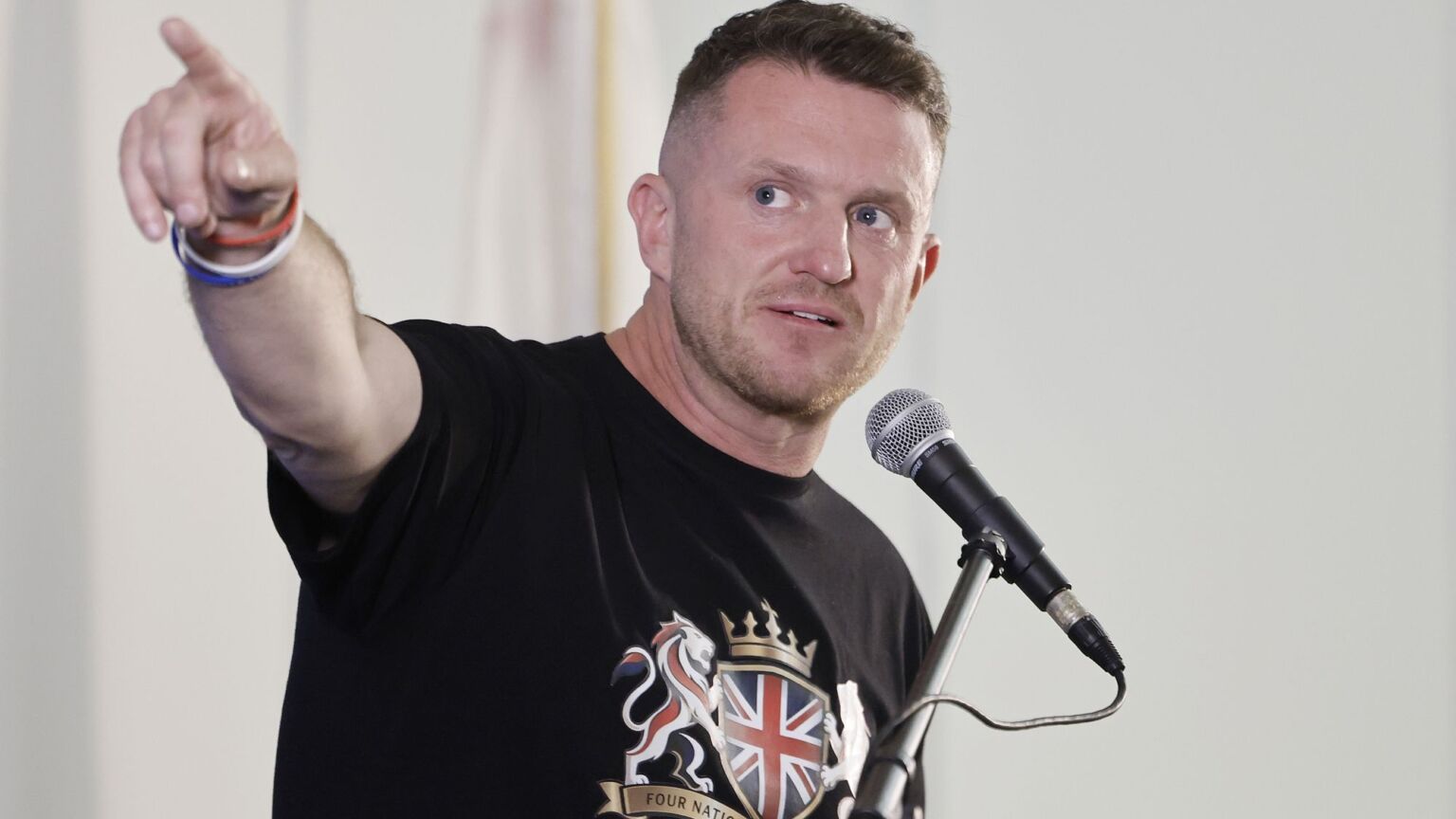
The controversial hard-right activist Tommy Robinson has been invited to an Oxford Union debate on whether Islam is a threat to the West, alongside British Muslim MPs and scholars opposing the motion. Yet there is no guarantee he will be allowed to speak at the debate, scheduled to take place on 28 May. Ever since news of the invitation was leaked, pressure has mounted for the event to be cancelled. Stand Up To Racism Oxford, the Oxford Labour Club and several other student organisations have objected, while some speakers are said to have withdrawn in protest.
There are, of course, valid reasons why many people object to Robinson. He has spent years making contentious arguments about Islam’s deleterious impact on the UK, and is often accused of encouraging anti-Muslim sentiment. Then again, many who feel disenfranchised by elite consensus regard him as one of the few public figures willing to speak openly about Islamist extremism, Muslim grooming gangs and the consequences of large-scale immigration.
But that isn’t the point. What matters is whether students and academics still believe arguments should be confronted publicly, rather than suppressed before they can be heard.
For more than 200 years, the Oxford Union has hosted debates in an adversarial forum, exposing controversial arguments to scrutiny, criticism and rebuttal. In 1992, for instance, it hosted Enoch Powell without the kind of organised campaign for disinvitation now surrounding Robinson.
Then again, it would be misleading to pretend attempts to prevent controversial speakers appearing on campus are entirely new. In truth, something changed quite a while ago.
If we were looking for an origin story, we might point to the National Union of Students (NUS) 1974 No Platform policy against ‘openly racist or fascist organisations’. As so often with speech restrictions, what began as a tactic against fascists specifically gradually evolved into a much broader hostility to free speech. By the late 1970s, Conservative ministers, anti-abortion advocates, opponents of sanctions against apartheid South Africa and others were being physically attacked or prevented from speaking at universities across the country.
A recent Higher Education Policy Institute survey suggests this instinct remains deeply embedded within campus culture: 81 per cent of students support the NUS No Platform policy, including 35 per cent who say it should apply to those who ‘may cause offence’ to certain student groups.
A more interesting question than when this began is how a policy to oppose organised fascism came to be applied to an ever-wider range of lawful but contentious speech.
One answer lies in our impoverished understanding of listening. Would-be censors are fond of imagining ‘listening’ in crude behaviourist terms: the audience hears a view so dangerous that it is either harmed or infected by it. As a result, democratic culture comes to be viewed with suspicion – less as JS Mill’s marketplace of ideas, where individuals reason and choose freely, than as BF Skinner’s dismal world of behaviourism, where human beings are merely conditioned by external stimuli.
That places remarkably little trust in the intellectual agency of ordinary people. And yet, as anyone who has actually engaged in debate knows, listening can be forensic, hostile, sceptical, adversarial, amused, analytical, morally alert and readily converted into argument. It isn’t mere absorption, with the audience reduced to empty vessels into which ideology is poured.
Oxford Union president Arwa Elrayess has made precisely this point in defending her decision to invite Robinson. Reflecting on a previous Oxford Union debate with an Israeli soldier, she noted that others had argued he should not have been allowed to speak. But as a Muslim Gazan, she disagreed, wanting the chance to challenge his arguments directly. Many audience members, she says, ‘left changed, not because I asked them to stay away, but because I asked them to listen’.
Elrayess is right. What the behaviourist impulse offers, by contrast, is an easier way out, with censorship masquerading as compassion. If listeners are treated as psychologically vulnerable, then the freedom not to listen – not to buy a ticket, not to attend – quickly curdles into the supposed moral duty to suppress dangerous ideas before anyone can be harmed by them.
What Robinson’s detractors would do well to remember is that objectionable views driven out of public debate don’t simply disappear. They retreat into spaces where their ideas face less or no scrutiny, beyond the reach of open challenge and rebuttal, where they find eager adherents.
After all, what has half a century of No Platforming actually achieved? Robinson has millions of followers. The hard-right Restore Britain, the recently launched party he has endorsed, is already polling at around four per cent nationally.
Perhaps it’s finally time for campus censors to spend less energy cancelling their adversaries and more explaining, in public, how and why they might be wrong.
Freddie Attenborough is director of research for the Committee for Academic Freedom.


The ‘Freedom Flotilla Coalition‘ (FFC) of humanitarian boats has launched further vessels bound for Gaza, in response to Israel’s terrorist pirating of ships and boats attempting to deliver aid to starving Palestinians.
The vessels — the Adalah, Kyriakos X, Lina Al Nabulsi, PERSEVERANCE and Tenaz Love Aqsa Bangladesh — have set sail from a Greek island today, 13 May 2026. They form part of the broader international flotilla effort to break Israel’s illegal siege of Gaza and challenge Its impunity in enabling genocide, starvation, and the wholesale erasure of the Palestinian people.
These boats will join approximately 55 additional vessels departing from Marmaris, Türkiye, sailing under French, Italian and Polish flags. The flotilla will carry food and medicine in defiance of Israel’s brutal and criminal blockade of oppressed Palestinians in Gaza. The so-called ‘international community’ has failed to challenge Israel’s blatant war crimes and crimes against humanity as part of its Gaza genocide.
A flotilla of humanitarian aid
The FFC has sailed dozens of vessels to challenge to Israel’s blockade, building on the historic missions of the Free Gaza Movement, which first broke the blockade by sea in 2008. After the June 2025 voyage of the Madleen, international participation in flotilla initiatives expanded significantly, reflecting growing global civil society’s refusal to accept the normalisation of siege and genocide.
On 29 April, Israel attacked 22 civilian vessels off the western coast of Greece. The occupation military abducted and tortured two Global Sumud Flotilla (GSF) organisers and abused other crew members. Israel and the United States have attempted to smear and criminalise the GSF. Following the same pattern as the Starmer regime in the UK, the terror regimes have made baseless allegations attempting to delegitimise civilian resistance and manufacture public consent for further attacks on the mission.
Palestinians in Gaza have endured two decades of a deadly blockade, repeated military assaults, forced deprivation, sexual violence and ongoing genocide. They see the flotilla as an act of international civilian resistance against settler colonial violence and the global machinery that sustains it. To their shame, the UK and other western governments have only enabled this criminality and piracy, doing nothing to protect their citizens who are taking part in the humanitarian effort.
Featured image via GreenPeace
By Skwawkbox


In response to the call from Palestinian trade unions to escalate pressure to end complicity in Israel’s genocide and apartheid, three major trade union federations representing over 80 trade union affiliates across the islands of Ireland and Britain have announced support for workplace actions this Thursday 14 May, coinciding with the 78th anniversary of Nakba.
The Palestinian Boycott, Divestment and Sanctions (BDS) National Committee, the largest coalition in Palestinian civil society including almost all trade unions, salutes the three trade union federations – all affiliated to the International Trade Union Confederation.
In Ireland and Scotland— the Irish Congress of Trade Unions and the Scottish Congress of Trade unions are supporting the upcoming workplace day of action in solidarity with Palestine on Thursday 14 May.
The UK Trades Union Congress is also supporting the upcoming workplace day of action in solidarity with Palestine on Thursday 14 May.
Many trade unions are longstanding supporters of Palestine
Major British trade unions affiliate to the Palestine Solidarity Campaign and have been supporting the workplace days of action since the beginning of the genocide in Gaza, to build solidarity with the people of Palestine and to challenge UK complicity with Israel.
Under the banner of “Workplace Day of Action for Palestine,” all three federations have worked with Palestine solidarity organisations to answer the call of support for workplace solidarity action.
The BDS movement calls on all trade unions, student organisations and wider civil society organisations, across Ireland, Scotland, England and Wales, to take action this Thursday 14 May.
National demonstrations marking 78 years since the Nakba are organised by solidarity networks for Dublin and London with local demonstrations organised for Belfast and Edinburgh this Saturday 16 May.
Omar Barghouti, co-founder of the BDS movement said:
Of all people, workers understand well what solidarity means. The Palestinian labour movement has called for meaningful solidarity with our struggle to end Israel’s genocide and dismantle its underlying, decades-old regime of settler-colonial apartheid. Ending all complicity in Israel’s crimes is a profound moral obligation and a necessary first step of solidarity.
14 May will be a powerful statement of solidarity in this respect. When workers from across Ireland and Britain take real action to end the complicity of their respective states, corporations and institutions, they recall the best traditions of international workers’ solidarity. They also contribute considerably to building the critical mass of people power we need to affect real policy change.
Amongst the calls issued by Palestinian trade unions on May Day was the call to organise, join and amplify peaceful actions to mark the 78th anniversary of the Nakba, on or around 15 May.
The workplace day of action coincides with the 78th anniversary of the Nakba: the planned ethnic cleansing and expulsion of most of the Indigenous people of Palestine and the destruction of hundreds of our towns and villages to create Israel as a settler colony premised on supremacy and apartheid.
The BDS movement calls on all trade unions, student organisations and wider civil society organisations, across Ireland, Scotland, England and Wales, to take action on Thursday 14 May.
Peter Leary, deputy director of Palestine Solidarity Campaign, said:
This workplace day of action comes as we prepare to march to commemorate the Nakba, the catastrophe inflicted on the Palestinian people by Israel since 1948.
Workers and trade unionists have a vital role to play in building solidarity with Palestine. Israel can only carry out its crimes, including genocide, ethnic cleansing and apartheid, because of the assistance it receives from governments, companies and institutions in countries like the UK.
By organising in support of the Palestinian-led call for boycott, divestment and sanctions, workers can help to end this complicity in grave violations of international law.
We urge everyone to take action this Thursday and join us at 12noon on Exhibition Road in London on Saturday when we march in solidarity with the Palestinian people and their ongoing struggle for freedom and justice.
Featured image via the Canary
By The Canary


Sudan — Heavy fighting is being reported between Rapid Support Forces (RSF) fighters and Sudanese government forces. The outbreak comes days after the UN reported drones were the leading cause of civilian deaths in the genocidal conflict to which the British are a party.
Drop Site News picked up on a story by local journalist @Bsonblast:
Heavy fighting and drone strikes across western and central Sudan killed and wounded civilians on May 12. In South Kordofan state, near Sudan’s border with South Sudan, RSF and SPLM-N al-Hilu forces shelled the town of Dilling, causing civilian casualties.
Drone strikes hit a market, civilian vehicles, and a water well that served as a primary source of water for the community in Kornoi, North Darfur, killing civilians. Additional drone strikes were reported in El Geneina near the Chad border and in Al-Daein, the capital of East Darfur state.
Today's quick update [May 12]:
– RSF/SPLM-N (Alhilu) shelling on Dilling, South Kordofan; civilian deaths & injuries reported.
– Drone strike on a market and civilian vehicles in Kornoi, North Darfur; civilian deaths reported.#KeepEyesOnSudan pic.twitter.com/RgcNcOZ5IE
— Munchkin (@BSonblast) May 13, 2026
The three-year war has killed thousands and displaced millions. RSF, backed by the UAE, is fighting the Sudanese government. Gold interests and regional influence are at stake. Numerous foreign actors, including the UK, have caused the war to fester through active participation and/or outright passivity. Israel, too, is a major player in the war.
As the Canary has reported, the war in Sudan is theoretically between Arab-majority RSF and the Sudanese government. But foreign states pursuing their own interests are backing the combatants.
Egypt backs the government, alongside Russia, Turkey, Iran, Saudi Arabia, and Qatar. Israel has backed both sides at different times. RSF has killed Sudanese civilians in vast numbers. And some estimates say 150,000 people have died overall, with over 10mn displaced by fighting.
Sudan — Drones are killing civilians
The UN reported on 11 May:
Drones caused more than 80 per cent of civilian deaths in Sudan’s war during the first four months of 2026, killing at least 880 people.
UN High Commissioner for Human Rights Volker Türk condemned both sides for their use of unmanned aerial weapons:
Armed drones have now become by far and away the leading cause of civilian deaths.
This increasing reliance on drones allows hostilities to continue unabated in the approaching rainy season, which in the past has brought about a lull in ground operations.
The UN said vital health facilities have been targeted a dozen times in 2026:
Health facilities have been hit at least 12 times during the four-month period. Some have closed their doors, which has forced civilians to travel long distances for care or to go without.
There are also reports that aid can’t get to those in need due to combatants making delivery a political game. All Africa reported:
UN estimates indicate that more than 33 million Sudanese, including millions of people in Darfur, Kordofan and Blue Nile, are in urgent need of humanitarian assistance.
This assistance is now at risk after the humanitarian file has turned into a political battleground between the warring parties: the Rapid Support Forces (RSF) and the Sudanese Armed Forces (SAF), which vie for the legitimacy of granting work permits to organisations.
The Canary reported on 31 March that the UK had downgraded the Sudan crisis on key monitoring lists in order to avoid “pissing off” the Emiratis. The UAE, a major arms customer of the UK, is fueling the conflict by arming RSF. The people of Sudan — itself a former British colony — find themselves living and dying at the meeting point of naked regional ambitions and cold western indifference.
Featured image via the Canary
By Joe Glenton

Extremely R-Rated Sci-Fi Thriller Is The Unhinged Mad Max Movie You Never Heard Of

Labour MP Mocks Reform UK With Joke On Racial Remarks

Kendrick Perkins Boldly Declares LeBron James, Steph Curry and Kevin Durant Done Winning NBA Titles

Manchester United reach agreement with Casemiro over contract clause amid transfer speculation

US brings back mandatory military draft registration

Steven Gerrard disagrees with Gary Neville over ‘shock’ Chelsea and Arsenal claim | Football

Jio financial share latest news, jio financial share anelysis, jio financial share target

#billionairearmy #automobile #viralvideo #top10richestperson #money #top5richest #richpeopleliving

126m Money Puggy ist gespawnt #roblox
-
 Crypto World5 days ago
HarrisX Poll Found 52% of Registered Voters Support the CLARITY Act
-

 Fashion5 days ago
Weekend Open Thread: Marianne Dress
-

 Crypto World7 days ago
Upbit adds B3 Korean won pair as Base token gains Korea access
-
 NewsBeat7 days ago
NCP car park operator enters administration putting 340 UK sites at risk of closure
-

 Fashion2 days ago
Coffee Break: Travel Steam Iron
-

 Tech4 days ago
Auto Enthusiast Carves Functional Two-Stroke Engine from Solid Metal
-

 Fashion3 days ago
What to Know Before Buying a Curling Wand or Curling Iron
-

 Politics2 days ago
What to expect when you’re expecting a budget
-
 Business4 days ago
Ignore market noise, India’s long-term story intact, say D-Street bulls Ramesh Damani and Sunil Singhania
-

 Politics5 days ago
Politics Home Article | Starmer Enters The Danger Zone
-

 Tech3 days ago
GM Agrees To Pay $12.75 Million To Settle California Lawsuit Over Misuse Of Customers’ Driving Data
-

 Politics6 days ago
Simon Cowell Says He Was ‘Horrible’ To Susan Boyle During BGT Audition
-

 Entertainment7 days ago
Sarah Paulson Called Out For Met Gala ‘Hypocrisy’
-

 Entertainment6 days ago
General Hospital: Ric & Ava Bombshell – Ric’s Massive Secret Exposed!
-

 Crypto World7 days ago
Robinhood says Wall Street is building onchain
-

 Sports7 days ago
UEFA Champions League final schedule, teams, venue, live time and streaming | Football News
-

 Entertainment6 days ago
Why David Letterman Called CBS ‘Lying Weasels’
-

 Fashion7 days ago
The Best Work Pants for Women in 2026
-
 Sports7 days ago
Mike Tyson speaks out on status of Floyd Mayweather fight
-
Entertainment7 days ago
Hayden Panettiere reveals she's estranged from mom, addresses brother Jansen's sudden death: 'I was floored'
You must be logged in to post a comment Login