

Business
Chinese-linked ships turned back at Strait of Hormuz after IRGC Navy warning

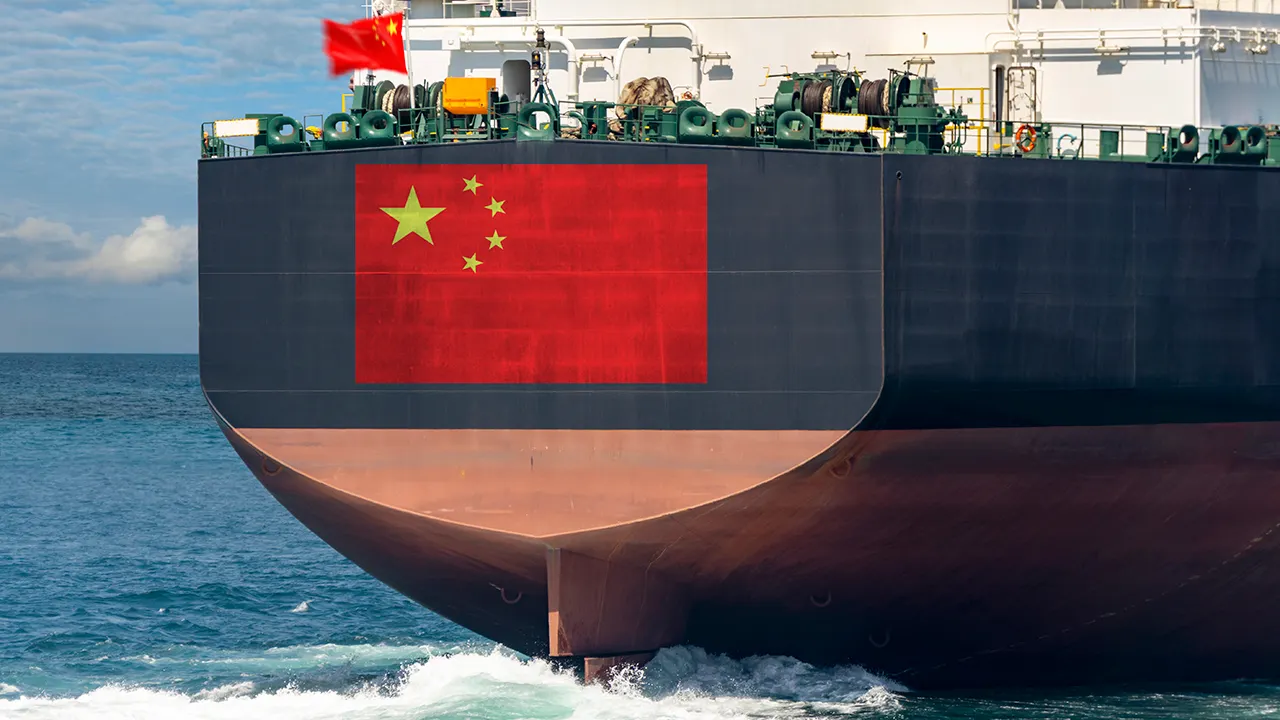
Sen. Tommy Tuberville, R-Ala., discusses Iran allowing non-hostile ships to transit the Strait of Hormuz and Democrats’ continued opposition to I.C.E. funding on ‘The Evening Edit.’
At least three Chinese-linked vessels reportedly turned back abruptly after attempting to cross the Strait of Hormuz last Friday, signaling an unusual move in typically friendly Tehran‑Beijing relations amid the ongoing regional crisis.
Two ships owned by China’s state‑run Cosco Shipping, the CSCL Indian Ocean and CSCL Arctic Ocean, as well as Hong Kong-owned Lotus Rising made sudden U‑turns near Larak Island, according to ship‑tracking service MarineTraffic and research group FDD. The narrow channel has repeatedly been described as Iran’s de facto “toll booth,” with the Islamic Revolutionary Guard Corps (IRGC) Navy, allowing passage only for authorized vessels.
This was the first attempted outbound transit by major Cosco container ships since tensions in the Strait of Hormuz began on Feb. 28, triggering disruptions to 20% of the world’s oil supply.
The ships reportedly violated Iranian rules banning traffic to and from countries considered supportive of the United States and Israel, including the UAE and Saudi Arabia, according to an IRGC statement cited by IRGC-affiliated outlet Nour News.
OIL HAS SURGED SINCE THE IRAN CONFLICT, BUT GAS PRICES MAY NOT BE DONE RISING.
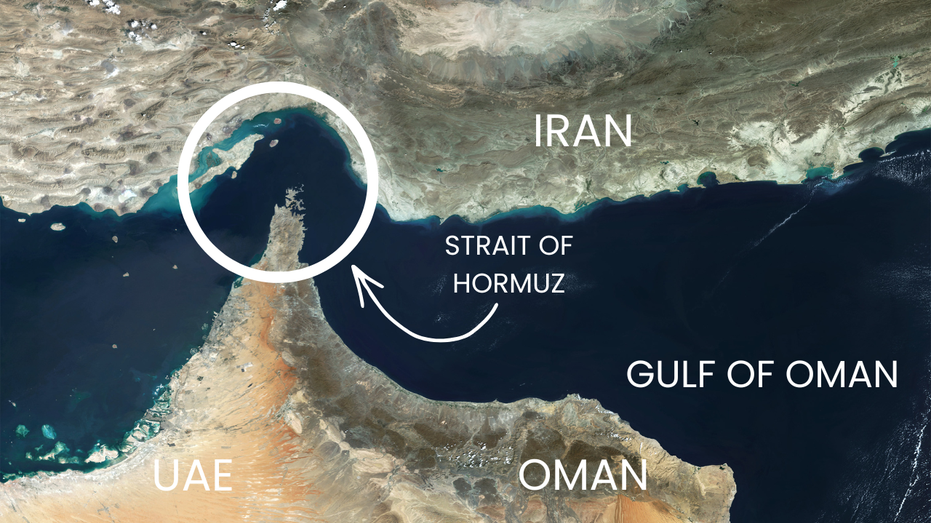
A satellite image shows the Strait of Hormuz, a key maritime passage connecting the Persian Gulf to the Gulf of Oman, vital for global energy supply. (Amanda Macias/Fox News Digital / Getty Images)
“Three container ships of different nationalities attempted to move towards the designated corridor for licensed ships, which were forced to return after being warned by the IRGC Navy,” the outlet said Friday afternoon.
“Sailing of any ship ‘to and from’ the ports of the allies and supporters of the Zionist-American enemies to any destination and from any corridor is prohibited,” it added.
IRAN WAR FUELS ASIA ENERGY CRUNCH AS INDIA, JAPAN, OTHERS FEEL STRAIN
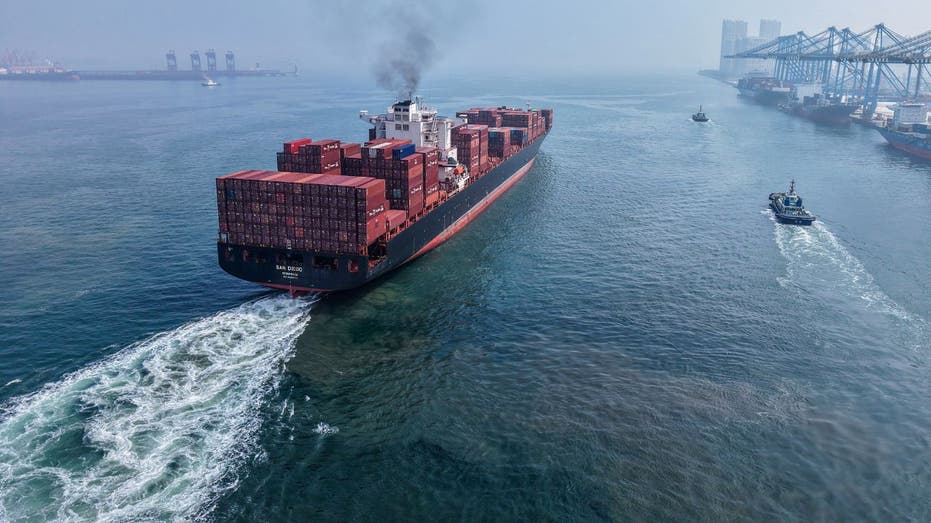
Multiple Chinese container ships aborted their attempt to pass through the Strait of Hormuz last Friday. (STR/AFP/Getty Images / Getty Images)
It is not immediately clear why the vessels halted their transit, but the Cosco ships have reportedly visited ports in enemy countries considered hostile since mid-February, including Jebel Ali in Dubai; Dammam in Saudi Arabia; and Khalifa Port in Abu Dhabi, United Arab Emirates, according to maritime outlet Lloyd’s List.
Analysts noted that the ships may have lacked proper paperwork or authorization to transit the Strait of Hormuz, and safe passage could not be guaranteed, the outlet added.
CLICK HERE TO GET FOX BUSINESS ON THE GO
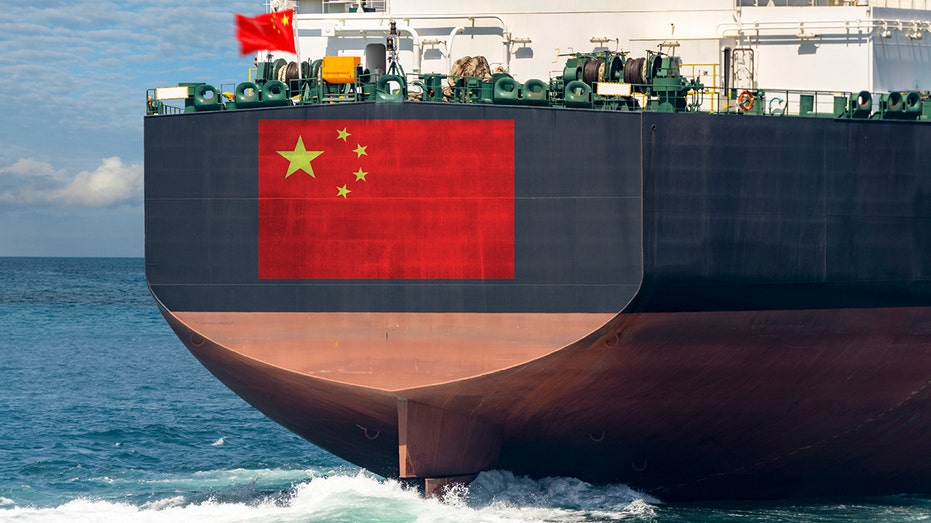
Chinese-flagged container cargo freight ship departs from a port. (iStock / Fox News)
The incident highlights a gap between Iran’s earlier diplomatic assurances that China and other friendly nations, including Russia and India, could coordinate safe passage through the Strait of Hormuz.
The CSCL Indian Ocean and CSCL Arctic Ocean had also broadcast messages on their identification systems signaling that they had Chinese owners and crew as a precautionary move to signal friendliness to Iran, Reuters reported, but the effort was apparently deemed insufficient by Iranian authorities at the checkpoint.
Reuters contributed to this report.

Business
Asian Paints shares rally 4% after Q4 results. Here’s what Nomura and Motilal Oswal are saying

During the quarter under review, total income increased by more than 11% year-on-year to Rs 9,418 crore. Total expenses rose at a slower pace, increasing nearly 8% to Rs 7,829.17 crore.
EBITDA for the quarter rose 24.4% year-on-year to Rs 1,787 crore from Rs 1,436.2 crore in the corresponding period last year. EBITDA margin expanded by more than 200 basis points to 19.3%, compared with 17.2% a year earlier.
For the full financial year ended March 31, 2026, Asian Paints reported a consolidated net profit of Rs 4,325.35 crore, up 18% from Rs 3,667.23 crore recorded in the previous financial year. Annual revenue from operations rose around 5% year-on-year to Rs 35,583.54 crore in FY26.
Asian Paints shares: Buy, sell or hold?

Nomura raised its target price to Rs 3,600 (35% upside) while maintaining a Buy rating, highlighting that the company not only retained but improved its guidance despite cumulative price hikes of around 13.5% year-to-date, including 10.5% implemented in April-May and a further 3% increase announced to dealers.
The brokerage noted that management’s decision to maintain volume growth guidance of 8-10% signals confidence in a strong demand environment. It also pointed to improved product mix guidance of -3% to -4%, compared with the earlier expectation of -5% to -6%, driven by a greater push towards premium and luxury paints, implying high-teens sales growth in FY27. The brokerage also maintained its operating margin guidance of 18-20% despite raw material inflation and competitive pressures. Nomura believes there is a high probability of crude oil prices moderating from current levels over the next six months, which could further support margins.
Motilal Oswal maintained its Neutral rating on Asian Paints with a target price of Rs 2,750, implying a modest upside of up to 3%. The brokerage raised its FY27 and FY28 earnings estimates by 3%-4%, citing better-than-expected revenue performance. However, it cautioned that the uncertain geopolitical environment and persistent inflationary pressures could continue to weigh on overall demand. Management has guided for high single-digit volume growth in FY27 despite significant price hikes, supported by a favourable base, more painting days due to El Niño conditions and an extended festive season.
The brokerage expects standalone EBITDA margins of 19.1% and 19.5% for FY27 and FY28, respectively, while consolidated margins are projected at 18.2% and 18.6%. It also noted that paint demand has remained subdued over the past two years, and recent price increases could delay a broader demand recovery. To counter competitive pressures, Asian Paints continues to focus on product innovation, strengthening brand salience, regionalisation and execution.
JM Financial upgraded Asian Paints to Add with a target price of Rs 2,815, implying an upside of 5.4%. The brokerage believes the company’s FY27 revenue outlook remains encouraging, supported by management’s volume growth guidance of 8-10%. Combined with double-digit price increases, including hikes of around 10.4% already implemented and an additional 2-4% announced from June, along with a lower adverse mix impact of 3-4%, this is expected to drive mid-teen sales growth in FY27. JM Financial noted that demand trends remained stable during April and May, while management remains optimistic about business momentum in the second and third quarters of FY27, aided by a longer festive season.
Also read: PSU bank stocks vs private banks in FY27: The valuation trap you need to avoid
The brokerage also highlighted that management has reiterated its EBITDA margin guidance of 18-20% despite significant raw material inflation, supported by price hikes, sourcing efficiencies, an improved product mix and calibrated spending. However, the company expects competitive intensity in the paints sector to remain elevated.
(Disclaimer: Recommendations, suggestions, views and opinions given by the experts are their own. These do not represent the views of The Economic Times)

Beef Up, Eggs Down

A company of Manulife Investment Management, John Hancock Investment Management serves investors through a unique multimanager approach, complementing our extensive in-house capabilities with an unrivaled network of specialized asset managers, backed by some of the most rigorous investment oversight in the industry. The result is a diverse lineup of time-tested investments from a premier asset manager with a heritage of financial stewardship. Note: This account is not managed or monitored by John Hancock Investment Management, and any messages sent via Seeking Alpha will not receive a response. For inquiries or communication, please use John Hancock Investment Management’s official channels.


Some tickers are covered more than others on the site, so with The Undercovered Dozen our Editors highlight twelve actionable investment ideas on tickers with less coverage. These ideas can range from “boring” large caps to promising up-and-coming small caps. Specifically, the inclusion criteria for “undercovered” include: market cap greater than $100 million, more than 800 symbol page views in the last 90 days on Seeking Alpha, and fewer than two articles published in the past 30 days. Follow this account to receive a weekly review of twelve of these undercovered ideas from our valued analysts.
Analyst’s Disclosure: I/we have no stock, option or similar derivative position in any of the companies mentioned, and no plans to initiate any such positions within the next 72 hours. I wrote this article myself, and it expresses my own opinions. I am not receiving compensation for it. I have no business relationship with any company whose stock is mentioned in this article.
Seeking Alpha’s Disclosure: Past performance is no guarantee of future results. No recommendation or advice is being given that any particular security, portfolio, transaction or investment strategy is suitable for any specific person. The author is not advising you personally concerning the nature, potential, value or suitability of any particular security or other matter. You alone are solely responsible for determining whether any investment, security or strategy, or any product or service, is appropriate or suitable for you based on your investment objectives and personal and financial situation. The author is an employee of Seeking Alpha. Any views or opinions expressed herein may not reflect those of Seeking Alpha as a whole. Seeking Alpha is not a licensed securities dealer, broker or US investment adviser or investment bank.
Business
Wockhardt shares rocket 19% after FDA approval for antibiotic targeting drug-resistant infections. Check details

According to the company, ZAYNICH combines the fourth-generation cephalosporin cefepime with zidebactam and is designed to target multiple penicillin-binding proteins simultaneously. The antibiotic had earlier received Qualified Infectious Disease Product (QIDP) and Fast Track designations from the FDA.
The approval comes at a time when antimicrobial resistance remains a major healthcare challenge. Wockhardt cited data indicating that more than 2.8 million antimicrobial-resistant infections occur annually in the United States, resulting in over 35,000 deaths each year.
The company also noted that complicated urinary tract infections account for more than 6,00,000 hospitalisations annually in the U.S., with a growing proportion linked to antimicrobial-resistant and multidrug-resistant bacteria.
The FDA’s decision was based in part on results from the Phase 3 ENHANCE-1 study, a randomised, double-blind, multicentre trial that evaluated the efficacy, safety and tolerability of ZAYNICH against meropenem in hospitalised adults with complicated urinary tract infections or acute pyelonephritis.
Also read: FDA approval puts Wockhardt’s Zaynich in $9 billion antibiotics market
In the study, ZAYNICH achieved a composite clinical cure and microbiological response rate of 89% at the test-of-cure visit, compared with 68.4% for meropenem. The treatment difference was 20.6% with a 95% confidence interval of 12.3 to 29.5. The company said the drug was generally well tolerated during the trial.The ENHANCE-1 study enrolled 530 patients across 64 sites spanning the United States, Europe, Latin America, China and India.
Wockhardt stated that ZAYNICH targets penicillin-binding proteins PBP 1a/b, 2 and 3 simultaneously, a mechanism that it says provides bactericidal activity against multidrug-resistant Gram-negative bacteria for which treatment options remain limited.
The company also disclosed that ZAYNICH received approval from the Drugs Controller General of India (DCGI) on May 27, 2026. In addition, Wockhardt has submitted a Marketing Authorisation Application (MAA) to the European Medicines Agency for the antibiotic.
Sensex, Nifty today: Catch all the LIVE stock market action here
(Disclaimer: Recommendations, suggestions, views and opinions given by the experts are their own. These do not represent the views of The Economic Times)
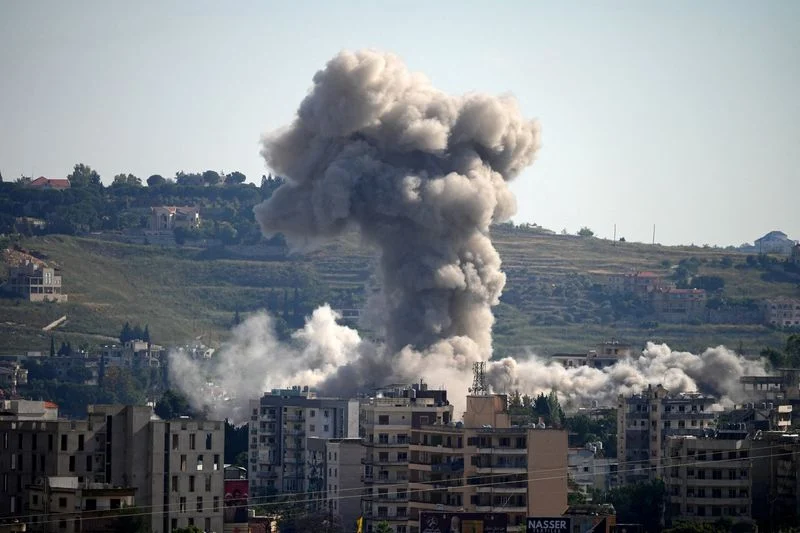

US says it struck Iranian military sites, Tehran responds with air base attack
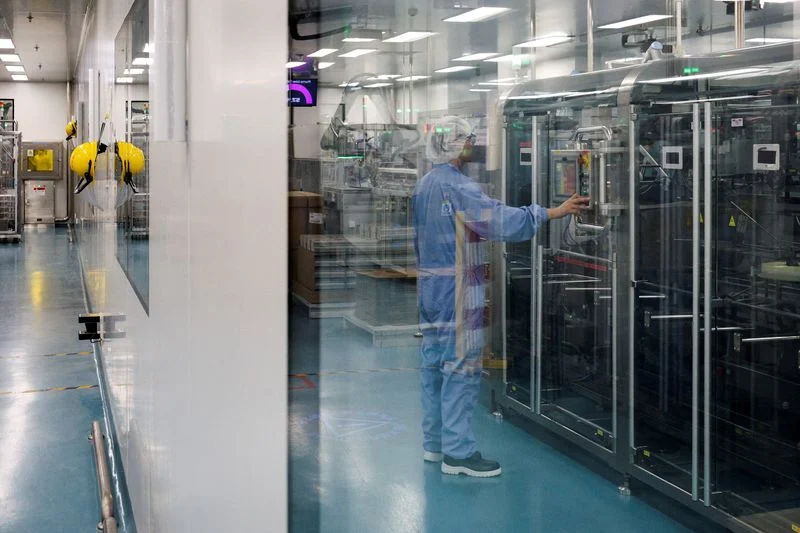

Asia’s factory output expands as firms stockpile buffers over Iran war risks
Business
Suzlon Energy shares fall over 2% after SEBI fines Rs 29 crore for misleading financial statements

In a 96-page order issued on May 29, Sebi said Suzlon and certain former executives violated provisions of the Sebi Act, PFUTP Regulations, listing regulations and disclosure requirements. The order replaces an earlier adjudication order issued in June 2025 and confirms multiple violations by the company and its executives.
Among the penalised individuals, former executive Vinod R. Tanti was fined Rs 5.75 crore, while Girish R. Tanti was directed to pay Rs 5.45 crore. Former Group CFO Kirti J. Vagadia was fined Rs 1.5 crore and former CFO Amit Agarwal was fined Rs 30 lakh.
The matter stemmed from an anonymous complaint received by Sebi in December 2019 alleging irregularities in transactions involving Suzlon’s subsidiaries and associate entities. A subsequent forensic audit and investigation covering FY15 to FY20 and the first nine months of FY21 examined several issues, including dealings with subsidiaries, impairment reversals, contingent liabilities and financial statement disclosures.
Sensex, Nifty today: Catch all the LIVE stock market action here
One key observation related to the transfer of Suzlon’s operations and maintenance services business to its subsidiary, Suzlon Global Services Ltd, in March 2014. Sebi noted that the business, valued at around Rs 77 crore, was transferred for Rs 2,000 crore, resulting in Suzlon recording an accounting gain of Rs 1,922.92 crore.
According to the regulator, the subsidiary lacked the financial capacity to fund the transaction. Sebi found that a significant portion of the consideration was subsequently reflected as paid through circular movement of funds between the two entities. The regulator said the arrangement created artificial profits and inflated the company’s net worth. It observed that Suzlon’s FY14 net worth would have been Rs 741 crore without the transaction, compared with the reported figure of Rs 2,664 crore.
Sebi further noted that Suzlon later booked an additional gain of Rs 829.78 crore by transferring its stake in the subsidiary to another wholly owned entity, effectively recognising profit a second time on the same underlying assets. According to the regulator, these transactions helped the company portray a stronger financial position and supported subsequent fund-raising and restructuring efforts.
The order also addressed a standby letter of credit connected to loans taken by a foreign subsidiary. Sebi said a contingent liability of about $569 million, or roughly Rs 4,050 crore, which had been disclosed in FY17, was not reflected in FY18 contingent liability disclosures after being reclassified under an accounting standard related to insurance contracts. The regulator held that the treatment was inappropriate and materially reduced the visibility of the company’s financial exposure.
In addition, Sebi reviewed investments and loans involving subsidiaries SE Forge Ltd and Suzlon Gujarat Wind Park. It found that several transactions involved circular routing of funds, conversion of loans into equity and later impairment of investments. According to the regulator, these transactions resulted in financial statements that did not accurately represent the underlying economic substance.
Sebi concluded that the company’s financial statements and disclosures failed to present a true and fair view of its financial position. The regulator said financial statements and disclosures form the basis on which investors and other market participants assess a listed company’s financial health and prospects.
While Sebi noted that disproportionate gains and investor losses could not be quantified with precision, it said the violations were serious because they related to financial information disseminated to investors and relied upon by the market.
Sebi imposed the penalties under provisions relating to fraudulent and unfair trade practices, disclosure lapses and violations of listing obligations. The notices must pay the penalties within 45 days of receiving the order.
(Disclaimer: Recommendations, suggestions, views and opinions given by the experts are their own. These do not represent the views of The Economic Times)

Janus Henderson Investors exists to help clients achieve their long-term financial goals. Formed in 2017 from the merger between Janus Capital Group and Henderson Global Investors, we are committed to adding value through active management. For us, active is more than our investment approach – it is the way we translate ideas into action, how we communicate our views and the partnerships we build in order to create the best outcomes for clients. While our investment managers have the flexibility to follow approaches best suited to their areas of expertise, overall our people come together as a team. This is reflected in our Knowledge. Shared ethos, which informs the dialogue across the business and drives our commitment to empowering clients to make better investment and business decisions.www.janushenderson.com

Operator
Hello, and welcome to the Cango Inc. First Quarter 2026 Earnings Conference Call. [Operator Instructions] Please note, this event is being recorded. I would now like to turn the conference over to Mr. Paul Yu, Chief Executive Officer. Please go ahead.
Peng Yu
CEO & Director
Good morning, everyone, and thank you for joining Cango’s First Quarter 2026 Earnings Call. First, I will summarize our key financials and operational performance for the quarter. The first quarter of 2026 was characterized by industry-wide adjustments and our results reflect these macro headwinds alongside our ongoing efforts to manage our strategic transition. During Q1, we generated total revenue of approximately $102 million, primarily driven by revenue from our Bitcoin mining business. We reported a net loss from continuing operations of $261.1 million primarily due to noncash impairment charges on Bitcoin mining machines and loss from changes in fair value of receivable for Bitcoin collateral, both resulting from the decline in Bitcoin market price. By the end of the quarter, we held 1,025.7 Bitcoin, and we reduced our long-term debt to $30.6 million. As of March 31, 2026, Cango’s total operational hash rate was 37.01 exahash per second, comprising 27.98 exahash per second of self-mining capacity and 9.02 exahash per second of hosted hash rate. This operational model prioritizes margin resilience over scale.
In Q1, we mined 1,266 Bitcoin. Through disciplined cost management, our average cash cost per Bitcoin mined was $76,928 showing a 9% decrease from Q4 2025. These figures reflect our continued focus on profitability and operational efficiency as our business model evolves.
Irish golfer makes incredible hole-in-one on way to winning prestigious amateur event
Asian Paints shares rally 4% after Q4 results. Here’s what Nomura and Motilal Oswal are saying

Bitcoin, ether, solana slide as AI trade continues to rip higher


-

 NewsBeat5 days ago
Israel says it has killed new Hamas military leader in Gaza City airstrikes
-

 Tech5 days ago
NASA taps Blue Origin to deliver lunar rovers for Moon Base initiative
-

 Politics7 days ago
Bridgerton Season 5: Cast, Release Date And Everything We Know So Far
-

 Sports6 days ago
2026 NBA Finals schedule, odds: Knicks await Thunder or Spurs after winning East
-

 News Videos5 days ago
XRP *JUST* SUCCEEDED!!!! CLARITY ACT EXPOSED!!! (SHE EXPOSED IT)
-

 News Videos3 days ago
This is BROKEN! INSANE 5x MONEY CAR WASH WEEK! The NEW GTA Online UPDATE Today! (GTA5 New Update)
-
 Crypto World5 days ago
Micron Crosses $1 Trillion Market Cap as AI Demand Reshapes Memory Sector
-

 Business5 days ago
Selena Gomez Reportedly Upset Over Benny Blanco’s Comments on Her ‘Terrible’ Diet
-
 NewsBeat6 days ago
Hottest May day ever as London hits 34.8C in 2C leap from previous records
-

 Business7 days ago
BTS Sells Out Four Las Vegas Shows at Allegiant Stadium for ARIRANG World Tour
-
 Tech6 days ago
China assigns ID codes to 28,000+ humanoid robots
-

 Business6 days ago
Nikkei 225 Surges Past 65,000 for First Time as Iran Peace Hopes Fuel Record Rally
-

 Tech7 days ago
Microsoft’s quiet Claude Code retreat and the real cost of enterprise AI
-

 Tech3 days ago
Waymo dominates autonomous vehicle registrations as Tesla trails behind
-

 NewsBeat7 days ago
Crowds find riverside shade in York as temperatures soar
-
Tech5 days ago
The Samsung pay deal is the moment Korean unions changed register
-
 Tech7 days ago
Westone Audio and Etymotic Acquired by Fidelity Collective in Major IEM Market Move
-
 Entertainment6 days ago
‘Breaking Bad’ Star’s Easy-to-Binge 6-Part Crime Series Spin-Off Is Finally Heading to Free Streaming
-

 Tech5 days ago
Millions of AI agents imperiled by critical vulnerability in open source package
-
Crypto World5 days ago
SpaceX’s $2 Trillion IPO: Why Tech Giants Nvidia (NVDA), Apple (AAPL), and Microsoft (MSFT) May Face Pressure
You must be logged in to post a comment Login