To say that Malta has a rich history is an understatement.
Walk the streets and clifftops of this Mediterranean archipelago and you’ll discover layers of history that go back hundreds and even thousands of years.
Below, we peel back the centuries and unveil some of the islands’ most spellbinding historic treasures.
One is the capital city, the entirety of which has been declared a Unesco World Heritage Site. Within is one of the most opulently decorated cathedrals you’ll ever set eyes on, picture-postcard townhouses and the former headquarters of the order that built the city in the 16th century — the Knights of St John.
Advertisement
The island’s old capital, Mdina, is similarly hypnotic, but far more tranquil – a car-free, walled city infused with thousands of years of history.
For a sense of Malta’s military struggles there are epic forts to wander, vast displays of armour to gaze at, and a citadel to visit that was a place of refuge for locals against raiding parties for hundreds of years.
Delve even deeper into the past with a visit to Malta’s ancient subterranean cemetery and megalithic temples, Unesco-listed sites predating the Pyramids that reveal how the island was once home to a remarkably advanced prehistoric society.
Valletta — the Baroque capital built by the Knights
Advertisement
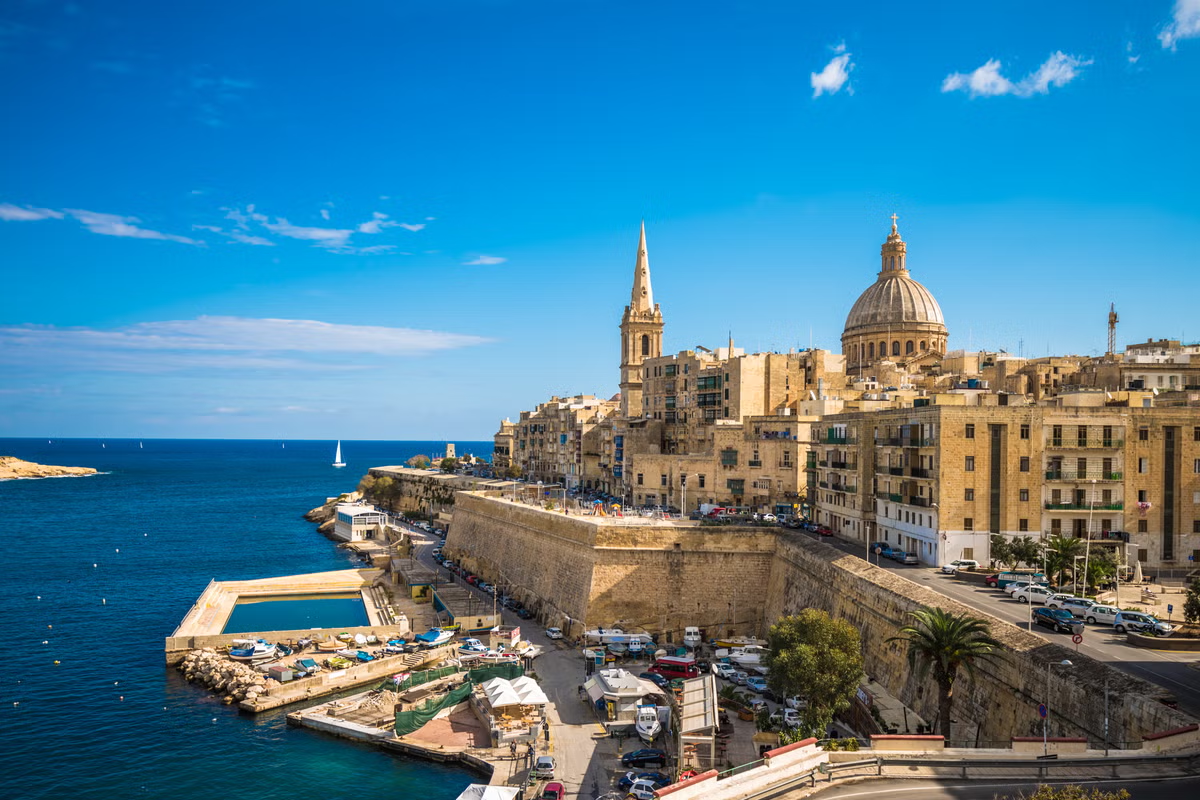
St John’s Co-Cathedral, which dates to the 1570s, is lavishly decorated. It’s one of several must-visit historical landmarks in Valletta (Getty Images)
Perched on a rocky peninsula between two natural harbors, capital-city Valletta is tiny, covering just 60 hectares, or about one-fifth the size of Central Park.
But it packs a historical punch.
Built in 1566 by the Knights of St John — who came from noble families around Europe and ruled Malta from 1530 to 1798 — the honey-colored city is laced with stunning 16th and 17th-century townhouses, many of which now house atmospheric restaurants and bars, and jammed with around 320 monuments.
One of the most important landmarks to visit is St John’s Co-Cathedral, which was built by the Knights in the 1570s.
On the outside, it’s unprepossessing, but step inside and you’ll be greeted by a riot of lavish decorations that unambiguously signal power and wealth. There are carved stone walls, floors covered with marble tombs and a beautiful, painted vaulted ceiling. The eye will also be drawn to Caravaggio’s oil-painting masterpiece, The Beheading of Saint John the Baptist.
Advertisement
The Grand Master’s Palace, in the heart of Valletta, is another can’t-miss landmark. This former Knights nerve-center is home to one of the world’s greatest collections of arms and armor — underscoring the order’s military prowess — and rare French tapestries.
One of the best vantage points from which to drink in the city’s splendor is the 16th-century Upper Barrakka Gardens, originally a place of repose for the Italian Knights of St John.
Great place to stay:The Barrister (rooms from $245) sits right in Valletta’s historic core and features a bijou rooftop terrace with skyline views.
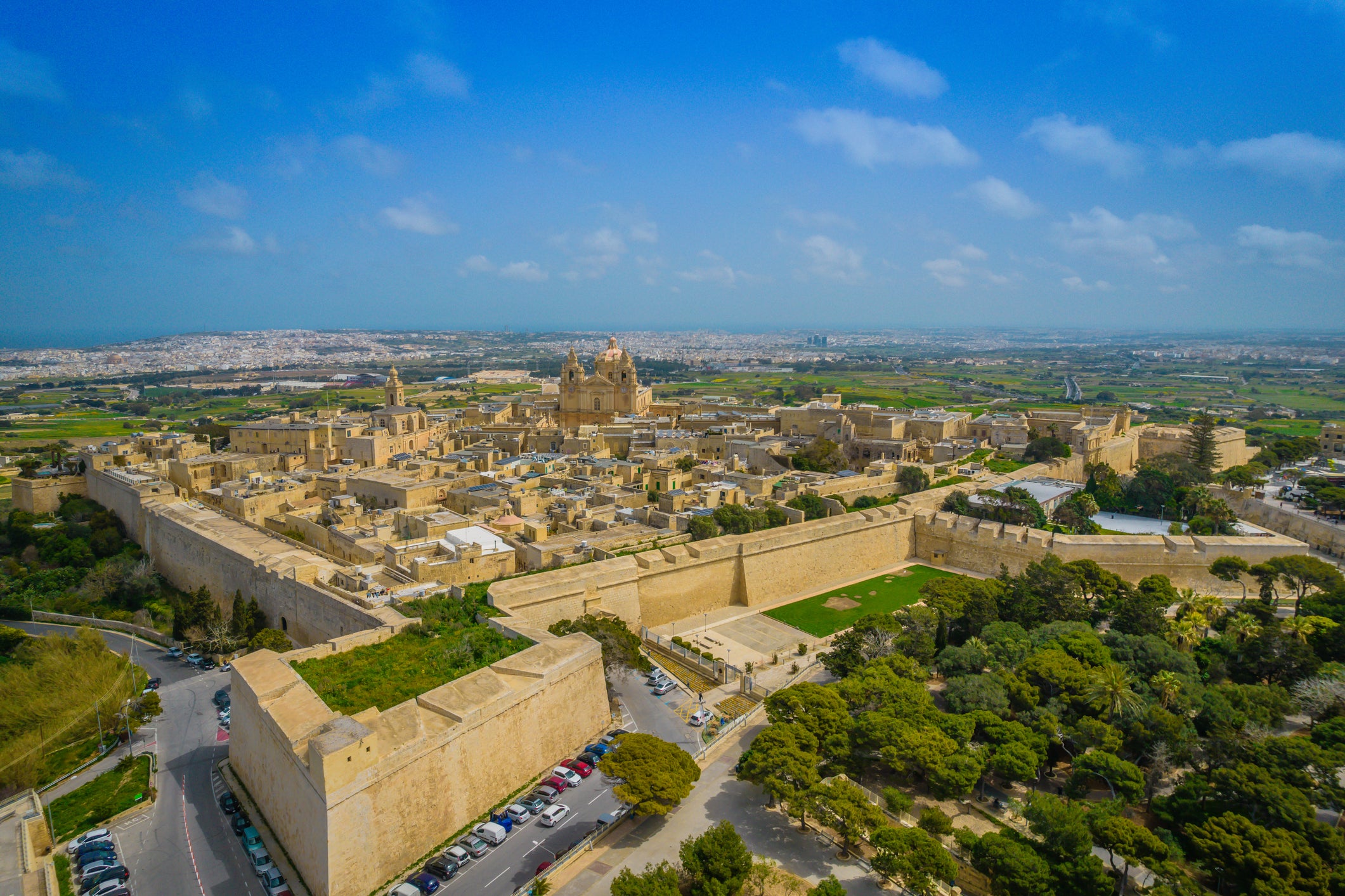
Car-free Mdina is famously quiet, and a time capsule of Maltese history (Getty Images/iStockphoto)
Mdina is a spellbinding journey through thousands of years of Maltese history, and a truly tranquil experience.
This incredible walled city — Malta’s old capital — dates back to the Bronze Age, after which it was ruled by the Phoenicians, Romans, Arabs, Normans, and eventually the Knights of St John.
Wander its labyrinthine streets and you’ll feel the depth of that history with every step — and you’ll hear every step. Mdina, car-free and with a population of just a few hundred people, is so quiet that it’s been dubbed Malta’s “Silent City.”
One of the key photo opportunities is the city gate, which you may recognize from Game of Thrones — it was used as the entrance to King’s Landing in the hit HBO series. The stone portal was built in 1724, and with its intricate carvings, makes for a suitably theatrical entrance to the city.
Advertisement
St Paul’s Cathedral also delivers drama, with an elegant dome that dominates the skyline and stunning painted ceilings inside.
Don’t leave without walking the perimeter walls, which offer impressive views of the maze-like city interior and out across the surrounding patchwork fields to the Mediterranean beyond.
Great place to stay: The Xara Palace Relais & Châteaux (rooms from $320) is one of the few hotels set inside Mdina’s walls, and the converted 17th-century palazzo delivers a lost-in-time-and-space atmosphere, with antique-festooned rooms.
Vittoriosa (Birgu) is bursting with history and its well-preserved streets are a joy to wander (Getty Images)
Vittoriosa — also known as Birgu — offers further, fascinating immersion into the world of the Knights of St John, for this Lilliputian city — which sits directly across the Grand Harbour from Valletta, forming part of the so-called “Three Cities” (Birgu, Senglea and Cospicua) — was the Knights’ headquarters before Valletta existed, and helped ensure victory in the Great Siege of 1565.
The part of the city that bore the brunt of the onslaught from Ottoman forces was the formidable Fort St Angelo, which served as the nucleus of the Knights’ defense.
The fort was opened to the public in 2015, and stepping inside is an eye-opening glimpse into Malta’s military past. Interactive exhibits tell the story of the siege, and you can explore the former residence of the fort commander and see the Guva, the 16th-century oubliette accessible only by a trapdoor in the ceiling where the artist Caravaggio was held in 1608.
Stroll the ramparts for mesmerizing harbor views.
Advertisement
Earmark time, too, for a look around the Inquisitor’s Palace, a complex that had a dual role from the 16th to the 18th centuries as both a grand residence for Holy Roman inquisitors enforcing religious orthodoxy and a prison for accused heretics.
The streets of the city will hold you spellbound — they’re beautifully preserved and intimate.
Great place to stay:Casa Birmula Boutique Hotel (rooms from $230) is set in a restored townhouse and offers superb skyline views from its rooftop terrace and pool.
Malta’s deepest history — structures that predate the pyramids
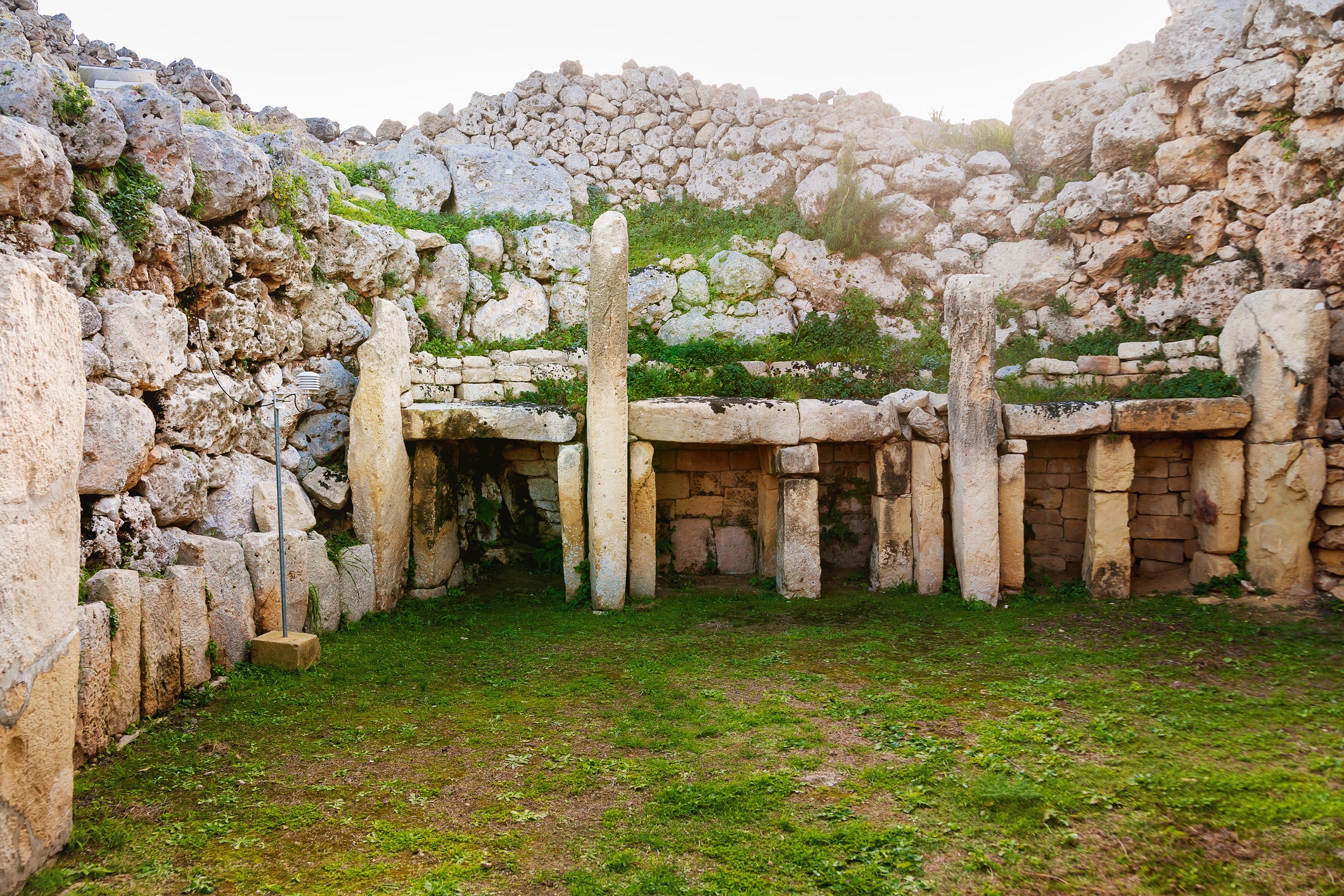
The megalith temple complex of Ggantija is evidence that an advanced prehistoric society flourished on Malta (Getty Images)
The archipelago’s history runs astonishingly deep. In fact, it’s home to seven Unesco-listed megalithic temples and an underground cemetery that are among the oldest surviving human-built structures on the planet, some of which predate the Pyramids and Stonehenge.
The society behind them was one that flourished, then suddenly collapsed. The reason why isn’t clear — some researchers believe farming and deforestation led to catastrophic soil degradation — but one thing is certain: these architectural masterpieces, built with extremely limited resources, indicate that Malta was home to an advanced prehistoric society capable of remarkable feats of engineering.
One of the most impressive monuments is Ggantija, a temple on the island of Gozo dating back to 3600-3200BC created from limestone blocks and built to a striking scale.
On Malta’s southern coast, around 1,600 feet apart on the crest of a ridge, are the similarly ancient and eye-opening temples of Hagar Qim and Mnajdra. Key areas of Mnajdra are illuminated by the sun during the equinoxes and solstices, indicating symbolic and astronomical understanding.
Advertisement
The subterranean Unesco-listed necropolis of Hal Saflieni Hypogeum — on a hill in the suburb of Paola, not far from the Grand Harbour — is an even more prized sight: because exhaled carbon dioxide damages the delicate limestone walls, only around 10 people at a time are allowed inside.
Book far in advance, up to two months if possible, to view halls, chambers and passages dug in three levels that were in use between 4000 and 1500BC.
Great place to stay:Kempinski Hotel San Lawrenz (rooms from $200) on Gozo has gardens and multiple pools, and is within easy reach of Ggantija.
Gozo Citadel — the island’s defensive heart for centuries
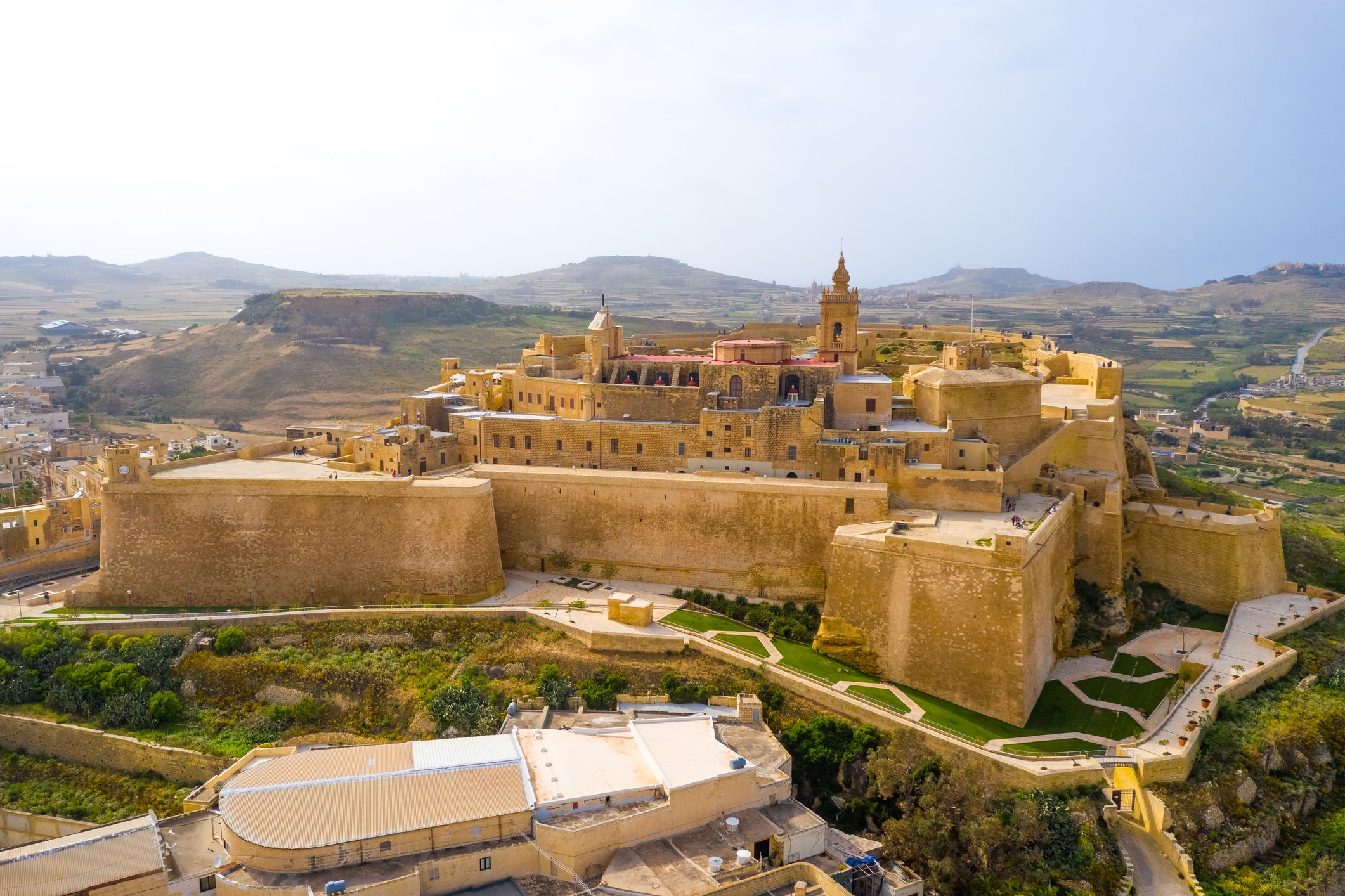
Gozo Citadel occupies a site that’s been fortified since the Bronze Age (Getty Images/iStockphoto)
Gozo’s fairytale walled Citadel (known locally as Il-Kastell) crowns the island’s main town, Victoria (also known as Rabat), and occupies a site that’s been fortified in some way since the Bronze Age.
While today it’s largely a historic attraction (though there are a handful of residents), in the past it was a vital refuge for locals.
In fact, from the late Middle Ages until the early 17th century rural families would shelter nightly in the citadel as protection against pirate and Ottoman raids.
Take to the ramparts and it becomes clear why the citadel was so vital for defense — you can see almost the entire island.
Advertisement
Ground-level explorations unveil a world within a world, a maze of hushed, narrow lanes, tranquil squares and small museums, including the Gozo Museum of Archaeology, Folklore Museum, and Nature Museum.
The early 18th-century Cathedral of the Assumption is the flagship attraction, featuring a hypnotic ceiling painting that creates the illusion of a dome.
Great place to stay: Hotel Ta’ Cenc & Spa, Gozo (rooms from $260), a short drive from the citadel, is an oasis: there are gardens, pools and countryside views. And noise pollution is non-existent.
An officer was left seriously injured after being hit by a stolen police vehicle
An attack on a police officer in Downpatrick that left him seriously injured after he was hit with a stolen police vehicle has been condemned by politicians and community representatives.
Advertisement
The incident took place at around 4.45am on Sunday, May 31, in the Model Farm estate in Downpatrick with video footage later circulating on social media.
It is reported that a vehicle failed to stop for officers in Fountain Street and was then located in the Ballymote Walk area where a man was seen running away towards Colmcille Road and chased by police. When officers came back to their car, they say someone was in the driver’s seat and drove the car directly at an officer who fired his weapon at him. The officer was then hit by the vehicle and suffered serious injuries.
The police car was later abandoned with a 27-year-old being arrested on suspicion of attempted murder and remains in custody at this time.
Justice Minister Naomi Long has said the incident shows the dangers that police officers face everyday and wished the injured officer well in his recovery.
She said: “My thoughts are first and foremost with the injured officer, as well as their family and colleagues. I have no doubt this was a distressing experience for all the officers at the scene.
“I hope the injured officer recovers quickly from their injuries.
“This incident highlights once again the danger our police officers face each and every time they put on a uniform.
Advertisement
“They place themselves in harms’ way to keep our communities safe and I wish to pay tribute to their professionalism and courage.
“I would urge anyone with any information to contact police.”
Sinn Féin MLA Cathy Mason said people across Downpatrick are shocked following a serious incident in the town saying: “The news that a police officer has sustained serious injuries following an incident in Downpatrick has caused deep concern across our community.
“I want to wish the injured officer a full and speedy recovery and extend my thoughts to their family and colleagues at what will be a difficult time. “The people of Downpatrick want to see those responsible held accountable for this reckless and dangerous incident. “Anyone with information should come forward to the PSNI.
Alliance Mournes Councillor Jill Truesdale has condemned an attack on police that took place in the Colmcille Road area of Downpatrick in the early hours of this morning (31 May), calling it ‘utterly reprehensible’.
Cllr Truesdale has said: “First and foremost, I want to extend my thoughts and sympathies to the officer left injured, their family, and to those other officers present at the scene. I hope they receive all the support they need in the wake of this totally reckless, utterly reprehensible attack.
“This has come as a shock to the local community here, especially to see such an incident taking place in what is a largely residential area.
Advertisement
“No one should be subject to this kind of danger on the job, not least those who are tasked with keeping us all safe, and whilst we can only be glad the situation didn’t end more tragically, what we’ve seen here is totally unacceptable. I wish the injured officer a speedy recovery.”
Chair of the Police Federation for Northern Ireland Liam Kelly said: “This was an appalling and deliberate attack. I wish to add my condemnation to that already expressed across the community. What happened in Downpatrick was shocking and brutal.
“From what I’ve seen online, this appears to have been a calculated and dangerous driving act with no effort made to slow down or avoid the officer.
Advertisement
‘My thoughts, and those of every officer in the PSNI, are with our seriously injured colleague and his loved ones.
“This incident graphically illustrates the risks our officers face as they work to safeguard communities and confront law-breakers.”
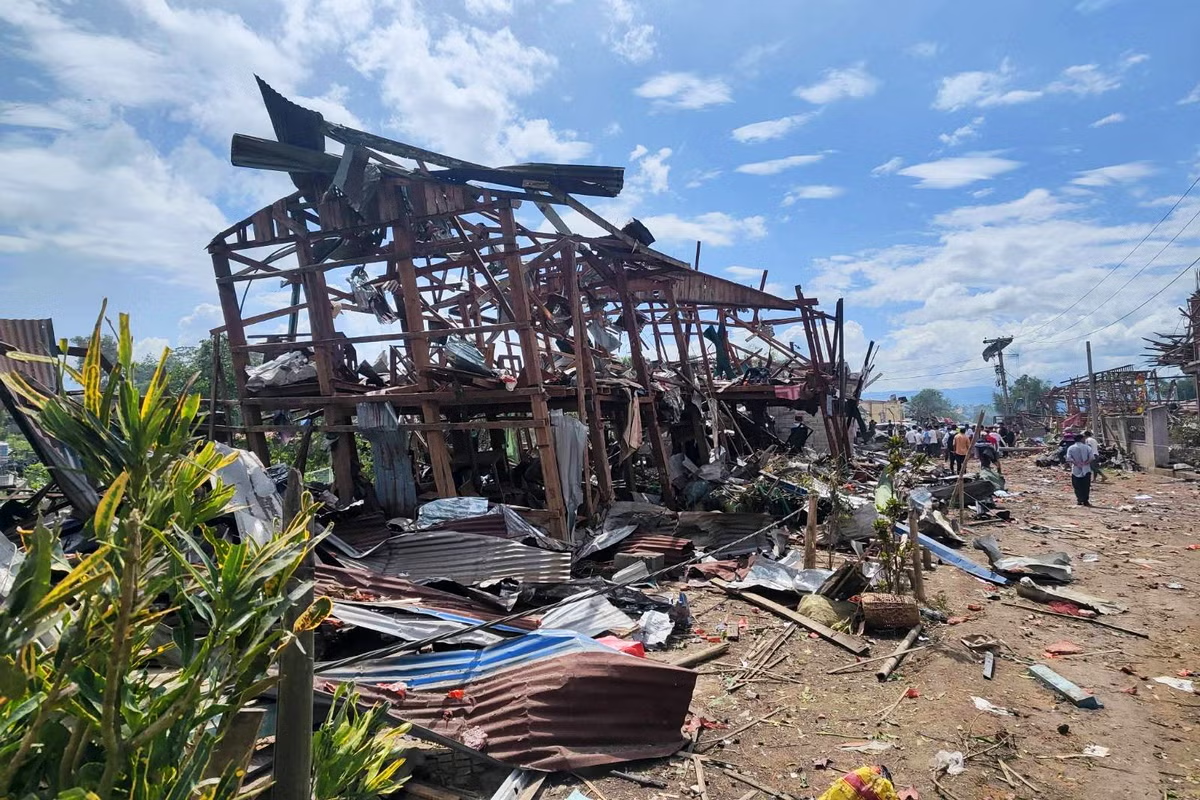
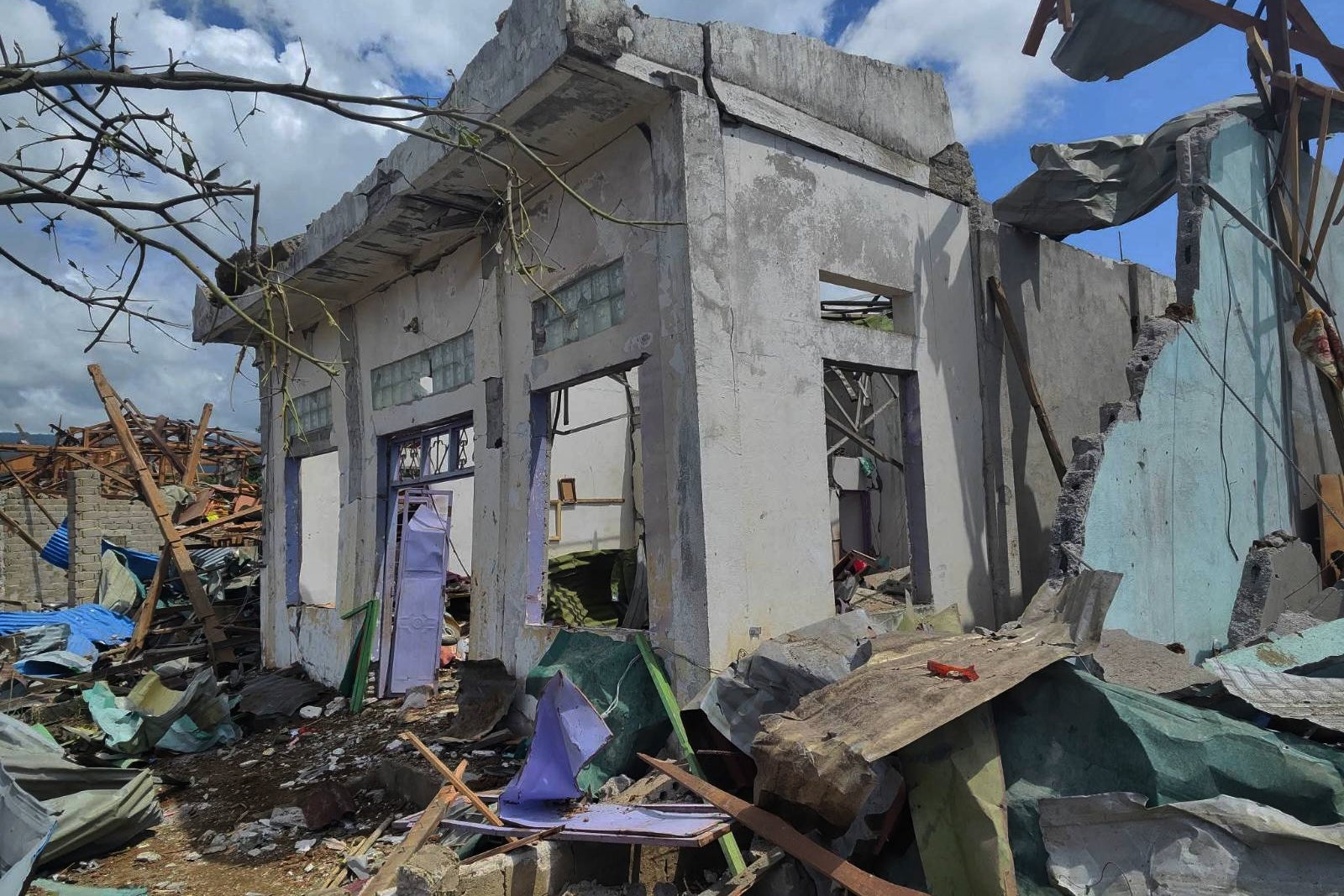
A devastating explosion in northeastern Myanmar has claimed the lives of more than 45 people and injured approximately 70 others, according to rescue workers and independent media reports.
The blast, which occurred around noon on Sunday in Kaungtup village, Namhkam township, reportedly struck a building used for storing mining explosives.
Among the confirmed fatalities, 46 bodies have been recovered, including six children, a rescue worker told The Associated Press. All have been taken for cremation.
The incident took place in an area situated about 3 kilometers (2 miles) south of the Chinese border, which is under the control of the Ta’ang National Liberation Army. This ethnic armed group has a history of sporadic conflict with Myanmar’s central government.
Advertisement
The incident took place in an area situated about 3 kilometers (2 miles) south of the Chinese border (Palaung Land via AP)
The rescuer, who spoke on condition of anonymity for security reasons, said 74 injured people had been transported to the township hospital and rescue operations were continuing.
Another rescuer in Namhkam, who also spoke on condition of anonymity, said about 40 people were killed and more than 100 houses near the blast site were damaged.
Myanmar media outlets, including Shan State’s online Shwe Phee Myay news agency, reported death tolls ranging from 50 to 55. They published photos and videos showing smoke from the explosion and damaged buildings and debris in its aftermath.
Chinese state broadcaster CCTV reported the explosion caused multiple deaths and injuries, with many residential houses being severely damaged, but did not give figures.
It said that according to preliminary investigations, the blast occurred at a site where large quantities of explosives used for mining operations were stored.
Advertisement
Local authorities are currently providing relief, medical care and resettlement assistance to affected residents, said the report.
The Ta’ang National Liberation Army, or TNLA, said in a statement released on its Telegram channel that gelignite had been stored by the group’s economic department for use in mining and stone quarrying sites, and that an investigation into the cause of the explosion is underway.
Gelignite is widely used in mining and rock blasting, but can become highly unstable over time and if poorly stored.
The Ta’ang National Liberation Army, or TNLA, is a member of the rebel Three Brotherhood Alliance, and has controlled the Namhkam area since the alliance and its allies launched a major offensive against the military in northeastern Myanmar in late 2023. The alliance members and other ethnic armed groups have long fought for increased autonomy.
Advertisement
The TNLA signed a ceasefire with Myanmar’s military following China-mediated talks in October last year, but relations remain tense.
Myanmar has been in turmoil since the army seized power from the elected government of Aung San Suu Kyi on Feb. 1, 2021, triggering widespread popular opposition. After peaceful demonstrations were put down with lethal force, many opponents of military rule took up arms, and large parts of the country are now embroiled in conflict.
“When you see Kathy and Hamish there beside you, it’s impossible not to feel extra motivation. This ride is about raising money, of course, but it’s also about showing the MND community that we’re still fighting, still driving awareness, and still refusing to accept that this disease cannot be beaten.”
Brett Snyder, the president of flying-focused blog Cranky Flier, told Conde Nast Traveller: “You want to avoid anything that requires a specific temperature. The default snack of choice used to be peanuts, but all the concerns about allergy really quashed that one.”
You also need “something that’s either salty or sweet to really get people’s taste buds working — which they do differently at altitude than they do on the ground,” he added.
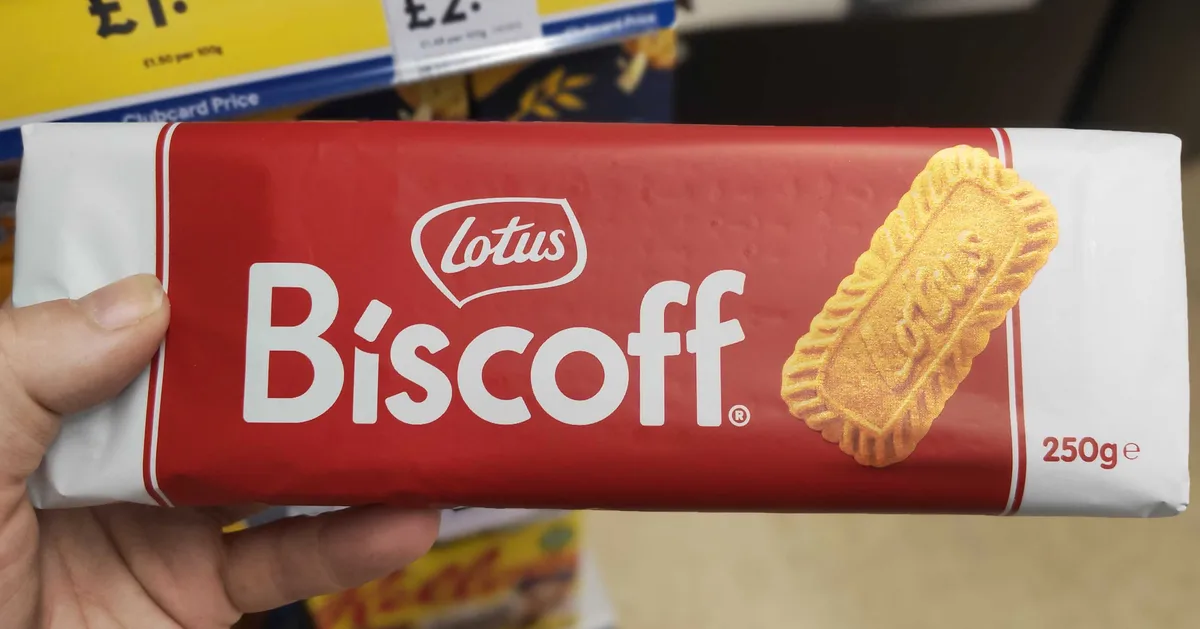
But what is that distinctive Biscoff flavour to begin with?
Advertisement
At first, I thought it was something like malt; but their ingredients list doesn’t include that.
I found out that spices aside, their real secret is sugar.
But don’t all biscuits have sugar?
You’d be right there ― but it’s about how they cook it.
Advertisement
The company’s own site lists “the distinctive caramelised” profile as a cause of its “unique taste and crunchiness of Biscoff.”
That tracks. Jan Boone Sr., who invented the cookie, was the first to create “a caramelised biscuit with nothing but natural ingredients” in 1932, Lotus says.
The biscuit’s modern-day ingredients are listed as “Wheat flour, Sugar, Vegetable oils (contains one or more of soybean oil, sunflower oil, canola oil, palm oil), Brown sugar syrup, Sodium bicarbonate (leavening), Soy flour, Salt, Cinnamon.”
That “brown sugar syrup” may be doing a lot of heavy lifting when it comes to the distinctive flavour profile of the cookie ― when you mix it with a fat like sunflower oil, it becomes a kind of caramel.
Advertisement
No, really, a LOT of it is the sugar
The more I look into this, the more seriously I realise Belgians (Lotus was invented by a Belgian baker) take sugar.
Speaking to The Guardian about speculaas, or speculoos, an early progenitor of Lotus, Belgian food writer Regula Ysewijn described the complexities of Belgium’s sweet stuff.
She uses a type which is hard to get in the UK called kandij, “white beet sugar slowly and repeatedly heated until it caramelises and crystallises,” in her speculoos recipes.
Advertisement
“In Belgium… sugar cane was historically unavailable, leading sugar beet refiners to develop a different sort of brown sugar, one made with refined sucrose and caramel,” pastry chef Stella Parks told Serious Eats.
“So, instead of the acidic, malty, slightly bitter, and vaguely fruity taste of molasses, Belgian brown sugar gives Biscoff a backbone of caramel flavour.”
She also cites Ceylon cinnamon as a cause of its instantly recognisable taste.
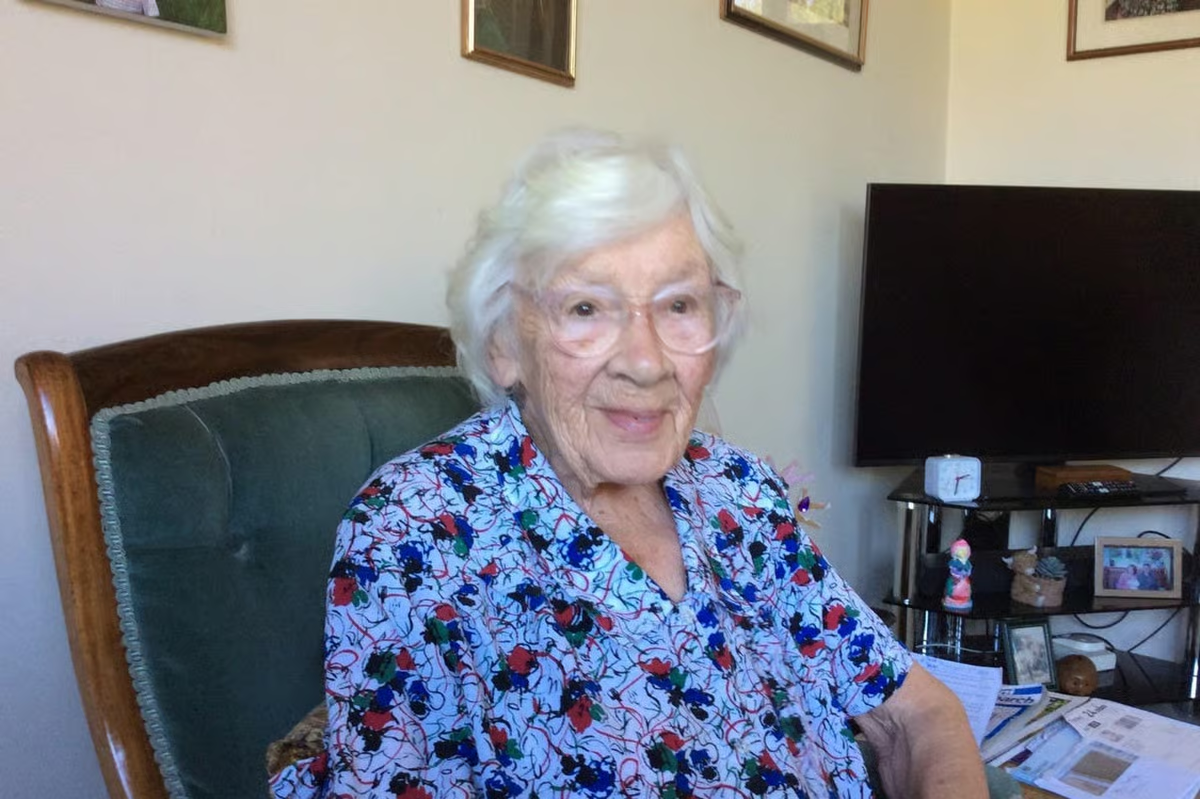
But when Professor Tze Min Wah, research and innovation lead for the interventional oncology programme at Leeds Teaching Hospitals NHS Trust and professor of interventional radiology at the University of Leeds, saw Mrs Iveson’s case, she realised that the pioneering treatment could offer hope to Mrs Iveson and her family.
Linda Emmeline Baggley was a reserve RUC constable who died in 1976, 10 days after being shot while on foot patrol with a colleague in the Waterside area of Derry.
Families of people killed in the Troubles have come together in a service of “remembrance, devotion and love” in Co Derry.
Advertisement
The Baggley family were among those who attended the service at Newbuildings Methodist Church near Lisnakelly.
Linda Emmeline Baggley was a reserve RUC constable who died in 1976, 10 days after being shot while on foot patrol with a colleague in the Waterside area of Derry.
Kenny Donaldson, director of victims’ group Seff (South East Fermanagh Foundation), said the service was “a wonderful representation of remembrance, devotion and love”.
“The Baggley family were foremost in our thoughts with Lorraine sharing a family reflection concerning the upcoming 50th Anniversary since the cruel murder of Linda who passed away on June 2 1976 after having been shot and seriously injured a number of days previously,” he said.
Advertisement
“Linda was aged just 19 years and was a Reserve RUC GC Constable, just two years earlier her daddy, William, who was also a Reservist Constable, was also murdered in Londonderry (just 100 metres separated the brutal crimes).
“Scripture lessons were read by Gillian McElholm, daughter of Michael McGinley who was murdered by the UDA/UFF in the Annie’s Bar attack, 1972, and Jennifer Millar, daughter of Charles McNaul who was murdered by the Provisional IRA, also in the city.
“And prayers were also read by Seff’s north west-based staff; Michael McKeegan, son of Lance Corporal John McKeegan who was murdered by the Provisional IRA; and Lara Burns, daughter of Robert Burns who was murdered by the IPLO.”
Children from the Newbuildings Primary School sang a number of songs and read prayers.
Advertisement
Part of the prayers read by the children included: “We also appreciate the responsibility on our shoulders to both carry forth the torch of remembrance but also to build a new society – a new Northern Ireland and a united community.”
Mr Donaldson, who closed the service, said Seff’s mission is the “recalibration of attitudes concerning how society divides”.
“We are clear that the religious denomination someone happens to be born into (or not) or where someone stands on the constitutional question, is not the fundamental division,” he said.
“Rather the core basis for division is where people stand on the issue of violence, in the context of the Northern Ireland Troubles – those who used, justify or seek to explain away violence are of one tribe, and those who do not are part of the other tribe.”
Advertisement
Seff’s memorial quilt exhibition will be hosted at the Newbuildings Methodist Church until Wednesday.
Breaking the cycle: Why prevention and rehabilitation are critical to safer communities
When I became Police and Crime Commissioner, I made a clear commitment to tackle not only crime itself but the root causes driving offending, addiction, anti-social behaviour, and repeat victimisation.
That commitment sits firmly at the heart of my Police, Crime, and Justice Plan 2025-2029 and my ambition to build communities that are safer, stronger, and more resilient to alcohol and drug-related crime and disorder.
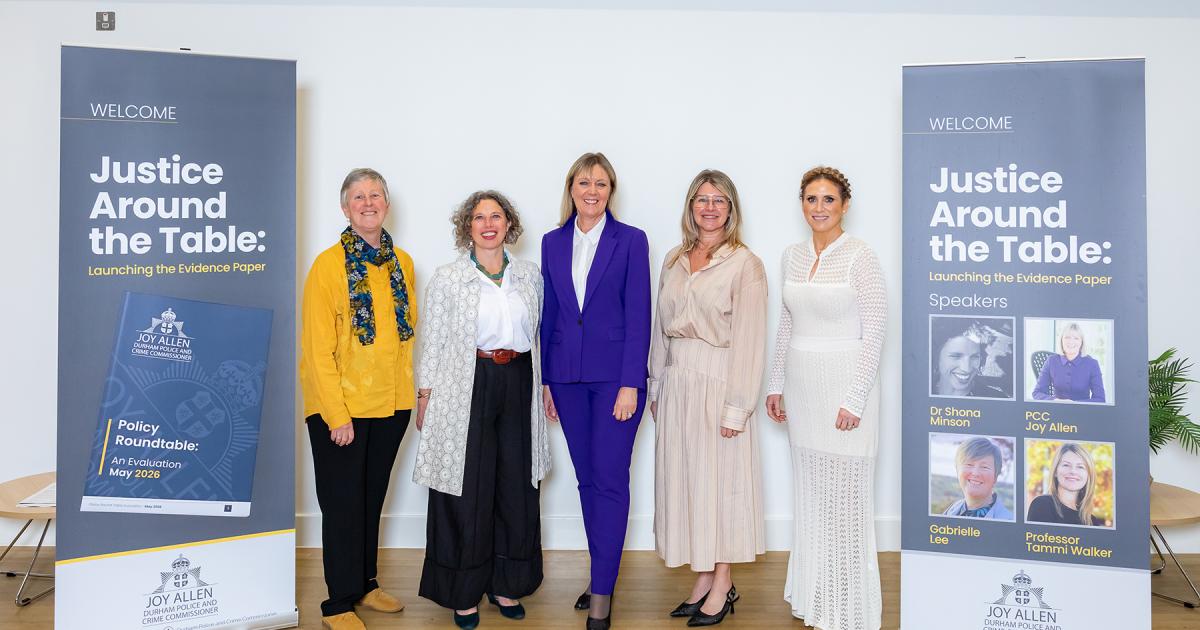
Breaking the cycle (Image: Supplied)
It was this determination that led me to establish the Criminal Justice Policy Roundtable, bringing together policing, prisons, probation, health, housing, universities, charities, and people with lived experience to confront some of the biggest failings and pressures within our criminal justice system.
Advertisement
The Roundtable was never designed to be a talking shop.
It was created to challenge outdated thinking, drive practical reform, and identify evidence-led solutions that cut crime, reduce reoffending, and better protect victims and communities.
It was meant to add value to the excellent partnership working that exists around the Local Criminal Justice Board that I chair.
Because the reality is stark: we cannot arrest our way out of addiction.
Advertisement
Across the country, courts are overwhelmed, prisons are overcrowded, and reoffending rates remain far too high.
Meanwhile, communities continue to suffer the consequences of repeat offending, acquisitive crime, anti-social behaviour, violence, and exploitation linked to drugs and alcohol.
Behind many offences lie deeper problems: addiction, trauma, mental ill-health, homelessness, domestic abuse, and social exclusion.
If we fail to address those drivers, we simply trap people in a revolving door of offending, custody, and crisis while communities continue to pay the price.
Advertisement
The Roundtable examined these issues head-on.
One major focus was women in the criminal justice system.
Many women who offend are themselves victims of abuse, exploitation, and trauma.
Short prison sentences often fail to rehabilitate and instead worsen instability, break family ties, and increase the risk of reoffending.
Advertisement
The report calls for stronger trauma-informed support, earlier intervention, improved diversion schemes, and community-based alternatives that tackle the causes of offending while maintaining accountability and protecting the public.
Housing and homelessness were also identified as major drivers of repeat offending.
People leaving prison without stable accommodation are far more likely to relapse into addiction, become involved in crime again, or fall into exploitation and rough sleeping.
That is why the Roundtable recommended stronger “through-the-gate” support and far better coordination between housing, probation, healthcare, and treatment services.
Advertisement
The discussions also highlighted the enormous impact addiction has on crime and anti-social behaviour.
Around half of acquisitive crime is linked to drugs, while addiction continues to fuel violence, disorder, and repeat offending.
The Roundtable explored innovative approaches including Drug Testing on Arrest, recovery-focused treatment pathways, and diversion schemes designed to break the cycle of addiction and crime before more victims are created.
None of this is about being soft on crime.
Advertisement
It is about being smarter, tougher, and more effective in reducing crime long-term.
Every prevented relapse, every avoided reoffence, and every person successfully supported into recovery means fewer victims, fewer crimes, and safer streets.
The Criminal Justice Policy Roundtable was created to drive action, influence national debate, and deliver practical change that improves public safety and strengthens communities.
And this report is only the beginning.
Advertisement
You can read the full Policy Roundtable Evaluation Report and explore the recommendations in more detail by using the following link: https://bit.ly/PolicyRoundtableEvaluation.
Fresh testing has found that the children’s sand kits contain tremolite asbestos, which can cause severe lung diseases if inhaled
Rachel Vickers-Price UK and World News Reporter and Josie Clarke
02:36, 01 Jun 2026
Two further children’s sand kits widely available across the UK have been pulled from shelves after a consumer group discovered they contained asbestos.
One of the two latest recalls was marketed as a Montessori sand art tray, sold via Amazon Marketplace and TikTok Shop. The product is designed as a hands-on learning tool to develop fine motor skills, encouraging youngsters to draw in the sand using pencils supplied in the kit or with their fingers.
Testing by Which? revealed that the sand contained the banned substance tremolite asbestos — a dangerous naturally occurring mineral that can become airborne and trigger severe lung diseases if inhaled, even at minimal levels of exposure.
The International Agency for Research on Cancer has classified all forms of asbestos as carcinogenic to humans. Any products containing asbestos, including trace amounts, are banned from sale in the UK.
Advertisement
A second sand art tray examined by Which? was purchased from TikTok Shop and was also found listed by three separate sellers on Amazon Marketplace, reports the Mirror.
Which? revealed the product remained available on both platforms until May, despite the identical item having been subject to a recall by the Office for Product Safety and Standards (OPSS) in March owing to asbestos contamination.
The OPSS has since updated the original recall notice to incorporate Amazon and TikTok Shop. Which? researchers also discovered tremolite asbestos in the GL Style Sand Bottle Art Heart or Stars set, purchased from Asda and bearing the brand name RMS International Limited. However, the consumer group also identified what seemed to be the identical kit available on eBay from three private sellers.
Advertisement
More than 39 recall notices have been issued by the OPSS since November concerning asbestos-contaminated sand products. The problem has also resulted in the closure of schools and parks, most recently in North East England. It is understood the affected toys contain sand sourced from particular quarries in China, where naturally occurring asbestos is present.
Sue Davies, head of consumer rights policy at Which?, said: “It is outrageous that online marketplaces are selling products which may expose children to asbestos, especially when some of these products had already been recalled by the OPSS. Seemingly innocent items like toys and craft kits can have serious health consequences if there are not proper checks to make sure they comply with safety laws.
“The Government has published proposals that would require online marketplaces to exercise due care in preventing, identifying and removing dangerous products sold through their platforms, an area where regulation is currently far too limited.
Advertisement
“Ministers now urgently need to introduce legislation that makes these duties sufficiently robust and properly enforceable. The longer the Government delays taking action, the greater the risk that more dangerous products will reach consumers.”
A spokesman for Amazon said: “Customer safety is our top priority and we are taking this issue very seriously. We are in the process of removing all products in this category across our store while we investigate further, and as a result the highlighted items have been removed.”
Asda confirmed they initiated a complete product recall immediately upon learning the product had failed testing. They urged customers who had purchased the item to stop using it immediately and return it to their nearest store for a full refund.
A spokeswoman for eBay said: “We swiftly removed the items identified by Which? and are conducting further sweeps to identify similar listings.”
Advertisement
TikTok confirmed the product identified during the investigation had already been removed from TikTok Shop.
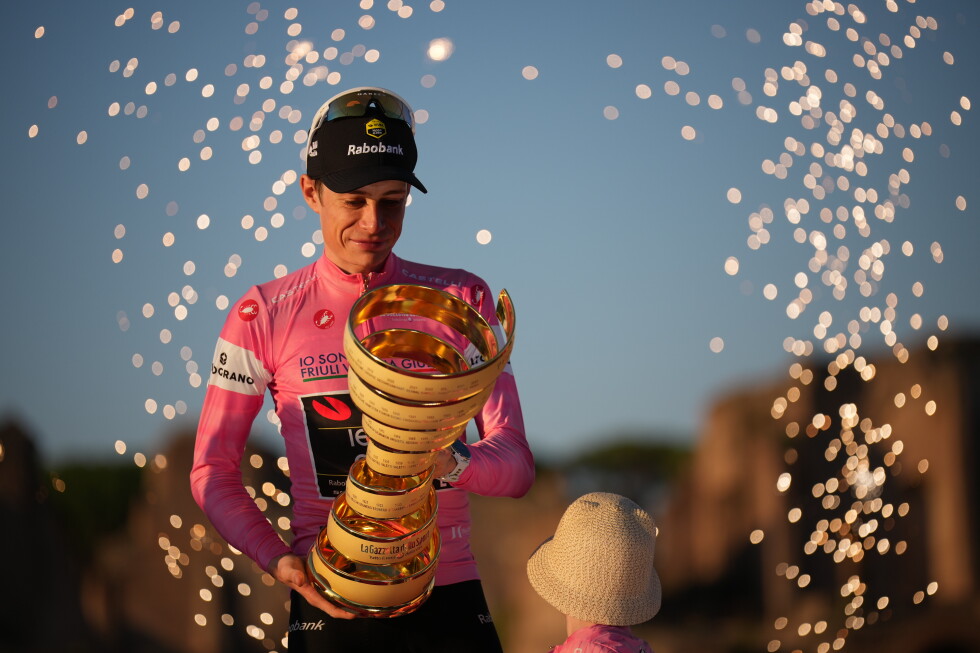
ROME (AP) — Danish cyclist Jonas Vingegaard won the Giro d’Italia on Sunday, becoming the eighth male rider to win all three Grand Tours.
Vingegaard, who rides for Team Visma-Lease a Bike, ended the three-week race with an overall advantage of 5 minutes, 22 seconds over second-place Felix Gall. Jai Hindley finished third, 6:25 behind.
“It’s amazing. It’s something I’ve dreamt of my whole life and to now be able to do it, it’s something special,” an emotional Vingegaard said in his first interview as Giro winner. “I’m lost for words.
Advertisement
“It was a really special day, with so many people on the side of the road, so many spectators, it was really incredible. To get the honor to wear the maglia rosa in the streets of Rome is something special. With these last three weeks, it’s just such a nice way to end this race.”
After crossing the line in Rome, the 29-year-old Vingegaard embraced his wife and two children, who were wearing replicas of his maglia rosa — the leader’s pink jersey.
“Yeah, that’s even nicer, it also gives me tears in my eyes, they’re always there for me,” said Vingegaard, who has celebrated his five stage wins at the Giro by kissing the photo of his family that is on the handlebar of his bicycle, before kissing his wedding ring.
Vingegaard also carried his children with him to the podium, where he was presented with the Trofeo Senza Fine (Trophy With No End).
Advertisement
Having dominated his first Giro — living up to his billing as pre-race favorite — Vingegaard will turn his attention to the Tour de France as he attempts to become the ninth man to complete the Giro-Tour double in the same year.
However, there he will face cycling’s top talent Tadej Pogacar. The Slovenian, who skipped the Giro to focus on adding to his four Tour titles, became the first man in 26 years to do the Giro-Tour double when he achieved the feat in 2024.
Sunday’s largely processional final Giro stage, that ended with eight laps through Rome, was won by sprint specialist Jonathan Milan.
The 131-kilometer route started in Rome and then went out the sea before returning to the Italian capital for the finishing circuit.
Advertisement
So relaxed were the riders that they were all seen sharing a box of sweets as they started the stage, before also being given glasses of Prosecco. They also all posed for team photos during the ride out to the sea.
Milan, who had seen other bids for stage wins end in disappointment earlier in the race, finally got his victory. The Italian edged out compatriot Giovanni Lonardi and French cyclist Paul Penhoët in a bunch sprint.
“I’m super happy to end this Giro in this way,” Milan said. “It’s beautiful. After three weeks that we were looking for this, winning the last stage in Rome means that we were keeping the head there, we never give up, we always keep fighting for the victory, we were always believing in it, we always believe in each other.”
The challenge will raise money for research into motor neurone disease (MND).
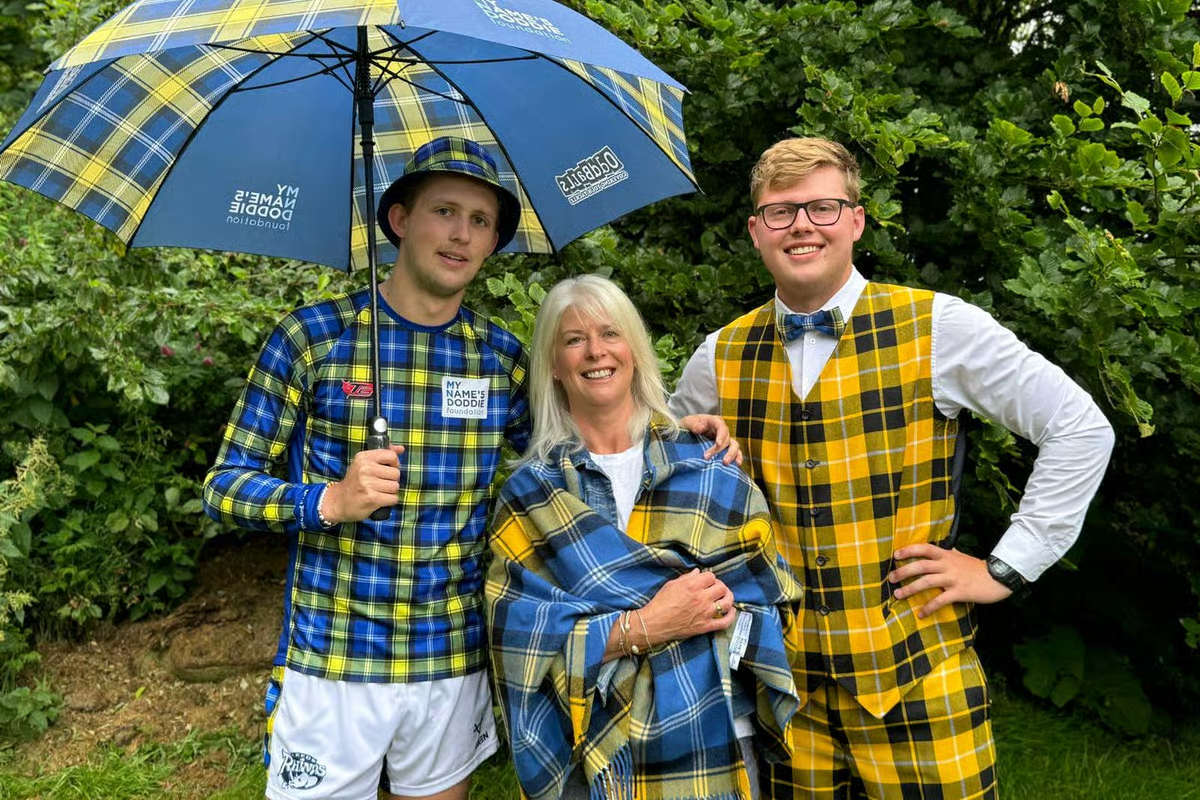
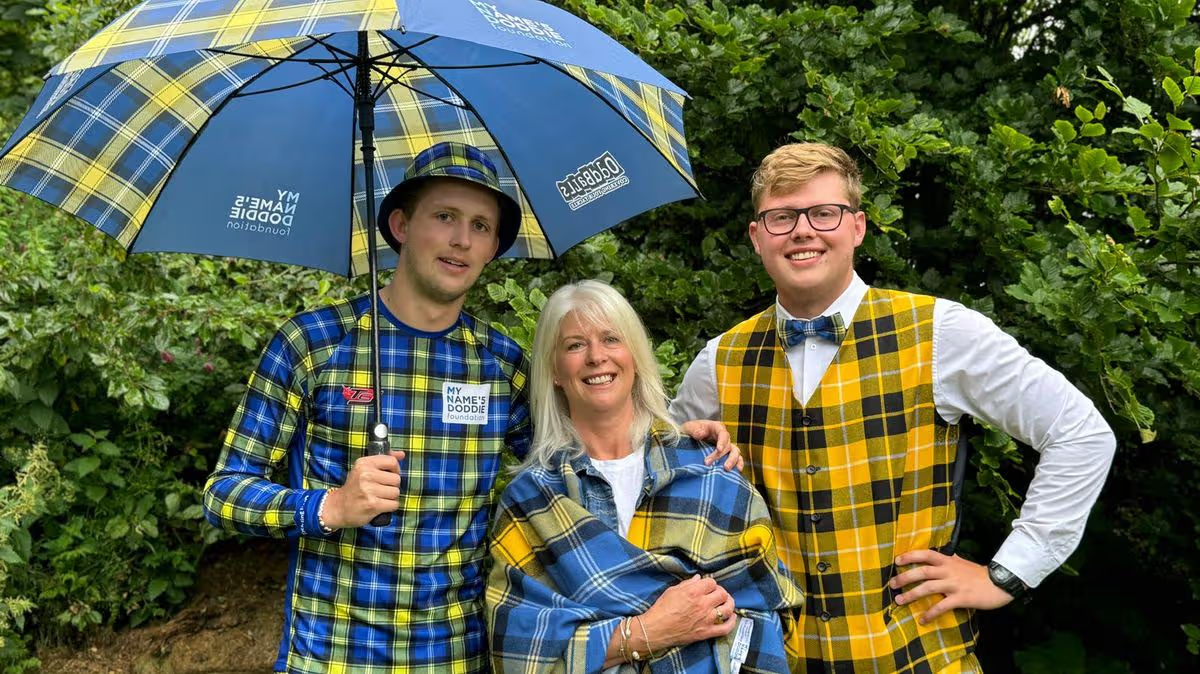
Doddie Weir’s wife and son will join former England rugby captain Lewis Moody on a gruelling 500-mile charity cycling challenge to raise cash for research into motor neurone disease (MND) this month.
Kathy and Hamish Weir will take part in the seven-day charity ride alongside the 2003 World Cup winner, who last autumn revealed he had also been diagnosed with MND.
Moody is raising money for the My Name’5 Doddie Foundation, founded by the Scottish rugby great and MND campaigner who sadly died in November 2022 aged 52 after a six-year battle with the disease.
Advertisement
Moody said having Weir’s family alongside him will be “incredibly poignant and powerful”.
“Doddie did so much to change the conversation around MND, and in many ways this ride feels like continuing something he started,”
Moody added. “There’s a real sense of carrying the baton forward. Doddie inspired people because he faced this disease head on with unbelievable courage, humour and determination, and I think all of us involved in the ride feel a responsibility to keep pushing that fight forward.
Advertisement
“When you see Kathy and Hamish there beside you, it’s impossible not to feel extra motivation.
This ride is about raising money, of course, but it’s also about showing the MND community that we’re still fighting, still driving awareness, and still refusing to accept that this disease cannot be beaten.”
The Lewis XV’s challenge will begin on Sunday June 14 at the northernmost Prem Rugby club, Newcastle Red Bulls, and will end at the Allianz Stadium in Twickenham, south-west London, on Saturday June 20 to deliver the match ball for the Gallagher Prem Rugby Final.
Moody and Kathy and Hamish Weir will be joined by a group of rugby stars during the challenge. “When you get diagnosed with something like MND, you very quickly realise how important people are.”
Advertisement
Moody said. “This ride is about mates coming together, communities coming together, and hopefully showing people living with MND that they are not alone.
“This disease affects families everywhere and we need people to rally behind the MND community in the same way rugby people always rally behind each other.
“If people can donate, come out and support us along the route, or simply help spread the word, it genuinely makes a difference. We want this to feel like something the whole rugby community is part of.”
Advertisement
Paul Thompson, director of fundraising at the My Name’5 Doddie Foundation, said: “Lewis has already inspired so many people through the way he has approached his diagnosis, and this challenge is another example of that courage and leadership.
“This is about much more than rugby. It’s about friendship, family, resilience and communities coming together behind a common cause. Every mile ridden and every pound raised will help us continue accelerating research towards effective treatments and, ultimately, a cure for MND.”
Get more Daily Record exclusives by signing up for free to Google’s preferred sources. Click HERE.




.jpeg)





































You must be logged in to post a comment Login