

Connect with us
DAPA Banner

NewsBeat

Global markets mixed, Wall Street gains as oil prices soar

Published

on

Global markets mixed, Wall Street gains as oil prices soar

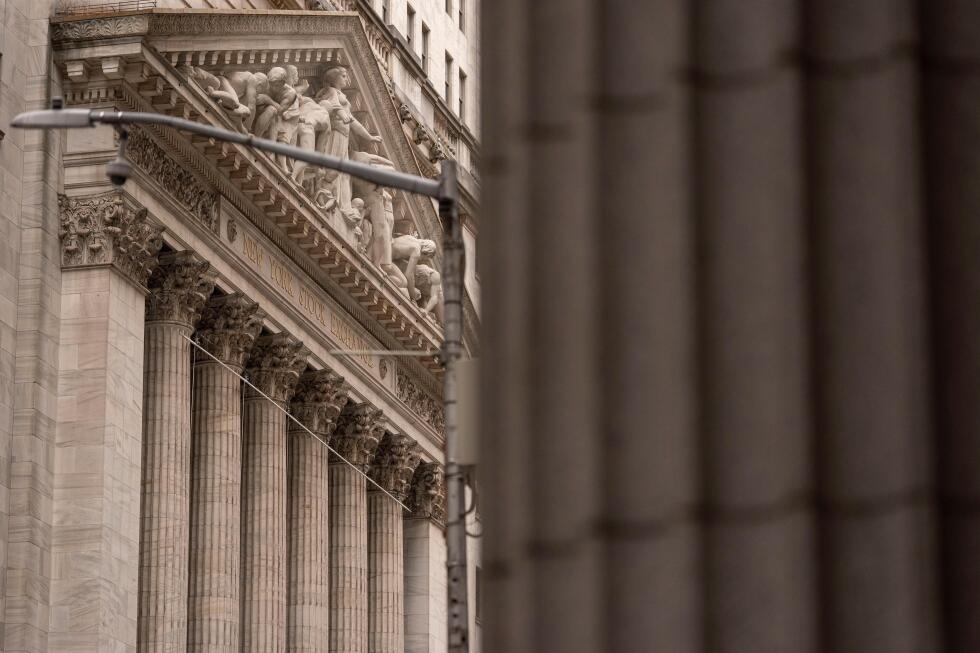
Wall Street was poised to open the week with gains on Monday as oil prices continued their climb and prospects for an end to the Iran war remained uncertain.

Futures for the S&P 500, Dow Jones Industrial Average and Nasdaq all climbed 0.6% before the opening bell. Wall Street closed on Friday with its fifth straight losing week, its longest such streak in nearly four years.

Benchmark U.S. crude jumped $1.20 to $100.84 a barrel. Futures for Brent crude, the international standard, climbed 2.1% to $107.54 a barrel. Before the war, Brent had been priced at about $70 a barrel.

U.S. President Donald Trump on Monday threatened widespread destruction of Iran’s energy resources and other vital infrastructure if a deal to end the war with Tehran is not reached soon.

Advertisement

In a social media post, Trump said “great progress is being made” in talks with Iran to end military operations but bristled that if a deal is not reached and if the strategic Hormuz Strait is not immediately reopened, the U.S. would broaden its offensive by “completely obliterating all of their Electric Generating Plants, Oil Wells and Kharg Island (and possibly all desalinization plants!).”

About one-fifth of the world’s oil passes through the Hormuz Strait.

On the ground, the war showed no sign of letting up: Tehran struck a key water and electrical plant in Kuwait, and an oil refinery in Israel came under attack. Israel and the U.S. launched a new wave of strikes on Iran.

There was little corporate news to trade on early Monday, though shares of Sysco tumbled 5.7% after the nation’s largest food distributor said it would acquire supplier Restaurant Depot in a deal worth more than $29 billion.

Advertisement

The acquisition would create a closer link between Sysco and customers that rely on Restaurant Depot for supplies needed quickly in an industry segment known as “cash-and-carry wholesale.”

Restaurant Depot shareholders will receive $21.6 billion in cash and 91.5 million Sysco shares.

Markets in Asia closed broadly lower Monday as worries continued about soaring oil prices and the potential for further escalation in war with Iran, but shares rose moderately in Europe.

France’s CAC 40 rose 0.4% at midday, while Germany’s DAX added 0.3%. Britain’s FTSE 100 gained 0.9%.

Advertisement

Japan’s benchmark Nikkei 225 slipped 2.8% to finish at 51,885.85. Australia’s S&P/ASX 200 lost 0.7% to 8,461.00. South Korea’s Kospi dove 3.0% to 5,277.30. Hong Kong’s Hang Seng lost 0.8% to 24,750.79, while the Shanghai Composite reversed course in the afternoon and was up 0.2% at 3,923.29.

In Japan and the rest of Asia worries continue to grow about the effective lack of access to the Strait of Hormuz as the region relies greatly on such access for oil shipments.

Investors are now bracing for the war to last for some time, which would likely set off inflation in global markets, and eventually may stunt Asia’s economic growth.

“Although we do not expect the conflict to be protracted, we anticipate heightened volatility in the near term,” said Xavier Lee, senior equity analyst at Morningstar Research.

Advertisement

Alarm has been resounding in Japan about the declining value of the yen. In currency trading, the U.S. dollar inched down to 159.51 Japanese yen from 160.32 yen. The euro cost $1.1482, down from $1.1510.

“In addition to the crude oil futures market, speculative activity is also said to be increasing in the foreign exchange market,” Vice Finance Minister Atsushi Mimura said.

“As we have already stated, we will respond on all fronts, and our focus is spread in all directions,” he told reporters, without giving specifics on the possible action.

___

Advertisement

AP journalist Ayaka McGill contributed to this report.

Source link

Advertisement
Continue Reading
Click to comment

You must be logged in to post a comment Login

Leave a Reply

NewsBeat

Tommy Sheridan says new BBC documentary on his life could capture return to Holyrood

Published

on

Daily Record

The former socialist leader has been followed by TV cameras for almost a year for a BBC-comissioned show about his controversial career as a left wing politician.

Tommy Sheridan has revealed that a new BBC documentary on his life is being filmed as he tries to return to Holyrood.

Advertisement

The former socialist leader has been followed by TV cameras for almost a year for a BBC-comissioned show about his controversial career as a left wing politician.

And just days after Sheridan announced he was standing for a new pro-indy alliance, he believes the film crew could be there to capture his return to Holyrood.

The 62-year-old – who was jailed for perjury in 2010 after claims he attended swinging parties – said: “The production company approached me in August last year and have been filming since then.

“I’m 62 and they’re going through my whole life, so it’s taking a while.

Advertisement

“They suggested two one-hour documentaries, which looks at the social political history of Scotland through my eyes.

“I was involved in the miners’ strike and the poll tax. I was elected a councillor from prison in 1992 after being jailed for for defying a court order banning me from a warrant sale.

“They’re looking at all the things I’ve been involved in and what it says about Scotland’s political history.”

Advertisement

Tommy is standing in the Glasgow regional list as number one candidate for the Alliance to Liberate Scotland, which formed in February.

His wife Gail also a candidate on the party’s Glasgow list.

The move came after it was announced the late Alex Salmond’s pro-indy Alba Party is to wind up and deregister after being left financially unviable amid a police probe into alleged financial “irregularities”

.

Advertisement

Sheridan had been part of a group bidding to take over leadership and save Alba.

But he says his future is now firmly with Alliance.

A poll conducted by Find Out Now, a member of the British Polling Council, has predicted eight per cent of voters being ‘definitely’ or ‘very likely’ to consider voting for the party.

Advertisement

List MSPs have been elected in the past on six per cent support in Glasgow, but usually at least seven per cent is required.

People who voted SNP at the last Holyrood election were the most likely to say they’d consider backing the Alliance. In the national poll, 1 in 7 (14%) said they’d be ‘definitely’ or ‘very likely’ to consider it.

Sheridan said: “This opinion poll shows clearly we can win enough support to be elected and the people of Glasgow know I can do the job. I proved that during the eight years I represented the city and championed the abolition of warrant sales and the introduction of free and healthy school meals.

“I’m more equipped now than ever to lead the charge for Scotland’s independence from the parasitical chains of the corrupt Westminster Parliament which robs Scotland blind and then accuses us of being incapable of standing on our own two feet.

“The days of Westminster misrule are numbered. I am determined to wage war on poverty, low pay and the chronic underfunding of our NHS and local council services. The only way to do that is with the economic powers of an independent nation.

Advertisement

“People are realising the voting system has to be understood and giving the SNP a list vote in Glasgow is simply giving a vote to the right wing. It’s giving it to Reform and to the Tories.

“What that poll shows is that my victory will be a defeat for the Tories.

“Unionists aren’t going to vote for me. I know that. But in terms of the vast number of SNP and independence supporters, they are willing to use their vote if they think it’s going to be effective.”

Get more Daily Record exclusives by signing up for free to Google’s preferred sources. Click HERE.

Advertisement

Source link

Continue Reading

NewsBeat

Traders on busy Cardiff street hit out at huge parking change

Published

on

Wales Online

Drivers are now only entitled to 30 minutes of parking before charges kick in

Business owners on a busy Cardiff high street are feeling the repercussions of a huge change to car parking rules. Cardiff council rolled out new parking charges to some of its car parks across the city in December 2025, including some in Canton and Riverside.

Advertisement

Instead of getting two hours of free parking, drivers are now only entitled to 30 minutes before charges kick in. Businesses on Cowbridge Road East have now said that they have noticed fewer shoppers coming in than before, while Cardiff council said the move followed a consultation period.

Yagub Jalloh, 40, manager of Jah Beauty, said: “Thirty minutes is not enough to come and browse and look for what you want.

“I don’t know why they made the changes, but I do know it is not a good change for businesses around here.” Jah beauty is a beauty supply store right in front of two car parks, Severn Road and Grey Street.

“When people can spend more time here, they spend more,” said Mr Jalloh. “Now they will just run away.” Never miss a Cardiff story by signing up to our daily newsletter here

Advertisement

Mike Ashwin, manager at The Toolbox Canton, said: “Customers used to come in for hours to browse, not so much now.

“They could do a coffee while they wait for a key to get cut, they are not able to do that anymore.”

He also explained it is a logistical nightmare for their deliveries. “It takes more than half an hour for our trucks to deliver our stock,” he said. “And now they have to double park or we open the back for them if we can.”

Advertisement

Zohaib Hussain, 39, is the owner of Zero Plus Fish and Chips, and is the chair of the Cowbridge Road East Traders Association. He said: “No one’s going to pay more for parking than the product they are coming for.”

Mr Hussain said the traders association will “carry on the fight” to ask the council to revert their decision. “We are doing everything we can,” he said. “Not one business with us agrees with these changes”.

A spokesperson for Cardiff council said: “As part of setting the Council’s 2024/2025 budget, the council consulted on proposals to remove the free parking period in district car parks – 6,130 responses were received and over half supported the change.

Advertisement

“Following this, a statutory consultation under the Traffic Regulation Order (TRO) process was carried out in early summer 2025. Based on feedback, we revised the proposals and re-consulted in autumn 2025.

“The updated plan retains 30 minutes of free parking in district car parks, allowing drivers time to visit local businesses or amenities while ensuring the council can cover the costs of operating the car parks.

“After the free period, charges apply – starting at 50p for the first hour. These rates remain significantly lower than those in comparable cities and are not considered a barrier to use.”

Get Cardiff news updates on your phone by joining our WhatsApp community here. We occasionally treat members to special offers, promotions, and ads from us and our partners. See our Privacy Notice

Advertisement

Source link

Continue Reading

NewsBeat

The Teacher season 3 cast from Coronation Street actor to Benidorm star

Published

on

Manchester Evening News

Victoria Hamilton leads The Teacher season 3 on Channel 5, joined by soap stars from Coronation Street, EastEnders and Hollyoaks – here’s the full cast list

The Teacher returns for its third season with Victoria Hamilton taking the lead role.

Channel 5’s school-based anthology, which initially premiered in 2022 with Sheridan Smith in the starring role, arrives two years following the second season featuring Kara Tointon.

Advertisement

Victoria, recognised for Unforgotten, Doctor Foster, Life and The Crown, portrays Helen Simpson, a teacher with three decades of experience, who dismisses what she considers woke ideologies of the younger generation.

Discussing how he’s progressed the narrative, director Dominic Leclerc said: “Each series of the Teacher is a study of character, with thriller elements. We look at complex ideas and constantly evolve the form to adapt to the theme.”

Victoria is joined by The Madame Blanc Mysteries and Benidorm star Steve Edge, Line of Duty’s Rochenda Sandall, Coronation Street’s Peter Ash and EastEnders star Navin Chowdhry. Here’s everything you need to know about the cast, according to The Mirror.

Victoria Hamilton plays Helen Simpson

Viewers will recognise Victoria for her numerous television roles, including portraying Anna Baker in the BBC hit Doctor Foster and Belle in its spin-off Life.

Victoria is also recognised for playing Ruby Pratt in Lark Rise to Candleford and Queen Elizabeth in The Crown.

In recent years she has appeared as Anna Marshall in COBRA, Juliet Cooper in Unforgotten and Dodie Gimball in the Apple TV+ hit Slow Horses.

Steve Edge plays Terry Simpson

Steve portrays Helen’s estranged husband Terry. Audiences will recognise Steve from his role as Billy Dawson in Benidorm and more recently starring as Dom Hayes in the Channel 5 drama The Madame Blanc Mysteries.

Steve is also recognised for The Cup, Star Stories, Phoenix Nights, All at Sea and Starlings, where he portrayed Fergie.

Rochenda Sandall plays Tessa Stewart

Rochenda portrays teacher Tessa Stewart. Rochenda is recognised for playing Vanessa Warren in Criminal: UK, Azure in Doctor Who and Lisa McQueen in Line of Duty.

Advertisement

Audiences might also recognise her for her roles as Anna in Love, Lies and Records, Lucy in Deceit, Kate Miller in Hijack and Cat Braithwaite in The Rig.

More recently she starred as Fi in the popular series Amandaland.

Olly Rhodes plays Sam Simpson

Olly portrays Helen’s son Sam. Soap enthusiasts will recognise Olly for playing Joseph Holmes in Hollyoaks, and Billy in Waterloo Road.

Advertisement

He has also featured in The Last Kingdom as Osbert and All Creatures Great and Small as Private Briggs.

Peter Ash plays Sebastian Blake

Peter portrays faculty member Sebastian Blake, who interviewed for Helen’s position. Peter is best recognised for playing Paul Foreman on Coronation Street, a role he held between 2018 and 2024. Prior to Coronation Street he also portrayed Keith Jowell on Casualty and Ron in Hollyoaks.

Outside of the world of soaps Peter is recognised for playing Darius Fry in the series Footballers’ Wives between 2003 and 2006.

Advertisement

Navin Chowdhry plays Simon Cookson

Navin is perhaps best recognised for his roles as Kurt in Teachers, DC Asap Qureshi in A Touch of Cloth, and Nish Panesar in EastEnders. Audiences will also know him from his appearances in Trying, Our Girl and Next of Kin.

The Teacher also features Alice Grant, who portrays Cressida Bancroft. She is widely known for her role as Susan Villiers in Mary and George, alongside Sex Education star Shak Benjamin, who takes on the role of Leo Dalton.

Malek Alkoni, recognised for G’wed and Vigil, portrays Miles Crawford, while Red Rose and Gentleman Jack actress Natalie Gavin plays DS O’Brien. Ellis Jupiter plays Dee Rainford-Thomas in their debut televised role.

Advertisement

Reflecting on the cast, director Dominic said: “Casting is everything; you have to have the right people in front of the lens. I admire Victoria Hamilton’s work so much, I’ve wanted to work with her for years. She set the bar for the whole series, surrounded by a cast of teenagers who bring life, vitality and very distinct personalities into the mix.

“At the centre of the show is a relationship between Helen and a character called Cressida. We saw lots of people for Cressida, but Alice Grant blew us away with her delivery that was charming, but with a slight unknowingness behind the eyes. Then we have Shaq Benjamin as Leo. I directed him in Sex Education but I didn’t even recognise him in his self-tape for this, he immediately got to the heart of the character, with his unique energy and style. Ollie Rhodes, for me, was a slam dunk. That character’s almost hiding in plain sight and suddenly becomes very, very big as the show goes on.

“There’s a quality in Ollie as an actor that I knew would take us on that journey. Ellis Jupiter was likewise immediately perfect for the role of Dee. Their wit, quiet spark and sensitivity captured Dee’s spirit with flair. Rochenda Sandall, Steve Edge, Peter Ash, Navin Chowdhury, and Natalie Gavin give the show depth and true Northern authenticity.”

The Teacher season 3 starts on Channel 5 at 9pm on Monday, March 30.

Advertisement

Source link

Continue Reading

NewsBeat

Man warned pals ‘it will go with a bang’ before fatal house explosion after rent increase

Published

on

Daily Mirror

David Howard had lived on John Street, Worksop, for 11 years when the massive explosion reduced the property to rubble on April 12, 2025, killing him and his dog

A man’s home blew up after he told his friend he’d “pulled off the gas pipes” when his landlord put up the rent by £80.

David Howard had lived at the Nottinghamshire property for 11 years before a massive gas explosion destroyed the house and killed him and his dog.

On April 12, 2025 he received a letter from his landlord saying she was putting up his rent, which was mostly paid by the local council, by £80 to £540.

Advertisement

Friends told how at around 3pm that afternoon Mr Howard started telling several people he was going to “blow the house up”, saying “you wait until the end of the day”, an inquest into Mr Howard’s death was told today.

DC Daniel Akehurst read to the court from an account by one of Mr Howard’s friends, she had told cops that on the day Mr Howard was “p****d off and could not cope anymore” due to his rent going up.

Shanelle Williams described how Mr Howard was “in a mood and depressed”. The woman was then called by Mr Howard at around 3pm, when he told her “he had pulled the pipes” and made comments about “blowing up the house”.

Advertisement

In another call at 3.29pm, Mr Howard told Ms Williams “I’ve done it, I’ve pulled the pipes off the gas. It’s going to go with a bang.”

The latter call lasted 42 seconds and was ended by Mr Howard before Ms Williams could say anything. Before this, Mr Howard had told friends he had been up for three days with no sleep and was “very upset” about the rent increase”.

A friend tried to give him advice but he wasn’t listening, with Mr Howard saying, “You watch”, “You wait until the end of the day” and “You wait to see what happens”.

The inquest was told Mr Howard had made similar comments before April 12.

Advertisement

Around 3pm, Mr Howard locked the doors to the property he was renting after two of his friends left to go to a shop, which was described as “strange”.

Upon returning, the two friends were told by Mr Howard to “go, I don’t want anyone else to get hurt. Please just go”.

Asked by his friends if they could at least take his dog, Roxy, Mr Howard said: “Roxy is staying with me.”

Advertisement

Another friend then went to the property and tried speaking to him but was told to “f*** off”. The same person said she could smell gas.

Another then told Mr Howard through the locked door: “You are being stupid, there are kids next door. You are a f****** idiot.”

The hearing wasn’t told any of the friends made any attempts to notify emergency services of the events.

A call was then received by the police at 7.39pm to say an explosion had occurred at 26 John Street.

Advertisement

DC Akehurst described how the house had “fully collapsed” by the time emergency services arrived to the “chaotic” scene and a major incident was declared.

The hearing was told up to 200 people were “milling around” the street, with these residents then evacuated.

DC Akehurst said the explosion was “large and powerful” and its force had also damaged the adjacent properties, as well as some opposite.

Advertisement

A statement from a first responder read out in the hearing said Mr Howard was still conscious when emergency services arrived and reported having significant difficulty breathing and “was slowly being crushed” as he was “trapped under a significant amount of rubble”.

Crew couldn’t get to him, however, due to the difficulty of the scene and he was pronounced dead at 9.58pm.

Christopher Trendowicz, fire investigator at Nottinghamshire Fire and Rescue Service, told the hearing that the explosion happened on the ground floor of the property, with its upper floor collapsing on top.

The Health and Safety Executive (HSE) instructed gas company Cadent to investigate any possible leaks from outside the property but this was not the case.

Advertisement

The gas meter, boiler and piping were also tested and found to be safe.

The only abnormality found was damage to the cooker, owned by Mr Howard, which had its flexible gas pipe “stretched to capacity”.

Mr Trendowicz said this was the likely cause of the gas leak, with the likely cause for the ignition being the capacitator of the fridge/freezer in the property being “ripped out”.

Advertisement

The fridge/freezer was found away from where it would be ordinarily, the hearing was told.

Coroner Nathanael Hartley concluded Mr Howard’s cause of death as 1a asphyxia whilst entrapped beneath collapsed building debris and 2 heroin and cocaine use.

Mr Howard had low levels of the two drugs and alcohol in his blood at the time of his death, which could have led to “mild cognitive impairment”.

He had a history of mental health issues, having been diagnosed with PTSD and moderate depression in 2021, as well as a substance abuse misuse history, which he first reported in 2012.

Advertisement

Mr Howard’s two daughters, Keely and Lauren Howard, both attended the hearing but refused to comment on their father’s mental health or to describe him as a person when asked by coroner Hartley.

No notes were recovered from the property during the investigation, coroner Hartley said.

The coroner said: “Having heard the evidence from the fire service about the damaged gas pipe cooker and the evidence that David had informed his friend that he had ‘pulled the pipes, was going to blow the house up and it was going to go with a bang’, I find that David caused the damage to the gas cooker intentionally.

“It’s possible that David did not appreciate the dangerousness of the situation. With that in mind, I do not find that David intended to end his life when he did. I find that David’s intentions cannot be established.”

Advertisement

Source link

Continue Reading

NewsBeat

Chopping down areas of tropical rainforest is causing rising temperatures linked to thousands of deaths

Published

on

Chopping down areas of tropical rainforest is causing rising temperatures linked to thousands of deaths

Tropical forests are hot, steamy places. But when large numbers of trees are cut down, they get even hotter. Our recent research shows that clearing large areas of the rainforest exposes hundreds of millions of people to higher temperatures, increasing heat stress (when the body’s way of controlling temperature fails) and, in some cases, contributing to death.

Research suggests that this could be contributing to 28,000 heat-related deaths each year across the tropics every year.

Apart from the shade that the rainforest canopy provides, trees also cool their surroundings by pumping water from the soil into the atmosphere – a process known as evapotranspiration. Like sweat evaporating from our skin, this uses energy and cools the air.

A single large tropical tree provides as much cooling as several air conditioners running continuously. Across the billions of trees in the Amazon or Congo, this “sweating” cools entire regions.

Advertisement

People living in or near tropical forests recognise these cooling benefits. When villagers in rainforest regions in Kalimantan, Indonesia, were interviewed about the benefits tropical forests provide, the most common answer was their ability to keep local temperatures cool.

Despite these benefits, tropical forests are being destroyed at an alarming rate. In 2024, more than 6 million hectares of primary tropical forests (nearly the size of Panama) were destroyed, the fastest rate since records began.


Nike Doggart, CC BY

Tropical deforestation reduces the cooling effect forests provide, leading to local warming – a pattern well documented by previous studies. But how is this warming affecting the lives of people living near tropical forests?

Advertisement

Deforestation is amplifying heat

To answer this, we used satellite data to track how deforestation has affected temperatures over the past 20 years. Over this period, large areas of forest in the Amazon, Congo and south-east Asia were cleared. We compared temperature changes in deforested regions with nearby areas that retained their forests. Tropical regions that retained their forest cover warmed by an average of 0.2°C. In nearby areas where forests were cleared, temperatures rose by 0.7°C – more than three times as fast. This shows that deforestation results in a dramatic regional amplification of climate warming.

An illustration showing temperature rises in South America based on data collated by the researchers.

An illustration showing temperature rises based on data collated by the researchers.
Author’s own research., CC BY-SA

To understand the impact on local people, we mapped this warming onto information on where people live across the tropics. We found that more than 300 million people were exposed to higher temperatures caused by deforestation. Exposure occurred right across the tropics: 67 million people in Central and South America, 148 million people in Africa and 122 million people in south-east Asia were exposed to warming.

Some countries with rapid rates of deforestation were particularly affected: 49 million people in Indonesia, 42 million people in the Democratic Republic of Congo and 22 million people in Brazil were exposed to hotter temperatures caused by deforestation.

A hidden public health crisis

Exposure to high temperatures has a range of negative effects on health. For instance, it can reduce the productivity of farmers and reduce the time it is safe to work outdoors. Exposure to high temperatures also causes heat stress that can be lethal. Heat waves in the Amazon are associated with a higher risk of mortality from cardiovascular diseases.

Advertisement
Infographic showing difference in temperature in tropical forest with deforestation, and where there hasn't been, based on author's research.


Author’s own., CC BY

We combined information on the number of people exposed to deforestation-induced warming with region-specific heat vulnerability information and non-accidental death rates. We used this to estimate that the heating from deforestation is linked to around 28,000 heat-related deaths each year across the tropics. This means that over the past 20 years more than half a million people have died from heat-related causes as a result of deforestation.

It is well known that tropical deforestation releases carbon dioxide and this contributes to global climate change. Indeed, arguments for reducing deforestation are often focused on carbon. But despite numerous international pledges, tropical deforestation continues to accelerate.

Recognising the public health impact of deforestation could help broaden support for forest protection. Although the local warming effects of deforestation are well recognised by local people, communities and decision-makers often lack precise data on how much deforestation is increasing temperatures in their area. To address this, we developed an online tool that provides information at province level on the warming linked to deforestation. We hope this locally relevant data will help communities and decision-makers make more informed decisions about managing their forests.

There are some promising new initiatives that recognise the value of tropical forests. Brazil is setting up a new fund that will pay tropical nations to keep their forests intact. It recognises the public services provided by tropical forests – including their ability to regulate local climate – and it rewards countries for protecting them. Some European countries supported the development of this facility but other than Norway, few have yet committed substantial funding. Perhaps given the current global crisis they think it is too far away to affect them, or are prioritising other areas. In doing so they are ignoring potential effects on migration flows, global air quality, loss of biodiversity and food supply chains.

Advertisement

For many years, tropical deforestation has been viewed as an environmental issue. Our research shows that it is also an urgent public health issue. Protecting tropical forests is not just about conserving nature or storing carbon. It is about protecting the health – and lives – of hundreds of millions of people.

Source link

Advertisement
Continue Reading

NewsBeat

‘It’s time to act’: London’s march for unity draws thousands

Published

on

‘It’s time to act’: London’s march for unity draws thousands

Tens of thousands of people gathered in central London on Saturday for a peaceful protest described as one of the largest ever demonstrations against the far right in the UK.

The march took place amid growing evidence of democratic backsliding under right-wing governments – as highlighted in a report published today by the Civil Liberties Union for Europe.

High-profile figures including actor Sir Lenny Henry, singer Paloma Faith and comedian Steve Coogan were among those taking part the march, which was organised by the Together Alliance – a coalition of more than 500 organisations campaigning for unity over division. 

Advertisement

Together Alliance said that more than half a million people took part in the march, although police estimates put the figure at nearer 50,000. The demonstration, it added, was in response to last September’s far-right ‘Unite the Kingdom’ march, which saw crowds of more than 100,000.

“We believe that the majority of British people stand against the hatred and division and racism that was being encouraged at that demonstration,” said Sabby Dhalu, joint secretary of the Together Alliance. “It’s time to act.” 

With anti-racism placards in hand, demonstrators marched from Park Lane to Trafalgar Square, via Whitehall. Along the way were performances by Self Esteem, Jessie Ware and UB40. Politicians also addressed crowds, among them Green Party leader Zack Polanski, Your Party leader Jeremy Corbyn and Diane Abbott, a former Labour MP now sitting as an independent.

People want a different vision of society – one which places dignity, compassion and human rights at its heart

One attendee, a member of the campaign group Cut the Ties to Fossil Fuels, came wearing the grim reaper costume, and said that he’d come as the oil industry. “Big oil are one of the major funders of Reform UK,” he told the Guardian. “We’re here to make that link that we need to cut the ties to fossil fuels.”

Advertisement

The Metropolitan Police said that two protesters were arrested on suspicion of criminal damage and causing a public nuisance after allegedly attempting to climb pillars near Trafalgar Square. Separately, 18 people were arrested at a demonstration outside Scotland Yard on suspicion of supporting Palestine Action. The UK government proscribed the pro-Palestine group as a terrorist organisation in 2025 – a move ruled as unlawful by the High Court in February. The government is appealing. 

The human rights group Amnesty International UK described Saturday’s march as a “historic demonstration”, adding that protesters were calling for “a different vision of society – one which places dignity, compassion and human rights at its heart”.

Main image: Shutterstock

Advertisement

Be part of the solution

At Positive News, we’re not chasing clicks or profits for media moguls – we’re here to serve you and have a positive social impact. We can’t do this unless enough people like you choose to support our journalism.

Give once from just £1, or join 1,800+ others who contribute an average of £3 or more per month. Together, we can build a healthier form of media – one that focuses on solutions, progress and possibilities, and empowers people to create positive change.

Support Positive News

Source link

Advertisement
Continue Reading

NewsBeat

Best of the Easter Bank Holiday weekend sales

Published

on

Best of the Easter Bank Holiday weekend sales

  • Fashion offers

ASOS – Up to 70% off

& Other Stories – up to 60% off

Browns Fashion – Up to 50 per cent off designer labels

Debenhams – up to 90 per cent off bestsellers

Advertisement

Farm RIO – New items in sale

Fenwick – up to 30 per cent off

Free People – sale items under £50 and £100

H&M – 50 per cent off and over

Advertisement

Hush – Up to 70% per cent off and up

Jigsaw – up to 40% off

John Lewis – up to 70% off menswear

M&S – discounts across departments

Advertisement

Monsoon – up to 50 per cent off

Nobody’s Child – up to 20 per cent off

Reiss – discounts across women’s, men’s and kids’ fashion

Topshop – Up to 50% off

Advertisement

Uniqlo – Up to 20% off

  • Beauty offers

Beauty Bay – up to 30% off

Cult Beauty – up to 40 per cent off

Lookfantastic – up to 20 per cent off selected SPF

Sephora – up to 50 per cent off

Advertisement

Source link

Continue Reading

NewsBeat

Harry Potter star Paapa Essiedu’s life from famous wife to death threats

Published

on

Wales Online

Paapa Essiedu has faced cruel threats ahead of appearing in HBO’s new Harry Potter series

Paapa Essiedu has been dominating headlines following his casting in HBO Max’s forthcoming Harry Potter series, which is anticipated to premiere on the platform in December this year.

The Shakespearean performer, 35, has previously featured in numerous prominent films, television programmes and theatrical productions. This evening, he appears on The One Show to discuss the poignant new BBC drama Babies with his co-star Siobhán Cullen.

Advertisement

He also created history in 2016 as the first Black performer to portray Hamlet for the Royal Shakespeare Company, securing the Ian Charleson award.

Furthermore, Paapa has worked alongside BAFTA Award winner Michaela Coel and performed opposite legendary actress Saoirse Ronan.

The London-born performer will already appear familiar owing to his remarkable acting portfolio, but where might you have encountered him previously?

Who is Paapa Essiedu playing in HBO’s new Harry Potter series?

Paapa will portray Severus Snape in the new Harry Potter series for HBO, continuing the legacy of the late Alan Rickman, who embodied the first on-screen version of the character between 2001 and 2011.

Disturbingly, the performer has encountered racist abuse and death threats following the casting revelation, telling USA Today: “If I look at Instagram, I will see somebody saying, ‘I’m going to come to your house and kill you.’”

Despite enduring backlash before his character has even materialised on screen, Paapa stated the experience had only reinforced his dedication to the part, declaring: “The abuse fuels me.”

Get HBO Max free with Sky

Advertisement
This article contains affiliate links, we will receive a commission on any sales we generate from it. Learn more
Content Image

£4.99

£0

Sky

Get the deal here

Sky is giving away free subscriptions to HBO Max with its £22 Ultimate TV bundle, which also includes Netflix, Disney+, discovery+, Hayu, and around 135 channels at no extra cost.

Where have you seen Paapa Essiedu before?

Paapa secured numerous prominent theatrical roles after joining the Royal Shakespeare Company in 2012, notably portraying the lead in Hamlet and Edmund in King Lear.

Advertisement

The performer achieved his breakout television role in 2020, appearing as Kwame in Michaela Coel’s I May Destroy You, reports the Mirror.

He has additionally featured in well-known programmes including Gangs of London, The Lazarus Project, Black Mirror and Channel 5’s Anne Boleyn.

Paapa made his cinema acting debut as a police officer in Kenneth Branagh’s 2017 film, Murder on the Orient Express.

Since then, he has featured in highly praised films such as 2024’s The Outrun, performing alongside Saoirse Ronan, and the 2022 horror production Men.

Advertisement

Paapa Essiedu’s life off-screen including famous wife

Paapa was raised in Walthamstow, London, and studied at the esteemed Guildhall School of Music and Drama, where he encountered and collaborated with Michaela Coel.

The performer heartbreakingly lost both parents during his youth, discussing his father’s passing when he was 14 and his mother’s death when he was 20 in a conversation with The Guardian.

When questioned about what he regarded as his greatest accomplishment, he recalled: “After losing my mum still managing to finish drama school, because that was really difficult. I lost her in the first year.”

Advertisement

Away from the cameras, Paapa is also wed to actress and comic Rosa Robson, 34, who was part of the Cambridge Footlights. ITV audiences may recognise Rosa from her portrayal of Ashley in the ITV2 comedy series Buffering, and she has additionally featured in programmes including Inside No. 9 and Disney Plus’ Extraordinary.

Paapa also revealed a brush with death he experienced in 2016, when his agent telephoned to inform him he’d landed the role of Hamlet for the Royal Shakespeare Company.

He told the aforementioned publication: “While I was on the phone, I looked to my left and turned to the right, and a bus whizzed by and the wing mirror was so close to me that it knocked my hat off.”

Catch Paapa Essiedu on The One Show tonight at 7pm and in Babies at 9pm on BBC One.

Advertisement

Source link

Continue Reading

NewsBeat

Do you have to pay council tax if you rent from a landlord?

Published

on

Do you have to pay council tax if you rent from a landlord?

But what are the rules if you rent?

If you’re over 18, you’ll usually pay council tax, whether you own or rent your home.

Who pays council tax?

Most of the time, it’s the tenant’s responsibility to pay council tax when renting. While some landlords might include bills in your rent, if you rent a property, the council tax bill is usually in your name.

Advertisement

The bill covers your whole household, so if you live with a friend or partner, you’ll get one council tax bill for both of you. If you’re both named on the lease, both of you are liable to pay council tax, but the total amount will stay the same.

If you are a renter, most of the time, you will pay the council tax.

However, this isn’t always true, and there are some uncommon situations where you won’t be responsible for covering this important bill.

When is the landlord responsible for paying council tax?

There are some instances where the landlord will shoulder the responsibility of paying council tax.

Advertisement

These are special circumstances and, generally speaking, the only times when liability is reversed.

So, tenants who find themselves fitting into any of the following categories may be exempt from paying council tax:


  • The occupant or occupants are all under the age of 18
  • The property in question is a care home, hospital, or refuge 
  • The occupant or occupants are asylum seekers
  • Temporary rentals to cover instances where your main residence is having emergency work carried out on it
  • The property in question is a HMO (House of Multiple Occupancy) and all occupants pay rent individually. However, while the landlord is technically responsible for paying council tax, the rent will likely be adjusted to cover the cost in this instance

If you find yourself in a position where paying council tax has become difficult, you need to address the situation sooner rather than later. 

Your first call should be to your local authority to explain your situation and ask for help.

Advertisement

Source link

Continue Reading

NewsBeat

eight technology leaps that changed our world

Published

on

eight technology leaps that changed our world

In the early 1970s, the idea of an ordinary person owning a computer sounded absurd. Computers back then were more like aircraft carriers or nuclear power plants than household appliances – vast machines housed in data centres operated by teams of specialists, serving governments, universities and large corporations.

Then came Apple.

Founded on April 1 1976 by “college dropouts” Steve Jobs and Steve Wozniak, the Silicon Valley startup did not invent computing. What it did was arguably more important: it helped turn computing into a personal technology.

Before Apple, computers were largely sold in kit form. Jobs saw that people wanted them pre-assembled and ready to run. The earliest Apple I units, featuring handmade koa wooden cases, now sell for hundreds of thousands of dollars.

Advertisement

As an early Apple adopter and app developer, here’s my selection of the company’s (and Jobs’s) most significant technological achievements over the last 50 years.

Apple II – beige yet distinctive

Early personal computers were more curiosities than practical tools. The Apple II, launched in June 1977, introduced something new: style. Even its colour – beige! – was distinctive, contrasting with the black metal boxes common at that time.

The use of colour graphics was both new and exciting, and the keyboard felt satisfying to use. A simple speaker, with only a single-bit output, was ingeniously coaxed into producing tones and even speech-like sounds. The design revolution stretched as far as the packaging: Jerry Manock, Apple’s first in-house designer, placed the machine in a moulded plastic case which looked sleek and professional.

The mouse – a whole new way of interacting

By 1979, the 24-year-old Jobs – sensing that tech giant IBM was catching up with Apple – went looking for the next big thing. The photocopier company Xerox, wanting pre-IPO shares in Apple, offered a visit to its nearby research labs as an inducement. Jobs realised that researchers such as Alan Kay at Xerox’s Palo Alto research centre were creating the next generation of computing interfaces.

Advertisement

Central to this was a device invented by Kay’s mentor, Douglas Engelbart, at Stanford University in the mid-1960s and nicknamed “the mouse”. Engelbart’s vision of computers as machines to augment the human mind inspired Kay and colleagues to create graphical displays in which users interacted with scrollbars, buttons, menus and windows.

Macintosh – dawn of the modern product launch

Jobs thought anyone should be able to use a computer. In January 1984, the first Apple Mac pushed this idea to new extremes. The traditional need for obscure computer commands (and manuals) vanished. Early adopters such as myself felt we just knew how to do everything.

But the Mac’s launch was not just another technological leap for Apple. It also inspired the now-familiar cultural moment of the modern product launch. Following a teasing Super Bowl advert directed by Ridley Scott, Jobs used a 1,500-seat theatre on January 24 to create a stage performance centred on a single charismatic presenter. Jobs let a small, square and still-beige computer (then known as Macintosh) out of its bag – and it began speaking for itself, to rapturous applause.

Advertisement
Video: MacEssentials.

Pixar – Jobs’s side hustle

In its first decade, Apple grew at an exceptional rate – but it also came close to financial collapse on several occasions. This led to one of the most dramatic moments in Apple’s history when, in May 1985, the company forced Jobs out.

A year later and now in charge of the startup NeXT Inc, Jobs bought a division of George Lucas’s film company which was soon rebranded as Pixar. Its RenderMan software generated images by distributing processing across multiple machines simultaneously.

Pixar, jokingly referred to as Jobs’s “side hustle”, would become one of the world’s most influential (and valuable) animation production companies, having released the first fully computer-animated feature film in Toy Story (1995).

Advertisement
Toy Story (1995) official trailer.

iMac – a meeting of minds

After a failed attempt to develop a new operating system with IBM, Apple eventually bought Jobs’s company NeXT. In September 1997, he returned to Apple as interim CEO with the company “two months from bankruptcy”. The move, though welcomed by many Apple users, terrified some of its employees. Jobs quickly began firing staff and shutting down failed products.

During this restructuring, he visited Apple’s design studio and immediately hit it off with young British designer Jony Ive. Their meeting of minds led to the 1998 candy-coloured translucent iMac. Essentially smaller, cheaper NeXT machines, iMac (the i stood for internet) also kicked off another Apple habit: abandoning ageing technology. The floppy disk drive was ditched in favour of a CD drive – a move heavily criticised at the time, but later widely copied.

Video: TheAppleFanBoy – Apple & Computer Archives.

iPod – 1,000 songs in your pocket

For Apple, computing was always about more than, well, computing. In 2001, the company began focusing on processing sound and video, not just text and pictures. By November that year, it had released the iPod – a personal music player capable of storing “1,000 songs in your pocket”, compared with a maximum of 20-30 on each cassette tape in a Sony Walkman.

Advertisement

The iPod used an elegant “click wheel” to operate the screen. Music was synced through a new application called iTunes. By 2005, people were using iTunes to manage audio downloaded automatically from the internet using a process called RSS. This in turn put the pod in podcasting.

Video: xaviertic.

iPhone – a computer in everyone’s hands

By 2007, many mobile phone companies had approached Apple about merging the iPod with their phones. Instead, on January 9, Jobs unveiled Apple’s most ambitious product yet: a combined phone, music player and Mac computer – all at the size of a handset with no physical keyboard and huge screen.

Most media “experts”, from TechCrunch to the Guardian, predicted the iPhone would bomb. Steve Ballmer, then CEO of Microsoft, mocked the US$500 price tag, saying nobody would buy it. In fact, 1.4 million iPhones were sold by the end of the year – and over 3 billion more since then. This truly put a computer into everyone’s hands – and opened the door to social media as we know it today.

Advertisement

Video: Mac History.

App Store’s software revolution

By mid-2008, the iPhone enabled third-party developers the chance to to create a dizzying range of new applications. At the same time, the App Store – launched on July 10 2008 – addressed one of the most complex problems: how to distribute and commercialise these “apps”. Historically, they were often copied and distributed freely. The App Store changed this, using strong encryption to ensure the copy sold could only be used by that specific user, thus eliminating software piracy.

By establishing the first (eponymous) App Store, Apple changed the way people discover and purchase software. This led to an explosion of apps and a simple but powerful idea: whatever you wanted to do, someone, somewhere, had already built it. Apple captured this shift in a slogan that became part of everyday language: “There’s an app for that”.

Time and again, this extraordinary company has anticipated the value of opening up computing to everyone. Happy birthday, Apple.

Advertisement

Source link

Advertisement
Continue Reading

Trending

Copyright © 2025