Connect with us
DAPA Banner
DAPA Coin
DAPA
COIN PAYMENT ASSET
PRIVACY · BLOCKDAG · HOMOMORPHIC ENCRYPTION · RUST
ElGamal Encrypted MINE DAPA
🚫 GENESIS SOLD OUT
DAPAPAY COMING

Business

Eamonn Boylan: Tributes pour in for former GMCA and Stockport chief

Published

on

Business Live

Former chief executive of Greater Manchester Combined Authority described as ‘influential leader’ by Andy Burnham

Eamonn Boylan, outgoing chief executive of the Greater Manchester Combined Authority and Transport for Greater Manchester. March 2024

Eamonn Boylan, pictured in 2024(Image: GMCA)

Warm tributes have been paid to Eamonn Boylan, one of the leading figures in Greater Manchester politics for more than four decades, who has died aged 66.

Advertisement

His death was confirmed today (2 April) by the Greater Manchester Combined Authority (GMCA), where he was chief executive from 2017 to 2024. Mayor Andy Burnham described his passing as a ‘devastating loss’ while paying tribute to the ‘influential’ public servant.

Mr Boylan assumed the top role at the GMCA in 2017, taking responsibility for Greater Manchester Fire and Rescue Service (GMFRS) as well. In 2019, he also assumed control of TfGM and supervised the process of returning buses to public ownership for the first time in 40 years.

His 42-year career included roles in local government across Manchester, Sheffield and London, alongside a stint as Stockport council’s chief executive before assuming leadership at the GMCA. He was appointed an Officer of the Order of the British Empire (OBE) in 2023 for his contribution to local government, reports the Manchester Evening News.

Mr Boylan stood down following the mayoral elections in May 2024. In the wake of his death, a book of condolence has been opened at Manchester Central Library. Mr Burnham said: “This is a devastating loss, and my thoughts today are with Eamonn’s family, friends, and all those who knew him. Eamonn was the public servant’s public servant, and a giant of English devolution. He led from the front but was rarely in the spotlight, taking every opportunity to lift up and empower those around him.

Advertisement

“At the most crucial moment in Greater Manchester’s devolution journey, he took the foundations laid by past leaders and built it into an effective, efficient machine that continues to deliver. The fact that we are the UK’s fastest-growing city region is a testament to his leadership.

“For the seven years we worked together he was a source of great support, guidance, good humour, and friendship. I will always count myself fortunate to have worked alongside him.”

GMCA group chief executive Caroline Simpson added: “I am so deeply sorry for Eamonn’s family and loved ones, and for all of us that had the privilege of working closely with him through our careers. He was such an influential leader, in Greater Manchester and English devolution, and his impact cannot be overstated.

“But he was also an inspiration to so many people personally; a friend and a mentor whose massive intellect, humility, humour and kindness shone through every day. His dedication and his determination to get things done will leave a lasting legacy here.

Advertisement

“He will remain an indelible part of the fabric of our city region’s growth and success.”

Councillor Mark Roberts, leader of Stockport council, said: “We are very saddened to hear of the passing of Eamonn Boylan and on behalf of the Council, I would like to offer our deepest sympathies to Eamonn’s family, friends and former colleagues at this very difficult time.

“Stockport is the place it is today because of the strong foundations Eamonn helped to build. His leadership gave our borough confidence, and his legacy can be seen in our town’s physical investment and ambition that carries through to today and the future.

“Eamonn dedicated his life to public service and was held in high regard not just for his professionalism, but for the way he worked with people across the council and across political lines with a focus on always doing the right thing for local communities.

Advertisement

“On behalf of the Council, I would like to thank Eamonn for his service, his commitment to Stockport and the lasting contribution he made to our borough.”

Manchester council leader Bev Craig said: “I’m shocked and saddened by the loss of Eammon Boylan – a man who loved and contributed immensely to our city.

“Eamonn was a remarkable servant to Manchester and Greater Manchester over his long career and is held in high esteem by everyone who worked with him.

Eamonn Boylan, left, speaks at a 2017 Stockport Economic Breakfast

“After a long history of working in local government, including as Manchester’s deputy chief executive before becoming the inaugural chief executive of the combined authority, he led the transformation of Greater Manchester.

Advertisement

“When we needed someone to step up as the Council’s interim chief executive in 2024/25 while we recruited for the permanent role, Eammon was the obvious choice and I was delighted when accepted the chance to help our city.

“He leaves an important legacy in the modern, confident Greater Manchester we see today and the gains we’ve made, especially across regeneration and housing. But he also leaves a human legacy, for those colleagues and friends who knew him so well, and like me will sorely miss him.

“Our thoughts are with Maria, his two children, wider family and friends and all who are affected by his loss.”

Tom Stannard, chief executive of Manchester Council, said: “I am deeply saddened at the news of Eamonn’s sudden passing. It has been a privilege to work with Eamonn over the years, both in Manchester and across all my previous years in Greater Manchester including as chief executive of Salford City Council.

Advertisement

“He has been a mentor, confidante and adviser to me and many colleagues – always a source of great wisdom, advice and humour in the face of challenges, generous with his time and attention, and someone with an unswerving commitment to improving the whole of Greater Manchester for the benefit of its residents.

“Eamonn was an exemplary public servant and someone who has made a lasting positive impact on the area. He was a wonderful colleague and friend to many, myself included. He will rightly be remembered among the best public servants of Greater Manchester’s recent history. My thoughts, deepest condolences and love are with Maria and his family.”


Continue Reading
Click to comment

You must be logged in to post a comment Login

Leave a Reply

Business

Exelixis presents Cabometyx data for neuroendocrine tumors

Published

on


Exelixis presents Cabometyx data for neuroendocrine tumors

Continue Reading

Business

Broadcom, Hewlett Packard Headline Earnings Next Week

Published

on

OneWater Marine Inc. (ONEW) Q1 2026 Earnings Call Transcript

Get ahead of the market by subscribing to Seeking Alpha’s Wall Street Week Ahead, a preview of key events scheduled for the coming week. The newsletter keeps you informed of the biggest stories set to make headlines, including upcoming IPOs, investor days, earnings reports, and conference presentations.

The stock market opened higher as traders kept a close watch on any updates related to the U.S.-Iran conflict amid reports of fresh strikes. The U.S. and Iran have reportedly reached a deal; however, President Donald Trump will have to give the final approval. Reports suggested that Iran had launched missiles. The wholesale inventories’ growth slowed less than expected in April, while retail growth came in line.

Major economic data are scheduled for the coming week. S&P Global and ISM Manufacturing PMI data are scheduled for Monday. JOLTS job opening data is due on Tuesday. On Wednesday, data including S&P Global services and composite PMI and ISM non-manufacturing PMI will be released. Initial jobless claims will be out on Thursday, while nonfarm payrolls and the unemployment rate will be released on Friday.

_______________________________________________________________

Advertisement

Earnings spotlight: Monday: Hewlett Packard (HPE) and Credo Technology (CRDO). See the full earnings calendar.

Earnings spotlight: Tuesday: Palo Alto Networks (PANW) and Ulta Beauty (ULTA). See the full earnings calendar.

Earnings spotlight: Wednesday: Broadcom (AVGO), CrowdStrike (CRWD), and Medtronic (MDT). See the full earnings calendar.

Earnings spotlight: Thursday: Ciena Corp. (CIEN), lululemon (LULU), and DocuSign (DOCU). See the full earnings calendar.

Advertisement

Volatility watch: Netflix (NFLX) and Globalstar (GSAT) have seen options volatility increase over the last week. The most overbought stocks per their 14-day relative strength index include Momentus (MNTS), Hyliion (HYLN), and Redwire (RDW). The most oversold stocks per their 14-day Relative Strength Index include Verra Mobility (

Continue Reading

Business

First Windows PC powered by Nvidia chips to debut next week, Axios reports

Published

on

First Windows PC powered by Nvidia chips to debut next week, Axios reports


First Windows PC powered by Nvidia chips to debut next week, Axios reports

Continue Reading

Business

Colombia accuses Ecuador of “deliberate interference” in presidential election amid tariff spat

Published

on

Colombia accuses Ecuador of “deliberate interference” in presidential election amid tariff spat


Colombia accuses Ecuador of “deliberate interference” in presidential election amid tariff spat

Continue Reading

Business

Zscaler: Why I'm Not Buying The Dip

Published

on

Zscaler: Why I'm Not Buying The Dip

Zscaler: Why I'm Not Buying The Dip

Continue Reading

Business

Major Sells and New Buys Under Greg Abel

Published

on

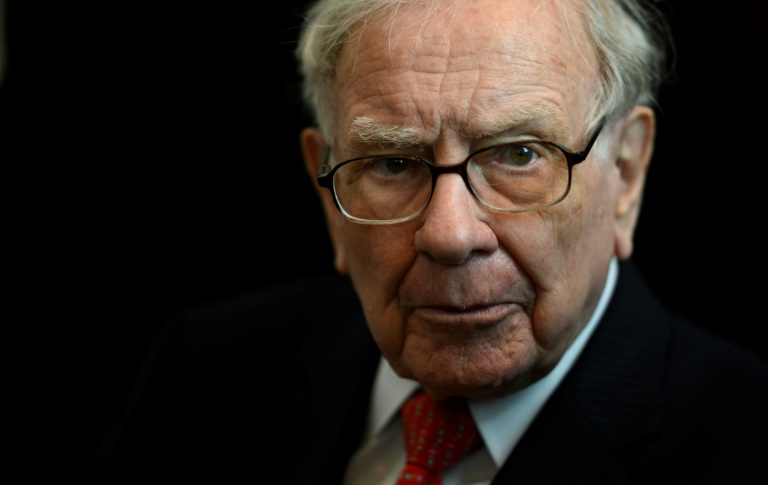
Billionaire investor Warren Buffett, CEO of Berkshire Hathaway, earned his massive fortune with savvy choices and personal frugality

Warren Buffett’s Berkshire Hathaway executed one of its most significant portfolio overhauls in years during the first quarter of 2026, selling stakes in 16 companies while initiating new positions and boosting others as Greg Abel assumed the CEO role.

The conglomerate’s equity portfolio contracted from about $274 billion to $263 billion, with the number of holdings dropping from around 40 to 29. Berkshire was a net seller, purchasing roughly $16 billion in stocks while selling $24 billion.

Buffett, who stepped down as CEO at the end of 2025 but remains chairman and involved in investment decisions, oversaw the transition period. The Q1 13F filing, released May 15, reflects Abel’s first full quarter leading day-to-day operations.

Key sales and complete exits

Advertisement

Berkshire fully exited several positions, including long-held or more recent stakes. Complete sells included Visa, Mastercard, UnitedHealth Group, Domino’s Pizza, Amazon, Aon, Pool Corp., and others such as Heico, Liberty Media entities, Charter Communications, Lamar Advertising, Allegion, Diageo, Liberty Latin America, and Atlanta Braves Holdings.

Visa and Mastercard exits totaled billions, reflecting a departure from payment processors. The remaining Amazon shares were sold after prior reductions. UnitedHealth and Domino’s also saw full liquidation.

Trimmed positions included Bank of America, Chevron (cut substantially), DaVita, Nucor, and Constellation Brands. Chevron’s reduction was among the largest adjustments despite remaining a top holding.

Notable buys and increases

Advertisement

Berkshire initiated new stakes in Delta Air Lines and Macy’s. The Delta position reached 39.8 million shares, valued at about $2.8 billion, marking a return to airlines after a full exit in 2020 during the pandemic.

The company significantly boosted its Alphabet holdings. Shares of Alphabet Class A (GOOGL) increased by more than 200%, reaching around 54.2 million shares worth roughly $15.6 billion. A new position in Alphabet Class C (GOOG) added about 3.6 million shares valued near $1 billion.

Berkshire also added to existing positions in Chubb and the New York Times, tripling its NYT stake in some reports from prior quarters.

Top holdings remain concentrated

Advertisement

The portfolio stayed highly concentrated, with the top five holdings — Apple, American Express, Coca-Cola, Bank of America, and Chevron — accounting for about 68% of the equity portfolio. Apple alone represented around 22%.

American Express held steady as a core long-term position. Coca-Cola, a decades-long holding, saw no major changes. These “core” names underscore continuity even amid broader adjustments.

Context of the transition

The moves come as Abel reshapes aspects of the portfolio, including unwinding certain positions previously associated with former managers Todd Combs and Ted Weschler. Combs left at the end of 2025.

Advertisement

Berkshire repurchased $234 million of its own shares in the quarter at 144% of book value. Cash levels remained elevated, consistent with recent trends of net stock sales.

Analysts note the portfolio’s concentration and focus on high-quality businesses with durable advantages. Many sales targeted higher-valuation or cyclical names, while additions like Delta reflect opportunistic buying in beaten-down sectors.

Market reaction and implications

The 13F disclosure prompted varied responses. Some investors viewed the Alphabet increase as a nod to technology and AI growth, despite Buffett’s historical caution toward the sector. Delta’s re-entry highlighted potential value in travel recovery.

Advertisement

Exits from payment giants and health care names like UnitedHealth raised questions about sector rotation. Shares of several sold companies saw limited immediate movement, though UnitedHealth traded lower in after-hours following the news.

As of late May 2026, Berkshire’s strategy continues emphasizing long-term value, capital allocation, and insurance float leverage. The company’s Japanese trading house investments, including stakes in companies like Mitsubishi and Marubeni, remain outside the U.S. equity 13F but contribute to overall returns.

Broader investment landscape

Berkshire’s activity occurs against a backdrop of elevated market valuations, interest rate uncertainty, and sector shifts driven by artificial intelligence and energy demand. The portfolio’s reduction in holdings reflects a more focused approach.

Advertisement

Buffett has reiterated in past communications the importance of buying wonderful businesses at fair prices and holding them long-term. While Abel steers day-to-day decisions, continuity with Buffett’s philosophy appears evident in core holdings.

Investors tracking Berkshire often use 13F filings as a delayed signal of strategy, though the conglomerate’s size limits agility compared to smaller funds. Future quarters will reveal whether Q1 changes represent a one-time reset or ongoing evolution.

Looking ahead in 2026

With half the year remaining, additional 13F updates will provide further insight into Berkshire’s direction under Abel. The company’s annual meeting in May offered shareholder perspectives, though specific stock picks remain disclosed quarterly.

Advertisement

Berkshire’s cash pile and operational strength provide flexibility for opportunistic deployments. Analysts will watch for activity in energy, financials, and consumer sectors where the firm has historically excelled.

As always, individual investors should conduct their own due diligence. Berkshire’s moves reflect its unique scale, time horizon, and risk tolerance rather than general recommendations. Stock prices fluctuate, and past performance is no guarantee of future results.

Continue Reading

Business

Buy on Dips Amid Strong Growth Despite Mixed Analyst Views

Published

on

Enlight Renewable Energy Stock 2026 Outlook: Buy on Dips Amid

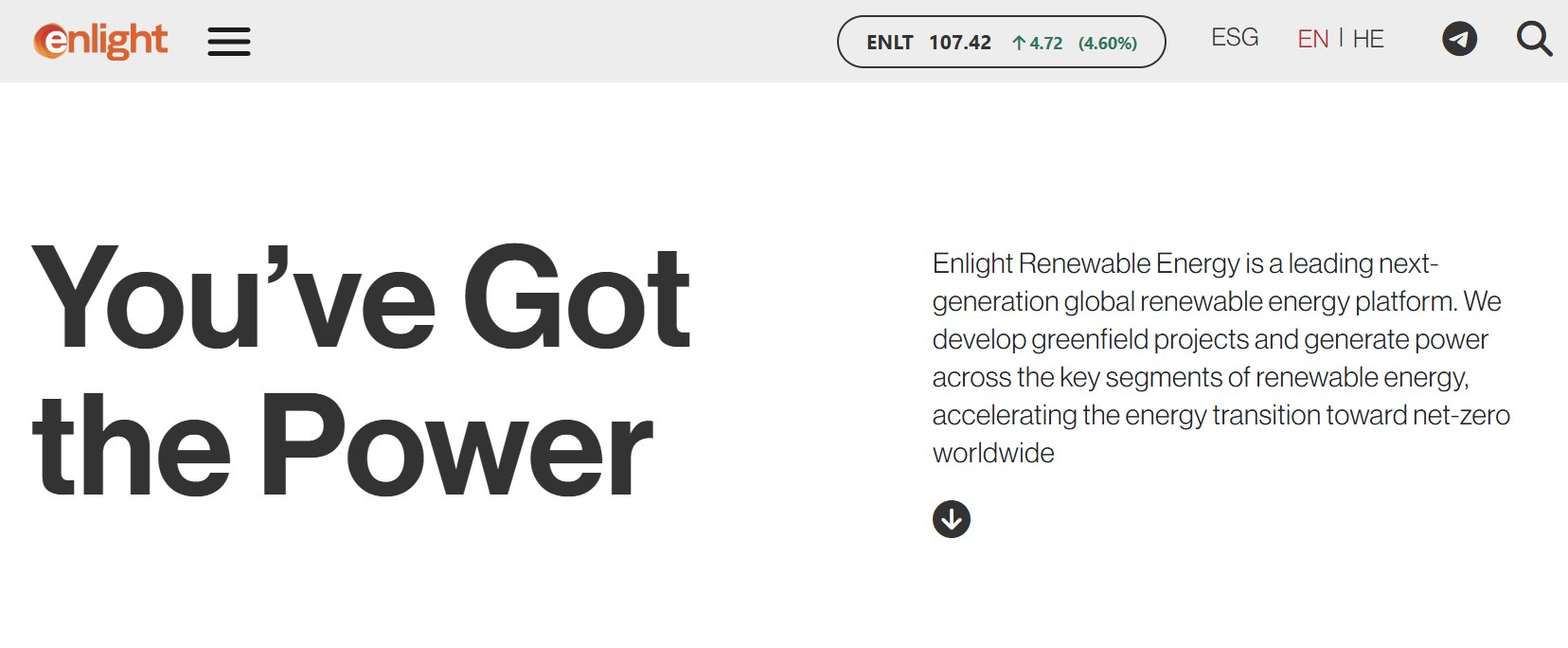
Enlight Renewable Energy Ltd. (NASDAQ: ENLT) presents a nuanced investment case in 2026, with robust project execution and revenue growth supporting a cautious buy recommendation for long-term investors, even as Wall Street maintains a consensus hold rating amid valuation concerns.

The Israeli developer of solar, wind and energy storage projects has seen its shares trade near $102-$103 recently, reflecting strong momentum from U.S. expansion and favorable renewable energy tailwinds. However, analyst price targets average around $60 to $80, implying potential downside from current levels, with some firms highlighting overvaluation risks.

Strong Q1 results and reaffirmed guidance

Enlight reported impressive first-quarter results on May 5, with total revenues and income reaching $200 million, up 54% from the prior year. Adjusted EBITDA climbed to $154 million, and the company delivered a 58% increase in that metric on an adjusted basis excluding one-time gains.

Advertisement

CEO Adi Leviatan highlighted the performance in post-earnings commentary. “2026 is off to a strong start, reflected in consistent and impressive over 50% growth across Enlight’s financial metrics.”

The company reaffirmed its full-year 2026 guidance for total revenues and income between $755 million and $785 million — representing 32% growth — and adjusted EBITDA of $545 million to $565 million, up 27%. It also reiterated a target of more than $2.1 billion in annual revenue run-rate by the end of 2028.

Growth has been driven by new U.S. projects, higher electricity sales, improved wind conditions and tax benefits under the Inflation Reduction Act. The portfolio stands at approximately 5 GW operational or under construction, with significant exposure to solar-plus-storage developments.

U.S. expansion and major contracts

Advertisement

A key highlight came on May 26 when Enlight, through its U.S. subsidiary Clēnera, finalized a 200 MW AC solar power purchase agreement with Google for the Solstice project in Oklahoma. The 15-year fixed-price contract supports data center operations and marks an expansion beyond traditional utility customers.

Leviatan described the deal as a milestone. “By signing this agreement with Google, we are expanding our U.S. customer base beyond utilities to large load commercial customers, including the fast-growing data center sector.”

Analysts point to the U.S. as a primary growth engine, fueled by surging electricity demand from data centers, artificial intelligence infrastructure and manufacturing reshoring. Enlight benefits from long-term power purchase agreements that provide revenue visibility and from federal tax credits.

The company’s diversified portfolio spans Israel, Europe and the United States, with a focus on utility-scale projects that combine generation and storage for grid stability.

Advertisement

Analyst perspectives and valuation

Wall Street opinions remain divided. UBS recently raised its price target to $123 from $105 while maintaining a Buy rating, citing upside from project execution. Other firms like JP Morgan have held Underweight ratings with targets around $68.

Consensus across roughly seven analysts stands at Hold, with an average 12-month price target near $60-$80, suggesting potential moderation from current trading levels. Some models flag the stock as overvalued on traditional metrics such as price-to-earnings, which sits elevated due to growth expectations already priced in.

Supporters argue that discounted cash flow models show undervaluation when factoring in the secured pipeline and visible cash flows. One analysis indicated a potential 45% undervaluation based on long-term projections.

Advertisement

Shares have delivered substantial gains over the past year but remain volatile, typical for growth-oriented renewable developers sensitive to interest rates, policy shifts and commodity prices.

Financial strength and balance sheet

Enlight raised approximately $740 million in capital during the first quarter, bolstering liquidity to around $709 million at the parent level. Operating cash flow rose 58% to $100 million, supporting project development and debt management.

The company maintains a disciplined approach to capital allocation, selling down stakes in certain assets to recycle capital while retaining operational control. Net income for Q1 came in at $38 million, impacted by prior-year one-time gains but showing underlying improvement.

Advertisement

Risks include high debt levels associated with project financing, exposure to geopolitical tensions in Israel, regulatory changes affecting tax incentives, and execution challenges in bringing large projects online. Supply chain issues and interest rate volatility could also pressure margins.

Investment considerations for 2026

For investors evaluating buy or sell decisions, Enlight suits those with a long-term horizon bullish on renewables. The stock may appeal on pullbacks closer to analyst targets, offering entry into a company with visible growth from contracted projects and data center demand.

Income-focused investors should note that Enlight does not currently pay a dividend, prioritizing reinvestment. Growth investors highlight the path to multi-gigawatt scale and potential upside from storage co-location, which commands premium pricing.

Advertisement

Shorter-term traders may exercise caution given mixed ratings and the premium valuation. Broader market sentiment toward renewables, influenced by potential policy shifts in Washington, will play a role.

Recent options activity has shown bullish sentiment with higher call volume, though overall analyst coverage remains balanced between optimism on fundamentals and skepticism on price.

Broader industry context

Enlight operates in a sector benefiting from global decarbonization goals and energy security needs. Rising electricity demand, particularly from tech giants, positions developers with ready sites and execution track records favorably. Equipment costs have moderated, improving project economics.

Advertisement

Challenges persist, including interconnection queues, permitting delays and competition from larger players. Enlight’s focus on the U.S. market, where policy support remains relatively intact, provides a buffer.

As of late May, shares closed around $102-$103. Trading volume and volatility reflect ongoing interest in clean energy names amid fluctuating oil prices and economic data.

Conclusion and forward look

Enlight Renewable Energy enters the remainder of 2026 with momentum from strong quarterly results, major corporate contracts and a clear pipeline. While consensus leans hold due to valuation, bullish analysts see substantial upside for patient investors.

Advertisement

The company’s ability to execute on its 2028 run-rate target will be key. Success in delivering projects on time and within budget could validate higher multiples. Investors should monitor upcoming project milestones, interest rate trends and any updates on U.S. energy policy.

As always, decisions should align with individual risk tolerance, portfolio diversification and consultation with financial advisors. Stock prices fluctuate, and past performance offers no guarantee of future results. This overview draws from publicly available analyst reports and company disclosures as of May 30, 2026.

Continue Reading

Business

FDL: Regular Dividends And Relative Value (Reaffirming Buy) (NYSEARCA:FDL)

Published

on

FDL: Regular Dividends And Relative Value (Reaffirming Buy) (NYSEARCA:FDL)

This article was written by

I have been managing investments for over eight years in capital markets. By qualification I am a CFA Charter holder. I primarily look for discrepancies between the price and value of a security. With a focus on first-principal mindset, I try breaking down ideas into their core- most tangible parts, affecting the theses while deliberately avoiding the non-significant matter into crowding the analysis. If you like my ideas or frameworks, reach out via email/message for more granular and concentrated- portfolio level specific investment researches and ideas. I am at prakhar@shrihittruealphacapital.com.

Analyst’s Disclosure: I/we have no stock, option or similar derivative position in any of the companies mentioned, and no plans to initiate any such positions within the next 72 hours. I wrote this article myself, and it expresses my own opinions. I am not receiving compensation for it (other than from Seeking Alpha). I have no business relationship with any company whose stock is mentioned in this article.

Readers are advised to fact-check thoroughly before making any investment-related decisions; this reflects the personal views of the author and should not be pursued as formal financial or investment advice in any manner. While every effort has been made to ensure accuracy, errors may exist in the data and financial projections presented. The author is not responsible for any financial gains or losses incurred from investments made based on this content.

Advertisement

Seeking Alpha’s Disclosure: Past performance is no guarantee of future results. No recommendation or advice is being given as to whether any investment is suitable for a particular investor. Any views or opinions expressed above may not reflect those of Seeking Alpha as a whole. Seeking Alpha is not a licensed securities dealer, broker or US investment adviser or investment bank. Our analysts are third party authors that include both professional investors and individual investors who may not be licensed or certified by any institute or regulatory body.

Continue Reading

Business

Analysts Favor Buy as Earnings Growth and Innovation Drive Stability

Published

on

McDonald's is the latest US organization to rethink its diversity practices following a Supreme Court ruling that reversed affirmitive action in university admissions

Coca-Cola Co. enters the second half of 2026 with resilient performance, prompting Wall Street analysts to maintain a broadly bullish stance on its shares despite macroeconomic pressures and shifting consumer tastes.

The beverage giant, trading around $79 recently, benefits from consistent volume growth, pricing power and a strong dividend history that appeals to income-focused investors. Consensus among roughly 15 analysts points to a “Buy” rating, with average 12-month price targets clustering near $86 to $88 — implying potential upside of about 9% to 12% from late-May levels.

Coca-Cola’s first-quarter results, released in late April, underscored its defensive qualities. Net revenues climbed 12% to $12.5 billion, while organic revenues rose 10%. Comparable earnings per share jumped 18% to 86 cents, beating expectations. Global unit case volume grew 3%.

The company raised its full-year 2026 guidance for comparable EPS growth to 8% to 9% from a prior 7% to 8% range, while holding organic revenue growth at 4% to 5%. Management cited resilient consumer demand in many markets and effective cost management.

Advertisement

New leadership eyes faster adaptation

Henrique Braun, who assumed the CEO role in late March after succeeding James Quincey, has emphasized accelerating innovation. In February remarks ahead of the transition, Braun stressed the need to respond to evolving preferences, including demand for lower-sugar options amid the rise of weight-loss drugs.

“We need to get closer to the consumer and improve our speed to market,” Braun said. “While we have made some progress with our overall success rates over the past several years, our innovation today is not where it needs to be.”

This push aligns with Coca-Cola’s broader strategy to expand beyond traditional carbonated soft drinks into teas, waters, sports drinks, juices and functional beverages. The company has invested in product development to capture growth in emerging categories while protecting its core brands like Coca-Cola, Sprite and Fanta.

Advertisement

Analysts highlight the company’s pricing discipline and geographic diversification as key strengths. Emerging markets in Asia, Latin America and Africa continue to offer long-term volume upside as middle-class populations expand and per-capita consumption remains below developed-market levels.

Financial resilience amid headwinds

Coca-Cola’s balance sheet remains solid. The company generates robust free cash flow — approximately $1.8 billion in the first quarter alone — supporting its dividend, currently yielding around 3%. Its net debt leverage sits comfortably below target levels.

Yet challenges persist. Inflationary pressures, currency volatility in certain regions and cautious consumer spending in developed markets have tempered growth expectations. Some categories face competition from private labels and health-focused alternatives. Geopolitical tensions and supply-chain issues add layers of uncertainty.

Advertisement

Braun acknowledged these dynamics in post-earnings commentary, noting that while many consumers remain resilient, others face pressure from persistent inflation and macroeconomic uncertainty.

The stock has delivered steady gains in 2026 so far, outperforming broader market benchmarks at times, though it remains sensitive to interest-rate movements given its premium valuation. Shares trade at a forward price-to-earnings multiple in the mid-20s, reflecting investor confidence in its moat but leaving limited room for error.

Analyst perspectives and price targets

Major firms maintain positive outlooks. Recent targets range from lows near $80 to highs of $92. Barclays, Citigroup and others have issued upbeat notes citing brand strength and execution.

Advertisement

MarketBeat data shows 15 buy ratings with no sells in recent coverage. The average target of around $86.80 suggests moderate but reliable upside. Longer-term models project continued mid-single-digit revenue growth and EPS expansion into the late 2020s, driven by efficiency gains and portfolio optimization.

Value-oriented investors point to Coca-Cola’s status as a classic defensive play. Its products enjoy near-universal recognition, and the bottling system provides operational leverage. Dividend aristocrat status — with decades of increases — supports its appeal for retirement portfolios.

Growth investors, meanwhile, focus on digital transformation initiatives, sustainability efforts in packaging and water stewardship, and potential in ready-to-drink coffee and energy drinks.

Risks to monitor

Advertisement

Potential downsides include a sharper-than-expected slowdown in consumer spending, adverse rulings in ongoing tax disputes, or failure to innovate quickly enough in health-conscious segments. An escalation in global trade tensions could pressure input costs or currency translation.

Analysts generally view these risks as manageable given Coca-Cola’s scale, pricing power and history of navigating cycles. The company has consistently beaten earnings estimates in recent quarters.

Investment considerations for 2026

For investors weighing buy or sell decisions, Coca-Cola presents a case for accumulation on dips rather than aggressive new purchases at current levels, according to several models. Its stability suits conservative portfolios seeking income and modest capital appreciation.

Advertisement

Those with shorter horizons may prefer waiting for pullbacks closer to the lower end of analyst targets. Long-term holders benefit from the total return potential of dividends reinvested over time.

Coca-Cola’s trajectory in the remainder of 2026 will hinge on execution under Braun’s leadership, macroeconomic conditions and the success of new product launches. With a fortress balance sheet and iconic brands, the company is well-positioned to deliver for shareholders seeking reliability in an uncertain environment.

The stock closed at $79.01 on May 29. Volume and volatility remain typical for a large-cap consumer staple.

As always, individual investors should consider their risk tolerance, time horizon and consult financial advisers. Past performance does not guarantee future results, and stock prices can fluctuate.

Advertisement
Continue Reading

Business

Tiny Guyana poised for big Iran oil gains and growth strains

Published

on

Tiny Guyana poised for big Iran oil gains and growth strains


Tiny Guyana poised for big Iran oil gains and growth strains

Continue Reading

Trending

Copyright © 2025