
Business
Dealmakers navigate tighter terrain




WASHINGTON — The U.S. naval blockade of Iranian ports along the Strait of Hormuz entered its third day Thursday with American forces turning back at least 13 vessels, according to Pentagon officials, as diplomatic efforts to extend a fragile ceasefire showed signs of strain and Iran issued fresh threats to disrupt shipping across the Persian Gulf and Red Sea.

Defense Secretary Pete Hegseth told reporters at the Pentagon that the blockade, which began Monday, remains “fully implemented and effective,” with no Iranian-linked ships successfully exiting or entering targeted ports since enforcement ramped up. Central Command confirmed that U.S. Navy assets, including destroyers and support vessels from the USS George H.W. Bush carrier strike group, have intercepted and redirected multiple tankers attempting to depart Iranian waters.
The operation targets all maritime traffic to and from Iranian ports and coastal areas while allowing neutral transit through the international waters of the Strait of Hormuz itself. Ship-tracking data from firms such as Kpler and Vortexa showed sharply reduced activity, with marine traffic down more than 90 percent from pre-war averages of over 100 vessels daily. Some non-Iranian tankers continued limited passages, but Iran-linked vessels largely remained stalled or turned away.
The blockade forms a key pressure point in the ongoing Iran war that erupted Feb. 28 with U.S.-Israeli strikes on Iranian leadership, missile sites and nuclear facilities. Iran retaliated by effectively shutting the strait to most commercial traffic, disrupting roughly 20 percent of global oil trade and contributing to spikes in energy prices. A two-week ceasefire brokered by Pakistan took effect April 8, pausing direct U.S.-Iran exchanges, but the truce faces expiration April 21 without a breakthrough on nuclear issues or reopening the waterway.
Pentagon briefings Thursday highlighted minesweeping operations to counter potential Iranian threats, with officials warning that Tehran retains the capability to deploy sea mines, fast-attack boats and missiles despite heavy losses to its navy and air defenses earlier in the conflict. Gen. Dan Caine, briefing reporters, said the U.S. has “maximal posture” in the region and stands ready to respond to any provocation.
Iranian officials condemned the blockade as “economic terrorism” and threatened to halt all trade in the Persian Gulf, Gulf of Oman and Red Sea if it continues. State media claimed at least one supertanker and a bulk carrier carrying food supplies successfully transited the strait, though independent tracking data offered conflicting accounts. A Chinese oil tanker reportedly defied the measures in one instance, prompting Beijing to label the U.S. action “dangerous and irresponsible” while simultaneously urging Iran to reopen the strait.
The economic stakes remain enormous. The Strait of Hormuz serves as the conduit for about one-fifth of the world’s traded oil and significant volumes of liquefied natural gas. Disruptions have already driven oil prices above $100 per barrel at times, fueling inflation concerns and straining global supply chains. Former UK officials warned of a potential humanitarian crisis in Iran and neighboring countries if the waterway stays blocked for an extended period, citing risks to food and fuel imports.
President Donald Trump described the blockade as a “brilliant strategy” to force Iran toward a deal, claiming China is “very happy” with U.S. efforts to secure the strait and that Beijing has agreed not to supply weapons to Tehran. Trump signaled possible new talks in the coming days, stating the situation is “close to over” if Iran accepts terms on its nuclear program.
However, Defense Secretary Hegseth escalated rhetoric, warning that the U.S. is prepared to strike Iranian energy infrastructure if Tehran rejects a peace deal before the ceasefire deadline. He emphasized the blockade will continue “as long as it takes” to cut off Iran’s oil revenue.
Pakistan continued mediation efforts, with its army chief meeting Iranian officials in Tehran on Thursday. Separate rare direct talks between Israeli and Lebanese leaders were expected, though Hezbollah’s exclusion raised doubts about broader de-escalation. Parallel Israeli operations against Hezbollah in Lebanon have continued despite the U.S.-Iran truce, adding complexity to regional dynamics.
Maritime security firms reported cautious navigation, with many vessels opting for longer routes or delaying transits due to risk. Some tankers loitered near the strait’s entrances, while others used alternative paths announced by Iran earlier in the conflict. Minesweeping by U.S. and allied forces has become a priority to mitigate hazards that could prolong disruptions even after any political resolution.
International reactions varied. China pushed back against the blockade while pressing Iran to restore normal traffic, reflecting Beijing’s heavy reliance on Gulf oil. European allies expressed concern over energy price volatility and called for de-escalation. The International Monetary Fund outlined adverse scenarios involving prolonged strait closure, warning of higher inflation, tighter financial conditions and potential macro instability extending into 2027.
Oil markets showed mixed movement Thursday, with Brent crude fluctuating as traders balanced blockade effectiveness against ceasefire hopes. Energy analysts noted that even partial normalization could take weeks due to insurance issues, crew concerns and physical hazards like mines.
Inside Iran, the regime faces mounting internal pressure from economic isolation and military setbacks. The death of Supreme Leader Ali Khamenei in early strikes led to a leadership transition, with the government projecting defiance while dealing with blackouts, internet disruptions and civilian casualties from the initial campaign.
For global shipping, the strait’s vulnerability underscores long-standing concerns about chokepoints in critical trade routes. Experts emphasized that no single actor fully controls the waterway, which spans territorial waters of Iran and Oman, complicating enforcement and legal questions under international maritime law.
As the ceasefire deadline approaches, the blockade serves as both leverage and risk. Success in forcing concessions could hasten an end to hostilities, but any miscalculation risks renewed direct confrontation, mine incidents or proxy attacks that further disrupt shipping from the Gulf to the Red Sea.
Pentagon officials stressed the operation’s impartial enforcement against all nations’ vessels tied to Iranian ports, aiming to maximize economic pressure without broader escalation. Additional U.S. assets, including a third carrier strike group and minesweepers, have bolstered regional presence.
For now, the Strait of Hormuz remains a tense flashpoint where military posturing, diplomatic maneuvering and economic consequences intersect. Whether the blockade accelerates a deal or prolongs instability will likely shape oil markets, global inflation and regional security for months to come.
Analysts urged vigilance, noting that even limited incidents could spike insurance premiums and reroute trade with lasting effects on energy costs worldwide. With talks ongoing and the ceasefire window narrowing, Thursday’s developments offered cautious hope for resolution alongside persistent risks of renewed disruption.

Oncology institute director Kaushal sells $335k in stock
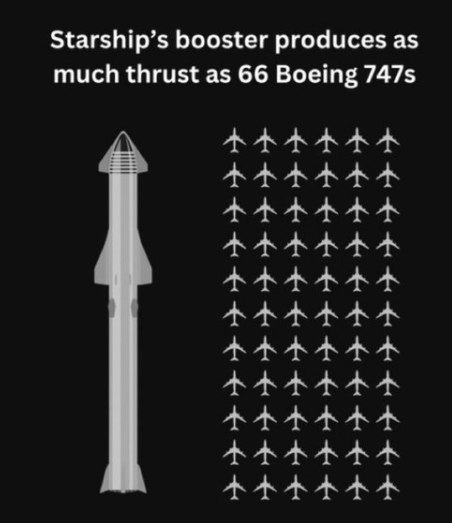
CAPE CANAVERAL, Fla. — A viral X post by Elon Musk showcasing SpaceX’s Starship Super Heavy Booster being transported across the Texas landscape has captivated millions, with the tech mogul declaring it the most powerful moving object ever built by humanity and sparking fresh awe over the rapid pace of reusable rocket technology.

The post, which quickly amassed more than 660,000 views within hours of its Thursday morning upload, features striking imagery of the 230-foot-tall booster — the first stage of SpaceX’s fully reusable Starship system — inching forward on a massive transporter. Musk captioned an earlier image “Starship Super Heavy Booster, the most powerful moving object ever made by far,” prompting entrepreneur Arthur MacWaters to amplify the moment with the declaration: “most powerful moving object in all of human history hard to comprehend.”
The reaction online has been electric, with replies pouring in featuring slow-motion videos of the booster’s deliberate crawl, side-by-side comparisons to jumbo jets and even humorous debates over metric versus imperial measurements. One widely shared clip shows the 33 Raptor engines — each capable of generating thrust equivalent to dozens of Boeing 747s — mounted on the vehicle as it moves at a snail’s pace under careful control, underscoring the engineering feat required just to relocate the behemoth.
SpaceX engineers confirmed the booster captured in the footage is one of several Super Heavy prototypes undergoing ground testing and transport trials at the company’s Starbase facility in Boca Chica, Texas. The Super Heavy, also known as Booster 14 or similar iterations in the current flight-test campaign, stands as the most powerful rocket stage ever constructed. Its 33 methane-fueled Raptor engines deliver more than 16.5 million pounds of thrust at liftoff — roughly twice the power of NASA’s retired Space Shuttle or the Saturn V that carried astronauts to the moon.
The viral moment arrives at a pivotal time for SpaceX. Just weeks after completing its eighth integrated Starship flight test in late March 2026, the company is accelerating preparations for even more ambitious missions. Engineers have stacked multiple boosters and ships for upcoming static-fire tests, with Flight 9 targeted for early May. The program has already achieved several historic firsts: the first successful catch of a Super Heavy booster by the giant “Mechazilla” tower arms in January and the first controlled reentry and splashdown of the Starship upper stage in February.
Musk has repeatedly emphasized that rapid reusability is the key to unlocking affordable access to space. Unlike traditional expendable rockets that cost hundreds of millions per launch, Starship is designed to fly again within hours after refueling. The Super Heavy booster alone weighs more than 4,400 tons when fully fueled, yet the entire stack is engineered for full recovery and turnaround. Transporting such a massive object — even at walking speeds — requires custom-built crawlers, reinforced roads and precise coordination to avoid stressing the structure.
Aviation and rocketry experts were quick to contextualize the claim. The Super Heavy’s combined thrust exceeds that of any other operational vehicle on Earth, including the world’s largest cargo ships or the heaviest freight trains. When moving under its own power during static fires, it generates forces that literally shake the ground for miles around Starbase. “This isn’t hyperbole,” said aerospace analyst Laura Forczyk of Astralytical. “The physics of moving that much mass with that much controlled power has no precedent in human engineering.”
Public fascination reflects broader excitement around humanity’s renewed push into deep space. Starship is central to NASA’s Artemis program, with the vehicle slated to land the first woman and next man on the moon no later than 2028. Beyond government contracts, SpaceX envisions Starship enabling a permanent human presence on Mars. Musk has outlined timelines calling for uncrewed Mars missions as early as 2028 and crewed flights potentially in the early 2030s, provided regulatory and technical hurdles are cleared.
The booster’s sheer scale is difficult to convey without visuals. At 230 feet tall and 30 feet in diameter, it dwarfs the Statue of Liberty. Its nine steel “legs” for landing and the forest of Raptor engines create a silhouette that has become iconic in space imagery. During transport, the vehicle is secured horizontally or at slight angles on a transporter that itself weighs hundreds of tons, crawling along specially reinforced roads at speeds rarely exceeding 2 mph to minimize vibration and stress.
Social media reactions captured the sense of wonder. One user posted a side-by-side video comparing the booster’s movement to a 747 jumbo jet, noting the rocket stage generates more thrust while stationary than the aircraft does at takeoff. Another highlighted the engineering precision required to move such a colossus without damage. Replies also included lighthearted memes, with some users joking about the booster’s size relative to everyday objects or debating whether it qualifies as the “heaviest” or “most powerful” moving object when accounting for ships or trains.
SpaceX has not issued an official statement beyond Musk’s post, but company updates on X and its website confirm the booster in the images is part of the iterative design process leading to the next-generation Raptor 3 engines. These engines feature simplified manufacturing, higher chamber pressures and improved reliability — critical steps toward the 100-plus flights per year that Musk envisions for Starship to make Mars colonization economically viable.
The timing of the viral post also coincides with heightened global interest in space. With commercial satellite launches surging and private companies like Blue Origin and Rocket Lab pushing boundaries, Starship stands apart as the only system designed from the ground up for full reusability and interplanetary travel. Federal Aviation Administration regulators continue to work closely with SpaceX on licensing for future flights, balancing safety with the need for rapid iteration.
Critics have raised environmental concerns, noting the carbon footprint of Starship launches and the methane fuel. Supporters counter that the long-term payoff — reduced reliance on expendable rockets and eventual solar-powered Mars outposts — outweighs short-term impacts. NASA Administrator Bill Nelson praised the program’s progress in a recent statement, calling Starship “the most exciting development in human spaceflight since Apollo.”
As the booster continues its slow journey across the Starbase campus for further testing, the viral X moment serves as a reminder of how SpaceX has captured the public imagination. Musk’s decision to share unfiltered glimpses of development has become a hallmark of the company’s transparent — and sometimes chaotic — approach to innovation.
Looking ahead, SpaceX aims to conduct multiple Starship launches this year, including attempts to refuel the vehicle in orbit — a critical capability for lunar and Martian missions. Each successful test brings the dream of routine, affordable space travel closer to reality. For now, the image of the world’s most powerful moving object inching across the Texas coast stands as a powerful symbol of humanity’s growing ambition beyond Earth.
The post’s rapid spread across platforms underscores the enduring appeal of bold engineering feats in an era of geopolitical tension and technological acceleration. Whether Starship ultimately delivers on Musk’s vision of making humanity multiplanetary remains to be seen, but Thursday’s viral imagery has once again reminded the world that the future of space exploration is already rolling down the road — one deliberate, thunderous step at a time.

Aehr test systems director Posedel sells $1.21 million in stock
Business
Netflix Stock Dips Slightly Ahead of Crucial Q1 Earnings Report Expected to Show Strong Growth

LOS GATOS, Calif. — Netflix Inc. shares edged lower in early trading Thursday as investors braced for the streaming giant’s first-quarter earnings report, which analysts widely expect to highlight continued subscriber momentum, recent price hikes and accelerating advertising revenue.

The stock was quoted at $107.04, down 0.62 percent or 67 cents, shortly after the market open on April 16. It had closed the previous session at $107.71, up 1.35 percent on solid volume. The shares have rebounded from earlier 2026 lows near $75 but remain well below the all-time high above $134 reached in mid-2025.
Netflix is scheduled to release its Q1 2026 results after the market close Thursday, with a video interview featuring co-CEOs Ted Sarandos and Greg Peters, Chief Financial Officer Spence Neumann and other executives set for 4:45 p.m. EDT. Wall Street anticipates revenue of roughly $12.17 billion to $12.19 billion, representing more than 15 percent year-over-year growth, and earnings per share around 76 to 78 cents.
The streaming leader has transformed its business model in recent years, moving aggressively beyond pure subscription revenue. Password-sharing crackdowns that began in earnest in 2023 continued to fuel paid subscriber additions well into 2025, pushing the total user base past 300 million and toward 325 million by some estimates. The company has also expanded its ad-supported tier rapidly, with reports indicating it has reached tens of millions of monthly active users and is scaling faster than many analysts initially projected.
Recent price increases across U.S. plans, announced in late March, are expected to provide another lift to average revenue per user. Analysts at firms like KeyBanc and Wedbush have raised price targets on Netflix in recent days, citing stronger-than-expected ad momentum and resilient subscriber retention even after the hikes. One target moved to $115 from $108, while another climbed to $118.
“Netflix has successfully shifted from a high-growth subscriber chase to a more balanced focus on profitability and diversified revenue streams,” said one Wall Street analyst who covers the stock. “The ad tier is no longer an experiment — it’s becoming a meaningful contributor, and the password changes unlocked significant latent demand that converted into paying accounts.”
Yet challenges remain. Content spending is projected to rise, with some forecasts pointing to a 10 percent increase to around $20 billion for the full year as Netflix invests in originals, licensed titles and international productions. Operating margins are expected to hold steady near 32 percent in the first quarter, but any guidance on acceleration or pressure could move the stock sharply after hours.
The company also navigated the collapse of a potential major deal earlier in the year involving Warner Bros. Discovery, which had been speculated upon but ultimately fell through. That news, combined with broader market volatility, contributed to the stock’s pullback from 2025 peaks. Still, Netflix has outperformed the broader market in 2026 so far, with shares up modestly year to date despite a choppy start to the year.
In the content arena, April has brought a robust slate of new releases designed to keep viewers engaged. Returning favorites include Season 2 of the Emmy-winning “Beef” with a fresh cast featuring Carey Mulligan and Oscar Isaac, Season 3 of the YA hit “XO, Kitty,” and new installments of “Running Point.” Original films and series such as Charlize Theron’s action-thriller “Apex,” an animated “Stranger Things” spinoff titled “Tales From ’85,” and various international productions are rolling out throughout the month.
Licensed catalog additions include classics like “Bohemian Rhapsody,” “American Gangster” and several “Mission: Impossible” entries, alongside family fare such as the “Madagascar” franchise. These drops aim to drive engagement across all tiers, including the ad-supported plan that offers a lower price point in exchange for commercials.
Netflix’s shift toward advertising has drawn comparisons to rivals like YouTube, which recently raised prices on its premium tier while boasting over 125 million subscribers. Analysts note that Netflix’s ad tier growth could help offset any potential slowdown in pure subscriber adds as the password-sharing crackdown effect matures.
“Subscriber growth should moderate from the explosive post-crackdown numbers, but that’s by design,” one preview report noted. “The real story will be how quickly the ad business scales and whether recent price adjustments stick without significant churn.”
Broader industry dynamics also loom. Competition from Disney+, Amazon Prime Video, Max and others remains fierce, but Netflix has maintained its position as the largest pure-play streamer. Its focus on global expansion, particularly in markets like India and other emerging regions, has helped diversify revenue away from saturated U.S. and European bases.
Financially, Netflix ended 2025 with strong results, including double-digit revenue growth and healthy net income gains. The Q4 2025 report showed an earnings beat, setting a positive tone heading into 2026. Consensus forecasts for the full year call for continued expansion, with some models projecting revenue approaching $51 billion and operating margins climbing toward 34 percent or higher over time.
Investor sentiment appears cautiously optimistic. Of 34 analysts tracked by one service, the consensus rating remains “Buy,” though long-term price targets vary widely depending on assumptions about ad revenue contribution and content efficiency. Some models see fair value near $120 or more in the near term, implying upside from current levels, while others warn of valuation premiums given the stock’s history of volatility.
Options traders are pricing in a potential move of around 7 percent in either direction following the earnings release, reflecting the high stakes of the report. Implied volatility has ticked up in recent sessions as the April 16 deadline approached.
For consumers, Netflix continues to position itself as the go-to entertainment hub. The platform’s algorithm-driven recommendations, combined with a mix of blockbuster originals, international hits and nostalgic catalog titles, have helped sustain high engagement. Features like profiles for multiple household members and easy device switching support its “one household” policy post-password changes.
Looking ahead, the second quarter guidance will be closely watched. Analysts model revenue near $12.63 billion and EPS around 84 cents for Q2, with continued emphasis on free cash flow generation that has allowed Netflix to reduce debt and return capital through share buybacks in the past.
The company’s leadership has emphasized disciplined content investment, prioritizing high-return projects while exploring live events and other formats to differentiate from competitors. Co-CEO Sarandos has been vocal about the evolution of the TV and film landscape, including occasional appearances at industry events discussing theatrical windows and hybrid release strategies.
As markets await the after-hours release and conference, Netflix finds itself at a pivotal moment. Having navigated the transition from growth-at-all-costs to a mature, profitable business, the streaming pioneer must now prove it can sustain momentum amid economic uncertainty, rising content costs and intensifying competition.
Shares have traded in a 52-week range of $75.01 to $134.12, reflecting both the optimism around its business model overhaul and periodic concerns over valuation and execution risks. With a market capitalization exceeding $450 billion, any significant beat or miss could send ripples across the broader media and technology sectors.
Thursday’s report is expected to provide fresh data on paid net adds, regional breakdowns, ad tier penetration and updated full-year outlook. Investors will listen for commentary on the impact of recent U.S. price hikes, international pricing experiments and any updates on content pipeline or strategic initiatives.
Netflix has come a long way from its DVD-by-mail origins. Today, it stands as a dominant force in global entertainment, with hundreds of millions of viewers tuning in daily. Whether the Q1 numbers and forward guidance reinforce that leadership will likely determine the stock’s near-term trajectory.
In the meantime, subscribers can look forward to a content-rich spring, with more originals and catalog gems arriving to keep households entertained — and hopefully loyal — across ad and ad-free plans alike.

Firms say digital twins make staff more productive, but are they a potential legal minefield?

Scales Corporation Limited (SCLZF) Shareholder/Analyst Call – Slideshow

Kurt ‘CyberGuy’ Knutsson discusses online dangers for children and rising concerns over kids using A.I. toys on ‘The Bottom Line.’
More than 50,000 pet laser toys are being recalled across the U.S. after officials warned they pose a “serious risk of injury or death” to children.
The recall affects about 51,160 “Lil’ Buddies Pet Laser Toys” sold by Los Angeles-based JC Sales. The products fail to meet mandatory safety standards for items containing button cell and coin batteries, according to a Thursday notice from the United States Consumer Product Safety Commission (CPSC).
The agency said the toys have a dangerously unsecured battery compartment, allowing small batteries to become easily accessible to children.
MASSIVE HONDA RECALL IMPACTS 440K VEHICLES OVER AIRBAGS POTENTIALLY DEPLOYING ‘UNEXPECTEDLY’

Los Angeles-based company JC Sales is recalling about 51,160 units of its “Lil’ Buddies Pet Laser Toys.” (United States Consumer Product Safety Commission)
“The recalled pet toys violate the mandatory standard for consumer products with button cell and coin batteries because the battery compartment is not secure, making the button cell batteries easily accessible to children, posing a deadly ingestion hazard,” the notice states.
Officials also noted the products were not sold in child-resistant packaging and lack the required hazard warnings.
Button cell and coin batteries can be extremely dangerous if swallowed, potentially causing internal burns, serious injuries or death, according to the notice.
5,000 INFANT CAR SEATS SOLD AT TARGET, WALMART RECALLED DUE TO INJURY RISK

Regulators also noted the products were not sold in child-resistant packaging and lack the required hazard warnings. (United States Consumer Product Safety Commission)
The affected toys — which feature model number 24496 — are white with blue paw print designs and were sold with three button cell batteries included.
Manufactured in China, they were sold nationwide at retailers including VR Wholesale in Arizona and Viva Bargain in California, as well as online at jcsalesweb.com, from February 2023 through November 2025 for about $1.
No injuries have been reported to date.
350K SUPPLEMENTS RECALLED FOR PACKAGING FLAW THAT POSES ‘SERIOUS INJURY OR DEATH’ RISK TO CHILDREN

A man entertains two cats with a laser pointer. (iStock / iStock)
Consumers are urged to stop using the recalled products immediately and contact JC Sales for a full refund.
CLICK HERE TO GET FOX BUSINESS ON THE GO
The recall comes amid a string of recent consumer product safety alerts.
More than 5,000 Graco infant car seats sold at Target, Walmart and other major retailers are also being recalled nationwide after the company and federal regulators flagged a potential injury risk linked to the seat base.
Business
Rumble Stock Rockets 18 Percent as Video Platform Launches Exchange Offer for AI Powerhouse Northern Data

LONG BOAT KEY, Fla. — Rumble Inc. shares exploded higher Thursday after the conservative-leaning video platform formally launched an exchange offer to acquire German artificial intelligence infrastructure company Northern Data AG, a move that would significantly expand its cloud and high-performance computing capabilities amid surging demand for AI resources.

The stock was quoted at $6.59, up 18.10 percent or $1.01, in morning trading on April 16. Volume surged as investors piled in, pushing shares well above the previous day’s close of $5.58. The rally built on recent momentum following the April 13 announcement of the exchange offer, which aims to create a unified video, cloud and AI growth platform.
Rumble, which positions itself as a “freedom-first” alternative to mainstream video platforms, said the proposed business combination would integrate its rapidly growing video-sharing, advertising and cloud services with Northern Data’s specialized GPU assets and data center footprint in Europe. The deal, structured as a voluntary public exchange offer to Northern Data shareholders, is expected to close in the second quarter of 2026 if accepted.
“This transaction represents a transformative step for Rumble as we accelerate our AI and cloud ambitions while strengthening our position in the global video and infrastructure markets,” Rumble executives stated in the April 13 release. The company highlighted Northern Data’s large collection of graphics processing units, which are critical for AI training, inference and high-performance computing tasks.
Northern Data’s GPU utilization is projected to reach approximately 85 percent by the end of the first quarter of 2026, according to earlier guidance. Combining that capacity with Rumble’s existing Rumble Cloud infrastructure-as-a-service offerings — which include compute, storage, security and networking — could position the combined entity as a formidable player in the AI infrastructure space.
The news comes as Rumble continues to build on its first full year of revenue exceeding $100 million. For 2025, the company reported $100.6 million in revenue, up 5 percent from the prior year and marking a key milestone. Fourth-quarter revenue reached $27.1 million, reflecting 9 percent sequential growth despite a year-over-year dip, driven partly by audience monetization trends.
Average global monthly active users climbed to 52 million in the fourth quarter, an 11 percent increase from the third quarter. The company has also expanded its advertising efforts, naming Greg Sherrill as president of sales for Rumble Advertising earlier in the year and pursuing brand deals with major players including Netflix and Amazon Prime Video.
Rumble’s platform includes Rumble Video for free and subscription-based sharing and livestreaming, Rumble Studio for creator tools, the Rumble Advertising Center marketplace, a non-custodial crypto wallet and cloud services. It has carved out a niche among creators seeking fewer content restrictions, attracting a sizable conservative and independent audience that has helped fuel user growth even as mainstream platforms face scrutiny over moderation policies.
The Northern Data deal builds on earlier momentum around the acquisition. Rumble had signaled interest in the combination late last year, with shares reacting positively at multiple points as details emerged. The formal exchange offer launch on April 13 reignited enthusiasm, especially as AI infrastructure remains a hot sector with hyperscalers and tech giants competing for GPU capacity.
Analysts view the move as a strategic pivot that could diversify revenue beyond advertising and subscriptions while leveraging Rumble’s “neutral” platform ethos in the cloud space. By gaining access to European data centers and advanced computing resources, Rumble aims to accelerate international expansion, enhance its AI roadmap for creators and improve video processing and recommendation capabilities.
“This isn’t just about adding GPUs — it’s about building an end-to-end infrastructure stack that supports everything from content delivery to AI-powered features,” one technology analyst noted. “For a company that has faced challenges scaling against Big Tech giants, securing dedicated high-performance assets could be game-changing.”
Financially, Rumble ended 2025 with solid liquidity of about $256 million, including cash and Bitcoin holdings, providing a buffer for integration costs and growth initiatives. However, the company has posted ongoing net losses, with a fourth-quarter net loss of $32.7 million. Adjusted EBITDA losses narrowed somewhat but remain a focus as executives emphasize path-to-profitability efforts through higher-margin cloud and advertising segments.
The stock has been volatile in 2026. It hit a 52-week low near $4.67 earlier in the year before rebounding on acquisition news and broader AI enthusiasm. Thursday’s surge pushed shares toward levels not seen consistently since late 2025, though they remain far below the all-time highs above $16 reached in 2022 shortly after going public via a SPAC merger.
Challenges persist. Competition in video streaming is intense, with YouTube dominating market share and traditional platforms like Netflix expanding into short-form and creator content. Rumble’s ad revenue, while growing, faces pressure from fluctuating user monetization rates. The company has also navigated regulatory and political scrutiny given its user base and free-speech positioning.
Broader market sentiment around alternative tech platforms has improved in recent months, particularly as debates over content moderation and platform neutrality continue. Partnerships such as Rumble Cloud’s collaboration with the Cleveland Browns for infrastructure needs demonstrate expanding enterprise interest beyond its core creator community.
Investors will watch closely for updates on the exchange offer’s acceptance rate and any regulatory approvals required in Germany or elsewhere. Northern Data shareholders will have the opportunity to tender shares in exchange for Rumble stock, with the final terms depending on participation levels.
If completed, the deal could materially boost Rumble’s computational capacity and open new revenue streams in AI-as-a-service or cloud hosting for other platforms. Executives have pointed to potential synergies in using Northern Data’s assets to power advanced video features, such as real-time translation, enhanced search or AI-generated content tools for creators.
Rumble founder and CEO Chris Pavlovski has long emphasized building independent infrastructure to avoid reliance on Big Tech cloud providers. The Northern Data combination aligns with that vision, potentially making Rumble more resilient to external pressures while tapping into the multi-billion-dollar AI infrastructure boom.
Looking ahead, the company is preparing for its next earnings release, expected in May, which will likely include early commentary on integration progress and updated guidance. Analysts project continued revenue growth but note that profitability timelines depend on successful execution of strategic initiatives like the acquisition and advertising expansion.
Options activity around Rumble has increased in recent sessions, reflecting heightened trader interest in the volatile name. Implied volatility remains elevated, consistent with the stock’s history of sharp moves on company-specific news.
For creators and users, the potential combination signals Rumble’s commitment to investing in technology that could improve upload speeds, livestream quality and overall platform experience. The company already claims one of the fastest video players in the industry and continues to add features like enhanced monetization tools.
Rumble’s story reflects the evolving media landscape, where niche platforms challenge incumbents by offering different value propositions — in this case, greater creator control and reduced censorship risks. While its market share remains modest compared to YouTube, steady user growth and strategic moves into cloud and AI suggest ambitions beyond pure video hosting.
Thursday’s rally underscores investor appetite for companies blending social media, content and emerging technologies like AI infrastructure. Whether the Northern Data deal delivers on its promise will depend on integration success, GPU market dynamics and Rumble’s ability to convert technical assets into sustainable revenue.
As trading continued, shares held most of their gains, with some profit-taking evident near the session high. The move came amid broader market choppiness but stood out as one of the day’s top percentage gainers on the Nasdaq.
Rumble Inc., headquartered in Longboat Key with roots in Canada, has grown from a small video-sharing site founded in 2013 into a publicly traded company with ambitions to disrupt multiple tech verticals. The Northern Data transaction, if successful, could mark its most significant corporate milestone since going public.
Investors and analysts alike will monitor developments closely in the coming weeks. For now, the market appears to be rewarding Rumble’s bold bet on combining video prowess with AI infrastructure at a time when both sectors command premium valuations.
Samsara CEO Sanjit Biswas sells $7.15m in shares

Charles Schwab Announces Rollout of Spot BTC and ETH Trading for Retail Clients
Billy Ray Cyrus Defends Performing for Presidents of Both Parties

Bid to build new indoor horse-riding area on outskirts of Cardiff


-

 Politics6 days ago
US brings back mandatory military draft registration
-
 Sports6 days ago
Man United discover Nico Schlotterbeck transfer fee as defender reaches Dortmund agreement
-

 Fashion6 days ago
Weekend Open Thread: Veronica Beard
-

 Politics7 days ago
Malcolm In The Middle OG Turned Down ‘Buckets Of Money’ To Appear In Reboot
-

 Politics4 days ago
World Cup exit makes Italy enter crisis mode
-

 Business6 days ago
Tesla Model Y Tops China Auto Sales in March 2026 With 39,827 Registrations, Beating Cheaper EVs and Gas Cars
-

 Crypto World3 days ago
The SEC Conditionalises DeFi Platforms to Be Avoided for Broker Registration
-

 Crypto World3 days ago
SEC Signals Exemption for Crypto Interfaces From Broker Registration
-

 News Videos2 days ago
Secure crypto trading starts with an FIU-registered
-
 NewsBeat4 days ago
Pep Guardiola and Gary Neville agree over Arsenal title problem that benefits Man City
-

 Business5 days ago
Ireland Fuel Protests Enter Day 5 as Blockades Spark Shortages and Government Prepares Support Package
-

 Business6 days ago
OpenAI Halts Stargate UK Data Centre Project Over Energy Costs and Copyright Row
-

 Crypto World6 days ago
Federal judge blocks Arizona from bringing criminal charges against Kalshi
-

 Politics7 days ago
LBC Presenter Mocks Trump Over Iran War Failures
-

 NewsBeat3 days ago
Trump and Pope Leo: Behind their disagreement over Iran war
-

 Crypto World3 days ago
SEC Proposes Certain Crypto Interfaces Don’t Need to Register as Brokers
-
 NewsBeat5 days ago
JD Vance announces ‘no agreement’ with Iran over nuclear weapons fear
-

 Business6 days ago
IMF retains floor for precautionary balances at SDR 20 billion
-

 Business6 days ago
Former Liverpool CEO eviscerates FIFA for World Cup ticket pricing
-
 Crypto World4 days ago
Sei Network Enters Quiet Reset Phase as On-Chain Metrics Signal a Slowdown in 2026
You must be logged in to post a comment Login