Back in October, Meta announced that its new Instagram Teen Accounts would feature content moderation “guided by the PG-13 rating.” On its face, this made a certain kind of sense as a communication strategy: parents know what PG-13 means (or at least think they do), and Meta was clearly trying to borrow that cultural familiarity to signal that it was taking teen safety seriously.
The Motion Picture Association, however, was not amused. Within hours of the announcement, MPA Chairman Charles Rivkin fired off a statement. Then came a cease-and-desist letter. Then a Washington Post op-ed whining about the threat to its precious brand. The MPA was very protective of its trademark, and very unhappy that Meta was freeloading off the supposed credibility of its widely mocked rating system.
And now, this week, the two sides have announced a formal resolution in which Meta has agreed to “substantially reduce” its references to PG-13 and include a rather remarkable disclaimer:
“There are lots of differences between social media and movies. We didn’t work with the MPA when updating our content settings, and they’re not rating any content on Instagram, and they’re not endorsing or approving our content settings in any way. Rather, we drew inspiration from the MPA’s public guidelines, which are already familiar to parents. Our content moderation systems are not the same as a movie ratings board, so the experience may not be exactly the same.”
In Meta’s official response, you can practically hear the PR team gritting their teeth:
Advertisement
“We’re pleased to have reached an agreement with the MPA. By taking inspiration from a framework families know, our goal was to help parents better understand our teen content policies. We rigorously reviewed those policies against 13+ movie ratings criteria and parent feedback, updated them, and applied them to Teen Accounts by default. While that’s not changing, we’ve taken the MPA’s feedback on how we talk about that work. We’ll keep working to support parents and provide age-appropriate experiences for teens,” said a Meta spokesperson.
Translation: we’re still doing the same thing, we’re just no longer allowed to call it what we were calling it.
There are several layers of nonsense worth unpacking here. First, there’s the MPA getting all high and mighty about its rating system. Let’s remember how the MPA’s film rating system came into existence in the first place: it was a voluntary self-regulation scheme created in the late 1960s specifically to head off government regulation after the government started making noises about the harm Hollywood was doing to children with the content it platformed. Sound familiar? The studios decided that if they rated their own content, maybe Congress would leave them alone. As the MPA explains in their own boilerplate:
For nearly 60 years, the MPA’s Classification and Rating Administration’s (CARA) voluntary film rating system has helped American parents make informed decisions about what movies their children can watch… CARA does not rate user-generated content. CARA-rated films are professionally produced and reviewed under a human-centered system, while user-generated posts on platforms like Instagram are not subject to the same rating process.
Sure, there’s a trademark issue here, but let’s be real: no one thought Instagram was letting a panel of Hollywood parents rate the latest influencer videos.
Next, the PG-13 analogy never actually made much sense for social media. As we discussed on Ctrl-Alt-Speech back when this whole thing started, the context and scale are just completely different. At the time, I pointed out that a system designed to rate a 90-minute professionally produced film — reviewed in its entirety by a panel of parents — is a wholly different beast than moderating hundreds of millions of short-form posts generated by individuals (and AI) every single day.
Advertisement
So, yes, calling the system “PG-13” was a marketing gimmick, meant to trade on a familiar brand while obscuring how differently social media actually works — but the idea that this somehow dilutes the MPA’s marks is still pretty silly.
Then there’s the rating system’s well-documented arbitrariness. The MPA’s ratings have been criticized for decades for their seemingly incoherent standards. On that same podcast, I noted that the rating system is famous for its selective prudishness — nudity gets you an R rating, but two hours of violence can skate by with a PG-13.
There was a whole documentary about this — This Film Is Not Yet Rated — that exposed just how subjective and inconsistent the whole process was. Meta was effectively borrowing credibility from a system that was itself created as a regulatory dodge, is famously inconsistent, and was designed for an entirely different medium. And the MPA’s response was essentially: “Hey, that’s our famously inconsistent regulatory dodge, and you can’t have it.”
The whole thing was silly. And now it’s been formally resolved with Meta agreeing to stop doing the thing it had already mostly stopped doing back in December. So even the resolution is anticlimactic.
Advertisement
But there’s a more substantive point buried under all this trademark squabbling: the whole approach reflects a flawed assumption that one company can set a universal standard for every teen on the planet.
As I argued on the podcast, the deeper issue is that the whole framework is wrong for the medium. The MPA’s rating system was built to evaluate a single 90-minute film, reviewed in its entirety by a panel of parents. Applying that logic to hundreds of millions of short-form posts generated by people across wildly different cultural contexts — a kid in rural Kansas, a teenager in Berlin, a twelve-year-old in Lagos — was never going to produce anything coherent. Different kids, different families, different communities have different standards, and no single company should be setting a universal threshold for all of them. The smarter approach is giving parents and users real controls with customizable defaults, rather than having Zuckerberg (or a Hollywood trade association) decide what counts as age-appropriate for every teenager on the planet.
This whole dispute was silly from start to finish.
A morning walk through East Lawn Cemetery in Ithaca, New York uncovered an immense colony of some 5.5 million subterranean bees. The discovery, which a Cornell University research team published in April in the journal Apidologie, documents one of the largest aggregations of these insects ever recorded in the world. The population, belonging to the species Andrena regularis, occupies an area of about 1.25 acres and is crucial for pollination of the region’s orchards, demonstrating that historic cemeteries can prove unsuspected refuges for urban biodiversity.
The Genesis of the Discovery
It all began in the spring of 2022, when Rachel Fordyce, then a laboratory technician in Cornell University’s entomology department, noticed an anomalous presence of insects during her usual walk to work. After collecting some specimens, she showed them to Bryan Danforth, an entomologist at the same university. Analysis revealed that they were Andrena regularis, commonly called the mining or miner bee. Unlike honey bees, this wild species has a solitary lifestyle and nests by digging tunnels in the ground. Historical records indicate that the insect has been present in the cemetery, established in 1878, since at least the early 1900s.
The Census
To calculate the size of the colony, scientists placed 10 traps placed in the cemetery between late March and mid-May 2023. These small net curtains cover less than one square meter of soil and channel insects coming out of the ground to a glass container. In total, more than 3,000 insects belonging to 16 different species were sampled, including bees, beetles, and flies, with an overwhelming prevalence of Andrena regularis. Extrapolating from the average density found in the traps, the researchers estimated a total population of between 3 and 8 million, with an average value of 5.5 million—the equivalent of more than 200 domestic bee hives.
The research yielded previously unpublished data on the biology of this little-studied insect. The traps revealed that males emerge from the ground a few days earlier than females during the first warm days of April, a strategy that maximizes mating opportunities. Subsequently, females dig nests and lay eggs in cells filled with pollen and nectar. The species has the distinction of wintering at the adult stage underground, which allows it to become active very early in the spring, in perfect synchrony with the flowering of apple trees in the nearby Cornell University orchards. Monitoring also revealed the presence of complex ecological dynamics, such as parasitism by bees of the Nomada imbricata species, which lay their eggs in the nests of the host species at the expense of the original larvae.
Advertisement
A Heritage to Conserve
The discovery highlights the need to protect the nesting sites of wild bees, 75 percent of which are solitary species living underground. Places such as old city cemeteries offer ideal conditions: sandy soils that are easy to dig, no pesticides, and an environment that is not subject to the profound alterations typical of intensive agriculture or housing development. To prevent populations of this magnitude from being accidentally destroyed by concrete pours or road work, the study’s authors have launched a global citizen science initiative. The project invites citizens to report the presence of underground bee aggregations in order to survey and protect these vital pollinators before habitat fragmentation jeopardizes their survival.
This story originally appeared on WIRED Italia and has been translated from Italian.
A research team found “extensive changes” on brain scans of 13 young women taking
GLP-1 drugs, reports the Washington Post:
Within only a few months, the brain connections in the salience network, which helps target attention, had multiplied… [“We didn’t expect to see this effect, and we really don’t know what it means,” said an assistant professor assisting the research.] Ozempic and other GLP-1 drugs were initially understood as a metabolism breakthrough: medicines that act like hormones to control hunger, blood sugar and weight. But as researchers probe deeper into how the drugs work, early evidence suggests that GLP-1s may also be reshaping parts of the brain.
Tens of millions of people are now taking the medications worldwide, turning what began as an obesity and diabetes treatment into what could be modern medicine’s largest unplanned neuroscience experiments… Long before Oprah Winfrey and social media influencers helped popularize GLP-1 drugs, physician-scientist Lorenzo Leggio was studying them as a possible addiction treatment… Several major studies examining GLP-1 drugs on nicotine dependence, opioid- and cocaine-use disorders, gambling addiction and binge eating are also underway. “It’s very exciting times, but we don’t fully understand how it works,” Leggio said…
As evidence has grown that inflammation, metabolism and mental health may be far more connected than scientists once believed, researchers have become intrigued by patients who say GLP-1 drugs appear to ease anxiety, compulsive thinking and emotional distress. Daniel Drucker, a University of Toronto researcher and GLP-1 drug pioneer who receives funding from several drugmakers, said researchers are investigating the medications across a variety of psychiatric and neurological conditions, though none are approved for them. “We have so many anecdotal reports: They were treated for blood sugar and then they felt much happier. Or they took one dose of the drug and their brain fog cleared,” he said. The article suggests social media complaints “raise deeper questions about what, exactly, these drugs are changing.
Advertisement
“If GLP-1s alter the brain systems involved in reward, craving and motivation, researchers wonder, where is the line between quieting a person’s destructive impulses and reshaping personality itself?”
Along with layer lines, FDM printers are notorious for being neither air- nor water-tight due to the countless very small gaps between the layers. This is very unfortunate if you are trying to FDM print something that should keep water either inside or outside. Although a variety of potential solutions exist, it’s hard to easily compare them. Correspondingly [Half-Baked-Research] decided that the best approach here was to just try everything and pit them against each other.
These solutions include various coatings either in- or outside the part, as well as the foam solution that he tried previously joined by a number of community-suggested alternatives that should not get waterlogged. To properly test them, the water pressure at a depth of about 10 meters would be good enough, but rather than find a really deep swimming pool or try his luck at nearby bodies of water, compressed air was used to ramp up the pressure of a what is basically a big bucket of water.
For the pressure chamber a Vevor vacuum chamber was modified to contain the 1 bar (103 kPa) of pressure, which was a fair bit of work and required a CNCed metal top plate. Among the printed and treated samples were also a couple of wild cards: a PETG cube with a TPU printed cover, a PU molded part and PETG with thicker walls.
Advertisement
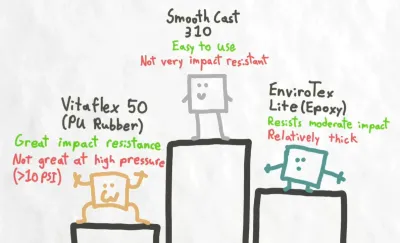
Along with the long soak, percussive testing was also performed to see how it’d affect the water intrusion resistance. After all that, there were three winners: internal epoxy coating and two types of internal PU coating, though epoxy held up the best after repeated abuse. PU rubber also got a thumbs-up if you don’t need as high a pressure resistance but are more concerned with resisting physical abuse.
In 2026, the smart glasses conversation is mostly dominated by a handful of names: Meta, Samsung, and Google. There are other companies that already have products in the market, but they might not have thought about competition from this PC and laptop brand that has suddenly entered the market.
I’m talking about Acer. The company has quietly dropped two pairs of glasses ahead of Computex 2026, and neither of them looks like an experiment.
Acer
What can Acer’s wired AR headset do?
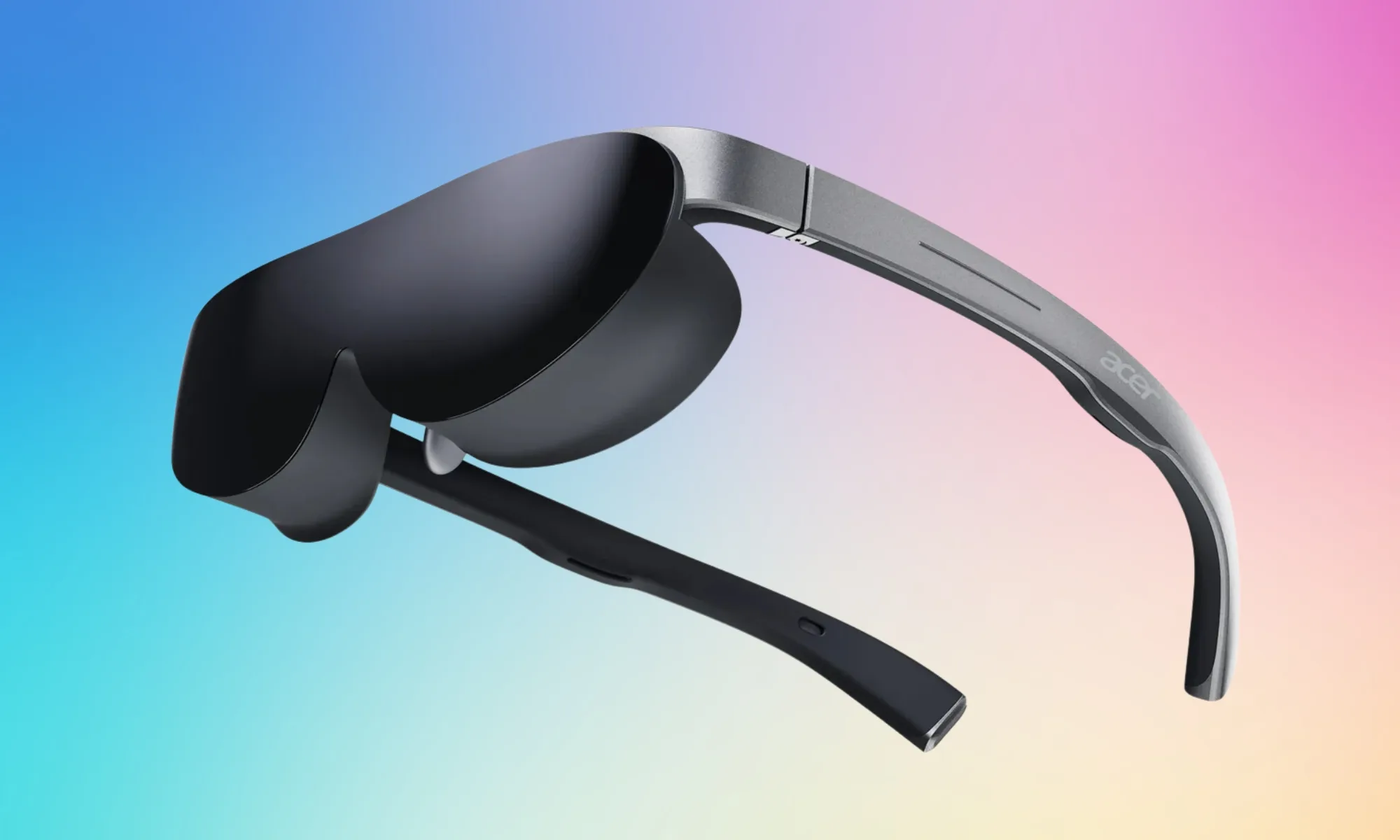
Out of the two smart glasses, the AR Vision GR0 is the more immersive one.
It connects to your phone, laptop, or tablet via a wired connection, and then projects dual micro OLED displays (one per eye) at 1920 x 1080 resolution in 2D or 3840 x 1080 in 3D, simulating a 172-inch screen viewed from roughly 20 feet away.
At just 69 grams, it is quite light for a wired AR device. You can also get it with the optional detachable light shield and myopia magnetic lens support, which make it more practical than most glasses in this category.
Advertisement
The device is compatible with Android, iOS, and Windows and doesn’t come with a platform lock-in. You can purchase the AR Vision GR0 in North America at $499.99.
Acer
The company also has a Meta Ray-Ban competitor
The Acer GI0 AI Glasses are slightly different. They’re closer to Meta’s Ray-Ban smart glasses than to an AR headset.
They offer wireless connectivity, connect with your phone via Bluetooth and Wi-Fi, and feature Google Gemini as the AI assistant of choice.
Features include a 12MP camera for first-person photo and video capture, real-time AI translation, live captions, and voice recording, which, yet again, makes them similar to the Meta Ray-Ban smart glasses.
All the data is stored on the device’s 32GB onboard storage. These glasses are compatible with Android and iOS via the Acer AspireSync companion app. At 46 grams for the frames alone, these are light enough for daily usage. You can get the smart glasses for $299.99 in North America.
Spotted by hardware leaker momomo_us on Amazon UK, both drives use the familiar 2.5-inch, 7mm-thick format, making them suitable for a wider range of PCs and laptops. The Sandisk 320 is the mainstream model, with capacities from 250GB to 2TB and sequential speeds of up to 545 MB/s read and… Read Entire Article Source link
We spend hours testing every product or service we review, so you can be sure you’re buying the best. Find out more about how we test.
Logitech G Pro X2 Superstrike: Two-minute review
(Image credit: Future)
I should probably preface this review by saying that I’ve long been a fan of Logitech‘s mice, having used a G502 Lightspeed Wireless as my daily driver for more than five years. In fact, I love it so much that when mine finally gave up the ghost back in 2024, I literally just bought another identical model.
If you’re familiar with my work, you might suspect a slight degree of bias in this review – and I’m sure that the coveted five-star rating above won’t assuage those suspicions.
Advertisement
But honestly? I wasn’t expecting much from the Logitech G Pro X2 Superstrike. The design is pretty simple, just a near-symmetrical chassis with two thumb buttons and a basic scroll wheel, plus a mildly futuristic aesthetic that you’ll either find appealing or obnoxious. I’ve seen a hundred mice like this before, I thought upon unboxing it for the first time.
Latest Videos From
That was before I knew about HITS. The ‘haptic inductive trigger system’ is the main selling point of the Pro X2 Superstrike, and it’s really something special: user-tunable actuation for the two main mouse buttons, with rapid trigger reset points to minimize latency. In other words, you can personally tweak the tactility of these clickers to exactly how you want them to feel, and it’s frankly awesome. It’s reminiscent of the satisfying feedback of hall effect buttons, and the mechanics behind it are similar as well, but I’ll get into that later on in this review.
HITS aside (but really, these buttons absolutely rock), the Logitech G Pro X2 Superstrike is just a staggeringly competent piece of hardware design. The rounded, symmetrical shape is very comfortable in the hand, and the total package weight of just 61g combined with smooth-gliding UHMWPE feet makes it feel great to use even on lower sensitivities. But with a 44,000 DPI sensor and 8K polling rate mode, it’s well-equipped for fans of twitchy online shooters.
I’m just gonna say it: this is straight up one of the best gaming mice money can buy right now. Speaking of money…
Advertisement
Logitech G Pro X2 Superstrike: Price & availability
How much does it cost? $179.99 / £159.99 / AU$299.95
When is it available? Available now
Where can you get it? Available globally
Yeah, this hurts a little. Clocking in at $179.99 / £159.99 / AU$299.95, there’s no avoiding the fact that a lot of PC gamers will be priced out of enjoying the perfect clicks of the Logitech G Pro X2 Superstrike.
Sign up for breaking news, reviews, opinion, top tech deals, and more.
It’s similarly priced to the Razer Deathadder V4 Pro, which we featured in our list of the best mice, and is a comparable premium esports-focused mouse with a simple, lightweight design – though it uses optical switches instead, which are durable and responsive but a lot noisier.
However – and it’s not often that I say this – I do actually think this is a product that manages to fully justify its price tag. The Superstrike is something entirely new, but even aside from that, it’s simply an excellent product in almost every way.
Advertisement
Logitech G Pro X2 Superstrike: Design
Simple but comfortable design
Robust build quality
No left-handed version
Image 1 of 4
(Image credit: Future)
(Image credit: Future)
(Image credit: Future)
(Image credit: Future)
I suspect that the ultra-modern design of the Logitech G Pro X2 Superstrike will be a turn-off for some potential buyers, but I like it. No rainbow RGB here, just a lone LED indicating your DPI preset. Stamping the product name all over the device makes it feel like something out of a utilitarian corporate dystopia – a vibe I’m fine with for my hardware aesthetic, though I’d rather steer clear from a societal standpoint.
Aesthetics aside, the chassis design isn’t anything particularly earth-shattering, but you don’t mess with a proven winner. The shape is essentially the same as Logitech G’s previous Pro X Superlight 2, a symmetrical design with a gentle curve across it that fits comfortably in the palm. I’ve got pretty big hands, so I asked my (smaller-handed) partner to give it a try, and he reported that it felt very comfortable to use as well. I might say that the shape is somewhat better suited to claw- and fingertip-style grips, but as a palm-grip user, I found it comfortable even during extended gaming sessions.
(Image credit: Future)
Despite weighing barely more than 60 grams, the Pro X2 Superstrike doesn’t feel flimsy in the slightest. The whole thing feels well-constructed, with a physical power switch and magnetic cover on the underside that conceals a slot to store the USB dongle. The feet are UHMWPE, tough and low-friction, and a small cutout at the front of the mouse houses the USB-C port for charging or wired use.
The main buttons have a weighty, tactile feel to them, while the scroll wheel offers firm rotation and a quiet but robust click. The side buttons are a bit softer, but still have a decent level of physical feedback and are well-spaced – I often like to map actions to these thumb buttons in shooters, and I didn’t experience any misclicks. The mouse is very slightly front-heavy, presumably due to the HITS switch assembly underneath the two main buttons, and while I didn’t have any issues with this, users who regularly lift their mouse clear of the mat may find that it requires a bit of getting used to.
Advertisement
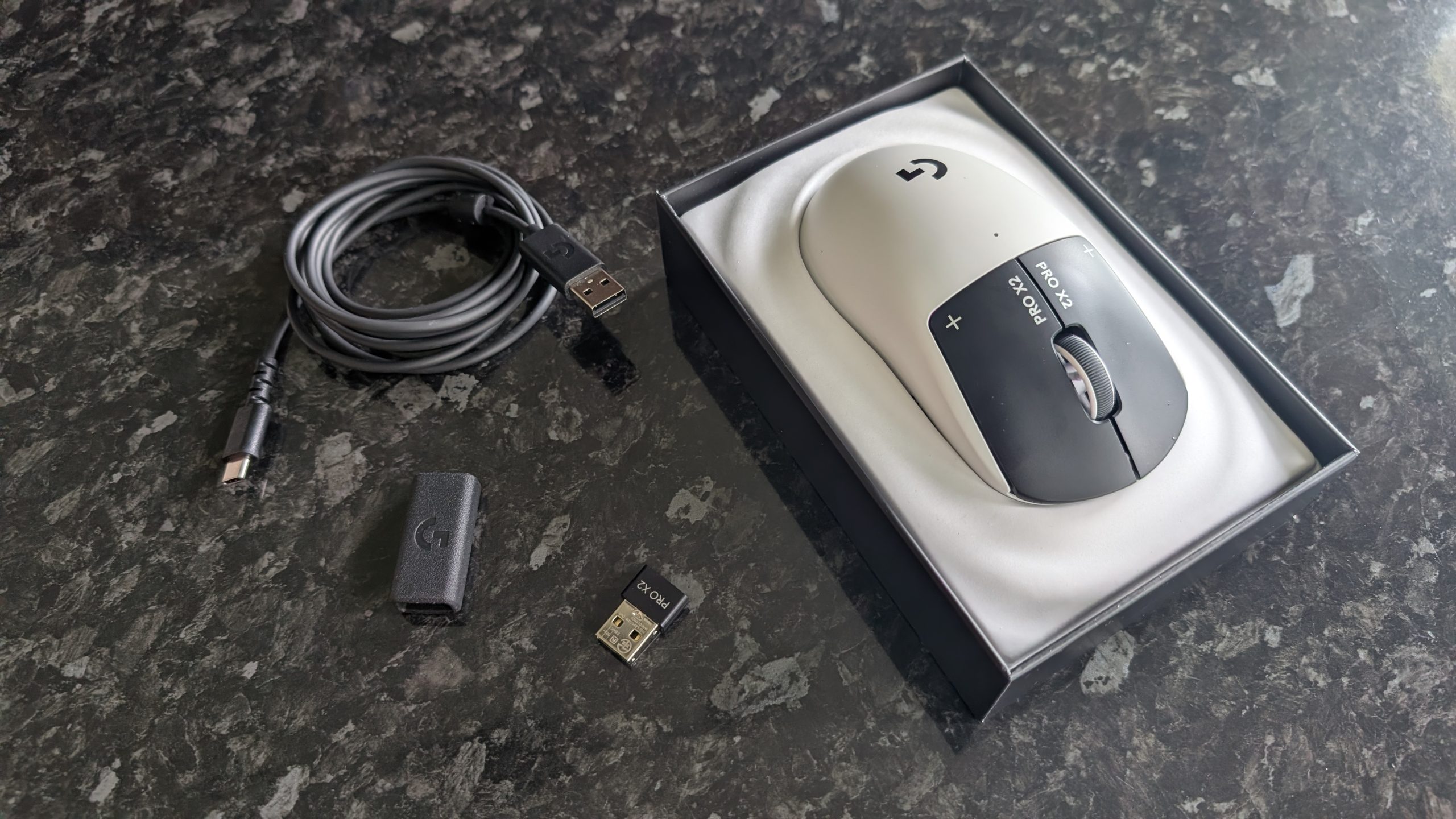
The sensor is the Logitech G HERO 2 sensor, found in a wide range of the brand’s premium gaming mice. It supports up to 44,000 DPI with up to 88G acceleration registration, and I can attest from using other mice with the same sensor that it’s very reliable. For those seeking the absolute best low-latency performance, the box includes an adapter for you to connect the dongle to the power cable and place it directly on your desk, but it worked fine just plugged into the back of my PC, too.
The matte plastic shell does a good job of repelling fingerprint smudges (even from my sweaty hands during a heatwave that hit the UK while I was reviewing the Pro X2 Superstrike), and the casing is generally sturdy. It feels like a product that was built to last. Honestly, my only criticism here is the lack of a left-handed model; I’m a southpaw myself, and while I’ve adapted to using a mouse with my right hand, the same can’t be said of every left-hander out there.
Logitech G Pro X2 Superstrike: Performance
HITS switches are truly phenomenal
Fast and smooth movement is great for shooters
Logitech G Hub software works well
(Image credit: Future)
Alright, let me talk about these switches properly for a moment. The way HITS works is essentially the same principle as hall effect keyboard switches, using metal plates and copper coils carrying an electromagnetic current with an analog sensor that precisely measures the click input.
Advertisement
Now, this means that you get incredibly fast input response, on par with the optical switches that are becoming more popular in gaming mice, but the real takeaway here is the adjustable actuation. Because you’re not pressing a physical switch but rather moving a bit of metal up and down, you can use Logitech’s G Hub software to manually adjust the actuation point. If you want hair-trigger actuation, it’s yours. Prefer only firm, deep clicks to register? It can do that too, and everything in between.
The HITS design also allows you to adjust the trigger reset points (put simply, how soon the button can register another input when you start to lift your finger after clicking), and with no physical switch involved, the Pro X2 Superstrike allows for ultra-rapid-fire inputs. If you’re using a semi-automatic gun, the only limit on fire rate is whatever the game itself imposes.
(Image credit: Future)
Without an actual switch to click underneath these buttons, there’s no tactile feedback. In fact, when I first received the Pro X2 Superstrike and clicked the buttons before turning it on, I was immediately worried that it would feel horrible to use. That’s where the ‘haptic’ part of ‘haptic inductive trigger system’ comes in: when you click, the button releases a tiny vibration that mimics the click input of a traditional mouse. It sounds silly, but it genuinely works – and like the actuation and trigger resets, you can adjust this too, or even turn it off if you’re so inclined. But I wouldn’t – it’s really quite good once you get used to it.
The best part? They’re ridiculously quiet. If you’re noise-sensitive or you’re a late-night gamer like me, a near-silent mouse is a genuine boon. In fact, Logitech, if you’re reading this: please make a G502 with HITS (and then send it directly to my home address). I adore the Superstrike, but I do miss my thumb rest for everyday work.
Advertisement
(Image credit: Future)
Alright, enough about the HITS. Overall, the Logitech G Pro X2 Superstrike feels excellent for gaming, gliding smoothly across my mouse mat and delivering precise, latency-free inputs thanks to the Logitech Lightspeed dongle.
The G Hub software gives you plenty of sliders to slide, letting you adjust the usual settings like sensitivity and polling rate, as well as create profiles for individual games depending on your preferences. The 8K polling mode is something of a gimmick that likely won’t make much of a difference to all but the sweatiest esports lovers, but it’s there if you want it (though it’s oddly not available in wired mode; you have to use the included dongle).
I stuck with the defaults for most of the games I tested, but I did make custom profiles for Valorant and Marathon to make the most of the super-reactive HERO 2 sensor. You can also map button input combos as macros, which was particularly useful for adjusting the DPI manually, as there’s no dedicated DPI button here.
(Image credit: Future)
Did it make me better at shooting? No, my aim is still aggressively mid, but I certainly felt better playing with the Pro X2 Superstrike. After tweaking the HITS actuation to accept feather-touch inputs with an equally low reset point and strong haptic feedback, plinking hostile players at range with a precision rifle in Marathon felt gratifying.
Advertisement
The battery life is also solid, with Logitech claiming 90 hours of use on a single charge. I found this held up; I charged the mouse to full after unboxing it, and it was still kicking after a week of work and gaming.
Should you buy the Logitech G Pro X2 Superstrike?
Swipe to scroll horizontally
Logitech G Pro X2 Superstrike: Scorecard
Value
The price is high, but you get one seriously premium-feeling mouse for your money.
Advertisement
4/5
Design
The Logitech G Pro X2 Superstrike is comfortable, durable, and wisely keeps the design minimalist to focus purely on performance and tactile experience.
5/5
Advertisement
Performance
The sensor performs well and the battery life is good, but the HITS switches are the star of the show; a revelation for gaming mice that I can’t wait to see appear in more mice from Logitech.
5/5
Average rating
Advertisement
Logitech has knocked it out of the park here. The Pro X2 Superstrike officially sets a new standard for mice, and deserves the highest praise.
4.84/5
Buy the Logitech G Pro X2 Superstrike if…
Advertisement
Don’t buy it if…
Logitech G Pro X2 Superstrike: Also consider
How I tested the Logitech G Pro X2 Superstrike
I traded out my usual Logitech G502 Lightspeed Wireless for the Pro X2 Superstrike for a total of eight days while putting together this review, and guess what… I’m still using it. Not for everyday work (I value a thumb rest too much for that), but it’s currently perched on the corner of my desk for whenever I load up Marathon or Warframe.
During my eight-day testing period, I used the Superstrike for both my regular day-to-day work for TechRadar (which, in mouse-specific terms, mostly involves a lot of clicking on links and highlighting text) and for everything I use my PC for during my off hours. This is mostly gaming, with a bit of mucking about in Discord and Scrivener for personal projects. Aside from the games I’ve already mentioned in this review, I also tested the Pro X2 Superstrike in Overwatch, Apex Legends, and Tiny Tina’s Wonderlands (yes, I know I’m late to that particular party – I’ll get around to Borderlands 4 eventually).
Disney Plus is one of the best streaming platforms available today. I’m not being hyperbolic: Just take a look at the programming lineup available on the Disney-owned platform.
You want Star Wars? You got it — all of it. The same can be said for Marvel‘s expansive universe of movies and TV shows. Plus, you can never go wrong with Bluey, which is the animated gift that keeps on giving. I’m just cracking the surface with these examples.
Disney Plus is chock-full of engaging content, including top reality shows and educational documentaries, plus a deep well of Disney classics to keep you entertained.
Advertisement
Scroll on to find the best original programming Disney Plus has to offer. Please check back monthly, as I update this list regularly as new content arrives.
Marvel takes the meta-comedy route with Wonder Man, which follows a struggling actor named Simon Williams who is looking for his big break in Hollywood. That chance comes in the form of the starring role in a superhero movie. The only issue: He’s got his own superpowers he has been keeping secret.
Disney Plus
Advertisement
Taylor Swift: The End of an Era
Disney Plus’s six-episode docuseries peels back the curtain to go inside the production of Taylor Swift’s massively successful Eras tour. Whether you’re a fan of her music or not, this series is a riveting look into the organized chaos that comes with putting on a world tour. And if you’re a fan of her music, why have you not watched this yet?
Advertisement
Photo by Chuck Zlotnick/Marvel Studios
What makes Hawkeye entertaining is the dynamic between Jeremy Renner and Hailee Steinfeld. Their relationship as Clint Barton and Kate Bishop provides the emotional foundation for the series. There are connective elements from this series to the likes of Echo and Daredevil, but other than those cool details, this street-level program is a fun holiday romp through the streets of New York. And sometimes, that’s all you really need.
Advertisement
Disney
Fire and Water: Making the Avatar Films
Advertisement
In 2009, James Cameron pushed the special effects envelope with the release of Avatar, a groundbreaking cinematic achievement that remains the highest-grossing movie of all time. The 2022 sequel, Avatar: The Way of Water, is the third-highest-grossing movie of all time, which proves that Cameron is doing something right with these career-defining releases. This new two-part docuseries takes audiences behind-the-scenes of the sci-fi franchise to show how this magical world is brought to life.
Marvel Television
Advertisement
Marvel Zombies, which is technically a spin-off of Marvel’s What If…? series, takes inspiration from the comics by Robert Kirkman and Sean Phillips, which means there’s some bona fide zombie drama. Heroes like Ms. Marvel, Ironheart and Hawkeye get thrown into the mix. You want a post-apocalyptic zombie-infested MCU? You got it.
Disney/Pixar
Dream Productions takes place between the events of Inside Out and Inside Out 2 and heads back into the mind of young Riley. Instead of focusing on her emotions, this four-episode mockumentary-style series delves into the production company in charge of her dreams. As Riley grows, her emotions require extra processing, and that’s where the folks at Dream Productions come in. Paula Pell and Richard Ayoade star; the voices of Amy Poehler, Maya Rudolph, Tony Hale, Lewis Black and Phyllis Smith are also featured.
Advertisement
Marvel
The newest Marvel series to hit Disney Plus takes place following the events of Black Panther: Wakanda Forever and follows Riri Williams (Dominique Thorne) as she creates her own suit of armor inspired by Tony Stark’s. Part coming-of-age story and part journey of self-discovery, the series finds the brilliant young woman grappling the with intersection of magic and technology while striving to find her place in the world.
Advertisement
National Geographic
You may be used to animal series narrated by the likes of, say, Richard Attenborough or Morgan Freeman to add gravitas to the informative program. Underdogs takes a different route. Ryan Reynolds takes the voice-over helm on this one to explore Mother Nature’s odd creatures. Misfits to some, weirdos to others, the Deadpool star gives these quirky animals their due in this fun series.
Des Willie/Lucasfilm Ltd.
Advertisement
Simply put, I think Andor is the best Star Wars series Disney Plus has made. The program ditches the flashy, and often clichéd, production values of its predecessors and goes all-in on some intense ground-level storytelling. Expanding the story of the characters featured in the one-off film Rogue One, Andor comes through with the emotional stakes thanks to its smart writing and the excellent performances of its cast. Phenomenal stuff, right here.
Giovanni Rufino/Marvel Television
Daredevil: Born Again finds Matt Murdock once again fighting for justice, both in the courtroom and on the streets. The series acts as a reboot of sorts and reunites Charlie Cox with Vincent D’Onofrio’s (who reprises his role as Wilson Fisk) to once again battle for the soul of Hell’s Kitchen.
A new spin on Spider-Man lore unfolds in the streamer’s new animated series, Your Friendly Neighborhood Spider-Man. The show, presented in a nostalgic animation style, explores a different timeline in which Peter Parker (Hudson Thames) is mentored by Norman Osborn (Colman Domingo), who you may know better as the villainous Green Goblin. This’ll be interesting.
Advertisement
Pixar
Pixar’s first original animated series follows a middle school softball team and their journey to the championship. The eight-episode season takes place over one week and follows different characters as they explore the same events from different perspectives. SNL alums Will Forte and Melissa Villaseñor lend their voices alongside Better Call Saul’s Rhea Seehorn, Lil Rey Howery, Rosa Salazar, Flula Borg and Jo Firestone.
Advertisement
Disney/Francisco Roman
Justin Long led the first installment of Disney Plus’ YA series, and David Schwimmer takes up the mantle of creepy adult in the show’s second season. The gateway horror series takes inspiration from R.L. Stine’s iconic book series. Each season follows a group of teens wrapped up in a supernatural mystery.
Matt Kennedy/Lucafilm Ltd.
Advertisement
Star Wars: Skeleton Crew dials the tone back to the Amblin days of the 1980s. There’s no trace of Luke Skywalker in this show. Instead, Skeleton Crew takes place in a reality where stories of the Jedi are viewed as fairy tales. That is, until a ragtag group of kids stumble upon an abandoned starship and accidentally shoot themselves into space. The result: a (literally) out-of-this-world adventure.
Chuck Zlotnick/Marvel
Agatha All Along isn’t a direct sequel to WandaVision, but the stories are definitely related. Kathryn Hahn reprises her deliciously devilish role in the spooky new series, which follows Agatha and a group of ragtag witches on a journey down the Witches Road to help Ms. Harkness get her powers back. Spoiler: It ain’t gonna be easy.
Advertisement
Lucasfilm Ltd.
Star Wars: Visions is a fun and edgy animated anthology series that adds an exciting new element to Lucasfilm’s long-established franchise. Seven Japanese animation studios were tapped to create nine unique noncanonical episodes for the program. Additional episodes from Spain, Ireland, Chile, the United Kingdom, South Korea, France, India, Japan and South Africa were released in the show’s second installment.
Advertisement
Disney Plus
Doctor Who celebrated its 60th anniversary, and since then, the sci-fi series has undergone multiple revamps. Actors like David Tennant and Matt Smith helped bring the iconic Time Lord into the present day with the program’s run of modern-era seasons. Ncuti Gatwa is the latest actor to take the reins as the Doctor, marking the first time in the program’s history that a Black actor has stepped into the role. Doctor Who made the move to Disney Plus in 2023, and after two years, the contract between the streamer and the BBC has expired. Still, these newer seasons and a few older episodes are still available to watch on the streamer.
Ludo Studio
Advertisement
Bluey is a phenomenon, plain and simple. The kids’ show, which follows a family of anthropomorphic dogs — Bluey, her sister Bingo, dad Bandit and mom Chilli — was the most streamed series in 2023, and for good reason. Nearly all the episodes run at around 8 minutes in length, making it an easy binge. And while the tone remains light and playful, the series digs into relevant and poignant topics in a way that never talks down to its audience. Who knew a show about an Australian dog family would be so addictive? Disney Plus knew.
Disney Plus
Advertisement
Percy Jackson and the Olympians
This fresh take on Rick Riordan’s cherished books aims to erase the live-action movies from our collective memories. And for the most part, it accomplishes its task. The eight-episode first season follows the events of Lightning Thief, the first book in the series. Thanks to a younger cast and lighter stakes, this Percy Jackson series is positioned to be a YA hit for Disney Plus.
Advertisement
Lucasfilm Ltd.
Dave Filoni and Jon Favreau took their love of Star Wars to new heights with The Mandalorian. It’s the first live-action Star Wars series to hit Disney Plus and it set the standard for everything that came after. Stylistically inspired by things like the Lone Wolf and Cub manga, Akira Kurosawa’s Yojimbo and Sergio Leone’s iconic Dollars trilogy (which starred Clint Eastwood as the Man With No Name), the series follows a lone bounty hunter who gets a second chance at life when he’s hired to protect a little green alien you may know simply as Baby Yoda.
Advertisement
Apple Corps Ltd
This three-part documentary series puts us smack-dab in the creative maelstrom of one of the world’s biggest musical groups. Directed by Oscar-winner Peter Jackson, The Beatles: Get Back gives a cinéma vérité-style look at a band at the top of their game and on the precipice of collapse. This previously unseen footage shows John Lennon, Paul McCartney, George Harrison and Ringo Starr in rehearsal for their infamous rooftop concert at their Apple Corps headquarters on London’s Savile Row. It was their last live performance. It’s breathtaking, inspiring and heartbreaking. And definitely worth a watch.
Marvel Studios
Marvel Animation
Advertisement
X-Men: The Animated Series ended its five-season run in 1997. Almost three decades later, X-Men ’97 continues the story of everyone’s favorite mutant superhero crew. The pacing is quick, the writing is tight, and the 2D animation style acts as a nice bow tying together this lovely nostalgic gift for ’90s kids everywhere.
Chuck Zlotnick/Marvel Studios
Echo (Alaqua Cox) was first introduced in a three-episode arc in Hawkeye. Marvel’s Echo is centered on the hearing-impaired antihero. She’s also a member of the Choctaw Nation, which leads the series to wonderfully explore these aspects of her identity. Her association with Wilson Fisk (Vincent D’Onofrio) further connects the MCU shows on Disney Plus with those previously on Netflix — and sets up the arrival of Matt Murdock (Charlie Cox) and crew quite nicely.
Advertisement
Lucasfilm Ltd.
The Bad Batch is an intense, action-packed spin-off of the celebrated Star Wars animated series The Clone Wars. Audiences have seen the fallout of Order 66 take shape in various forms throughout the Star Wars franchise, but never like this. The Bad Batch follows a squad of elite clone troopers with genetic defects. They may have special abilities, but that doesn’t make them invisible to the top-secret execution order. In turn, the animated series fills in some blanks in Star Wars lore. It does so in an incredibly entertaining way.
Advertisement
Disney Plus
Ms. Marvel is a breath of fresh air for the Marvel Cinematic Universe. The Disney Plus series flips the script on what we have grown to expect from Marvel shows on the streamer. Iman Vellani is a revelation as the titular hero. It’s a challenge for a show to balance the heavy responsibilities of being a superhero with the trials and tribulations of high school. The story pulls it off, and does so with a welcome helping of Muslim representation.
Disney Plus
Advertisement
WandaVision started it all on Disney Plus. It’s the first original series in the Marvel Cinematic Universe to hit the streamer. It’s a genre-bending adventure that finds Wanda and Vision living out different realities inspired by TV sitcoms, from I Love Lucy and The Dick Van Dyke Show to The Brady Bunch and Family Ties. How does the emotional fallout of Avengers: Endgame (and Vision’s death, specifically) affect Wanda? Well, let’s just say her grief takes her down one heck of a weird rabbit hole.
Tom Hiddleston has appeared as Loki, the God of Mischief, throughout the Marvel Cinematic Universe for the past decade. Thanks to Disney Plus, he finally leads his own odd adventure. The quirky sci-fi series puts Loki in the unlikely position of hero. Here, he works with a barrage of interesting characters, including Owen Wilson’s Mobius M. Mobius, to correct the timeline. It’s an offbeat, fun and thoroughly weird series that appeals to die-hard fans and newbs alike.
Chuck Zlotnick/Marvel Studios
Advertisement
The Falcon and the Winter Soldier
What happens when Captain America hangs up his shield? That’s the question going into Marvel’s The Falcon and the Winter Soldier. Here, Sam Wilson (better known as Falcon) and Bucky Barnes (aka the Winter Soldier) buddy up in a surprisingly funny and heartfelt series that deals with trauma, grief and classism as the world picks up the pieces from the earth-shattering events of Avengers: Endgame.
Advertisement
Disney
Moon Knight stars Oscar Isaac as Steven Grant, a troubled man with dissociative identity disorder. These aren’t simple anxiety issues — no, Grant actually shares his body with a mercenary named Marc Spector. The discovery of this alter-ego leads Grant on an adventure that pits him against a sinister cult leader named Arthur Harrow (Ethan Hawke) and a gang of formidable Egyptian gods. It’s a trippy ride that may even scratch that Indiana Jones itch.
The United States military has known for years that enemies could use location data to track troops’ phones—and it’s also long been aware of easy fixes for the problem. The Pentagon adopted almost none of these protections, though, in spite of admitting in a letter exposed this week that US adversaries are actually using the data to target soldiers in war. Meanwhile, US law enforcement warned this week about “anti-tech extremism” as AI backlash grows around the country.
After a nearly 90-day internet shutdown, connectivity started to trickle back into Iran this week amid internal political power struggles and ongoing negotiations with the US to end its war with Tehran. Researchers cautioned that it is unclear how extensive the restoration will be and whether connectivity will only return temporarily.
And there’s more. Each week, we round up the security and privacy news we didn’t cover in depth ourselves. Click the headlines to read the full stories. And stay safe out there.
Advertisement
Play, a Russian-language ransomware operation that has affected more than 900 organizations since 2022, posted to its dark-web leak site on Monday claiming it had pulled “private and personal confidential data, clients’ documents, budget, payroll, IDs, taxes,” and other financial records from MyPillow. The Minnesota-based home goods company is run by Mike Lindell, who is among at least 10 Republicans seeking the party’s nomination for governor of Minnesota in August’s primary. Lindell is also one of the most prolific backers of Donald Trump’s false claims of victory in the 2020 election.
“This is another hit job by outside sources because I’m running for governor,” Lindell said. “I guarantee it. We do not have any breaches in our data at all.”
Lindell has been on the losing end of two recent defamation rulings over his 2020 election claims: A federal jury in Colorado last year found that he had defamed Eric Coomer, a former Dominion Voting Systems director, and ordered Lindell and his media platform, FrankSpeech, to pay $2.3 million in damages; a federal judge in Minnesota separately ruled in September that Lindell had defamed Smartmatic through 51 false statements about its voting machines, with damages still to be set at trial.
Advertisement
In recent years, ransomware groups have become more aggressive and ruthless in their efforts to obtain money from victims. Most of these criminal hackers now focus on stealing data and extorting companies rather than using malware to lock computer systems. But in rare occasions, ransomware groups have been seen directly threatening executives, or contacting people named in stolen data, to try to obtain payment. The FBI said this week that one ransomware group is going even further: sending people to steal data directly from companies IRL.
Among more traditional social engineering techniques, the FBI says the Silent Ransom Group (SRG), which is targeting law firms, has sent people to company offices to directly get access to computers. “By sending someone in person to the victim’s location to facilitate the intrusion, SRG actors exfiltrate data to an external hard drive or USB drive inserted by the threat actor into the victim’s computer,” the FBI said in an alert. Security researchers say the tactic has not been seen before. The FBI did not provide any information about who the Russian-speaking ransomware group was sending to conduct its attacks, but researchers believe they could be paying freelancers who do not necessarily know who they are working for.
The AI surveillance company BusPatrol, which has installed its cameras in tens of thousands of US school buses, says that it will now turn those cameras into automatic license plate readers that will record the location of every vehicle a BusPatrol school bus passes and make the data available to law enforcement without a warrant. The initiative would turn the familiar yellow buses into what 404 Media aptly described as “roaming surveillance vehicles.” BusPatrol technology, and school bus surveillance tech more broadly, was originally intended to be used for ticketing vehicles that illegally pass stopped buses—a critical safety issue for children.
University of Chicago sociology professor Rob Vargas found this month that the Chicago Police Department was four minutes faster in responding to the most urgent non-gunshot 911 calls in the six-month period after Mayor Brandon Johnson shut down ShotSpotter gunshot detection tech in 12 neighborhoods in September 2024. Analyzing Chicago city data as well as data obtained through public records requests, Vargas compared the time period with the preceding six months during which ShotSpotter was still active. The data couldn’t be used to assess response times for calls specifically related to gunshots, but it indicated that ShotSpotter alerts may have been occupying officers with false positives and delaying them in responding to other types of critical 911 calls. “It is clear that ShotSpotter wasted officers’ time by sending them on wild-goose chases,” Vargas told WTTW News.
Foundation sparks revolt after disbanding team responsible for many community-requested fixes and moderation tools
The Wikimedia Foundation (WMF) has sparked a revolt among Wikipedia editors after disbanding the engineering team responsible for many community-requested fixes and moderation tools.
The Register was tipped off this week to growing unrest inside the Wikipedia editing community following the WMF’s decision to disband its Community Tech team, the group responsible for triaging and developing editor-requested bug fixes, moderation tools, and workflow improvements through the long-running Community Wishlist process.
Advertisement
Wikimedia’s internal forums have turned into a running argument over how editors should respond. Some are calling for editing strikes, while others want volunteers to stop handling vandalism cleanup for a period of time. There have also been discussions about replacing fundraising banners with messages criticizing the layoffs.
The foundation confirmed to The Register that the restructuring affected six staff roles connected to the Community Wishlist program, including engineers and a manager.
It said the decision came after months of internal reviews that started last year. According to the foundation, leadership concluded that relying on a single dedicated team to process editor requests was no longer working well.
“We learned from these assessments that it is rarely possible to fulfill community wishes through a single team due to the vast breadth of the software we support and the number of channels through which we receive wishes,” a spokesperson for the foundation said.
Advertisement
Under the new structure, responsibility for Community Wishlist requests will be spread across the wider Product and Technology department rather than handled by a dedicated team.
The foundation said affected employees remain employed for now while being considered for other internal roles. Staff who are not placed elsewhere inside the organization will leave next month with severance packages.
That explanation has gone down badly with parts of the editor community, where some contributors accuse Wikimedia leadership of becoming increasingly disconnected from the unpaid volunteers who maintain Wikipedia itself. Several editors have also questioned why an organization reporting nearly $300 million in assets in its latest annual report is restructuring an engineering team dedicated specifically to editor support.
The situation has become even messier because several affected employees were reportedly involved in early unionization efforts linked to a newly created labor group called Wiki Workers United. One of the laid-off engineers created the union page on Wikimedia Meta earlier this month, fueling accusations from some editors that the restructuring amounted to union busting.
Advertisement
The foundation denied that outright, telling The Register: “The decision to disband the Community Tech team is not in any way connected to discussions about unionizing, nor have we terminated any staff for their participation in those discussions.”
The WMF also stressed that no formal request for union recognition has been submitted and said it would respect the legal process if staff eventually vote to unionize.
Meanwhile, editors continue to discuss protest options that could create highly visible problems for the world’s largest online encyclopedia. Since much of Wikipedia’s moderation infrastructure is maintained by volunteers rather than foundation employees, even a temporary pullback in anti-vandalism work could turn parts of the site into an open sewer of spam, hoaxes, and defacement. ®
There’s evidence for a new free tier for Apple Music
It will no doubt come with certain limitations
Users are worried that there will be adverts involved
The streaming, unlimited listening component of Apple Music differs from Spotify in that you can’t use it for free — you have to pay a monthly subscription. According to code spotted in the latest Apple Music app for Android, that might be about to change.
Discovered by tipster Aaron Perris (via 9to5Mac), the code snippets mention limits on track skipping, and a “Premium access required” message, which are both consistent with some kind of subscription-free tier for the Apple Music streaming catalog.
However, Perris himself admits the code strings could be related to something else, like radio stations. These might soon work differently depending on whether or not you’re currently paying for an Apple Music plan.
Latest Videos From
Spotify’s free tier comes with adverts, and limits on audio quality, playlist creation, track order, and track skipping. Premium subscribers also get to save playlists of offline use, and usually get access to new features first too.
Advertisement
Does this mean ads?
NEW: It appears that Apple may be working on a free or lower-cost tier of Apple Music.Strings in the latest Apple Music for Android beta mention “Can’t skip any more tracks” and “Premium access required” pic.twitter.com/xGHeaDb7X3May 30, 2026
Based on the Reddit reaction, this might not be such a popular move. “Oh no not the ads,” is one typical comment, and there seems to be quite a swell of resistance against Apple Music offering a free tier if it comes with adverts attached.
Having traditionally kept advertising in its products down to a minimum, Apple has recently started heading towards a more Google-like approach: ads have started appearing in Apple Maps with iOS 26.5 for example.
In fact, as we’ve already noted, this is a trend that many apps and services are joining in with, in an effort to squeeze more money from consumers — whether it’s advertising on streaming services or new subscription models for social media sites.
Advertisement
Sign up for breaking news, reviews, opinion, top tech deals, and more.
We’ll have to wait and see if a free tier for Apple Music makes an appearance soon — perhaps at WWDC 2026 on June 8. You can already use Apple Music the app for free, of course, if you bring your own digital music with you.



















































You must be logged in to post a comment Login