

Connect with us
DAPA Banner

Business

Artemis II Crew Heads to Moon After Successful Translunar Injection Burn on Flight Day 2

Published

on

Why Did Australia Sky Turn Red? Skies Turn Blood-Red as

HOUSTON — NASA’s Artemis II mission hit a major milestone Thursday as the four-person crew aboard the Orion spacecraft successfully completed the critical translunar injection burn, sending them out of Earth orbit and on a trajectory toward the Moon for the first time in more than five decades.

(VIDEO) Artemis II Launch: 4 Astronauts Blast Off on Historic
(VIDEO) Artemis II Launch: 4 Astronauts Blast Off on Historic Crewed Moon Mission

The burn, which lasted five minutes and 50 seconds, began at 7:49 p.m. EDT after mission managers in Houston polled “Go” for the maneuver. Orion’s main engine, powered by the European Service Module, fired flawlessly, accelerating the spacecraft to escape velocity and committing the astronauts to a free-return trajectory around the Moon and back to Earth.

Commander Reid Wiseman, Pilot Victor Glover, Mission Specialist Christina Koch and Canadian Space Agency astronaut Jeremy Hansen are now hurtling through space at nearly 40,000 kilometers per hour (about 25,000 mph) on their approximately 10-day test flight. The mission, launched Wednesday evening atop NASA’s powerful Space Launch System rocket from Kennedy Space Center in Florida, marks the first crewed journey beyond low Earth orbit since Apollo 17 in 1972.

Flight controllers confirmed the burn’s success shortly after completion, with Orion now on course for a lunar flyby expected early next week. At closest approach, the crew will pass roughly 4,000 to 6,000 miles (6,400 to 9,700 kilometers) from the lunar surface, skimming past the far side before the Moon’s gravity slings them back toward home. The spacecraft is projected to reach a maximum distance of more than 230,000 miles from Earth, surpassing the record set by Apollo 13.

Earlier on Flight Day 2, the crew focused on routine but essential tasks while still in high Earth orbit. Wiseman and Glover started their day by setting up and checking out Orion’s flywheel exercise device, completing the mission’s first workouts to help maintain muscle and bone density in microgravity. Koch and Hansen followed with their own exercise sessions later in the day. These activities also served as an important test of the spacecraft’s life support systems ahead of the long journey.

Advertisement

Koch spent part of her morning preparing the vehicle for the translunar injection burn, configuring systems on the European-built service module that provides propulsion, power and thermal control for Orion. The crew also continued monitoring spacecraft health, communicating with Mission Control and acclimating to the weightless environment after their dramatic launch the previous evening.

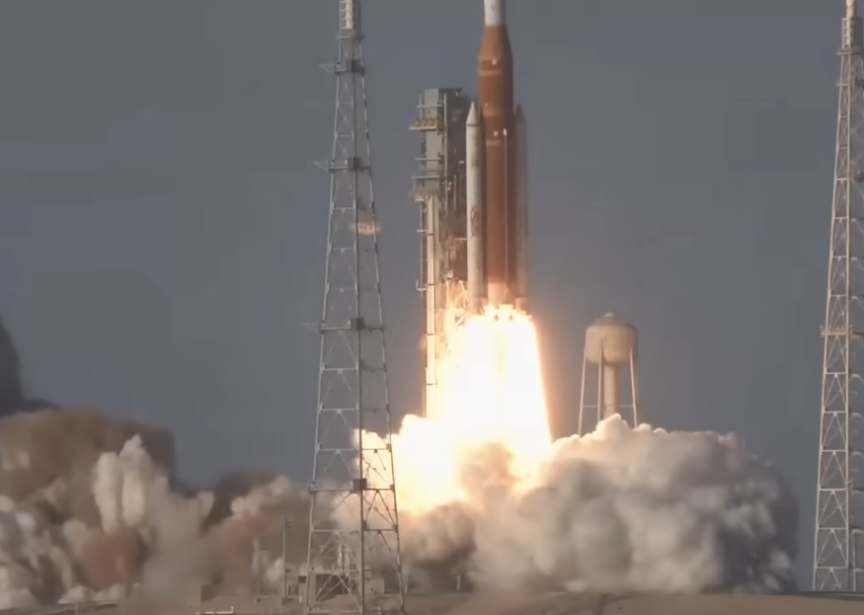
Launch on April 1 occurred at 6:35 p.m. EDT from Launch Complex 39B, with the SLS delivering more than 8.8 million pounds of thrust at liftoff. The rocket performed flawlessly through its major phases: solid rocket booster separation, core stage burnout and separation, and interim cryogenic propulsion stage operations. Orion’s solar array wings fully deployed shortly after spacecraft separation, locking into place and beginning to generate power.

The crew spent much of Flight Day 1 becoming familiar with Orion — nicknamed “Integrity” — checking life support systems, practicing manual piloting and conducting a proximity operations demonstration. They maneuvered close to the spent upper stage, approaching within about 10 meters (33 feet) in a rehearsal of future docking maneuvers needed for Artemis missions that will land astronauts on the lunar surface.

NASA officials described the early mission as proceeding smoothly, with only minor, non-critical issues noted and quickly resolved. “This is a flight test,” one NASA leader emphasized during a post-launch briefing, adding that true success will be declared only when the crew safely splashes down in the Pacific Ocean around April 10.

Advertisement

The Artemis II mission serves as a crucial dress rehearsal for future lunar exploration under NASA’s Artemis program, which aims to return humans to the Moon’s surface as early as 2028 and establish a long-term presence there. Unlike Apollo, Artemis emphasizes sustainable exploration, international partnerships and eventual crewed missions to Mars. Canada’s contribution of astronaut Hansen and the European Service Module underscores the collaborative nature of the effort.

Throughout the day, mission managers highlighted the crew’s health and the spacecraft’s performance. All four astronauts are experienced: Wiseman has flown on the International Space Station, Glover became the first Black astronaut to pilot a spacecraft during a Crew Dragon mission, Koch holds the record for the longest single spaceflight by a woman, and Hansen is making his first trip to space.

After the TLI burn, the crew’s schedule lightened somewhat, giving them time to adjust to the deep-space environment. Over the next several days, they will perform additional system checks, practice emergency procedures such as rapid suit donning, and conduct observations of Earth and the receding Moon. Small trajectory correction burns may be needed to fine-tune the path.

Flight controllers noted that once past a certain point, a direct abort back to Earth becomes less feasible, and the mission will rely on the free-return trajectory that uses the Moon’s gravity for the return leg. This profile provides a built-in safety margin for the test flight.

Advertisement

Public interest in the mission has been intense, with live streams from NASA+ and YouTube drawing large audiences. Views from Orion’s cameras have offered stunning perspectives of Earth shrinking in the distance and the vastness of space. The crew has shared brief messages of excitement and gratitude, describing the launch as “a great day for the team” and the view as breathtaking.

As Orion continues its outbound journey, NASA will hold daily status briefings from Johnson Space Center in Houston, except for the day of the lunar flyby when the focus shifts to real-time operations. The agency has invited global audiences to follow along via multiple platforms.

Looking ahead, the mission will test Orion’s deep-space capabilities in ways never before attempted with this new generation of hardware. Engineers are particularly interested in how the spacecraft handles thermal extremes, radiation exposure and long-duration life support far from Earth’s protective magnetosphere.

Artemis II builds directly on the uncrewed Artemis I test flight completed in 2022, which successfully sent Orion around the Moon and back. With humans now aboard, the stakes are higher, but so is the potential payoff in data and experience.

Advertisement

The international aspect adds another layer of significance. Hansen’s participation represents Canada’s growing role in lunar exploration, including contributions to the future Lunar Gateway station. The European Space Agency’s service module has performed as designed, providing reliable propulsion that will be essential for later missions.

Back on Earth, recovery teams are already preparing for splashdown in the Pacific, with U.S. Navy and Department of Defense assets on standby to assist the astronauts once Orion parachutes into the ocean.

NASA Administrator and other officials have stressed that every phase of the mission — from launch through the flyby and return — is being scrutinized to inform the design and operations of Artemis III, the first crewed lunar landing in the new era.

For now, the four astronauts are focused on the journey ahead. With the TLI burn behind them, they are truly “on the way to the Moon,” as NASA succinctly put it in its mission updates. The coming days will bring more system demonstrations, scientific observations and the historic sight of the lunar far side up close — a view only 24 Apollo astronauts have previously experienced.

Advertisement

As the crew settles into their routine among the stars, the world watches a pivotal step in humanity’s return to deep space. Artemis II is not just a test flight; it is a bridge to a future where humans live and work on the Moon and venture farther into the solar system.

Continue Reading
Click to comment

You must be logged in to post a comment Login

Leave a Reply

Business

(VIDEO) Tiger Woods Body Camera Footage Released After Florida Rollover Crash And DUI Arrest

Published

on

Tiger Woods may have inadvertently hit the car's accelerator while attempting to press the brakes upon losing control, police believe

Florida authorities on Thursday released hours of police body camera footage showing golf legend Tiger Woods moments after his single-vehicle rollover crash last week, including field sobriety tests, his arrest on a driving under the influence charge and comments in which he told a deputy he had just been talking to the president.

Tiger Woods may have inadvertently hit the car's accelerator while attempting to press the brakes upon losing control, police believe
AFP / Mladen ANTONOV

The Martin County Sheriff’s Office made the video public nearly a week after the March 27 incident in which Woods’ Land Rover clipped a trailer and overturned on a residential street in the affluent Jupiter Island area. The 15-time major champion was charged with DUI but has pleaded not guilty and said he is stepping away from the spotlight to seek treatment and focus on his health.

In the footage, Woods appears disoriented as first responders and deputies arrive at the scene of the overturned SUV. He is seen sitting on the ground or in a patrol vehicle, sweating and at times nodding off or hiccuping. Deputies report finding two pills in his pocket later identified as hydrocodone, a prescription opioid, according to the arrest affidavit. Woods told officers he was prescribed medication for pain management related to past injuries.

At one point, Woods pulls out his phone and tells a deputy, “I was just talking to the president,” before the interaction continues. He also described the crash, saying he was looking down at his phone to change the radio station when the vehicle suddenly veered and rolled. The footage shows him cooperating with field sobriety tests, though deputies noted signs of impairment including unsteady balance and slowed responses.

Advertisement

Woods, 50, is heard asking, “I’m being arrested?” as handcuffs are placed on him. He is then transported in the back of a patrol car, where additional video captures him appearing to doze off intermittently. No injuries requiring hospitalization were reported from the crash itself, though Woods has a long history of back and leg issues stemming from a 2021 car accident in California that nearly cost him his right leg.

The Martin County Sheriff’s Office described the release as fulfilling public records requests while protecting sensitive investigative details. The extended bodycam video runs for hours and includes interactions with first responders, the administration of sobriety tests and the booking process. Officials emphasized that the investigation remains active, with toxicology results still pending.

Woods issued a statement on social media shortly after the arrest, saying he takes full responsibility for his actions and is committed to addressing underlying issues. “I’m stepping away for a period of time to seek treatment and focus on my health,” he wrote. The golfer, who has spoken openly in the past about his battles with pain and prescription medication following multiple surgeries, did not provide a specific timeline for his return to competitive golf.

The incident has drawn widespread attention across the sports world. Fellow golfers, including Rory McIlroy and Scottie Scheffler, expressed support for Woods while urging privacy during what they described as a difficult personal moment. PGA Tour commissioner Jay Monahan said the organization is monitoring the situation and stands ready to offer assistance.

Advertisement

This is not Woods’ first brush with legal issues involving driving. In 2017, he was arrested on a DUI charge in Florida after being found asleep at the wheel with multiple medications in his system. He later attributed that incident to a reaction from pain medication following back surgery and pleaded guilty to reckless driving.

Woods’ storied career has been marked by remarkable comebacks, including his dramatic 2019 Masters victory after years of injury struggles. His most recent competitive appearance was at the 2025 Masters, where he made the cut but withdrew before the final round due to discomfort. He has been limited in his playing schedule in recent years, focusing instead on his golf course design business, the TGR brand and mentoring younger players through his foundation.

Legal experts following the case say the bodycam footage could play a significant role if the matter proceeds to trial. Woods’ legal team has not commented publicly on the video beyond the initial not-guilty plea. A court date has not yet been set, though sources familiar with the proceedings expect pretrial motions in the coming weeks.

The Jupiter Island crash occurred in a quiet, upscale neighborhood known for its celebrity residents and strict traffic enforcement. Deputies responding to the scene found the Land Rover on its side after it struck a trailer attached to a truck that was turning into a driveway. No other vehicles or individuals were injured.

Advertisement

Public reaction to the released footage has been mixed. Some fans expressed concern for Woods’ well-being and hoped the incident would prompt him to prioritize recovery. Others noted the apparent impairment shown in the video and called for accountability. Social media platforms saw a surge in commentary, with hashtags related to the golfer trending within hours of the footage’s release.

Medical professionals not involved in the case have speculated that the combination of pain medication and possible fatigue could have contributed to the crash. Woods has previously detailed his reliance on various treatments to manage chronic pain from spinal fusion surgery and multiple knee and leg procedures.

As one of the most recognizable athletes in the world, Woods’ every move has drawn scrutiny since he burst onto the professional scene in the late 1990s. His influence on golf remains immense, with record television ratings whenever he competes and a global fan base that spans generations.

Advertisement

The release of the body camera footage comes as Woods’ representatives continue to manage his public image and business interests. His Nike endorsement deal and other partnerships have endured through previous controversies, though some sponsors have historically distanced themselves during periods of personal turmoil.

Looking ahead, questions remain about Woods’ future in competitive golf. At 50, he has hinted at reduced playing time while expressing a desire to compete in major championships when healthy. Any extended absence for treatment could further limit his schedule in 2026.

The Martin County Sheriff’s Office has declined to release additional details beyond the footage and arrest affidavit, citing the ongoing nature of the case. Toxicology results, expected in the coming weeks, could provide more clarity on substances involved at the time of the crash.

For now, the golf world and fans worldwide are left with the raw images from the body camera video — a stark contrast to the composed, dominant figure Woods has presented on the course for decades. Supporters continue to send messages of encouragement, hoping the latest setback becomes another chapter in a career defined by resilience.

Advertisement

Woods’ attorney has requested privacy for the golfer and his family as he focuses on treatment. No further public statements from the Woods camp were issued immediately following the footage release.

The incident serves as a reminder of the challenges even the most accomplished athletes face off the field. As the legal process unfolds and Woods seeks recovery, the body camera video provides an unfiltered glimpse into a difficult moment for one of golf’s greatest icons.

Continue Reading

Business

Labour is finally getting the importance of the economy in Wales

Published

on

Business Live

Welsh Labour’s Senedd manifesto shows that it finally wants to act like a government that has realised the importance of the economy.

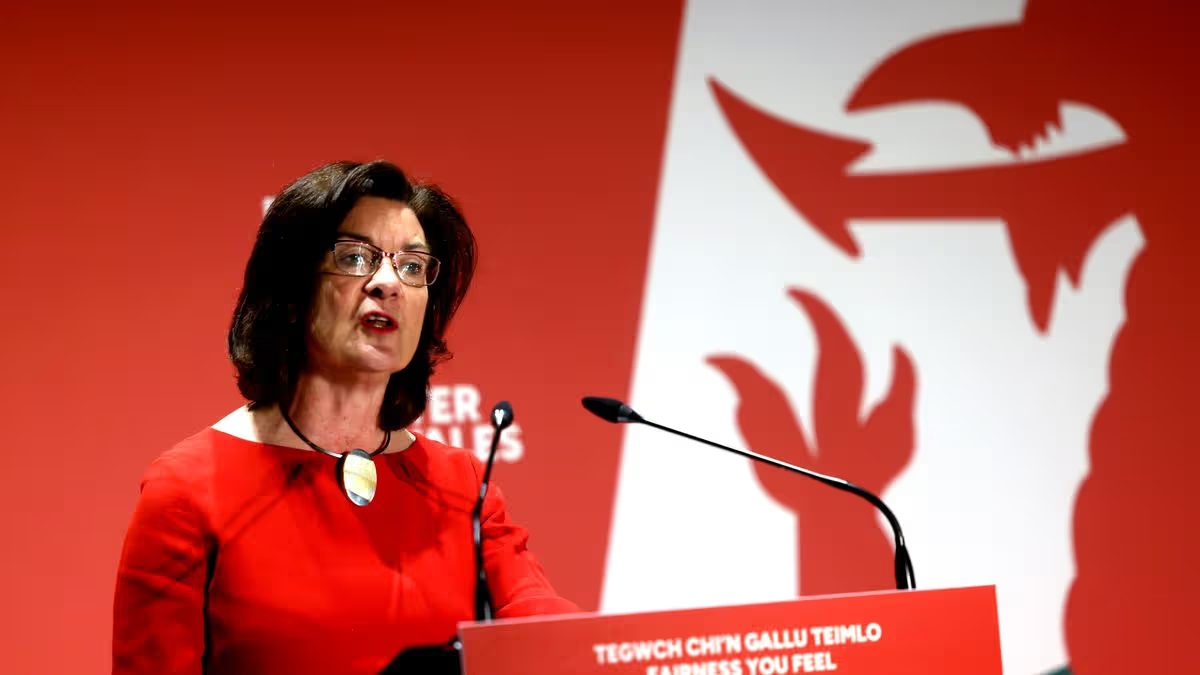
Welsh Labour leader Eluned Morgan launches their manifesto at Swansea Arena

Welsh Labour leader Eluned Morgan launches their manifesto at Swansea Arena (Image: John Myers)

Over the coming weeks, I will review the promises made by Welsh political parties in their manifestos concerning Wales’s economy, starting with the party currently in government in Cardiff Bay.

Despite all the talk of a “new chapter”, the real question raised by Welsh Labour’s 2026 manifesto is simple: why should anyone believe this time will be different for the Welsh economy?

On paper, it clearly recognises that it can no longer treat economic growth as a secondary issue, and after years of weak productivity, poor levels of private investment, and persistent regional inequality, it understands that stronger public services ultimately depend on a stronger economy.

READ MORE: Former FT editor Lionel Barber warning on the UK economyREAD MORE: Cost of South Wales Metro rail electrification project to reach £1.3bn

Advertisement

But recognition is not the same as action because if we remove the new language, much of this still seems less like a genuine break with the past and more like a better-packaged version of the approach that previous Welsh Governments have used for years – more strategies, more boards, and more reviews.

For example, the manifesto includes a new industrial strategy, a national jobs council, a vocational education and training strategy, a rural economic development plan, a Valleys economic board, a review of business rates, streamlined business support, planning reform, and more. This involves many people sitting around a table discussing, but Wales has rarely lacked reviews and committees – instead, it has lacked focus, urgency, and effective delivery.

That is why the central weakness of the manifesto is not its ambition, but its credibility. Welsh Labour now aims to present itself as the party of economic growth, yet its record over the last five years suggests a government that has too often been more comfortable managing economic underperformance than taking steps to address it.

Aside from its investment summit last December and the usual list of support programmes, there is little in its recent record to suggest the kind of hard-edged, pro-growth approach that Wales truly needs. For too long, Welsh Labour’s instinct has been bureaucratic rather than transformative, and the result is that the same structural weaknesses persist: too few growing Welsh firms, too little private-sector dynamism, and too many communities still waiting for opportunity to arrive.

Advertisement

That is not to say there aren’t good ideas within the list of priorities, and the strongest part of the manifesto is its attempt to build an economic story around energy.

In fact, Labour’s idea of an “energy independent Wales” is the closest the document gets to a genuinely strategic growth plan as it links Wales’s future to lower bills, renewable expansion, clean energy, and major projects such as the new nuclear plant at Wylfa. It also states Wales should retain more of the benefits from its natural resources, and if ministers were serious about turning energy into an economic platform, there could be something meaningful here.

But again, that depends on whether Welsh Labour is willing to do more than just tell a compelling story. Many of the most important levers still lie outside Cardiff Bay, and there is little sign here of the institutional boldness needed to turn energy into a genuine Welsh development model. Without faster delivery and stronger economic machinery, “energy independent Wales” risks sounding less like a strategy and more like a slogan in search of substance.

The same applies to planning, and the pledge to make Wales the fastest nation in the UK to secure planning permission is one of the boldest promises in the manifesto. It is also among the most revealing because it acknowledges that slow planning has hindered investment for years. If Welsh Labour finally recognises this, it also admits that one of the barriers to growth has existed during its own time in office.

Advertisement

What is equally notable is what the manifesto omits. Considering that Eluned Morgan recently discussed the need for stronger economic powers and, in comments at a CBI event last month, mentioned further empowering the Development Bank of Wales instead of recreating the old Welsh Development Agency, it is remarkable that this is not reflected in the document intended to define Labour’s economic stance.

There is a similar weakness regarding the role of universities, and despite their importance to Wales’s skills pipeline, research base, and wider economy, the manifesto says remarkably little about their future, even though there is clear evidence that they remain in financial difficulties.

There is also no mention of Wales receiving its fair share of research funding, which suggests that the UK Government may have discouraged the First Minister from pursuing that promise, given its general reluctance to grant Wales more powers.

However, the deeper philosophical issue is that Welsh Labour still appears more comfortable discussing the conditions under which growth happens rather than growth itself. The manifesto emphasises fair work, social partnership, and conditions for firms receiving government support, including paying the Real Living Wage and ending exploitative zero-hours contracts.

Advertisement

These may be justifiable and noble objectives, but they also reinforce a broader impression that Welsh Labour remains more instinctively comfortable regulating the economy than unleashing it. They also seem fixated on dealing with the small minority that abuses the system rather than the majority of hardworking entrepreneurs who are trying to generate wealth and jobs.

That does not mean the manifesto lacks merit, and it is more coherent than a collection of disconnected promises. It identifies the right broad areas, including skills, energy, manufacturing, digital, and place-based development, and recognises the needs of rural Wales, the Valleys, and North Wales. It also reiterates that Welsh Labour will not raise Welsh income tax rates over the next Senedd term, which makes the success of its growth strategy even more clear vital.

Therefore, it is fair to say that Welsh Labour’s manifesto shows that it finally wants to act like a government that has realised the importance of the economy. However, the question is why it has taken so long to do so and whether, if it wins the Senedd election, it is finally ready to govern as one.

Advertisement
Continue Reading

Business

Axis Bank to deepen insurance bet with Rs 389 crore infusion in Axis Max Life; stake seen at 19.99%

Published

on

Axis Bank to deepen insurance bet with Rs 389 crore infusion in Axis Max Life; stake seen at 19.99%
In a move that strengthens its play in the insurance space, Axis Bank is set to infuse Rs 389 crore into Axis Max Life through a fresh equity issuance, a step that will take the combined holding of Axis entities close to the regulatory cap of 19.99%.

The capital infusion is expected to bolster Axis Max Life’s balance sheet, enabling it to scale operations, enhance product offerings, and capitalise on rising insurance penetration in India, an opportunity that could translate into long-term value creation for Axis Bank shareholders.

Post the transaction, Axis Bank, along with Axis Securities and other Axis-linked shareholders, will collectively hold up to 19.99% in Axis Max Life, while Max Financial Services will retain a dominant stake of around 80.01%. Additionally, Axis shareholders have the option to acquire an incremental 0.98% stake to fully utilise the permitted holding limit.

The proposal, however, remains subject to shareholder approval and other necessary regulatory clearances.

Advertisement

The development was announced by Max Financial Services Limited late Thursday. Its shares ended 1% lower at Rs 1,462.90 on the NSE.


Meanwhile, Axis Bank shares ended 0.42% higher on Thursday at Rs 1,198.10.
Stock markets are closed today for the Good Friday holiday.Shares of Axis Bank have delivered 10% returns over the past year, outperforming benchmarks Nifty and the BSE Sensex, whose returns in the same period stand at negative 3% and negative 4%, respectively.

However, the stock has seen relentless selling pressure over the past month amid significant selling in banks and financials. It has fallen 13% in this period.

Also read: Nifty Bank logs 3rd-worst March fall since the global financial crisis. HDFC Bank, SBI among top culprits

India’s third-largest private lender by market capitalisation reported a 14% jump in its gross advances in the December-ended quarter to Rs 11.70 lakh crore compared to Rs 10.26 lakh crore in the year-ago period. Its total deposits rose 15% YoY to Rs 12.6 lakh crore versus Rs 10.96 lakh crore in the corresponding quarter of the last financial year.

Advertisement

The gross advances increased by 3.7% on a sequential basis, while total deposits grew 4.8% quarter-on-quarter.

(Disclaimer: The recommendations, suggestions, views and opinions given by the experts are their own. These do not represent the views of The Economic Times.)

Continue Reading

Business

De-dollarisation, war, and debt: Why gold is regaining monetary relevance

Published

on

De-dollarisation, war, and debt: Why gold is regaining monetary relevance
Financial markets often move in patterns, and over time, investors rely on simple rules, one of the most common being that gold rises when the dollar weakens. But the current cycle is different.

The shift became clear in 2022, when around $300 billion of Russia’s central bank reserves were frozen after the Ukraine invasion. It sent a strong global message: holding dollars is no longer just a financial decision, but also a geopolitical one.

This is where gold comes back into focus, not just as a trade, but as a signal. At its core, gold rises when confidence in global systems weakens. What makes this phase unique is the nature of demand. It is not driven by panic, but by steady and deliberate accumulation, largely from central banks, making it more structural and long term in nature.

A World Moving Away from One Centre

The global economic system is gradually shifting from a single-centre structure to something more distributed.You can see it in small but meaningful ways:

Advertisement

  1. Countries settling trade in local currencies
  2. Groups like BRICS are actively working towards reducing reliance on the dollar
  3. Conversations around oil trade in yuan are gaining traction
  4. The idea of de-dollarisation becoming part of mainstream policy discussions

War, Power, and Economic Leverage

Geopolitics is adding another layer to this shift. Despite repeated claims from Donald Trump that the United States has “won” the conflict with Iran, the reality appears more complex. In today’s environment, the advantage is not just about military strength, it is about economic leverage.
This is evident in the Strait of Hormuz, a key route for global oil flows. With prices rising and markets on edge, Iran’s influence over this passage gives it a significant strategic edge.
At the same time, the US response has seemed inconsistent, with signals of possible negotiations followed by clear denials. This lack of clarity has unsettled global markets, and as confidence weakens, it has also started to raise broader questions about the credibility of the US, and, in turn, the dollar itself.

Pressure Points on the United States

The US is also navigating several internal and external constraints that shape how global markets perceive its position.

  1. Globally, support from traditional allies like NATO has been less unified this time than in past conflicts.
  2. Then there are macroeconomic realities. US debt is approaching $40 trillion, bond yields remain elevated, and policy shifts, from tariffs to tensions with the Federal Reserve, have added to uncertainty.

None of these factors create an immediate crisis. But together, they shape perception. And in financial markets, perception often matters as much as reality.

The Gold Revaluation Debate

Interestingly, even before the recent geopolitical escalation, there were discussions around the possibility of the US revaluing its gold reserves.

Currently, US gold holdings are still valued at an outdated price of $42.22 per ounce. If revalued to current market levels (above $5,000), the total value could jump from around $11 billion to nearly $1.3 trillion.

Such a move would significantly strengthen the US balance sheet and could help manage fiscal pressures. But it would also send a powerful signal, bringing gold back into the centre of the monetary system.

Advertisement

And if that happens, the ripple effects could be global. Central banks may accelerate gold purchases, and confidence in paper currencies could weaken further.

In fact, central bank buying is already strong and is expected to average around 60 tonnes per month in 2026. If this trend continues, gold’s role in the global financial system could become even more prominent.

Commodity Cycles: Learning from the Past

Commodities periodically move through long-term cycles of rising and falling prices, driven by changes in economic growth, demand and liquidity.

The last major gold cycle, from 2000 to 2011, began after the dot-com crash, gained momentum during the financial crisis, and ultimately delivered nearly 600% returns.

Advertisement

The current cycle started around 2018, when gold was near $1,200. Since then, multiple forces have driven its rise, pandemic-era liquidity, high inflation and rising geopolitical tensions.

Unlike previous cycles, this one is not driven by a single theme. It is the result of overlapping structural shifts. Even the recent pullback in gold, driven by rising oil prices, tighter monetary expectations and higher interest rates, appears more like a pause than a reversal.

What Could Challenge the Bull Case?

There is, however, an interesting divergence playing out beneath the surface.

The ongoing US-Iran tensions have created pressure on several fragile economies. To manage rising energy costs and defend their currencies, some countries are being forced to sell gold and convert it into dollars. Turkey, for example, has sold nearly $8 billion worth of gold in recent months.

Advertisement

But this is only one side of the story.

Stronger economies, with more stable external positions, are doing the opposite. Institutions like the People’s Bank of China continue to accumulate gold as part of long-term reserve diversification. India as well has shown no indication of selling or policy shift.

This creates a clear divide: weaker economies sell gold to meet short-term dollar needs, while stronger ones buy gold to prepare for a different future.

Technical Outlook on Gold

Technically, gold has shown resilience, finding support in the 4,200-4,300 range and forming a strong rejection candle, indicating buying interest at lower levels and a possible reversal. As long as this support holds, gold can move towards 5,000, with further upside towards the 5,300-5,400 resistance zone. In rupee terms, this translates to potential targets of Rs 1,66,000, with extended upside towards Rs 1,82,000.

Advertisement

As the global system gradually shifts towards a more multipolar structure, gold is increasingly being viewed as a strategic asset rather than just a hedge. While short-term volatility may persist, the broader trend remains upward, supported by ongoing structural changes.

(The author Amit Pabari is MD, CR Forex Advisors)

(Disclaimer: Recommendations, suggestions, views and opinions given by experts are their own. These do not represent the views of The Economic Times.)

Advertisement
Continue Reading

Business

Fish and Chips Prices Set to Increase Due to Ongoing Fuel Crisis

Published

on

Fish and Chips

The cost of fish and chips, a much-loved dish, is set to increase due to the ongoing fuel crisis. The price increase is set to take effect after the Easter long weekend.

Local shops have already warned customers about the increase as they struggle to absorb rising prices of oil, fish, potatoes, and transport.

Fish and Chips Prices to Increase

According to a report by The Guardian, fish and chips shops and their suppliers operate on small profit margins. This means that any price increase anywhere along the supply chain will end up being passed on.

John Susman, the owner of seafood consultancy Fishtales, said that “We’re going to see some fairly sharp increases.”

Advertisement

Australian Restaurant and Cafe Association chief executive Wes Lamber previously noted that “Fuel touches everything in hospitality – every delivery, every supplier, every ingredient and every collection truck that pulls up behind a venue.”

“If government won’t stabilise costs, businesses must be allowed to survive them,” he added, according to news.com.au.

Fish, Potato Costs Go Up

The cost of fresh fish has already risen, and the cost of frozen fish is expected to follow.

Potatoes, on the other hand, remain cheap and in season for now. However, The Guardian points out that the surge in costs will likely affect the next crop.

Advertisement

The price of canola oil, which is commonly used for frying across the country, may also increase.

The Guardian notes that there are countries trying to make fuel out of vegetable oils, which can lead to a bump in prices. Canola oil, in particular, can be refined into biofuel, which can be used to boost the volume of petrol and diesel.

Continue Reading

Business

M&S boss calls for more action on crime and abuse of staff

Published

on

M&S boss calls for more action on crime and abuse of staff

Thinus Keeve’s comments come days after an M&S store was targeted during disorder in south London.

Continue Reading

Business

Former FT editor Lionel Barber warning on the UK economy

Published

on

Business Live

He said Britain must become more business friendly with AI at its heart

Lionel Barber.

Britain must not “succumb to a narrative of decline” and needs to embrace artificial intelligence after losing economic ground in the past 10 years, the former editor of the Financial Times has said. Lionel Barber, who was editor of the FT for 15 years until 2020, said Britain needs to be “a lot more business-friendly” after a series of blows to the corporate sector.

Its aims to become a global artificial intelligence (AI) hub are crucial in helping boost the UK’s standing as a global business centre, he said.

Mr Barber told the Press Association: “It’s very important that this country does not succumb to a narrative of decline. It needs to be a lot more business friendly.

“I think there have been some bad missteps – Brexit has been a massive distraction. And we lost ground in the last 10 years.”

Advertisement

His comments come after Mr Barber has been hired to a new specialist advisory board for US firm Capitol AI as it launches in the UK and Europe.

Lord Ed Vaizey – former culture and digital minister – has also been appointed to the group’s advisory board as the Washington-based firm beefs up its leadership in the UK to help ramp up expansion.

Capitol AI was founded in 2021 by Shaun Modi and Tom Hallaran to offer firms a “model-agnostic” agentic AI platform to help make sense of their own data and produce documents, reports, summaries and other products.

Mr Barber said he was keen to take on the role to support a tech start-up and “an exciting entrepreneur”, while also helping Britain become a home for cutting-edge AI businesses.

Advertisement

He told PA: “This country is trying to carve a role out for itself, so it’s AI friendly.”

This is helping attract firms such as Capitol AI to the UK, having just opened a new office in the UK, he said.

The firm has hired former Lockheed Martin and Dell executive Mike Nayler to run the UK office as it looks to build clients in the public and private sector.

Mr Barber said: “AI is at the heart of its business… so I’m backing a high-tech entrepreneur, but also this is cutting-edge technology. AI is coming, whether you like it or not.”

Advertisement
Continue Reading

Business

Zenas BioPharma’s Key Milestones and Market Context: Holding Through the BLA (NASDAQ:ZBIO)

Published

on

Zenas BioPharma's Key Milestones and Market Context: Holding Through the BLA (NASDAQ:ZBIO)

This article was written by

I hold a Master’s degree in Cell Biology and began my career working for several years as a lab technician in a drug discovery clinic, where I gained extensive hands-on experience in cell culture, assay development, and therapeutic research. That scientific foundation gave me an appreciation for the rigor and challenges behind drug development, which I now bring into my work as an investor and analyst. For the past five years, I have been active in the investing space, with the last four years dedicated to working as a biotech equity analyst alongside my lab work. My focus is on identifying promising biotechnology companies that are innovating in unique and differentiated ways, whether through novel mechanisms of action, first-in-class therapies, or platform technologies with the potential to reshape treatment paradigms. By combining my lab-based scientific expertise with financial and market analysis, I aim to deliver research that is both technically sound and investment-driven. On Seeking Alpha, I plan to write primarily about the biotech sector, covering companies at different stages of development, from early clinical pipelines to commercial-stage biotechs. My approach emphasizes evaluating the science behind drug candidates, the competitive landscape, clinical trial design, and the potential market opportunity, all while balancing financial fundamentals and valuation. My goal in publishing here is to share some insights that help investors better understand both the opportunities and of course the many risks in biotech. This is a sector where breakthrough science can translate into outsized returns, but also where careful scrutiny is essential. I look forward to contributing thoughtful analysis and engaging with readers who share an interest in this dynamic and rapidly evolving space.

Analyst’s Disclosure: I/we have no stock, option or similar derivative position in any of the companies mentioned, and no plans to initiate any such positions within the next 72 hours. I wrote this article myself, and it expresses my own opinions. I am not receiving compensation for it (other than from Seeking Alpha). I have no business relationship with any company whose stock is mentioned in this article.

Seeking Alpha’s Disclosure: Past performance is no guarantee of future results. No recommendation or advice is being given as to whether any investment is suitable for a particular investor. Any views or opinions expressed above may not reflect those of Seeking Alpha as a whole. Seeking Alpha is not a licensed securities dealer, broker or US investment adviser or investment bank. Our analysts are third party authors that include both professional investors and individual investors who may not be licensed or certified by any institute or regulatory body.

Advertisement
Continue Reading

Business

Montana Aerospace AG 2025 Q4 – Results – Earnings Call Presentation (OTCMKTS:MTASF) 2026-04-03

Published

on

OneWater Marine Inc. (ONEW) Q1 2026 Earnings Call Transcript

This article was written by

Seeking Alpha’s transcripts team is responsible for the development of all of our transcript-related projects. We currently publish thousands of quarterly earnings calls per quarter on our site and are continuing to grow and expand our coverage. The purpose of this profile is to allow us to share with our readers new transcript-related developments. Thanks, SA Transcripts Team

Continue Reading

Business

Losing $1 billion a day: Gurmeet Chadha urges PMO, Finance Ministry to revisit capital gains tax, STT

Published

on

Losing $1 billion a day: Gurmeet Chadha urges PMO, Finance Ministry to revisit capital gains tax, STT
Market expert Gurmeet Chadha has flagged concerns over sustained foreign capital outflows, urging the government to reconsider recent changes in capital gains tax and securities transaction tax (STT).

In a post addressed to PMO India and the Ministry of Finance, Chadha claimed that India is losing nearly $1 billion in foreign capital daily. He noted that since July 2024, following hikes in capital gains tax and STT, foreign outflows have cumulatively touched around $100 billion, making Indian markets less attractive on the global stage.

He cautioned that such trends could undermine India’s ability to attract long-term, patient risk capital, which is critical to funding the country’s growth ambitions. According to Chadha, the current tax regime risks reversing the benefits of earlier structural reforms that had enhanced India’s appeal among global investors.

Highlighting the government’s track record of responsiveness, he pointed to past instances where feedback on taxation across Goods and Services Tax (GST) and income tax led to course corrections and relief measures. He urged policymakers to once again take a relook at the current framework to restore investor confidence and stem capital outflows.

Advertisement

“Honourable @PMOIndia and @FinMinIndia… We are losing foreign capital of almost $1 billion a day. Since July 2024, post hike in capital gains tax and STT, we have lost $100 billion and our markets have become globally unattractive. We need patient risk capital to fund our growth story. It’s undoing the good work done through various reforms. A responsive government like yours has always taken feedback on taxation, GST, income tax and given relief,” Chadha’s tweet said.

The remarks come at a time when Indian equity markets have been grappling with persistent foreign institutional investor (FII) selling, adding pressure to valuations and overall sentiment.Foreign institutional investors (FIIs) have sold domestic equities worth Rs 19,837 crore in just two sessions in April, extending the sell-off to Rs 1.51 lakh crore in 2026. In March, they sold shares worth Rs 1,17,775 crore, while offloading Rs 35,962 crore worth of shares in January. In a reversal of sorts, they ended up net buyers at Rs 22,615 crore.

Chadha regularly comments on stock market-related developments and broader economic issues, and the latest post comes on the back of new securities transaction tax (STT) rules that came into effect from April 1.

The government in its February Budget had announced a rise in STT charges on futures and options (F&O) trades from April 1. The Union Budget 2026 increased STT by 150% on futures and 50% on options. The futures segment faces the steepest adjustment. STT will rise to 0.05% of notional turnover from 0.02%, a levy applied to the full contract value rather than just premiums paid.

The Complete Circle Consultants Managing Partner and CIO has been demanding rationalisation in long-term capital gains (LTCG) tax to 10% for the long term.

Advertisement

Currently, long-term capital gains on listed equity shares and units of mutual funds are exempt up to Rs 1.25 lakh. This applies to securities held for 12 months or more. Meanwhile, selling equity shares within one year of holding incurs a short-term capital gains (STCG) tax of 20%. It was 15% prior to July 23, 2024.

(Disclaimer: Recommendations, suggestions, views and opinions given by experts are their own. These do not represent the views of The Economic Times.)

Advertisement
Continue Reading

Trending

Copyright © 2025