Last summer, a group of officials from the Department of Energy gathered at the Idaho National Laboratory, a sprawling 890-square-mile complex in the eastern desert of Idaho where the U.S. government built its first rudimentary nuclear power plant in 1951 and continues to test cutting-edge technology.
On the agenda that day: the future of nuclear energy in the Trump era. The meeting was convened by 31-year-old lawyer Seth Cohen. Just five years out of law school, Cohen brought no significant experience in nuclear law or policy; he had just entered government through Elon Musk’s Department of Government Efficiency team.
Advertisement
As Cohen led the group through a technical conversation about licensing nuclear reactor designs, he repeatedly downplayed health and safety concerns. When staff brought up the topic of radiation exposure from nuclear test sites, Cohen broke in.
“They are testing in Utah. … I don’t know, like 70 people live there,” he said.
“But … there’s lots of babies,” one staffer pushed back. Babies, pregnant women and other vulnerable groups are thought to be potentially more susceptible to cancers brought on by low-level radiation exposure, and they are usually afforded greater protections.
“They’ve been downwind before,” another staffer joked.
Advertisement
“This is why we don’t use AI transcription in meetings,” another added.
ProPublica reviewed records of that meeting, providing a rare look at a dramatic shift underway in one of the most sensitive domains of public policy. The Trump administration is upending the way nuclear energy is regulated, driven by a desire to dramatically increase the amount of energy available to power artificial intelligence.
Career experts have been forced out and thousands of pages of regulations are being rewritten at a sprint. A new generation of nuclear energy companies — flush with Silicon Valley cash and boasting strong political connections — wield increasing influence over policy. Figures like Cohen are forcing a “move fast and break things” Silicon Valley ethos on one of the country’s most important regulators.
The Trump administration has been particularly aggressive in its attacks on the Nuclear Regulatory Commission, the bipartisan independent regulator that approves commercial nuclear power plants and monitors their safety. The agency is not a household name. But it’s considered the international gold standard, often influencing safety rules around the world.
Advertisement
The NRC has critics, especially in Silicon Valley, where the often-cautious commission is portrayed as an impediment to innovation. In an early salvo, President Donald Trump fired NRC Commissioner Christopher Hanson last June after Hanson spoke out about the importance of agency independence. It was the first time an NRC commissioner had been fired.
During that Idaho meeting, Cohen shot down any notion of NRC independence in the new era.
“Assume the NRC is going to do whatever we tell the NRC to do,” he said, records reviewed by ProPublica show. In November, Cohen was made chief counsel for nuclear policy at the Department of Energy, where he oversees a broad nuclear portfolio.
The aggressive moves have sent shock waves through the nuclear energy world. Many longtime promoters of the industry say they worry recklessness from the Trump administration could discredit responsible nuclear energy initiatives.
Advertisement
“The regulator is no longer an independent regulator — we do not know whose interests it is serving,” warned Allison Macfarlane, who served as NRC chair during the Obama administration. “The safety culture is under threat.”
A ProPublica analysis of staffing data from the NRC and the Office of Personnel Management shows a rush to the exits: Over 400 people have left the agency since Trump took office. The losses are particularly pronounced in the teams that handle reactor and nuclear materials safety and among veteran staffers with 10 or more years of experience. Meanwhile, hiring of new staff has proceeded at a snail’s pace, with nearly 60 new arrivals in the first year of the Trump administration compared with nearly 350 in the last year of the Biden administration.
Some nuclear power supporters say the administration is providing a needed level of urgency given the energy demands of AI. They also contend the sweeping changes underway aren’t as dangerous or dire as some experts suggest.
“I think the NRC has been frozen in time,” said Brett Rampal, the senior director of nuclear and power strategy at the investment and strategy consultancy Veriten. “It’s a great time to get unfrozen and aim to work quickly.”
Advertisement
The White House referred most of ProPublica’s questions to the Department of Energy, where spokesperson Olivia Tinari said the agency is committed to helping build more safe, high-quality nuclear energy facilities.
“Thanks to President Trump’s leadership, America’s nuclear industry is entering a new era that will provide reliable, abundant power for generations to come,” she wrote. The DOE is “committed to the highest standards of safety for American workers and communities.”
Cohen did not respond to multiple requests for comment. The NRC declined to comment.
Blindsided by DOGE
The U.S. has not had a serious nuclear incident since the Three Mile Island partial meltdown in 1979, a track record many experts attribute to a rigorous regulatory environment and an intense safety culture.
Advertisement
Major nuclear incidents around the world have only strengthened the resolve of past regulators to stay independent from industry and from political winds. A chief cause of Japan’s Fukushima accident, investigators found, was the cozy relationship between the country’s industry and oversight body, which opened the door for thin safety assessments and inaccurate projections overlooking the possible impact of a major tsunami.
“We knew regulatory capture led directly to Fukushima and to Chernobyl,” said Kathryn Huff, who was assistant secretary for the Office of Nuclear Energy during the Biden administration.
The U.S. has barely built any nuclear power plants in recent decades. Only three new reactors have been completed in the last 25 years, and since 1990 the U.S has barely added any net new nuclear electricity to its grid. Though about 20% of U.S. energy is supplied by nuclear power plants, the fleet is aging. Some experts blame the slow build-out on the challenging economics of financing a multibillion-dollar project and the uncertainty of accessing and disposing of nuclear fuels.
But an increasingly vocal group of industry voices and deregulation advocates have blamed the slow build-out on overly cautious and inefficient regulators. Among the most powerful exponents of this view are billionaires Peter Thiel and Marc Andreessen; both venture capitalists have their own investments in the nuclear energy sector and are influential Trump supporters.
Advertisement
Andreessen camped out at Mar-a-Lago, Trump’s private club in Florida, after Trump won the 2024 election, helping pick staff for the new administration. In late 2024, Thiel personally vetted at least one candidate for the Office of Nuclear Energy, according to people familiar with the conversations. Neither responded to requests for comment.
Four months into his second term, Trump signed a series of executive orders designed to supercharge nuclear power build-out. “It’s a hot industry, it’s a brilliant industry,” said Trump, flanked by nuclear energy CEOs in the Oval Office. He added: “And it’s become very safe.”
Under those orders, the NRC was directed to reduce its workforce, speed up the timeline for approving nuclear reactors and rewrite many of its safety rules. The DOE — which has a vast nuclear portfolio, including waste cleanup sites and government research labs — was tasked with creating a pathway for so-called advanced nuclear companies to test their designs.
The goal, Trump said, was to quadruple nuclear energy output and provide new power to the data centers behind the AI boom.
Advertisement
As DOGE gutted agencies, departures mounted in the nuclear sector. Career experts in nuclear regulations and safety departed or were forced out. When Trump fired Hanson, a Democratic NRC commissioner, the president’s team explained the move by saying, “All organizations are more effective when leaders are rowing in the same direction.”
In an unsigned email to ProPublica, the White House press office wrote: “All commissioners are presidential appointees and can be fired just like any other appointee.”
In August, the NRC’s top attorney resigned and was replaced by oil and gas lawyer David Taggart, who had been working on DOGE cuts at the DOE. In all, the nuclear office at the DOE had lost about a third of its staff, according to a January 2026 count by the Federation of American Scientists, a nonprofit focused on science and technology policy.
That summer, Cohen and a team of DOGE operatives touched down at the NRC offices, a series of nondescript towers across from a Dunkin’ in suburban Maryland. He was joined by Adam Blake, an investor who had recently founded an AI medical startup and has a background in real estate and solar energy, and Ankur Bansal, president of a company that created software for real estate agents. Neither would comment for this story.
Advertisement
Many career officials who spoke with ProPublica were blindsided: The new Trump officials at the NRC seemed to have no experience with the intricacies of nuclear energy policy or law, they said. One NRC lawyer who briefed some of the new arrivals decided to resign. “They were talking about quickly approving all these new reactors, and they didn’t seem to care that much about the rules — they wanted to carry out the wishes of the White House,” the official said.
At one point, Cohen began passing out hats from nuclear energy startup Valar Atomics, one of the companies vying to build a new reactor, according to sources familiar with the matter and records seen by ProPublica. NRC staffers balked; they were supposed to monitor companies like Valar for safety violations, not wear its swag.
NRC ethics officials warned Cohen that the hat handout was a likely violation of conflict rules. It betrayed a misunderstanding of the safety regulator’s role, said a former official familiar with the exchange. “Imagine you live near a nuclear power plant, and you find out a supposedly independent safety regulator — the watchdog — is going around wearing the power plant’s branded hats,” the official said. “Would that make you feel safe?” The NRC and Cohen did not respond to requests for comment about the hat incident.
Valar counts Trump’s Silicon Valley allies as angel investors. They include Palmer Luckey, a technology executive and founder of the defense contractor Anduril, and Shyam Sankar, chief technology officer of Palantir, the software company helping power Immigration and Customs Enforcement’s deportation raids.
Advertisement
It was among three nuclear reactor companies that sued the NRC last year in an attempt to strip it of its authority to regulate its reactors and replace it with a state-level regulator. Before the Trump administration came into office, lawyers watching the case were confident the courts would quickly dismiss the suit, as the NRC’s authority to regulate reactors is widely acknowledged. But new Trump appointees pushed for a compromise settlement — which is still being negotiated. The career NRC lawyer working on the case quietly left the agency.
Valar and its executives did not reply to requests for comment.
“Going So Fast”
The deregulatory push is the culmination of mounting pressure — both political and economic — to make it easier to build nuclear power in the U.S. Over the years, a bipartisan coalition supporting nuclear expansion brought together environmentalists who favor zero-carbon power and defense hawks focused on abundant domestic energy production.
Anti-nuclear activists still argue that renewable energy like wind and solar are safer and more economical. But streamlining the NRC has been a bipartisan priority as well. The latest major reform came in 2024, when President Joe Biden signed into law the ADVANCE Act, which went as far as changing the mission statement of the NRC to ensure it “does not unnecessarily limit” nuclear energy development.
Advertisement
Some nuclear power supporters say the Trump administration is merely accelerating these changes. They cite instances in which the current regulations appear out of sync with the times. The NRC’s byzantine rules are designed for so-called large light-water reactors — massive facilities that can power entire cities — and not the increasingly in vogue smaller advanced reactor designs popular among Silicon Valley-backed firms.
Rules that require fences of certain heights might make little sense for new reactors buried in the earth; and rules that require a certain number of operators per reactor could be a bad fit for a cluster of smaller reactors with modern controls. Advances in sensors, modeling and safety technologies, they say, should be taken into account across the board.
The NRC has said it expects over two dozen new license requests from small modular and advanced reactor companies in coming years. Many of those requests are likely to come from new, Silicon Valley-based nuclear firms.
“There was a missing link in the innovation cycle, and it was very difficult to build something and test it in the U.S. because of mostly licensing and site availability constraints in the past,” said Adam Stein of the pro-nuclear nonprofit Breakthrough Institute.
Advertisement
The regulatory changes are in flux: This spring, the NRC is starting to release thousands of pages of new rules governing everything from the safety and emergency preparedness plans reactor companies are required to submit to the procedures for objecting to a reactor license.
“It’s hard to know if they are getting rid of unnecessary processes or if it’s actually reducing public safety,” said one official working on reactor licensing, who, like others, spoke on the condition of anonymity for fear of retaliation from the Trump administration. “And that’s just the problem with going so fast — everything just kind of gets lost in a mush.”
Lawyers from the Executive Office of the President have been sent to the NRC to keep an eye on the new rules, a move that further raised alarms about the agency’s independence.
Nicholas Gallagher — a relatively recent New York University law school graduate and conservative writer whom ProPublica previously identified as a DOGE operative at the General Services Administration — has been involved in conversations about overhauling environmental rules.
Advertisement
He’s working alongside Sydney Volanski, a 30-year-old recent law school graduate who rose to national attention while she was in high school for her campaign against the Girl Scouts of America, which she accused of promoting “Marxists, socialists and advocates of same-sex lifestyle.”
NRC lawyers working on the rules were told last October that Gallagher and Volanski would be joining them, and they both appear on the regular NRC rulemaking calendar invite.
The White House maintains, however, that “zero lawyers from the Executive Office of the President have been dispatched to work on rulemaking.” Neither Gallagher nor Volanski replied to requests for comment.
The administration is routing the new rules through an office overseen by Trump’s cost-cutting guru Russell Vought, a move that was previously unheard of for an independent regulator like the NRC. The White House spokesperson noted that, under a recent executive order, this process is now required for all agencies.
Advertisement
Political operatives have been “inserted into the senior leadership team to the point where they could significantly influence decision-making,” said Scott Morris, who worked at the NRC for more than 32 years, most recently as the No. 2 career operations official. “I just think that would be a dangerous proposition.”
Morris voted for Trump twice and broadly supports the goals of deregulating and expanding nuclear energy, but he has begun speaking out against the administration’s interference at the NRC. He retired in May 2025 as part of a wave of retirements and firings.
At a recent hearing before the Atomic Safety and Licensing Board — an independent body that helps adjudicate nuclear licensing — NRC lawyers withdrew from the proceedings, citing “limited resources.” The judge remarked that it was the first time in over 20 years the NRC had done so.
Meanwhile, some staff members, other career officials say, are afraid to voice dissenting views for fear of being fired. “It feels like being a lobster in a slowly boiling pot,” one NRC official who has been working on the rule changes told ProPublica, describing the erosion of independence.
Advertisement
The official was one of three who compared their recent experience at NRC to being in a pot of slowly boiling water. “If somebody is raising something that they think that the industry or the White House would have a problem with, they think twice,” the official said.
Inside the NRC, the steering committee overseeing the changes includes Cohen, Taggart and Mike King, a career NRC official who is the newly installed executive director for operations. The former director, Mirela Gavrilas, a 21-year veteran of the agency, retired after getting boxed out of decision-making, according to a person familiar with her departure. Gavrilas did not respond to a request for comment.
Any final changes will be approved by the NRC’s five commissioners, three of whom are Republicans. In September, the two Democratic commissioners told a Senate committee they might be fired at any time if they get crosswise with Trump — including over revisions to safety rules.
Draft rules being circulated inside the NRC propose drastic rollbacks of security and safety inspections at nuclear facilities. Those include a proposed 56% cut in emergency preparedness inspection time, CNN reported in March.
Advertisement
Even some pro-nuclear groups are troubled by the emerging order. Some have tried to backchannel to their contacts in the Trump administration to explain the importance of an independent regulator to help maintain public support for nuclear power. Without it, they risk losing credibility.
“You have to make sure you don’t throw out the baby with the bathwater,” said Judi Greenwald, president and CEO of the Nuclear Innovation Alliance, a nonprofit that promotes nuclear energy and supports many of the regulatory changes being proposed by the Trump administration.
Greenwald’s group favors faster timelines for approving nuclear reactors, but she worries that the agency’s fundamental independence has been undermined. “We would prefer that they yield back more of NRC independence,” she said.
“Nuke Bros” in Silicon Valley
One Trump administration priority has been making it easier for so-called advanced reactor companies to navigate the regulatory process. These firms, mostly backed by Silicon Valley tech and venture money, are often working on designs for much smaller reactors that they hope to mass produce in factories.
Advertisement
“There are two nuclear industries,” said Macfarlane, the former NRC chair. “There are the actual people who use nuclear reactors to produce power and put it on the grid … and then there are the ‘nuke bros’” in Silicon Valley.
Trump’s Silicon Valley allies have loomed large over his nuclear policy. One prospective political appointee for a top DOE nuclear job got a Christmas Eve call from Thiel, the rare Silicon Valley leader to back Trump in 2016. Thiel, whose Founders Fund invested in a nuclear fuel startup and an advanced reactor company, quizzed the would-be official about deregulation and how to rapidly build more nuclear energy capacity, said sources familiar with the conversation.
Nuclear energy startups jockeyed to spend time at Mar-a-Lago in the months before the start of Trump’s second term. Balerion Space Ventures, a venture capital firm that has invested in multiple companies, convened an investor summit there in January 2025, according to an invitation viewed by ProPublica. Balerion did not reply to a request for comment.
A few months later, when Trump was drawing up the executive orders, leaders at many of those nuclear companies were given advanced access to drafts of the text — and the opportunity to provide suggested edits, documents viewed by ProPublica show.
Advertisement
Those orders created a new program to test out experimental reactor designs, addressing a common complaint that companies are not given opportunities to experiment. There are currently about a dozen advanced reactor companies planning to participate. Each has a concierge team within the DOE to help navigate bureaucracy. As NPR reported in January, the DOE quietly overhauled a series of safety rules that would apply to these new reactors and shared the new regulations with these companies before making them public.
Secretary of Energy Chris Wright — who served on the board of one of those companies, Oklo — has said fast nuclear build-out is a priority: “We are moving as quickly as we can to permit, build and enable the rapid construction of as much nuke capacity as possible,” he told CNBC last fall. Oklo noted that Wright stepped down from the board when he was confirmed.
The Trump administration hopes some of the companies would have their reactors “go critical” — a key first step on the way to building a functioning power plant — by July 2026. Then the NRC, which signs off on the safety designs of commercial nuclear power plants, could be expected to quickly OK these new reactors to get to market.
According to people familiar with the conversations, at least one nuclear energy startup CEO personally recruited potential members of the DOGE nuclear team, though it’s not clear if Cohen was brought aboard this way. Cohen has told colleagues and industry contacts that he reports to Emily Underwood, one of Trump adviser Stephen Miller’s top aides for economic policy. He is perceived inside government as a key avatar of the White House’s nuclear agenda.
Advertisement
In its email to ProPublica, the White House said, “Seth Cohen is a Department of Energy employee and does not report to Emily Underwood or Stephen Miller in any capacity.”
The DOE spokesperson added, “Seth’s role at the Department of Energy is to support the Trump administration’s mission to unleash American Energy Dominance.”
Cohen has been pushing to raise the legal limit of radiation that nuclear energy companies are allowed to emit from their facilities. One nuclear industry insider, who spoke on the condition of anonymity, said many firms are fixating on changing these radiation rules: Their business model requires moving nuclear reactors around the country, often near workers or the general public.
Building thick, expensive shielding walls can be prohibitively expensive, they said.
Advertisement
Valar CEO Isaiah Taylor has called limits on exposure to radiation a top barrier to industry growth. A recent DOE memo seen by ProPublica cites cost savings on shielding for Valar’s reactor to justify changing those limits. “Shielding-related cost reductions,” the memo said, “could range from $1-2 million per reactor.” The debate over the precise rule change is ongoing.
The DOE has been considering a fivefold increase to the limit for public exposure to radiation, which will allow some nuclear reactor companies to cut costs on these expensive safety shields, internal DOE documents seen by ProPublica show.
A presentation prepared by DOE staffers in their Idaho offices that has circulated inside the department makes the “business case” for changing the radiation dose rules: It could cut the cost of some new reactors by as much as 5%. These more relaxed standards are likely to be adopted by the NRC and apply to reactors nationwide, documents show.
In February, Wright accompanied Valar’s executive team on a first-of-its-kind flight, as a U.S. military plane was conscripted to fly the company’s reactor from Los Angeles to Utah. Valar does not yet have a working nuclear reactor, and a number of industry sources told ProPublica they viewed the airlift as a PR exercise. Internal government memos justified the airlift by designating it as “critical” to the U.S. “national security interests.”
Advertisement
Cohen posted smiling pictures of himself from the cargo bay of the military plane.
Cohen told an audience at the American Nuclear Society that the rapid build-out was essential to powering Silicon Valley’s AI data centers. He framed the policy in existential terms: “I can’t emphasize this strongly enough that losing the AI war is an outcome akin to the Nazis developing the bomb before the United States.”
As it deliberated rule changes, the DOE has cut out its internal team of health experts who work on radiation safety at the Office of Environment, Health, Safety and Security, said sources familiar with the decision. The advice of outside experts on radiation protection has been largely cast aside.
The DOE spokesperson said its radiation standards “are aligned with Gold Standard Science … with a focus on protecting people and the environment while avoiding unnecessary bureaucracy.”
Advertisement
The department has already decided to abandon the long-standing radiation protection principle known as “ALARA” — the “As Low As Reasonably Achievable” standard — which directs anyone dealing with radioactive materials to minimize exposure.
It often pushes exposure well below legal thresholds. Many experts agreed that the ALARA principle was sometimes applied too strictly, but the move to entirely throw it out was opposed by many prominent radiation health experts.
Whether the agencies will actually change the legal thresholds for radiation exposure is an open question, said sources familiar with the deliberations.
Internal DOE documents arguing for changing dose rules cite a report produced at the Idaho National Laboratory, which was compiled with the help of the AI assistant Claude. “It’s really strange,” said Kathryn Higley, president of the National Council on Radiation Protection and Measurements, a congressionally chartered group studying radiation safety. “They fundamentally mistake the science.”
Advertisement
John Wagner, the head of the Idaho National Laboratory and the report’s lead author, acknowledged to ProPublica that the science over changing radiation exposure rules is hotly contested. “We recognize that respected experts interpret aspects of this literature differently,” he wrote. His analysis was not meant to be the final word, he said, but was “intended to inform debate.”
The impact of radiation levels at very low doses is hard to measure, so the U.S. has historically struck a cautious note. Raising dose limits could put the U.S. out of step with international standards.
For his part, Cohen has told the nuclear industry that he sees his job as making sure the government “is no longer a barrier” to them.
In June, he shot down the notion of companies putting money into a fund for workplace accidents. “Put yourself in the shoes of one of these startups,” he said. “They’re raising hundreds of millions of dollars to do this. And then they would have to go to their VCs and their board and say, listen, guys, we actually need a few hundred million dollars more to put into a trust fund?”
Advertisement
He also suggested that regulators should not fret about preparing for so-called 100-year events — disasters that have roughly a 1% chance of taking place but can be catastrophic for nuclear facilities.
“When SpaceX started building rockets, they sort of expected the first ones to blow up,” he said.
Traditional software is predictable: Input A plus function B always equals output C. This determinism allows engineers to develop robust tests. On the other hand, generative AI is stochastic and unpredictable. The exact same prompt often yields different results on Monday versus Tuesday, breaking the traditional unit testing that engineers know and love.
To ship enterprise-ready AI, engineers cannot rely on mere “vibe checks” that pass today but fail when customers use the product. Product builders need to adopt a new infrastructure layer: The AI Evaluation Stack.
This framework is informed by my extensive experience shipping AI products for Fortune 500 enterprise customers in high-stakes industries, where “hallucination” is not funny — it’s a huge compliance risk.
Defining the AI evaluation paradigm
Traditional software tests are binary assertions (pass/fail). While some AI evals use binary asserts, many evaluate on a gradient. An eval is not a single script; it is a structured pipeline of assertions — ranging from strict code syntax to nuanced semantic checks — that verify the AI system’s intended function.
Advertisement
The taxonomy of evaluation checks
To build a robust, cost-effective pipeline, asserts must be separated into two distinct architectural layers:
Layer 1: Deterministic assertions
A surprisingly large share of production AI failures aren’t semantic “hallucinations” — they are basic syntax and routing failures. Deterministic assertions serve as the pipeline’s first gate, using traditional code and regex to validate structural integrity.
Instead of asking if a response is “helpful,” these assertions ask strict, binary questions:
Did the model generate the correct JSON key/value schema?
Did it invoke the correct tool call with the required arguments?
Did it successfully slot-fill a valid GUID or email address?
“eval_result”: “FAIL – AI hallucinated conversational text instead of generating the required API payload.”
}
In the example above, the test failed instantly because the model generated conversational text instead of the required tool call payload.
Advertisement
Architecturally, deterministic assertions must be the first layer of the stack, operating on a computationally inexpensive “fail-fast” principle. If a downstream API requires a specific schema, a malformed JSON string is a fatal error. By failing the evaluation immediately at this layer, engineering teams prevent the pipeline from triggering expensive semantic checks (Layer 2) or wasting valuable human review time (Layer 3).
Layer 2: Model-based assertions
When deterministic assertions pass, the pipeline must evaluate semantic quality. Because natural language is fluid, traditional code cannot easily assert if a response is “helpful” or “empathetic.” This introduces model-based evaluation, commonly referred to as “LLM-as-a-Judge” or “LLM-Judge.”
While using one non-deterministic system to evaluate another seems counterintuitive, it is an exceptionally powerful architectural pattern for use cases requiring nuance. It is virtually impossible to write a reliable regex to verify if a response is “actionable” or “polite.” While human reviewers excel at this nuance, they cannot scale to evaluate tens of thousands of CI/CD test cases. Thus, the LLM-as-a-Judge becomes the scalable proxy for human discernment.
3 critical inputs for model-based assertions
However, model-based assertions only yield reliable data when the LLM-as-a-Judge is provisioned with three critical inputs:
Advertisement
A state-of-the-art reasoning model: The Judge must possess superior reasoning capabilities compared to the production model. If your app runs on a smaller, faster model for latency, the judge must be a frontier reasoning model to approximate human-level discernment.
A strict assessment rubric: Vague evaluation prompts (“Rate how good this answer is”) yield noisy, stochastic evaluations. A robust rubric explicitly defines the gradients of failure and success. (For example, a “Helpfulness” rubric should define Score 1 as an irrelevant refusal, Score 2 as addressing the prompt but lacking actionable steps, and Score 3 as providing actionable next steps strictly within context.)
Ground truth (golden outputs): While the rubric provides the rules, a human-vetted “expected answer” acts as the answer key. When the LLM-Judge can compare the production model’s output against a verified Golden Output, its scoring reliability increases dramatically.
Architecture: The offline vs online pipeline
A robust evaluation architecture requires two complementary pipelines. The online pipeline monitors post-deployment telemetry, while the offline pipeline provides the foundational baseline and deterministic constraints required to evaluate stochastic models safely.
The offline evaluation pipeline
The offline pipeline’s primary objective is regression testing — identifying failures, drift, and latency before production. Deploying an enterprise LLM feature without a gating offline evaluation suite is an architectural anti-pattern; it is the equivalent of merging uncompiled code into a main branch.
Process
1. Curating the golden dataset
The offline lifecycle begins by curating a “golden dataset” — a static, version-controlled repository of 200 to 500 test cases representing the AI’s full operational envelope. Each case pairs an exact input payload with an expected “golden output” (ground truth).
Crucially, this dataset must reflect expected real-world traffic distributions. While most cases cover standard “happy-path” interactions, engineers must systematically incorporate edge cases, jailbreaks, and adversarial inputs. Evaluating “refusal capabilities” under stress remains a strict compliance requirement.
Advertisement
Example test case payload (standard tool use):
Input: “Schedule a 30-minute follow-up meeting with the client for next Tuesday at 10 a.m.”
Expected output (golden): The system successfully invokes the schedule_meeting tool with the correct JSON payload: {“duration_minutes”: 30, “day”: “Tuesday”, “time”: “10 AM”, “attendee”: “client_email”}.
While manually curating hundreds of edge cases is tedious, the process can be accelerated with synthetic data generation pipelines that use a specialized LLM to produce diverse TSV/CSV test payloads. However, relying entirely on AI-generated test cases introduces the risk of data contamination and bias. A human-in-the-loop (HITL) architecture is mandatory at this stage; domain experts must manually review, edit, and validate the synthetic dataset to ensure it accurately reflects real-world user intent and enterprise policy before it is committed to the repository.
2. Defining the evaluation criteria
Once the dataset is curated, engineers must design the evaluation criteria to compute a composite score for each model output. A robust architecture achieves this by assigning weighted points across a hybrid of Layer 1 (deterministic) and Layer 2 (model-based) asserts.
Consider an AI agent executing a “send email” tool. An evaluation framework might utilize a 10-point scoring system:
Advertisement
Layer 1: Deterministic asserts (6 points): Did the agent invoke the correct tool? (2 pts). Did it produce a valid JSON object? (2 pts). Does the JSON strictly adhere to the expected schema? (2 pts).
Layer 2: Model-based asserts (4 points): (Note: Semantic rubrics must be highly use-case specific). Does the subject line reflect user intent? (1 pt). Does the email body match expected outputs without hallucination? (1 pt). Were CC/BCC fields leveraged accurately? (1 pt). Was the appropriate priority flag inferred? (1 pt).
To understand why the LLM-Judge awarded these points, the engineer must prompt the judge to supply its reasoning for each score. This is crucial for debugging failures.
The passing threshold and short-circuit logic
In this example, an 8/10 passing threshold requires 8 points for success. Crucially, the evaluation pipeline must enforce strict short-circuit evaluation (fail-fast logic). If the model fails any deterministic assertion — such as generating a malformed JSON schema — the system must instantly fail the entire test case (0/10). There is zero architectural value in invoking an expensive LLM-Judge to assess the semantic “politeness” of an email if the underlying API call is structurally broken.
3. Executing the pipeline and aggregating signals
Using an evaluation infrastructure of choice, the system executes the offline pipeline — typically integrated as a blocking CI/CD step during a pull request. The infrastructure iterates through the golden dataset, injecting each test payload into the production model, capturing the output, and executing defined assertions against it.
Advertisement
Each output is scored against the passing threshold. Once batch execution is complete, results are aggregated into an overall pass rate. For enterprise-grade applications, the baseline pass rate must typically exceed 95%, scaling to 99%-plus for strict compliance or high-risk domains.
4. Assessment, iteration, and alignment
Based on aggregated failure data, engineering teams conduct a root-cause analysis of failing test cases. This assessment drives iterative updates to core components: refining system prompts, modifying tool descriptions, augmenting knowledge sources, or adjusting hyperparameters (like temperature or top-p). Continuous optimization remains best practice even after achieving a 95% pass rate.
Crucially, any system modification necessitates a full regression test. Because LLMs are inherently non-deterministic, an update intended to fix one specific edge case can easily cause unforeseen degradations in other areas. The entire offline pipeline must be rerun to validate that the update improved quality without introducing regressions.
The online evaluation pipeline
While the offline pipeline acts as a strict pre-deployment gatekeeper, the online pipeline is the post-deployment telemetry system. Its objective is to monitor real-world behavior, capturing emergent edge cases, and quantifying model drift. Architects must instrument applications to capture five distinct categories of telemetry:
Advertisement
1. Explicit user signals
Direct, deterministic feedback indicating model performance:
Thumbs up/down: Disproportionate negative feedback is the most immediate leading indicator of system degradation, directing immediate engineering investigation.
Verbatim in-app feedback: Systematically parsing written comments identifies novel failure modes to integrate back into the offline “golden dataset.”
2. Implicit behavioral signals
Behavioral telemetry reveals silent failures where users give up without explicit feedback:
Regeneration and retry rates: High frequencies of retries indicate the initial output failed to resolve user intent.
Apology rate: Programmatically scanning for heuristic triggers (“I’m sorry”) detects degraded capabilities or broken tool routing.
Refusal rate: Artificially high refusal rates (“I can’t do that”) indicate over-calibrated safety filters rejecting benign user queries.
3. Production deterministic asserts (synchronous)
Because deterministic code checks execute in milliseconds, teams can seamlessly reuse Layer 1 offline asserts (schema conformity, tool validity) to synchronously evaluate 100% of production traffic. Logging these pass/fail rates instantly detects anomalous spikes in malformed outputs — the earliest warning sign of silent model drift or provider-side API changes.
4. Production LLM-as-a-Judge (asynchronous)
If strict data privacy agreements (DPAs) permit logging user inputs, teams can deploy model-based asserts. Architecturally, production LLM-Judges must never execute synchronously on the critical path, which doubles latency and compute costs. Instead, a background LLM-Judge asynchronously samples a fraction (5%) of daily sessions, grading outputs against the offline rubric to generate a continuous quality dashboard.
Advertisement
Engineering the feedback loop (the “flywheel”)
Evaluation pipelines are not “set-it-and-forget-it” infrastructure. Without continuous updates, static datasets suffer from “rot” (concept drift) as user behavior evolves and customers discover novel use cases.
For example, an HR chatbot might boast a pristine 99% offline pass rate for standard payroll questions. However, if the company suddenly announces a new equity plan, users will immediately begin prompting the AI about vesting schedules — a domain entirely missing from the offline evaluations.
To make the system smarter over time, engineers must architect a closed feedback loop that mines production telemetry for continuous improvement.
The continuous improvement workflow:
Advertisement
Capture: A user triggers an explicit negative signal (a “thumbs down”) or an implicit behavioral flag in production.
Triage: The specific session log is automatically flagged and routed for human review.
Root-cause analysis: A domain expert investigates the failure, identifies the gap, and updates the AI system to successfully handle similar requests.
Dataset augmentation: The novel user input, paired with the newly corrected expected output, is appended to the offline Golden Dataset alongside several synthetic variations.
Regression testing: The model is continuously re-evaluated against this newly discovered edge case in all future runs.
Building an evaluation pipeline without monitoring production logs and updating datasets is fundamentally insufficient. Users are unpredictable. Evaluating on stale data creates a dangerous illusion: High offline pass rates masking a rapidly degrading real-world experience.
Conclusion: The new “definition of done”
In the era of generative AI, a feature or product is no longer “done” simply because the code compiles and the prompt returns a coherent response. It is only done when a rigorous, automated evaluation pipeline is deployed and stable — and when the model consistently passes against both a curated golden dataset and newly discovered production edge cases.
This guide has equipped you with a comprehensive blueprint for building that reality. From architecting offline regression pipelines and online telemetry to the continuous feedback flywheel and navigating enterprise anti-patterns, you now have the structural foundation required to deploy AI systems with greater confidence.
Now, it is your turn. Share this framework with your engineering, product, and legal teams to establish a unified, cross-functional standard for AI quality in your organization. Stop guessing whether your models are degrading in production, and start measuring.
Advertisement
Derah Onuorah is a Microsoft senior product manager.
Welcome to the VentureBeat community!
Our guest posting program is where technical experts share insights and provide neutral, non-vested deep dives on AI, data infrastructure, cybersecurity and other cutting-edge technologies shaping the future of enterprise.
Read more from our guest post program — and check out our guidelines if you’re interested in contributing an article of your own!
Emergent properties include examples like murmurations of starlings which can’t be predicted from looking at a single bird, weather which can’t be predicted by looking at a few air molecules, and consciousness which can’t be predicted by looking at a neuron. Likewise, when adding a new tool to a workflow, emergent properties can show up as well. A group at Chicago University developed a robotic drawing tool and a few artists developed some unique drawing methods using it.
The robotic pen uses a pair of tendons to extend the working end out a certain amount. From there it uses a set of servos to can be programmed to revolve around in a defined path, making repeating movements while the artist makes larger movements over the paper. Originally meant for shading, small circles or simpler back-and-forth movements were preset, but with full control over the pen’s behavior the artist can shift focus away to other tasks within the creative process. A study with ten participants was done which showed artists coming up with novel ways of using a tool like this, and others reporting that it’s almost like drawing together with another person.
Looking for novel ways that humans can interact with computers and robots can often lead to surprising outcomes like this. Members of this group aren’t new to novel human interface devices either; they’ve also built a squishy dynamic button as well.
Microsoft says it’s rolling out a revamped Windows Insider Program experience as part of the broader plans to address reliability concerns in Windows 11.
For those unaware, the Windows Insider Program is a beta testing program that allows you to test early Windows releases and provide your feedback to Microsoft.
Until now, Microsoft has not really listened to all the feedback from testers, and all that has added up to a poor Windows experience.
To address this, Microsoft is now making the Windows Insider Program simpler and more transparent in the hope that it will help with the development of Windows 11.
In a blog post, Microsoft admitted that the current channel structure is confusing.
Advertisement
Insider Program used to be simple when Microsoft replaced Insider Rings with Channels, similar to Chromium (Beta, Dev, and Canary), but over time, the structure has become more and more confusing.
There’s no clarity on what channel you should pick if you want to be on the edge and test new features as they develop internally at Microsoft. In fact, most testers never get access to experimental features, thanks to Microsoft’s Controlled Feature Rollout (CFR).
Microsoft has acknowledged that the experience is frustrating: you read about a new feature on the internet, update your PC, hoping to test and provide feedback, and then find out it’s not there.
“That experience, where features are announced but only some of you receive them due to how we gradually roll things out, is the single biggest frustration we hear,” writes Alec Oot, who is responsible for the Windows Update experience at Microsoft.
Advertisement
While you can use third-party tools like ViveTool to enable experimental features, it’s not the ideal experience and isn’t what you signed up for.
Microsoft says the Windows Insider Program is now simpler and more transparent
Microsoft says it’s listening to feedback, making all channels simpler, and moving the Insider Program to just two channels.
The first new channel is ‘Experimental,’ which replaces the Dev and Canary channels. The name makes it obvious that it’s the channel you should sign up for if all you want to do is test experimental features, which may never ship in production.
The second new channel is still called ‘Beta,’ which is an updated version of the original Beta Channel.
Advertisement
Windows Insider Program now has only two channels
Source: Microsoft
In the Beta Channel, Microsoft is ending gradual feature rollouts, which means all new features mentioned in the release notes will be immediately available.
In the Experimental channel, you’ll be given access to some features out of the box, but others will be locked behind a flag.
Feature flags to turn on features gradually rolling out.
Source: Microsoft
The good news is you can manually toggle experimental features from Windows Settings.
For example, if you want to try out new haptic features for the mouse but the feature isn’t showing due to a gradual rollout, you can open Windows Insider Program Settings > Feature flags, then turn on the feature.
Microsoft explains how it’s rolling out the new channels to Windows Insiders
Microsoft says it is moving Insiders to the new channels in phases, starting with Dev Channel users, who will now move to Experimental.
If you are in Dev and do not see the new Experimental channel UI yet, Microsoft says you can manually turn it on by going to Settings > Windows Update > Windows Insider Program > Feature flags and enabling the new experience.
Advertisement
Over the next few weeks, Microsoft will also move Canary users to specific versions of Experimental.
Those on the Canary 28000 series will move to Experimental (26H1), while users who installed the optional 29500 series update will move to Experimental (Future Platforms).
Advanced Insider Program controls to test future platform releases
Source: Microsoft
Beta Channel users will move to the new Beta experience, but Microsoft says some minor feature changes may happen during the transition.
If you want to keep access to all existing experimental features, Microsoft recommends moving from Beta to Dev before the transition, as Dev is being moved to Experimental. Microsoft is also changing how it shares build details.
As part of today’s rollout, Microsoft is shipping Build 26220.8283 for Beta, Build 26300.8289 for Experimental, Build 28020.1873 for Experimental 26H1, and Build 29576.1000 for Experimental Future Platforms.
AI chained four zero-days into one exploit that bypassed both renderer and OS sandboxes. A wave of new exploits is coming.
At the Autonomous Validation Summit (May 12 & 14), see how autonomous, context-rich validation finds what’s exploitable, proves controls hold, and closes the remediation loop.
Unveiled at the 2026 Beijing Auto Show, the BMW iX3 Flow Edition integrates E Ink’s Prism technology directly into the vehicle’s hood, bringing the concept closer to real-world application. Unlike earlier efforts that relied on external layers of segmented panels, this version embeds the electrophoretic system into the structure of… Read Entire Article Source link
If you’re shopping for Kelly tires, you might be surprised to find yourself on the Goodyear site. No, this isn’t a fluke: Goodyear and Kelly have been sister brands since 1935. Today, Goodyear is the Tire & Rubber Company’s premium flagship brand. It’s the more high-end of the two, offering more durability across a wider range of different driving conditions than Kelly. Rain, snow, or rugged terrain, Goodyear probably has a tire for you.
Kelly Tires is more straightforward. Of the two, it’s definitely the most budget-friendly option. The Kelly brand is technically older than Goodyear itself, but it’s existed under the Goodyear corporate umbrella since the 1930s. It might not be on the cutting edge of innovation, and it might not be advertising the same top-tier performance specs, but Kelly does do one thing better than Goodyear: Give you fine-enough tires at a lower price point. You still get all-season traction and year-round reliability, but just at a much more accessible cost per tire. Beyond pricing, the product lines are pretty different. Goodyear has six different tire types for over half a dozen different kinds of vehicles, but Kelly’s lineup is much simpler.
Advertisement
Differences in warranty and product lineup
DiPres/Shutterstock
Goodyear’s full lineup covers snow, sport, heavy-duty, and all-season tires for cars, trucks, SUVs, trailers, and more. Kelly’s selection is much smaller and more streamlined than that; just five tire models, and all five of them are all-season, no winter tires or summer tires. Not a lot of variety there compared to Goodyear, but that’s okay. It’s not trying to be Goodyear.
Then there’s the respective warranties. Goodyear has one of the best tire warranties around; a 60-day satisfaction guarantee that basically gives drivers two whole months to think about their purchase. Kelly also has a satisfaction guarantee, but it’s a little more limited than Goodyear’s; 45 days compared to Goodyear’s 60, or about a month and a half. Still, both Goodyear and Kelly give you price matching and access to post-purchase customer support. When it comes down to it, the difference is less about quality versus inferiority, and more about intended use and budget. Goodyear’s more premium, while Kelly’s more affordable.
“Old code like amateur radio and NFC have long been a burden to core networking developers,” reads the pull request.
And so Thursday Linus Torvald merged the pull request “to rid the Linux kernel of the old Integrated Services Digital Network (ISDN) subsystem,” reports Phoronix, “and various other old network drivers largely for PCMCIA era network adapters.”
This was the code suggested for removal given the recent influx of AI/LLM-generated bug reports against this dated code that likely has no active upstream users remaining… [W]ith the large language models and increased code fuzzing finding potential issues with these drivers for obsolete hardware, it’s easier to just get rid of these drivers if no one is actively using the hardware from decades ago…
This merge lightens the kernel by 138,161 lines of code with ISDN gone and numerous old network adapters and also getting rid of legacy ATM device drivers as well as the amateur ham radio support. The main networking drivers removed affect the 3com 3c509 / 3c515 / 3c574 / 3c589, AMD Lance, AMD NMCLAN, SMSC SMC9194 / SMC91C92, Fujitsu FMVJ18X, and 8390 AX88190 / Ultra / WD80X3.
It doesn’t matter if you want to keep tabs on your home whilst on holiday or you just want to see what your pets get up to when you’re at the office, having an indoor security camera can be great for providing peace of mind when you need it. There is no shortage of great options in 2026 but if you’re not quite sure where to start then our guide to the best indoor security cameras to buy can help you out.
In just a short time, we’ve seen home security go from something that usually involves a fairly laborious installation process (sometimes with a hired professional) to an aspect of the tech industry that, much like the latest smartphones and laptops, is designed to be far more accessible to the masses.
What has helped with making indoor security cameras more approachable is their inclusion as part of wider smart home ecosystems. You no longer have to worry about proprietary software or a system that operates in a vacuum, as most of the latest security cameras can be implemented into your existing smart home dashboards, whether that be in the Alexa app, Apple Home or Google Home.
With more compatibility at play, you can dive into the settings of these cameras, playback footage and see movement alerts in real-time, all from the comfort of your smartphone. It’s made a big difference in allowing more people to set up a robust home security system, even those who have little experience in this area.
Advertisement
At this point in time, our team of tech experts have tested countless indoor security cameras, so you can shop with confidence as this list has compiled their efforts into a simple and easy-to-understand guide. For anyone looking to keep tabs on their garden, or maybe the front of their home, you’ll be better suited with our alternative list of the best outdoor security cameras.
Best indoor security cameras at a glance
Advertisement
SQUIRREL_ANCHOR_LIST
Learn more about how we test indoor security cameras
All of our indoor security cameras are installed inside our test lab, monitoring real people. We run them for at least a week, so that we can tweak motion detection and find out how reliable or annoying each model is. We download sample footage from each camera, too, so that we can compare image quality between devices.
Arlo’s cameras have been some of our instant go-tos over the last few years and that winning streak only continues with the excellent Arlo Pro 6 2K. With the ability to be set up in either outdoor or indoor settings, the Arlo Pro 6 is also one of the most versatile security cameras on the market, so for full coverage of your home, you could pick up several of these and call it a day.
Advertisement
As its full name implies, this particular Arlo camera shoots footage in crisp 2K quality which is perfect for most people. Sure, you can go all the way and pick up a camera that shoots in 4K, but that footage is always going to weigh more heavily on your local or cloud storage, so 2K is a great alternative for still keeping a good amount of quality without going overboard.
In terms of major upgrades over the Arlo Pro 5, the battery life has been given a real boost here, with the ability to now run for up to eight months on a single charge. If you’re someone who spends a few months of the year in a summer home abroad then this is exactly the kind of longevity you’d want to keep tabs on your home base.
Arlo has also moved over to USB-C charging which is a big win and it means that you don’t have to worry about keeping a proprietary charging cable to hand. Keeping that ease of use going is the inclusion of Bluetooth which makes it much easier to find and pair the camera with your smartphone.
Speaking of your smartphone, the accompanying Arlo app continues to be a key reason as to why you should buy one of the brand’s security cameras to begin with. You can just between tons of modes quickly, and customise the settings within them so that you can have certain cameras recording at one time, but not all.
Advertisement
Great value
Indoor and outdoor
Simple to set up and use
Basic video quality
Person detection requires subscription
Advertisement
While there are better quality security cameras available, if you’re looking for a budget-friendly and versatile option that allows you to keep an eye on your home at all times, then the Blink Mini 2 is a fantastic choice.
The Blink Mini 2 is permanently wired and can be used both indoors and outdoors. For the latter however, you will need to invest in Blink’s power supply which creates a protective seal around its USB-C port.
Included is a desktop stand that’s fitted with a ball joint, and although it offers a good degree of movement up or down, the camera’s 110° field of view is narrow and makes it difficult to capture someone head-to-toe in a small room. With this in mind, we recommend holding the camera in place before installing and checking the view on the app to ensure you’re covering the area you need.
Speaking of the app, connecting it to the Blink Mini 2 is simple and offers a range of tools. There are activity zones which allow you to disregard areas you don’t want to monitor and an option to adjust motion sensitivity to reduce the amount of alerts you receive.
Advertisement
There’s also an option to upgrade to Blink’s cloud subscription which provides the human detection feature and 30 days of video history stored online.
At £2.50/$3 a month for a single device or £8/$10 for unlimited, the subscription is reasonably priced but if you’d prefer not to incur any future costs then you can store videos offline with a USB drive. Just note that if you do opt for the latter, you’ll lose out on the human detection feature.
While we did find that the camera struggled with direct light, and made the image so dark that we could barely make it out, in indirect or natural light it did much better during the day. Although at night the camera offers very good footage indoors, which is thanks to its IR LEDs, we did find that it struggled outside to pick up finer details.
Overall, if you’re looking for an affordable security camera that can be used both indoors and outdoors, has an optional subscription and offers good image quality then you really can’t do much better than the Blink Mini 2.
Advertisement
Well made
Integrates with the Hue Bridge for lighting control
Sharp daytime footage
Slightly basic motion controls
Night footage is a bit soft
Advertisement
If your current smart home ecosystem is very much centred around products from the Philips Hue line, then your best option here, purely from an integration standpoint, is the Philips Hue Secure Wired Camera. Because it connects directly to the Philips Hue Bridge, you can control the Secure Wired Camera from the Philips Hue app.
The Hue camera has also been designed so that it can work as a motion sensor for your existing Philips Hue lights, which is something that no other security camera can do. As a means of making your Hue lights work more intelligently as you go about your day, the brand’s Wired Camera is a great thing to have, especially as it can be set up both indoors and outdoors.
Speaking of the set-up process, the camera uses a magnetic mount, so all you have to do is screw in the mount so that it’s secure, and then the camera itself will just snap on to it, much like how MagSafe works on an iPhone. The camera itself is easy to manoeuvre too, so you can point in your desired direction without much resistance.
When it comes to storage of the footage captured, the Secure Wired Camera offers up 24-hours of cloud storage at no additional cost, but if you want more than that, you’ll have to pay for the Hue Security subscription which, at the time of our review, would set you back £3.99 a month for one camera, or £8.99 a month for unlimited cameras. There are also annual versions of both tiers which bring the price down slightly.
Advertisement
Object detection is fairly solid on Philips Hue’s camera, but from our experience, the feature is far more robust on Ring security cameras, so if you are more concerned about receiving security notifications based on movement in real time, you’ll receive more accurate data by picking up a Ring camera instead.
Very low price
Local storage option
Wide platform support
Strong night vision
Advertisement
1080p in HomeKit
Weak speaker audio
No power plug
While there’s no shortage of great budget security cameras available right now, if you’re an iPhone user who runs all of their smart home ecosystem through Apple Home then the Aqara Camera G100 is arguably the best option to go for as it’s one of the few budget options that’s compatible with HomeKit Secure Video.
For those not in the know, HomeKit Secure Video is Apple’s way of providing end-to-end encrypted video from a security camera, so you don’t have to worry about bad actors gaining access to your video feed. The feature is available to iCloud Plus subscribers but it’s a must-have for anyone who runs a tight ship when it comes to home security.
The only downside here of using the Aqara Camera G100 with Apple Home is that the video capture is then capped at 1080p, something that doesn’t happen when using the same camera with Google Home or Alexa. When using one of those other systems, you can record at 2K. It’s definitely a shame, but the 1080p footage still has plenty of detail, and the added security involved is great to have.
Advertisement
With regards to the camera itself, the Aqara Camera G100 is easily one of the smallest indoor security cameras you can buy, so you don’t have to worry about it taking up more space than it needs to in your home. The camera also works outdoors, which is helpful as it packs a strong night vision ability that extracts a good amount of detail from low light situations.
If you don’t fancy forking out for a subscription on top of the price of your chosen security camera, then you’ll appreciate what the G100 has to offer here. There are a few AI-powered object detection modes available free of charge, and you can skirt around charges on cloud storage completely with the ability to use a Micro SD card up to 512GB.
Advertisement
Excellent image quality
Smart AI tracking
Doubles as hub
Loads of storage options
Matter not really ready
Some AI behind paywall
Cutesy look not for all
As you may have already spotted from our coverage, Aqara has no shortage of great security cameras available across the price spectrum, so you can’t really go wrong in siding with the brand. However, if what you’re after is a camera that can seamlessly weave together your entire smart home ecosystem then the Aqara Camera G350 is the one to get.
This ingenious bit of tech is able to operate like a home hub, linking your Zigbee-enabled and Aqara devices together into a Matter setup. The G350 is the first camera of its kind to offer this kind of Matter integration, so if you want to go all in on simplifying your automations and devices, this is a great place to start.
Advertisement
It’s not a perfect system mind you, as the Matter aspect of it all still feels like it’s in development at the time of review, but the feature set is likely to expand as time goes on. What’s sure to keep you pleased in the here and now is the unique dual lens set-up that allows the G350 to hone in on details that are just a bit further away.
The main lens is a 4K wide-angle sensor that delivers a ton of detail, while the other is a 2.5K telephoto lens that can zoom in without any loss of detail. If you want to go even further, the two cameras can work in tandem to provide a 9x digital zoom. We were highly impressed with all of the footage captured by our test unit, and that includes night-time video which is where so many lesser cameras can trip up.
You also have a wealth of storage options with the G350. If you’d rather avoid subscription costs then you can use Micro SD cards to save footage locally, although there are cloud storage options available if you prefer. You can even use iCloud storage if you have the camera set up with Apple’s HomeKit Secure Video. It’s just a great camera that’s really hard to fault unless you nitpick at it.
Advertisement
Quick and easy to install and use
Prop-up stand makes it easy to get the view you want
Good night vision
Imou Protect safety subscription costs extra money after a 14 day free trial
For those who don’t use the Ring ecosystem, the Imou Versa is a great budget alternative. Thanks to its IP65 weatherproof casing, which means it can withstand heavy rain, snow or heat, the Imou Versa is versatile and designed to be used both indoors and outdoors.
Advertisement
For a monthly fee, you can record footage straight to the cloud and have access to up to seven-day playback. You can upgrade this monthly subscription to Imou Protect, for enhanced AI detection, security reports and the ability to share your footage with more users. If you would prefer local storage, there’s also a microSD card slot which takes cards up to 256GB in size.
Its 1080P FHD and Smart Colour Night Vision means the footage is always clear. The camera can also turn on its spotlight when motion is detected at night and shoot footage in full colour. When the spotlight is triggered, an automatic security siren is sounded and alerts are sent to your smartphone. With the partnering app, however, sirens and notifications can be adjusted accordingly to reduce false alerts.
You can also view live streams from the camera and both hear and speak to anyone in the camera’s view, with the useful Imou app.
Advertisement
Low cost
Strong image quality
Integrates with other Arlo cameras
Feels a bit cheap
Arm not that flexible
The Arlo Essential Indoor Camera is a great value camera that has many useful features without the necessity of an extra monthly subscription.
Advertisement
Installation takes a matter of minutes, as it simply consists of plugging the camera in and then syncing it with the Arlo app. The camera is also connected to Wi-Fi, with no additional base station required like some other security cameras.
The Essential Indoor Camera records and live streams in 1080P HD video, meaning you always have a clear image of your home. There’s also crisp night vision that promises a clear view regardless of low light levels.
The Arlo app offers numerous extra features too. For complete privacy, you can remotely close the privacy shield on your security camera and reopen it when necessary. The camera also has a built-in siren that can trigger automatically when motion is detected, but it can also be set off manually to deter intruders.
It is worth mentioning that Arlo does offer a monthly subscription. This allows you to back up footage to the cloud, focus on activity zones and adjust what notifications you receive. However, the camera works perfectly well without it as you can still receive motion alerts, see a live stream of your camera’s view and take part in two-way communication. You can also save footage in local storage.
Advertisement
Whether you’re a first-time Arlo user or already have a well-established Arlo ecosystem in place, this camera is intuitive and easy to install.
Excellent 4K image quality
Clever automated tracking
No monthly fees
Advertisement
Dual view mode reduces image quality
The Eufy Security Indoor Cam S350 has a lot to offer. With dual wide-angle and telephoto cameras, a motorised pan and tilt system, up to 4K video quality and no compulsory monthly fees, the S350 is a great choice for those who want high video quality from their indoor camera but without any long-term investment.
The main lens, a 4K wide-angle camera which can capture most of a room, is supported by a secondary 2K telephoto lens that offers a 3x zoom for capturing close-up detail. Using the accompanying Eufy Security app, a live view will default to the 4K camera with the option to switch to the 2K telephoto if necessary.
Its impressive 360° pan and 75° tilt allows you to put your camera almost anywhere and you can trust that it will move accordingly.
Advertisement
The S350 also lets you record clips either directly onto a microSD card (sold separately) or onto the Eufy HomeBase 3, which is useful if you’ve already invested in the Eufy ecosystem. Otherwise you have the option to save videos onto the cloud for a monthly fee.
In daylight or bright ambient lighting, the S350 records high-quality video in sharp and detailed 4K. When ambient lighting drops, the camera will switch to IR and shoot in black and white which despite bringing down the detail, still offers a clear enough picture.
Videos will record by default from its 4K camera but if you’d prefer to see both camera streams then you can put the camera into its ‘dual mode’. This compresses images from both cameras into one single video file, but will reduce the picture quality to 2K.
The S350 also actively reduces the number of recordings and alerts you receive, thanks to its built-in pet and human detection option and motion sensitivity. We found the detection option to be especially useful, as by switching to people-only detection the number of alerts we received were dramatically reduced.
Advertisement
As the Indoor Cam S350 is powered by a USB-C connection, you’ll never have to worry about the camera running out of battery while you’re away.
FAQs
Should I buy a battery or mains powered security camera?
Advertisement
Inside, there are fewer problems getting to a power socket, so mains-powered cameras make a lot of sense and you don’t have to worry about changing batteries. That said, if you want to put cameras in some areas that are usually poorly covered by power sockets, such as hallways, then a battery powered model makes sense. Just be careful where you place a model like this, as pets walking around can drain the battery.
What resolution do I need?
There’s little point in buying anything other than a 1080p model at the moment, as you’ll get sharp-enough footage to capture everything you need. Go for 2K or 4K footage if you want even more detailed footage.
Advertisement
When should I turn my cameras on or off?
You should turn indoor cameras off when you’re at home and off when you’re out or its night time, as this means that you won’t record yourself by accident when you’re walking around. The best cameras have tools to make this easier, such as Ring cameras, which let you activate or deactivate cameras based on the Ring Alarm setting.
Advertisement
Do I need cloud storage?
The advantage of cloud storage is that any footage is safe from theft; you can always download it and hand it over to the police. However, there’s a monthly cost associated with this. If you only want the odd bit of footage and don’t want to be tied to monthly plans, look for a camera that has local storage instead.
Should I get a camera with a pan and tilt motor?
Advertisement
Cameras that you can remote control to pan and tilt around used to be very popular, giving you a way to look around to see what’s going on. They’ve fallen out of favour for two reasons. First, they’re expensive. Secondly, if you move the camera’s field of view, you may not be covering the most important parts of your property. And, motion zones don’t work with these cameras, as you can’t mark an area to watch if you may move the camera. Instead, we recommend buying a fixed camera and focussing in on the area that you want to monitor. If you need more coverage add an additional camera.
What else should I look for?
Amazon Alexa and Google Assistant support is handy if you want to stream footage to your TV or screen-enabled smart speaker. IFTTT can be useful, too, letting you control other devices when motion is detected, such as turning on a light automatically. Nest cameras have Works With Nest automatic rules, so they can be turned on automatically when a smoke alarm goes off, for instance, or they can turn on your Hue lights automatically if suspicious activity is detected.
Now that Artemis II is all wrapped up, NASA has begun its post-game performance analyses of all the systems that worked together to get four astronauts safely to the moon and back earlier this month. In addition to taking humans farther than ever before, Artemis II served as a crucial test flight for upcoming crewed missions that are planned for as soon as 2027 and 2028, the latter being NASA’s ambitious target for landing astronauts on the lunar surface. So far, the Orion spacecraft and the SLS rocket seem to have fared pretty well.
NASA says its initial assessments of the crew capsule show its heat shield “performed as expected, with no unusual conditions identified,” and it didn’t exhibit as much char loss as seen in the uncrewed Artemis I test. (Navy divers snapped some really cool pictures of the heat shield underwater after splashdown, as seen below). Splashdown went according to plan, with Orion landing 2.9 miles from its targeted landing site, according to NASA, and its entry interface velocity “was within one mile-per-hour of predictions.”
US Navy
NASA says the SLS rocket performed well, too. It still has tests to run, but, “At main engine cutoff, when the core stage’s RS-25 liquid engines shutdown, the spacecraft was traveling at over 18,000 miles per hour, achieving its insertion velocity for orbit, and executing a precise bullseye for its intended location,” the space agency noted in a blog post.
One thing that we know did cause some issues, though, was the toilet system. Shortly after launch, the astronauts reported problems with the urine vent line, which mission specialist Christina Koch was able to troubleshoot with help from the ground crew. But, everyone would like to avoid that on the next mission, so NASA now has teams checking out the hardware and data to identify what went wrong and how to prevent it.
Advertisement
Watch the Earthset
The Artemis II astronauts have continued to share glimpses into their journey around the moon, and this week, the mission’s commander, Reid Wiseman posted an incredible video of the Earth setting behind the moon, as seen from the Orion spacecraft. Humans haven’t seen that phenomenon firsthand in over 50 years, since the last Apollo mission. Read more about that here.
While ten days might not seem like that long of a time to be in space, it still does things to the body, and returning to Earth has been a bit of an adjustment for the crew. Astronaut Koch last week posted a video of herself struggling through a tandem walk exercise with her eyes closed, taken after her return to Earth. “When people live in microgravity, the systems in our body that have evolved to tell our brains how we’re moving, the vestibular organs, don’t work correctly,” she explained in the caption. “Our brains learn to ignore those signals and so when we first get back to gravity, we are heavily reliant on our eyes to orient ourselves visually.”
Before you go, be sure to check these stories out too:
Summary: Porsche unveiled the Cayenne Coupe Electric at Auto China in Beijing, a 1,139 hp electric SUV that does 0-60 in 2.4 seconds with up to 669 km WLTP range and 16-minute fast charging, starting at $113,800. It launches during the worst financial year in Porsche’s history, a 93% operating profit decline, a first-ever quarterly loss, a new CEO, and a formal retreat from the 80% EV-by-2030 target. The car will be sold alongside ICE and PHEV variants indefinitely, a hedge that reflects Porsche’s conclusion that the market for premium EVs is smaller than it once believed.
Porsche unveiled the Cayenne Coupe Electric at Auto China in Beijing this week, a vehicle that makes 1,139 horsepower in its Turbo trim, reaches 60 miles per hour in 2.4 seconds, carries a 113-kilowatt-hour battery good for up to 669 kilometres on the WLTP cycle, charges from 10% to 80% in under 16 minutes at up to 400 kilowatts, and starts at $113,800 before the $2,350 delivery fee. It is, on paper, the most powerful production SUV Porsche has ever built and one of the most capable electric vehicles in any segment. It is also being launched by a company that posted a 93% decline in operating profit last year, replaced its chief executive in January, walked back its target of 80% electric sales by 2030, and has committed to selling combustion engines “far into the next decade.” The product is extraordinary. The strategy behind it is hedged in every direction.
The machine
The Cayenne Coupe Electric is built on the Premium Platform Electric, the 800-volt architecture co-developed by Porsche and Audi within the Volkswagen Group, the same platform underpinning the Macan Electric and the Audi Q6 e-tron. It comes in three variants. The base Cayenne Coupe Electric produces 435 horsepower and 615 pound-feet of torque, hits 60 in 4.5 seconds, and tops out at 143 miles per hour for $113,800. The Cayenne S Coupe Electric makes 657 horsepower with 796 pound-feet, does the sprint in 3.6 seconds, reaches 155 miles per hour, and costs $131,200. The Turbo makes 1,139 horsepower with 1,106 pound-feet in overboost, manages 2.4 seconds to 60, hits 162 miles per hour, and starts at $168,000. All variants use dual electric motors with all-wheel drive. All include adaptive two-chamber air suspension, an adaptive rear spoiler, a panoramic glass roof, and Porsche’s Sport Chrono Package as standard. The Coupe’s drag coefficient is 0.23, compared with 0.25 for the Cayenne Electric SUV and 0.35 for the internal combustion Cayenne, a difference that gives the Coupe up to 18 kilometres of additional range over the SUV variant.
Cayenne Coupe
Advertisement
The battery modules are manufactured at Porsche’s Smart Battery Shop in Horna Streda, Slovakia, approximately an hour from the Volkswagen Group’s Bratislava plant where final assembly takes place alongside ICE and hybrid Cayenne variants on a flexible production line. The 14.5-inch curved touchscreen is a first for any Porsche. The NACS charging port, standard for the North American market, connects to Tesla’s Supercharger network and any CCS-compatible DC fast charger. Porsche says the car can add 300 kilometres of range in ten minutes at a sufficiently powerful station. Sales begin in late summer 2026, and all three trims are available to order now. Approximately 40% of Cayenne buyers historically choose the Coupe body style over the SUV, according to Porsche, which is why the company is offering both.
The contradiction
The 💜 of EU tech
The latest rumblings from the EU tech scene, a story from our wise ol’ founder Boris, and some questionable AI art. It’s free, every week, in your inbox. Sign up now!
Porsche’s 2025 financial results were catastrophic by its historical standards. Revenue fell to 36.3 billion euros from 40.1 billion in 2024. Operating profit collapsed to 413 million euros from 5.6 billion, a margin of 1.1% for a company that had routinely delivered returns above 14%. In the third quarter of 2025, Porsche recorded its first-ever quarterly loss: negative 1.1 billion euros. Oliver Blume, who had served as Porsche’s chief executive while simultaneously running the Volkswagen Group, stepped aside from the Porsche role on January 1, 2026, replaced by Michael Leiters, the former McLaren Automotive chief executive who had previously spent 13 years at Porsche earlier in his career. Leiters’ mandate is to cut costs, restore margins, and, critically, reverse the strategic overcommitment to electrification that contributed to the financial damage.
Advertisement
Blume himself admitted Porsche “misjudged the situation” with the decision to make the second-generation Macan available only as an electric vehicle. Leiters has said the company will keep combustion engines “far into the next decade” and plans to offer the next 718 sports car with petrol and plug-in hybrid options, reversing an earlier plan to make it all-electric. The 80% EV target for 2030, announced with considerable ambition at the 2022 annual press conference, was formally abandoned in July 2024, reframed as contingent on “customer demand and the development of electromobility.” Taycan deliveries fell 22% in 2025. Porsche’s 2026 guidance projects revenue of 35 billion to 36 billion euros with an operating margin of 5.5% to 7.5%, a recovery from 2025’s depths but far below the profitability the brand expects of itself. The Cayenne Coupe Electric launches into this context: a company that no longer believes in going all-electric, building one of the best electric vehicles anyone has made.
The market
The premium electric SUV segment is crowded and contested. The BMW iX, Mercedes-Benz EQS SUV, Tesla Model X, Rivian R1S, Lucid Gravity, Cadillac Lyriq, Volvo EX90, and Audi’s own Q6 and Q8 e-tron models all compete for essentially the same buyer: affluent, environmentally conscious or technology-forward, willing to pay above $80,000 for an electric vehicle that does not compromise on space, range, or performance. The Cayenne Coupe Electric’s Turbo variant outperforms every vehicle on that list, but performance in this segment has diminishing returns. The buyer choosing between a 657-horsepower Cayenne S and a 670-horsepower Model X Plaid is not choosing on the basis of acceleration. They are choosing on brand, interior quality, dealer experience, and whether they trust the company to support the vehicle for the next decade.
Tesla’s declining European sales have opened a window for rivals, with VW Group brands and BMW overtaking Tesla in European EV registrations in early 2025 as Elon Musk’s political activities damaged the Tesla brand on the continent. But that window comes with complications.Chinese EV brands are building consumer awareness despite steep tariffs, with BYD, Xiaomi, and Zeekr flooding American social media feeds with reviews of vehicles that offer comparable technology at a fraction of the price, even if 100% US tariffs currently prevent their sale. In theglobal EV sales race between Tesla and BYD, Tesla reclaimed the quarterly battery electric crown in Q1 2026 but shipped 50,000 fewer vehicles than it built, adding to inventory. BYD sold 2.25 million battery electric vehicles in 2025, outpacing Tesla by more than 600,000 units over the full year. The luxury end of the market, where Porsche competes, is insulated from the price war but not from the shift in expectations it creates. Buyers who watch TikTok reviews of a $15,000 Geely EX5 with massaging seats and a 400-kilometre range will inevitably recalibrate what they expect for $131,000.
The hedge
The Cayenne Coupe Electric will be sold alongside internal combustion and plug-in hybrid Cayenne Coupe variants indefinitely. This is the hedge. Porsche is not, as it once planned, transitioning the Cayenne to an all-electric model. It is adding an electric option to a lineup that retains the petrol engines Leiters has pledged to keep. The Macan’s experience informed this decision. The electric Macan outsold its ICE predecessor in 2025, with 57% of buyers choosing the battery version, but Q1 2026 showed the electric variant’s sales declining, and the absence of a combustion alternative meant Porsche could not capture buyers who were not yet ready to switch. The Cayenne will not repeat that mistake. Every powertrain will be available. The customer decides.
Advertisement
This is pragmatic, but it is also expensive. Running a flexible production line in Bratislava that can build ICE, PHEV, and BEV variants of the same nameplate requires engineering investment that a single-powertrain strategy would not. The PPE platform itself was developed at a cost that contributed to the profit collapse of 2025.Europe’s battery supply chain challenges after Northvolt’s collapsehave complicated the economics further: VW Group was among Northvolt’s largest investors, and the Swedish battery startup’s bankruptcy left European automakers scrambling for alternatives to the Chinese and South Korean suppliers that provide 90% of the continent’s cells. Porsche’s Smart Battery Shop in Slovakia assembles modules from cells sourced externally, a supply chain that remains dependent on the Asian producers that European industrial policy was supposed to replace.
The bet
The Cayenne is Porsche’s most important vehicle. It accounts for the largest share of revenue among the company’s nameplates and has been, since its controversial introduction in 2002, the model that funds the sports cars the brand is known for. Electrifying it is not optional if Porsche intends to sell vehicles in the European Union beyond 2035, when the ban on new combustion-engine car sales takes effect, or in China, where more than half of new vehicle sales are now electrified. But electrifying it exclusively is not viable if the company’s own financial results demonstrate that going all-electric faster than the customer base is willing to follow destroys margins.VW Group’s broader autonomous and electric vehicle strategy, which now includes robotaxi testing in Los Angeles with the ID. Buzz, suggests the parent company is committed to the electric transition as an engineering programme even as its subsidiary retreats from it as a sales strategy.
The Cayenne Coupe Electric is a remarkable machine built by a company in a remarkable amount of trouble. Its Turbo variant matches the power output of a Bugatti Veyron in a vehicle that seats five, tows trailers, and adds 300 kilometres of range in ten minutes. Its base variant undercuts the Tesla Model X by roughly $10,000 and delivers the interior and build quality that Tesla has never matched. If Porsche could sell this car in the volumes the Cayenne nameplate has historically achieved, the financial recovery Leiters has been tasked with would be straightforward. The problem is that Porsche’s own data, its own leadership, and its own strategic reversal all indicate that the market for electric luxury SUVs at this price point is smaller than the company once believed. The car exists because the technology is ready. The hedge exists because the buyer may not be. Porsche is making one of the best electric vehicles in the world and simultaneously telling the market that it does not expect the world to buy enough of them.










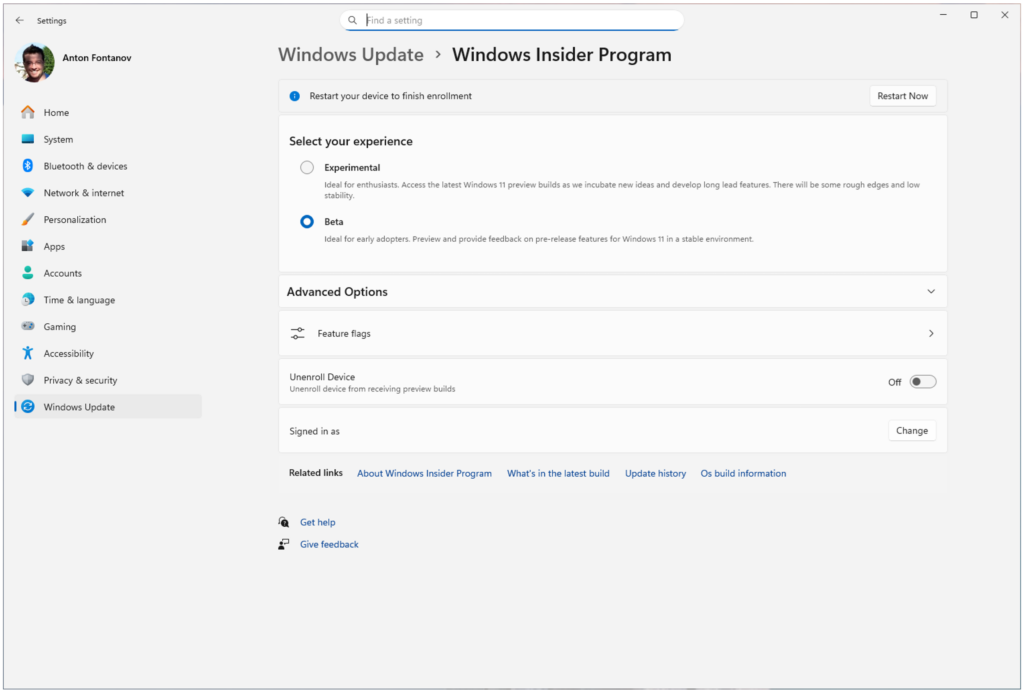
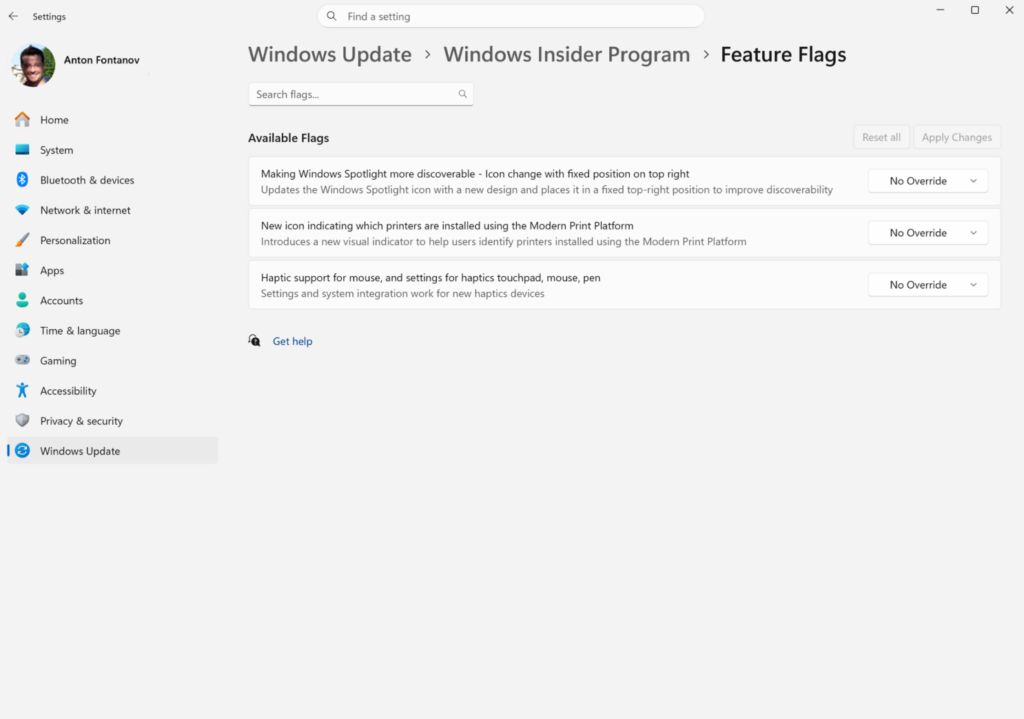
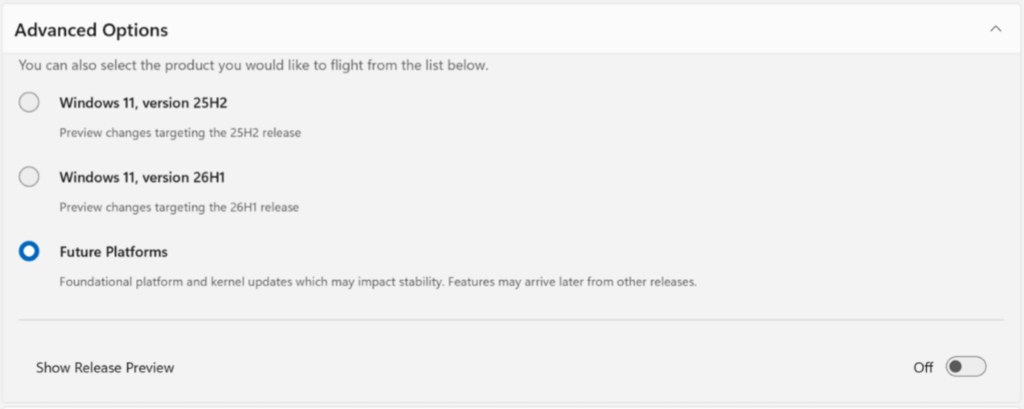







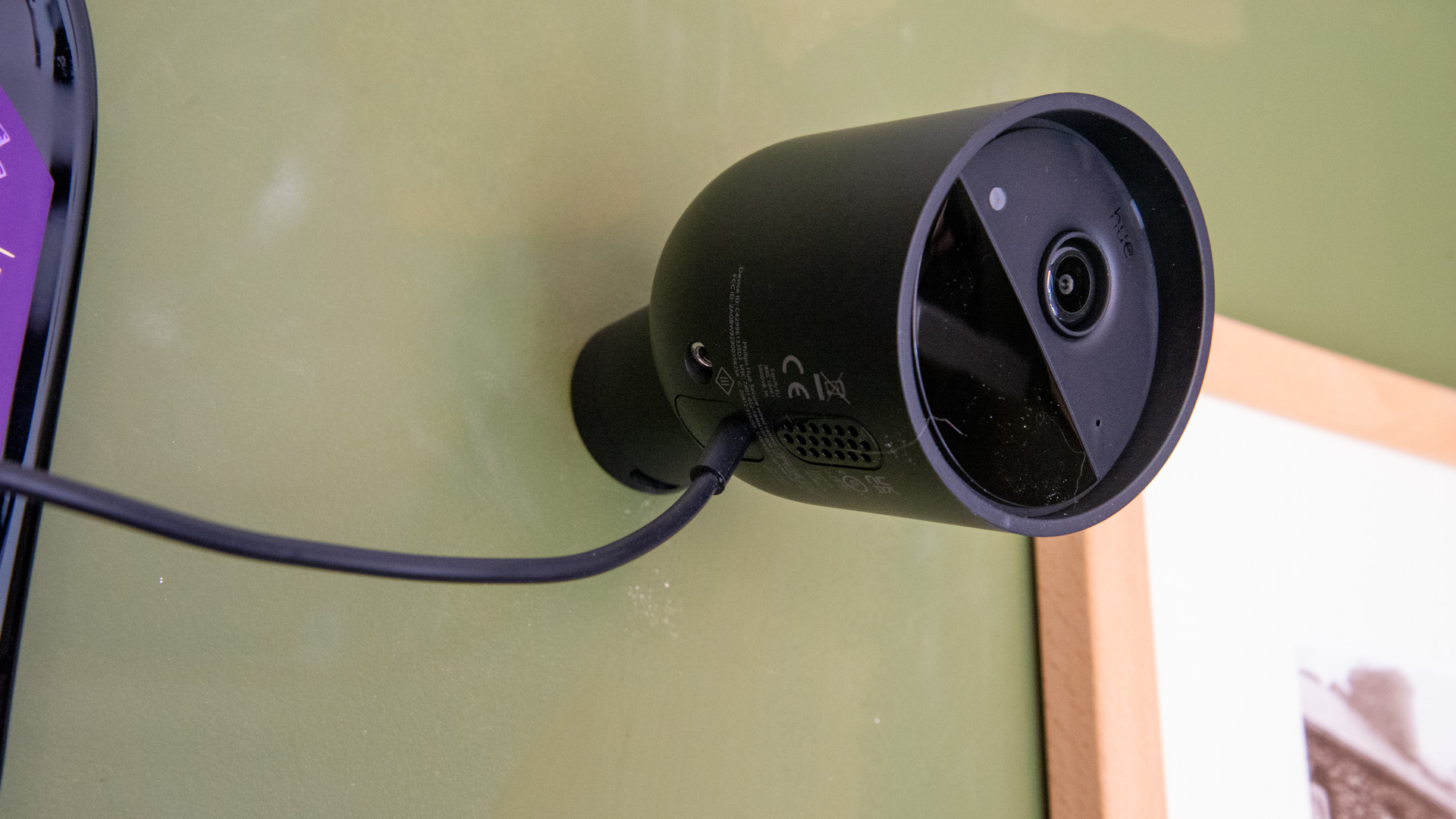


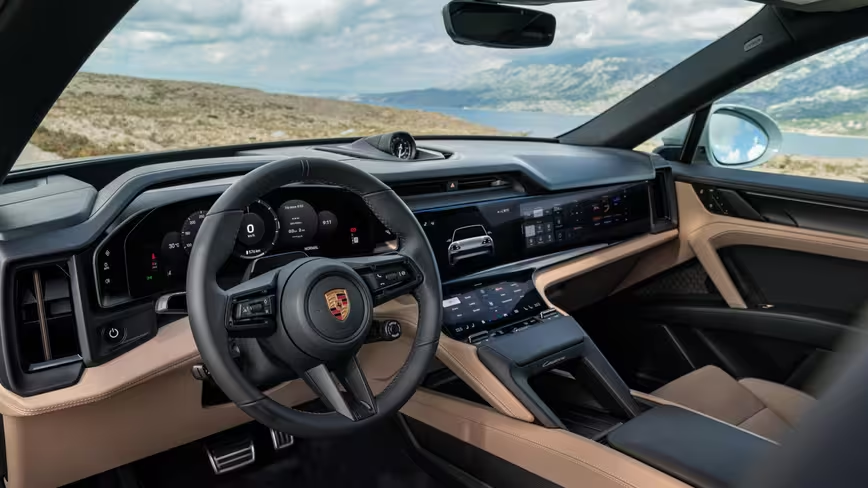




































You must be logged in to post a comment Login