

Business
Banks pay near 2-year high rates on CDs amid tight liquidity

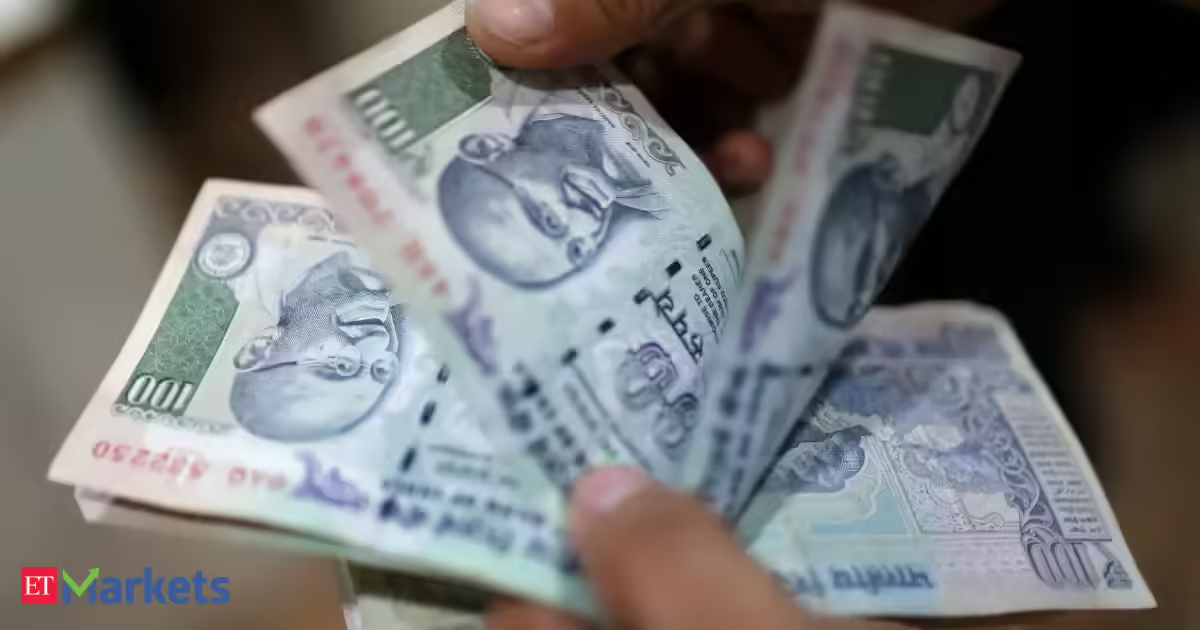
Data from the Clearing Corporation of India showed CSB Bank offered the highest rate at 8.32% for 91 days, followed by Ujjivan Small Finance Bank and Equitas Small Finance Bank, which raised funds at 8.25% for 366 days and 356 days, respectively. Other lenders such as HDFC Bank and IDBI Bank paid 7.6% for 33-day funds.
“While some firming is typical at year-end as banks shore up their balance sheets, this spike goes beyond seasonality,” said VRC Reddy of Karur Vysya Bank. “CD rates have moved to elevated levels, signalling deeper funding pressures rather than just a year-end phenomenon.”

HDFC Bank, the country’s most valuable lender, which has been under investor scrutiny following the sudden exit of chairman Atanu Chakraborty, raised funds at 7.6% for 33 days on March 27, mobilising ₹4,300 crore. Punjab National Bank raised ₹1,175 crore at 7.5% for the same tenor. These rates are well above the 3.25% banks typically pay retail depositors for 30- to 45-day deposits. Most banks pay around 6.25% to 7% for one-year deposits.

“The CD rates do appear high when compared with retail deposit rates or the card rates published by banks, largely because deposit growth has lagged credit growth,” said Anil Gupta, co-group head for financial sector ratings at ICRA.
Overall, HDFC Bank raised ₹23,090 crore during the last fortnight across tenors ranging from 33 to 327 days, paying interest rates between 7.3% and 7.6%. Data showed Axis Bank raised ₹3,500 crore at 7.6% for 92 days, IndusInd Bank raised ₹2,075 crore at around 7.5% for tenors ranging from 91 to 94 days, while Bandhan Bank paid 7.85% for 186 days on a ₹125 crore CD.During the fortnight ended March 31, banks issued ₹1.07 lakh crore of CDs, broadly in line with issuance in the corresponding fortnight last year.
CD rates had earlier climbed sharply during periods of tight liquidity, peaking at about 8.15% between February and March 2024, according to historical data.
Reddy said elevated CD rates reflect a combination of tight systemic liquidity, pressures linked to liquidity coverage ratio requirements, and tactical balance-sheet management amid weak deposit mobilisation.
“In this backdrop, banks have prioritised certainty over cost, relying on CDs and other bulk funding to secure immediate and assured resources,” he said.
ICRA’s Gupta said while CD rates are high, such issuances are typically used to plug short-term mismatches in asset-liability flows. “Certificates of deposit account for only 2.6% of overall bank deposits and do not materially increase the overall cost of deposits,” he said.
Union Bank of India raised ₹24,060 crore, while Punjab National Bank mobilised ₹12,450 crore in the last fortnight of March, offering rates ranging between 6.9% and 7.5%, the data showed.
Banks paid higher rates for shorter-tenor CDs than for longer maturities.
Reddy said CD rates may ease from the March-end spike but are unlikely to soften meaningfully in FY27. “The underlying drivers – tight liquidity conditions, a persistent credit-deposit mismatch and pressure on deposit mobilisation – are structural rather than transient,” he said.

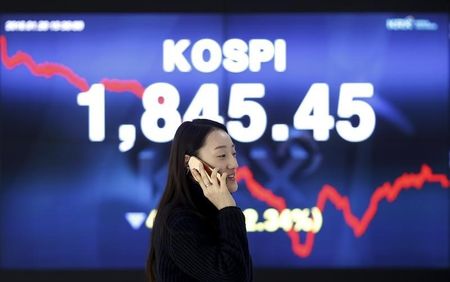
South Korea’s KOSPI hits record high on chipmaker rally

The Big Australian has begun talks with Yindjibarndi Energy on a deal to supply green power to the miner’s extensive Pilbara iron ore operations.


Seeking Alpha’s transcripts team is responsible for the development of all of our transcript-related projects. We currently publish thousands of quarterly earnings calls per quarter on our site and are continuing to grow and expand our coverage. The purpose of this profile is to allow us to share with our readers new transcript-related developments. Thanks, SA Transcripts Team

“Custard apple sits in a strange gap. Demand is rising, but the farming hasn’t gone high-tech as the crop is naturally hardy. It grows in poor soil, needs very little water, and survives on rainfall. Farmers don’t need expensive irrigation, sensors, or controlled environments so tech adoption stays low,” he says.

How much of Hindalco’s India business performance is driven by structural factors and how much is cyclical?
The upstream business for any commodity is driven by LME (London Metal Exchange)… Our profitability rose proportionately with the gains in LME, but our aluminium downstream business is not linked to LME and still had a great quarter. For copper, it was because of sulphuric acid and the downstream business. So, a part of it is related to pricing, but for manufacturing companies, a large part of it is also how well you run your operations and take care of your customers. Therefore, both factors have to be given credit.
How sustainable are these numbers?
The first quarter of FY27 will be better than the fourth quarter of FY26. We feel that prices will be in the range of $3,400-$3,500 per tonne at least up to the end of 2026. About 2.5-3.0 million tonnes of aluminium have gone off the market because of the West Asia crisis, and it will take six months to get these back online.
Between the higher prices of aluminium and higher input costs, what will profitability look like?
Commodity prices are much higher compared with our cost of production, so it is safe to say fiscal 2027 is going to be much stronger. The first three quarters of this year are going to be very strong.
Will the company’s performance in India overshadow that at Novelis?
Fiscal 2027 will be the turnaround year for Novelis-one, because of Oswego, which will restart next week, and the other reason is the commissioning of the hot mill in Bay Minette. Once these two are done, deleveraging will start from FY28. Ebitda will also start to stabilise at around $500 per tonne on a consistent basis. Next year, even if LME corrects, Novelis will be back. This year is a positive inflection point for Novelis.
Will the IPO for Novelis be planned by FY28?
No. The only focus for Novelis is the restart of Oswego and the full commissioning of Bay Minette.
Do you think the fires at Oswego have impacted investor sentiment for Novelis?
We have done some analysis to make sure this does not happen again. But what the fires have shown the market and the customers is that companies like Novelis have an advantage because they have scale. We have managed to keep supplying Ford Motor because of our worldwide presence and scale.

“Later today, I, and other families who have lost children to social media, will tell the prime minister directly: social media is a product, and like any other faulty product causing the deaths of children, it should be restricted until the companies responsible have fixed it and proven it is safe,” Ellen said.
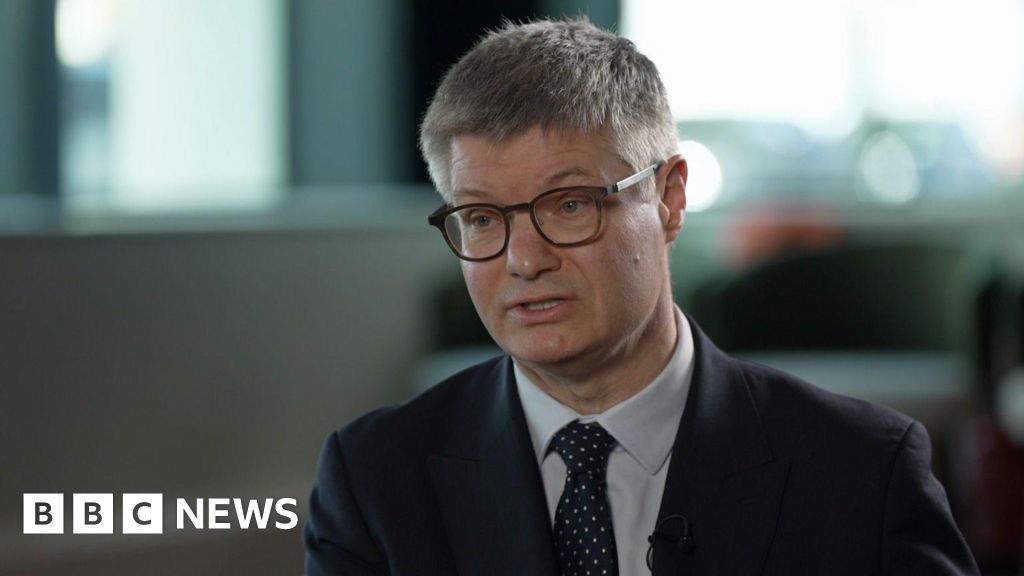
Lord Wolfson tells the BBC Next now typically receives double the number of applicants for one role than it did two years ago.

Unleash Prosperity co-founder Stephen Moore discusses the gas tax holiday proposal and the House-passed housing affordability bill on ‘The Bottom Line.’
A recall issued by Hyundai could impact more than 421,000 vehicles after the National Highway Traffic Safety Administration (NHTSA) discovered a software bug.
The software issue in the front cameras may cause the forward collision-avoidance system to activate prematurely. This means the brakes could unexpectedly be applied, potentially causing a crash, according to the announcement.
MASSIVE HONDA RECALL IMPACTS 440K VEHICLES OVER AIRBAGS POTENTIALLY DEPLOYING ‘UNEXPECTEDLY’

Hyundai Tuscon Plug-in hybrid crossover SUV on display. Hyundai has recalled more than 421,000 vehicles over a software bug that could cause the vehicles to brake prematurely. (Getty Images / Getty Images)
Four crashes have been reported, the NHTSA said in a May 19 recall report.
The recall includes certain 2025–2026 Hyundai Santa Cruz, Tucson, Tucson Hybrid, and Tucson Plug-In Hybrid vehicles.
Between October 28, 2024, and April 27, 2026, Hyundai received 376 reports related to the operation of the Forward Collision-Avoidance (FCA) system, the report states.
TESLA RECALLS MORE THAN 218K VEHICLES OVER REARVIEW IMAGE ISSUE THAT POSES CRASH RISK
Out of the hundreds of reports received, four indicated crashes where the Hyundai vehicle was rear-ended by a closely following vehicle, resulting in four alleged injuries.
Owners of the recalled vehicles are expected to receive notification letters by July 17, the NHTSA said.
To remedy the issue, owners must bring their vehicles to a Hyundai dealer, where technicians will update the front camera software for free.

The Hyundai logo is displayed at the New York International Auto Show, March 28, 2018, at the Jacob K. Javits Convention Center in New York City (Drew Angerer/Getty Images / Getty Images)
GET FOX BUSINESS ON THE GO BY CLICKING HERE
Last week, Hyundai recalled more than 54,000 Elantra Hybrid vehicles in the U.S. due to a defect in the hybrid power system that could overheat and spark a fire.
FOX Business has reached out to Hyundai.

Lumentum Holdings Inc.’s SWOT analysis: optical stock positioned for AI data center growth

Speaking to the media on the sidelines of the TEXPROCIL Export Awards event on Monday, the Union Finance Minister said the government remains open to receiving suggestions and feedback from investors on the matter.
Also Read: The three Fs that Sitharaman flagged as India braces for a widening global oil shock, forex strain
“On this specific issue, and on any issue, we are always ready and willing to listen to the people. We will certainly take their inputs,” Sitharaman said while responding to questions regarding demands from stock market participants for a review of LTCG and STCG taxes.
Her remarks come amid growing discussions among market participants over the impact of capital gains taxation on equity market participation and investor sentiment.
LTCG and STCG are taxes imposed on profits earned from selling shares and other financial assets.
Short-Term Capital Gains (STCG) tax is charged when shares are sold within a shorter holding period, while Long-Term Capital Gains (LTCG) tax applies when investments are held for a longer duration before being sold.The Union Finance Minister, however, did not announce any formal review or change in the taxation structure.
Also Read: FM asks lenders to go beyond standard loans, design credit repayments around biz cycles
Her remarks only indicated that the government is open to hearing feedback and suggestions from stakeholders regarding the current tax framework.
The comments come at a time when domestic equity markets have been witnessing increased volatility due to global geopolitical tensions, crude oil price movements, foreign investor flows and concerns related to inflation and interest rates.
Sitharaman’s statement is being viewed by investors as a signal that the government is willing to engage with stakeholders and consider their concerns regarding market-related taxation issues.
She also addressed crucial domestic fiscal issues, firmly clarifying the mechanics behind recent petrol and diesel hikes before weighing in on gold optimisation, the RBI dividend, and India’s growth trajectory amid the West Asia crisis.
FM Sitharaman clarified that price hikes are purely operational and driven by global procurement realities rather than sudden government policy changes.
She also revealed that the central government had previously absorbed massive shocks–resulting in a Rs 1 lakh crore fiscal hit from reducing central taxes–to insulate consumers for over two and a half months.

David Letterman Keeps Pressing CBS Over Colbert Exit

Montreal fans briefly carry U.S. anthem after mic fails before Canadiens playoff game

Why prompt debt, retrieval debt, and evaluation debt are quietly reshaping enterprise AI risk


-

 Crypto World4 days ago
Blockchain.com files with SEC for U.S. IPO
-

 Fashion3 days ago
Holiday Weekend Open Thread – Corporette.com
-

 Business3 days ago
Dell Technologies DELL Stock Surges 15% on AI Server Momentum and Analyst Upgrades in 2026
-

 Crypto World4 days ago
Bitcoin Accumulation Weakens as BTC Realized Losses Hit $600M
-

 Crypto World3 days ago
Space X IPO Is ‘Bad News’ for Tech Stocks: But What About Bitcoin?
-

 Politics3 days ago
Makerfield: a tale of two social-media histories
-

 Crypto World3 days ago
Robinhood crypto COO Tanya Denisova exits
-

 Crypto World4 days ago
MicroStrategy’s Saylor Says Miners No Longer Set Bitcoin Price, Another Force Has Taken Over
-

 Business1 day ago
NYT Strands Answers May 24 2026 Revealed for Puzzle No. 812 Theme Summer Essentials
-

 Crypto World3 days ago
AI infrastructure race heats up as IREN pitches full-stack strategy, WhiteFiber lands $160M deal
-
 Tech4 days ago
A 0.12% parameter add-on gives AI agents the working memory RAG can’t
-

 Tech4 days ago
WhatsApp ads could make Irish debut after discussions with DPC
-

 Tech4 days ago
You Can Now Add ChatGPT To PowerPoint
-

 Business4 days ago
Trump Invests $1M-$5M in Kura Sushi USA Chain With 27 California Locations
-
 NewsBeat5 days ago
Charity run by Reform leader Malcolm Offord accused of ‘law breaking’ over Scottish registration
-

 Sports4 days ago
2026 CJ Cup Byron Nelson leaderboard: Brooks Koepka finds putting stroke in Round 1
-

 Crypto World5 days ago
Exa Labs raises $250 million in funding led by a16z
-
Business4 days ago
Goldman Sachs reinstates Ageas stock coverage with neutral rating
-

 Crypto World4 days ago
Trump Media’s Bitcoin Stash Shrinks Again as 2,650 BTC Lands on Crypto.com
-
 Crypto World3 days ago
Verus Bridge Hacker Returns $8.5M ETH, Keeps $2.8M as Bounty
You must be logged in to post a comment Login