As a detail-oriented investor with a strong foundation in finance and business writing, I focus on analyzing undervalued and disliked companies or industries that have strong fundamentals and good cash flows. I have a particular interest in sectors such as Oil&Gas and consumer goods. Basically, anything that has been unloved for unjustified reasons that could offer substantial returns. Energy Transfer is one of those companies that I came across when no one wanted to touch it and now I can’t resolve myself to sell it. I will always focus more on long-term value investing but I can sometimes lose myself in possible deal arbitrage such as with Microsoft/ Activision Blizzard, Spirit Airlines/Jetblue (that one still hurts), and Nippon/U.S. Steel (perfect exit at $50.19). I tend to shun businesses that I can’t understand either high-tech or certain consumer goods such as fashion (give me a Levi’s jeans). I don’t understand why anyone would invest in cryptocurrencies as well. Through Seeking Alpha, I aim to connect with like-minded investors, share insights, and build a collaborative community of individuals seeking superior returns and informed decision-making, currently on a quest to review every public company.
Analyst’s Disclosure: I/we have no stock, option or similar derivative position in any of the companies mentioned, and no plans to initiate any such positions within the next 72 hours. I wrote this article myself, and it expresses my own opinions. I am not receiving compensation for it (other than from Seeking Alpha). I have no business relationship with any company whose stock is mentioned in this article.
Seeking Alpha’s Disclosure: Past performance is no guarantee of future results. No recommendation or advice is being given as to whether any investment is suitable for a particular investor. Any views or opinions expressed above may not reflect those of Seeking Alpha as a whole. Seeking Alpha is not a licensed securities dealer, broker or US investment adviser or investment bank. Our analysts are third party authors that include both professional investors and individual investors who may not be licensed or certified by any institute or regulatory body.
Daniel is an avid and active professional investor.
He runs Crude Value Insights, a value-oriented newsletter aimed at analyzing the cash flows and assessing the value of companies in the oil and gas space. His primary focus is on finding businesses that are trading at a significant discount to their intrinsic value by employing a combination of Benjamin Graham’s investment philosophy and a contrarian approach to the market and the securities therein. Learn more.
Analyst’s Disclosure: I/we have no stock, option or similar derivative position in any of the companies mentioned, and no plans to initiate any such positions within the next 72 hours. I wrote this article myself, and it expresses my own opinions. I am not receiving compensation for it (other than from Seeking Alpha). I have no business relationship with any company whose stock is mentioned in this article.
Seeking Alpha’s Disclosure: Past performance is no guarantee of future results. No recommendation or advice is being given as to whether any investment is suitable for a particular investor. Any views or opinions expressed above may not reflect those of Seeking Alpha as a whole. Seeking Alpha is not a licensed securities dealer, broker or US investment adviser or investment bank. Our analysts are third party authors that include both professional investors and individual investors who may not be licensed or certified by any institute or regulatory body.
Thank you for taking time out of your busy schedules to join us today for Astellas R&D Day. I am Kato, Chief Communications and IR Officer, and I’ll be serving as a moderator today. It is a pleasure to have you here.
Following our presentation, we will move on to the Q&A session. The presentation will be based on the presentation materials available on our website. Simultaneous interpretation in Japanese and English will be provided throughout the event, including the Q&A session. Please note that we cannot guarantee the accuracy of the simultaneous interpretation. [Operator Instructions]
Please note the following. This material or presentation and answers and statement for the company in the Q&A session by representatives includes forward-looking statements based on assumptions and beliefs in light of the information currently available and subject to significant risks and uncertainties. Actual financial results may differ materially depending on a number of factors. They contain information on pharmaceuticals, including the product under development, but it is not intended to make any representations or advertisement of these preparations. The data we are going to introduce today is based upon the contents presented at the conference meeting.
NEW DELHI — Veteran Indian pacer Bhuvneshwar Kumar etched his name deeper into cricket history on April 5, 2026, becoming the first fast bowler — and only the second overall — to reach 200 wickets in the Indian Premier League when he dismissed Chennai Super Kings batter Ayush Mhatre during Royal Challengers Bengaluru’s clash with CSK in Bengaluru.
Bhuvneshwar Kumar
The 36-year-old right-arm swing bowler, playing for RCB in IPL 2026, needed just one more scalp to hit the landmark and achieved it early in the innings after RCB posted a massive total. Only leg-spinner Yuzvendra Chahal had previously crossed 200 IPL wickets, making Bhuvi’s feat — accomplished with his trademark precision and movement — a testament to longevity and adaptability in T20 cricket’s high-pressure environment.
Kumar’s milestone comes as he continues to evolve from a new-ball specialist into a death-over weapon, holding records for the most powerplay wickets (80) and sitting second in death-over scalps. His economy and dot-ball percentage remain impressive even as T20 scoring rates have skyrocketed across the league.
Here are 10 essential things to know about Bhuvneshwar Kumar, the Meerut-born “Swing King” whose career has spanned more than a decade of international and franchise success:
Born to Swing: Early Life and Humble Roots Bhuvneshwar Kumar Singh was born on February 5, 1990, in Meerut, Uttar Pradesh, to Kiran Pal Singh, a police sub-inspector, and Indresh Singh, a homemaker. His elder sister Rekha encouraged his cricket journey, taking him to his first coaching session at age 13. Initially dreaming of joining the Indian Army, Kumar instead channeled his discipline into fast bowling, debuting in first-class cricket for Uttar Pradesh at 17.
Dismissing the Legend: A Star is Born At just 19, Kumar announced himself dramatically by dismissing Sachin Tendulkar for a duck in a Ranji Trophy match — the first time the Master Blaster was bowled for zero in first-class cricket. This early scalping of a cricketing icon signaled the arrival of a bowler with exceptional control and swing, both ways.
International Debut and Instant Impact Kumar made his India debut in a T20I against Pakistan in December 2012, taking three wickets. His ODI debut followed days later, again against Pakistan. He became the first Indian bowler to claim a five-wicket haul in all three international formats: Tests, ODIs and T20Is. His first international wicket in each format came via a bowled dismissal, showcasing his ability to hit the stumps with movement.
The Swing King Nickname and Technique Known affectionately as “Bhuvi,” Kumar earned the title “Swing King” for his ability to move the new ball both inward and outward with subtle seam positioning and wrist work. At a height of 5-foot-9, he relies on accuracy, late swing and clever variations rather than raw pace, often operating effectively in the powerplay and death overs.
IPL Pioneer and Two-Time Purple Cap Winner Kumar has been a stalwart in the IPL since 2011, representing Pune Warriors, Sunrisers Hyderabad (where he won the title in 2016) and now RCB. He is the only bowler to win the Purple Cap — awarded to the season’s leading wicket-taker — in consecutive years (2016 and 2017) while with SRH. He helped RCB clinch their maiden IPL title in 2025 with 17 wickets and was retained for 2026 at ₹10.75 crore. He holds the record for most dot balls bowled in IPL history.
International Career Highlights and Comeback Hopes Across 21 Tests, 121 ODIs and 87 T20Is, Kumar has taken 63, 141 and 90 wickets respectively. He was part of India’s 2013 Champions Trophy-winning squad and contributed to Asia Cup triumphs in 2016 and 2018. Though he has not played for India since November 2022, the veteran has expressed readiness for a recall, leaving the decision to selectors. His experience remains valuable in white-ball formats.
Family Man and Personal Life Kumar married Nupur Nagar, an engineer, in November 2017 in Meerut. The couple welcomed a daughter in November 2021. Known for his shy, gentle personality — often compared to Rahul Dravid in demeanor — Kumar maintains a low-profile life off the field despite his fame.
Resilience Through Injury and Evolution Kumar has battled injuries and form dips, particularly between 2018 and 2022, but staged strong comebacks. In recent IPL seasons he adapted his game for higher scoring environments, improving death bowling while retaining new-ball mastery. His economy rate and ability to bowl yorkers and slower balls have kept him relevant at 36.
Records and Unique Distinctions Beyond the IPL 200-wicket club, Kumar is India’s fourth-highest T20I wicket-taker. He holds the record for most wickets in the IPL powerplay and has delivered memorable performances, including a Man of the Series in a tri-nation tournament and consistent contributions in high-stakes matches. He is also a handy lower-order batsman with a first-class century to his name.
Legacy of Longevity in a Fast-Paced Era At an age when many pacers fade, Kumar continues to thrive through intelligence and skill rather than speed. His journey from a small-town boy dismissing Tendulkar to becoming an IPL milestone-maker underscores dedication, adaptability and quiet leadership. Teammates and analysts praise his calm presence and work ethic, qualities that have sustained a career spanning multiple generations of Indian cricket.
As IPL 2026 unfolds, Kumar’s early impact for RCB — including a lethal yorker that even rattled teammate Virat Kohli in nets — signals he remains a potent force. With RCB starting strongly, his experience could prove decisive in their title defense.
Off the field, Kumar’s story inspires many: a police officer’s son who turned swing bowling into an art form while balancing family and the rigors of professional sport. Fans and experts alike watch to see whether he can add more chapters, perhaps including a long-awaited India recall or further franchise success.
Advertisement
Kumar’s milestone against CSK not only highlights personal achievement but also the enduring value of traditional skills like swing in an era dominated by power-hitting and data-driven strategies. As one of the few bowlers to master both powerplay containment and death-over execution, he remains a blueprint for aspiring pacers.
With the IPL season still young, all eyes will be on the Swing King as he chases further records and helps guide RCB’s campaign. Whether or not he returns to the national side, Bhuvneshwar Kumar’s place among India’s modern greats is already secure.
NEW YORK — The S&P 500 pushed above the 6,600 level in early trading Monday as investors welcomed tentative signs of potential de-escalation in the U.S.-Iran conflict, easing pressure from elevated oil prices that have weighed on the benchmark throughout a challenging start to 2026.
The broad-market index traded near 6,604 in midday action, building on modest gains from the previous close of 6,582.69 on April 2. The move reflected cautious optimism that diplomatic efforts could stabilize energy flows through the Persian Gulf and prevent prolonged inflationary spikes, even as uncertainties lingered over the broader Middle East situation.
The S&P 500 has struggled in the first quarter of 2026, finishing down approximately 4% to 4.6% after a strong 2025 that delivered an 18% total return. Geopolitical tensions, surging oil prices and questions about economic resilience contributed to the weakest quarterly performance since 2022, though a late-March relief rally helped limit the damage.
Monday’s trading featured lighter volume typical of the post-Easter period, with the Dow Jones Industrial Average and Nasdaq Composite also showing small advances. Technology and financial sectors provided support, while energy shares lagged amid moderating crude futures. The session highlighted improving market breadth as capital rotated toward economically sensitive names on hopes of lower energy costs.
Analysts noted that any meaningful progress toward stabilizing the region could remove a major headwind for corporate spending and consumer confidence. Treasury Secretary Scott Bessent had signaled earlier U.S. efforts to keep oil markets functioning, contributing to the improved sentiment. Oil prices eased modestly after recent spikes triggered by disruptions, helping temper fears of a sustained “inflationary pincer” effect.
Advertisement
Despite the year-to-date decline, corporate earnings have offered resilience. Many S&P 500 companies reported solid results, supported by steady consumer spending among higher-income households and ongoing investment in artificial intelligence. Profit growth has held up better than some pessimists anticipated, providing a foundation for long-term optimism even amid near-term volatility.
The Federal Reserve’s decision to hold interest rates steady while projecting limited easing later in 2026 has helped anchor expectations. Chair Jerome Powell acknowledged temporary inflationary pressures from higher oil but suggested disruptions could prove short-lived if tensions ease. Markets continue to price in modest policy support, preventing a deeper sell-off so far in 2026.
Wall Street strategists have maintained largely constructive outlooks. Several major firms project the S&P 500 could reach 7,000 to 7,600 by year-end, citing expected 12% earnings-per-share growth driven by AI productivity gains, resilient corporate margins and potential fiscal tailwinds. Valuation levels, while elevated in growth sectors, are viewed as reasonable given structural shifts in the economy.
Risks remain prominent. Renewed escalation in the Middle East could quickly reverse gains by pushing oil higher and reigniting inflation concerns. Smaller companies in the Russell 2000 have shown sporadic strength on hopes of broader participation, but they remain more vulnerable to higher borrowing costs and any slowdown in domestic activity.
Advertisement
Treasury yields moved modestly as investors balanced growth hopes against lingering inflation risks. The CBOE Volatility Index eased slightly, signaling reduced fear compared with March’s sharper swings. Trading volume remained subdued, consistent with lighter holiday-week activity.
The S&P 500’s ability to hold above 6,600 will depend on concrete diplomatic developments and upcoming economic data, including employment reports and inflation readings. April has historically been a positive month for equities, though this year’s geopolitical overlay makes seasonal patterns less reliable.
For individual investors, the current environment underscores the value of diversification and a long-term perspective. While the benchmark is down modestly for the year, many high-quality companies continue to demonstrate earnings strength and strategic investments in transformative technologies. Financial advisers recommend balanced portfolios with exposure to both growth and defensive names amid persistent uncertainties.
International markets showed mixed performance, with European shares gaining modestly on similar de-escalation hopes and Asian indexes more subdued amid global spillovers and domestic challenges.
Advertisement
As the second quarter begins, the market narrative centers on whether AI-driven productivity gains and corporate earnings momentum can outweigh near-term macroeconomic and geopolitical headwinds. Monday’s trading offered an early indication that investors are willing to reward positive headlines on the energy and diplomatic fronts.
The broader U.S. economy has sent mixed signals, with some softening in job growth offset by corporate resilience and prior rate cuts that have kept borrowing costs manageable. Fiscal measures have provided additional support in key areas.
The S&P 500, widely regarded as the best gauge of large-cap U.S. equities, now sits near 6,600 after clawing back some ground from recent lows. Whether this modest rebound broadens into sustained recovery will hinge largely on developments in the Middle East and the trajectory of energy prices.
For now, the index continues to reflect both the challenges and underlying opportunities of 2026 — a year defined by volatility but supported by strong corporate fundamentals and long-term technological trends. Investors will watch closely for further clarity on the global stage as April trading unfolds.
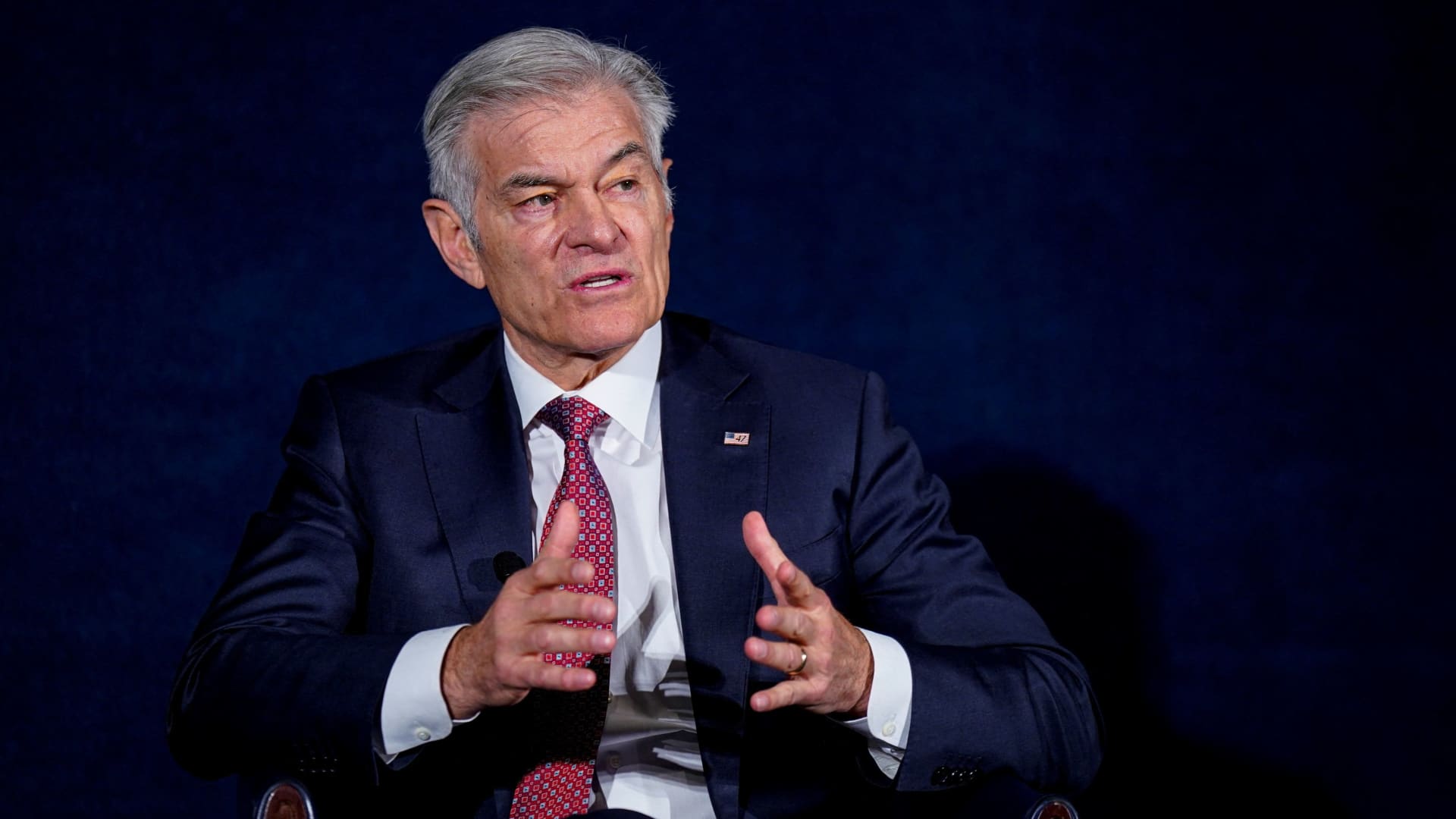
Administrator for the Centers for Medicare & Medicaid Services Mehmet Oz speaks during an event sponsored by the Action for Progress Coalition, at the National Press Club in Washington, D.C., U.S., Feb. 2, 2026.
Al Drago | Reuters
The Trump administration on Monday finalized a 2027 payment rate increase to privately run Medicare plans that was far bigger than initially proposed, a boost to health insurer stocks.
Advertisement
The government will increase average Medicare Advantage payments by 2.48%, or more than $13 billion, in 2027, according to a release from the Centers for Medicare & Medicaid Services. The Trump administration in January proposed a payment rate hike of 0.09%, which pummeled shares of insurers that run those plans.
Shares of UnitedHealth and CVS Health rose more than 9% in after-hours trading on Monday. Meanwhile, Humana‘s stock jumped around 12%.
“Medicare Advantage and Part D should work for the people who rely on them,” said CMS Administrator Dr. Mehmet Oz in a release. “These updates keep coverage affordable and ensure patients get real value from their plans.”
The closely watched government payment rate determines how much insurers can charge for monthly premiums and plan benefits they offer and, ultimately, their profits.
Advertisement
Medicare Advantage is a privately run health insurance plan contracted by Medicare. More than half of Medicare beneficiaries are enrolled in such plans, enticed by lower monthly premiums and extra benefits not covered by traditional Medicare, according to health policy research firm KFF.
Gold Mining Bull is a gold analyst with more than a decade of investing experience in commodities, hard assets (gold and silver miners), exploration companies, oil and gas producers, MLPs, and more.
Analyst’s Disclosure: I/we have a beneficial long position in the shares of BSM, TRMLF, EXE either through stock ownership, options, or other derivatives. I wrote this article myself, and it expresses my own opinions. I am not receiving compensation for it (other than from Seeking Alpha). I have no business relationship with any company whose stock is mentioned in this article.
Seeking Alpha’s Disclosure: Past performance is no guarantee of future results. No recommendation or advice is being given as to whether any investment is suitable for a particular investor. Any views or opinions expressed above may not reflect those of Seeking Alpha as a whole. Seeking Alpha is not a licensed securities dealer, broker or US investment adviser or investment bank. Our analysts are third party authors that include both professional investors and individual investors who may not be licensed or certified by any institute or regulatory body.






















































You must be logged in to post a comment Login