


Connect with us
DAPA Banner

NewsBeat

Is the US about to commit war crimes in Iran? | US News

Published

on

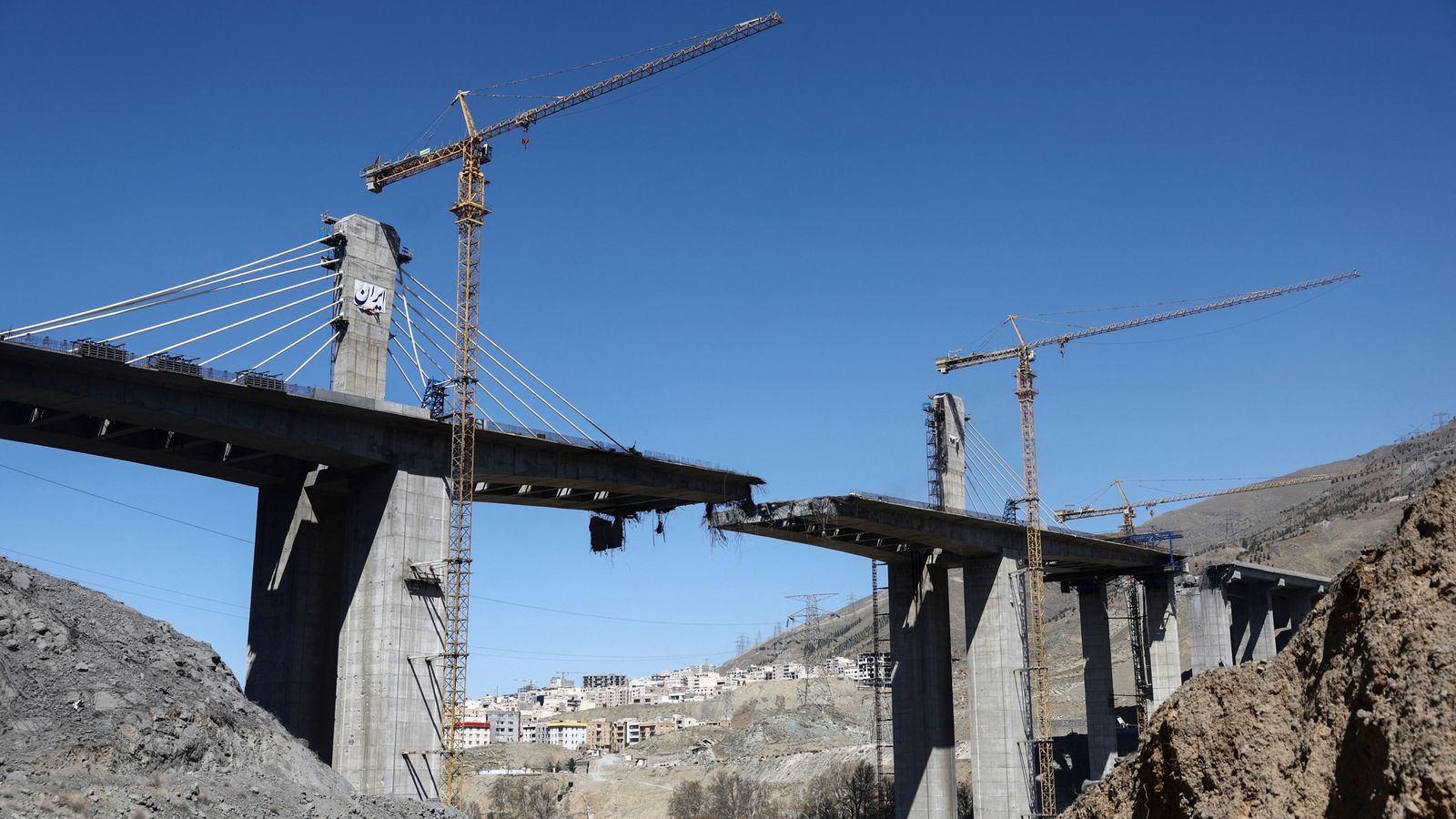
During Operation Epic Fury, the US struck Iran's B1 bridge. Pic: Reuters

Donald Trump has given Iran a deadline and threatened to send the country back to the “Stone Ages” if it does not comply by attacking power plants and bridges.

Crucially, Mr Trump has said the US would hit civilian infrastructure, something that is widely considered a war crime under international law, which sets out what is and isn’t permitted during war.

The Geneva Convention, which the UK is a signatory to, but the US is not, states, “civilian objects shall not be the object of attack or of reprisals”.

Image:
DonaldTrump threatened to send Iran back to the ‘stone ages’ in a press conference on Monday. Pic: Reuters

However, the US president said in a news conference on Monday that “the entire country” could be taken out in “one night, and that night might be tomorrow”.

Advertisement

He added: “We’re giving them till tomorrow, 8pm EST (1am UK time), and after that, they’re going to have no bridges, they’re going to have no power plants. Stone ages.”

When asked, Mr Trump said he was “not at all” concerned that such an act could be classified as a war crime, before adding, “I hope I don’t have to do it”.

In a Truth Social post on Tuesday, the president went further, saying: “A whole civilisation will die tonight, never to be brought back. I don’t want that to happen, but it probably will.”

“Any targeting of civilian infrastructure… is illegal”

Advertisement

The possibility of targeting civilian infrastructure has been condemned by European leaders, including EU Council president Antonio Costa.

On Monday, Mr Costa wrote that “Any targeting of civilian infrastructure, namely energy facilities, is illegal and unacceptable”.

The possibility of concerted US strikes against civilian infrastructure marks a significant departure from Washington’s previous stance on war crimes and what constitutes them.

Four years ago, it was the US that was accusing Russia of war crimes over the targeting of civilian infrastructure in Ukraine, with president Joe Biden calling Russian President Vladimir Putin a “war criminal”.

Despite Russia not being a signatory to the Geneva Conventions, alleged Russian actions in Ukraine still led to the International Criminal Court (ICC) issuing an arrest warrant for Mr Putin.

The Kremlin said at the time that Russia, which does not recognise the ICC, found the questions raised by the court “outrageous and unacceptable”.

Advertisement

In the past, those found guilty of war crimes, such as former Bosnian Serb general Ratko Mladic, dubbed the “Butcher of Bosnia”, have been sentenced to life in prison.

Mr Costa has said that the same principle of not targeting civilian infrastructure “applied everywhere,” in the same way that it “applies to Russia’s war in Ukraine”.

Advertisement

The head of the UN, Antonio Guterres, has openly raised the idea that such an attack, by any party, could be counted as war crimes.

In an interview with Politico in late March, Mr Guterres said: “If there are attacks either on Iran or from Iran on energy infrastructure, I think that there are reasonable grounds to think that they might constitute a war crime.”

Iran has been firing missiles and drones at Israel (pictured) and neighbouring countries in the region. Pic: Reuters
Image:
Iran has been firing missiles and drones at Israel (pictured) and neighbouring countries in the region. Pic: Reuters

Previous power threats

Iran, Israel and the US have all been attacking energy infrastructure since the outbreak of the current conflict.

Responding to those attacks in March, Heba Morayef, Amnesty International’s regional director, said: “There is a substantial risk such attacks would violate international humanitarian law and, in some cases, could amount to war crimes”.

Advertisement

However, a coordinated campaign targeting power plants, as the US has threatened, would be a significant escalation.

Read more from Sky News:
Popular holiday hotspot airport is out of fuel
Woman’s birth in mid-air creates tricky legal situation

This is not the first time that Mr Trump has threatened to hit Iranian power plants.

On 22 March, the president wrote on Truth Social that the US would “hit and obliterate” Iranian power plants if Tehran did not reopen the Strait of Hormuz within 48 hours.

Advertisement
During Operation Epic Fury, the US struck Iran's B1 bridge. Pic: Reuters
Image:
During Operation Epic Fury, the US struck Iran’s B1 bridge. Pic: Reuters

Iran responded by saying it would attack crucial infrastructure across the Gulf in response to any US attack, including desalination plants.

On Sunday, Kuwait accused Iran of launching an attack which put a water desalination station out of service – such moves may also pass the threshold of being deemed a war crime.

Source link

Advertisement
Continue Reading
Click to comment

You must be logged in to post a comment Login

Leave a Reply

NewsBeat

how the planet’s climate has changed since the photo that inspired the environmental movement

Published

on

how the planet’s climate has changed since the photo that inspired the environmental movement

A new Earthset image has been captured by the crew of Artemis II, 58 years since the iconic Earthrise photograph taken by the crew of Apollo 8. Over these past six decades, the climate has changed dramatically.

“Oh my God, look at that picture over there! There’s the Earth comin’ up. Wow, is that pretty.” That was Nasa astronaut Bill Anders’ reaction to seeing the Earth appearing to rise above the lunar horizon as their Apollo 8 spacecraft came around the Moon on Christmas Eve 1968.

Theirs were the first human eyes to see our planet at such a distance and from another celestial body. As fellow astronaut Jim Lovell said a few hours later: “The Earth from here is a grand oasis in the big vastness of space.”

That original Earthrise image is widely credited with helping to set the mainstream environmental movement in motion. Although I wasn’t born when the Apollo 8 photo was taken, a framed print of it hangs above my desk as a reminder of the beauty and fragility of our planet.

Advertisement

‘Earthset’ is the new photo from the far side of the Moon, captured on April 6 2026 by the crew of Artemis 2 as Earth dips behind the lunar horizon.
Nasa

For me as a climate scientist, these photos, taken 58 years apart, inspire me to reflect on how the Earth’s climate has changed in the interim.

The concentration of carbon dioxide (and other greenhouse gases) in our atmosphere has rapidly increased as a result of over half a century of continued and spreading industrial development, driven primarily by burning fossil fuels.

This is clearly illustrated by the Keeling curve – a graph that plots the continuous record of atmospheric CO₂ from Mauna Loa Observatory in Hawaii (started by Charles Keeling in 1958).

Advertisement


À lire aussi :
Mauna Loa Observatory captured the reality of climate change. The US plans to shut it down


This curve shows a steep and steady increase from approximately 320 parts per million (ppm) in 1968 to about 430ppm in 2026. This increase of over one-third in the total carbon dioxide in our atmosphere shows little sign of slowing down.

graphs showing increase in atmospheric CO2

Observed timeseries of atmospheric carbon dioxide concentration and global mean surface temperature with added logos for the Apollo 8 and Artemis 2 missions.
For latest updates on these and other key climate change indicators, visit the Met Office climate dashboard: https://climate.metoffice.cloud/dashboard.html

That additional blanket of greenhouse gases has increased the surface temperature of our planet. Data from the World Meteorological Organization shows how the global mean temperature record (the average temperature of the Earth’s surface) has risen by approximately 1.2°C since the Apollo 8 Earthrise photo was taken. This represents most of the warming that has happened since the early industrial period in the mid-19th century.

While an average global temperature increase of 1.2°C may not sound large, it means that regional hot extremes and new records are now much more likely. For example, my team’s recent research has shown that a 40°C day in the UK (first recorded on July 19 2022) is now over 20 times more likely than it was in the 1960s.

Advertisement

The global average temperature has surged in the past three years – most probably driven by a combination of internal climate variability and human-made emissions (including strong reductions in industrial aerosol particle emissions that largely act to cool the planet). In 2023, temperatures jumped from the previous record of 1.29°C (set in 2016) to 1.45°C above the early-industrial 1850-1900 baseline.

This record was then immediately broken in 2024 – the first year to temporarily exceed 1.5°C. Going beyond that boundary in a single year doesn’t mean we have breached the 1.5°C target set by the 2015 Paris climate agreement, which is generally accepted to refer to a 20-year average. However, it does highlight how rapidly we are now approaching that level of warming.


À lire aussi :
Record January heat suggests La Niña may be losing its ability to keep global warming in check


Temperatures in both years were partly boosted by warmer conditions in the tropical Pacific due to El Niño, a climate phenomenon that affects weather patterns globally. Last year, after El Niño had subsided, was slightly cooler at 1.43°C. However, current forecasts give a high probability for another El Niño developing during the second half of 2026. If this materialises, we could easily exceed 1.5°C again.

Advertisement

A key question is whether global warming is accelerating. This is difficult to detect directly from the surface temperature record. However, a recent study found a significant acceleration after accounting for the “noise” of year-to-year variability.

The view from above

Climate science isn’t just about measuring changes in temperature.

One of the legacies of the 1960s space race was the subsequent launch of many satellite observation platforms that have transformed our ability to monitor, understand and predict changes to the global climate.

We now have continuous monitoring of many key components of Earth’s climate system, including sea surface temperature, sea level, and the extent of polar sea ice, glaciers and land surface changes. Unfortunately, many of these reveal worrying trends, such as more frequent heatwaves on land and sea, loss of Arctic sea-ice, melting glaciers and sea-level rise.

Advertisement
graph showing fluctuations and increasing levels of earth energy over time

Observed timeseries of Earth energy imbalance (EEI) from Nasa Ceres dataset.
Ned Williams

One of the most concerning recent trends comes from a set of satellite instruments called the Nasa Ceres, which have measured changes in the Earth’s energy imbalance (EEI) since 2000. EEI is the difference between the amount of solar energy absorbed by the planet and the thermal energy radiated back into space.

The Ceres data shows a strong upward trend, indicating a growing rate of accumulation of energy, consistent with an acceleration in global heating.

Looking ahead, I hope that by the time astronauts take the first Earthrise photo from Mars (perhaps in the late 2030s), we are heading towards net-zero carbon emissions and more stable global temperatures.

Achieving net zero is this century’s Moonshot. The prize is minimising the severity of the worst climate consequences of global heating – leaving our children and future generations a sustainable “grand oasis” here on Earth.


Advertisement

Source link

Continue Reading

NewsBeat

Why organisations pick the wrong leaders

Published

on

Why organisations pick the wrong leaders

Plenty of people have worked under a manager who appears confident, articulate and highly visible – yet they struggle to lead their team effectively. Team members can become disengaged, decision-making slows and performance declines. But despite this, the same people always seem to progress through the hierarchy.

Unfortunately, this is not unusual. In many organisations, leadership potential is assessed using signals that are easy to observe. These could be confidence, charisma or communication style – rather than the traits that actually produce effective teams.

This creates a persistent problem. Organisations promote people who look like leaders rather than those who demonstrate the capabilities required to lead.

Promotion decisions are often made under conditions of uncertainty. Bosses will not always have the right information to be able to predict a candidate’s leadership ability. This is why they fall back on visible cues.

Advertisement

These cues are generally based on how someone performs in meetings, how well they present their ideas, or how comfortable they appear when speaking to senior management or stakeholders. Those who show self-confidence and authority while communicating tend to be perceived as ready for leadership.

But these signals can be misleading. In my ongoing doctoral research on inclusive leadership, I have found that effective leadership is less about visibility and more about how leaders support and develop their teams.

Studies have found that people who show dominance and confidence can be perceived by management as more capable and ready for leadership, despite objective measures of performance which do not always support this judgement.

Other research has even shown that traits such as narcissism can increase the likelihood of someone becoming a leader – even though these qualities do not predict leadership effectiveness.

Advertisement

When evaluating leaders, managers have been found to confuse confidence with competence. Large studies on personality and leadership show that people with traits like extroversion are more likely to become leaders. But again, these traits are not always strong predictors that someone will be effective in the job.

The qualities that matter more

While confidence and visibility are essential attributes in leadership, they are not core drivers of success. Research shows other capabilities can matter more. These include sound judgement, the ability to help others develop, emotional intelligence and the capacity to build an environment where employees feel valued. This might mean staff feeling free to share ideas or raise concerns, for example.

Teams perform more effectively when employees feel valued in their workplace. And an openness to sharing ideas and admitting mistakes without fear are also essential factors in building strong teams.

Studies of emotional intelligence suggest that leaders who demonstrate empathy and interpersonal awareness are often better able to build trust and keep their team performing at a high level. The true measure of leadership has been shown to be reflected in team performance and outcomes, rather than a leader’s personal charisma or visibility.

Advertisement

Good leaders encourage collaboration over self-promotion.
adriaticfoto/Shutterstock

Yet these capabilities can be hard to measure during the promotion process. They develop gradually through experience and are often demonstrated through everyday interactions, rather than visible moments like presentations or meetings. As a result, organisations may overlook people who have strong leadership potential – simply because their contributions are less visible.

Promoting the wrong leaders can have significant consequences. When employers reward visibility over capability, they risk creating a culture where self-promotion is prioritised over collaboration. Teams will be more reluctant to challenge decisions or give fresh perspectives, especially if leaders appear confident but are not open to feedback.

Over time this can weaken decision-making, reduce employees’ engagement and ultimately increase staff turnover. Large meta-analysis also shows strong links between a manager’s behaviour, their employees’ engagement and business outcomes (measured in things like productivity and customer satisfaction).

Advertisement

Promotion systems that favour confidence and visibility can also affect diversity within leadership teams. People who communicate differently or who are less inclined to talk up their achievements could be overlooked even if they demonstrate strong leadership skills. This can result in leadership teams that lack diversity in thinking and experience, as similar traits and communication styles are repeatedly rewarded.

If organisations want to improve, they must look past the most visible signals of leadership potential. Instead, they could focus on evidence of how people support and develop their teams before they reach leadership level, by looking at things like how they mentor colleagues, create a cohesive teamwork culture or respond to challenges with other workers.

Organisations can gather broader feedback on potential leaders from peers or team-based assessments. This allows them to create a more accurate picture of how someone leads in practice.

And leadership development programmes can help organisations learn how to identify people who demonstrate strong skills but who do not necessarily fit those traditional leadership stereotypes.

Advertisement

Modern workplaces are becoming more complex, with remote working and the rapid adoption of AI changing how employees are organised and managed. Leaders must be able to adapt through these challenges, while managing diverse teams. In these environments, the ability to listen, collaborate and support staff can be far more important than simply projecting confidence.

Source link

Advertisement
Continue Reading

NewsBeat

Chester-le-Street: Refurbished Hollathans to be Black Rabbit

Published

on

Chester-le-Street: Refurbished Hollathans to be Black Rabbit

The Black Rabbit is opening in the former Hollathans on Ashfield Terrace in Chester-le-Street after its long-time owners stepped away from the venue after 20 years.

The venue has been taken over by Terry Haley, 32, and Richard Nellis, 57.

Terry runs bars in Durham including The Drunken Duck and the Ye Old Elm Tree, while Richard is best known for running Hibou Blanc and The Grey Owl. He also runs the Abbey Group, a construction company specialising in the hospitality sector.

Black Rabbit is set to open this week in the former Hollathans in Chester-le-Street. (Image: BLACK RABBIT/ FACEBOOK)

The new owners have invested £750,000 into a refurbishment of the premises.

Advertisement

The pair met in a sauna and eventually decided to work together.

The Black Rabbit is set to open on Ashfield Terrace this Friday, April 10, for drinks only over the weekend before closing again from Monday until Friday, April 17, when it will relaunch with a full bar and kitchen.

The owners said the decision to open earlier than planned came after strong interest online from people wanting to visit the venue.

Richard and Terry said: “It has always been a well-established place within the town that recently had dwindled away, but it was still a staple in the area and so when we saw the opportunity we just had to take it.

Advertisement

“The Black Rabbit will be a luxury, nice offering bringing something up market to the area, similar to what Richard has already built with his higher end places.

“Due to demand and response that we didn’t expect to this level we will be opening for drinks only on Friday (April 10) and a full opening with the kitchen the following week.”

Source link

Advertisement
Continue Reading

NewsBeat

HMS Dragon docks in Mediterranean after ‘minor’ water system issue

Published

on

HMS Dragon docks in Mediterranean after 'minor' water system issue

Obese-Jecty, a former Army officer, said: “Four weeks late to the Eastern Mediterranean and lasted two weeks before suffering maintenance issues, with the MoD claiming it’s a scheduled stop, just as the potential of retaliatory Iranian strikes within hours is the lead headline around the world.”

Source link

Continue Reading

NewsBeat

Mikel Arteta told to make Arsenal change as Gunners star singled out after Sporting win

Published

on

Daily Mirror

Kai Havertz came off the bench to score Arsenal’s late winner at Sporting Lisbon and Theo Walcott insists the Gunners are far better when the German is starting

Theo Walcott is adamant that Arsenal are “always a better team when Kai Havertz is in it” after the German landed a late winner to down Sporting Lisbon.

The Gunners produced the perfect response to their domestic setbacks by beating the Portuguese outfit on the road. Arsenal became the first time to win at the Estadio Jose Alvalade in Europe this season, owing to the German’s late goal.

Havertz had begun the night on the bench but combined with another substitute in Gabriel Martinelli to put Arsenal in the driving seat ahead of next week’s second-leg. The ex-Chelsea man had been out injured earlier this season and is still looking to re-establish himself as a starter.

Advertisement

He has previously been used as the focal point of the attack, but that is no longer the case with Arsenal boasting a No 9 in Viktor Gyokeres. It leaves Havertz still seeking a natural home in the starting XI.

Author avatarJohn Cross

READ MORE: Kai Havertz strikes late as Arsenal steal victory vs Sporting Lisbon – 5 talking points

But Walcott insists that Arsenal look better when they find a spot for the German. He said on Amazon Prime Video: “He’s had a few injuries so I’m really pleased for him, but I always feel like they’re a better team when he’s in it.”

Havertz scored for just the fourth time this season but, despite lapping up some of the plaudits, maintained that it was the Arsenal goalkeeper who deserved huge praise. David Raya made several big saves to keep the game goalless until stoppage time, including one in the first-half, with the German citing him as the world’s best.

The match winner said on the Spanish shot stopper: “Unbelievable. I think still underestimated in the world of football but for me, the last two seasons, the best keeper in the world. He’s outstanding, he’s saved us so many times and we’re very glad to have him.”

Advertisement

Arsenal’s win was timely given losses in the Carabao Cup final and then the FA Cup quarter-finals and Havertz maintains that top honours are firmly in their sights with Mikel Arteta’s outfit eyeing the Premier League and glory in Europe.

He said: “Definitely a big turnaround for us because we lost the last two matches. So we wanted to get a turnaround today and we made that happened. We stick together as a group, we have so much more to come this season. Seven weeks to go, we can win big titles and we’re going to go for that.”

Join our new WhatsApp community and receive your daily dose of Mirror Football content. We also treat our community members to special offers, promotions, and adverts from us and our partners. If you don’t like our community, you can check out any time you like. If you’re curious, you can read our Privacy Notice.

Advertisement

Source link

Continue Reading

NewsBeat

Harry Kane and Trent Alexander-Arnold put on a show for Thomas Tuchel as Bayern beat Real

Published

on

Harry Kane and Trent Alexander-Arnold put on a show for Thomas Tuchel as Bayern beat Real

Trent Alexander-Arnold starts for the home side tonight with Jude Bellingham on the bench. 18-year-old Thiago Pitarch is given a start in midfield. With no Thibaut Courtois available tonight, Ukrainian Andriy Lunin starts in goal.

Real Madrid: Lunin; Alexander-Arnold, Rudiger, Huijsen, Carreras, Valverde, Thiago, Tchouameni, Guler, Mbappe, Vinicius Jr. 
Substitutes: Gonzalez, Carvajal, Militao, Alaba, Bellingham, Camavinga, Gonzalo, Asencio, Ceballos, Garcia, Brahim, Mastantuono. 

The visitors are boosted by the return of Harry Kane, who is fit to start after an ankle knock. He forms part of a dangerous attacking quartet for Bayern alongside Luis Diaz, Serge Gnabry and Michael Olise.

Advertisement

Bayern Munich: Neuer, Upamecano, Tah, Kimmich, Gnabry, Kane, Diaz, Olise, Laimer, Stanisic, Pavlovic. 
Substitutes: Urbig, Kim, Goretzka, Musiala, Jackson, Davies, Bischof, Ito, Guerreiro, Osmani, Karl. 

Source link

Continue Reading

NewsBeat

Horror on Oldham street as three men hospitalised in incident ‘involving weapons’ as area sealed off

Published

on

Daily Record

Three men were taken to hospital after a violent disturbance thought to have involved weapons on Copster Hill Road in Oldham, with police sealing off the street as they investigate

Police rushed to a street in Oldham and cordoned it off after three people sustained injuries in a violent incident believed to have involved weapons.

Officers were dispatched to Copster Hill Road shortly before 3pm today after receiving reports of a disturbance involving a group of individuals that turned violent. Three men, aged 19, 23 and 24, were transported to hospital from the scene with injuries not considered to be life-threatening.

Advertisement

Greater Manchester Police are now investigating the possible use of weapons during the altercation.

Police and paramedics were photographed at the scene, where a cordon was observed extending across the pavement. Blood was also spotted splattered on the ground, according to Manchester Evening News.

Anyone with information or CCTV footage is being urged to get in touch with police, reports the Mirror.

Ensure our latest stories always appear at the top of your Google Search by making us a Preferred Source. Click here to activate or add us as your Preferred Source in your Google search settings.

Detective Inspector Kelly Paterson from GMP’s Oldham CID said: “We appreciate the concern an incident of this nature would cause the local community and we’re like to reassure them there is believed to be no wider threat.

“There is a scene in place as our forensic investigators establish the full circumstances of the incident however, we are working at pace to identify those involved.

“Violence has no place on our streets, and our officers will be out in the local area to support communities. If you have any information or footage of the incident, please contact Oldham CID on 0161 856 8906, quoting log 1895 of 07.04.2026.”

Advertisement

Source link

Continue Reading

NewsBeat

Iran war: How the crisis in key Strait of Hormuz waterway is affecting fuel supplies for different countries | Money News

Published

on

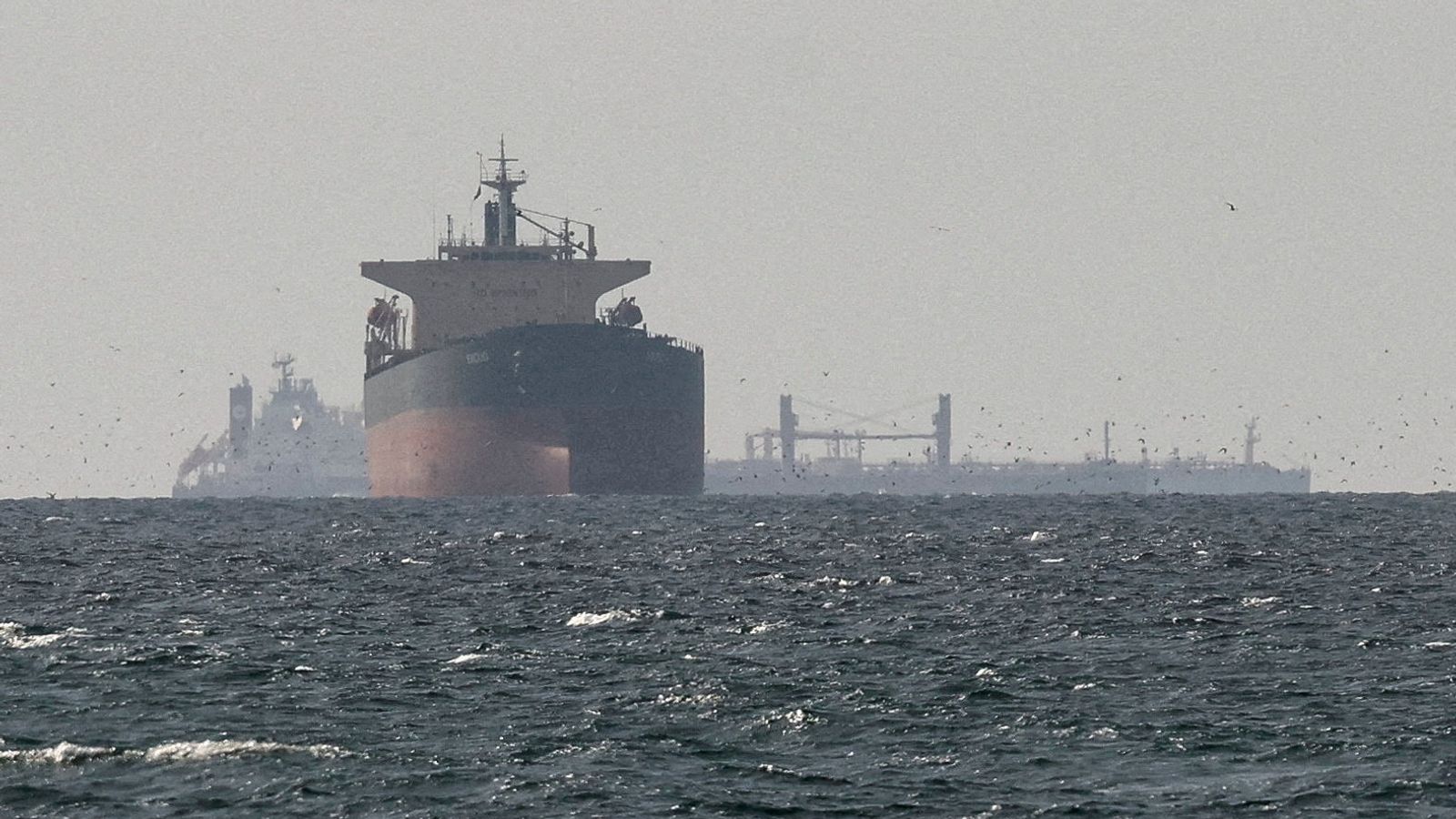
Cargo ships in the Gulf, near the Strait of Hormuz in March. Pic: Reuters

Fears of fuel shortages have been sparked recently as the number of tankers passing through the Strait of Hormuz was reduced to a trickle amid threats from Iran, which experts say effectively controls the waterway.

Now some of those concerns are coming to fruition with several countries experiencing shortages.

Normally, about a fifth of the world’s oil and gas supplies flow through the strait but since the start of the US-Israeli strikes on Iran in late February shipping has almost come to a standstill.

Money blog: Interest rate on many student loans to be capped

Advertisement
Image:
Cargo ships in the Gulf, near the Strait of Hormuz in March. Pic: Reuters

Iranian retaliatory attacks have forced vessels to stay put, causing petrostate storage facilities to fill and some production to cease.

More than 20 million barrels of oil and petroleum liquids per day normally transit the Strait of Hormuz, but daily traffic is reportedly down by about 95%. However, some ships linked to Pakistan, China and India are being allowed through by Iran.

But the impacts of supply disruption are showing up in some countries and not just in higher prices.

Mainland Europe

Advertisement

The risk of jet fuel shortages hitting in early May and June has been highlighted by the head of Europe’s biggest airline, Ryanair chief executive Michael O’Leary, who spoke to Sky News.


‘A policy of monumental stupidity’

Advertisement

Already in Italy, however, there are temporary restrictions on fuel supplies at four airports.

President of the Italian Civilian Aviation Authority, Pierluigi Di Palma, however, said this was primarily due to increased air traffic during the Easter holidays.

“The Middle East conflict is not yet a current issue, nor does it overlap with the fuel supply issue,” he told Italian media.

The elevated cost of fuel has led to some airline cancellations. Scandinavian airline SAS said last month it would cancel at least 1,000 flights in April due to surging aviation costs.

Advertisement

Meanwhile, in France, just under one in five petrol stations (18%) were on Tuesday morning lacking some ​kind of fuel, according to French junior ​energy ‌minister Maud Bregeon.

The UK

While supplies have not been disrupted in the UK, some petrol stations have had pumps out of service.

A boss of Asda, the UK’s second-largest fuel retailer, warned at the end of March of “temporary shortages”.

Advertisement

Asda’s executive chair, Allan Leighton, said it had been experiencing high demand from drivers and “the odd pump” would be affected as demand outpaced supply.


‘There will be fuel shortages’

Advertisement

Supply has remained stable but speaking to Sky News, a former BP executive, Nick Butler, said the government should be “seriously planning how they’re going to handle” potential outages.

Some corners of the world have struggled more, particularly less wealthy nations. While dozens of countries have brought in fuel use curbs as well as increased production measures and are managing, others are affected by low stocks.

Read more: How countries are dealing with rising oil and gas prices


Advertisement

Are vessels going through the Strait of Hormuz?

The Americas

Peru has faced the double impact of a gas pipe rupture and Iran war-related supply difficulty, leading the government to implement emergency measures, and the UK government advising against all but essential travel to parts of Peru.

Advertisement

Similarly, Cuba has been hit doubly hard by the supply shock. Since January, it has been impacted by supply difficulties after the Trump administration blocked oil supplies from entering the country.

In the US, the average price for a gallon of gasoline topped $4 on Tuesday last week for the first time since 2022, according to the American Automobile Association (AAA).

Asia

In South Korea, people have been panic-buying bin bags amid fears of a shortage. The bags are made from polyethylene which is derived from naphtha – a refined product of crude oil.

Advertisement

In India, a shortage of gas has seen the ceramics industry shut for nearly a month in the western region of Gujarat.

State media in Vietnam said last week ‌the country’s airlines were planning to cut their ​operations due to a fuel shortage.

In the Philippines, President Ferdinand Marcos declared a state of national energy emergency, which his administration said posed “an imminent danger of a critically low energy supply”.

Australia

Advertisement

Last Friday, Australians were urged to “avoid panic buying” as the government revealed more than 600 service stations had run out of fuel.

Energy minister Chris Bowen confirmed there were 410 service stations across the country out of diesel and 193 without petrol.

Mr Bowen sought to reassure Australians about the fuel supplies, telling motorists there was no need to panic buy.

Africa

Advertisement

Like in the UK, excess demand from South African motorists caused large queues and some outages.

After a March shipment to Mauritius did not arrive, the government introduced energy-saving measures, limiting nonessential electricity use.

Advertisement

Source link

Continue Reading

NewsBeat

Why AI shouldn’t be used even to decide ‘simple’ court cases

Published

on

Why AI shouldn’t be used even to decide ‘simple’ court cases

In just a few years, generative artificial intelligence (gen AI) has brought about significant changes in many industries from healthcare to education, entertainment to finance, and even law.

The use of gen AI in court verdicts poses significant risks to justice. Erroneous outcomes generated from “hallucinated” information, discriminatory decisions and lack of transparency are all concerns when this technology is introduced to courtrooms.

But already a number of judges around the world have used it in decision-making and judgment writing. This is why some jurisdictions, including the UK, have issued guidelines for judges regarding AI use.


À lire aussi :
‘Hallucinated’ cases are affecting lawyers’ careers – they need to be trained to use AI

Advertisement

Broadly, the guidelines suggest judges might use AI as a tool to conduct preparatory works such as drafting summaries of long documents, translating legal documents, identifying legal precedents or enhancing readability of documents. They recommend against the application of it for core judicial functions, including decision-making.

Recently, some senior judicial leaders have opined that AI might be used to decide “low-stakes” or less-complex cases with adequate precautions, such as keeping a human judge in the loop.

In a November 2024 speech, the UK’s second most senior judge, Geoffrey Vos, spoke of a “spectrum” of legal decisions that AI might soon make, or help make.

Vos said the use of AI for “broadly mechanical decisions, like those about the amount of a pension or benefits, or the calculation of personal injury damages and loss of earnings” would likely save money and time. But he called for discussion on whether such use would violate essential human rights.

Advertisement

A year later, Vos again called for “serious debate” about what rights humans should have protected in this context. And he urged that AI be “used responsibly, effectively and safely in legal systems and processes”.


AI has long been discussed as a threat to jobs and livelihoods. But what’s the reality? In this new series, we explore the impact it is already having on different occupations – and how people really feel about their AI assistants.


A number of jurisdictions are testing or using AI in such “mechanical” cases already. Estonia uses a semi-automated small-claims system in civil proceedings for monetary claims up to €7,000 (£6,100), with human clerks overseeing the process.

Advertisement

Frankfurt District Court in Germany has tested an AI system named Frauke to deal with air passenger rights lawsuits. Frauke analyses earlier cases and rulings to create pre-configured draft judgments. Judges assemble final verdicts from these texts following their ruling, significantly reducing the time spent drafting.

Taiwan piloted an AI-powered tool to assist courts by producing ruling notices for Driving Under Influence cases, or aiding and abetting in fraud cases. The AI system generates a complete draft ruling including the facts, legal reasoning, citations and final verdict. The judge reviews this draft and, upon approval, can issue it as the official judgment, with or without modifcations.

It is evident from these examples that the key motivation to replace human judges in a certain category of cases is efficiency. As a result, a few other jurisdictions are also exploring the scope of integrating gen AI to adjudicate certain litigation without human judges.

The cost of using gen AI as judge

Courts are overburdened, and technology like gen AI promises consistency and efficiency. But it would mark a significant change of centuries-old practice. And it risks undermining what some legal scholars argue is a fundamental principle of justice: the right to be judged by a human being.

Advertisement

Court adjudication is not only about reaching a decision. It is about a holistic and fair process that includes the right to be heard – presenting defence, weighing competing narratives, and exercising judgment in light of law and equity.

Algorithmic tools, no matter how advanced, do not hear or “understand” even their own output, let alone human values or changing social contexts. Gen AI cannot recognise suffering, credibility, remorse or vulnerability like a human. That alone makes it unfit to sit in a judge’s seat.

Judge's gavel on a table with several people sitting around
Some legal scholars argue the right to be judged by a human is a fundamental principle of justice.
Korawat photo shoot/Shutterstock

Categorising cases as simple or complex may look pragmatic, but it is both legally and morally dangerous. What counts as a “simple, routine or mechanical” case is itself a human decision. Legal disputes over compensation or benefits may appear straightforward on paper, yet carry significant consequences for the person bringing the case.

Allocating such cases as appropriate for algorithmic adjudication risks creating a two-tier justice system – in which one group of citizens gets to present their case before a human judge, while others are handled by machines. Only the former, I would argue, are exercising their right to a fair hearing and trial before an independent and impartial tribunal, as protected under Article 6 of the European Convention on Human Rights.

Additionally, the efficiency argument may become illusory. Algorithmic systems like gen AI require continuous human oversight, auditing and rectification. Hallucination or mistakes, whether from flawed design or biased training data, can completely negate the claimed benefits.

Advertisement

Public trust matters in all legal systems. If people lose trust in automated decisions, appeals will increase – adding to the existing backlog of cases.

Emerging technology such as gen AI may be suitable to manage court administration and reducing clerical burdens. But substituting human judges, even in supposedly low-stakes cases, undermines basic principles of justice. Efficiency should not come at the expense of the values the justice system exists to protect.

Source link

Advertisement
Continue Reading

NewsBeat

Real Madrid vs Bayern LIVE: Latest updates from Champions League quarter-final

Published

on

Real Madrid vs Bayern LIVE: Latest updates from Champions League quarter-final

Bayern Munich win at the Bernabeu

What had been billed as a must-watch clash certainly proved to be so. Luis Diaz and Harry Kane – the latter on his return from a knock on international duty – sealed the win but Kylian Mbappe’s late strike made this a full-on contest. Ultimately Bayern withstood a late storm – helped by some fine saves by Manuel Neuer – for their first win at the Bernabeu in 25 years.

(AP)

Flo Clifford7 April 2026 22:09

Advertisement

Real Madrid 1-2 Bayern Munich

The verdict from our man on the ground: “In the end a brilliant game for the neutral as Bayern secure a slender first-leg lead to take back to the Allianz. They probably should have won by a wider margin and you wonder if they might regret that next week, but overall it’s the kind of performance that marks a side out as one of the favourites in the Champions League.”

(Getty Images)

Chris Wilson at the Bernbeu7 April 2026 21:55

FULL TIME: Real Madrid 1-2 Bayern Munich

‘90+4: Two defeats in a row for Real Madrid, and Bayern take a one-goal lead back to Bavaria!

An enthralling game, but the tie is by no means over: both sides should have had more, and Bayern certainly should have a significantly bigger cushion. How consequential will those missed chances be next week?

Advertisement

Flo Clifford7 April 2026 21:55

Real Madrid 1-2 Bayern Munich

90+4: Olise thinks he was fouled by Carreras in the box but Michael Oliver disagrees.

Flo Clifford7 April 2026 21:53

Advertisement

Real Madrid 1-2 Bayern Munich

‘90+2: Bayern have been pretty wasteful. Another loose pass by Diaz and they might rue that too…

Luis Diaz and Pavlovic go off, Goretzka and Bischof come on.

Flo Clifford7 April 2026 21:52

Advertisement

Real Madrid 1-2 Bayern Munich

‘90+1: Bayern will be kicking themselves. The corner is cleared and Diaz gets away, but his attempted pass to Olise in the box is all wrong and the ball rolls harmlessly away!

Flo Clifford7 April 2026 21:51

Advertisement

Real Madrid 1-2 Bayern Munich

It looks like they’ll leave the Bernabeu with a slender lead to take into the second leg, but Bayern will be kicking themselves that it’s not a two or three-goal lead at the moment.

Chris Wilson at the Bernabeu7 April 2026 21:50

Real Madrid 1-2 Bayern Munich

‘90: FOUR minutes added on. Real have a corner. Anyone’s guess what happens now.

Advertisement

Flo Clifford7 April 2026 21:49

CLOSE! Real Madrid 1-2 Bayern Munich

‘90: Real counter again: Mbappe is shielded from Neuer, rooted to the spot, by a Bayern defender, but flashes wide!

Flo Clifford7 April 2026 21:49

Advertisement

Real Madrid 1-2 Bayern Munich

‘89: Bayern should have a third! Davies is unmarked at the far post but chips it back to Musiala, who sends an effort bobbling wide.

(Getty Images)

Flo Clifford7 April 2026 21:48

Source link

Advertisement
Continue Reading

Trending

Copyright © 2025