Connect with us
DAPA Banner

NewsBeat

Why small discoveries (as well as big ones) have the power to inspire

Published

on

Why small discoveries (as well as big ones) have the power to inspire

This roundup of The Conversation’s environment coverage was first published in our award-winning weekly climate action newsletter, Imagine.

In 1968 a photo of the Earth was taken by the crew of Apollo 8 as they orbited the Moon.

It’s hard for us to imagine today what that would feel like for both the crew and the public who first saw the shot of Earth snapped from so far away. All those years ago this was a fantastic, and perhaps shocking, picture taken from somewhere many people would never have imagined humans could go.

That Earthrise shot from 1968, the first colour image of the Earth from space, showed our planet from a perspective we had never seen before, from the Moon in the foreground and the globe of the Earth in the distance. And for many people, it seemed more fragile than they had ever realised.

Advertisement

This image from space provoked a massive reaction, and is credited with prompting the creation of Earth Day, and a wave of environmental activism.

Nearly 60 years later we are inundated with images of space, planets and even AI-generated sci-fi stories. So it came as somewhat of a surprise to find myself caught up in the whirl of excitement and emotion around the Artemis II journey, and drawn into watching and discussing what the astronauts were seeing and saying.

Nick Dunstone, a science fellow at the Met Office, is a big fan of the Earthrise photo. He has had it stuck on his wall for years. The Artemis II mission prompted him to think about how much the climate around the Earth has changed in the decades between the Earthrise photo and the one taken by 2026’s astronauts from the dark side of the moon.

He points out that one of the legacies of the 1960s space race is a set of satellite observation platforms which have allowed us to monitor, understand and predict changes to our global climate. Unfortunately, many of these reveal worrying trends. For example, more frequent heatwaves on land and sea, loss of Arctic sea-ice, melting glaciers and sea-level rise.

Advertisement


À lire aussi :
Earthrise to Earthset: how the planet’s climate has changed since the photo that inspired the environmental movement


It can seem like nothing is getting better in these days of global upheaval and endlessly escalating conflicts. It’s easy to despair about whether any small actions that we can take will make any kind of difference.

Bee stories

I ended up in a conversation with my running buddies at the weekend about whether there is anything that can cheer us up. I talked about new research that shows that queen bumblebees can survive underwater. In what seems like a story that could be made into a Pixar film, academics at the universities of Ottawa and Guelph discovered this purely by accident.

Sometimes scientific discoveries are prompted by happenstance. In this case, some tubes were accidentally filled with water and the bees which had been assumed to have died were discovered to be still alive. Queens, it turns out, can stand submersion for up to a week. This matters because climate change is bringing more rain during winters when these bees must survive underground. And the queen’s survival is vital, for she must found a new colony the next spring. Without her, there is nothing.

Advertisement


À lire aussi :
Queen bumblebees can breathe underwater — for days. We discovered how


Then there’s the discovery by Oxford researcher Sophie Lund Rasmussen that hedgehogs can hear. Rasmussen set off to find out if there were any ways to warn hedgehogs of the dangers of crossing the road. With up to 300,000 hedgehogs killed per year on UK roads, and the same situation across Europe, this mammal which has featured fondly in many of our childhood stories, is incredibly threatened.

Research has discovered that hedgehogs can hear ultrasound.
tiberiuaduve/Shutterstock

Rasmussen’s research opens the door for ultrasound hedgehog warning systems to be put in place to try and warn hedgehogs away from roads, and potentially save thousands from a messy death.

Advertisement


À lire aussi :
Hedgehogs can hear high-frequency ultrasound – that knowledge could help save them


Moss, many people might think, is quite a dull subject. But in the past few weeks, after chatting with University of Limerick’s Pedram Vousoughi, I’ve become the biggest fan of this green stuff that we find on the sides of trees and on our garden paths. As it turns out, moss has almost magical qualities that could be a great help to humanity in the next decades.

For someone who had not paid much attention to this plant in the past, the abilities of this low-to-the-ground greenery was a revelation. Moss can absorb several times its own body weight in water and release it over time. This makes it ideal for helping the world cope with increasing rainfall and flooding, especially along busy roads.

Moss also absorbs air pollution and could play a role in increasing biodiversity along major roads. I’m now boring on about moss in various social situations – and it’s making me feel a bit more positive about the world.

Advertisement


À lire aussi :
How moss could help roads cope with heavy rain and reduce air pollution


Sun spotting

One of my favourite places is a long pebbly beach on a thin spit of land on the Suffolk coast, where you can watch the sun go down as well as the sun rise (although as a night owl I’m less likely to see the second). I have come to realise the value of sitting somewhere incredibly quiet and just looking at the sea and the sky.

That’s why the Dutch trend of dusking – coming together with friends to watch the sun go down – struck a chord with me. As Jenny Hall and Brendan Paddison from York St John University explain, watching the light of the day disappear over the horizon can be a way of connecting with nature’s rhythms and disconnecting from your worries, bringing the work day to a natural close. This also links with studies suggesting that focusing on nature can enhance feelings of wellbeing.

In these complex times, recognising small discoveries (as well as large ones) can be vital.

Advertisement

Source link

Continue Reading
Click to comment

You must be logged in to post a comment Login

Leave a Reply

NewsBeat

York Open Studios returns next week – what you need to know

Published

on

York Open Studios returns next week - what you need to know

Around 150 artists across York will open their doors to the public across the weekends of April 18-19 and April 25-26.

The annual not-for-profit event offers a chance to meet the artists, learn about their creative processes and purchase artwork. It involves artists living within a 10-mile radius of York.

Maps for the artists taking part in Open Studios can be found in libraries, shops and galleries across York in the weeks before the event.

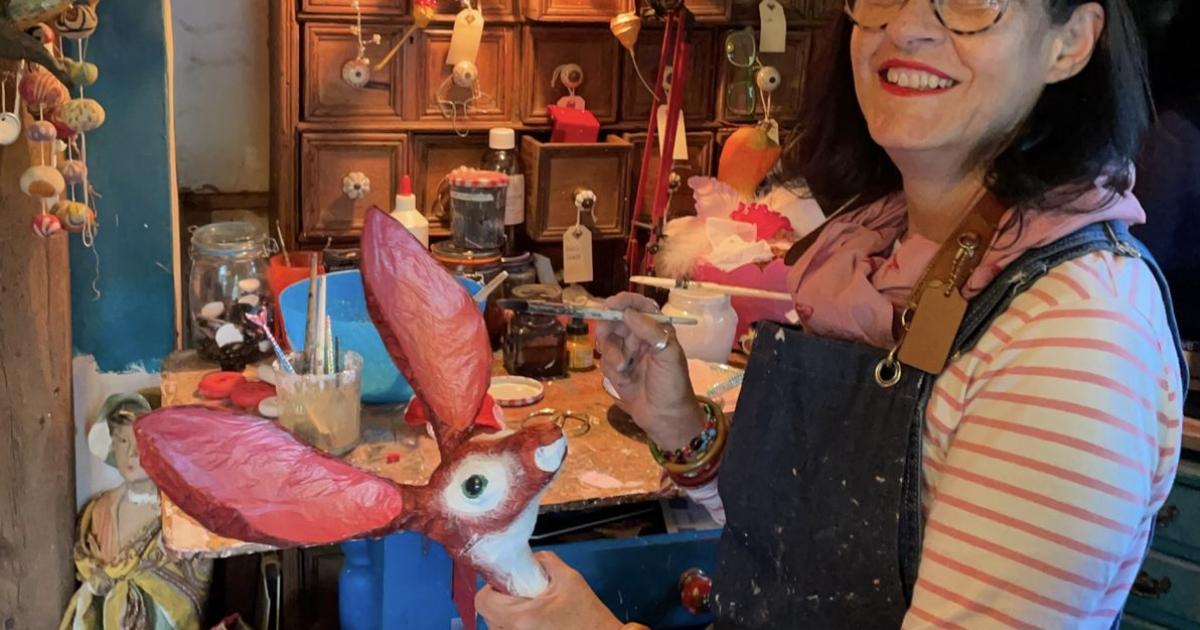
Twenty-seven artists will be taking part in the event for the first time, including photographer Marcus Chapman, upcycle jewellers The Spoonery and painter Prachi Bhatnagar.

Advertisement

Marcus Chapman who will take part in this year’s York Open Studios (Image: York Open Studios)

Michelle Hughes who will take part in this year’s York Open Studios (Image: Tom Jackson)

Other artists have regularly appeared at past Open Studios events, such as wire and paper sculptor Joanna Coupland, linocut printmaker Michelle Hughes and textile artist Jacqueline James.

Charmian Ottaway, York Open Studios’ committee member and a contemporary designer jeweller, said the event is a “unique chance to see the city with pops of creativity along the way”.

“As an artist myself, I just love to show visitors how I work and also hear what they might be looking for,” Charmian said.

“As artists, we are all very proud of what we produce and hearing visitors’ responses and find potential buyers can be really uplifting especially if you often work alone and don’t directly meet your buyers.”

Advertisement

As The Press reported, this year’s Open Studios will not feature one of York’s best-known living artists, Mark Hearld, was said he was not selected for the 2026 event.

Mark Hearld who will not be taking part in this year’s York Open Studios (Image: Newsquest)

Mark, whose home in The Mount has been a popular venue at previous Open Studios, said he understood he was not selected because the description of his work, “Collages inspired by nature”, was too brief.

But Mark said the description perfectly described his work.

He added that in the past other leading York artists had faced an identical situation and it was time for the selection process to change.

Advertisement

Mark also said artists not selected for Open Studios risked being banned from future events if they showed work in their homes during the same weekends, which he felt was too punitive.

“I am pro Open Studios; I like the spirit of it, but I am very, very frustrated,” he said.

Christine Storrs, chairperson of York Open Studios, said the organisation was open to feedback and suggestions. However, she confirmed there was a risk to non-selected artists staging their own event during the York Open Studios weekends.

She added that the event had taken the “difficult decision this year to cap the number of artists taking part to 150”, which followed “feedback in recent years from visitors and participating artists that the event was becoming too big”.

Advertisement

“More than 650 artists have taken part over the years, and it would not be practical for our volunteer committee to administer an event on such a scale – nor would this be enjoyable for our visitors to navigate,” Christine said.

For more information about York Open Studios, visit yorkopenstudios.co.uk

Source link

Advertisement
Continue Reading

NewsBeat

Three fire engines attend house fire in Leigh overnight

Published

on

Three fire engines attend house fire in Leigh overnight

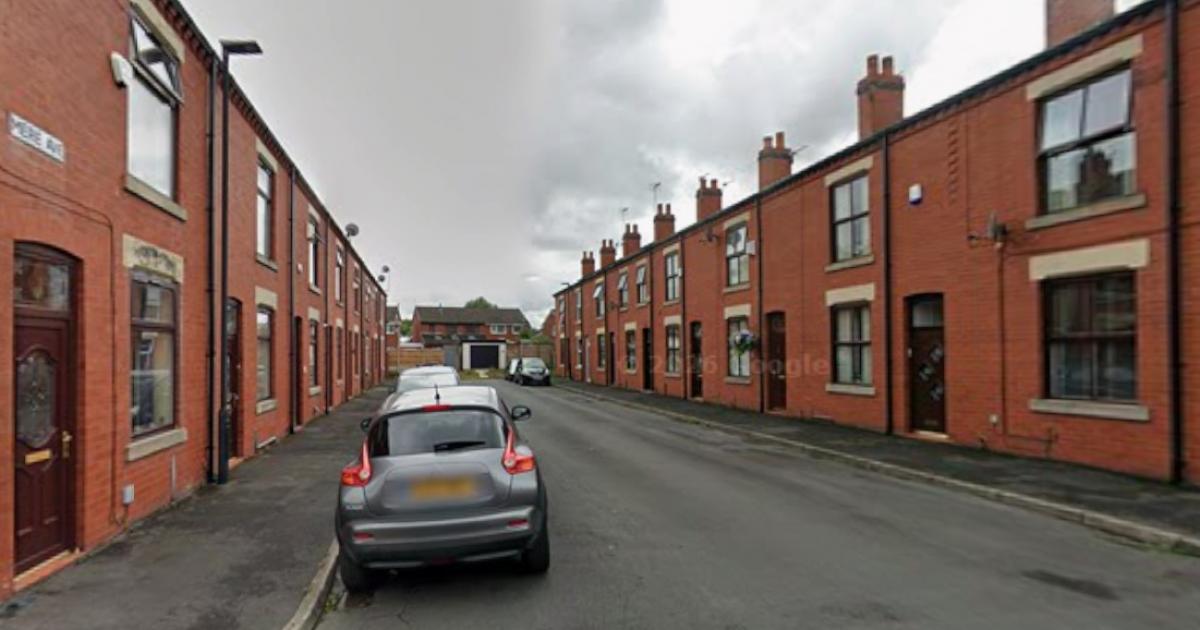
Firefighters were called at around 12.15am last night by a neighbour who reported smoke and an alarm sound coming from a house on Mere Avenue, Leigh.

They arrived at the scene at 12.30am with three fire engines from Leigh, Wigan and Atherton.

Once they were inside the property, they found that the top floor was smoke-logged and that a fire had broken out in the back bedroom.

Advertisement

Firefighters were on the scene for two hours.

No one was in the house at the time of the fire, the fire service has confirmed.

In light of the incident, a spokesperson for the fire service has stressed the importance of having working fire alarms in the home.

For more information on fire alarms and to check if you are eligible for a free Home Fire Safety Assessment, you can contact Greater Manchester Fire and Rescue Service online or on 0800 555 815. m

Advertisement

Source link

Continue Reading

NewsBeat

Huge emergency response at Irlam Locks amid reports of ‘person in water’

Published

on

Manchester Evening News

A full search was carried out but no-one was found, police said

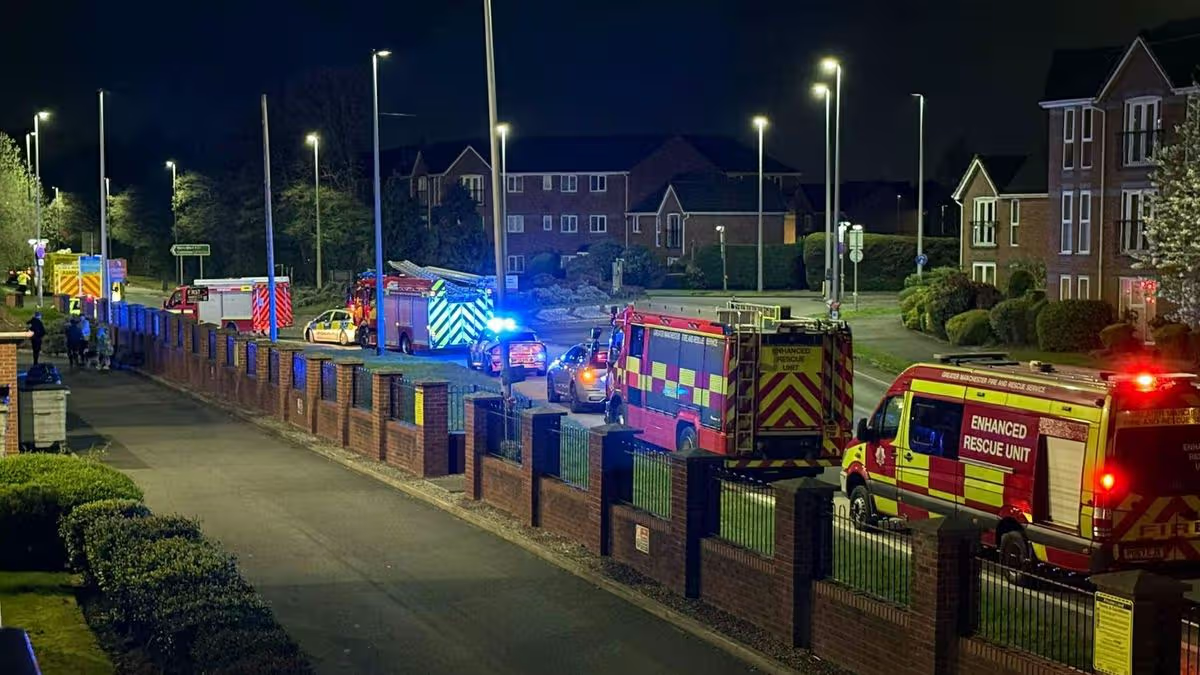
A huge emergency rescue response descended on Irlam Locks last night amid reports of a person in the water.

A large number of police, water rescue units and fire service vehicles were pictured on the scene off Cadishead Way just before midnight on Friday evening (April 10). A spokesperson for Greater Manchester Police confirmed the force was called over reports of a person in the water.

Crews carried out a full search of the area into the early hours of this morning. However, no-one was found and the search was stood down.

Advertisement

Get MEN Premium now for just £1 HERE – or get involved in our WhatsApp group by clicking HERE. And don’t miss out on our brilliant selection of newsletters HERE.

In a statement, GMP said: “We were called to a report of a person in the water. Emergency services attended and carried out a full search, no one was found.”

A spokesperson for the Greater Manchester Fire and Rescue Service (GMFRS) said: “Just before 12am last night (Friday 10 April), two fire engines from Stretford and Irlam fire station, along with the Water Incident Unit from Eccles and Technical Response Unit from Ashton, attended an incident near Forebay Drive, Irlam.

Advertisement

“Firefighters were in attendance for around an hour.”

Source link

Continue Reading

NewsBeat

Man rushed to hospital with life-threatening injuries after being knocked down in Edinburgh

Published

on

Daily Record

Emergency services were called to Chesser Avenue in the capital after the alarm was raised at around 12.20am on Saturday.

A man has been rushed to hospital with life-threatening injuries after being knocked down in Edinburgh.

Advertisement

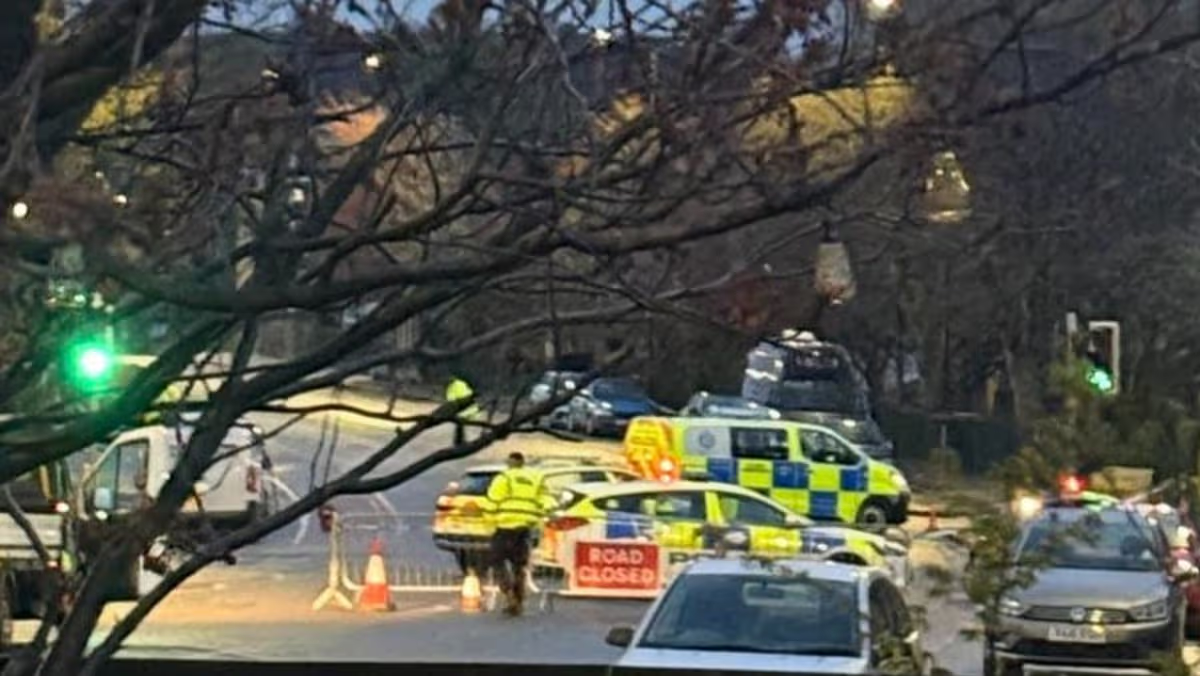
Emergency services were called to Chesser Avenue in the capital after the alarm was raised at around 12.20am on Saturday, April 11. Officers from Police Scotland were responding to reports of a crash involving a blue MG HS and a 49-year-old male pedestrian.

Ambulance crews attended and he was taken to hospital having sustained life-threatening injuries. The 35-year-old female driver of the car was not injured.

A picture shared by Edinburgh Live showed the road closed off as officers launched an investigation at the scene.

A number of police cars could be seen in attendance with uniformed cops standing guard. Detectives are now appealing for information.

Advertisement

Sergeant Fraser Mitchell said: “Our enquiries are ongoing to establish the full circumstances and I am appealing for anyone with information to get in touch.

“I would ask anyone who was in the area around the time of the collision to contact us, especially those who may have dash cam footage that could assist with our enquiries.

“Anyone with any information is asked to contact 101 quoting reference 0074 of April 11, 2026.”

Get more Daily Record exclusives by signing up for free to Google’s preferred sources. Click HERE.

Source link

Advertisement
Continue Reading

NewsBeat

Arsenal vs Bournemouth LIVE: Premier League match stream, latest team news, lineups, TV, prediction

Published

on

Arsenal vs Bournemouth LIVE: Premier League match stream, latest team news, lineups, TV, prediction

With the top two set to meet at the Etihad Stadium next weekend, this is a must-win fixture for Mikel Arteta’s side as they bid to prove they can cope under pressure. Eberechi Eze has handed Arsenal a surprise fitness boost by returning earlier than expected from injury, but it remains to be seen if Bukayo Saka, Jurrien Timber, Martin Odegaard and Piero Hincapie will feature.

Source link

Continue Reading

NewsBeat

Stormont must face the cost of its climate ambitions

Published

on

Belfast Live

“If the Executive continues to prioritise rigid carbon accounting over road safety, economic connectivity, and the financial stability of households, they won’t just miss their climate targets, they’ll miss the point of government entirely.”

Advertisement

There is a fine line between visionary leadership and blind dogma. If you want to see what happens when a government tumbles headfirst over that line, look no further than the current state of Northern Ireland’s infrastructure.

On Tuesday, the DUP will bring a motion to the Assembly floor that sets out how our region’s legally binding climate targets have become an impenetrable barrier to basic regional prosperity.

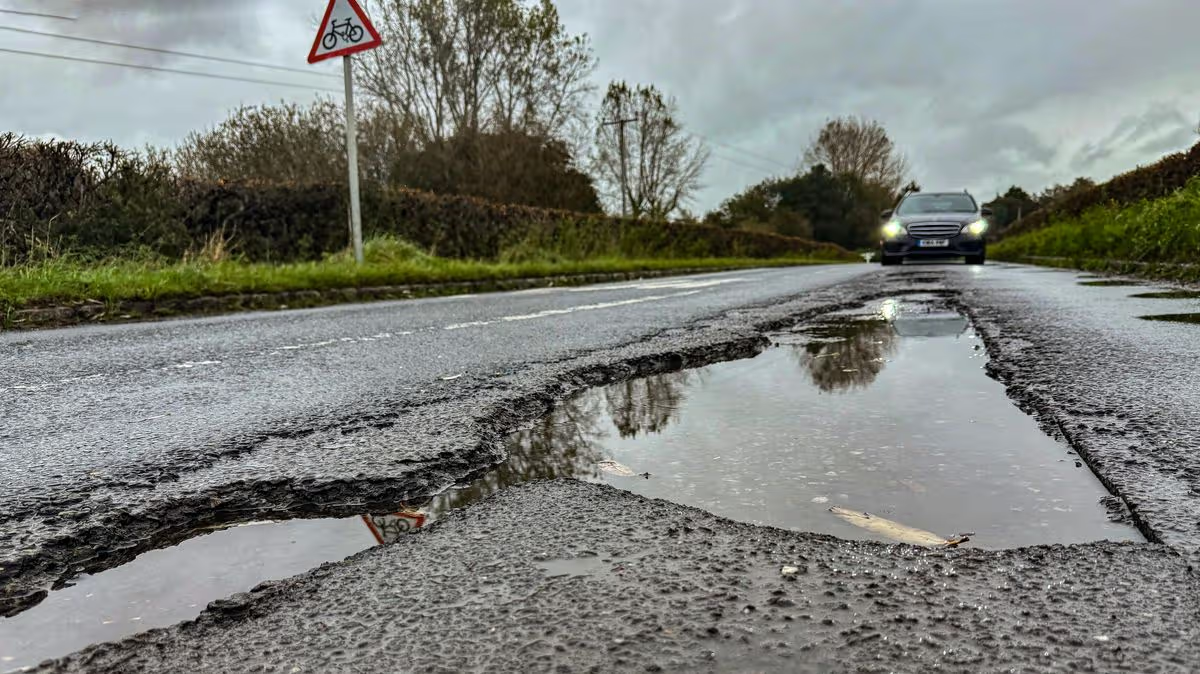
For years, we were told the Climate Change Act (Northern Ireland) 2022 was a “landmark” victory for the environment. But in 2026, the reality on the ground, or more accurately, the potholes in the ground, tells a different story. What was billed as a green revolution has instead become, as Doug Beattie has aptly described, a “contagion of caution” that has paralysed our road network and created a zero-sum war for every penny in the public purse.

The most glaring casualty is the A5 Western Transport Corridor. A £1.7 billion project designed to save lives and connect the west has been quashed by the High Court because the Department for Infrastructure couldn’t reconcile a massive road scheme with a yet-to-be-finalised Climate Action Plan.

Advertisement

This isn’t just about one road. The A5 ruling has set a far-reaching precedent. Any project that generates emissions is now a sitting duck for judicial review. We’ve seen the £36 million A4 Enniskillen Southern Bypass, a vital project for Fermanagh, stalled indefinitely because the Minister is “mindful” of the legal risks. This hesitation cost the taxpayer £6.6 million in surrendered funding this year alone. While the lawyers argue, the costs of civil engineering continue to skyrocket, leaving the ratepayer to pick up an even bigger bill whenever, if ever, the diggers return.

Perhaps the most perverse outcome of the 2022 Act is the 10 per cent mandatory spend on “active travel”. On paper, spending £85 million a year on walking and cycling sounds lovely. In reality, it has forced the DfI into what can only be described as creative accounting, raising concerns from the Audit Office.

The Department has been caught reclassifying £37 million of general repairs as “active travel” just to hit a statutory quota. Meanwhile, the actual structural maintenance budget is a heavily depressed £68 million, which is well short of what is needed to keep the lights on and the tarmac smooth. We are being forced into a binary choice between asking if we want aspirational cycle lanes or roads that don’t destroy our suspension.

Then there is the draft Climate Action Plan 2023-2027. It is a document built on “speculative accounting” and “unquantified” proposals. It asks our farmers to adopt targets that are, frankly, unworkable, based on what critics have described as failed models from the Republic of Ireland.

Advertisement

For those in social housing, the “Just Transition” plan pushes for heat pumps that, without a complete retrofit, are more expensive to run than gas or oil. Because there is no grant support for these retrofits, housing associations are forced to take out commercial loans, the interest on which could be paid for by the region’s most vulnerable tenants through higher rents.


The DUP motion calls for a rigorous cost-benefit analysis, and frankly, we cannot continue to govern by aspiration while ignoring the macroeconomic reality of a cost-of-living crisis.

Northern Ireland needs to decarbonise, but it shouldn’t have to go bankrupt to do it. If the Executive continues to prioritise rigid carbon accounting over road safety, economic connectivity, and the financial stability of households, they won’t just miss their climate targets, they’ll miss the point of government entirely.

For all the latest news, visit the Belfast Live homepage here and sign up to our daily newsletter here.

Source link

Continue Reading

NewsBeat

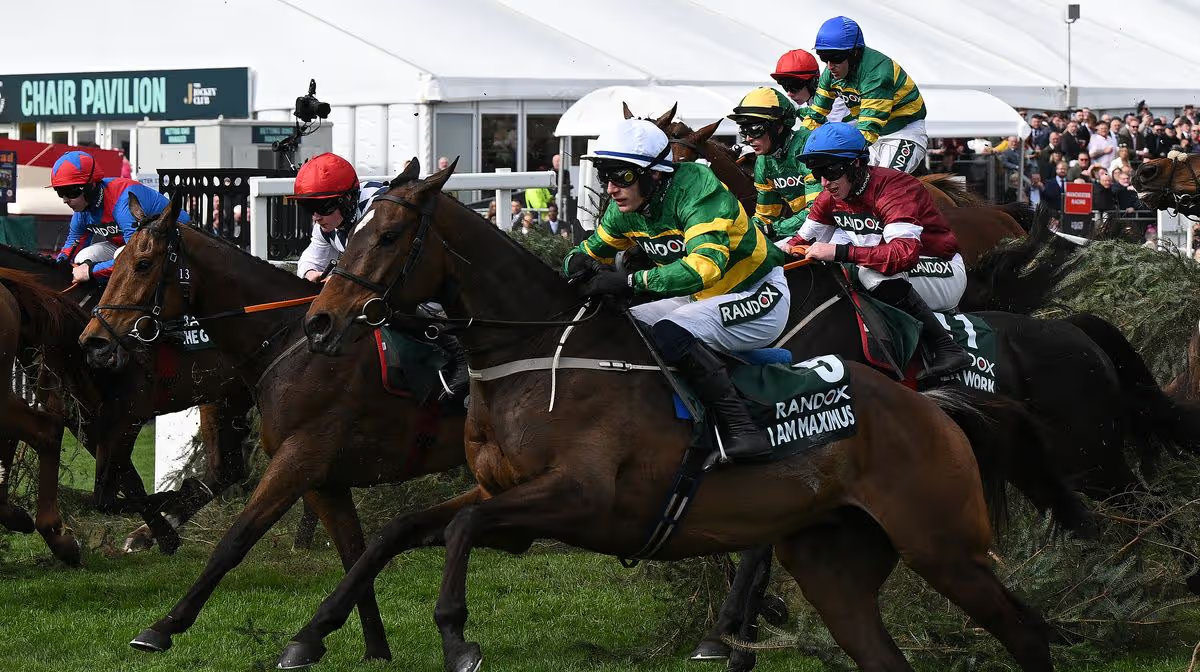
Grand National 2026: Who is the favourite to win at Aintree and what price are they?

Published

on

Wales Online
Grand National 2026: Who is the favourite to win at Aintree and what price are they? | Wales Online