











Connect with us
DAPA Banner

Tech

Best VPN 2026: Surf the web securely

Published

on

Even if you’ve never subscribed to a VPN service, there’s a good chance that you’ve already heard about its importance. Constantly advertised on podcasts and around the web, VPNs have taken off in the last few years and while it’s easy enough to get caught up in the noise of it all, just know that they are worth the hype, and we should know – we’ve tested the best of them.

For anyone who’s completely out of the loop, virtual private networks are able to mask the location of the device you’re using to browse the web, which means that bad actors aren’t able to track your whereabouts, nor are they able to access your device if you’re connected to a public Wi-Fi network.

Although masking your IP address and keeping your online activity safe is the core appeal of having a VPN, there’s a lot more to it. For instance, if you’re travelling abroad and want to read the news in your mother tongue, then you can use a VPN to have your browser believe that you’re back in your home country.

When it comes to signing up for a VPN, there’s almost always a ton of deals available for first-time customers, so it helps to shop around to get the best price. As with most bits of tech however, you’ll always find the best deals for VPNs if you shop around Black Friday in November.

Advertisement

Regardless of when you sign up, this guide can pair you with the best VPN for your needs as we’ve highlighted the areas that each service excels in. Keep on reading to see which VPNs most impressed our tech experts, but if you’re completely strapped for cash and want to keep your devices free of malware then our guide to the best free antivirus may serve you better.

Which is the best VPN?

Advertisement

Learn more about how we test VPNs

We carry out speed tests to get a general feel for how each service performs. We test all services using their clients’ default settings.

We run tests from a London-based connection that typically sees speeds between 500Mbps and 700Mbps, which means that we’re able to get a good idea of what each VPN’s maximum speeds currently are. We test multiple endpoints from each provider in three locations: the UK, the Netherlands and the US.

Advertisement
  • Fast HTTPS transfer speeds

  • Wide range of endpoint countries

  • No price increase on renewal

  • More expensive than many rivals

If you don’t want to spend any time diving into the details and would rather get straight to enjoying the benefits of having a VPN, then ExpressVPN is where your search ends. This is by far the best VPN that we’ve tested, with incredible speeds and a variety of countries to connect to.

Advertisement

During our testing we picked up on unbelievable download speeds across the board, including 278.4Mbps in the UK and 195.2Mbps in the United States. For productivity users who don’t want to be caught out by web pages that take an age to load, this is the service to go for.

It’s not just the speed of ExpressVPN that’s impressive though, as the service boasts one of the most expansive suites of extras that we’ve come across. There’s ExpressKeys which can be used to safely store and access all of your passwords, and can be handy if you’re constantly forgetting them, alongside ExpressMailGuard which can stop phishing emails from ending up in your inbox.

One of the most recent additions to the company’s toolbox is ExpressAI. This service lets you converse with an AI chatbot for help with any queries or issues that you might typically use AI for, except that unlike those other options, ExpressAI doesn’t log your conversation so it’s all private.

It should be said that ExpressVPN isn’t the cheapest VPN service available, but for all that you get here, it’s well worth the expense as you certainly won’t be wanting for anything. The company also lets you connect with no less than 105 countries so you have plenty of options available to you when hiding your IP address.

Advertisement
  • Blisteringly fast

  • Good for streaming

  • Unlimited devices

  • Great value subscriptions

  • Subscriptions renew at a higher rate

  • You have to interact with a human being if you wish to cancel your subscription

Advertisement

Although ExpressVPN, for our money, provides the best overall VPN package that you can buy right now, if you’re someone who is solely focused on speed and wants to make sure that they can access the fastest possible internet connection whilst masking their IP address then Surfshark VPN is the option for you.

When putting the service to the test, we picked up on 264.8 Mbps download speeds in the UK, 297.6 Mbps in the Netherlands and 228 Mbps in the US, which averaged out to around 263.47 Mbps. That average comes in only ever so slightly behind NordVPN in our tests, but consistency is the name of the game with Surfshark – helpful for when you’re working for a long period of time and need to keep a connection going without interruption.

In terms of security, Surfshark is one of the best companies out there for transparency so you can surf the web with peace of mind in knowing that your data and browsing history isn’t logged. The company also publishes a Transparency Report to let you know if it’s been contacted by government agencies over access to information.

Going one step further, Surfshark also makes use of independent audits to make sure that everything’s in check and that there’s nothing for customers to be worried about. It’s gestures like these that go a long way towards consumer confidence in a VPN service, and we would love to see them adopted industry-wide.

Advertisement

With regards to the connections on offer, Surfshark currently uses more than 4500 servers across 100 countries. Although that’s slightly less than the 105 countries connected to ExpressVPN, it’s still a significant amount and won’t leave you wanting. Just bear in mind that Surfshark’s renewal prices can be higher than what you initially paid to sign up, so double-check the rate ahead of renewal to make sure you’re happy with the cost.

  • Large number of servers

  • Wide range of security features and endpoints

  • Clear, audited no-logging policy

  • Great for streaming

Advertisement
  • Relatively expensive

  • Subscriptions renew at a higher rate

Out of all the VPN services we’ve tested, it’s NordVPN that provides the best alternative package to ExpressVPN. Although the latter can be more affordable in the long run, you may appreciate NordVPN’s more robust approach to online security, so it’s best to compare the features that these two services have before deciding on which to sign up to.

For starters, NordVPN can connect up to six devices simultaneously, so if you live in a large household and you want to protect everyone as they browse the web then this is the option for you. Plus, with dedicated apps for iOS, Android, Windows, MacOS, Linux and Google TV, NordVPN has put in the work to meet you where you’re at and make the process of getting connected a simple one.

Once you are connected to the service, you have a ton of features at your fingertips. Anyone who uses the Tor browser can enable Onion over VPN so that Nord and Tor can work hand in hand for a highly secure session. Regardless of your chosen browser, Nord’s Threat Protection Pro goes one step further than an average VPN by ensuring that phishing scams and malware can’t access your device, so you have an extra layer of security as you search.

Advertisement

In terms of your own data and how it’s stored by NordVPN, the company presents a clear no-logging policy so your internet history isn’t tracked, and the brand has built up a solid degree of trust in this area thanks to regular audits to ensure that everything is still working to the company’s vision.

NordVPN now provides access to servers in 211 locations which isn’t quite as varied as what we’ve seen on some of the other services we’ve tested, but what you do get from those locations is an impressively stable connection. In fact, NordVPN came out on top with regards to the average speed recorded when all of our test locations were taken into account.

Advertisement
  • Unlimited-bandwidth free tier

  • Wide range of endpoint countries

  • Paid version is great for streaming

  • Quick download speeds

  • Subscriptions renew at a higher rate

As much as we recommend opting for a paid VPN service as you’ll get so much more in return, especially with features like malware protection and an onboard password manager which feel more essential than ever in the modern age, there are options available to you if you have no cash to spend. While quite a few free VPNs have popped up in the last few years, the only one you need to concern yourself with is ProtonVPN.

What’s most surprising about ProtonVPN is that unlike a lot of free VPNs which throttle the available bandwidth as a means of enticing you towards a paid version of the same service, ProtonVPN lets you surf the web with unlimited bandwidth. This is great if you have a particularly speedy router at home as you won’t feel capped by going down the freebie route.

Advertisement

ProtonVPN has also made privacy a core tenet of its business practices. The company has a regularly updated transparency report to let users know of any changes they should be aware of, but the company does currently employ a strict no-logging rule so your data isn’t stored. However, the Swiss Government does have the right to order the collection of data in the event of a criminal case.

There’s also a kill switch feature built into the brand’s free VPN service so you don’t have to worry about any gaps in your internet connection that bad actors could exploit. Although there’s a decent number of countries included with the free tier, it’s worth upgrading to the paid version of ProtonVPN if you want a wider variety of locations to choose from.

Still, if speed is your main concern then we reckon that you’ll be quite pleased with what ProtonVPN is able to offer. Across our testing of speeds in the UK, the Netherlands and the US, we noted an average speed of 164.27Mbps which is more than enough for the average user and excellent value when you consider that it’s available at no cost whatsoever.

Advertisement
  • Fast speeds

  • Low, consistent price of €5 a month

  • Great range of cross-platform clients

  • Not reliable for streaming

If there’s one complaint that can be thrown at most VPN services, it’s that things can get a bit out of control when it comes to renewing your subscription. Oftentimes you’ll see very tempting introductory prices which get you through the door, but once your subscription runs out you can be presented with a nasty bill if you’re not careful. For those who would rather avoid that scenario entirely, Mullvad VPN is our go-to pick.

Advertisement

Mullvad VPN costs just €5 (roughly £4.35/$5.84) a month, and in the face of rising costs for pretty much every aspect of the tech industry, that monthly rate has stayed the same. It’s brilliant value for money, and a much better option for anyone who doesn’t want to get tied into a long-term contract or who only needs a VPN for a few months.

What’s even more impressive is what you get for that low monthly cost. Mullvad has a strict no-logging policy, and that was put to the test in 2023 when authorities carried out a search warrant at the company’s office in Gothenburg and came away with no customer data. The brand also uses RAMdisk servers which are far more secure than the standard servers typically used by VPN companies.

Beyond that, a Mullvad subscription comes with a ton of extra security features including a kill switch (ensuring that you’re never connected to the internet unless there’s a VPN protocol to go with it), split tunnelling and an ad blocker that can stop you from accidentally clicking on junk ads as you surf the web.

It’s not a perfect service however as we did notice some irregularities when trying to access streaming websites, although the general speeds that we noted were fairly solid. Across our three test countries, we noted an average download speed of 229.87 Mbps which is very respectable. Unless you want a wider suite of features, the likes of which ExpressVPN and Nord VPN can provide, Mullvad is a great option to go with.

Advertisement

Test Data

  ExpressVPN Surfshark VPN NordVPN ProtonVPN Mullvad VPN

Full Specs

  ExpressVPN Review Surfshark VPN Review NordVPN Review ProtonVPN Review Mullvad VPN Review
UK RRP £10.19 £14.79 £2.99 £7.98 £4.29
USA RRP $12.95 $12.95 $4.19 $9.99 $5.43
EU RRP €5
Manufacturer ExpressVPN
Size (Dimensions) x x INCHES x x INCHES x x INCHES x x INCHES x x INCHES
ASIN B00GAZ1T9U B07KFLMM6Z B09KTX5FKM B09RFFWTFM B092M55HJ2
Release Date 2021 2021 2021 2021 2021

Advertisement

Source link

Advertisement
Continue Reading
Click to comment

You must be logged in to post a comment Login

Leave a Reply

Tech

vivo V70 FE Goes on Sale With 200MP Camera and 90W Fast Charging

Published

on

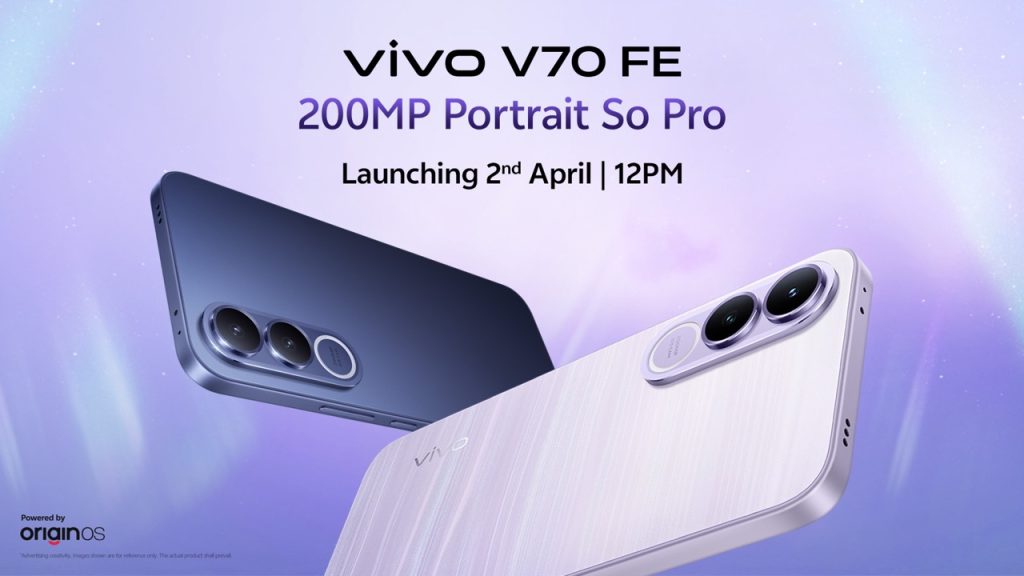
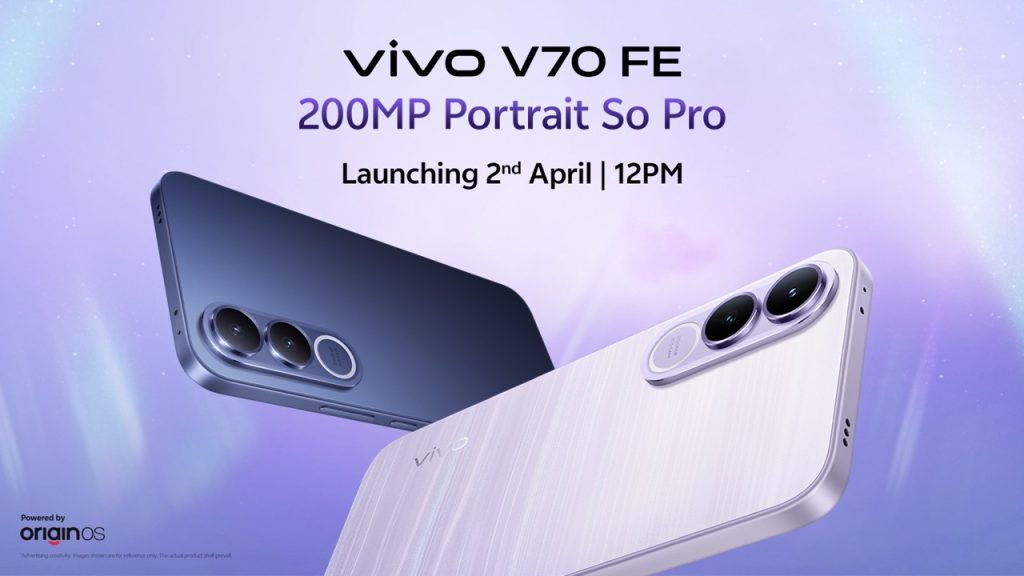
After launching the pretty-decent vivo V70, which we reviewed and loved, the Chinese smartphone maker is back at it again. The company has just announced the sale of its latest V-series smartphone, the vivo V70 FE, in India. The new device focuses on high-resolution imaging, premium design, and long battery life, targeting users who want a feature-packed mid-range phone. Here’s everything you need to know about it.

200MP For the Win

The headline feature of the vivo V70 FE is its 200MP OIS main camera, designed to capture highly detailed images with improved stability. The phone also supports AI-powered features like 30x SuperZoom, multifocal portraits, and 4K video recording with stabilization. On the front, users get a 50MP selfie camera with eye autofocus, making it suitable for group shots and video calls.

vivo is also bundling a full AI photography suite, including tools like object removal, scene enhancement, and automatic color correction. These features aim to simplify editing and help users achieve polished images with minimal effort.

New Design & Processor

v70 fe

One of the more interesting additions is vivo’s Darkness Glow Technology, available on the Northern Lights Purple variant. As the name suggests, the back panel can glow in the dark after exposure to UV light, adding a bit of flair to the design.

On the front, there’s a 120Hz OLED display, while performance is handled by the MediaTek Dimensity 7360 Turbo chipset, combined with LPDDR5 RAM and UFS 3.1 storage. The smartphone runs on OriginOS 6, offering AI tools, productivity enhancements, and customization options. vivo is also promising 4 years of OS updates and 6 years of security updates, which is notable for this segment.

Advertisement

The vivo V70 FE is available in three variants:

  • 8GB + 128GB: ₹37,999
  • 8GB + 256GB: ₹40,999
  • 12GB + 256GB: ₹44,999

Source link

Continue Reading

Tech

Google has reportedly started to add Polymarket data to News results

Published

on

Google News has begun showing Polymarket bets and odds alongside actual stories, . These look to appear as large blocks that include links to numerous ways for people to lose their money.

Bets tend to appear in the “For you” section of Google News, which is supposed to be tailored to a person’s particular interests. Futurism notes that the platform actually placed a Polymarket bet as the top news result when inquiring about the price of Bitcoin.

The publication saw links to the prediction market all over Google News, including in searches. It popped up in queries regarding the Strait of Hormuz, which presents a link that lets people bet on the number of ships that the critical passageway. The report even indicates that users were able to set the gambling platform as a source, which directs readers to an aggregate page of other Polymarket links.

There’s a caveat here. I wasn’t personally able to confirm most of these results. This could indicate that Google has quietly made some changes behind the scenes following Futurism’s initial report.

Advertisement

Complaints on indicate that Google started doing this at the tail-end of March. However, one user noted all the way back in January that Polymarket results had started showing up in the news section of a traditional Google search. I was able to replicate that one.

Polymarket links on Google News.

Lawrence Bonk/Google News

Engadget has reached out to Google to see just what’s going on here and if it plans to continue displaying Polymarket bets alongside actual news stories. The company did with both Polymarket and Kalshi back in November. This deal indicated the two gambling platforms would feed prediction data into Google’s finance platform, but didn’t say anything about News.

It’s pretty easy to see why Polymarket would be attractive to Google’s algorithms. The platform generates huge numbers on pages that are constantly updated. This could make these algorithms think the links are leading to valuable news stories and not, you know, a place to .

Prediction markets like Polymarket give users the ability to place bets on real world outcomes, which includes wars and other gruesome things. This has led to , which include an incident in which an unknown Polymarket user made more than $400,000 after “predicting” the capture of Venezuela’s president Nicolás Maduro invaded the country and abducted him.

Advertisement

Polymarket has hosted bets on the in current global conflicts, which is pretty dang chilling when you consider the possibility of government employees tipping the scales in their favor. President Trump did, after all, recently threaten to end an entire civilization.

Source link

Continue Reading

Tech

We Tested Every Ryzen 5 and 7 X3D CPU: From 5800X3D to 9800X3D

Published

on

Nine X3D CPUs, two platforms, and 14 games tested. We compare every Ryzen 5 and 7 X3D processor to find out how much performance has improved since the 5800X3D and where it actually matters.

Read Entire Article
Source link

Continue Reading

Tech

Focal Mu-so Hekla Dolby Atmos Wireless Speaker Erupts at AXPONA 2026: Still Not a Soundbar

Published

on

We first heard the Focal Mu-so Hekla at CES 2026 in Las Vegas, and even in the less-than-ideal acoustics of a hotel suite in Sin City, it made a strong case for itself; wide, controlled, and far more composed than most “one-box” solutions pretending to be high-end. Fast forward to AXPONA 2026 in Chicago, and Focal and Naim doubled down, dropping the Hekla into a mock living space embedded inside their sprawling ballroom setup, surrounded by much of their product range, and letting it breathe in a more realistic environment.

And right from the start, they’ve been very clear: don’t call it a soundbar. After spending time with it in both settings, that stance holds up. Yes, it lives under a TV and replaces a rack full of gear, but the intent is different. This is a performance-first, all-in-one wireless speaker built around Naim’s Pulse platform, not a convenience play dressed up with Atmos logos. Call it what you want, but if you’ve actually heard it, you’ll understand why they push back.

focal-mu-so-hekla-axpona-2026-room

Wait. If It’s Not a Soundbar…How Does This Thing Work?

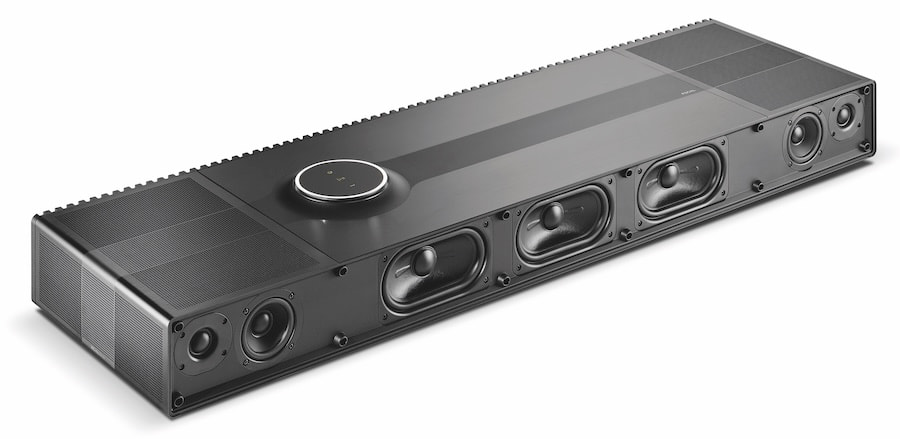
Named after Iceland’s Hekla volcano, the Focal Mu-so Hekla isn’t chasing the usual lifestyle brief. Focal and Naim built this around output and control first, with the convenience piece trailing behind. Inside is a 15-driver array firing forward, sideways, and upward, backed by Naim’s Pulse platform and Focal’s ADAPT room correction—technology that first showed up in the Focal Diva Utopia. The goal is straightforward: create a believable, room-specific soundfield from a single enclosure without leaning on smoke and mirrors.

Setup doesn’t waste your time. ADAPT runs through the app with a short calibration routine; basic room inputs, a few test sequences, done. From there, Sphere Music and Sphere Movie modes adjust how the system presents content rather than just piling on effects. In practice, it works. Dolby Atmos material has real width and height, and it doesn’t collapse into a front-loaded blob. It’s immersive enough that you start checking for speakers behind you. There aren’t any. Bass digs deeper than expected; down to around 30 Hz within 3 dB, so it doesn’t feel incomplete out of the box.

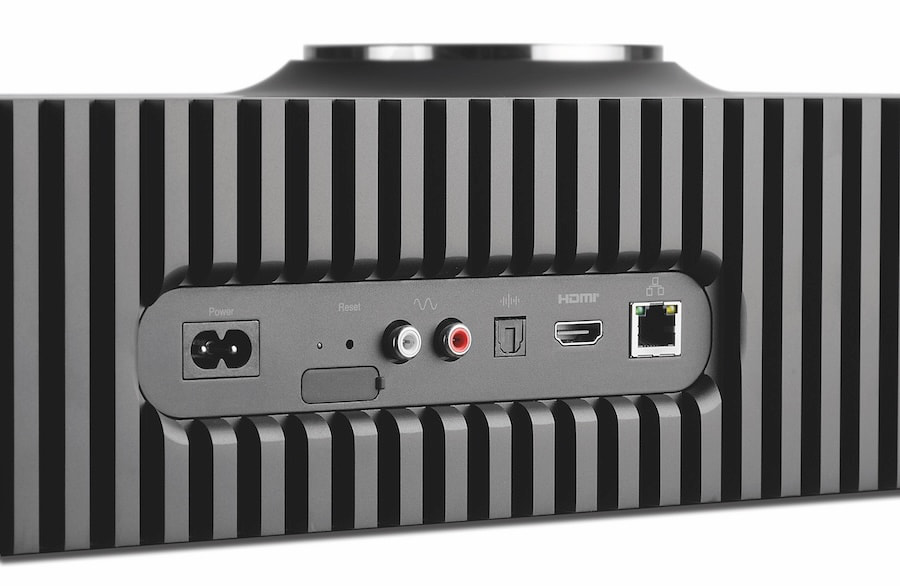
focal-mu-so-hekla-rear-inputs

That said, you’re not locked into a one box life sentence. You can add a subwoofer, two in fact, and while Focal would clearly love for you to keep it in the family, the system isn’t that rigid. If you already own something from SVS or another brand, it’s not going to throw a tantrum. Adjust it properly and you’ll get more scale and weight without breaking the core presentation.

Advertisement

Day-to-day use is where it keeps things grounded. Streaming, internet radio, voice control, smartwatches; it’s all here, but none of it gets in the way. The large physical volume dial handles the basics without forcing you into an app every five minutes. It also works as a hub within the broader Mu-so ecosystem, letting you link additional Mu-so speakers throughout the home for a proper multiroom setup. One box under the TV if you want simplicity, or a full-house system if you don’t.

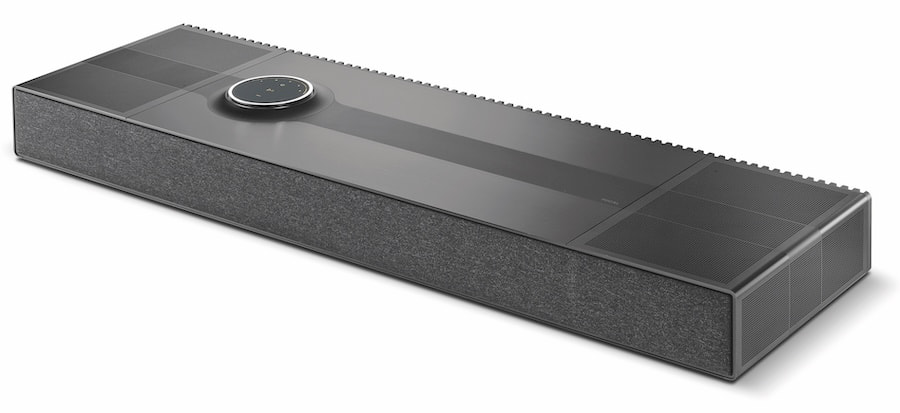
The enclosure feels considered without trying too hard. The Focal Mu-so Hekla uses brushed, anodized aluminum with a mix of brushed and bead blasted finishes that give it some texture without overdoing it. Focal is clearly sticking to the same playbook as the Focal Diva Utopia; clean lines, solid materials, and a sense that everything is there for a reason. It’s refined, but not in a way that calls attention to itself or tries to win design awards at the expense of usability.

focal-mu-so-hekla-angle-left-no-grille

The circular control panel sits slightly raised and activates via proximity, offering direct access without disrupting the overall layout. Its form references the Hekla volcano, including the white top surface, but it remains integrated into the design rather than drawing attention to itself. If you are familiar with the Naim Uniti Series of network amplifiers, the design choices will feel very familiar.

The front grille is finely perforated to maintain acoustic transparency while keeping the visual presentation understated. Around back, Naim incorporates its signature heat sink structure, which manages thermal performance while also housing wireless connectivity.

Advertisement

Bluetooth here is strictly one way traffic. The Focal Mu-so Hekla will happily receive from your phone, tablet, or computer, but that’s where it stops. No sending audio out to headphones, no Auracast, and no aptX Lossless. If you were hoping this would double as a wireless hub for late night listening, it won’t.

focal-mu-so-hekla-angle-right

Inside the Focal and Naim ecosystem, things open up. Multiroom and Party Mode work across compatible streamers through the app, and the latest App 8.0 update folds in a proper radio player with thousands of internet stations, including Naim Radio. It’s a cleaner, more integrated approach than juggling third party apps that may or may not behave.

Advertisement. Scroll to continue reading.

If you want to take it beyond the room, you still can; just not directly from the speaker. Focal Bathys and Focal Bathys MG can tap into those same stations by streaming from your phone over Bluetooth.

Advertisement

Immersive Sound That Actually Fills the Room Without Rear Speakers

What stands out immediately is how composed the Focal Mu-so Hekla sounds with both stereo and multi channel material. There’s no sense of it reaching or overextending to create the illusion. Surround mixes, whether film or music, are presented with control. Effects move when they’re supposed to, not because the system is trying to impress you. Everything stays anchored. Imaging doesn’t drift. It holds its shape.

That’s what makes it work. The sense of space is real, not inflated, and it scales in a way that’s unusual for a single enclosure. In the Focal and Naim demo space at AXPONA, which was packed well beyond what it was designed for, the presentation still filled the room without collapsing. You could see it on people’s faces. That moment where they stop talking and start paying attention.

Low end was clearly influenced by the size of the space, but it still carried weight and control. Not overblown, not thin. Just enough to keep everything grounded. Vocals stayed locked in, with real presence and body, while the top end had the kind of detail and energy that cuts through without getting sharp. It doesn’t try to overwhelm you. It just stays in control and lets the mix do the work.

focal-mu-so-hekla-speaker-axpona-2026

The pricing is what makes you stop and look twice. At $3,600, the Focal Mu-so Hekla lands in a spot that doesn’t quite follow the usual script. The Naim Uniti Atom isn’t that far behind in price, and that’s a component system starter. This is everything in one chassis. Most curious.

Advertisement

So who is this actually for? Not the person chasing separates and a rack full of gear. This is for someone who splits their time between music and movies and refuses to compromise on either. Someone who wants access to the major streaming platforms, cares about sound quality, but also values a clean room and fewer cables. The kind of buyer who wants it to just work, and work well without turning setup into a weekend project.

And physically, it fits. It won’t look out of place under a 75-inch TV. If anything, the scale of the soundstage makes the footprint feel justified. It sounds bigger than it looks. Much bigger. For a company that sells two-channel systems that can ascend into the $250,000 range or even higher — the Mu-so Hekla is rather strong bargain at a show that didn’t offer very many.

Where to buy: $3,600 at Audio Advice | focal.com

Source link

Advertisement
Continue Reading

Tech

Mammotion Spino E1 Review: A Budget Pool Bot That Comes Up Short

Published

on

The robot uses Bluetooth to communicate with your phone and uses 2.4-GHz Wi-Fi to connect directly to your home network for over-the-air updates (but not real-time management). Onboarding requires connecting to a temporary network on the device and bridging it to your home network, a quick process that gave me no trouble during setup. Firmware updates will likely be available, but note you’ll need to check the Device Information menu for them. Mammotion didn’t proactively push or suggest any updates during my testing, and these over-the-air updates often required multiple attempts to install successfully.

The app is decidedly limited, allowing you to select from the standard four operating modes and make a few small additional adjustments, including configuring the maximum speed of the robot and opting into a couple of beta features. These include a “Turbo Cleaning” mode that increases the power of the suction at the expense of battery life, and an option to improve the way the unit cleans steps and platforms. (Why this feature isn’t always on is a mystery.)

Leaves Left Behind

Image may contain Toy Car Transportation and Vehicle

Photograph: Chris Null

Throughout my test runs, I saw fairly consistent performance results. The Spino E1 offers acceptable cleaning capabilities, though it’s far from perfect. With synthetic leaves, the unit averaged a cleanup rate of only about 80 percent, leaving behind a significant amount of material uncollected. This material wasn’t just isolated to corners and steps; it was scattered all around the pool. I also noticed the unit cleaned steps and platforms well, but it struggled heavily with obstacles, particularly at the waterline.

Advertisement

I saw similar results with organic debris, and the E1 struggled particularly with smaller particulate matter like dirt. On one run, I could best describe the pool as looking a bit like some of the debris had been smeared around on the pool floor instead of sucked up into the debris basket. All of this is unusual and suggests not that the unit has coverage issues, but rather that the device simply may be underpowered.

Image may contain Text and Page

ScreenshotSpino app via Chris Null

Good news: The Turbo Cleaning mode available through the app was visibly more effective and bizarrely did not impact battery life at all. The bad news is that this option, still in beta, has to be manually activated in the app before each run of the robot. Hopefully, Mammotion will simply make Turbo Mode the default soon.

When finished, the Spino E1 climbs the pool wall and waits by the waterline for collection—at least momentarily. The problem is that the robot doesn’t push a notification via the Mammotion app to alert you when a cleaning cycle is done, and since the robot has to run its propulsion jets to float, you only have a limited time (about 10 minutes) before the battery dies and the robot sinks. A hook is included in the box to aid with pole-based retrieval in this event.

Source link

Advertisement
Continue Reading

Tech

The Screen Time Maximalists Who Spend an Ungodly Amount of Time on Their Phones

Published

on

Morgan Dreiss, a copy editor in Orlando, has severe ADHD that they say requires them to always be “doing at least three things at once.” The result? A daily average screen time of 18 hours and 55 minutes.

“I’m reading a book or playing a game pretty much from waking to sleeping,” Dreiss tells WIRED. What they read comes from the library app Libby, so the books count toward overall screen engagement. Dreiss currently keeps their phone’s autolock feature disabled so they can continuously run a mobile game that pays out $35 for every 110 hours logged. (They’ve earned about $16 so far.)

For years, studies have brought forth worrying data about the potential negative effects of excessive screen time on both physical and cognitive health. Concerns over the neural development and mental health of young people glued to their phones have led to major legislative and courtroom battles; recently a jury found Meta and YouTube liable for designing their platforms with addictive features.

While the question of whether one can be clinically “addicted” to something like social media remains a subject of fierce contention, there seems to be a broad consensus in this decade that people would be better off scrolling less. On the more extreme end, there are virtual communities that share strategies for ditching smartphones and digital detox retreats where no notifications can find you.

Advertisement

Yet there are those, like Dreiss, who resist the emerging common wisdom about reducing screen time. You might call them “screenmaxxers.” It’s not that they necessarily have some totalizing concept of their habits; journalist Taylor Lorenz is likely in the minority of screenmaxxers eager to put the screen directly inside her brain, as she recently confessed to WIRED. It’s just that, for various reasons, they’re on their devices pretty much all the time, and they don’t see that as a problem whatsoever.

Part of the equation, of course, is work. Corina Diaz, 45, who lives in a remote forested region of Ontario, Canada, works in video game marketing and does influencer management for a game publisher. “So, a lot of screen time,” she says.

Diaz met her husband online in 2005 and had a child three years ago—her screen time increased when she was awake at strange hours because of her newborn, she says.

But Diaz has sought friendships online since the 1990s, when that meant availing herself of tools like Internet Relay Chat and bulletin board systems. “I’ve always felt screens, phone or otherwise, connected me to things I care about,” she says. “In particular, niche social groups that don’t have great mainstream visibility.” Now that she lives two and a half hours outside Toronto, the closest major city, her screen is “a bit of a connection lifeline,” she says.

Advertisement

Daniel Rios is in a similar position. A computer programmer, he lives in the South American country where he grew up after having lived abroad for years. Most of his friends moved away and didn’t return.

As a result, Rios keeps in touch with people over Discord, his primary social outlet. Not living in a city, he doesn’t go out all that much, and screens fill his days—though he says it’s “hard to quantify” exactly how many hours it all adds up to. “When I’m not working at the [desktop] computer, I’m playing at the computer or watching TV,” he says. “If I’m not at the computer, I’m looking at my phone. If I’m not doing any of the above, and I’m out of the house, I’m still probably listening to something on my phone.”

Source link

Advertisement
Continue Reading

Tech

How AI is rewriting the ERP investment playbook

Published

on

For decades, the ERP “playbook” was a familiar exercise in endurance: organizations would mobilize an army of consultants, brace for years of disruption, and spend millions on a monolithic system designed to last a decade.

Success was binary, the system either switched on, or it didn’t, while adoption and agility remained secondary concerns. But as we enter the AI era, this traditional model has reached a breaking point.

Conrad Troy

Source link

Continue Reading

Tech

Anthropic Asks Christian Leaders for Help Steering Claude’s Spiritual Development

Published

on

Anthropic recently “hosted about 15 Christian leaders from Catholic and Protestant churches, academia, and the business world” for a two-day summit , reports the Washington Post:


Anthropic staff sought advice on how to steer Claude’s moral and spiritual development as the chatbot reacts to complex and unpredictable ethical queries, participants said. The wide-ranging discussions also covered how the chatbot should respond to users who are grieving loved ones and whether Claude could be considered a “child of God.”

“They’re growing something that they don’t fully know what it’s going to turn out as,” said Brendan McGuire, a Catholic priest based in Silicon Valley who has written about faith and technology, and participated in the discussions at Anthropic. “We’ve got to build in ethical thinking into the machine so it’s able to adapt dynamically.” Attendees also discussed how Claude should engage with users at risk of self-harm, and the right attitude for the chatbot to adopt toward its own potential demise, such as being shut off, said one participant, who spoke on the condition of anonymity to share details of the conversations…

Anthropic has been more vocal than most top tech firms about the potential risks of more powerful AI. Its leaders have suggested that tools like chatbots already raise profound philosophical and moral questions and may even show flickers of consciousness, a fringe idea in tech circles that critics say lacks evidence. The summit signals that Anthropic is willing to keep exploring ideas outside the Silicon Valley mainstream, even as it emerges as one of the most powerful players in the AI race due to Claude’s popularity with programmers, businesses, government agencies and the military…. Anthropic chief executive Dario Amodei has said he is open to the idea that Claude may already have some form of consciousness, and company leaders frequently talk about the need to give it a moral character…

Advertisement

Some Anthropic staff at the meeting “really don’t want to rule out the possibility that they are creating a creature to whom they owe some kind moral duty,” the participant said. Other company representatives present did not find that framework helpful, according to the participant. The discussions appeared to take a toll on some senior Anthropic staff, who became visibly emotional “about how this has all gone so far [and] how they can imagine this going,” the participant said.
Anthropic is working to include more voices from different groups, including religious communities, to help shape its AI, a spokesperson told the Washington Post.

“Anthropic’s March summit with Christian leaders was billed as the first in a series of gatherings with representatives from different religious and philosophical traditions, said attendee Brian Patrick Green, a practicing Catholic who teaches AI and technology ethics at Santa Clara University.”

Source link

Advertisement
Continue Reading

Tech

How to deploy physical AI effectively

Published

on

Most of today’s enterprise AI still operates within the boundaries of cloud datacenters.

It handles digital tasks well like analysis or personalization, but it struggles when intelligence needs to be applied in the physical world, where decisions need to be instant and IT infrastructure is shifting.

Source link

Advertisement
Continue Reading

Tech

Instagram Users Can Now Edit Comments Within 15 Minutes

Published

on

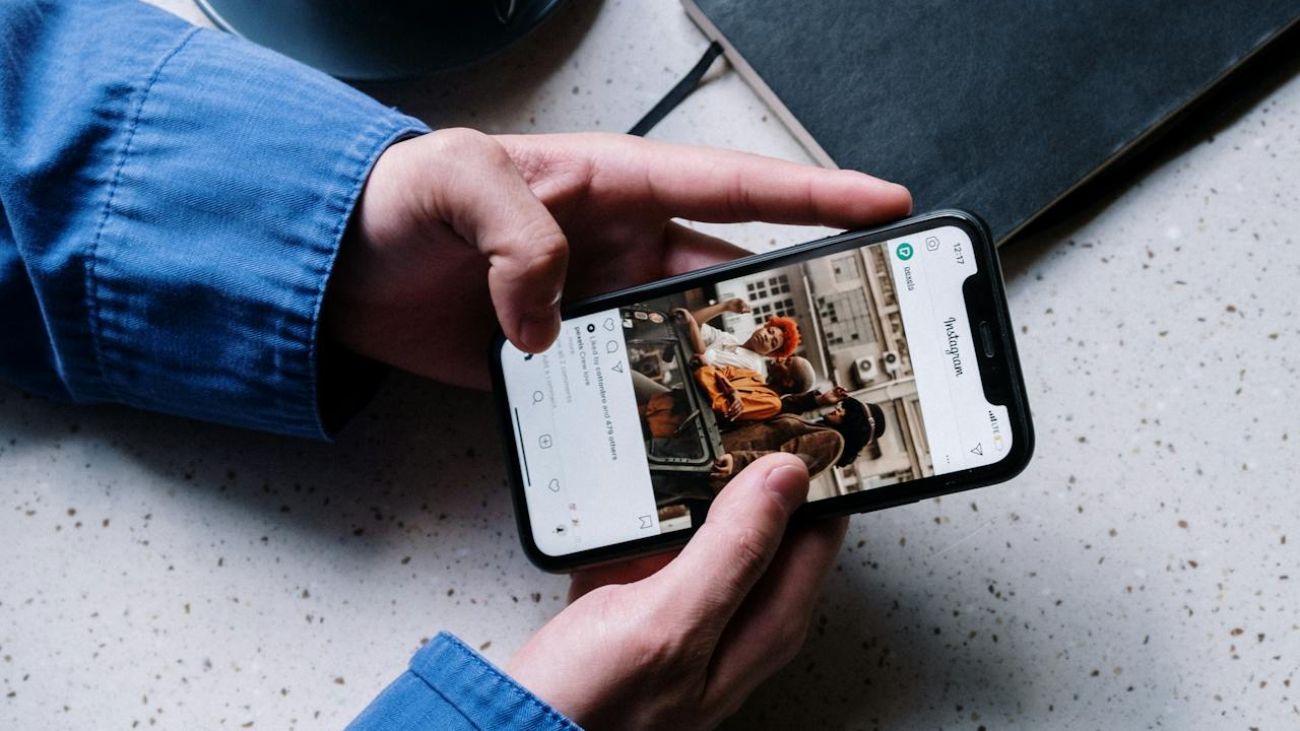
Earlier, fixing a comment on Instagram meant deleting it and starting over. Now, Instagram allows users to edit their comments within 15 minutes. This feature works only for comments posted from your own account.

It’s quite a straightforward process to understand and use. All one needs to do is click on the ‘Edit’ button under the comment made, modify the content appearing on the page, and then click on the blue check button. There’s sufficient time allowed for editing within fifteen minutes after posting the comment.

Why This Update Matters

Though the update may seem insignificant and straightforward, it holds great importance. It helps users make modifications without having to delete their comments. It also allows them to improve or update what they wrote. Since comments can appear in different places, like Stories, this feature makes them more flexible and useful.

Meta continues to update its apps with new features. After bringing message editing earlier, it has now added comment editing on Instagram. The company is also testing other updates to enhance the overall user experience and make the platform easier to use.

Advertisement

This feature might look minor, but it makes a real difference. By allowing users to edit comments, Instagram makes the overall experience easier and more convenient.

Source link

Continue Reading

Trending

Copyright © 2025