An internal memo obtained by The Verge shows Xbox’s new CEO, Asha Sharma, acknowledging that Game Pass has grown too expensive. Microsoft is now exploring lower-cost subscription tiers, though no firm timeline has been set. Read Entire Article Source link
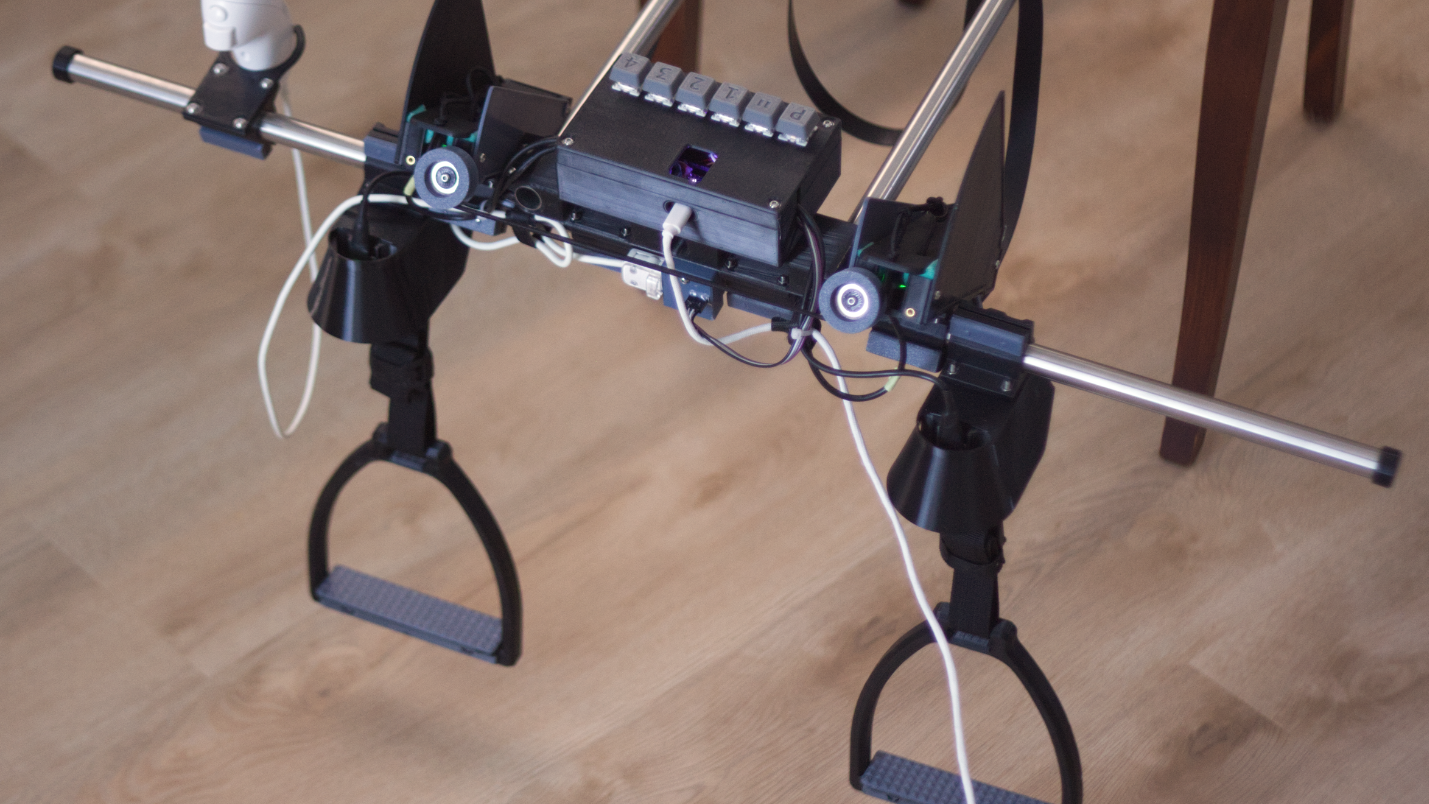
All the cool new 3D printers have tool-changing heads. Instead of multiplexing filament through one hot end, you simply park one hot end and pick up another. Or pick up a different tool, depending on what you need. There are many advantages to a system like that, but one disadvantage: cost. [Ultimate Tool Changer] has been working on a design for what he calls a simple, cheap changer, and it appears to be working well, as you can see in the video below.
This is one of those things that seems easy until you try to do it. He talks about a lot of the failures and dead ends along the way.
We worry that the tolerances are tight enough that wear over time might affect some of the key components, but how long that might take or if it will happen at all, we can’t say. Regardless, the system does appear to work, and we have no doubt you could keep it aligned or periodically replace parts to work around any wear issues.
One of the problems we have nowadays is that our main printers are plug-and-play boxes that are difficult to modify significantly. But if you have a homebrew printer or something made to expand like a Voron or old-school commercial printer, it seems like this would be something you could adapt.
The 24 Hours of Le Mans races is an extremely prestigious endurance motorsport event which attracts the best cars and drivers from around the world. It’s one of the longest-running races too, taking place once a year since 1923 (with a few obvious understandable gaps). But, like most motorsports, it’s financially out of reach for most people. One of the more popular attempts to bring racing to the masses has been the 24 Hours of Lemons races, which have price limits on vehicles to keep the barrier to entry low, and an EV truck recently entered one of these races with some interesting results.
The group behind this vehicle is called Team Arcblast, who retrofitted an old Datsun pickup truck to the extreme to enter this race. The modestly sized electric motor is installed in between the cab and the bed for easy access to the driveshaft, with the engine bay repurposed for all of the cooling and radiators needed for endurance racing like this. They’ve also equipped the truck with plenty of efficiency-increasing spoilers and other aerodynamic parts, and rebuilt the cab with not only the required roll cage and other safety equipment, but a modified driving position with steering and other components from various Miatas.
The most impressive part of this build, however, is the battery. The team invented a method of swapping out batteries quickly to avoid having to fast charge the car in the pit area. The system lets a battery slide in to the middle of the truck above the motor and quickly connect to the electrical system allowing for very quick pit stops and the ability to charge other batteries while the race goes on. All of these modifications together allowed the team to break the EV record for a Lemons race.
Advertisement
For a Lemons race, though, even this truck stretches the original spirit that these races were started, however impressive the build. We published a primer to these types of races a while back which includes much more affordable internal combustion options.
Chicago-based music superfan Aadam Jacobs has been recording the concerts he attends since the 1980s, amassing an archive of over 10,000 tapes. Now 59, Jacobs knows that these cassettes are going to degrade over time, so he agreed to let volunteers from the Internet Archive, the nonprofit digital library, digitize the tapes.
So far, about 2,500 of these tapes have been posted on the Internet Archive, including some rare gems like a Nirvana performance from 1989. (The group wouldn’t break through to mainstream audiences until they released the single “Smells Like Teen Spirit” in 1991.) Within the collection, you can also find previously unknown recordings from influential artists like Sonic Youth, R.E.M., Phish, Liz Phair, Pavement, Neutral Milk Hotel, and a whole bunch of other punk groups.
For many of these recordings, Jacobs was using pretty mediocre equipment, but the volunteer audio engineers working with the Internet Archive have made these tapes sound great.
One volunteer, Brian Emerick, drives to Jacobs’ house once a month to pick up more boxes of tapes — he has to use anachronistic cassette decks to play the tapes, which get converted into digital files. From there, other volunteers clean up, organize, and label the recordings, even tracking down song names from forgotten punk bands.
There’s no rewriting history here. Triumph were always the “other” Canadian power trio, living in the long shadow of Rush. But while Geddy Lee and Alex Lifeson gear up for a closely watched return to the stage this summer; now with Anika Nilles stepping into the impossible role left by Neil Peart, Triumph are making their own move back into the conversation.
The Best of Triumph arrives June 12 via Craft Recordings, collecting the band’s most defining arena rock cuts at a moment when Canada’s hard rock legacy is suddenly front and center again. Available on LP, CD, and digital, the set revisits staples like “Lay It on the Line,” “Magic Power,” and “Fight the Good Fight,” charting Triumph’s rise from domestic breakout act to international stage regular—because if you grew up north of the border, they were never optional. They were already on the mix tape.
Triumphant Return: Canada’s Other Power Trio Steps Back Into the Spotlight
Alongside the announcement, “Lay It on the Line (Single Edit)” makes its streaming debut—finally. Newly mastered from the original analog tapes as part of the full-album remaster, this is the tighter, radio-ready version that helped push Triumph beyond Canadian borders in the late 1970s. Several of the single edits included in this collection have never been available digitally, giving longtime fans and the streaming generation a shot at hearing these songs the way radio first delivered them.
Advertisement
The physical rollout leans into collector appeal without going overboard. In addition to standard black vinyl, The Best of Triumph will be offered in multiple exclusive color variants: “Spellbound Purple” at Barnes & Noble, “Blue Smoke” at Sunrise Records, and “Silver Lightning” through Craft Recordings. A retailer-exclusive CD featuring a commemorative tour pass will also be available via Walmart and Sunrise Records in Canada.
Long before streaming playlists flattened everything into the same algorithmic swamp, Triumph carved out a distinct lane. Formed in the mid-1970s by Gil Moore, Rik Emmett, and Mike Levine, the band fused hard rock punch with progressive instincts and a surprisingly optimistic streak. The result: a run of Gold and Platinum releases and a steady grip on rock radio through the late ’70s and ’80s. They didn’t quite reach the global dominance of Rush, but they sat comfortably in that second tier alongside arena heavyweights like Boston and Foreigner, and for a lot of listeners, that was more than enough.
Tracks like “Lay It on the Line” and “Fight the Good Fight” remain fixtures on classic rock radio, and steady placement across film, television, and sports has kept the catalog alive. More recently, a surprise reunion appearance during the 2025 Stanley Cup Final helped put the band back on the radar ahead of their upcoming tour.
That momentum carries into 2026 with The Rock & Roll Machine Reloaded tour, marking Triumph’s first full-scale run in more than three decades. The North American trek launches April 10 in Orlando with a benefit performance before moving across the U.S. and Canada through early June, joined by fellow Canadian rock veterans April Wine. It’s a 50th anniversary victory lap—but also a reminder that for a band long cast as the “other” Canadian trio, Triumph never really left the building. They were just smoking in the boy’s room.
2026 Tour Dates
April 10 – Orlando, FL – Hard Rock Live Universal April 13 – Hollywood, FL – Hard Rock Live Seminole Hard Rock Hotel and Casino April 22 – Sault Ste. Marie, ON – GFL Memorial Gardens April 24 – Toronto, ON – Scotiabank Arena April 25 – Hamilton, ON – TD Coliseum April 28 – Halifax, NS – Scotiabank Centre April 29 – Moncton, NB – Avenir Centre
Advertisement
May 2 – Laval, QC – Place Bell May 3 – Ottawa, ON – Canadian Tire Centre May 5 – Winnipeg, MB – Canada Life Centre May 7 – Edmonton, AB – Rogers Place May 8 – Calgary, AB – Scotiabank Saddledome
May 13 – Rosemont, IL – Allstate Arena May 14 – Milwaukee, WI – Miller High Life Theatre May 16 – Kansas City, MO – Starlight Theatre May 17 – St. Louis, MO – Hollywood Casino Amphitheatre May 20 – Irving, TX – The Pavilion at Toyota Music Factory May 21 – San Antonio, TX – Frost Bank Center May 22 – Sugar Land, TX – Smart Financial Centre
May 24 – Tampa, FL – MIDFLORIDA Credit Union Amphitheatre May 26 – Atlanta, GA – Synovus Bank Amphitheatre at Chastain May 28 – Camden, NJ – Freedom Mortgage Pavilion May 30 – Sterling Heights, MI – Michigan Lottery Amphitheatre at Freedom Hill
Advertisement. Scroll to continue reading.
Advertisement
June 3 – Darien Center, NY – Darien Lake Amphitheatre June 4 – Boston, MA – Leader Bank Pavilion June 5 – Wantagh, NY – Northwell at Jones Beach Theater June 6 – Boston, MA – Leader Bank Pavilion
The modern era of cheating in chess began on a Thursday in July 1993, when a man with shoulder-length dreadlocks walked into the World Open tournament in Philadelphia and registered as John von Neumann. Both the hair and the name were phony.
The real Von Neumann was a prominent mathematician and computer scientist who died in 1957. The fake Von Neumann had a suspicious buzzing bulge in his pocket, fought a grandmaster to a draw, then fled before anyone could work out who he was.
A Boston Globe columnist called it “one of the strangest cheating episodes in chess history.” Chess.com recorded the “Von Neumann incident” as “the earliest known case of a potential computer cheater.”
This was decades before chess pros started getting expelled from tournaments for using smartphones, and a lifetime before the recent buzzing anal beads scandal. (Google it, but not at work.) It was years ahead of Garry Kasparov’s defeat by IBM’s Deep Blue, in an era when humans still imagined themselves to be smarter than machines. The identity of the man with the dreadlocks has remained one of the game’s most enduring mysteries. Until now.
Advertisement
I stumbled across the culprits while researching Lucky Devils, my new book about gamblers using science and technology to win at blackjack, poker, roulette and, on this occasion, chess. The following excerpt is based on my interviews with the gamblers involved and the tournament’s organizers and participants, as well as contemporaneous reports. Wherever possible, details have been independently verified.
Rob Reitzen packed light for the flight from Los Angeles to Philadelphia. He had to. His suitcase was stuffed with computer equipment, switches, wires, and buzzers. Sitting next to him on the plane was his best friend John Wayne, known to everyone in their crew of professional gamblers as “the Duke,” after his Hollywood namesake.
It was June 1993, just before the start of the World Open chess tournament, hosted by the City of Brotherly Love. Reitzen and Wayne both fancied themselves as players. It was how they’d first met. The Duke had posted a flyer, inviting challenges against “John Wayne, chess champion and arm-wrestling champion.” Reitzen had responded and found himself sitting opposite a Black ex-soldier with a megawatt smile, beginning a relationship built on competitive pranks.
Their real calling, though, was gambling—specifically the high-tech kind. Reitzen, a dyslexic savant with a mop of curly hair permanently concealed under a baseball cap, earned a living with wearable gadgets. He’d used an adapted Zilog Z80 microprocessor, about the size of a pack of cards, to process the shifting possibilities in blackjack, then developed a similar device to do the same in California’s poker rooms. For a while, Reitzen and Wayne used a system with a tiny camera inside a player’s belt buckle. Outside, in a truck with a communications dish bolted to the side, teammates could pause its footage, zoom in, and see the blackjack dealer’s hidden card for a split second as it was placed face down on the felt. Was it cheating? Probably. But the profits spoke louder than any ethical doubts they might have had.
Advertisement
Since such machines were banned in casinos, they had to be concealed carefully. Reitzen and his players sent information to the computers using toe switches built into their shoes and received instructions back from a vibrating box hidden in the crotch.
On arrival in Philadelphia, the Duke wired himself up, putting on a pair of headphones to secure his wig. He wore one of their blackjack processors, modified to communicate with Reitzen, who would station himself, out of sight, in front of a bank of monitors in their hotel room running his homemade chess software. The two friends looked at each other, Reitzen grinning. This was it—their shot at chess immortality.
On the entry form, Wayne wrote the name John von Neumann. “As in … the father of game theory?” a skeptical official asked. Wayne nodded. The official raised an eyebrow, then put Wayne into the draw.
Fusion power startup Inertia Enterprises said on Tuesday that it has signed three agreements with the Lawrence Livermore National Laboratory (LLNL) to help bring the laser-based fusion reactor pioneered at the Californian lab to market.
The deals could give Inertia a boost over rival startups. The National Ignition Facility (NIF) at LLNL is so far the only experiment to prove that controlled fusion reactions could produce more power than they require to ignite. Inertia burst onto the scene in February with a $450 million Series A, making it one of the best capitalized startups in the industry.

Inertia and LLNL are working on a type of fusion called inertial confinement, which generates fusion conditions by compressing a fuel pellet using some external force, unlike other approaches that use powerful magnetic fields to confine plasmas until atoms fuse.
At the NIF, 192 laser beams are fired into a large vacuum chamber so that they converge on a small gold cylinder called a hohlraum, which contains a diamond-coated fuel pellet. When the lasers hit the hohlraum, it gets vaporized and emits X-Rays that blast the BB-sized fuel pellet inside. The diamond coating is transformed into a plasma, which expands to compress the deuterium-tritium fuel.
Advertisement
If that doesn’t sound exotic enough, keep in mind that all of this needs to happen several times per second if the technology is ever going to produce power for the grid.
The laser-driven reactor design was first theorized in the 1960s as a safer way to research thermonuclear weapons, though scientists also recognized its potential for power production. Construction on the NIF began in 1997, and it took 25 years to reach the breakeven point where a fusion reaction released more power than needed to kick it off.
Several startups, including Inertia, Xcimer, Focused Energy and First Light, are attempting to turn the concept into commercial-scale power plants. Because NIF’s lasers are based on old technology, the hope is that new lasers will be more efficient, lowering the energy required to ignite each fusion reaction and so make it easier for each reaction to release enough energy to make a commercial-scale power plant profitable.
Techcrunch event
Advertisement
San Francisco, CA | October 13-15, 2026
The agreements between Inertia and LLNL cover two strategic partnership projects, and one cooperative research and development agreement. The organizations say they will work together to develop more advanced lasers and improve the fuel targets with an eye toward better performance and manufacturing. Inertia is also licensing almost 200 patents from the lab.
Advertisement
It was perhaps inevitable that Inertia and LLNL would continue to work together. Annie Kritcher, the co-founder and chief scientist of Inertia, helped design the successful experiment at NIF that achieved scientific breakeven. The 2022 CHIPS and Science Act paved the way for her to found a company while retaining her position at LLNL.
Back in 2017, Hackaday featured an audio reactive LED strip project from [Scott Lawson], that has over the years become an extremely popular choice for the party animals among us. We’re fascinated to read his retrospective analysis of the project, in which he looks at how it works in detail and explains that why for all its success, he’s still not satisfied with it.
Sound-to-light systems have been a staple of electronics for many decades, and have progressed from simple volume-based flashers and sequencers to complex DSP-driven affairs like his project. It’s particularly interesting to be reminded that the problem faced by the designer of such a system involves interfacing with human perception rather than making a pretty light show, and in that context it becomes more important to understand how humans perceive sound and light rather than to simply dump a visualization to the LEDs. We receive an introduction to some of the techniques used in speech recognition, because our brains are optimized to recognize activity in the speech frequency range, and in how humans register light intensity.
For all this sophistication and the impressive results it improves though, he’s not ready to call it complete. Making it work well with all musical genres is a challenge, as is that elusive human foot-tapping factor. He talks about using a neural network trained using accelerometer data from people listening to music, which can only be described as an exciting prospect. We genuinely look forward to seeing future versions of this project. Meanwhile if you’re curious, you can head back to 2017 and see our original coverage.
That phrase defined retail cybersecurity in 2025. What began as isolated incidents quickly became prolonged, intense disruptions, exposing just how interconnected — and fragile — modern retail operations really are.
Nadir Izrael
CTO and Co-Founder at Armis.
Over the year, high-profile retailers around the world were hit. Luxury global brands like Gucci and Balenciaga suffered data breaches; Victoria’s Secret was forced to temporarily shut down parts of its digital operations. While Marks & Spencer, Co-Op and Harrods in the UK all faced incidents, with disruption for M&S lasting for 15 weeks.
Article continues below
Advertisement
Different triggers, same outcome: major disruption and financial loss.
But when disruption spreads this quickly and lingers this long, it stops being about individual attacks and starts raising a more uncomfortable question: why was retail such fertile ground for them in the first place?
Advertisement
Why disruption spread so easily
While the volume of retailers hit in 2025 might have felt anomalous, it makes sense when viewed through this lens: retail is one of the most effective sectors for causing maximum disruption at scale. The cyberattack on United Natural Foods, a key supplier to tens of thousands of grocery stores across North America, showed how a single compromise can ripple outward – emptying shelves, disrupting lives, and triggering wider economic impact.
But it wasn’t simply a lack of security investment that caught out countless retailers last year, it was the sheer scale of cyber exposure retailers are now dealing with. The most disruptive incidents of the year weren’t driven by sophisticated zero-day exploits, but by attackers exploiting complexity and that lack of contextual understanding around how systems, assets and users interact.
Sign up to the TechRadar Pro newsletter to get all the top news, opinion, features and guidance your business needs to succeed!
Retailers operate sprawling digital ecosystems that combine ecommerce platforms, cloud infrastructure, in-store operational technology, identity systems, and third-party services. Each connection improves efficiency and scale — but also introduces new exposure and risk. A weakness in one area, whether a supplier, a trusted integration or an unmanaged asset, can quickly cascade into widespread disruption.
Advertisement
Attackers are increasingly adept at exploiting these conditions, too. Rather than targeting a single critical vulnerability, they chain together lower-risk weaknesses, move laterally across environments or providers and take advantage of fragmented visibility between IT, cloud storage and operational systems. The Adidas breach is a clear example: attackers gained access via a third-party supplier, stole customer data and demonstrated how interconnected environments can amplify impact.
And every incident that occurred last year was enabled by the realities of modern retail operations. New systems are deployed quickly, integrations are prioritized over security hygiene, and legacy infrastructure often sits alongside modern cloud services.
This creates blind spots that attackers can exploit long before an incident becomes visible. Security teams are left defending environments that are constantly changing, often without the visibility or intelligence needed to anticipate where risk is building. Many are under-resourced, fighting the growing threat of generative AI, all while trying to embed a culture of collaborative risk management.
Advertisement
After a tumultuous year, one thing is clear; this wasn’t a brief surge in activity or a single bad quarter. It was a sustained pattern of exposure playing out across the retail ecosystem. And as long as that exposure remains fragmented and poorly understood, disruption will continue to outpace response.
Cyber exposure becomes the foundation for resilience
What the past year made clear is that resilience in retail can no longer be built by reacting faster to incidents after they occur. With AI, as well as other emerging technologies becoming more mainstream, the problem is only going to get worse. The scale and persistence of disruption showed that retailers need to rethink how they understand risk in the first place.
That starts with recognizing that many of the most damaging weaknesses don’t sit in a single system or vulnerability, but in the relationships between software assets, platforms, and partners that underpin modern retail operations. This is where cyber exposure management becomes key. Rather than treating risk as a series of isolated alerts or vulnerabilities to be patched, exposure management focuses on understanding how risk originates and accumulates across an organization’s entire digital footprint.
Advertisement
For retailers, that footprint is uniquely complex: ecommerce platforms connect directly to inventory systems, in-store operational technology links back to central networks, identity management systems span employees, and third-party suppliers or contractors are embedded into day-to-day operations. Without a clear understanding of how these elements interact, it becomes impossible to anticipate how a seemingly minor weakness can escalate into widespread disruption.
Cyber exposure management offers a strategic approach to identifying, assessing, prioritizing and reducing cyber risk across an organization’s entire digital footprint. It’s about developing a living, contextual understanding of what assets exist, what role they play within retail operations, how critical they are during peak trading periods, and what other systems or partners they depend on – whether assets are managed or unmanaged, IT or OT, cloud-based or on-premises. This context is what separates manageable risk from systemic failure.
With attackers consistently exploiting gaps, exposure management allows organizations to assess risk in terms of real-world impact – not just technical severity – helping retailers prioritize the exposures most likely to affect operations, customer trust and revenue continuity.
This shift is ultimately about resilience, not just security maturity. By grounding risk decisions in how retail operations actually function, exposure-led approaches help teams anticipate where disruption is most likely to emerge, rather than responding after it has already taken hold. The result is more informed decision-making across IT, security and the wider business, with risk reduction aligned to operational continuity, customer experience and revenue protection.
Advertisement
Resilience starts before the next incident
There’s little room left for complacency. Retailers have learned the hard way that disruption doesn’t arrive in isolation, but through complex, interconnected environments – and once it begins, the impact can escalate quickly and spread far beyond the initial point of failure.
Last year was a wake-up call for the entire retail sector, not just for those that made the headlines. The challenge now is to ask harder questions about how environments are designed, how risk accumulates across systems, and whether businesses truly understand where their most critical points of exposure lie.
Because after all, when it rains, it pours. And the cost of inaction could now very well mean the difference between profit and sustained financial damage.
On Mar 20, the Ministry of Manpower (MOM) released its latest quarterly Labour Market Report, revealing updated figures on retrenchments and broader employment trends.
The data showed that the incidence of retrenchment rose to 6.3 per 1,000 employees, up from 5.9 per 1,000 the year before.
And within this broader trend, white-collar workers have experienced disproportionate pressure.
Advertisement
PMETs are increasingly on the chopping block
Professional, managerial, executive, and technician (PMET) retrenchments have shown a steeper incline compared to the overall workforce.
In 2025, the incidence of retrenchment for this group rose to 10.1 per 1,000 resident PMETs—above the pre-recessionary average—from 8.6 per 1,000 in 2024.
The layoffs have been largely concentrated in three sectors:
Financial Services: Banking and insurance firms have cut headcount as market conditions tighten
Information and Communications: Tech and telecom companies are restructuring in response to changing demands
Professional Services: Consulting, legal, and accounting firms have undergone notable workforce adjustments
For this specific labour market report, MOM examined trends in PMET roles to assess concerns around AI-driven job disruptions.
While the evidence does not point conclusively to broad-based displacement, there are signs of restructuring that warrant continued monitoring.
Advertisement
Total employment continued to grow
If you’re working in a PMET role, these trends may naturally raise concerns. However, the broader data suggest that this is not necessarily a contraction in demand for these jobs.
The same sectors that saw the highest PMET layoffs also had relatively high PMET job vacancies in Dec 2025, with a combined total of 14,600, up from 13,900 in the year-ago period.
Data on the number of job vacancies are rounded to the nearest 100.
According to MOM, the overlap between higher retrenchments and higher PMET vacancies in these sectors suggests ongoing restructuring and skills transition, where some jobs are being displaced as firms restructure, while hiring continues for others.
For the full year of 2025, total employment grew by 55,500, up from 44,500 in 2024. Of this, resident employment grew by 11,600, driven largely by financial services as well as health and social services.
In 2026, resident employment is expected to grow at a similar or slightly slower pace, said MOM.
Advertisement
Read more articles we’ve written on Singapore’s job trends here.
Featured Image Credit: Shadow_of_light/ depositphotos
A critical vulnerability in the wolfSSL SSL/TLS library can weaken security via improper verification of the hash algorithm or its size when checking Elliptic Curve Digital Signature Algorithm (ECDSA) signatures.
Researchers warn that an attacker could exploit the issue to force a target device or application to accept forged certificates for malicious servers or connections.
wolfSSL is a lightweight TLS/SSL implementation written in C, designed for embedded systems, IoT devices, industrial control systems, routers, appliances, sensors, automotive systems, and even aerospace or military equipment.
The vulnerability, discovered by Nicholas Carlini of Anthropic and tracked as CVE-2026-5194, is a cryptographic validation flaw that affects multiple signature algorithms in wolfSSL, allowing improperly weak digests to be accepted during certificate verification.
Advertisement
The issue impacts multiple algorithms, including ECDSA/ECC, DSA, ML-DSA, Ed25519, and Ed448. For builds that have both ECC and EdDSA or ML-DSA active, it is recommended to upgrade to the latest wolfSSL release.
“Missing hash/digest size and OID checks allow digests smaller than allowed when verifying ECDSA certificates, or smaller than is appropriate for the relevant key type, to be accepted by signature verification functions,” reads the security advisory.
“This could lead to reduced security of ECDSA certificate-based authentication if the public CA [certificate authority] key used is also known.”
Advertisement
According to Lukasz Olejnik, independent security researcher and consultant, exploiting CVE-2026-5194 could trick applications or devices using a vulnerable wolfSSL version to “accept a forged digital identity as genuine, trusting a malicious server, file, or connection it should have rejected.”
An attacker can exploit this weakness by supplying a forged certificate with a smaller digest than cryptographically appropriate, so the system accepts a signature that is easier to falsify or reproduce.
While the vulnerability impacts the core signature verification routine, there may be prerequisites and deployment-specific conditions that might limit exploitation.
System administrators managing environments that do not use upstream wolfSSL releases but instead rely on Linux distribution packages, vendor firmware, and embedded SDKs should seek downstream vendor advisories for better clarity.
Advertisement
For example, Red Hat’s advisory, which assigns the flaw a maximum severity rating, states that MariaDB is not affected because it uses OpenSSL rather than wolfSSL for cryptographic operations.
Organizations using wolfSSL are advised to review their deployments and apply the security updates promptly to ensure certificate validation remains secure.
Automated pentesting proves the path exists. BAS proves whether your controls stop it. Most teams run one without the other.
This whitepaper maps six validation surfaces, shows where coverage ends, and provides practitioners with three diagnostic questions for any tool evaluation.
You must be logged in to post a comment Login