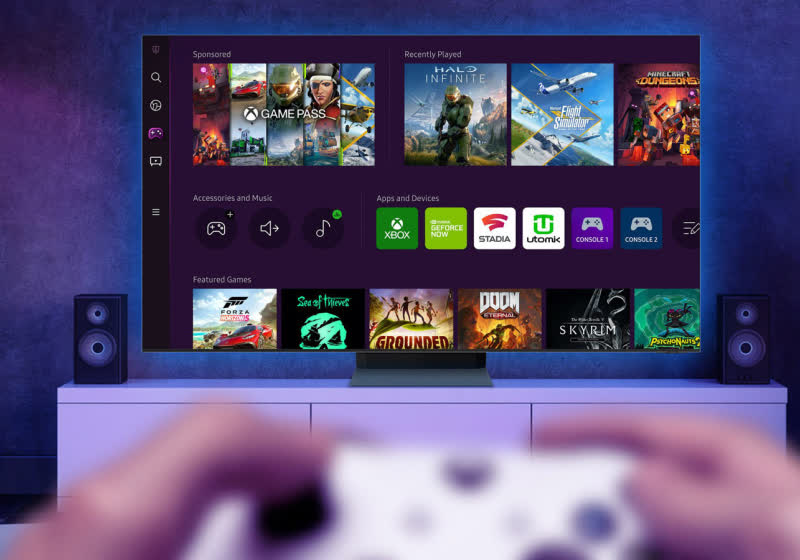
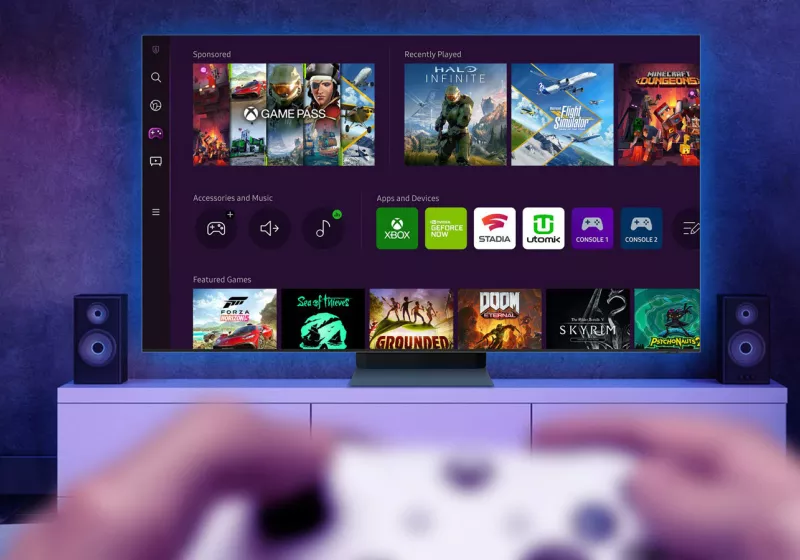
An internal memo obtained by The Verge shows Xbox’s new CEO, Asha Sharma, acknowledging that Game Pass has grown too expensive. Microsoft is now exploring lower-cost subscription tiers, though no firm timeline has been set. Read Entire Article Source link
The tech giant claims it can reach cutting-edge chip density by 2031, closing the gap with TSMC.
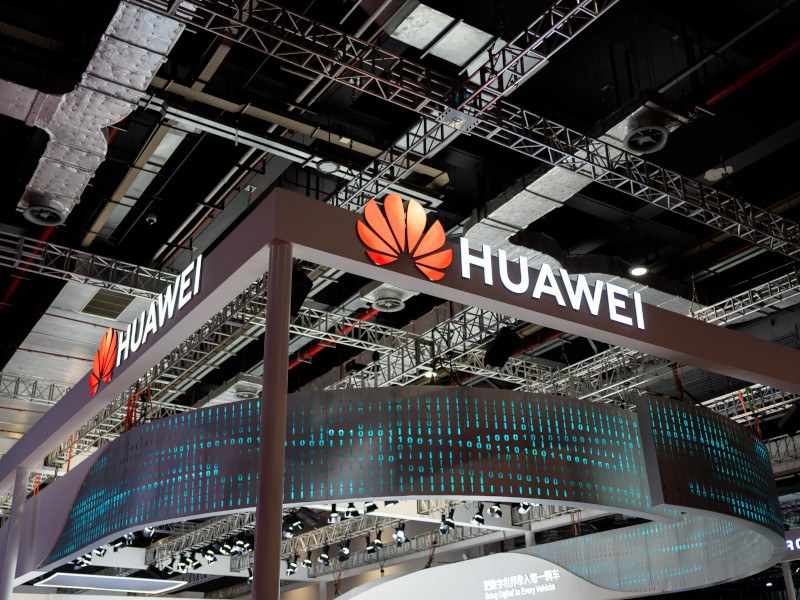
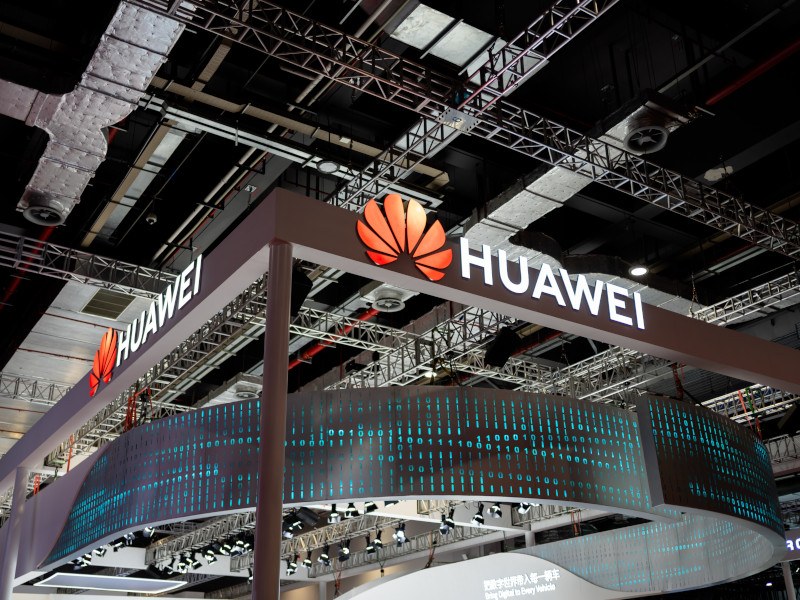
Huawei has proposed a new guiding principle for the semiconductor industry that it says could allow it to design chips rivalling the world’s most advanced processes, without needing the cutting-edge manufacturing equipment it has been denied under US sanctions.
At the 2026 IEEE International Symposium on Circuits and Systems (ISCAS) in Shanghai today (25 May), He Tingbo, president of Huawei’s semiconductor business and chair of its Scientist Committee, delivered a keynote speech entitled ‘New Semiconductor Path in Practice’, in which she presented what the company calls the ‘Tau Scaling Law’.
The law proposes replacing geometric scaling, the decades-old practice of physically shrinking transistors, with time scaling as the new guiding principle for semiconductor evolution. The idea is to reduce the time it takes for signals to propagate through chips and computing systems rather than making individual components smaller.
Advertisement
The principle has already acquired a nickname: “Her’s Law”, according to the South China Morning Post – a play on both He Tingbo’s surname and the tradition of naming foundational scientific laws after their originators, as with Moore’s Law.
The approach relies heavily on a technology Huawei calls LogicFolding. By breaking down the physical boundaries of traditional circuit layouts and significantly shortening critical-path wiring, LogicFolding aims to reduce resistive and capacitive load on signal propagation, ultimately boosting transistor density and circuit performance.
The ambitious production target puts Huawei in direct competition with the world’s leading chipmakers. According to Bloomberg, there is currently around a five-year gap between what TSMC can produce and what Huawei, working with its manufacturing partner SMIC, is capable of.
TSMC, the world’s largest producer of advanced chips, currently uses 2nm manufacturing technology and plans to introduce a 1.4nm process for mass production in 2028. Huawei says it will reach that same 1.4nm equivalence by 2031, although it did not provide independent data to support its claims.
Advertisement
Huawei says the framework is already in production. Over the past six years, it has designed and mass-produced 381 chips based on the Tau Scaling Law, for industries from smartphones to AI computing, it says. The Kirin chips scheduled to launch in autumn 2026 will be the first to adopt the LogicFolding architecture.
“We believe that openness and collaboration are key to driving ongoing progress in the semiconductor industry,” He Tingbo said. “No single company can independently find all the answers along the path of semiconductor evolution.”
Nvidia CEO Jensen Huang recently told CNBC the company had “largely conceded” China’s AI chip market to Huawei.
Don’t miss out on the knowledge you need to succeed. Sign up for the Daily Brief, Silicon Republic’s digest of need-to-know sci-tech news.
Some of you may know there’s a version of UNIX for the Commodore Amiga, aptly called Amiga Unix or AMIX. There is an almost complete record of versions from 1.0 to 2.03, but 2.02 was lost media–until [Forgotten Computer] found it on an old Amiga.
It starts with an auction held for the 40 year anniversary of the Free Software Foundation where, by just one second, the highest bidder was too late. What do you do first with an artifact as valuable as an old FSF computer? You image the hard drive. Then you make several copies, including on different computers–after all, you wouldn’t want to lose the data on it. Preservation secured, the natural next thing is to boot it–and that’s when we see the magic 2.02c version number. According to thorough digging by [Forgotten Computer], this version was–until now–lost.
In the video after the break, [Forgotten Computer] goes over what Amiga Unix is, the discovery process, and explores what’s on the disk–including FSF staples like GCC, G++ and core utilities like GNU less.
The company said its next-gen chips will be “feasible and affordable.”
Wongsakorn 2468/Shutterstock
Huawei has made a bold claim that it can manufacture its own semiconductor chips that are just as good as the competition thanks to a new breakthrough. At a semiconductor symposium in Shanghai, the Chinese company said it will be able to produce chips with transistor density that can match the 1.4-nanometer processes that competitors are expected to use, like Taiwan Semiconductor Manufacturing Corp (TSMC), Samsung and others.
If achieved, this development for Huawei would be a major deal since it’s been subject to continually expanding US trade sanctions going back to 2019. The restrictions have held Huawei back behind the competition, as it doesn’t allow access to specialized equipment that other companies are using to achieve that 1.4nm level. On the other hand, TSMC revealed its 1.4nm process that will enter production in 2028.
While Huawei would be five years behind the leading company, it could offer a more cost-effective solution. He Tingbo, Huawei’s head of its chip department, said its process is “feasible and affordable,” according to The Wall Street Journal. Currently, China’s biggest semiconductor manufacturer, Semiconductor Manufacturing International Corp offers chips with a 7nm processor, which can be seen in Huawei’s Mate 60 smartphones.
The Galaxy S26 Ultra is Samsung’s most powerful smartphone to date. It’s powered by the Snapdragon 8 Elite Gen 5 SoC and is available with up to 1TB of storage and 16GB of RAM. You get a quad-camera setup on the rear comprising a 200-megapixel main sensor, two telephoto lenses, and a 50-megapixel ultrawide sensor. It’s also the only premium smartphone from a mainstream brand that comes with a stylus built in.
Though Samsung hasn’t overhauled the design of its Galaxy S Ultra flagship in over four years, the Galaxy S26 Ultra does feature a unique hardware addition — Privacy Display. Despite the growing selection of Samsung Galaxy features, there aren’t many year-over-year changes hardware-wise. The Galaxy S26 Ultra has a massive 6.9-inch display and is by no means a compact flagship — yet, it’s only powered by a 5,000 mAh battery.
Fortunately, owing to the chip’s efficiency and Samsung’s excellent software optimization, the Galaxy S26 Ultra actually lasts all day on a single charge. Its charging speeds have also gotten much faster, at up to 60W with a compatible adapter. However, if battery life is at the top of your priorities, you can do much better than what Samsung is offering here. We’ve compiled a selection of smartphones with comparable performance that edge out the Galaxy S26 Ultra in battery endurance. It’s worth noting that a few of our picks aren’t officially sold in the U.S., and importing them may first require you to verify carrier compatibility.
Advertisement
iPhone 17 Pro Max
Chris Davies/SlashGear
The iPhone 17 Pro Max we reviewed is the safest flagship recommendation if you value the display and camera performance of the Galaxy S26 Ultra. It’s available globally and is actually priced cheaper than Samsung’s flagship. iPhones have never had the biggest battery capacities on paper, but have always managed to match or outperform their Android counterparts thanks to the fact that Apple controls both the hardware and software — yielding maximum efficiency.
The iPhone 17 Pro Max packs in a marginally larger battery at 5,088 mAh for the e-SIM model that should power the experience for an entire day and then some. In a comparison carried out by GSMArena, the iPhone 17 Pro Max beat the Galaxy S26 Ultra in web browsing and gaming endurance tests. In fact, this was the model that shipped with a physical SIM card slot, which has a smaller 4,832 mAh battery. The charging time for the iPhone, however, is noticeably slower. It still takes over an hour to fully charge, while the S26 Ultra can do it in roughly 40 minutes.
Advertisement
While you’re not getting spectacularly longer battery life with the iPhone 17 Pro Max, you do need to factor in the fact that it’s the only smartphone from a mainstream brand in the U.S. that confidently matches the Galaxy S26 Ultra in other aspects, such as performance, camera quality, and long-term software support. Pricing starts at $1,199 for the 256GB model, which is a hundred bucks less than the Galaxy S26 Ultra’s launch price.
Advertisement
OnePlus 15
Adnan Ahmed/SlashGear
Over the years, OnePlus has earned a reputation for offering some of the fastest smartphones at a fraction of the price of the iPhones and Samsungs of the world. Though pricing has crept up over the years, the $900 OnePlus 15 is still considerably more affordable than the Galaxy S26 Ultra. It’s powered by the same chipset and can be decked out with up to 16GB of RAM. However, OnePlus’ emphasis on snappy performance is evident, given all the animation tweaks and optimization that OxygenOS has got going.
One of the OnePlus 15’s highlights is its massive 7,300 mAh battery. Like most other Chinese OEMs, OnePlus has shifted to using high-density silicon-carbon batteries for its smartphones. This is why, despite its smaller footprint, the OnePlus 15 packs in a much larger battery compared to the Galaxy S26 Ultra. Furthermore, OxygenOS is pretty aggressive with battery management — there’s negligible battery drain overnight, and even under heavy load, the Snapdragon 8 Elite Gen 5 displays great efficiency.
In our review of the OnePlus 15, we practically couldn’t kill it in a day. With regular use, it comfortably lasts a day and a half — sometimes even two days. When it’s finally time to plug it in, the included 80W SuperVOOC charger charges it in under an hour. Models sold in China and India can be charged even faster with the 120W SuperVOOC charger that OnePlus bundles in with every purchase.
Advertisement
RedMagic 11 Pro
The Galaxy S26 Ultra is a great smartphone to play games on, but if gaming is a priority, you might want to consider the RedMagic 11 Pro. It’s powered by the Snapdragon 8 Elite Gen 5 chip and can be configured with up to 24GB of RAM and a terabyte of storage. If you can ignore its semi-transparent industrial look, you’ll actually find its shape and camera module very similar to that of the Galaxy S26 Ultra. On the front is a 6.85-inch 144Hz notchless display, with the front-facing camera hidden underneath the panel.
All of this power is backed by a mammoth 7,500 mAh silicon-carbon battery. PhoneArena reviewed the phone in great detail and highlighted how the battery is practically impossible to kill in a single day, even with intensive use or gaming. RedMagic bundles a power adapter that can fast charge the device with up to 80W of power. Interestingly enough, it matches its wireless charging speeds at 80W as well, though you will need to buy a compatible charger for it.
Since the RedMagic 11 Pro is a gaming phone at its core, you do get a sprinkle of unique features, including capacitive shoulder triggers and a 3.5mm headphone jack. Camera performance isn’t too bad, but the Galaxy S26 Ultra has the RedMagic 11 Pro soundly beat in this department. Pricing, however, is a treat — the phone starts at $700 for the 256GB storage variant that comes with 12GB of RAM.
Advertisement
Oppo Find X9 Pro
Jimmy Gunawan/Shutterstock
Oppo doesn’t operate in the U.S., but in the countries where it does, the brand has shifted its focus toward delivering flagships with class-leading cameras. The Oppo Find X9 Pro features a triple-camera setup, consisting of 50-megapixel wide and ultrawide sensors, and an additional 200-megapixel 3x telephoto lens. The design feels familiar because the Find X9 Pro is basically a OnePlus 15 with a better set of cameras. Although the Find X9 Ultra is the brand’s most powerful smartphone, the Find X9 Pro actually has it beat when it comes to battery capacity.
It packs in a 7,500 mAh silicon-carbon battery that can charge at up to 80W wired or 50W wirelessly. In GSMArena’s battery test, the Find X9 Pro dwarfs the Galaxy S26 Ultra and the iPhone 17 Pro Max. Since it runs ColorOS, which is very similar in form and function to OxygenOS, you can expect excellent standby times and efficiency. The MediaTek Dimensity 9500 that powers the phone trades blows with the Snapdragon 8 Elite Gen 5 that other prominent flagships in the space utilize.
Advertisement
The Find X9 Pro sports a 6.78-inch 120Hz AMOLED display and comes with up to 16GB of RAM and 1TB of fast UFS 4.1 storage. Like the OnePlus 15, you can use reverse wireless charging to charge other devices with up to 10W of power. The phone was launched at CNY 5,300, which works out to roughly $800.
Advertisement
Xiaomi 17 Pro Max
Elvard project/Shutterstock
Xiaomi is another tech giant that, unfortunately, doesn’t have a strong presence in the U.S. market. The Xiaomi 17 Pro Max looks and sounds a lot like Apple’s flagship, but if you can look past the unapologetic imitation here, you’ll find great value in the device. For starters, it’s powered by the Snapdragon 8 Elite Gen 5 SoC and comes in RAM and storage capacities of 16GB and 1TB, respectively. On paper, it’s just as powerful as the Galaxy S26 Ultra and other flagships. An area it beats the S26 Ultra in, however, is endurance.
The Xiaomi 17 Pro Max is a large device, with a 6.9-inch AMOLED display. It makes good use of its footprint — the 7,500 mAh silicon-carbon battery inside means the phone lasts hours on end with intensive use. When it does eventually drain out, you can charge it in under an hour with the included 100W charger. The device scored 89% in Notebookcheck’s comprehensive review, which also praised its long-lasting battery.
The rest of the phone is just as interesting — there’s an entire second 120Hz AMOLED display on the back that can display notifications or double as a viewfinder for the rear camera. You get a triple 50-megapixel camera setup, comprising a wide, an ultrawide, and a telephoto sensor. The phone was launched in China at CNY 6,000, which roughly converts to around $900.
The emergence of Anthropic’s Mythos has sparked wide-ranging concern about potential threats posed by it and other similar AI models.
The European Central Bank (ECB) is to urge quicker action on improving the IT security of lending organisations amid evolving AI threats when it summons representatives to a meeting tomorrow (26 May), according to the Financial Times (FT).
“This is something that is game-changing. We want banks to look into this seriously. The clock is ticking,” Frank Elderson, vice-chair of the ECB supervisory board that oversees banks, told the FT.
The emergence in April of Anthropic’s Mythos AI model, with its reported high levels of capability in finding and exploiting cybersecurity weaknesses in browsers and operating systems, has sparked wide-ranging concern about potential threats posed by it and other similar models.
Advertisement
“There is a whole range of issues on cybersecurity that we have been engaging on with the banks for years which are all still valid, but given the progress in AI, they need to be dealt with faster,” Elderson told the FT.
US banks such as JP Morgan Chase, Goldman Sachs, Citigroup, Bank of America and Morgan Stanley have been allowed controlled preview access to Mythos, and according to the FT, the ECB hopes for collaboration between US and European lenders on the issue.
Although restricted by a current lack of access to Mythos, European banks still need to be prepared for the threats it, and others, could pose, Elderson told the publication.
“The fact that you don’t have access to this model is not an excuse for inaction,” he said. “Malicious actors might have access to this technology soon.”
Advertisement
Last month, it was reported that a private Discord group had gained unauthorised access to Mythos soon after its launch, although had not used it for malicious purposes.
Meanwhile, a new survey of compliance professionals in Ireland has found that more than one-third of participants believe AI is making it more challenging for financial institutions to safeguard customer and other sensitive data, while just 7pc feel it has made data protection easier.
The study by the Compliance Institute, Ireland’s professional body for compliance practitioners, gathered responses from approximately 150 compliance professionals working primarily across Irish financial services organisations to explore views on the impact of AI on data protection, as well as the steps companies are taking to comply with new EU rules which require them to ensure that staff have an appropriate level of AI literacy.
Michael Kavanagh, CEO of the Compliance Institute, said: “AI is increasingly being used in day-to-day operations across the sector, and that is changing how organisations think about governance, oversight and capability.
Advertisement
“What the results really show is a period of adjustment, where firms are actively building and strengthening the frameworks needed to support the safe and effective use of these technologies alongside their existing regulatory responsibilities.”
Don’t miss out on the knowledge you need to succeed. Sign up for the Daily Brief, Silicon Republic’s digest of need-to-know sci-tech news.
Our first look at the entire luxury EV designed by LoveFrom.
Ferrari
If the wild, Jony Ive- and Marc Newson-designed interior for the Ferrari Luce had you intrigued and wanting more, here’s the payoff. After committing to build an EV last year, ignoring those earlier statements that it would never happen, Ferrari has finally given me a look at the entire finished product. As big a departure as that interior is from Ferrari’s current suite of sports cars, the exterior is an even bigger step, one that not everyone is going to love.
Whether you love it or hate it, you can likewise attribute Luce’s exterior styling to LoveFrom, the design house founded by Jony Ive in 2019. Though this is LoveFrom’s first full car design, it’s actually Newson’s second, following on the Ford 021C concept from 1999. That vehicle has a very different shape from the Luce, but it does feature doors that open the same way, and I’m picking up similar vibes from both.
Advertisement
A distinctive shape
The Luce is definitely not a traditional sports car, more like an SUV in its size and shape, featuring four doors and five seats. It isn’t Ferrari’s first four-door; the Purosangue SUV bears that honor, but it is the first time a car with a prancing horse on the hood has seated more than four people.
And it does so reasonably comfortably. The back seat is quite roomy, accessed via a pair of so-called suicide doors that hinge at the rear, making for a slightly more glamorous, less awkward entry to the back. For extra style on the red carpet, there’s a button that swings them shut for you.
I found headroom in the second row to be just a bit limited, but otherwise, I was quite content. There’s even a little control pad back there to fiddle with that has the same funky knobs and dials as found in the interior up front.
Advertisement
Not yet functional
I spent more time fiddling with those controls from the driver’s seat, and I’m sorry to report the software is still largely non-functional at that point. The cheeky little stopwatch in the upper-right of the touchscreen did nothing, nor did the drive modes or seat ventilation. Still, everything looked good and felt great, something that can’t be said for most pre-production models like this.
Seeing the interior inside of an actual car, rather than standing free on pedestals as I experienced it before, gave me a very different impression. Where previously I thought it was far too cold and clinical for a Ferrari, surrounded by the scent and presence of warm leather, it actually seemed to fit.
Advertisement
I still don’t think the typical Ferrari owner is going to immediately fall in love with that interior, but then I don’t think the typical Ferrari owner is going to fall in love with the exterior, either. This is a model to not only extend Ferrari’s portfolio but also to diversify its clientele, too. Or, as Ferrari CMO Enrico Galliera said: “The possibility to enlarge our Ferrari community.”
Where it counts
Ferrari
It may not look or feel like a Ferrari, but it should offer the kind of outrageous performance typical of the brand. It has 1,035 horsepower, which is certainly a lot, but more importantly, it comes from a set of four motors. That means one per wheel, a setup that should deliver some impressive dynamics.
By adding more power to the outside wheels, the Luce can be made to turn into corners more aggressively. And, by modulating power individually, the EV can more precisely handle low-grip situations, or even wheelspin on high-grip surfaces, which will surely be an issue since 1,035 horsepower is plenty enough to liquify even the best of tires.
Advertisement
The car also has four-wheel steering, so it can turn the back wheels with or against the fronts to either add more stability or agility. The Luce features a version of Ferrari’s active suspension, which relies on an electrically actuated damper system to not only provide varying degrees of stiffness or softness, but to dynamically adjust ride height, too. Get up to speed on the highway (maximum 193 mph), and it’ll lower itself by 10mm.
Power and control
All that comes together with a new, more advanced traction and stability control systems, all managed by what Ferrari calls the Vehicle Control Unit, or VCU. The system is designed to sample the road surface and motor output on all four corners every 5 milliseconds, adjusting power output and suspension behavior to best suit conditions.
Advertisement
Power comes from a 122-kWh gross battery pack situated down low in the car, skateboard-style. That charges at a maximum speed of 350 kW, and Ferrari says it’ll deliver 329 miles on the European WLTP cycle. If that holds, it’ll likely be somewhere south of 300 miles on the harsher EPA cycle.
That’s all fair enough, and I look forward to experiencing how well it comes together in due time, but there’s one other system onboard that might prove equally vital in forming the complete driving experience.
Advertisement
Sound design
Ferrari
EVs, of course, make very little noise. Their silence is one of their strongest attributes when you’re just cruising to work. But with Ferrari, the sound has always been a crucial part of the experience. Thankfully, that continues with the Luce.
Rather than creating a wholly synthesized sound, like Hyundai’s Ioniq 5 N, for example, the Luce actually has a sort of acoustic pickup mounted on the rear axle. There, it can sample the vibrations of the rear motors. That signal is then pumped through a sort of amplifier to create a distinctive note that is suitably evocative but still wholly distinctive. It has a familiar sound that isn’t far off from some of the company’s high-strung V8s in the past, but yet clearly isn’t trying to pretend to be something else. It is its own thing.
Ferrari likens the process to an amp for an electric guitar, pointing to this being the next evolution beyond analog motoring. Ferrari has already evolved through numerous powertrains in the past, both large and small, and with engines mounted ahead of or behind the driver.
This, though, feels rather more significant, a complete reboot to both the brand’s look and feel as well as its means of propulsion. Will it be successful? Before anyone can draw a conclusion there we’ll have to see how it drives. Hopefully that’s an answer we can provide soon.
Hopefully we’ll know how much it costs soon, too. Ferrari has not yet set U.S. pricing, but in its home market of Italy it will carry a starting price of €550,000. That will make it the company’s most expensive model, pricing it well above the roughly $430,000 Purosangue. That’s quite an ask, but then most of LoveFrom’s prior designs have carried quite a premium, so why shouldn’t this?
The EU imposed the share sale as part of antitrust remedies in order to approve Prosus’ acquisition of Just Eat Takeaway.
Tech investor Prosus has asked the European Union to not force it to sell off Delivery Hero shares, as Uber eyes an acquisition of the German food delivery group, Bloomberg reported, citing sources close to the matter.
The EU was concerned that Prosus’ near 30pc stake in Delivery Hero – a Just Eat Takeaway competitor – would cause less competition and a higher likelihood of coordination between the two companies, which could lead to higher prices for consumers.
Advertisement
Naspers, Prosus’ parent company, had agreed to reduce its shareholding in Delivery Hero to a “single digit percentage” by August this year.
The company also committed not to exercise the voting rights it has with its remaining shares in the company and to not increase its equity in the company above a certain threshold for a “specified considerable time”.
Currently, Prosus holds around 17pc of Delivery Hero, with other shares held by a number of large investors.
Prosus, however, does not want to sell its stake in Delivery Hero as Uber continues to eye the food delivery group for acquisition.
Advertisement
The ride hailing giant is reportedly considering upping its bid to purchase Delivery Hero, after an offer – which would have valued the company at more than €11.5bn – was rejected.
Last week, Delivery Hero said that Uber made an offer to purchase the company at €33 per share.
Meanwhile, sources told the Financial Times that Uber approached one of Delivery Hero’s largest shareholders with an offer of €38 per share. Both of the offers were rebuffed.
Delivery Hero shares went up by more than 12pc today to nearly €38 per share.
Advertisement
Last year, the EU fined Delivery Hero and Spanish delivery start-up Glovo €329m for participating in a “cartel” in the online food delivery sector for exchanging commercially sensitive information and allocating geographic markets.
Don’t miss out on the knowledge you need to succeed. Sign up for the Daily Brief, Silicon Republic’s digest of need-to-know sci-tech news.
The OnCampus program, administered by IEEE Educational Activities, last year expanded its engineering experiences from two to seven universities.
Part of TryEngineering, the program is held at universities around the world, offering preuniversity students hands-on opportunities to solve engineering problems.
Also in September, the Majan University College, in Muscat, Oman, hosted 40 high school students who competed in six challenges to design and build circuits. These include an IoT design and an LED brightness control using a potentiometer, a three-terminal, manually adjustable resistor that functions as a variable voltage divider.
The program also highlighted AI and quantum computing technologies and introduced students to job opportunities in the fields.
The workshop transformed curiosity into creation, empowering students with technical skills and confidence in emerging technologies.
Advertisement
In November at the Universiti Malaysia Perlis, in Arau, 50 students explored the fundamentals of quantum computational intelligence and AI through hands-on activities and interactive simulations. IEEE Senior Member Mohd Hafiz Ismail, a professor of electronic engineering and technology, gave an introduction about quantum computing intelligence technology.
Under the leadership of IEEE Senior Member Paulina Chan and volunteers from the IEEE Hong Kong Section, the City and St. Francis universities jointly held the program in July. They welcomed 55 students ages 12 to 18 from 41 schools.
Advertisement
The students attended tutorials on foundational concepts and theories of AI. They worked in small teams on projects using AI-generated images, voice, and music manipulations. They were coached by students from St. Francis and Imperial College London. The participants presented their projects to judges, teachers, and parents.
The students also visited a nearby semiconductor equipment manufacturer to learn about technology careers from engineers working there.
The results of a post-program survey showed strong satisfaction with OnCampus, with nearly 75 percent of participants giving it a rating of 4 or higher out of 5.
“I enjoyed getting to know about deep learning and its application,” one student participant said. “The content of the activity matched my interest, and I gained new knowledge.”
Advertisement
“OnCampus is led by a strong team with lots of experts in the field,” another said. “It’s a rare chance for students to use software, learn about the theory behind how deep learning works, and get a glance at future possibilities.”
The students learned about AI, augmented reality, microchip design, microcontrollers, and 3D printing. They also attended presentations by engineers from the industry. To give the students exposure to real-world engineering, they visited two hydroelectric power plants and a green data center.
At the end of the program, students presented their projects and showcased the technical skills they had developed.
Advertisement
Those involved in the TryEngineering OnCampus program are proud of the impactful experiences students have gained. The opportunities are possible because universities open their doors, share their expertise, and invest in the next generation of innovators.
You think your World Cup TV setup is good? This custom 9.4.4-channel Dolby Atmos home theater was designed for sports, with a unique smart ‘Football Mode’ and powerful sound that’s probably louder than a real stadium crowd
While a lot of people will be considering a visual or audio upgrade to their home setup in time for the World Cup, which kicks off June 11, one football fan’s setup is going to make your plans feel… inadequate. It’s an elite home theater designed with sports in mind, and it’s won two CEDIA awards.
The project is called the Buzzards Road Home Cinema, and it was developed and executed by IndigoZest and Cinema Luxe. It uses a Sony4K projector, an acoustically transparent screen (where LCR speakers were positioned behind the screen), and a 9.4.4-channel Dolby Atmos sound system.
Driving the system is a Artcoustic CPH1000D digital amplifier, an Anthem MCA 325 v2 power amplifier, and an Anthem MRX 1140 v2 Dolby Atmos AV receiver.
Advertisement
Latest Videos From
For speakers, Artcoustic made up the majority of the speaker configuration. Artcoustic Spitfire A10 wall speakers, Artcoustic SL 2-1 three-way monitor speakers and Artcoustic SL Architect PAS SPL in-ceiling speakers were used. For subwoofers, there were two Artcoustic Spitfire Sub 3 and two Artcoustic Sub 2 units in use.
(Image credit: Mark Hardy)
For pictures, a Sony 4K projector and a 145-inch Control4 Dragonfly Fixed Ultra AcoustiWeave Projection Screen acoustically transparent screen were installed.
This is a seriously immersive setup with plenty of power and you’ll often find Sony 4K projectors at the heart of a reference setup, like the one I saw at AWE’s headquarters back in 2024. But the AV equipment was only one part of this system.
Advertisement
Sign up for breaking news, reviews, opinion, top tech deals, and more.
(Image credit: Mark Hardy)
One element crucial to the whole concept was the use of the room for showing football games (particularly Newcastle United).
Paul Laventure, Client Director at IndigoZest, said “Big sporting events are ultimately about shared experience, and that sits at the heart of how these spaces are approached. The ‘perfect’ setup goes beyond just a large screen and great sound; it’s about creating an environment that brings people together effortlessly”.
Advertisement
This was taken into consideration for planning not only the layout of the seating, opting for a more sociable layout to the traditional home theater seating, but also for control. The room’s owner wanted to able to switch easily between movie viewing and football, but not just in a boring regular setup.
The installers used Control4, a smart control system focused on multi-unit control from one platform, the add a one-button ‘Football Mode’. Using this not only switches to watching football in the home theater room, but the match is also broadcast around the wider property.
For an added bit of smart control magic, whenever someone calls to the house on its gate intercom, the content on the screen — including live broadcast matches — pauses to make sure “nothing was missed”.
Advertisement
A good-looking room
(Image credit: Mark Hardy)
While cinephiles and home theater enthusiasts may not be too worried about the look of a room, Buzzards Road was designed to be a social space that also reflected the look of the rest of the property. This is where interior designer Sinead Kelly Herbert came in.
Working with the AV team, Herbert worked to implement the best fixtures to make the cinema room feel more welcoming. Bronze lighting fixtures were used, as well as a fiber-optic star ceiling, CNC-cut panelling and a stone-finished bar at the rear of the room.
Alongside this, all the speakers listed earlier, and the projector, are hidden so the room feels as comfortable as possible. The result? “Today, it’s the most-used room in the house — a social space, a sanctuary, and a statement in refined entertainment,” says Laventure.
Advertisement
With all these visual touches and the focus on a social environment for a great atmosphere for football, not to mention the Football Mode and exquisite-looking list of equipment, this sounds like the ultimate World Cup watch party place. Alas most of us will just have to settle for the best TVs and best soundbars.
Thinking of buying a new TV?
Try our TV size and model finder! You tell it how far you sit from your TV, we’ll tell you what size to buy based on viewing angle advice from image quality experts, and we’ll recommend our three top TVs at that size for different prices.
Summer is here, and Disneyland is continuing its year-long 70th anniversary, a celebration of the original Disney theme park opening its gates in 1955. Three new rides are also being built at the California Disney Parks, as well as a sprawling new Avatar area.
Over at Walt Disney World in Florida, four new lands are being constructed right now, themed around villains, Pixar characters and more.
Here’s everything you need to know about Disneyland and Disney World — starting with offerings coming this summer and then exploring what’s arriving beyond 2026.
Advertisement
Disneyland’s 70th anniversary
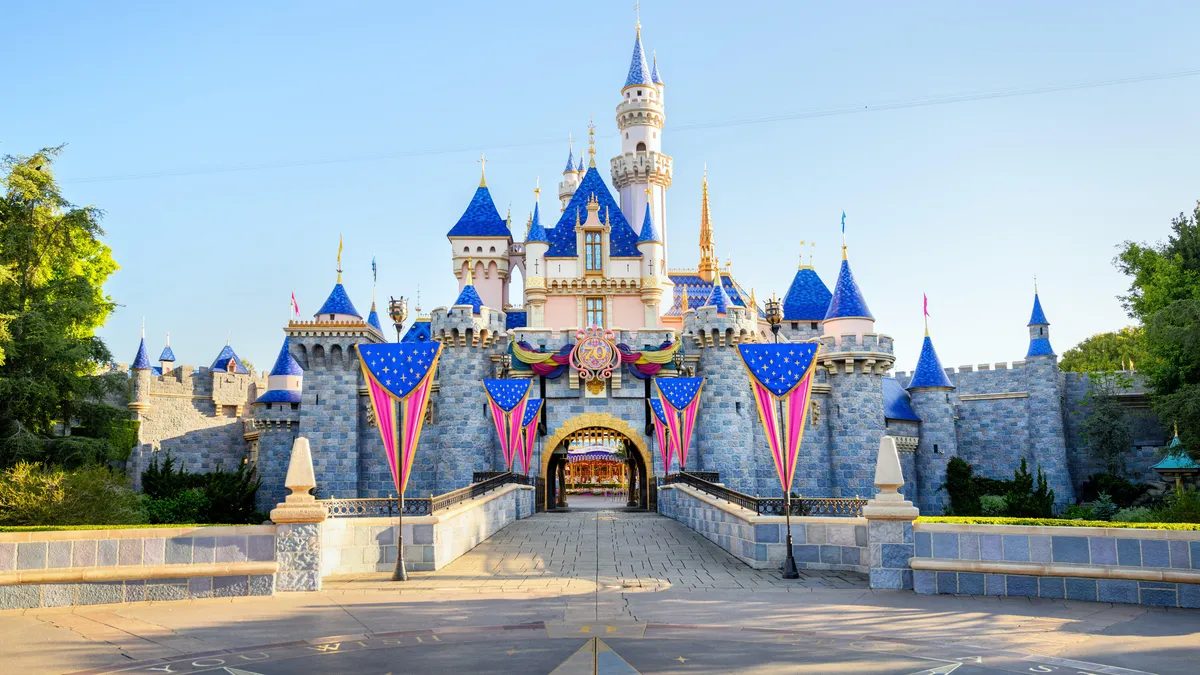
Disneyland continues its celebration of its 70th anniversary, following its kick-off in May 2025, for much of the summer. Its last day is Aug. 9, 2026 — after which the parks will transition to Halloween decor on Aug. 21, then the holidays on Nov. 18, before fully returning to its natural state in early 2027.
There are many 70th anniversary shows to see, including the Paint the Night parade, Celebrate Happy Cavalcade and the Wondrous Journeys fireworks and projection show on the castle. Mickey and friends are also wearing 70th celebration outfits.
You can catch 70th anniversary-themed merchandise, food and drink items as well as a projection show at Carthay Circle and a 50-foot sculpture of Sleeping Beauty Castle on the esplanade between Disneyland and California Adventure; you can also find decorations sprinkled throughout Downtown Disney, Main Street USA, Disney’s hotels and even inside rides.
Advertisement
Disneyland’s Paint the Night parade.
Disney Parks
Rock ‘n’ Roller Coaster starring The Muppets opens this week
“The legendary ride roars back to life with a rock-charged remix that drops guests straight into the middle of The Electric Mayhem’s biggest night yet. With high-speed thrills, a pulse-pounding soundtrack, and a VIP list like no other, this reimagined attraction hits all the right notes,” the Disney Parks Blog posted on April 16.
Advertisement
Concept art of the Monsters, Inc. suspender coaster.
“The first time I saw Monsters, Inc., all I wanted to do was ride on one of those doors like Mike and Sulley,” Disney Experiences Chair Josh D’Amaro said at D23 in 2024. “Remember in the movie how those claws grab the doors and hoist them up into the air to take them away? We’re doing that too. And you’re going along for the ride.” This TikTok shows the design concept for the Monsters Inc. ride.
MuppetVision 3D closed permanently on June 8, 2025, but we don’t expect Monstropolis to be complete for another year or two.
Advertisement
Soarin’ Across America, coast to coast
Disney Parks
At Disney’s California Adventure and Disney World’s Epcot, the Soarin’ Around the World attraction is getting a US-themed makeover. Soarin’ Across America will arrive on July 2, 2026, and will feature scenes, sounds and scents from more than a dozen cityscapes and scenic areas.
Disney released a trailer starring Patrick Warburton, the original Soarin’ narrator and pilot, in which he says we’ll soon “sail across spacious skies” and may see “amber waves of grain” and “purple mountain majesties.” It’s part of Disney’s celebration of America’s 250th anniversary.
This event on Juneteenth kicks off the Celebrate Soulfully: Summer Vibes celebration, which goes from June 19 until July 19 to celebrate Black music, food, art and culture. Concerts will be held on certain days at Paradise Gardens in California Adventure, as well as “special character encounters and live variety acts” on Fridays and Saturdays, per Disney.
Advertisement
Bluey has arrived at Disneyland
Disney Parks
Bluey and her family are now hosting a stage show and themed area at the original Disney park. Debuting two months ago, Bluey’s Best Day Ever is located at the Fantasyland Theatre next to Mickey’s Toontown, which has been transformed into Bluey’s school classroom and grounds, including a gnome village and fairy garden.
Bluey and her sister, Bingo, appear several times each day, along with actors and musicians, to “bring to life the popular music and games emblematic of beloved Bluey episodes.” Those games will include “keepy uppy” and the “grannies,” as well as appearances by Chattermax and Unicorse.
There are also puzzles, games and photo ops throughout the Bluey area, and Disneyland is serving up Bluey-themed foods at Troubadour Tavern.
The hugely popular Australian cartoon about a family of dogs is a worldwide hit, and Disney is slated to release a Bluey movie in 2027. (In the meantime, you can watch Bluey episodes and minisodes on Disney Plus.)
Advertisement
Star Wars Galaxy’s Edge: Old characters, new Mandalorian missions
Disney Parks
New characters have begun roaming around the Star Wars-themed lands in Disneyland, as the area “expands its timeline” to include Luke Skywalker, Leia Organa and Han Solo. The original trio of Star Wars main characters arrived in Batuu on April 29 and are now interacting with guests and other characters.
To help tie them in with the more modern Star Wars land, there are also new props, merch, graphics and music (featuring the legendary John Williams score) in Galaxy’s Edge.
“Black Spire Outpost will roll back in time several decades, thoughtfully introducing beloved characters from across the Star Wars timeline,” the Disney Parks Blog announced in April. “Each era will be brought to life with the same care and attention to detail that the land was originally designed with, masterfully weaving together stories from across time and space in one location.”
Darth Vader has also joined the fun, and you can still see Ahsoka Tano, The Mandalorian, Grogu, Rey, Chewbacca and R2-D2.
Advertisement
Over in Tomorrowland, Space Mountain has transformed into Hyperspace Mountain for a limited time.
Disneyland (and Hollywood Studios at Disney World) has also now added Mandalorian and Grogu missions to the Millennium Falcon: Smuggler’s Run ride in Star Wars: Galaxy’s Edge, tying in with the release of The Mandalorian and Grogu in cinemas. The new missions launched on May 22.
Discounted summer Disney tickets
Disneyland now has a Kids’ Summer Ticket deal, with a one-day Park Hopper ticket costing $50 per child, ages 3 through 9. It can be used until Sept. 7.
Disneyland is also adding (and removing) a Magic Key option: The Explore Key will replace the Enchant Key. All California residents will be able to purchase it — not only Southern California residents. It will allow access on weekdays in June and July, which were blocked out for Enchant Key holders. The Explore Key costs $999, with a $99 down payment and 0% APR on repayments for 12 months. Disney said its “full value” can be unlocked in just four visits to the parks, thanks to Park Hopper admission, 25% off parking, Lightning Lane Multi-Passes and 10% off merchandise and dining.
Advertisement
Disneyland’s World of Color 70th anniversary show.
Disney Parks
For what Disney World is calling Cool Kids’ Summer, it’s offering two free nights and two free theme park days when you buy a four-night, four-day Disney hotel and ticket package for a visit during May 26 through Sept. 15. You can also save up to 30% on some Disney hotels between May 1 and Oct. 4.
Also part of Cool Kids’ Summer is a free day at a Disney World water park (Typhoon Lagoon or Blizzard Beach) on your check-in day when staying at a Disney hotel between May 26 and Sept. 8; and a free dining plan for kids aged 3-9 when you buy a dining package for guests over 10 and a room at a Disney hotel.
Advertisement
California Adventure celebrates 25 years
The second Disney theme park built in Anaheim opened 25 years ago on Feb. 8, 2001. While the look of the park has changed a lot over those years, California Adventure has a few ways it’s celebrating the quarter-century milestone: It’s switching the Soarin’ attraction back to Soarin’ Over California until July 1; dressing Mickey Mouse and Minnie Mouse on Buena Vista Street with new outfits, featuring sun motifs like the one originally on the roller coaster; and offering anniversary-themed food items, merchandise and drinks.
Disneyland expansion: Avatar area begins construction
Concept art showing an aerial shot of the Avatar-themed area coming to Disneyland Resort.
Disney
Disneyland is finally expanding after unveiling plans almost five years ago. The expansion is expected to take a couple of years to complete and will push the park’s current boundaries past Downtown Disney and into the nearby parking lots. It’ll also transform “a portion of the current Hollywood Backlot area,” leading to the closure of the Monsters Inc. attraction permanently in 2027.
Advertisement
The biggest part of the expansion will be adding an Avatar-themed land, based on the second film, The Way of Water, as well as Avatar: Fire and Ash. It will include a dark boat ride much like Pirates of the Caribbean, “taking guests all the way to the wide-open seas of Pandora.”
It follows the success of the world of Pandora, based on the original Avatar film, in Disney World’s Animal Kingdom. Disney has no dates or details yet on when it’ll be complete.
Coming sooner than the Avatar land, however, is a new esplanade entry “experience” to replace the current walkway entry at the east side of Disneyland, as well as a new parking structure and pedestrian bridge over Harbor Boulevard. Construction on this begins in the fall.
Advertisement
Concept art of the new pedestrian bridge that will cross Harbor Boulevard.
Disney
A Coco ride is coming to California Adventure
It won’t be launching this year, but construction has begun backstage at California Adventure to build a new dark ride. It’ll be themed for the beloved Pixar movie Coco and populated by audio-animatronics.
The Coco ride will be located in the area near Pixar Pier and Paradise Gardens, in what is primarily backstage areas for cast members currently. It’ll have characters and music from the movies as you travel through the land of the dead with Miguel.
Advertisement
Concept art for the new Coco ride.
Disney/Pixar
Two more Avengers Campus rides
Avengers Campus already has two rides: Spider-Man Web Slingers and Guardians of the Galaxy. Soon, this will double as Disney builds two more Marvel attractions at California Adventure.
“We’re doubling the size of the land with two new attractions,” a structural engineer said in a video posted to Walt Disney Imagineering’s Instagram account on Feb. 26. The engineer showed off how the Avengers Infinity Defense structure is looking now, including its columns, foundations and a catwalk that will “support projectors, speakers and other types of show elements.”
Avengers Infinity Defense will see you assemble alongside the Avengers, battling King Thanos — set in a multiverse — featuring appearances by Black Panther, Ant-Man and Hulk.
Advertisement
Concept art of the Avengers Infinity Defense attraction coming to California Adventure.
Disney
Stark Flight Lab, the second ride, will see you help test Tony Stark’s latest tech.
“In Stark Flight Lab, guests will sit in ‘gyro-kinetic pods’ and roll along a track before stopping in front of a giant robot arm,” Disney said. “This robot arm will hoist you into the air where you’ll make several high-speed maneuvers inspired by Iron Man and some other Avengers.”
Advertisement
Construction began in 2025, but no launch dates have been revealed yet.
Villains Land at Disney World
While it won’t be ready in time for 2026, construction is well underway for Disney’s first villains-themed area. Villains Land, which will celebrate all the classic baddies from Disney films, is coming to the Magic Kingdom at Disney World in Florida.
Imagineers have been drawing inspiration from architectural structures in Paris and Barcelona — like Gaudí’s buildings in the latter — to design Villains Land, Disney revealed during Destination D23 in August 2025.
Advertisement
Concept art for the new Villains Land.
Disney
“Paris is a city full of classic Art Nouveau … natural motifs and swirling designs there make nature appear to be ‘cursed,’ like magic has frozen it into place,” Disney said on its Parks Blog. “Barcelona’s art style is Modernisme, which has less natural patterns but gives the architecture an otherworldly, unnerving appearance.”
Villains Land, first teased during D23 2022, will be positioned on the other side of Big Thunder Mountain at the top left edge of the current Magic Kingdom map and will stretch around to where the Haunted Mansion is.
Two major attractions are planned, along with dining and shopping. Still no word yet on when it’ll open.
Advertisement
First peek at Piston Peak
Piston Peak National Park: the setting for the new Cars-themed land at Magic Kingdom.
Disney Parks
The Rivers of America and Tom Sawyer Island at Disney World’s Magic Kingdom have been closed and removed from the online map, as Disney works to construct a new land themed after Pixar’s Cars movies. Cars Land, which was added to Disney’s California Adventure back in 2012, remains extremely popular in the west, so it was only a matter of time before it was added to the eastern outpost.
In an expansion of Frontierland — which also includes Tiana’s Bayou Adventure and Big Thunder Mountain Railroad — Route 66 will feature a look inspired by the Rocky Mountains and the “American Frontier and its national parks.”
Advertisement
The Disney Parks Blog described the new area as “an awe-inspiring wilderness filled with towering trees, snowcapped mountains, breathtaking waterfalls, roaring rivers and impressive geysers.” Disney Imagineers are “using a style of architecture called ‘Parkitecture,’ which was developed by the National Park Service to create structures that harmonize with the natural environment.”
Concept art of the Cars rally race attraction coming to Disney World.
Disney
There will be two attractions, one of which is a rally race. Pixar Chief Creative Officer Pete Docter and Imagineer Michael Hundgen spoke about the new ride vehicle for this, and you can see a TikTok of Imagineers testing out off-road vehicles in the Arizona desert to create what the ride will feel like. Each rally car will have its own personality, name and racing number, Docter said.
Advertisement
“These are all things Lightning McQueen and Mater haven’t experienced before, like racing over rocky terrain, ascending to mountain peaks and dodging around geysers — how do you take these real-world elements and put a Cars spin on it?” Disney Parks said in a previous blog post.
While construction has begun and Disney has even released a map showing what the land may look like (geysers shooting water, a running river, an off-road rally track, mountains, a visitor’s lodge, a Ranger HQ and walking trails), we don’t expect Piston Peak to open until at least 2027 or 2028.
Tropical Americas Land at Animal Kingdom
Concept art of Tropical Americas.
Advertisement
Disney
Animal Kingdom’s DinoLand USA area is no more, with the area on the Disney World map now a blank sea of grass as Disney slowly builds out the new Tropical Americas Land.
Construction began in the fall of 2024, with TriceraTop Spin and the midway area closing down in January 2025. The Dinosaur ride remained open until Feb. 1 this year, but has since closed its doors as it’s transformed into a new Indiana Jones ride through a Maya temple (a relatively easy overlay since Disneyland’s Indiana Jones reportedly follows almost exactly the same ride track as Disney World’s Dinosaur).
The Pueblo Esperanza area will be themed like a South American village, with an Encanto-themed attraction, where you get to explore Antonio’s rainforest room inside the Casita, as well as a huge quick-service dining location, a fountain and a carousel.
Tropical Americas is planned to open in 2027.
Advertisement
Disney Cruise Line: New ships
Disney has been all in on launching cruise ships over the last few years, including the Disney Wish in 2022, the Disney Treasure in 2024 and the Disney Destiny in 2025.
“The Disney Believe will bring to life the magical worlds of Encanto and Frozen, the wishing wells of Snow White and the Seven Dwarfs, and the depths of the sea with Moana and The Little Mermaid,” Disney said.
The Disney Believe is expected to set sail in late 2027. The other ship names and destinations have yet to be revealed, but they’re expected to sail before 2031.
Advertisement
Everything else new at Disneyland and Disney World
Here’s what else is new and coming soon to the theme parks:
Buzz Lightyear’s Space Ranger Spin closed at the Magic Kingdom in August to receive new ride vehicles with video monitors and two handheld blasters featuring always-on lasers in two different colors (so you can finally see which laser is yours). It’s also getting a new opening scene starring Buddy the friendly robot, and static Z targets will light up when you hit them. The ride reopened on April 8.
Big Thunder Mountain Railroad reopened on May 3 at Magic Kingdom after a lengthy refurbishment. It will include “a journey through the spectacular natural phenomena of the Rainbow Caverns.”
Kids summer shows at Disneyland include Disney Friends Dance Party at Hollywood Land in Disney California Adventure, and Stitch’s Intergalactic Beach Party Blast at Tomorrowland Terrace in Disneyland.
Bluey and Bingo meet-and-greets are coming to Disney World at the Conservation Station at Animal Kingdom as part of the Cool Kids’ Summer celebration, which goes from May 26 until Sept. 8.
Cinderella Castle at Magic Kingdom is currently being repainted in its original theme colors: gray, cream, blue and gold.
From July onwards, you’ll be able to book a wedding at the Haunted Mansion in Disneyland. Weddings will be hosted at the courtyard right outside the mansion’s front doors. The area can seat up to 25 guests. Unfortunately, it doesn’t include thematic midnight ceremonies — you can only host your wedding there in the early morning before park opening. Other new Disneyland wedding venues include the Magnolia Park Gazebo (right outside Tiana’s Palace), Magnolia Park Terrace (right outside the new Haunted Mansion queue) and Fantasy Faire Garden (opposite the castle).






















































You must be logged in to post a comment Login