Connect with us
DAPA Banner

Business

Upstart Stock Surges 11% on AI Lending Momentum as 2026 Recovery Bets Intensify

Published

on

Upstart Stock Surges 11% on AI Lending Momentum as 2026

NEW YORK — Upstart Holdings Inc. shares jumped more than 11 percent in midday trading Wednesday, climbing to around $32.96 as investors bet on the artificial intelligence-powered lending platform’s continued recovery in 2026 amid improving loan origination volumes and optimism around its push for a national bank charter.

Upstart Stock Surges 11% on AI Lending Momentum as 2026
Upstart Stock Surges 11% on AI Lending Momentum as 2026 Recovery Bets Intensify

At approximately 12:48 p.m. EDT on April 15, 2026, UPST stock had risen $3.43, or 11.62 percent, from the previous close on elevated volume. The San Mateo, California-based company’s market capitalization approached $3.2 billion after the sharp move, reflecting renewed enthusiasm for AI-driven fintech names following signs of stabilization in consumer credit markets.

The rally builds on earlier gains triggered by strong fiscal 2025 results and upbeat full-year 2026 guidance released in February. Upstart reported fourth-quarter revenue of $296 million, up 35 percent year-over-year and beating estimates, while posting positive GAAP earnings per share of $0.17. For the full year 2025, revenue climbed 64 percent to roughly $1.08 billion with net income turning positive at $53.6 million after prior losses.

Management guided for approximately $1.4 billion in 2026 revenue — well above the $1.27 billion analysts had projected at the time — while targeting a compound annual growth rate of about 35 percent through 2028 and adjusted EBITDA margins approaching 25 percent in the longer term. The optimistic outlook helped spark an 11 percent after-hours pop in February and set the stage for the current momentum.

Upstart’s core platform uses machine learning models to assess creditworthiness beyond traditional FICO scores, incorporating thousands of variables including education, job history and alternative data. This approach has enabled partner banks and credit unions to approve more borrowers at lower interest rates while maintaining strong risk performance. The company connects consumers seeking personal loans, auto loans and other credit products with over 100 lending partners.

Advertisement

Recent operational highlights include new partnerships, such as DuPage Credit Union’s collaboration for personal loans announced in early April, and forward-flow commitments with institutional investors to support origination growth. In March, Upstart revealed plans to apply for a national bank charter and form a bank holding company, a transformative move that could allow it to accept deposits and fund loans directly rather than relying solely on third-party capital.

CEO Dave Girouard has described the bank charter initiative as a way to de-risk the business model by creating more stable, lower-cost funding sources. If approved, the shift could reduce dependence on volatile institutional funding markets and improve margins over time. The application adds strategic upside but also introduces regulatory uncertainty typical of fintech efforts to enter traditional banking.

Wall Street remains divided yet leans constructive overall. Across 16 analysts tracked, the consensus rating is Hold with an average 12-month price target near $48, implying roughly 45 to 50 percent upside from current levels. Targets range from a low of $20 to a high of $80. Firms such as Piper Sandler and BTIG have issued Buy ratings in recent months, while others like Bank of America have trimmed targets modestly to $36 from $40 while maintaining Hold. Some models project fair value around $44 to $45 under base-case assumptions of sustained revenue growth and margin expansion.

The stock has been volatile. It entered 2026 under pressure, down roughly 44 percent at one point amid broader concerns over consumer spending and funding availability for nonprime lending. Yet early signs of recovery — including positive transaction growth and returning profitability — have encouraged bulls who see the current valuation as attractive relative to growth prospects. The shares trade at a price-to-sales multiple well below historical averages, offering what some view as a discounted entry into the AI lending space.

Advertisement

Next earnings for the first quarter of fiscal 2026 are scheduled for May 5 after the market close, with a conference call set for 4:30 p.m. ET. Analysts will scrutinize origination volumes, contribution margins, funding partner activity and any updates on the bank charter application or new product verticals such as earned wage access and revolving credit lines launched earlier in the year.

Challenges persist. Upstart faces ongoing litigation, including a recent class-action lawsuit alleging that its AI models were calibrated too conservatively in response to macroeconomic signals, leading to lower approval rates and missed revenue opportunities. The company has also navigated a tougher funding environment in prior quarters, though new institutional commitments and share repurchase activity signal management confidence.

Broader economic factors weigh heavily. Higher interest rates have cooled consumer borrowing demand, particularly among lower-credit borrowers who form much of Upstart’s addressable market. Any slowdown in job growth or rise in delinquencies could pressure origination volumes. Competition from traditional banks, other fintech lenders like SoFi and Affirm, and evolving regulatory scrutiny around alternative credit scoring add layers of risk.

For investors debating buy or sell decisions in 2026, Upstart represents a high-beta play on AI applications in financial services. Bulls highlight the company’s technological edge, scalable platform and path to becoming a more vertically integrated lender through the bank charter. With revenue guidance pointing to strong double-digit growth and potential margin leverage as scale returns, the stock offers asymmetric upside if execution remains solid. Recent insider buying and aggressive share repurchases in prior periods have reinforced that narrative.

Advertisement

Skeptics point to execution risks in scaling new funding sources, dependency on macroeconomic tailwinds for consumer credit and the possibility that AI advantages prove less durable than hoped amid regulatory pushback or model performance issues. The stock’s history of sharp swings — including massive gains in 2020-2021 followed by steep declines — underscores the volatility inherent in early-stage fintech disruptors.

At current levels near $32.96, Upstart trades with a market capitalization that some analysts view as reasonable given projected 2026 revenue near $1.4 billion. The absence of a dividend keeps the focus squarely on growth, while the upcoming earnings report on May 5 will serve as a key test of whether early recovery trends are sustainable.

Longer-term forecasts vary. Optimistic scenarios see the stock doubling by year-end if origination volumes accelerate and the bank charter progresses smoothly. More conservative models call for modest single-digit to low-double-digit gains, assuming steady but not explosive growth. The 35 percent CAGR target through 2028 provides a ambitious benchmark that would justify significant multiple expansion if achieved.

As spring progresses, attention will turn to monthly origination updates, progress on new verticals and any regulatory developments tied to the bank application. Broader market sentiment toward AI and fintech stocks will also influence price action, with positive macro data on employment and consumer spending likely to support the name.

Advertisement

Upstart built its reputation on using AI to expand access to credit responsibly. After navigating a challenging post-pandemic period of high rates and funding constraints, the company appears positioned for a potential inflection in 2026. Whether that translates into sustained shareholder returns depends on delivering consistent origination growth, prudent risk management and successful navigation of the regulatory path ahead.

For now, the market is rewarding signs of momentum with a double-digit move. Short-term traders may ride the wave into earnings, while longer-term investors will watch for confirmation that the AI lending model can thrive across economic cycles. The golden promise of smarter credit decisions remains intact, but execution in a still-cautious borrowing environment will determine if 2026 becomes the breakout year many bulls anticipate.

Continue Reading
Click to comment

You must be logged in to post a comment Login

Leave a Reply

Business

Berkshire Hathaway: The Fortress Has Become A Waiting Room

Published

on

Berkshire Hathaway: The Fortress Has Become A Waiting Room

Berkshire Hathaway: The Fortress Has Become A Waiting Room

Continue Reading

Business

Hochul backs $500M annual tax on NYC second homes over $5M threshold

Published

on

Hochul backs $500M annual tax on NYC second homes over $5M threshold

A new tax proposal targeting high-end second homes in New York City is drawing renewed attention to the growing financial pressures facing the state as leaders look for new revenue streams to close persistent budget gaps.

FOX Business’ Madison Alworth joined “The Big Money Show” to report on the proposal, which would apply to second homes in New York City valued above $5 million, imposing an annual surcharge on properties that are not used as primary residences.

Advertisement

The measure comes as state leaders grapple with an estimated $2.2 billion budget deficit in New York state, while also confronting a shrinking tax base tied to the out-migration of high-income residents.

BILLIONAIRES AND BUSINESSES FUEL GROWING EXODUS FROM BLUE STATES

Policymakers have increasingly pointed to wealthy taxpayers as a key source of revenue to sustain public spending commitments.

Advertisement
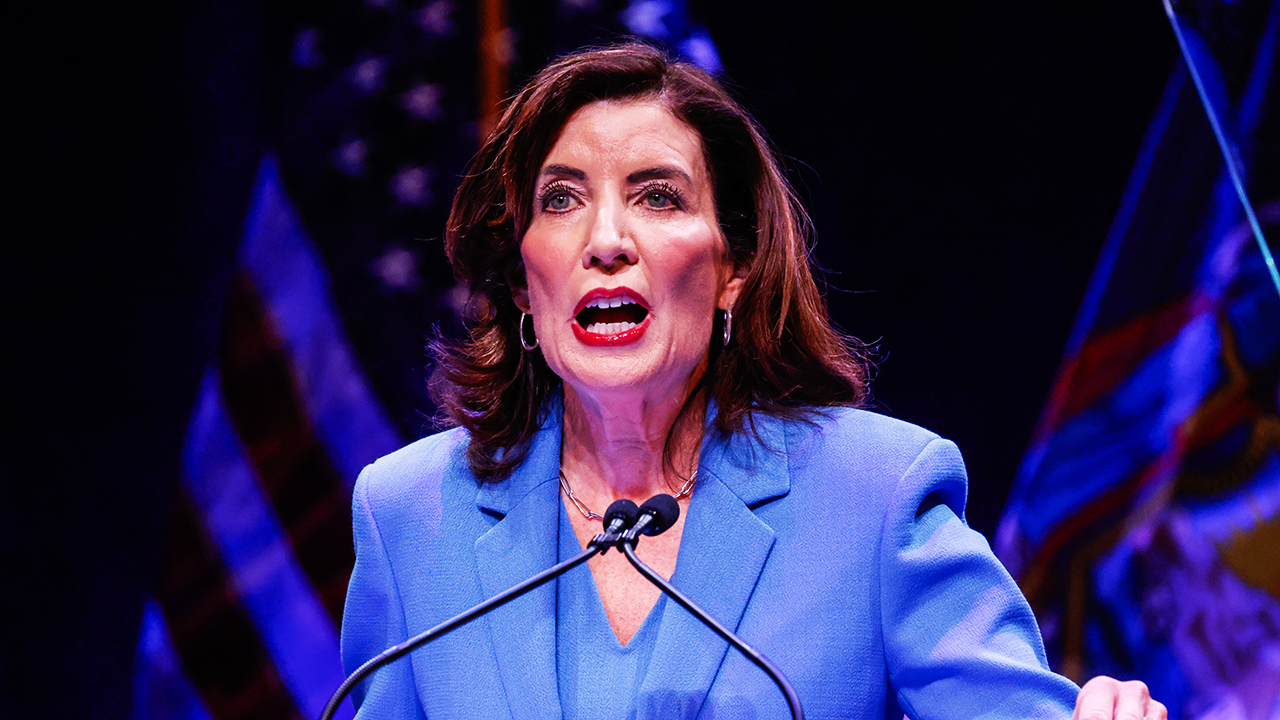
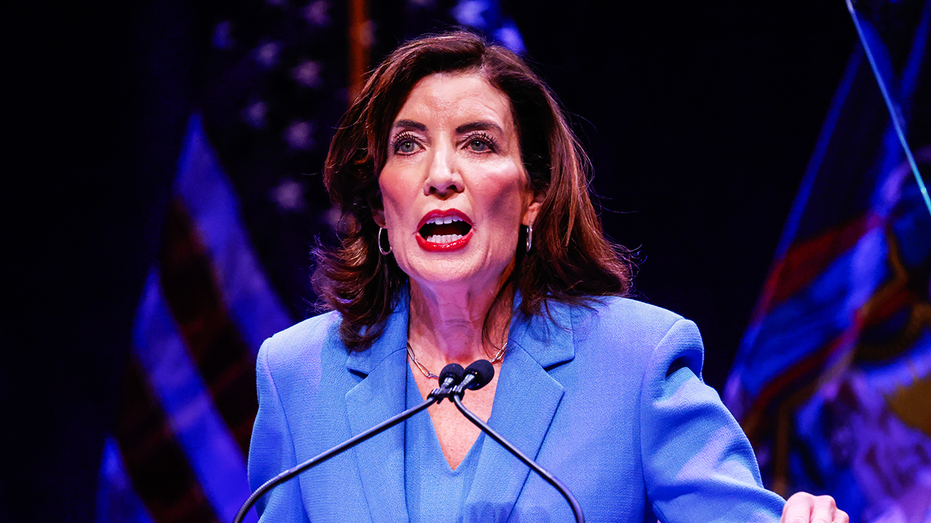
Governor Kathy Hochul speaking

Governor Kathy Hochul speaking during the 2026 State of the State  (Steve Pfost/Newsday RM / Getty Images)

“I need people who are high-net-worth to support the generous social programs that we want to have in our state,” New York Gov. Kathy Hochul told Politico in March. 

“If you want to be supportive … the first step should be go down to Palm Beach and see who you can bring back home because our tax base has been eroded.”

RED & BLUE DIVIDE: STATES PUSH COMPETING TAX PLANS AS VOTERS WEIGH CHANGES IN ELECTION CYCLE

The proposal aims to generate roughly $500 million annually, though industry groups argue the broader economic impact could extend beyond targeted homeowners, potentially affecting construction activity, property values and overall costs.

The debate underscores a wider tension playing out across high-tax states, where efforts to raise revenue are increasingly intersecting with concerns about competitiveness, investment and long-term economic growth.

FOREIGN BUYERS EYE LUXE LA HOMES AS PROPOSED WEALTH TAX PUSHES BILLIONAIRES OUT OF CALIFORNIA

GET FOX BUSINESS ON THE GO BY CLICKING HERE

Continue Reading

Business

FBI urges router owners to update firmware after Russian GRU hack

Published

on

FBI urges router owners to update firmware after Russian GRU hack

Foreign hackers are looking to exploit vulnerabilities in Americans’ internet routers and the FBI is offering tips for securing your home or office routers after it announced actions it took to crack down on a Russian hacking unit.

Last week, the FBI and Justice Department announced that they conducted a court-authorized operation to neutralize a U.S. portion of a network of small office/home office (SOHO) routers that were compromised by a unit within Russia’s Main Intelligence Directorate of the General Staff (GRU) Military Unit 26165.

Advertisement

The GRU used the routers to facilitate malicious Domain Name System (DNS) hijacking operations against worldwide targets of intelligence interest to the Russian government, including individuals in the military, government, and critical infrastructure sectors. They used known vulnerabilities to steal credentials for thousands of TP-Link routers, manipulating those routers’ settings to direct requests to GRU-controlled servers.

“The FBI has determined that Russian GRU cyber actors have compromised vulnerable routers in the U.S. and around the world, hijacking them to conduct espionage,” Brett Leatherman, assistant director of the FBI’s Cyber Division, told FOX Business. “Unsuspecting Americans in at least 23 states owned routers that were exploited by Russian military intelligence. Given the scale of this threat, the FBI conducted a court-authorized operation to disrupt the GRU’s access to compromised devices within the U.S.”

US BANS NEW FOREIGN-MADE CONSUMER INTERNET ROUTERS OVER SECURITY CONCERNS

Internet router on a table.

Russian military hackers exploited thousands of small office/home office (SOHO) routers, prompting the FBI to intervene. (Getty Images)

The operation involved collecting evidence from the compromised routers, resetting their DNS settings to ensure they aren’t directed to the GRU’s DNS resolvers and preventing Russia from exploiting the original means of access.

Advertisement

The government said in court documents that it extensively tested the operation on firmware and hardware for affected TP-Link routers, and other than blocking the GRU’s access, it didn’t impact the routers’ normal functionality or collect the legitimate users’ content information.

CRYPTO FRAUD TOPS FBI’S ANNUAL CRIME REPORT AS AMERICANS LOSE BILLIONS TO SCAMS

FBI seal on a building

The FBI and DOJ put out a public service announcement on steps Americans should take to secure their routers. (Graeme Sloan/Bloomberg via Getty Images)

Leatherman said that, “Along with that effort, the FBI, NSA, and international partners from 15 countries released a Public Service Announcement with technical information and defensive guidance. While rebooting your router can mitigate some threats, it will not address this one.”

The PSA encourages users of SOHO devices to replace end-of-life and end-of-support routers; upgrade to the latest available firmware; verify the authenticity of DNS resolvers listed in router settings; and review and implement firewall settings to prevent the unwanted exposure of remote management systems.

Advertisement

MICROSOFT IDENTIFIES CHINESE HACKING GROUPS BEHIND PERSISTENT SHAREPOINT SERVER ATTACKS

Shot from the Back to Hooded Hacker Breaking into Corporate Data Servers from His Underground Hideout. Place Has Dark Atmosphere, Multiple Displays, Cables Everywhere.

Russian military hackers exploited routers in 23 states, prompting the FBI’s action. (iStock)

Users are also encouraged to navigate to the official TP-Link website and review documentation for their affected in the download center to learn about proper configurations. Additionally, they should ensure their routers are upgraded to the latest firmware and review the end-of-life products list to determine if their routers should be replaced.

“We urge all owners of small office/home office (SOHO) routers to replace end-of-support devices, update to the latest firmware versions, change default usernames and passwords, disable remote management interfaces from the internet, and stay alert for certificate warnings in web browsers and email clients,” Leatherman said.

GET FOX BUSINESS ON THE GO BY CLICKING HERE

Advertisement

Take the remediation steps outlined in our PSA, because defending our networks requires all of us,” he added.

Continue Reading

Business

Expeditors International of Washington, Inc. (EXPD) Discusses Energy Market Volatility Amid Iran Conflict and Supply Chain Impacts Transcript

Published

on

OneWater Marine Inc. (ONEW) Q1 2026 Earnings Call Transcript

Olivia Tan

All right. Welcome, everyone, to our webinar today on an Iran war update focusing on energy market volatility. My name is Olivia Tan, I’m one of the consultants of Onyx, and I will introduce our speakers for today’s event very shortly.

We offer a different webinar topic each month. This month, our team will be diving into the energy market impacts from the Iran war. As the Iran conflict drags on, disruptions to energy supply are feeding into higher energy costs, fuel cost and fuel surcharges. Join our Onyx analysts today as we dissect the energy landscape, focusing on potential pathways in the next few weeks and months.

So before we begin with the content, a few administrative details to cover. We are recording this event, and we’ll be offering it in a couple of other sessions this month. If you are watching on one of these additional sessions, you won’t have live Q&A available, but we would like to hear from you. For Q&A, just submit your question, and we will review and get back to you accordingly.

Advertisement

For the live session, we’ll save some time at the end to address them. And for the other sessions, we’ll review at the end of the event. To get a copy of the slides, look out for a survey sent after the webinar, and completing that will allow you to download these materials. Otherwise, we have about 45 minutes of content and discussion to share, and we’ll start very soon.

On to our LinkedIn and Vantage Point material, we encourage you to read

Advertisement
Continue Reading

Business

NY jury finds Live Nation illegally monopolized live event markets

Published

on

NY jury finds Live Nation illegally monopolized live event markets


NY jury finds Live Nation illegally monopolized live event markets

Continue Reading

Business

Slideshow: ‘Spring’ing into seasonal menu innovations

Published

on

Slideshow: ‘Spring’ing into seasonal menu innovations

Additions include floral and bright flavor notes.

Continue Reading

Business

Control, Security and Stadium Strategy Keep Icon Off Stage

Published

on

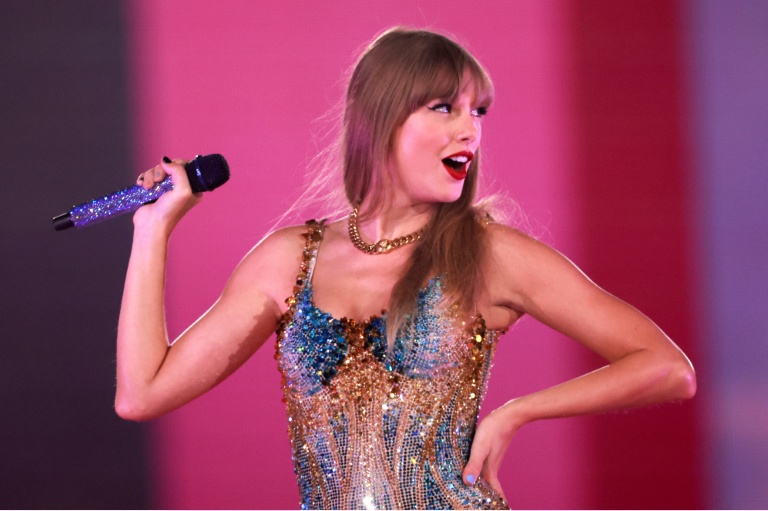
Taylor Swift's 'The Life of a Showgirl' is her 12th studio album

INDIO, California — As the Coachella Valley Music and Arts Festival wraps its 2026 run with headliners Sabrina Carpenter, Justin Bieber and Karol G drawing massive crowds to the Empire Polo Club, one name remains conspicuously absent from the lineup and stage: Taylor Swift. In a nearly two-decade career filled with stadium tours, awards shows and select festival appearances, the global superstar has never taken the Coachella stage — a fact that continues to puzzle fans and fuel endless online speculation.

Swift has attended the desert festival multiple times as a spectator. She was spotted in 2016 with then-boyfriend Calvin Harris and returned in 2024 with Travis Kelce, dancing and enjoying sets without stepping behind a microphone. In 2026, reports placed the couple at the event supporting friends and soaking in the atmosphere, yet once again she performed nowhere on the grounds.

Industry insiders and analysts point to a combination of strategic, logistical and personal reasons for the ongoing absence. At the peak of her career, Swift prioritizes full control over her productions in ways that clash with the festival format. Coachella slots typically last 45 to 90 minutes even for headliners, with shared production elements, variable sound quality and less flexibility for the elaborate storytelling, costume changes and massive video setups that define Swift’s Eras Tour-style spectacles.

Her stadium shows generate far higher revenue than a single festival payday. Headliners at Coachella can earn between $4 million and $12 million, a fraction of what Swift clears from multi-night arena or stadium runs where tickets routinely sell for hundreds or thousands of dollars on the secondary market. Insiders note that booking Swift would require Goldenvoice, the festival promoter, to allocate an outsized portion of the budget, potentially limiting the diversity of the rest of the lineup and altering the event’s eclectic appeal.

Advertisement

Security concerns represent another significant barrier. Swift’s high-profile status demands extensive protection, including large teams of bodyguards and advanced systems refined during her record-breaking tours. Open festival grounds with tens of thousands of attendees, general admission areas and unpredictable crowd dynamics make it far harder to guarantee the controlled environment she maintains in her own venues. Past incidents, including overzealous fans attempting to approach her on stage, have led her team to invest heavily in safety protocols that are easier to enforce in ticketed, seated or restricted stadium settings.

Swift’s preference for precision and intentionality also plays a role. Coachella thrives on spontaneity, surprise guest appearances and a free-spirited desert vibe that can include variable weather, dust and logistical challenges. The singer has built her brand on meticulously planned, fan-centric experiences where every element — from setlist narratives spanning her musical eras to seamless technical execution — aligns with her vision. Festival constraints often require scaled-back productions that do not match the immersive quality her audiences expect.

Earlier in her career, Swift did perform at various festivals while building her profile. During the Fearless era around 2009, she appeared at events like the Florida Strawberry Festival, Houston Livestock Show and Rodeo, and international dates such as Summer Sonic in Japan. She headlined smaller promotional shows and radio festivals, but as her stardom exploded with the transition to pop on 1989 and beyond, her schedule shifted toward self-contained arena and stadium tours that allowed complete artistic oversight.

Plans for festival-heavy appearances were disrupted by the COVID-19 pandemic. Lover Fest, announced in 2020 as a series of stadium and festival dates including potential international stops, was canceled due to health concerns. Rumors swirled about a Glastonbury headline slot that same year, which also fell through. By the time live music resumed, Swift had pivoted to the ambitious Eras Tour, a 151-show global juggernaut that wrapped in late 2024 and became the highest-grossing tour in history. The demand and scale of that production made smaller or shared festival bills less appealing.

Advertisement

In 2026, Swift appears to be prioritizing personal life over new touring commitments. Insiders report her focus remains on time with fiancé Travis Kelce, wedding planning and creative work on future projects without the immediate pressure of a full-scale tour. Recent rumors linking her to Coachella — including false claims she might replace a headliner or make a surprise appearance — were quickly debunked. No official invitations or negotiations have surfaced publicly, and her team has stayed silent on the topic.

Fan discussions on platforms like Reddit and Threads highlight additional theories. Some suggest Swift simply does not enjoy the festival environment, with its emphasis on discovery across multiple stages rather than a singular headline moment. Others point to past public scrutiny, including the 2016 “Kimye” drama during her 1989 era, as a factor in her more guarded approach to high-visibility, less-controlled settings. Coachella’s reputation for celebrity sightings and paparazzi attention could also conflict with her desire for curated public moments.

Despite the absence, Swift’s cultural influence still looms over the festival. In 2024, her attendance with Kelce generated more headlines than many performances, demonstrating her ability to dominate conversations without singing a note. Swifties have long manifested a Coachella debut, with some buying tickets in past years based on unconfirmed rumors. Yet as of 2026, those dreams remain unfulfilled.

Comparisons to other superstars underscore the uniqueness of her stance. Artists like Rihanna, Adele and even some peers in pop have also skipped Coachella headlining slots, often citing similar control or financial calculations. Beyoncé used her 2018 Coachella performance — dubbed “Beychella” — as a landmark cultural moment, but Swift’s path has favored ownership of her narrative through albums, tours and films like the Eras Tour concert movie.

Advertisement

For Coachella organizers, landing Swift would represent a massive coup but comes with trade-offs. The influx of Swifties could overwhelm infrastructure, drive up secondary ticket prices dramatically and shift the festival’s identity toward a more mainstream pop event. Past lineups have balanced indie, electronic, hip-hop and global acts, a mix that might suffer if budget priorities tilt too heavily toward one superstar.

As Swift enters a new phase post-Eras, questions persist about her next moves. A potential new album cycle could bring fresh touring opportunities, but sources indicate no rush toward another marathon roadshow. Instead, selective appearances, creative projects and personal milestones appear to take precedence. Whether that ever includes a Coachella set — perhaps as a legacy-defining headline moment or surprise guest spot — remains unknown.

In the meantime, the desert festival continues without her on stage. This year’s edition featured theatrical sets, high-energy performances and the usual mix of emerging and established talent. Swift’s decision to observe rather than participate reinforces her carefully managed career strategy: maximizing impact while minimizing risks to her production standards, security and personal bandwidth.

Swifties continue to debate the “what if” scenarios online, with some accepting her absence as a sign of strength — she no longer needs festival validation to affirm her status. Others hope a future year might bring the long-awaited debut, especially if it aligns with a new era rollout.

Advertisement

For now, the Empire Polo Club remains one of the few major stages the 14-time Grammy winner has yet to conquer. Her choice reflects a deliberate path forged on her own terms: full creative command, economic maximization and protection of the fan experiences she crafts so meticulously. In an industry where artists often chase every spotlight, Swift’s consistent pass on Coachella stands as a quiet assertion of power — proving that sometimes the biggest star shines brightest by knowing exactly when and where to perform.

As Coachella 2026 fades into highlight reels and social media recaps, the conversation inevitably circles back to the one performer whose name sparks endless curiosity even in her silence. Taylor Swift’s non-performance has become its own kind of headline, underscoring that in the world of live music, strategic absence can speak as loudly as any setlist.

Continue Reading

Business

Jazz Pharmaceuticals plc (JAZZ) Presents at 25th Annual Needham Virtual Healthcare Conference Transcript

Published

on

OneWater Marine Inc. (ONEW) Q1 2026 Earnings Call Transcript

Jazz Pharmaceuticals plc (JAZZ) 25th Annual Needham Virtual Healthcare Conference April 15, 2026 11:45 AM EDT

Company Participants

Philip Johnson – Executive VP & CFO
Jack Spinks – Executive Director of Investor Relations
John Bluth

Conference Call Participants

Advertisement

Ami Fadia – Needham & Company, LLC, Research Division

Presentation

Ami Fadia
Needham & Company, LLC, Research Division

Advertisement

Good morning, everyone, again. Thanks for joining us for this next session with Jazz Pharmaceuticals. I’ve got Phil Johnson, who’s the CFO of the company, along with John Bluth and Jack Spinks from the IR team.

Phil, thank you so much for taking the time to be with us today. What I’d like to do is maybe turn it over to you for some opening remarks, and then we can dive into a Q&A.

Philip Johnson
Executive VP & CFO

Advertisement

No, definitely appreciate it, Ami. Thank you very much for hosting us today. Looking forward to the opportunity to answer questions that are of interest to you and have already enjoyed some of the interactions we’ve had with investors through virtual conference, looking forward to further sessions later today.

Before I get started, please do note that we’ll be making forward-looking statements today. Those are all subject to risks. Actual results could differ materially from what we’re describing. Please do consult our SEC filings for a more fulsome disclosure of the risk factors affecting our business.

And then if we do refer to guidance today, which I’m sure we will, we’re referring to the guidance that we gave on our fourth quarter 2025 earnings call on February 24. So maybe just starting with a high-level overview of where the company is at. 2025 was an exceptional year for Jazz. It was our 21st consecutive year of top line revenue growth. Strong commercial execution across our diversified portfolio delivered record total revenues

Advertisement
Continue Reading

Business

Ford EV leader leaving automaker amid new restructuring efforts

Published

on

Ford EV leader leaving automaker amid new restructuring efforts

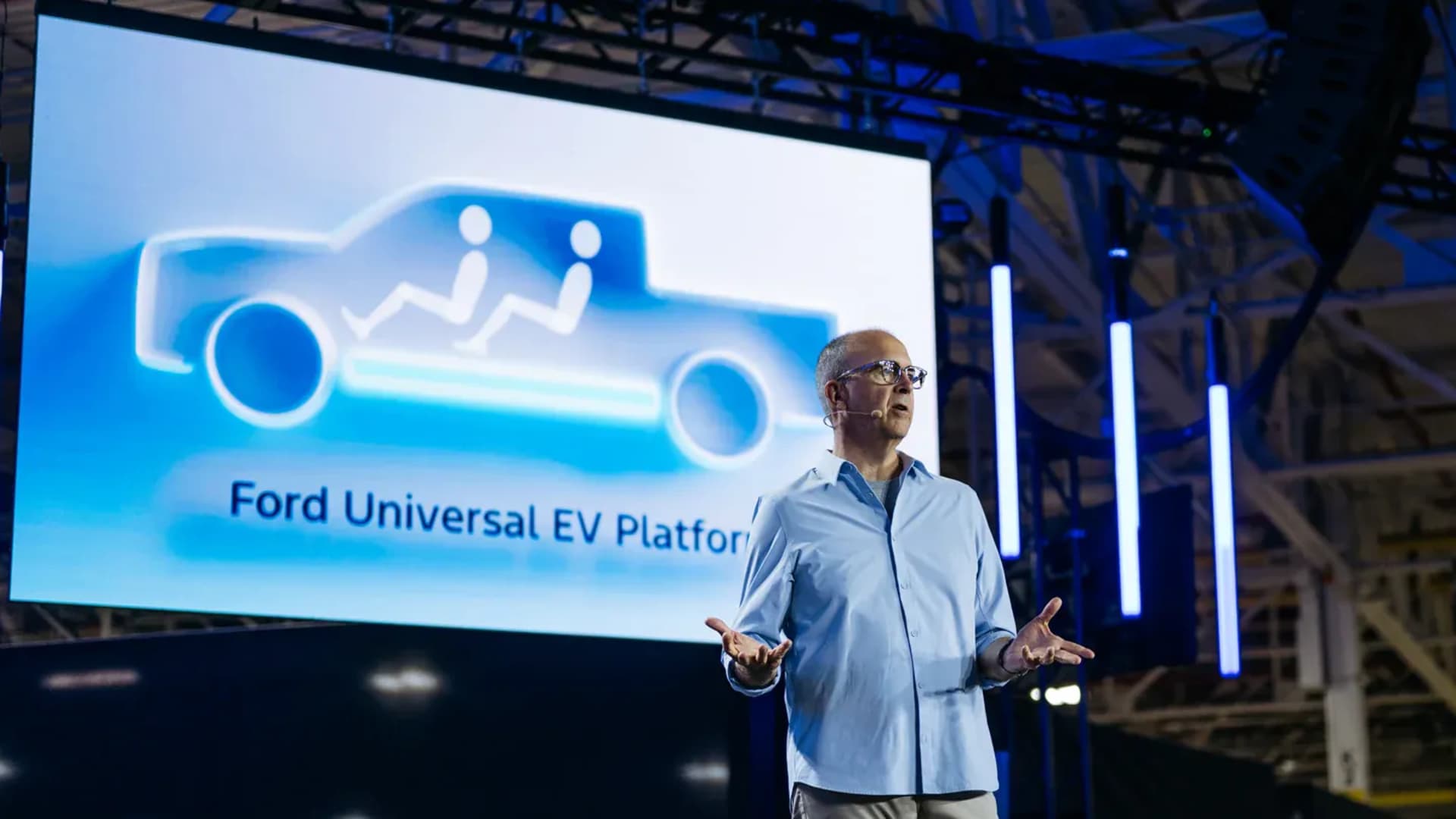
Doug Field, the chief EV, digital and design officer at Ford Motor, speaks at Louisville Assembly Plant as Ford shares its plans to design and assemble its “Universal Electric Vehicle” platform on August 11, 2025.

Courtesy Ford

DETROIT — Ford Motor‘s head of electric vehicles and software is leaving the automaker as it restructures its executives and operations.

Advertisement

Ford on Wednesday said Doug Field — chief EV, digital and design officer — has “elected to leave the company after a transition over the next month.” A release announcing the move mentioned a “next chapter” for Field, but the executive declined to disclose specific plans on a Wednesday call with media.

Field’s departure was announced in conjunction with Ford detailing a new executive structure that includes the establishment of a “Product Creation and Industrialization” organization at the company that will be led by Ford veteran and Chief Operating Officer Kumar Galhotra.

Ford said the new structure will integrate Field’s responsibilities with the company’s global Industrial System group to help the automaker hit certain goals, such as its target of an 8% adjusted EBIT margin by 2029.

There will not be a direct replacement for Field. Ford executives praised Field when the automaker brought him to the company in 2021 after previous leadership positions with U.S. EV leader Tesla and Apple. Ford CEO Jim Farley called his hiring a “watershed moment.”  

Advertisement

His departure comes as Ford is preparing to launch a next generation of electric vehicles that Farley has said are as important as the company’s famed Model T.

Farley and Field on the call with media said the upcoming vehicle — a midsize pickup built on Ford’s “Universal Electric Vehicle,” or UEV, platform that’s due out next year — was in a solid position to continue in the new unit without Field.

Product Creation and Industrialization

Ford on Wednesday described the new Product Creation and Industrialization unit as an “end-to-end organization” that aims to “deliver one of the most intensive product, software, and services rollouts in Ford’s history.”

The automaker plans to refresh 80% of its North American portfolio by volume and 70% of its global portfolio by volume by 2029, the company said. That includes the UEV pickup truck, next-generation F-150 and larger F-Series Super Duty lineup.

Advertisement

That turnaround of products also will include new powertrain offerings and software, Ford said Wednesday.

By 2030, the company is planning for 90% of its global nameplates to offer electrified powertrains, including hybrids, extended-range electric vehicles and full EVs. It is also aiming to have 90% of its Ford’s vehicles by volume feature updated “electrical architectures, in-house developed user experiences and hardware, and next-generation over-the-air capabilities for continuous improvement in experiences and services.”

Ford said the new technologies will enable “the rapid rollout” of advancements to its digital experience for customers and BlueCruise advanced driver assistance system, with a “scalable path” toward a 2028 Ford goal to achieve eyes-off “Level 3 autonomous driving.”

SAE International, formerly known as the Society of Automotive Engineers, has characterized automated driving for vehicles from Level 0 to Level 5. The highest, Level 5, is a fully autonomous vehicle, with each stage from Level 0 adding more technologies and enabling human drivers to be more “out of the loop.”

Advertisement

Ford currently offers a Level 2 advanced driver assistance system, or ADAS, known as BlueCruise. 

Leadership shakeup

Farley on the media call Wednesday with Field and Galhotra spoke fondly of Field’s work, calling him an “invaluable partner” who “has built a world-class team at Ford.”

However, many of Ford’s initiatives involving software and EVs did not perform as expected. Most notably, the automakers reported significant shortfalls in generation of software revenue and in December announced it would write down $19.5 billion related to a pullback in EVs and realignment of business priorities.

While several automakers have announced such impacts due to EVs, Ford’s write-down was much larger than its closest rival General Motors, which has announced roughly $7.6 billion in such charges.

Advertisement

In addition to Field leaving the company, Ford announced a series of other changes to its advanced vehicle development products and European manufacturing plans.

Choose CNBC as your preferred source on Google and never miss a moment from the most trusted name in business news.
Continue Reading

Business

How you could get free electricity for doing your washing

Published

on

How you could get free electricity for doing your washing

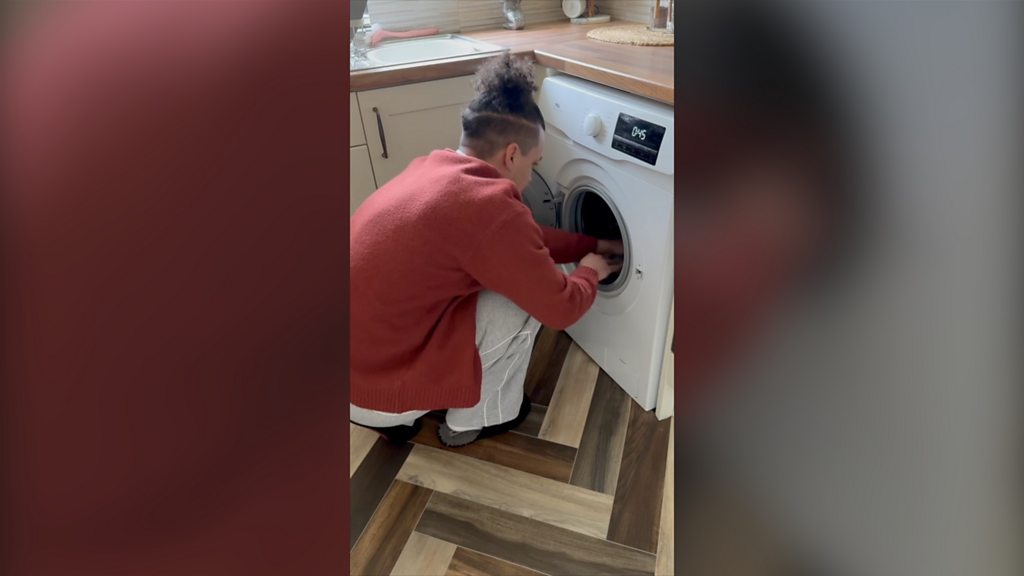
You could get free or cheaper electricity from your energy company for running appliances during periods of excess supply, such as sunny weekends.

Continue Reading

Trending

Copyright © 2025