

Politics
Kuwait arrests US-born journalist in social media crackdown over war damage

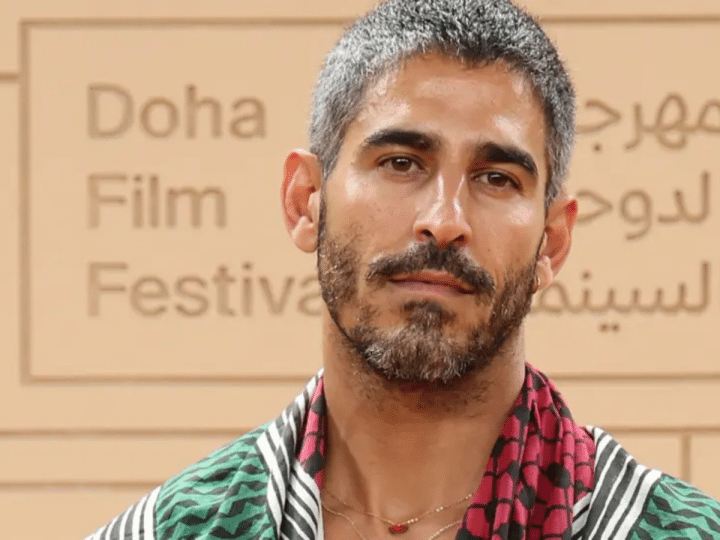

Kuwait has arrested journalist Ahmed Shihab-Eldin in an aggressive social media crackdown. The Gulf state accuses Shihab-Eldin of publicising damage to infrastructure caused by Iranian retaliation to the unprovoked and illegal US-Israeli war.
— jeremy scahill (@jeremyscahill) April 14, 2026
 Prominent Journalist Ahmed Shihab-Eldin Has Been in Jail for Six Weeks in Kuwait, Faces Trial in Special Tribunalhttps://t.co/6u8QeUpMUU
Kuwait crackdown
Drop Site News reported on 14 April:
Prominent journalist Ahmed Shihab-Eldin was arrested six weeks ago in Kuwait where he remains in detention and faces prosecution in a special tribunal over social media posts related to the Iran war. His detention comes as part of a wider crackdown on online speech in Kuwait and other Gulf countries during the U.S.-Israeli war with Iran that has engulfed the region.
CPJ calls on Kuwaiti authorities to immediately and unconditionally release Kuwaiti-American journalist Ahmed Shihab-Eldin, detained under new security and fake news laws.
Read more: https://t.co/H1qBu1OCFg#FreeAhmed #FreeAhmedEldin pic.twitter.com/aCUtmw6i9l
— Committee to Protect Journalists (@pressfreedom) April 14, 2026
The US-based outlet described Shihab-Eldin as “an American born Kuwaiti citizen” and:
award-winning journalist with more than two million followers across social media platforms.
Human rights organisations have condemned his detention. Sara Qudah, the Middle East and North Africa Director for the Committee to Protect Journalists (CPJ), told Drop Site:
We are seeing escalating censorship of journalists and news outlets across the world in relation to the Iran war, including in the Gulf. National security is being used as a pretext to crack down on freedom of speech and Shihab-Eldin’s detention is emblematic of that. He must be freed immediately.
He was reportedly arrested on 3 March 2026, five days after the illegal assault on Iran began, and has had little contact with his legal counsel. Drop Site said:
There has been little transparency around his case, but the charges he faces are reported to be related to his social media posts, including a video showing a U.S. fighter jet crash near a U.S. air base in Kuwait, according to CPJ, which stressed that the videos and images he shared had been publicly available.
Adding:
The charges Shihab-Eldin faces may include allegations of spreading false information, harming national security, and misuse of a mobile phone.
Press freedoms
Kuwait, like UAE, has enacted a ban on reporting details of war damage. Only a month ago Shihab-Eldin spoke to Pullitzer-winning reporter Chris Hedges about how the legacy media had capitulated to the US and Israel’s genocidal impulses:
Drop Site said dozens of other people had been detained in similar circumstances. Kuwait has created new courts designed to deliver rapid judgements:
The courts were established to “resolve cases with high speed,” and the Kuwaiti government claimed they were “necessary due to the extreme danger terrorism poses to national stability and peace,” according to Kuwaiti newspaper Al-Wasat.
Authoritarians are carrying out a global assault on press freedom and truth telling. This has only been exacerbated by the genocide in Gaza and the US-Israeli attack on Iran. The Canary stands in solidarity with Ahmed Shihab-Eldin. And with our fellow journalists all over the world who are under attack. He should be freed immediately to continue his vital work.
Featured image via the Canary
By Joe Glenton

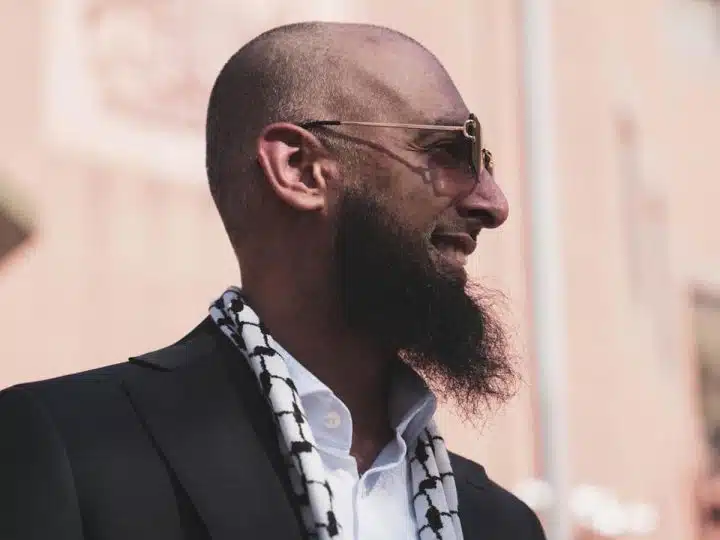

Anti-genocide activist Majid Freeman walked free from court on Monday after jurors decided they could not reach a verdict on terrorism charges.
The Starmer government had prosecuted Freeman for expressing his support for Palestine’s right of resistance to Israeli oppression and genocide.
Supporters say the jury saw through the transparently political nature of the charges.
Majid Freeman welcomes a retrial
On leaving the court, Freeman said:
I welcome the opportunity of a retrial, because it means the evidence of what Israel has done to Gaza, the brutality, the systematic destruction of an entire people, will once again be placed before a jury of the British public. Let them see it again. Let the world be reminded again.
Stacked retrials
Starmer has been waging a ‘lawfare’ war on those who speak up for the rights of Palestinians and condemn Israel’s genocide and war crimes.
However, as in the case of the Filton 24, the regime’s determination to protect Israel is not accepting the outcome of the jury trials it wants to abolish.
The Crown Prosecution Service has obtained a retrial from the court and will put Freeman in the dock again in September 2027.
The court stacked the retrial of six Filton activists, who had already been in prison for a year and a half, banning lawyers and protesters from reminding the jury of their legal right to acquit.
Featured image via the Canary
By Skwawkbox
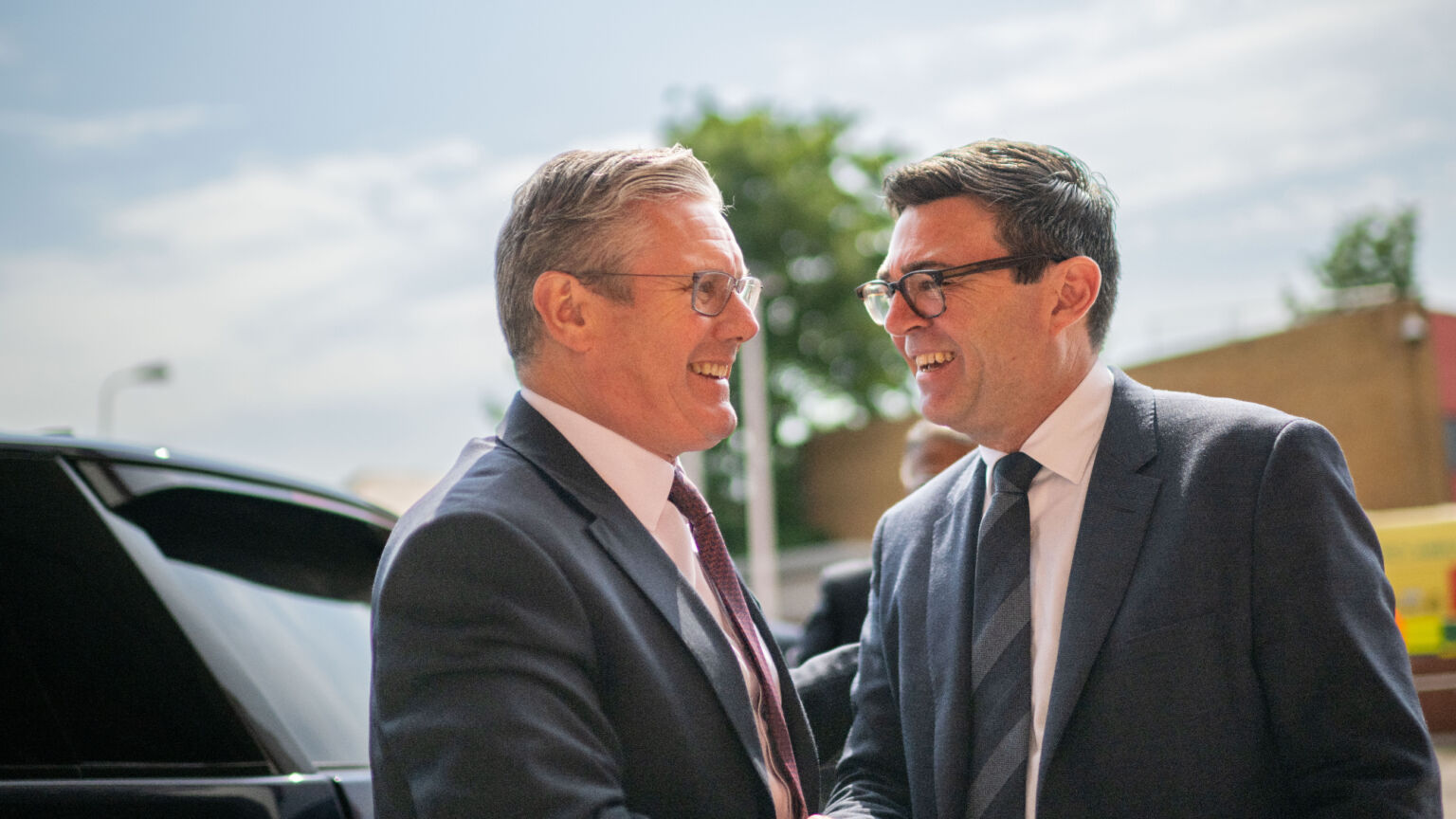
Are there two other words that better capture just how lost the Labour Party is than ‘Andy Burnham’?
Yes, that Andy Burnham – the long-lashed, Blair-era frontbencher who crashed and burned in two successive Labour leadership contests (in 2010 and 2015), before decamping from parliament to become mayor of Greater Manchester in 2017. At the time, he described life in Westminster as ‘poisonous’ and a ‘living nightmare’.
As incredible as it may seem, a party that once roundly rejected Burnham as its leader is now touting him as Britain’s next prime minister. Inside the Labour Party and among its media sympathisers, this hitherto unremarkable career politician is being presented as the answer to their party’s and the nation’s woes. It doesn’t even matter that he is not actually an MP at the moment. With the Parliamentary Labour Party finally set to evict Keir Starmer from his Downing Street squat, Burnham remains the clear favourite to replace him. As one Labour MP told the Guardian last month, ‘It’s Andy or bust – nothing else works’.
The ambitious Burnham clearly agrees. While he spent much of last autumn publicly flirting with the possibility of launching a leadership challenge – something Starmer himself tried to prevent when he and his supporters on Labour’s National Executive Committee effectively blocked Burnham from standing in February’s Gorton and Denton by-election.
That seems to have only stalled rather than floored Burnham. According to reports, he has been quietly preparing some sort of manifesto, and has identified several possible seats in Greater Manchester and Merseyside where a possible by-election could allow him a route back to parliament.
The Labourite calls for the so-called King of the North to head south have only intensified since Labour’s disastrous showing in Thursday’s local elections. Indeed, just hours after Starmer delivered his AI-generated ‘reset’ speech on Monday, former deputy PM Angela Rayner was busy backing Burnham, telling the Communications Workers Union that her north-west comrade should be allowed to stand as an MP.
It’s desperate stuff. Burnham may well be more likeable than his rivals for Starmer’s crown, from the smarmy, Mandelson-lite charms of Wes Streeting to the achingly self-righteous gobster Rayner herself. But what, beyond the vibes, does Burnham offer?
This is not a fresh-face, fresh-ideas candidate. The 56-year-old, Aintree-born Burnham is very much a product of the New Labour years. Having started working as a researcher for the Labour Party not long after graduating from Cambridge, he became MP for Leigh in 2001, aged just 31. He then rose from a junior health minister in 2005, via the Treasury, to become secretary of state for culture, media and sport in 2008. While he now poses to some extent as a political outsider, ostentatiously playing on his northern roots, he was the very embodiment of the professional political class – a character forged in the lifeless, technocratic New Labour machine. He was managerialist in ethos, gently ‘progressive’ in posture and bled a centrist pink.
He put his name forward for the Labour leadership in 2010, but scored a meagre eight per cent of the vote in the first round and was promptly eliminated in the second. He tried again in 2015, but amid criticism from the unions for his New Labour-ish trappings, he was easily outflanked by the then the insurgent middle-class left and its poster-OAP, Jeremy Corbyn.
That was Burnham then. And there’s little that’s different about Burnham now. Yes, he was re-elected as Greater Manchester mayor with a healthy 63 per cent of the vote in 2024. Polls suggest his personal approval ratings are higher than Labour’s other contenders. But what about the substance?
As mayor, he has, to his credit, taken parts of Manchester’s bus network back under local control, keeping ticket prices low, and has made a decent fist of tackling homelessness. But there’s not much more to Burnham. Politically, he is associated with a left-of-centre, Corbyn-lite Labour faction called, tellingly enough, Mainstream, which seems to be advocating little more than tax-and-spend wealth redistribution. He’s woke-adjacent when it suits, and wouldn’t resist the culture-warring tendencies of the political and cultural establishment. There is nothing to indicate that this soft-technocrat, shot through with the prejudices and worldview of a political class now in its twilight years, is capable of rising to the profound challenges we as a nation and a society face today.
The productivity crisis that has crippled the economy since the 2008 financial crash is deepening. Over 20 per cent (or 9.12million) of people aged 16 to 64 are economically inactive. Wages and living standards continue to fall. A well-founded sense of decline, hopelessness and real peril now haunts the lives of millions of people.
Meanwhile, the public realm continues to degrade. Infrastructure, be it energy or transport, is dilapidated and expensive. Housing is in painfully short supply. Deeper still, the social contract is being torn apart by high levels of immigration, multicultural ideology, and a British state that reveals its incapacity on a daily basis.
So what are Burnham’s answers? A slow-motion effort to rejoin the EU, some sort of wealth tax, a vague plan to re-nationalise some public utilities and to expand the welfare state. And of course, a staunch commitment to Net Zero. This, in practice, is no different to what we’ve got in power at the moment. A technocratic state, happy to immiserate many in the name of climate change, and willing to decommission vast swathes of the working class under the guise of welfare. All the while, Britain will cleave ever closer to the dysfunctional, anti-democratic EU in a marriage of unhappy, unblissful decline.
This is Starmer’s government in northern drag, the same hopeless managerialist band, but with a more genial frontman. His soft ‘progressive’ poses and his welfarist gestures may well warm the cockles of Labour’s public-sector and middle-class support base, keen as they are to reassure themselves that they’re the Good People. It may even entice back some of the affluent progressives currently expressing their ‘virtue’ by voting Green. But it will do nothing to improve the lives or address the demands of millions of working-class Brits who want more control over their lives and communities, and who voted for Brexit, and now largely back Reform UK.
This is not just an Andy Burnham problem, of course. This is a Labour problem, too. It’s the problem of a party whose historical roots in Britain’s working-class communities have long since withered. A party that speaks not for the majority of people, but against them, in tones alternately patronising and contemptuous. A party that, like the orthodoxies of the managerialist era to which it’s wedded, is now passing away before our eyes.
Burnham will no more solve Labour’s problems than a fresh coat of polish can burnish a turd.
Tim Black is associate editor of spiked.
spiked is funded by readers like you. Only 0.1% of regular readers currently support us. If just 1% did, we could grow our team and step up the fight for free speech and democracy.
Become a spiked supporter and enjoy unlimited, ad-free access, bonus content and exclusive events – while helping to keep independent journalism alive.


Udinese striker, Keinan Davis, has accused a Cagliari footballer of directing a racist slur at him following the match between the two sides last weekend.
According to several media reports, a scuffle broke out between players from both teams after the final whistle, before Davis alleged defender Alberto Dossena, called him a “monkey”.
Tensions escalated on the pitch after Udinese’s 2-0 victory in the 36th round of the 2025–2026 Serie A season.
On his social media, Davis described Dossena’s actions as “cowardly racist behaviour” and called out the Italian football league, saying he “hope[s] Serie A takes action”.
Meanwhile, Dossena denies the allegations.
Keinan Davis shown yellow card for protest
Davis confirmed to reporters that the words directed at him were the main cause of the clash, noting he had informed the referee of what had happened during the final minutes of the game.
GOAL reported that the referee initially showed the English striker a yellow card for his protest, before rescinding it after the circumstances of the incident were clarified.
For its part, Udinese announced its full solidarity with Davis, who joined the team from Aston Villa in 2023.
In an official statement, the team said:
Udinese stands by Keenan Davis, who was subjected to offensive and racist abuse by a player from the opposing team. We strongly condemn these disgraceful acts, which tarnish the image of sport and its values.
The club added that it would defend its player “in all appropriate legal and sporting forums”, expressing its confidence that the relevant authorities would deal with the incident “with the necessary speed and firmness”.
Racism in Italian football persists
Udinese teammate, Jesper Karlström, also expressed his support for Davis, insisting that the player involved “should never set foot on a pitch again” should the incident be proven.
In contrast, Caligari team manager, Fabio Pisacane, has expressed his confidence in his player’s account.
This incident brings the issue of racism back to the forefront of Italian football, despite the campaigns and sanctions launched by sporting bodies in recent years to tackle discrimination on the pitch.
Featured image via Getty Images
By Alaa Shamali
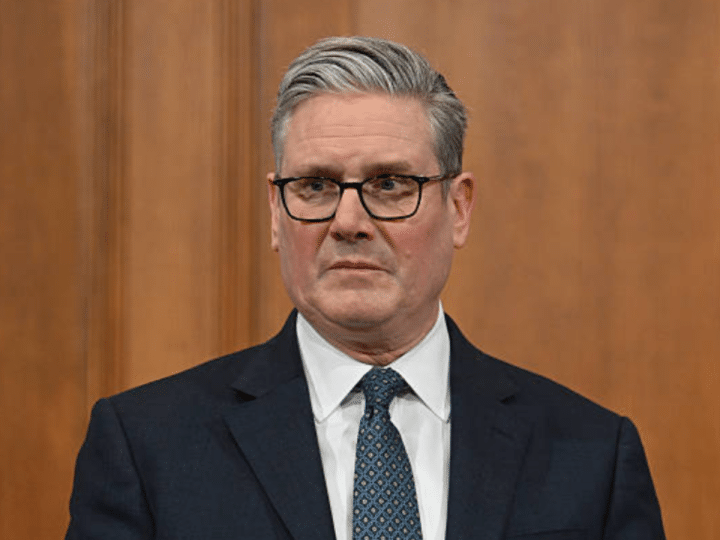

Starmer’s world is – deservedly – falling apart very rapidly. His disastrous and tone-deaf speech post-elections only cemented the belief of those around him that he’s toast. The number of MPs signed up to demand a contest to replace him has snowballed rapidly and now stands at 86, more than enough to trigger a leadership contest.
Starmer appears to have lost Labour Together backing
Now, government minister Miatta Fahnbulleh has resigned, telling Starmer:
the public does not believe that you can lead this change – and nor do I.
Fahnbulleh jumping first may well be part of the notorious ‘Labour Together’ trying to retain control. As the Canary noted in March 2026:
Fahnbulleh had previously been of interest to Labour Together, serving as a “Policy Fellow” there.
Fahnbulleh’s resignation is particularly interesting given fellow Labour Together stooge Josh Simons apparent desire for Starmer to go.
Burned toast
As of the time of writing, according to party insiders:
• 6 front-benchers have resigned.
• at least 4 cabinet ministers have told Starmer to lay out immediate plans to leave.
• 81 Labour MPs are publicly making the same demand.
• more than 85 Labour MPs have privately signed Catherine West’s letter – enough to force a leadership contest.
Starmer is done and Labour is dead.
Featured image via the Canary
By Skwawkbox
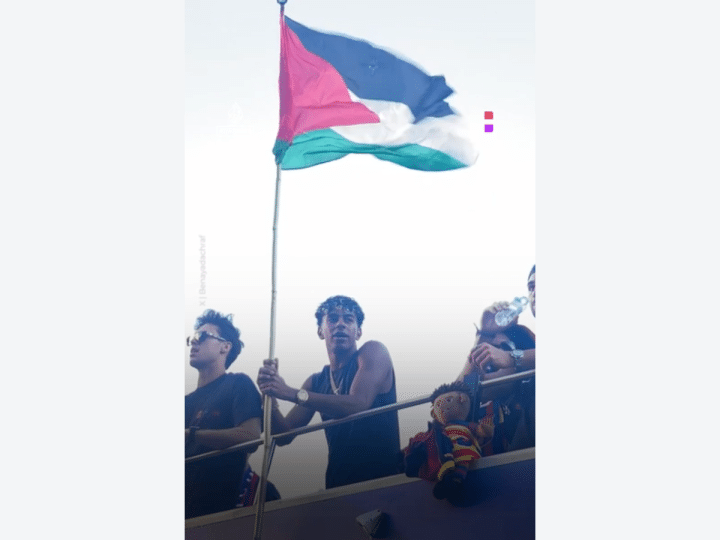

Eighteen year old Lamine Yamal raised the flag of Palestine from Barcelona’s open-top victory parade, a gesture which has been shared widely online, further cementing him as the best young player on the planet, not only for his ability on the field but also his principles off it.
Barcelona’s parade was the morning after the 2-0 win over bitter rivals Real Madrid in the final El Classico of the season, to seal the La Liga title for only the second time in the leagues history.
Yamal is one of the youngest and most prominent figures in world football, for him to stand on the top deck and hoist the flag of Palestine as the bus moved through cheering fans. This is fast becoming an iconic image, a political gesture that resonates with the masses.
Barcelona have a history with Palestine
Barcelona has been a major hub for pro-Palestinian activism since the beginning of the genocide in October 2023, the city has hosted large regular demonstrations and has been a focal point for solidarity actions across Spain. That civic atmosphere meant the moment Yamal waved the flag of Palestine, it resonated deeply with the public.
Sporting celebrations often avoid political expression, but this was different. For fans at the parade it was an opportunity to celebrate the achievement of winning the title but also to remember that there is a genocide taking place and we cannot forget the people of Palestine.
The act of waving a flag is simple, but the implications are layered with love and loyalty to the most oppressed people on the planet. For Yamal, the gesture shows how athletes and global icons can make a difference when they choose to do so.
The reactions on social media have been full of praise for Yamal using his platform to express solidarity, many calling the act brave and powerful, for someone so young to be so outspoken is inspiring.
Beyond the parade
The city has not only hosted protests, but also been a logistical hub for solidarity efforts, including departures for aid flotillas aimed at Gaza. That context further explains how much this city and it’s people care about the on going genocide of the Palestinian people.
Yamal has risen in meteoric fashion, a teenage talent who has already become a household name in world football, but with fame comes scrutiny and his actions carry weight beyond simple post match interviews. Young athletes today carry the ability to influence a generation, in this case he is influencing the youth for a best of causes.
A victory parade that many would just use as an opportunity to celebrate, has become a moment of reflection, of love, care and attention for the people of Palestine thanks to Lamine Yamal, a clear reminder that sports and political protest are often inseparable.
Featured image via Al Jazeera
By Faz Ali
Anyone seeking to make a compelling argument for the proposition that Scotland’s politicians and lawmakers are simply too farcically incompetent to be trusted with running an independent country had a gift-wrapped Godsend delivered to them last week by the idiot student children of Edinburgh.

But we can’t really blame the colourfully-haired, keffiyeh-clad cretin kiddies of the capital for that, because it’s their elders and betters who opened the door.
The law that enabled a queer trans non-binary Indian poet (trans: layabout) with a PhD in “narrating anti-authoritarian resistance” to become a Holyrood MSP was passed unanimously in the Scottish Parliament in December 2024 and became law in 2025.
It did so despite numerous warnings, which were all ignored.


(India does not allow dual citizenship.)

All of those warnings have immediately come true in the case of Q Manivannan. Trina Budge of For Women Scotland did an exhaustive check of visa regulations, and found that there is essentially no route which Manivannan can take which will enable him to complete his Parliamentary term while residing in Scotland.
– His student visa does not allow him to work more than 20 hours a week or to hire staff, which all MSPs have to do.
– A graduate visa, which he does not yet have, would only allow him to remain in the country for a maximum of three years and cannot be extended.

– He cannot apply for a Skilled Worker visa, as that expressly excludes MSPs.

– That only leaves a Global Talent visa, which Manivannan appears to believe is the solution. However, GTVs are also not available to politicians.


But it’s even worse. It is all but certain that Manivannan is already working illegally. MSPs are regarded as engaged as soon as their result is declared, which was last Saturday, and there is zero chance his graduate visa had been granted by then.
(Indeed, there’s nothing to suggest the application has even been filed yet, and it seems very unlikely that it has.)

And by law, any application that is lodged late automatically fails.

Which also means that Manivannan’s student visa is no longer applicable (even if it still has some time to run), because by being in a full-time job he is clearly breaching its conditions, as noted by solicitor known to Wings readers, Ian Smart.

In law, Manivannan now has no legal right to be in the UK and must leave immediately or be deported. But as Smart notes, there’s a twist.

So we’re now in a situation where a current MSP is an illegal immigrant with no right to remain in the country, but he could nevertheless continue perfectly legally to make Scotland’s laws for the next five years by Zoom meeting.
And if one, then why not all?

Under the 2025 rules, every single MSP in Holyrood (except the Presiding Officer) could be a foreign national living overseas and conducting all their business remotely by laptop from 5,500 miles away.
Not one single MSP voted against those rules, despite having these exact problems carefully and patiently explained to them by experts beforehand. And that, readers, is just about the level of legislative competence that we’ve come to expect from the Scottish Government and Scottish Parliament over the last decade.
It’s not a one-off. It’s the norm, from the Named Person act to the Gender Recognition Reform Act to just about any other piece of legislation drafted by the Parliament since Alex Salmond resigned.
Run a country? These people couldn’t be trusted with a chimps’ tea party.



A Green Party source has reminded Labour members – and voters – of Andy Burnham’s record and given an even more withering verdict on Wes Streeting. Both men are mooted as potential replacements for the hapless Keir Starmer. At the time of writing, rebel Labour MPs prepared to trigger Starmer’s removal are mounting.
As questions swirl over a potential replacement for Starmer, one Green Party source had a withering view on the suitability of Burnham for PM:
Remember this is a man who has repeatedly put himself forward for the leadership and failed. Most recently, he lost to Jeremy Corbyn in 2015, primarily because he failed to rebel on the Welfare Bill. Members correctly assessed he was unwilling or incapable of standing up to the Labour Party establishment.
There’s very little evidence he’s up to the job of taking on entrenched power and transforming our country in the way that’s required -when it comes to it he melts under pressure. The fact he’s now being feted as some kind of saviour says less about Andy Burnham’s merits than it does about the pitiful state of the current Parliamentary Labour Party.
Green Party source: ‘Labour is finished’
The same source, speaking exclusively to Skwawkbox and the Canary, added:
When the alternative is Wes Streeting, who is funded by private healthcare investors and was close friends with Peter Mandelson, I understand why some see Burnham as their best shot.
But the truth is that Labour is finished. Their remaining voters are people who’re well off and don’t understand how bad things have got in this country. Everyone else is desperate for real change. Greens are the only party offering a serious alternative to this failed status quo, and the only party that can take on Reform and win.
There is, given the destruction of Labour and its popularity under Starmer, no guarantee that Burnham would win a by-election even if someone stepped aside to trigger him. Even less chance that the Starmeroid party machine wouldn’t suspend him on a pretext or otherwise block him even standing.
And Streeting’s WhatsApp messages with the disgraced Mandelson show he believes he will lose his own seat at the next general election.
Labour is finished, whoever ends up in Downing Street for the moment.
And the Green Party are increasingly becoming harder to ignore.
Featured image via the Canary
By Skwawkbox
Politics
Politics Home | Top PM Aide Darren Jones “Sounding Out Support” For Potential Leadership Run
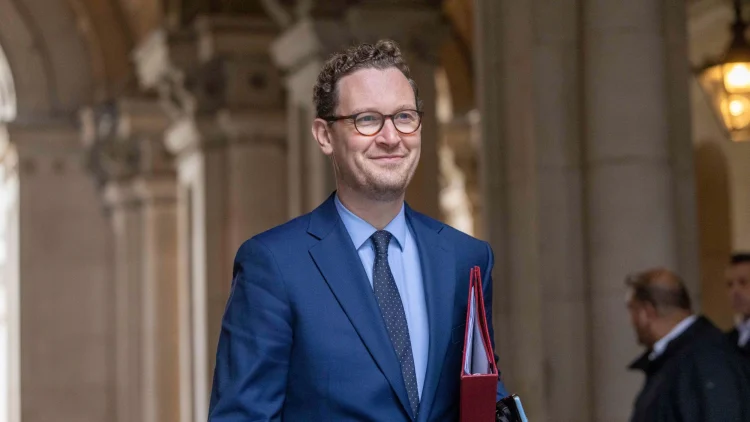
Darren Jones in Downing Street for a Cabinet meeting, October 2024 (Alamy)

3 min read
Exclusive: Chief secretary to the Prime Minister Darren Jones has sparked suspicion among colleagues that he is quietly sounding out support for a future leadership bid of his own, PoliticsHome understands.
While taking the mood of the parliamentary party amid growing calls for Keir Starmer to resign, Jones has been interpreted by colleagues as privately gauging support for his own prospects of becoming Prime Minister.
A source close to Jones said he had been calling MPs on behalf of No 10 but had not raised his own leadership prospects and remains supportive of the Prime Minister. However, two other sources have told PoliticsHome that the discussions had taken into account Jones’ own leadership prospects.
As Chancellor of the Duchy of Lancaster and chief secretary to the PM, Jones was the government spokesperson on the media round this morning. He denied that it was “all over” for the Prime Minister today but did not rule out the possibility he could announce a timetable for stepping down.
“I’m not going to get ahead of any decision that the prime minister may or may not take,” Jones said, before adding that Starmer “was very clear yesterday that he will not be walking away, as some of my colleagues have asked him to do”.
Tonia Antoniazzi, the MP for Gower who is one of 80 Labour MPs to call on Starmer to resign, came out as the first to publicly back Jones on Times Radio today.
“I think there’s a number of candidates that would be acceptable to the country. I actually think you were listening to one of them earlier,” she said.
“I think Darren Jones is a very clever, intelligent individual who, when he was chair of the base select committee, showed great leadership. He’s done an excellent job in supporting the Prime Minister as his chief secretary.”
Antoniazzi added that she did not believe Greater Manchester mayor Andy Burnham – who has the support of dozens of Labour MPs despite not being in the parliamentary party himself – would be a good option to succeed Starmer.
She said: “I think that there are people out there that deserve consideration and it doesn’t always have to be somebody that that’s really obvious. And I certainly don’t think that the answer is the King of the North.”
A senior Labour MP who had previously described Jones as “about as popular as a fart in a lift” among colleagues, after he carried out sackings in the September reshuffle in a way that left many MPs unhappy, predicted a Jones leadership bid would not do well.
“I don’t see where his support base comes from,” they said, suggesting that his expression of interest could be motivated more by the aim of securing a senior post in government.
Jones has been the Labour MP for Bristol West and had a majority of over 15,000 at the last general election with the Greens in second place.

The first minister to resign from Keir Starmer’s government has called for the prime minister to step down and oversee “an orderly transition” to a new leader.
Miatta Fahnbulleh stepped down as minister for devolution, faith and communities on Tuesday morning. In a letter addressed to the prime minister, she said that the government had not acted as “a Labour Party clear about our values and strong in our convictions.”
Fahnbulleh said that mistakes had been made, adding: “Our country faces enormous challenges and people are crying out for the scale of change that this requires.”
Read Fahnbulleh’s full letter of resignation below.

MDU warns Chancellor clinical negligence system ‘not fit for purpose’

Northern Ireland RE curriculum is ‘indoctrination’ – Supreme Court
Dear Prime Minister,
I am writing to tender my resignation as Minister for Devolution, Faith and Communities.
I am proud of the work that I have done in this Government. First as the Minister for Energy Consumers where I secured energy bill discounts for 6 million families and kick started our Warm Homes Plan; and in my current role where I have rolled out our transformational Pride in Place Programme, delivered a generational shift in power through our English Devolution and Community Empowerment Act, and led our critical work on tackling the rising tide of hate and division in our communities. It has been a privilege to play my part in a government that is working hard at every level to deliver the change that our country needs.
Whilst progress has been made, we have not acted with the vision, pace and ambition that our mandate for change demands of us. Nor have we governed as a Labour Party clear about our values and strong in our convictions. Mistakes such as the winter fuel payment and cuts to the support provided to disabled people have left too many of my constituents doubting our mission. And the message on the doorstep was clear: you, Prime Minister, have lost the trust and confidence of the public.
Our country faces enormous challenges and people are crying out for the scale of change that this requires. The public does not believe that you can lead this change – and nor do I. Therefore, I urge you to do the right thing for the country and the Party and set a timetable for an orderly transition so that a new team can deliver the change we promised the country.
Yours sincerely,
Miatta Fahnbulleh

Jeremy Loeliger: IBL isn’t chasing cricket, it’s eyeing ‘sporting entertainment’ for next generation of fans | More sports News

Apple headed to South Korea to fight off US antitrust case

XRP & Clarity Act Deal Announced!

Manchester United reach agreement with Casemiro over contract clause amid transfer speculation

US brings back mandatory military draft registration

Steven Gerrard disagrees with Gary Neville over ‘shock’ Chelsea and Arsenal claim | Football


-
 Crypto World4 days ago
HarrisX Poll Found 52% of Registered Voters Support the CLARITY Act
-

 Fashion4 days ago
Weekend Open Thread: Marianne Dress
-

 Crypto World5 days ago
Upbit adds B3 Korean won pair as Base token gains Korea access
-
 NewsBeat5 days ago
NCP car park operator enters administration putting 340 UK sites at risk of closure
-

 Fashion17 hours ago
Coffee Break: Travel Steam Iron
-

 Fashion1 day ago
What to Know Before Buying a Curling Wand or Curling Iron
-

 Tech2 days ago
Auto Enthusiast Carves Functional Two-Stroke Engine from Solid Metal
-

 Politics13 hours ago
What to expect when you’re expecting a budget
-

 Politics3 days ago
Politics Home Article | Starmer Enters The Danger Zone
-
 Business3 days ago
Ignore market noise, India’s long-term story intact, say D-Street bulls Ramesh Damani and Sunil Singhania
-

 Crypto World7 days ago
UAE Free Zone Deploys Blockchain IDs to Verify Registered Firms
-

 Tech1 day ago
GM Agrees To Pay $12.75 Million To Settle California Lawsuit Over Misuse Of Customers’ Driving Data
-

 Crypto World6 days ago
BlackRock CEO Larry Fink Discusses a New Asset Class
-

 Entertainment5 days ago
Sarah Paulson Called Out For Met Gala ‘Hypocrisy’
-
 Sports6 days ago
NBA playoff winners and losers: Austin Reaves is not loving Lakers vs. Thunder matchup, but Chet Holmgren is
-

 Crypto World5 days ago
Robinhood says Wall Street is building onchain
-

 Entertainment6 days ago
Bold and Beautiful Early Spoilers May 11-15: Steffy Revolted & Liam Overjoyed!
-

 Entertainment5 days ago
General Hospital: Ric & Ava Bombshell – Ric’s Massive Secret Exposed!
-

 Tech6 days ago
Apple and Samsung are dominating smartphone sales so thoroughly that only one other company makes the top 10
-
 Politics5 days ago
Simon Cowell Says He Was ‘Horrible’ To Susan Boyle During BGT Audition
You must be logged in to post a comment Login