1983 smash hit Chuckie Egg is being remade for mobile phones, and we’ve spoken to the bedroom programming teen protégé that originally made it.
It’s always sobering to realise that what counts as retro gaming is constantly changing. Although there’s no official definition, it was recently suggested that the Xbox 360 and PlayStation 3 are now definitely retro, being over 20 years old and two generations ago. Some might insist they still don’t count but there’s no arguing about the 8-bit era of the ZX Spectrum and Commodore 64, which is now well over 40 years ago.
Although there are some games from that period that are still active today (Donkey Kong launched a year before the Spectrum itself) most are not, especially anything that was developed in the UK – as a majority of Spectrum games were. 1983 was the start of the video game crash in the US but that didn’t affect Japan or Europe. At that point though the NES was still three years from release in Europe, so at that time the video games industry consisted almost solely of coin-op games and 8-bit home computers.
That year, the best-selling games on the Spectrum included text adventure The Hobbit, Jetpac from Ultimate Play the Game (later to be renamed Rare), seminal platformer Manic Miner and… Chuckie Egg by Nigel Alderton. Back in the days when a game being made by a single person was the norm, he developed the game as a teenager, in his bedroom, and saw it hog the number one spot for much of the year.
Advertisement
Nowadays you have to be of a certain age to even remember the name Chuckie Egg, especially as it only had one sequel – that was not made by Alderton and was a very different style of game, more similar to Manic Miner sequel Jet Set Willy. The original, though, unlike so many games from the period, is still very playable today.
It’s a single screen platformer where you have to collect eggs before a timer runs out. You’re pursued by chickens, with all of you attempting to pick up piles of seeds along the way – which if you get to them first will slow the timer. After the first eight levels the giant bird in the top left of the screen escapes and also pursues you, as the levels get harder and harder.
Expert, exclusive gaming analysis
Sign up to the GameCentral newsletter for a unique take on the week in gaming, alongside the latest reviews and more. Delivered to your inbox every Saturday morning.
Advertisement
It sounds simple, and it is, but what made it such a hit is the smoothness of the controls, which were much more akin to a coin-op than most computer games. Initially released on the Spectrum, BBC Micro, and Dragon 32/64, it was later ported to the Commodore 64, Acorn Electron, MSX, Amstrad CPC, and a variety of other now forgotten computer formats. It subsequently appeared on the 16-bit Amiga and Atari ST, as well as MS-DOS, but never on any console.
Like so many games of the era that means it’s largely been lost to time, increasingly forgotten by British fans and completely unknown to most American and Japanese gamers. However, Chuckie Egg has now been recreated for mobile and is available to pre-order now on iPhone and iPad, and Apple TV, for a one-time, ad-free fee of £2.99. It includes both a version of the original and a modernised edition that twists the camera angle to give it a 2.5D look.
The launch this week also gave us a chance to interview Nigel Alderton, as we discussed his memories of the 8-bit days, how he came to make the game, and what he thinks of the video games industry today.
Advertisement
GC: Even though Chuckie Egg ended up on so many different formats, I still think of it as a Spectrum game. I think probably because it was a few years before I got a computer, a Commodore 64, and the port still looked a lot like a Spectrum game.
NA: I think that was Mike Webb, the Commodore one. Mike Webb wrote about 11 different versions of it, because I wrote the original one and then other people did the conversions. But Mike ended up writing some ridiculous number, I think it might have been 11.
The Commodore had hardware sprites, and you could move a lot around the screen, taking up very little CPU, but if you wanted to scroll the whole screen on the Spectrum that was quite an exotic thing to do. So, people stayed away from those if you’re designing a game for the Spectrum; quite hard to do.
Advertisement
GC: As I understand it you were influenced by Donkey Kong and Space Panic, and I think Space Panic in particular can be regarded as the first ever platformer. So you’re talking the very early days of gaming and yet there was already an established scene with influential titles.
NA: I walked to school every day and there was a newsagent on the way, that had an arcade game. And so the first first one that I remember was Space Panic. And then at some point they had Scramble. They might have had Donkey Kong, but the very, very early arcade platform games. So if you look at Space Panic and Chucky Egg, side by side, the colours are embarrassingly similar. [laughs] I basically pinched them, but they work really well on the Spectrum, the high contrast purple and the green. But yeah, it was very early days, wasn’t it?
GC: So were you a keen gamer at that time? What were your first experiences of computing?
NA: We were lucky enough to have two or three computers at school. There was a teacher called Mr Bishop, who was very forward-looking, ’cause computers were just barely a thing at that time. And he managed to get the funds to get some Tandy TRS-80s. He commandeered a sort of broom cupboard and put these computers in there and I’d seen people wandering in out of the place with these glowing screens and wondered what the heck it was.
Advertisement
So I used to just hang around and try and get onto them to try and type BASIC. And then I peed my parents for a ZX81. But I was always more interested in the writing. I never really played computer games very much at all. Played loads of arcade games. I used to put all my pocket money into the arcades, there’s an arcade in Stockport, which unfortunately was directly on my bus route home from my Saturday job.
So I’d earn my £7 working on the Saturday, get off and change buses at Stockport with the arcade right there. And many times all my money that I earned that day went into those damn machines. [laughs] But I never really played Commodore games or Spectrum games; I never played those sorts of games very much. Just arcade games.
Nigel Alderton back in his school days
GC: I’ve been playing the game and it’s… I wouldn’t call it easy but it’s not as vindictively unfair as a lot of games from that period and it doesn’t involve rote learning. From what you’ve just said I can totally see the arcade influence, where it’s not easy but it is a lot more fluid and accessible than a lot of computer games of the times, things like Manic Miner – which I know you’re not a fan of.
NA: Yeah, I’m not a fan of puzzle games. I much more enjoy games where it’s more about the dexterity rather than figuring out a puzzle. So, I was just writing a game that I would like to play. I can’t remember if that was a conscious thing or a subconscious thing. And also, I didn’t like games that I played where if one pixel of your character touches one pixel of a deadly thing, an enemy character, then you die. So I didn’t like the feel of that. I thought it was too unforgiving. So that was a deliberate choice.
But I think I could have made it easier, is that when you come to a ladder, you’re running on platforms, when you first start playing, it takes people a while to figure out that you have to hold the ‘up’ button as you get to the ladder to be able to run up. Watching people struggling with, they go to the left of the ladder and then press ‘up’ and then to the right and press ‘up’. It’s frustrating, but once you’ve got that knack I think it was quite easy to get into.
Advertisement
GC: There’s a lot of games from that period where climbing that ladder would be a lot fiddlier than even that, but Chuckie Egg seems pretty smooth to me. Were you thinking of things like difficulty and accessibility when you were making it?
NA: Very much. I wanted to try and get progression, so that you would learn skills gradually. And so try and have a screen early on… the first screen, you don’t have to learn all the skills in one lump, and then you develop them over time. So on the first screen, you don’t really have to be able to jump off of a ladder and grab another ladder, for example. Or jump on the lift, you know? So I wanted to introduce things slowly.
And also, I wanted to be able to have as many new levels, where it was not the same as any previous level, without having to come up with new platform layouts every time. So hence, you do the first eight screens and that’s got the eight platform layouts, but then you go and do them again, and you get the bird coming out instead of the tall birds, and then you do ’em again, and you get the next eight and you do them again, and you get both, and so on.
So I was trying to have a progression, so it got got harder. There were other ideas that I never got to do because they were sort of breathing down my neck to say, ‘Come on! Get it finished, get it finished!’ [laughs] Because I would’ve gone on and just kept adding things to it, I think, if they hadn’t been getting me to do that. There were other things that could have been added to make it go on even further. But I think there’s something like, maybe 48 levels where it’s different each level and then after that it just repeats.
Advertisement
The original version has aged surprisingly well (Elite Systems)
GC: I don’t think a lot of developers in those days, were thinking along those lines, which would certainly explain why it was so popular.
NA: Yeah. I also wanted it to be four players [consecutively, not at the same time – GC]. That probably comes from the arcade, when you’re hanging around with a bunch of people or watching one player play. You get the group dynamic of taking the mickey or saying ‘Well done!’ or whatever. The more the merrier.
GC: So what would you have done to the game if you’d had more time?
NA: I think the next thing might have been two birds coming out at the same time, but with with different movements. So one would move with a different algorithm. And then I think another one was getting bits of the platform to disappear. So you get the same platform layout, but just with the odd brick taken out… ’cause that wouldn’t take up much memory to do that or having to design a complete new level.
GC: I guess maybe there was a story in the cassette inlay or something, but did you have any kind of plot explanation in mind while you were working on it? Because it’s pretty abstract but it’s not completely surreal or random like some other games from the time.
Advertisement
NA: I dunno. Because it’s all out scale, isn’t it? You know, the tall birds… I called them tall birds, but that was kind of an ostrich type thing. But then the bird that comes out of the cage is ridiculous size, isn’t it? Compared to that. There’s a sort of narrative, but it’s a bit messed up. But it is more to do with what I would… because I’m hopeless at graphics. I can do the programming, but I can’t make a pretty picture.
So it was just what was easy to draw. And the square hat came from the fact that I didn’t want pixel collision, I wanted it to be based on a softer collision detection, the collision had to be a roughly a square shape. So the hat kind of makes him visually more square.
GC: So it becomes the hit box?
NA: Yeah, so it’s a trade off between the limits of my coding ability and the limits of my graphics ability. [laughs] And then they [publisher A&F Software] called him Hen-House Harry. They came up with the name Chuckie Egg and tried to create a bit of a narrative, I think, but they were almost random characters that I was drawing.
Advertisement
Nigel tasted success early
GC: Who was the publisher? They were all northern companies back in that day, weren’t they? There were very few that were down south.
NA: Yeah, there was a lot up North and a few in Birmingham, and then there was a couple in Liverpool and then a few in London. But all the magazine publishers were down in London, but all the developers and the game creators were sort of spread all over the country.
GC: So you lived in Stockport but where was A&F based?
NA: A&F were in Denton, I think it was. But I got a Saturday job with them, through a friend of mine. And so I was just making cups of tea on a Saturday and serving in the shop and that kind of thing. And I showed them a game and they weren’t interested, but they said, ‘Oh, take it up to this guy up the road. That was in Hyde, so I went and I got given a cheque for something like £700, for this game that I’d written just before I wrote Chuckie Egg.
GC: That would’ve been a lot at the time, I imagine.
Advertisement
NA: It was a ridiculous amount! I went home with this cheque, thinking, ‘Well, this can’t be real. I won’t believe until I see it in my bank account. I showed it to my dad and that was the first time I’d actually heard him swear, like really swear. And he just couldn’t believe it. I was shocked somebody would pay me to do this thing that I just did for fun, you know? I wrote it because I enjoyed it. And then I wrote Chuck.
So anyway, I turned up to my Saturday job one day, and Chuckie Egg was only half finished, and I showed it to them and this crowd of people all started crowding around going, ‘Wow, look at this!’ So I was really chuffed that I had impressed them.
It was pixel movement and that wasn’t really a thing at that point, on the Spectrum. Nobody had really worked out how to do it. It was all character movement and there wasn’t really any pixel movement games published at that point.
GC: Can you briefly describe what the difference is?
Advertisement
NA: So, if your character, you are controlling, moves left and right, then character movement is it has to move in jumps of eight pixels on the Spectrum, left or right, or up or down. But pixel movement, you can just move one pixel at a time. Chuckie Egg moves two pixels at a time.
Nigel as he is today (Elite Systems)
GC: So were you doing all this just by yourself?
NA: I did the whole thing. I did the whole Spectrum thing, yeah.
GC: How did you learn to program? Was that at school?
NA: I managed to get a little bit of time on these Tandy TRS-80s, occasionally. ‘Cause there’s loads of kids, all sort of fighting to get on them. And there was only three of them, I think. And then there was a sort of pecking order, but I did manage to occasionally, if I stayed late enough after school or got in early enough, to get a go. And then I got to play with that on BASIC.
Advertisement
Then the main thing, where I learned the most and really started to learn how to code, was that I got a ZX81. I pestered my parents or… I think I used part my pocket money and then they chipped in a bit and I got the ZX81 and learned BASIC on that.
But then, also, I started to learn machine code on that, just the real beginnings of it. But actually got machine code to work on the ZX81. And the difference in the speed just blew my mind. When I first got a block to move left and right, on the screen, using keyboard controls… when I got the code running in machine code, I thought it’s not working because it just goes fully from the left of the screen all the way to the right of the screen, in one jump. But it wasn’t, it was just because it was so quick!
So it just blew my mind, the speed of it. And I thought, right, this is the answer. And then the Spectrum was announced and I was just drooling over magazines every week, looking at these beautiful colour pictures of the upcoming Spectrum, which was massively delayed and delayed and delayed. But yeah, I sent my cheque off and that was partly my pocket money and partly my parents. And it covered Christmas and birthday rolled into one, so I think it was over £100, which was a lot of money in those days.
So I sent my cheque off, or postal order or whatever, and then just waited and waited and waited. And I think it took three months to come, ’cause they were just so massively swamped by orders. And the day it came through I couldn’t believe it, like this magical thing. It was awesome!
Advertisement
GC: [laughs] What age were you when this was happening?
NA: I got the Spectrum when it first came out… would that have been ’82? So I was born in ’66. So what’s that? Maybe 15 or 16? I was 16 when I first started writing Chuckie Egg, I think, and then it came out when I was 17. So I was writing Chucky when I should have been studying for my mock A-levels.
GC: Well, the world benefitted from your choice. Well, I say the world, but I doubt anyone outside of Europe even knows the game. Did it ever get ported to anything that wasn’t a home computer?
Advertisement
NA: No, I don’t think so. It is being now, but back in the day. But it did go to Europe. It’s known in Portugal, apparently, and Spain. Which I’ve only just found out recently, because I got an email from a sort of retro computer enthusiast in Portugal.
GC: [laughs] Playing it again now it really should have been turned into an arcade game, but as big as the British development scene was at the time that sort of thing never happened.
NA: There was plenty of games for the Spectrum or the Commodore that could have gone the other way and gone to arcades. I think you’re right. But they all came the opposite way, didn’t they? You’d have conversions from the arcade games, but the arcade industry could have done the same thing and licensed home computer games and just pick the most popular and successful ones.
GC: So Chuckie Egg is a big success and you’ve got another massive cheque from the publisher. What happened after that? Did you work on Chuckie Egg 2?
Advertisement
NA: No, I didn’t. And I wasn’t a fan, actually. I didn’t like their design for it.
GC: I thought as much, because if you don’t like Manic Miner you’re not going to like Chuckie Egg 2.
NA: [laughs] Yeah, I don’t like that Manic Miner style of game, with the collision detection and it being puzzle-orientated. It’s just not my thing. I’ve nothing against, hat’s his name that wrote it?
GC: Matthew Smith, I think.
Advertisement
NA: That rings a bell, yeah. So then I finished school and I didn’t want to go to university, The parents were quite keen for me to do that but I didn’t really like school, so I didn’t really want to go to university. And I felt that I had a skill and somebody told me that, well, you’ve written Chuckie Egg. You could walk into any company, any games publisher, and just say, ‘Gimme a job!’ And they’d hire me. So I did. So I went and I applied to Ocean and they said, ‘Yeah, come and work for us. So I went to work for them for about 18 months, I think. A year and a half.
Nigel even made it into the papers
GC: What did you do there?
NA: I worked on Street Hawk with Mike Webb and Joffers [probably Jonathan M. Smith], what did we do? We did this game… you had like a car and it was a rollercoaster thing on the screen, and I can’t remember what the actual game was [Kong Strikes Back – GC]. I can’t remember what you were trying to do, but I think those were the only two. I don’t remember working on any others.
GC: So what happened after that 18 months? Did you go to another company or had you had enough of games by then?
NA: Well, I thought I’d go and be a freelance programmer. So I started touting around for freelance work. I think, mainly, so I had more freedom and you get more money as well. That’s how I met Steve Wilcox [who currently runs Elite Systems, publishers of this new version of Chuckie Egg – GC].
Advertisement
I can’t remember how I got in contact with him – maybe I phoned up or wrote or something, or did I reply to an advert? So he was looking for programmers to do Commando on the Spectrum and the Commodore, and one other. So I said I’ve written Chuck Egg and Street Hawk, so he hired me and a guy called Keith Burkhill to do Commando on the Spectrum. And that was on a very, very tight schedule, ’cause it had to be out for Christmas.
So I went and worked for them. And then I sort of got burnt out as a programmer and then went and worked for Steve full-time as an employee, just managing all the other programmers. Just coordinating them and making note of how far along they were, ’cause he was running so many projects at the same time and Steve was sort of overwhelmed. So I helped him to just basically schedule things. So I did that for a while, maybe a year or two, and then moved to Audiogenic down in London. And I was software development manager there and I was sort of slightly involved in that football game [Emlyn Hughes International Soccer – GC].
So I think I spent a couple of years there and then after that… I’d always viewed the games industry as a bit of a not proper job, if you know what I mean. And I thought PCs were grown-up computers and the Spectrum and the Commodore were games computers, there were sort of toys really. It’s a bit of snobbery there maybe.
So I thought, right, I’ll try and get a proper job now. And so I went to work for a company in the city. So I was back to programming again, but I was programming on a PC. So that was my entry into the PC world, which is where I spent the rest of my career, if you can call it that, my life. [laughs]
Advertisement
GC: What were you doing there? Nothing to do with games, by the sound of it?
NA: No. So, I started off doing PC support and computer installation and maintenance. So I moved to a company in south London and so they sold computers and installed ’em for people and installed ethernet networks, early ethernet networks. So, I was installing the computers, installing the networks, and we also did tech support as well. So we’d go around and fix computer problems. That was for all sorts of different companies and then I went to work for Engelhard in Surrey and spent seven years there. And they’re a precious metal manufacturer, and I was looking after all the PC equipment in that company.
GC: Steve said you were in property now?
Advertisement
NA: [laughs] I’m semi-retired but I moved house and it was a bit of a doer-upper, but then I decided that I didn’t like the location in the end. So I moved again, very quickly, and bought another doer-upper, so now I’m doing this one. So that keeps me busy.
GC: So while all this was going on the games industry was expanding and evolving in the background. Did you retain an interest in it, have you kept abreast of how things have changed?
NA: Not really, no. Because I’ve kind of grown out of going to arcades.
GC: Well, you don’t get a chance nowadays…
Advertisement
NA: [laughs] I don’t think any of my friends were particularly still into playing computer games and I was never really into playing computer games. It was a bit of a bubble really, wasn’t it? ‘Cause all these home computers came out, the VIC-20 and the Dragon and god knows what, and there was gazillions of them at one point, and then it seemed a bit of a bubble that burst maybe, I don’t know if that’s true, but it was mainly a console thing.
GC: Yeah, the whole home computer market faded away in the 16-bit era and much of the British games industry with it. It’s a shame because if Chuckie Egg had been Japanese or American you’d be on your 20th sequel by now!
NA: [laughs] I mean, the hardware moved on, didn’t it? And then you get these first person shoot ’em ups and also the idea of being able to write a game completely yourself… I mean, maybe not the graphics, but all the design, all the programming, and do it in a reasonable amount of time… one person could write a game. There’s no chance one person can do that now, or very rarely, isn’t it? Games are massive beasts now that you might need hundreds of people. Yeah, it’s very different.
Advertisement
GC: Well, that’s true for the bigger games but I don’t know how aware you are of the indie scene, where it’s not unheard of to have just a single person – or certainly a very small team – making a game on their own. Is that something you’d ever be interested in doing, as a hobby or something?
NA: So they do exist, do they? There’s the phone games I suppose, as well, isn’t there? I dunno whether Flappy Bird was just one guy?
GC: It was and he got so upset that people were addicted to the game that he stopped it, he withdrew it from sale.
NA: [laughs] I didn’t realise that!
Advertisement
GC: He was so overtaken with guilt that he was wasting people’s lives.
NA: Is that what it was?
GC: Well, that’s what he said. I think fans brought it back or something, but the original creator is not involved I don’t think.
NA: Wow. So it had a shelf life and now it’s gone.
Advertisement
GC: There’s dozens of indie games released every week but a good percentage are by very small or one-man teams.
NA: On what hardware?
GC: Some are only PC, but many of them make it to consoles if they’re successful. And some to mobile as well.
NA: Right. Yeah, it’s not a world I know anything about.
Advertisement
GC: And yet you created a classic video game all those years ago, which is still perfectly playable today. More so than most home computer games from that era.
NA: Thanks very much.
GC: It’s not a complicated game but it is very playable and there’s more variety than you’d expect.
NA: That was a conscious thing, that I wanted to get a complexity of play without a complexity of structures or things… concepts. So to try and get a lot of variety by doing combinations of the different ideas in there.
Advertisement
The 3D effect is a neat way to update the visuals (Elite Systems)
GC: I’ve always felt learning a new skill was very important, to action games at least. But it’s something that mainstream publishers have been fighting for years; they worry that it puts people off.
NA: There was a ton of kids coming up with ideas in the early days. There was so much variety as well. It was all different, the types of games and many, many genres of games.
GC: I think you’d be interested if you looked into the indie scene. Slay The Spire 2 is one of the biggest games on Steam at the moment and the first one… I think they got more people to help with the sequel but the first one was basically just two guys.
NA: I believe you get these 3D engines, and physics engines, and things now, so you’re not having to code every line. You’ve at least got some something to start with.
GC: You can get things like Unity, which are very cheap, so you can plug all that in, yeah.
Advertisement
NA: I mean, that’s the sort of thing that might get me to have a fiddle around with something and play around with something.
GC: [laughs] Give it a go, make a true Chuckie Egg 2.
NA: [laughs] Chuckie Egg 2026 or something. Chuckie Egg 2100.
GC: I suppose we should put in a quick plug for the new mobile versions. So there’s a recreation of the original and then a version with sort of isometric graphics?
Advertisement
NA: Sort of pseudo 3D, yeah. But the gameplay is very close, if not identical, to the Speccy version, the original version.
GC: Did you oversee this new version?
NA: It’s taken a while to come to fruition and I have had a play every now and again, but I’m not supervising it. It’s not me writing the code but I’ve put my twopenn’orth in occasionally.
GC: Purely by coincidence we’ve had a lot of retro stories recently, and there’s been a lot of interest.
Advertisement
NA: I had a plumber come round, a while ago.
GC: Mario, was it?
NA: [laughs] Some friends, for my birthday, had a T-shirt made with Chuckie Egg on the front of it and it was so well done that it’s framed, and so it happens to be leaning up against the wall and this guy came in and he said, ‘Oh, Chuckie Egg!’ And I said, ‘Yeah, I wrote it.’ And he couldn’t believe it. It’s amazing how many people of the right age group remember it and have a fond memory for it.
GC: You should be absolutely proud of what you made. For a Brit of the right age that was their Mario or Halo. You made something that will long outlive you.
Advertisement
NA: Yes, It’s amazing though, isn’t it? Yeah, yeah. Nice little feather in my cap.
GC: Alright, well thanks very much for your time.
NA: Cheers, cheers.
Maybe one day there’ll be a true Chuckie Egg 2 (Elite Systems)
LOS ANGELES (AP) — Major League Baseball honored Jackie Robinson on Wednesday with every player, coach and umpire wearing his No. 42 to mark the 79th anniversary of the infielder breaking the sport’s color barrier.
Robinson debuted for the Brooklyn Dodgers on April 15, 1947. He went on to win Rookie of the Year honors, become a six-time All-Star and the 1949 National League MVP. He played in six World Series, and won his only championship in 1955 with the Dodgers.
“Every player of color who now enjoys our great sport, they owe it to this man,” said Bob Kendrick, president of the Negro Leagues Baseball Museum in Kansas City, Missouri.
Robinson made his pro debut with the Kansas City Monarchs of the Negro Leagues in 1945. He was there five months before Dodgers general manager Branch Rickey interviewed him for possible selection to Brooklyn’s International League farm club. Rickey wanted to make sure Robinson could withstand the racial antagonism without reacting angrily.
Advertisement
“What he did was incredibly difficult under some of the most harsh circumstances you could ever imagine,” Kendrick said. “He had to go out there and deal not only with the racial hatred but he was carrying 21 million Black folks on his back when he walked across those lines. Had he failed, an entire race of people would have failed. That’s an enormous amount of pressure. How he did it with such grace, class and dignity is absolutely incredible. And no, we should never forget Jackie Robinson.”
The Los Angeles Dodgers and New York Mets gathered around the centerfield statue of Robinson stealing home at Dodger Stadium. Among the Dodgers were Tyler Glasnow, Teoscar Hernández, Will Smith, Roki Sasaki, Alex Vesia and Will Klein. Shohei Ohtani, who has attended previously, was not there ahead of pitching against the Mets later.
“A special day, especially for me as a Latino. I wouldn’t be here if it wasn’t because of him,” Mets manager Carlos Mendoza said. “Talk about dealing with pressure at this level, imagine what he dealt with back in the day.”
Dave Roberts, one of just two Black managers currently in the majors, told the teams Robinson would be proud that they reflect his dream and vision of what equality and unity would look like.
Advertisement
“My ask is that we remember how we got here,” Roberts said.
In New York, Yankees second baseman Jazz Chisholm Jr. wore his pinstriped pants loose and blousy and rolled at the knees the way many players did in the 1940s, including Robinson.
A video commemorating Robinson and narrated by former Yankees pitcher CC Sabathia was played on the stadium scoreboard before the team’s game against the Los Angeles Angels.
“You look at the diversity in our game as far as now, worldwide, and Jackie was the start of opening those doors to not just Black players being able to play but Latin America,” Yankees manager Aaron Boone said, “and now we have people from all over the globe playing this, and Jackie was the start of all that.”
Advertisement
In Pittsburgh, Pirates manager Don Kelly said, “It doesn’t seem like one day is enough to really give back to Jackie and what he meant to baseball and to people.”
Two of Robinson’s granddaughters joined the teams at Dodger Stadium, not far from Robinson’s adopted hometown of Pasadena. He was a four-sport star at Pasadena Junior College before going on to UCLA, where the Georgia native was better known for football than baseball.
Last year, a historical marker honoring the Robinson family was unveiled by the city of Pasadena at their former home.
“We’re really carrying the legacy now and it’s an incredible honor,” said granddaughter Ayo Robinson, whose father David is Robinson’s youngest son. “It’s a weight that feels good because it keeps you grounded in what is so important. I feel like the legacy is just as important today as it has ever been.”
Advertisement
Robinson’s widow, Rachel, turns 104 in July. She lives in New York and still visits the Jackie Robinson Museum.
“She’s the strong matriarch of our family, surrounded by love and intention to continue to allow her to live a life that she wanted,” said granddaughter Sonya Pankey Robinson, whose father was Jackie Robinson Jr.
Also on hand in Los Angeles were recipients of scholarships from the Jackie Robinson Foundation.
For the first time in at least two decades, the percentage of Black players on opening day rosters increased this season. Major League Baseball says 6.8% of players on opening day rosters, injured lists and the restricted list were Black, up from 6.2% at the start of the 2025 season and 6.0% at the start of 2024.
Advertisement
“He’s an icon,” Milwaukee Brewers manager Pat Murphy said. “To take this day and make it something special says a lot about the character of the game.”
___
AP Sports Writers Will Graves in Pittsburgh, Steve Megargee in Milwaukee and Mike Fitzpatrick in New York contributed to this report.
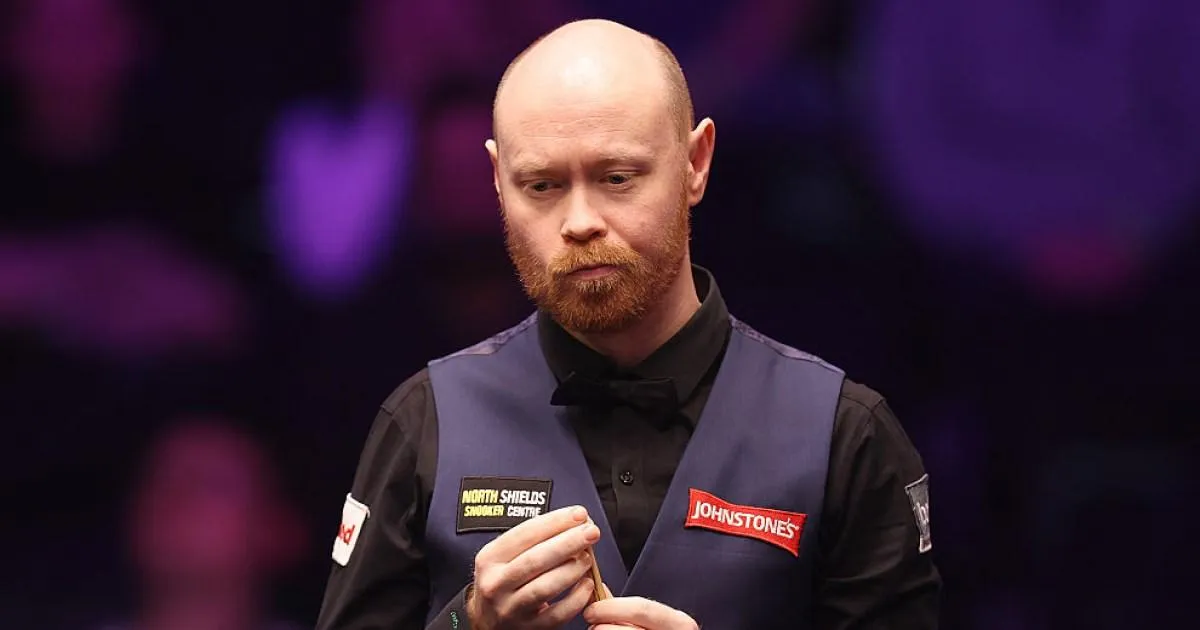
Gary Wilson survived an ‘absolutely nuts’ final qualifier for the Crucible (Picture: Getty Images)
Gary Wilson is back at the Crucible but his performance in his final qualifier left him with ‘complete embarrassment’ in an ‘absolutely nuts’ contest.
The Tyneside Terror beat Xu Si 10-9, but it looked likely to be far more comfortable than that when he burst into a 7-2 lead, making two tons and five half-centuries on the way.
At that point, having thrashed Allan Taylor 10-1 in the previous round, things were looking very peachy for Wilson, but he says he never felt comfortable during either match.
Xu surged back into a 9-8 lead with the Englishman faltering, before scrapping to force a decider and then making a break of 126 to win it.
Advertisement
Wilson was thrilled to win, but could not see many positives with how he played, even in his initial demolition of Taylor.
‘Absolutely nuts,’ Wilson told WST of his win over Xu. ‘People weren’t believing us the other day when I played Allan [Taylor] and it was 10-1 and I said I’m struggling. I was genuinely struggling.
Are you mad about snooker?
You’re in the right place. I’m Phil Haigh, and I cover the game we all love for Metro.
In my new newsletter, The Table, I’ll be analysing the biggest talking points, breaking down frames and crowning the week’s winners and losers every Monday.
Advertisement
With another brilliant World Championships just around the corner, now is the time to join. Sign up here.
Phil has been reporting on snooker for over a decade, since working in World Snooker’s press office in 2012
‘From ball one today I had no cueing whatsoever. Again I got a good lead, I was getting chances again, maybe he was a bit nervous. I potted a few good balls, but I was making breaks just steering in and trying.
Wilson has booked a sixth trip to the Crucible (Picture: Getty Images)
‘The table was playing lovely so it was allowing us to get away with things. Tonight was even worse I just couldn’t cue a ball even more, I thought it was a complete embarrassment.
‘At the end there, it’s the biggest tournament we have, if you can’t try everything here, when are you ever going to try? That last break at the end there was just sheer try. I was stabbing at them, steering them and yipping them and all sorts.’
Advertisement
Making a century in a deciding frame to reach the Crucible is an achievement in itself, but Wilson will not be content until he feels comfortable at the table.
‘It’s all that counts but it doesn’t count for much going forward and that’s always the problem with me,’ he said of the impressive break.
Xu Si battled back to a deciding frame but could not book a Crucible debut (Picture: Getty Images)
‘If I play anything like that at the Crucible I’ll be happy to pick up me points, pick up me walk-ons for the two sessions, pick up me money and anything after that is a bonus.
‘I seriously need to try to find a way to cue the ball properly to have any chance to do what I feel I can do deep down, which is play much better than that, go deep in tournaments and win tournaments again.
‘It’s so frustrating but at the same time I’m over the moon to try my hardest there and somehow scrape through. I’ve always known I’ve got bottle and that’s all that was.’
Advertisement
The 40-year-old will be in the World Snooker Championship draw for a sixth time on Thursday morning, learning his fate at around 8.45am.
Wilson has been to a Crucible semi-final before, reaching the last four in 2019, but has won just one match at the iconic theatre since then.
The three-time ranking event winner has had a mixed season, with his three standout results all coming in China, with a Wuhan Open final run, a semi-final at the Xi’an Grand Prix and World Open quarter-final.
He will be looking to add to his three ranking titles with the biggest one of all over the next three weeks.
Advertisement
World Snooker Championship field
Top 16
Zhao Xintong Judd Trump Neil Robertson Mark Williams John Higgins Kyren Wilson Mark Selby Shaun Murphy Berry Hawkins Xiao Guodong Wu Yize Chris Wakelin Ronnie O’Sullivan Mark Allen Si Jiahui Ding Junhui
Zhao Xintong is favourite to defend his title this year (Picture: Getty Images)
Qualifiers
Hossein Vafaei Zhou Yuelong Matthew Stevens Antoni Kowalski Dave Gilbert Stan Moody Pang Junxu Liam Pullen Jak Jones Ali Carter He Guoqiang Fan Zhengyi Zhang Anda Gary Wilson Lei Peifan Liam Highfield
Advertisement
Judgement Day Results
Day One Results
Hossein Vafaei 10-4 Gao Yang Zhou Yuelong 10-4 Michael Holt Matthew Stevens 10-7 Stuart Bingham Antoni Kowalski 10-8 Jamie Jones David Gilbert 10-6 Aaron Hill Stan Moody 10-9 Jiang Jung Pang Junxu 10-8 Jackson Page Liam Pullen 10-8 Noppon Saengkham
Advertisement
Day Two Results
Luca Brecel 5-10 Jak Jones Anthony McGill 7-10 Ali Carter He Guoqiang 10-5 Jack Lisowski Ben Mertens 4-10 Fan Zhengyi Zak Surety 3-10 Zhang Anda Xu Si 9-10 Gary Wilson Ryan Day 5-10 Lei Peifan Liam Highfield 10-2 Oliver Lines
The sausages are so juicy and the new potatoes are crispy.
Mia O’Hare Senior Spare Time Journalist
01:27, 16 Apr 2026
Getting dinner on the table during the week needs to be straightforward, quick and taste good. It’s all too easy to fall into the trap of serving up the same meals on repeat.
However, there’s one reliable favourite that I turn to. It is a fuss-free sausage traybake that tastes far more impressive than the effort it requires.
Advertisement
This sausage, red onion, pesto and new potato traybake couldn’t be simpler, as everything gets put into a single dish. The oven takes care of rest, freeing you up to make the most of your evenings rather than being tied to the kitchen.
The sausages come out succulent, while the new potatoes are crispy after being squashed before roasting. It’s a crowd-pleaser for the whole family and a way to get plenty of vegetables into one meal.
Since I first discovered this traybake a couple of years back, it’s become a regular on my dinner rotation, and it could well become yours too once you’ve tried it.
Sausage and new potato pesto traybake
Ingredients for four people
Bag of new potatoes
Four garlic cloves, peeled
Eight sausages
One red onion, largely chopped
A glug of olive oil
Three tbsp pesto
200g frozen peas
Salt and ground pepper for seasoning
Method
Begin by heating your oven to 220°C/200°C Fan.
Advertisement
Put the new potatoes into a saucepan of water. Bring to the boil and simmer for 10 minutes.
Drain the potatoes and put them into a large roasting dish. Gently press down on each potato using the base of a drinking glass.
Scatter the red onion, garlic and sausages across the tray, making sure there’s room for everything. I sometimes give my sausages a five-minute head start in the air fryer before adding them to the tray, though this step isn’t essential.
Drizzle oil over the ingredients as well as salt and pepper. Put the tray in the oven for roughly 35 minutes, until the sausages are thoroughly cooked and the potatoes turn golden and crisp.
Advertisement
Take the tray out of the oven and add the frozen peas along with the pesto. Mix everything together well.
Put it back in the oven for another five minutes, until the peas are cooked through. Serve and enjoy.
Gary Sheel was due to be sentenced for assault occasioning actual bodily harm when he attacked a woman in Hartlepool.
The 38-year-old appeared at Teesside Crown Court via a video link from Holme House Prison in Stockton but audio problems resulted in the case being adjourned.
Sheel, of Malvern Crescent, Darlington, was remanded in custody until Friday, April 17 when he will be brought to the court to be sentenced.
Advertisement
Judge Richard Clews said: “You need to be able to follow these proceedings and understand everything that is being said.
“It is very difficult for you to do that from where you are.
“So, what I am going to do is adjourn this case until Friday and direct that you are brought to court.
“You will be able to sit in the courtroom where you will able to lipread everyone properly and then we will finalise the case.”
FRANKFURT, Germany (AP) — The U.S. Navy’s sea blockade against Iran appears to be working.
Iran-linked or sanctioned vessels that have left the Persian Gulf through the Strait of Hormuz have stopped or turned around, shipping data firms say. They appear to have jammed or faked their locations in some instances, complicating an uncertain and risky shipping situation.
The blockade that started Monday “has been fully implemented,” said Adm. Brad Cooper, head of U.S. Central Command. “U.S. forces have completely halted economic trade going in and out of Iran by sea.”
The action could put serious pressure on the Iranian economy, while Tehran’s earlier cutoff of the waterway crucial to oil and gas supplies has sent energy prices higher during the war with the U.S. and Israel.
Advertisement
Here are key things to know about the blockade and the situation at the Strait of Hormuz:
How the US Navy is enforcing the blockade
The blockade is being enforced “impartially against all vessels of all nations entering or leaving coastal areas or ports in Iran,” U.S. Central Command said. Vessels avoiding Iranian ports are not affected.
The military set up the blockade in the Gulf of Oman beyond the Strait of Hormuz, a U.S. official said. The official, who spoke on condition of anonymity to discuss sensitive military operations, said the strategy is to observe vessels subject to the blockade leave Iranian facilities and clear the strait before intercepting them and forcing them to turn around.
The official said that the military relies on more than just automated tracking beacons that all merchant ships are required to carry, called AIS, to determine merchant ships were coming from a port in Iran but wouldn’t go into more detail citing the need for operational security.
Advertisement
Ships are turning around as traffic adjusts
U.S. Central Command said Wednesday that no vessels have made it past its forces during the first 48 hours of the blockade.
It noted that 10 vessels have complied with directions to turn around and return toward an Iranian port or Iran’s coastal area. Navy warships are telling merchant ships that they are ready to board them and use force to compel compliance.
On Tuesday, the first full day of the blockade, only eight vessels, most of them linked to Iran or sanctioned, transited the strait, said Ana Subasic, trade risk analyst at data and analytical firm Kpler. The environment is still considered “extremely high risk” despite the ceasefire, she said.
“Most of the vessels have appeared to halt or have reduced movement after clearing the strait,” she said, “which tells us that the effect of the blockade is starting to show up because most of these vessels that have crossed have some kind of history with carrying Iranian-origin sanctioned cargo.”
Advertisement
The Rich Starry, a Chinese-owned tanker previously sanctioned by the U.S. for smuggling Iranian petroleum products, left the strait and then turned back this week, according to publicly available ship tracking data.
Radio transponder data for the vessel, which is sailing under the flag of the landlocked East African nation of Malawi, shows it entered the Persian Gulf on April 4 empty of cargo. It turned off its transponder for more than a week, a tactic smugglers often use called “running dark” to avoid showing its location.
The Rich Starry’s signal popped back up off the United Arab Emirates on Monday laden with oil, though it is possible the ship wasn’t transmitting its accurate location. Smugglers sometimes “spoof” their locations by transmitting inaccurate coordinates.
The ship went through the Strait of Hormuz on Monday night before abruptly reversing course in the Gulf of Oman on Tuesday, heading back through the strait and toward Iran’s coast Wednesday.
Advertisement
Other Iran-linked tankers transited the strait this week only to stop. For example, the oil-products tanker Elpis left Iranian waters Monday, passed through the strait before cutting its engines in the Gulf of Oman, tracking data shows. The ship turned off its radio transponder Tuesday and its current location couldn’t be independently verified.
Maritime intelligence firm Windward said that vessel behavior was “indicating a fragmented and uneven response to the blockade” as sanctioned and false-flagged vessels continued to be active, some transiting the strait, others delaying or reversing course.
Trying to break Iran’s chokehold
Iran has blocked the strait by threatening to attack shipping, cutting off 20% of the world’s typically daily oil consumption, sending oil prices sharply higher and leading to warnings about higher inflation and recessions in leading economies.
Vessels were hit with aerial and undersea drones as well as unknown projectiles, killing 11 crew members. While those attacks have dwindled, the risk of navigating the area means that ship traffic has dropped by more than 90%.
Advertisement
Some of that blocked oil is making it out from Gulf producing nations through pipelines to the Red Sea and the Gulf of Oman. But those pipelines can’t make up for the effective closure of the strait.
Iran has started vetting and collecting money from the few vessels daring to pass. Vessels must submit detailed information on cargo and crew to the paramilitary Revolutionary Guard and pay a $1 fee per barrel of oil or fuel products before being allowed to pass, according to Kpler.
The US blockade has a rule book
The terms of the U.S. blockade have contributed to some uncertainty. According to a notice to mariners, the blockade is being enforced in the Gulf of Oman and the Arabian Sea, not at the Strait of Hormuz. So simply passing the strait doesn’t mean a vessel beat the blockade.
“Humanitarian shipments including food and medical supplies essential for the survival of the civilian populations” can pass with inspections.
Advertisement
That last provision aligns with international law on naval warfare, which bars blockades solely intended to starve civilians, according to a legal guide from the U.S. Naval War College cited by maritime historian Sal Mercogliano, who runs a YouTube channel on shipping.
“Neutral” ships can pass — though they may be inspected — but it’s not clear what “neutral” means. The Lloyd’s List Intelligence maritime data firm said the U.S. action “has plunged shipowners into fresh uncertainty around enforcement.”
So ships from Iranian ports can be detected passing the strait — and still face the risk of being stopped farther out. Container ships heading for Iranian ports could be allowed in or out if they’re carrying food — or not, if they’re carrying other goods.
Iran says it would halt Gulf trade if blockade doesn’t end
Unless Iran can export oil, available storage will fill up and it will have to shut down wells that are difficult to restart. Additionally, Iran imports gasoline since it lacks the refinery capacity to turn its own oil into fuel.
Advertisement
The commander of Iran’s joint military command warned Wednesday that Iran would completely block exports and imports across the Persian Gulf region, the Sea of Oman and the Red Sea if the U.S. does not lift its blockade on Iranian ports.
“Iran will act with strength to defend its national sovereignty and its interests,” Ali Abdollahi said. He added that the U.S. blockade is “a prelude to violating the ceasefire.”
Mark McKone KC, delivering his closing speech in defence of 25-year-old Ward, said his client accepts that he was in the area at the time and had been captured on CCTV, but was not responsible for delivering the fatal blows.
Judge Francis Laird KC, the Recorder of Middlesbrough, is expected to complete summing up the evidence in the morning before asking the jury to retire to consider its verdict.
Police working at the scene of the alleged murder at Westerton Green, Stockton (Image: Freelancer)
Earlier in the trial, forensic pathologist Dr Jennifer Bolton told jurors Macaulay suffered five significant knife injuries, including two that went down to the bone, and suffered extensive blood loss as a result.
He died three days later after he suffered multiple organ failure and a brain injury resulting in cardiac arrest.
Advertisement
Ward, of Tithe Barn Road, Stockton, and 25-year-old Tweddle, of Kimblesworth Walk, Stockton, both deny murder.
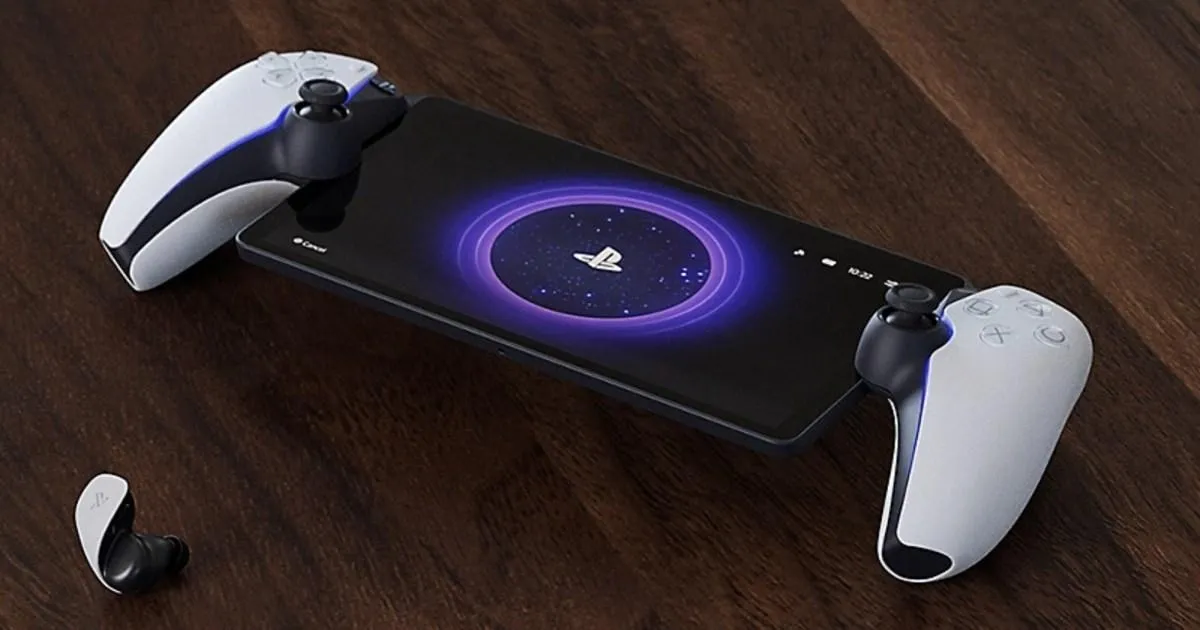
There may be two PlayStation 6s (Sony Interactive Entertainment)
The Thursday letters page wonders what would’ve happened to Xbox if Starfield had been a smash hit, as readers are baffled by the new God Of War rumours.
Games Inbox is a collection of our readers’ letters, comments, and opinions. To join in with the discussions yourself email gamecentral@metro.co.uk
1 for the price of 2 This stuff about the portable PlayStation 6 is very puzzling to me. I don’t see how a portable could possibly be more powerful than a PlayStation 5 but I also don’t understand why, if it can run the same games as the home console, they do not make it a hybrid like the Switch.
I guess maybe that would make it a little more expensive but I’m not sure? The original Switch was pretty cheap. Why have two consoles when you can have one that everyone gets and is both portable and home.
Advertisement
Unless they want the home one to be much more powerful but then what’s the point of saying the portable runs PlayStation 6 games? If they’re going to have such a big difference in performance it’s all beginning to seem more and more like just owning a PC. Olliephant
Love and Thunder That God Of War rumour sounds nuts. I trust the director, but I worry that the world of Kratos is not really fleshed out enough to allow all these different mythologies to combine. If you think about it, the Greek and Norse games have almost nothing in common, in terms of story or gameplay.
Expert, exclusive gaming analysis
Sign up to the GameCentral newsletter for a unique take on the week in gaming, alongside the latest reviews and more. Delivered to your inbox every Saturday morning.
Advertisement
In the Greek one it was all happening in what was supposed to be the real world, but I still don’t really understand where the Norse ones were meant to be. Where were all the ordinary humans? Why where there ordinary people in the Greek games but none in the Norse ones?
It says it was Midgard but I thought that meant Earth, but it felt more like some sort of fantasy realm for the gods. The worst thing is, as I write this and try to figure it out, all I can think of is that terrible Thor film with all the gods in it. I really hope Sony has seen that and does the exact opposite. Trepsils
Free franchise With this new God Of War rumour it made me realise how few attempts there have been to make a proper King Arthur game. I bought the Blu-ray of Excalibur recently and I love that film. I have a feeling FromSoftware do too, as it has a very Dark Souls/Elden Ring style vibe.
Advertisement
So did The Green Knight, if anyone’s seen that. Sorry to be bringing up obscure films but I would love to see a game that used the Arthurian legends but seriously, without being grimdark. I know there are games, because I looked them up, but I’ve never heard of any of them before. I’m surprised there’s never been a big budget game because it’s a free IP that everyone’s heard of it. Limbert
To the stars I would be very surprised if we ever hear about Starfield again after the PlayStation 5 port. Maybe you’ll get one on Switch 2 as well, maybe even an extra bit of DLC, but it’s under the carpet with it after that.
I wonder how much its failure affected Xbox as a whole. Microsoft was clearly banking on it being a system seller, boosting Game Pass, and proving that buying all these companies was worth it. It didn’t do any of that though, it was just kind of a bit disappointing and not even bad enough to get upset about – the definition of meh.
Advertisement
The problem for Microsoft is that they didn’t have another contender after that. Fable is probably the next one but obviously that came too late for them having to avoid going multiformat. Think about it. If Starfield had been Skyrim quality the Xbox Series X/S might have been a hit after all. Koblet
Don’t miss Gaming news! Add us as a Preferred Source
As a loyal GameCentral reader, we want to make sure you never miss our articles when searching for gaming stories. We have all the latest video games news, reviews, previews, and interviews, with a vibrant community of highly engaged readers.
Click the button below and tick Metro.co.uk to ensure you see stories from us first in Google Search.
GameCentral has been delivering unique games news and reviews for over a decade
Broken knowledge So Blizzard planned a new Switch 2 version of Overwatch that runs at 60fps? But when they launched it, it was still 30fps? I really don’t see how this happens so often. I’ve often wondered, do companies not know their game is bugged or do they just think people won’t care?
I think about Cyberpunk 2077 on console and wonder, what was the plan? That nobody would notice? That the game was so good people would forgive it being completely broken? Or they’d just happily wait for the patches, because you needed it out for Christmas.
The fact that this sort of thing still goes on, and on every format, is really not good enough. Xane
Advertisement
Next gen worries So everything is pointing towards Sony releasing a home and portable console at the same time for the PlayStation 6? The only real question seems to be the release date, which maybe they don’t even know yet. I don’t think people realise just what a huge risk that is. I know PlayStation 5 is flying high at the moment, with no real competition, but people being broken is going to be a lot more competition than Xbox ever offered up.
Two high-end consoles is going to be in the region of £1,500 to get everything at launch and that seems crazy for anyone but the 1%. Sony must have a plan but I am very interested to hear about it, because I really don’t see how all this works out.
Although I do worry that the answer is AI. If a portable can only just PlayStation 5 games, but using low power mode, that kind of implies the PlayStation 6 isn’t any more powerful. But what if Sony are trying to make up for that with AI, like with DLSS 5?
I’m willing to bet that’s exactly Microsoft plan for Project Helix and while I don’t care if they waste their time with that I’d hate to see Sony ruin the PlayStation 6 with slop. Oscar
Advertisement
Second best Bit late to the party but I just finished Resident Evil Requiem and loved it. Yes, the final boss battle is bad, like everyone said, but everything else is great though.
However, I would not say it was my favourite Resident Evil by any means. I think Resident Evil 4 (both of them) are better, but I would say that the Resident Evil 2 remake is the absolute best of the bunch. For me that is the perfect Resident Evil game in terms of length, scares, gimmicks, and general atmosphere.
And that’s despite the fact that the police station setting makes absolutely no sense, in terms of the weird puzzles and furniture. But that’s just part of the Resident Evil charm. Rothamn
Advertisement
The joy of sadness I honestly can’t say that any video game has made me cry, and definitely not a Japanese role-playing game. I’m not sure anything I’ve played has even been trying to make me cry. That said I have played a lot of miserable games, that somehow I’ve still enjoyed.
The Last Of Us, Silent Hill, Red Dead Redemption 2, The Walking Dead (season 1 at least), and This War Of Mine are great at making you feel down but that’s what they’re going for and they’re very impressive.
I don’t know that games are really very good at making you feel so attached to a character that you cry though. Just like they’re no good at romance. It’s hard to get that involved in a character if they’re constantly killing people and fighting monsters or whatever.
I think of that bit in Uncharted 4 where Nate is being all romantic (kind of) playing Crash Bandicoot, but he’s killed like a hundred people. Does Elena know that? How does she feel about it? She’s killed a bunch of people too, I think. I don’t really remember because it’s a video game and that kind of real-world worry doesn’t really come into it.
Advertisement
Maybe some people get into their games a little deeper than I do but something like the end of Metal Gear Solid 3, which I thought was really cool, I didn’t get upset about it or anything. Apart from anything the logic of what was going on didn’t seem to make any sense. It just looked good and created a vibe, which I feel is what most video game storytelling is all about. Josston
Inbox also-rans RE: Clambake. It’s not going to take six years for GTA 6 to make its money back. ANON
GC: Isn’t that what he said?
Can you imagine what a nightmare it would be living in a world where pokémon were real? All these giant, weird monsters roaming about and ghosts are not only real but people catch them and fight with them! Shute
The small print New Inbox updates appear every weekday morning, with special Hot Topic Inboxes at the weekend. Readers’ letters are used on merit and may be edited for length and content.
You can also submit your own 500 to 600-word Reader’s Feature at any time via email or our Submit Stuff page, which if used will be shown in the next available weekend slot.
You can also leave your comments below and don’t forget to follow us on Twitter.
EXCLUSIVE: Professor James Mitchell, an expert on the rise of the SNP, said an independent Scotland would “inherit all the challenges we now have and many more”.
John Swinney is pushing a “fundamentalist” approach to achieving Scottish independence which shows no regard for the “social and economic consequences”, a leading expert on devolution has warned.
Advertisement
Professor James Mitchell said the SNP leader’s claim that a second referendum could be held as soon as 2028 showed he had no intention of “tackling weaknesses” in the case for ending the Union.
The University of Edinburgh academic has written about the rise of Scottish nationalism as an electoral force for 40 years and recently completed a new book on the subject.
It comes as Swinney today launches the SNP’s manifesto for the election on May 7 which could secure a third decade of the Nationalists in power at Holyrood.
The SNP leader has repeatedly argued he will have a mandate to call an IndyRef2 if his party wins 65 or more MSPs next month – a position last week shot down by Wes Streeting, the UK Health Secretary.
Advertisement
Asked if the Nationalists were ready for another referendum campaign, Mitchell told the Record: “The SNP has not addressed weaknesses exposed in 2014 and additional problems that have arisen.
“There can be only one reason to believe they genuinely want another referendum during the next Parliament – the leadership believes in independence regardless of social and economic consequences. That fundamentalist view is fair enough, but John Swinney and the SNP should be open and honest about this.
“But it is likely that John Swinney has come to believe that Scotland must be better off by being independent. After years in politics he has likely internalised this belief to the extent he is not capable of reflection and hence the refusal to address weaknesses.”
Mitchell added: “It has been suggested that if another referendum was held the SNP would run a campaign similar to Nigel Farage’s Brexit campaign – with wild promises and appeals to emotions. In essence, the SNP has for the moment abandoned appeals to the head and now seeks to appeal only to the heart.”
Streeting, a senior figure in the UK Labour Government, last week said Westminster would not grant Holyrood the power to hold an IndyRef2, even if the SNP won a majority.
Asked what he thinks Swinney would do if his IndyRef2 call is ignored, Mitchell said: “There’s really little he can do as his predecessors discovered. Nicola Sturgeon marched her troops to the top of the hill only to march them down again on many occasions.
“Demanding a referendum is all but certain – but it’s difficult to see why Keir Starmer will agree, especially given the major challenges the Prime Minister is already having to deal with.
“The best advice for the SNP now – and has been since 2014 – is to do two things. As a party, the SNP needed to acknowledge that, while it had succeeded against expectations to increase support for independence in 2014, there were lessons to learn.
“It needed serious reflection on the weaknesses exposed that prevented it getting support over the line.
Advertisement
“This required, and still requires, an honest and open discussion within the SNP, and beyond with the wider independence movement.
“It still has not come close to an agreed convincing response to many weaknesses – real or exaggerated by opponents – on currency, pensions, the economy, fiscal matters, and a gamut of transitional matters. This is not to say that credible answers exist on some of these areas – but it is clear that the SNP leadership cannot rely on spin, smoke and mirrors.”
Mitchell added: “An independent Scotland can never be, as the SNP propaganda would have us believe, a ”fresh start’.
“An independent Scotland will inherit all the challenges we now have and many more. Reducing these now, by skilfully using existing extensive devolved powers, instead of playing blame games and playing politics, would make sense if the SNP really wants another referendum any time soon.”
Advertisement
Speaking before the manifesto launch, Swinney said his party would offer voters a plan “bursting with ambition for Scotland’s future”.
He added: “Because the SNP is on Scotland’s side – and on May 7, I am asking people to deliver an SNP majority government that will improve the NHS, support people with the cost of living and deliver the fresh start of independence.”
To sign up to the Daily Record Politics newsletter, click here
“Accidents devastate lives in an instant. They are often sudden, violent, and shocking, leaving families and communities to cope with consequences that can last a lifetime.”
Nearly 800 deaths and 10,000 hospital admissions from accidents have been recorded in a single year in Northern Ireland, new statistics show.
Advertisement
And accidental deaths are rising in Northern Ireland, a new report from safety charity the Royal Society for the Prevention of Accidents (RoSPA) warns today.
Accidents killed nearly 800 people in Northern Ireland in 2023/24 while around 10,000 were admitted to hospital.
Northern Ireland’s accidental death rate of 39 per 100,000 people is higher than the UK average of 34 per 100,000, meaning people here are 23% more likely to die in accident than people in England
Advertisement
Falls and accidental poisonings (including alcohol and drugs) are the biggest killers, with other causes including road traffic collisions, choking, and exposure to smoke.
The safety charity is calling on the UK Government to implement a National Accidents Prevention Strategy to tackle the “public health emergency”.
Alongside the disparity between Northern Ireland and the rest of the UK, there were also varying rates of accidental deaths across socio-economic backgrounds. Those in the most deprived 50% of the population were almost three times more likely to be admitted to hospital than those in the less deprived 50%.
The RoSPA also estimates that immediate treatment costs to the NHS run to £6 billion annually, and accidents account for a minimum of 5.2 million bed days – reducing capacity and driving up waiting lists across the health service.
Advertisement
CEO of RoSPA Becky Hickman says accidents “devastate lives in an instant”, adding: “They are often sudden, violent, and shocking, leaving families and communities to cope with consequences that can last a lifetime. What makes this devastation even harder to bear is the knowledge that so many of these incidents are entirely preventable.”
Dr Sally-Anne Wilson, vice president of the Royal College of Emergency Medicine (RCEM), said A&E departments “see first-hand the rising impact of accidental injuries, particularly among older people”.
She added: “The patients I worry about most are those who fall from standing height, often in their own homes, and arrive in the ED with serious injuries such as hip or rib fractures. These seemingly simple accidents can have devastating consequences.
“We know that older people are disproportionately affected by crowding in Emergency Departments, and that delays transferring them to inpatient wards are linked with longer hospital stays and increased mortality.
Advertisement
“Prevention must be a priority. Anything we can do to reduce the number and severity of avoidable injuries will make a meaningful difference to patient outcomes and help relieve pressure on a stretched emergency care system. RCEM strongly supports RoSPA’s focus on this vital area of public health.”
While the cost of renewables plays a part, the principal driver for this is, ironically, gas itself. The UK energy mix at any one moment usually includes plenty of renewables, but some gas is still frequently still needed. The way the market works, generators bid to supply power in half-hour blocks, with the cheapest bid accepted first. But all successful bidders end up being paid the price of the most expensive source needed to meet demand.


























































You must be logged in to post a comment Login