
Business
Walmart redesigns Great Value brand for first time in over a decade

Check out what’s clicking on FoxBusiness.com.
Walmart is giving one of its most recognizable brands a fresh look for the first time in more than a decade.
The retail giant announced Wednesday that it is rolling out a sweeping redesign of its flagship Great Value label, spanning nearly 10,000 food and household products. The effort marks the brand’s first full refresh in over 10 years and the largest private-label update in Walmart’s history.
“Great Value has earned customers’ trust over decades, and while the brand is getting a fresh, modern look, what’s inside isn’t changing,” Scott Morris, senior vice president of private brands at Walmart U.S., said in a statement. “Customers will continue to find the same trusted products at the same every day low prices they rely on.”
MORE THAN 40,000 BICYCLE HELMETS SOLD AT WALMART RECALLED OVER ‘SERIOUS RISK OF INJURY OR DEATH’

A selection of Walmart’s Great Value products featuring the brand’s redesigned packaging is shown here. (Walmart)
The redesign introduces more modern packaging, clearer labeling and a more consistent visual system across products.
Walmart says the updates are intended to make items easier to identify on shelves, with standardized nutrition placement and clearer visual cues for shoppers.
WALMART CUSTOMERS SEEKING VALUE DRIVE SALES HIGHER
Before and after packaging for Walmart’s Great Value Donut Shop ground coffee.
Great Value products are already found in roughly 90% of U.S. households, and the company says they help families save an average of 35% annually.
The new look will roll out gradually over the next two years, beginning with salty snacks and expanding across store aisles.
The move underscores Walmart’s continued investment in its private-label brands as consumer preferences evolve, according to the retailer.
ESTÉE LAUDER SUES WALMART OVER ALLEGED COUNTERFEIT BEAUTY SALES
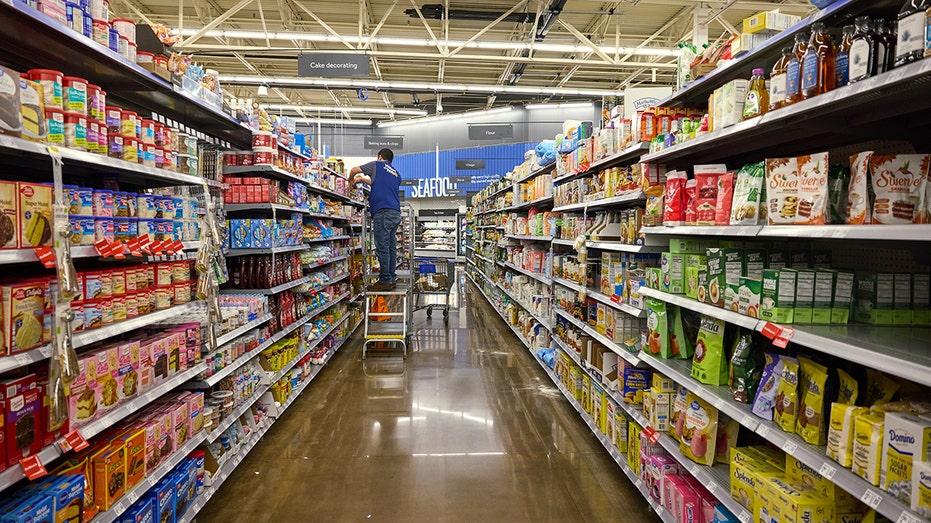
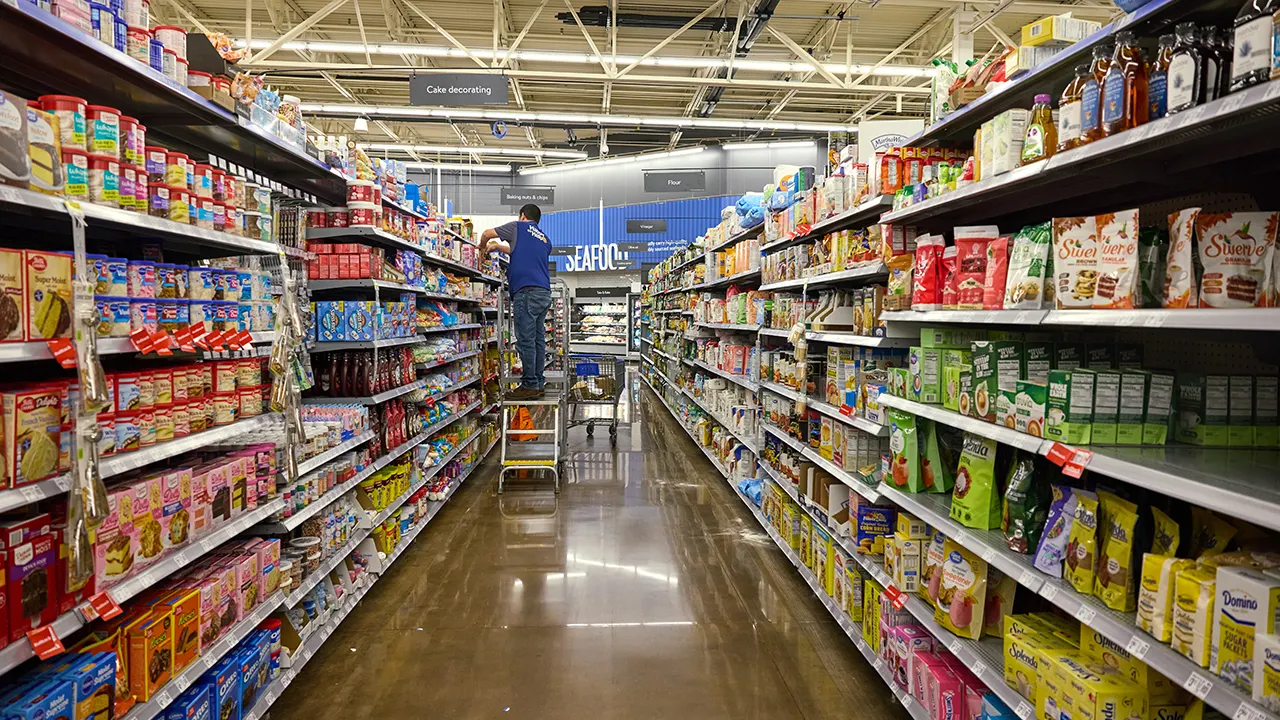
A worker stocks a shelf in a grocery aisle at a Walmart store in Columbus, Ohio. (Brian Kaiser/Bloomberg via Getty Images)
CLICK HERE TO GET FOX BUSINESS ON THE GO
The company has also said it plans to remove synthetic dyes from its private-brand foods by January 2027.
“We believe great design should be accessible to everyone,” David Hartman, vice president of creative at Walmart, said in a statement. “At our scale, that means creating something that works clearly and intuitively across thousands of individual items, so customers can find what matters, faster. We’ve built a system that does exactly that, bringing consistency, clarity, and a sense of discovery to every shelf.”

Check out what’s clicking on FoxBusiness.com.
A Disney World fan account shared video suggesting the Florida theme park has revived its famous “Ladies and gentlemen” greeting, after ditching such phrases for gender-neutral messages years ago.
The fan account, known on X as “Theme Park Cheetah,” shared video purporting to show the return of the greeting.
“It was very nice to hear that ‘Ladies and Gentlemen’ has returned to the Magic Kingdom Express Monorail recently!” the account wrote in a post.
“For context it was removed around 2021 when Disney tried to make the parks more ‘inclusive,’” it added.
DISNEY MOVES AWAY FROM WOKE MESSAGING WITH HEARTFELT VIRAL AD CENTERED ON DADS AND SONS

People visit Walt Disney World at Magic Kingdom as the monorail pulls into the station on Sept. 26, 2023, in Bay Lake, Florida. (Joshua Lott/The Washington Post via Getty Images)
Disney did not immediately respond to FOX Business’ request for comment.
It was reported in 2021 that Walt Disney World in Orlando removed its longtime greeting, “Ladies and gentlemen, boys and girls,” from its Magic Kingdom fireworks show to promote inclusivity. It was replaced with a greeting saying, “Good evening, dreamers of all ages!”
Disney’s diversity and inclusion manager Vivian Ware was heard speaking of such changes in a video conference recorded in March 2022.
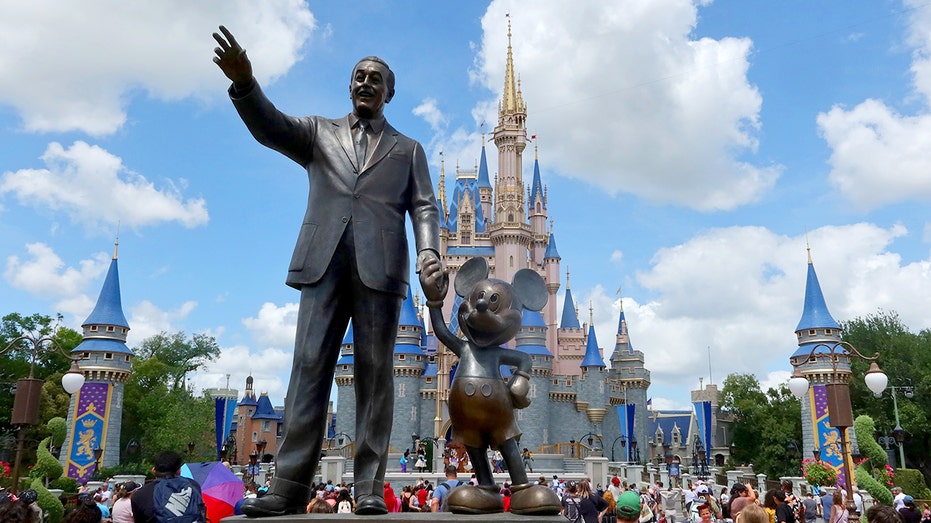
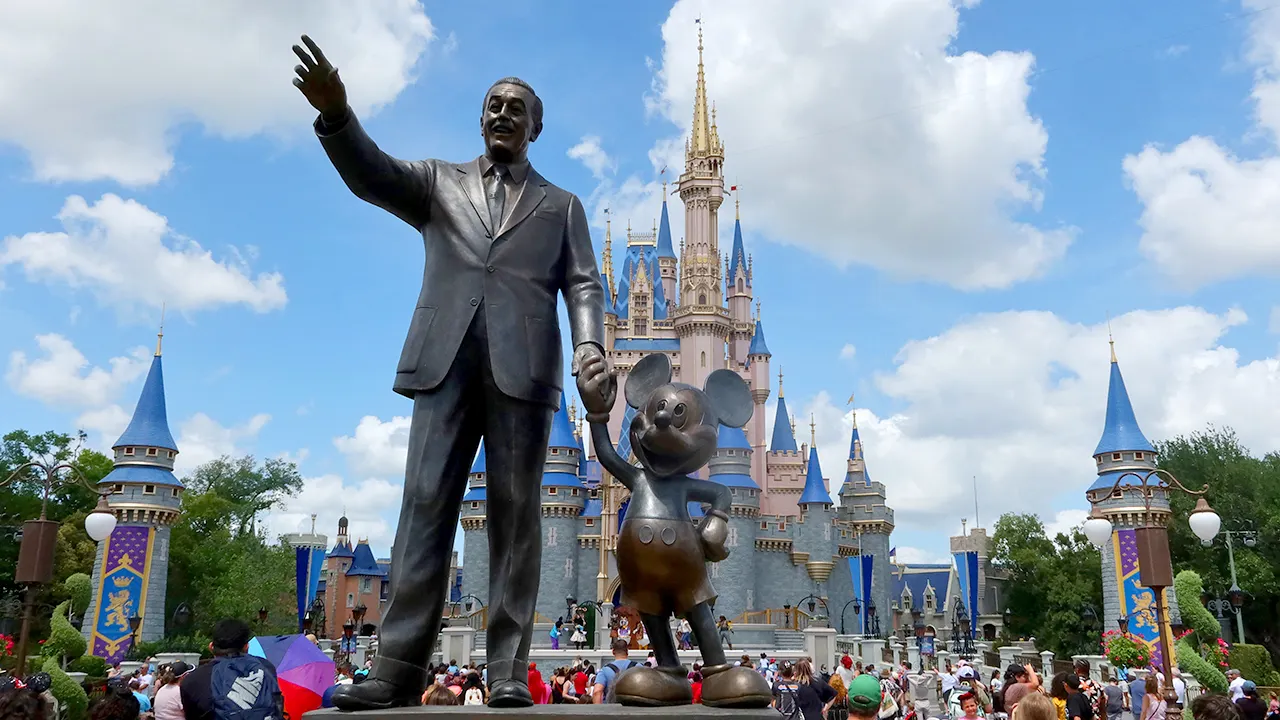
A statue of Walt Disney and Mickey Mouse stands in a garden in front of Cinderella’s Castle at Walt Disney World on April 3, 2025, in Orlando, Florida. (Gary Hershorn/Getty Images)
In April 2021, Disney Parks announced in a statement that it wanted its “guests to see their own backgrounds and traditions reflected in the stories, experiences and products they encounter in their interactions with Disney.”

People depart the monorail station at the entrance to Walt Disney World on April 3, 2025, in Orlando. (Gary Hershorn/Getty Images)
GET FOX BUSINESS ON THE GO BY CLICKING HERE
“That means cultivating an environment where all people feel welcomed and appreciated for their unique life experiences, perspectives and culture,” it said at the time. “Where we celebrate allyship and support for each other. And where diverse views and ideas are sought after as critical contributions towards our collective success.”

She added: “I don’t think people realise exactly how much money it can actually be because £600 was a lot for my sister, but I’ve had mates who spend over a grand on their prom because they hired fancy cars, hired a really lovely suit, they got their hard done.”

The latest surge comes after RailTel was awarded a contract worth Rs 100 crore for the selection of a system integrator to develop and maintain an integrated IT solution for monitoring minor minerals over five years. The project aims to streamline oversight and improve tracking mechanisms within the sector.
Earlier this week, the company announced multiple order wins with a total value of about Rs 608 crore, boosting investor sentiment.
In an exchange filing, RailTel Corporation of India said it has received Letters of Acceptance (LoAs) from Rail Vikas Nigam Limited (RVNL) for two major infrastructure projects involving integrated tunnel communication systems.
The first contract, worth around Rs 309.27 crore, relates to Package 1. It involves the supply, installation, testing, and commissioning (SITC) of integrated communication systems for tunnels T-1 to T-7 and associated stations, covering a 42.7 km stretch.

The second order, valued at approximately Rs 255.27 crore, pertains to Package 2 and covers SITC work for tunnels T-8 to T-11 and four stations, spanning 36 km. The scope includes VHF simplex systems, CCTV, public address systems, and emergency call points.
Both projects are domestic in nature and are scheduled for completion by April 12, 2028.Additionally, RailTel has secured a work order from the Uttar Pradesh Police Recruitment and Promotion Board to provide security-related ancillary services during recruitment examinations. This contract is valued at approximately Rs 43.96 crore.
Also read: HDB Financial Services zooms 12% on strong Q4 results and FY26 dividend
The company clarified that none of these contracts falls under related-party transactions and that there is no promoter group interest in the awarding entities. All three orders were received on April 13, 2026.
Despite the recent rally, RailTel shares are still down 7% so far this year. However, the latest momentum has lifted the stock nearly 30% over the past month.
(Disclaimer: Recommendations, suggestions, views and opinions given by the experts are their own. These do not represent the views of The Economic Times)

BRISBANE, Australia — Harlan Goode, the 18-year-old powerhouse vocalist from Redlands, Queensland, who captured hearts with his soaring ballads and commanding stage presence on Australian Idol 2026, is already charting his next chapter following a heartbreaking runner-up finish in the grand final.
Goode placed second to Kesha Oayda in the nail-biting finale that aired Tuesday night, April 14, after a season defined by his consistent ability to deliver goosebump-inducing performances of classics and contemporary hits. Despite not taking home the title, the young singer-songwriter emerged as one of the competition’s breakout stars, with fans and industry insiders predicting a bright future beyond the Idol spotlight.
“I am beyond grateful for the journey of the past few months on Australian Idol,” Goode posted on Instagram shortly after the result. The message, accompanied by behind-the-scenes photos, reflected his maturity and positive outlook at such a young age. He balanced the competition with finishing Year 12 exams earlier in the season, juggling school vice-captain duties with late-night rehearsals and live shows.
The grand final saw Goode deliver memorable renditions, including a powerful take on ABBA’s “The Winner Takes It All” that echoed his audition piece and drew standing ovations from judges. In the top-two showdown, he faced off against eventual winner Oayda in a high-stakes battle that kept viewers glued to their screens. More than a million votes poured in, with many fans expressing disappointment online that Goode did not claim the crown, calling him the “true winner” in spirit for his emotional depth and vocal control.
Goode’s path on the show was marked by rapid progression. He earned a golden ticket with his audition, advanced through the Top 30 and Top 12, and consistently raised the bar in themes ranging from ballads to high-energy anthems. Judges praised his “powerhouse vocals” and ability to connect with audiences, while guest mentor Josh Groban offered advice that Goode later described as transformative. “He’s a genuinely beautiful human being,” Goode told Now To Love, highlighting how the interaction boosted his confidence heading into the finale.
Even before the final, Goode shared ambitious post-show plans in interviews with New Idea and other outlets. He spoke of recording two original songs he had written within the first two weeks after the competition wrapped. “I’m hoping to smash out two songs I have written,” he said, emphasizing his drive to transition from contestant to professional artist. He also mentioned plans to perform at a couple of festivals and host shows in his hometown of Redlands, where community support has been overwhelming.
That local backing has been palpable. Redlands residents and Brisbane’s bayside community rallied around their hometown hero, with special messages of encouragement from music figures like multi-award-winning artist and conductor Jonathon Welch. Social media flooded with congratulations and messages of pride, positioning Goode as a symbol of Queensland talent on the national stage.
Now, with the Idol spotlight dimming, the focus shifts to what’s next for the teenager. Insiders suggest Goode is well-positioned for a music career launch. The runner-up prize package still offers valuable exposure, including potential recording opportunities, though the winner receives the full $100,000 cash prize, a recording package with Hive Sound Studios, a songwriting camp with Sony Music Publishing, marketing support from The Annex, and VIP tickets to major events like the ARIA Awards and TV WEEK Logie Awards.
Goode has already built a strong online presence. His Instagram account @harlan.goode showcases performance clips that continue to garner thousands of views and supportive comments. Fans frequently note his ballad prowess, comparing him to established artists who excel in emotional delivery. A dedicated website, harlangoode.com, serves as a hub for his content and social feeds, signaling early professional infrastructure.
Music industry observers point to recent Australian Idol alumni who parlayed strong showings into sustained careers. While winners often secure immediate recording deals, runners-up frequently benefit from fan loyalty and use the platform to release independent music or sign with labels seeking fresh talent. Goode’s blend of raw talent, work ethic and relatability — finishing high school while competing — has endeared him to a broad demographic.
In exclusive comments before the finale, Goode revealed his ambition had grown significantly during the competition. “I’ve always been driven and always had these massive dreams but now I feel in control of my future,” he said. That sense of agency is likely to drive his immediate steps: prioritizing songwriting, studio time and live performances to build momentum while the show’s visibility remains high.
Potential next moves include independent single releases, leveraging the songwriting camp access if extended through runner-up perks, and targeted festival appearances. Hometown shows in Redlands could serve as warm-up gigs, allowing him to connect directly with supporters who voted relentlessly. Longer-term, a move toward original material rather than covers will be key to establishing his artistic identity.
Goode’s vocal style — powerful yet nuanced, capable of tackling everything from ABBA to Journey’s “Don’t Stop Believin’” — suggests versatility that could appeal to pop, rock and adult contemporary audiences. His youth also positions him for crossover potential in international markets if early releases gain traction on streaming platforms.
The Australian Idol 2026 season itself generated significant buzz, with the grand final dividing some viewers who felt Goode deserved the win for his consistency and star quality. Social media reactions ranged from heartbreak for the runner-up to celebration of Oayda’s historic victory as the first female winner since 2007. Yet even critics of the result acknowledged Goode’s impact, with comments like “a star is born — and this is only the beginning” reflecting widespread sentiment.
For Goode personally, the experience has been life-changing. Balancing academics with the intense schedule of live television performances demonstrated discipline beyond his years. Friends and family have described him as humble and focused, traits that will serve him well in the competitive music industry.
Looking ahead, the coming months will be critical. Releasing original music quickly could capitalize on post-show momentum, while building a touring presence might solidify his fan base. Collaborations with established songwriters or producers could accelerate development, and any label interest sparked by his Idol run would open doors to professional management and marketing resources.
Goode has hinted at keeping his head down and continuing to work hard regardless of the outcome. That mindset echoes advice from mentors throughout the competition and positions him for sustainable success rather than fleeting fame.
As Australian music continues to produce global stars, Harlan Goode represents the next wave of homegrown talent. From school halls in Redlands to national television stages, his journey has been one of steady growth and undeniable vocal gifts. While the Idol crown went to another, the runner-up’s path forward appears filled with opportunity.
Industry watchers will be monitoring his first post-Idol releases closely. If early singles showcase the songwriting he teased, Goode could quickly transition from reality TV standout to charting artist. Festivals and regional tours offer platforms to hone his live show, while social media engagement keeps fans invested.
For now, the 18-year-old is soaking in the support and planning his next moves with the same determination that carried him through Idol’s eliminations. “Keep the ball rolling and keep working,” he said — words that encapsulate his approach as he steps into the professional music world.
Harlan Goode may not have won Australian Idol 2026, but his powerful performances and clear vision for the future suggest the real competition is just beginning. Australia’s music scene could soon welcome a fresh voice with the talent and drive to make a lasting impression.

Prime Minister Anthony Albanese has revealed his visits to Brunei and South Korea have secured 100 million litres of additional diesel for Australia.

Check out what’s clicking on FoxBusiness.com.
Honda is recalling a massive fleet of 440,830 Odyssey minivans over a potentially serious airbag malfunction, following reports of dozens of injuries, federal regulators announced.
In a notice dated April 9, the automaker warned that a software programming flaw could trigger the side airbags to deploy unexpectedly from relatively minor road impacts, including “driving over potholes, speed bumps, or road debris.”
“Air bags that deploy unexpectedly can increase the risk of injury,” the National Highway Traffic Safety Administration (NHTSA) said.
Regulators said the affected vehicles include 2018–2022 models manufactured between Jan. 24, 2017, and June 3, 2022.
MERCEDES-BENZ RECALLS OVER 24,000 VEHICLES DUE TO DRIVE SHAFT DEFECT THAT COULD CAUSE SUDDEN FAILURE

Roughly 400,000 Honda Odyssey vehicles are being recalled over airbag concerns. (May Tse/South China Morning Post / Getty Images)
The issue was reportedly corrected in the production process thereafter, clearing subsequent model years from the recall.
To address the defect, authorized dealers will reprogram or replace the electrical units at no cost to vehicle owners.
As of April 2, Honda has recorded 130 warranty claims and 25 reported injuries linked to the issue. No fatalities have been reported yet, according to NHTSA.
A Honda Odyssey is offered for sale at O’Hare Honda on March 16, 2010, in Des Plaines, Illinois. (Scott Olson / Getty Images)
In a stark warning, safety regulators also noted that Honda may have been aware of the defect days before formally reporting it, adding that the delay could raise concerns under federal laws governing the timely disclosure of safety issues.
“The information in your report suggests that Honda (American Honda Motor Co.) may have been aware of this issue more than five business days before filing a report with NHTSA,” the agency said.
“Please be reminded that under Federal law, this agency is to be notified of all safety defect and/or noncompliance decisions within five business days…. Significant civil penalties can be assessed for this violation.”
| Ticker | Security | Last | Change | Change % |
|---|---|---|---|---|
| HMC | HONDA MOTOR CO. LTD. | 24.26 | +0.10 | +0.41% |
BISSELL STEAMERS RECALLED IN RESPONSE TO DOZENS OF ‘SERIOUS’ BURN INJURIES
Official notification letters are scheduled for distribution in late May 2026.
A stop-sale order has also been issued for impacted units currently in dealership inventories.
Customers with further questions can contact Honda’s customer service line at 1-888-234-2138.
A flag with the Honda logo is displayed on a brand new Honda car at Marin Honda on Dec. 2, 2011, in San Rafael, California. (Justin Sullivan / Getty Images)
Drivers can also check whether their car has been impacted by searching for their model number on NHTSA.gov.
FOX Business reached out to Honda for more information.
NEW YORK — Meta Platforms Inc. has officially ended support for the standalone Facebook Messenger desktop experience, with messenger.com no longer available for messaging as of April 2026 and users now automatically redirected to the integrated Facebook messaging interface at facebook.com/messages.
The change, which took effect this month, marks the final step in Meta’s consolidation of its messaging services. The company had already discontinued the native Messenger desktop apps for Windows and Mac in December 2025. Now, the dedicated web version joins them in retirement, forcing desktop users to access chats through the main Facebook website.
Here are the five essential things every user needs to know about this latest update:
First, messenger.com is gone for messaging purposes. Starting in April 2026, anyone visiting the old site is automatically redirected to facebook.com/messages. All conversations, media, group chats and call history sync seamlessly because the underlying data remains the same. Users do not lose access to their messages, but the clean, distraction-free interface of the old standalone site has disappeared. The redirect works in any modern browser, though some report slightly slower initial loading as the full Facebook page renders.
Second, the Messenger desktop apps for Windows and Mac are also retired. Meta removed them from official stores last year and stopped supporting them entirely. Anyone who still had the apps installed found them directing users to the web version even before the April cutoff. There is no plan to bring back native desktop applications. Meta’s stated goal is to reduce maintenance costs across fragmented platforms and focus engineering resources on mobile apps and core Facebook integration.
Third, users who accessed Messenger without a linked Facebook account face the biggest disruption. Previously, messenger.com allowed sign-in with just a phone number or Messenger-specific credentials. That option no longer works on desktop. These users must switch to the iOS or Android mobile app to continue chatting. Meta recommends setting up a PIN code in advance to restore chat history easily across devices. Without a PIN, some history may require additional verification steps.
Fourth, core features remain fully available through facebook.com/messages. Users can still send texts, voice messages, photos, videos, GIFs, stickers, react to messages, make voice and video calls, create group chats, use disappearing messages and access end-to-end encrypted Secret Conversations. The interface now sits inside the broader Facebook environment, so users see their news feed, notifications and other Facebook elements alongside messaging. Many report the experience feels more cluttered than the old dedicated site, but functionality is unchanged for day-to-day use.
Fifth, mobile apps continue operating normally with no changes. The Messenger apps on iOS and Android remain the primary recommended way to chat for millions of users. They receive regular updates with new features such as improved AI replies, better HD photo and video sharing, and enhanced privacy controls. Desktop users who prefer a larger screen can simply keep a browser tab open to facebook.com/messages or use the mobile app side-by-side on a second monitor.
The decision reflects Meta’s broader strategy of streamlining its product portfolio. Messenger launched as a standalone app in 2011 and grew into its own web and desktop presence over the following decade. By 2014 it had split from Facebook’s main interface, allowing users to message without opening the social network. That separation ended gradually. In recent years Meta has pushed harder toward unification across Facebook, Instagram and WhatsApp while reducing overhead on less-used platforms.
Company executives have not issued a detailed public statement beyond the official help page, but the move aligns with cost-cutting efforts as Meta invests heavily in artificial intelligence, the metaverse and advertising infrastructure. Maintaining separate codebases for messenger.com and the desktop apps required ongoing resources that the company decided were no longer justified given the dominance of mobile usage.
User reaction has been mixed. On Reddit and tech forums, many expressed frustration at losing the minimalist messenger.com experience, especially those who used it for work or to separate messaging from their personal Facebook feeds. Others welcomed the simplification, noting they already messaged primarily through the Facebook website or mobile app. Some power users are exploring browser extensions or third-party clients, though Meta warns that unofficial tools may violate terms of service and risk account restrictions.
For businesses and developers using the Messenger Platform API, the change has minimal immediate impact. The API itself continues to function for chatbots, customer support and automated messaging. However, any tools or integrations that specifically targeted messenger.com URLs may need updating to point to the Facebook messaging endpoint.
Security and privacy features carry over to the new setup. End-to-end encryption remains available for one-on-one and group chats when enabled. Users can still control who can message them, block contacts and report abuse through the same tools now located within the Facebook interface.
To make the transition smoother, Meta suggests the following steps: update bookmarks from messenger.com to facebook.com/messages, log in with a Facebook account where possible for full desktop functionality, set or reset a Messenger PIN for easy chat restoration on mobile, and familiarize yourself with the layout of messages inside Facebook. Those who rarely use desktop can simply rely on their phones going forward.
The shutdown has sparked wider conversations about platform fragmentation and user experience. While mobile remains the dominant way people communicate, a significant minority still preferred dedicated desktop interfaces for longer sessions or multitasking. Meta’s move prioritizes simplicity and cost efficiency over that preference.
As of mid-April 2026, the vast majority of users appear to have adapted. Redirects function reliably, and chat continuity is high. Any lingering complaints on social media tend to focus on the loss of a cleaner interface rather than broken functionality. Meta continues monitoring feedback but has given no indication it will reverse the decision or restore the old web version.
For those still adjusting, the help center at Facebook offers guides for restoring chats, managing notifications and troubleshooting redirect issues. Clearing browser cache or trying an incognito window can resolve occasional loading glitches during the early days of the change.
This latest update is part of a longer trend. Meta has steadily reduced standalone products across its family of apps, encouraging users to stay within the main ecosystems where advertising and data integration are easier to manage. Similar consolidations have occurred with Instagram features and WhatsApp web enhancements.
Looking ahead, further integration across Meta’s platforms seems likely. Features such as shared inboxes or unified notifications could appear in future updates. For now, the message to users is clear: desktop messaging lives on, but only inside Facebook.
The change affects hundreds of millions of occasional desktop users, yet the core promise of Messenger — connecting people quickly and reliably — remains intact. Conversations continue without interruption, just in a new digital home. As Meta focuses on its vision of seamless social communication, the retirement of messenger.com represents another chapter in the evolution of one of the world’s most-used messaging services.
Users who relied heavily on the old desktop experience may need time to adjust habits, but the transition ultimately reinforces Meta’s bet on mobile-first usage combined with convenient web access through its flagship social network. Whether the unified approach improves or frustrates daily workflows will vary by individual, but the direction is set: Facebook messaging now serves as the central desktop hub for what was once a fully independent Messenger ecosystem.

Singapore’s tax advantage depends on incentives. The 15% global minimum tax mandates a top-up for low-tax profits, affecting multinational groups with significant revenues starting January 2025.
Singapore’s Value Proposition and the Global Minimum Tax
Historically, Singapore’s attractiveness to multinational companies relied on its ability to offer low effective tax rates through incentive schemes and centralized regional operations. However, the implementation of the 15% global minimum tax under the GloBE framework, effective from January 2025, introduces a new dimension to tax assessments. This change impacts how multinationals’ tax outcomes are calculated, emphasizing jurisdictional effective tax rates over statutory rates.
Applicability and Calculation of the Global Minimum Tax
This global minimum tax targets multinational groups with annual consolidated revenues of at least €750 million over two of the last four years. Exposure is determined based on the jurisdictional effective tax rate, which uses GloBE definitions of income and taxes. If a Singapore operation’s effective tax rate falls below 15% after incentives and deductions, it becomes subject to a top-up tax, regardless of compliance with local tax laws.
Impact on Multinational Operations in Singapore
When a Singapore entity’s jurisdictional effective tax rate is beneath 15%, the top-up tax equates to the shortfall between the actual and minimum rates. For example, an $8 million tax on $100 million profit at 8% incurs a $7 million top-up obligation. To address this, Singapore has introduced a Domestic Top-Up Tax (DTT) for local profits and a Multinational Enterprise Top-Up Tax (MTT) applying the Income Inclusion Rule, ensuring that low-taxed foreign income is appropriately taxed within the group.
Read the original article : Adapting to Singapore’s 15% Global Minimum Tax as a Multinational
Other People are Reading
Business
Tesla Stock Jumps 4% on Robotaxi Buzz as Q1 Deliveries Miss but Cybercab Production Ramps in 2026
NEW YORK — Tesla Inc. shares surged more than 4 percent in morning trading Wednesday, trading near $379 as investors bet on accelerating progress toward robotaxi deployment and artificial intelligence initiatives despite a modest miss on first-quarter vehicle deliveries.
At approximately 10:55 a.m. EDT on April 15, 2026, TSLA stock had risen $15.28, or 4.20 percent, from Tuesday’s close of $364.20. The electric vehicle maker’s market capitalization stood around $1.37 trillion, with shares fluctuating in a 52-week range of roughly $222.79 to $498.83. Year-to-date in 2026 the stock is up about 15 percent but trails the broader market’s gains amid persistent questions over near-term growth.
The rally followed fresh sightings of dozens of Cybercab robotaxis at Giga Texas and optimism around Full Self-Driving software updates, even as the company delivered 358,023 vehicles in the first quarter — below Wall Street expectations of about 365,000 to 370,000. Production reached 408,386 vehicles, creating an inventory buildup of more than 50,000 units.
Model 3 and Model Y accounted for the bulk of output and deliveries, with 341,893 units handed over to customers. Other models, including Cybertruck, delivered 16,130 vehicles. Energy storage deployments hit 8.8 gigawatt-hours, continuing strong growth in Tesla’s battery business, which some analysts now view as the company’s most reliable near-term growth engine.
Tesla is scheduled to report full first-quarter financial results after the market close on April 22. Analysts will scrutinize margins, which have faced pressure from price cuts and competition, along with any updates on capital spending projected to exceed $20 billion this year to fund AI infrastructure and new product ramps.
Wall Street’s view on Tesla remains divided. Across roughly 40 analysts, the consensus rating is Hold, with an average 12-month price target near $395 to $402, implying modest upside of about 5 to 8 percent from current levels. Bullish targets reach as high as $600 from firms like Wedbush, while bearish calls dip to $25 from GLJ Research, reflecting deep skepticism over valuation.
Bulls highlight Tesla’s pivot toward autonomy and robotics. Production of the steering-wheel-free Cybercab is ramping at Giga Texas, with initial low-volume output underway and expectations for higher volumes later in 2026. Elon Musk has signaled that unsupervised Full Self-Driving could enable widespread robotaxi service across U.S. cities by year-end, potentially transforming Tesla from an automaker into a high-margin technology platform.
Recent FSD version 14.3 updates have shown improved reaction times and behavior, while Tesla continues expanding supervised autonomy approvals internationally, including in Europe. Optimus humanoid robot development is also advancing, with low-volume production of Optimus Gen 3 slated for later this year and high-volume output targeted for 2027 or beyond.
Energy storage and solar ambitions add another growth layer. Tesla deployed record battery volumes in 2025, and Musk has outlined aggressive plans to scale U.S. solar manufacturing toward 100 gigawatts annually. The Megapack business has delivered consistent revenue growth even as automotive sales faced headwinds from softening EV demand and intense Chinese competition.
Yet challenges persist. Global vehicle deliveries fell in 2025 compared with the prior year, and first-quarter 2026 numbers showed only slight year-over-year improvement. Inventory accumulation raises questions about pricing strategy and demand, particularly for higher-priced models. Regulatory hurdles for unsupervised robotaxis remain significant, and capital expenditures are expected to pressure free cash flow into negative territory this year.
Competition is intensifying on multiple fronts. Traditional automakers and startups are accelerating autonomous vehicle programs, while lower-cost EVs from Chinese manufacturers continue eroding margins in key markets. Tesla’s premium positioning has helped in some regions, with record sales reported in Germany recently, but overall growth has slowed from the explosive rates of earlier years.
The stock’s valuation reflects these tensions. Trading at a trailing price-to-earnings multiple above 300, Tesla commands a premium that assumes successful execution on futuristic bets rather than current auto sales. Forward estimates for 2026 earnings per share hover around $2 to $3 in some models, with revenue projections varying widely depending on robotaxi adoption timelines.
Retail investors and high-profile holders like Cathie Wood’s ARK Invest have continued buying dips, viewing any weakness as an entry point into what they see as the defining AI and robotics story of the decade. Institutional ownership remains elevated, though some funds have trimmed positions amid volatility.
Musk’s leadership continues to drive both enthusiasm and scrutiny. The CEO has repeatedly emphasized that 2026 will mark a pivotal year for Cybercab production, Optimus scaling and broader robotaxi rollout. He has also pushed for massive investments in AI training compute and energy infrastructure to support these ambitions.
For investors debating buy or sell decisions in 2026, the calculus depends on time horizon and conviction in Tesla’s non-auto businesses. Short-term traders may focus on the April 22 earnings reaction, FSD software milestones and any Cybercab production updates. Longer-term holders are betting that software licensing, robotaxi networks and humanoid robots could eventually dwarf today’s vehicle revenue.
Bears warn that delays in autonomy have been a recurring theme, and that current multiples leave little room for execution shortfalls. If robotaxi rollout disappoints or competition erodes EV market share further, the stock could face renewed pressure toward the lower end of its range.
Tesla pays no dividend, channeling resources into growth and share-based compensation. Its cash position and access to capital markets provide flexibility, but rising capex and potential negative free cash flow will test balance sheet strength.
As spring advances, attention will turn to summer production ramps, potential cheaper EV model details and international regulatory progress for FSD. Broader economic factors, including interest rates, consumer spending and geopolitical tensions affecting supply chains, could also influence sentiment.
At current levels near $379, Tesla embodies one of the market’s most polarizing names — a legacy EV leader transitioning into an AI and robotics powerhouse. Bulls see asymmetric upside if Musk’s vision materializes, while skeptics view it as richly valued with substantial downside risk.
The coming months will provide critical data points. Strong energy storage results, smoother Cybercab manufacturing and tangible FSD advancements could sustain momentum. Any signs of slowing demand or autonomy delays might trigger volatility reminiscent of past cycles.
Tesla has defied gravity before, rewarding patient believers through multiple growth chapters. Whether 2026 becomes the breakout year for robotaxis and Optimus — or another period of promise versus delivery — will shape shareholder returns for years to come.
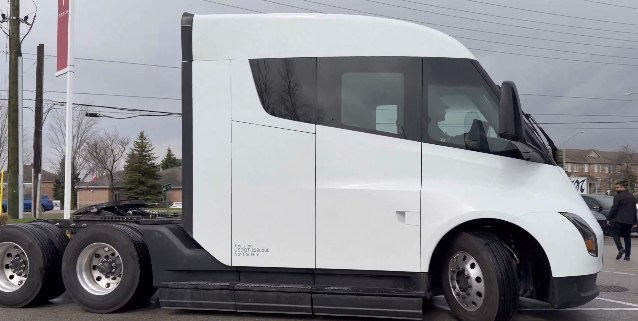
AUSTIN, Texas — Elon Musk reignited excitement around Tesla Inc.’s long-awaited electric semi-truck Wednesday with a simple two-word post on X that quickly racked up millions of views, spotlighting the production-version Tesla Semi as the company prepares for customer deliveries later this year.

Musk’s post, which quoted a detailed video and spec sheet, read simply “Tesla Semi” and featured the distinctive low hum of the all-electric Class 8 truck accelerating under load. The clip and accompanying facts — 500 miles of range with a full payload, 1.7 kilowatt-hours per mile efficiency and a tri-motor powertrain delivering roughly 1,073 horsepower — spread rapidly, drawing more than 13.7 million views within hours.
The timing could hardly be better for Tesla. Less than 24 hours earlier the company’s shares had jumped more than 4 percent in morning trading amid broader optimism about autonomy and new product ramps. At around $379 midday Wednesday, TSLA stock reflected renewed investor interest in Tesla’s push beyond passenger vehicles into heavy-duty trucking, energy storage and robotics.
Tesla’s official website now prominently displays “Deliveries Start in 2026” for the Semi, confirming what Musk first signaled in February when he declared high-volume production would begin this year at Gigafactory Nevada. The refreshed design, which received a facelift in late 2025, comes in two variants: a Standard Range model with 325 miles of range and a Long Range version capable of 500 miles, both rated for an 82,000-pound gross combination weight.
Efficiency stands out as the headline advantage. Tesla claims 1.7 kWh per mile even at full load — roughly one-third the energy equivalent of conventional diesel semis, which typically consume 5 to 7 kWh per mile. The Long Range model’s battery, built with the same 4680 cells used in the Cybertruck, is engineered for 1 million miles of service life. Curb weight for the Long Range stays relatively light at about 23,000 pounds, preserving payload capacity that fleets demand.
Power comes from three independent motors on the rear axles producing up to 800 kilowatts. Acceleration is brisk for a loaded 80,000-pound rig, and the truck can recover up to 60 percent of its range in 30 minutes on Tesla’s upcoming Semi Chargers capable of 1.2 megawatts. Future wireless charging and electric power take-off for refrigerated trailers or other powered equipment borrow technology from the Cybertruck’s Powershare system.
The buzz on X reflected both enthusiasm and skepticism. Replies poured in praising the near-silent operation and questioning everything from charging infrastructure to safety under autopilot. One user asked about the low ground clearance on the sides; another wondered about battery weight penalties. Fleet operators highlighted the 95 percent uptime reported in early pilot programs, while independent truckers noted they will finally be able to purchase Semis rather than relying solely on corporate fleets.
Tesla has already placed limited production units with early customers including PepsiCo and DHL for real-world testing. Those pilots helped refine the design and proved the Semi’s reliability in daily operations. High-volume output, however, marks the true inflection point. Analysts forecast initial deliveries of 5,000 to 15,000 units in 2026, with capacity eventually scaling toward 50,000 annually at the Nevada facility.
For the $800 billion U.S. trucking industry, the stakes are enormous. Diesel fuel costs dominate operating expenses, and Tesla’s projected 17-cents-per-mile electricity equivalent undercuts diesel by 50 to 70 percent depending on route and rates. Lower maintenance — no oil changes, fewer brake jobs thanks to regenerative braking — and the ability to power ancillary equipment directly from the battery add further savings. Tesla projects total cost of ownership advantages that could accelerate adoption even among cost-conscious owner-operators.
Environmental impact could be significant. Each Semi displaces roughly 1,000 tons of carbon dioxide annually compared with a diesel counterpart. Scaled across thousands of units, the truck could help fleets meet tightening emissions regulations in California, the European Union and elsewhere. Tesla is also positioning the Semi for megawatt charging compatibility under the MCS 3.2 standard, easing integration with public and private infrastructure.
Challenges remain. Charging infrastructure for heavy-duty vehicles is still sparse outside major corridors. A full recharge at megawatt speeds requires robust grid connections that many truck stops lack today. Tesla plans to expand its Semi Charger network, but deployment will take time. Battery weight, while managed better than earlier prototypes, still affects payload on the longest routes. And regulatory approval for hands-off autonomy features on commercial trucks lags passenger-vehicle progress.
Wall Street analysts are cautiously optimistic. The Semi represents a new revenue stream that could diversify Tesla beyond the volatile passenger EV market. Some models project the truck contributing low-single-digit percentage points to overall revenue by 2027 if production hits targets. Yet execution risk is high; Tesla has delayed the Semi multiple times since its 2017 unveiling. Margin pressure from initial low-volume builds and competition from rivals such as Daimler, Volvo and emerging electric-truck startups could temper near-term profits.
Musk has repeatedly framed 2026 as a pivotal year for Tesla’s non-automotive bets. Alongside the Semi, the company is scaling energy storage deployments, advancing Full Self-Driving software and preparing Cybercab robotaxi production. The Semi’s success would validate the company’s battery and powertrain technology across weight classes and duty cycles.
Investors appear to be pricing in that optionality. Tesla’s market value hovers near $1.37 trillion, with forward-looking models assigning meaningful value to trucking, energy and autonomy. Short-term traders will watch for any Semi-specific updates in the April 22 first-quarter earnings call, while longer-term holders focus on production milestones and fleet orders.
The broader trucking community is watching closely. Independent drivers have expressed interest in the lower operating costs and modern cabin features, including improved visibility and comfort from the redesigned cab. Fleet managers cite the Semi’s integrated safety systems — automatic emergency braking, lane-keeping and collision avoidance — as potential reducers of insurance premiums and accident rates.
Skeptics point to real-world variables: mountain grades, extreme weather and the need for reliable high-speed charging along the Interstate system. Tesla counters that pilot data already shows strong performance, and software updates can continuously improve efficiency and range.
As spring advances, Tesla is expected to ramp prototype testing and supplier qualifications in Nevada. First customer handovers could begin as early as summer, with volume increasing through the second half of the year. Musk’s tweet served as both reminder and rallying cry: after nearly a decade of promises, the electric semi is finally moving from prototype to production reality.
For Tesla, the Semi is more than a truck. It is proof that the company’s core technologies — 4680 cells, efficient power electronics and over-the-air updates — can conquer the most demanding commercial applications. Success here would bolster the narrative that Tesla is not just an automaker but a vertically integrated energy and transportation platform.
Whether the market rewards that vision depends on execution. Charging networks must expand, costs must come down and fleets must commit capital in an uncertain economic environment. Yet the viral reaction to Musk’s post Wednesday suggests the appetite is there. The sound of the Tesla Semi — quiet, powerful and unmistakably electric — may soon become a familiar rumble along American highways.
Industry watchers will track weekly production updates, early customer feedback and any announcements about pricing or reservation volumes. At current momentum, 2026 could mark the year the electric semi transitions from curiosity to commonplace. For Musk and Tesla, that shift would represent another milestone in the long road from startup to transportation giant.

Floyd Mayweather finally speaks out on Pacquiao rematch terms as deadline passes

Musical Fidelity Introduces M6xi Integrated Amplifier With HDMI ARC

Cult anime Akira returns to big screen at Vue Darlington


-

 Politics5 days ago
US brings back mandatory military draft registration
-
 Sports6 days ago
Man United discover Nico Schlotterbeck transfer fee as defender reaches Dortmund agreement
-

 Fashion6 days ago
Weekend Open Thread: Veronica Beard
-

 Politics6 days ago
Malcolm In The Middle OG Turned Down ‘Buckets Of Money’ To Appear In Reboot
-

 Politics4 days ago
World Cup exit makes Italy enter crisis mode
-

 Crypto World7 days ago
Canary Capital Files SEC Registration for PEPE ETF
-

 Business5 days ago
Tesla Model Y Tops China Auto Sales in March 2026 With 39,827 Registrations, Beating Cheaper EVs and Gas Cars
-

 Crypto World2 days ago
The SEC Conditionalises DeFi Platforms to Be Avoided for Broker Registration
-

 Crypto World2 days ago
SEC Signals Exemption for Crypto Interfaces From Broker Registration
-

 News Videos22 hours ago
Secure crypto trading starts with an FIU-registered
-
 NewsBeat3 days ago
Pep Guardiola and Gary Neville agree over Arsenal title problem that benefits Man City
-

 Business6 days ago
OpenAI Halts Stargate UK Data Centre Project Over Energy Costs and Copyright Row
-

 Business5 days ago
Ireland Fuel Protests Enter Day 5 as Blockades Spark Shortages and Government Prepares Support Package
-

 Crypto World5 days ago
Federal judge blocks Arizona from bringing criminal charges against Kalshi
-

 Politics6 days ago
LBC Presenter Mocks Trump Over Iran War Failures
-
 NewsBeat4 days ago
JD Vance announces ‘no agreement’ with Iran over nuclear weapons fear
-

 Crypto World2 days ago
SEC Proposes Certain Crypto Interfaces Don’t Need to Register as Brokers
-

 NewsBeat2 days ago
Trump and Pope Leo: Behind their disagreement over Iran war
-

 Tech6 days ago
A version of Windows 10 released a decade ago is now eligible for additional security patches
-

 Business5 days ago
IMF retains floor for precautionary balances at SDR 20 billion
You must be logged in to post a comment Login