FREMONT, Calif. — Aehr Test Systems shares surged more than 16 percent Thursday as the semiconductor test equipment maker announced a record $41 million follow-on production order from its lead hyperscale customer for package-level burn-in of custom artificial intelligence processor ASICs.
Aehr Test Systems
The stock was quoted at $85.64, up 16.96 percent or $12.42, in morning trading on April 16. Volume was heavy as investors cheered the latest evidence of booming demand tied to the AI infrastructure buildout. The move pushed shares well above the previous session’s close near $73 and toward fresh highs after the company has already skyrocketed more than 200 percent year to date in 2026.
Aehr Test Systems, a specialist in test and burn-in solutions for semiconductors used in AI, data centers, automotive and industrial applications, said the new order underscores confidence from one of the world’s largest cloud and AI operators. Deliveries are scheduled to begin in fiscal 2027, starting June 27, 2026. The announcement pushed second-half fiscal 2026 bookings above $92 million with six weeks still left in the fourth quarter and a robust pipeline of additional orders anticipated.
“This $41 million follow-on order from our lead hyperscale package-level burn-in customer brings our bookings in the second half of our fiscal year to more than $92 million to date,” said Gayn Erickson, president and chief executive officer of Aehr Test Systems. “We continue to see strong demand for our solutions across both wafer-level and package-level burn-in applications driven by AI and data center infrastructure needs.”
The news caps a remarkable run for the small-cap company. Shares began 2026 trading near $20, climbed steadily through March, then accelerated sharply after a series of positive developments including strong quarterly bookings and new customer wins in silicon photonics. By early April the stock had more than doubled from late March levels, briefly touching above $74 before pulling back slightly and now exploding higher again on today’s order.
Advertisement
Just last week, following fiscal third-quarter results for the period ended Feb. 27, 2026, shares jumped more than 25 percent in a single session despite mixed financial numbers. Revenue came in at $10.3 million, down 44 percent from the year-ago quarter, and the company posted an adjusted loss of 5 cents per share. However, bookings reached a robust $37.2 million, producing a book-to-bill ratio above 3.5 times and lifting the effective backlog to a record $50.9 million.
Management used the April 7 earnings release to raise expectations, targeting the high end of its prior fiscal 2026 revenue guidance of $45 million to $50 million. The company also signaled a return to adjusted profitability in the current quarter and maintained optimism for the second half, which is now heavily backloaded with the latest hyperscale order.
Aehr’s technology plays a critical role in ensuring the reliability of advanced semiconductors before they reach data centers or AI training clusters. Its FOX family of systems supports wafer-level burn-in, while package-level solutions handle high-power AI processors that generate significant heat and require rigorous testing to meet stringent quality standards demanded by hyperscalers.
Demand for such equipment has intensified as major tech companies pour billions into AI infrastructure. Custom ASICs designed specifically for AI workloads require specialized burn-in processes that Aehr’s platforms are well-positioned to deliver at scale. The latest order represents the largest single production commitment in the company’s history for package-level burn-in systems.
Advertisement
Analysts have taken notice of the momentum. Several firms have raised price targets in recent weeks, though consensus figures still trail the current share price after the explosive rally. One recent adjustment lifted a target to $61, citing strong bookings and long-term AI tailwinds. Broader Wall Street coverage remains generally positive, with many highlighting Aehr’s niche leadership in high-power test solutions even as some caution about valuation after the rapid run-up.
The company has also expanded its addressable market through silicon photonics applications. In March, Aehr announced a major new customer win for its high-power FOX-XP wafer-level burn-in system. The client, described as a global leader in networking products and a key supplier to the data center optical transceiver market, is developing next-generation optical interconnects essential for efficient AI cluster scaling. That deal, along with follow-on orders for similar technology, has further fueled investor enthusiasm.
Aehr’s shift toward AI-related revenue has transformed its growth profile. While automotive and industrial segments remain part of the business, the hyperscale AI and data center opportunities now dominate the narrative. Executives have highlighted that burn-in requirements for AI processors are more demanding than traditional chips, creating a structural tailwind for specialized test equipment providers.
Challenges persist, however. Quarterly revenue has been lumpy as large orders shift between periods, and the company reported a year-over-year sales decline in the fiscal third quarter amid a transitional period. Operating expenses remain elevated as Aehr invests in scaling production capacity to meet anticipated demand. The firm also maintains an at-the-market equity program that could provide additional capital but carries potential dilution risk for shareholders.
Advertisement
Looking ahead, investors will watch for updates on the conversion of backlog into shipments and any incremental order announcements. The company expects significant follow-on production activity from its lead hyperscale customer and continues to engage with other potential clients in the AI ecosystem. Second-half fiscal 2026, ending May 29, now appears poised for substantial revenue recognition from the accumulated bookings.
Broader market context has also supported the rally. Optimism around AI spending has lifted many semiconductor and infrastructure-related stocks, even as macroeconomic uncertainties linger. Aehr’s performance stands out, however, placing it among the top performers in the Russell 3000 Index for 2026 with gains exceeding 200 percent through mid-April.
For customers, Aehr’s solutions help reduce failure rates in high-value AI hardware, where even small defect rates can prove costly at scale. The company’s proprietary systems allow parallel testing of thousands of devices under controlled thermal and electrical stress, accelerating time-to-market while improving long-term reliability.
Aehr Test Systems traces its roots to providing test equipment for the memory and logic semiconductor markets but has successfully pivoted toward emerging high-growth segments. Its Fremont, California headquarters supports engineering, manufacturing and customer collaboration for global deployments.
Advertisement
Thursday’s surge extends a multi-week winning streak punctuated by sharp daily moves on positive news flow. Options activity has reflected heightened interest, with implied volatility rising as traders position for continued momentum or potential pullbacks after such steep gains.
Analysts caution that sustaining the current valuation will require flawless execution on the growing backlog and continued order wins. Some models still see fair value significantly below current levels, citing risks of order delays or shifts in customer capital spending. Others argue the AI opportunity is large enough to justify premium multiples for a company with proven technology and expanding relationships with tier-one hyperscalers.
As the trading day progressed, Aehr shares extended gains, briefly approaching session highs above 20 percent before settling around the 17 percent mark. The move came on significantly elevated volume, signaling broad market participation in the rally.
Company leadership has expressed confidence in the long-term outlook. Erickson has repeatedly pointed to the structural demand drivers in AI, noting that as models grow more complex and clusters expand, the need for reliable, high-performance semiconductors—and the testing infrastructure to support them—will only increase.
Advertisement
With fiscal 2026 drawing to a close in May, attention will soon turn to guidance for fiscal 2027. The $41 million order provides an early anchor, but investors will seek visibility into the full pipeline, including potential wafer-level burn-in expansions and additional silicon photonics wins.
Aehr’s story remains closely tied to the AI megatrend. While competitors exist in the broader semiconductor test space, the company’s focus on high-power, high-volume burn-in for cutting-edge applications has carved out a defensible position. Whether this momentum translates into sustained profitability and cash flow growth in the coming quarters will determine if the stock can hold its lofty gains or faces a correction.
For now, shareholders are celebrating another breakout moment driven by concrete evidence of AI demand translating into major orders. The small Fremont-based firm has emerged as one of the more compelling pure-play beneficiaries of the hyperscale buildout, even as larger semiconductor equipment names also ride the wave.
As markets digest the news, Aehr Test Systems finds itself at the center of the artificial intelligence equipment supply chain narrative. With a record backlog, expanding customer relationships and a technology platform aligned with industry needs, the company appears well-positioned to capitalize on what many view as a multi-year investment cycle in AI infrastructure.
The Netflix logo is seen on an office building in Los Angeles, California, on Feb. 5, 2026.
Michael Yanow | Nurphoto | Getty Images
Netflix kicks off earnings season for media companies on Thursday with a quarterly report that Wall Street hopes will give more updates on the company’s path forward after walking away from its proposed deal for Warner Bros. Discovery.
Advertisement
Here’s how Netflix is expected to perform when it reports results for the first quarter of 2026, according to estimates from analysts polled by LSEG:
Earnings per share: 76 cents estimated
Revenue: $12.18 billion estimated
Last quarter Netflix’s management focused much of its earnings call with investors on its interest in WBD’s streaming and film assets, as well as progress in its advertising business.
Just weeks after the January earnings update, however, Netflix dropped its pursuit for WBD after Paramount Skydance put forth a superior offer for the entirety of WBD.
“Heading into earnings, Netflix finds itself in a very different spot than many expected just a month and a half ago. We were supposed to be talking about the company’s progress toward closing the Warner Bros. deal,” said Mike Proulx, vice president and research director at Forrester. “Instead, the question now is how Netflix competes in a streaming market that’s likely to get more crowded at the top.”
While Netflix’s stock has made considerable gains since walking away from its WBD deal — a more than 25% rally — it has raised questions about the path forward for the streaming giant.
Advertisement
In withdrawing from the acquisition of WBD, Netflix “avoided a substantial increase in debt, extensive regulatory scrutiny, and a long, complex integration process,” according to a Deutsche Bank research note on Monday.
The note added this will allow Wall Street to return its focus to Netflix’s engagement, pricing and advertising.
Outside of the WBD deal and Netflix’s potential aspirations in the broader media landscape, Wall Street’s attention has most often been on the advertising business, which has made considerable gains since launching in late 2022.
In January, Netflix management said the cheaper, ad-supported option was hitting its stride after being “slower out of the gate” in its early years on the market. Netflix reported more than $1.5 billion in advertising revenue in 2025, or about 3% of its total full-year revenue — which it expects to double this year.
Advertisement
For years, Wall Street was focused on subscriber growth for streaming platforms. However, since Netflix reported its first subscriber loss in 10 years in 2022, investors have shifted their focus to profitability. In response, media companies are focusing less on reporting subscriber numbers and more on other business initiatives, such as advertising and pricing increases.
Netflix once again hiked prices in late March, which analysts expect will add to overall 2026 revenue growth. The company did provide a subscriber update in January, when it said it had reached 325 million global paid customers, a new milestone since it had last reported membership numbers the year prior.
This story is developing. Please check back for updates.
‘It can change quite quickly, but now we’re doing really well’
Steven Petrie, managing partner Ward Hadaway
The managing partner of law firm Ward Hadaway has confirmed the company is on track to reach ambitious growth targets, saying more mergers are on the cards for the growing law firm.
Steven Petrie took on the top job two years ago and immediately set out plans to accelerate growth and boost turnover by more than 50% within five years. He also wanted to double turnover in 10 years, reaching £100m in turnover by 2034.
Financial results for its 2025 year show growth is consistent, with turnover increasing from £48.1m to £53.6m as the firm aims for its long-term growth targets while remaining independent. The Newcastle law firm now has around 600 people, with additional offices in Teesside, Leeds, Manchester and Birmingham, having opened in the Midlands in June 2025 and merged with Teesdale Business Park-based Endeavour Partnership the following month.
Mr Petrie said the company’s growth plan is currently tracking ahead of pace, and added that further mergers will likely be seen at Ward Hadaway, on the back of the successful integration with Endeavour Partnership.
Advertisement
Mr Petrie said: “The plan is going really well. We were previously growing at about 6% to 7%, but then we put out what some people call an ambitious vision and in the first year we achieved 11.6% growth. And with a month to go of this financial year, the second year, we’re running at 14% currently. So we’re way ahead of where we ought to be.
“I’m not going to jump too far ahead with that because it can change quite quickly, but now we’re doing really well.
“We opened a new office last year in Birmingham and we’ve already run out of space, so we’ve had to take another floor there. We’re currently at 20 there but now have space for 54.
“What we’ve been really good at is not putting all of our eggs in one basket. If there is a property crash it’s not the end of world because we’ve got a busy employment team or a busy litigation team. We’ve always had a really good spread. As a result, we are certainly looking at key areas.
Advertisement
“It would be fair to see there are some areas which are busier than others and we’re obviously expanding into those areas. But it’s not one size fits all because each regional office is at a different point of its trajectory.”
Mr Petrie said Ward Hadaway is frequently approached by smaller operations keen to become part of the company. However, he said the business is not interested in expansion for growth’s sake, or to simply expand its geographical footprint, and that the firm would only consider joining forces with other companies if they could combine as a ‘good fit’.
He confirmed: “We are talking to various firms, but as you can imagine because we’ve put our growth vision ‘out there’, we’re approached a lot by firms.
“We’re not interested in acquisitions. We’re not looking at acquiring firms. What we are looking to do is add to what we describe as our excellent people culture at Ward Hadaway. We’re looking for like-minded firms who share the same values and who are aligned with values and behaviours as we are.
Advertisement
“And it depends on the regions. For instance, if there was a firm in one of the locations where we have offices we would be really interested. But equally, it wouldn’t put us off if there was a firm that had offices in locations where we’re not currently. Basically, if it was the right fit in terms of client profile and people culture, we’d be interested in having the conversation with them.
“It’s not a case of just trying to be bigger for turnover’s sake. It’s very much a case of people having to be the right fit, and being able to complement what we’ve already got. That’s really important.”
Job creation is also expected in each office, including the Newcastle office which currently employs around 320 people. As the oldest office in the group it also houses all the main business services functions, including the finance team, the HR team and the IT division.
Mr Petrie said: “We are committed to growing every office. We have offices which are smaller and are in bigger legal markets, so they are growing at a faster rate, as you would expect. But that doesn’t mean that we’ve taken my eye off the ball in Newcastle, and we are talking to various people now at all levels.
Advertisement
“The difference in Newcastle is it’s not just about partner recruitment. There’s also a lot of organic growth in Newcastle as we need more junior lawyers and support staff.”
LOS ANGELES — Los Angeles Lakers superstar Luka Doncic is racing the clock to return from a Grade 2 left hamstring strain sustained April 2 against the Oklahoma City Thunder, with the Slovenian guard seeking every available edge to shorten a typical four-to-six-week recovery and potentially rejoin his team during the 2026 NBA playoffs against the Houston Rockets.
Luka Doncic
Doncic, who leads the league in scoring at more than 33 points per game this season, underwent specialized regenerative treatments in Spain, including multiple injections aimed at accelerating tissue repair. He is scheduled to rejoin the Lakers in Los Angeles on Friday, April 17, ahead of Saturday’s Game 1, though he remains out indefinitely with no confirmed return date. Coach J.J. Redick and team officials continue to emphasize caution to avoid re-injury in what could become a physically demanding first-round series.
A Grade 2 hamstring strain involves partial tearing of muscle fibers, causing significant pain, swelling and weakness without a complete rupture. Standard recovery involves initial rest, inflammation control and progressive rehabilitation, but elite athletes like Doncic often explore advanced options to compress timelines while prioritizing long-term durability.
Sports medicine specialists say the most effective ways to speed recovery include a combination of biologic therapies, structured physical therapy, nutrition optimization, sleep and load management. Doncic’s recent trip to Madrid focused on regenerative approaches more readily available or advanced outside strict U.S. regulations.
Ultrasound-guided platelet-rich plasma (PRP) injections and stem cell therapies top the list of interventions. PRP uses concentrated platelets from the patient’s own blood to deliver growth factors that promote healing and reduce inflammation. Stem cell injections, often harvested from bone marrow or adipose tissue, aim to regenerate damaged muscle and tendon tissue. In Europe, doctors can sometimes culture or concentrate these biologics further, potentially enhancing effects compared with standard U.S. protocols where manipulation is more restricted.
Advertisement
A 2022 study on hamstring injuries found that athletes receiving PRP combined with hematoma aspiration returned to play about nine days faster on average — roughly 23.5 days versus 32.4 days with conventional care. While individual results vary, such treatments have helped high-profile athletes shorten soft-tissue recovery windows.
Physical therapy forms the backbone of any accelerated plan. Once acute pain subsides, controlled eccentric exercises strengthen the hamstring while improving flexibility and neuromuscular control. Progressive loading — gradually increasing intensity, volume and sport-specific movements — helps rebuild resilience without overload. Therapists monitor range of motion, strength symmetry and pain levels daily, using tools like isokinetic testing or force plates for objective data.
Doncic’s history with lower-body injuries, including prior hamstring and calf issues, makes careful progression essential. In past recoveries he has spoken about learning to prioritize full healing over rushing back, a lesson that could guide this process. Experts stress avoiding premature return, as re-injury rates for hamstrings can exceed 30 percent in the NBA if athletes test the tissue too soon.
Nutrition and supplementation play supporting roles. Anti-inflammatory foods rich in omega-3s, antioxidants and collagen — think salmon, berries, turmeric and bone broth — help manage swelling. Protein intake supports muscle repair, while adequate hydration and micronutrients like vitamin C, zinc and magnesium aid collagen synthesis. Some athletes add supplements such as tart cherry extract or curcumin, though evidence is mixed and medical supervision is recommended.
Advertisement
Sleep and recovery modalities matter enormously at the elite level. Quality rest allows the body to release growth hormone and repair tissue. Techniques like cryotherapy, compression garments, massage and electrical stimulation can reduce soreness and improve circulation without replacing active rehab. Hyperbaric oxygen therapy or infrared saunas occasionally appear in pro protocols, though scientific backing varies.
Load management is critical for a player like Doncic, whose game relies on explosive changes of direction, deceleration and burst speed. Once cleared for on-court work, ramp-up involves non-contact drills, then limited minutes with monitoring for fatigue or compensatory patterns that could strain other areas like the back or opposite leg. Video analysis and wearable technology help track biomechanics and workload.
Mental preparation cannot be overlooked. Hamstring injuries test patience, especially during playoffs. Sports psychologists help athletes manage frustration, maintain confidence and visualize successful return. Doncic’s competitive drive is legendary, but balancing urgency with smart decision-making will determine whether he can contribute meaningfully if the Lakers advance.
Risks of rushing remain high. Returning before full strength and eccentric control increases chances of compensatory injuries or chronic issues. Medical teams typically require pain-free sprinting, cutting, jumping and at least 90 percent strength symmetry before clearance. Even then, minutes restrictions and monitoring continue.
Advertisement
Doncic’s European treatments reflect a growing trend among NBA stars seeking cutting-edge care abroad. While exact details of his injections remain private, reports indicate multiple sessions focused on biologic enhancement. Upon returning stateside, he will undergo re-evaluation, including imaging and functional testing, to gauge progress.
The Lakers face a tough Houston Rockets squad in the first round starting Saturday. Without Doncic and with Austin Reaves also sidelined by an oblique strain, the team leans heavily on LeBron James and supporting cast. A mid-to-late series return for Doncic could shift dynamics dramatically, but forcing the issue risks derailing both his season and future health.
Longer term, hamstring strains can recur if underlying factors like muscle imbalances, fatigue or training volume are not addressed. Comprehensive off-season programming focusing on posterior chain strength, core stability and mobility will be key for Doncic, who turns 27 later this year and carries a heavy offensive load.
Team medical staff, including physicians, athletic trainers and strength coaches, coordinate every step. Communication between Doncic, his representatives and the Lakers ensures alignment on goals — returning as strong as possible rather than merely as soon as possible.
Advertisement
Fans and analysts continue debating the ideal timeline. Best-case projections with aggressive regenerative care point to a potential return in three to four weeks, possibly late April or early May. Average scenarios land around five weeks, while conservative approaches stretch toward six or more to ensure durability.
Whatever the path, experts agree the foundation remains the same: respect the injury’s biology, follow evidence-based rehab and listen to the body’s signals. Advanced treatments like those Doncic pursued can offer an edge, but they supplement rather than replace diligent physical therapy and smart progression.
As the playoffs begin without him, Doncic’s focus turns to daily gains in the training room and on the practice court. Lakers supporters hope the combination of European innovation, world-class rehab and the Slovenian star’s renowned work ethic can compress the calendar enough to make a difference before the postseason deepens.
In the high-stakes world of NBA recovery, every percentage point of healing counts. For Luka Doncic, the mission is clear — heal smarter, return stronger and help lift the Lakers when the moment arrives.
Financial influencer Taylor Price joins ‘Varney & Co.’ to break down how shifting your mindset can help Americans grow wealth and achieve the American Dream.
Mortgage rates fell this week, mortgage buyer Freddie Mac said Thursday.
Freddie Mac’s latest Primary Mortgage Market Survey, released Thursday, showed the average rate on the benchmark 30-year fixed mortgage declined to 6.3% from last week’s reading of 6.37%.
Advertisement
The average rate on a 30-year loan was 6.83% a year ago.
Realtor Russell Walsh takes a look at a listing by realtor Bryce Garman at Garman’s open house in Dana Point, California, on Aug. 1, 2024. (Paul Bersebach/MediaNews Group/Orange County Register via Getty Images)
“Compared to one year ago when rates were at 6.83%, this is a meaningful improvement for homebuyers during what is typically the busy spring homebuying season,” said Sam Khater, Freddie Mac’s chief economist.
The average rate on a 15-year fixed mortgage fell to 5.65% from last week’s reading of 5.74%.
Mortgage rates are affected by several factors, including the Federal Reserve and geopolitics. Though mortgage rates are not directly affected by the Fed’s interest rate decisions, they closely track the 10-year Treasury yield. The 10-year yield hovered around 4.29% as of Thursday afternoon.
A real estate agent and a prospective buyer stand outside of a home during an open house in Seattle, Washington, on Jan. 18, 2026. (David Ryder/Bloomberg via Getty Images)
The decline in mortgage rates follows a two-week ceasefire between the U.S. and Iran, brokered with help from Pakistan, that was framed by the White House as a step toward broader negotiations.
“The 10-year Treasury yield has eased from last week, and this relief has carried through to mortgage rates,” said Realtor.com senior economist Anthony Smith. “However, the durability of this rate decline hinges on whether the ceasefire holds and evolves into a more lasting resolution. Until there is greater clarity on the geopolitical front, mortgage rate volatility is likely to remain elevated, and any improvement could prove temporary.”
Our top story so far, Europe may have “maybe six weeks or so” of jet fuel remaining, International Energy Agency Executive Director Fatih Birol told the Associated Press, warning of what he called “the largest energy crisis we have ever faced” following the near-shutdown of oil and gas flows through the Strait of Hormuz.
The impact would mean “higher petrol prices, higher gas prices, high electricity prices,” and potential flight cancellations “soon,” Birol said.
The economic strain would hit unevenly, with countries including Japan, Korea, India, China, Pakistan and Bangladesh on the front line, along with poorer nations across Asia, Africa and Latin America. “Then it will come to Europe and the Americas,” he added.
“If the Strait is not reopened,” Birol warned, “soon we will hear the news that some of the flights from city A to city B might be canceled as a result of lack of jet fuel” in Europe.
Advertisement
Meanwhile, a senior Chevron executive told consumers facing high energy prices they may just want to “try to drive less” and turn out the lights.
“We should always be conserving energy, whether it’s your light switch or the miles you drive or what kind of car you buy,” Andy Walz, Chevron’s president of downstream, midstream and chemicals, told CBS. “I would encourage everybody to try to conserve, hang in there and hopefully prices will be coming down soon.”
For the full year, Pepsi expects organic revenue growth of 2% to 4% and core constant-currency EPS growth of 4% to 6%, with midpoints ahead of consensus.
That follows a striking pivot from wool-based shoe company Allbirds (BIRD), which saw its market cap jump roughly $125M after announcing it would rebrand as NewBird AI, raise up to $50M in funding, and “seek to acquire high-performance, low-latency AI compute hardware and provide access under long-term lease arrangements, meeting customer demand that spot markets and hyperscalers are unable to reliably service.”
Understated quote of the year so far: AI infrastructure expert Bill Kleyman called it a “strange pivot.”
“I’ve been in this industry a while, and a company like Allbirds moving from shoes into AI infrastructure is not a very natural adjacency.”
If androids dream of electric sheep, perhaps wool-based AI has a future.
Advertisement
And in the Wall Street Research Corne, Goldman Sachs has rebalanced its Long Duration Basket following the recent rise in rates.
These are stocks whose expected cash flows sit further out in the future, making them more sensitive to interest rate moves. The basket is sector-neutral relative to the Russell 1000 (IWB).
Names in the group include Tesla (TSLA), DraftKings (DKNG), Costco (COST), AbbVie (ABBV), Snowflake (SNOW) and Broadcom (AVGO).
Editor’s Note: This article discusses one or more securities that do not trade on a major U.S. exchange. Please be aware of the risks associated with these stocks.
One of Britain’s largest trade unions has delivered a blistering rebuke to ministers over the newly unveiled British Industrial Competitiveness Scheme, accusing Whitehall of turning its back on the very manufacturers that have long defined the country’s industrial heartlands.
The GMB, which represents tens of thousands of workers across Britain’s factory floors, said its members in gas-intensive sectors had been “disgracefully ignored” by a package the Government had trailed as a lifeline for domestic industry. The union’s verdict will make uncomfortable reading in Downing Street, where ministers have staked considerable political capital on reviving the fortunes of British manufacturing and narrowing the competitiveness gap with rivals in Europe, North America and Asia.
Gary Smith, GMB General Secretary, did not mince his words. “Gas-intensive industries in the UK have been shamefully ignored by the Government in this announcement, it’s a total disgrace,” he said. Mr Smith went on to warn that members working in the nation’s world-famous ceramics sector, along with those producing the bricks that underpin Britain’s construction supply chain, were “sickened at the lack of support” on offer. “Workers in manufacturing companies across the UK need urgent help,” he added. “This isn’t it.”
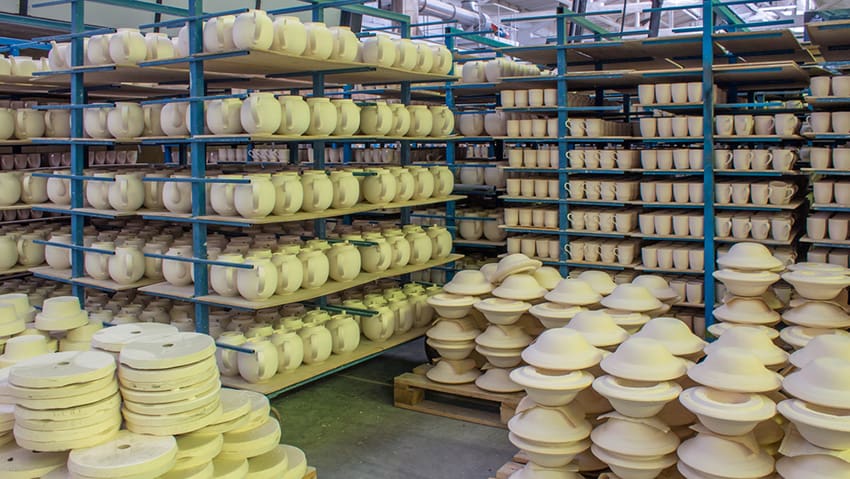
The intervention throws a harsh spotlight on the scheme’s design. The ceramics cluster centred on Stoke-on-Trent, together with the brickmaking operations that supply housebuilders and infrastructure projects up and down the country, relies heavily on natural gas to fire kilns at the extreme temperatures their products demand. Punishing wholesale energy prices, combined with the cumulative weight of climate levies and network charges, have left these small and mid-sized manufacturers paying substantially more for power than their Continental competitors, a longstanding grievance that industry bodies have pressed successive administrations to address.
For owner-managers in the Potteries and the brick belts of the Midlands and the North, the omission will sting. Many of these firms are quintessential British SMEs: privately held, deeply rooted in their communities, and exporting heritage products that still carry weight on the world stage. Their plea has been consistent, that any credible competitiveness strategy must begin with the cost of energy, without which no amount of capital allowances or skills funding will move the dial.
Advertisement
Whether the Government chooses to reopen the scheme’s scope, or whether a separate package for energy-intensive industries is now inevitable, will be watched closely over the coming weeks. What is beyond doubt is that today’s announcement has, in the GMB’s eyes, fallen well short of the mark.
Amy Ingham
Amy is a newly qualified journalist specialising in business journalism at Business Matters with responsibility for news content for what is now the UK’s largest print and online source of current business news.


























































You must be logged in to post a comment Login