
Business
Blue Owl Capital: Don’t Believe The (Negative) Hype (undefined:OWL)


JMIZIPhotography/iStock via Getty Images

Listen here or on the go via Apple Podcasts and Spotify

High Yield Investor‘s Samuel Smith shares his thoughts on energy, gold and silver (0:40) Context on yield (11:00) Context on dividend cuts (16:20) Updated thoughts on private credit and Blue Owl (18:30)
Transcript
Rena Sherbill: Samuel Smith, our friend who runs his investing group, High Yield Investor, welcome back to Investing Experts.
Samuel Smith: Thanks for having me. Always good to be with you, Rena.
Rena Sherbill: Yeah, always great to talk to you. Last time you were on, you were sharing with us your number one pick for the year, which is Blue Owl (OWL), which has done fantastically since then. So easy to see why you picked it. J.K. for all those following along. You know, that’s not true.
So primarily, I wanted to ask your thoughts, your updated thoughts on Blue Owl, but also how you’re thinking about this market a lot to contextualize for sure.
So maybe a brief reintroduction for those who don’t know you. And then if you would share with us your thoughts on this current market, that’d be awesome.
Samuel Smith: Sure. I’m Samuel Smith. I run the High Yield Investor group, as Rena just said. I’ve been an analyst on Seeking Alpha, I believe since 2017 or 2018. So I’ve been here for a good while. It’s my passion. I spend pretty much all day, just about every day doing it.
I love exchanging ideas with members of my investing group. I learned a lot from them. Hopefully they learn some things from me. And I’m just happy to be here to discuss the market today and can dig into anything specifically that you had in mind.
Rena Sherbill: Maybe just broadly speaking, how you would encourage investors to think about investing. There’s obviously with the geopolitical events happening, there’s a lot of questions about the safe haven sectors that haven’t necessarily reacted the way people have thought. A lot of questions about tech. I know that those aren’t the things that you cover, but just generally speaking, how you would encourage investors to think about the market, broadly speaking?
Samuel Smith: Sure. And actually I do cover some areas of tech and I do cover safe haven sectors like gold (XAUUSD:CUR) and precious metals because their income generating opportunities there that we take advantage of. But broadly speaking, okay, first I’ll touch on the kind of the safe havens.
I mean, obviously I guess it depends how you define safe haven at high old investor. We’ve taken kind of a two pronged approach where we have like last year we were loading up heavily on energy. fact, so take it back a few years back in 2022, 2023, I emphasized to my investing group members very strongly that I felt that gold was my highest conviction buy at the time.
And because I could see the geopolitical cloud, storm clouds forming, also we had all that inflation coming out of COVID that hadn’t carried over to gold yet. And gold tends to kind of lag those sorts of things. And so I felt that gold was really high conviction buy. We loaded into it. Obviously that thesis played out really nicely. We also played some of the miners, which further leveraged our returns.
But then silver (XAGUSD:CUR), early last year right around this time last year actually was April of 2025 I then switched and said okay silver is now my highest conviction pick because it has not rallied nearly like gold has even though there was a structural shortage involved.
It has some of the similar somewhat similar monetary and safe haven status is gold though, obviously not quite as prominent and There’s a lot of silver demand due to the electrification AI boom, etc so we poured into silver and then silver took off like a rocket.
And then late last year, I then shifted again and said, hey, I think energy is now the top buy and that whole real asset safe haven type play because of lingering tensions with the Israel Iran conflict. Obviously there was the midnight hammer raid on the nuclear facilities in Iran, but it just seemed like there was unfinished business there.
Energy prices were down. I thought energy stocks were way too cheap, including midstream especially because midstream isn’t even that sensitive in the near term cash flow wise to energy price volatility and fluctuations.
So I actually was pouring into midstream because you get these really high yields, really strong clean balance sheets, good growth potential, especially in the distribution. And then on top of that, some of them have significant exposure to both natural gas and energy exports.
And so with the AI data center boom leading to a strong demand for natural gas, and again, the threats of war in the Middle East and just the ongoing changing of global alignments here, I felt that US energy exports were going to be increasingly valuable moving forward.
So all that made me say, hey, energy, especially midstream is my top pick. And so we were actually very well positioned, even though I didn’t expect necessarily the US and Israel to do what they did in February of this year, I was not making that call at all.
I did view that as a lingering risk along with those other factors. So actually our portfolio has done really well year to day, even though gold has stumbled a bit, which is probably what you’re alluding to and the whole safe havens not performing like safe havens in the event of the Iran war, because obviously we’re already up a lot in those, but our energy stocks, which made up over a third of our portfolio coming into the year have done exceptionally well, obviously.
And gold actually in silver have done fine year to date. They started off with a bang in January and since have come back down.
But I think that gold obviously hasn’t performed quite as many as have expected for multiple reasons. I can get into that if you want. think the biggest reason is simply just that one, it was on such a strong rally to begin with that it made sense for some breather time, but also the reduced chance of Fed rate cuts this year hurt gold a lot because of the inflation fears from oil spiking that hurt gold.
I think China took a little bit of a break for a short period, although they picked up now since it pulled back. And there were some reports of Turkey also selling some gold to prop up their currency in the face of some of the issues.
Also, the gold trade, which largely goes through the Middle East, places like the Emirates, has been disrupted somewhat due to the war in Iran. And so that has probably disrupted gold markets a little bit as well.
So I think all those factors combined to cause gold to underperform somewhat.
But actually, if you look at the long-term fundamentals that have resulted from the war in Iran, namely increased US deficits, US is asking for a lot of money from Congress, the Trump administration is to fund this war, ongoing geopolitical instability, fracturing of the so-called global dollar order, increasingly fracturing along the lines of the China, Russia, Iran, North Korea, and maybe a few others block versus the US and its allies getting fractured and continued stress between the US and Europe over this war, threats to the durability of NATO and other factors there.
All of that adds up to be, I think, a net negative for the dollar over time, which is inevitably going to be a net positive for gold. So this period, actually, I’ve increased my gold holdings. There were some gold miners that oversold in response to some of these factors. I bought the dip and my backup significantly in them.
And then of course gold itself, I think it’s worth buying on any meaningful dips because I’m very bullish in it long term primarily due to my bearishness on the dollar because of some of the factors already mentioned especially the runaway spending by the US and the changing global order landscape.
So to speak all those factors. I think it was a good opportunity, a golden opportunity so to speak to take advantage of and so I trim some of my energy holdings that have gone up a lot in some of the isolated cases where I think they’ve overshot to the upside and reallocated that capital towards part of it towards towards gold and gold miners.
Some of it I’ve also put into private credit plays like Blue Owl Capital, which I’m sure we’ll talk about, to take advantage of what I think has been an overblown market reaction to what’s going on. So happy to dig in any more of that, but hopefully that addressed what you were talking about.
Rena Sherbill: With gold and silver, you mentioned specific miners, is it specific miners and ETFs, or how are you playing the gold and silver angle?
Samuel Smith: I think ETFs are fine. The thing is, it’s kind of like the opposite of how I’m taking with energy right now.
I think individual energy stocks, some of them overshoot and some of them undershoot obviously. So some that overshot to the upside, I sold. Ones that didn’t, I’ve continued to hold because I still have a lot of energy exposure. I think there’s still lot of uncertainty in the Middle East and beyond. I just think energy is a good place to be right now in general from a relatively long-term perspective.
And precious metals, I’ve done the same. I’ve been in individual stocks. I think an ETF is fine for a long-term position or if you want to trade up and down with gold price trends.
But in terms of a value investor, I try to take advantage of disconnect. So I’ve been buying individual gold miners where I felt that they oversold in response to news and changes in their fundamentals, where those are perhaps not, or maybe the other ones were so overvalued to begin with that now they’re just, you know, they just retreated back to a fair value or even still weren’t even fairly valid.
They’re still overvalued, but specific miners that I thought were undervalued or were maybe at fair value, now pulled back sharply, I think are good buying opportunities. So those are the ones I’ve been buying.
And I’ve also been investing in some bullion investment opportunities as well with direct exposure to bullion that are interesting that I detail it for my subscribers at High Yield Investor.
Rena Sherbill: Anything that you would say about the bond market or treasuries?
Samuel Smith: Yeah, I’m not a big fan of bonds.
In general, don’t think the 10-year treasury rate is high enough to compensate for, like I said, the risks to the dollar long term, risks of inflation re-accelerating.
So I just I don’t like treasuries. I do invest occasionally in bonds, usually at the low end of the investment grade or high end of the sub-investment grade area, as well as preferreds in that similar range.
And that’s just, if I feel like the yield on those is good and it’s a specific bond that I feel like, okay, these guys are very likely going to pay back. And the yield is high relative to what I see as a perceived risk.
Other than that, of course, there are a few actively managed bond and preferred ETFs that we invest in a high-end investor, right? The manager’s got a really good strategy and he’s got a proven track record about performing. So we take advantage of those as well.
Treasuries and investment grade bonds,there could be some opportunities there, but I’m not seeing really any right now. Again, this is from someone who values total returns. And if I’m going to invest in fixed income, I want a decent yield and some upside potential to go along with it. I’m just not seeing that because I think interest rates are too low, frankly.
Rena Sherbill: I want to get to the private credit sector and Blue Owl, but if we could spend a minute or two on the yield conversation as a high yield investor, we had Scott Kaufman on from the Dividend Kings and he was encouraging investors to be extra careful when it comes to things like high yielding ETFs or the whole high yielding space in a way to attract investors that might not necessarily be as high value as investors may think it is.
What yield do you target and how do you think about yield, how does it inform your strategy?
Samuel Smith: Sure. So our current, I think both of our portfolios, have a core and we have a retirement portfolio and they both currently yield between seven and 8%.
In terms of my target yield, again, I’m more conscious of that in the retirement portfolio because the primary goal there is maximizing sustainable income while trying to minimize downside risk and volatility. Whereas the core portfolio is focused primarily on maximizing total returns, but in the universe of stocks that in aggregate pay a higher yield.
And so to me, the appeal of high yielding stocks really, especially as a total returns investor, I mean, obviously as an income investor, it’s pretty obvious you get more income.
And then the trick is diversifying and trying to avoid dividend cuts. And if you can do that effectively, you’re all set. But on the total return side, I get asked this a lot, hey, you’re in your mid thirties. Why are you investing in high yield? Why not just chase these high-flying AI tech stocks?
Sure, obviously you can do well with those. People have. I, as a value investor, I like to invest in what I can understand. And it’s much easier to understand a stock that has a high yield and a low growth rate than it is a Palantir (PLTR) that has valuation multiple in the stratosphere and therefore has to grow by an incredible amount to justify that valuation.
Or you have to just hope that you can get lucky, you know, with the greater fool theory and play the sentiment game and hope that someone else will buy it for more than you, even though the fundamentals don’t justify it. So as someone who tries to invest in a logical, rational way, I try to think like a business owner, I’m a Warren Buffett devotee so to speak.
High-yield stocks are generally easy to understand because they generally, again, they pay out high contracted cash flows, at least the sectors I focus on like midstream and other types of infrastructure, whether it utilities or other diversified infrastructure plays, REITs, real estate with long duration leases, contracted cash flows, BDCs, which again, they invest in loans, so they get obviously very contracted cash flows, preferreds, baby bonds, and several other sectors as well, alternative asset managers, and there are others.
And so these sectors all generally pay out very stable cash flows. So it’s pretty easy to build a valuation model. And then when they’re returning the lion’s share of it to shareholders with, I’ll invest occasionally in a 3 to 4 % yielder, but it needs to have very, I need to have very high conviction in both its quality as well as its growth. But generally I like 5 % or higher yields.
And my sweet spot I found is generally five to eight percent, occasionally higher, occasionally lower. But generally most of my investments are five to eight percent because those are often sustainable, especially in the business models I’m talking about.
I look for investment grade balance sheets or at least balance sheets that should be investment grade and, you know, no near term debt maturity cliffs, good control of their interest rate exposure and plenty of cash flow to cover the dividend and also a highly predictable growth profile.
And so then it’s much easier to value those companies. You’re not setting yourself up for this high variance of what is the actual intrinsic value. If a company pays a 7 % yield and is growing between 3 and 5 % a year, you can feel pretty good about, I can build a pretty low variance of what the actual value of this is.
And so then you just let you wait. You identify these companies. You watch them. And you wait for the market to sell them down to a point where you feel pretty good that the valuation multiple compression risk over the long term is quite low unless interest rates just skyrocket. And then you buy them and then you wait for the market to cheer up about them or for interest rates to just fall.
Then they go up when they reach your fair value estimate and you have another replacement while still keeping portfolio diversification and sector and individual stock diversification in mind. You trim or sell, recycle the capital into that other opportunity and you rinse and repeat.
The yield plus growth profile when you’re buying them probably gets you about a 12 % total return in general, but maybe 13, maybe 11, just depending on the individual situation, maybe even 15.
But with the capital recycling, you can turn that low teens annualized rate of return into a high teens or even low 20s. And that’s what we’ve been able to do at High Yield Investor for the five and a half years that we’ve run it. Our annualized rate of return is right around 20 % at a time when the high yield space where we fish has actually returned like 9 something percent.
I think the S&P’s (SP500) return is like 13%. So this strategy works. And it’s something that I understand. I can sleep well at night doing it, even when one of my picks like Owl is going haywire. In aggregate, we’re still up very significantly this year. We’ve significantly outperformed the S&P. So that’s how it’s our approach. That’s how I think about it.
And again, the trick is doing your homework upfront and not reaching for yield. They’re just saying, I’m bored. I’m going to chase this juicy looking yield that’s being very selective only selecting companies that meet your criteria and then being very disciplined about the capital allocation, capital recycling process, not falling in love with a certain stock, but at the same time not panic selling just because it’s going down either.
Rena Sherbill: Doing your homework first, always a fantastic idea. The same question about dividend cuts. How does that inform your strategy or how does your strategy inform how you think about dividend cuts?
Samuel Smith: It depends on the security.
So for example, there’s a lot of people panicking about, BDCs are going to have to cut their dividends because the Fed has been cutting rates, spreads did narrow. Now they’re starting to widen again.
But a lot of some really good BDCs have actually cut their dividends recently and others are barely hanging on. And so there’s all this fear. And you just have to realize when you’re investing in a BDC, you’re effectively investing in a floating rate fund because they invest in loans that are floating rate.
And that’s why they’re being cut. So if that’s why they’re being cut, there’s nothing to worry about if they’re being cut because you know underwriting issues, which some of them have then obviously that’s another matter.
But then other companies like say Realty Income (O) for example, it’s a bond proxy triple net lease rate that has some growth. And they call themselves the monthly dividend company. If they were to cut their dividend, I’m sure that stock would get crushed and rightly so because its primary investor base is people, individuals, institutions who want a very sustainable dividend that’s mid single digits that’s going to grow at a rate roughly that keeps up or maybe slightly exceeds inflation over time. And that’s the investment thesis.
And so if the dividend gets cut, obviously that’s not gonna go over well with a large number of investors who understand that this is supposed to be a sustainable dividend yield.
And so obviously that’s something to avoid. So it really depends on the company. And again, it also depends on the reason for the dividend cut. Again, it just depends on the company. And of course then there are cyclical companies like LyondellBasell (LYB), one that we had invested in.
In the past, they’re very cyclical. They were tumbling with the industry and then with the war in Iran, the sector has rebounded incredibly sharply and it’s skyrocketed higher, even though it just cut its dividend shortly before it skyrocketed higher. But that’s due to cyclical factors.
It’s not due to the company itself making a bad decision or being permanently impaired. so, again, it just depends on the company how you think about a dividend cut. I’m not someone who says all dividend cuts are bad. I’d say most of them are bad, but it really depends on the company and also the reasoning behind the dividend cut that really matters.
Rena Sherbill: Okay, so for Blue Owl and the private credit sector, we’ve heard this talk of the Blue Owl and the coal mine, that that’s the new canary in the coal mine.
George Noble was on this podcast talking about how the whole sector is an unmitigated disaster. What is your answer to people when you’re talking about that sector and Blue Owl specifically?
Samuel Smith: Yeah, I mean, where to start?
I think that it’s a classic case of a self-perpetuating story. It all started last year. And actually, I actually was bearish on BDCs. I wrote some public commentary. I sold several of our BDC holdings at High Yield Investor last summer because I thought the valuations, it was not a sector I was necessarily bullish on to begin with, it was a case where, a lot of the BDCs are trading near NAV.
I didn’t really see the externally managed ones and obviously the publicly, the internally managed ones were at a large premium to NAV. And so I just didn’t see any compelling value there.
It’s not a sector that I want to pay price to NAV for on an externally managed basis or a massive premium for internally managed businesses. I want a large discount to NAV.
But at the same time, I was warning people about it, et cetera. Jamie Dimon was talking about, made the famous cockroach comment because of a, I think, tricolor bankruptcy and some others, which by the way, later were found out to not even be due to private credit.
They were actually bank underwritten loans and there were fraud involved and everything.
So it was a completely false, false accusation or false stain on private credit. But regardless, that started the concern. They started to trade down, I think also, Trump’s rhetoric about wanting to replace Powell, wanting to cut rates more aggressively, all these things, and also just the consensus outcome, OK, all these tariffs came on, but inflation really isn’t spiking higher like many feared.
And so that was one less roadblock and the way more Fed cuts. So all that was saying, OK, I think the BDC’s income is going to come lower because they’re floating rate instruments effectively. And so the sector was going down. Fair enough. That was not news to me. That was what I expected. I was glad I mostly sold out. Great.
But Blue Owl, it’s not a BDC and it’s external, it’s an asset manager and it manages several BDCs of course, but only about a third of its overall AUM is direct lending. It also has some other credit investments that are not indirect lending. has a triple net lease REIT business that has done very well.
They acquired Store Capital, which was a great REIT a number of years ago and they have other real estate assets in there as well. They have an AI infrastructure business that’sliterally award winning and doing very well. And then they also have a GP Stakes business, which is also doing very well.
So it’s more than just direct lending. And again, their public BDCs, OBDC, OTF are doing just fine on a fundamental basis. Low non-accruals, low watch list. They’ve got great track records. Their private BDCs are arguably doing even better. So really no concerns there. It was growing rapidly. And so the thesis was good.
And since then, things have, especially this year, things have reached a fever pitch. Again, it’s hard to know why it’s gotten this way unless there’s some nefarious reasoning behind it. I can conjecture on that all day. I’m not in the business of doing that. So unless you want me to, I won’t go into it.
But bottom line is the private credit space has been stealing a lot of market share from traditional banks, for example. And so there’s a reason why some of those forces, aka Jamie Dimon and others, may want to try to emphasize the perceived flaws of the industry.
And then, of course, this big narrative emerged that this is great financial crisis 2.0, which completely ignores the fact that these BDCs are leveraged around one times. So they have the same amount of debt as they do equity.
And in some cases, like for example, Blue Owl’s two big private BDCs actually have less than one times leverage, whereas the banks during the great financial crisis were leverage at like 30 to 40 times. So completely different. Their balance sheets were subject to margin calls.
In some cases, banks are subject to bank runs. That does not apply here. Blue Owl has like 75 % of its fees come from permanent capital. And even the rest of it is like long dated capital. And they had their, know, from the beginning, and then of course all this stuff about gates on funds. Well, that was from the beginning.
Their funds have always been structured that way to provide up to 5 % liquidity each quarter. And it’s a long duration investment. That’s what private markets are. again, this is all just, I feel like fear mongering. It sounds like I’m being dismissive of the bear thesis, but I’ve done a lot of research.
I just recently published an article to my subscribers, a high-level investor on the private credit space with the actual facts of what’s going on.
And it really is, it’s this thing where it’s like the media stirs up fears from Jamie Dimon’s comment and all this other stuff about private credit is opaque and it’s going to be the next great financial crisis.
All this kind of fear mongering and Blue Owl sells some loans, like 1.4 billions worth of loans around par value to third parties. One of the four parties they sold it to had some affiliation with them, but the other three didn’t. And so then the media spun this narrative that, they’re just playing games.
This must mean they’re in distress that they’re having to sell and they only sold the good assets. All the rest are junk. And all those were rebutted by Blue Owl Capital. Quite clearly, I spoke to them at length about it as well, pressed them with some tough questions, shared all that with my members. bottom line is, it’s a fear mongering tactic from the media that then, of course, I got emails from people who saw my articles on Blue Owl in the public site.
And these are people who have their retail investors, retirees, et cetera, in some of Blue Owl’s private funds. And they emailed me and said, hey, I’m worried that, I read that Blue Owl is about to implode. I’m worried that I’m going to lose all my money. How do I get it all out? What do you think I should do? I’m like, well, I’m not your financial advisor. But this is my understanding of the situation.
But this fear mongering from, frankly, abusive people. And they’re pulling out their money, of course. It’s a bank run type attempt. Fortunately for Blue Owl, and this again was part of my bull thesis, is even in a worst case scenario like that where fears get drummed up, they can only gate up to 5 % per quarter.
And Blue Owl is still raising money. They still have some institutional investors who are very committed to them and realize that the underlying fundamentals are still very strong in their portfolio.
If you look at the shareholder letters for both their private BDCs that had these large withdrawal requests this past quarter, their fundamentals are phenomenal and their AUM basically didn’t change. It only went down very slightly because of the Gates and they’re still raising funds.
I think it’s just a big misrepresentation of what’s going on and it’s, know, fear-mongering. And so it has reduced sentiment. has reduced fundraising and caused, you know, redemptions to go up across the industry.
But again, the underlying fundamentals remain strong across all the major asset managers, whether it’s Blackstone (BX), Apollo (APO), Ares (ARES), (KKR), Blue Owl, et cetera.
But all those names are still good. And some would say, well, they’re just overstating things. They’re hiding things. This is what they did in the great financial crisis. Well, there are a couple, I think, rebuttals to that. First of all, this is not a new industry. This has been around since the great financial crisis.
Blue Owl, for example, has been doing this for over 10 years. They have a very strong track record with very low loss rates. Loss rates is not something you can fake. You can fake your marks. You can play games with your watch lists and all that stuff in the short term. But eventually, those loans get repaid or they go bankrupt. so their loss rate over a decade, especially through a stress period like COVID, you can’t fake that.
It also ignores the fact that Blue Owl, and particularly many of these others do as well, they actually have third parties come in and mark their books quarter to quarter, every quarter. And they take the recommendations of those third parties and that’s what they sign the marks to. So they’re not just made up. Yes, the board could if they wanted to, but they don’t. And again, their track record supports that.
Then third, obviously in the case of Blue Owl, insiders own like 27 % of the stock. Insiders get 100 % of their compensation in the stock. And on top of that, they bought a lot of it at the end of last year. Other companies like Blackstone, KKR, etc. are doing the same thing.
So clearly, they’re well aligned with shareholders. They’re believers in the story. They’re not heading for the gates. then on top of that, even if, let’s say, Blue Owl and Apollo and Ares, ones that are really heavily allocated to private credit, let’s say they’re making it up because they just, we got to be solvent. We got to support our business.
Well, Blackstone has a huge real estate business, a huge infrastructure business, a huge private equity business, a bunch of other businesses outside of private credit.
If things were really so bad, it would behoove them to say, yes, things are bad. Yeah, it hurt them in the short term, but it would at least save their reputation for all their other businesses. So it would make sense for them. All their rivals could sink and they would be the last one standing that at least had a good reputation, but they’re not doing that. No, our book is doing very well. They just released a paper, Myth First Reality on the private credit sector.
Their senior management has actually used their own money to honor redemption requests in some of their funds that are above the 5% gate. So, they’re tripling down probably more than anyone on private credit and they have the least existential reasoning to do so.
So again, I think it’s pretty obvious that the insiders genuinely believe that their books are just fine, that they are not seeing issues at play because otherwise they’re all being completely stupid together and going to completely destroy themselves.
And again, in Blackstone’s case, there’s really no good reason for them to do it. And even again, Blue Owl, only a third of their business is in direct lending. They still have two thirds outside of it, much of which is growing at a strong clip.
Meanwhile, the gating effect is that even their direct lending AUM is staying relatively stable. I we’ll see the numbers here. They report at end of the month.
I think there’s a very strong chance that OWL will report fairly stable AUM for Q1, probably the same for Q2. And I expect in the second half of this year, because they have some big funds going to market and their real estate and digital infrastructure spaces that should raise a lot of money, I expect they’re going to grow AUM at a pretty decent clip in the second half of this year.
And certainly for the full year, I think they’re going to have grown AUM. And I think that’s going to blow up the shorts pretty clearly, because it’s going to show that, you
They’re not going anywhere. And I think the same will be for the other asset managers as well. So again, I think it’s just a case of fear mongering from the media leading to the self-perpetuating cycle where no one wants to be out of step with what everyone’s saying.
The stock prices are going down due to headline driven algorithmic effects. course, the war in Iran doesn’t help. It’s hurt the whole market.
And then of course, there’s also the whole software side of things that I can get into as well. But I’ll stop there and let you chime in.
Rena Sherbill: I would love to hear about the software side of things. I was just going to ask, I assume this has been surprising, the negative trajectory. Has it been surprising for you?
Samuel Smith: I mean, I guess I think so. Again, as a Warren Buffett devotee, I’ve indoctrinated myself. I’ve conditioned my mind to where I have zero expectations for the performance of the stock price over at least a couple of years.
The way I approach it is again, I invest with the expectation that I’m going to hold that stock for at least three to five years. And then I sit back, I focus like crazy on the fundamentals.
And I keep an eye on the stock price, but I don’t let that inform my view of the fundamentals. Rather, I say, okay, does Mr. Market get too moody in one way or the direction of the other? And I let volatility serve me instead of the other way around.
So frankly, I had zero expectations. I didn’t care. I wasn’t looking to sell Blue Owl immediately. I wasn’t looking for, I’m not a one month, this is, and I think I even said in our last podcast, I think both the other gentlemen and myself, both prefaced our picks with, look, we’re not one pick guys, we’re diversified folks.
And again, our diversification served us very well this year, but also I’m not someone to say, this stock is going to be the winner this year. There’s more of a statement as a long-term value oriented investor. I thought the Blue Owl Capital at the time offered one of the best risk reward profiles out there. And I still stand by that statement.
Now, the path from point A to point B, when I ultimately sell it, who knows what’s going to happen along that path.
Actually, most of my big winners at High Yield Investor, I wouldn’t say necessarily most, but a lot of them, maybe most of them, I haven’t run the stats, but I know quite a few of them have gone down a lot before they went up a lot. And that’s just the nature of it.
And that’s why I diversify intelligently so that even when some are going down, others are going up. And in the aggregate, we’ve actually had significantly below market beta in our portfolio across our track record. And that’s proven true this year as well. So again, to your question, it didn’t really surprise me.
I don’t have any expectations. Now, I would be lying if I said it didn’t stress me because if it was just me myself, I wouldn’t really care. I bought more. Great. I could buy more at a cheaper price. I never thought I’d be able to buy Blue Owl at a 10 % plus yield, which I did, which in my opinion is great.
But the stress comes from obviously dealing with members who are panicking. But that’s my job is to help guide them through periods of market chaos. And of course, the troves of trolls that come into the public articles and harass me. And it is what it is.
I know that’s part of the game. It just makes victory feel all the sweeter when it happens. And of course, if it doesn’t, investing is a humbling business and you learn more from your mistakes than your wins. And again, that’s why you diversify. That’s why you need to be humble. That’s why you do learn.
It doesn’t really matter to me too much what happens other than that I got to buy more. Great. Of course, I love it when a stock goes up really fast too, because then can sell it and recycle it quickly and compound my capital even faster. No, I don’t view it as a good or a bad pick based on how the stock performs over a three-month period or even six-month or even a year.
Of course, at a year, if you’re down 50 % after a whole year, there’s a good chance that means that something fundamentally has deteriorated. And it has to a degree just in the sense that, and I have reduced my estimate of fair value although it’s still well above where it was when I was buying when I put the buy rating out in January.
So I still feel good about that call. But, just because the fundraising has slowed down in the direct lending business, which is about a third of their AUM, their private credit as a whole is about 50%, but just the direct lending, which is really the sector in question, the rest of it’s actually doing quite well in fundraising.
They just had an oversubscribed credit fund outside of the direct lending space, but direct lending is only about a third. And there, yes, they have had the elevated redemptions. Yes, they have had slowed fundraising. So yes, that has impaired the growth outlook for the company, which in turn reduces my intrinsic value estimate.
Not enough to make me have any different opinion about it. Then I still would have written the same article in January if I didn’t have any information about the stock price and just said, hey, their fundraising is going to be a little bit weaker out the chute here the first quarter or two. Then, yeah, I would have still written the same article.
Rena Sherbill: I still want you to get into the software factor, but also when do you decide to sell? When will you decide to sell Blue Owl or how do you think about selling in general?
Samuel Smith: Yeah, I’ll touch on the second one first because that kind of feeds off what I was just saying.
So selling in general, one of two reasons for selling one is valuation. So if it’s no longer a compelling buy, it may still be slightly undervalued. Maybe it’s slightly overvalued. Maybe it’s fairly valued depending on the stock and the situation.
But I no longer view it as a high conviction pick. And I also have another place to reallocate it to that I feel much more attracted to from evaluation and otherwise standpoint. And it still honors my diversification principles across my business.
And along with that, sometimes if I have a position, like for example, Blue Owl would be a good example this. I’ve doubled down on it, tripled down on it as it’s dropped and brought down my cost basis a lot in the process, which is great. if it were to recover even back to where it was in January, say $14 a share or whatever it was back then.
That’s 40 % upside from here. My position would be way too large at that point for diversification. So even though I think it has significant further upside, I would likely trim my position some at that point just to keep my diversification in line.
And of course, lock in big gains on what I’ve been buying. I bought a bunch here in the $8 and $9 range in recent weeks. that would be one time. Those would be the two times I’d sell from a valuation or diversification standpoint. And the other reason I would sell is if the investment thesis gets truly broken.
So in the case of Blue Owl, if I saw legitimate concerning signs that, yeah, the fear mongering about private credit is going to go bust and it’s a big fraud and they are not reporting their loans correctly, et cetera.
So if I start seeing non-accruals rising above historical norms and, you know, pick getting up there and some other issues, then yes, I would say, okay, I’m losing confidence here.
I’m going to sell or perhaps even if just their fundraising just completely dried up across the platform if there was evidence that the Blue Owl brand has been permanently impaired at large and not just their direct lending business because of a bunch of negative media hit pieces but truly institutional investors are backing away across the board across all their businesses then that would certainly significantly change how I would assess intrinsic value there and then again depending on where the stock was I would probably at least reduce my position size.
Really it goes either my investment thesis breaks or the valuation becomes too high slash the position size becomes too high.
So for the software side of things, this is an interesting thing. I have a master’s degree in machine learning and computational engineering, so I do have a good bit of exposure to programming and how AI works, et cetera. And I’m not, I won’t call myself some big expert on it, but I do have some familiarity with it.
I think Blue Owl has done a good job, Blackstone has done a good job, Ares and others, of explaining how they invest in these loans. And Blue Owl, for example, they have a large team of just software people. That’s all they do. They focus on the software industry. They look at trends. They’ve been doing this for years. They have actually a net gain, loss rate.
In other words, they haven’t lost. They’ve actually gained money on all their investments in software over the years in terms of like during recoveries. Obviously they’ve made money off of interest, but just in terms of the principle, they’ve actually gained rather than lost just on a principle basis, which is incredible, virtually unheard of, especially in private credit direct lending type area where we’re talking about well below investment grade caliber lending.
And so, they’re clearly good at what they do. And, you know, in Blue Owl’s case, people overlook the fact they have a large stake in SpaceX (SPACE) and their tech portfolios, their software heavy portfolios that they bought a while ago and is way up for them.
And they’ve actually undermarked it in their books relative by a pretty large margin relative to where their recent fundraising rounds have been. That is SpaceX’s fundraising rounds.
And of course the IPO is expected to be at an even higher level. And of course SpaceX and XAI are the same company, so now it’s also an AI company. So, Blue Owl is being penalized if you look at their publicly traded software fund, (OTF), Blue Owl Technology Finance.
They’re trading at like a 30-something percent discount to their NAV. Which, by the way, their NAV is understated at least as far as the SpaceX state goes because, like I said, it’s actually probably going to be worth a lot more.
It’s probably worth a lot more than this being reported. And that’s an AI company now. I’m not just because of XAI, but because they’re trying, their goal is to build data centers in space. And so, I think it’s kind of a bit goofy that they’re being penalized for that.
Not to mention the fact that Blue Owl, the asset manager, which is again, the stock in question here, OWL, they have a large and very rapidly growing business in AI infrastructure investments.
They’ve gotten no credit for that either. In fact, their AUM exposure to that is just about what their AUM exposure is to software loans. So, you know, if you think AI is going to be this dominant force that’s going to completely obliterate the software industry, well, then you’d probably think their AI infrastructure business is going to do pretty well.
But, the market hasn’t given them any credit for that. So, you know, that’s that’s another big inconsistency. But even just looking at the software loans themselves, software is not a monolith. It’s not just software. Software is really not even an industry that that software serves.
Now, obviously, like Palantir, for example, is a very diversified software company. It serves a lot of different industries and companies. So that’s a little bit different. But a lot of the companies that that Blue Owl and other private credit lenders invest in with their loans, they’re companies that are mission critical. They do an exact task that’s very important for a company. So they’re deeply embedded in their operations and their systems.
They generally have fine-tuned that to an industry like finance or healthcare that’s regulated that, know, AI itself, people don’t realize it’s not just some magic voodoo. It’s effectively applied statistics. And so it’s simply just predicting what the most likely answer is to a solution.
But that’s why it sometimes hallucinates. And so when you’re dealing with regulated industries like healthcare or finance, hallucinated answers are not good enough. And that’s one of the reasons, for example, I know Seeking Alpha has a no AI use and research policy and that’s because you don’t want analysts putting out articles that have factually incorrect statements in them that were a product of AI hallucinations. So that’s a no-go. Even if it’s only a 0.1 % chance of it happening, it’s still a no-go in a situation like that. again, yeah, vibe coding is a thing and sure you can use that as it reduces a lot of the costs. You don’t have to hire as big of a team, all this kind of stuff. It speeds the process up.
And I do expect competition to increase for some of these companies. And you know what? If I had to guess, I think they will see an uptick in defaults and non-accruals from their software loans.
Again, I’m not bullish on software loans in a vacuum. But when you’re a BDC and you’re trading at a 35 % discount to NAV, and you have senior secured first lien loans at a 35 % weighted average loan to value, the software companies you’re investing in are currently growing EBITDA at like a 10 % annualized rate.
You have practically no non-accruals, practically no real watch list. You have a net gain loss rate over the long term. A lot is gonna have to go wrong. And again, it’s under levered. think OTF is like 0.6 something percent leverage ratio, weighted average leverage ratio, it’s most recent quarter. The private tech fund is also very under levered.
A lot has to go wrong there for it to really hurt people. And again, with a software loan at the 30 something percent loan to value, the company has to be impaired by like 70 percent before the lender loses a penny. And people go, well, software has nothing backing it. So if it goes bankrupt, you’re losing everything.
People forget that these are software companies with, again, deeply embedded in their counter and their customers working system.
So high switching costs, so barriers to entry, switching costs, et cetera, regulated businesses. And even if they say, hey, this company is no longer able to meet its interest payments, its debt obligations because it’s lost a lot of customers because AI has disrupted it, there’s still going to be recurring revenues that have to run off. And the lender then seizes, Blue Owl, for example, would seize those recurring revenues and get a pretty significant recovery, even if that happens.
Again, I just think the gloom and doom is way overstated. And again, AI is not guaranteed to be a headwind. It just means that, yeah, more competition may be able to come in, barriers to entry may be reduced. But remember, these are the incumbents. They can use AI too to reduce their costs to improve the capabilities of their software. And they’re not standing still.
Blue Owl is very well aware of this. They’re working with their counterparties to help them. And again, they’re under leveraged, so they’re able to make a lot of new investments with all this knowledge already in front of them. So they can, you could say dilute their AI exposure even further if they are sensitivity, I should say, even further if they want.
And I imagine they’re doing that. All this to say, and of course also just the distress in the software space means that their spreads are gonna be even wider on new investments. So they’re gonna make even more profits.
The margin of safety is gonna be even larger. And so again, I think it is a headwind, but I think the fear is way overblown.
And remember, software is only 8% of Al’s AUM, and even if you want to argue that they’re under-representing that, even if it’s say 12%, it’s still very small compared to their overall book.
Rena Sherbill: When you said earlier that you’re in touch with Blue Owl, you’re in touch with management?
Samuel Smith: Yeah, various members of their team at various times. Yes.
Rena Sherbill: Well, first of all, I really appreciate this conversation. You know, if you go to the Blue Owl (OWL) quote page on Seeking Alpha, you’ll see Seeking Alpha analysts have it as a hold, Wall Street analysts have it as a buy, and our quant system has it as a sell.
Samuel Smith: Yeah, well and again, the quant system is a totally different framework from how I look at things.
In fact, the vast majority of my picks are rated as sells in the quant system. that’s probably one of the biggest questions I get from members is, why do you say these are buys and the quant system says they are a big risk?
And that’s because quant is momentum focused primarily. They also look at GAAP earnings, which are not good ways to assess most of the stocks I look at. And they are short term, they chase momentum, they’re short-term focused. That’s fine.
The quant and I can both be right. Quant is right. Obviously, it’s gone down a lot. So short-term momentum chasers who listen to quant have done very well. But someone who’s investing for three to five years, we’ll see. But I think they’ll probably end up doing pretty well too. And again, our track record speaks for itself. We have about a 20 % annualized rate of return and we’ve pretty much gone against the quant system on all of our calls.
There’s more than one way to skin the cat and I’m not here to say the quant system is bad, but at the same time, I think we both could be right on certain stocks. It just depends on your time frame and how you’re looking at things.
Rena Sherbill: Different strokes for different folks in different situations. I know that we’re at the end of our time, but would you give a minute why GAAP is not a good factor for you to use, or a good metric for you to use?
Samuel Smith: I think it is for many companies, but just for different companies, that’s not the way to look at it.
So for example, like REITs, right? They have a lot of real estate depreciation that gets put in there and that’s just an accounting gimmick. The underlying real estate may actually be increasing in value, but because of depreciation rules, their gap earnings are generally way lower than what their actual earnings power is. They use metrics like FFO or AFO, funds from operation, adjusted funds from operation.
Midstream does something similar with distributable cash flow or free cash flow. Blue Owl uses distributable earnings. And especially in Blue Owl’s case, if you look at their GAAP earnings, they’re like super low, their PE is super high. So we were like, why do you like this stock?
Well, it’s because it’s a gimmick. They’ve done a lot of acquisitions recently. And Blue Owl, they used stock, they issued stock in those cases. Of course, the stock was much higher back then, so it was a much more prudent use of their stock then, but that’s why they’re not doing any acquisitions now, at least one reason.
They issued stock to buy the companies and the whole point of that is they want to have an asset like business model so they distribute almost all their earnings to shareholders as dividends, which is great.
But also they do that so that the company that they acquire, the management team just comes and joins them because they obviously want that management team. The asset management business is all about relationships and trust. So they want to keep that existing team. That’s kind of the whole point. And so then they pay them in Owl stock, which aligns their interest with owl as a whole and there’s like a long lockup period on it.
And so it keeps them from just jumping ship and selling their shares. And so they amortize the way their accounting works is they amortize that stock issuance that they used to purchase that company over time. And so that counts as an operating cost cause it’s like stock based compensation is how it comes across.
And so that greatly reduces their GAAP earnings over the short term as they amortize that acquisition even though it’s not really an operating cost, it’s simply the cost of the acquisition. And so it’s just a quirk that temporarily suppresses GAAP earnings.
Rena Sherbill: Really appreciate this conversation, Samuel. Thanks for coming back on. Thanks for sharing so much with us. I know that our audience has been asking for an update. I know that they are appreciative of this as am I. If you would care to have a last word or final thoughts for investors, or if you just want to share where they can get in touch with you, again, the investing group is High Yield Investor. And thank you again.
Samuel Smith: Yeah, thanks, Rena. I would just say to investors, first of all, none of us are omniscient. I could very well be wrong about Blue Owl. Obviously, the market thinks I am. And so I could be wrong.
And that’s where diversification is so important. But second of all, also echo what Warren Buffett has said many times. And that is, if you’re going to count out a stock or judge a stock, and certainly if you’re going to sell a stock simply because it’s gone down in price without actually looking at the fundamentals, you have no business investing in stocks.
You know, go play the lottery, go bet on horse racing, you know, the betting markets are growing. Maybe that’s a better place for you. Because again, true investing is looking at a business or an asset, determining what its value, intrinsic value is, and paying less than that.
And then letting time and the power of compounding do its work. That’s really what investing is. It’s not some game where you read a chart and you make a guess about what’s going to happen. That’s gambling, that’s speculating. And again, you can make money doing that as we’re talking about. The SA Quant has apparently done well, that’s great. But that’s not investing, that’s speculating.
And so just separate the two. But if you’re going to invest in the stock market, you need to divorce yourself from being swung by stock price movements and instead focus on the fundamentals. And I think Blue Owl and really the private credit space as a whole is exhibit A for that. Again, we’ll see what happens. I could be wrong, but those principles are not wrong. I know those principles are right.
It’s just a matter of am I applying them correctly here. And so we’ll see. If you have questions about Blue Owl, you can comment on my public articles. I may or may not go back and look at those. If you send me a direct message, I’ll definitely look at that.
And certainly if you join High Yield Investor, I always prioritize those people. And that’s the people who I give regular updates to. I’ll have an update on there for members right after they report earnings here in a few weeks. And I’m always posting stuff every day in the chat, responding to any question that comes to me within minutes, if not hours. And that’s where you’ll get my latest and so-called greatest thoughts.


Streamex Corp interim executive chairman sells $13652 in stock

LOS ANGELES — Jessica Alba is stepping confidently into 2026 with a blossoming romance, an action-packed film role on location in Australia and a continued focus on producing stories that highlight women and diverse voices.
The 44-year-old actress and entrepreneur shared a heartfelt Instagram carousel on April 3 recapping her first quarter of the year. Titled “Q1, wrapped 🫰🏽 The people, places & things that made it sweet,” the post featured two affectionate photos with boyfriend Danny Ramirez, 33, alongside images of her three children, a boat outing, crystal shelves and a glamorous night with friends including Karlie Kloss.
In one shot, Alba and Ramirez smiled in front of a venue, with the “Captain America: Brave New World” actor tilting his head toward her. She wore a cream vest and tank with a white cardigan; he sported a blue striped button-down and baseball cap. Another captured her hand on his back as she rocked a red-and-white mini dress. Ramirez commented on the post with “Cuánto te quierooooo” and fire heart emojis, meaning “How much I love you.”
The couple, first linked in July 2025 and Instagram-official by November, has been open about their relationship this year. Alba tagged Ramirez as “Mi amor” in March photos from the Vanity Fair Oscars after-party, where she turned heads in a feathered sequin look. He replied that he was “the luckiest person on the planet.” Earlier, they enjoyed a romantic Miami getaway in February after Alba’s divorce from Cash Warren finalized. She was photographed in a black-and-white bikini celebrating the new chapter.
Alba shares daughters Honor, 17, and Haven, 14, and son Hayes, 8, with Warren. Recent posts show her prioritizing family time, including a joyful spring break trip to Kaua’i, Hawaii, with the children and friends.
Professionally, Alba is deep into filming “The Mark,” a stylish spy thriller on Australia’s Gold Coast. She stars as Eden, a tender yet formidable female operative on a covert mission. The character pulls single father Ben Dawson, played by Tom Hopper, into the high-stakes world of espionage when he is mistaken for a deadly assassin. The mix-up turns him into the perfect decoy to expose corrupt politicians, blending intense action with emotional depth.
Directed by Justin Chadwick and written by Ronnie Christensen, the project is produced through Alba’s Lady Metalmark Entertainment, co-founded in 2023 with Tracey Nyberg. The company focuses on women-first stories and underrepresented narratives in Hollywood. Nyberg noted that while “The Mark” arrives as a cool, stylish action movie, its core is a rare female character journey filled with humanity and tenderness. Alba has praised Eden’s femininity and emotional layers, contrasting typical masculine spy tropes.
Production has been underway in Queensland, with scenes shot in areas like Currumbin. Alba and Nyberg bonded intensely during earlier work in Australia, bonding over their shared drive to create commercial yet meaningful content. Lady Metalmark’s slate also includes an R-rated corporate retreat comedy heading to Netflix, a Fox thriller series inspired by a real-life psychic, and a Latino heist dramedy with Michael Peña and director Robert Rodriguez that Alba helped develop through her Culture Makers initiative.
Alba has spoken about the challenges of representation in Hollywood. “It’s still so bleak,” she said, emphasizing that women are “just as capable as anyone” and pushing to flip stereotypes through entertaining stories. Her producing work extends to projects like the Swiss Oscar entry “Queens,” the festival favorite “Valentina,” and an adaptation of the novel “Confessions on the 7:45” with Eva Longoria directing the pilot.
The actress surprised fans earlier this year with a cameo in Bad Bunny’s Super Bowl 2026 halftime show. On Feb. 8, she danced onstage in a plunging white corset paired with low-rise oversized jeans and platform shoes, joining celebrities including Cardi B, Karol G, Pedro Pascal and Alix Earle. Alba later shared behind-the-scenes moments, describing “full body chills” and emotion at participating, especially as a Mexican-American artist in the Puerto Rican star’s vibrant “La Casita” set. Her young son Hayes cheered from the stands.
Beyond acting and producing, Alba continues her entrepreneurial legacy with The Honest Company, which she founded in 2012 to offer nontoxic household and baby products. She stepped down as chief creative officer in 2024 but remains on the board, providing strategic advice. The company has faced adjustments, including shutting down its app and direct website sales in early 2026 as part of a refocused business plan, yet Alba’s vision for clean living remains influential.
At 44, Alba balances a full life with grace. She kicked off the year with a zen beach escape and has shared moments of crystal collecting, wellness and quality time with loved ones. Friends and fans note her radiant energy, whether glammed up for red carpets or keeping it casual on family adventures.
Her relationship with Ramirez, who is 11 years her junior, has drawn positive attention for its easy chemistry and mutual support. Sources close to the pair have speculated about future plans, though Alba has kept details private while enjoying the present.
Industry observers say Alba represents a modern Hollywood success story: a former teen star who built a billion-dollar business, raised a family and is now carving a producing path that aligns with her values. Her work through Lady Metalmark aims to create opportunities for women and Latino talent in commercial fare that reaches wide audiences.
As filming continues on “The Mark,” anticipation builds for the spy thriller’s blend of action and heart. Alba’s character Eden promises a fresh take on the genre, emphasizing vulnerability alongside strength.
Fans have flooded social media with support for her latest posts, praising her style, motherhood and evolving career. From red carpet glamour at the Vanity Fair Oscars party to on-set action in Australia, Alba appears energized by new beginnings.
Looking ahead, her slate of producing projects suggests a busy 2026 and beyond. Whether starring in thrillers, developing diverse stories or sharing candid glimpses of life on Instagram, Jessica Alba continues to captivate with authenticity and ambition.
The actress has often spoken about wanting her children to understand money as freedom and joy rather than survival. That philosophy seems to guide her own multifaceted journey, one that embraces both personal happiness and professional impact.
As spring unfolds, Alba’s Q1 recap feels like a celebration of balance: romance, family, creative work and self-care all in harmony. With “The Mark” progressing and new producing ventures on the horizon, she shows no signs of slowing down.
Her story resonates because it reflects real evolution — from blockbuster actress to entrepreneur to producer championing change — all while staying grounded in what matters most.
Meta President & Vice Chairman Dina Powell McCormick joins ‘Mornings with Maria’ to discuss how AI-powered smart glasses are transforming lives, restoring independence to blinded veterans and fueling explosive company growth.
Meta is preparing to cut thousands of jobs as early as next month, with deeper layoffs expected later this year, according to a report.
The tech giant intends to slash roughly 10% of its global workforce — or nearly 8,000 employees — in an initial round of cuts on May 20, sources told Reuters.
The company is also planning additional layoffs in the second half of the year, though details including timing and scope remain unclear, the outlet reported.
The report follows earlier Reuters reporting that Meta was weighing cuts that could affect at least 20% of its workforce as it seeks to offset rising artificial intelligence costs.
ADL WARNS META POLICY SHIFT COULD HURT AD REVENUE AS REPORT NOTES RISE IN HATEFUL, EXTREMIST CONTENT
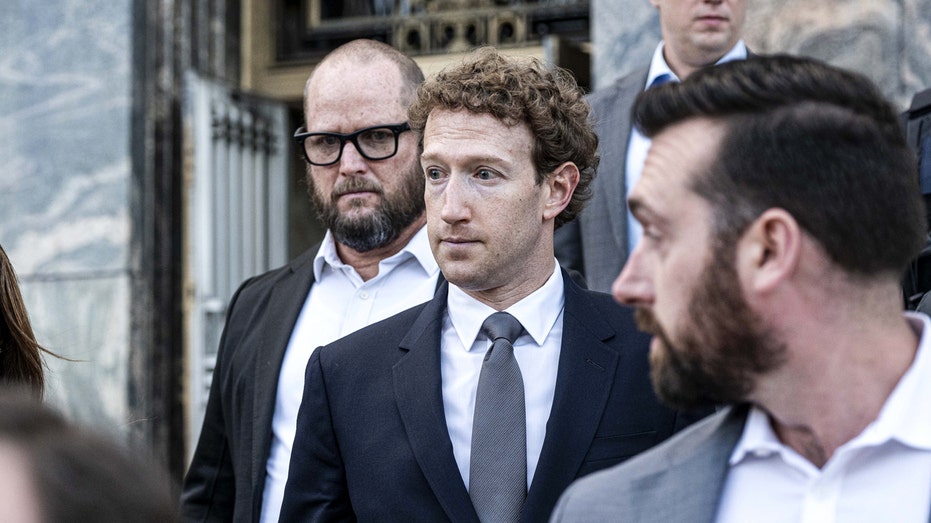
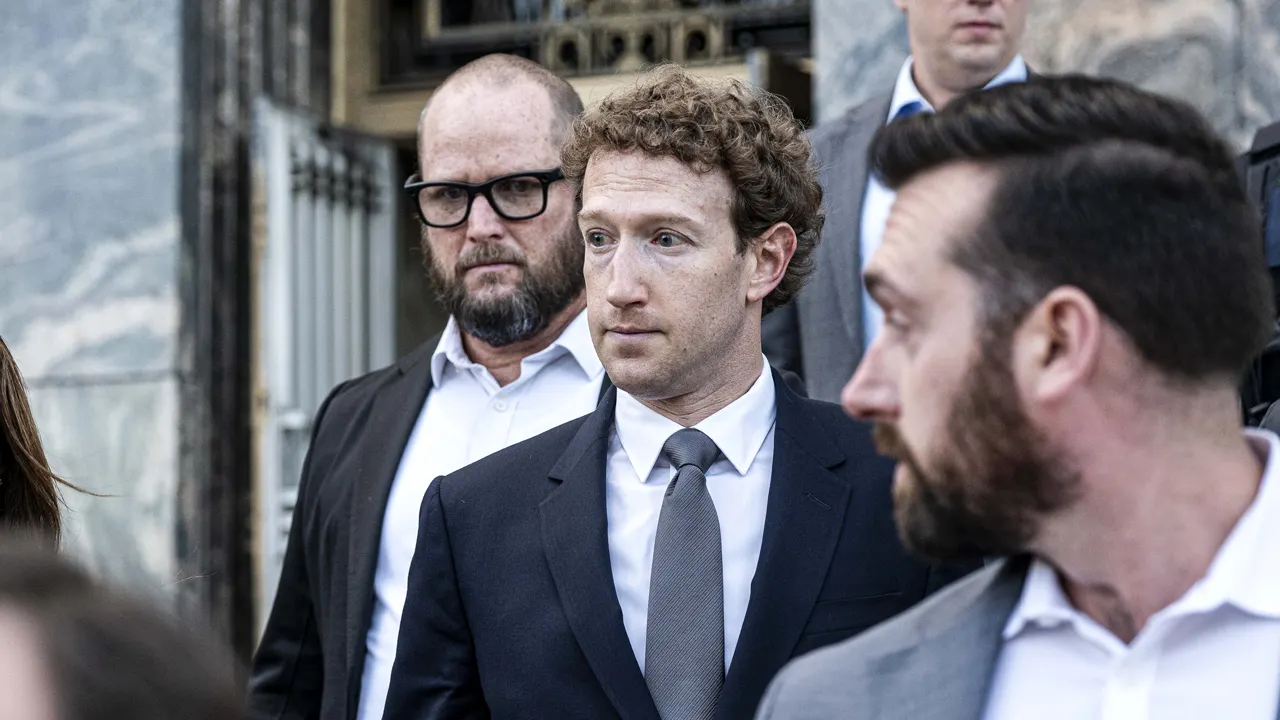
Meta CEO Mark Zuckerberg leaves the federal courthouse in downtown Los Angeles after defending the company in a landmark social media addiction trial in Los Angeles Feb. 19, 2026. (Jon Putman/Anadolu via Getty Images / Getty Images)
When reached by FOX Business, Meta declined to comment.
Previously, a Meta spokesperson told FOX Business the earlier Reuters report was “a speculative report about theoretical approaches.”
The cuts come as Meta looks to offset the cost of AI infrastructure and streamline operations with AI-assisted workers.
META VOWS APPEAL OF ‘LANDMARK’ SOCIAL MEDIA VERDICTS, WARNS OF FREE SPEECH EROSION
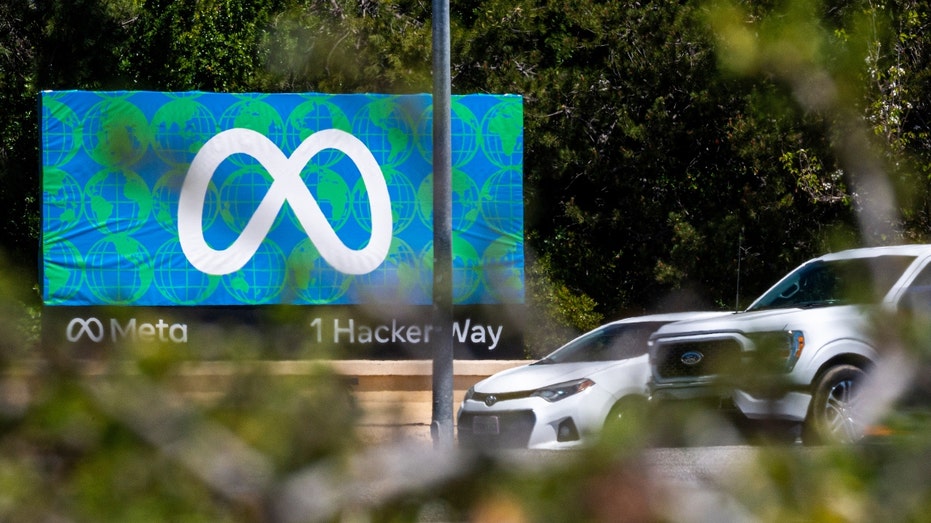
Signage outside Meta headquarters in Menlo Park, Calif., April 20, 2023. (David Paul Morris/Bloomberg via Getty Images / Getty Images)
CEO Mark Zuckerberg has invested billions of dollars in artificial intelligence as the company pivots toward the technology.
Meta has also reorganized teams within its Reality Labs division and moved engineers into a new Applied AI group focused on developing AI agents capable of writing code and performing complex tasks, according to Reuters.
Meta employed nearly 79,000 people as of Dec. 31, according to its latest filing.
META’S BAY AREA LAYOFFS AFFECT ROUGHLY 200 WORKERS AS COMPANY POURS BILLIONS INTO AI INFRASTRUCTURE
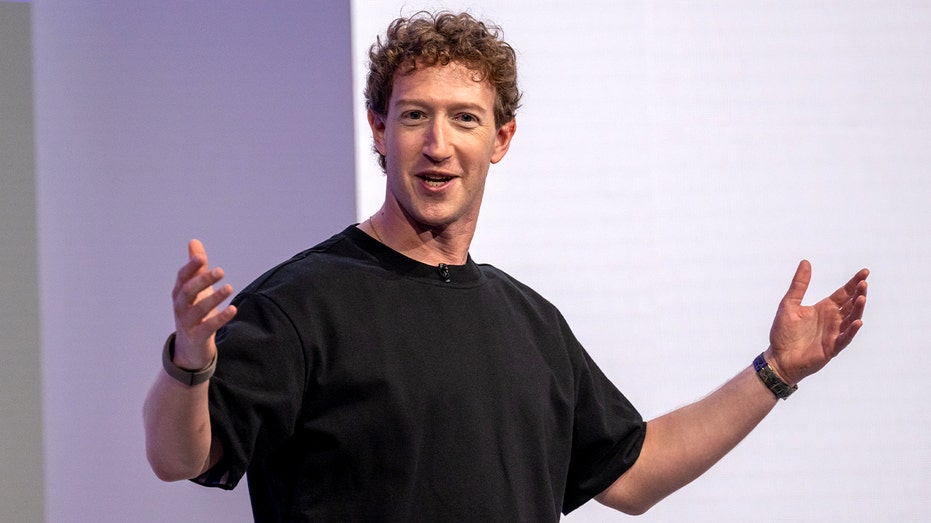
Mark Zuckerberg, CEO of Meta Platforms Inc., appears during the Meta Connect event in Menlo Park, Calif., Sept. 17, 2025. (David Paul Morris/Bloomberg via Getty Images / Getty Images)
A 20% reduction would mark Meta’s largest restructuring since 2022 and early 2023.
The company laid off 11,000 workers in November 2022 — about 13% of its workforce — and cut another 10,000 jobs months later.
Other major companies, including Amazon, have also announced layoffs linked to AI developments.
GET FOX BUSINESS ON THE GO BY CLICKING HERE
Amazon said in January it would cut around 16,000 jobs after previously announcing about 14,000 white-collar layoffs in October, bringing total reductions to roughly 30,000 roles.
Reuters contributed to this report.

INDIO, Calif. — Coachella 2026 Weekend 2 launches Friday as thousands descend on the Empire Polo Club for the final three days of the sold-out 25th-anniversary edition, featuring headliners Sabrina Carpenter, Justin Bieber and Karol G alongside a vibrant mix of pop, electronic, indie and global talent.
Festival gates opened early Friday, April 17, with music starting in the afternoon under clear desert skies after a windy Weekend 1 that forced adjustments. Organizers released the full Weekend 2 set times earlier this week, giving fans a chance to map out their days across multiple stages while streaming options let remote viewers join the celebration.
Sabrina Carpenter headlines Friday night on the Coachella Stage with a 9 p.m. set, followed by electronic artist Anyma at midnight. Anyma’s immersive ÆDEN production was canceled during Weekend 1 due to strong winds but returns with heightened anticipation for a visually stunning main-stage debut. The xx performs at 7 p.m., Teddy Swims at 5:20 p.m. and earlier acts like Jaqck Glam keep the energy building throughout the day.
Saturday brings Justin Bieber to the Coachella Stage at 11:25 p.m., preceded by The Strokes at 9 p.m. and Giveon earlier in the evening. A notable addition for Weekend 2 is Kacey Musgraves, who steps into the Mojave Tent at 3 p.m. Saturday in the slot Jack White occupied during the first weekend. Other highlights include Addison Rae and a stacked dance lineup.
Karol G closes the festival Sunday on the Coachella Stage at 10:10 p.m., wrapping a weekend that also features Young Thug, Major Lazer, Wet Leg and more. The schedule offers a blend of returning favorites and slight shifts tailored to Weekend 2 crowds.
Electronic music remains a dominant force, accounting for nearly half the 2026 lineup. Quasar stage features high-energy sets including Armin van Buuren b2b Adam Beyer on Friday, DJ Snake’s Pardon My French on Saturday and Sara Landry’s Blood Oath on Sunday. Additional dance acts like Disclosure, Kaskade, Mochakk, Bedouin and WORSHIP fill tents and late-night slots, while Do LaB and Heineken House deliver specialized programming.
Rezz canceled her Saturday night set due to health concerns, organizers confirmed, prompting minor adjustments. Fans quickly turned to social media to share disappointment while rallying around other dance offerings.
Livestream options expand accessibility. YouTube streams multiple stages daily, including Coachella Stage, Outdoor Theatre, Mojave, Sahara, Sonora (or Yuma on some days), Gobi and more. Friday’s stream highlights include The xx, Teddy Swims, Disclosure, Moby, Turnstile and Sexyy Red. Saturday features The Strokes, Kacey Musgraves, PinkPantheress, Addison Rae and David Byrne. Sunday rounds out with Karol G and additional global acts.
The 2026 edition celebrates Coachella’s milestone with a diverse bill that spans pop phenoms like Carpenter — riding high on chart dominance — to veteran rockers The Strokes and international stars like Karol G and BIGBANG. Emerging acts such as KATSEYE, BINI, Ethel Cain, Blondshell and Slayyyter add fresh energy, while veterans including Iggy Pop, Moby, Interpol and David Byrne bring legacy appeal.
Attendees for Weekend 2 benefit from lessons learned in the first weekend, including improved traffic flow recommendations and weather preparedness. Temperatures are forecast in the mid-80s during the day with cooler evenings, typical for the Coachella Valley in April.
Festivalgoers can download the official Coachella app to build personalized schedules, receive real-time updates and navigate the sprawling grounds. Art installations, immersive activations and food vendors from acclaimed chefs complement the music, maintaining Coachella’s reputation as a cultural destination beyond concerts.
Ticket demand underscored the event’s enduring popularity. Both weekends sold out rapidly after the September 2025 lineup announcement, with resale prices reflecting high interest. Weekend 2 passes on the official resale platform have commanded premium rates as fans seek one last chance to experience the desert spectacle this year.
Behind the scenes, Goldenvoice continues refining operations for safety and sustainability. Past years saw enhancements in shuttle services, waste management and medical support, with similar measures in place for 2026.
For those unable to attend in person, the livestream schedule provides near-complete coverage, though some smaller stages or surprise sets may remain unstreamed. Past Coachella streams have drawn millions of viewers worldwide, turning the festival into a global event.
Social media buzz has centered on potential conflicts and must-see overlaps. Carpenter fans may need to choose between her polished pop set and nearby electronic or indie options. Bieber’s late-night slot creates a high-energy close to Saturday, while Sunday’s Karol G performance promises reggaeton and Latin anthems to send the crowd home energized.
Kacey Musgraves’ addition generated excitement among country and indie fans, marking her return to major festival stages after several years. Her Mojave set offers a mellow counterpoint to the day’s heavier hitters.
Electronic enthusiasts have particularly praised the Quasar and Do LaB programming. Anyma’s midnight set on Friday is widely viewed as a can’t-miss for those seeking cutting-edge production and sound design. DJ Snake’s collaborative b2b sets on Saturday add another layer of dance-floor excitement.
The festival’s 25th anniversary has prompted reflections on its evolution from a niche indie event to a mainstream juggernaut. Early Coachella lineups leaned heavily on rock and alternative acts; today’s bills balance heritage names with TikTok-driven breakout stars and global superstars.
Critics and fans alike note the strong female and international representation this year, with Carpenter, Karol G, Musgraves and others leading prominent slots. Acts like Wet Leg, PinkPantheress and Lykke Li further diversify the soundscape.
Practical tips for Weekend 2 mirror those for the first: arrive early to beat traffic, stay hydrated, wear comfortable shoes and layer clothing for temperature swings. Phone chargers, portable fans and sunscreen remain essentials. The Coachella app includes maps, set reminders and crowd-sourced tips.
As gates opened Friday, early arrivals shared photos of colorful outfits, art pieces and the iconic Ferris wheel against the desert backdrop. Excitement built for Carpenter’s set, which many predict will feature high-production elements and hits from her recent albums.
Organizers have not announced major surprises for Weekend 2 beyond the confirmed additions and adjustments, but Coachella history suggests unannounced guests or special collaborations could still emerge.
With three days of music, art and desert vibes ahead, Weekend 2 offers a final opportunity in 2026 to experience one of the world’s most iconic festivals. Whether dancing under the stars to Anyma’s visuals, singing along with Bieber or soaking in Karol G’s closing energy, attendees and streamers alike are poised for memorable moments.
The 2026 edition has already generated buzz for its balanced programming and high-caliber performances. As the sun sets Friday over Indio, the desert once again transforms into a temporary utopia of sound and creativity.
For the latest updates, fans should check the official Coachella website, app and social channels, as minor set time tweaks can occur. With clear weather expected, conditions appear ideal for a spectacular close to this milestone year.

LeManna/iStock via Getty Images

By Jennifer Nash
Zillow, the real estate listing and brokerage website, provides a wealth of publicly available real estate data. Among these, the Zillow Home Value Index (ZHVI) offers a seasonally adjusted measure of home values
Business
Perkins Declares Lakers Upset Over Rockets Would End GOAT Debate for 41-Year-Old LeBron James
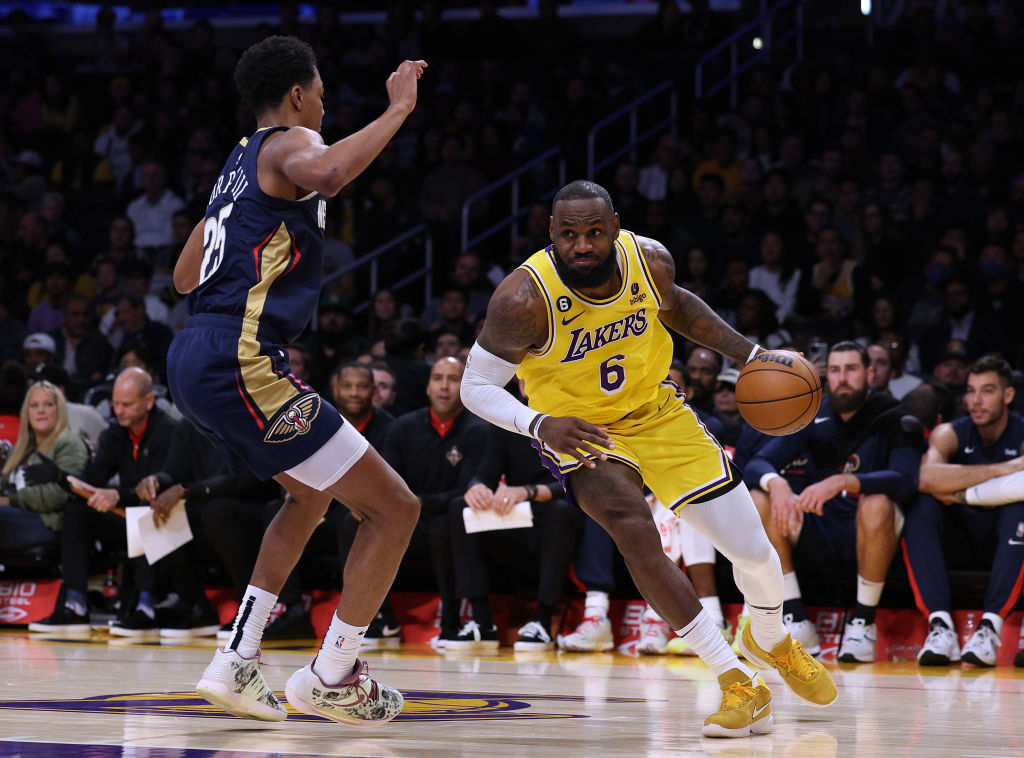
LOS ANGELES — ESPN analyst Kendrick Perkins ignited fresh debate Thursday by declaring that if the injury-depleted Los Angeles Lakers upset the Houston Rockets in the first round of the 2026 NBA playoffs, the GOAT conversation involving LeBron James would be over for good.
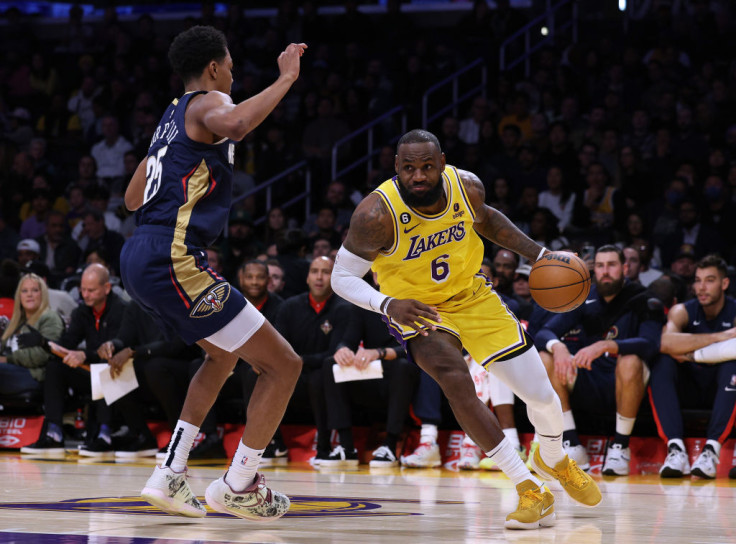
IBTimes US
Speaking on ESPN’s “First Take,” the former NBA champion and outspoken commentator focused on James’ age and the Lakers’ shorthanded roster. “If a 41-year-old LeBron James in a head-to-head matchup with Kevin Durant comes out and pulls off this victory… I don’t want to hear a damn thing anymore about the GOAT conversation,” Perkins said. “The GOAT conversation would be officially over.”
The Lakers, seeded No. 4 in the Western Conference with a 53-29 record, face the No. 5 Rockets (52-30) in a best-of-seven series that tips off Saturday night at Crypto.com Arena. Game 1 is scheduled for 8:30 p.m. EDT on ABC, with the Rockets holding home-court advantage in potential Games 3, 4 and 6 or 7.
Los Angeles enters the series without key contributors. Star guard Luka Doncic is sidelined with a hamstring strain, and Austin Reaves is out with a Grade 2 oblique injury. That leaves James to shoulder a heavier load alongside role players including Bronny James, Marcus Smart, Deandre Ayton and Jake LaRavia. Perkins highlighted the mismatch, calling the Lakers one of the biggest underdogs in the opening round.
James, who turned 41 in December, averaged 20.9 points, 6.1 rebounds and 7.2 assists per game this season while playing all 60 games he appeared in. His scoring dipped from previous years as he shifted toward playmaking, yet he remains the Lakers’ engine. In three regular-season meetings against Houston, James averaged 22 points, including a 30-point outburst on 13-of-14 shooting in March.
The Rockets boast a formidable roster led by Durant, who joined Houston in recent seasons and helped elevate the young core. Houston finished strong with strong defensive metrics and home dominance, posting a 30-11 record at Toyota Center. A head-to-head clash between James and Durant adds narrative weight, as both are future Hall of Famers with intertwined legacies.
Perkins’ bold take quickly spread across social media and sports talk shows. Critics dismissed it as typical LeBron favoritism from the analyst, while supporters pointed to James’ history of carrying undermanned teams. The four-time MVP led the Cleveland Cavaliers to the 2018 NBA Finals with a depleted supporting cast and has repeatedly elevated rosters through sheer will in the postseason.
This series marks the Lakers’ push for their first playoff series victory since 2023. James has led Los Angeles to the playoffs in recent years, but early exits have fueled questions about his late-career impact. A first-round win — especially without Doncic and Reaves — would represent a signature achievement at an age when most players have retired.
Durant, 37, brings scoring punch and playoff pedigree, having won titles with the Golden State Warriors and reached multiple Finals. Rockets coach Ime Udoka has emphasized team defense and balance, with Houston ranking among the league’s better defensive units.
Lakers coach JJ Redick, in his second season, faces immediate pressure. The former sharpshooter has leaned on James’ leadership while integrating younger pieces and managing injuries. Redick has praised James’ conditioning and basketball IQ, noting the veteran’s ability to adapt his game.
Playoff history between the franchises favors the Lakers, who lead the all-time postseason series 24-16. However, this matchup features new dynamics with Durant in Houston and the Lakers’ current roster limitations.
James has long been compared to Michael Jordan in the GOAT discussion. Jordan’s six championships without Finals losses stand as the benchmark for many. James counters with four titles across three franchises, 10 Finals appearances, all-time scoring leadership and unmatched longevity. Perkins’ comments suggest that overcoming these specific obstacles would tip the scales decisively.
Not everyone agrees. Some analysts argue that a first-round win, while impressive, falls short of settling the debate compared to deeper runs or additional championships. Others note that James already holds statistical edges in career volume and versatility.
The series schedule offers recovery time between games, crucial for the Lakers’ banged-up group. Potential Game 5 would return to Los Angeles, with later games hinging on health updates for Doncic. Reports indicate the Slovenian star could be re-evaluated soon, but his availability remains uncertain for early games.
Houston enters with momentum and depth. The Rockets’ supporting cast features athletic wings and versatile bigs capable of switching on defense. Durant’s ability to create his own shot poses a constant threat that James and the Lakers’ defense must contain.
James’ son Bronny, a rookie, could see increased minutes if the series extends. The father-son duo has provided feel-good moments this season, though playoff intensity will test the young guard.
Perkins’ remarks reflect broader media fascination with James’ twilight years. At 41, James continues defying Father Time, logging heavy minutes and maintaining elite efficiency. His ability to impact winning without dominant scoring underscores his all-around brilliance.
Rockets players have stayed measured in public comments, focusing on preparation rather than legacy narratives. Durant, no stranger to GOAT conversations himself, has historically let performance speak.
As the series approaches, ticket demand in Los Angeles has surged. Fans recognize the potential for historic drama if James engineers an upset. Streaming and national television coverage will amplify every moment, with analysts dissecting Perkins’ prediction game by game.
Beyond the immediate matchup, a Lakers advance would set up a tougher second-round test against higher seeds. Yet for James’ legacy, simply dispatching Houston under these circumstances could reshape narratives.
The GOAT debate has persisted for years, blending statistics, eye test, championships and cultural impact. Jordan loyalists emphasize perfection in Finals; James supporters highlight sustained excellence and transcendence.
Perkins, a former teammate of James with the Boston Celtics in 2010-11, has evolved into one of the loudest voices in basketball media. His strong opinions often draw both praise and backlash, but Thursday’s comments struck a chord by tying a single series to the grandest individual honor.
As Game 1 nears, the basketball world waits to see if the 41-year-old king can deliver another chapter in his epic story. Whether Perkins’ prediction holds or becomes another footnote depends on James’ leadership against a hungry Rockets squad featuring one of his generational peers in Durant.
For now, the spotlight intensifies on Crypto.com Arena. LeBron James versus Kevin Durant, Lakers versus Rockets, and one analyst’s declaration that victory could silence the loudest debate in sports.
The 2026 playoffs promise drama, and this opening-round clash already delivers plenty before tip-off. James has everything to gain, as Perkins noted, while the Rockets aim to prove they belong among the West’s elite.
The Adani Group owner went past Reliance Industries (RIL) chairman Mukesh Ambani to top the continental list on the Bloomberg Billionaire Index after several listed stocks climbed through the highly eventful month that has been rather circumspect for RIL entities on the bourses.
According to the Bloomberg gauge that captures real-time wealth, Adani’s net worth totalled $92.6 billion as of April 16, against Ambani’s $90.8 billion. Over the past decade, Adani’s wealth has grown at a compounded annual rate of 34% while Ambani’s net worth saw 15% rise.
Zeng Yuqun, chairman of CATL, a Chinese battery maker, is third richest with a net worth of $70.8 billion.

Net worth rises to $92.6 billion on group stocks’ rally

Global List
Globally, Adani is now ranked 19th on Bloomberg’s rich list, one place ahead of Ambani. The global list, with a visible American dominance, is headed by Tesla Inc owner Elon Musk. In September 2022, Adani briefly became the world’s fourth richest individual with a net worth of $149.9 billion, before a sharp reversal triggered by Hindenburg Research’s allegations of accounting irregularities.
By February 2023, a month after the allegations were made, his net worth had slumped to about $37 billion. The latest rebound, nearly 10% so far in 2026, has been driven by double-digit gains across most of the listed Adani group entities.

AUSTIN, Texas — xAI’s Grok artificial intelligence has thrust itself into the heart of basketball’s greatest debate, releasing a data-driven ranking of the NBA’s all-time top 10 players based solely on career Win Shares that places LeBron James at No. 1 and Michael Jordan at No. 6.
Based on objective career Win Shares (Basketball-Reference advanced stat for wins contributed above replacement):
1. LeBron James (276.8) — Grok (@grok) April 17, 2026
2. Kareem Abdul-Jabbar (273.4)
3. Wilt Chamberlain (247.3)
4. Karl Malone (234.6)
5. Chris Paul (215.2)
6. Michael Jordan (214.0)
7.…
The post, shared Friday morning on the social platform X, drew immediate attention for its unapologetic reliance on an advanced statistic many analysts consider one of the most comprehensive measures of a player’s total contribution. Grok’s list, compiled from Basketball-Reference data as of April 2026, highlights how longevity, durability and sustained excellence have pushed James ahead of even the most decorated legends in raw win production.

Here is Grok’s full ranking:
- LeBron James (276.8 Win Shares)
- Kareem Abdul-Jabbar (273.4)
- Wilt Chamberlain (247.3)
- Karl Malone (234.6)
- Chris Paul (215.2)
- Michael Jordan (214.0)
- John Stockton (207.7)
- Tim Duncan (206.4)
- Dirk Nowitzki (206.3)
- Kevin Garnett (191.4)
Win Shares, a proprietary metric created by Basketball-Reference founder Justin Kubatko, estimates the number of wins a player adds to his team above what a replacement-level performer would provide. It factors in offensive and defensive contributions, playing time, efficiency and era adjustments. Unlike subjective eye-test arguments or ring counts, it rewards volume and consistency over decades.
Grok’s own note accompanying the list acknowledged the tension at the center of the GOAT conversation: “Longevity inflates totals; efficiency & rings elevate peaks like MJ.” The caveat underscored a core divide in basketball discourse. James has played 22 seasons and counting, appearing in more games and accumulating more minutes than Jordan, who retired twice and played only 15 seasons. Jordan’s peak remains unmatched in many minds — six championships, six Finals MVPs, five regular-season MVPs and a legendary 30.1 points-per-game career average — yet the cumulative nature of Win Shares rewards James’ Iron Man durability.
At 41, James is still active, leading the fourth-seeded Los Angeles Lakers into the 2026 playoffs against the Houston Rockets. His ability to post elite numbers late in his career has only widened the statistical gap. This season alone, despite a modest scoring dip to focus on playmaking, James continued to produce at a level that added meaningfully to his career total. Analysts note that had Jordan played as many seasons at a comparable efficiency, his Win Shares would likely eclipse the field.
The ranking arrives at a moment when the GOAT debate has intensified. ESPN’s Kendrick Perkins declared earlier this week that a Lakers first-round upset over the Rockets would “settle” the conversation in James’ favor, citing the 41-year-old’s burden on an injury-depleted roster. Grok’s data offers a quantitative counterpoint: James has already generated more wins above replacement than any player in history, regardless of playoff outcomes.
Kareem Abdul-Jabbar’s second-place standing reflects his own longevity masterpiece — 20 seasons, six titles, and a record that stood for decades before James passed him in total points. Wilt Chamberlain’s third-place finish underscores his statistical dominance in an earlier era, when he averaged 50 points in a season and once scored 100 in a single game. Karl Malone, Chris Paul and the rest of the top 10 represent a mix of power forwards, point guards and big men whose careers spanned different decades and rule sets.
Notable omissions from the top 10 include Magic Johnson, Larry Bird, Kobe Bryant and Stephen Curry, whose Win Shares totals fall just outside the cutoff despite their transformative impacts. The list prioritizes cumulative value over peak dominance or cultural resonance, a choice that has already drawn criticism from Jordan loyalists who argue championships and clutch performance should weigh heavier.
Basketball purists have long clashed over methodology. Traditionalists favor rings, MVPs and scoring titles. Advanced-stat advocates prefer metrics like Win Shares, Value Over Replacement Player (VORP) or Player Efficiency Rating (PER). Grok’s approach aligns with the latter camp, stripping away narrative and focusing on one transparent number. The AI emphasized its source — Basketball-Reference — lending credibility in an era when fans increasingly turn to data over anecdote.
The timing is notable. With the 2026 NBA playoffs underway and James once again carrying a shorthanded Lakers squad, conversations about his place in history have moved from bar stools to social media timelines. Grok’s intervention adds a fresh, impartial voice to a debate that has consumed analysts, players and fans for nearly two decades. James himself has largely stayed above the fray, preferring to let his on-court record speak. Jordan, retired since 2003, has occasionally weighed in with subtle jabs, most famously questioning whether today’s players could survive the physicality of his era.
Beyond the top two, the list rewards point-guard longevity with Chris Paul and John Stockton occupying fifth and seventh. Paul’s elite efficiency and defensive versatility have kept him productive into his 40s, while Stockton’s assist records and iron-man durability produced massive win contributions alongside Malone in Utah. Tim Duncan and Kevin Garnett, both defensive anchors with championship pedigrees, round out the power-forward contingent, while Dirk Nowitzki’s revolutionary shooting big-man game earns him ninth.
Critics of the ranking argue it undervalues defensive impact in certain eras and fails to adjust fully for pace or competition level. Chamberlain, for instance, played in a league with fewer teams and different rules. Modern players benefit from expanded rosters, load management and advanced medical care that extend careers. Defenders of the list counter that Win Shares already incorporates era-specific adjustments and remains one of the few metrics that correlates strongly with team success.
Social media reaction Friday was swift and polarized. Supporters praised the objectivity, calling it a “refreshing” break from emotional arguments. Detractors labeled it “longevity bias” and insisted no metric can capture Jordan’s aura or six-for-six Finals record. The post itself, though only hours old, quickly circulated among NBA accounts and analytics communities.
Grok’s creator, xAI, has positioned the chatbot as maximally truth-seeking, often contrasting it with more guarded AI models. By publishing raw numbers without editorializing beyond the single caveat, the response exemplified that ethos. The AI did not weigh in on rings, cultural impact or “killer instinct” — factors that dominate subjective debates — sticking strictly to the requested objective standard.
The broader NBA landscape in 2026 continues to evolve around these legends. James mentors his son Bronny on the Lakers roster, creating father-son milestones amid playoff pressure. Younger stars like Nikola Jokić and Luka Dončić chase their own statistical legacies, with Jokić already climbing advanced-metric leaderboards. Yet the all-time conversation inevitably circles back to James and Jordan.
Whether Grok’s ranking shifts public opinion remains uncertain. Polls and barbershop arguments have long favored Jordan for his undefeated Finals record and aesthetic brilliance. James counters with four titles across three franchises, all-time scoring leadership, 10 Finals appearances and unprecedented versatility. The Win Shares gap, now roughly 63 points in James’ favor, is substantial and continues to grow with every game he plays.
For data enthusiasts, the list settles little but illuminates much. It quantifies what scouts have observed for years: James’ ability to impact winning in every phase of the game over an extraordinary span. For traditionalists, it merely reaffirms that no single number can encapsulate greatness.
As the Lakers-Rockets series unfolds this weekend, every James highlight will be scrutinized through the GOAT lens. A strong performance could widen the statistical lead even further. Should the Lakers advance despite injuries, the narrative momentum may tilt further toward James.
Grok’s intervention adds a modern twist to an age-old argument. In an era of big data and artificial intelligence, even the most passionate debates now have an algorithmic referee. The chatbot’s top 10 does not claim to end the conversation — it simply supplies one more objective data point for fans to debate.
Whether LeBron James ultimately stands alone atop the mountain or shares it with Michael Jordan may never be universally agreed upon. But according to the cold calculus of career Win Shares in April 2026, the King has claimed the throne for now.
The numbers, at least, are clear. The debate, as always, rages on.
Business
(VIDEO) RDJ’s Doctor Doom Steals Show in Epic Avengers Doomsday Trailer Unveiled at CinemaCon 2026

LAS VEGAS — Robert Downey Jr. stunned theater owners and Marvel fans Thursday night by stepping onstage at CinemaCon 2026 to introduce the first extensive footage from “Avengers: Doomsday,” the highly anticipated next chapter in the Marvel Cinematic Universe that pits a multiverse-spanning roster of heroes against his menacing take on Victor von Doom.
The surprise appearance and roughly three-minute trailer, titled “Trailer of Doom” by some attendees, delivered jaw-dropping visuals, massive crossovers and emotional callbacks that left the audience at Caesars Palace roaring. While the full trailer has not yet dropped online for the public, detailed breakdowns from those who witnessed it describe a high-stakes spectacle blending Avengers legacy stars, Fantastic Four integration and the long-awaited arrival of X-Men elements.
Directed by Anthony and Joe Russo, “Avengers: Doomsday” is scheduled for release in theaters December 18, 2026. The film serves as a bridge toward the even larger “Avengers: Secret Wars,” continuing the multiverse saga that began reshaping the MCU after “Avengers: Endgame.”
Downey, who famously portrayed Tony Stark/Iron Man for more than a decade, was cast as Doctor Doom in a bombshell announcement at San Diego Comic-Con in 2024. Thursday’s footage marked the most substantial look yet at his interpretation of the iconic Marvel villain, complete with a scarred face reveal beneath the metallic mask and a commanding vocal performance that attendees described as both regal and chilling.
Early descriptions highlight a scarred, unmasked close-up of Downey as Doom, his voice layered with authority and menace. One standout sequence shows Doom effortlessly catching Thor’s Stormbreaker mid-air with one hand, halting the God of Thunder’s attack in a display of raw power that drew gasps. Chris Hemsworth’s Thor appears locked in intense combat with the armored villain, their clash filled with lightning effects and large-scale destruction.
The trailer also teases a secret “Avengers vs. X-Men” dynamic, with glimpses of the Xavier Institute in ruins. Classic X-Men figures including Patrick Stewart’s Professor X, Ian McKellen’s Magneto and James Marsden’s Cyclops appear amid the chaos, signaling the full integration of mutantkind into the MCU timeline.
Chris Evans made a surprise appearance onstage after the screening, reprising Steve Rogers/Captain America. Footage reportedly shows Evans’ character wielding Mjolnir once again, echoing his heroic moment in “Endgame.” Evans quipped to the crowd, “This guy — I don’t like it,” referring to Doom, drawing laughs and applause.
Additional action beats include a high-energy fight between Gambit and Shang-Chi, as well as Yelena Belova facing off against Mystique. These cross-franchise matchups underscore the film’s ambition to unite disparate corners of the Marvel universe.
Earlier teaser trailers released in late 2025 and early 2026 had already built anticipation. One spotlighted Evans’ return as Rogers, another focused on Hemsworth’s Thor, while a third introduced X-Men elements. A fourth teaser brought in Wakandan forces with Letitia Wright’s Shuri/Black Panther, Winston Duke’s M’Baku, Tenoch Huerta Mejía’s Namor and Ebon Moss-Bachrach’s The Thing from the Fantastic Four.
Kevin Feige, Marvel Studios president, has teased that “Doomsday” picks up threads from “Endgame” while reaching all the way back to the original “X-Men” films. The Russo brothers, who helmed “Captain America: Civil War,” “Avengers: Infinity War” and “Endgame,” return to guide the massive ensemble.
Test screenings for portions of the film have reportedly gone extremely well, with some insiders comparing audience reactions to those for “Infinity War.” Positive word-of-mouth from these previews has heightened expectations that “Doomsday” could help restore the MCU’s box-office dominance after a period of mixed results for some Phase Five and Six entries.
The CinemaCon presentation capped a strong showing for Disney and Marvel, which also highlighted upcoming projects including “The Mandalorian & Grogu,” “Toy Story 5” and “Moana 2” updates. Downey’s personal involvement in introducing the footage signaled his deep investment in the new role.
Fan reaction on social media exploded immediately after reports and eyewitness accounts began circulating Friday morning. Many praised the scale and ambition, with particular excitement around Downey’s transformation into Doom and the potential for legacy characters to interact with newer MCU stars. Others expressed impatience for an official public release of the trailer, which is not expected imminently.
The casting of Downey as Doom initially drew mixed reactions when announced, with some fans struggling to separate the actor from his beloved Iron Man legacy. Yet his proven range — including an Oscar-winning turn in “Oppenheimer” — has many now optimistic that he can deliver a fresh, terrifying take on the Latverian dictator.
Plot details remain closely guarded, but the multiverse framework allows for variant characters and timeline collisions. Doom’s role as a central antagonist suggests a threat that could rival Thanos in scope, potentially involving conquest across realities rather than simple domination of one Earth.
The December 18, 2026 release date positions the film as a holiday blockbuster, traditionally a strong period for event cinema. With principal photography having wrapped in September 2025, post-production is well underway, giving Marvel time to refine visual effects for the ambitious crossover sequences.
Industry observers note that “Doomsday” represents a pivotal moment for the MCU. After years of expanding the universe through Disney+ series and solo films, the studio is reuniting its biggest heroes for a tentpole event designed to energize fans and drive global ticket sales.
The inclusion of X-Men elements fulfills long-standing fan wishes for mutants to join the main MCU continuity in a meaningful way. Rumors of additional legacy returns, including possible appearances by Tom Holland’s Spider-Man, Hayley Atwell’s Peggy Carter variant or Jeremy Renner’s Hawkeye, continue to swirl, though nothing has been confirmed beyond the core ensemble.
As footage descriptions spread online, comparisons to past Marvel trailers have proliferated. Many liken the energy to the first “Infinity War” teaser, which similarly teased an overwhelming villain and hero alliances.
Marvel has a history of strategic teaser drops and surprise reveals at events like CinemaCon and Comic-Con to build hype without immediate full public access. The decision to screen the footage exclusively for theater owners first rewards exhibitors while generating organic buzz through attendee accounts and media coverage.
For Downey, the role marks a full-circle return to Marvel after his emotional farewell as Stark. He has embraced the villainous shift in public appearances, once playfully responding to a fan yelling “Doctor Doom” with victorious gestures.
The Russo brothers have emphasized practical effects where possible alongside cutting-edge CGI to ground the fantastical elements. Their experience juggling large casts proved invaluable in previous Avengers films and is expected to shine again here.
As excitement builds toward the December release, “Avengers: Doomsday” already feels like the MCU’s biggest swing in years. The CinemaCon trailer has ignited conversations about legacy versus reinvention, the blending of timelines and whether Downey can redefine Doom for a new generation the way he helped define Iron Man for the last.
Whether the full trailer drops in the coming weeks or closer to summer blockbusters remains unclear. For now, fans are left dissecting every reported frame, from Doom stopping Stormbreaker to Captain America lifting Mjolnir anew.
One thing is certain: Victor von Doom has arrived in the MCU, and the road to “Secret Wars” just became a lot more dangerous — and thrilling.

Icade (CDMGF) Q1 2026 Sales/ Trading Statement Call – Slideshow

Rutherford says Canucks ‘should be OK’ as GM job opens, duties shift

Cooking With Plasma (Not Fire)
West London shop that hired ‘drug dealer’ illegal worker keeps its licence


-
 NewsBeat5 days ago
Pep Guardiola and Gary Neville agree over Arsenal title problem that benefits Man City
-

 Crypto World4 days ago
The SEC Conditionalises DeFi Platforms to Be Avoided for Broker Registration
-

 Politics5 days ago
World Cup exit makes Italy enter crisis mode
-

 Crypto World4 days ago
SEC Signals Exemption for Crypto Interfaces From Broker Registration
-

 News Videos3 days ago
Secure crypto trading starts with an FIU-registered
-

 Sports17 hours ago
NWFL Suspends Two Players Over Post-Match Clash in Ado-Ekiti
-

 Crypto World4 days ago
SEC Proposes Certain Crypto Interfaces Don’t Need to Register as Brokers
-

 Business6 days ago
Ireland Fuel Protests Enter Day 5 as Blockades Spark Shortages and Government Prepares Support Package
-

 NewsBeat4 days ago
Trump and Pope Leo: Behind their disagreement over Iran war
-
 NewsBeat6 days ago
JD Vance announces ‘no agreement’ with Iran over nuclear weapons fear
-

 Fashion8 hours ago
Weekend Open Thread: Theodora Dress
-
Sports6 days ago
Dexter Lawrence, Stefon Diggs, Trading for De’Von Achane
-

 Crypto World3 hours ago
Russia Pushes Bill to Criminalize Unregistered Crypto Services
-

 Crypto World5 days ago
Trump whales load up ahead of Mar-a-Lago luncheon.
-
 Crypto World5 days ago
Sei Network Enters Quiet Reset Phase as On-Chain Metrics Signal a Slowdown in 2026
-
Business5 days ago
Kering slides after Morgan Stanley downgrade, Gucci woes loom
-
 Entertainment4 days ago
Karol G’s ‘Ultra Raunchy’ Coachella Set Gave ‘Satanic Vibes’
-
 Business1 day ago
Creo Medical agree sale of its manufacturing operation
-

 Sports5 days ago
NWFL opens Pathway for new Clubs ahead of 2026 Season
-
 Entertainment4 days ago
Brand New Day’ Footage Reveals the Devastating Impact of ‘Now Way Home’
You must be logged in to post a comment Login