
Crypto World
Bitcoin’s Negative Funding Rate Sticks While BTC Trades Above $75K

Key takeaways:
-
Negative Bitcoin futures funding rates signal bear-market losses and forced liquidations rather than a shift in sentiment.
-
Institutional inflows into Bitcoin ETFs and corporate accumulation suggest that spot demand remains solid.
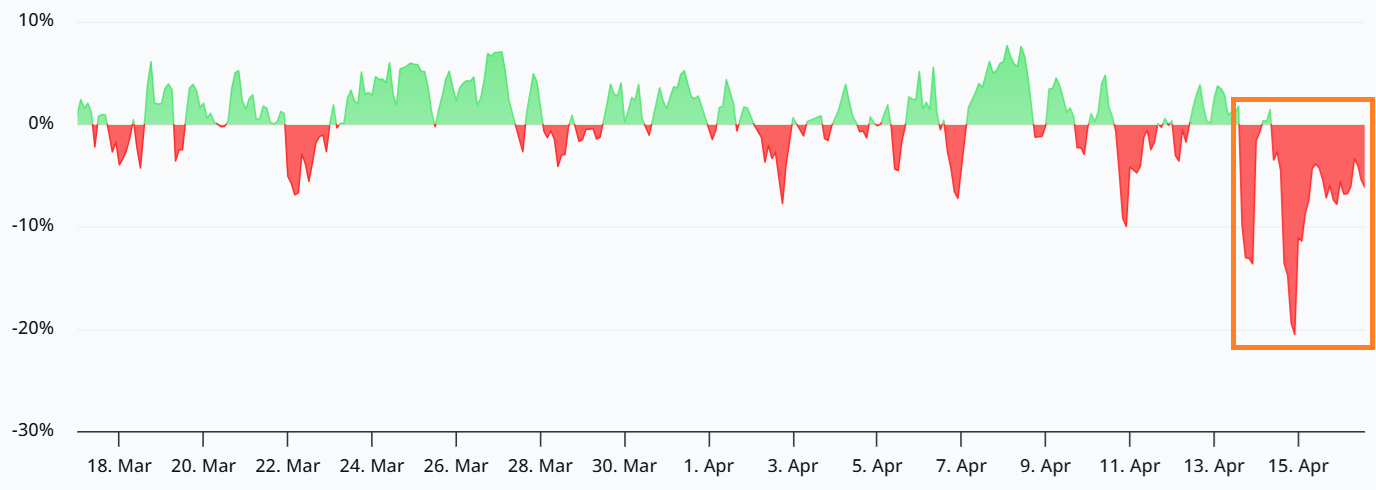
Bitcoin (BTC) sold off in early trading hours at the US stock market open, briefly losing the $75,000 level before rebounding. This unexpected price swing triggered $120 million in liquidations of leveraged long (buy) BTC futures positions. During this ordeal, the Bitcoin funding rate has remained negative, which could hint at further downside and a potential advantage to the bears.

The negative funding rate has been the norm since Monday, indicating a lack of demand for bullish leverage. Negative rates mean shorts (sellers) are the ones paying to keep their positions open. Under neutral conditions, the indicator should range between 5% and 10% to compensate for the cost of capital and exchange risks. At first sight, a 20% rate indicates conviction, but that is not the whole story.
Liquidations back Bitcoin’s negative funding rate
The perpetual contract funding rates are calculated every 8 hours on most exchanges. Temporary spikes to 20%, either positive or negative, are not particularly concerning for most traders, as they amount to a 0.05% daily fee. In essence, even if the position has extremely high leverage, such as 20x, the cost is 1%. Unless this issue persists for much longer, it is hardly a burden.

Bitcoin bearish positions have been forcefully liquidated for $365 million since Monday, which has naturally eroded collateral on short positions. Traders could have opted to sit tight rather than rush to add margin, anticipating that funding rates would adjust on their own. Thus, the negative funding rate reflects losses from bears rather than conviction.

Bitcoin’s intraday moves have largely tracked the S&P 500 index for the past couple of weeks. The US stock market jumped to an all-time high on Thursday while Bitcoin remains distant from its $126,200 peak. Consecutive failures to re-establish the $76,000 level partially explain the lack of enthusiasm in BTC derivatives markets. Still, the latest round of US economic data is supportive for risk markets, including Bitcoin.
US industrial production decreased by 0.5% in March from the previous month, according to data released by the Federal Reserve on Thursday. Consumer durable goods were the negative highlight, with automotive production down 2.8%. In parallel, the continuing jobless claims increased 31,000 to a seasonally adjusted 1.818 million during the week ended April 4.
While counterintuitive, the S&P 500 benefited from the increased economic recession, which forced the government to accelerate stimulus measures. The upward pressure on inflation, which has also been fueled by the surge in oil prices, reduces incentives to hold fixed-income investments.
Related: Bitcoin bull run ‘still too early’ to call as demand lags exiting capital–Analyst

The Bitcoin options market data provides no signs of excessive demand for downside price protection. The premium paid on put (sell) options on Deribit has lagged behind the equivalent call (buy) instruments over the past week. The $921 million in net inflows into US-listed Bitcoin spot ETFs over five days, along with continued accumulation from Strategy (MSTR US), boosted investors’ confidence.
At the moment, Bitcoin’s negative funding rate does not raise alarms, especially since institutional investor demand remains strong in BTC’s spot markets.
This article is produced in accordance with Cointelegraph’s Editorial Policy and is intended for informational purposes only. It does not constitute investment advice or recommendations. All investments and trades carry risk; readers are encouraged to conduct independent research before making any decisions. Cointelegraph makes no guarantees regarding the accuracy or completeness of the information presented, including forward-looking statements, and will not be liable for any loss or damage arising from reliance on this content.



France’s finance minister backs bank‑issued euro stablecoins and Qivalis’ 2026 launch, pivoting policy to keep Europe’s digital rails denominated in euros, not dollars.
Summary
- France’s finance minister Roland Lescure says Europe needs more euro-based stablecoins and urges banks to explore tokenized deposits.
- Qivalis, a 12‑bank alliance including ING, UniCredit, BBVA and BNP Paribas, is targeting a MiCA‑compliant euro stablecoin launch in H2 2026.
- The push marks a shift from France’s earlier hard‑line stance on private stablecoins and aims to curb “digital dollarization” in European payments and DeFi.
France’s finance minister Roland Lescure has publicly called for more euro‑denominated stablecoins and urged European banks to move ahead with tokenized deposits, signaling a sharp policy pivot in Paris toward bank‑issued digital euros. Speaking at a crypto conference in Paris on April 17, Lescure said the current volume of euro‑pegged stablecoins versus dollar tokens is “not satisfactory” and warned that Europe cannot leave its digital payment rails to foreign currencies. His remarks come as the Qivalis alliance of 12 major European banks, including ING, UniCredit, BBVA and BNP Paribas, prepares a MiCA‑compliant euro stablecoin for launch in the second half of 2026.finance.
Lescure told attendees that “Europe need[s] more euro‑based stablecoins” and said he “strongly encourage[s] banks to further explore the launch of tokenised deposits,” framing the projects as tools to strengthen European digital sovereignty and reduce reliance on dollar‑pegged tokens. He explicitly endorsed the Qivalis initiative, saying “that is what we need and that is what we want,” in what is effectively a political green light for the consortium’s plans to issue a euro‑pegged stablecoin under the EU’s Markets in Crypto‑Assets, or MiCA, framework.
Qivalis, based in Amsterdam, is working toward regulatory approval from the Dutch central bank and aims to operate as an electronic money institution, with CEO Jan‑Oliver Sell calling a native euro stablecoin “a major turning point for digital commerce and financial innovation in Europe.” The group’s stated goal is to become the “interface between blockchain and the euro” and the default euro token across exchanges, custodians and DeFi platforms, a direct attempt to head off “digital dollarization” from dollar‑linked tokens like USDT and USDC.
Lescure’s comments also land against a tougher French line on non‑euro stablecoins, with the Bank of France recently calling for stricter limits on foreign stablecoin payments under MiCA to mitigate systemic risk. European regulators have warned that widespread use of non‑EU stablecoins inside the bloc could undermine monetary policy, pushing authorities to explore ways of tightening rules on large dollar‑based tokens even as they open the door to euro projects.
The broader European shift is already visible across the banking sector, with euro stablecoin projects moving from “education and risk‑understanding” into concrete launch preparations as MiCA’s unified regime reduces regulatory uncertainty. For France, backing Qivalis and euro stablecoins is an attempt to ensure that when on‑chain settlement volumes rival traditional card networks, it is the euro—rather than the dollar—that anchors European rails, in both payments and tokenized assets.
Related crypto.news coverage includes a recent story on how stablecoins are tipped to power global settlement, an explainer on what infrastructure companies use to add stablecoin payments, and a regional look at how firms like Stables and Mansa are stitching together Asia’s missing stablecoin rails.


Kraken parent Payward will buy Bitnomial for up to $550M, adding a full CFTC derivatives stack just as Deutsche Börse’s $200M stake backs its U.S. build‑out.
Summary
- Payward, Kraken’s parent, plans to buy 100% of U.S. crypto derivatives venue Bitnomial for up to $550 million in cash and stock, pending CFTC approvals in H1 2026.
- Bitnomial is the first crypto‑native platform to hold all three key U.S. derivatives licenses — DCM, DCO and FCM — giving Payward a vertically integrated, onshore futures and clearing stack.
- The move follows Deutsche Börse’s $200 million investment for a 1.5% stake in Payward, valuing Kraken at about $13.3 billion and underscoring Wall Street’s bet on its derivatives build‑out.
Payward Inc., the parent company of crypto exchange Kraken, has agreed to acquire Chicago‑based crypto derivatives venue Bitnomial in a deal worth up to $550 million in cash and stock, further accelerating its push into U.S. regulated futures and options. The companies expect the transaction to close in the first half of 2026, subject to customary regulatory approvals from the Commodity Futures Trading Commission (CFTC) and other U.S. authorities.
Bitnomial is the first crypto‑native operator to assemble the full CFTC derivatives stack, running a Designated Contract Market, a Derivatives Clearing Organization and a Futures Commission Merchant under one roof. According to Bitnomial’s own materials, its exchange and clearinghouse support “leveraged spot, perpetuals, futures, options, and prediction markets, all on one CFTC‑regulated exchange with crypto margin and settlement,” giving Payward an immediate onshore home for products that previously leaned on offshore venues.
Under the plan, Payward will plug Bitnomial’s trading and clearing infrastructure into Kraken, NinjaTrader and Payward Services, offering banks, brokerages and fintechs a single API into CFTC‑regulated crypto derivatives. Kraken has already been expanding in this direction; in a prior crypto.news story it acquired CFTC‑regulated Small Exchange for about $100 million to secure a DCM license, and later used that footprint to launch U.S. regulated derivatives tied to CME‑listed futures.
The Bitnomial deal lands just days after German exchange operator Deutsche Börse agreed to buy a 1.5% fully diluted stake in Payward for $200 million, in a transaction that values Kraken at roughly $13.3 billion. Deutsche Börse said the partnership is meant to “deepen” its role in regulated crypto, tokenized markets and derivatives, with a focus on “enhanced liquidity for institutional clients across geographies,” effectively giving Europe’s largest exchange group a front‑row seat in Kraken’s derivatives build‑out.
Regulators have also been preparing the ground for this shift. CFTC Commissioner Caroline Pham has pushed to bring leveraged spot crypto trading and perpetual‑style products onshore under full DCM and DCO oversight, arguing they can be offered safely if “brought into our markets under well‑defined rules and supervision.” In that context, Bitnomial’s December 2025 launch of the first‑ever leveraged retail spot crypto market under CFTC jurisdiction — which CEO Luke Hoersten called “a watershed moment for U.S. crypto markets” — looks like a dress rehearsal for the infrastructure Payward is now buying.
For institutional order flow, the battle increasingly turns on who controls the cleanest regulatory pipe: the combination of licenses, clearing and prime‑style services that let banks and asset managers trade crypto derivatives without touching offshore platforms. With Bitnomial’s stack and Deutsche Börse’s capital, Payward is positioning Kraken as a CME‑style hub for digital asset futures, options and leveraged spot inside the U.S., echoing its broader strategy to bridge tokenized assets, equities and derivatives through initiatives like its xStocks platform.
In addition, Kraken’s derivatives and market‑structure push includes stories on its U.S. derivatives rollout, the Small Exchange acquisition, and Deutsche Börse’s $200 million stake in Payward.


SEC Chair Paul Atkins launches “Material Matters,” with Hester Peirce and Mark Uyeda using the debut to pitch a more pro‑innovation crypto stance and clearer rulemaking.
Summary
- SEC Chair Paul Atkins has launched “Material Matters,” a new agency podcast, using the first episode to spotlight a more openly pro‑innovation message for markets, including crypto.
- Commissioner Hester Peirce said she wants the U.S. to be “the place where people want to innovate whether it’s in crypto or something else,” while Mark Uyeda warned against straying from the SEC’s core responsibilities.
- The messaging caps a broader shift that includes a Uyeda‑led crypto task force and Trump‑era executive orders on digital assets, which together aim to replace Gensler‑style enforcement heavy‑handedness with clearer, engagement‑driven rules.
The U.S. Securities and Exchange Commission has rolled out “Material Matters with SEC Chairman Paul Atkins,” a new official podcast the chair says will give the public “an inside look at the SEC’s vital work and its implications for our economy.” The first episode, released on April 15, features Commissioners Mark Uyeda and Hester Peirce outlining 2026 priorities.
SEC leans into ‘Material Matters’ and innovation messaging
Peirce told Atkins that “we do want to make this the place where people want to innovate whether it’s in crypto or something else,” adding that the SEC must “send the message to people that we will work with you when there are ambiguities about how the law applies.” She acknowledged there have been “a lot of ambiguities in connection with crypto which is a new technology that does things in new ways,” language that echoes her long‑standing push for more open, “predictable” rules rather than case‑by‑case enforcement.
Uyeda, who has previously criticized what he called a “disaster” approach to digital assets under former chair Gary Gensler, used the new platform to argue that the SEC needs to refocus on its statutory mission rather than sprawling rule‑sets and headline‑driven crackdowns. In earlier remarks, he pledged to abandon the “full‑throttle, broad‑scope regulatory approach” of the prior era in favor of “a slower more traditional approach to rulemaking,” signaling that crypto is now more likely to be handled through transparent processes than surprise lawsuits.
The podcast arrives on top of a structural reset that began when Uyeda, then acting chair, created an agency‑wide Crypto Task Force in January 2025 and asked Peirce to lead it. According to that announcement, the group’s mandate is “developing a comprehensive and clear regulatory framework” for crypto assets and moving away from an enforcement‑first strategy that had produced “confusion about what is legal” and “an environment hostile to innovation and conducive to fraud.”
Peirce’s task force quickly repealed the controversial Staff Accounting Bulletin 121, which had made it difficult for U.S. banks to custody digital assets on their balance sheets, and rolled out a 10‑point roadmap to address token classifications, disclosures and exchange registration. In parallel, President Donald Trump signed an executive order titled “Strengthening American Leadership in Digital Financial Technology,” instructing agencies, including the SEC, to support “responsible growth and use of digital assets, blockchain technology, and related technologies” to secure U.S. leadership.
Indeed, that shift has already translated into concrete changes such as downsizing the SEC’s dedicated crypto enforcement unit, pausing high‑profile cases against exchanges like Binance and Coinbase, and convening public roundtables on token rules instead of litigating them first. Opinion pieces on the new U.S. focus on tokenization‑friendly accounting have framed the emerging regime as an attempt to combine investor protection with a clear path for tokenized assets and crypto companies to build onshore, a goal “Material Matters” now appears designed to sell directly to both markets and voters.

Social media platform X has already generated roughly $1 billion in trading volume from its new Cashtags feature, which allows users to view stock and crypto data directly from the app.
In a post to X on Friday, the company’s head of product, Nikita Bier, said the estimated $1 billion in trading volume was reached after launching on Tuesday night, citing data aggregated from X’s trading pilot.
Based on aggregated data from our trading pilot, X has driven a estimated $1 billion in trading volume globally since launching on Tuesday night. https://t.co/TimRE4U37S
— Nikita Bier (@nikitabier) April 17, 2026
The new feature — currently only available to US and Canadian users on iPhones — is part of Elon Musk’s vision of turning X into an “everything app,” including peer-to-peer payments and e-commerce.
X sees more than 550 million users each month, positioning it as one of the largest social media platforms globally and giving it the ability to compete with established financial information providers in delivering market-related content and data.
Cashtags allow users to select a specific asset or smart contract address when posting a ticker, and tapping a tag displays live price charts and related posts.
Online brokerage Wealthsimple partnered with X to integrate the Cashtag feature, enabling Canadians to click on crypto and stock tickers and be taken directly to its trading platform.
The Cashtags feature hasn’t been integrated with a US brokerage yet.
X Money is coming too
Musk’s company also has X Money in the pipeline, a peer-to-peer payments system that seeks to offer yield-bearing accounts, a cashback debit card and other perks.
X rolled out an external beta of X Money in early March, showing payments between Musk and Hollywood actor William Shatner, who played Captain Kirk in the original Star Trek series.
Related: X mulls new rules for first-time crypto posts amid tortoise scam
The integration of crypto payments into X Money remains a mystery, however.
Over the last few years, X has secured money transmitter licenses in over 40 US states and registered with the Financial Crimes Enforcement Network to make peer-to-peer payments possible on the platform.
Magazine: Should users be allowed to bet on war and death in prediction markets?


The NEA Working Group on New Technologies convened a workshop on March 25–26, focusing on how artificial intelligence can be applied to regulatory oversight and internal operations within nuclear authorities.
Summary
- NEA workshop explored real-world AI applications in nuclear regulation, with case studies from 15 member countries highlighting current tools and use cases
- Regulators stressed the need for structured AI frameworks, clear success metrics, and human oversight in decision-making
- On-premise AI models emerged as a key option to address cybersecurity, data sovereignty, and data protection concerns
The discussions centred on practical deployment rather than theory, with participants examining how existing tools can fit into regulatory workflows.
The event brought together nuclear regulators and AI specialists from 15 NEA member countries, alongside representatives from international organisations. Attendees shared case studies showcasing AI systems already in use or under development across regulatory bodies.
Examples presented during the sessions included generating summaries and presentations using AI, improving simulation capabilities, and extracting relevant information from large volumes of regulatory documents.
These demonstrations led to detailed exchanges on implementation challenges, lessons learned, and ways to identify high-value applications.
Participants highlighted several key takeaways. There is a clear need to establish structured AI frameworks within regulatory bodies, supported by defined procedures and guidance.
Well-scoped projects were seen to perform more effectively, while clear success criteria for AI tools and initiatives were considered essential.
On-premise models were identified as a possible way to address concerns related to cybersecurity, data sovereignty, and data protection. At the same time, human expertise remains central to decision-making and to interpreting AI-generated outputs.
The workshop encouraged open comparison of national approaches, with regulators sharing implementation experiences and identifying common concerns. The exchanges also pointed to areas where closer international cooperation could help address shared challenges.
Global collaboration and next steps for regulators
Mr. Eetu Ahonen, Vice-Chair of the WGNT, led the discussions and emphasised the value of collaboration across jurisdictions.
“This workshop demonstrated the value in international collaboration. Every regulator is exploring AI from a different angle, but the experiences we have with implementation of AI tools, data security challenges, and ensuring human oversight are remarkably similar. By sharing openly and learning from each other, we are strengthening our ability to use AI responsibly and efficiently to improve nuclear safety.”
The WGNT, which organised the event, serves as a platform for regulators and technical support organisations to exchange insights on overseeing emerging technologies throughout their lifecycle. Its work supports the development of shared understanding and helps identify pathways toward aligned regulatory positions.
The NEA plans to publish a dedicated brochure summarising the workshop’s findings, including key challenges, lessons learned, and recommended practices for integrating AI into regulatory processes.


Slash raised $100M at a $1.4B valuation as it processes over $1B in annualized stablecoin payments for 5,000+ businesses, turning crypto into back‑office banking rails.
Summary
- Enterprise banking platform Slash has raised $100 million in a Series C round led by Ribbit Capital, lifting its valuation to about $1.4 billion and bringing total funding to more than $160 million.
- The San Francisco‑based firm now serves over 5,000 corporate clients with a bundle that includes stablecoin payments, corporate and virtual accounts, expense management and real‑time payouts, and says annualized stablecoin volume has already crossed $1 billion less than a year after launch.
- Slash plans to use the new capital to double down on its “bank account as financial command center” pitch, aiming squarely at the same treasury and payout rails that have drawn players like Ripple, which agreed to acquire stablecoin payments platform Rail for $200 million in 2025.
Slash Financial, a business banking platform built for online‑first companies, has secured $100 million in Series C funding at a roughly $1.4 billion valuation as stablecoin payments quietly become core B2B plumbing rather than a side experiment. The round was led by Ribbit Capital with participation from Khosla Ventures and Goodwater Capital, while existing backers New Enterprise Associates and Y Combinator joined for what Slash said is their fourth investment in the company.
In a company blog announcing the deal, Slash CEO Victor Cardenas wrote that the team is “building the world’s most powerful business banking platform,” positioning the product as a “financial command center” that lets companies manage bank accounts, cards, payouts and crypto rails from one dashboard. Slash says it now serves “more than 5,000” corporate clients ranging from startups to larger online merchants, offering features such as multi‑currency accounts, virtual cards, expense management and real‑time local payments.
Stablecoins have become a centerpiece of that stack. Slash disclosed in March that businesses are already moving more than $1 billion in annualized stablecoin volume through the platform, just nine months after it switched on support for USDC and USDT, and set an ambitious goal of reaching $1 trillion in cumulative stablecoin payments before 2030. Its “stablecoin payments” product lets clients send and receive USDC and USDT directly from a Slash business account “with no crypto wallets, no exchange accounts, no need to hold funds in stablecoins,” effectively abstracting blockchain away in favor of a familiar treasury interface.
Slash’s latest round underscores a broader trend in which the value created by stablecoins migrates into rails for treasury, payouts and cross‑border settlement rather than consumer‑facing DeFi. As a recent crypto.news story on stablecoin infrastructure noted, fintechs increasingly lean on stablecoins to settle transactions faster while leaving end‑users in traditional cash balances, using intermediaries like Transak, Circle or banking partners to bridge the gap.
That logic is attracting big acquirers. In 2025, Ripple agreed to buy Toronto‑based stablecoin payments firm Rail for $200 million, arguing that “stablecoin payments are becoming the backbone of cross‑border treasury and merchant settlement” and promising corporate clients “pay‑ins and pay‑outs across key corridors without holding crypto on balance sheet.” More recently, layer‑2 project Morph partnered with custody firm Cobo to “supercharge institutional stablecoin flows” via a Payment Accelerator program, again targeting treasury desks and payroll teams rather than retail traders.
Slash, which originally launched as a niche vertical banking product before pivoting into broader business banking, now finds itself competing with incumbents like Ramp and Brex as well as crypto‑native payment stacks that embed stablecoins beneath the surface. For investors like Ribbit and Khosla, the $100 million bet is that the dull work of wiring dollars and stablecoins through corporate back offices will capture more durable economics than speculative yield farming — and that platforms quietly pushing billions of dollars in USDC and USDT volume will own the next decade of crypto‑powered payments infrastructure.
In additionl, stablecoin payment rails includes an explainer on what infrastructure companies use to add stablecoin payments, a report on Morph’s institutional stablecoin flows with Cobo, and news of Ripple’s acquisition of stablecoin payment platform Rail for $200 million.


Morpho price rallied to nearly $2 for the first time this year as a wave of institutional interest and new protocol upgrades lifted demand for the token.
Summary
- Morpho price jumped over 12% to a yearly high near $2, driven by rising institutional demand and protocol expansion.
- Fireblocks integration opened access to 2,400+ institutional clients, creating a major liquidity pipeline into Morpho vaults.
- New products like Morpho Midnight and growing RWA adoption, along with backing from Apollo and the Ethereum Foundation, boosted confidence.
According to data from crypto.news, Morpho (MORPHO) price climbed more than 12% to an intraday high of $1.94 on Friday before easing slightly to $1.93 at press time, marking its strongest level so far this year.
There are four key reasons behind the latest move.
First, Morpho’s integration with Fireblocks has unlocked a fresh stream of institutional capital. The company rolled out its Earn product on April 15, giving over 2,400 clients the ability to allocate idle stablecoins into Morpho vaults. Given that Fireblocks processes more than $200 billion in monthly stablecoin volume, the tie-up creates a meaningful channel for liquidity to flow into the protocol.
Second, Morpho has widened its offering with the launch of Morpho Midnight, a lending system built around fixed rates and fixed durations. The product is geared toward traditional finance players who rely on predictable returns, which could help Morpho gain traction as backend infrastructure for credit markets.
Third, the project is making steady progress in the real-world asset space. The onboarding of Unified Labs as a risk curator for tokenized asset vaults signals its push into Asian markets. It also builds on earlier efforts to support loans backed by non-traditional collateral such as tokenized commodities, strengthening its presence in the RWA segment.
Fourth, rising institutional backing has added further support to the rally. Apollo Global Management is in the process of acquiring up to 90 million MORPHO tokens over a four-year period, which accounts for roughly 9% of the total supply.
Alongside this, the Ethereum Foundation has deposited millions into Morpho vaults, pointing to growing confidence from major players within the crypto space.
Disclosure: This article does not represent investment advice. The content and materials featured on this page are for educational purposes only.
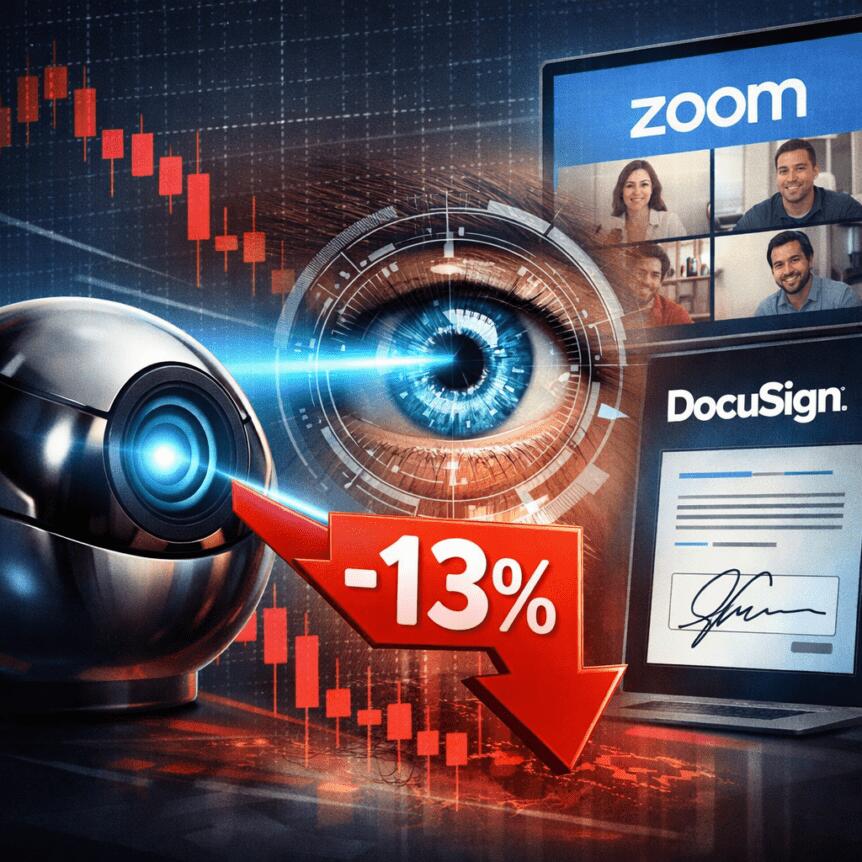
Worldcoin’s native token, WLD, slipped about 13.4% on Friday, trading near $0.28, as the iris-based identity project announced a fresh wave of integrations for its “proof of humanity” stack. World Network, led by OpenAI CEO Sam Altman, is expanding the reach of its biometric verification infrastructure, which centers on the Orb device that scans a user’s iris to create a unique digital identity without exposing personal data.
The rollout coincides with a broader push to embed World ID into everyday tools. Zoom unveiled a Deep Face authentication integration to help prevent deepfakes during video calls, while electronic signatures platform Docusign is adding World ID verification to digital agreements. Tinder is expanding World ID verification to United States users, underscoring an interest in identity verification as AI-enabled interactions proliferate. World explained that as AI agents increasingly act on behalf of real people, the ability to prove a human stands behind each agent becomes critical.
No more deepfakes on video calls. @worldnetwork identify verification on @Zoom.
— World (@worldnetwork) April 17, 2026
CoinGecko data shows WLD at around $0.28 after Friday’s move, even as the broader crypto market rose about 2.2% on news that tensions between the United States and Iran were easing and regional trade channels such as the Strait of Hormuz were opening. World’s token acts as the economy’s incentive layer, used to reward users who verify their unique identity and to enable transactions within World Network’s ecosystem.
World has positioned World ID as a portable, account-based system with features like key recovery and multi-device support, aiming to make verification resilient as AI agents gain prominence in digital workflows. The platform emphasizes that proof of humanity is not only a crypto-native concept but a cross-application requirement as AI agents begin to operate across consumer and enterprise spaces.
Key takeaways
- WLD fell 13.4% to about $0.28 on Friday as World Network rolled out new integrations of its proof-of-human stack.
- Major partnerships tie World ID to Zoom for anti-deepfake verification, Docusign for identity-backed digital signatures, and Tinder for US users, signaling a push toward enterprise- and consumer-facing identity verification.
- The Orb-based system generates a human-verified identity without distributing biometric data, while offering account-based features like key recovery and multi-device support.
- World’s ecosystem has grown beyond crypto-native use cases, with Coinbase and others leveraging World’s AgentKit—part of a broader toolkit for proving AI agents are linked to a verified identity; additional partners include AWS, Shopify, BrowserBase, Exa, and VanEck.
- Market context suggests mixed signals: token volatility amid a rising broader market, influenced by geopolitical shifts and easing tensions rather than purely token-driven catalysts.
World ID moves into mainstream apps and business workflows
The latest wave of integrations highlights World Network’s ambition to embed a “proof of humanity” layer across everyday software—ranging from collaboration tools to legal workflows. Zoom’s Deep Face authentication aims to curb impersonation on video calls by tying real-user identity to AI-driven communication, addressing a growing concern about deepfakes in real-time conversations. Docusign’s addition of World ID verification could standardize how signers are validated in digital agreements, potentially reducing fraud in document workflows. Tinder’s US expansion signals a consumer-facing rollout that could influence how mainstream apps validate identities in online interactions.
World contends that as AI agents increasingly represent real people, a robust, privacy-preserving identity backbone becomes essential. The Orb device, which scans irises to generate a unique digital identity, is designed to minimize the amount of biometric data exposed while establishing that a real person stands behind each action or interaction. World emphasizes that its approach is account-based, with features intended to be portable across devices and recoverable should users lose access to credentials.
Privacy considerations and governance questions
As with any biometric-based verification framework, World’s approach invites scrutiny around data governance and privacy. Critics argue that centralizing identity verification—especially at scale—could raise surveillance concerns if control over the data ecosystem concentrates in a single company or platform family. Proponents, however, point to reduced risk of impersonation and fraud in AI-enabled contexts, arguing that verified human identity can unlock safer interactions and more trustworthy automated services.
Industry observers are watching how World balances privacy protections with the demand for verifiable identity across platforms. The emphasis on a non-identifying iris scan—where only a unique digital fingerprint is used for verification, not raw biometric data—remains a core feature cited by World, but real-world adoption will test whether users and partners trust the model enough to integrate at scale across consumer and enterprise channels.
Developer tools and ecosystem expansion
Beyond consumer and enterprise integrations, World has been building a broader ecosystem around its identity layer. In March, Coinbase announced a collaboration to verify AI agents using World’s AgentKit, a developer toolkit designed to help agents prove a link to a verified identity as part of its x402 AI agents micropayments protocol. The move aligns with World’s broader aim to extend its proof-of-human infrastructure into AI-assisted workflows, enterprise applications, and developer platforms.
World has already linked its technology with a range of partners, including Amazon Web Services, Shopify, Browserbase, Exa, VanEck, and Coinbase. The expansion into mainstream software ecosystems signals a shift from a niche crypto project toward a cross-industry identity substrate that could underpin trusted AI-mediated interactions, digital signatures, and automated processes in a privacy-conscious manner.
As World Network continues to push World ID into both consumer apps and business tools, investors and users should watch for how privacy safeguards evolve, how regulators respond to biometric verification standards, and whether broader adoption translates into tangible utility and network effects for World’s token economy. The next milestones to watch include further platform rollouts, refinements to key recovery and multi-device support, and the integration of World ID into additional enterprise and consumer services.
Readers should monitor upcoming updates from World Network and partner platforms to gauge how quickly verification can scale without compromising user privacy or control over data. With the AI era accelerating the need for reliable ways to prove human presence, the trajectory of World ID’s integrations could influence both the pace of adoption and regulatory discourse in identity verification across digital ecosystems.

TLDR:
- Blockchain reorgs can shift transaction positions, alter timestamps, and change execution outcomes across EVM networks
- TRM processes real-time data without waiting for finality, requiring advanced systems to detect and correct inconsistencies
- Simple deduplication fails as reorgs modify indices and traces, creating structurally different yet related records
- TRM uses layered detection and reconciliation, anchoring all datasets to canonical transaction timestamps for accuracy
Blockchain reorganizations continue to challenge data reliability across Ethereum-compatible networks. A recent post by TRM Labs explains how these events can alter transaction records, forcing engineering teams to rethink how real-time blockchain data is processed and maintained.
Reorgs Reshape Blockchain Data Beyond Simple Duplication
TRM Labs shared the update through its official X account, pointing readers to a detailed breakdown of its internal systems.
The post explains that blockchain reorgs do more than create duplicate entries. They can shift transaction positions, modify log indices, and even alter execution outcomes.
A reorg occurs when a blockchain replaces recently accepted blocks with a different version of the chain. This can happen under both proof-of-work and proof-of-stake systems. In Ethereum’s current structure, delays in block propagation or network partitions can trigger such changes.
As a result, previously ingested data may become outdated without warning. Transactions might move to different blocks, while timestamps and execution paths can change. In some cases, a transaction that succeeded earlier may fail in the updated chain version.
This creates challenges for data pipelines that process blockchain activity in real time. Once incorrect data enters storage systems, it remains alongside updated records. This leads to inconsistencies that extend across dependent datasets.
TRM notes that relying only on transaction hashes for deduplication does not solve the issue. When positions shift, metadata such as log indices and trace identifiers also change. These differences cause systems to treat identical transactions as separate records.
Multi-Layered Strategy Enables Real-Time Data Accuracy
To manage these issues, TRM Labs built a layered system that detects and corrects reorg-related inconsistencies. The company processes blockchain data immediately after block production instead of waiting for finality. This approach supports real-time monitoring needs but requires constant reconciliation.
Waiting for finality could prevent most reorg issues. However, finality on Ethereum can take up to 15 minutes. For compliance and risk monitoring systems, such delays are not practical.
TRM’s system begins with reorg detection. Once identified, affected data is republished and corrected across all downstream tables. Each dataset applies its own deduplication rules, ensuring that outdated records are removed or replaced.
Another key component is cross-table reconciliation. Since reorgs can affect multiple datasets differently, consistency must be restored across all related tables. Without this step, mismatched records could disrupt analytics and reporting systems.
The transactions table plays a central role in this process. It serves as the main reference point for all other datasets. By anchoring downstream data to canonical transaction timestamps, the system restores alignment after a reorg occurs.
The post also outlines different failure scenarios observed in production. In some cases, transactions retain the same outputs but shift positions. In others, execution paths change due to differences in blockchain state, leading to altered results.
There are also situations where the number of token transfers changes between chain versions. These variations create mismatches that cannot be resolved through simple deduplication methods.
TRM’s approach addresses each of these scenarios through coordinated data correction. This ensures that real-time systems maintain accuracy even when the underlying blockchain structure changes.
The company continues to refine its systems as blockchain networks evolve. Its framework reflects the growing need for reliable data infrastructure in environments where consensus can shift after initial confirmation.

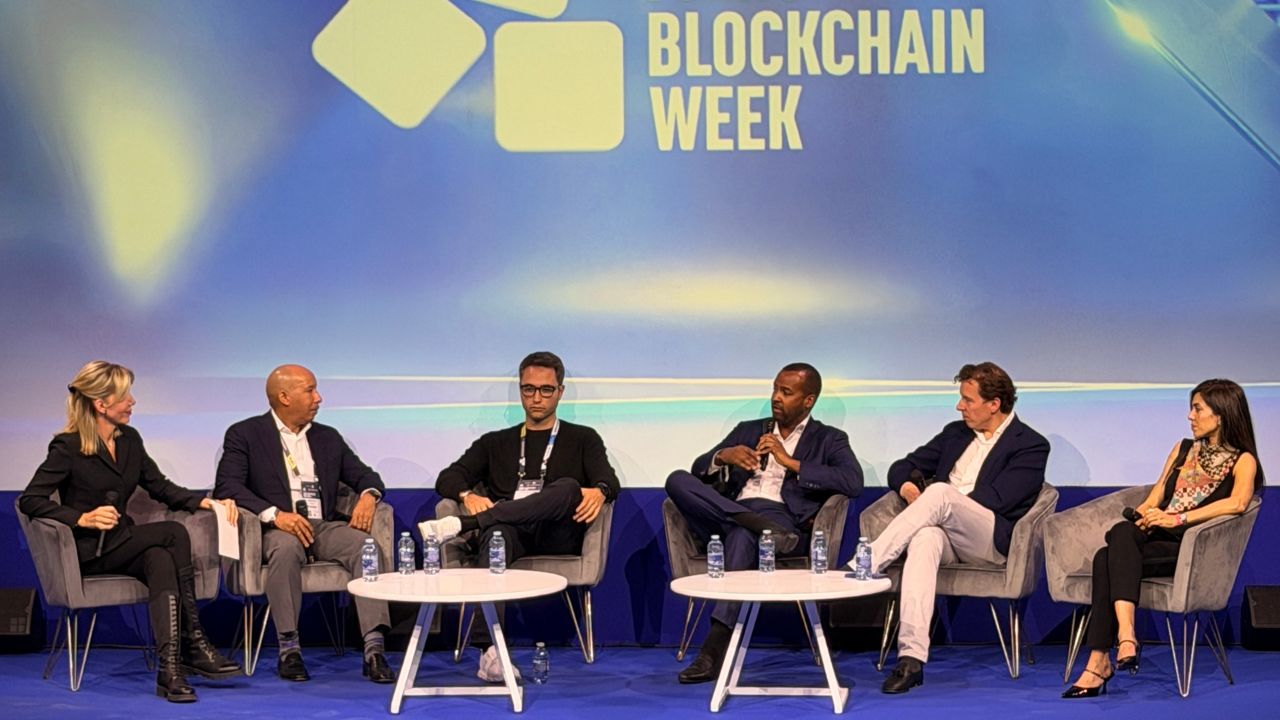
Tokenization does not automatically make hard-to-trade assets liquid, industry executives said at Paris Blockchain Week, pushing back on the idea that putting private credit, real estate or other illiquid products onchain will by itself create active secondary markets.
Speaking during a panel moderated by Cointelegraph CEO Yana Prikhodchenko, Oya Celiktemur, Ondo Finance sales director for Europe, the Middle East and Africa (EMEA), said there is still a misconception that tokenizing illiquid assets can make them easier to trade.
“I think there’s still this idea that tokenizing something illiquid will somehow magically make it a liquid asset, which is just not true,” said Celiktemur. She added that assets like real estate and private credit “were never that liquid” to begin with.
Francesco Ranieri Fabracci, head of tokenization expansion at Tether, made a similar point. “It’s not that if you put an asset onchain, it will be liquid,” he said, arguing that only a narrower set of instruments, including bonds, money market funds and stablecoins, are likely to achieve consistent liquidity in tokenized markets.
The discussion comes as the tokenized real-world asset (RWA) sector continues to expand, shifting attention from issuance growth toward whether tokenized products can achieve meaningful activity and move beyond limited distribution channels.

Tokenized RWA market grows, but remains concentrated
Data from RWA anayltics platform RWA.xyz shows the tokenized RWA market expanded from $8.8 billion on April 16, 2025, to roughly $29.9 billion on April 16, 2026, more than tripling in size in one year.
The growth was led by relatively standardized and widely traded assets. Tokenized US Treasury Debt and commodities accounted for a large share of the market throughout the year.
Related: French minister says new measures are coming after crypto kidnappings
By contrast, categories typically associated with lower liquidity remained comparatively smaller despite strong percentage growth. Tokenized real estate increased from about $35 million to $296 million, while private equity rose from nearly $60 million to $223 million.

Other segments, including asset-backed credit and corporate credit, also expanded sharply in absolute terms, indicating rising issuance across a broader range of instruments.
But market value alone does not prove liquidity. Outstanding value can rise because more assets are issued, even if secondary market trading remains thin.
Magazine: Singapore isn’t a ‘crypto hub’ — it’s something better: StraitsX CEO

Roads set to be closed in Darlington this weekend revealed

Markets Weekly Outlook: A Real Peace Process Or A Fantasy?

France’s Lescure backs euro stablecoins as Qivalis readies 2026 launch

Why Israel is blocking foreign journalists from entering

Bitcoin: We’re Entering The Most Dangerous Phase

Alan Cumming Brands Baftas Ceremony A ‘Triggering S**tshow’

Why Old Computers Look Better Than New Ones #design #vintage #nostalgia

Why the Next 10 Years Will Decide Your Financial Future & What You Should Do | Vijai Mantri | FWS109

The $20,000 Mistake Everyone Makes #money #cars #finance
-
 NewsBeat5 days ago
Pep Guardiola and Gary Neville agree over Arsenal title problem that benefits Man City
-

 Crypto World4 days ago
The SEC Conditionalises DeFi Platforms to Be Avoided for Broker Registration
-

 Politics6 days ago
World Cup exit makes Italy enter crisis mode
-

 Crypto World4 days ago
SEC Signals Exemption for Crypto Interfaces From Broker Registration
-

 News Videos3 days ago
Secure crypto trading starts with an FIU-registered
-

 Sports18 hours ago
NWFL Suspends Two Players Over Post-Match Clash in Ado-Ekiti
-

 Crypto World4 days ago
SEC Proposes Certain Crypto Interfaces Don’t Need to Register as Brokers
-

 Business6 days ago
Ireland Fuel Protests Enter Day 5 as Blockades Spark Shortages and Government Prepares Support Package
-

 NewsBeat4 days ago
Trump and Pope Leo: Behind their disagreement over Iran war
-

 Fashion10 hours ago
Weekend Open Thread: Theodora Dress
-
 NewsBeat6 days ago
JD Vance announces ‘no agreement’ with Iran over nuclear weapons fear
-

 Crypto World5 hours ago
Russia Pushes Bill to Criminalize Unregistered Crypto Services
-
Sports6 days ago
Dexter Lawrence, Stefon Diggs, Trading for De’Von Achane
-

 Crypto World5 days ago
Trump whales load up ahead of Mar-a-Lago luncheon.
-
Crypto World5 days ago
Sei Network Enters Quiet Reset Phase as On-Chain Metrics Signal a Slowdown in 2026
-
Business5 days ago
Kering slides after Morgan Stanley downgrade, Gucci woes loom
-
 Entertainment4 days ago
Karol G’s ‘Ultra Raunchy’ Coachella Set Gave ‘Satanic Vibes’
-
 Business1 day ago
Creo Medical agree sale of its manufacturing operation
-

 Sports5 days ago
NWFL opens Pathway for new Clubs ahead of 2026 Season
-
 Entertainment4 days ago
Brand New Day’ Footage Reveals the Devastating Impact of ‘Now Way Home’
You must be logged in to post a comment Login