Connect with us
DAPA Banner

Business

Innovation stirs first-quarter momentum for PepsiCo

Published

on

Innovation stirs first-quarter momentum for PepsiCo
Continue Reading
Click to comment

You must be logged in to post a comment Login

Leave a Reply

Business

Seres Patents Voice-Activated In-Car Toilet Amid China EV Price War

Published

on

UK new car sales hit 20-year February high as electric vehicle market share falls

In the escalating arms race for consumer attention in China’s crowded electric vehicle market, the latest salvo has arrived in rather unexpected form: a voice-activated lavatory that tucks neatly beneath the passenger seat.

Seres, the Chongqing-based manufacturer behind the Aito brand, has secured a patent from China’s intellectual property administration for what its engineers describe, with commendable plainness, as an “in-vehicle toilet”. According to the filing lodged on 10 April and reviewed by Business Matters, the contraption is designed to “satisfy users’ toilet needs on long journeys, while camping or while staying in the car”.

Whether any such vehicle will ever roll off a production line remains an open question. Seres has made no product announcement, and the patent may yet prove to be little more than a defensive flourish or a marketing exercise. But the filing is emblematic of the extraordinary lengths to which Chinese EV manufacturers are now going to differentiate themselves in what has become perhaps the most fiercely contested automotive market in the world.

Chongqing-based EV manufacturer Seres has patented a voice-controlled in-vehicle toilet, as Chinese carmakers pile on novel features to survive a brutal price war.

The technical detail is, if nothing else, thorough. The unit slides out from beneath the passenger seat on a rail, activated either by a gentle push or a spoken command. A built-in fan and exhaust pipe channel odours out of the cabin, while a rotating heating element evaporates urine and desiccates solid waste, which is then collected in a manually emptied tank. When not required, the unit is concealed below the seat, preserving interior space, a characteristically pragmatic solution to a decidedly unglamorous problem.

For readers of a certain vintage, the idea is not entirely without precedent. A bespoke Rolls-Royce Silver Wraith produced in the 1950s, according to auction house Sotheby’s, boasted both an in-built television set and a lavatory hidden beneath the passenger seat. Rather more commonly, long-distance coaches have offered on-board conveniences for decades. A mass-market passenger car with such a feature, however, would be something of a first.

Advertisement

The commercial logic behind Seres’ filing becomes clearer when set against the broader backdrop of the Chinese EV sector. With dozens of domestic brands jostling for position, manufacturers have loaded their vehicles with ever more outlandish features: massage seats, karaoke systems, in-car refrigerators, and rotating central displays have all become near-standard fare in the mid-market segment. The lavatory, if it materialises, would be the latest escalation in a features war that has left western manufacturers looking distinctly conservative.

Beneath the novelty, however, lies a sobering commercial picture. China’s EV market has tipped into a punishing price war that has eroded margins across the sector. Seres is among a small cadre of Chinese EV firms, alongside global leader BYD, to have achieved profitability, a status that distinguishes it from a long tail of loss-making competitors. Analysts have repeatedly warned that a significant number of Chinese EV manufacturers face the prospect of collapse or consolidation as the sector matures and investor patience wears thin.

Seres, which specialises in electric sport utility vehicles through both its own-brand range and its Aito subsidiary, sells the majority of its output in mainland China but has begun pushing into Europe, the Middle East and Africa, markets in which British and continental drivers may yet find themselves confronted with the rather novel proposition of answering nature’s call without pulling onto the hard shoulder.

Whether that proposition survives contact with real-world consumer demand, regulatory scrutiny and the prosaic realities of hygiene management is another matter entirely. For now, Seres’ patent serves chiefly as a reminder that in the cut-throat world of Chinese electric mobility, no idea, however unconventional, is being left on the drawing board.

Advertisement

Amy Ingham

Amy is a newly qualified journalist specialising in business journalism at Business Matters with responsibility for news content for what is now the UK’s largest print and online source of current business news.

Advertisement
Continue Reading

Business

Arxis: Critical (Aerospace) Provider Flies Off

Published

on

U.S. IPO Weekly Recap: REIT Carve-Out Sees Solid Demand While Drone Micro-Cap Soars 500%+

Arxis: Critical (Aerospace) Provider Flies Off

Continue Reading

Business

NVIDIA Stock Climbs 1.2% to $200 as AI Demand Fuels Continued Momentum in Chip Sector

Published

on

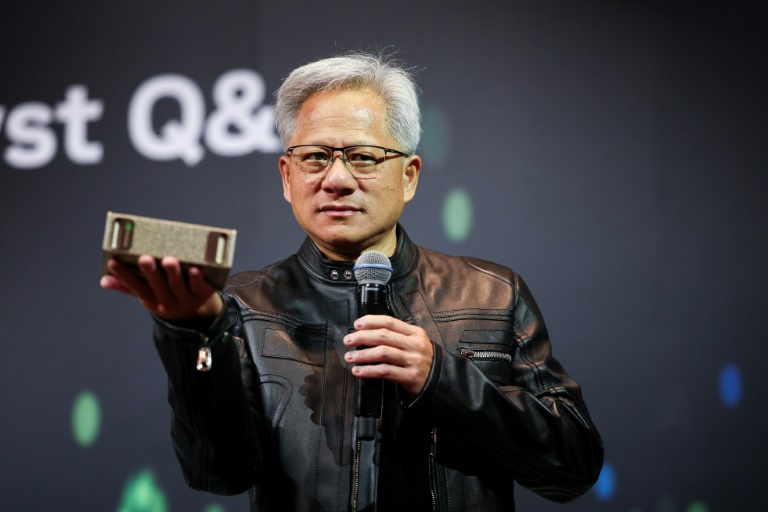
Jensen Huang, co-founder and CEO of Nvidia, recently convinced Donald Trump to lift restrictions on certain GPU exports to China

NVIDIA Corp. shares rose more than 1% Friday, climbing to $200.67 in midday trading on the Nasdaq as investors continued to bet on the company’s dominance in artificial intelligence infrastructure, even amid broader market volatility and upcoming supplier earnings reports.

The stock gained $2.32, or 1.17%, by 1:05 p.m. EDT, extending a recent winning streak and trading well above key technical levels. Volume remained robust as traders reacted to positive sentiment around NVIDIA’s Blackwell platform ramp and expectations for sustained AI spending by major cloud providers and enterprises.

NVIDIA, the leading designer of graphics processing units essential for training and running large language models, has seen its valuation soar in recent years on the back of explosive demand for accelerated computing. At current levels, the company’s market capitalization hovers near the $5 trillion mark, making it one of the world’s most valuable public companies despite periodic pullbacks tied to macroeconomic concerns or export restrictions.

The modest gain Friday comes as NVIDIA stock has consolidated after strong performance earlier in April. Analysts note the shares are testing resistance near the upper end of their recent trading range, with some pointing to a potential breakout above $212 if upcoming catalysts deliver positive surprises. The 52-week range spans roughly $95 to $212, reflecting both the depth of last year’s corrections and the height of AI enthusiasm.

Advertisement

Data center revenue continues to power NVIDIA’s growth. In the most recent reported quarter for fiscal first quarter 2026, the segment generated $39.1 billion, up 73% year-over-year, driven by demand for the company’s accelerated computing platform used in generative AI applications. Overall company revenue hit $44.1 billion in that period, marking robust expansion despite a one-time $4.5 billion charge related to export licensing changes for H20 products in China.

Gaming revenue also reached a record in the quarter, rising 42% year-over-year to $3.8 billion, fueled by strong adoption of newer architectures. Professional visualization and automotive segments posted solid gains as well, underscoring NVIDIA’s diversification beyond pure AI training chips.

CEO Jensen Huang has repeatedly highlighted the rapid ramp of the Blackwell architecture, describing it as the fastest in company history. At the company’s GTC developer conference earlier in 2026, Huang outlined expectations for massive demand across Blackwell and the upcoming Rubin platform, with some projections suggesting lifetime sales potential in the trillions for these next-generation systems.

Wall Street remains broadly bullish. The consensus analyst rating sits at Buy, with average price targets implying significant upside from current levels — some forecasts see shares reaching $267 or higher by the end of 2026. Optimism centers on continued AI infrastructure buildout, with hyperscalers and sovereign AI initiatives driving orders for GPUs, networking solutions like NVLink and Ethernet fabrics.

Advertisement

Yet challenges persist. U.S. export restrictions on advanced chips to China have forced adjustments, including inventory charges and shifts in product strategy. Competition from AMD, Intel and custom silicon developed by Google, Amazon and others adds pressure, though NVIDIA’s software ecosystem — centered on CUDA — remains a formidable moat.

Supply chain partners provide additional clues to NVIDIA’s trajectory. Investors are closely watching upcoming earnings from Taiwan Semiconductor Manufacturing Co. and ASML Holding, key enablers in the semiconductor production process. Any commentary on capacity or demand for advanced nodes could reinforce or temper enthusiasm for NVIDIA’s growth outlook.

NVIDIA’s full fiscal 2026 results, reported in February, showed record quarterly revenue of $68.1 billion in the fourth quarter and $215.9 billion for the full year, reflecting 65% annual growth. Data center revenue alone reached $62.3 billion in the final quarter of fiscal 2026, up 75% from the prior year.

Looking forward, the company’s next earnings report in late May will offer fresh guidance on Blackwell adoption rates, gross margins and the impact of any geopolitical developments. Analysts expect continued sequential growth, though some have trimmed full-year Data Center forecasts slightly due to margin dynamics and China headwinds.

Advertisement

Gross margins have fluctuated with product mix and one-time items. Excluding certain charges, non-GAAP margins have held strong in the low- to mid-70% range, supported by high-value AI accelerators. Operating expenses have risen as NVIDIA invests in research and development for future architectures like Rubin, slated for broader availability in 2026-27.

Beyond hardware, NVIDIA is expanding its software and services offerings, including AI enterprise solutions and inference optimizations that allow customers to run models more efficiently. The company’s pivot toward full-stack AI platforms aims to capture recurring revenue and deepen customer lock-in.

Retail investor interest remains high, with NVIDIA frequently ranking among the most discussed stocks on social platforms. Options activity shows active trading in calls and puts around key strike prices, reflecting both bullish conviction and hedging against volatility.

Broader market context influences the shares as well. Shifts in interest rates, regulatory scrutiny of Big Tech and global trade tensions can spark sharp moves. Friday’s gain aligned with relative strength in the semiconductor sector amid mixed macro signals, including developments in Middle East diplomacy that could affect energy costs and supply chains.

Advertisement

NVIDIA maintains a quarterly dividend of $0.01 per share, a symbolic payout given the company’s growth focus, and has returned substantial capital to shareholders through buybacks in recent years.

For long-term investors, the bull case rests on the secular shift toward AI across industries — from cloud computing and autonomous vehicles to scientific research and enterprise productivity tools. Huang has positioned NVIDIA as the “picks and shovels” provider in this new gold rush, a narrative that continues to resonate despite valuation concerns.

Skeptics point to high multiples and the risk of spending fatigue among hyperscalers after years of heavy capital expenditure. A slowdown in AI deployment or delays in next-generation chip ramps could pressure results. Still, most forecasts call for NVIDIA to deliver strong double-digit revenue growth through the remainder of 2026 and into 2027.

As trading continues Friday, all eyes remain on whether NVIDIA can sustain its momentum heading into supplier reports and its own May earnings. The stock’s ability to hold above $200 and push toward the 52-week high would signal renewed confidence in the AI supercycle.

Advertisement

NVIDIA operates at the epicenter of the technology industry’s most transformative trend. Whether the current uptick marks the start of another leg higher or a temporary bounce in a consolidation phase, the company’s fundamental position in accelerated computing appears secure for now.

Investors will parse every comment from Huang and the executive team in coming weeks for clues about demand visibility, competitive positioning and the path to trillion-dollar opportunities in Blackwell and Rubin systems. For a stock that has already delivered extraordinary returns, the question remains whether the best is yet to come.

Continue Reading

Business

UK hospitality insolvency crisis: 270 firms collapse in February as cost pressures mount

Published

on

Business Live

Rising energy costs, April tax increases, and relentless cost pressures hit UK pubs and restaurants hard

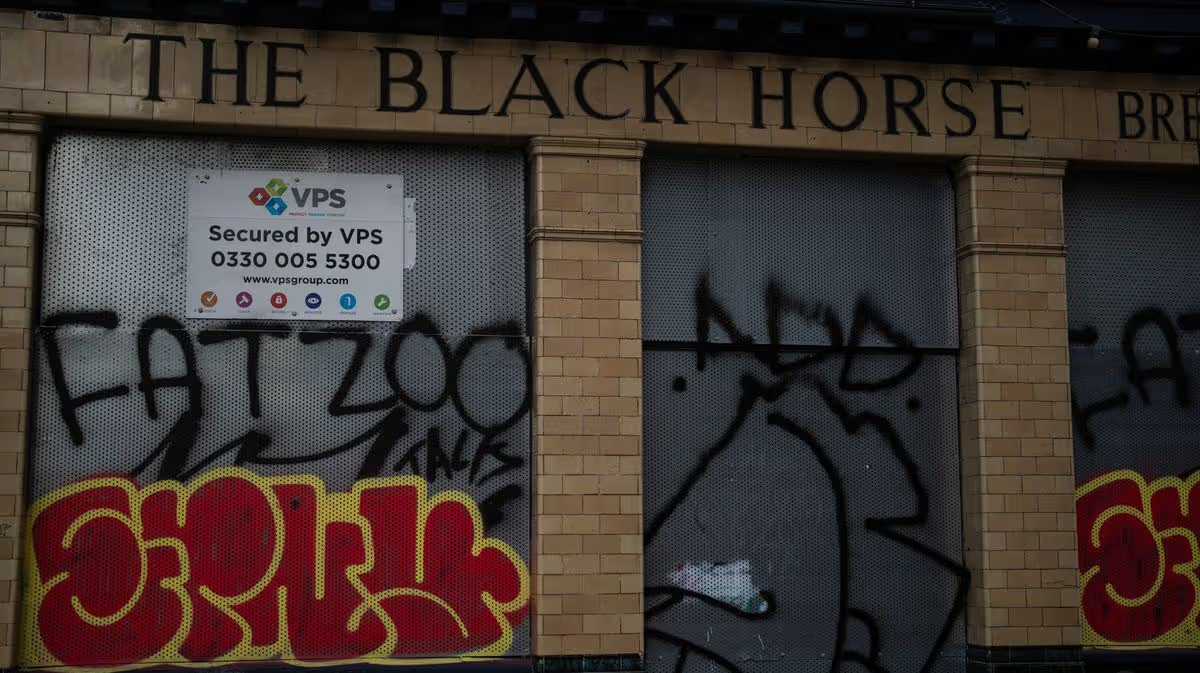
Security grating covers the windows of the closed down Black Horse pub on September 25, 2024 in London, England

Hundreds of pubs close in the UK every year(Image: Getty Images)

The rate of corporate collapse in hospitality surged in February, signalling the sector was battling to survive even before the Iran war triggered additional cost pressures.

Advertisement

The number of accommodation and food service companies entering insolvency leapt by 22 per cent to 270 in February, according to government figures.

This worsening of the crisis confronting hospitality enterprises occurred prior to the Iran war energy cost spike and April tax increases which two thirds of operators say will compel them to reduce headcount.

As many as 254 food and beverage service enterprises were compelled to close in February, including 171 restaurants and food trucks, and 64 pubs.

More than 700 pubs have closed in each of the past three years, with the rate of closures in the sector having accelerated since 2022, when only 512 shut their doors, as reported by City AM.

Advertisement

Pub operators expressed fury at Chancellor Rachel Reeves following modifications made to business rates at the Budget – designed to make the tax fairer for hospitality and retail businesses – which ultimately left thousands of landlords facing spiralling bills.

Reeves was ultimately compelled to introduce a £300m emergency business rates relief package, but landlords have stated rising energy costs stemming from the Iran war mean their difficulties are unlikely to diminish.

The chief executive of the UK’s oldest brewer, Shepherd Neame, told City AM the industry is “screaming for a reset” and cautioned his company is preparing for elevated energy bills. While some of the sector’s larger operators are shielded by long-term fixed-rate energy contracts, the chief executive of JD Wetherspoon told City AM he is having to “strain every sinew” to avoid rising the price of beer.

Trade body UKHospitality has warned that independent pubs – which may not benefit from fixed contracts – and those operating off-grid remain exposed to “devastating” energy bill hikes.

Advertisement

Saxon Moseley, head of leisure and hospitality at audit firm RSM, said: “While bigger operators tend to be better insulated due to having stronger balance sheets and economies of scale to fall back on, it’s the smaller, independent businesses that are struggling the most.”

Hotels are equally grappling with mounting costs, with 10 having closed in February while 16 accommodation firms collapsed in total during the month.

Senior figures at leading hotels and restaurants have criticised the Treasury for excluding their sectors from the business rates relief package – which was made available only to pubs.

Gordon Thompson, restructuring partner at RSM, said: “Relatively weak sales in the hospitality industry along with relentless cost pressures have required some operators to explore restructuring options to optimise their trading position and to reduce their cost base.

Advertisement

“It’s encouraging to see businesses taking action rather than burying their heads in the sand, but this highlights just how challenging it is to operate in the current environment.”

Continue Reading

Business

Crisis In Transit: War's Economic Fallout Is Only Beginning

Published

on

Crisis In Transit: War's Economic Fallout Is Only Beginning

Crisis In Transit: War's Economic Fallout Is Only Beginning

Continue Reading

Business

National Bank Holdings stock hits 52-week high at 43.0 USD

Published

on


National Bank Holdings stock hits 52-week high at 43.0 USD

Continue Reading

Business

Oil prices drop over 10% after Iran says Strait of Hormuz open during ceasefire

Published

on

Goldman Sachs says Iran war unlikely to trigger COVID-like supply crisis

Oil prices plummeted more than 10% on Friday after Iran’s foreign minister said that the Strait of Hormuz will be open to all commercial shipping traffic for the duration of the ceasefire between Israel and Lebanon.

Prices for West Texas Intermediate crude fell over 10% to under $85 a barrel, while Brent crude oil prices dropped more than 10% to around $89 a barrel.

Advertisement

The plunge in oil prices comes after Iranian Foreign Minister Abbas Araghchi said the Strait of Hormuz was open for all commercial vessels for the remainder of the 10-day ceasefire between Israel and Lebanon. The ceasefire began on Thursday, and President Donald Trump told reporters the ceasefire would include Iran-backed Hezbollah.

EUROPE HAS ‘MAYBE 6 WEEKS’ OF JET FUEL LEFT AMID HORMUZ BLOCKADE, ENERGY AGENCY CHIEF SAYS

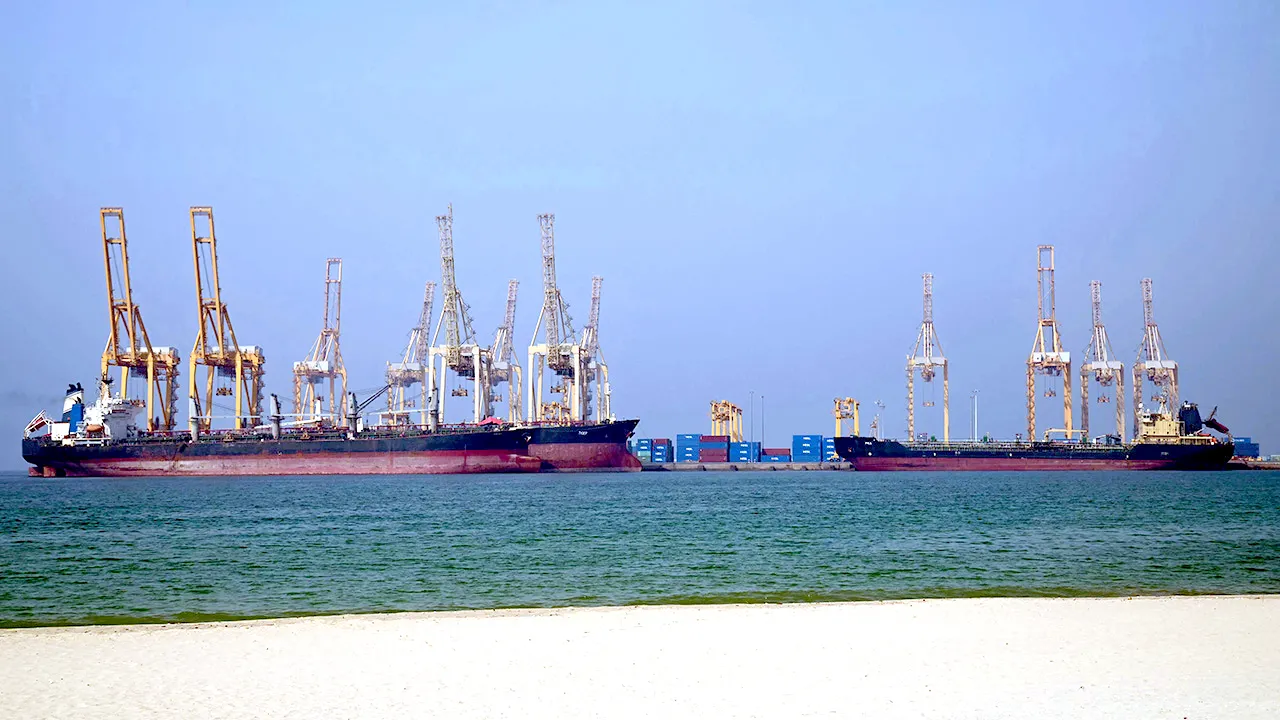
Oil tankers in the Strait of Hormuz.

The Iran war has caused shipping traffic to slow to a standstill, resulting in an oil price shock. (Giuseppe Cacace/AFP via Getty Images)

Trump said in a post on his Truth Social platform that the Strait of Hormuz is “COMPLETELY OPEN AND READY FOR BUSINESS AND FULL PASSAGE, BUT THE NAVAL BLOCKADE WILL REMAIN IN FULL FORCE AND EFFECT AS IT PERTAINS TO IRAN, ONLY, UNTIL SUCH TIME AS OUR TRANSACTION WITH IRAN IS 100% COMPLETE.”

FORMER TREASURY SECRETARY WARNS IRAN CONFLICT AND ‘TRUST DEFICIT’ COULD DERAIL US-CHINA MEETING

Advertisement

Oil prices surged over $100 a barrel since the Iran war began a month and a half ago, with WTI prices peaking at nearly $113 a barrel on April 6 and Brent crude prices reaching more than $119 a barrel on March 30.

Brian Therien, a senior analyst for investment strategy at Edward Jones, noted that, “While U.S. restrictions on Iranian ports remain in place, oil futures markets are also retreating, now implying crude prices could move back toward the low-$70s by year-end. If realized, falling oil prices should help ease headline inflation and help reduce pressure on energy-intensive sectors.”

Oil tankers pass through the Strait of Hormuz, Dec. 21, 2018.

Oil tankers pass through the Strait of Hormuz, Dec. 21, 2018. (Reuters/Hamad I Mohammed / Reuters)

The oil price shock occurred after the Strait of Hormuz was effectively closed to commercial shipping amid the conflict due to the threat of Iranian attacks and mines.

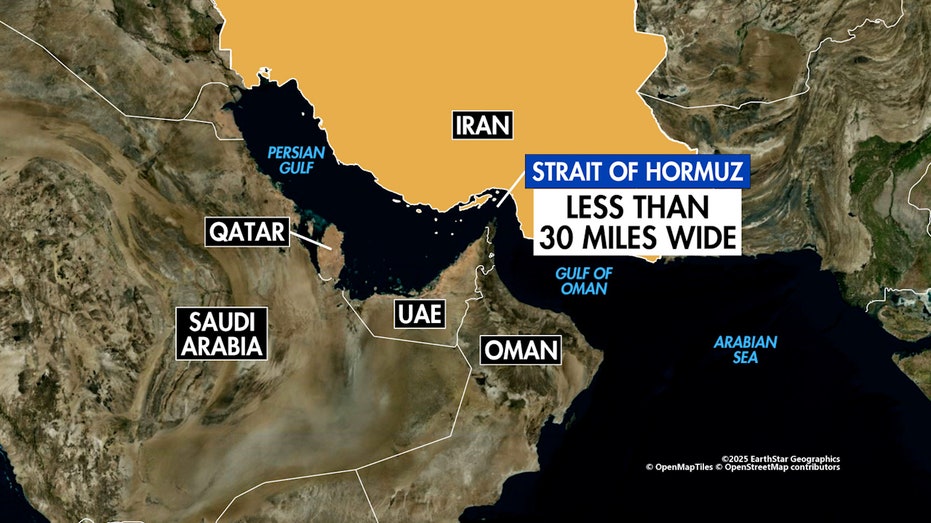
The Strait of Hormuz is a key chokepoint between the Persian Gulf and Arabian Sea, as about one-fifth of the world’s oil and liquefied natural gas transits through the strait to destinations around the world.

Advertisement

TRUMP SAYS IRAN WAR IS ‘VERY CLOSE TO BEING OVER’ AS PEACE TALKS ARE EXPECTED TO RESUME

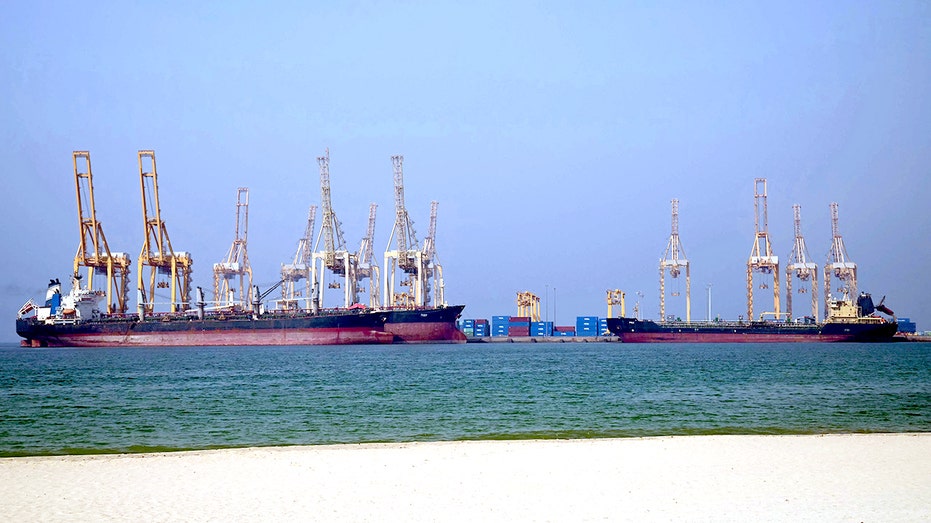
Strait of Hormuz at standstill

About 20% of the world’s oil supply crosses the Strait of Hormuz off the coast of Iran. (Fox News)

A senior Iranian official told Reuters that ships transiting the strait during the ceasefire will travel through designated lanes that Iran deemed safe for navigation, while naval vessels will be excluded from transiting.

Shipping companies have expressed the need for more details about the announcement before resuming normal operations in the strait. 

German shipping company Hapag-Lloyd said it was refraining from passing through the strait while assessing the announcement, though it may begin transits soon.

Advertisement
US Navy aircraft carrier USS Abraham Lincoln

The U.S. Navy is planning to continue its blockade of Iranian ports while the Strait of Hormuz reopens, Trump said. (U.S. Navy / Handout)

Knut Arild Hareide, CEO of the Norwegian Shipowners’ Association, told Reuters that if the announcement “represents a step towards an opening, it is a welcome development.”

“However, the situation remains unresolved, with a number of outstanding uncertainties, including questions related to the presence of sea mines, applicable Iranian conditions, and practical implementation,” Hareide added. The Norwegian group represents 130 companies with about 1,500 vessels operating globally.

GET FOX BUSINESS ON THE GO BY CLICKING HERE

The International Monetary Fund lowered its growth outlook for the global economy this week due to the shipping disruptions, with emerging market and developing economies taking a bigger hit than advanced economies due to the conflict.

Advertisement

Reuters contributed to this report.

Continue Reading

Business

Goldman Sachs recommends shorting euro against forint on euro adoption prospects

Published

on


Goldman Sachs recommends shorting euro against forint on euro adoption prospects

Continue Reading

Business

Scoular names president as part of succession planning

Published

on

Scoular names president as part of succession planning

Phil Van Court to succeed David Faith in June.

Continue Reading

Business

Tesla: More Good News, And Markets Noticed (NASDAQ:TSLA)

Published

on

Tesla: More Good News, And Markets Noticed (NASDAQ:TSLA)

This article was written by

James Foord is an economist by trade and has been analyzing global markets for the past decade. He leads the investing group The Pragmatic Investor where the focus is on building robust and truly diversified portfolios that will continually preserve and increase wealth.
The Pragmatic Investor covers global macro, international equities, commodities, tech and cryptocurrencies and is designed to guide investors of all levels in their journey. Features include a The Pragmatic Investor Portfolio, weekly market update newsletter, actionable trades, technical analysis, and a chat room. Learn more.

Analyst’s Disclosure: I/we have no stock, option or similar derivative position in any of the companies mentioned, and no plans to initiate any such positions within the next 72 hours. I wrote this article myself, and it expresses my own opinions. I am not receiving compensation for it (other than from Seeking Alpha). I have no business relationship with any company whose stock is mentioned in this article.

Seeking Alpha’s Disclosure: Past performance is no guarantee of future results. No recommendation or advice is being given as to whether any investment is suitable for a particular investor. Any views or opinions expressed above may not reflect those of Seeking Alpha as a whole. Seeking Alpha is not a licensed securities dealer, broker or US investment adviser or investment bank. Our analysts are third party authors that include both professional investors and individual investors who may not be licensed or certified by any institute or regulatory body.

Advertisement
Continue Reading

Trending

Copyright © 2025