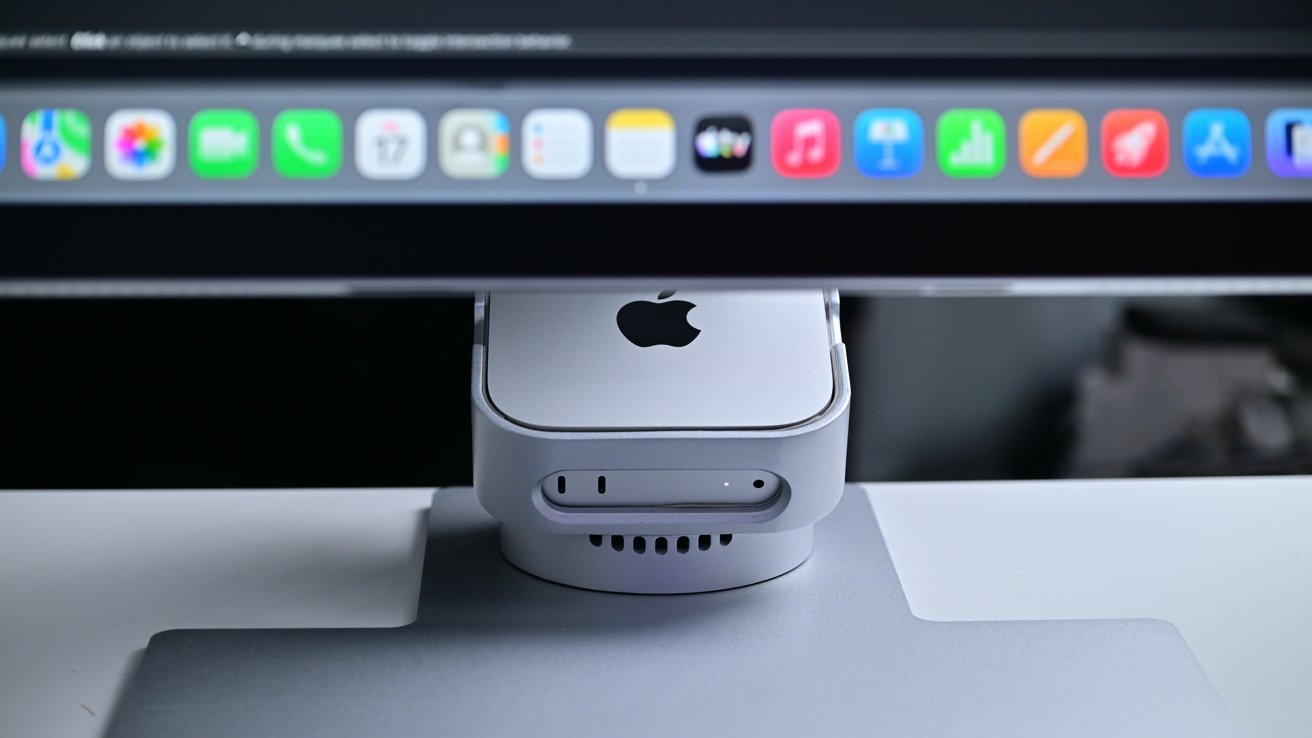
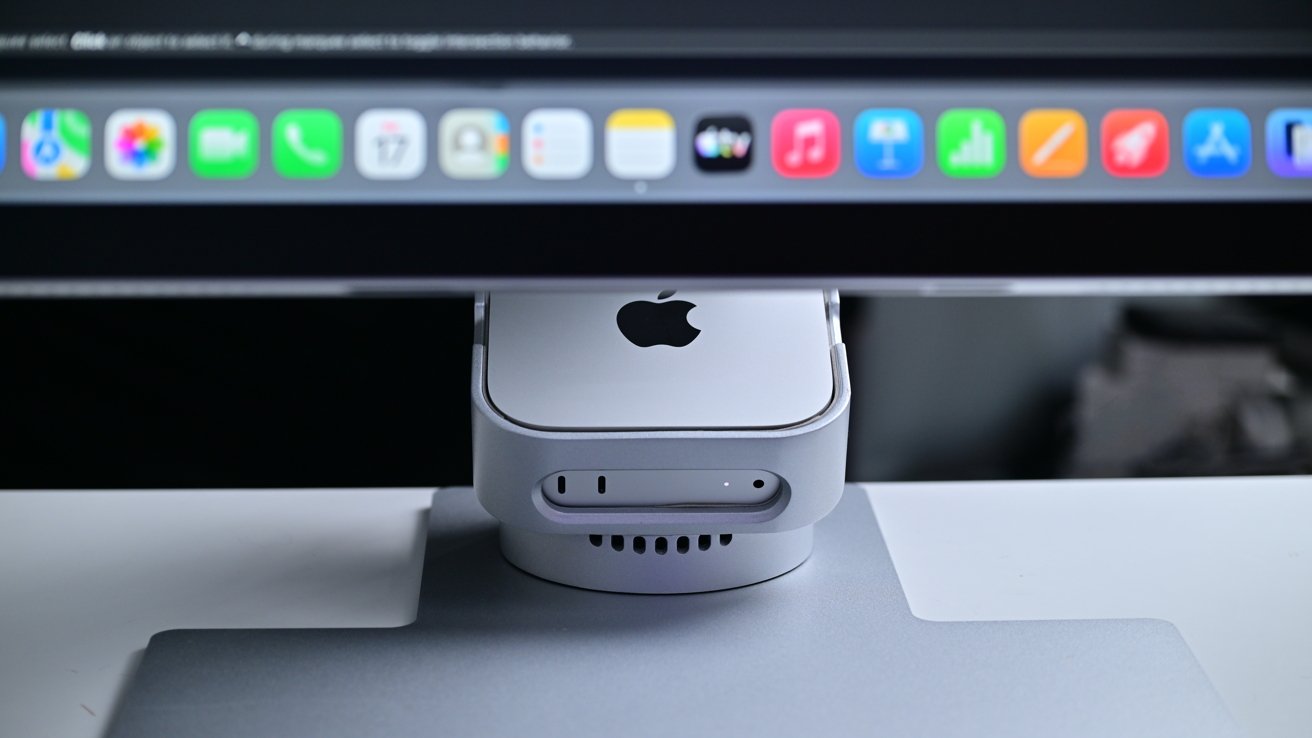
So far in our testing, the Aspekt Touch 4K UHD Monitor touchscreen works pretty well with macOS drawing apps, and the Omni Fold stand Mac mini dock is cool. The combo costing more than a Studio Display is a turn-off.
The new Aspekt Touch 4K Monitor with Mac mini dock
We talked about this pair in a news post a few months ago, you guys had opinions, and I knew almost instantly that we’d have to get it on our test bench. We’ve had this combo for all of 24 hours at this point, and we thought we’d talk a bit about it now, in advance of a full review later. Let’s get into the hardware. The Aspekt Touch 4K UHD Monitor touchscreen is a decently-performing 4K display, with integrated touch. The main issue with touch here is not the hardware, but macOS. Continue Reading on AppleInsider | Discuss on our Forums
The Payouts King ransomware is using the QEMU emulator as a reverse SSH backdoor to run hidden virtual machines on compromised systems and bypass endpoint security.
QEMU is an open-source CPU emulator and system virtualization tool that allows users to run operating systems on a host computer as virtual machines (VMs).
Since security solutions on the host cannot scan inside the VMs, attackers can use them to execute payloads, store malicious files, and create covert remote access tunnels over SSH.
Researchers at cybersecurity company Sophos documented two campaigns where attackers deployed QEMU as part of their arsenal and to collect domain credentials.
Advertisement
One campaign that Sophos tracks as STAC4713 was first observed in November 2025 and has been linked to the Payouts King ransomware operation.
The other, tracked as STAC3725, has been spotted in February this year and exploits the CitrixBleed 2 (CVE‑2025‑5777) vulnerability in NetScaler ADC and Gateway instances.
Running Alpine Linux VMs
Researchers note that the threat actors behind the STAC4713 campaign are associated with the GOLD ENCOUNTER threat group, which is known to target hypervisors and encryptors for VMware and ESXi environments.
According to Sophos, the malicious actor creates a scheduled task named ‘TPMProfiler’ to launch a hidden QEMU VM as SYSTEM.
Advertisement
They use virtual disk files disguised as databases and DLL files, and set up port forwarding to provide covert access to the infected host via a reverse SSH tunnel.
The VM runs Alpine Linux version 3.22.0 that includes attacker tools such as AdaptixC2, Chisel, BusyBox, and Rclone.
Sophos notes that initial access was achieved via exposed SonicWall VPNs, while exploitation of the SolarWinds Web Help Desk vulnerability CVE-2025-26399 was observed in more recent attacks.
In the post-infection phase, the threat actors used VSS (vssuirun.exe) to create a shadow copy, then used the print command over SMB to copy NTDS.dit, SAM, and SYSTEM hives to temp directories.
Advertisement
More recently observed incidents attributed to the threat actor relied on other initial access vectors. The researchers say that in an attack in February, GOLD ENCOUNTER used an exposed Cisco SSL VPN, and in March they posed as IT staff and tricked employees over Microsoft Teams into downloading and installing QuickAssist.
“In both instances, the threat actors used the legitimate ADNotificationManager.exe binary to sideload a Havoc C2 payload (vcruntime140_1.dll) and then leveraged Rclone to exfiltrate data to a remote SFTP location” – Sophos
The strain employs heavy obfuscation and anti-analysis mechanisms, establishes persistence via scheduled tasks, and terminates security tools using low-level system calls.
Advertisement
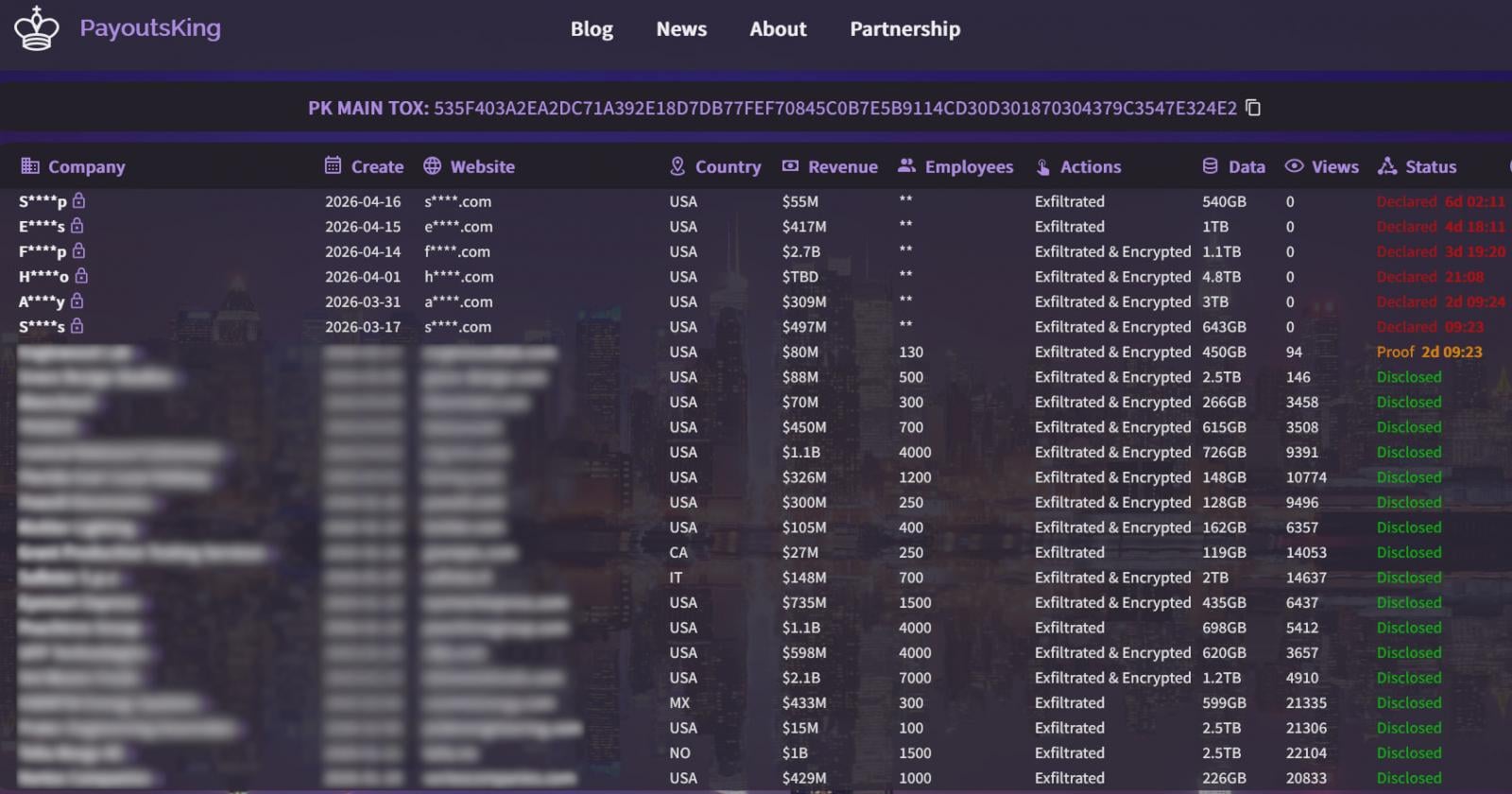
Payouts King encryption scheme uses AES-256 (CTR) with RSA-4096 with intermittent encryption for larger files. The dropped ransom notes point victims to leak sites on the dark web.
Payouts King ransomware extortion portal Source: BleepingComputer
The second campaign that Sophos observed (STAC3725), has been active since February and exploits the CitrixBleed 2 vulnerability to gain initial access to target environments.
After compromising NetScaler devices, the attackers deploy a ZIP archive containing a malicious executable that installs a service named ‘AppMgmt,’ creates a new local admin user (CtxAppVCOMService), and installs a ScreenConnect client for persistence.
The ScreenConnect client connects to a remote relay server and establishes a session with system privileges, then drops and extracts a QEMU package that runs a hidden Alpine Linux VM using a custom.qcow2 disk image.
Instead of using a pre-built toolkit, the attackers manually install and compile their tools, including Impacket, KrbRelayx, Coercer, BloodHound.py, NetExec, Kerbrute, and Metasploit, inside the VM.
Advertisement
Observed activity includes credential harvesting, Kerberos username enumeration, Active Directory reconnaissance, and staging data for exfiltration via FTP servers.
Sophos recommends that organizations look for unauthorized QEMU installations, suspicious scheduled tasks running with SYSTEM privileges, unusual SSH port forwarding, and outbound SSH tunnels on non-standard ports.
AI chained four zero-days into one exploit that bypassed both renderer and OS sandboxes. A wave of new exploits is coming.
At the Autonomous Validation Summit (May 12 & 14), see how autonomous, context-rich validation finds what’s exploitable, proves controls hold, and closes the remediation loop.
BrianFagioli writes: Mozilla’s email subsidiary MZLA Technologies just introduced Thunderbolt, an open-source AI client aimed at organizations that want to run AI on their own infrastructure instead of relying entirely on cloud services. The idea is to give companies full control over their data, models, and workflows while still offering things like chat, research tools, automation, and integration with enterprise systems through the Haystack AI framework. Native apps are planned for Windows, macOS, Linux, iOS, and Android. Thunderbolt allows organizations to do the following:
– Run AI with their choice of models, from leading commercial providers to open-source and local models
– Connect to systems and data: Integrate with pipelines and open protocols, including: deepset’s Haystack platform, Model Context Protocol (MCP) servers, and agents with the Agent Client Protocol (ACP)
– Automate workflows and recurring tasks: Generate daily briefings, monitor topics, compile reports, or trigger actions based on events and schedules
– Work seamlessly across devices with native applications for Windows, macOS, Linux, iOS, and Android
– Maintain security with self-hosted deployment, optional end-to-end encryption, and device-level access controls
There are five Lexus models that qualify as the fastest-selling in the U.S., according to Toyota Motor North America’s First Quarter Sales Report. The more of each model that were sold, the faster a given car was selling. Buyers can use this information to act quickly on cars selling fast or to seek out slower-selling vehicles to get a better deal. We’ll start with the slower-selling Lexus vehicles in the top five, working our way up to the fastest-selling Lexus, and provide you with in-depth information on each Lexus’ size, price, performance, cargo capacity, and other factors.
Some highlights of the TMNA report were that, even though Lexus’ sales were down 2.5% overall, its sales of electrified vehicles, which include hybrids, plug-in hybrids, and EVs, totaled 34,907 units, an increase of 6.2%. The brand’s NX Plug-in Hybrid and RZ EV hit their highest sales ever during the first quarter of 2026.
Advertisement
To briefly recap the history of Lexus, the luxury nameplate of Toyota launched in 1989 with two sedans, the LS 400 and the ES 250, and a promise to pursue perfection. Lexus started with 121 dealers and has added numerous different types of vehicles to its lineup over the years, becoming the first luxury import brand to sell more than 20,000 vehicles in a single month, back in 2000. Notable vehicles from Lexus have included the Lexus SC 300 sport coupe in 1991, the Lexus RX 300 luxury crossover in 1998, and the Lexus LFA supercar in 2011. By 2019, Lexus had sold 10 million vehicles.
Advertisement
5. Lexus IS
The fifth fastest-selling Lexus on our list is also the only non-SUV, as the Lexus IS is a compact sports sedan. The Lexus IS also has the honor of being the Lexus with the best chance of reaching 250,000 miles. The IS sold a total of 5,045 examples during the first quarter of 2026. Our review of the Lexus IS appreciated its punchy engine and responsive ride.
For 2026, there is only one variant of the IS, called the IS 350. Its styling has been refreshed, and it comes standard with a 3.5-liter V6 engine that produces 311 horsepower, with your choice of rear-wheel drive or all-wheel drive. The transmission depends on the drivetrain you select, with an eight-speed automatic on the rear-drive version and a six-speed automatic with the AWD model. Car and Driver performance testing of the Lexus IS 350 produced results that included a 0-60 mph time of 5.6 seconds, with the quarter-mile going by in 14.2 seconds at 100 mph. Roadholding on the skidpad came out to 0.89g. Cargo volume in the smallish trunk comes out to 11 cubic feet. Pricing for the Lexus IS RWD starts at $46,795, including the delivery, processing, and handling fee.
We should also give a shoutout to the Lexus RZ battery electric vehicle, which claimed the sixth-highest sales spot with an impressive 4,456 units moved into consumers’ garages. This represented the highest sales mark ever achieved by Lexus’ only EV.
Advertisement
4. Lexus GX
The Lexus GX, which our review described as a serious SUV with big capability and a big price, is Lexus’ fourth fastest-selling vehicle. The GX came through for Lexus, with 8,565 units sold in the first three months of 2026.
The Lexus GX is a large body-on-frame SUV that features a rigid ladder frame, double-wishbone front suspension, and multi-link suspension in the rear. This provides excellent performance both on the road and off it. The GX is powered by a 3.4-liter twin-turbo V6 engine with an output of 349 hp, mated to a 10-speed automatic transmission with Torsen limited-slip locking center differential, driving all four wheels through a standard full-time 4WD system. While most versions of the Lexus GX have three rows of seating, the most hardcore off-road trim, the Overtrail, comes with a two-row setup and seating for five. 2026 Lexus GX pricing starts at $67,735 for the entry-level Premium trim and goes up to $82,845 for the top Overtrail+ model.
Advertisement
Performance testing by Car and Driver generated a 0-60 mph sprint that took 6.2 seconds, with a quarter-mile time of 14.7 seconds at 95 mph. Roadholding on the skidpad measured 0.75g. Cargo capacity is 10 cubic feet behind the third row, going up to 40 cubic feet with the third row folded, and 77 cubic feet with the second and third rows folded.
Advertisement
3. Lexus TX
The Lexus TX is Lexus’ version of the Toyota Grand Highlander. As such, it is a three-row, unibody SUV that will seat as many as seven in comfort. Lexus managed to shift 12,489 examples of the Lexus TX during the first quarter of 2026, landing the TX in third place among the fastest-selling Lexus models. Our review of the Lexus TX liked its adult-sized third row and refined cruising.
The Lexus TX gets its power from a 2.4-liter turbocharged four-cylinder engine that produces 275 horsepower, mated to an eight-speed automatic transmission. Drivetrain options include either front-wheel drive or all-wheel drive. There are also two hybrid versions — the conventional hybrid pairs a 2.4-liter four-cylinder with two electric motors making 366 horses driving through a six-speed automatic, while the plug-in hybrid uses a 3.5-liter V6 and two motors to make 404 horsepower, using a CVT. Both hybrids have all-wheel drive.
Car and Driver put the Lexus TX and Lexus TX Hybrids through their paces, getting a 0-60 mph time of 7.1 seconds with the standard version, dropping to 5.7 with the hybrid and 5.2 with the PHEV. Quarter-mile times were comparable, at 15.4 seconds at 93 mph for the standard, 14.5 seconds at 95 mph for the hybrid, and 13.7 seconds at 104 mph for the PHEV. The TXs pulled 0.82g-0.85g on the skidpad. The TX has plentiful cargo capacity, with 20 cubic feet behind the third row, expanding to 57 cubic feet with the third row folded, and maxing out at 97 cubic feet when both second and third rows are folded.
Advertisement
2. Lexus NX
The Lexus NX is a compact, two-row luxury SUV with seating for five and unibody construction. It’s the Lexus counterpart to the Toyota RAV4. Lexus moved a total of 13,219 NXs during the initial three months of 2026. Available in both non-hybrid and hybrid versions, our review of the Lexus NX Hybrid proved there’s more to life than MPG.
Non-hybrid 2026 Lexus NX models receive a 2.4-liter four-cylinder turbocharged engine with an output of 275 hp, mated to an eight-speed automatic transmission and sending power to all four wheels. The NX Hybrid is available as either a front-wheel drive or all-wheel drive model, combining a 2.5-liter four-cylinder engine with either two or three electric motors to generate a combined 240 hp, which flows through CVT automatic and direct-drive transmissions. Pricing for these vehicles starts at $47,120 for the 2026 Lexus NX 350 AWD in base trim, while the hybrid 2026 NX 350h FWD Base starts at $46,470.
Advertisement
Performance testing of this drivetrain setup in the Lexus NX by Car and Driver generated a 0-60 mph run of 6.6 seconds, a quarter-mile time of 15.0 seconds at 95 mph, and roadholding on the skidpad measured at 0.81g. Car and Driver also tested the performance of the Lexus NX Hybrid. Results included a 0-60 mph run of 7.6 seconds, making it through the quarter-mile in 15.8 seconds at 87 mph, with a skidpad roadholding number of 0.79g. Cargo capacity for the NX is 22 cubic feet behind the second row, expanding to 46 cubic feet when the second row is folded.
Advertisement
1. Lexus RX
The Lexus RX is Lexus’ unibody midsize luxury SUV, sharing its platform with the Toyota Highlander. Lexus sold 29,336 copies of the RX during the first quarter of 2026, more than any other Lexus model. Our review of the Lexus RX highlighted that even though the 500H F Sport Performance is good, we’d buy this instead. The Lexus RX has been in the Lexus lineup since 1998.
The Lexus RX comes in both non-hybrid and hybrid models. The non-hybrid version features Lexus’ trusty 2.4-liter turbocharged inline-four making 275 horsepower, going through an eight-speed automatic before powering the front wheels or all four. The hybrid has AWD standard and two different hybrid powertrains, with the RX350h’s 2.4-liter four-cylinder engine using three electric motors to produce a combined 246 horses, while the RX 500h adds a turbocharger and two electric motors, putting out 366 horsepower. An RX PHEV is also available. Pricing starts at $52,275 for the non-hybrid RX 350 FWD, $54,575 for the hybrid RX 350h AWD, and $66,680 for the RX 450h+ Premium AWD PHEV.
Testing of the RX350 FWD non-hybrid by Car and Driver provided a 0-60 mph time of 6.8 seconds and a quarter-mile time of 15.1 seconds. When Car and Driver tested the 366-hp RX 500h, it improved that 0-60 mph time to 5.5 seconds and the quarter-mile to 14.2 seconds. Roadholding on the skidpad hit 0.80g. RX cargo capacity was measured at 30 cubic feet behind the second row, with a total of 46 cubic feet when the second row seat has been folded.
Sony currently has the PlayStation 5 selling well and the PlayStation 5 Pro available for those who want the most powerful console, but what about the PlayStation 6? Initially, the next-generation console was rumored to launch in 2027 (later in the year), but the ongoing memory crisis seems to have pushed the launch further, not just by months, but by years.
As of April 2026, enthusiasts are more concerned about when the PlayStation 6 will actually arrive and how much more it will cost than the already-hiked PlayStation 5 prices, than how powerful it will be or what features it will offer. Even so, there are plenty of rumors surrounding all the aspects, including the latest leaks about a three-tier hardware strategy that includes the PS6 Lite, the PS6 Standard or Pro, and a dedicated handheld.
There’s plenty of ground to cover, so without any further ado, here’s everything we know about the PlayStation 6 so far, including the rumored “Orion” hardware architecture, and how bad the console has been hit by RAMmageddon or the global memory crisis fueled by the exponential growth of AI data centers.
Here’s everything we know about PlayStation 6 so far, including all we know about when you can play it.
Advertisement
PS6 at a glance
Feature
Details
Expected Release Window
Late 2028 or 2029; delayed from 2027 due to component shortages
Estimated Price
$350 (PS6 Lite) up to $999 (PS6 Pro/Orion model)
The Handheld Threat
A dedicated, native companion handheld (codenamed “Project Canis”) is heavily rumored to launch alongside the main consoles
Key Hardware
Custom AMD Zen 6 architecture, RDNA 5 graphics, dedicated “Neural Arrays” for built-in AI upscaling (PSSR 2.0). And 32GB of DDR7 RAM
January 15, 2026 Bloomberg’s Jason Schreier has suggested that there might not be a big market for the PlayStation 6 in 2026, suggesting the PS5 still hasn’t really got started.
November 4 Moore’s Law is Dead suggests Sony’s push for PS5’s ‘low power mode’ could be to help run PS5 games on a handheld
October 20 Moore’s Law is Dead reports the console will begin production in early 2027, and Sony will look to launch in late 2027
October 9 Sony and AMD have begun openly discussing what’s coming from their collaboration, which will likely come to PS6
September 12 Once again, Moore’s Law Is Dead has a bombshell of leaks, this time with all the PS6 specs
August 28 Moore’s Law is Dead leaks all the specs of the rumored PS6 handheld, plus gives a new price estimate for the PS6
August 22 Cloud Chamber delayed Bioshock 4 out of its late 2026/early 2027 release window, suggesting it could be a PS6 title
Will the PS6 cost $900? The 2026 “RAMmageddon” effect
Sony has recently implemented a significant price hike across its current lineup in the United States, effective April 2, 2026. Before we jump into the rumors about the PS6’s pricing and how it could go bonkers due to the ongoing memory shortage, have a look at the revised PS5 (with disc drive), PS5 Digital Edition, PS5 Pro, and the PlayStation Portal prices below.
Console Model
Previous Price
New Price (as of April 2)
Total Increase
PS5 (with Disc Drive)
$549.99
$649.99
+$100
PS5 Digital Edition
$499.99
$599.99
+$100
PS5 Pro
$749.99
$899.99
+$150
PlayStation Portal
$199.99
$249.99
+$50
Sony cited “continued pressures in the global economic landscape” and rising component costs as the primary factors behind the PS5 price hike. With the top-tier PlayStation console already hitting $900 in the United States, Sony might be testing the waters, setting a strong precedent for an equally high, if not higher, price tag for the upgraded PS6.
Speculations aside, Bloomberg reports that the explosive (and unchecked) growth of generative AI data centers has created a massive hole in the global supply of high-bandwidth memory (HBM) and DDR-class RAM chips, raising the prices for consumer-grade products. Because the PS6 is rumored to sport up to 30GB or 32GB of DDR7 RAM, Sony would be in direct competition with AI giants to procure it, effectively killing the baseline $600 console.
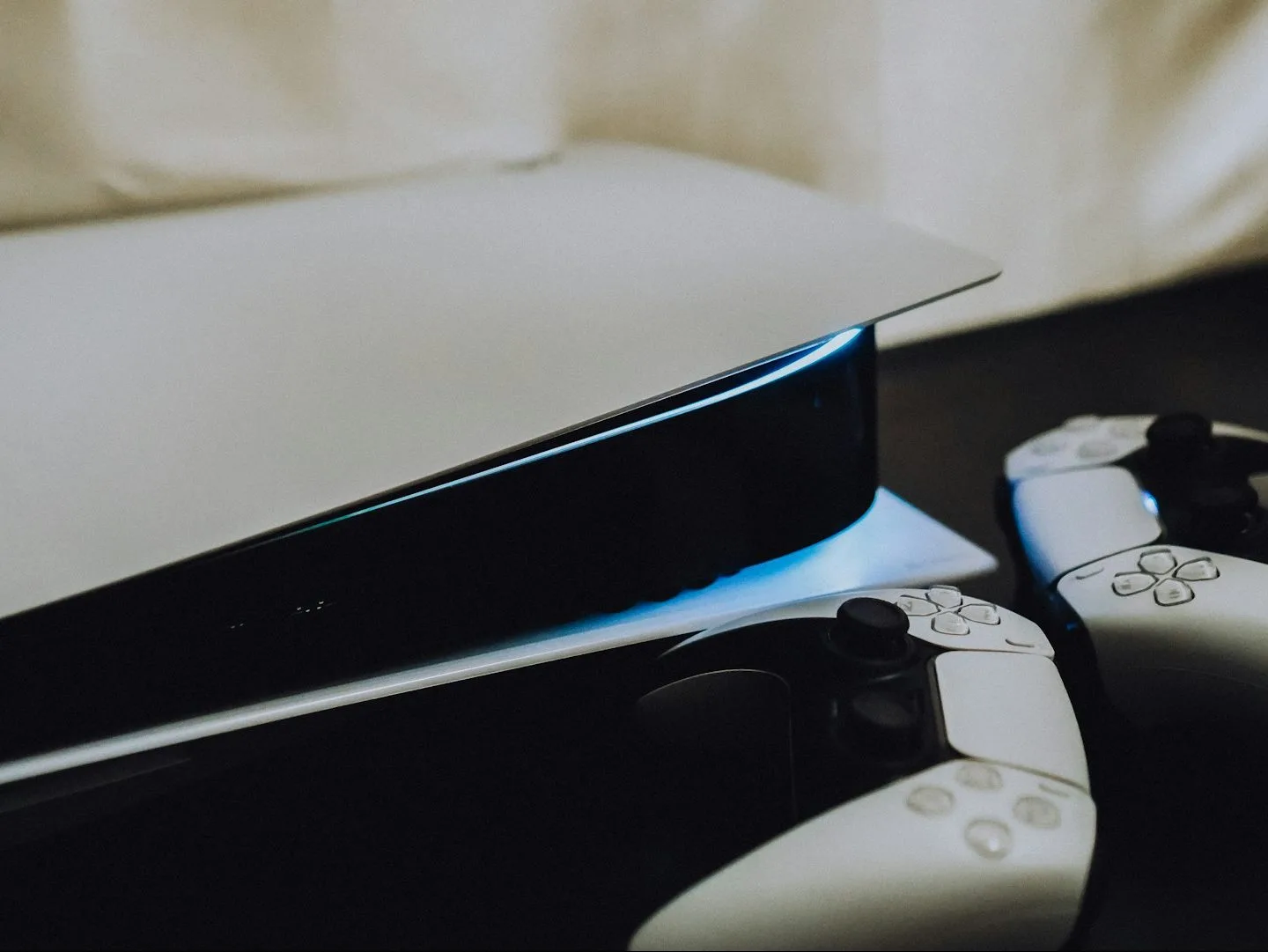
Triyansh Gill / Unsplash
To combat this, Sony is reportedly adopting a multi-device strategy with tiered pricing.
PS6 Lite: A slightly less powerful version of the mainstream console that could cost between $350 and $500.
The PS6 handheld (Project Canis): A highly rumored console to rival the Switch 2, could cost between $400 and $500.
The PS6 flagship (Project Orion): Standard PS6 with top-tier hardware might cost between $699 and $999 (the latter being more likely).
If Sony manages to keep the PS6’s price under $1,000, it could potentially undercut Microsoft’s “Project Helix,” the next-generation Xbox, which might cost between $1,000 to $1,200 and debut in late 2027 or early 2028.
Sony could use one hardware strategy to keep the PS6’s price in control: modularity. According to an Insider Gaming report, the PS6 could follow in the footsteps of the PS5 Slim, featuring a detachable disc.
This allows the company to keep the initial sticker price of the standard console down, while bringing in more revenue from media collectors, who would have to buy the drive separately. It could also be possible that the current PS5 detachable drives will work with the PS6.
Advertisement
The evolution of PS6 rumors: A timeline of leaks
Digital Trends
If we look at past generations, that time frame falls within their life spans. The PlayStation 4 had been around for seven years before the PS5 came out, and the PlayStation 3 was also around for seven years before its successor showed up. The PS5 launched in 2020, meaning 2027 would once again leave us with a seven-year console cycle. We wouldn’t put money on 2027 for sure, but anything from late 2027 onward feels like a safe bet.
Perhaps the biggest clue as to when a PS6 could come out, or at least may have been planned to at one point, points to 2027 or 2028. This information comes from an official Microsoft court document as part of the Activision Blizzard acquisition: “By the time SIE launched the next generation of its PlayStation console (which is likely to occur around [redacted]), it would have lost access to Call of Duty.”
The date is redacted here, but sleuths have connected the dots between this and the deal Microsoft offered Sony to keep Activision Blizzard games on PlayStation consoles until 2027. That would suggest that, at the earliest, Microsoft didn’t believe a new PlayStation would come before 2027.
Earlier estimates had the PlayStation 6 pegged at a 2027-2028 timeframe, but one rumored detail from an Insider Gaming report could indicate a 2027 release. Take this with a big grain of salt, as Insider Gaming’s track record for leaks is shaky at best, but it reports that a canceled, unannounced Blade Runner game was targeting a September 2027 release on both current and “Gen 10” platforms. The implication is that the PS6 would be out at that time, but we have a very hard time believing that to be true.
The silicon foundation: Sony and AMD’s “Project Amethyst”
Giovanni Colantonio / Digital Trends
While nothing substantial was revealed regarding release dates, Sony did host a business presentation on June 13 and did comment on both future hardware and handhelds. In regard to the next generation of hardware, Sony Interactive Entertainment CEO Hideaki Nishino stated, “Our console business has evolved into a multi-faceted platform, and we now have a large ecosystem of highly engaged players across both the PS5 and PS4 generations, so naturally, therefore, there’s a huge interest in our next generation console strategy. While we cannot share further details at this stage, the future of the platform is top of mind.”
If there was one person we trust most to know what that strategy looks like, it is the architect, Mark Cerny. Last year, he announced a major partnership with AMD for Project Amethyst, which would help improve upscaling on the PS5 Pro that is expected in 2026. Later on, in a new Tom’s Guide article, Cerny comments on AMD’s progress in designing the next generation of GPU hardware. While that new tech could be ready as early as next year, Cerny stated that “What I’m trying to do is prepare for the next generation of consoles, so my time frame is multi-year here.”
Advertisement
Digital Trends
Microsoft has also partnered with AMD, but Sony’s collaboration was discussed more openly by Cerny and AMD senior vice president Jack Huynh in a technical talk (thanks, Eurogamer). In terms of what could come from the partnership, there are three parts. Neural Arrays will work to link Compute Units to more efficiently leverage AI upscaling, acting as the dedicated silicon foundation for PlayStation Spectral Super Resolution 2.0 (PSSR 2.0). Huynh promising “dedicated innovations that bring cinematic rendering to an entirely new level” heavily implies Sony is building the PS6 as an AI-first console from the ground up.
Next up, Radiance Cores are dedicated hardware for lighting effects in games, similar to how NVIDIA uses RT cores for ray tracing. AMD is looking to catch up, and Sony will seemingly benefit with PS6, aiming for a staggering 6 to 12 times the ray tracing performance of the base PS5. Finally, Universal Compression could be an answer to NVIDIA’s Neural Texture Compression, potentially improving the efficiency of streaming compressed data to the GPU memory, lowering power demands, and potentially improving frame rates.
Mid-to-late 2025: The optimistic hardware leaks
In June 2025, KeplerL2 once again took to NeoGaf to talk more about possible PS6 specs and launch timing. First is that the PS6 and the next Xbox will both be using UDNA architecture for their GPUs. Compared to RDNA4, which is currently in use in the PS5 Pro, the UDNA could be 20% faster. When asked about launch timing, KeplerL2 is also in the 2027 camp. They claim both are “likely 2027” but suggest that Xbox may want to rush their console out to beat the PS6.
In July, Moore’s Law Is Dead released a video with leaked info about AMD’s Magnus APU, which he believes could be used in the PS6. To further add some credibility to this leak, at least in terms of accuracy, KeplerL2 also chimed in to corroborate the specs, but they believe this chip is intended for the next Xbox hardware, not the PS6. According to KeplerL2, “That is probably the next-gen Xbox, the codenames that AMD uses for PlayStation SoCs are from Shakespeare characters.”
Advertisement
On August 1, 2025, Moore’s Law Is Dead dropped another bomb of a leak. This time, they claim to have uncovered an AMD presentation from 2023 with possible specs for both the PS6 and PlayStation handheld. According to this document, the PS6 is codenamed “Orion” and was proposed to begin manufacturing in late 2027. The high-level information here is that the PS6 would have specs on par with an RTX 4080, be 3x faster than the base PS5, have enhanced Ray Tracing, and be able to output games at either 4K 120FPS or 8K 60FPS.
The real kicker, though, is MLID predicts Sony is keeping its specs conservative in an effort to launch the PS6 at just $500. Again, these are just leaks, but even if true, they are from 2023 and plans could easily change in two or more years. Given everything we’ve seen so far, 2028 sounds like the safer bet for a PS6 launch.
Moore’s Law is Dead, who you’ll see pops up a few times on this very page, thanks to a decent track record with hardware leaks, reported in October 2025, that Sony will begin manufacturing the PlayStation 6 in early 2027, with the intention that it launches late in that same year. A seven-year console generation would match up with the PS4’s life cycle, which ran from 2013 to 2020, when the PS5 launched.
Industry reality checks and the shift to 2028
Bloomberg’s Jason Schreier appeared on the Xbox Expansion Podcast to talk about the next console generation, and while he acknowledged a seven-year console cycle is essentially traditional at this point, he suggested it would be “insane” to start a new console generation, saying “it feels like the PlayStation 5 has barely even gotten started”.
Advertisement
On the other hand, former PlayStation executive Shuhei Yoshida spoke to VentureBeat about possible PS6 timing. When talking about the average console generation lifecycle, putting the end of the PS5 generation around 2027, which is what the previous leaker suggested, Yoshida replied, “I have no information about the next PlayStation, but it feels a bit too early for me to say.
The PS5 generation was slowed down because of manufacturing issues. If the next PlayStation comes out in 2028, that feels right to me.” It should be noted that Yoshida does not have any insider knowledge about when the PS6 will actually be released. That said, he had been working at PlayStation for over 30 years, previously acting as president of SIE, and would therefore have a good idea of what timescales the company works in and what the vision for a console launch would look like.
April 2026: Thermal management and the final chipset
Based on previous trends, the timeline between a chipset being finalized and entering fabrication and the console launching is about two years, leading to the 2027 estimate. As far as what chips the PS6 will reportedly be running on, KeplrL2 suggests that it will be a Zen6 running on N2 architecture and an early fork of gfx13, aka AMD RDNA5. Collectively called “Project Orion,” the new architecture isn’t just about increasing the raw performance or speed; it also represents a massive leap in thermal management, something that is key to the entire PS6 experience. By utilizing more efficient die sizes, Sony is trying to push extreme graphical fidelity while keeping the operating temperature under control.
Advertisement
Furthermore, according to Technetbook, reports claim that the SoC is in pre-silicon validation, which typically has a two-year lead time, ahead of a 2027 launch. For those who may not be so familiar with chipsets and simply want to know what this means for the PS6, the short version is that it will easily eclipse what the PS5 is currently capable of. However, as with all leaks, this should only be taken as a rumor and not necessarily indicative of reality until Sony itself releases official information. Even if some of this were true, there is still time for plans to change regarding the chips and release date.
Why is there so much confusion about the PS6 launch dates?
The reason is simple. It comes down to when the leaks surfaced on the internet. Those about the hardware from 2023 and early 2024 confidently pointed to 2027 as the PS6 launch year. They also aligned perfectly with the company’s seven-year launch cycle. However, the 2026 memory crisis has fundamentally changed everything.
Sourcing millions of units of high-bandwidth memory is currently a nightmare for the company’s bill of materials, making a late 2028 or even 2029 release much more realistic. The silver lining, however, could be the easement in the memory supply by the end of this year (we’re being highly optimistic based on what the situation currently is), in which case, the PS6 could realistically arrive sooner.
PlayStation release history: Will the PS6 break the 7-year cycle?
For reference, it can be helpful to look back and see the general cadence at which Sony releases its consoles. Keep in mind, however, that generations have been getting longer and longer as we go on, so we shouldn’t look at these gaps as perfect predictors for when the PS6 will come out, but rather some guiding data that could help us narrow down possible release windows. (We won’t be including other hardware like handhelds or VR headsets, and just look at proper PlayStation console hardware here).
Console
Release Year
PlayStation 1
1994
PlayStation 2
2000
PlayStation 3
2006
PlayStation 4/PS4 Pro
2013/2016
PlayStation 5/PS5 Pro
2020/2024
PlayStation 6
Late 2028 or 2029 (Estimated)
As we can see, the gap between all previous generations was either 6 or 7 years long, including the PS4 generation, which had a Pro model. If that trend were to continue, it would point to a 2027 release window for a PS6, but again, this data isn’t predictive.
Advertisement
Given the current 2026 memory crisis situation, there are solid chances of the PS6 breaking the historical launch cadence, even if it is by a year (if and when the situation gets better).
PS6 specs and power: Decoding the AMD leaks
Sony
Exact specifications for the PS6 are a bit scarce, but the silicon foundation is practically set in stone. Moore’s Law is Dead has stated that it knows “with 100% certainty that Sony will continue its partnership with AMD to power the PS6 and PS5 Pro.” This would make sense as this is the same chipset used in the PS5, so sticking with it would make things like backward compatibility and cross-generational games much easier.
In fact, Reuters reported in September 2024 that Intel lost out on a bid to design the PS6 chipset back in 2022 to AMD. Should the PS6 use AMD chips as is being reported, this would make backward compatibility much easier since the PS5 and PS5 Pro both run on custom AMD chipsets.
We suspect a new SSD will be included, as that was a major push in the PS5 to nearly cut out loading times, but no word has been leaked on that. By the time a PS6 comes out, we would also expect at least 2TB of storage, especially if the console ends up being digital-only.
A translated leak from Zhangzhonghao supposedly sheds light on quite a bit of the PS6 architecture. They claim that the PS6’s RDNA5 is now called UDNA, will have M1400 and RX9000 on the same architecture, with the GPU set to go into mass production in the second quarter of 2026.
Advertisement
MLID dropped a massive video detailing the rumored spec breakdown for the flagship PS6 console (Project Orion). Here’s a quick recap of what he claims the PS6 will bring to the table:
7-8 x Zen 6c + 2 x Zen 6 LP with 9-10 cores
Up to 32GB DDR7 memory (Some older leaks claimed 40GB, but April 2026 supply chain reality points to 32GB)
AMD 52-54 RDNA 5 CUs clocked between 2.6GHz and 3GHz with 10 MB of L2 cache and up to 40 TFLOPS of compute power GPU
Backward compatibility with PS4 and PS5
Rasterization to be 2.5 – 3x greater than PS5
Ray tracing performance to be 6-12x greater than PS5
The most crucial upgrade isn’t the raw TFLOPS; it’s the massive jump to 32GB of cutting-edge DDR7 RAM, which would provide a meaningful and noticeable upgrade from the PS5’s 16GB of GDDR6 RAM, which should fundamentally eliminate data-streaming bottlenecks.
For massive, open-world video games, like a theoretical Grand Theft Auto 6 expansion, assets can stream into the GPU’s memory instantaneously. But even so, the PS6 could be much, much faster than the PS5.
Next-Gen will be massive graphical leap. Over a 10-fold increase in Ray Tracing, and a multiple magnitudes increase in AI (BTW AI is used to directly improve graphics already with PSSR in the PS5 Pro).
We didn’t measure PS3’s performance based on how well it ran 2D sprites.
Sony has already launched PlayStation Spectral Super Resolution 2.0 (PSSR 2.0) globally for the PS5 Pro in March 2026. The feature enhances image clarity, reduces shimmer, and improves gameplay stability. It reduces visual artifacts, uses neural networks trained on billions of frames to predict pixel appearance, and supports numerous titles at launch.
PS6 is rumored to introduce hardware-level AI frame generation. PlayStation’s architect, Mark Cerny (in an interview with Digital Foundry), has recently confirmed that frame generation is coming to PlayStation, with better specifications and raw processing power, to minimize input latency. However, he didn’t confirm which consoles could get it.
Advertisement
In addition to the feature, Sony is actively working on developing an AI-based “ghost assistant” (via Outlook Respawn) that may monitor users’ gameplay in real-time and offer dynamic, on-screen tips, assistance, or help. For context, Xbox has already announced its Gaming Copilot (clever wordplay there, Microsoft) in beta on PC and mobile. Android phones also have the Google Play Games Sidekick.
Sony also seems to be experimenting with how people interact with the console, as a recent patent showcased a “buttonless” gamepad design, something we haven’t seen from the company before. However, given the force with which gamers often pound on their gamepads, we believe a touch-based gamepad is more ambitious than practical.
Project Canis: The rumored PS6 native handheld
Besides the PS6, there are plenty of rumors suggesting that there will also be a new PlayStation handheld released as part of the PS6 “family.” This is claimed to be a companion device to the PS6, so Sony isn’t abandoning the home console space.
This is backed by Metro, a UK site, which claims that Sony is developing two chipsets for the PS6 lineup (again, corroborating the multi-device strategy we discussed in the beginning). The prevalent industry belief is that the company is working on a brand-new handheld console alongside the standard PS6, to compete with the Steam Deck and Nintendo Switch 2.
Advertisement
This handheld, according to leaker KeplerL2, will have a 15W SoC on 3nm. For those of us who have no idea what that means, thankfully, they broke it down to mean that it won’t be anywhere near the level of a PS6 (based on what we suspect it to be), but “it can definitely run PS5 games, just not at the same resolution/FPS, mainly due to lower memory bandwidth.” KeplerL2 estimates its power to be somewhere between the Xbox Series S and X.
A recent leak from MLID claims that the PS5’s Low-Power Mode is linked to the PS6 handheld, as the feature could prove very useful for a compact gaming console.
New information has surfaced in the past months that suggests Sony could be using an AMD RDNA5-based GPU with 28-32 compute units paired with 16GB of LPDDR5X RAM and 20MB of cache (4MB L2 + 16MB MALL), and a more modest SoC for portable play. We’ve also heard that the handheld will feature support for advanced AI upscaling and ray tracing.
Advertisement
The new device wouldn’t just stream games like the PS5 Portal – it’s expected to run games natively on hardware similar to the scaled-down PS6. If this all comes true, the PS6 generation could mark a solid return to the kind of hybrid hardware ecosystem we saw with the PS Vita, and could give Nintendo a run for its money.
Jacob Roach / Digital Trends
Again, referencing the June 13 business meeting from earlier, Noshino was asked specifically about Sony’s handheld plans. After talking about the PlayStation Portal, he adds that “Sales [of the Portal] are progressing steadily and more importantly, it has unlocked additional engagement across our player base, so we remain committed to exploring new ways for players to access our content and services.” Again, nothing committal, but it does acknowledge that the Portal has done very well for the company, and it is interested in exploring ways beyond the home console for fans to engage with PlayStation.
Along with the PS6 specs and codename from Moore’s Law Is Dead leaked on August 1, they also revealed 2023 plans for a PlayStation handheld. Codenamed “Canis”, this handheld is supposedly being built with a USB-C port with output capabilities. This implies Sony is looking to utilize some sort of dock with the handheld, much like the Switch 2. The handheld would be manufactured alongside the PS6 for a simultaneous release, presumably in 2028, and have roughly half the power of the PS5. If true, this would still make it a more powerful handheld than the ROG Xbox Ally X, but priced closer to what the Switch 2 sells for.
Jacob Roach / Digital Trends
MLID returned with a huge PS6 handheld spec blowout. Some of the specs are the same as previously reported, but here’s the full breakdown from MLID:
Monolithic~135mm2 Die
4 X Zen 6c + 2 Zen 6 LP (6 core total) with 4MB of L3 for the Zen 6c CCX
192-bit LPDDR5X-8533 memory controller (targeting 16GB of unified RAM)
16CU RDNA 5 iGPU clocked at ~1.20GHz in handheld mode and ~1.65GHz in docked mode
Backward compatibility for PS4 and PS5 games
MicroSD slot
Haptic vibration, dual mics, and a touchscreen
Manufacturing is planned to begin in 2027, possibly releasing in 2028 alongside the mainline console.
This confirms Sony’s intention to make this handheld dockable like the Switch 2, but it would be far more powerful than any other handheld on the market. In fact, MLID claims that, while docked, the PS6 handheld would be at least on par with the power of a PS5.
In terms of price, MLID’s estimate is surprisingly reasonable at $400 – $500. They say the $450 Switch 2 is Sony’s main competition and wants to price its handheld competitively with it, rather than some of the very expensive PC-based handhelds on the market.
Other PS6 rumors and speculation
With so much talk about the PS6 hardware, there are massive rumors swirling around the games that could define the generation.
Advertisement
Let’s talk about GTA 6, for instance. The game is currently slated for a late 2026 launch, meaning it will arrive on the PS5 and PS5 Pro. Following the console launch, Rockstar Games could launch a dedicated PC version to tap into the mass market, and then, with the launch of the PS6, release another fully optimized version for the console, perhaps even selling it as a bundled game with the console.
With the Last of Us Online stands canceled, Naughty Dog has pivoted ahead. While we know that they are working on an Intergalactic title, as of April 2026, multiple insiders have claimed there’s a secret video game in development, which could either be a new Uncharted revival. The mystery game could arrive as a flagship PS6 launch title.
After learning that Cloud Chamber has delayed Bioshock 4 out of its original late 2026 or early 2027 window, some think that it could be slated to come to the PS6. If the PS6 is coming in 2028 as we suspect, this would make sense. However, this logic is taking a lot of liberty in assuming both the release of this game and the next-gen console.
Frequently Asked Questions (FAQs)
Will PS5 games work on PS6?
Advertisement
Yes, full backward compatibility is highly expected. Your existing library of PS4 or PS5 games should run well on the console, barring a few titles that might not be optimized at launch.
Is the PS6 going to be digital-only?
The base PS6 might launch as a digital-first console to keep the initial retail price down. However, it is heavily rumored to feature a detachable disc drive sold separately.
When is the PlayStation 6 coming out?
Advertisement
The PlayStation 6 is highly likely to launch in late 2028 or 2029, due to the ongoing memory crisis.
Is Sony making a PS6 handheld?
Leaks heavily suggest Sony is developing a dockable, native handheld companion alongside the PS6, internally codenamed “Project Canis.”
The TCL QM8L is the latest offering from the TV brand most closely associated with mini-LED backlighting technology. Yes, every other big TV name now makes mini-LED sets, but TCL has been at it the longest, and it manages to make meaningful improvements to its display panels and processing with each new generation of models.
Last year’s TCL QM8K featured the company’s Halo Control System. This, combined with a 23-bit backlight controller and Dynamic Light Algorithm, upped the level of local dimming precision to the point where backlight blooming effects – a key picture quality drawback with LED-based TVs – were nearly non-existent. For the new QM8L, TCL has made further progress in the battle against blooming by adding a 26-bit backlight controller and up to 4,000 local dimming zones (on the 98-inch model), an increase over the QM8K.
The bigger story with the new QM8L series, however, is SQD Mini-LED. SQD stands for Super Quantum Dots, which is an improved version of the Quantum Dot formulation found in many mini-LED TVs, and one that provides extended color gamut coverage (up to 100% BT.2020, according to TCL). The QM8L also features an Advanced Color Purity algorithm and a new Ultra Color filter which uses 5 nanometer particles compared to the 60 nanometer particles in standard mini-LED TVs, and TCL says this combination provides “more accurate pixel-level color” along with more “consistent color saturation.”
The QM8L series isn’t the first TCL TV with Super Quantum Dots – the X11L series the company introduced at CES holds that distinction. The X11L series goes even further than the QM8L on the local dimming front, offering up to 20,000 dimming zones on the 98-inch model, and it also has a super-thin design. With prices starting at $7,000 (for the 75-inch version), the X11L series is about as pricey as TVs get in 2026. How does the more affordable midrange QM8L ($2,999.99 for the 75-inch model I tested) hold up, both against its flagship big brother and last year’s QM8K? Let’s find out.
Advertisement
What Is It?
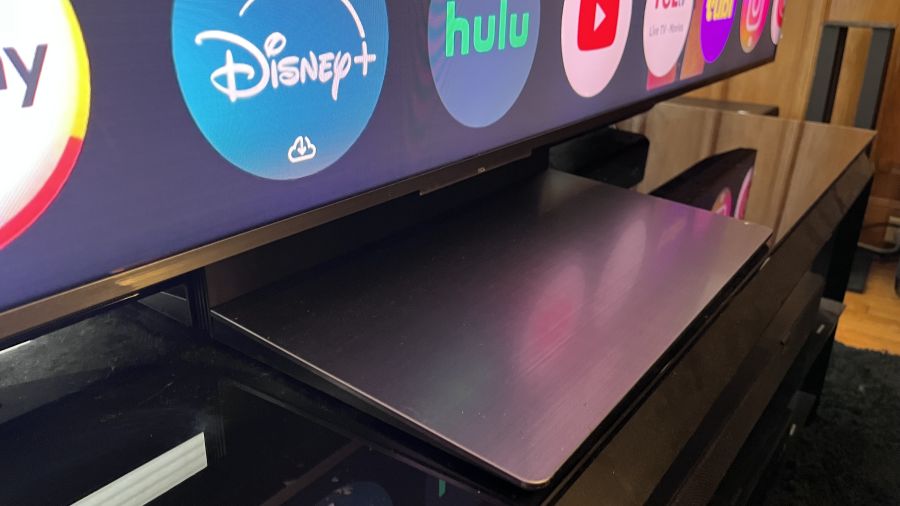
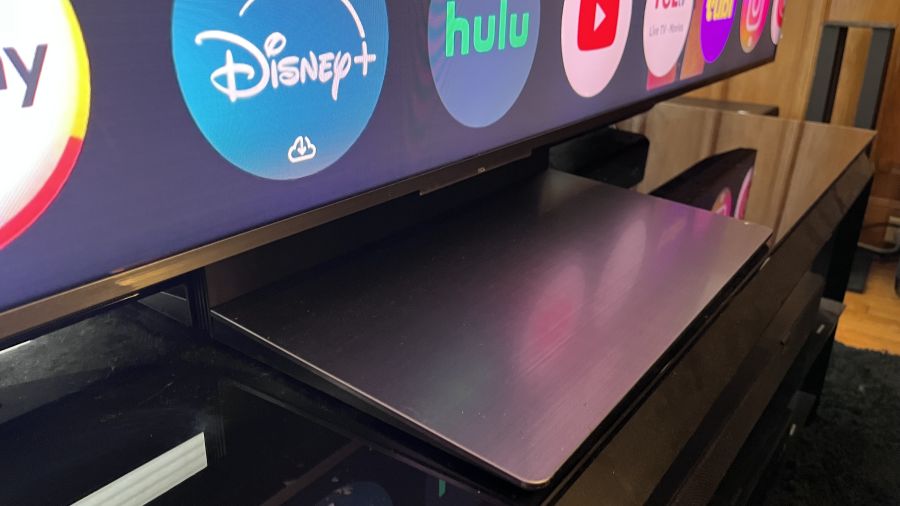
The QM8L’s height-adjustable pedestal stand
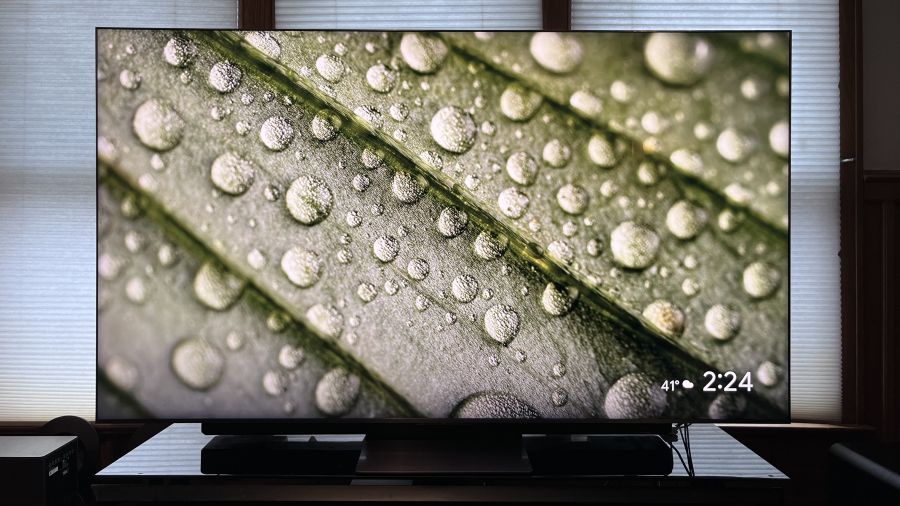
The TCL QM8L is the step-down series in the company’s SQD-Mini-LED TV lineup for 2026. Aside from Super Quantum Dots and up to 4,000 backlight local dimming zones (2,584 on the 75-inch model I tested), the QM8L series features a high-contrast WHVA 2.0 Ultra Panel with a wide color viewing angle and an anti-reflective screen filter. A new TSR AI Pro processor provides AI-enhanced contrast, color, motion, and upscaling, and there’s Super Resolution 2.0 processing to enhance detail.
HDR support on the QM8L series includes the Dolby Vision, HDR10+, HDR10, and HLG formats, and Dolby Vision 2 Max will be added to that list in a software update planned for summer 2026. Filmmaker Mode and IMAX Enhanced mode picture presets are provided, and the set also has Intelligent picture and sound modes that make automatic adjustments based on content.
Gaming gets a welcome boost on the QM8L series with four HDMI 2.1 ports instead of the two provided on previous TCL TVs. These all support a 4K/144Hz refresh rate, along with 1080p/288Hz for PC gaming. FreeSync Premium Pro is also supported, and TCL’s Game Bar pop-up menu lets you make quick gaming-related onscreen adjustments while playing. TCL also says that the Xbox Game Pass app should soon be available via a software update in May to allow for cloud-based gaming on the QM8L.
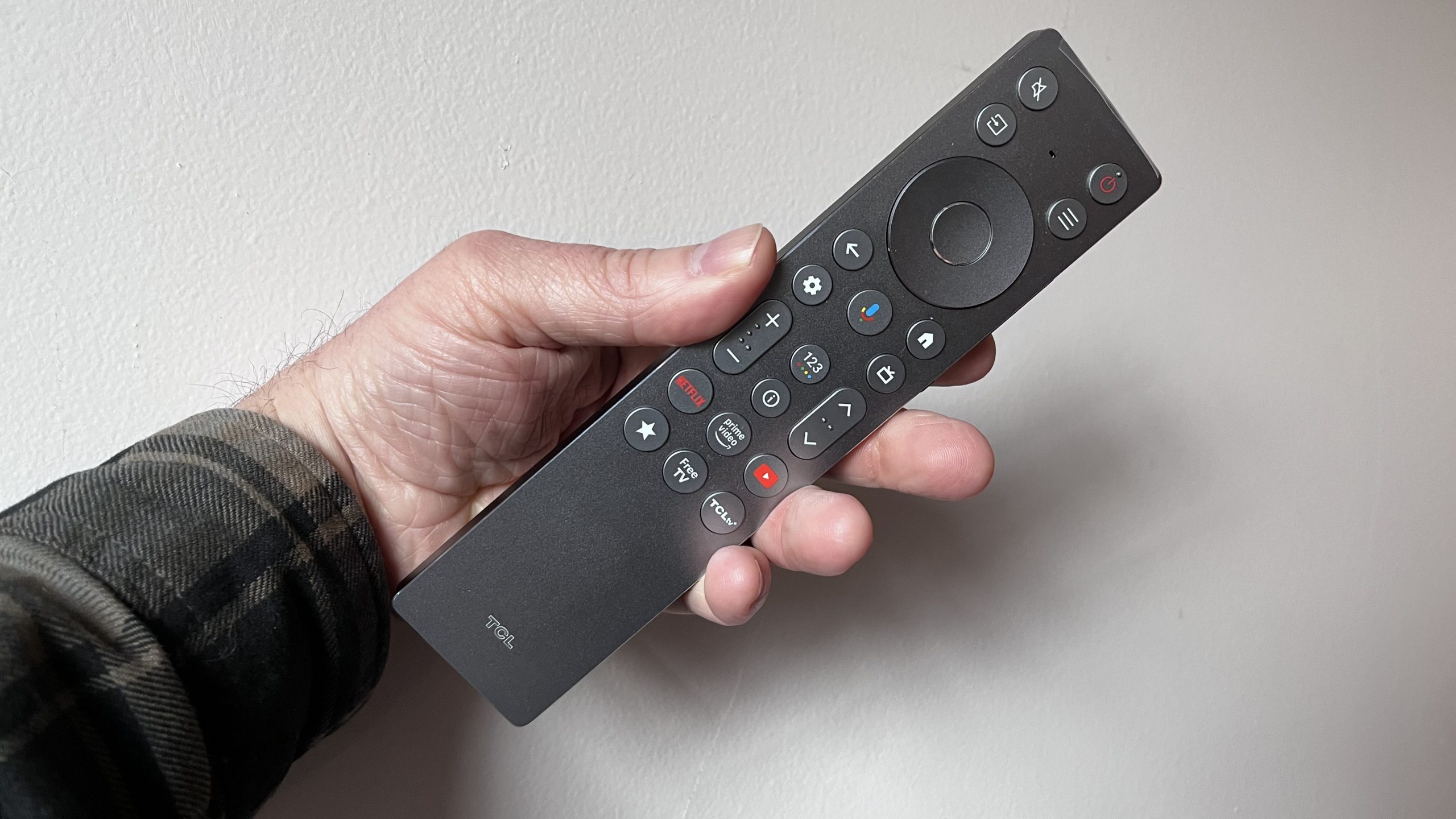
TCL’s ZeroBorder design for the QM8L series gives it an almost bezel-free “all-screen” look. Cabinet depth is two inches, but the TV’s tapered side panels give it a slimmer appearance when viewed from the sides. An adjustable height pedestal stand gives you the option to install the screen either flush with a tabletop or elevated to clear space for a soundbar, and there’s a new remote control design with a backlit keypad and built-in mic.
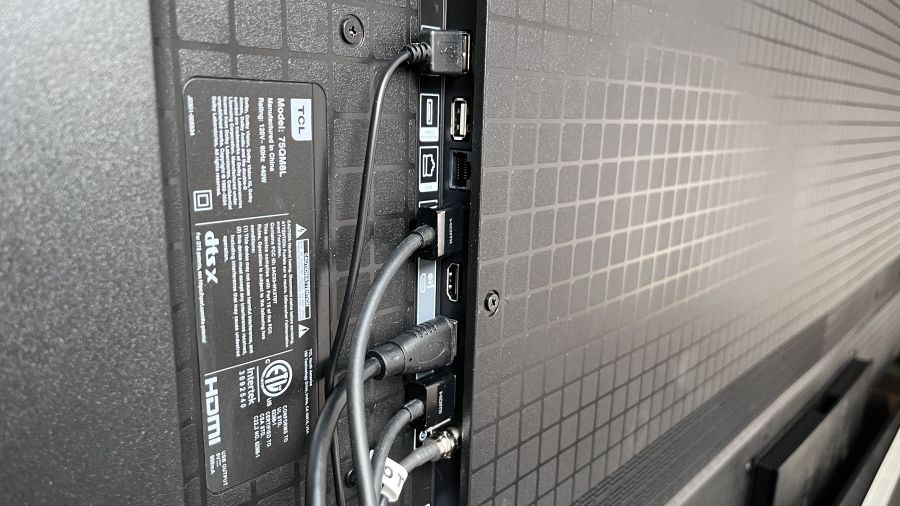
The QM8L features four HDMI 2.1 ports with 4K/144Hz support
Along with the QM8L’s four HDMI 2.1 ports, there’s an optical digital audio output, USB 2.0 and 3.0 ports, an Ethernet jack and an RF input for an antenna. All connections are located on a side facing panel where they can be easily accessed in a wall-mount installation.
Advertisement
Talking to the TV
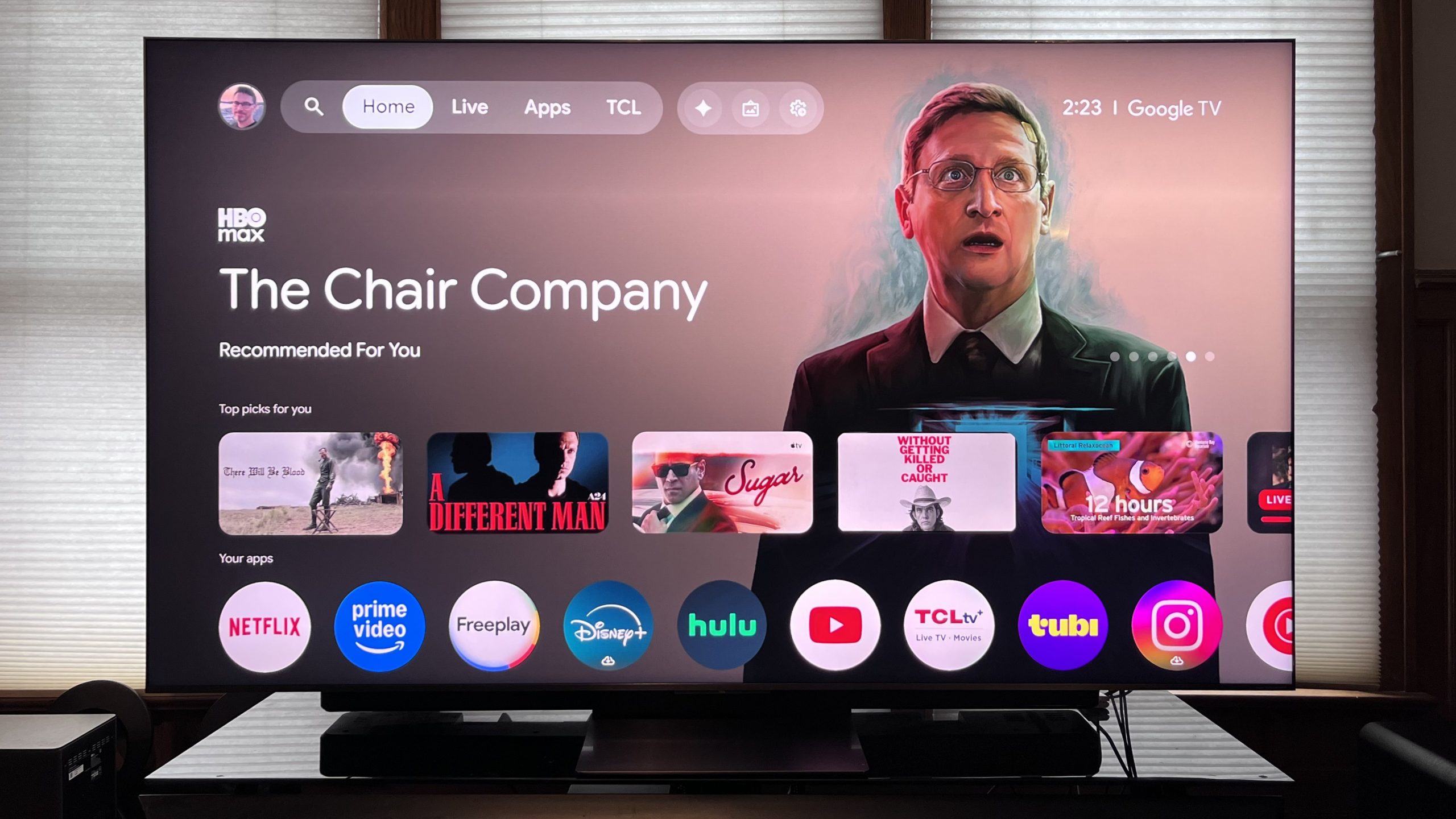
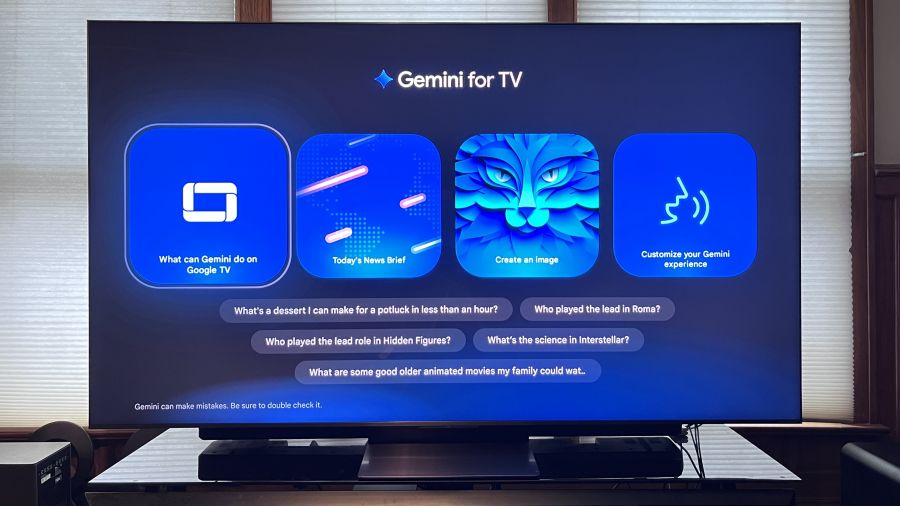
The QM8L uses the Google TV smart platform for content browsing and streaming, but this version is enhanced with Gemini interactive AI. That basically means the standard set of Google TV features including apps, Google TV Freeplay, content recommendations, and Live TV are all provided, but there is an additional tab on the home screen that takes you to the Gemini for TV portal. Here you can customize the “voice” of your AI assistant, as well as get a Today’s News brief, create AI-generated images from voice prompts to use as screensavers, and engage in interactive discussions with Gemini on a wide range of topics.
According to TCL, a future update to Gemini interactive AI on the QM8L will additionally let you adjust picture and sound settings via voice commands, as well as generate custom videos using the Veo on Google TV feature.
Advertisement. Scroll to continue reading.
The QM8L’s Google TV interface features a new Gemini AI tab
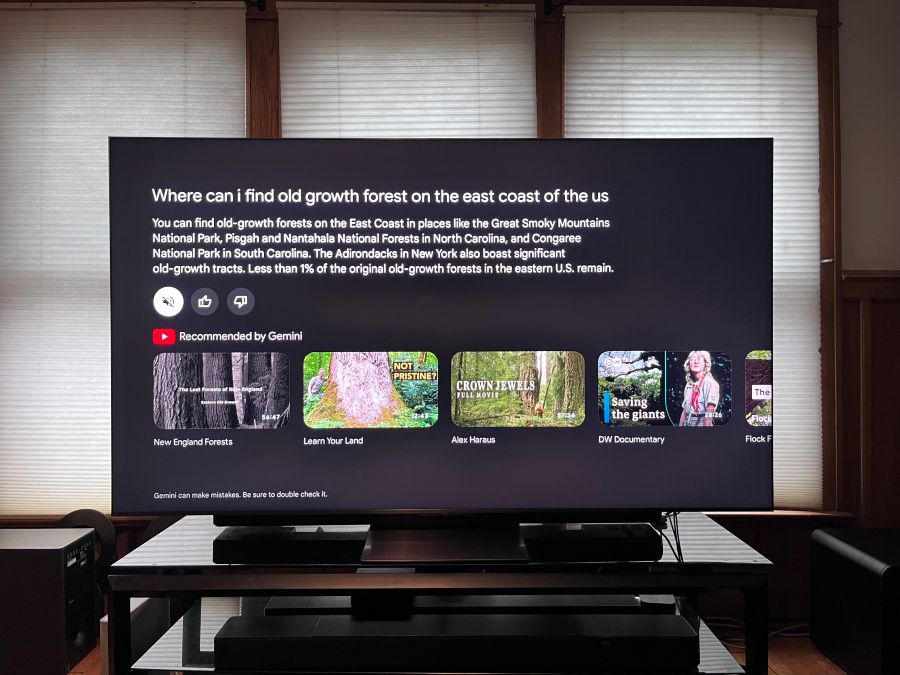
I rarely use voice commands to control my TV or any other device, and I generally don’t bother with AI. To test this feature on the QM8L, however, I asked “Where are old growth forests located on the east coast of the US?” and received a surprisingly detailed list in an AI summary. Gemini is conversational, so I asked further questions about specific locations on the list and even nearby places to stay overnight. This being a Google product, there were of course YouTube videos provided for each listing, and these let me get a better look at the forest sites.
The main Gemini portalGemini inquiry results
The QM8L features an ATSC 3.0 tuner, and broadcast channels pulled in by a connected antenna can be browsed separately in grid-guide format by selecting the Antenna TV tab in the Live TV portal. This feature lets you easily access your local stations and browse their programming options separately from the national network broadcasts carried by Freeplay.
Audio Unlimited
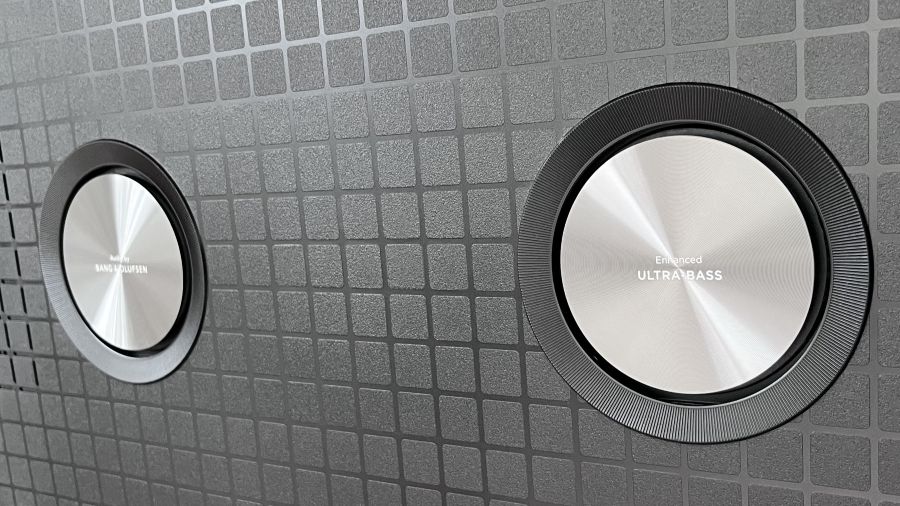
An Audio by Bang & Olufsen speaker array on the QM8L delivers Dolby Atmos soundtracks via down-firing speakers located on the TV’s bottom surface and there are also two “subwoofers” located on the back. The built-in sound quality is good overall, with clear dialogue, clean-sounding bass, and decent enough height effects, especially when the Vertical Sound Field setting in the Acoustics Laboratory menu is set to Medium or higher. Other options here include Auto Volume Control and AI Sonic-Adaption, a feature that emits test tones to analyze your viewing environment and applies room correction EQ. There is also a Bluetooth personal audio option for viewing with wireless headphones.
Advertisement
Dual built-in subs are provided on the QM8L’s back panel
You’ll of course get better sound by using a soundbar or other external speaker system and TCL provides plenty of options here. At minimum you can buy a subwoofer from TCL and pair it wirelessly with the TV for enhanced bass. The QM8L also supports Dolby Atmos FlexConnect, with the option to pair up to four satellite speakers and a subwoofer for a 4.1.4-channel system. Your options here are limited to TCL’s Z100 wireless speaker and Z100-SW subwoofer, but the simple setup and installation flexibility that FlexConnect provides makes it worth consideration.
Setup & Viewing Impressions
I started out my testing of the QM8L by making measurements using Portrait Display’s Calman Color Calibration software in the set’s default Filmmaker Mode and Standard presets with Adaptive Brightness disabled. Peak HDR brightness measured on a white 10% window pattern in Filmmaker Mode was 1,992 nits and 708 nits on a 100% (fullscreen) white pattern. In Standard, peak HDR brightness was 1,938 and 719 nits, respectively, on 10% and fullscreen patterns.
I should note here that TCL cites up to 6,000 nits peak brightness in its specs for the QM8L series. And while I wasn’t able to duplicate that with any variation of settings, I did measure up to 4,500 nits on initial measurements, though the actual brightness proved to be significantly lower after a few seconds once the display stabilized on the test pattern. The brightness measurements listed above reflect the QM8L’s stabilized brightness levels.
The QM8L’s color gamut coverage in Filmmaker Mode measured 89.3 for BT.2020 and 97.7 for P3. Those results are an improvement on last year’s QM8K, especially for BT.2020, and they only slightly trail what I measured on the Samsung R95H Micro RGB TV.
Advertisement
Delta-E (the margin of error between the test pattern source and what’s displayed on-screen) averaged 4.9 for grayscale and 3.3 for color, both of which are higher than the 3.0 result considered to be the threshold for what’s indistinguishable from perfect to the human eye. To calibrate the TV, I changed the Color Temperature slider in the color menu from its default 5 setting to 4, and then made further adjustments in the TV’s 2-point White Balance menu. Post-calibration, the measured dE averaged 0.7 for grayscale and 1.1 for color.
For gaming, selecting the QM8L’s Game picture preset and turning on the Game Master mode in the System menu settings will result in the lowest input lag. Using a Leo Bodnar input lag meter, I measured 9.8ms for a 4K 60Hz input – a much improved result over previous TCL TVs I’ve tested, all of which averaged in the 13-14ms range.
A look at the demonstration reel and Starfield animations from the Spears & Munsil Ultra HD Benchmark test disc revealed virtually no backlight blooming on the QM8L. Other tests showed that TCL’s TV had very good off-axis uniformity, with colors maintaining saturation even when viewed at a far off-center seat. The set’s contrast-enhancing anti-reflective screen coating also proved effective at reducing screen glare when viewing in a room with bright overhead lighting, though it didn’t fully eliminate reflections.
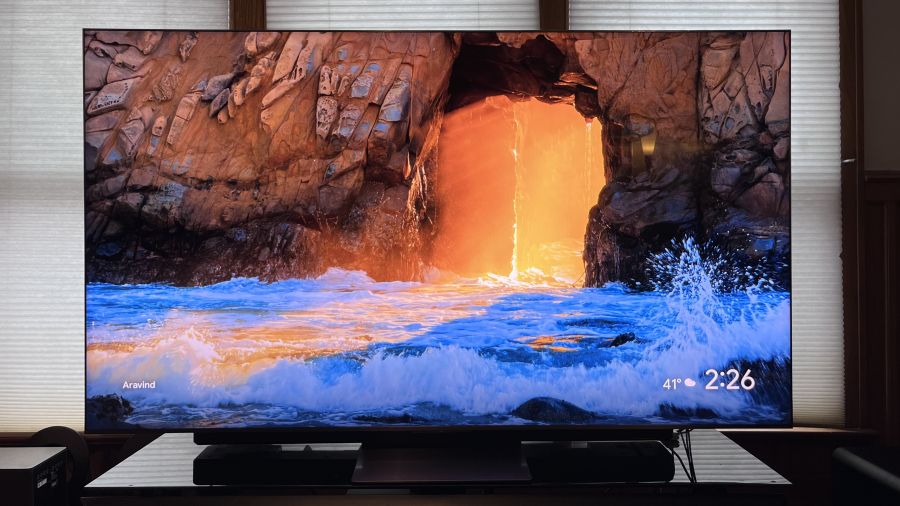
Watching movies and TV, what I found most noteworthy about the QM8L’s picture was that the colors were rich and fully saturated, but not to the point of looking cartoonlike. Playing a 4K Blu-ray of Spider-Man: Into the Spider-verse, the animated movie’s colors in the sequence where Spider-Man battles the Green Goblin looked about as vivid as I can recall ever seeing on a TV. The QM8L’s strong contrast and refined shadow detail also gave the picture a strong sense of depth in this Dolby Vision HDR transfer.
Advertisement
Alien: Earth on Hulu (watched in 4K/HDR10) has impressive visual effects for a TV series, and they give the scenes in the chambers and laboratories of the interplanetary vessels a high level of realism. Same as with Into the Spider-verse, shadows in dark scenes showed a high degree of detail, and bright highlights were also powerful, yet detailed. But it wasn’t just sci-fi dramas that looked great on the QM8L. When I watched medical drama The Pitt in 4K/Dolby Vision on HBO Max, the emergency room scenes had an alluring level of brightness, and the skintones of the multiethnic cast all looked natural.
Advertisement. Scroll to continue reading.
The QM8L’s motion handling was for the most part good, although I did note a fair amount of judder artifacts when watching a scene in the movie No Time to Die where James Bond traverses a hillside cemetery. Setting both the Judder and Blur settings to 3 in the Custom Motion fixed this, however, and I didn’t note any “soap opera” effect after making those adjustments.
The QM8L’s backlit remote control with built-in mic
The Bottom Line
TCL’s QM8L offers a marked improvement over last year’s also very impressive QM8K series. It gets a visible, and measurable upgrade in color performance through the introduction of Super Quantum Dots, and its Halo Control System with a 26-bit backlight controller and up to 4,000 local dimming zones mean that backlight blooming artifacts are nearly non-existent. The QM8L series is also a great TV for gaming, with 4K/144Hz support across four HDMI 2.1 ports, ultra-low input lag in Game mode, and soon-to-come Xbox Game Pass cloud gaming support.
Advertisement
The Google TV with Gemini feature is a great addition for this series, and it makes content searches, and also general research on most any topic, a breeze. TCL carries over the QM8K’s sleek design to this series as well, and the TV’s impressive built-in sound is augmented by Dolby Atmos FlexConnect 4.1.4 support.
At $3,000 for the 75-inch model I tested – the same price as last year’s QM8K series TV and $4,000 less than the brighter but otherwise similarly featured X11L flagship – the TCL QM8L is a great value for all that it offers. The high-end TV market in 2026 is going to be dominated by RGB LED and flagship OLED models, and you can bet they will all be pricey. Compared to those, and also to TCL’s own SQD-Mini-LED flagship, the QM8L is a relative bargain.
Pros:
High brightness
SQD tech brings extended P3 and BT.2020 color gamut coverage
Refined local dimming
Impressive off-axis color uniformity
Anti-relection screen
Google TV with Gemini AI assistant
Audio by Bang & Olufsen speaker array
Dolby Atmos FlexConnect support
Wireless subwoofer support
Four HDMI ports with 144Hz support
Ultra-low input lag for gaming
ATSC 3.0 tuner
Cons:
Slightly high color point and color temperature errors in Filmmaker Mode
Summary: Anthropic CEO Dario Amodei is meeting White House Chief of Staff Susie Wiles on Friday to negotiate access to Mythos, a frontier AI model that can identify and exploit thousands of zero-day vulnerabilities across every major operating system and browser. The meeting follows Anthropic’s blacklisting by the Pentagon after Amodei refused to remove safety restrictions, and comes as US Treasury, the intelligence community, CISA, and UK financial regulators all seek access to the model through Anthropic’s controlled Project Glasswing programme.
Anthropic CEO Dario Amodei is scheduled to meet White House Chief of Staff Susie Wiles on Friday in what represents the most significant step yet toward resolving the company’s standoff with the Pentagon over its refusal to remove safety restrictions from its AI models. The meeting comes as multiple US government agencies, including the Treasury Department, the intelligence community, and the Cybersecurity and Infrastructure Security Agency, are seeking access to Anthropic’s Mythos model, a frontier AI system whose cybersecurity capabilities have triggered emergency briefings from Washington to London to Ottawa.
Mythos, announced on 7 April, is not a cybersecurity product. It is a general-purpose AI model that, during testing, turned out to be capable of identifying and exploiting thousands of previously unknown zero-day vulnerabilities across every major operating system and web browser. It found flaws that had survived decades of human security review and millions of automated tests. When directed to develop working exploits, it succeeded on the first attempt in more than 83% of cases. It is the first AI model to complete a 32-step corporate network attack simulation from start to finish.
Anthropic chose not to release Mythos publicly. Instead, it created Project Glasswing, a controlled access programme that provides the model to roughly 40 vetted organisations, including Amazon Web Services, Apple, Google, Microsoft, Nvidia, Cisco, CrowdStrike, JPMorgan Chase, and Palo Alto Networks, to find and fix vulnerabilities in critical software before they can be exploited. The company has committed up to $100 million in Mythos usage credits and $4 million in donations to open-source security organisations.
The White House meeting is the product of a dispute that has escalated since February. Defense Secretary Pete Hegseth demanded that Anthropic grant the Pentagon unfettered access to its models across all lawful purposes, including potential use in autonomous weapons systems and domestic surveillance. Amodei refused. Hegseth designated Anthropic a national security supply-chain risk, a label previously reserved for companies associated with foreign adversaries, effectively blacklisting it from government contracts.
Advertisement
Anthropic sued the Trump administration in early March, filing two federal lawsuits alleging illegal retaliation. A federal judge initially blocked the blacklisting, but an appeals court reversed that decision on 8 April, leaving Anthropic excluded from Department of Defense contracts while litigation continues. The company can still work with other government agencies.
The paradox is that the same government that blacklisted Anthropic now wants access to its most powerful model. The Treasury Department is seeking Mythos to hunt for vulnerabilities in its own systems. Parts of the intelligence community and CISA are already testing it. The White House Office of Management and Budget is setting up protections to allow federal agencies to use a controlled version. Axios reported that Anthropic has hired Trumpworld consultants to facilitate negotiations, and that Friday’s meeting is designed to pave the way toward a deal.
Why Mythos matters
JPMorgan Chase CEO Jamie Dimon said publicly that Mythos “reveals a lot more vulnerabilities” for cyberattacks. The UK’s AI Security Institute evaluated a preview version and found it “substantially more capable at cyber offence than any model previously assessed,” noting that it is the first model capable of chaining multiple attack steps into complete intrusions end to end. The Council on Foreign Relations called it “an inflection point for AI and global security.”
The defensive case for Mythos is straightforward: if an AI model can find vulnerabilities that human security teams and automated testing have missed for decades, giving that model to the organisations responsible for defending critical infrastructure lets them fix the holes before adversaries discover them. The offensive risk is equally straightforward: the same capability in hostile hands would be catastrophic. Anthropic’s decision to restrict access rather than release publicly is a direct application of the safety principles that put it in conflict with the Pentagon.
Advertisement
Thecompany’s commercial trajectorygives it leverage in the negotiation. Anthropic’s annualised revenue has reached $30 billion, it has attracted investor offers at an $800 billion valuation, and it is exploring an IPO. It does not need Pentagon contracts to survive. What it needs is a resolution that preserves its safety commitments while restoring its ability to work with the broader US government, a position that the Wiles meeting is designed to explore.
The global response
Mythos has become a subject of concern well beyond Washington. The Bank of England’s Governor Andrew Bailey named it explicitly as a cybersecurity risk in a speech at Columbia University on 15 April. The Bank’s Cross Market Operational Resilience Group is convening an emergency briefing within the fortnight with the CEOs of the UK’s eight largest banks, four financial infrastructure providers, two insurers, and representatives from the Treasury, the Financial Conduct Authority, and the National Cyber Security Centre.
Anthropic is planning to provide Mythos access to selectBritish banks within daysas part of Project Glasswing’s expansion, and is quadrupling its London office to 800 staff in King’s Cross. The UK’s AI Security Institute, which has an existing evaluation partnership with Anthropic, published its technical assessment on 17 April. Canadian Finance Minister François-Philippe Champagne described Mythos as an “unknown unknown” being discussed at IMF meetings. Global regulators are coordinating on how to assess and manage the cybersecurity implications.
Thegeopolitical dimensionis unavoidable. The US government’s desire for Mythos access exists in tension with its punishment of the company that built it. Anthropic’s willingness to provide the model to UK banks and regulators while locked in litigation with the Pentagon creates a situation in which America’s closest ally may have access to a critical national security tool before its own government does. That dynamic gives the White House an incentive to resolve the dispute that transcends the original disagreement over safety guardrails.
Advertisement
What a deal might look like
The outlines of a potential resolution are visible. Anthropic would restore its eligibility for government contracts and provide Mythos access for defensive cybersecurity purposes. The Pentagon would withdraw the supply-chain risk designation. Anthropic would maintain its restrictions on autonomous weapons and mass surveillance applications but potentially agree to a process for reviewing specific military use cases that do not cross those lines. Both sides have reasons to compromise: Anthropic because the blacklisting damages itsenterprise credibility, and the administration because it needs the technology.
Whether Amodei and Wiles reach that kind of arrangement on Friday or simply begin the process of getting there is less important than what the meeting represents. The company that built the most capable cybersecurity tool in existence did so as a byproduct of building a general-purpose AI model, then restricted its release on safety grounds, then was punished by the government for maintaining those same safety principles, and is now being courted by that government because the tool is toovaluable to ignore.
That sequence captures something essential about where AI governance stands in April 2026. The technology is advancing faster than the institutions responsible for managing it can adapt, and the companies that take safety seriously are simultaneously rewarded by the market and penalised by the state. Mythos is the sharpest example yet of a model whose capabilities are so consequential that restricting it and releasing it are both defensible positions, and the argument between them is playing out not in a research paper or a congressional hearing but in the West Wing.
AI models now perform strongly in obscure languages with minimal training data
Cross-lingual transfer allows shared patterns to boost rare language performance
Tokenizer efficiency improvements significantly impact multilingual processing cost and quality
Large language models (LLMs) are closing the global language gap at an unexpected pace, with frontier models now performing well in rare languages that previous generations struggled with.
According to RWS’s TrainAI Multilingual LLM Synthetic Data Generation Study, Google‘s Gemini Pro achieved high-quality scores above 4.5 out of 5 in Kinyarwanda, a language spoken by about 12 million people in Rwanda, Uganda, and the DRC.
“This study signals a transformative moment that’s not about replacing human expertise, but about elevating it with the right technology,” said Vasagi Kothandapani, CEO of TrainAI by RWS.
Article continues below
Advertisement
How LLMs learn languages with limited training data
Unlike the Biblical “Tower of Babel,” where a sudden confusion of tongues halted construction, AI now appears to be dismantling linguistic barriers that once seemed insurmountable.
Tomáš Burkert, Head of Innovation at TrainAI, explained that AI tools often share statistical patterns across languages.
Advertisement
Frontier models do not need massive datasets for each language to produce reliable outputs because cross-lingual transfer allows shared knowledge to compensate for limited training data.
The RWS team also documented improvements in tokenizer efficiency, which affects how efficiently models process text in any given language.
Sign up to the TechRadar Pro newsletter to get all the top news, opinion, features and guidance your business needs to succeed!
These improvements compound with other model advancements into meaningful performance gains for rare and obscure languages.
Advertisement
Burkert’s team identified “benchmark drift,” where LLM capabilities can unexpectedly shift from one version to the next.
For example, the latest version of GPT fell behind smaller models on several content generation tasks, even though its predecessor had been competitive on those same tasks.
Tokenizer efficiency also varied widely between model generations, with one model proving 3.5 times more cost-effective than another in certain languages.
Advertisement
This means enterprises cannot rely on past performance when choosing which model to deploy for multilingual applications.
Until recently, AI labs prioritized performance in English and a handful of major languages, but now models have improved in those areas, some labs are starting to prioritize global audiences, and experts expect more labs to follow.
Successful enterprise AI strategies require continuous validation built on high-quality, culturally nuanced data rather than public leaderboards.
That said, a score of 4.5 out of 5 on a synthetic benchmark does not guarantee real-world fluency, and multilingual data are not really a focus.
Advertisement
According to Burkert, AI labs are only turning to multilingual data partly because labs have likely exhausted high-quality English sources.
Still, by dismantling language barriers, AI proves itself as a true “King of Babel” — not one who built a tower, but one who tore down the walls that divided human speech.
At the moment, the crown obviously does not fit perfectly, but the direction and ideas are very clear.
Log-Periodic Dipole Array (LPDA) fed parabolic reflector antennas serve high-gain broadband applications such as satellite communication, radio astronomy, and wideband radar, where constant performance over wide frequency ranges is essential. Despite nearly seven decades of research since the pioneering work of DuHamel and Ore in 1958, the synthesis and analysis of these antennas remain complex, requiring the tuning of many parameters across broad bandwidths. Traditional simulation approaches — combining Method of Moments for the LPDA with physical optics for the reflector — cannot account for mutual coupling between the feed and dish, and break down when support struts or electrically large reflectors are involved. This white paper presents an advanced full-wave simulation methodology using higher order basis functions that reduces unknowns by an order of magnitude compared to conventional MoM, demonstrates a practical three-step design strategy from stand-alone feed optimization through full antenna integration, and provides validated results for reflector diameters ranging from 24.2 λ to 242 λ with bandwidth ratios of 10:1 — all executed on standard desktop hardware with CPU/GPU acceleration.
Apple is shooting itself in the foot with how often it lets flagrant scam apps into the App Store. It’s doing so at precisely the time is needs to do better for iPhone user safety.
The App Store is not as safe as Apple says, or as Apple could make it —- image credit: Apple
In just the last week, Freecash was removed for how it sold user data. Apple only killed it after it was asked about the issue. At about the same time, a fake cryptocurrency app took users for around $9.5 million before it was taken down. Or to look at it another way, Apple earned between $1.425 million and $2.85 million from that scam, depending on whether the developer is charged 15% or 30%. Continue Reading on AppleInsider | Discuss on our Forums
Just to be clear, when I refer to “Trump” in terms of his administration, I’m referring to the collective hive mind of dangerous enablers he employs. Trump, by himself, is incapable of closing an umbrella. It’s the people around him that are dangerous, since they’re able to convert his rants and brain stem impulses into action.
While it’s understandable that an aspiring autocrat like Trump would feel threatened by a movement dedicated to opposing fascists, it’s only now that he’s returned to office that he can do anything about it. Deliberately ignoring the fact that the most dangerous domestic terrorists are located on the far right of the political spectrum (including the hundreds of people he pardoned for assaulting police officers and raiding a federal building following his 2020 election loss), Trump’s administration is once again attempting to turn protected First Amendment activity into terroristic acts worthy of lengthy minimum federal sentences.
The United States was as concerned as always about Islamist terrorism, said the official, Monica A. Jacobsen, according to a copy of her prepared remarks reviewed by The New York Times and three officials briefed on the meeting. But, she told her counterparts from Europe, Canada and Australia, the Trump administration also wanted more attention on what it believed was an insidious, underestimated threat: the far left.
Western governments must combat “antifa and far-left terrorism,” Ms. Jacobsen’s prepared remarks asserted, casting the effort as an evolution in counterterrorism following the “global war on terror.” Her prepared speech defined far-left terrorism to include threats from communists, Marxists, anarchists, anticapitalists and those with “eco-extremist” and “other self-identified antifascist ideologies.”
“As always” is a nice touch. It’s always a good idea to keep an “Islamist” scapegoat in the yard, especially when you’re busy losing a war with Iran. Not only does it generate steady work for bored FBI agents, but it also allows Trump to continue pretending the mass deportation of hardworking, tax-paying non-whites is somehow contributing to the effort to root out an alleged “1,700 Iran sleeper cells” in the United States. (No “sleeper cell” has been broken up or deported despite Trump claiming the government already knows who these “sleepers” are and where they’re located.)
Advertisement
As evidence of the dangerousness of “far left” terrorists, Jacobsen pointed to a single protest in Milan, Italy, in which police and protesters “clashed” — the favorite euphemism deployed by people who wish readers to believe protesters were just as violent as law enforcement officers.
Meanwhile, the administration can’t actually find any hard evidence to back up its assertions about the supposed violent threat posed by far left activists.
In November, the State Department took the first major step in the strategy by designating four leftist groups in Europe — two in Greece, one in Germany and another in Italy — as terrorist organizations. None of the groups has been known to have plotted attacks on Americans in the past decade, which is usually a criterion for such a designation.
Even if you were to decide that what’s being claimed about “far left terrorism” in Europe by this administration is somehow true, you can’t ignore the facts on the ground here in the United States:
Advertisement
Over the past decade, right-wing extremists have killed 112 people across 152 terrorist attacks in the United States, according to an analysis by the Center for Strategic and International Studies, a bipartisan research institution. Over the same period, left-wing extremists killed 13 people over 35 attacks, according to the analysis, while jihadist attacks left 82 dead.
Even if Trump hadn’t spent his entire term so far routinely insulting and berating our European allies, it’s still unlikely he would have been able to convince them to ignore the reality of the situation for the sole purpose of future abuses of civil liberties and rights.
Trump has been pounding this table since late last year, but now he’s finding fewer world leaders willing to indulge his fantasies or nod politely as Trump’s emissaries literally make shit up about left-wing activist groups.
The State Department wants to bring foreign law enforcement officials from at least 17 countries to The Hague in May for a workshop on how to fight far-left groups like antifa.
[…]
Formal invitations had not been sent as of last week, in part because Congress had to approve funding. U.S. officials told The Times that foreign governments had expressed less interest in the events than the State Department had hoped.
Advertisement
Once again, let’s pause to reflect on these claims. “Antifa” simply stands for “anti-fascist.” You barely have to move left at all to oppose fascism. All you would have to do is move to the left just far enough to align with… I don’t know… Ronald Reagan? And yet this administration is so stupid and thuggish that it actually thinks it can portray people opposed to fascism as more dangerous than US citizens who actively support it.
Everything else on Trump’s list of “domestic threats” is just a lazy rip-off of McCarthyism. “Far left” supposedly covers Communists, Marxists, “anti-capitalists” (yet another tell), and “eco-extremists.” In other words, people who disagree with this particular president and his policies. Free speech is what it is. But Trump and his enablers want people to go away for decades by turning dissent into terrorism.
Meanwhile, the true terrorist threat that is the extremely foreseeable result of the war in Iran is being back-burnered in favor of locking up people who just want to see this country remain a democratic republic. Fortunately for us, the rest of the world is no longer interested (Israel, Hungary, and Russia aside) in pretending Trump poses less of a threat than the people he wants to punish.


















































You must be logged in to post a comment Login