The headline number is striking. The UK digital economy hit a $1.2 trillion valuation in 2025, making it the largest in Europe.
Thirteen new unicorns were created last year alone, more than any other European country. Venture capital investment reached $17 billion, outpacing France, Germany, and Switzerland combined. One in ten British adults plans to start a business in 2026.
The story those numbers tell is not just about big tech. It is about a structural shift in what a viable UK business looks like. The companies growing fastest right now tend to share a few characteristics: digital-first, low physical overhead, scalable without proportionate headcount growth, and designed for a consumer base that increasingly expects to access everything from a screen. Understanding which sectors are driving this matters if you are thinking about where to build, invest, or pivot.
Fintech Is Still the Engine Room
Financial technology continues to dominate the UK’s digital growth story. The sector is projected to reach £34.7 billion in revenue by 2026, growing at nearly 20% annually. That pace is being sustained not by a handful of large players but by a broad ecosystem of payment infrastructure companies, open banking platforms, personal finance apps, and embedded finance tools that are quietly becoming part of how every British business operates.
For SMEs, the practical implication is that the financial tools available to you today are structurally better than they were five years ago. Faster payments, smarter invoicing, better cash flow visibility, and real-time credit decisions are all downstream benefits of fintech investment.
Advertisement
The businesses that have adopted these tools have a measurable operational advantage over those still running on legacy bank accounts and spreadsheets.
Digital Entertainment Is a Serious Industry Now
It is easy to underestimate how much of the UK’s digital economy growth is being driven by entertainment. Streaming, gaming, and online gambling are three of the fastest-growing digital consumer sectors in the country, and they share the same structural advantages that make digital businesses compelling from an investment perspective. No physical premises.
Marginal cost of serving an additional customer that approaches zero at scale. Consumer demand that is largely recession-resilient.
Online casino gaming has matured considerably as an industry. The UK Gambling Commission introduced significant regulatory reforms in 2025 that raised the floor for operators, including stricter financial checks, stake limits, and marketing controls.
Advertisement
The effect has been a market that is better for consumers and more defensible for operators who built their platforms properly. Newer platforms launching into this environment are doing so with a much higher baseline of compliance and product quality than was typical even a few years ago.
If you want to see what the current competitive landscape looks like, a guide to the leading new casinos gives a clear picture of what serious operators are offering UK players in 2026.
The Government Has Finally Built a Plan Worth Paying Attention To
The UK’s Modern Industrial Strategy, launched in spring 2025, is a 10-year framework designed to give businesses the certainty they need to invest and scale. For digital businesses specifically, it includes a £100 million Advance Market Commitment for AI startups, expanded support for tech scale-ups, and a commitment to making the UK one of the most attractive locations globally for digital and technology businesses.
The CNN Business analysis of the UK tech ecosystem is worth reading for the full picture of how the government strategy and private investment are combining. The Secretary of State for Business and Trade has been unequivocal: more unicorns than France and Germany combined, and the intention to keep it that way.
Advertisement
The Structural Advantages of Building Digital
The businesses that are genuinely thriving in the current UK environment are not necessarily the ones with the most funding or the biggest teams. They are the ones that built for digital from the ground up and can grow revenue without a proportional increase in costs. This is a meaningful structural advantage when wage bills, energy, and rent are all under pressure.
The pattern shows up consistently. A digital entertainment platform serving a hundred thousand users looks almost identical from a cost perspective to one serving ten thousand. A software business can add a new product line without hiring a warehouse team.
A data company can enter a new market without opening an office. None of this is new in theory, but the tools available to UK founders in 2026 to build this way have never been better or more accessible.
What This Means for SME Owners Thinking About the Next Move
The one in ten Brits planning to start a business this year are not all wrong about the timing. The infrastructure is better, the tools are cheaper, and the government has at least committed to a strategy that takes digital growth seriously.
Advertisement
What has changed is that the bar for standing out has risen. More digital businesses means more competition, and the ones that do well are the ones that understand their market thoroughly before they launch into it.
The pair was spotted locking lips after attending the star-studded Page Six x Nine West party themed “A Love Letter to 90s New York” at Temple Bar in New York City. As they walked past a bar called the Library, Cooke, 43, placed his hands on King’s shoulders and leaned in for a kiss, according to photos obtained by Page Six. Sources told the outlet the moment appeared spontaneous yet charged with chemistry.
A separate Deuxmoi tip claimed King, 41, had been “really into” Cooke throughout the evening, with another source later spotting the duo “all over each other” at Bar Bianchi. The sightings have sent shockwaves through the Bravo universe, where fans are still processing the messy dissolution of Cooke and Batula’s marriage and the subsequent romantic entanglements among the “Summer House” cast.
Cooke and Batula, who married in 2022 after years of on-and-off dating documented on “Summer House,” announced their split in January 2026 in a joint Instagram statement. They described the decision as “mutual and amicable” after “much reflection,” but the breakup quickly turned complicated amid allegations and on-screen drama involving other housemates.
Batula, 33, recently confirmed she is dating West Wilson, a fellow “Summer House” personality and close friend of the group. The revelation added fuel to an already dramatic season, with insiders saying tensions ran high during filming as old loyalties were tested. Wilson had previously been linked to castmate Ciara Miller, creating additional layers of entanglement in the tight-knit Hamptons share house circle.
Advertisement
The timing of Cooke’s public display with King — a model and mother of three who rose to fame on “The Real Housewives of Orange County” from 2015 to 2020 — has only intensified scrutiny. King, who was previously married to former MLB player Jim Edmonds, has kept a relatively lower Bravo profile in recent years while focusing on parenting and occasional television appearances.
Neither Cooke nor King has publicly commented on the encounter as of Friday morning. Representatives for both stars did not immediately respond to requests for comment. Batula has also remained silent on the latest development involving her ex-husband.
The kiss comes amid ongoing buzz around the current season of “Summer House,” where Cooke has addressed relationship dynamics and jealousy on camera. Fans have drawn parallels between real-life events and the show’s signature mix of partying, hookups and heartfelt confrontations in the Hamptons.
Bravo watchers note that crossover romances between franchises are rare but not unheard of, often generating massive social media engagement. The pairing of Cooke, known for his entrepreneurial spirit and Loverboy hard seltzer brand, with King, recognized for her candid personality and striking looks, has already sparked countless memes and speculation threads on platforms like Reddit and Instagram.
Advertisement
Cooke has built a loyal following through “Summer House,” which chronicles a group of friends renting a summer home in Montauk. His journey from single guy to married man — and now newly single — has been a central storyline across multiple seasons. Batula, a fashion designer and entrepreneur, has similarly evolved on screen from party girl to businesswoman navigating marriage under the microscope.
King’s time on “RHOC” was marked by high-profile personal storylines, including her divorce from Edmonds and co-parenting challenges. She has occasionally appeared on other Bravo programming and maintains an active presence sharing lifestyle content with her followers.
The Page Six party itself drew a who’s-who of New York influencers, models and reality personalities, providing the perfect glamorous backdrop for the unexpected moment. Photos show Cooke and King smiling and engaged in conversation earlier in the evening before the more intimate encounter unfolded outdoors.
Social media erupted almost immediately after the images surfaced. Hashtags like #SummerHouse, #RHOC and #KyleMeghan began trending, with fans divided between those expressing surprise at the speed of Cooke’s apparent rebound and others cheering what they see as two single adults exploring new connections post-breakup.
Advertisement
Some observers pointed out the irony of Bravo stars finding romance at a media event hosted by a tabloid known for chronicling their lives. Others wondered whether the kiss signals the start of a genuine relationship or simply a fleeting night out in a city famous for late-night spontaneity.
Cooke’s business ventures, particularly Loverboy, have kept him in the public eye beyond reality television. The brand has expanded significantly since its launch, capitalizing on the hard seltzer boom while tying into his on-screen persona as the ambitious, fun-loving housemate.
King, meanwhile, has spoken in past interviews about the difficulties of dating in the spotlight after her high-profile split. She has emphasized focusing on her children and personal growth, making the current buzz all the more noteworthy.
Bravo executive producer Andy Cohen, who often weighs in on cast developments via his SiriusXM show and social media, had not commented on the sighting at press time. Cohen frequently highlights crossover moments that boost viewership across the network’s reality slate.
Advertisement
The “Summer House” cast has a history of real-life drama mirroring or even eclipsing on-screen storylines. Previous seasons featured breakups, makeups and shifting alliances that kept audiences hooked. This latest chapter, involving two franchises, could inject fresh energy into future episodes or spin-offs.
As the story develops, questions remain about how Batula and Wilson will react, whether Cooke and King plan further public appearances together, and if the moment was captured on camera for potential inclusion in upcoming programming. Production sources have not confirmed any filming at the event.
For now, the Bravo community is buzzing with anticipation. In a world where reality stars’ personal lives often blur with their television personas, Thursday night’s kiss has provided fresh fodder for discussion, analysis and endless scrolling.
Whether this encounter marks the beginning of a new chapter for Cooke and King or remains a one-night headline, it underscores the unpredictable nature of life in the Bravo spotlight — where parties, passions and public scrutiny collide in equal measure.
Advertisement
Fans will likely keep a close eye on both stars’ social media accounts for any hints of confirmation or clarification in the coming days. In the meantime, the images of Cooke and King sharing an intimate moment in the heart of Manhattan have already cemented their place in the latest cycle of reality television gossip.
There is a stage in entrepreneurship that many founders and senior leaders struggle to make sense of.
On paper, things are working, revenue is growing, the team is bigger, the business has momentum, and the organisation is beginning to mature beyond the intensity of the earliest build phase. From the outside, this should be the point where leadership starts to feel more stable. Instead, for many entrepreneurial leaders, it begins to feel cognitively harder than the stage that came before it.
In my work as a business psychologist and ADHD coach, I see this pattern repeatedly across entrepreneurs and senior decision makers. They come into the conversation convinced the issue is growth, complexity or leadership pressure. There are more people relying on them, more decisions to make, and less room for error. What they do not yet see is that entrepreneurship itself often exposes something more precise, the accidental structure that once kept their brain activated is no longer enough for the stage of business they are now leading.
This is where the conversation around ADHD and entrepreneurship needs to become more sophisticated. The same brain that makes someone exceptional at building can begin to create friction when the business starts demanding a different kind of leadership architecture. In the earliest stages of building something, the environment naturally provides activation. Every problem is immediate, cash flow creates urgency, new business creates novelty, and the emotional stakes are always high. For an ADHD brain, those conditions can produce extraordinary momentum because they align directly with how activation works.
This is why so many entrepreneurial leaders with ADHD thrive in the early stages of building a company. They are often exceptional at rapid pattern recognition, decisive action under uncertainty, opportunity spotting and moving before others are ready. What many people describe as entrepreneurial instinct is often a highly effective match between the ADHD nervous system and the conditions of early stage business.
Advertisement
The challenge emerges as entrepreneurship evolves from building into leading. The work shifts away from immediate visible problems and towards longer horizon thinking, systems design, delegation, financial planning, hiring and strategic decisions that may not come with natural urgency attached. The founder is no longer being pulled forward by external pressure. They are now responsible for creating clarity and momentum for an organisation that depends on them.
For many business leaders with ADHD, this is the point where performance starts to feel disproportionately expensive. The issue is rarely capability, they still know exactly where the business needs to go. The friction sits in activation, the ADHD brain does not reliably move on importance alone. It activates through interest, novelty, challenge, urgency and emotional salience. When the work required for the next stage of growth becomes abstract and self-directed, even highly capable leaders can find themselves trapped in reactive work while the decisions that would genuinely move the business forward remain untouched.
This is why so many founders can spend an entire day working while avoiding the single decision that matters most. They answer emails, resolve team issues and stay deeply busy, yet the hiring decision, pricing redesign, systems overhaul or market repositioning that would materially change the business remains delayed. From the outside, this can look like founder chaos or poor delegation, but more often, it is a missing leadership architecture.
In the early phase, survival itself generated activation. A payroll deadline, client pitch or cash flow issue created enough neurological urgency to make action inevitable. In a more established entrepreneurial environment, the most valuable work is often strategic rather than urgent. That means the leader now has to design those activation conditions deliberately rather than borrowing them from the business itself.
Advertisement
This is where many entrepreneurial leaders misdiagnose the problem and assume they need better tools. They invest in planning platforms, redesign their calendar, bring in operational support or install project management software. These tools can all be useful, but they often fail because they assume the leader can already determine what matters most, decide when to begin, define what good enough looks like and sustain focus until the work is complete. For many leaders with ADHD, that is the exact pressure point entrepreneurship eventually exposes.
This is a pattern I work on directly with founders, directors and entrepreneurial decision makers through my business psychology and ADHD coaching work. The focus is not on forcing generic productivity systems onto a brain that has already shown it works differently. The real work is designing leadership architecture around how the brain actually activates. That means decision rules that reduce cognitive drag, accountability systems that make strategic work real before pressure arrives, leadership rhythms that support consistent performance, and operational design that stops the business from depending on adrenaline as its primary fuel source.
This matters because businesses often begin to mirror the nervous system of the person leading them. If momentum only appears when urgency spikes, the team learns to wait for urgency too. If priorities live in instinct rather than systems, the company scales ambiguity. What first appears to be a personal leadership issue is often already becoming an organisational design issue.
For business leaders, this is why the conversation around ADHD has to move beyond the usual extremes. The question is not whether ADHD is an advantage or a drawback in entrepreneurship. The more useful question is whether the business has now outgrown the accidental systems that once helped the leader perform at their best.
Advertisement
The strengths that built the company remain enormously valuable. Pattern recognition, speed of synthesis, tolerance for complexity, fast reads on markets and people, and the ability to connect opportunities others miss are often extraordinary entrepreneurial assets. What changes is the level of architecture required around those strengths. As the business grows, instinct alone stops being enough.
For many founders and senior decision makers, this is the hidden growth lever nobody is talking about. The business has simply reached the stage where instinct must be translated into architecture. Once that happens deliberately, the same brain that built the business through speed, intensity and insight becomes fully capable of leading it through sustainable, strategic growth.
Roxana Tascu is a business psychologist and ADHD coach who works with founders, directors and senior business leaders to design leadership architecture that supports strategic growth, better decision making and sustainable high performance. Discover more at www.adhd-advantage.com, or connect with Roxana on Instagram @RoxanaTascu
Amy Ingham
Amy is a newly qualified journalist specialising in business journalism at Business Matters with responsibility for news content for what is now the UK’s largest print and online source of current business news.
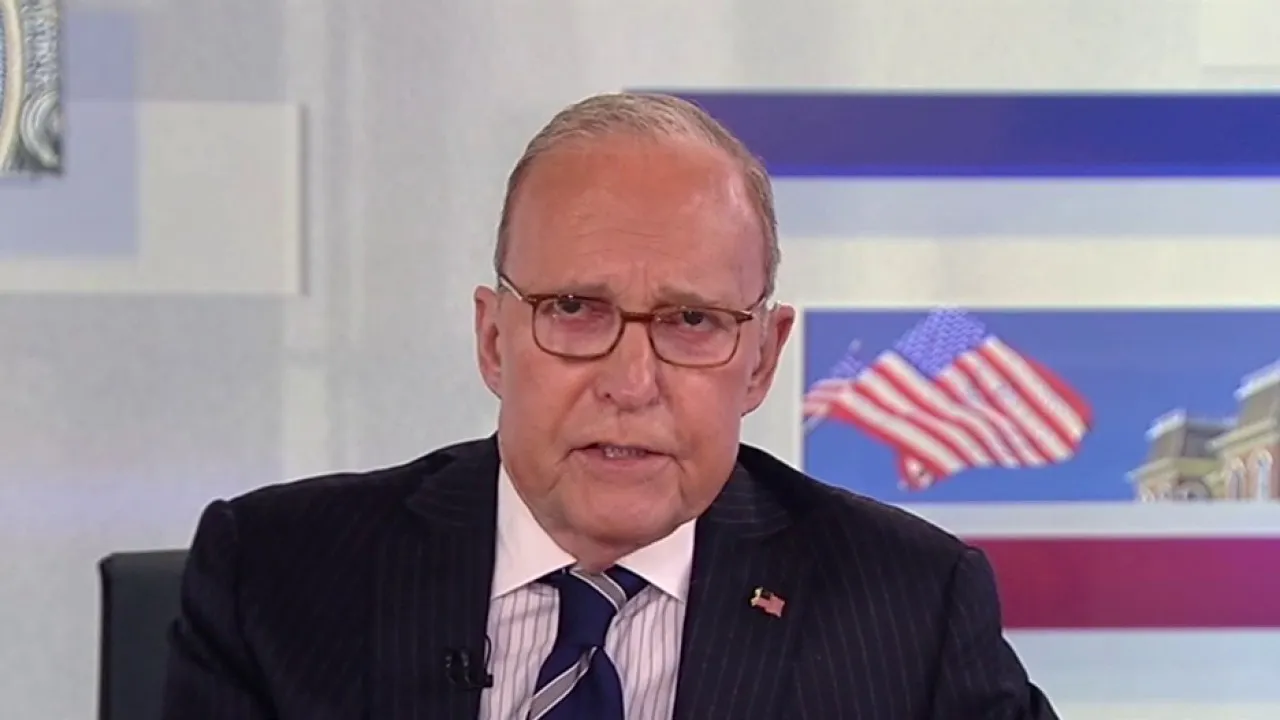
FOX Business host Larry Kudlow discusses the impact of President Donald Trump’s decisive action in the Middle East on ‘Kudlow.’
More good news on President Trump winning the war and the growing likelihood that some kind of agreement will be made with Iran. It’s driving the stock market sky-high.
My guess is improving the animal spirits of all Americans who know the cause to destroy Iran is just but were concerned how difficult it might be.
Advertisement
I continue to call this the Trump miracle. I continue to believe it is providential. Ending the most gruesome government since the Nazis of World War II. It’s such a phenomenal boon to mankind in the cause of peace, freedom and prosperity.
Mr. Trump has unwaveringly delivered on his vision to end the 47-year forever war, to do what no other president in either party quite had the backbone to do.
Mr. Trump, talking to various press organizations, has said a number of things of great importance today.
Fox News senior strategic analyst Ret. Gen. Jack Keane discusses President Donald Trump’s announcement that the Strait of Hormuz is open on ‘Kudlow.’
Advertisement
He has said Iran has agreed to everything and will work with the United States to remove enriched uranium from Iran.
“Our people, together with the Iranians are going to work together to go get it. And then we’ll take it to the United States,” he said.
The president also said Iran has agreed to stop backing proxy terrorist groups, like Hezbollah and Hamas. When asked when he would be announcing the deal, Mr. Trump said the two sides are meeting this weekend and that America would continue its blockade “until we get it done.”
Of course, trust, but verify.
Advertisement
Especially with Iranians. Mr. Trump knows that.
And even as Iran is suggesting that the Strait of Hormuz will be opened, Mr. Trump is exactly right to maintain the embargo on Iranian ports and shipping.
And I hope that is what the president does. Keep the embargo. Because we don’t know about Iranian promises. We do not trust them.
Advertisement
And we want to make sure that they are in no position to make any demands in whatever negotiations or agreements take place.
We’re talking unconditional surrender. They must do what Mr. Trump and his national security team tells them to do.
Mr. Trump made another point today, that there will be no need to involve American ground troops.
Now for a transfer of enriched uranium from Iranian hands to American hands, yes there will be some military people.
Advertisement
Yet the key point here, and I think another reason for the big stock market rally vote of approval, is that the blockade means no wider war, no thousands of ground troops on Kharg island, no $200 oil.
That was always the market’s worst case fear.
Constellation Research founder R ‘Ray’ Rang discusses whether there is a direct relationship between big tech and the price of oil and gas, the rally in Big Tech companies and Microsoft’s performance on ‘Varney & Co.’
The economic and financial blockade substitutes for a wider combat role. And it’s so powerful. And I think that’s a key point for the end of the war that will come sooner, and for the tremendous stock market rally — which is not finished.
Advertisement
Today, Mr. Trump posted that “the naval blockade will remain in full force and effect as it pertains to Iran, only, until such time as our transaction with Iran is 100% complete.”
In other words, Mr. Trump is maintaining control. And that’s exactly what he should be doing. Because no one can trust Iran. And this whole episode won’t be over until it’s completely over.
Yet America, under one of its very strongest commanders in chief ever, will win this war. And that is a plus for all mankind.
Ford is recalling about 1.4 million F-150 pickup trucks in the U.S. following a National Highway Traffic Safety Administration (NHTSA) investigation into reports of unexpected downshifts, the regulator said on Friday.
NHTSA’s recall announcement said Ford was aware of two injuries and one accident that were potentially related to the issue, and that dealers would update the trucks’ powertrain control module (PCM) software as a remedy.
Advertisement
Earlier this year, the regulator had expanded a safety-related investigation into the issue. A preliminary evaluation was first opened in March last year, after receiving complaints related to the unintended downshifts. Ford’s review evaluated trends observed in customer reports, including those involving vehicles driving on wet surfaces or towing trailers.
The vehicle recall covers model year 2015–2017 F-150 pickups equipped with the “6R80” transmission.
A model year 2015-2017 Ford F-150 pickup truck at Ford’s Rouge Center. (Ford Motor Co.)
Ford had earlier said that the issue may have been caused by electrical connections wearing down over time due to heat and vibration, leading to signal loss from the transmission range sensor.
Advertisement
The regulatory agency said that incorrect signals likely lead to an unintended downshift.
Owners of affected F-150 pickups will be notified by mail and instructed to take their vehicle to a Ford or Lincoln dealer to receive a software update for their PCM to remedy the issue.
If an affected vehicle previously exhibited certain diagnostic trouble codes relating to this condition prior to installing the software, dealers will replace the lead frame in accordance with a corresponding extended warranty program. There will be no charge for that service.
Between January and June 2025 five UK-licensed online casino operators shut down, each citing compliance costs and the administrative burden of new regulations as primary reasons.
They were not caught breaking rules. They were not fined out of existence. They just looked at the cost of staying compliant and decided it was not worth it.
The business lesson here is not about gambling. It is about what happens to any sector when a regulator raises the compliance floor simultaneously for everyone in the market.
What the Gambling Commission Actually Did
The reforms rolled out between 2024 and 2025 were the most significant overhaul of UK gambling regulation since the Gambling Act 2005. The headline changes were well documented: stake limits on online slots capped at £2 per spin for under-25s and £5 for adults, affordability checks triggered when a player’s net deposits exceed £150 in a rolling month, a mandatory 1% gross gambling yield levy paid to the NHS and public health bodies, and a ban on autoplay and rapid spin cycles in online casino games.
The practical overhead was significant. EY estimated the annual cost of running affordability checks alone at over £125 million across the industry, covering technology upgrades, credit reference agency integration, and additional compliance staff. That is before the levy, before the legal work, before the game redesigns.
Advertisement
Larger operators had compliance teams already. They absorbed the cost, spread it across their engineering and legal functions, and moved on. Mid-market and smaller operators faced the same obligations but without the infrastructure. Several of them concluded the maths did not work.
The Operators That Came Out Stronger Did Something Counterintuitive
The instinct when compliance costs rise is to do the minimum required, implement exactly what the regulations demand, and protect margin everywhere else. The operators who have genuinely strengthened their position over the past two years did the opposite. They treated the regulatory requirements as a product specification rather than a tax.
Affordability checks, when integrated poorly, create friction and annoy customers. When integrated well, they are almost invisible to players who are not at risk and genuinely protective for those who are. Mandatory deposit limit prompts at onboarding, done badly, are a box-ticking exercise.
Done well, they build trust with the kind of player who was going to stay anyway. The game redesigns required under the new rules forced studios to think harder about session experience rather than just spin speed.
Advertisement
The platforms that survive and grow in the current environment are not necessarily the ones with the biggest marketing budgets. They are the ones with the cleanest user experience, the most transparent bonus terms, and the most reliable withdrawal processes. Competition has been forced onto the axis that actually matters to customers.
For anyone wanting a practical benchmark of what that looks like, a current look at the leading slot sites in the UK shows the meaningful variation between licensed operators on exactly those measures: app quality, payout speed, game selection, and how clearly the terms are presented. The gap between the best and the rest is wider now than it was three years ago.
The Market Consolidation Nobody Warned Small Operators About
Here is the thing about compliance costs that every SME owner instinctively understands: they do not scale linearly. A £125 million industry-wide bill hits a company with ten employees very differently from one with a thousand. The fixed costs of staying compliant are nearly identical regardless of your revenue. That means high compliance environments inherently favour scale, and they are a slow but effective mechanism for consolidation.
The UK iGaming sector has been consolidating for three years. Larger groups have been acquiring mid-market brands not just for their players but for their licences and their compliance infrastructure. Pre-transaction regulatory due diligence has become one of the busiest growth areas in gambling law precisely because acquirers need to know whether the operator they are buying has a clean compliance record or a liability buried in their historical affordability data.
Advertisement
For business owners in other sectors watching this unfold, the pattern is recognisable. When a regulator raises the floor, the market contracts at the bottom and consolidates at the top. The businesses in the middle, too big to ignore the costs but too small to absorb them efficiently, face the hardest decision.
The Lesson That Transfers
The Gambling Commission’s approach to the White Paper reforms has been studied closely by regulators in other sectors. According to Chambers UK’s 2025 gambling law analysis, the reform package has transformed gambling compliance from a niche legal specialty into a multidisciplinary function spanning regulatory, data protection, and corporate law. That is not unique to gambling. It is what happens to any regulated industry when the compliance requirements become complex enough to create a professional services ecosystem around them.
The businesses that navigated this best share something with the best-run SMEs in any sector facing a similar squeeze. They did not wait for the rules to force change. They read the direction of travel early, invested ahead of the mandate, and treated the incoming requirements as a reason to improve the product rather than just a cost to manage.
Five casinos closed because they ran the numbers and walked away. Others are now in a stronger competitive position than they were before the regulations arrived. In a market where everyone faces the same rules, how you respond to them is the only variable left.
The latest NatWest Growth Tracker show a slowing of growth from private sector firms
The Newcastle skyline, viewed looking across from Gateshead towards the Tyne Bridge and the Glasshouse(Image: Newcastle Chronicle)
Business activity in the North East remained in growth last month but slowed as global events weighed on confidence, a new report suggests.
The latest Growth Tracker data from NatWest showed a slowdown in activity growth in the North East private sector in March, with the slowest rate this year and companies highlighting softer sales growth.
Respondents to the survey reported higher prices and lower demand, in part due to the war in the Middle East.
Cost pressures surged to the highest since the start of 2023, the survey suggests, and business confidence fell. The headline North East Growth Tracker Business Activity Index, which measures change in the region’s manufacturing and service sectors, fell from 53.8 in February to 50.4 in March, indicating only a slight increase in business activity. The expansion in the North East was broadly in line with that seen in the UK as a whole.
Advertisement
Malcolm Buchanan, chair of the NatWest North Regional Board, said: “The North East private sector economy closed the first quarter of 2026 on uneven footing.
“The region registered only a fractional increase in business activity, following the trend seen at the UK level, with panel members often linking the moderation in growth to a steep jump in cost pressures, largely related to energy price rises following the outbreak of war in the Middle East.
“In fact, the rate of input cost inflation surged to the highest since January 2023, which pushed firms to raise selling prices to the greatest extent in just under three years as businesses looked to protect profit margins.
“At the same time, the pace of growth in new business slowed to a crawl during March, with some companies stating that fading client confidence had weighed on sales.
Advertisement
“That said, evidence of demand resilience encouraged firms to raise employment levels.
“Concurrently, business optimism regarding the year-ahead outlook softened from February’s recent high, and was the least pronounced since August 2025.
“While growth was expected to be boosted by new product launches, private sector businesses in the North East cited concerns regarding the health of the domestic economy and the wider impact of the war in the Middle East.”
Despite the more challenging business environment, the North East saw a slight improvement in staffing levels. It was one of only three increases seen out of the 12 monitored UK regions and nations, with only Northern Ireland and Scotland also seeing job creation.
Advertisement
The growth tracker has been released ahead of a week of key economic data being released. Next week sees the publication of monthly unemployment and inflation figures.














































You must be logged in to post a comment Login