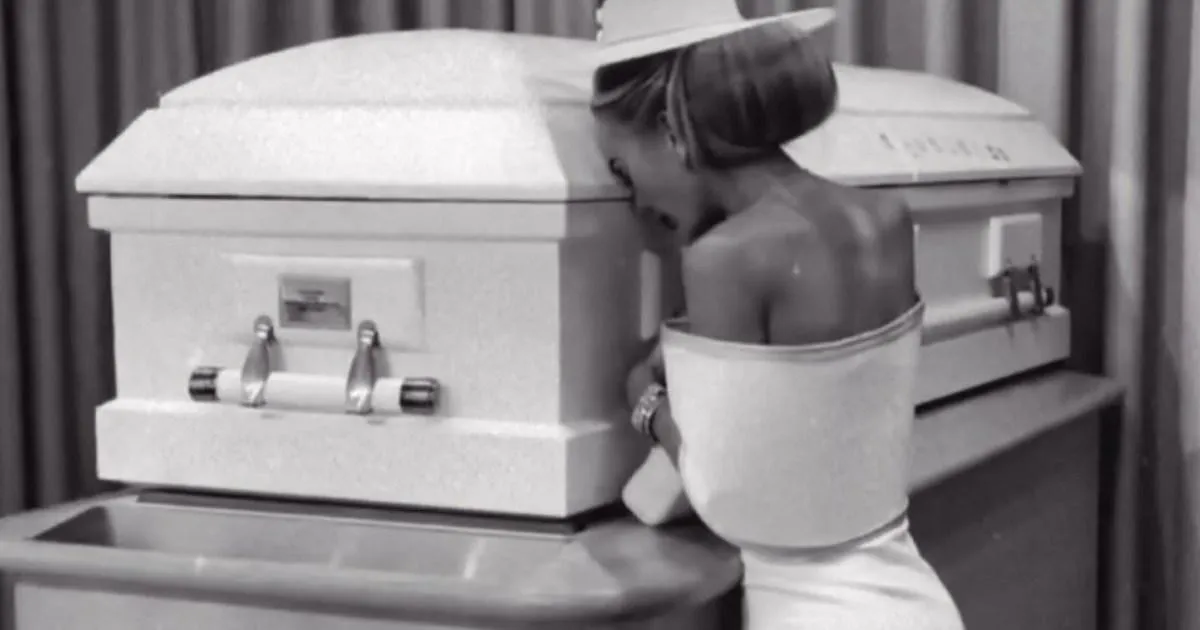
Trolls took issue with Sophie posting a picture of her next to her daughter’s coffin (Picture: Instagram/Sophie May Dickson
It’s a cesspit of a thread – a staggering 49 pages long and counting. Hundreds upon hundreds of comments piled one on top of another, with the words dipped within varying degrees of malice.
The anonymous comments oscillate between concern, disgust, crude sexualised descriptions of those involved and generally hate-fuelled ranting.
They can be found on the gossip forum Tattle.Life, and are all aimed at influencer Sophie May Dickson, who lost her daughter, 16-year-old Princess, reportedly to suicide, in February.
Sophie, 32, is no stranger to trolls after appearing in the controversial reality show Blinging Up Baby, but what was the reason she invoked such ire this time? Grieve ‘incorrectly’, with the influencer’s decision to share photos from her daughter’s funeral, and posting references to Princess’s death, causing an ongoing backlash.
Advertisement
For some, enough is enough, and the infamous online forum has also found itself at the centre of this story, with public figures attributing Tattle.Life as a contributing factor to the teenager’s death.
Sign up for all of the latest stories
Start your day informed with Metro’s News Updates newsletter or get Breaking Newsalerts the moment it happens.
Advertisement
A letter sent by MP Jess Asato, signed by 20 members of parliament, directly addressed Ofcom about the impact the site had on the teenagers wellbeing.
‘Princess had been the subject of sustained and escalating online harassment, stalking and abuse by the adult users of Tattle.Life,’ the letter read.
Sophie May Dickson and her children first came to public attention through the show Blinging Up Baby (Picture: Alaska TV)
‘The abuse included repeated derogatory commentary about her body, appearance, mental health, family and personal life. Users of the site created anonymous and fake accounts to monitor her TikTok activity, comment directly on her content, attend her live streams, screen-record and capture images of her, and then republish that material on Tattle Life for further discussion and ridicule.’
At present, further circumstances around Princess’s death are private, with the coroner’s report yet to be published. It should also be noted that mental health is a complex issue, with a myriad of factors often contributing to someone’s passing.
Yet, the death of a child doesn’t seem to have quelled the braying masses – if anything, it has poured petrol onto a roaring fire. Trolls continue to plague Sophie, with many on Tattle.Life speculating the authenticity of her grief, whether she’s fit to be a mother, and the contents of Princess’s suicide note.
Advertisement
It’s a tragic new low for a site previously hailed as ‘the most hate-filled corner of the web.’ Established in 2017 as a part of internet snark culture, Tattle.Life quickly became known as a community where users could hold famous names and lifestyle influencers to account.
Sophie’s lifestyle may have been the initial target, but her children soon became collateral damage (Picture: Instagram/Sophie May Dickson)
Celebrities such Katie Price, Zoella and Stacey Solomon (as well as their families) continue to be regularly dissected. One thread, for example, discusses how ugly the children of one TV presenter are.
A report by VictimFocus, compiled in July last year, collected data from 150 people who reported to be victims of Tattle.Life. The research found over 90% of victims were repeatedly stalked and harassed, with 89% feeling ‘traumatised, isolated, fearful’ and in some instances ‘suicidal’.
Psychologist Dr Jessica Taylor, the CEO of VictimFocus, has previously been targeted by Tattle.Life users. The comments, she explains, started off in a fairly petty fashion – about her appearance, her qualifications, before they rapidly snowballed into outright lies and stalking.
‘A picture of my wife’s car and number plates was posted on Tattle,’ she tells Metro. ‘Users found the links to our home on RightMove. They discussed my children and their safety.
Advertisement
‘My thread was emailed to my family, my friends, the university where I had worked, my publishers, my agents and producers, with disgusting, malicious and false information. No stone was left unturned. We felt unsafe – it was one of the worst periods of my life.’
According to the letter Asato wrote to Ofcom, Tattle.Life users had turned their attention towards Princess since she was 14, and faced ‘repeated derogatory comments about her body and appearance’.
Although a dedicated thread about Sophie – where comments about Princess were also posted – was temporarily disabled after the young girl was targeted, when the section was reinstated, the abuse continued.
‘Tattle,Life was viewed on a computer in school, and children and parents alike made cruel comments in person based on what they had read online. Even without a phone in her own hand, the abuse continued,’ Sophie told the Mail Online in an interview following her daughter’s death.
Advertisement
‘It was the most unhinged thing from people who know nothing about me’
One lifestyle influencer, who we are calling Lauren, discovered she was featured on Tattle.Life in 2019, after seeing journalist Sali Hughes’s video about being targeted on the site.
‘I read through my entire thread that night, for the first and last time,’ she tells Metro.
The comments Lauren received in the early iterations of her thread were mean-spirited, but escalated as she scrolled further.
‘People said horrible things that I was overweight, or that I was underweight, or that I looked like a man,’ she remembers.
Advertisement
‘There’s no way anyone could expect children to cope with this level of hate’ (Picture posed by model: Getty Images)
While she hasn’t looked at her thread since, other people have informed Lauren at just how personal some of Tattle.Life had become, threatening to spill into the real world.
‘I was told to kill myself. People had tried to contact ex-boyfriends. They called the RSPCA to report me about my dog. This trolling had become stalking,’ she says.
‘It was the most unhinged, abnormal thing from people who know nothing about me.
‘I’ve had friends completely debilitated by trolling on the site. They’ve been forced to stop posting, which means they’ve lost their income. It’s completely ruined their lives.
Advertisement
‘If I have adult friends who struggled with it, there’s no way anyone could expect children to cope with this level of hate.’
It’s not surprising that anyone who experiences online bullying will feel the impact, but it can be markedly more difficult for young people to deal with, explains Dr Emily Crosby, Child and Educational Psychologist.
Advertisement
‘They are more likely to believe the comments as they have not developed their self-confidence or self-worth yet which makes them more likely to be influenced,’ she tells Metro.
And while targeting a child may seem extreme, the anonymous nature of a site like Tattle.Life can encourage an escalating scale of abuse – Sophie’s lifestyle may have been the initial target, but her children soon became collateral damage.
”Often those who do not have a sense of belonging in the offline world take to online to seek this,’ Dr Crosby explains. ‘The internet allows people to use all hours of the day and hide behind fake names which makes access to this type of behaviour more readily available. Such language and hate speech escalates as they are so fast paced and each comment influences further comments.’
Tattle.Life claims to have a ‘zero-tolerance policy to any content that is abusive, hateful or harmful’. A statement on the website reads: ‘A team of moderators [is] online 24/7 to remove any content that breaks our strict rules – often in minutes.’
Advertisement
However, Jess claims that her numerous requests to get content removed were not acted upon.
Neil and Donna Sands were awarded £300,000 in damages after taking Tattle.Life to court (Picture: Peter Morrison)
This was the same case for Northern Irish fashion retailer Donna Sands and her husband Neil, after they were viscously trolled on the site. So the couple managed to hit Tattle.Life where it hurts – in the courtroom.
They argued that the website had ‘profited as a space where users could defame, harass, stalk and attack others online’ and were eventually awarded £300,000 by the Northern IrelandHigh Court.
Their case also saw Sebastian Bond, vegan cooking influencer and author, unmasked as Tattle.Life’s owner. Yet, despite the ruling, Tattle.Life is still active.
It has previously been reported to have 12 million monthly visitors, with Bond reportedly making between an estimated £180,000-£500,000 a year from advertising revenue.
Advertisement
Sebastian Bond was unamkes as the owner of Tattle.Life
According to Jess, who explores the motivations and stalking tactics of those who frequent the site in her upcoming book Click.Stalk.Destroy: Inside the minds of online stalkers, there is a massive misunderstanding.
‘Traditional stalkers tend to operate alone. On Tattle.Life, there are hundreds of them. They operate in groups, which means they receive positive reinforcement for everything they post from other stalkers. Being horrible or intimidating is normalised, and they become desensitised to it over time,’ she explains.
‘They create a fantasy that they are actually social justice warriors, and what they are doing to their victim is righteous. It’s why these threads tend to start with something small and petty, but that small thing cannot sustain that sense of moral grievance for long. So they find something else and it starts to escalate.
‘Tattle.Life has effectively turned trolling and stalking into sport,’ she adds.
Following Princess’ death,a letter from Ofcom has demanded answers from Tattle.Life regarding compliance with new Online Safety Act, a 2023 UK law requiring platforms to protect users online.
Advertisement
What will happen next for Tattle.Life remains uncertain; as of last year, Bond faces an additional 40 libel lawsuits against him, while regulatory powers may exert pressure for the website to close.
Meanwhile, Jess believes those who use the site should be confronted with the reality of just what they’re doing.
‘Just because they’re doing this sat at home with a glass of wine, doesn’t mean what they’re doing isn’t criminal,’ she says. ‘They are sadists. They are destroying people’s lives, and they’re enjoying it.’
Tattle.Life statement
Metro reached out to TattleLife multiple times for comment, but have yet to receive a response.
Advertisement
A statement, posted on the site by a moderator on 30 March read:
First and foremost, Tattle Life wishes to express its heartfelt condolences to the family and friends of Princess Bliss Dickson. The community on the site has long been concerned for her welfare, having seeing her publicly from a very young age.
The gross misuse of this tragedy by those with vested interest is appalling and we urge everyone look beyond the bias narrative. Organisations such as the Samaritans advise against sensationalising a suicide or attributing it to a single cause, as this is rarely the case.
Tattle Life remains confident in its moderation processes and compliance. We welcome open conversation with any relevant authority. It is essential for the Coroner’s office to be allowed the time and space to perform its duties thoroughly before any conclusions are drawn.
Advertisement
At this time, it would be inappropriate to comment further.
Former manager Ruben Amorim, who left the club in January, felt Rashford wanted a different challenge away from Old Trafford when he was allowed to join Aston Villa on loan in 2025.
Carrick is in a different position given he is both a former team-mate, coach and – for three games following Ole Gunnar Solskjaer’s dismissal in 2021 – manager of one of the recent stars of United’s academy, who is currently the club’s 15th all-time highest goalscorer.
Minority owner Sir Jim Ratcliffe wants to lower the top-level amounts being paid at the club and, when Casemiro leaves in the summer, Rashford will be United’s highest earner.
“Whoever’s here, I want to work with, and help them improve,” Carrick said.
Advertisement
“At the moment, it’s this squad of players. There’s obviously players on loan, and whatever happens with that later on will happen.
“But certainly, as a coach, and leader of a squad, we want to get the best out of everyone.”
Carrick was placed in interim charge of the club in January and is a leading contender to take the job on a full-time basis this summer.
But the former midfielder’s immediate focus is his side’s Premier League trip to Chelsea, when victory would take United 10 points clear of Liam Rosenior’s side.
Advertisement
However, their chances have not been helped by suspensions that have ruled out central defensive duo Harry Maguire and Lisandro Martinez, while Leny Yoro was absent from the group that travelled from Stockport station for the journey south on Friday afternoon.
If Yoro is absent, Carrick could be forced to play either Luke Shaw or Noussair Mazraoui, or even veteran midfielder Casemiro, alongside 19-year-old Ayden Heaven at Stamford Bridge.
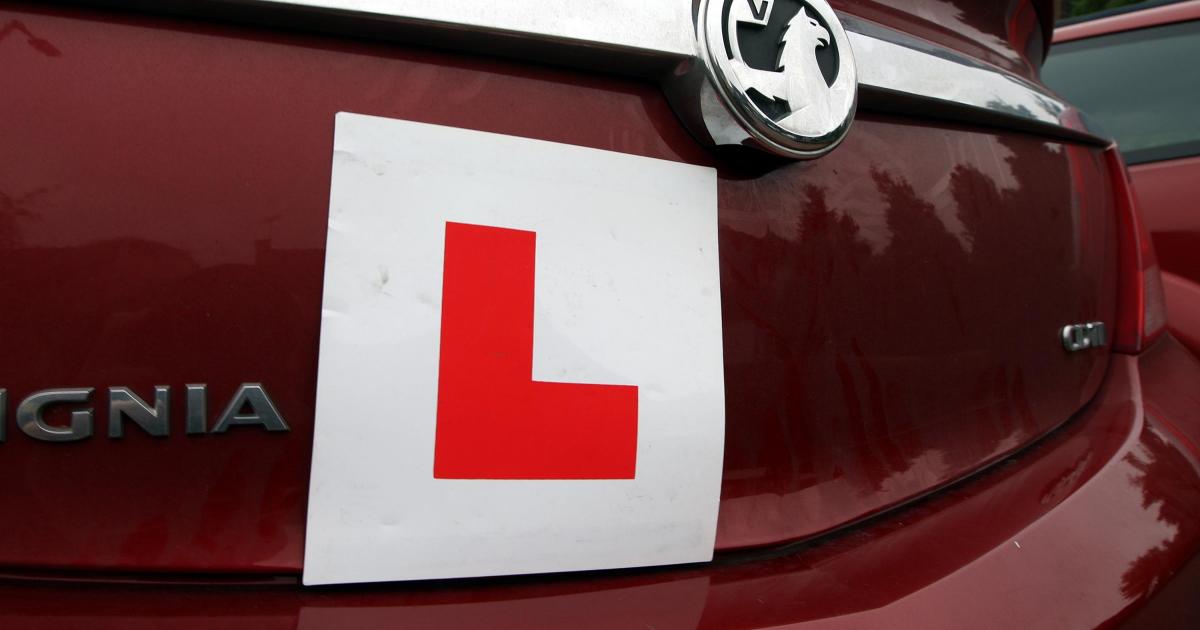
Officers worked with the Driver and Vehicle Standards Agency (DVSA) examiners on the operation on Tuesday (April 14).
They checked instructor credentials, vehicle insurance and compliance with licensing requirements.
North Yorkshire Police said a “small proportion” of vehicles were found to be operating without the required approved driving instructor (ADI) licence and/or appropriate insurance.
Advertisement
“Enforcement action was taken immediately, and those involved were prosecuted for the relevant offences,” a force spokesperson said.
They said the “majority” of vehicles stopped were linked to instructors correctly qualified, licensed and insured to the required standards.
Matt Harvey, from North Yorkshire Police’s road safety team, said the operation was “about protecting learner drivers and the wider public”.
“Becoming a qualified ADI is not optional – it requires formal training, testing, licensing and proper insurance,” he said.
Advertisement
“Anyone attempting to bypass that process is putting learners at risk and undermining the system. We will continue to work with the DVSA to identify illegal instructors, enforce the law, and take action where standards are not met.”
A pharmacist says there are several signs to watch for in the toenails that could be a sign that all is not well
Elaine Blackburne Network Content Editor
03:30, 18 Apr 2026
During winter, feet tend to stay tucked away beneath socks and slippers, meaning toes rarely get the attention they deserve. Yet these often-neglected body parts can actually serve as crucial indicators of our general well-being.
Now, as spring arrives and temperatures begin to rise, people are casting a fresh eye over their feet — and what they find might reveal tell-tale signs that went unnoticed throughout the colder months. These could point towards some potentially serious underlying health concerns.
Advertisement
Such conditions can range from nutritional deficiencies and diabetes to significant circulatory problems. Sheena Bagga, Pharmacist Prescriber at LloydsPharmacy Online Doctor, has previously drawn attention to the significance of toe and nail health, pinpointing eight warning signs that should set alarm bells ringing, reports the Mirror.
She stressed: “While often overlooked, your toenails and feet play a huge role in your overall health and it’s important to pay attention to their condition. While everyone’s toes look different, healthy nails should have a smooth surface with light pink or translucent colouration without much variation in shade or hue.”
Yellow nails
A key warning sign to be aware of is a yellow discolouration of the toenails, which can suggest an infection. This can affect any portion of the nail, leading to alterations in colour, texture and thickness.
Advertisement
It may also be an indicator of nail psoriasis, which is typically characterised by a pitted appearance or detachment from the nail bed. To ward off toenail infections, experts advise keeping nails trimmed, clean and properly cared for, changing socks daily, and making sure shoes fit properly.
Dark stripes on the nail
This condition, called Melanonychia, appears as a brown or black stripe running down the length of the nail. While typically harmless and merely a difference in nail colouring, it can occasionally signal Subungual Melanoma, a form of skin cancer.
To help prevent Melanonychia, good nail and foot care is essential. Preventing nail injuries is important – if you damage your nail, let it heal fully and avoid picking at it.
Swollen toes
Swelling in the toes can result from various conditions, such as lymphatic problems, inadequate blood flow, or gout. It’s therefore wise to see your GP if you’re noticing other worrying symptoms like pain, discomfort, or difficulty moving.
Advertisement
Gout is a type of inflammatory arthritis marked by sudden, severe joint pain, usually affecting the big toe, caused by an accumulation of uric acid crystals in the joints. It’s more common among people who are overweight, and following a healthy eating plan that promotes weight reduction can help manage the condition.
Swollen toes can also result from less severe issues, such as extended periods of sitting or standing, poorly-fitting shoes, being overweight, insufficient hydration, or consuming too much salt. Adopting a balanced, healthy diet combined with consistent physical activity may help alleviate these everyday problems.
White toenails
White marks or streaks on your nails, referred to as “leukonychia”, are often the result of minor injuries like banging your toe. Sometimes, they may suggest shortages of protein, zinc, or iron.
Fungal infections can cause nails to turn white while also making them weak and flaky, especially if your feet are consistently kept warm and damp. This can be for reasons such as wearing trainers for long stretches as they become hot and sweaty.
Though rare, entirely white nails can indicate more severe health problems, potentially revealing systemic conditions such as liver cirrhosis, hyperthyroidism, or diabetes. If any additional symptoms are worrying, it’s crucial to consult your GP to determine the underlying cause.
Blue discolouration
A blue tint to your nails, accompanied by unusual coldness in your toes, might indicate poor circulation, often associated with Raynaud’s disease. This condition leads to the constriction of tiny arteries that supply blood to your fingers and toes.
Consistent exercise can boost circulation, which helps in controlling Raynaud’s symptoms and sustaining a healthy weight.
Advertisement
Itchy toes
Athlete’s Foot, a common fungal infection, appears as itchy white patches between the toes. It can also affect the soles or sides of the feet, sometimes causing fluid-filled blisters.
To help avoid Athlete’s Foot, ensure you dry your feet completely after washing them, particularly between the toes. Also, put on clean socks every day – cotton is ideal as it allows the skin to breathe more easily.
Ulcers on toes or feet
Different from a blister that forms under the skin, an ulcer is a break in the skin’s surface, appearing as an open sore. It’s crucial that these receive appropriate treatment to minimise any infection risk.
While the wound stays open, it can make you susceptible to developing an infection, which in severe instances can lead to amputation. A diabetic foot ulcer is characterised as an open sore or wound on the skin that takes an extended time to heal.
Advertisement
Spoon Nails
Checking your toenails regularly is important. If your toenails change in appearance and seem curved or ‘spoon’ shaped, it might indicate an iron deficiency or anaemia.
Iron is crucial for producing healthy red blood cells and maintaining good nail health, so it’s advisable to consult with a healthcare professional who may recommend taking a supplement.
Some of these methods won’t cost you a penny, and could be better than tablets
Hayfever, a common – and annoying – seasonal allergy, leaves many people battling constant sneezing, coughing, and itchy eyes. But a few simple tricks could help make high-pollen days more manageable.
Advertisement
The condition is triggered by pollen which is a fine powder that is released by plants. Symptoms typically flare up when it comes into contact with the mouth, nose, eyes, or throat.
According to the NHS, symptoms tend to worsen between late March and September, particularly during warm, humid, and windy weather, when pollen levels peak.
While hayfever can’t be prevented or cured, there are practical steps you can take to relieve symptoms when the pollen count rises.
In one of its tips, the health service urges people to “put petroleum jelly (such as Vaseline) around your nostrils to trap pollen”. You should also “wear wraparound sunglasses, a mask or a wide-brimmed hat to stop pollen getting into your nose and eyes.”
Advertisement
As well as this, the NHS suggests that anyone with hayfever should:
Shower and change your clothes after you have been outside to wash pollen off
Keep windows and doors shut as much as possible
Vacuum regularly and dust with a damp cloth
Try to use a pollen filter in the air vents of your car, if you have one, and a HEPA filter in your vacuum cleaner
You should not:
Cut grass or walk on grass
Spend too much time outside
Keep fresh flowers in the house
Smoke or be around smoke – it makes your symptoms worse
Dry clothes outside – they can catch pollen
Let pets into the house if possible – they can carry pollen indoors
What are the symptoms of hayfever?
Symptoms of hay fever include:
sneezing and coughing
a runny or blocked nose
itchy, red or watery eyes
itchy throat, mouth, nose and ears
loss of smell
pain around the sides of your head and your forehead
headache
feeling tired
Should I see a GP?
You should see your GP if your symptoms are getting worse. You should also book an appointment if your symptoms do not improve after taking medicines from the pharmacy.
The NHS explains: “The GP might prescribe a steroid treatment if you have hay fever. If steroids and other hay fever treatments do not work, the GP may refer you for immunotherapy.
Advertisement
“This means you’ll be given small amounts of pollen as an injection or tablet to slowly build up your immunity to pollen. This kind of treatment usually starts a few months before the hay fever season begins.”
Rising prices are putting pressure on people to try and use less energy. But what are the most effective ways of cutting bills? We asked five experts for their practical advice.
1. Insulate your home
Upgrading loft insulation to current standards, typically 27–30cm thick for mineral wool, improves energy efficiency, comfort and long-term cost savings. It acts as a thermal barrier, as up to 25% of a home’s heat can escape through an uninsulated roof. Installing cavity wall insulation in older homes improves efficiency by reducing heat loss through walls by up to 35%.
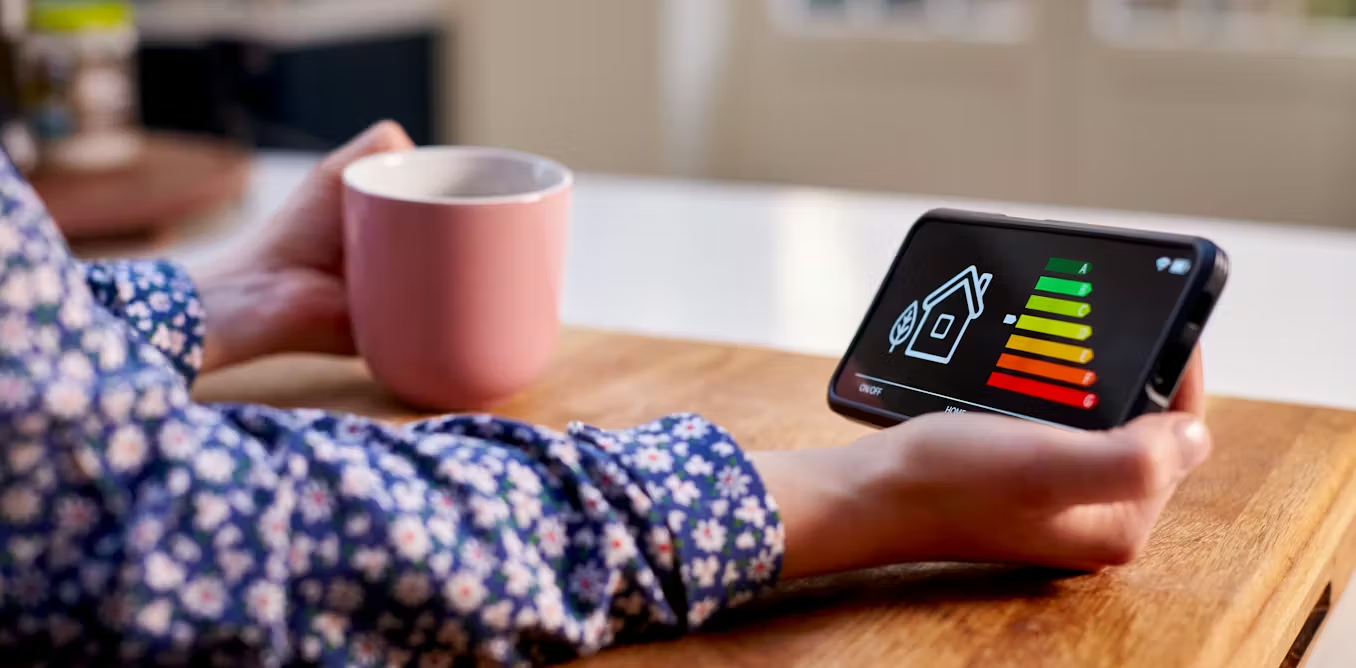
Using draught excluders, keeping internal doors closed on cold days, and installing a smart energy controller also help retain warmth and optimise energy use. All these measures can help lower heating bills, maintain warmer indoor temperatures, reduce draughts, minimise condensation, and improve a home’s energy performance certificate rating.
The cheapest energy is the energy we do not use. That’s why the International Energy Agency describes energy efficiency as the “first fuel”. Buildings account for around 30% of global energy demand, so homes are a critical part of both affordability and energy security.
Advertisement
In the UK, 420,600 energy-efficiency measures were installed in 2024 through government support schemes. There is clearly strong demand for more measures like this.
Farooq Sher is a senior lecturer in sustainable energy engineeringAdding insulation can help keep heating bills down. irin-k/Shutterstock
2. Go fully electric
Almost everything in our house is now electric, including our heating, cooking and car. This makes environmental sense because electricity can easily be generated from low-emission sources, whereas gas, petrol and diesel can only really come from extracting and refining fossil fuels. In the UK, we generate electricity from a range of sources including solar, wind, tidal, and from burning gas.
Advertisement
Currently, close to 50% of the electricity on the national grid is from renewable sources. Providing heat from a heat pump has about 70% lower greenhouse gas emissions, compared with heat from a gas boiler.
As well as reducing emissions, electrification can reduce bills. Our heat pump replaced an old and relatively inefficient gas boiler, and our annual heating bill has fallen by about 10%. Though electricity is more expensive than gas, heat pumps can reduce bills because for every unit of electrical power they consume, they deliver between two and four times that in heat.
A well-designed and carefully installed system will improve performance. We upgraded our insulation at the same time, and in winter closed off the spare room completely. An added bonus of full electrification is that there’s no need to pay a gas standing charge, which can save about £128 per year.
Another thing to consider is using materials that reduce need for heating – for instance, double glazing. And try to minimise your demand for energy as much as possible, then install the smallest system which meets that demand. We’ve found that doing all of this leads to a warmer, nicer and cheaper home.
Advertisement
Stuart Walker is a research fellow in sustainabilty assessment
The conflict in the Gulf is just the latest shock to the energy supply chain. And the tricky thing with supply chains is disruption takes time to be felt. Even if a peace deal sticks, consumers and businesses can still expect higher prices to ripple through the energy market for months.
As such, think about the behavioural economics of what’s known as “intertemporal choice” – your spending over time. People often excessively discount the future and focus on the present when choosing how to spend money. This is known as “present bias”.
Today, there are widespread expectations of higher energy prices, but (for now) they remain around pre-war prices. In the future – when the war is over – there will be widespread expectations of lower prices, but the current disruptions will still be rippling through the system. This mismatch between expectations and reality could leave people with a nasty surprise when their bill comes through.
Advertisement
So, pay it forward. Don’t fall into the trap of present bias. If you can, increase your energy bill payments today. Economists call this “smoothing out” your consumption. When higher bills bite, you’ll be (psychologically) better off for it.
Stuart Mills is a lecturer in economics
4. Sort out any draughts
In our home, we have removed the fireplace, blocked it completely and insulated inside it to cut out draughts. As it is now not so draughty, the heating isn’t required as much and we’re not losing heat through the chimney stack.
This has improved indoor air quality, partly because we no longer have to dispose of ashes and don’t have to do extra cleaning after fires. This is an indirect saving that some may not realise.
Advertisement
Another benefit is that we’re not exposing ourselves to particulate air pollution that results from open or stove-based fires. Home heating contributes significantly to urban air quality, and my motivation has been to improve both indoor and outdoor air quality.
I’m also not storing or buying and transporting fuel – another cost saving. I have bought a cargo ebike to commute to work, carrying my children and their belongings. It also has a bread basket on the front, which is fantastic for shopping and carrying bags. This has cut my short car trips.
We are fortunate to live in an area with good cycling infrastructure. I am aware these choices are not an option for everyone, especially those in rented or temporary accommodation.
Yvonne Ryan is an associate professor in environmental science
Advertisement
5. Crack on with home improvements
A good way to protect yourself against rising bills next winter is to crack on now with projects to make your home more energy efficient. One option is to stop the heat you have paid for escaping through your windows and doors.
The Energy Saving Trust estimates that upgrading your windows could save up to £140 a year. But research has shown that, while households frequently research the options and get quotes, they often stall at the final decision on a project and fail to go ahead.
One reason for this is over-reacting to “sludge” – the barriers that increase uncertainty and effort, such as difficulty finding information and contractors. This can overwhelm our understanding of the benefits of going ahead, leaving us stuck with the status quo.
But the good news is, it is perfectly possible to override these behavioural biases. Rising and volatile fuel bills may be the nudge we need to do that.
It’s worth checking to see if you could get it for free
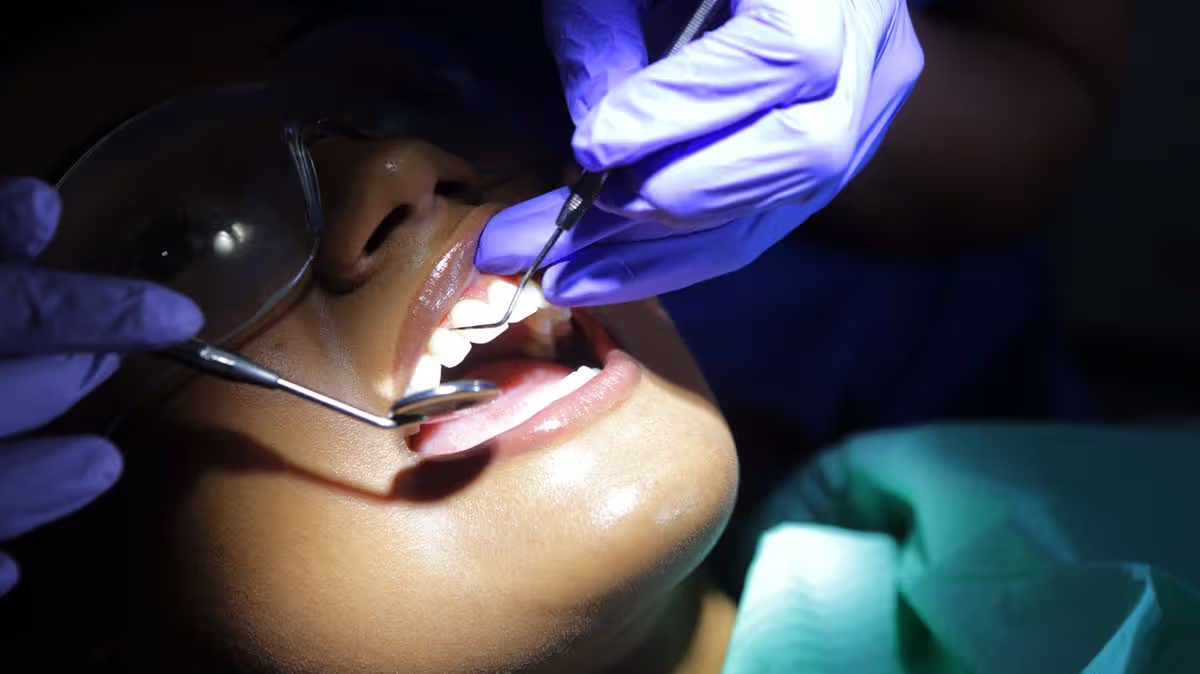
Everyone in Scotland is entitled to free NHS dental check-ups. This includes routine review examinations.
Advertisement
However, some patients also qualify for completely free dental treatment. According to NHS Inform, your dentist will explain which treatments are available under the NHS and which are private.
This is so you can make an informed choice about your care and understand any costs. Treatments that you can receive on the NHS include:
bridges
crowns
fillings
root canal treatment
preventive advice and treatment for gum disease
orthodontic braces (according to strict criteria)
extractions (tooth removal)
dentures or false teeth
It notes: “Cosmetic procedures will usually need to be paid for privately.”
Who is entitled to free treatment on the NHS?
In Scotland, NHS treatment is free for:
Advertisement
Everyone aged under 26
People who are pregnant or have given birth in the last 12 months
People with certificated exemption from patient charge because of income or receipt of certain benefits
It adds: “If you are exempt from patient charges during a course of treatment, tell the dentist and ensure that you bring the evidence with you. Around 40% of all patients are exempt from paying a contribution towards the cost of their NHS dental care.”
What is the NHS Low Income Scheme?
Some people may be able to get treatment at a reduced cost through the NHS Low Income Scheme (LIS). NHS Inform explains: “The LIS helps towards some or all of the cost of NHS patient charges for those who are not automatically entitled to free treatment, who may have difficulty in paying.
“Help under the scheme is income-related and based on an assessment of each person’s ability to pay.”
What is prior approval?
Your dentist may tell you that prior approval is needed before your treatment can begin. For certain treatments or higher-cost treatment plans, dentists must get approval from NHS National Services Scotland (NSS) Practitioner Services. This process can take some time and may slightly delay the start of your treatment.
Are all treatments available on the NHS?
Not all dental treatments are available on the NHS. Cosmetic treatments, like white fillings, tooth whitening, and dental implants, are usually only available privately. Your dentist can explain what is covered by the NHS and what is private.
You can also mix NHS and private treatment on the same tooth, for example, having an NHS root canal and a private white filling. Your dentist can give you an estimate of the costs.
Am I an NHS patient?
Around 95% of people in Scotland are registered for NHS dental care. If you’re not sure about your status, check with the dentist you last visited for routine treatment.
The NHS states: “NHS patients do not pay a regular fee or retainer to their dentist. There is also no charge for an examination.
Advertisement
“If you’re registered with a dentist providing NHS dental care, your practice will be happy to discuss your treatment plan and costs with you before any work is carried out.”
How to register with an NHS dentist
Not all dentists accept new NHS patients, so it’s important to ask whether they can register you as an NHS patient when you first contact them. You can find an NHS dentist in your area here or enquire with your local health board. It’s your responsibility to then register with the dentist.
Once you find a dentist who can register you as an NHS patient, you will need to give them some personal details. You will be asked for your:
Name
Address
Date of birth
Contact details
Once you have provided this, you will then be given an appointment for an enhanced clinical examination. The practice may place you on a waiting list for registration until you have had this examination, even if you are given an emergency appointment.
It cautions: “You’ll be asked to complete a full medical history form before your appointment, so please ensure that you bring an up-to-date list of all medicines. This medical history will need to be completed annually.
Advertisement
“If you want to register your child, you should do this at the same time you register yourself. You don’t have to wait until your child’s teeth grow in; you can register them as soon as they’re born.
“You don’t need to pay a deposit for an appointment to register.”
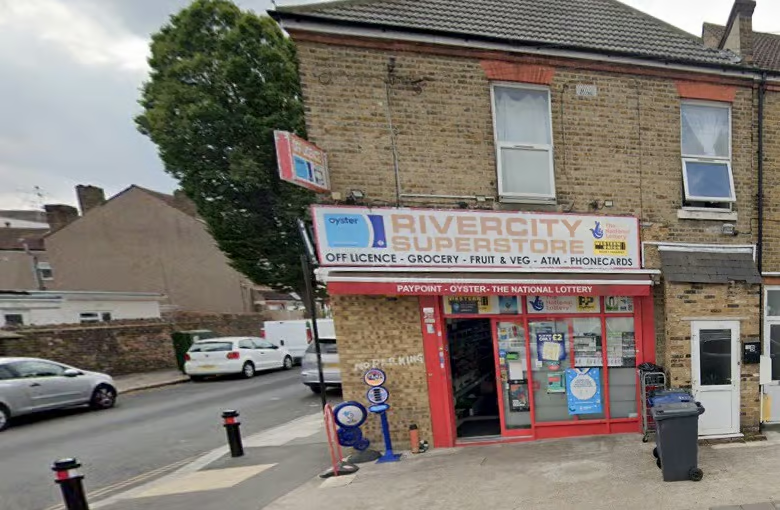
During the November raid, Mr Kulwant SIngh Bhatia, the husband of Ms Akritta Bhatia, the Licence Holder, called the shop and was “very irate and shouting at the officer” according to a report to Ealing Council’s Licensing Sub-Committee. Mr Bhatia was supposed to be banned from being involved with the business from 2023 after it was found that he was selling illegal tobacco, the documents state.
Using your phone on the toilet could be more damaging than you might think
Fiona Callingham Lifestyle writer
02:30, 18 Apr 2026
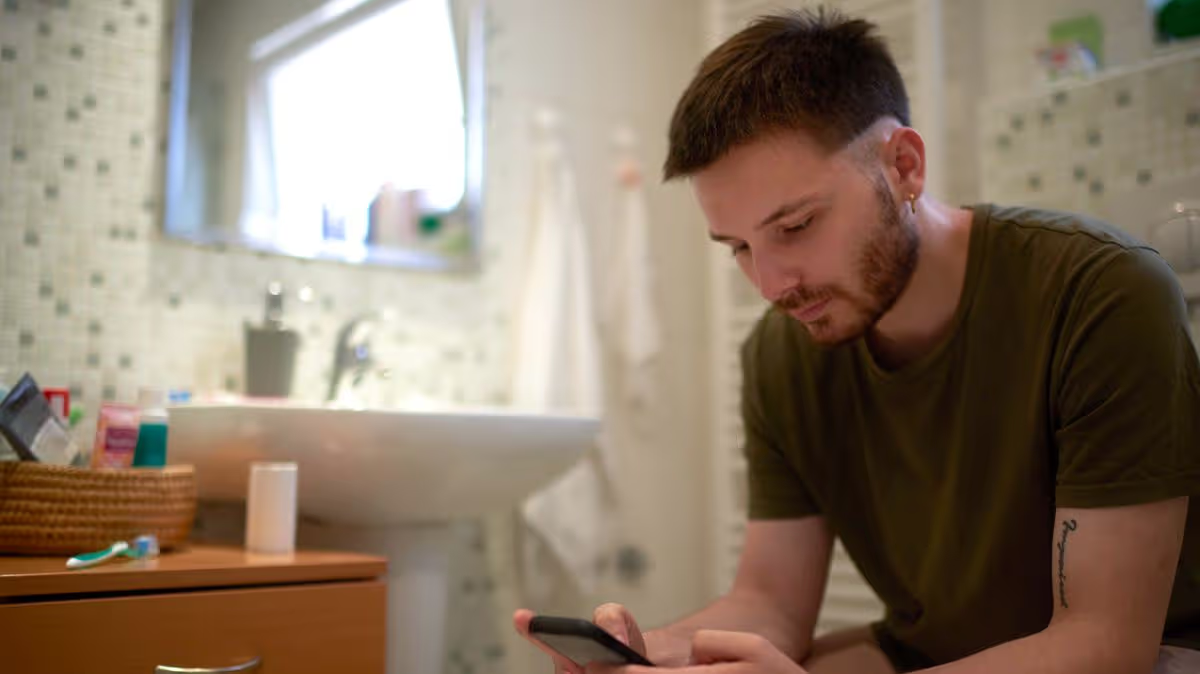
A gut specialist has delivered a stark warning urging people to “stop” scrolling on their phone while on the toilet. Spending extended periods sitting and browsing on the loo could present a significant health risk.
As smartphones have grown more widespread and sophisticated, people have increasingly grown accustomed to carrying them wherever they go. And this extends to the bathroom, with one YouGov survey revealing that 57 per cent of Britons frequently use their phone while sitting on the toilet.
Advertisement
While this might appear harmless, it could in fact be harmful to our bodies. In a clip posted to social media platform TikTok, Doctor Saurabh Sethi, a Harvard-trained gastroenterologist, said: “Stop scrolling through the phone while using the toilet.
Content cannot be displayed without consent
“Hi, I’m a board-certified gastroenterologist, so hit that follow button for more such gut health tips.” First, he warned that this widespread habit could lead to haemorrhoids.
He said: “While it may seem harmless to scroll through your social media feed or answer some emails while on the toilet, it can actually have some serious consequences.
“First, you using your phone while doing number two can lead to prolonged sitting on the toilet, which can cause strain and pressure on your rectum and anus. This can lead to issues such as haemorrhoids, anal fissures, and even rectal prolapse.”
Advertisement
He added: “Another issue is that it can be a breeding ground for bacteria. Studies have found that an average smartphone is dirtier than a public toilet seat.
“Try avoiding scrolling while using the toilet, but if you can’t help it, at least have a disinfectant wipe around to clean the phone after you’re done with the business.”
According to the Mayo Clinic in the US, sitting and scrolling on the toilet is a common cause of haemorrhoids.
Advertisement
“The veins around the anus tend to stretch under pressure and may bulge or swell,” the clinic says. “Haemorrhoids can develop from increased pressure in the lower rectum due to sitting for long periods of time, especially on the toilet.”
Other causes of haemorrhoids include:
Straining during bowel movements
Having chronic diarrhoea or constipation
Being obese
Being pregnant
Having anal intercourse
Eating a low-fibre diet
Regularly lifting heavy items
Symptoms of haemorrhoids will depend where they are but can include:
Painless bleeding during bowel movements
A haemorrhoid pushing through the anal opening, called a prolapsed or protruding haemorrhoid
Itching or irritation in the anal region
Pain or discomfort
Swelling around the anus
Bleeding
A hard, discoloured lump near the anus
The Mayo Clinic adds: “If you have bleeding during bowel movements or you have haemorrhoids that don’t improve after a week of home care, talk to your health care provider.
“Don’t assume rectal bleeding is due to haemorrhoids, especially if you have changes in bowel habits or if your stools change in colour or consistency. Rectal bleeding can happen with other diseases, including colorectal cancer and anal cancer.
Advertisement
“Seek emergency care if you have large amounts of rectal bleeding, lightheadedness, dizziness or faintness.”
Arsenal visit Manchester City this Sunday in a match which may well decide the outcome of the Premier League title race.
City have been slowly chasing down the league-leading Gunners since the turn of the year, and now trail them by just six points with a game in hand. Win that match and come out on top at the Etihad this weekend, and the league leaders will be level on points.
That defeat sent Arsenal into something of a downward spiral, and they have won only one of their four matches since.
But Mikel Arteta will hope his side can rally and breathe fresh life into the title charge with a win.
Advertisement
Date, kick-off time and venue
Man City vs Arsenal is scheduled for an 4.30pm BST kick-off on Sunday, April 19, 2026.
The match will take place at the Etihad Stadium in Manchester.
Where to watch Man City vs Arsenal
Advertisement
TV channel: In the UK, the game will be televised live on Sky Sports Main Event and Premier League, with coverage starting at 4pm BST ahead of a 4.30pm kick-off. Coverage will begin immediately after coverage of the Merseyside derby, which kicks off at 2pm.
Live stream: Sky Sports subscribers can also catch the contest live online via the Sky Go app.
Live blog: You can follow all the action on matchday via Standard Sport’s live blog, with expert analysis from Matt Verri at the ground.
Man City vs Arsenal team news
Advertisement
Arsenal midfielder Declan Rice insists he is ‘100 per cent’ having recovered from a recent illness, though Martin Odegaard is a doubt with a knock.
So too is Bukayo Saka, who is struggling with a minor Achilles injury, and Riccardo Calafiori, though it remains to be seen whether either will pass muster to face City.
Bukayo Saka has an Achilles tendon injury
Getty Images
Mikel Merino remains sidelined having undergone surgery on a foot injury in February.
Advertisement
Ruben Dias is reportedly set to miss the match though injury as he remains sidelined with a hamstring problem. The same is true of John Stones.
Nico O’Reilly is back in training after being withdrawn early from last weekend’s defeat of Chelsea with a knock, and should feature here. Josko Gvardiol is a long-term absentee with a broken leg.
Nico O’Reilly scored City’s first against Chelsea before going off with an injury
Getty
Man City vs Arsenal prediction
Advertisement
With the Premier League title on the line, questions have been asked of Arsenal’s mental fortitude. This will be the greatest test yet of their constitution.
Recent defeats by Southampton and Bournemouth have plainly wreaked havoc on the team’s confidence, and this high-flying City will allow no room for error.
The Carabao Cup final ended in a 2-0 defeat for Arsenal. We expect this match to follow a similar script.
Head to head (h2h) history and results
Advertisement
While Arsenal have the overall edge in this head-to-head, City have the recent, galling trump card of having pipped the Gunners in the Carabao Cup final in March thanks to Nico O’Reilly’s brace.
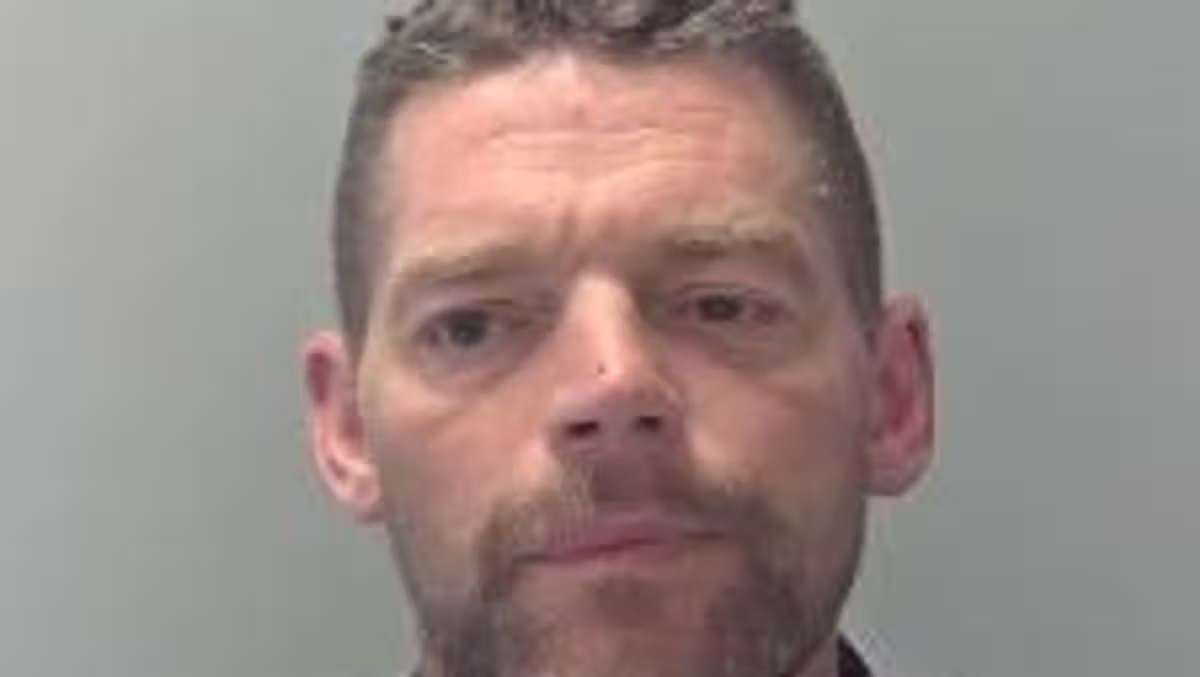
Suffolk Police are appealing for help to find a man who is wanted. Farren Hales, 41, is wanted on recall to prison.
Advertisement
Hales was last seen in Colchester and has links to both the Ely area of Cambridgeshire and to north London. He is described as being white, around 5’8″ tall, and of slim build.
He has short brown, greying hair, and stubble. If you have seen him or know where he could be, you should contact Suffolk Police.
Anyone with information should report it via the Suffolk Police website quoting crime number 37/18760/26 or call 101. You can also report anything anonymously via Crimestoppers by calling 0800555111.
In the event of an emergency, you should call 999.
Advertisement
To get more news and top stories delivered directly to your phone, join our new WhatsApp community.Click this linkto receive your daily dose of CambridgeshireLive content.
We also treat our community members to special offers, promotions, and adverts from us and our partners. If you don’t like our community, you can check out any time you like. If you’re curious, you can read ourPrivacy Notice.












































You must be logged in to post a comment Login