





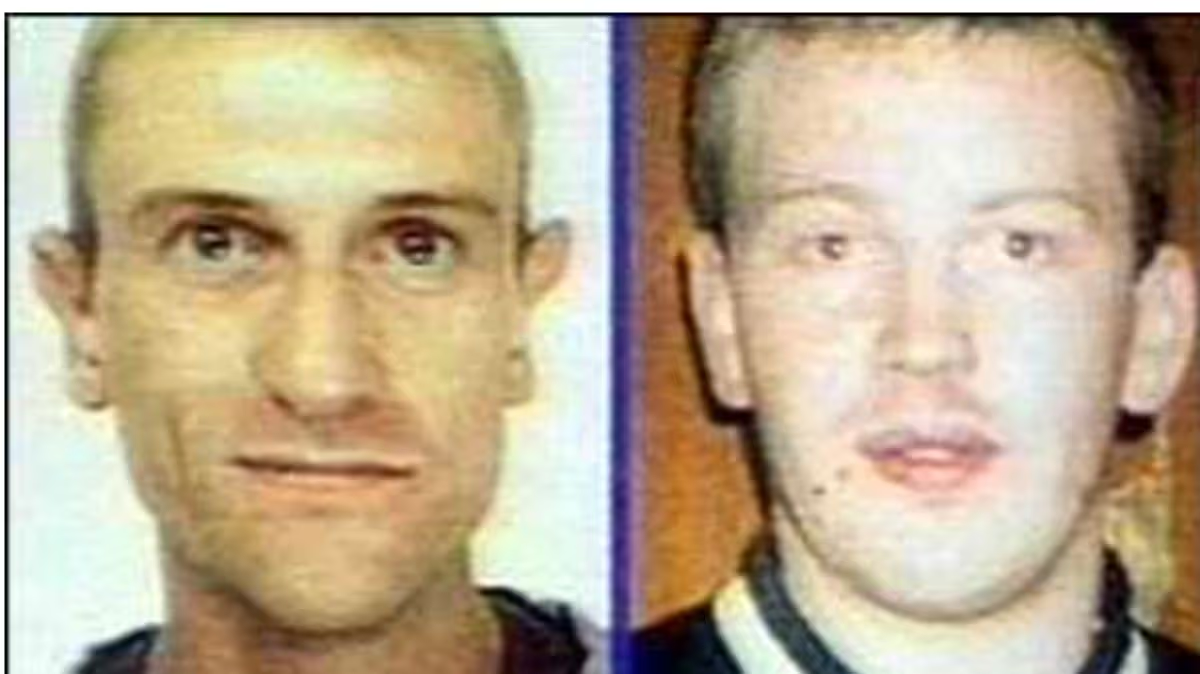
Gangland Unsolved: The latest in our series looks at the 1999 double murder of John Nisbet and William Lindsay and its links to organised crime.
It was a gruesome sight that greeted detectives in a wind swept farm track 12 miles south of Edinburgh. Two men had been tortured, shot dead, their bodies set on fire and then dumped in the remote hilltop location in Elphinstone village near the East Lothian town of Tranent.
The double killing in October, 1999, carried all the hallmarks of a gangland hit. Local cops from Lothian and Borders Police didn’t have a clue who the two men were.
However colleagues in neighbouring Strathclyde were able to help out. John Nisbet, 25 from. Craigneuk, Lanarkshire, and pal William Lindsay, 26, from nearby Wishaw, were both well known to them, particularly Nisbet.
About 60 police and support staff were deployed in the double murder investigation. In the following days information emerged about Nisbet and Lindsay and a possible suspect.
Nisbet had just completed a four-year jail term for a shooting incident and was thought to have been behind a separate drive-by shooting attempt only days before his death. In 1996 he had been arrested after a £1million security van robbery in Ayrshire but freed due to a lack of evidence.
Meanwhile Lindsay is understood to have been acting as Nisbet’s ‘driver’ at the time of their deaths. Investigations showed that the two men had likely been murdered near the village of Chapelhall in North Lanarkshire, having been lured there.
It’s then thought their bodies were loaded into the boot of a Peugeot 406 and driven the 40 miles to Elphinstone. The same car was found burned out a few days later in Salsburgh near Airdrie.
It appeared that both victims had been shot several times. The killers had later doused the bodies with petrol on the farm track – undercover of darkness – and burned them almost beyond recognition.
The area, part of the 420-acre Elphinstone Tower estate, was sealed off in the search for evidence. One of the bodies had been discovered by a 58 year old local man who was walking his dog, and the second was found by police shortly afterwards in the same field, just off the B6414.
The dog walker later said it looked as if someone had built a big fire as the ground was scorched around the area where he saw the body. But there was no other signs of violence. But why had the two victims been taken to such a remote spot so far from home?
It then transpired that a number of caravan parks in nearby Port Seton, including Seton Sands, were known as bolt-holes and hideaways for criminals in Lanarkshire. Reports suggest Nisbet may have been staying there at one point after the earlier failed shooting.
One of the first to be questioned was a friend and associate of Nisbet, Lee Smith said to be an up and coming figure in the world of drugs and organised crime. However Smith from Bellshill, Lanarkshire was released without charge.
By that time the 29 year old had already carved out a fearsome gangland reputation with connections to the Liverpool underworld. He had been previously jailed for two years for a machete attack on a complete stranger.
The convicted car thief had also served a further two years for an attack on a man with a knuckle duster. More information also began to emerge on the connections between Nisbet and Smith.
Nisbet had been a guest when Smith married, at a lavish wedding at Chatelherault Country Park near Hamilton. Phone records established the last phone call made by Nisbet on his mobile was to Smith.
It then emerged that Smith owned a caravan in Seton Sands. His name had also been cropping up frequently in police intelligence reports and he was also spotted by undercover officers on a number of surveillance operations.
However they struggled to establish a motive for the murder though it was likely the two victims had probably known their killers. There had been an on going feud between local criminals for control of the lucrative drugs trade in Lanarkshire and that was the most likely spark for the two killings.
Eventually the murder inquiry inquiry was wound down. It had proved to be a very difficult case to solve because of the reputation of the victims and the violence involved.
However Smith continued to be the focus of the attention of police over the next seven years Between 1999 and 2006, he and a close associate were targeted by six surveillance operations over allegations of his involvement in the drugs trade and organised crime.
Smith was even watched when he travelled to Tenerife to meet drugs suspects. However as the net closed in Smith was suddenly found dead in a caravan in Seton Sands at the age of 32, only five miles from the spot where the two bodies were found.
However in this case there was no police investigation as his death was deemed non suspicious. Three years later a Proceeds of Crime Action at the Court of Session in Edinburgh confiscated assets of more than £350,000 from his widow – one of the largest seizures in Scotland at the time.
It was claimed that Smith had run a “criminal enterprise which operated on a national and international basis.” with intelligence reports linking him to large drugs consignments including cocaine and heroin.
Graeme Pearson, a former Director General of the Scottish Crime and Drug Enforcement Agency, said the violence involved in the murders of Nisbet and Lindsay marked a new development in serious and organised crime with criminals prepared to go to more extreme methods because of the riches to be earned Mr Pearson said: “A form of execution had taken place.
“These two individuals had been conned into a meeting by people they had an element of trust with. They were to some extent tortured either as a form of punishment or to get information from them and then at the conclusion they were murdered.
“It reflects that changing aspect of organised crime where the money was becoming so attractive that extreme violence entered into the process.”
Mr Pearson also believes many criminals around that time were copying what they were seeing on TV crime dramas. He added: “It is almost fact following fiction. There was a great deal of crime fiction on TV which reflected the same types of behaviour.
“One that had a big impact was The Wire. One wonders how often criminals watched these programmes and adopted the same lifestyles.”
A Police Scotland spokesperson said: “The murders of John Nisbet and William Lindsay remain unresolved. “Unresolved murders are cases that are never closed and Police Scotland is fully committed to identifying those people responsible for all such cases.
“Police Scotland works closely with the Crown Office and Procurator Fiscal Service and meets regularly to review outstanding unresolved murders from across the country. Working collaboratively, the potential for new investigative opportunities are regularly assessed to maximise the ability to deliver justice for grieving families, irrespective of the passage of time.
“As with any unresolved murder case, we would review any new information provided to police and investigate further if appropriate.”
Get more Daily Record exclusives by signing up for free to Google’s preferred sources. Click HERE











.jpg)










































You must be logged in to post a comment Login