BT is dishing out free fibre broadband for three months when customers switch from their current provider.
Jake Hackney Senior Consumer Writer
07:45, 18 Apr 2026
This article contains affiliate links, we will receive a commission on any sales we generate from it. Learn more
BT is offering free broadband to new customers who make the switch from rivals such as Sky or Virgin Media. Those who sign up for one of BT’s fibre broadband packages this month will benefit from three months of free service.
The deal applies to BT’s full fibre plans, with download speeds ranging from 50Mbps to 900Mbps, potentially saving customers as much as £131.97. Those selecting the highest speed options will enjoy connections fast enough to download films in seconds and robust enough to support 4K streaming and online gaming at the same time.
Advertisement
Once the initial three-month period ends, standard pricing will apply for the remainder of the 24-month contract. This varies from £31.99 to £43.99 based on the selected package.
BT operates under the One Touch Switch scheme, meaning new customers aren’t required to get in touch with their previous provider to arrange the broadband installation. Switchover dates are typically arranged quickly within a fortnight.
BT additionally includes Norton Security with all its broadband packages to safeguard against viruses and other online dangers. To determine which speeds are accessible in their area, customers should utilise BT’s postcode checker, reports the Daily Record.
Get BT Broadband free for three months
Advertisement
BT is giving new customers free full fibre broadband for three months, with speeds from 50Mbps to 900Mbps.
One drawback is that BT customers will experience a £4 increase to their bills every April. This practice extends to numerous other broadband suppliers, including Virgin and Plusnet, the latter currently enticing customers with a £100 gift card when they register for its 900Mbps package.
Following the 2016 merger between BT and EE, subscribers now have the option to bundle their broadband with various TV packages. By adding an EE TV package to a BT broadband subscription, users gain access to NOW, featuring a variety of Sky channels.
This includes sport and cinema content, alongside Netflix or TNT Sports availability on certain packages. BT has received considerable acclaim from numerous subscribers who have posted positive feedback on Trustpilot.
One customer said: “Amazing service and never had issues.” Another said: “I’ve been with BT for five years and can honestly say they’ve been amazing.
“My bill has never been wrong. My router hasn’t once gone down.”
Some subscribers have taken issue with BT‘s post-sign-up communication, as one review pointed out: “I’ve just had a broadband upgrade and the number of repeated texts, emails, notifications, over and over and over. Was incredibly annoying and frustrating.”
Conversely, other customers have commended the support service, saying: “There was zero wait, which is amazing for any customer service these days. Straight through to the call centre. I got to speak to a knowledgeable person who dealt with my problem with expertise and speed.”
Now, he faces Suarez in Liverpool in what is his 12th professional bout. Whittaker has 10 wins in his pro career so far, with just one draw.
Now signed to Eddie Hearn’s Matchroom Boxing, Whittaker has been elevated to the main event on Merseyside after local favourite Callum Smith withdrew injured from his WBO interim light-heavyweight title clash against David Morrell.
Whittaker vs Suarez fight date and venue
Whittaker vs Suarez takes place tonight on Saturday April 18, 2026 at the M&S Bank Arena in Liverpool, England.
Advertisement
Whittaker vs Suarez fight time and ring walks
Saturday night’s main card is due to begin at 5pm BST, which is 12pm ET and 9am PT in the United States.
Whittaker and Suarez are set to make their way to the ring for approximately 9.20pm BST (4.20pm ET, 1.20pm PT). As ever, those exact timings are subject to change.
How to watch Whittaker vs Suarez
Advertisement
TV channel and live stream: Whittaker vs Suarez will be broadcast live in the UK on DAZN.
Whittaker vs Suarez undercard
Ben Whittaker vs Braian Suarez
Molly McCann vs Ashleigh Johnson
Advertisement
Peter McGrail vs Ckari Cani Mansilla
Joe McGrail vs Aaron Hayden
Leo Atang vs Viktor Chvarkou
Whittaker vs Suarez prediction
Advertisement
Whittaker is the undefeated fighter here and comes into this bout with home advantage – admittedly not in his own city.
Suarez, meanwhile, is an experienced professional, boasting a 21-4 record with 20 knockout victories. His recent form, however, is patchy.
He defeated Sergio Santos Dantas in an all-Argentine bout in his most recent outing in Buenos Aires. His three previous fights outside of Argentina, however, have all ended in losses.
His most recent came in Russia against Vasily Voytsekhovsky, and before that it was Sharabutdin Ataev.
Advertisement
He has fought once before in Britain, but it did not go well. He faced Lyndon Arthur in Bolton for the IBO light-heavyweight title in 2023, but was counted out in the 10th round after being knocked down by a vicious left hook to the body.
Promotional partnership: Ben Whittaker joined forces with Eddie Hearn and Matchroom last year
Getty
Suarez had already missed weight and could not win the title regardless.
Advertisement
With that in mind, and considering Whittaker’s brutal knockout of Gavazi in November, you would expect the Englishman to produce another statement performance here.
Whittaker to win by stoppage.
Whittaker vs Suarez weigh-in results
On Friday, Whittaker weighed in at a career-heaviest 182.14lbs, while Suarez tipped the scales at 182.1lbs.
Advertisement
Whittaker vs Suarez latest odds
Whittaker to win on points or by decision: 9/2
Whittaker to win by knockout, technical knockout or disqualification: 2/9
Suarez to win on points or by decision: 30/1
Advertisement
Suarez to win by knockout, technical knockout or disqualification: 11/1
“Research it, look it up, ask the questions, and don’t take no for an answer.”
16:29, 18 Apr 2026
Eileen Brannigan on Developmental Dysplasia of the Hip (DDH)
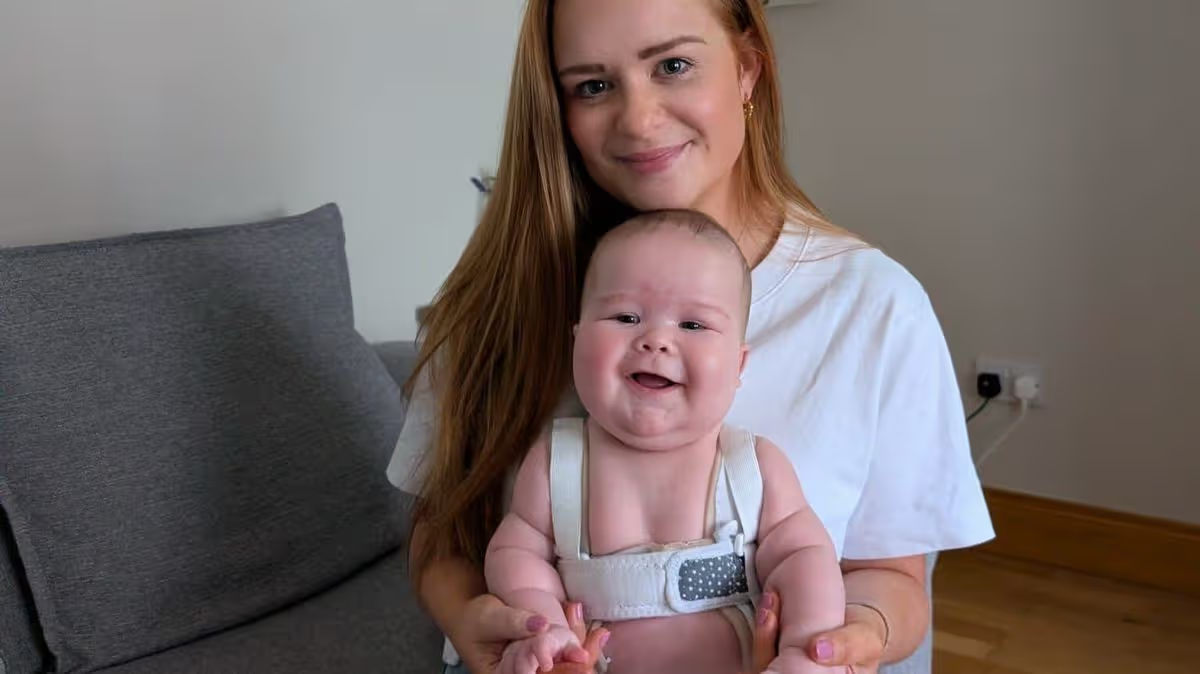
For months after her children were born, Eileen Brannigan had to be careful about how she held them as they were carefully positioned in harnesses to help their hips develop properly.
When her daughter, Eíbhí, was just 16 weeks old, a routine check with a health visitor found she had an uneven skin roll on her thigh, an indicator for hip dysplasia. However, the health visitor said she wasn’t too concerned, but would refer her just to make sure.
Advertisement
A few weeks later, Eileen received a letter about bringing Eíbhí for a scan, which discovered the little one had a severe hip dislocation and would need to wear a pavlik harness for up to 20 weeks.
When her second child, Connor Óg, was born, he was automatically referred for a scan as the sibling of a child with hip dyslasia. He was also found to have the condition, and was put into a harness at eight weeks old.
The pavlik harness is a soft, fabric orthotic device used to treat developmental dysplasia of the hip (DDH) in infants, usually from birth to six months. The condition means an infant’s hip joint doesn’t fit together properly, ranging from mild instability to full dislocation.
Advertisement
Treatment with the harness means the baby’s hips and knees are held in a bent, slightly spread position to encourage proper socket development. The way in which the harness is adjusted can be tricky, as if it’s too tight it can cause pain, but if too loose it won’t do its job properly.
Speaking to Belfast Live at her home in Co Down, Eileen said she hadn’t heard of the condition before, adding they were very lucky it was picked up.
The 29-year-old said: “My daughter Eíbhí was 16 weeks old and at her review at home, the health visitor was measuring her weight and height. For that, you have to strip the baby right down, and the health visitor does a few hip exercises with her.
“She then noticed an uneven skin roll on Eíbhí’s thigh, she had three on one thigh and two on the other. In her experience, the health visitor said that might suggest a little bit of hip dysplasia, but said she presented fine. She said she wasn’t concerned, but would do a referral.
Advertisement
“Within a few weeks, I received a letter to bring Eíbhí up for a scan and thought nothing of it. Everyone looked at her, every consultant looked at her as she was a wee bit sick when she was first born.
“Everyone told me this child is presenting really fine. Then we went in for our scan, and I was told she had a really severe hip dislocation, and she would immediately be put into a pavlik harness for 12 if not 20 weeks, depending on if she meets her numbers. She ended up doing the whole 20 weeks in the harness.
“I feel very lucky Eíbhí was picked up on a complete whim, otherwise she would have slipped through the net and around the age of two or three, she would have started walking differently than other children. She probably would have had sore hips playing sports, she would have ended up needing surgery.”
Advertisement
Her son was found to have a shallow hip, a less severe condition than her daughter’s dislocation, and remained in a harness for 12 weeks.
Eileen said she wasn’t given much guidance on the condition, and parents she tried speaking to about it had never heard of it before.
“I was a first time mum and didn’t know what I was doing anyway, so to be faced with a baby in a pavlik harness and not have support or guidance, there was nowhere to look up tips and tricks, it was difficult,” she explained.
“There weren’t any other parents really talking about it, I saw a few accounts on TikTok that I looked up, but anyone I spoke to didn’t know anything about it. I was the mum at the mums and toddlers group with the child in the harness, I felt really lonely.
Advertisement
“I felt completely alone, like there was no one I could talk to about it. I was getting a lot of sympathy but I didn’t want that, I wanted other parents to know about hip dysplasia.”
As a way to share her story and raise awareness of DDH to help other parents, Eileen started documenting her day-to-day life on TikTok, sharing aspects of her children’s lives with the condition.
From talking to more people about hip dysplasia, she said many don’t realise how common it is. Mild hip instability affects approximately one in 10 newborns.
Advertisement
Only around one in 100 infants require treatment for DDH, and one in 500 have a completely dislocated hip, with a higher incidence in girls, first-borns, and those with a breech family history.
Eileen said she would like to see automatic referrals for scanning for infants whose family have history with hip issues, to help prevent the condition from going undetected and showing up later in life.
She explained: “I want to raise awareness as there’s a lot of parents out there who don’t know anything about it. Maybe their grandparents had a bad hip, or their uncle is getting hip surgery. Of course you have sports injuries and different things which may mean you need hip surgery, but when it comes to it, not much is shared about it.
“They don’t ask about it during your booking scan when you go in at 12 weeks and are asked all your family history about diabetes, DVTs and heart problems. You’re not asked about DDH, you’re not asked about hip problems. That’s what I just really want to happen.
Advertisement
“I want expectant parents to be aware of this, both antenatally and postnatally. If it’s not discussed antenatally, then once the child is born, a leaflet before you leave the hospital, have you thought about this? Go and get your child checked.
“It’s not easy for consultants and GPs to pick it up just by looking at the child. It does require an ultrasound scan, which is why a lot of babies are falling through the net, so I want people to just be at least aware of it.
“They don’t have to go and get the child scanned, they don’t have to tick the box, but I would like there to be a box there to be ticked if you felt concerned or just wanted that peace of mind in getting your baby scanned.”
Content cannot be displayed without consent
Since sharing her story on social media, Eileen said she has had a lot of parents reaching out about the condition.
Advertisement
“I had a mum contact me saying she watched the videos, and noticed her daughter crawling and walking a bit funny, so she got her looked at and she needs hip surgery in a few weeks, and she’s two years old,” she said.
“I had another mum in Derry who was literally given a harness and told to go home, and was given no information. I had to send her a step by step tutorial on taking the harness off and putting it back on, as it’s a skill in itself using it.
“A lot of people are aware of it once they hear about it, it clicks with them and they’re like ‘oh actually I have a bit of a bad hip and I’m 26.’”
As for the advice she would give to parents concerned about the condition, or interested in finding out more, Eileen said: “Research it, look it up, ask the questions, and don’t take no for an answer. Speak to your family and your parents if you can, to any family members who may have had hip problems.
Advertisement
“Just as much as we talk about diabetes in pregnancy, we talk about taking our folic acid, we should be talking about DDH. A simple scan will give the child a proper childhood, a proper adulthood instead of years down the line, being in severe pain due to something that could have easily been detected at birth.
“I think if there’s a family history of DDH or hip dysplasia, it should be an automatic referral. Giving up holding your child for 12 weeks or 20 weeks in my case is definitely worth it, compared to years of pain for them down the line because they don’t have a voice.
“I want to be the voice for them, as well as other children out there who may go undetected. A simple scan is all it takes.”
Symptoms of Developmental Hip Dysplasia (DDH)
Symptoms vary by age, with infants (0-6 months) showing signs of uneven skin folds on thighs or buttocks, limited abduction shown by being unable to move one leg to the side as far as the other during nappy changes, one leg appearing shorter than the other, or a clicking/popping sound in hips.
Advertisement
Toddlers may show signs of a limp, a waddling gait, walking on their toes, or dragging one leg which can be observed while crawling.
If the condition is undiagnosed earlier, it can appear in teenagers and young adults through groin pain often related to activity, a feeling of hip instability or reduced range of motion, or early arthiritis due to chronic misalignment.
For more information on the condition, click here.
Video by Belfast Live videographer Justin Kernoghan.
Hello and welcome to our coverage of United’s clash with Chelsea.
Today could be a huge day in the race for Champions League football. A win for United would almost guarantee they will finish the season ahead of today’s opponents, but a defeat really would get those at Old Trafford looking over their shoulders.
We’ll have team news for you at 6:45pm and kick-off is at 8pm, so stick with us for build-up, updates and reaction from today’s game.
Park Farm is an unassuming building just off Manchester Road overlooking green hills and Peel Tower. With a car park, tearoom, event space, farm and gift shop, garden centre and more, it’s an incredibly deceptive space.
Margaret Lees Senior, 89, moved to Ramsbottom from Oldham with her husband John Lees almost 70 years ago. The pair took over a modest farm near Walmsley Road, complete with a local milk round.
Margaret shares that the pair began their new venture with very little, and that the former owner kindly stayed for a few extra days to show them the ropes.
She said: “We got married on the Thursday then moved to Ramsbottom at about 10 o’clock that night.
Advertisement
“On Friday morning, we got up and milked the cows, went on the milk round and it carried on from there.
“We didn’t know the area so the man who had the farm before came with us for four days to show us where to walk, then we had to find it for ourselves.
“It wasn’t a big milk round then so I did it on my own to start with. Then we bought more milk rounds, and it got bigger and bigger.
“All this [the tearoom] wasn’t here – there was just an air raid shelter by the side of the road.
Advertisement
Several years later, as the couple’s family began to grow, so did the farm.
John set up a small cabin on the premises in the 80s, which evolved into a spacious tearoom and function room.
Margaret added: “We had five tables downstairs before it grew into this. I remember sitting in there and saying to my husband, ‘this will never work.’
“It was all John’s idea. We had five daughters and one son, and he said that we’d have to find them something to do.
Advertisement
“He bought a portable cabin and put it on the side of the road, but the council went mad.
“We had about two or three public inquires in the end, until in the end, a man came up from Birmingham to judge it.
“John was having his hip done that morning so he could only stay with us a short while. I had to show him around but wasn’t allowed to speak to him!
“He looked all around and sent his records back. Months later, we got told we were allowed to ‘sell everything’, including petrol if we wanted, so it could have ended up being a garage.
Advertisement
“We must have fought with the council for a good few years to try and get it all through, but it got there in the end. It wasn’t causing much bother to anyone.”
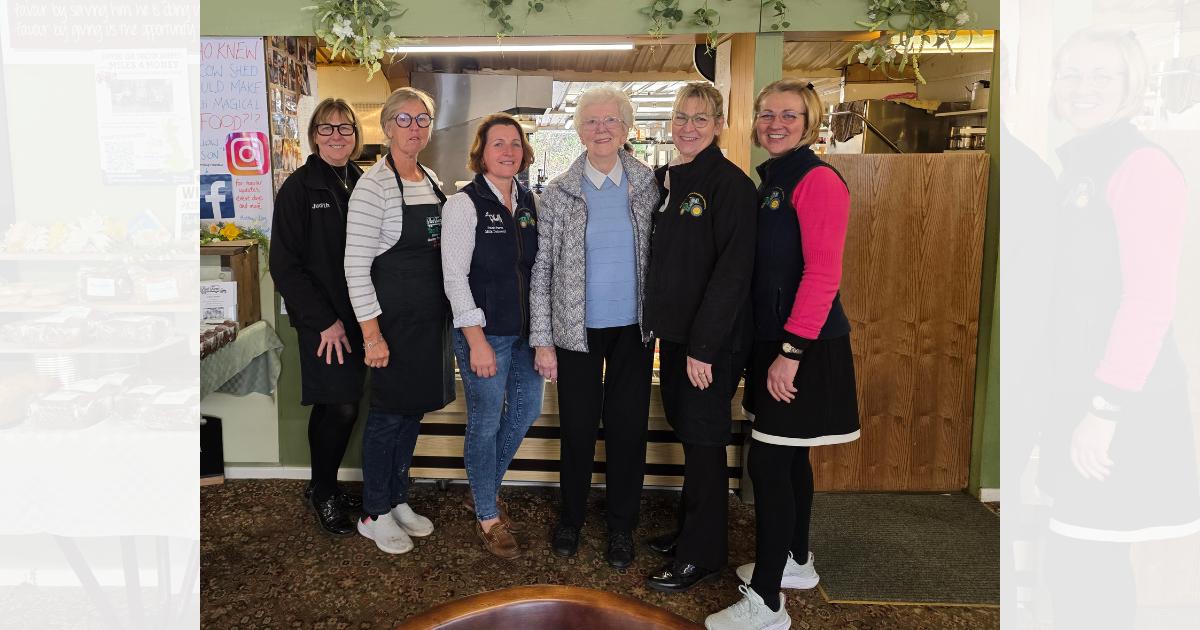
Members of the Lees family at Park Farm (Image: Lisa Valentine – Newsquest)
Margaret’s daughter, Judith Hilton, 62, shared that the family business is continually evolving and appealing to customers of all ages, with its freshly baked goods – including gluten free and diabetic friendly offerings.
She added: “We realised that there’s a market for things like gluten-free products so we launched ‘Gluten-Free Fridays’, where we put it out on Facebook every Tuesday and people can place orders.
“The extras go into the shop downstairs on Friday too for people to buy. The next thing is bread, which we haven’t quite got right yet but we’re on with it.”
Advertisement
Margaret’s daughter in law, Margaret Lees Junior, 54, shared that they are a scratch bakery, with almost everything sold in the shop and served in the tearoom made on site using locally sourced and homegrown products.
She said: “It’s all homemade. I mean, where can you go now where you look at the sweet display and everything is made fresh? The cream comes from the farm across the road, the jam, marmalade, ice cream and bread are all homemade.
“Food miles are a big thing – even the flour is milled in Yorkshire.”
Speaking on the tearoom, Judith added: “It’s like coming to your grandma’s living room. We get people visiting the shop and they have no idea the tearoom is here.
Advertisement
“We have a newer generation coming through the doors as well now. It used to be a cow shed until it was converted. There would have been cattle below us and hay in the loft.”
Park Farm tea shop (Image: Lisa Valentine – Newsquest)
The tearoom grew into a 120-seat, fully licensed venue offering all-day breakfasts, homemade cakes, afternoon teas and weekly lunch specials, with vegetarian, gluten-free, and diabetic-friendly options.
A garden centre and gift shop were added in time, alongside private function rooms for events such as birthday parties, christenings and corporate lunches.
Sustainability is truly at the core of Park Farm, with the tearoom’s windows and doors sourced from a hospital, the staircase coming from a ship, the buffet table from a former NatWest bank and the bar being relocated from Altrincham Ice Rink – all in keeping with founder John’s ‘make do and mend’ ethos.
Advertisement
The farm shop sells fruit, vegetables, meats, cheeses, chutneys, jams, and the farm’s own fresh dairy products – milk, cream, and eggs – all bottled on site and so much more.
The farm has also become well known for its Wimberry Pie – a traditional speciality made using bilberries gathered from the moorland above Ramsbottom.
Sadly, the family has not been without loss, with several members passing along the way but who remain very much a part of the business, with their portraits, memorials and quotes dotted around the shop and tearoom.
The family are still very much hands on, with four generations and dozens of Lees of all ages working at the farm, shop and tearoom, both on the shop floor and behind the scenes.
Advertisement
The sisters shared that they start their work days between 2am and 4am to get things started, describing the work as ‘very full on’ as they ‘live, eat and breathe’ the business.
Margaret Junior shared that the changing economy has also brought challenges for the business over the years.
John Lees working on the farm in the early days (Image: Lisa Valentine – Newsquest)
Fresh produce at the farm shop (Image: Lisa Valentine – Newsquest)
She added: “People maybe don’t see that there’s lots of little farms all over the country that, in order to make that farm work, they’ve got to do something else.
“And this [the tearoom] is that something else for us, to keep the family farm going basically. We couldn’t just have a milk processing plant and deliver milk on the rounds.
Advertisement
“It wouldn’t pay, which is where the shop, tearoom, garden centre, event room and catering service comes in.”
The sisters also shared that chatting with customers is the highlight of their shifts, with people coming in for one-on-one chats as they shop.
Another chapter in the business’s recent history came in 2007, when three of the Lees sisters appeared on celebrity chef Gordon Ramsay’s television programme, The F Word.
They scored an impressive 126 out of 150 overall and then went on to achieve the only perfect score of 50 out of 50 in the entire series for a chocolate dessert cooked at Claridge’s hotel in London, bringing national attention to the Ramsbottom farm.
Advertisement
With open days where guests can get hands on with Highland cows and new lines of produce hitting the shelves on a regular basis, Park Farm continues to attract people from far and wide.
Park Farm Shop and Tearoom, Manchester Road, Ramsbottom, Bury, BL9 5NP
Cardiff are at a critical juncture in the race to reach the United Rugby Championship play-offs and face a tricky trip to Llanelli to face the Scarlets this afternoon.
Corniel van Zyl’s side are currently eighth in the URC table and need to win at Parc y Scarlets to strengthen their chances of reaching the play-offs with four matches remaining.
The Scarlets are out of the play-off race but want to finish their campaign on a high, while also laying the foundations for what they hope will be a better 2026/27 season.
Advertisement
Van Zyl has made seven changes to his Cardiff matchday squad with second-row Josh McNally, George Nott and scrum-half Johan Mulder returning from injury to start. Wales duo Alex Mann and James Botham combine on the flanks with Alun Lawrence pulling on the number eight jersey.
The Scarlets have been boosted by the return to fitness of Wales internationals Ryan Elias, Taine Plumtree and Eddie James who are all starting.
This game is only live on Premier Sports with kick-off at 5.30pm. You can follow live updates below
It had dawned on me, for the first time in my life, that one day my parents would pass away (Picture: Emma Werner)
‘Mum, I am worried you’re going to die’
It was Christmas 1999, and in the midst of the vicious round of chemotherapy my mother was undergoing, my parents took my sister and I to a ski resort.
If my mum was surprised at the question her five-year-old daughter had asked, she didn’t show it.
She’d taken ill two days earlier, soon after we arrived, and had been rushed to a doctor nearby. When she returned the following night, it had dawned on me, for the first time in my life, that one day my parents would pass away.
Advertisement
She calmed me down and said not to worry and to enjoy the rest of the holiday.
But a few days later, thoughts of my mother’s health came back to haunt me. It mingled with guilt.
Thinking I’d burdened her with my own fears was mortifying.
I have flashes of her skinny figure in a vast double bed taller than myself (Picture: Emma Werner)
I felt pathetic and never mentioned the incident again. But the feeling that I should know how to deal calmly – before I had even learnt how to read – persisted.
The shame hung over me for many years to come.
Advertisement
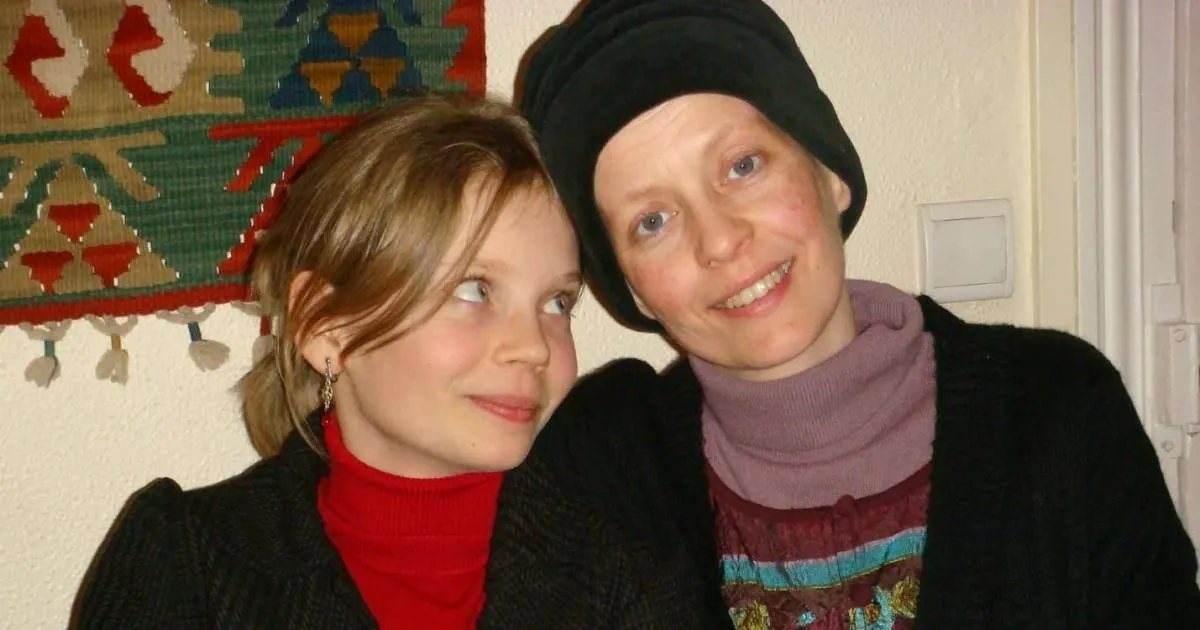
My mother was in her early thirties when she was diagnosed with breast cancer. She had no genetic predisposition, no family history; the chances of her getting sick were laughably small.
I didn’t understand what was happening then, but I know she underwent surgery and chemotherapy early on. I have flashes of her skinny figure in a vast double bed taller than myself.
She went into remission in 1997, but then in 1999 it returned, this time in her right hip.
For the next twelve years, cancer hovered over our heads.
Advertisement
I hated myself for hating her appearance (Picture: Emma Werner)
I went about my life as normally as I could. I went to school, I sang in a choir, I took violin lessons – all the while trying to convince myself that things would get better.
But there were still times where the horrors of my reality burst through my naive ignorance, and I failed to cope. Like the time mum lost her hair – I’ll never forget the way I was unable to mask my reaction. She looked so small. So ill. All I could see was her cancer.
I hated myself for hating her appearance, and agonised over the split second in which she may have seen the shock in my eyes. I was 13.
Or the following year, when my mother asked me to pick up the results of a blood test for her, too anxious to see what they might show.
For a long time after her passing my guilt remained (Picture: Emma Werner)
Unfolding the piece of paper in the waiting room, I broke down at the verdict. Despite all the pain and the treatments, she was still dying. And yet, she had to comfort me, again.
Suddenly I was five again, unable to cope and make her better. Looking to her for solace on what must have been one of the worst days of her life.
Advertisement
A month prior to her death, when I was 16, I went on a trip to Vienna with an orchestra I played in. The doctors had found some nodules had metastasised, so I should have known time was fast running out.
Celebrating Halloween in various bars of the city, cancer seemed far away – but reality came crashing down the same hour I got back. My father came to pick me up from the coach station on the way to collect my mother up from a therapist appointment.
Breast cancer symptoms
The first symptom of breast cancer that most women notice is a lump or an area of thickened tissue in their breast.
You should see a GP if you notice any of the following:
Advertisement
a new lump or area of thickened tissue in either breast that was not there before
a change in the size or shape of one or both breasts
a discharge of fluid from either of your nipples
a lump or swelling in either of your armpits
a change in the look or feel of your skin, such as puckering or dimpling, a rash or redness
a rash (like eczema), crusting, scaly or itchy skin or redness on or around your nipple
a change in the appearance of your nipple, such as becoming sunken into your breast
She climbed into the car and burst into tears. ‘I am not afraid anymore,’ she told my dad. It wasn’t until two weeks later when my father sent me to stay with my grandparents to shield me from the excruciating final moments, that I understood we had reached the end.
For a long time after her passing my guilt remained.
Advertisement
In the gaping hole she left behind, I found solace in biology textbooks. I relished learning anything to do with cancer – it was like a comforting, logical voice making sense of it all.
Biology gave me another, more unexpected source of healing. I took an internship supervised by a scientist researching cancer in Tasmanian devils. Months later, thescientist met my dad, who’d wanted to thank her for taking good care of me.
They married some years later. And so, in a strange turn of events, after cancer took my mother, it gave me a younger sister, Flora.
It has been 15 years now sinceshe died.
Advertisement
Flora has just celebrated her seventh birthday. When I was that age, my mother was already on the edge of her second relapse.
Flora has just celebrated her seventh birthday (Picture: Emma Werner)
A couple of years ago, Flora became inconsolable after breaking a small plate. More recently, she cried after struggling to memorise a multiplication table. Just last week, she refused to read a book because a character’s misfortune was too upsetting.
As I comfort her each time, faced with the reality of a child’s emotional landscape, I finally see the sad absurdity of the remorse and guilt I’d been carrying with me.
Sometimes in her eyes, I recognise a carefree innocence I’d once felt, before I traded it for self-reproach. I cannot change how I grew up, nor, as I assured my mother on her deathbed and many times in dreams, would I have wanted to.
But it took over a decade and the arrival of Flora, to realise that I was a just kid who did not know how young she was.
Advertisement
I did my best in the worst of scenarios. One day, I will accept that.
The pub is located in a village set in open countryside ideal for the warmer months ahead
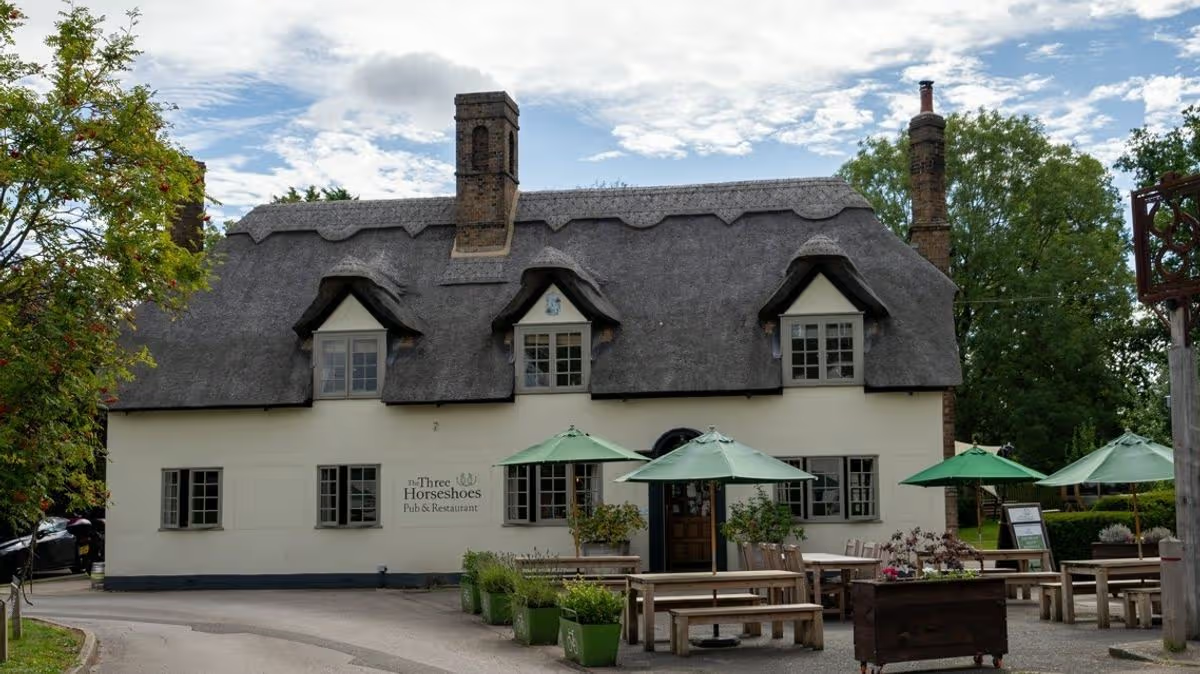
Those who live in Cambridge may often find that they choose not to venture far from the city, since there are plenty of great meal spots dotted around. Around 15 minutes from Cambridge by car, nestled in the countryside, is the quaint village of Madingley, home to The Three Horseshoes.
Advertisement
The Three Horseshoes is an award-winning pub which was voted Cambridgeshire Dining Pub of the Year in 2018 and holds two AA Rosettes. It features a garden with plentiful space, two dining pods, and a fully enclosed, heated garden room that sits at the back of its dining room.
The dining pods are fully enclosed with heating and pretty lights and the garden is spacious and picturesque. Described by the pub’s website as a ‘romantic’, Madingley is a beautiful countryside spot.
Offering a rustic and charming appeal, the thatched country pub has earned a positive reputation online. One person described the pub as having a “cosy atmosphere” on Google and another said it was the “best Sunday roast” they have had around Cambridge.
The Three Horseshoes has a unique wine list focusing on the Langeudoc-Roussillon region of France, where the team pride itself on visiting and meeting wine makers many times. It also offers four local real ales and a range of lager and fruity cocktails.
Advertisement
With a modern British and European style for food, the menu offers classics like pie of the day and a 14oz sirloin on the bone to signature dishes like BBQ guineafowl and an aubergine schnitzel dish. A pie of the day sounds like the perfect way to indulge while sunning in their beer garden.
The US President has suggested that change is coming “very soon” for one nation.
Donald Trump has hinted that Cuba could be next on his hit list. The US President previously made offhand comments about “stopping by” Cuba on his way home from Iran.
Advertisement
But in a speech to a conference of Turning Point USA, the group formerly led by slain far-right activist Charlie Kirk, he said change on the island would come “very soon”.
After speaking about US operations on the war in Iran, he turned to Cuba: “Very soon, this great strength will also bring about a day 70 years in waiting. It’s called A New Dawn for Cuba. We’re going to help them out in Cuba.”
He added: “We have a lot of great Cuban Americans. Not too many people in this audience, I don’t think. But you go to Miami, we have people, Cuban Americans, people that were brutally treated, whose families were killed, brutalised, and now watch.”
Cuba’s economy and infrastructure have been in crisis as a result of a US energy blockade following its invasion of Venezuela – their main supplier of oil. The Trump administration has described its government as ineffective and abusive.
Advertisement
In return for easing sanctions, US demands have included an end to political repression, a release of political prisoners and a liberalisation of the island’s ailing economy.
American diplomats recently met with Cuban government officials in the island nation, marking a renewed push for talks even as US Trump has hinted at an invasion. Cuba’s leader said this week that his country is prepared to fight if that should happen.
The Mirror reports that a senior State Department official met with the grandson of retired Cuban leader Raúl Castro last week during the trip, according to a department official, who was not authorised to comment publicly and spoke Friday on condition of anonymity to discuss the sensitive matter.
The official did not say who from the US met with Raúl Guillermo Rodríguez Castro, whose grandfather is believed to play an influential role in the Cuban government despite not holding an official post. A second US official said Secretary of State Marco Rubio was not part of the delegation that visited Havana.
US officials have previously said Rubio, the son of Cuban immigrants and a longtime Cuba hawk, met the younger Castro in the Caribbean island nation of St. Kitts and Nevis in February.
Advertisement
During last week’s diplomatic push, the US delegation urged Cuba to make major changes to its economy and way of governing because it would not let the island nation become a national security threat in the region, the State Department official said. It marked the first US government flight to land in Cuba other than at the US Naval Base at Guantanamo Bay since 2016.
Get more Daily Record exclusives by signing up for free to Google’s preferred sources. Click HERE
The virus causes more than 20,000 babies in the UK to be seriously ill in hospital every year.
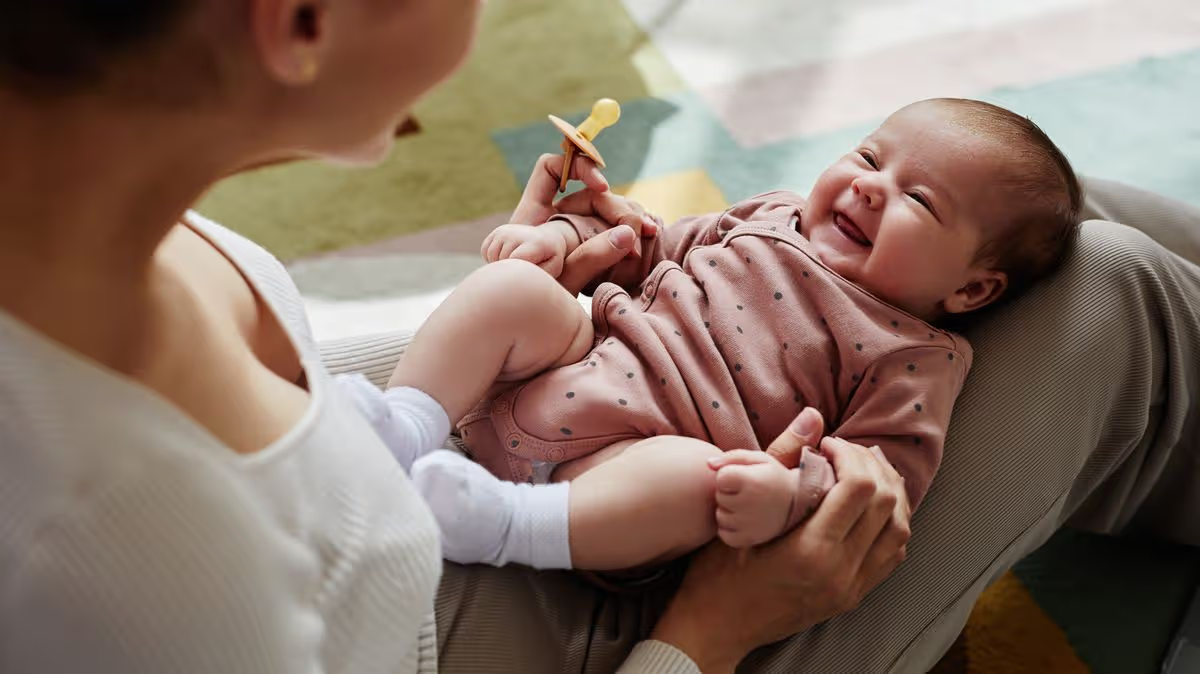
Baby hospital admissions have been seen to plummet in the UK thanks to a vaccine that is given to expecting mothers during pregnancy. This vaccine helps protect newborns from a nasty chest infection that can leave them grasping for breath and unable to feed.
Advertisement
According to new reports from UK health officials, this maternal vaccine has cut hospital admissions for RSV by more than 80 per cent. Since it was launched in 2024, women are offered the vaccine from 28 weeks of pregnancy to help protect their child.
RSV (respiratory syncytial virus) affects many newborns in the first few months of life and causes a chest infection that can lead to the baby becoming seriously ill. Data has shown that this virus has led to more than 20,000 babies in the UK being admitted to hospital each year due to nasty symptoms.
This virus is one of the main reasons babies are admitted to hospital before the age of one, with half of newborns catching RSV. According to the UK Health Security Agency (UKHSA), a new study of the vaccine’s impact shows that it gives “excellent protection” to babies that are the most vulnerable to the virus.
Symptoms of the virus can vary from a mild cold to a life-threatening chest-infection due to inflammation in the lungs. Each year, a small number of babies die from RSV.
Advertisement
The vaccine was first introduced in the UK in 2024 after clinical trials found it would boost a pregnant woman’s immune system enough to pass the protection through the placenta to the baby. This means the babies are born vaccinated from the virus.
The study found that if the vaccine is given at least four weeks before the baby is born then the protection is nearly 85 per cent. However, it does say that some protection is still possible if the jab is given even closer to the due date.
In fact, the study shows that even a two-week gap between vaccination and birth can be long enough to protect babies born earlier than planned, reports the BBC.
Advertisement
However Dr Conall Watson, national programme lead for RSV at the UK Health Security Agency, stresses that getting the vaccine as early as possible will offer the greatest protection for newborns.
He said: “If you’ve got a longer interval between when the vaccine gets given and when the baby is born, then you get even better protection. Get it on time. But if you can’t, do get vaccinated all the way through the third trimester.”
From August 1, 2024, to May 2025, a total of 17,911 doses of the RSV vaccine were administered to pregnant women in Scotland, which is an uptake of 49.1 per cent.
Advertisement
RSV is most common during the winter months, but it can occur at any time of the year. Along with this medication, pregnant women can receive vaccines for the flu and whooping cough through the NHS.
Dr Watson adds: “I would strongly encourage any pregnant woman to discuss it with their midwife, other health professionals, and be ready to have the vaccine at their week 28 appointment, or another vaccine appointment arranged soon after that.”
In the study, which followed nearly 300,000 babies born between September 2024 and March 2025 in England, more than 4,500 babies were admitted to hospital. The vast majority of these cases were of babies whose mothers did not receive the vaccination.
The RSV vaccine can also be given to people aged 75 and over, as well as for those who live in a care home with older adults.















































You must be logged in to post a comment Login