







Connect with us
DAPA Banner

Tech

Palantir posts mini-manifesto denouncing inclusivity and ‘regressive’ cultures

Published

on

Surveillance and analytics company Palantir recently posted what it called a “brief” 22-point summary of CEO Alex Karp’s book “The Technological Republic.”

Written by Karp and Palantir’s head of corporate affairs, Nicholas Zamiska, “The Technological Republic” was published last year and described by its authors as “the beginnings of the articulation of the theory” behind Palantir’s work. (One critic said it was “not a book at all, but a piece of corporate sales material.”)

The company’s ideological bent has come under more scrutiny since then, as tech industry figures have debated Palantir’s work with Immigration and Customs Enforcement (ICE), and as the company has positioned itself as an organization working for the defense of “the West.”

In fact, congressional Democrats recently sent a letter to ICE and the Department of Homeland Security demanding more information about how tools built by Palantir and “a range of surveillance companies” are being used in the Trump administration’s aggressive deportation strategy.

Advertisement

Palantir’s post doesn’t reference much of that context directly, simply saying that it’s providing the summary “because we get asked a lot.” It then suggests that “Silicon Valley owes a moral debt to the country that made its rise possible” and declares that “free email is not enough.”

“The decadence of a culture or civilization, and indeed its ruling class, will be forgiven only if that culture is capable of delivering economic growth and security for the public,” the company says.

The post is wide-ranging, at one point criticizing a culture that “almost snickers at [Elon] Musk’s interest in grand narrative” and at another point touching on recent debates about the use of artificial intelligence by the military.

Techcrunch event

Advertisement

San Francisco, CA
|
October 13-15, 2026

“The question is not whether A.I. weapons will be built; it is who will build them and for what purpose,” Palantir says. “Our adversaries will not pause to indulge in theatrical debates about the merits of developing technologies with critical military and national security applications. They will proceed.”

Advertisement

Similarly, the company suggests that “the atomic age is ending,” while “a new era of deterrence built on A.I. is set to begin.”

The post also takes a moment to denounce the “postwar neutering of Germany and Japan,” adding that the “defanging of Germany was an overcorrection for which Europe is now paying a heavy price” and that “a similar and highly theatrical commitment to Japanese pacifism” could “threaten to shift the balance of power in Asia.” 

The post ends by criticizing “the shallow temptation of a vacant and hollow pluralism.” In Palantir’s argument, a blind devotion to pluralism and inclusivity “glosses over the fact that certain cultures and indeed subcultures . . . have produced wonders. Others have proven middling, and worse, regressive and harmful.”

After Palantir posted this on Saturday, Eliot Higgins, the CEO of the investigative website Bellingcat, dryly remarked that it was “extremely normal and fine for a company to put this in a public statement.”

Advertisement

Higgins also argued that there’s more to the post than a simple “defense of the West” — in his view, it’s an attack on what he said are key pillars of democracy that need rebuilding: verification, deliberation, and accountability.

“It’s also worth being clear about who’s doing the arguing,” Higgins wrote. “Palantir sells operational software to defense, intelligence, immigration & police agencies. These 22 points aren’t philosophy floating in space, they’re the public ideology of a company whose revenue depends on the politics it’s advocating.”

Source link

Advertisement
Continue Reading
Click to comment

You must be logged in to post a comment Login

Leave a Reply

Tech

These are rumored to be the four iPhone 18 Pro colors

Published

on

The rumor mill is still churning on the iPhone 18 Pro colors, with a new leak showing what the colors may be.

Row of modern Apple smartphones in black, white, light blue, and rose colors, showing rear triple cameras and sleek design, with one phone on the right displaying a glowing abstract screen pattern
Four possible colors of iPhone 18 Pro

The iPhone rumor mill has been on a bit of a color kick lately, with multiple rumors claiming to know which Apple will use in 2028. For the iPhone 18 Pro, it seems that there could be four colors on the way.
The image shared by Weibo leaker Ice Universe shows what appear to be rear camera plateaus for the iPhone 18 Pro. It is unclear where they were sourced from, but they may be shots gathered from an accessory maker, rather than the actual Apple supply chain.
Continue Reading on AppleInsider | Discuss on our Forums

Source link

Continue Reading

Tech

Flagship Rematch: Ryzen 7 5800X3D vs. Core i9-12900K

Published

on

Four years on, we revisit the Ryzen 7 5800X3D vs Core i9-12900K with modern games and DDR4 vs DDR5 configs. The result: still neck and neck, but memory choice now makes a real difference.

Read Entire Article
Source link

Continue Reading

Tech

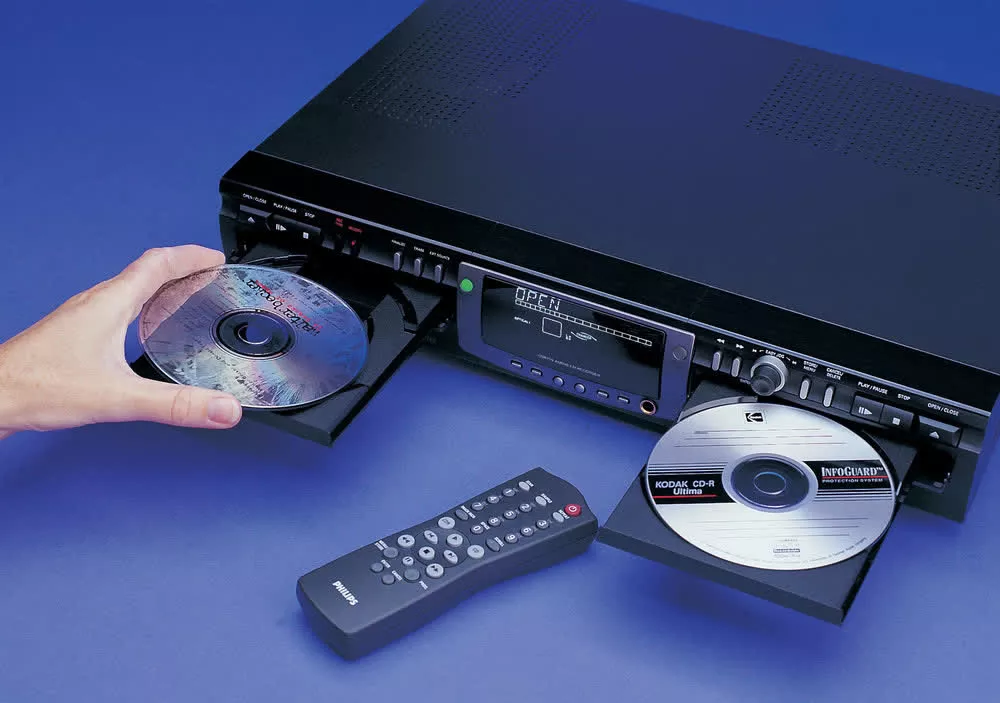
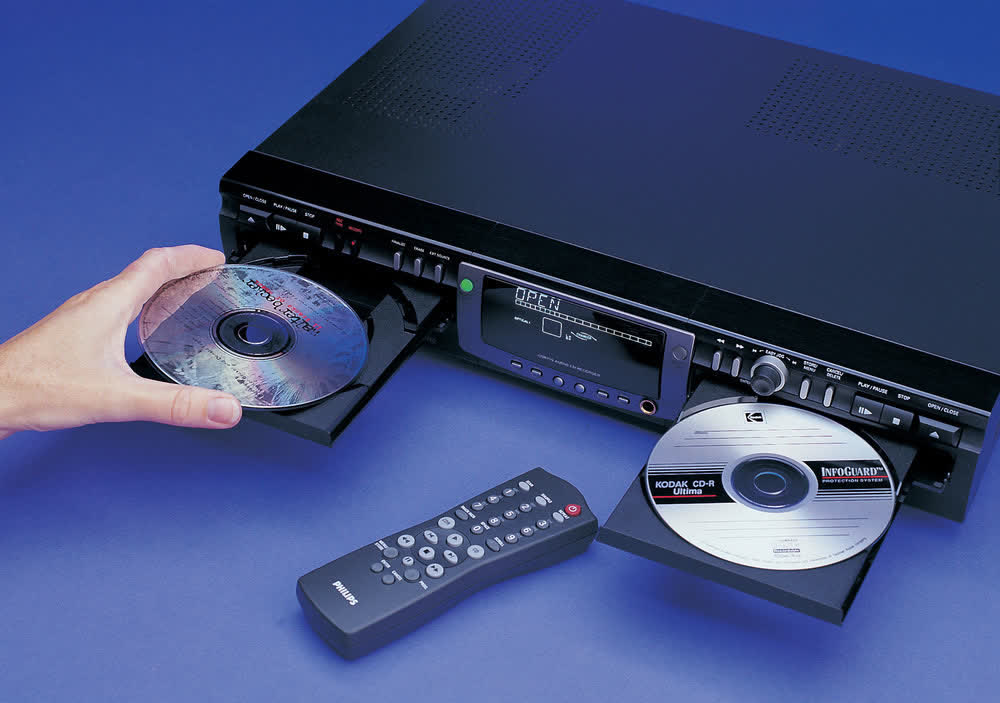
The first CD recorder was shockingly expensive – guess how much

Published

on

Before CDs went mainstream, recording one cost a small fortune. Made by Denon in 1991

Read Entire Article
Source link

Continue Reading

Tech

I Was Cooking Bacon Wrong for Decades, and You Probably Are Too

Published

on

Stop fighting a losing battle with a grease-spattered stovetop. If you’re buying high-end bacon, you want a perfect crunch without the 20-minute cleanup. The real problem with a frying pan isn’t the taste, though. It’s all that popping and the errant grease spots that mark your skin and kitchen walls. 

Home Tips

In an effort to find the best, cleanest way to make bacon for a Sunday brunch or BLT, I tried several methods, including the stovetop, oven and air fryer.

It turns out I’ve been doing it all wrong. 

Advertisement

A frying pan

  • Cooking time: 10 minutes
  • Hassle: 8/10
  • How much bacon: 7-8 strips
Strips of bacon cooking in a greasy black pan on the stove.

I grew up on pan-fried bacon but my test revealed there’s a better way. 

Mike Mackinven/Getty Images

This is the way I grew up cooking bacon and it’s perfectly fine. There isn’t much skill needed to fry bacon in a pan, although just about every batch I’ve ever made sends a healthy splatter over the stove. In more unfortunate instances, that infernal grease lands directly on my skin or clothes, presenting two distinct but equally aggravating problems.

Pan-fried bacon soaks up a ton of grease, which is why many turn to paper towels to drain it after cooking.  Pan-frying these strips of pork belly also tends to curl them into little bacon balls. While that has no impact on the taste, it can make for a suboptimal presentation.

Advertisement
bacon in a frying pan

I can feel the splatter bombs just looking at this photo.

David Watsky/CNET

Another drawback of cooking bacon in the frying pan is its limited capacity. A 10-inch frying pan can hold only about 7 average-sized strips of bacon at a time, although you can add more as they shrink during cooking. 

Then there’s the matter of cleaning said pan after use. It’s not recommended to put most cookware in the dishwasher, so you’ll have to manage that grease-soaked surface yourself.

The oven 

  • Cooking time: 18 minutes
  • Hassle: 6/10
  • How much bacon: 10-12 strips
9 strips of bacon on a cooking tray.

Oven bacon is best for cooking large batches. 

Advertisement

CNET

While it requires more prep, oven-cooked bacon has clear advantages over pan-frying. For one, there is little concern about capacity, as a standard cookie sheet or baking tray can hold nearly a full package of bacon, making the oven ideal for cooking large quantities.

Using a baking tray and rack allows grease to drip off. That makes for crispier, less greasy results, but it does present a headache when it’s time to clean. Cookie sheets and baking trays don’t fit well in the sink, and there’s typically enough grease that you don’t want to run them through your dishwasher.

You can line the baking tray with aluminum foil, but it takes a lot of foil, and most of the time, bacon grease finds its way under or through it anyway.

Oven-cooked bacon takes longer than bacon cooked in a frying pan — about 18 minutes — but if you’re planning to cook a whole package and don’t want to tend to the stove while it cooks, your oven is the best bet.

Advertisement

The air fryer

  • Cooking time: 7 minutes
  • Hassle: 4/10
  • How much bacon: 6-7 strips
bacon in an air fryer shot from above.

Thanks to its quick cooking time and hassle-free execution, the air fryer is my new go-to for making bacon.

David Watsky/CNET

There’s almost nothing I won’t try to make in the air fryer but, astoundingly, this is my first attempt at bacon. I anticipated a quick cook, because air fryers sizzle most food about 25% faster than a standard oven. 

The air fryer proved to be my favorite way to make bacon, with one big caveat (more on that later). My favorite glass-bowl air fryer cooked those strips in about 7 minutes at 375°F — faster than the oven and the frying pan. Because air fryers include a crisping rack, grease naturally drips into the vessel below, so there was no need to nestle it in a paper-towel lasagna. 

Advertisement
air fryer shot from the side with bacon on crisping tray

The crisping tray drained excess fat while the bacon cooked.

David Watsky/CNET

The bacon turned out perfectly crispy and kept its shape better than when fried in a pan. 

And the mess was minimal. Because the air fryer cooking chamber fits easily in my sink, I was able to wash it in seconds with a sponge and soapy water. My glass bowl air fryer chamber is also dishwasher-safe so another option would have been to wipe the grease and stick it all in the dishwasher.

Advertisement
air fryer bacon

Air fryer bacon is really crispy, y’all.

David Watsky/CNET

The big caveat: Capacity

I use a modest 4-quart air fryer so I can only fit about six strips in at a time. That’s plenty for my partner and me but if I were making bacon for a group, I would have had to cook in batches or invest in a larger model.

That said…

Not having to keep watch over a sizzling, splattering pan or negotiate a grease-filled baking tray pulled from the oven is worth running it back another time to feed a group. There’s also no preheating needed, unlike with an oven, and the sheer speed and cleanliness gave the air frier the edge over the other methods I’ve tried. 

Advertisement

Source link

Continue Reading

Tech

Sky Smart Home vs Ring: how much can you save with Sky’s new smart doorbell bundle?

Published

on

Sky has mastered all things TVs and broadband, and now it’s stepping into the world of smart home with its latest venture, Sky Smart Home — a service that could challenge rivals such as Ring and Blink.

The Smart Home Plan is Sky’s entry-level package, which unlocks advanced features including cloud storage for recordings, Smart Alerts, Activity Zones, and more. There’s also the new Smart Home Plan+ that allows you to add extra devices including the Indoor Camera, Leak Pack, or Motion Pack — taking your smart home ecosystem to the next level.

Source link

Advertisement
Continue Reading

Tech

We Love the Bose QuietComfort Ultra 2, Especially at $50 Off

Published

on

Bose’s QuietComfort Ultra 2 earbuds are the best noise-canceling earbuds you can buy. Right now, they’re $50 off, which matches the best price we tend to see outside of special events like Black Friday and Cyber Monday. If you want to wait until November, they might hit $200 again, but otherwise $250 is a very fair deal—especially since they pop back up to $300 regularly. The discounted price applies to all five color options, including Black, Deep Plum, Desert Gold, Midnight Violet, and White Smoke (another rarity, as usually only the vivid colors go on sale).

Bose

QuietComfort Ultra 2 Earbuds

Sometimes you just need to quiet the world. Whether it’s to play 10 hours of Coconut Mall on a loop to help you lock in and meet your Friday deadlines (thanks to my colleague Julia Forbes for that suggestion); muffle the crying babies, sniffling neighbors, and mysterious, potentially concerning clunking noises on an airplane; or to help you better appreciate the mix on Space Laces’ Vaultage 004 EP, active noise cancellation makes a huge difference to your listening experience.

Advertisement

The Bose QuietComfort Ultra 2 earbuds also have some of the best active noise cancellation you can find. They sound great out of the box, thanks to a custom sound profile based on the shape of your ears, but you can customize the EQ by using the app. The app also allows you to tweak touch controls and spatial audio.

The battery life lasts for about six hours, or 24 with the charging case. And while the noise cancellation can’t be beaten, these also have a pass-through feature called Aware mode, which filters in outside noise but smooths the loudest bits. That means you’ll be able to hear what’s going on, but you won’t be startled. True-crime podcast listeners, this one’s for you.

In fact, just about the only drawback we can find is that these might not be ideal for folks with super-small ears. Otherwise, they’re great all around, with solid call quality, excellent sound overall, and a sleek aesthetic. We think they offer good value at full price, so an extra $50 off is especially nice.

If you’re in the market for new headphones, but these don’t exactly fit what you’re looking for, we have plenty of other recommendations. Check out our guides to the Best Wireless Earbuds, Best Headphones for Working Out, Best Noise-Canceling Headphones, and Best Open Earbuds for additional hand-tested picks.

Advertisement

Source link

Continue Reading

Tech

Space-tech Mbryonics plans for new production facility in Shannon

Published

on

Mbryonics has been tapped for the final leg of an ESA space communication project.

Galway space-tech Mbryonics is building out a second manufacturing facility in Shannon to keep up with a growing demand for its services.

The new 40,000 sq ft manufacturing facility called Photon-2 will produce thousands of terminals by 2027, the company said.

Mbryonics specialises in tools for space-based communication, having risen to become one of Ireland’s most notable space-techs in the 12 years since its founding.

Advertisement

Last September, the company opened the Photon-1 production facility in Dangan, Galway, and announced 125 new jobs to be created by 2027.

The latest expansion comes as Mbryonics continues its work with the European Space Agency (ESA) on communication-related projects – the most recent being the ‘High-throughput Digital and Optical Network (Hydron)’, which is building an advanced laser-based satellite system to extend fibre-based internet into space.

The project is divided into parts – or ‘Elements’ – with the first establishing a constellation of satellites in low Earth orbit, the second extending this capability into higher orbits, and the third, which brings industry into the network to validate the technology.

After a successful contribution to the second part of this project, Mbyronics was tapped for the final leg, in collaboration with Kepler Communications.

Advertisement

Specifically, the company’s optical terminal and its ground station test bed have been selected to demonstrate full interoperability with other optical terminal providers during the in-orbit demonstrations and to also verify on-ground interoperability verification.

“Hydron will serve as the world’s first multi-orbital optical communications network with a terabit per second capacity, offering resilient and efficient data transfer to address the challenges of bringing connectivity to multiple users securely, quickly and reliably,” said Laurent Jaffart, the director of resilience, navigation and connectivity at ESA.

John Mackey, the CEO of Mbryonics, added: “The internet was built by making different networks talk to each other, and that’s exactly what we’re enabling in space.

“Just as we demonstrated in DARPA Space BACN, this ESA award allows us to showcase how our laser communication technologies enable satellites from different providers to communicate seamlessly in orbit.

Advertisement

“We are delighted to partner with Kepler, and other ecosystem providers, on this strategic engagement with the European Space Agency.”

Don’t miss out on the knowledge you need to succeed. Sign up for the Daily Brief, Silicon Republic’s digest of need-to-know sci-tech news.

Source link

Advertisement
Continue Reading

Tech

Blue Origin successfully re-uses a New Glenn rocket for the first time ever

Published

on

Blue Origin has successfully reused one of its New Glenn rockets for the first time ever, marking a major milestone for the heavy-launch system as Jeff Bezos’ space company looks to compete with Elon Musk’s SpaceX.

But the overall mission’s success may be in question. Roughly two hours after the launch, Blue Origin revealed that the communications satellite that New Glenn carried to space for AST SpaceMobile wound up in an “off-nominal orbit,” meaning something may have gone wrong with the rocket’s upper stage. In other words, it appears the company missed the mark.

“We have confirmed payload separation. AST SpaceMobile has confirmed the satellite has powered on,” the company wrote on X. “We are currently assessing and will update when we have more detailed information.”

AST later said Blue Origin’s rocket placed its satellite into an orbit that was “lower than planned,” so the satellite will have to be de-orbited.

Advertisement

According to a timeline provided by Blue Origin prior to the launch, the upper stage of New Glenn should have performed a second burn roughly one hour after the rocket lifted off from Cape Canaveral, Florida. It’s unclear if that second burn ever happened, or if there were other problems with it, before the AST satellite was deployed.

The company accomplished the re-use feat Sunday on just the third-ever launch of New Glenn, and a little more than one year after the first flight of the new rocket system, which has been in development for more than a decade.

Making New Glenn reusable is crucial to its economics. SpaceX’s ability to re-fly Falcon 9 rocket boosters is one of the main reasons why it has come to dominate the global orbital launch market.

Techcrunch event

Advertisement

San Francisco, CA
|
October 13-15, 2026

While Blue Origin has already sent a commercial payload to space with New Glenn — Sunday was the second-such mission — the company wants to use the rocket for NASA moon missions, and to help both it and Amazon build space-based satellite networks. Blue Origin is currently finishing getting its first robotic moon lander ready for an attempted launch later this year.

Advertisement

The booster that Blue Origin re-flew on Sunday was the same one the company used in the second New Glenn mission in November. During that mission, the New Glenn booster helped put two robotic NASA spacecraft into space for a mission to Mars, before returning to a drone ship in the ocean. On Sunday, Blue Origin recovered the rocket booster a second time on a drone ship roughly 10 minutes after takeoff.

Any trouble deploying AST’s satellite could present a risk to Blue Origin’s near-term plans for New Glenn. Blue Origin has a deal with the communications company to send multiple satellites to orbit over the next few years as it works to build out its own space-based cellular broadband network.

This story has been updated with new information from Blue Origin and AST SpaceMobile.

Source link

Advertisement
Continue Reading

Tech

Agentic Search Optimization reshapes brand visibility in AI search

Published

on

For the last 18 months, AI has fundamentally disrupted the way people search and find information.

The SEO industry’s response was disjointed, and—let’s be honest—entirely reactive.

Source link

Continue Reading

Tech

The Supreme Court will decide when the police can use your phone to track you, in Chatrie v. US

Published

on

Check your pocket. You’re probably carrying a tracking device that will allow the police — or even the Trump administration — to track every move that you make.

If you use a cellphone, you are unavoidably revealing your location all the time. Cellphones typically receive service by connecting to a nearby communications tower or other “cell site,” so your cellular provider (and, potentially, the police) can get a decent sense of where you are located by tracking which cell site your phone is currently connected with. Many smartphone users also use apps that rely on GPS to precisely determine their location. That’s why Uber knows where to pick you up when you summon a car.

Nearly a decade ago, in Carpenter v. United States (2018), the Supreme Court determined that law enforcement typically must secure a warrant before they can obtain data revealing where you’ve been from your cellular provider. On Monday, April 27, the Court will hear a follow-up case, known as Chatrie v. United States, which raises several questions that were not answered by Carpenter.

For starters, when police do obtain a warrant allowing them to use cellphone data, what should the warrant say — and just how much location information should the warrant permit the police to learn about how many people? When may the government obtain location data about innocent people who are not suspected of a crime? Does it matter if a cellphone user voluntarily opts into a service, such as the service Google uses to track their location when they ask for directions on Google Maps, that can reveal an extraordinary amount of information about where they’ve been? Should internet-based companies turn over only anonymized data, and when should the identity of a particular cellphone user be revealed?

Advertisement

More broadly, modern technology enables the government to invade everyone’s privacy in ways that would have been unimaginable when the Constitution was framed. The Supreme Court is well aware of this problem, and it has spent the past several decades trying to make sure that its interpretation of the Fourth Amendment, which constrains when the government may search our “persons, houses, papers, and effects” for evidence of a crime, keeps up with technological progress.

As the Court indicated in Kyllo v. United States (2001), the goal is to ensure the “preservation of that degree of privacy against government that existed when the Fourth Amendment was adopted.” More advanced surveillance technology demands more robust constitutional safeguards.

But the Court’s commitment to this civil libertarian project is also precarious. Carpenter, the case that initially established that police must obtain a warrant before using your cell phone data to figure out where you’ve been, was a 5-4 decision. And two members of the majority in Carpenter, Justices Ruth Bader Ginsburg and Stephen Breyer, are no longer on the Court (although Breyer was replaced by Justice Ketanji Brown Jackson, who generally shares his approach to constitutional privacy cases). Justice Neil Gorsuch also wrote a chaotic dissent in Carpenter, suggesting that most of the past six decades’ worth of Supreme Court cases interpreting the Fourth Amendment are wrong. So it’s fair to say that Gorsuch is a wild card whose vote in Chatrie is difficult to predict.

It remains to be seen, in other words, whether the Supreme Court is still committed to preserving Americans’ privacy even as technology advances — and whether there are still five votes for the civil libertarian approach taken in Carpenter.

Advertisement

Geofence warrants, explained

Chatrie concerns “geofence” warrants, court orders that permit police to obtain locational data from many people who were in a certain area at a certain time.

During their investigation of a bank robbery in Midlothian, Virginia, police obtained a warrant calling for Google to turn over location data on anyone who was present near the bank within an hour of the robbery. The warrant drew a circle with a 150-meter radius that included both the bank and a nearby church.

Google had this information because of an optional feature called “Location History,” which tracks and stores where many cellphones are located. This data can then be used to pinpoint users who use apps like Google Maps to help them navigate, and also to collect data that Google can use to determine which ads are shown to which customers.

Advertisement

The government emphasizes in its brief that “only about one-third of active Google account holders actually opted into the Location History service,” while lawyers for the defendant, Okello Chatrie, point out that “over 500 million Google users have Location History enabled.”

The warrant also laid out a three-step process imposing some limits on the government’s ability to use the location information it obtained. At the first stage, Google provided anonymized information on 19 individuals who were present within the circle during the relevant period. Police then requested and received more location data on nine of these individuals, essentially showing law enforcement where these nine people were shortly before and shortly after the original one-hour period. Police then sought and received the identity of three of these individuals, including Chatrie, who was eventually convicted of the robbery.

Chatrie, in other words, is not a case where police simply ignored the Constitution, or where they were given free rein to conduct whatever investigation they wanted. Law enforcement did, in fact, obtain a warrant before it used geolocation data to track down Chatrie. And that warrant did, in fact, lay out a process that limited law enforcement’s ability to track too many people or to learn the identities of the people who were tracked.

The question is whether this particular warrant and this particular process were good enough, or whether the Constitution requires more (or, for that matter, less). And, as it turns out, the Supreme Court’s previous case law is not very helpful if you want to predict how the Court will resolve Fourth Amendment cases concerning new technologies.

Advertisement

The Court’s 21st-century cases expanded the Fourth Amendment to keep up with new surveillance technologies

The Court’s modern understanding of the Fourth Amendment, which protects against “unreasonable searches and seizures,” begins with Katz v. United States (1967), which held that police must obtain a warrant before they can listen to someone’s phone conversations. The broader rule that emerged from Katz, however, is quite vague. As Justice John Marshall Harlan summarized it in a concurring opinion, Fourth Amendment cases often turn on whether a person searched by police had a “reasonable expectation of privacy.”

The Court fleshed out what this phrase means in later cases. Though Katz held that the actual contents of a phone conversation are protected by the Fourth Amendment, for example, the Court held in Smith v. Maryland (1979) that police may learn which numbers a phone user dialed without obtaining a warrant. The Court reasoned that, while people reasonably expect that no one will listen in on their phone conversations, no one can reasonably think that the numbers they dial are private because these numbers must be conveyed to a third party — the phone company — before that company can connect their call.

Similarly, while the Fourth Amendment typically requires police to obtain a warrant before searching someone’s home without their consent, if a police officer witnesses someone committing a crime through the window of their home while the officer is standing on a public street, the officer has not violated the Fourth Amendment. As the Court put it in California v. Ciraolo (1986), “the Fourth Amendment protection of the home has never been extended to require law enforcement officers to shield their eyes when passing by a home on public thoroughfares.”

Advertisement

As the sun rose on the 21st century, however, the Court began to worry that the fine distinctions it drew in its 20th-century cases no longer gave adequate protection against overzealous police.

In Kyllo, for example, a federal agent used a thermal-imaging device on a criminal suspect’s home, which allowed the agent to detect if parts of the home were unusually hot. After discovering that parts of the home were, in fact, “substantially warmer than neighboring homes,” the agent used that evidence to obtain a warrant to search the home for marijuana — the heat came from high-powered lights used to grow cannabis.

Under cases like Ciraolo, this agent had a strong argument that he could use this device without first obtaining a warrant. If law enforcement officers may gather evidence of a crime by peering into someone’s windows from a nearby street, why couldn’t they also measure the temperature of a house from that same street? But a majority of the justices worried in Kyllo that, if they do not update their understanding of the Fourth Amendment to account for new inventions, they will “permit police technology to erode the privacy guaranteed by the Fourth Amendment.”

Devices existed in 2001, when Kyllo was decided, that would allow police to invade people’s privacy in ways that were unimaginable when the Fourth Amendment was ratified. So, unless the Court was willing to see that amendment eroded into nothingness, they needed to read it more expansively. And so the Court concluded that, when police use technology that is “not in general public use” to investigate someone’s home, they need to obtain a warrant first.

Advertisement

Similarly, in Carpenter, five justices concluded that law enforcement typically must obtain a warrant before they can use certain cellphone location data to track potential suspects.

Under Smith, the government had a strong argument that this data is not protected by the Fourth Amendment. Much like the numbers that we dial on our phones, cellphone users voluntarily share their location data with the cellphone company. And so Smith indicates that cellphone users do not have a reasonable expectation of privacy regarding that data.

But a majority of the Court rejected this argument, because they were concerned that giving police unfettered access to our location data would give the government an intolerable window into our most private lives. Location data, Carpenter explained, reveals not only an individual’s “particular movements, but through them his ‘familial, political, professional, religious, and sexual associations.’” Before the government can track whether someone has attended a union meeting, interviewed for a new job, or had sex with someone their family or boss may disapprove of, it should obtain a warrant.

Why a cloud of uncertainty hangs over every Fourth Amendment case involving new technology

Advertisement

One of the most uncertain questions in Chatrie is whether the Kyllo and Carpenter Court’s concern that advancing technology can swallow the Fourth Amendment is still shared by a majority of the Court. Again, Carpenter was a 5-4 decision, and two members of the majority have since left the Court. One of those justices, Ginsburg, was replaced by the much more conservative Justice Amy Coney Barrett.

Justice Anthony Kennedy, who dissented in Carpenter, was also replaced by Justice Brett Kavanaugh. Chatrie is Kavanaugh’s first opportunity, since he joined the Court in 2018, to weigh in on whether he believes that advancing technology demands a more expansive Fourth Amendment.

And then there’s Gorsuch, who wrote a dissent in Carpenter arguing that Katz’s “reasonable expectation of privacy” framework should be abandoned, and that the right question to ask in a case about cellphone data is whether the phone user owns that data. After a long windup about Fourth Amendment theory, Gorsuch’s dissent concludes with an unsatisfying four paragraphs saying that he can’t decide who owned the cellphone data at issue in Carpenter because the defendant’s lawyers “did not invoke the law of property or any analogies to the common law.”

Because Gorsuch’s opinion focuses so heavily on high-level theory and so little on how that theory should be applied to an actual case, it’s hard to predict where he will land in Chatrie. (Though it’s worth noting that Chatrie’s lawyers do spend a good deal of time discussing property law in their brief.)

Advertisement

All of which is a long way of saying that the outcome in Chatrie is uncertain. We don’t know very much about how several key justices approach the Fourth Amendment. And the Court’s most recent Fourth Amendment cases suggest that lawyers can no longer rely on precedent to predict how the amendment applies to new technology.

But the stakes in this case are extraordinarily high. If the Court gives the government too much access to this information, the Trump administration could potentially gain access to years’ worth of location data on anyone who has ever attended a political protest. As the Court said in Carpenter, the government can use your cellphone to track all of your political, business, religious, and sexual relations.

At the same time, the police should be able to track down and arrest bank robbers. So, if there is a way to use cellphone data to assist law enforcement without intruding upon the rights of innocents, then the courts should allow it. The Fourth Amendment does not imagine a world without police investigations. It calls for police to obtain a warrant, while also placing limits on what that warrant can authorize, before they commit certain breaches of individual privacy.

The question is whether this Court, with its shifting membership and uncertain commitment to keeping up with new surveillance technology, can strike the appropriate balance.

Advertisement

Source link

Continue Reading

Trending

Copyright © 2025