
Crypto World
BeInCrypto Expands Content Experience with New Homepage and Article Features

Crypto audiences don’t read the way they used to. They scan, they watch, and they move fast. Our latest updates to the homepage and article pages are a direct response to that reality; introducing a dedicated video block, new social media CTAs, and UI improvements across both surfaces. This builds on last year’s full site redesign across all 26 global domains, and takes it further.
What’s new at a glance
- Video block: A dedicated section for video content, now placed prominently on article pages
- Social media CTAs: New call-to-action elements connecting editorial content to BeInCrypto’s social channels
- UI improvements: Visual hierarchy and layout updates across both the homepage and article pages, reinforcing the mobile-first approach from the September redesign
Built For How People Read Today
According to Vlada Morhunova, Product Manager at BeInCrypto, internal analytics revealed a clear split between how desktop and mobile users navigate the site.
“Desktop users tend to navigate more deliberately. They browse categories, use search, and explore related content. Mobile users behave more like scanners, relying heavily on what’s immediately visible on the page. With mobile accounting for the majority of our global traffic, we needed the homepage and article page layouts to serve that scanning behavior more effectively.”
The homepage and article pages were the clear priority. They are the two highest-traffic touchpoints across the entire product, where returning readers land and where most new visitors arrive from search and social. “If we improve the experience here,” Morhunova notes, “it lifts virtually every engagement metric across the board.”
Video is Now a First-class Format
The most visible change is the dedicated video block on article pages. It responds to a well-documented shift in how audiences consume information online.
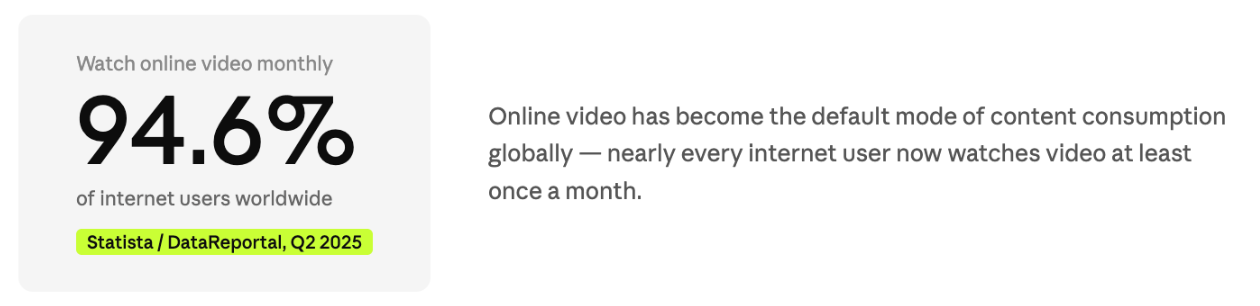
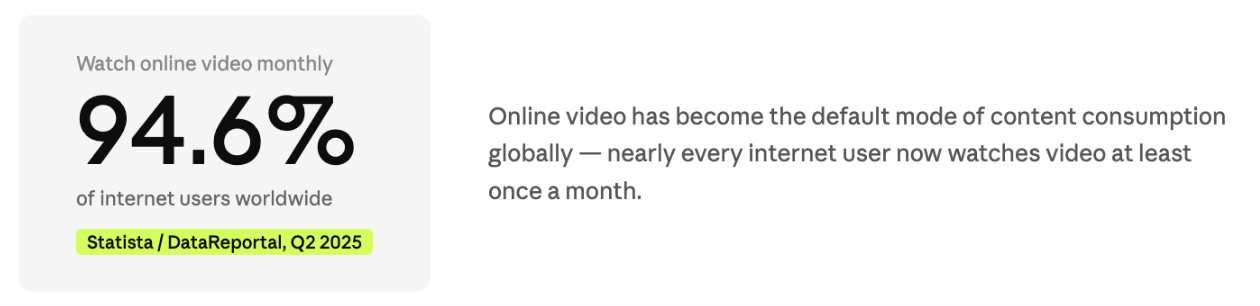
According to Statista and DataReportal data from Q2 2025, 94.6% of internet users worldwide now watch online videos on a monthly basis.
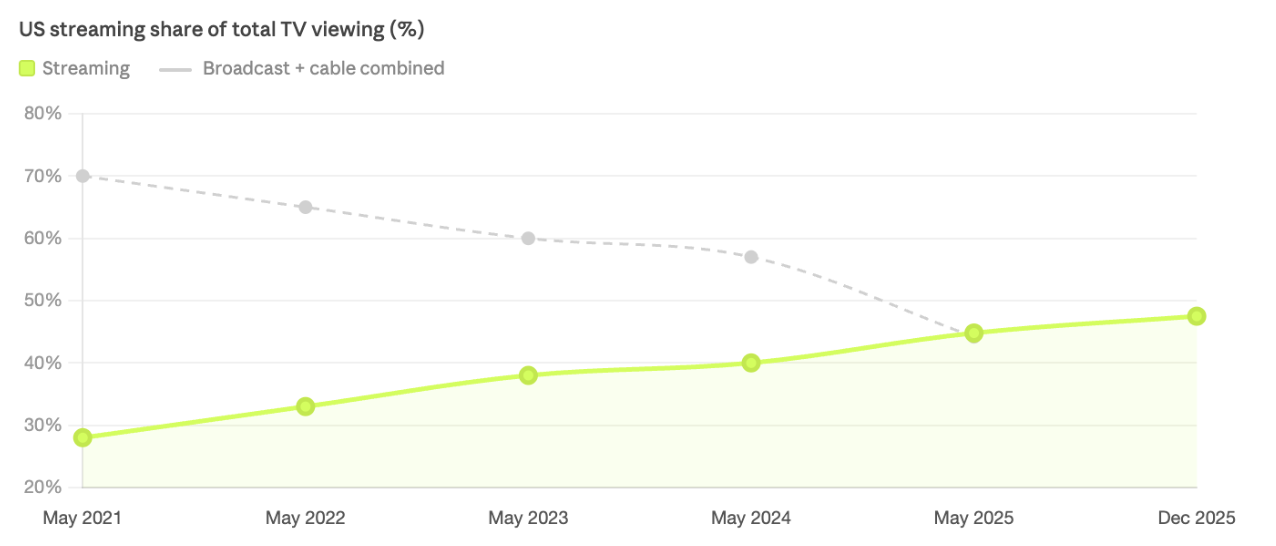
The shift from traditional to digital viewing has reached a milestone: in May 2025, streaming overtook the combined share of broadcast and cable television for the first time ever in the US, accounting for 44.8% of total TV viewing. By December 2025 that share had climbed to a record 47.5% (Nielsen The Gauge, January 2026).
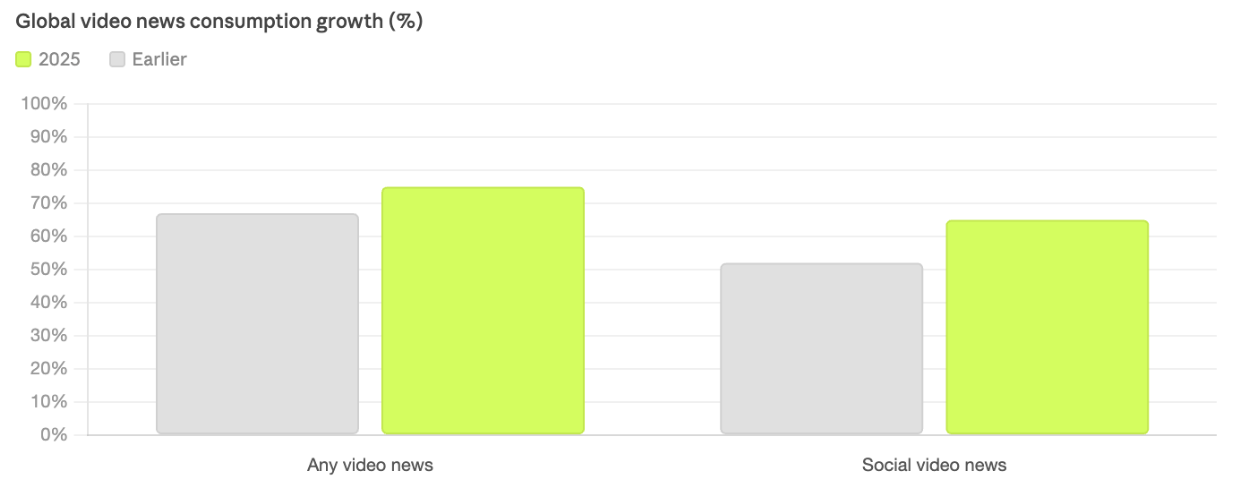
The shift is just as visible in the news sector. According to the Reuters Institute Digital News Report 2025 the proportion of people consuming video news globally jumped from 67% to 75% in just two years, with social video rising from 52% in 2020 to 65% in 2025.
At BeInCrypto’s Executive Council earlier this year, senior leaders from Bitpanda, Dune, and Libertex worked through the same signals: SimilarWeb data presented at the session showed that average monthly web traffic to the top 1,000 sites has declined more than 11% over five years. These homepage and article page updates are a product of that direction, not a reaction to it.
“Video is no longer a secondary format for us,” says Morhunova. “We’re investing significantly in video production, and the new designs reflect that by surfacing video content much earlier in the user journey. The goal is for video to be a natural part of how users consume crypto news on BeInCrypto.”
Social CTAs: Extending the Reader’s Journey
New call-to-action blocks across article pages connect editorial content to BeInCrypto’s social channels, creating more touchpoints beyond the article itself.
According to the Reuters Institute Digital News Report 2025, social media and video have now displaced television as the primary news source in the US for the first time. Pew Research Center data from September 2025 adds further detail: one in five US adults now regularly get news on TikTok, up from just 3% in 2020; the fastest growth of any platform Pew has studied for news consumption.
- YouTube and Facebook are the top two platforms for news overall, with 35% and 38% of US adults getting news there regularly (Pew Research Center, August 2025).
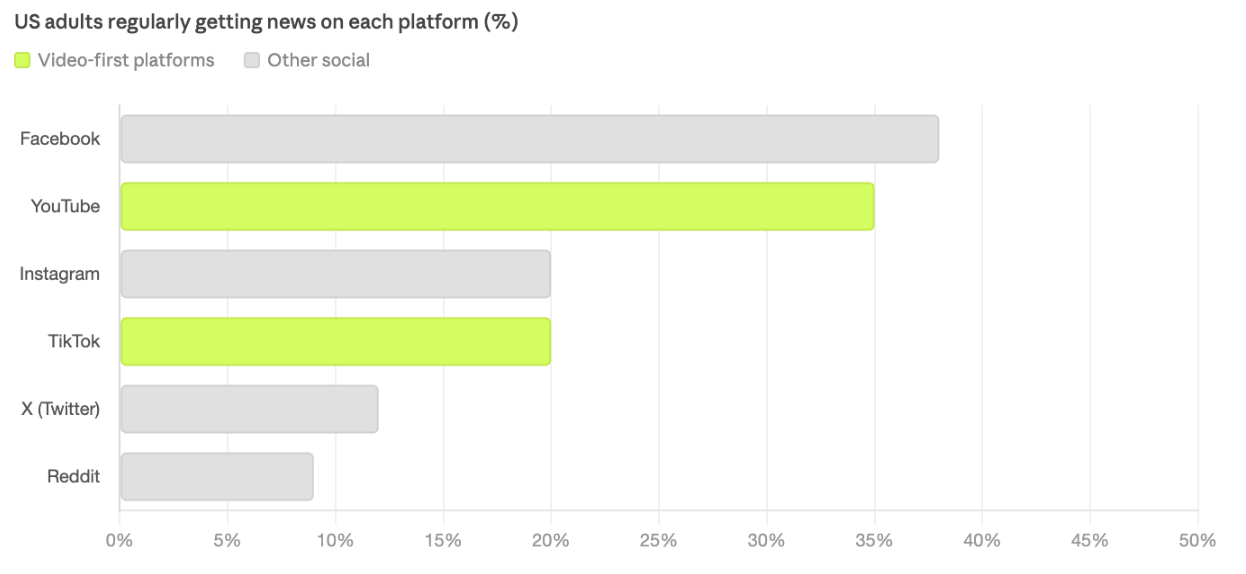
This is not a trend unique to BeInCrypto. According to Meltwater and We Are Social’s Digital 2026 report (October 2025), social media ads are now the top driver of brand awareness for internet users aged 16 to 34, ahead of both search engines and TV advertising. The platforms where people discover content are the same platforms where they discover brands. Building stronger connections between editorial and social is how media outlets stay relevant in that environment.
Part of a Broader Roadmap
The September 2025 redesign established the platform architecture. This update addresses the content surfaces that matter most. What comes next goes further: expanded markets and TradFi data widgets, the next phase of the Experts Network pages, and continued improvements across all 26 language editions.
“We’re systematically modernizing BeInCrypto’s frontend architecture to be faster, more modular, and better suited to the diverse global audience we serve,” says Morhunova.
BeInCrypto reaches millions of monthly readers across 26 languages. These updates are part of a continuous investment in the product experience that underpins that reach, and a signal to partners that the platform is evolving to match where audiences are going.
The post BeInCrypto Expands Content Experience with New Homepage and Article Features appeared first on BeInCrypto.


Key Highlights
- Ripple establishes 2028 deadline for complete XRPL quantum-resistant transition
- Four-phase strategic plan addresses evolving quantum computing challenges
- XRPL’s native architecture provides unique advantages for cryptographic migration
- Initiative responds to Google Quantum AI research on blockchain vulnerabilities
- Structured upgrade approach balances security enhancement with network efficiency
Ripple has unveiled a comprehensive strategy to protect the XRP Ledger from quantum computing threats through a phased implementation plan. The initiative aims to achieve complete post-quantum security by 2028 without compromising transaction speed or network efficiency. This strategic response comes amid growing concerns about quantum technology’s potential impact on blockchain cryptography.
Google Research Accelerates Security Timeline
New studies from quantum computing experts reveal significant vulnerabilities in current cryptographic frameworks used throughout the blockchain industry. Ripple has responded by fast-tracking its quantum defense preparations for XRPL. The research underscores particular risks to digital signatures, transaction integrity, and long-term asset security.
Experts have identified a critical “harvest now, decrypt later” vulnerability affecting publicly accessible blockchain information. Malicious actors can capture encrypted data in the present and wait for quantum technology advancement to break encryption. Consequently, Ripple emphasizes proactive measures to protect both current and future ledger operations.
While existing security protocols remain effective against today’s threats, Ripple acknowledges the necessity of forward-looking defense strategies. The company stresses that timely preparation and systematic implementation will keep XRPL secure as quantum technology matures.
Built-In Features Enable Seamless Upgrade
The XRPL platform possesses inherent capabilities that facilitate cryptographic transitions more efficiently than competing blockchain systems. Notably, integrated key rotation functionality enables users to refresh security credentials without transferring assets. Consequently, Ripple can orchestrate smooth migrations while preserving existing account infrastructure.
XRPL’s seed-based key generation system supports deterministic cryptographic management throughout transition periods. This mechanism ensures secure credential creation during security upgrades. Ripple can deploy enhancements while preserving user autonomy and operational stability.
Competing platforms often lack integrated migration capabilities and necessitate complicated asset relocation processes. Ripple’s architectural design provides distinct advantages when implementing post-quantum security measures. These foundational elements create an optimal framework for advanced security deployments.
Staged Implementation Ensures Smooth Transition
Ripple has developed a comprehensive four-stage implementation framework to shepherd XRPL toward quantum resistance. The initial stage prioritizes contingency protocols for addressing potential cryptographic vulnerabilities. This foundation enables secure fund migration during unforeseen security challenges.
Ripple plans extensive testing of quantum-resistant cryptographic methods and performance impact analysis. Increased signature sizes and computational requirements demand thorough evaluation. Therefore, Ripple maintains ongoing experimentation to optimize the security-performance balance.
Subsequent implementation stages will introduce quantum-resistant signatures parallel to existing systems on development networks. This methodology allows thorough performance assessment without risking production environment stability. Ripple targets seamless full deployment by 2028 with minimal operational impact.
Ripple further emphasizes cryptographic flexibility through support for multiple internationally recognized algorithms. This adaptability ensures XRPL can evolve alongside emerging global cryptographic standards. Ripple strategically positions the network for sustained security amid shifting technological landscapes.
Ripple coordinates its strategic vision with worldwide progress in quantum computing and cryptographic science. The implementation roadmap demonstrates both technical readiness and collaborative ecosystem planning. This methodical strategy seeks to fortify XRPL while maintaining transaction velocity and system dependability.

Key Highlights
- Anchorage Digital Bank named as new custodian for Grayscale HYPE ETF
- Coinbase removed from custody role in amended filing
- Strategic custody diversification by Grayscale for HYPE ETF product
- Anchorage selection reinforces institutional-grade infrastructure
- Custody transition reflects evolving crypto ETF market dynamics
Grayscale Investments has updated its HYPE ETF application, transferring custodial responsibilities to a different service provider. The amended documentation names Anchorage Digital Bank as the new custodian, replacing Coinbase in this critical operational role. This modification represents a tactical repositioning as Grayscale continues developing its HYPE ETF product amid shifting regulatory frameworks.
Anchorage Digital Bank Assumes Custodial Responsibilities
The latest amendment to Grayscale’s HYPE ETF filing establishes Anchorage Digital Bank as the designated custodian. In the original submission, Coinbase performed both prime brokerage and custodial duties for the proposed fund. The revised documentation eliminates Coinbase from these combined functions.
Anchorage holds the distinction of being America’s first federally chartered digital asset bank. Consequently, appointing Anchorage enhances the institutional credibility underlying the HYPE ETF custody arrangement. The financial institution has broadened its offerings to encompass stablecoins, wealth advisory services, and comprehensive token management.
Grayscale previously engaged Anchorage as a backup custodian for its Bitcoin and Ethereum investment vehicles. Conversely, Coinbase continues serving as the main custodian for those established products. This custody transition underscores a wider diversification approach connected to the HYPE ETF launch.
Competitive Landscape and Infrastructure Considerations
Coinbase Custody Trust Company presently safeguards the majority of American spot bitcoin exchange-traded products. In contrast, Fidelity Digital Assets provides custody exclusively for its proprietary bitcoin offering. The HYPE ETF custody modification by Grayscale represents an uncommon shift in this established ecosystem.
The revised submission continues listing The Bank of New York Mellon in its transfer agent capacity. Thus, the foundational operations of the HYPE ETF stay unchanged notwithstanding the custody transition. The product also retains its dependence on CoinDesk benchmark pricing information.
Grayscale submitted its original HYPE ETF application in March alongside comparable submissions from industry competitors. Organizations including 21Shares and Bitwise had earlier pursued similar investment vehicles. As a result, competitive pressures continue influencing the HYPE ETF regulatory approval process.
Hyperliquid Platform Expansion Fuels HYPE ETF Demand
Hyperliquid currently ranks as the dominant onchain perpetual futures decentralized trading platform according to current market metrics. Nevertheless, regulatory barriers continue preventing direct platform participation for American traders. Notwithstanding these constraints, the HYPE ETF seeks to deliver indirect investment exposure to the underlying protocol.
Hyperliquid witnessed substantial expansion throughout 2025, amplifying interest in associated financial instruments. The HYPE ETF exemplifies growing institutional appetite for derivatives-oriented blockchain ecosystems. The fund architecture incorporates optional staking features, subject to regulatory authorization.
Grayscale maintains momentum in expanding its investment product portfolio under enhanced regulatory transparency. The asset manager has introduced additional fund proposals tied to cryptocurrencies including BNB and Zcash. The HYPE ETF constitutes one component of an extensive initiative to broaden digital asset investment options.
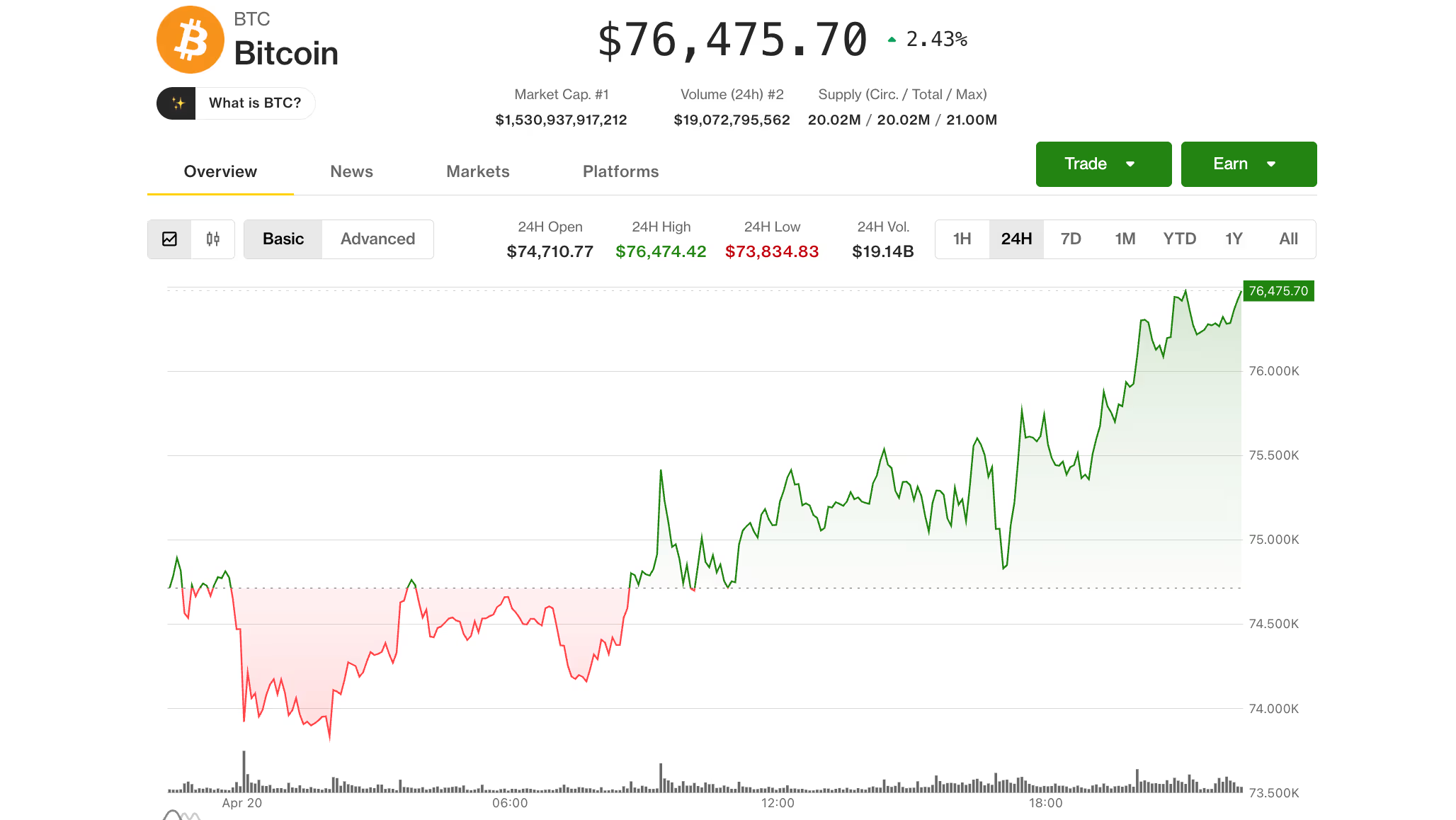
Bitcoin held above $76,000 on Monday, rebounding from overnight lows as the broader crypto market remained steady despite Iran war risks.
The largest cryptocurrency climbed about 2.4% over the past 24 hours, recovering from a dip below $74,000 earlier in the session. Ether (ETH), XRP, Solana (SOL) and other major altcoins also mirrored bitcoin’s move, as the broad-market CoinDesk 20 rose 1.7%.

That resilience comes against a shaky macro backdrop. U.S. President Donald Trump said Sunday that American forces had fired on and seized an Iranian-flagged cargo ship, warning of further escalation while Tehran refuses to strike a deal. A fragile ceasefire is set to expire later this week.
Oil prices jumped 6% to near $90, while the S&P 500 and Nasdaq slipped modestly, down around 0.3%-0.4%.
Crypto equities were mixed. Coinbase (COIN) and bitcoin treasury firm Strategy (MSTR) gained roughly 2%, while Circle (CRCL) and ether treasury Bitmine (BMNR) edged lower by 1%-2%.
“The fact that prices have not fully retraced despite new tensions suggests some genuine demand,” said Jasper De Maere, trader at Wintermute, pointing to recent spot ETF inflows as a supporting factor. Unlike earlier rallies this year, he said, the current move appears less driven by leverage.
That said, the path forward remains tied to geopolitics. A renewed ceasefire could push bitcoin back toward $80,000, while further escalation may keep markets under pressure.
For now, capital continues to concentrate in large-cap assets like bitcoin, De Maere noted, with riskier altcoins lagging, a pattern typical of market environments driven by macro headlines.
DeFi reels from $292 million KelpDAO hack
Elsewhere from the current price action, tensions are still high in the DeFi sector following the biggest crypto exploit of the year.
The $292 million KelpDAO hack cascaded across the market, as a vulnerability allowed the attacker to drain funds that were then used as collateral across lending protocols.
Because those assets were widely integrated into DeFi, the impact quickly spread, with users rushing to withdraw funds amid fears of bad debt and contagion.
Total value locked (TVL) across DeFi protocols fell by $14 billion over the past two days, according to DefiLlama data, even as asset prices remained steady.

DeFi TVL dropped to about $85 billion, its lowest level in a year and roughly 50% below October peaks. Aave, the largest lending protocol that was central in the exploit, saw around $10 billion in deposits withdrawn.
“There’s a tremendous risk-reward imbalance in DeFi,” David Shuttleworth from Anchorage Digital’s protocol team said. “Users will no longer accept the slightly higher (and sometimes lower) than risk-free rate they get by depositing in lending pools,” especially given the latest wave of exploits across protocols.
Read more: ‘DeFi is dead’: crypto community scrambles after this year’s biggest hack exposes contagion risk
Crypto World
Tokenised Gold on Bitget Reacted to Geo-political Events before Global Markets Opened Highlights Block Scholes Report


Bitget, the world’s largest Universal Exchange (UEX), in collaboration with Block Scholes, has released a new report highlighting the growing convergence between crypto and traditional financial markets, as traders increasingly move across asset classes in response to global macro events.
The report “Tokenised Markets on Bitget UEX: How Traders Are Utilising 24/7 Real-World Assets For Real-Time Macro Hedging,” examines trading behavior during the volatile first quarter of 2026. It finds that as macro events increasingly impact multiple asset classes simultaneously, traders are shifting away from fragmented systems toward environments that allow them to move across markets in real time.
This shift is reflected in activity on Bitget. The platform’s TradFi offering reached $2 billion in daily trading volume within days of launch, doubling to $4 billion shortly after and surpassing $6 billion during periods of heightened volatility. Rather than treating crypto, equities, and commodities as separate strategies, users are increasingly managing them as part of a single, continuous trading approach.
The report highlights that Bitcoin’s correlation with major equity indices has reached its highest level since late 2025, aligning with the belief that emerging markets are responding to shared macro drivers. In this environment, the ability to adjust exposure across asset classes without delay is becoming a core requirement rather than a niche advantage.
“Modern traders don’t wait for markets to open anymore, they know it never closes. There weren’t many avenues to explore this earlier but with tokenization stocks, gold, silver, commodities and any traditional financial asset can now be traded 24/7. Our platform is a proof of how this is happening in real time. ” said Gracy Chen, CEO of Bitget.
One of the clearest examples of this behavior emerged during recent geopolitical events that unfolded outside traditional market hours. Tokenized assets on Bitget enabled traders to hedge positions and participate in price discovery in real time, with trading volumes in gold-linked contracts increasing sharply as users reacted to unfolding developments.
The report also points to the importance of continuous liquidity and globally distributed participation. With trading activity spanning regions and time zones, price discovery is no longer confined to specific market sessions. This has increased the value of platforms that operate without interruption, particularly during periods of heightened volatility.
As correlations between asset classes continue to strengthen and macro-driven trading becomes more prominent, the report concludes that unified trading environments are gaining traction. Platforms that integrate crypto, tokenized real-world assets, and traditional market instruments into a single system are increasingly becoming the default choice for active traders.
Within Bitget’s Universal Exchange model, where multiple asset classes operate under one account structure, this trend reflects a broader shift in user behavior. As markets converge, traders are directing attention to platforms that allow them to manage risk, allocate capital and respond to global events without friction.
To read the full report, visit here.
About Bitget
Bitget is the world’s largest Universal Exchange (UEX), serving over 125 million users and offering access to over 2M crypto tokens, 100+ tokenized stocks, ETFs, commodities, FX, and precious metals such as gold. The ecosystem is committed to helping users trade smarter with its AI agent, which co-pilots trade execution. Bitget is driving crypto adoption through strategic partnerships with LALIGA and MotoGP™. Aligned with its global impact strategy, Bitget has joined hands with UNICEF to support blockchain education for 1.1 million people by 2027. Bitget currently leads in the tokenized TradFi market, providing the industry’s lowest fees and highest liquidity across 150 regions worldwide.
The post Tokenised Gold on Bitget Reacted to Geo-political Events before Global Markets Opened Highlights Block Scholes Report appeared first on BeInCrypto.

Apple will appoint John Ternus as its next chief executive officer on September 1, marking the end of Tim Cook’s tenure after more than a decade.
Cook will move into the role of executive chairman, maintaining strategic oversight while handing day-to-day leadership to Ternus.
The announcement triggered a modest reaction in markets. Apple shares dipped slightly in after-hours trading following the news, after closing at $273.05.
The move reflects short-term uncertainty that typically follows leadership transitions, rather than a clear negative view on Ternus.

Everything to Know About Apple’s New CEO
Ternus brings a very different profile to the role. He is a mechanical engineer by training and has spent more than 20 years inside Apple. He joined the company in 2001 and rose through the hardware division to become Senior Vice President of Hardware Engineering in 2021.
In that role, he oversaw engineering across Apple’s core products, including iPhone, Mac, and iPad. His work focused on product durability, materials, and manufacturing improvements.
He also played a role in advancing Apple’s environmental targets through hardware design.
This background signals continuity but also a subtle shift in priorities. Under Cook, Apple expanded its services business and built a dominant global supply chain.
How Will Apple and iPhone Change Under John Ternus?
Ternus is expected to focus more directly on product development and hardware innovation.
However, there is no indication of a sharp strategic pivot. Ternus has operated within Apple’s existing structure for decades. His appointment suggests the company is prioritizing stability and execution over disruption.
At the same time, his engineering focus may influence how Apple approaches upcoming product cycles. Areas such as device design, materials, and performance could take on greater importance.
This could shape future iterations of flagship products rather than introduce entirely new categories.
Will Apple Shares Suffer Temporarily?
The initial stock dip also reflects the broader context. Markets showed signs of volatility on the day of the announcement, with macro factors weighing on equities. This makes it difficult to isolate the impact of the leadership change alone.
Overall, the transition appears controlled and planned. Apple is moving from one internal leader to another with deep institutional knowledge. The market response suggests investors are cautious in the short term but not alarmed by the shift.
The post Apple’s New CEO John Ternus Spent 20 Years Behind the Scenes appeared first on BeInCrypto.

pin up uz online kazino o‘yinchilar uchun eng qulay mobil versiyani taqdim etadi, bu pin up uz saytida o‘ynashni hamma joyda va hamma vaqtda imkonini beradi. Pin up casino mobil ilovasi yuklab olish orqali, siz o‘z sevimli o‘yinlaringizni telefonizda o‘ynash imkoniga ega bo‘lasiz.
Pin up скачать mobil ilovasini yuklab olish juda oson, chunki u pin up saytida bepul taqdim etiladi. Shu bilan birga, siz o‘z akkountingizni yaratib, pin up uz saytida o‘ynashni boshlashingiz mumkin. Mobil versiya sizga o‘yinlarning keng tanlovini, shu jumladan slot mashinalar, kartalar va boshqa o‘yinlarni taqdim etadi.
Siz pin up casino mobil ilovasini yuklab olganingizdan so‘ng, o‘z sevimli o‘yinlaringizni telefonizda o‘ynashni boshlashingiz mumkin. Pin up sayti sizga o‘yinlarning sifatli grafikasi, o‘yin jarayonining tezkorligi va qulay foydalanish imkonini beradi. Shu bilan birga, siz o‘z akkountingizni boshqarish, pul mablag‘laringizni kiritish va chiqarish imkoniga ega bo‘lasiz.
Mobil ilovalar orqali o’yinlar
Pin Up Uz online kazino mobil ilovasini telefoniga yuklab olish orqali, siz o’z sevimli o’yinlaringizni istalgan vaqtda va istalgan joyda o’ynashingiz mumkin. Pin Up Casino mobil ilovasi pin up uz sayti bilan bir xil xususiyatlarga ega, shu jumladan, keng tanlovli slot mashinalari, stol o’yinlari va jonli dealer o’yinlari. Ilovani yuklab olish uchun, siz pin up uz saytiga borishingiz va “Yuklab olish” tugmasini bosing, so’ngra pin up скачать ilovasini telefoniga o’rnatishingiz kerak.
Mobil ilova xususiyatlari
Pin Up Uz mobil ilovasi quyidagi xususiyatlarga ega:
| Keng tanlovli o’yinlar | 1000 dan ortiq slot mashinalari, stol o’yinlari va jonli dealer o’yinlari | Tez pul o’tkazmalari | Tez va xavfsiz pul o’tkazmalari | Foydali interfeys | Oson va foydali interfeys |
Pin Up Uz mobil ilovasi pin up uzbekistan fuqarolariga xizmat ko’rsatish uchun maxsus ishlab chiqilgan, shuning uchun siz o’z tili va valyutangizda o’ynashingiz mumkin. Ilova pin up casino o’yinlari bilan bir qatorda, jonli sport va e-sport bo’yicha bahslar qilish imkoniyatini ham taklif etadi. Shuningdek, ilova orqali siz o’z akkountingizni boshqarishingiz, pul o’tkazmalari amalga oshirishingiz va bonuslaringizni olingiz mumkin.
Telefon orqali to’lovlar
Pin Up Uz online kazino mobil versiyasida telefon orqali to’lovlar qulayligi bilan foydalanishingiz mumkin. Bu sizga o’yin jarayonida to’lovlarini amalga oshirishda qulaylik tug’diradi.
Pin Up Casino telefon orqali to’lovlar uchun turli xil usullarni taklif qiladi, jumladan, mobil operatorlar orqali to’lov, bank kartalari va elektron to’lov tizimlari. Siz o’zining eng qulay usulini tanlab, hisobingizni to’ldiring.
Pin Up Uzbekistan telefon orqali to’lovlar xavfsizligi bilan shug’ullanadi. Sizning ma’lumotlaringiz xavfsizlik sertifikatlari bilan himoyalangan bo’lib, hech qanday noqonuniy harakatlarga yo’l qo’ymaydi.
- Pin Up Uz telefon orqali to’lovlar uchun komissiya olmaydi.
- To’lovlar darhol amalga oshiriladi.
- Sizning hisobingiz xavfsizligi bilan shug’ullaniladi.
Pin Up Casino telefon orqali to’lovlar qilish uchun sizga quyidagi bosqichlarni bajaring:
Agar sizda telefon orqali to’lovlar bo’yicha savollar paydo bo’lsa, Pin Up Uz support xizmati sizga yordam berishga tayyor.
Pin Up Uz online kazino mobil versiyasida telefon orqali to’lovlar qulayligi bilan foydalanish orqali siz o’yin jarayonida to’lovlarini amalga oshirishda qulaylik tug’dirasiz.
Onlayn kazinoning mobil versiyasi afzalliklari
Pin Up Uz onlayn kazinosining mobil versiyasini o‘rnatish uchun pin up скачать tugmasini bosing, shu bilan birga pin up casino o‘yinlari dunyosiga kirishingiz mumkin bo‘ladi. Pin up uz sayti sizga o‘zining qulay interfeysi va keng tanlovli o‘yinlari bilan xizmat qiladi.
Pin up uz mobil versiyasi sizga qulaylik va tezkorlikni taqdim etadi, shuning uchun siz istalgan vaqtda va istalgan joyda o‘ynash huquqiga ega bo‘lasiz. Shu bilan birga, pin up casino o‘yinlari sizga katta mukofotlarni va bonuslarni taklif qiladi, bu esa o‘yinningizni yanada qiziqarli qiladi.
Pin Up Uz mobil versiyasining qulayliklari
Pin up uz mobil versiyasi sizga telefon orqali o‘ynash imkoniyatini beradi, shu bilan birga siz o‘z hisobingizni boshqarish, pul mablag‘laringizni kiritish va chiqarish, shuningdek, boshqa foydali funksiyalardan foydalanishingiz mumkin. Pin up скачать tugmasini bosing va pin up uz saytining barcha afzalliklaridan foydalaning!
Crypto World
Players Searching for FanDuel Alternatives Are Discovering ZunaBet and the Numbers Keep Growing

A quiet revolution is taking place in how people choose where to gamble online. The old model — pick a brand you recognize, sign up, stay indefinitely — is being replaced by something more deliberate. Players now compare, research, and evaluate before committing, and they switch when something better comes along. FanDuel has been one of the primary beneficiaries of the old model for years. Its brand awareness is enormous, its product is well established, and its market position in the United States is deeply entrenched. But the search data paints a picture of an audience that is looking beyond the familiar. Queries for FanDuel alternatives have been rising consistently, and one name keeps appearing in the results with increasing frequency — ZunaBet. Launched in 2026 as a crypto-native casino and sportsbook, it has quickly become the platform that players land on when they go searching for something that feels built for the present rather than inherited from the past.
FanDuel: Where the Industry Has Been
FanDuel’s story is well documented. It began in daily fantasy sports, cultivated a massive user base, and expanded into sports betting and online casino gaming as American regulation created the opportunity. The execution was sharp at every stage. Today FanDuel holds active licenses across numerous US states, enjoys partnerships with major professional leagues and sports media networks, and runs an advertising operation large enough to make its brand virtually inescapable for anyone with even a passing interest in sports.
The sportsbook covers what you would expect from a platform of its stature. NFL, NBA, MLB, NHL, and college athletics receive comprehensive treatment alongside international markets in football, tennis, golf, motorsports, and other global sports. The casino section offers a curated library of slots, table games, and live dealer rooms from providers with strong reputations. The mobile experience is polished and performs consistently well. FanDuel is a product that works and has worked for a long time.

Financial transactions follow the traditional template. Deposits and withdrawals move through bank accounts, debit and credit cards, PayPal, Venmo, and other mainstream payment services. These methods provide broad accessibility, which has been central to FanDuel’s ability to onboard a wide demographic without creating friction at the point of entry.
What FanDuel faces now is not a product problem but a relevance challenge. The platform was optimized for a market defined by traditional finance, moderate game catalogs, and loyalty programs that all follow the same playbook. That market still exists, but it is no longer the only market that matters. A new generation of players has arrived with different tools, different habits, and different expectations. They hold cryptocurrency. They have experienced game libraries that number in the tens of thousands. They have seen what gamified loyalty looks like in other digital contexts and they wonder why their casino still hands them a generic points balance. FanDuel was not built for these players. It was built for the players who came before them.
ZunaBet: Where the Industry Is Going
ZunaBet was built with full awareness of who the next generation of online gamblers is and what they expect. The platform launched in 2026 under the ownership of Strathvale Group Ltd, guided by a management team with over 20 years of combined experience in the gambling sector. It operates under an Anjouan gaming license with corporate registration in Belize. The crypto-first label that ZunaBet carries is not marketing language. It is an accurate description of how every system within the platform was designed and built.
The game library establishes the platform’s intentions immediately. ZunaBet hosts 11,294 games from 63 providers. That volume exceeds what most established operators have accumulated over many years of operation. The provider list reads like a directory of the industry’s best — Pragmatic Play, Evolution, Hacksaw Gaming, Yggdrasil, and BGaming anchor the roster, with dozens of additional studios ensuring that no category or style goes underrepresented. Slots form the largest share of the catalog as they do everywhere, but ZunaBet’s depth in RNG table games covering blackjack, roulette, baccarat, and multiple poker formats is substantial. The live dealer section draws on premium studios for high-definition real-time streaming that brings the energy of a physical casino into the digital space.
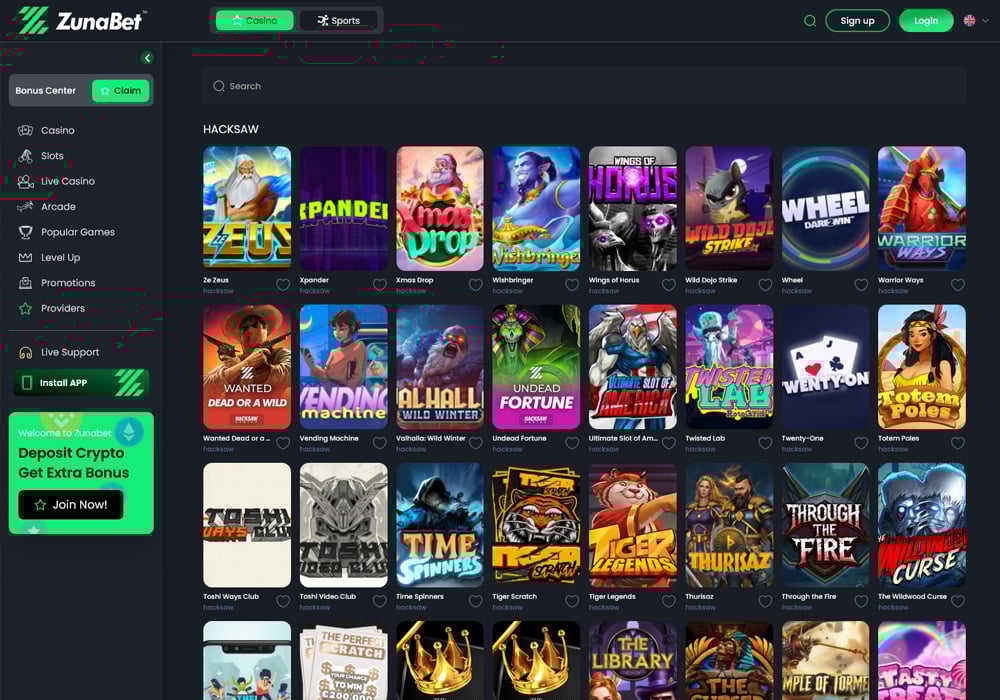
What a library of 11,000-plus games creates is a platform where content exhaustion is not a realistic concern. Players who spend months exploring the catalog will still find providers they have not tried and games they have not played. That perpetual sense of discovery keeps the platform feeling alive and rewarding in a way that smaller libraries structurally cannot sustain. It transforms the relationship between player and platform from something transactional into something exploratory.
The sportsbook is built with the same commitment to completeness. Football, basketball, tennis, NHL, combat sports, and virtual sports receive thorough coverage. Esports is elevated to a primary category with dedicated betting markets on CS2, Dota 2, League of Legends, and Valorant. This is not a gesture toward an emerging trend. It is a strategic investment in an audience that is already massive and still growing rapidly. The competitive gaming viewer base numbers in the hundreds of millions globally, and the overlap between that audience and the crypto-native demographic is substantial. ZunaBet built its esports product for that intersection, and the result is a betting experience that traditional operators have not come close to matching.
Cryptocurrency underpins the entire payment system. More than 20 coins and tokens are accepted — Bitcoin, Ethereum, USDT across multiple blockchain networks, Solana, Dogecoin, Cardano, XRP, and additional options. Platform processing fees do not exist. Withdrawals settle on blockchain networks that run without pause, returning funds to player wallets in minutes regardless of when the request is made. Because ZunaBet was designed around crypto from inception, there is no secondary fiat system creating inconsistencies beneath the surface. The payment experience is unified, fast, and free from start to finish.
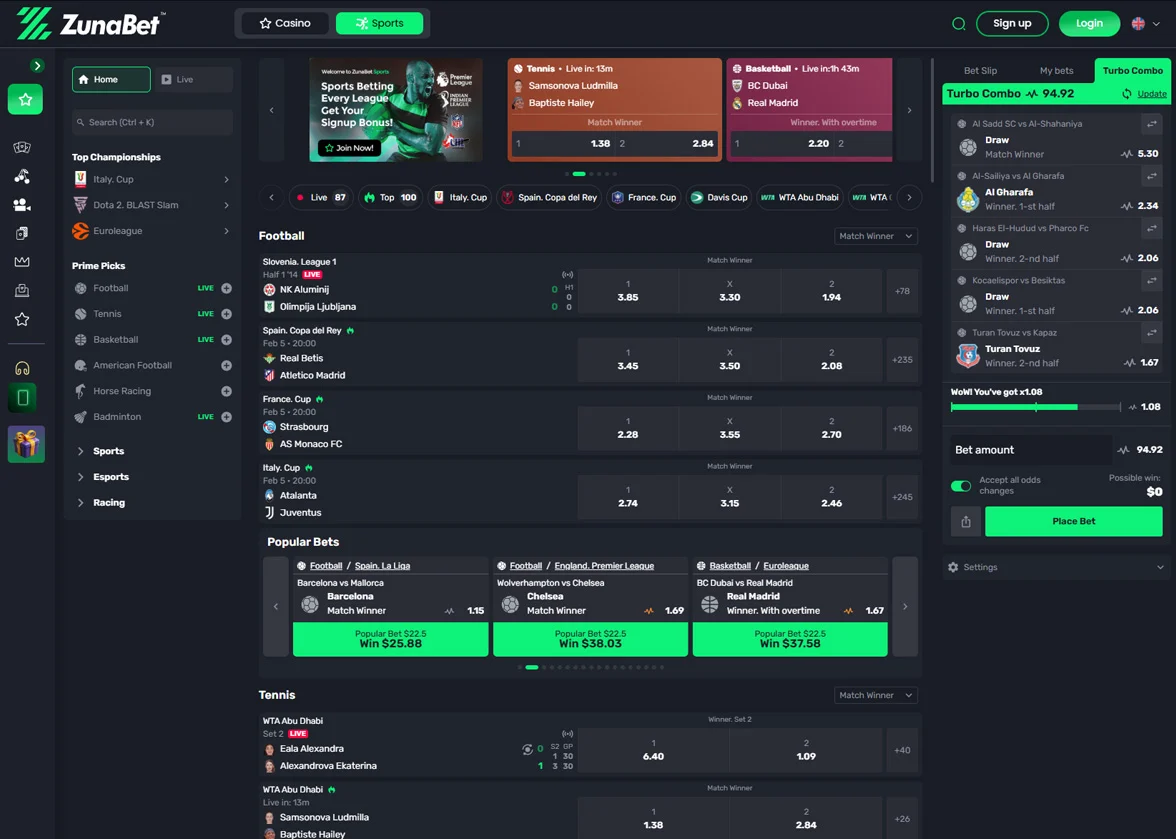
New players can access a welcome package worth up to $5,000 plus 75 free spins distributed across three deposits. The first deposit receives a 100% match up to $2,000 plus 25 free spins. The second qualifies for a 50% match up to $1,500 plus 25 spins. The third completes the offer with a 100% match up to $1,500 plus 25 final spins. Structuring the bonus across multiple deposits rewards continued engagement rather than incentivizing a single large deposit followed by departure.
The technical execution is modern throughout. HTML5 powers a dark-themed responsive interface with fast load times across all devices. Native apps are available for iOS, Android, Windows, and MacOS. Live chat support operates 24 hours a day without interruption.
Why Crypto Payments Have Become a Deciding Factor
The choice between crypto and traditional payments is no longer a preference. For a growing number of players, it is a dealbreaker. The practical differences between the two systems affect the gambling experience at its most fundamental level — how money moves in and how money moves out.
Traditional payment infrastructure processes transactions through layered networks of financial institutions. Each layer introduces potential delays and costs. Deposits may arrive relatively quickly through certain methods, but withdrawals almost universally involve waiting periods. Platform review times, banking processing schedules, weekend and holiday pauses, and method-specific timelines combine to create withdrawal experiences that can stretch across multiple business days. Fees surface at various points throughout the chain, charged by platforms, banks, processors, or some combination of all three.
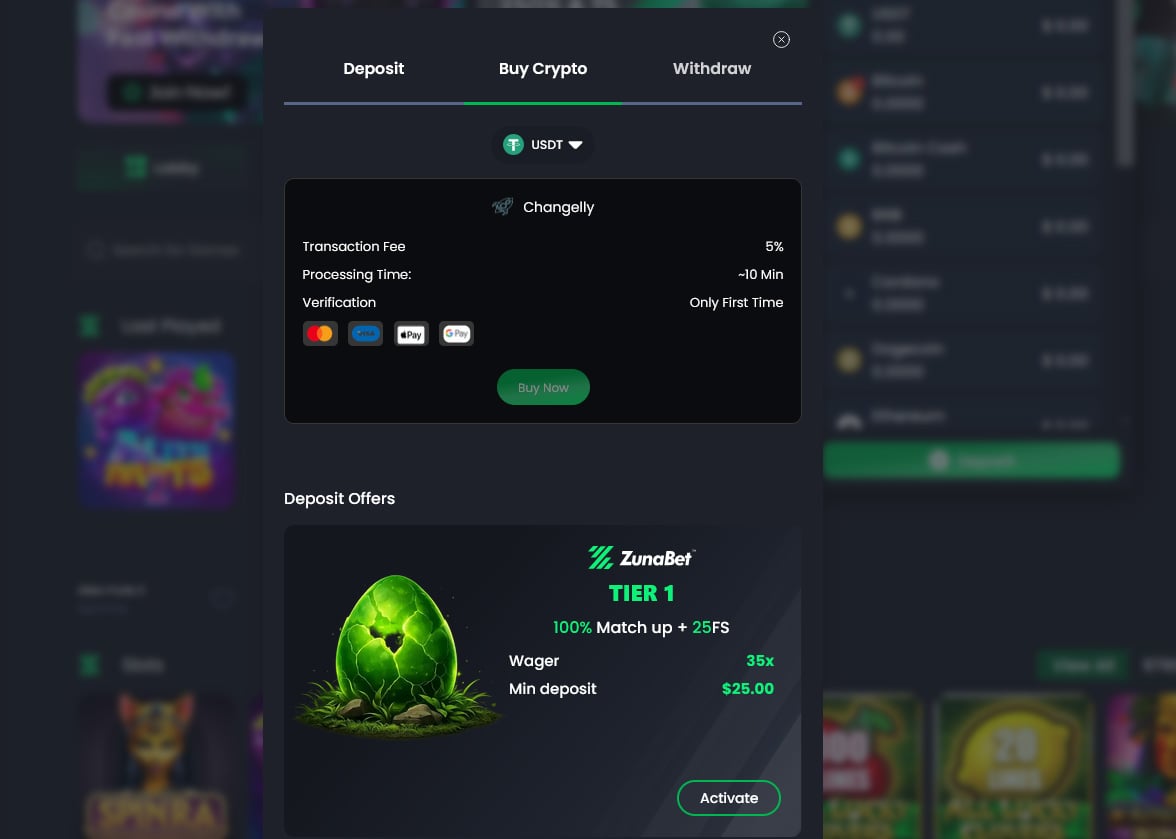
Crypto payments eliminate the majority of that complexity. A blockchain transaction does not route through banks. It does not wait for business hours. It does not incur fees from intermediary institutions. When a player deposits cryptocurrency on ZunaBet, the blockchain confirms the transaction and the funds become available within minutes. Withdrawals follow the identical path in reverse with the same speed. ZunaBet charges nothing for any of it.
Over time the difference compounds. A player making regular deposits and withdrawals throughout a year saves substantial time and money on a crypto-native platform compared to a traditional one. Those savings are not promotional. They are structural, meaning they apply to every transaction automatically because the infrastructure itself is more efficient.
ZunaBet benefits from having built this infrastructure from scratch rather than retrofitting it onto existing fiat systems. There are no compatibility layers or hybrid payment paths. Every transaction follows the same clean, fast, fee-free route because the platform was never built to accommodate anything else. As crypto adoption spreads globally, this native efficiency becomes an increasingly significant competitive advantage.
How ZunaBet Transformed Loyalty From an Afterthought Into an Experience
Loyalty programs across the gambling industry share a common problem — nobody cares about them. Not because rewards are unwelcome, but because the process of earning them is so bland and uniform that it generates no emotional response whatsoever. Players wager. Points appear. A threshold is eventually crossed. A bonus is claimed. Nothing about the journey between those steps is memorable or motivating.
ZunaBet identified that emptiness as an opportunity and built a loyalty system that fills it completely. The dragon evolution program structures progression across six distinct tiers. Squire provides 1% rakeback. Warden increases to 2%. Champion moves to 4%. Divine delivers 5%. Knight jumps to 10%. Ultimate reaches 20% rakeback at the top of the system. Each tier adds layers of additional rewards — free spins that escalate to 1,000 at the highest level, membership in a VIP club, and double wheel spins. A dragon character named Zuno accompanies the player through the entire journey, evolving visually at each tier to create a personal sense of narrative and achievement.
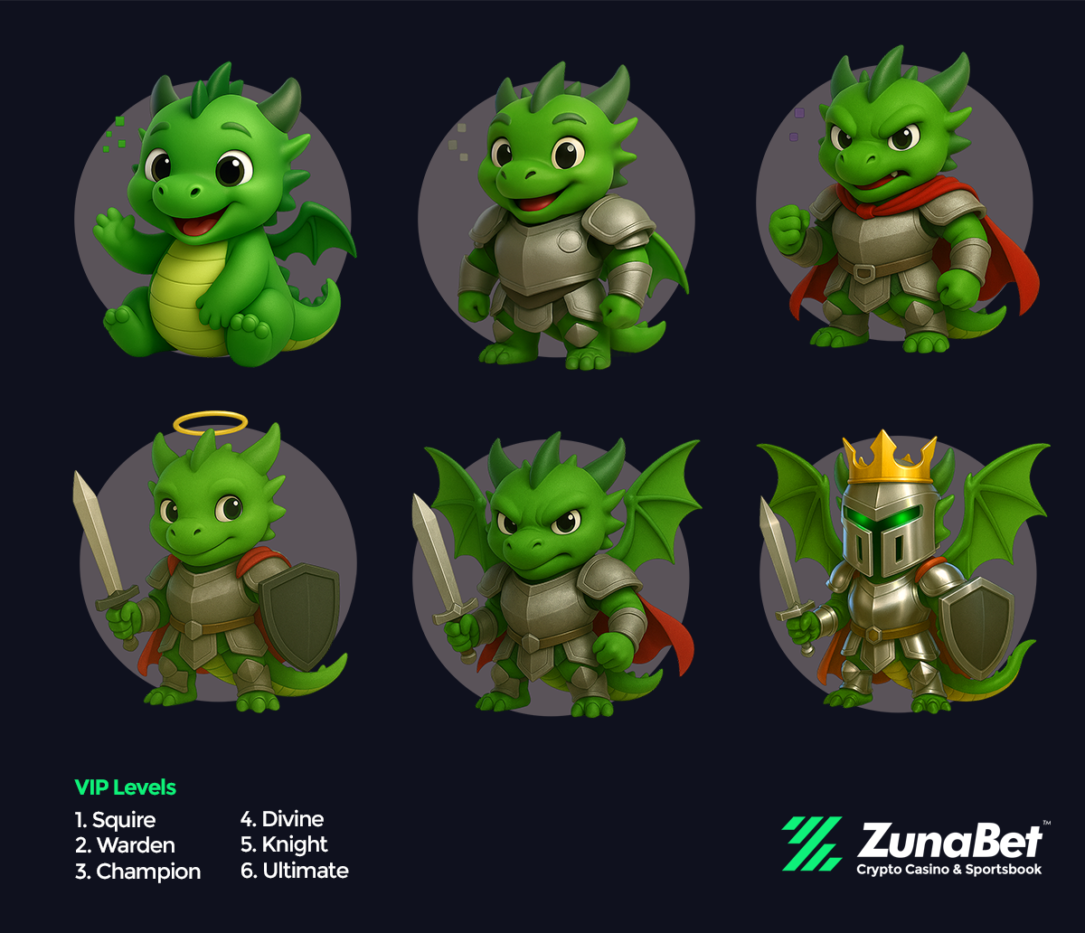
The psychology behind the system comes directly from video game design. Clearly defined levels. Escalating rewards that make each new tier feel like a genuine step up. Visual progression that makes advancement tangible. Goals that feel earned through engagement rather than simply purchased through volume. These are the mechanics that have driven player retention across the gaming industry for decades, and they translate powerfully into the gambling context because they address exactly what traditional loyalty programs lack — a reason to care.
Players on ZunaBet talk about their loyalty tier. They plan around reaching the next level. They feel genuine satisfaction when they advance. That active engagement with the loyalty system creates a retention dynamic that passive points accumulation cannot replicate. It makes the loyalty program a feature that players value in its own right rather than a background process they barely notice.
What the Search Numbers Are Really Saying
Record search volume for FanDuel alternatives communicates something larger than discontent with a single brand. It communicates that the player base has matured to the point where it demands more than any single traditional platform currently offers. FanDuel will remain a powerful presence in its core markets. Its brand equity, regulatory licenses, and financial resources ensure ongoing relevance for the audience it was built to serve.
But the audience that is growing fastest wants a different kind of platform. It wants payments that move at blockchain speed without costing anything. It wants a game library so expansive that running out of new experiences is not a possibility. It wants esports treated with the same respect as traditional sports. It wants a loyalty program that makes progression feel rewarding and personal. It wants a platform that was conceived for the world as it exists today rather than the world as it existed a decade ago.
ZunaBet was engineered from the ground up to be that platform. Every major decision — the crypto-native payment architecture, the 11,000-plus game library, the comprehensive esports sportsbook, the dragon evolution loyalty system — was made with a clear understanding of what the next generation of players values most. That clarity of purpose is why ZunaBet keeps rising to the top of alternative searches. Players are not just looking for something different. They are looking for something better. And the platform they keep finding when they look is ZunaBet.
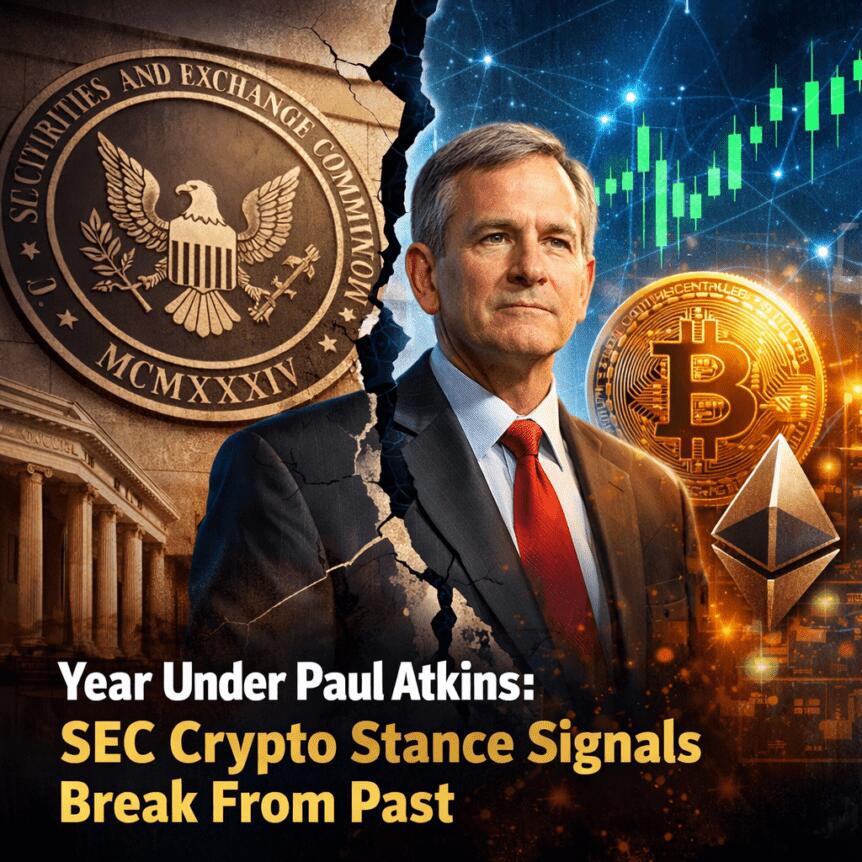
Paul Atkins was sworn in as chair of the U.S. Securities and Exchange Commission (SEC) on April 21, 2025, marking a notable shift in the agency’s posture toward digital assets. After years in which enforcement actions and civil suits defined the crypto regulation playbook, observers note a move toward policy-driven governance and greater regulatory clarity under Atkins’ leadership.
Political momentum surrounding crypto regulation shaped the landscape in the lead-up to and during Atkins’ tenure. During his 2024 presidential campaign, Donald Trump pledged to replace SEC leadership, pursue a national Bitcoin stockpile, and oppose a U.S. central bank digital currency. Following Trump’s November 2024 victory, Gary Gensler resigned in January 2025, and Commissioner Mark Uyeda served as acting chair until the Senate confirmed Atkins. The transition coincided with a competency shift within the agency as it prepared to implement a new regulatory approach to digital assets. According to Cointelegraph, the appointment and subsequent actions signaled a broader reorientation of the SEC’s crypto policy framework.
Ahead of confirmation, the commission had already begun reorienting its stance. Uyeda had overseen the creation of an SEC crypto task force led by Commissioner Hester Peirce, while the agency started to wind down several civil enforcement actions and investigations into crypto companies, beginning with Coinbase in February. In the first year of Atkins’ chairmanship, the SEC’s approach to crypto—enforcement, policy, and regulatory coordination—has been widely interpreted as more industry-friendly, or at least more predictable, than the prior era.
Key regulatory moves during the initial year have included the approval of multiple exchange-traded funds (ETFs) tied to crypto assets, a memorandum of understanding with the Commodity Futures Trading Commission (CFTC) to coordinate digital asset regulation, and an interpretative notice indicating that most cryptocurrencies would not be treated as securities under federal law. These actions collectively suggest a shift from a purely enforcement-driven posture toward a framework that emphasizes regulatory clarity, inter-agency coordination, and a measured approach to asset classification. In a CNBC interview conducted in April 2026, Atkins said the agency has delivered “a new day” at the SEC, asserting that the move away from “regulation through enforcement” and opacity marks a lasting change in crypto policy. The interview underscored a broader objective of aligning the SEC’s stance with evolving market structures and stakeholder expectations.
Key takeaways
- The SEC under Chair Atkins has signaled a regulatory shift toward policy clarity and inter-agency coordination, diverging from the prior enforcement-heavy posture.
- Actions include crypto-asset ETF approvals, a bilateral MoU with the CFTC, and an interpretive notice that most cryptocurrencies are not securities under federal law.
- Efforts were preceded by a restructuring of enforcement posture, including the winding down of certain investigations and civil actions, beginning with Coinbase early in the Atkins era.
- Political and regulatory scrutiny remains high in Congress, with Democrats raising questions about potential conflicts of interest and enforcement data, even as the industry broadly notes a more predictable regulatory environment.
Regulatory shift at the SEC under Paul Atkins
The core pivot of Atkins’ leadership centers on reframing how the SEC regulates digital assets. Where the Gensler era emphasized a broad, securities-focused regime with robust enforcement actions, Atkins has steered attention toward policy development, clarity around asset classification, and formal coordination with other agencies. The signing of a memorandum of understanding with the CFTC underlines a recognition that digital assets operate in a cross-cutting regulatory space that benefits from joint oversight and shared principles. Moreover, the issuance of an interpretive notice clarifying that the majority of cryptocurrencies are not securities signals a move toward less uncertain asset categorization, potentially reducing the scope of blanket regulatory actions against blockchain projects and token issuers.
Industry observers have noted that the combination of ETF approvals and clarified regulatory standards can improve market access for institutional participants, including banks and asset managers seeking regulated exposure to crypto markets. By stitching together policy guidance with observable regulatory milestones, the SEC’s trajectory under Atkins appears to prioritize stability and compliance pathways for market participants, while maintaining guardrails against investor fraud and market manipulation. According to Cointelegraph, these shifts have been read as a deliberate attempt to balance innovation with investor protection in a rapidly evolving market structure.
Policy moves, enforcement posture, and inter-agency coordination
Beyond the publicized policy changes, the SEC’s coordination with other regulators has gained particular attention. The CFTC-MoU underscores a shared interest in aligning digital asset oversight, risk monitoring, and supervisory expectations across a spectrum of market participants—from crypto exchanges to conventional financial institutions exploring tokenized products. In parallel, the interpretive notice regarding securities classification aims to provide clearer boundaries for issuers and investors, potentially reducing inadvertent non-compliance while ensuring ongoing protection against fraud and manipulation.
Enforcement, historically a defining feature of the agency’s crypto approach, has shown signs of a recalibrated tempo. The early months of Atkins’ tenure saw the pace of high-profile actions slow, with regulators signaling a transition toward strategic enforcement that targets egregious activities and preserves avenues for compliant innovation. The trend has been a point of debate in Congress. Democratic lawmakers, including Senator Elizabeth Warren, have criticized the SEC for potential conflicts of interest after enforcement actions against entities tied to the Trump orbit were dropped or deprioritized, arguing that data from the 2025 fiscal year indicated a decline in enforcement actions relative to recent years. While industry participants may view the shift as positive for project development and fundraising, policymakers caution that ongoing oversight is essential to prevent regulatory capture and to maintain investor trust.
The regulatory pivot and its implications for market participants extend beyond the United States. As policymakers weigh cross-border coordination, the SEC’s approach interacts with evolving frameworks in other jurisdictions, such as the European Union’s Markets in Crypto-Assets Regulation (MiCA). For banks and financial institutions, the development matters insofar as it clarifies where crypto activities can be conducted within a compliant framework and how licensing, supervision, and reporting obligations may evolve. The broader policy context—balancing innovation with investor protection and financial stability—remains a live, dynamic area of regulatory reform that institutionsmust monitor closely.
Regulatory implications for industry and policy context
The changes in U.S. regulation come at a time when market participants increasingly seek predictable, rules-based governance for digital assets. The combination of ETF authorizations, inter-agency coordination, and asset-class interpretive guidance could influence how exchanges structure products, how custodians manage risk, and how banks engage with crypto clients. From a compliance standpoint, firms will need to align with formal interpretations of asset classification, adopt robust KYC/AML frameworks, and monitor cross-border regulatory differences as firms scale their operations to serve global markets. The evolving U.S. framework will interact with global policy developments, potentially affecting the pace and nature of crypto market access for institutional investors seeking regulated exposures.
As regulatory attention continues to evolve, observers will watch for further clarity on classification standards, licensing regimes, and the treatment of new asset types such as tokenized securities and decentralized finance products. The SEC’s ongoing collaboration with the CFTC could shape a more unified U.S. stance, reducing fragmentation across jurisdictions and helping to define a framework that supports compliant innovation while safeguarding market integrity.
Overall, the Atkins era appears to be defined by a transition from a posture of enforcement-led output to a governance and safety-first approach, with a focus on clear standards, inter-agency coordination, and measured market access. The practical effect for market participants is a potential reduction in regulatory uncertainty and a clearer path to compliant product development—though questions about enforcement dynamics, data transparency, and ongoing congressional oversight remain central to the policy conversation.
What to watch next includes the continued evolution of the SEC-CFTC framework, any updates to interpretive guidance on asset classification, further ETF approvals or denials, and ongoing congressional inquiries into enforcement data and possible conflicts of interest. These developments will shape not only the regulatory risk landscape for crypto firms and banks but also the broader policy debate about how best to align innovation with investor protection in a rapidly maturing market.
According to Cointelegraph, the current regulatory trajectory is being assessed for its implications on enforcement posture, market access, and international policy alignment, making the next 12–24 months pivotal for institutions navigating the U.S. crypto regime.
Cointelegraph is committed to independent, transparent journalism. This analysis draws on reported developments and regulatory filings to provide a forward-looking perspective for analysts, compliance teams, and institutional readers. Readers are encouraged to verify information independently and monitor official SEC statements and inter-agency guidance for updates.
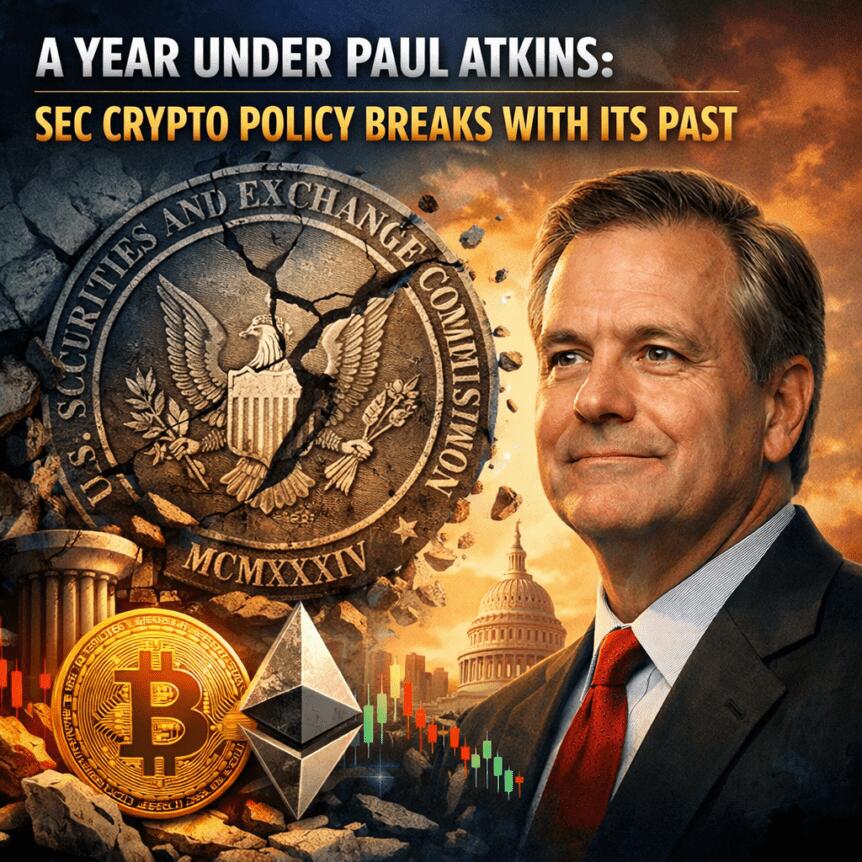
Paul Atkins assumed the chairmanship of the U.S. Securities and Exchange Commission on April 21, 2025, and a year into his tenure the agency appears to have shifted its stance on digital assets. After a presidency that promised robust crypto enforcement, the new leadership has signaled a more targeted, regulation-centered approach that many in the market view as providing clearer guardrails for issuers, exchanges and investors alike.
Trump’s 2024 campaign had positioned the SEC as a principal obstacle to crypto policy, vowing to replace Gary Gensler and to pursue a more crypto-friendly agenda. Gensler stepped down in January 2025, with Commissioner Mark Uyeda serving as acting chair until Atkins’ confirmation. Since then, observers have tracked a notable pivot: enforcement actions have receded in volume, while constructive moves—ranging from product approvals to cooperative regulatory frameworks—have taken center stage. According to Cointelegraph, Atkins and his team have laid out a compliance-forward playbook that many market participants hoped to see from the agency after years of high-profile cases against crypto firms.
In interviews and public remarks, Atkins has framed the change as a deliberate departure from “regulation through enforcement” toward clearer guidance and cooperative oversight. In a CNBC appearance, he summarized the shift by saying, “A new day at the SEC is here. We’ve pivoted from the old practice of regulation through enforcement and the opaqueness of the agency, as, for example, with crypto.”
The first year of Atkins’ tenure thus stands in contrast to the prior era, when the SEC accused several crypto projects and platforms of securities law violations, sometimes triggering high-profile lawsuits. Beyond enforcement posture, the agency’s activities in regulatory policy have touched multiple levers of market structure and investor protection. The changes come as the crypto market, regulators and lawmakers recalibrate expectations for what constitutes a compliant crypto business in the United States.
Key takeaways
- The SEC under Paul Atkins has signaled a shift toward regulation-focused guidance and coordination, reducing reliance on enforcement as the primary tool for crypto supervision.
- Early-year actions included approval of crypto-asset exchange-traded funds (ETFs) and a memorandum of understanding with the Commodity Futures Trading Commission (CFTC) to coordinate digital asset regulation.
- The agency issued an interpretive note clarifying that most cryptocurrencies are not securities under federal law, aiming to reduce ambiguity for issuers and investors alike.
- Enforcement activity has not disappeared, but actions and investigations toward certain crypto firms were paused or scaled back as part of the broader regulatory approach, with the Coinbase matter cited as an early example in 2025–2026 coverage.
- Democratic lawmakers, led by figures such as Massachusetts Senator Elizabeth Warren, have criticized the SEC for potential conflicts of interest and for data that they say shows fewer enforcement actions than in the recent past.
From Gensler to Atkins: a calibrated shift in crypto supervision
Under Gensler’s tenure, the SEC pursued numerous enforcement actions against crypto projects and exchanges, often arguing that many tokens were securities and that firms failed to register adequately. The transition to Atkins, who won Senate confirmation after several months of acting leadership by Uyeda, brought a recalibrated tone. In Atkins’ view, the agency’s mission remains investor protection, but the path to that protection is evolving—from a heavy-handed enforcement posture to a more precise, rules-based framework that provides greater clarity for market participants.
Industry watchers say the change matters because regulatory clarity reduces the risk premia that often accompany crypto funding rounds, token launches and exchange listings. When issuers, investors and developers can point to clearer rules, capital formation tends to become more efficient, and platforms can invest in robust compliance programs rather than navigating ambiguous enforcement expectations. Atkins has repeatedly framed the shift as a meaningful step toward a more transparent federal framework for digital assets, while maintaining vigilance against fraud and unregistered activities.
According to Cointelegraph, Atkins’ remarks in early 2026 highlighted a broader reframing of the agency’s approach to crypto—from a period of opacity to a more collaborative posture with market participants and other regulators. The administration’s emphasis on practical guidance has implications for how startups structure token sales, how exchanges design listings, and how investors assess risk in a fast-evolving sector.
Regulatory moves shaping the market’s risk and opportunity landscape
One of the most visible signals of the new era has been policy signaling rather than courtroom drama. The SEC’s authorization of multiple crypto-related ETFs, for instance, provides a credentialed on-ramp for institutional and retail investors seeking regulated exposure to digital assets. These products typically rely on futures-based or custody-ready underpinnings that are designed to align with traditional financial markets, potentially reducing some of the operational risk that has historically accompanied crypto investments.
Another notable development is the memorandum of understanding signed with the CFTC to coordinate on digital asset regulation. The collaboration aims to reduce regulatory fragmentation and improve cross-agency clarity for market participants who must navigate both the securities and commodities dimensions of digital assets. While the exact contours of future rules remain a work in progress, the MoU signals a shared recognition that seamless, consistent oversight is essential to mainstream adoption.
In a related move, the SEC issued an interpretive notice clarifying that not all digital assets should be treated as securities under federal law. This guidance, though narrow in scope, helps distinguish between the kinds of tokens that may be governed primarily by securities laws and those that may fall under other regulatory regimes. For projects and platforms, the note offers a reference point for structuring token economics, disclosures and governance mechanisms in ways that align with current regulatory expectations.
Perhaps most consequential for market dynamics was the SEC’s shift away from broad enforcement sweeps to a more selective posture. Beginning in February—early in Atkins’ term—the agency pursued a strategy of winding down or pausing certain civil actions and investigations into crypto companies, with Coinbase cited as a prominent example in early coverage. The move has been interpreted by some as an effort to reset the regulatory climate and invite ongoing dialogue with the industry about permissible practices, audits, and disclosures.
These policy shifts have been framed in public remarks and interviews as progress toward a more constructive regulatory regime. Atkins has repeatedly underscored the need for clarity and predictable rules that enable innovation while preserving investor protections. The practical impact for market participants is increased certainty around what kinds of products can be developed and marketed in the United States, and how to structure compliance programs to meet federal expectations.
Political scrutiny and what it means for the market’s faith in regulation
Not all observers have welcomed the pivot uncritically. Democratic lawmakers have expressed concern that the SEC’s softened posture could conflict with long-standing mandates to police market integrity and protect investors. In particular, Senator Elizabeth Warren raised questions about potential conflicts of interest and data gaps after the regulator’s testimony to a House committee. In a formal letter dated April 15, Warren asserted that the SEC’s own fiscal-year 2025 data showed fewer enforcement actions than at any point in the prior decade—a measure she argued could indicate a decline in complaints and oversight rather than a robust enforcement regime.
Supporters of Atkins’ approach argue that the data point is better understood as a transitional phase—an opportunity to recalibrate processes, improve internal transparency and decouple enforcement from partisan or political dynamics. The tension between risk-based regulation and political optics is likely to shape congressional oversight for the next cycle, as lawmakers weigh how to balance investor protection with the imperative to foster American innovation in a highly competitive global landscape.
In the near term, market participants will be watching whether the SEC’s new posture translates into clearer, binding rules on topics such as token classification, exchanges’ custody standards, registration expectations for crypto platforms, and the scope of investor disclosures. The CFTC-MoU and the interpretive note are early signals, but the long arc will hinge on more formal rulemaking and targeted guidance that can withstand legal scrutiny and changing political winds.
Closing perspective: what to watch next
The crypto industry has welcomed the signs of regulatory clarity and constructive cooperation, but important uncertainties remain. The Senate’s stance on Atkins’ confirmation, the pace of additional rulemaking, and the precise criteria used to distinguish securities from non-securities tokens will all influence how the market prices risk in the coming quarters. For investors and builders, the next milestones to watch include detailed guidance on token sale disclosures, exchange listing standards, and the sequencing of any comprehensive crypto asset framework. While the path forward may still include regulatory frictions, the current trajectory suggests a longer horizon of clarity and predictable oversight, rather than episodic enforcement actions that can surprise market participants without warning.
Crypto World
Aave could face up to $230m in losses after Kelp DAO bridge exploit triggers DeFi chaos


The Kelp DAO and LayerZero bridge exploit that occurred over the weekend has left lending protocol Aave facing potential losses of up to $230 million, depending on how the situation is resolved.
The incident, according to a report from Aave Labs and service provider LlamaRisk published on the Aave governance forum, centers on rsETH, a liquid restaking token issued by KelpDAO. To move rsETH between blockchains, the protocol relies on a bridge mechanism that locks tokens on one chain while issuing corresponding copies on another.
An attacker exploited that setup by forging a transfer message that appeared valid. The system approved the transfer even though the tokens were never taken out of the sending chain, meaning new tokens were effectively created without backing, releasing 116,500 rsETH from the Ethereum-side bridge.
Rather than selling the assets on the open market, the attacker deposited 89,567 rsETH into Aave as collateral and borrowed roughly $190 million in ETH and related assets across Ethereum and Arbitrum, according to the report. This left Aave exposed to collateral whose backing may be significantly impaired.
Aave Labs said it moved quickly to contain the risk. Within hours, the protocol froze rsETH markets across its deployments, set loan-to-value ratios to zero, and halted new borrowing against the asset.
The outcome now depends largely on how Kelp handles the shortfall. If losses are spread across all rsETH holders, the token would face an estimated 15% depegging (meaning the value of the staked tokens would not match the value of actual ETH), resulting in about $124 million in bad debt for Aave. If losses are instead isolated to Layer 2 networks, the impact would be far more severe, with bad debt rising to roughly $230 million and concentrated on networks such as Arbitrum and Mantle.
The exploit stemmed from weaknesses in how Kelp verified cross-chain messages using LayerZero. By manipulating this process, the attacker was able to make certain assets appear fully backed when they were not, allowing them to extract value from the system. LayerZero itself was not directly hacked, but its messaging layer exposed flawed assumptions in how Kelp validated cross-chain data.
The incident raised concerns that some positions on Aave were backed by collateral that was mispriced or no longer fully backed, increasing the risk of undercollateralized loans.
In response, users moved to reduce exposure. Around $6 billion in total value locked was withdrawn from Aave following the incident, reflecting a broad pullback as participants reacted to the uncertainty.
The episode highlighted its indirect exposure to external systems. The impact was felt through increased collateral risk, pressure on lending positions, and a sharp decline in deposits as users reassessed the safety of interconnected DeFi infrastructure.
The report said its DAO treasury holds approximately $181 million in assets and that discussions are underway with ecosystem participants to address potential losses. Kelp has not yet outlined how it plans to allocate losses, leaving Aave’s ultimate exposure uncertain as the situation continues to evolve.
Ripple Charts 2028 Path to Quantum-Resistant XRPL Security

Three NFL Teams That Can’t Afford To Screw up 2026 NFL Draft

Safe stolen from St Leonard’s Hospice Charity Shop, Acomb



-

 NewsBeat7 days ago
Trump and Pope Leo: Behind their disagreement over Iran war
-

 Fashion3 days ago
Weekend Open Thread: Theodora Dress
-

 News Videos6 days ago
Secure crypto trading starts with an FIU-registered
-

 Sports4 days ago
NWFL Suspends Two Players Over Post-Match Clash in Ado-Ekiti
-

 Crypto World7 days ago
SEC Proposes Certain Crypto Interfaces Don’t Need to Register as Brokers
-

 Business1 day ago
Powerball Result April 18, 2026: No Jackpot Winner in Powerball Draw: $75 Million Rolls Over
-

 Crypto World3 days ago
Russia Pushes Bill to Criminalize Unregistered Crypto Services
-

 Politics2 hours ago
Gary Stevenson delivers timely reminder to register to vote as deadline TODAY
-

 Politics3 days ago
Palestine barred from entering Canada for FIFA Congress
-
 Business4 days ago
Creo Medical agree sale of its manufacturing operation
-

 Politics2 days ago
Zack Polanski demands ‘council homes not luxury flats for foreign investors’
-
 Entertainment7 days ago
Brand New Day’ Footage Reveals the Devastating Impact of ‘Now Way Home’
-

 Crypto World3 days ago
Russia Introduces Bill To Criminalize Unregistered Crypto Services
-

 Tech2 days ago
Auto Enthusiast Scores Running Tesla Model 3 for Two Grand and Turns It Into Bare-Bones Go-Kart
-

 Tech6 days ago
Microsoft adds Windows protections for malicious Remote Desktop files
-
 Entertainment7 days ago
Karol G’s ‘Ultra Raunchy’ Coachella Set Gave ‘Satanic Vibes’
-

 Tech5 days ago
‘Avatar: Aang, The Last Airbender’ Leaked Online. Some Fans Say Paramount Deserves the Fallout
-

 Tech7 days ago
What was the first ransomware attack to demand payment in Bitcoin?
-

 Sports6 days ago
Younger Than Sachin Tendulkar: Vaibhav Sooryavanshi Set To Make Historic India Debut
-

 Entertainment6 days ago
Prince Carter Brings Fans Front Row and Backstage at Boys 4 Life Tour
You must be logged in to post a comment Login