
Crypto World
VIX Falls 45% in 3 Weeks as Bitcoin Eyes $80K Retake

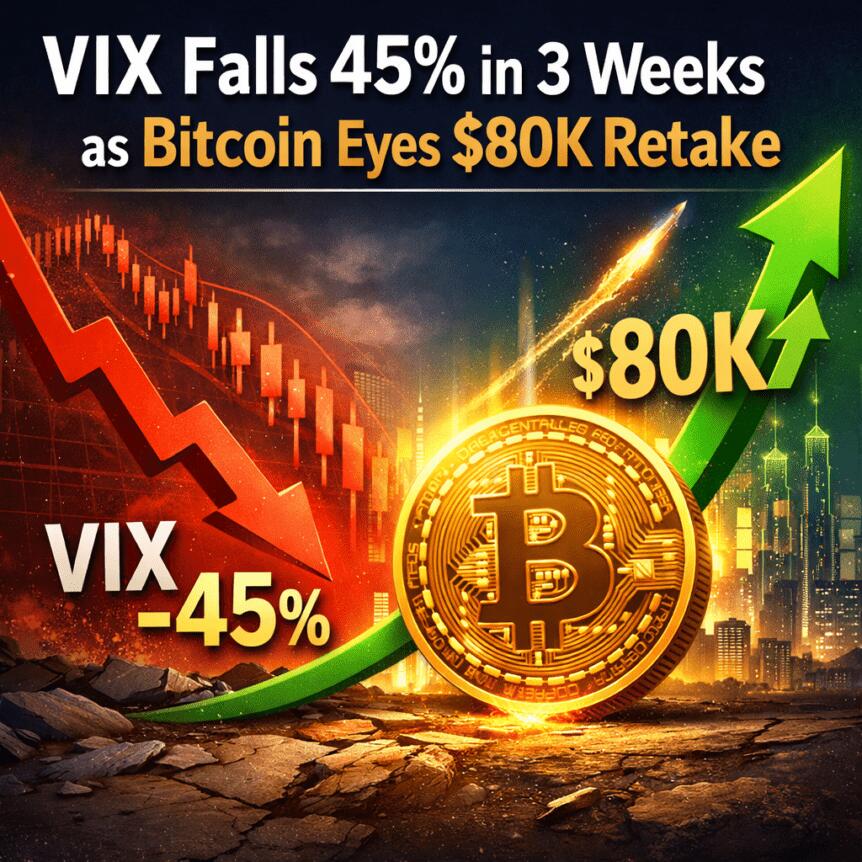
The CBOE Volatility Index (VIX), frequently used as a gauge of market fear, has collapsed by more than 45% in under a month, sharpening the outlook for Bitcoin as traders weigh the implications of a calmer risk environment. With volatility cooling, Bitcoin bulls are watching for a renewed push higher, especially as sustained demand from large buyers and a favorable price backdrop converge.
Key takeaways
- Bitcoin’s upside path tightens if the VIX remains subdued, with a potential move toward roughly $82,700 on the cards if the trend persists.
- Support for BTC has been buoyed by Strategy’s aggressive BTC purchases, which have absorbed a sizable portion of new supply since March.
- Historical patterns link pronounced VIX declines with Bitcoin gains, though the magnitude and timing can vary by episode.
- A rise in VIX or a slowdown in buying pressure could erode near-term support and reintroduce downside risk.
- Price trajectory remains sensitive to macro volatility, regulatory signals, and the persistence of large-cap buying flows.
VIX’s slide and Bitcoin’s potential breakout
The VIX, colloquially known as Wall Street’s fear gauge, tracks expected volatility in the S&P 500 over the next 30 days. When it falls, investors often demonstrate a greater willingness to embrace risk, a dynamic historically correlated with strength in risk assets, including Bitcoin. In the current context, a drop of more than 40% in the VIX over a short span has coincided with renewed Bitcoin strength in the eyes of many traders.
Analysts have observed a pattern where large VIX declines correlate with notable BTC upside. For example, Bitcoin rallied roughly 40% during the April 2025 to May 2025 window, a period that saw the VIX retreat by about 70%. A separate episode from October to November 2025 saw a 46% VIX drop accompany a BTC gain of around 12%. In the most recent stretch, a 42%–47% decline in VIX has coincided with an 8%–9% rebound in Bitcoin’s price, reinforcing the notion that a calmer risk climate can lend tactical support to the asset class.
Looking ahead, the immediate upside target for Bitcoin sits near the 200-day exponential moving average, around $82,700, a level traders often view as a significant milestone in an emergent bullish phase. If the VIX remains weak and momentum persists, that price zone could become a focal point in the weeks ahead, potentially aligning with broader macro positioning and liquidity conditions.
Market dynamics: the role of Strategy’s BTC purchases
A cornerstone of the current narrative is Strategy’s ongoing BTC accumulation, which has reportedly absorbed a substantial portion of new supply since March. By design, large, disciplined buyers can create a steadier bid under price action, helping to cushion downside during pullbacks and sustain a measured ascent when market conditions permit.
Swissblock, a wealth-management-focused analysis outlet, has highlighted that Bitcoin has demonstrated resilience even amid a complex and evolving macro environment. In its view, the asset may begin to outperform on its own again if the immediate catalysts align with continued demand. A representative takeaway from this view is that persistent buying pressure can help sustain upside even when broader market conditions become less certain.
Bitcoin has already shown inherent strength in a very complex environment. Do not be surprised if it starts to outperform on its own again.
That said, the path is not guaranteed. If Strategy’s buying were to slow meaningfully, or if volatility spikes again, the support that current buyers provide could erode, potentially drawing BTC back toward key psychological and technical levels. The risk of a pullback grows if macro headlines turn decisively negative or if regulatory signals introduce new frictions for large holders or market entrants.
What past patterns tell us—and what remains uncertain
Historical episodes offer a lens through which to gauge potential BTC reactions to a fading VIX. While past performance is not a guarantee of future results, the correlation between sharp VIX declines and Bitcoin strength has been a recurring theme in the recent cycle. The correlation appears strongest during episodes where risk appetite returns and liquidity conditions improve, allowing BTC to capture upside in a risk-on backdrop.
At the same time, observers caution against over-reliance on any single indicator. The intensity and duration of VIX moves can be influenced by a range of factors—from macro data surprises to geopolitical developments and central-bank policy shifts. In this environment, the persistence of large buyers or the emergence of new demand drivers will help determine whether BTC can sustain momentum through potential volatility shocks.
While some market participants still entertain the possibility of a later-stage pullback—with analyses suggesting scenarios where BTC could dip below $50,000 in 2026—the near-term setup remains tilted toward upside if the VIX remains subdued and buying demand holds. The interplay between macro volatility, liquidity, and the concentration of demand from major investors will continue to shape the trajectory in the weeks ahead.
What to watch next
Investors should monitor several moving parts that could shape Bitcoin’s trajectory over the near term. First, the VIX’s ability to stay subdued or rebound will be a primary driver of sentiment and price action. Second, the durability of Strategy’s BTC buying cadence will influence whether the market can maintain a constructive bias or face renewed downside pressure if demand weakens. Third, macro developments—especially any shifts in monetary policy expectations or geopolitical risks—could reintroduce volatility and challenge the current risk-on stance.
Additionally, traders will be looking at price behavior around the 200-day EMA and whether BTC can sustainably trade above nearby resistance levels as liquidity conditions evolve. The market will also likely respond to broader changes in sentiment around institutional participation in crypto, including potential inflows into regulated custodial solutions and the continued expansion of OTC and on-exchange liquidity.
In the meantime, the convergence of a softer VIX, heavy buying from large holders, and a technical setup around the 200-day moving average provides a plausible pathway for Bitcoin to press higher in the near term. Yet investors should remain mindful of the risk that a shift in volatility or a slowdown in buy-side demand could reintroduce caution and halt momentum.
Readers should keep an eye on the evolving balance between fear and appetite for risk, the staying power of major buyers, and the broader macro backdrop as new data points and policy signals emerge. The next few weeks will reveal whether this is a temporary lull in volatility or the beginning of a longer upside phase for Bitcoin.
As the market digests these dynamics, the question remains: will BTC’s run be sustained by continued liquidity and appetite for risk, or will shifting headlines reintroduce the volatility that has alternately capped and propelled its moves in recent cycles?


The crypto landscape is shifting fast! As liquidity and tech breakthroughs redefine the game, the hunt for the best crypto to buy is zeroing in on powerhouses that pair massive utility with booming ecosystems. BlockDAG, XRP, TRON, and Avalanche are crushing it, offering everything from lightning-fast networks to global payment solutions, giving you the ultimate edge in this market.
Forget chasing tiny green candles; the smart money is pouring into projects with real usage and serious expansion. This pivot is your chance to ride the wave of long-term growth. Below, we break down these four giants in simple terms so you can see exactly where they stand and why they are dominating the current crypto arena.
1. BlockDAG: $0.00000058 Pre-Launch Phase With 237x Upside Potential
If you are searching for the best crypto to buy before a massive price explosion, BlockDAG is your urgent wake-up call. The current fixed price of $0.00000058 represents your absolute final chance before the open market takes over. We are looking at a staggering 237x projection, fueled by a rock-solid roadmap with high-stakes deadlines you cannot afford to miss.
The exchange frenzy is already here. BlockDAG (BDAG) is screaming across 13 platforms: Biconomy, Bifinance, CoinStore, P2B, AscendEX, BTSE, XT, BTCC, LBank, BitMart, WEEX, Pionex, and WEBOT. On top of this, listings on BingX and Gate.io are dropping soon, and more Tier-1 exchange listings are expected to follow!
Tier 1 status is a total game-changer, bringing deep liquidity and millions of global traders into the mix, moves that historically trigger massive price action. The dev team is also on fire; Smart Wallet claims are live, and Batch 4 opens April 27. Plus, a Casino is dropping on May 7!
By May, the DEX and liquidity rewards go live, followed by the “Super App” in June. This all-in-one suite includes lending, oracles, and dApps. But beware: the fixed-rate supply is vanishing. Once it’s gone, the $0.00000058 price is history, and you’ll be at the mercy of the open market.
2. XRP: Institutional Payments Network Driving Real-World Adoption
XRP remains a titan in the world of cross-border money moves and banking settlements. Built for extreme speed and low fees, it’s the go-to for financial giants needing to move liquidity across the planet in seconds.
When people talk about the best crypto to buy, XRP leads the pack for real-world impact. It’s not just hype; banks and payment providers are actively plugging into this network to revolutionize remittances. XRP is the bridge between the old-school banking world and the future of blockchain.

For those looking for long-term power, XRP offers a front-row seat to the global settlement revolution. As demand for digital payments and regulatory clarity grows, XRP is perfectly positioned to capture the global spotlight.
3. TRON: High-Throughput Blockchain Powering Global dApp
TRON is a beast of a blockchain, engineered to handle dApps, content sharing, and massive stablecoin volume without breaking a sweat. Its high-speed, low-fee architecture makes it a magnet for global users who want to move money fast without losing a fortune in fees.
In the race for the best crypto to buy, TRON is a fan favorite for its massive adoption in emerging markets and exploding on-chain activity. With DeFi, NFTs, and developers flocking to the network, TRON’s influence is only getting stronger.
Its ability to process huge transaction volumes keeps it ahead of the competition. As more people join the TRON ecosystem, its network effects are set to trigger even more growth across the global blockchain stage.
4. Avalanche: Scalable Smart Contract Infrastructure Driving DeFi Innovation
Avalanche is the speed demon of smart contract platforms, famous for its lightning-fast consensus and customizable “subnets.” This allows developers to build specialized blockchains for anything from enterprise solutions to the next big thing in DeFi.
Discussed widely as the best crypto to buy, Avalanche is a favorite for its top-tier tech and rapidly growing dev community. Its low latency and high throughput make it a serious threat to other smart contract platforms.

Fresh projects are landing on Avalanche every day, diversifying an already massive ecosystem. As the world screams for scalable blockchain tech, Avalanche is standing tall, ready to lead DeFi and institutional integration worldwide.
Final Thoughts
The market is obsessed with projects that have clear milestones and massive momentum. XRP, TRON, and Avalanche are holding strong as pillars of the industry, proving their worth through real usage and scalable tech.
However, BlockDAG is stealing the show in the best crypto to buy debate. With its $0.00000058 fixed price about to vanish and a 237x projection on the table, the FOMO is real. With BingX and other exchanges already live, and a roadmap packed with Super Apps and DeFi launches, the clock is ticking.

This structured rollout and massive upside potential make BlockDAG the one to watch. Don’t wait until it’s trading on the open market; the time to act is now!
Disclaimer: This is a Press Release provided by a third party who is responsible for the content. Please conduct your own research before taking any action based on the content.


Poland stands as the last EU member state without a domestically enacted enabling act to implement the bloc’s Markets in Crypto-Assets (MiCA) framework, as the Sejm again failed to override a presidential veto on the Crypto-Asset Market Act. According to Cointelegraph, President Karol Nawrocki defended his veto by warning that the draft imposes excessive regulation that could burden small businesses. Critics say the absence of a clear framework exposes the market to fraud and creates a permissive space for illicit activity. The political path forward remains uncertain.
With the MiCA transitional period set to end on July 1, Poland’s lagging implementation stands in contrast to the rest of the bloc. Absent a solution, local firms risk losing a compliant path to operate within the European market, prompting some to relocate their operations abroad in search of a regulatory environment that aligns with MiCA’s standards or speedier licensing processes. The situation illustrates how national politics can influence the EU’s single market for crypto, potentially creating regulatory arbitrage opportunities for Polish firms and shifting competitive dynamics within the region.
Key takeaways
- Poland remains the sole EU member yet to enact MiCA-compliant regulation, with a July 1 transition deadline looming.
- The Crypto-Asset Market Act draft has drawn criticism for its length and scope, including measures perceived as beyond MiCA’s remit, such as restrictions on marketing and the potential for administrative website blocking.
- The Polish Financial Supervision Authority (KNF) would become the sole crypto regulator under the act, with powers to levy fines and maintain a blacklist of “unreliable” domains; licensing timelines under the KNF have been described as some of Europe’s slowest.
- Industry groups warn that the Polish approach risks restricting competitiveness and driving firms to relocate to MiCA-friendly jurisdictions like Latvia or the Czech Republic.
- The policy debate remains deeply fissured across political lines, with multiple vetoes, competing drafts, and public disputes shaping the trajectory of Poland’s crypto regime and its EU interoperability.
MiCA transition stalls amid veto cycles
In November 2025, the Sejm passed the Crypto-Asset Market Act, intended to bring Polish law into alignment with MiCA. However, according to Cointelegraph, the government and many industry observers criticized the measure for its breadth and complexity. The Warsaw Enterprise Institute—the business-focused think tank cited as a critic—argued that the Polish bill runs to several hundred articles, whereas other EU members published shorter, more streamlined regimes. The institute also flagged provisions such as a purported ban on certain crypto marketing activities and the possibility of blocking websites by administrative decision, without a court remedy. They contended that such tools would not be justified by MiCA and would disadvantage Polish firms relative to peers in other EU countries.
The proposed regime would vest the KNF with sweeping oversight of Poland’s entire crypto market, including enforcement actions and a formal blacklist of domains deemed unreliable. Critics warned this centralized authority could be slow to react and prone to overreach, especially given the KNF’s existing reputation for protracted regulatory processes. A 2023 European Banking Authority peer review described the KNF as the slowest regulator in Europe for authorizations, a concern echoed by industry observers. In the same period, the Warsaw-based think tank noted Nova data points: the KNF had issued two licenses for brokerages in the last decade and just one electronic money institution license, while Lithuania had registered well over 100 such licenses. These contrasts underscored fears that the Polish regime could place local actors at a competitive disadvantage within the European market. (Source: European Banking Authority peer review via Cointelegraph)
On December 1, 2025, Nawrocki vetoed the law again, arguing the measure’s regulatory footprint was bloated. The government did not override the veto and subsequently reintroduced the identical bill. Nawrocki vetoed again in February, and on April 17 the Sejm failed to override for a second time. The persistence of the veto cycle has kept Poland outside the MiCA-aligned regulatory framework as the July 1 transitional benchmark approaches, according to Cointelegraph’s reporting.
Regulatory architecture and market implications
If enacted, the Crypto-Asset Market Act would centralize oversight within the KNF, granting it licensing authority, enforcement powers, and the ability to maintain a blacklist of domains. That centralization, while aligned with concerns about consumer protection and market integrity, also raises questions about proportionality and due process, particularly given the envisaged administrative tools for domain blocking and potential penalties. The broader EU policy context—MiCA’s aim for a harmonized internal market—implies Poland would still need to reconcile any national features with cross-border supervisory expectations and potential responsibilities shared with EU bodies.
From a compliance and banking perspective, the timing and shape of Poland’s regulatory approach carry material implications. Banks and payment institutions evaluating crypto-related exposure often require clear, predictable licensing regimes and robust consumer protections. Prolonged regulatory uncertainty can complicate onboarding, risk assessment, and liquidity planning for licensed operators, while a slow or opaque domestic framework could push firms to establish or relocate operations in jurisdictions with clearer paths to EU-wide market access.
Political dynamics and cross-border implications
The policy debate in Poland has unfolded amid broader political tensions and contentious public discourse around crypto regulation. Some industry voices portrayed Nawrocki’s veto as a principled insistence on proportional regulation rather than an anti-crypto stance. However, political actors have reacted in various ways to the stalemate. Prime Minister Donald Tusk has accused a local exchange of illicit funding and ties to Russian criminal networks, allegations that feed into a narrative about the risks presented by crypto markets and the political sensitivity of crypto policy. Zonda Crypto, the Polish exchange formerly known as BitBay, has not responded to Cointelegraph’s requests for comment on these claims. The episode illustrates how regulatory design, political alignments, and public narrative can interact to shape the policy landscape and the attractiveness of Poland as a jurisdiction for crypto firms.
Beyond the vetoes, industry participants have sounded the alarm about a potential outflow of businesses. The Warsaw Chamber of Commerce for Blockchain and New Technologies notes that a substantial share of Polish crypto firms have already looked abroad since the regulatory discussion began. Some prominent operators—such as Kanga—have signaled a willingness to relocate to MiCA-friendly environments like Latvia, where faster procedures and relatively lower regulatory burdens are cited as advantages. The chamber’s president has asserted that Polish firms may lose critical scale without a domestic pathway, while regulators emphasize the need to preserve tax bases and domestic innovation. The government’s own messaging has highlighted the risk that overregulation could push companies to neighboring jurisdictions, including the Czech Republic, Lithuania, or Malta, thereby eroding Poland’s domestic crypto ecosystem.
The evolving dynamic suggests a broader policy question for Poland: should the country pursue a tightly regulated, MiCA-aligned regime with clear consumer protections and supervisory certainty, or accept a continued regulatory fragmentation that risks market fragmentation and capital flight? As July 1 nears, the decision will have immediate commercial implications for firms operating in Poland and longer-term strategic consequences for Poland’s role in Europe’s evolving crypto market.
The Polish president’s office and parliament are still weighing options, while industry participants monitor whether a revised legislative approach or an alternative regulatory package will emerge before the MiCA transition window closes. The path forward will help determine whether Poland remains a hub for crypto innovation or becomes increasingly peripheral to the EU’s integrated regulatory regime.
Closing perspective: As the MiCA deadline approaches, Poland faces a defining choice about regulatory design, implementation speed, and alignment with EU standards. The coming months will reveal whether a scaled, proportionate framework can be enacted to sustain domestic innovation, support compliant banking relationships, and preserve Poland’s standing as a crypto market within the European single market or whether regulatory fragmentation will continue to push firms toward neighboring jurisdictions.


A new PACE Act bill would let qualified non‑bank payment firms tap Fed rails directly, cutting fees and delays while dovetailing with the GENIUS Act’s stablecoin regime.
Summary
- The new PACE Act would let qualified non-banks plug directly into Fed payment systems.
- Backers say it could cut delays and fees for U.S. consumers and businesses.
- Fintech and crypto groups are lining up behind the bill’s push to open payments.
A U.S. Congressman has proposed the PACE Act, a bill that would give qualified payment companies direct access to Federal Reserve payment rails in a bid to modernize the U.S. payments system.
Bill aims to open Fed rails to non-banks
According to market reports, the proposal would allow regulated non-bank providers to connect straight to systems such as Fedwire, FedACH and FedNow, aiming to reduce settlement delays, lower transaction fees and speed up transfers for consumers and businesses.
Early reaction has been positive from fintech and cryptocurrency industry groups, which see the legislation as a way to make the U.S. payments stack faster, cheaper and more competitive versus both private-sector alternatives and other jurisdictions experimenting with real-time rails.
A LinkedIn breakdown of the draft framework says the PACE Act would create a new federal category, “Registered Covered Provider,” overseen by the Office of the Comptroller of the Currency, giving eligible firms a statutory right to apply for Fed payment accounts without needing a full bank charter.
To qualify, companies would typically need either more than 40 state money transmitter licenses or a state depository charter, a threshold designed to capture large payment processors, remittance platforms and major crypto intermediaries already operating at national scale.
The same analysis suggests the bill would effectively “passport” those firms across all 50 states, short-circuiting today’s costly, fragmented licensing grind and replacing it with unified federal supervision plus strict reserve rules.
Those reserve provisions mirror elements of the recently enacted GENIUS Act, requiring 1:1 backing in cash, Federal Reserve deposits, U.S. Treasury bills or tokenized equivalents, a move pitched as a way to keep customer funds safe while giving non-banks access to central bank money.
In a note cited by Politico, one supporter argued that “we can reduce the burden of bank fees borne by too many American families by enabling broader access to innovative payment systems that deliver cheaper, faster, more reliable service,” framing the PACE Act as a consumer-focused reform rather than a giveaway to fintech.
If passed, the bill would sit alongside the GENIUS stablecoin framework and recent SEC moves on digital-asset accounting as part of a broader reshaping of U.S. market plumbing, potentially allowing large crypto and payments firms to move dollars over Fed rails instead of relying solely on correspondent banks.


Adult website Pornhub is no longer accepting tether (USDT) for payouts and is now switching to Circle-issued USDC instead.
That’s according to OnlyFans content creator Gracie Hartie, who shared a screenshot of an email Pornhub allegedly sent out clarifying the change.
In the screenshot, Pornhub claims that it was switching from USDT to USDC to make payouts “more reliable.”
It added that “USDC is a fully-backed, MiCA-compliant and regulated stablecoin, making it a more secure option for your earnings.”
Read more: Tether challenges USDC Solana hegemony with $127.5M Drift bailout
“It’s pegged 1:1 to the US dollar,” Pornhub stated, adding that it “works just like USDT on the ERC-20 network.”
Pornhub’s model program page no longer lists USDT as a payment method. Instead, it lists USDC and other payment methods, including Paxum, Verge, and Cosmo.
Pornhub made USDT its choice for payouts on its site in 2020 following PayPal’s decision to cut ties with the platform.
It said at the time, “Since PayPal’s decision to stop payouts to thousands of Models two months ago, we’ve been hustling to…offer you more options.”
As part of Pornhub’s stablecoin integration of USDT the company used Justin Sun’s TronLink wallet for the payments. This infrastructure partnership between Pornhub and Sun no longer appears on Pornhub’s model program.
Before USDC cucked USDT, USDT cucked USDC
Earlier this month, another USDT/USDC switch occurred when USDT stepped in to help the hacked Drift Protocol with a $127.5 million bailout.
Drift was drained for around $285 million after its team was infiltrated, likely by North Korean-linked hackers who compromised a multisig wallet.
This bailout deal, however, meant that Drift would “transition its settlement asset from USDC to USDT.”
Read more: Inside the $280M Drift hack: weeks of setup, minutes to drain
Protos has reached out to Pornhub and Tether for comment and will update this piece should we hear anything back.
Got a tip? Send us an email securely via Protos Leaks. For more informed news and investigations, follow us on X, Bluesky, and Google News, or subscribe to our YouTube channel.


Tempo also announced it’s launching a Stablecoin Advisory.
DoorDash is working with stablecoin-focused blockchain Tempo to build stablecoin-powered payouts to merchants and Dashers across more than 40 countries, Tempo announced in an X post today, April 21.
The delivery giant, which has been a Tempo design partner since the project was first announced in September 2025, is now moving into production, targeting faster and cheaper settlements across a three-sided marketplace that previously relied on fragmented regional rails.
Alongside the DoorDash news, Tempo, which is incubated by Stripe and Paradigm, announced that it’s launching Stablecoin Advisory, a consulting practice staffed by payments specialists, banking experts, and engineers to help other enterprises navigate the same path.
The advisory service covers use case scoping, solution architecture, and direct engineering support, with access to Tempo’s network of custody, compliance, and on/off-ramp partners.
Tempo also shared development updates from its other design partners today in the same X post. ARQ (formerly DolarApp, backed by Sequoia and Founders Fund) is migrating its cross-border payment infrastructure to Tempo to serve over 2 million customers across Mexico, Colombia, Argentina, and Brazil, with $10 billion in annualized volume.
Coastal Financial is pairing its existing institutional compliance messaging with stablecoin settlement on Tempo to cut cross-border transfers from days to minutes for its network of fintech clients.
Meanwhile, per today’s X post, Stripe — one of the two firms behind Tempo alongside Paradigm — is using the network as core blockchain infrastructure for its stablecoin money management capabilities, enabling millions of businesses to hold, send, and receive stablecoins across more than 100 countries.
Last week, Tempo unveiled Tempo Zones, private execution environments where only transaction counterparties see the details. The feature is designed for enterprises with use cases like payroll and treasury settlement, and directly based on requirements from Tempo’s design partners.
The announcements reflect a broader shift in institutional appetite for stablecoin infrastructure.
Also last week, Singapore’s Gulf Bank recently launched a Solana USDC mint and redeem service for high-net-worth clients, underscoring that traditional financial institutions are moving beyond pilots into live products.
On the retail user side, yesterday, self-custodial wallet Tangem announced the global rollout of its Visa-powered payments tool, which lets users spend USDC via virtual Visa cards.
This article was written with the assistance of AI workflows. All our stories are curated, edited and fact-checked by a human.

The Kelp DAO exploit on April 18, 2026, in which attackers minted 116,500 unbacked rsETH by poisoning a single LayerZero verifier node, has catalyzed more than $600 million in sector-wide DeFi losses over recent weeks, with cumulative damage across protocols approaching $1 billion.
The downstream effect is now visible on-chain: total value locked across DeFi has collapsed to its lowest point in twelve months, per DefiLlama data, as capital flight accelerates across restaking, lending, and cross-chain bridge protocols.
The core question this raises isn’t whether Kelp DAO failed, it did, architecturally. The question is whether a single misconfigured verifier just exposed a systemic fragility running underneath the entire cross-chain DeFi stack.
- Total DeFi losses: Approximately $1 billion across recent weeks, with $600M+ directly attributable to the Kelp DAO exploit and its contagion effects.
- Kelp DAO exploit scale: 116,500 unbacked rsETH minted – roughly 18% of circulating supply – via compromised LayerZero DVN node; no smart contract breach.
- TVL impact: DeFi total value locked at a one-year low following a $13 billion exodus within 48 hours of the exploit.
- Protocols affected: Aave, SparkLend, and Fluid all froze rsETH markets; Aave TVL fell from $26.4B to approximately $18B – the largest single-protocol casualty.
- Attribution: LayerZero named North Korea’s Lazarus Group – specifically the TraderTraitor subunit – as the likely perpetrator; not yet formally confirmed.
- Key watch item: Kelp DAO’s forthcoming forensic report and Aave’s bad debt resolution on tainted rsETH collateral are the two signals that will determine whether contagion stabilizes or deepens.
Discover: The best crypto to diversify your portfolio with
How a Single Verifier Node Took Down $600M in DeFi
The failure was architectural, not foundational, and that distinction matters for how you assess the rest of DeFi’s cross-chain infrastructure. Kelp DAO’s rsETH bridge relied on a single Decentralized Verifier Network node to authenticate LayerZero messages, a 1-of-1 configuration that security firm Halborn had flagged in prior warnings.
The attackers, identified by LayerZero as Lazarus Group’s TraderTraitor subgroup, compromised two RPC nodes feeding data to that verifier, launched DDoS attacks against backup nodes to force failover, then injected a fraudulent message that minted 116,500 rsETH against zero underlying collateral.
The stolen rsETH moved quickly. On-chain data shows the attacker swapped into ETH and Arbitrum using loans across Aave, SparkLend, and Fluid, with Tornado Cash deployed for gas fee obfuscation. Malware self-deleted from the compromised RPCs post-attack, deliberately erasing forensic logs. For more on how LayerZero’s investigation attributed the attack, the mechanics of the RPC poisoning sequence are documented in detail.
Losses aggregated fast. The 116,500 minted rsETH seeded bad debt across lending markets that had accepted rsETH as collateral without adequate verification of its backing, an “echo chamber” for forged messages, as Halborn described it. Allium, analyzing the verification gap post-incident, noted that “the tools worked as designed. The way they were configured did not.”
That’s not a minor footnote: it means the exploit required no zero-day vulnerability, just a misconfiguration that was documented and warned about in advance.
Single-point-of-failure verifier architectures are now a documented attack surface, and Kelp DAO won’t be the last protocol running one.
TVL at a One-Year Low: What the Capital Flight Data Actually Signals
DeFi’s aggregate TVL had already been compressing through Q1 2026 under macro pressure, but the Kelp DAO exploit accelerated the drawdown into a vertical drop.
DefiLlama data shows a $13 billion TVL exodus within the 48 hours following the April 18 attack, a pace that blindsided protocols like Compound that had no direct rsETH exposure but caught contagion withdrawals anyway.
The single-protocol casualty numbers are starker. Aave’s TVL collapsed from $26.4 billion to approximately $18 billion after the protocol froze rsETH markets, a $8.45 billion drawdown driven by users de-risking ahead of potential bad debt crystallization from tainted collateral positions.
Money is leaving DeFi at an unprecedented scale pic.twitter.com/bZ3m40wfs4
— wale.moca
(@waleswoosh) April 20, 2026
Aave’s risk team is now modeling two bad debt scenarios depending on recovery rates for the unbacked rsETH that was used as loan collateral before markets were frozen.
The TVL compression sets up two distinct forward scenarios. If outflows stabilize and Kelp publishes a credible forensic report with a compensation mechanism, the current level may prove to be localized contagion, ugly but bounded. If Aave’s bad debt modeling surfaces material losses and LayerZero’s multi-DVN upgrade timeline extends past Q2, expect a second leg of TVL decline as yield seekers rotate entirely out of restaking protocols into less interconnected alternatives.
Governance token valuations are already pricing the first scenario as optimistic, AAVE has shed over 20% since the exploit, and the recovery thesis depends entirely on whether Aave can close its rsETH exposure cleanly.
Discover: The best pre-launch token sales
The post DeFi Losses Surpass $600M as Kelp DAO Exploit Pushes TVL to One-Year Low appeared first on Cryptonews.


European financial firms and technology groups are urging lawmakers to speed up changes to rules governing distributed ledger technology, warning the region risks falling behind the U.S. in digital finance.
In a joint letter, 39 signatories including Boerse Stuttgart Group, Nasdaq and fintech associations across several European Union (EU) countries asked the European Commission and Parliament to separate the digital ledger technology (DLT) pilot regime from a broader legislative package under review.
They argue that handling the rules on their own would allow quicker updates, Bloomberg reports. The DLT pilot, in place since 2023, lets firms test how tokenized versions of assets like shares and bonds can trade and settle using blockchains.
It sits within a wider set of 18 financial laws now moving through the EU’s legislative process, a path industry groups say could take years.
The coalition is pushing for practical changes, including expanding the types of assets allowed, raising transaction limits to 150 billion euros ($176 billion) and removing expiry dates on licenses. These changes, they argue, would give firms room to build real markets rather than small trials.
The letter comes as the U.S. shapes laws regulating the space, including the Genius Act, meant to help bring crypto further into mainstream finance.
The European Commission has signaled it prefers to pass the full legislative package together as part of its broader plan to mobilize savings into investment.
Crypto World
Google’s Quantum AI Just Spooked Ripple Into Building a 2-Year Defense Plan for XRP: Should Holders Be Worried?

Ripple published an official multi-phase roadmap on April 20, 2026, outlining how the XRP Ledger will transition to post-quantum cryptography, targeting full readiness no later than 2028. The plan is a direct response to Google Quantum AI research confirming that blockchain cryptography – wallet security, transaction signing, key management – is breakable by sufficiently advanced quantum computers.
The threat isn’t alive today. But as Ripple frames it: “The threat has moved from theoretical to credible, and preparation timelines now matter.”
- Ripple targets full post-quantum cryptography readiness for XRPL by 2028
- Phase 2 experimentation with NIST-recommended algorithms begins H1 2026; Phase 3 Devnet hybrid deployments follow in H2 2026
- XRPL’s native key rotation gives it a structural migration edge over Ethereum, where no protocol-level equivalent exists
- A ‘Quantum-Day’ contingency plan is already scoped – if classical cryptography breaks unexpectedly, XRPL enforces a hard shift to post-quantum accounts using zero-knowledge proofs
- Ripple is collaborating with Project Eleven on validator testing, Devnet benchmarking, and a post-quantum custody wallet prototype
Discover: The best pre-launch token sales
What Ripple’s Post-Quantum Roadmap Actually Includes
The roadmap runs across four phases:
Phase 1 – already scoped – is a Quantum-Day contingency: if classical cryptography breaks before the transition is complete, XRPL enforces a hard cutover, rejecting classical public-key signatures and requiring funds to migrate to post-quantum secure accounts. The migration path uses PQ-based zero-knowledge proofs to prove key ownership without exposing the keys themselves.
Phase 2 (H1 2026) expands experimentation with NIST-finalized algorithms, benchmarking signature size, verification cost, throughput impact, and storage overhead under real XRPL workload conditions. Engineer Denis Angell is already prototyping ML-DSA on AlphaNet. Project Eleven is building a hybrid post-quantum signing implementation alongside validator-level testing and a custody wallet prototype for Devnet.
Phase 3 (H2 2026) moves from isolated testing to running post-quantum signature schemes in parallel with existing elliptic curve signatures on Devnet – live for application developer testing without disrupting mainnet. This phase also extends into post-quantum-friendly primitives for zero-knowledge proofs and homomorphic encryption, relevant to XRPL’s Confidential Transfers work for tokenization use cases.
Phase 4 (targeting 2028) is the full transition: a new XRPL protocol amendment for native post-quantum cryptography, production-hardened for validator performance and deterministic settlement. Ripple describes it as “not just a cryptographic challenge” at this point – the primary risk is breaking what already works on a live global settlement network.
The applied cryptography team leading the work – Dr. Murat Cenk, Dr. Tamas Visegrady, Dr. Oleg Burundukov, and Dr. Aanchal Malhotra – is designing for cryptographic agility: multiple NIST-standardized algorithms rather than a single scheme, so the protocol can adapt as post-quantum standards evolve.
What This Means for XRP Holders and Protocol Risk
For XRP holders tracking the long-term protocol outlook, the roadmap does two things: it validates that Ripple is treating quantum risk seriously enough to allocate dedicated cryptography talent and a multi-year engineering budget, and it draws a clear distinction between XRPL’s migration path and the far messier upgrade scenarios facing networks without native key management tools.

Contingency planning is the most underappreciated element. Most blockchain quantum roadmaps assume an orderly, years-long transition. Ripple’s Phase 1 plans for the disorderly version – a sudden cryptographic break – using ZK proofs to enable safe fund recovery even in a compromised environment. That’s a materially different risk posture than “we’ll upgrade eventually.”
The honest caveat: 2028 is still two years out, post-quantum cryptography at ledger scale remains technically unsolved in production, and larger signature sizes could create real performance headaches for a network that competes on settlement speed.
Phase 2 benchmarking results – expected H1 2026 – will be the first real data point on whether the performance tradeoffs are manageable. Watch for those Devnet numbers. XRPL’s protocol evolution is moving fast on multiple fronts simultaneously, and quantum readiness is now officially one of them.
Discover: The best crypto to diversify your portfolio with
The post Google’s Quantum AI Just Spooked Ripple Into Building a 2-Year Defense Plan for XRP: Should Holders Be Worried? appeared first on Cryptonews.


New York filed lawsuits against Coinbase Financial Markets and Gemini Titan for allegedly violating state law, according to court records first reported by Reuters.
Whiule copies of the complaints may not immediately available, speculation is that the suits target the prediction market subsidiaries of two of the largest US crypto exchanges. If so, it would mark the first enforcement action by New York against federally licensed prediction market operators.
New York Follows Through on Prediction Market Warning
New York Attorney General Letitia James warned in February that prediction markets violate the state’s gambling statutes. At the time, her office issued a consumer and industry alert stating that “the conduct, advertisement, and promotion of unlicensed sports wagering violate New York’s gambling laws.”
Coinbase launched its prediction market product for US users in January through a partnership with Kalshi. Gemini Titan, a subsidiary of Gemini Space Station, separately rolled out its own prediction market platform after obtaining a Designated Contract Market license from the Commodity Futures Trading Commission (CFTC).
The lawsuits come as prediction markets face a growing legal battle between state gambling regulators and the federal government. The CFTC sued Connecticut, Arizona, and Illinois on April 3 for attempting to regulate prediction market operators under state gaming laws. A federal appeals court also ruled on April 7 that New Jersey could not enforce its gambling statutes against Kalshi.
New York’s decision to sue rather than comply with federal preemption arguments signals the jurisdictional dispute may accelerate toward the Supreme Court. Several analysts have noted a circuit split is forming, a condition that typically invites high court review.
The post New York Sues Coinbase and Gemini: What We Know So Far appeared first on BeInCrypto.
Crypto World
Coinbase advisory board warns that quantum computing threat is on the horizon and crypto needs a plan
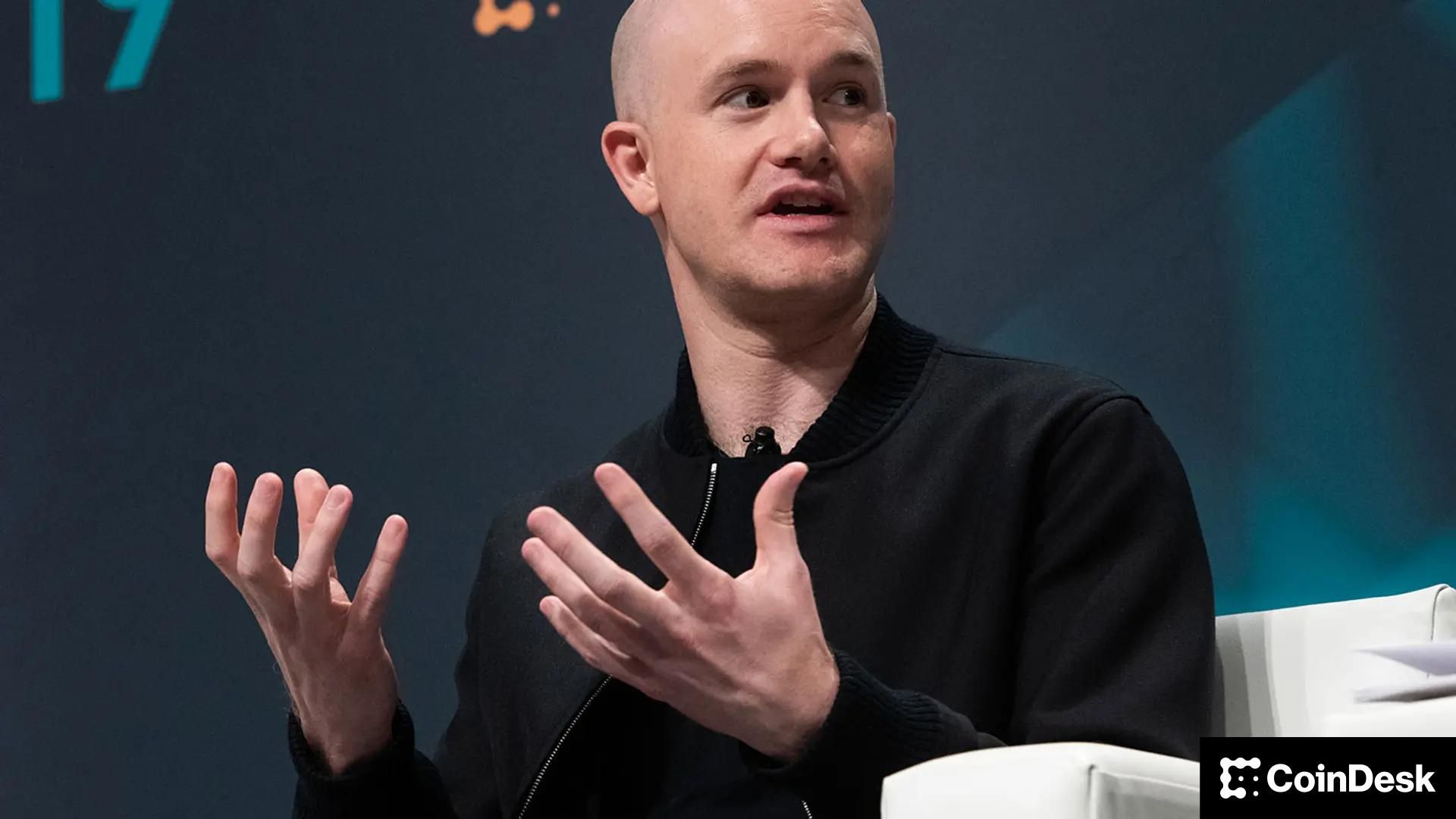
A new report commissioned by Coinbase sounds a cautious, but urgent, alarm: Quantum computing won’t break crypto tomorrow, but the industry can’t afford to wait.
The 50-page paper, authored by an independent advisory board that includes prominent cryptographers and academics like Dan Boneh of Stanford University, Justin Drake of the Ethereum Foundation and Sreeram Kannan of Eigen Labs, concludes that while today’s blockchains remain secure, a future “fault-tolerant quantum computer” capable of breaking widely used encryption is increasingly plausible, and preparation must begin now.
In recent months, concerns around quantum risk have moved further into the mainstream. Google researchers have published estimates suggesting that a sufficiently advanced quantum computer could one day break Bitcoin’s cryptography.
Major crypto ecosystems have already started mapping out their responses. The Ethereum Foundation has proposed new types of digital signatures that are designed to be safe against quantum computers, while Solana and others are experimenting with quantum-resistant wallet designs.
The report stresses that current quantum machines are far from powerful enough to crack the cryptography underpinning Bitcoin, Ethereum and other networks. Breaking standard encryption would require vast computational overhead, a milestone still considered a major engineering challenge.
Still, the authors caution against complacency.
“We have high confidence that a large-scale, fault-tolerant quantum computer will eventually be built,” the report states, adding that the timeline is uncertain but “clearly on the horizon.”
That uncertainty is exactly the problem, with estimates ranging from “a few years to a decade or more” and no reliable way to predict breakthroughs.
The urgency is reflected in guidance from the U.S. National Institute of Standards and Technology (NIST), which recommends migrating to quantum-resistant cryptography by 2035, a timeline the report suggests may even prove optimistic.
“Waiting for it to be urgent is not a good idea,” the Coinbase paper says, emphasizing that transitions across blockchains, wallets and exchanges could take years to execute safely.
Some assets may be more vulnerable than others. For example, Bitcoin wallets that have already revealed their public keys could be targeted, while those still protected behind hash functions may be safer in the short term.
The good news: Quantum-resistant cryptography (PQC) already exists and is being standardized by NIST.
The bad news: It’s not an easy swap.
Post-quantum digital signatures can be tens to hundreds of times larger than current ones, which could dramatically increase blockchain data costs and reduce throughput. One estimate in the report suggests that replacing today’s signatures with quantum-proof alternatives could expand block sizes by up to 38 times.
There are also usability challenges, from migrating millions of wallets to deciding what to do with “lost” or inactive funds that never upgrade.
Rather than a single solution, the report outlines multiple transition strategies, including hybrid systems that combine existing cryptography with post-quantum updates or allow a gradual switch when needed.
For now, the authors recommend flexible approaches that avoid sacrificing current security or performance while enabling a rapid upgrade later.
“The time to begin preparing for it is now,” the report concludes.
Read more: Solana’s quantum-threat readiness reveals harsh tradeoff: security vs speed

Plans for more than 30 flats near Cambridgeshire village train station

MF Picks: 13 smallcap stocks surge up to 115% in six months; 3 turn multibaggers

Best Crypto to Buy in 2026: BlockDAG, XRP, TRON, & Avalanche Lead the Market

Manchester United reach agreement with Casemiro over contract clause amid transfer speculation

Steven Gerrard disagrees with Gary Neville over ‘shock’ Chelsea and Arsenal claim | Football

US brings back mandatory military draft registration


-

 News Videos6 days ago
Secure crypto trading starts with an FIU-registered
-

 Fashion4 days ago
Weekend Open Thread: Theodora Dress
-

 Sports4 days ago
NWFL Suspends Two Players Over Post-Match Clash in Ado-Ekiti
-

 Politics4 days ago
Palestine barred from entering Canada for FIFA Congress
-

 Business2 days ago
Powerball Result April 18, 2026: No Jackpot Winner in Powerball Draw: $75 Million Rolls Over
-
Entertainment2 days ago
NBA Analyst Charles Barkley Chimes in on Ice Spice McDonald’s Fiasco
-

 Crypto World4 days ago
Russia Pushes Bill to Criminalize Unregistered Crypto Services
-

 Politics20 hours ago
Gary Stevenson delivers timely reminder to register to vote as deadline TODAY
-

 Tech3 days ago
Auto Enthusiast Scores Running Tesla Model 3 for Two Grand and Turns It Into Bare-Bones Go-Kart
-
 Business5 days ago
Creo Medical agree sale of its manufacturing operation
-

 Tech6 days ago
‘Avatar: Aang, The Last Airbender’ Leaked Online. Some Fans Say Paramount Deserves the Fallout
-

 Politics2 days ago
Zack Polanski demands ‘council homes not luxury flats for foreign investors’
-

 Crypto World4 days ago
Russia Introduces Bill To Criminalize Unregistered Crypto Services
-

 Tech7 days ago
Microsoft adds Windows protections for malicious Remote Desktop files
-
 Entertainment7 days ago
Dave Portnoy Slams Dianna Russini: ‘Makes Zero Sense’
-

 Crypto World7 days ago
X Launches New Cashtag Feature for Stocks and Crypto: X
-

 Sports6 days ago
British climbers complete new route in Swiss Alps
-

 Entertainment7 days ago
Prince Carter Brings Fans Front Row and Backstage at Boys 4 Life Tour
-
 Crypto World7 days ago
Paxos Labs Raises $12M to Launch Crypto Yield and Lending Platform
-
 Crypto World7 days ago
Bitcoin surpasses halfway mark in current halving cycle
You must be logged in to post a comment Login