
Crypto World
Best Crypto to Buy in 2026: BlockDAG, XRP, TRON, & Avalanche Lead the Market


The crypto landscape is shifting fast! As liquidity and tech breakthroughs redefine the game, the hunt for the best crypto to buy is zeroing in on powerhouses that pair massive utility with booming ecosystems. BlockDAG, XRP, TRON, and Avalanche are crushing it, offering everything from lightning-fast networks to global payment solutions, giving you the ultimate edge in this market.
Forget chasing tiny green candles; the smart money is pouring into projects with real usage and serious expansion. This pivot is your chance to ride the wave of long-term growth. Below, we break down these four giants in simple terms so you can see exactly where they stand and why they are dominating the current crypto arena.
1. BlockDAG: $0.00000058 Pre-Launch Phase With 237x Upside Potential
If you are searching for the best crypto to buy before a massive price explosion, BlockDAG is your urgent wake-up call. The current fixed price of $0.00000058 represents your absolute final chance before the open market takes over. We are looking at a staggering 237x projection, fueled by a rock-solid roadmap with high-stakes deadlines you cannot afford to miss.
The exchange frenzy is already here. BlockDAG (BDAG) is screaming across 13 platforms: Biconomy, Bifinance, CoinStore, P2B, AscendEX, BTSE, XT, BTCC, LBank, BitMart, WEEX, Pionex, and WEBOT. On top of this, listings on BingX and Gate.io are dropping soon, and more Tier-1 exchange listings are expected to follow!
Tier 1 status is a total game-changer, bringing deep liquidity and millions of global traders into the mix, moves that historically trigger massive price action. The dev team is also on fire; Smart Wallet claims are live, and Batch 4 opens April 27. Plus, a Casino is dropping on May 7!
By May, the DEX and liquidity rewards go live, followed by the “Super App” in June. This all-in-one suite includes lending, oracles, and dApps. But beware: the fixed-rate supply is vanishing. Once it’s gone, the $0.00000058 price is history, and you’ll be at the mercy of the open market.
2. XRP: Institutional Payments Network Driving Real-World Adoption
XRP remains a titan in the world of cross-border money moves and banking settlements. Built for extreme speed and low fees, it’s the go-to for financial giants needing to move liquidity across the planet in seconds.
When people talk about the best crypto to buy, XRP leads the pack for real-world impact. It’s not just hype; banks and payment providers are actively plugging into this network to revolutionize remittances. XRP is the bridge between the old-school banking world and the future of blockchain.

For those looking for long-term power, XRP offers a front-row seat to the global settlement revolution. As demand for digital payments and regulatory clarity grows, XRP is perfectly positioned to capture the global spotlight.
3. TRON: High-Throughput Blockchain Powering Global dApp
TRON is a beast of a blockchain, engineered to handle dApps, content sharing, and massive stablecoin volume without breaking a sweat. Its high-speed, low-fee architecture makes it a magnet for global users who want to move money fast without losing a fortune in fees.
In the race for the best crypto to buy, TRON is a fan favorite for its massive adoption in emerging markets and exploding on-chain activity. With DeFi, NFTs, and developers flocking to the network, TRON’s influence is only getting stronger.
Its ability to process huge transaction volumes keeps it ahead of the competition. As more people join the TRON ecosystem, its network effects are set to trigger even more growth across the global blockchain stage.
4. Avalanche: Scalable Smart Contract Infrastructure Driving DeFi Innovation
Avalanche is the speed demon of smart contract platforms, famous for its lightning-fast consensus and customizable “subnets.” This allows developers to build specialized blockchains for anything from enterprise solutions to the next big thing in DeFi.
Discussed widely as the best crypto to buy, Avalanche is a favorite for its top-tier tech and rapidly growing dev community. Its low latency and high throughput make it a serious threat to other smart contract platforms.

Fresh projects are landing on Avalanche every day, diversifying an already massive ecosystem. As the world screams for scalable blockchain tech, Avalanche is standing tall, ready to lead DeFi and institutional integration worldwide.
Final Thoughts
The market is obsessed with projects that have clear milestones and massive momentum. XRP, TRON, and Avalanche are holding strong as pillars of the industry, proving their worth through real usage and scalable tech.
However, BlockDAG is stealing the show in the best crypto to buy debate. With its $0.00000058 fixed price about to vanish and a 237x projection on the table, the FOMO is real. With BingX and other exchanges already live, and a roadmap packed with Super Apps and DeFi launches, the clock is ticking.

This structured rollout and massive upside potential make BlockDAG the one to watch. Don’t wait until it’s trading on the open market; the time to act is now!
Disclaimer: This is a Press Release provided by a third party who is responsible for the content. Please conduct your own research before taking any action based on the content.


Kalshi is set to launch cryptocurrency perpetual futures trading on April 27, according to a report from The Information. The move would mark the prediction market platform’s entry into crypto derivatives.
The company, valued at $11 billion, teased the product via a cryptic LinkedIn video. A rotating torus shape appears alongside the word “Timeless” and the April 27 launch date in New York City.
What Kalshi Perpetual Futures Mean for Traders
Perpetual futures allow traders to speculate on asset prices without owning the underlying token. Unlike traditional futures, these contracts have no expiration date.
Positions stay open indefinitely, with a funding rate keeping prices aligned with spot markets.
The product name carries a clear signal. “Timeless” maps onto a contract designed to run continuously rather than settle on a fixed date.
John Wang, Kalshi’s Head of Crypto, argued in August 2025 that perpetual futures and prediction markets are functionally converging.
Why This Matters
Perpetuals are already the highest-volume product in crypto trading. US-regulated versions have gained traction, with Cboe recently launching Bitcoin and Ether perpetual futures.
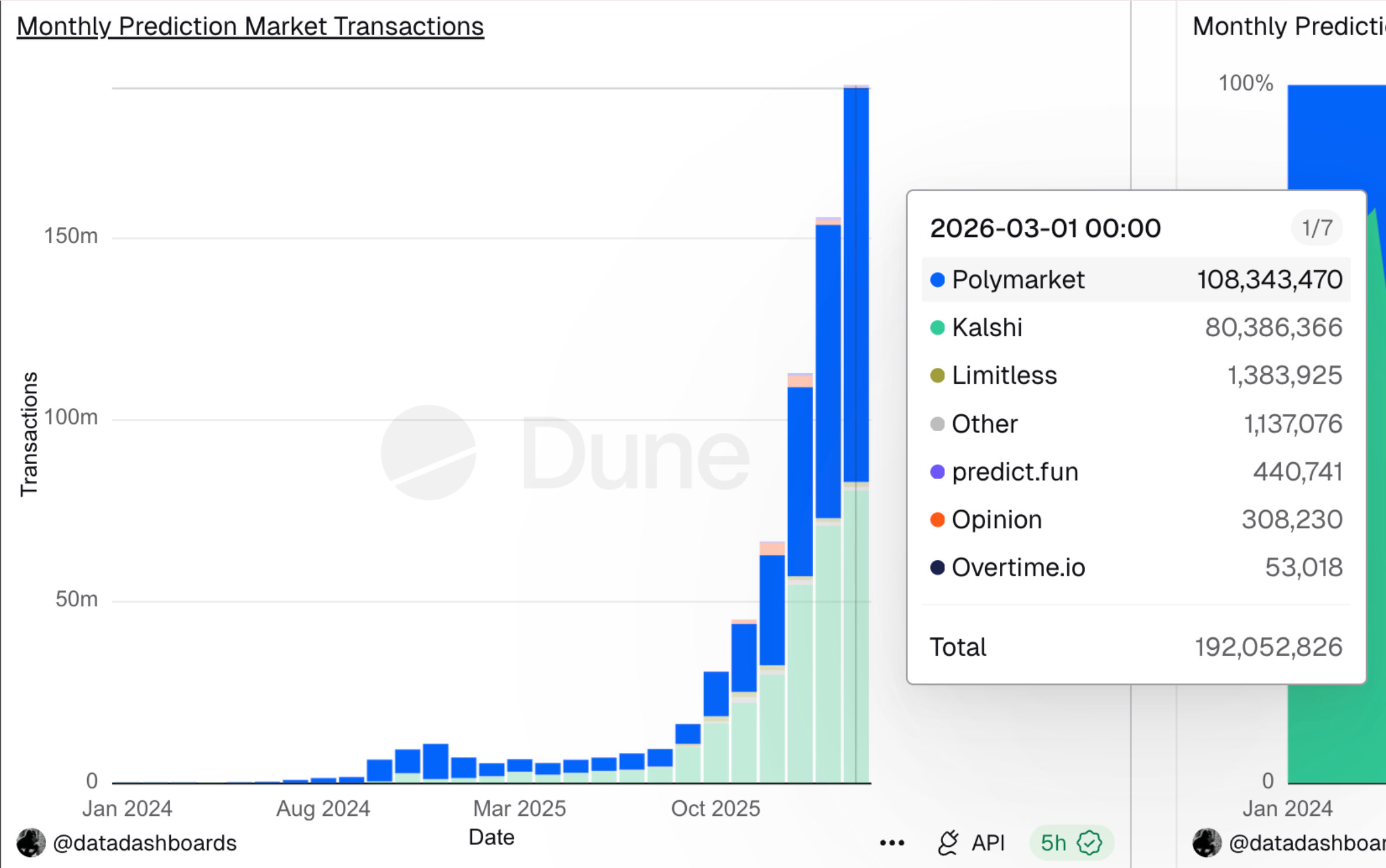
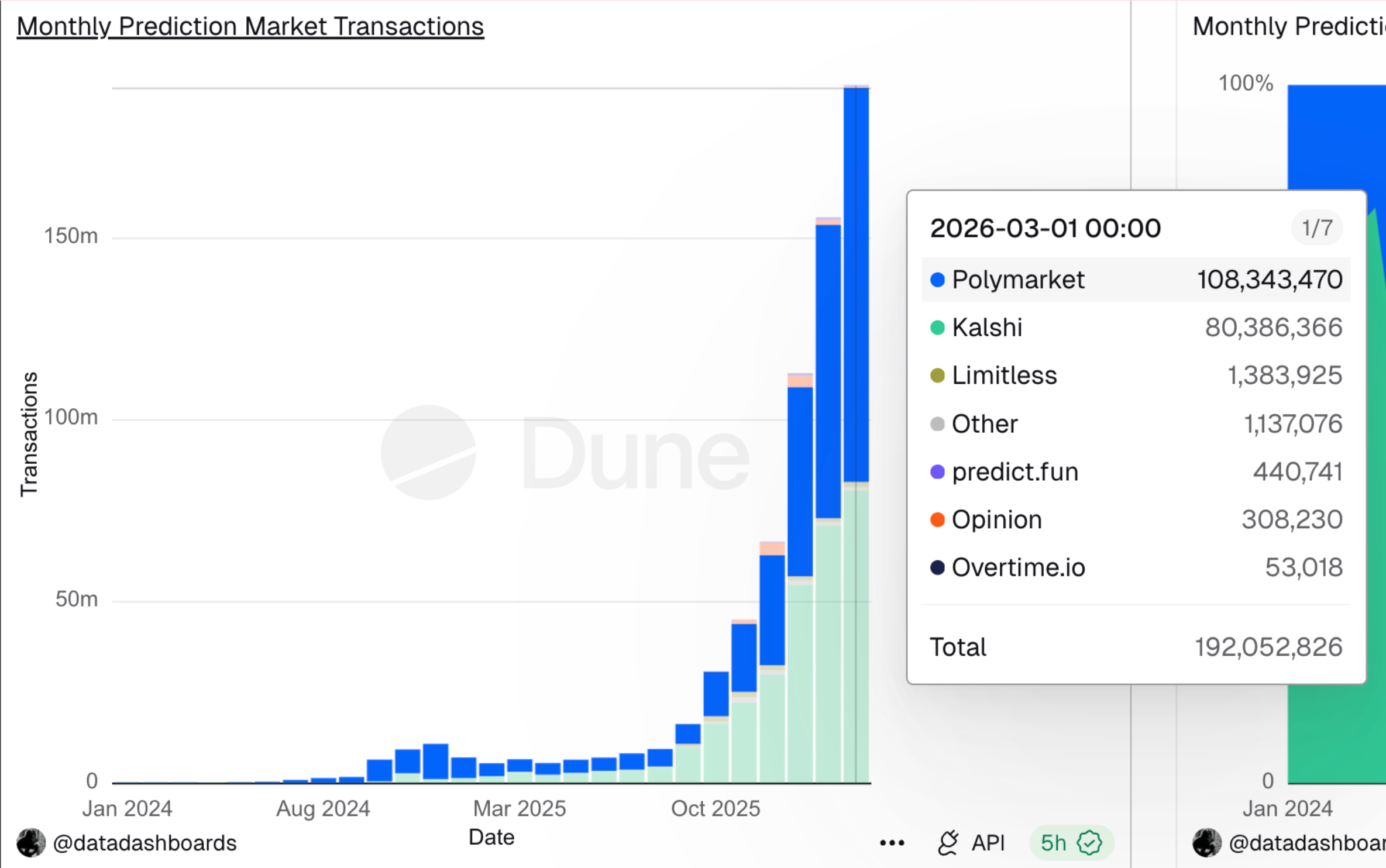
Prediction market transactions hit a record 192 million in March 2026.
By merging perpetual futures mechanics with prediction market infrastructure, Kalshi could attract institutional traders. The model offers continuous exposure rather than event-based binary contracts.
The platform operates under CFTC oversight, which may provide a regulatory edge over offshore competitors. Adding perpetual contracts would also let liquidity accumulate continuously rather than dispersing each time an event contract resolves.
The full scope of the product will become clear on April 27.
The post Kalshi Prediction Market Plans Crypto Perpetual Futures Launch On April 27 appeared first on BeInCrypto.


Spark’s MonetSupply says Aave’s decision to unfreeze its Core WETH market lets LST/LRT whales farm ~45% weETH loops while aEthWETH sits at 100% utilization, trapping regular users.
Summary
- Spark strategy director MonetSupply says Aave’s decision to unfreeze its Ethereum Core WETH market is “ill-considered” under current liquidity conditions.
- With aEthWETH utilization at 100%, he warns that high‑leverage weETH loops chasing ~45% APY will trap normal depositors and stablecoin borrowers trying to exit.
- The move, he argues, hands out arb opportunities without fixing aEthWETH liquidity, further degrading conditions for regular users already struggling to refinance.
Aave (AAVE) has decided to unfreeze its Ethereum Core WETH market just as liquidity is at its tightest, drawing sharp criticism from Spark’s strategy director MonetSupply. In a post on X, he called the move “quite ill‑considered,” arguing that under the current interest rate model, LST and LRT holders can spin up aggressive circular leverage loops using assets like weETH while ordinary users are effectively locked in.
High-octane loops on a dry WETH market
According to his calculations, traders can exploit roughly a 0.5% discount on weETH’s secondary‑market price relative to ETH and an Aave ETH borrowing rate capped around 5.15% to construct recursive long ETH positions with an annualized return profile near 45% when stacked on top of the base staking yield. With the aEthWETH market already sitting at 100% utilization, every fresh loop tightens the squeeze on exit liquidity for plain‑vanilla depositors and borrowers.
The problem, MonetSupply argues, is that unfreezing WETH under these conditions does nothing to relieve the liquidity stress facing aEthWETH users. “This decision provides arbitrage opportunities without addressing the liquidity tension of aEthWETH,” he wrote, warning that users trying to withdraw WETH or roll over leveraged stables are discovering there is simply no buffer left in the pool.
Recent comments from the Spark strategist on related ETH‑market fragilities flagged how similar dynamics can spiral: once utilization is pinned at 100%, suppliers lose incentives to stay, while borrowers lose room to deleverage, raising the risk of stuck positions and cascading liquidations if rates or collateral prices move against them. Combined with post‑Kelp DAO nerves and elevated demand for on‑chain ETH liquidity, Aave’s decision to reopen the throttle on WETH looks, in his view, less like restoring normalcy and more like inviting sophisticated loopers to farm a basis trade atop an already strained market.
If those incentives persist, the likely outcome is a familiar split: whales and structured funds capturing leveraged carry via weETH loops, while retail depositors and stablecoin borrowers face rising odds of being trapped in a market where the exit door is technically open—but functionally blocked by 100% utilization.


Polymarket announced perpetual futures trading on April 21, letting users go long or short on prediction markets around the clock.
The announcement arrived just hours after reports surfaced that rival Kalshi plans to launch its own perpetual product, codenamed “Timeless,” on April 27.
Prediction Market Perps Race Heats Up
Polymarket’s new perps feature will allow traders to take leveraged positions on prediction market outcomes without waiting for a contract to expire.
The platform framed the product as a way to “go long or short the markets you know 24/7,” according to its official announcement.
The timing appears strategic. Kalshi CEO Tarek Mansour teased “Timeless” on April 13 with a cryptic video revealing an April 27 launch date in New York.
Kalshi’s product will also include crypto perpetual futures, putting it in direct competition with exchanges like Coinbase and Robinhood.
Both platforms have grown aggressively in recent months. Prediction market transactions surpassed 192 million in March 2026, an all-time record.
Kalshi, now valued at $11 billion, processes over $100 billion in annualized trading volume. Polymarket, valued at $9 billion, has seen weekly notional volume consistently exceed $1 billion through Q1 2026.
The rivalry between the two platforms mirrors a broader shift. Prediction markets increasingly resemble TradFi products, and perpetual contracts could accelerate that trend by attracting institutional-style trading flow.
Whether Polymarket’s head start translates into a lasting advantage may depend on how quickly both platforms can build liquidity for their new offerings.
The post Polymarket Unveils Perpetual Futures In Time To Beat Kalshi’s Crypto Launch appeared first on BeInCrypto.
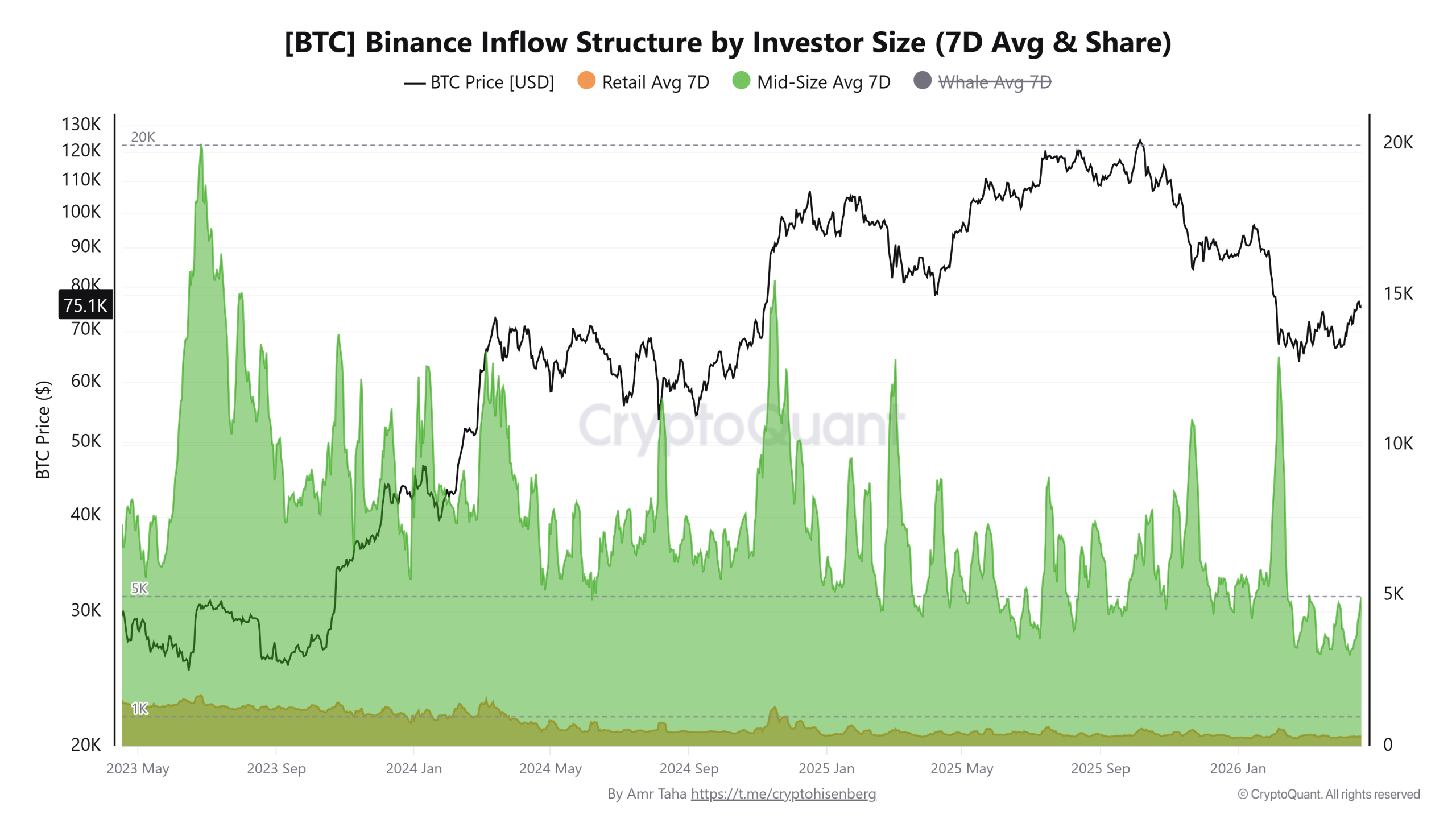
Bitcoin (BTC) mid-size wallet inflows to Binance fell to 3,000–4,000 BTC, marking a multi-year low in sell-side activity from this cohort.
This coincides with Coinbase recording about 8,500 BTC in inflows from similar wallets on April 19, while other exchanges saw much smaller flows. Binance exchange Bitcoin inflows have also fallen to 2023 levels, but how is this significant to today’s market?
Binance BTC inflows cool sharply to 2023 levels
CryptoQuant data classifies mid-size wallets as the entities holding roughly 100–1,000 BTC, often linked to active traders and smaller institutions. These wallets tend to move coins to the exchanges during distribution periods, making their inflows a useful proxy for near-term selling intent.

Crypto analyst Amr Taha noted that seven-day average Bitcoin inflows from this cohort into Binance have dropped to 3,000–4,000 BTC. This remains well below the deposits observed during April to May 2023, which ranged from 5,500 to 6,000 BTC.
The lowered inflow levels suggest reduced immediate sell-side pressure, as fewer coins are being positioned on the exchange, although inflows alone do not translate into active selling.
The chart shows no comparable surge from retail participants (1-100 BTC) either, with smaller wallets contributing limited inflows of less than 300 BTC on Tuesday. This indicates a contained flow profile rather than broad-based selling pressure.
Related: Bitcoin metrics line up bull signals with $78K the BTC price level to beat
Bitcoin flows on Coinbase dominate
The distribution of BTC inflows across exchanges provides another perspective. Data from CryptoQuant shows that mid-size investor inflows into Coinbase reached about 8,500 BTC on April 19, approaching levels last seen after the FTX exchange collapse in November 2022.

BTC activity across other exchanges remained relatively muted. Amr Taha noted that a broad distribution phase would typically reflect synchronized inflows across multiple exchanges, which is not evident in the current data.
A similar spike on Coinbase was observed on Jan. 14, shortly before Bitcoin declined from $95,000 to below $67,000 in February. However, the current conditions differ, as exchange inflows appear fragmented rather than market-wide, suggesting mixed sentiment rather than coordinated distribution.
Data from Bitcoin researcher Axel Adler Jr. also highlights a deeper shift in supply dynamics. Bitcoin’s 30-day net flow dropped to -300,000 BTC in March from +94,000 BTC in February, signaling a strong withdrawal phase. The metric stands near -98,000 BTC as of April 21, with outflows continuing at a slower pace.

Adler Jr. added that exchange reserves have declined for seven consecutive weeks, falling by over 105,000 BTC since early March. Notably, even during the April 2 pullback toward $67,000, there was no significant return of coins to exchanges.
Related: Inside the ‘fake police raid’ that forced a $1M Bitcoin transfer
This article is produced in accordance with Cointelegraph’s Editorial Policy and is intended for informational purposes only. It does not constitute investment advice or recommendations. All investments and trades carry risk; readers are encouraged to conduct independent research before making any decisions. Cointelegraph makes no guarantees regarding the accuracy or completeness of the information presented, including forward-looking statements, and will not be liable for any loss or damage arising from reliance on this content.
Crypto World
Kelp DAO exploit may force big banks to rethink their blockchain plans, Jefferies warns
A major decentralized finance (DeFi) hack could prompt Wall Street firms to reassess the pace of their blockchain and tokenization efforts, a Jefferies analyst wrote in a report.
The note follows a $293 million exploit of Kelp DAO on April 18, in which attackers minted unbacked tokens and used them as collateral to borrow other assets across lending platforms.
The incident, potentially linked to North Korea’s Lazarus Group, has already rippled through crypto markets, triggering sharp token sell-offs and a liquidity crunch in key protocols.
Jefferies analyst Andrew Moss said the fallout may extend beyond crypto-native firms to traditional financial institutions, which have been accelerating efforts to tokenize assets such as funds, bonds and deposits.
“TradFi tokenization initiatives are proliferating as institutional investment accelerates,” Moss wrote. However, the exploit and its “cascading implications” could “temporarily slow TradFi adoption as security risks are re-evaluated.”
The attack exposed vulnerabilities in blockchain “bridges,” which enable the transfer of assets between networks. In this case, the hackers exploited a verification setup that relied on a single validator, raising concerns about single points of failure in systems meant to be decentralized.
For banks and asset managers, these risks matter. Many tokenization efforts depend on cross-chain infrastructure to move assets and maintain liquidity across platforms. Without secure bridges, Moss warned, markets could become fragmented, limiting the usefulness of tokenized assets.
‘Nascent’ industry
The immediate impact has been severe inside DeFi.
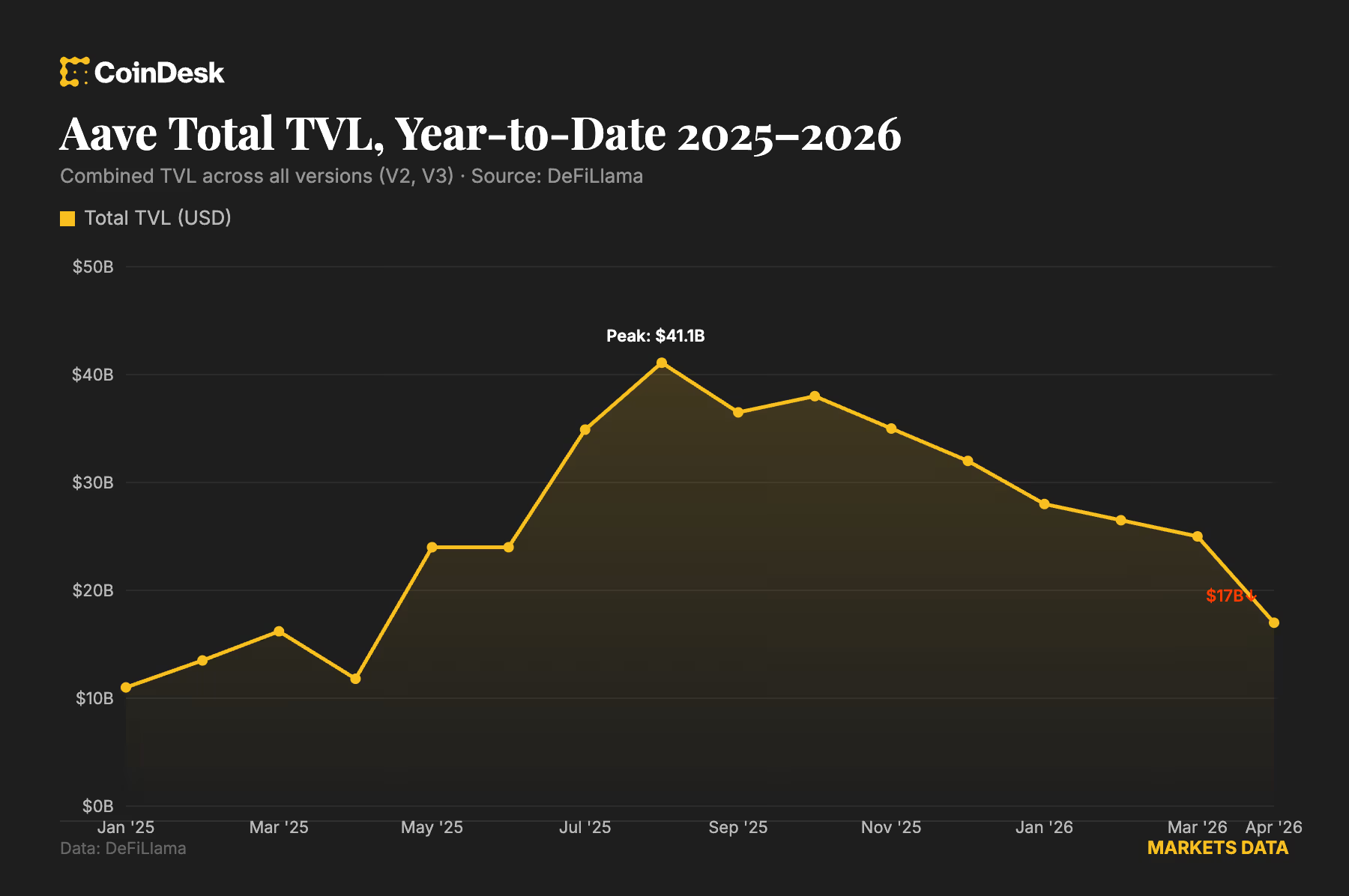
Lending platform Aave was left with roughly $200 million in bad debt, while total value locked dropped by about $9 billion as users withdrew funds. Liquidity in key markets has tightened, with some pools frozen or near full utilization, raising the risk of forced liquidations.

While Moss does not expect the incident to spill into traditional financial markets, it said the loss of trust could weigh on adoption in the near term. Firms may pause or slow deployments as they review vulnerabilities and rethink system design.
At the same time, the longer-term outlook remains intact.
Regulatory progress and infrastructure improvements continue to support institutional interest. Stablecoins, in particular, are expected to play a growing role in payments, with use cases expanding from trading into areas such as cross-border transfers and payroll.
Still, the report highlights a key challenge: as Wall Street moves deeper into crypto, it must rely on infrastructure that is still maturing.
“The nascent digital asset industry still requires time to mature,” Moss said, pointing to the need for more robust systems before tokenization can scale safely.
Read more: ‘DeFi is dead’: crypto community scrambles after this year’s biggest hack exposes contagion risk

New York’s top legal officer has moved to curb prediction-market style offerings linked to cryptocurrency platforms, filing lawsuits against Coinbase Financial Markets and Gemini Titan for allegedly operating such markets in New York without proper licensing. Reuters reported on the complaints, which contend these platforms violated the state’s gambling laws by offering real-world event bets without approval from the New York State Gaming Commission.
Attorney General Letitia James asserted that “Gambling by another name is still gambling, and it is not exempt from regulation under our state laws and Constitution.” The lawsuits seek disgorgement of allegedly illegal profits, restitution for affected customers, and a prohibition on offering these products to individuals under 21 years of age.
These actions reflect a broader, state-level push to regulate prediction markets, a fast-growing niche in crypto commerce that allows users to wager on outcomes ranging from political events to other real-world occurrences. Much of the recent scrutiny has focused on platforms such as Polymarket and Kalshi, which have sparked questions about whether their products fall under gambling law or financial regulation. The federal landscape has also been active; the Commodity Futures Trading Commission (CFTC) has asserted it holds exclusive authority over prediction markets in several actions against state attempts to regulate the sector.
For crypto firms operating prediction-like products, the NY filing underscores significant regulatory risk. By targeting so-called prediction markets, regulators are signaling that many of these products may not be exempt from oversight, even if they are framed as information markets or data-heavy forecasting tools. As coverage on related developments notes, Polymarket has pursued legal action in other jurisdictions and broader market participants continue to navigate a complex regulatory mosaic.
Related context: Cointelegraph reported that Polymarket has been involved in a Massachusetts dispute over state authority to regulate prediction markets that the CFTC has approved, illustrating the broader tension between state regulators and platforms that operate near the line between gambling, financial products, and information services.
Key takeaways
- New York’s attorney general alleges Coinbase Financial Markets and Gemini Titan operated unlicensed prediction markets in the state, violating NY gambling laws.
- The complaints seek disgorgement of profits, restitution to affected consumers, and a ban on offerings to users under 21.
- The action is part of a broader state-level crackdown on prediction markets, highlighting regulatory ambiguity around whether these products are gambling, securities, or commodities.
- The case unfolds amid ongoing CFTC assertions of federal authority over prediction markets, signaling potential regulatory tension between state and federal regimes.
- For crypto platforms, the enforcement action reinforces licensing and compliance risks, with cross-border and jurisdictional differences shaping product design and rollout strategies.
Allegations against Coinbase Financial Markets and Gemini Titan
According to Reuters, the complaints contend that Coinbase Financial Markets and Gemini Titan operated prediction-market-like products in New York without licenses from the New York State Gaming Commission. The suits argue that these activities fall under state gambling statutes and are therefore subject to licensing and regulatory oversight.
Attorney General James’s office framed the matter as a regulatory and consumer-protection issue, stressing that the activities implicated “illegal profits” and potential harm to residents who may be under the age of 21. The actions seek monetary remedies as well as measures to restrict access to such offerings for younger users.
In the broader ecosystem, the NY action arrives amid questions about how platforms that blend crypto with real-world event bets should be classified—whether as gambling, securities, or something else entirely. The debate is ongoing, with Polymarket and Kalshi cited in industry and regulatory discussions as examples of platforms navigating (and sometimes testing) existing legal boundaries.
Additionally, the case highlights the risk regulators perceive in prediction-style markets, even as some firms argue for a broader interpretation of permissible offerings within crypto markets. The tension between state enforcement and federal authority continues to shape strategic decisions for operators considering expansion into major markets. As noted in industry coverage, Polymarket has taken its own legal steps in related matters, underscoring a wider pattern of regulatory contest in this space.
Regulatory landscape for prediction markets
The NY filings come against a backdrop of a shifting regulatory mosaic in which state authorities seek to police gambling-like activities within crypto ecosystems, while federal agencies claim jurisdiction over specific product classes. The CFTC has pursued legal actions against several states attempting to regulate prediction markets, asserting that it is the federal body with primary authority in this domain. That tension creates a fragmented environment for platforms that operate across jurisdictions, forcing operators to calibrate product design, licensing approaches, and KYC/AML controls to satisfy multiple regimes.
From a policy perspective, the developments underscore how regulators are re-evaluating the line between gambling and financial-market products in the digital era. The dialogue also intersects with broader regulatory themes, including licensing standards, consumer protection, and cross-border compliance obligations for platforms offering complex financial and forecasting instruments.
Within the international context, observers note that regulatory approaches vary widely—from licensing requirements to outright prohibitions in some jurisdictions—making global rollouts increasingly complex for prediction-market operators and their banking partners. The evolving stance in the United States, paired with ongoing EU and other regional considerations, contributes to significant compliance planning challenges for incumbents and entrants alike.
Implications for compliance, licensing, and institutional risk
For crypto firms, the New York action reinforces the imperative to align product offerings with clear regulatory classifications and licensing pathways. Operators must consider whether their markets resemble gambling, securities, or commodity products, and ensure that appropriate registrations, disclosures, and age-restriction controls are in place.
Financial institutions and payment partners evaluating involvement with prediction-market platforms will also be weighing regulatory risk, customer-protection obligations, and potential sanctions for noncompliance. The NY action amplifies the need for rigorous AML/KYC programs, robust consumer safeguards, and transparent disclosures about product mechanics and eligibility criteria. In this context, cross-border operations must account for divergent regulatory regimes, potentially complicating settlement rails, custody arrangements, and banking relationships.
From a policy standpoint, the case contributes to broader discussions about how to regulate innovative crypto-enabled bets and forecast markets without stifling legitimate innovation. It also highlights the ongoing jurisdictional contest between state regulators seeking direct control and federal authorities asserting overarching authority, a dynamic that will likely influence licensing strategies and litigation risk for market participants in the near term.
As part of the broader ecosystem narrative, observers should monitor whether other states replicate New York’s approach, and whether the CFTC’s asserted authority leads to new federal guidance or enforcement actions that reshape the permissible scope of prediction-market products. The regulatory trajectory could influence business models, risk controls, and capital planning for crypto exchanges and ancillary platforms seeking to offer similar services.
Closing perspective: with enforcement focused on licensing, age restrictions, and regulatory classification, the NY action signals a key inflection point for prediction markets in crypto. Institutions should watch for new guidance, potential licensing reforms, and the possibility of harmonized—or at least clarified—standards across jurisdictions in the months ahead.
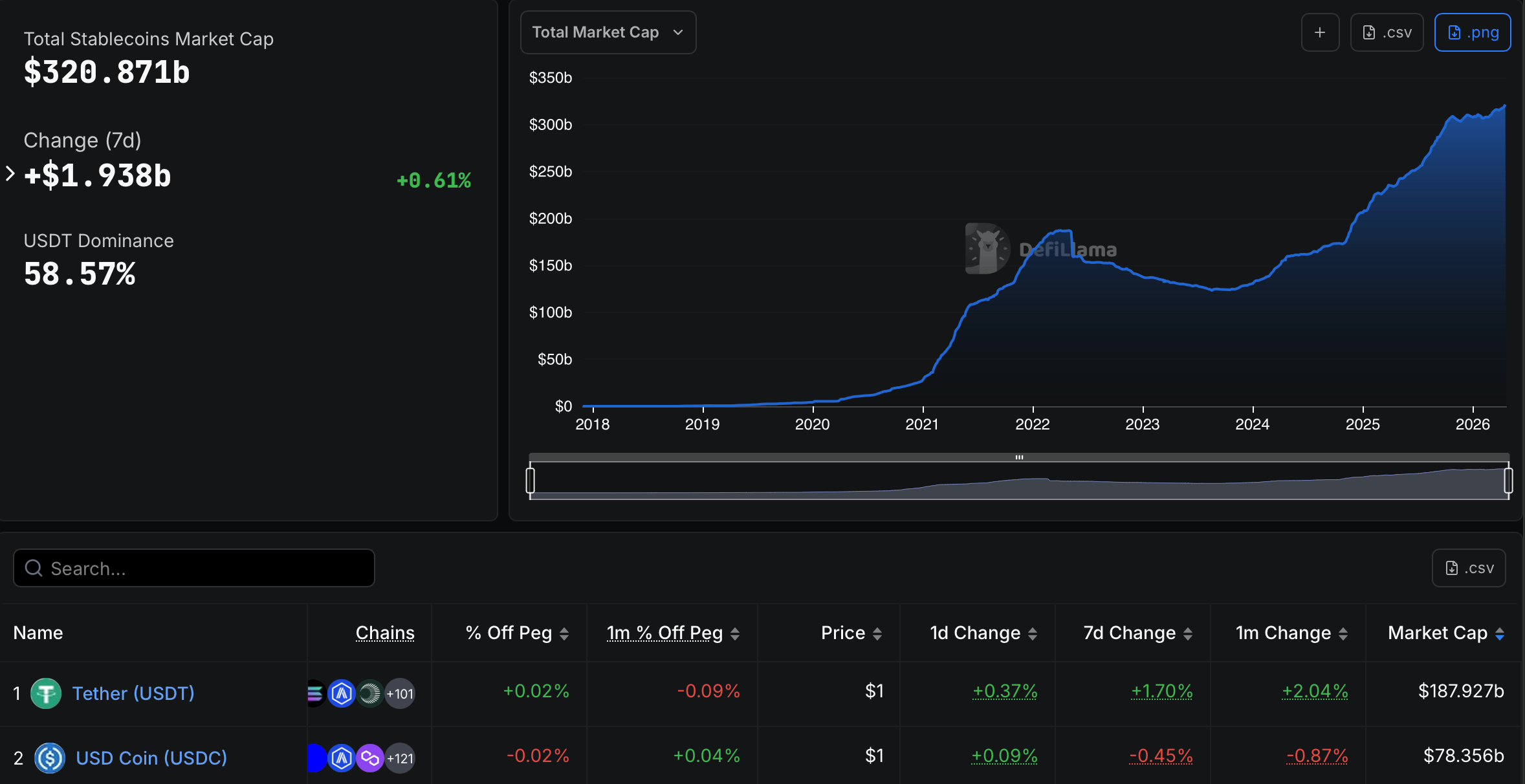
Singapore fintech Nium has selected Coinbase to integrate USDC payments into its global network to send, receive and convert stablecoins to fiat across more than 190 countries through a single platform.
According to a Tuesday announcement, the integration uses Coinbase’s infrastructure for custody, liquidity and wallet services, enabling Nium’s customers to fund cross-border payouts in USDC and settle in either stablecoins or local currencies without relying on prefunded accounts.
Nium said the setup supports just-in-time settlement, allowing funds to be deployed at payout rather than held across multiple jurisdictions, and includes options to link stablecoin balances to card programs for real-world spending.
According to Nium, its network supports more than 100 currencies, with local collection in 40 markets, real-time payouts in over 100 corridors and more than 40 regulatory licenses worldwide.
The rollout follows the company’s recent launch of a platform that enables businesses to issue stablecoin-funded cards on Visa and Mastercard networks, with balances converted to fiat at the point of sale and settlement, compliance and integration handled through a single system.
USD Coin (USDC), a US dollar-pegged stablecoin launched in 2018 by Circle and Coinbase, is designed to maintain a 1:1 value with the dollar and is backed by cash and short-term US Treasury reserves.
According to DefiLlama data, it is the second-largest stablecoin by market capitalization, at around $78 billion, behind Tether’s USDT (USDT), which stands at roughly $188 billion.
Related: Iran views BTC as strategic asset, but USDt still dominates oil tolls: BPI
Circle expands USDC use in cross-border payments
Circle has been expanding USDC’s role in cross-border payments through a series of partnerships aimed at integrating stablecoin settlement into existing financial networks.
In March, the company teamed with Sasai Fintech to expand USDC payments across African corridors, targeting remittances, business transactions and mobile wallets. In parts of Sub-Saharan Africa, remittance costs exceed 7%, well above the UN’s 3% target.
Earlier this month, Circle teamed up with Thunes to expand USDC settlement across its global payments network, enabling near real-time cross-border transfers while reducing reliance on prefunded accounts. The integration extends USDC-based liquidity across Thunes’ network, which spans more than 140 countries.
Recent data shows increasing USDC activity. A CEX.IO report earlier this month found the stablecoin’s supply grew by about $2 billion in the first quarter, while Tether’s USDT declined by roughly $3 billion, marking a divergence between the two for the first time since 2022.
Magazine: Adam Back says current demand is ‘almost’ enough to send Bitcoin to $1M



Virginia redistricting reaches its decisive moment today as voters in a statewide special election choose whether to approve a Democratic-drawn congressional map that would shift the state’s House delegation from six Democratic seats and five Republican seats to a projected ten Democratic and one Republican, CNN reported.
Summary
- Nearly 1.4 million Virginians cast early ballots before today’s polls opened, an unusually large figure for an April special election.
- Democrats spent $55 million on advertising versus $23 million for Republicans, with Hakeem Jeffries, former President Obama, and California Governor Gavin Newsom all campaigning for a yes vote.
- A Washington Post and George Mason University poll showed 52% of likely voters supported the measure and 47% opposed, within the margin of error.
Virginia redistricting is the defining political story today as voters decide on a constitutional amendment that would temporarily hand the Democratic-controlled General Assembly the power to redraw the state’s congressional map before the November midterms. Polls close at 7 p.m. ET.
A yes vote immediately activates a pre-approved map already passed by the legislature and signed by Governor Abigail Spanberger. That map projects Democrats winning ten of the state’s eleven congressional seats. A no vote leaves the current map in place until the bipartisan redistricting commission draws new lines after the 2030 census.
“We didn’t start this fight, but I’m saying to Virginia, we need to finish it,” Democratic Delegate Delores McQuinn said at a rally in the final days of the campaign.
What the Map Would Change If the Amendment Passes
The current Virginia congressional map has six Democratic seats and five Republican seats. Under the proposed Democratic map, ten of the eleven districts are projected to favor Democrats, with only the eleventh remaining competitive for Republicans. That shift of four seats in one state would be one of the largest single-state contributions to a potential Democratic House majority in November, given how narrow the current Republican margin is.
Republicans including former Governor Glenn Youngkin and Speaker Mike Johnson campaigned against the amendment, arguing that Virginia voters approved the bipartisan redistricting commission in 2020 specifically to prevent partisan mapmaking. Democrats framed their effort as a direct response to Republican gerrymandering in Texas and other states encouraged by President Trump in 2025.
How the National Redistricting War Reached Virginia
Virginia is the latest front in what CNN described as “an unprecedented coast-to-coast redistricting war.” Trump encouraged Republican-led states to redraw their congressional maps mid-decade for partisan advantage. Texas acted first. California Democrats responded by stripping Republicans of several seats. Multiple states followed. The running national tally before today’s vote shows nine additional Republican-friendly seats against six Democratic-leaning ones created through mid-decade redistricting.
The Virginia amendment survived two separate court rulings that attempted to block it from the ballot, two Virginia Supreme Court interventions, and an ongoing legal challenge from Republicans whose briefs are due to the Virginia Supreme Court two days after today’s election. The outcome of the vote itself will not resolve the legal fight, only determine which map is in effect while courts continue deliberating.
What the Vote Means for the Crypto Legislative Window
Every additional seat at risk heading into November tightens the calculation for how aggressively the Republican House majority will pursue legislative priorities before members turn their attention to their own electoral survival. The midterm pressure on the crypto legislative calendar is already severe: the CLARITY Act markup is overdue, the stablecoin bill remains unfinished, and the effective legislative window before summer recess is measured in weeks.
A large Democratic gain from Virginia would narrow the seat count Republicans need to defend, accelerate the midterm posture across Congress, and further compress the window available for crypto reform advocates to secure votes. The results tonight will be watched by every lobbyist and legislative strategist tracking how much runway the current majority has left.
Crypto World
Kalshi takes on Coinbase (COIN), Robinhood (HOOD) with new plan to offer crypto perpetual futures: The Information


Prediction markets platform Kalshi is preparing to launch crypto trading in the U.S., according to a report from The Information, expanding beyond its core prediction markets business as competition intensifies across both sectors.
The platform plans to start by offering perpetual futures tied to crypto tokens such as bitcoin , people familiar with the matter told the publication.
Perpetual futures are a type of derivatives contract that allow traders to bet on the price of an asset without owning it and without a fixed expiration date. Unlike traditional futures, which settle at a set time, perpetuals can be held indefinitely as long as traders maintain sufficient collateral. Prices are kept aligned with the underlying asset through funding payments between long and short positions, making them a core product on many offshore crypto exchanges.
Kalshi’s move would place it in more direct competition with crypto platforms such as Coinbase (COIN), which has been expanding its own derivatives and prediction market offerings. Coinbase does not yet offer true perpetual futures in the U.S., though it has introduced “perpetual-style” futures contracts with long-dated expirations and has signaled interest in bringing more advanced derivatives products onshore. Other exchanges are moving in a similar direction, underscoring a broader push to capture demand that has historically flowed to offshore venues.
Kalshi’s expansion comes as regulatory conditions in the U.S. begin to shift, opening the door for products that have largely traded outside the country. The company already holds multiple licenses from the Commodity Futures Trading Commission (CFTC) and recently secured approval to offer margin trading, positioning it to enter the derivatives market.
The firm is expected to begin with crypto-linked perpetuals but could extend the model to other asset classes over time, one of the people said.
The move reflects growing overlap between prediction markets and crypto trading platforms, which are increasingly competing for the same users. Several major crypto exchanges, including Coinbase, Crypto.com and Gemini, have introduced prediction market products, while crypto trading volumes have declined in recent months following a market downturn.
At the same time, activity in prediction markets has surged, drawing both user engagement and investor capital. That convergence is pushing platforms like Kalshi to broaden their offerings as they compete for a shared base of traders.


Key takeaways
- Stellar is up 7% in the last 24 hours, making it the best performer among the top 20 cryptocurrencies by market cap.
- On-chain data, derivatives metrics, and momentum indicators collectively support a positive outlook
Stellar (XLM) is showing strong performance above critical resistance levels on Tuesday, as XLM found support around its respective resistance the previous day.
With growing on-chain activity, positive derivatives data, and bullish momentum indicators, XLM is poised for potential upside.
Bullish sentiment backed by on-chain and derivatives data
CryptoQuant’s latest summary suggests a neutral to bullish outlook for XLM, highlighting large whale orders and favorable conditions in spot markets.
XLM is showing large whale orders with mostly neutral market metrics, reinforcing a bullish outlook.
On the derivatives front, XLM is displaying positive funding rates. XLM’s OI-Weighted Funding Rate flipped positive on Monday, reaching 0.0032% on Tuesday. This positive rate suggests a bullish market sentiment, with longs paying shorts.
XLM is showing promising signs of continued strength as it maintains momentum toward a potential breakout.
XLM technical outlook: Rebounds from key support
The XLM/USD 4-hour chart is bearish and efficient as Stellar is trading at $0.1815 at press time. The coin found support around the 50-day EMA at $0.165 the previous day.
XLM is holding a constructive near-term bias as it stabilizes above the 50-day EMA and the broken descending trendline that now offers secondary support near $0.153.
The current momentum indicators suggest that XLM could rally higher in the near term. The RSI on the 4-hour chart reads 71, just below the overbought territory. The MACD line is tracking above zero, suggesting buyers retain control while price stays capped above the 100-day EMA at $0.179.
If the rally persists, immediate resistance would be found at the 4-hour TLQ of $0.194, followed by a more substantive barrier at the 23.6% Fibonacci retracement of the broader downswing at $0.201.
A daily candle close above these levels would expose the 200-day EMA at $0.215, which defines a key medium-term hurdle.

On the downside, initial support is seen at the 100-day EMA of $0.179, with another major demand zone at the day’s open near $0.173.
An extended bearish performance would expose the 50-day EMA at $0.165, with deeper protection at the former descending resistance line-turned-support around $0.153.

HMRC Appeals EV Charger VAT Ruling: 5% vs 20% Tax Battle

Kalshi Prediction Market Plans Crypto Perpetual Futures Launch On April 27

Who are the football players with the most league titles?

Manchester United reach agreement with Casemiro over contract clause amid transfer speculation

Steven Gerrard disagrees with Gary Neville over ‘shock’ Chelsea and Arsenal claim | Football

US brings back mandatory military draft registration


-

 News Videos6 days ago
Secure crypto trading starts with an FIU-registered
-

 Fashion4 days ago
Weekend Open Thread: Theodora Dress
-

 Sports4 days ago
NWFL Suspends Two Players Over Post-Match Clash in Ado-Ekiti
-

 Politics4 days ago
Palestine barred from entering Canada for FIFA Congress
-

 Business2 days ago
Powerball Result April 18, 2026: No Jackpot Winner in Powerball Draw: $75 Million Rolls Over
-
Entertainment2 days ago
NBA Analyst Charles Barkley Chimes in on Ice Spice McDonald’s Fiasco
-

 Crypto World4 days ago
Russia Pushes Bill to Criminalize Unregistered Crypto Services
-

 Politics22 hours ago
Gary Stevenson delivers timely reminder to register to vote as deadline TODAY
-

 Tech3 days ago
Auto Enthusiast Scores Running Tesla Model 3 for Two Grand and Turns It Into Bare-Bones Go-Kart
-
 Business5 days ago
Creo Medical agree sale of its manufacturing operation
-

 Tech6 days ago
‘Avatar: Aang, The Last Airbender’ Leaked Online. Some Fans Say Paramount Deserves the Fallout
-

 Politics2 days ago
Zack Polanski demands ‘council homes not luxury flats for foreign investors’
-

 Crypto World4 days ago
Russia Introduces Bill To Criminalize Unregistered Crypto Services
-

 Tech7 days ago
Microsoft adds Windows protections for malicious Remote Desktop files
-
 Entertainment7 days ago
Dave Portnoy Slams Dianna Russini: ‘Makes Zero Sense’
-

 Crypto World7 days ago
X Launches New Cashtag Feature for Stocks and Crypto: X
-

 Sports6 days ago
British climbers complete new route in Swiss Alps
-

 Entertainment7 days ago
Prince Carter Brings Fans Front Row and Backstage at Boys 4 Life Tour
-
 Crypto World7 days ago
Paxos Labs Raises $12M to Launch Crypto Yield and Lending Platform
-
 Crypto World7 days ago
Bitcoin surpasses halfway mark in current halving cycle
You must be logged in to post a comment Login