Connect with us
DAPA Banner

NewsBeat

From floppy discs to Claude Mythos, how ransomware grew into a multibillion-dollar industry

Published

on

From floppy discs to Claude Mythos, how ransomware grew into a multibillion-dollar industry

When evolutionary biologist Joseph Popp coded the first documented piece of ransomware in 1989, he had little idea it would become a major criminal business model capable of bringing economies to their knees.

Popp, who worked for the World Health Organization at the time, wanted to warn people about the dangers of ignoring health warnings, poor sexual hygiene and (human) virus transmission.

He sent out 20,0000 floppy discs that, when loaded, flashed up a demand for money to regain files that had supposedly been encrypted (in fact, it was just their file names). He was later arrested and charged with 11 counts of blackmail, but declared mentally unfit to stand trial.

In 1996, two Columbia University computer scientists published a paper explaining how criminals could use more sophisticated versions of Popp’s scheme to mount large-scale extortion operations. At the heart of this was malicious software that could be used to encrypt, block access to or steal a person or organisation’s files and data.

Advertisement

However, two preconditions still had to be met for ransomware to become a feasible criminal business: communication channels that were difficult to monitor, and a payments process outside financial regulation.

The Tor protocol, released by US intelligence services to protect their covert communications, solved the first problem in 2004. Cryptocurrencies solved the second – in particular, when bitcoin cash machines started appearing in North American cities from 2013.

Today, artifical intelligence makes malware coding and crafting convincing phishing-emails in any language simple. And the latest model in Anthropic’s AI system, Claude Mythos, recently proved more effective at hacking into computer systems than humans.

As an expert in extortive crime, I am increasingly concerned about public and political apathy to the threats posed by ransomware. To better understand these, it’s worth tracing its evolution over the past two decades – and how improvements in computer security and law enforcement, plus changes in data regulation, have led to new criminal strategies each time.

Advertisement

Cut out the middlemen

The first generation, which came to global attention in the mid-2010s, was known as “commodity ransomware”. A pioneering example, Cryptolocker, was developed by Russia-based hackers who infiltrated hundreds of thousands of computers, seeking to cut out the middlemen previously needed to commit financial fraud. They proved that a large majority of their victims would happily pay a small ransom to restore data that had been locked by their malware.

As both competent and incompetent hackers piled into this new market, victims shared information about rogue operators and put them out of business. This led to the second generation of ransomware such as Ryuk, which emerged in 2018.

In this phase, criminals abandoned the indiscriminate “spray-and-pray” approach in favour of targeting individual cash-rich businesses. They would set an individual ransom, negotiate with the company, and even offer to help with decryption if paid. Fast-rising ransoms more than compensated for this increased administrative effort.

In response, many companies began investing in multi-factor authentication, better threat monitoring, advance warning systems and software patches for known vulnerabilities.

Advertisement

However, these security benefits were soon offset by the impact of COVID on work practices across the world. The pandemic led to widespread remote working, with many people using unsecured devices and connections that were vulnerable to cyber-attack.

A multibillion-dollar industry

The next ransomware innovation was driven by the emergence of back-up systems that enabled companies to restore encrypted files without the criminals’ help. This was coupled with the emergence of tighter data privacy regulation such as GDPR in Europe and the UK.

Invented in 2019, third-generation ransomware weaponised these regulations, which threatened firms with massive fines if confidential data about clients or staff was revealed. The criminal gangs now sought out and exfiltrated an organisation’s most sensitive files, then threatened to publicise them through dedicated dark web leak sites.

This so-called double-extortion model – encrypting an organisation’s data while threatening to make it public – brought many businesses back to the negotiation table.

Advertisement

Ransomware had become a multibillion-dollar industry – with the Conti gang, sheltered by Russia and employing hundreds of people, among the key players setting new records for ransomware demands. Its attacks on critical infrastructure and hospitals saw it sanctioned by the UK government in 2023.

Video: BBC News.

This new approach forced many governments to row back on imposing hefty fines for data breaches, since many were the result of criminal attacks. Meanwhile, new initiatives by law enforcement – supported by the private sector – targeted and broke up the largest and most egregious ransomware gangs.

Today’s fourth generation of ransomware, building on the latest AI technology, looks nimbler and slimmed-down in comparison. Anyone who gains access to a network can lease weapons-grade malware on the dark web without forming long-term ties with a particular gang.

Advertisement

Advanced AI-based hacking tools make ransomware accessible to many more criminals and politically motivated hacktivists. And around one-quarter of breaches still result in ransom payments. For criminals sheltered by their governments, only the digital infrastructure is at risk of being taken down by western law enforcement.

Lessons not learned

While coverage of Claude Mythos suggests even the most sophisticated cyber defences could now be vulnerable, the troubling reality is that many individuals and organisations are still using out-of date, unpatched or only partially upgraded software. This means even early-generation ransomware techniques are still lucrative.

While Popp sent out his floppy discs to promote better sexual hygiene, today’s poor cyberhygiene is leaving many public and private networks open to malware attacks. The intended lesson of his original ransomware caper – be vigilant and properly heed health warnings – has still only been partially learnt in the digital world.

Many western societies appear to have grown accepting of criminals leaching on business conducted on the internet. Not even a steady stream of human fatalities, caused by attacks on hospitals and medical providers, has generated the level of response required to stamp out this dangerous threat.

Advertisement

The hope that governments sheltering cybercriminals can be encouraged (or forced) to stop them targeting critical national infrastructure appears increasingly fragile amid current geopolitical tensions. At all levels of society, we need to get smarter about cyber defence.


Source link

Advertisement
Continue Reading
Click to comment

You must be logged in to post a comment Login

Leave a Reply

NewsBeat

Texas can require public schools to display the Ten Commandments

Published

on

Texas can require public schools to display the Ten Commandments

DALLAS (AP) — Texas can require the Ten Commandments to be displayed in public school classrooms, a U.S. appeals court ruled Tuesday in a victory for conservatives who have long sought to incorporate more religion into schools.

It sets up a potential clash at the U.S. Supreme Court over the issue in the future.

The 5th Circuit Court of Appeals said in the decision that the law did not violate the First Amendment, which protects religious freedom and prevents the government from establishing a religion.

Texas Attorney General Ken Paxton, a Republican, called the ruling “a major victory for Texas and our moral values.”

Advertisement

“The Ten Commandments have had a profound impact on our nation, and it’s important that students learn from them every single day,” Paxton said.

Organizations representing the families who challenged the law, including the American Civil Liberties Union, said in a statement that they were “extremely disappointed” by the decision.

“The court’s ruling goes against fundamental First Amendment principles and binding U.S. Supreme Court authority. The First Amendment safeguards the separation of church and state, and the freedom of families to choose how, when and if to provide their children with religious instruction. This decision tramples those rights,” the statement said.

The law is among the pushes by Republicans, including President Donald Trump, to incorporate religion into public schools. Critics say it violates the separation of church and state while backers argue that the Ten Commandments are historical and part of the foundation of U.S. law.

Advertisement

The ruling, which reverses a district court’s judgment, comes after the full court heard arguments in January in the Texas case and a similar case in Louisiana. The appeals court in February cleared the way for Louisiana’s law, requiring displays of the Ten Commandments in public school classrooms. The 5th Circuit Court of Appeals voted 12-6 to lift a block that a lower court first placed on the law in 2024.

Texas law took effect on Sept. 1, marking the largest attempt in the nation to hang the Ten Commandments in public schools. About two dozen school districts had been barred from posting them after federal judges issued injunctions in two cases against the law but went up in many classrooms across the state as districts paid to have the posters printed themselves or accepted donations.

Advertisement

Source link

Continue Reading

NewsBeat

Dozens of firefighters remain at scene of Radcliffe mill fire as cordon in place

Published

on

Manchester Evening News

A cordon remains in place on Milltown Street

Drone footage shows thick smoke and flames from Radcliffe fire

Firefighters from across Greater Manchester remain at the scene of a derelict mill blaze in Radcliffe on Tuesday night (April 21).

Advertisement

Dozens of firefighters from across the area, along with police and paramedics, were called to the fire on Milltown Street at 7.15pm.

A cordon was put in place and people were urged to avoid the area and keep doors and windows closed.

Click here to get the biggest stories straight to your inbox in our Daily Newsletter

In an update at 11.40pm on Tuesday, Leon Henry, GMFRS Group Manager and Incident Commander at the scene, said: “Crews are working hard to extinguish the fire and have made good progress.

Advertisement

“Our firefighters, who have been supported at the scene by colleagues from Greater Manchester Police, North West Ambulance Service and Bury Council, will remain in attendance overnight to fully extinguish the fire.“Residents are still advised to avoid the area with a road closure in place on Milltown Street.”

——————————————–

Advertisement

Day in day out, our reporters in the Manchester Evening News newsroom bring you remarkable stories from all aspects of Mancunian life. However, with the pace of life these days, the frenetic news agenda and social media algorithms, you might not be getting a chance to read it.

That’s why every week our Features and Perspectives editor Rob Williams brings you Unmissable, highlighting the best of what we do – bringing it to you directly from us. Make sure you don’t miss out, and see what else we have to offer, by clicking here and signing up for MEN Daily News.

And be sure to join our politics writer Jo Timan every Sunday for his essential commentary on what matters most to you in Greater Manchester each week in our newsletter Due North. You can also sign up for that here.

You can also get all your favourite content from the Manchester Evening News on WhatsApp. Click here to see everything we offer, including everything from breaking news to Coronation Street.

Advertisement

If you prefer reading our stories on your phone, consider downloading the Manchester Evening News app here, and our news desk will make sure every time an essential story breaks, you’ll be the first to hear about it.

And finally, if there is a story you think our journalists should be looking into, we want to hear from you. Email us on newsdesk@men-news.co.uk or give us a ring on 0161 211 2920.

Source link

Advertisement
Continue Reading

NewsBeat

Starmer to face PMQs amid pressure over Mandelson vetting scandal

Published

on

Starmer to face PMQs amid pressure over Mandelson vetting scandal

When Sir Olly took over at the helm of the Foreign Office in January last year, Lord Mandelson had already gone through the Cabinet Office’s “due diligence” process, the King and the US had given him approval, and he was already being granted access to “highly classified briefings” on a case-by-case basis – without his security clearance being confirmed, he said.

Source link

Continue Reading

NewsBeat

Jet2 issues update on flights amid jet fuel disruptions

Published

on

Jet2 issues update on flights amid jet fuel disruptions

The conflict in the Middle East between the US, Israel, and Iran has caused major disruptions to jet fuel supplies in recent weeks.

This has led to soaring prices and warnings that flights could be affected because of Europe’s reliance on fuel imports from around the world.

The Airports Council International (ACI), which represents more than 600 airports, has warned that Europe could be hit by a “systemic” shortage of jet fuel in the coming weeks if the Strait of Hormuz (which has been effectively closed off by Iran) does not reopen.

Advertisement


Director-general of ACI, Olivier Jankovec, said: “At this stage, we understand that if the passage through the Strait of Hormuz does not resume in any significant and stable way within the next three weeks, systemic jet fuel shortage is set to become a reality for the EU.

“The fact that we are entering the peak summer season is only adding to those concerns.”

Jet2 issues update on upcoming flights

Major airlines around the world, including Air New Zealand, have already responded to the disruption to jet fuel supplies by increasing fares and cutting flights.

Lufthansa has closed its CityLine regional subsidiary, which operates routes between London and Munich and Frankfurt.

Advertisement

Norse Atlantic Airways has also cancelled all routes to Los Angeles, including flights from London Gatwick Airport.

Meanwhile, budget airline TUI has said it is “monitoring” jet fuel shortages.


Jet2 is the latest UK airline to issue an update on its upcoming flights, amid growing concerns about a jet fuel shortage across Europe.

Advertisement

Passengers have taken to social media to question whether flights and holidays, booked with the airline are still going ahead.

One person, posting on X (formerly Twitter), said: ” @jet2tweets Hi there – we are looking to go away for a week to Malaga in June and want to know how concerned we should be about the reporting of lack of airport fuel and what happens to our holiday should something like this happen and impact our holiday. Can you help…?”

Another traveller posted: ” @jet2tweets are holidays going ahead as usual? We’ve booked an all inclusive 10 day to Crete in June. I’m worried about jet fuel prices.”

Jet2 responded, saying: “All flights are planned to go ahead as normal.

“If anything were to change regarding your booking, we would be sure to reach out to you directly to make you aware, and discuss the options available to you.”

Aer Lingus cancels more than 500 flights

Aer Lingus has also cut more than 500 flights from its schedule due to “mandatory maintenance”.

The cuts are set to cause travel disruptions for “tens of thousands of passengers” over the coming weeks.

Advertisement

The airline is axing a select number of transatlantic flights, internal Aer Lingus documents seen by the Sunday Independent have revealed.

Services to and from Seattle, San Francisco, Minneapolis-St Paul, and Toronto will be impacted by the cancellations, according to the documents.

Departures from Dublin to many European airports, including Berlin, Zurich, Athens, Faro, and Amsterdam, will also be removed from the Aer Lingus schedule, on select dates.

A “small number” of cancellations will affect passengers travelling from Shannon and Cork airports.

Advertisement

Flights to London Heathrow, ­Manchester, Newcastle, Birmingham, and Edinburgh will also be cancelled, with passengers rebooked onto other services, the Sunday Independent said.


RECOMMENDED READING:


An Aer Lingus spokesperson said: “Aer Lingus has commenced operating its planned summer schedule.

“A number of recent cancellations have been required due to mandatory maintenance on aircraft, along with a limited number of schedule adjustments.

Advertisement

“Schedule changes apply to approximately 2% of Aer Lingus’ overall schedule.

“Where schedule adjustments are being made, the vast majority of customers are being reaccommodated on same day services.”

Do you have a flight booked with Jet2? Are you worried about jet fuel shortages impacting your holiday? Let us know in the poll above or in the comments below.

Advertisement

Source link

Continue Reading

NewsBeat

Alan Titchmarsh shares simple tips for getting rid of rats

Published

on

Alan Titchmarsh shares simple tips for getting rid of rats

That said, thankfully, gardening guru Alan Titchmarsh has shared simple advice to discourage the rodents from making themselves at home outdoors.

This time of year is ideal for rats, as it’s peak breeding season and they’re actively seeking food and shelter – both of which many gardens unintentionally provide.

However, there is an easy way to make your plot less appealing.

Advertisement


Alan suggests keeping the lawn closely mown so rats have fewer places to hide, reducing the chances of them settling in.

Alan Titchmarsh’s tips for getting rid of rats:

He said in a video of BBC Gardeners’ World Magazine: “Rats are furtive. They like cover and shelter.

“They do not like close-mown grass where they can be seen. They much prefer it longer.”

The simple change of staying on top of cutting your grass can make a huge difference in stopping rats from coming into your garden.

Advertisement

Alan added, “If you have got long grass everywhere, that gives them access.

“Cut it short, have a stripe or two if you want, and that way you can see, no rats.”


Alan said: “Most gardeners, myself included, love encouraging garden birds, so bird feeders are everywhere in this garden. But, they can also be a magnet for rats.”

Advertisement

If you have a compost heap, that can also be a huge draw for rats.

Alan’s own compost heap is made from solid wood with steel sheeting lining the inside.

He said, “Hopefully that goes right down to the ground.

“They can burrow underneath it, but I am really reducing their ability to get in with ease. That’s a start, make the heap with good, strong sides.”

Alan explained you need to be careful about what goes into the compost heap.

Advertisement

He said: “Don’t put processed food, anything you have cooked, any meat, any potatoes.

“Don’t do that because it’s just an absolute open invitation for rats.”

Instead, Alan suggests putting in mouldy apples as they rot down quickly and any green clippings from the garden.”

Do you find rats troublesome? Let us know in the comments

Advertisement

Source link

Continue Reading

NewsBeat

State pensioners can get free BBC TV licence thanks to DWP benefit

Published

on

Cambridgeshire Live

Eligible state pensioners aged 75 or over on Pension Credit can qualify for a free TV licence, cutting their annual £180 bill to £0

A Department for Work and Pensions (DWP) benefit can slash BBC TV licence costs to nothing for state pensioners who satisfy particular conditions. A TV licence now stands at £180 annually following a £5.50 rise on April 1, or £60.50 each year for those with a black and white television set.

Advertisement

Another price increase is scheduled for April 2027, as the UK Government determined the TV licence fee would rise with inflation for the remainder of the Charter period, which extends until the end of 2027. This year, the licence fee has increased in line with inflation as mandated by the 2022 Licence Fee Settlement, and will rise again according to CPI inflation next April.

Households require a TV licence to watch or record programmes on a television, computer or other device on any channel or service as they are broadcast – including on-demand BBC programmes on BBC iPlayer. However, eligible pensioners can sidestep the licence fee entirely, effectively reducing bills to £0 courtesy of one DWP benefit: Pension Credit.

Pension Credit delivers additional money to state pensioners on a low income. Following a 4.8% increase on April 6, the benefit is now valued at an average of £4,300 annually.

Under the new April 2026/27 rates, single claimants can supplement their income to £238 weekly, or their combined weekly income to £363.25 if they have a partner, reports the Express. However, claiming Pension Credit also grants access to a range of additional financial support, including a free TV licence for those aged 75 or above.

Advertisement

Commenting on the Pension Credit uplift this month, the DWP said: “Pension Credit will also rise by 4.8% and be worth an average of £4,300 a year, unlocking further support including help with housing costs, council tax and free television licenses. Between 2026 and 2027, the government will provide a £6 billion boost to spending on State Pensions and pensioner benefits.”

According to the DWP, applying for Pension Credit takes just 16 minutes on average, and for those who qualify, the benefit can unlock thousands of pounds in additional support. Those already in receipt of Pension Credit can apply for a free TV Licence upon turning 74, though payments must continue until the end of the month preceding their 75th birthday, after which the free licence takes effect.

For pensioners who do not meet the Pension Credit eligibility requirements, alternative options exist to reduce or eliminate their TV Licence fee entirely.

TV Licensing advises cancelling your TV Licence if you no longer watch live television on any channel, TV service, or streaming platform, or use BBC iPlayer. Those who fall into this category may also be entitled to a refund if, before their licence expires, they will not be undertaking any of the following:

Advertisement
  • watching TV on any channel, like BBC, ITV, Channel 4, U&Dave and international channels
  • watching TV on pay TV services, like Sky, Virgin Media and EE TV
  • watching live TV on streaming services, like YouTube, Netflix, and Amazon Prime Video.
  • using BBC iPlayer

This encompasses recording and downloading programmes on any device. However, for those who still require a TV Licence, there are further avenues to help bring down the cost. Residents of care homes, supported housing or sheltered accommodation may be eligible for a reduced fee TV Licence. Those who are severely sight impaired and can provide relevant documentation are entitled to apply for a 50% discount. However, if neither circumstance applies, the full rate will be payable.

For those who do not qualify for Pension Credit or a reduced fee TV Licence, there are still several ways to cut costs. TV Licences are issued per household rather than per individual, meaning that those sharing a property do not each require their own licence and can split the cost between them.

A single TV Licence can be shared across an entire household, provided residents watch television in a communal area or hold a joint tenancy agreement. Those with separate tenancy agreements who watch TV in their own rooms, however, will each need to obtain their own licence.

It is also worth noting that a TV Licence is not required to access streaming platforms such as Netflix and Disney Plus, on-demand services including All 4 and Amazon Prime Video, video-sharing sites such as YouTube, or physical media such as DVDs and Blu-rays.

Those content to limit their viewing to these options, while refraining from watching or recording live television or BBC iPlayer, could save themselves £174.50. Be warned, however — watching or recording live TV without a valid licence can result in a fine of up to £1,000.

Advertisement

Source link

Continue Reading

NewsBeat

‘Beautiful corner of the world’ named Brits’ favourite UK holiday spot for summer 2026

Published

on

'Beautiful corner of the world' named Brits' favourite UK holiday spot for summer 2026
This village is becoming a popular spot for a staycation (Picture: Getty Images/iStockphoto)

It might be a small country, but the UK has somewhere for every traveller to explore.

There’s crumbling castles and seaside towns, or vibrant cities and rural landscapes that will take your breath away.

And now, TripAdvisor has released their Summer Travel Index for 2026, which reveals the trending destinations among British travellers this summer.

For those who are looking for a staycation, the fastest growing destination is Grasmere, in Cumbria.

Advertisement

Located in the heart of the Lake District, the picturesque village often gets overlooked for its more popular neighbours, such as Windemere and Ambleside.

But for those who have visited Grasmere, it leaves quite the impression.

Best of Metro Deals

Get exclusive discounts with Metro Deals – save on getaways and spa days. Powered by Wowcher

Bannatyne Spa: Spa day for two with treatments, lunch & prosecco — save up to 57% off.

Advertisement

Get deal now

Mystery Escape: Hotel stay with return flights from as low as £92pp — save on worldwide holiday packages.

Get deal now

Beach Retreat (Lanzarote): 4* Lanzarote beach holiday with flights — save up to 58%.

Advertisement

Get deal now

Grasmere in Cumbria, UK
Adorable Grasmere (Picture: Getty Images/iStockphoto)

Lonely Planet founder, Tony Wheeler, once called the village an ‘absolutely a beautiful corner of the world,’ and it’s been the muse for writers and poets for centuries.

Most famously, Grasmere was the home of William Wordsworth, who dubbed it ‘the fairest place on Earth.’

Advertisement

The TripAdvisor ranking was worked out by looking at searches made by British travellers in the UK between February and April this year, for travel between June and August.

While Grasmere claimed the top spot, second place went to Carbis Bay, in Cornwall.

Belfast took bronze, and another Lake District favourite, Bowness, came in fourth. Portrush, in Northern Ireland, placed a respectable fifth.

Perhaps a little more surprisingly though, Coventry ranked as the sixth trending destination, doing the West Midlands proud.

Advertisement

Domestic Trending Destinations (based on YoY growth), according to TripAdvisor

  1. Grasmere, Cumbria
  2. Carbis Bay, Cornwall
  3. Belfast
  4. Bowness-on-Windemere, Cumbria
  5. Portrush, Northern Ireland
  6. Coventry
  7. Nottingham
  8. Torquay, Devon
  9. Buxton, Derbyshire
  10. Glasgow

Things to do in Grasmere

Nestled just north of Grasmere Lake, and surrounded by mountains, the village can count some pretty big names as fans, who have all inspired by the majestic surroundings.

John Constable and William Turner both painted here, Sting reportedly owns a cottage in the village, and even Taylor Swift gave it a nod in her song The Lakes, when she sings ‘tell me what are my words worth/take me to the lakes.’

Poet William Wordsworth’s home, Dove Cottage is perhaps the place’s most popular tourist attraction, with tickets costing just £8 for a full day.

You can experience his home as it had been 200 years ago, as well as wander around the beautiful gardens. Wordsworth described Dove Cottage as ‘the loveliest spot that man hath ever found’, so it’s certainly worth a trip.

Advertisement

You can also head to St Oswald’s Church, at the centre of the village, which dates back to the 13th century, and is the poet’s final resting place.

Autumn at Dove Cottage the home of the poet William Wordsworth in Grasmere in the English Lake District, Cumbria, UK.
Wordsworth’s Dove Cottage Getty Images)

Another of Wordsworth’s former residences, Allan Bank is a popular National Trust property. But instead of antique furniture, the home is full of artworks, as well as opportunities to take in the views — you might even spot some red squirrels.

Of course, a trip to the English countryside isn’t complete without enjoying a cuppa and cake at a tea room.

Baldry’s is popular among locals and visitors, serving the community for 25 years. They bake fresh bread and cakes on site every morning, and use locally sourced ingredients.

No matter how many sweet treats you eat though, you’ve still got to head to The Grasmere Gingerbread Shop. Not quite the biscuit you’ll be familiar with, this is a cross between a biscuit and a cake, invented way back in 1854.

Advertisement
Grasmere Gingerbread Shop in Grasmere
The famous Gingerbread shop (Picture: Getty Images)

While the shops claims to offer ‘the best gingerbread in the world’, you don’t just need to take their word for it. Renee Zellweger, Nicole Kidman and Tom Cruise have all been spotted here, and even the King has given it a try.

And of course, Grasmere is the perfect spot for those who love the great outdoors.

Hire a boat and take a gentle row around Grasmere Lake. Boats cane be hired from Faeryland for just £25 for one hour, for four people.

For something a little more adventurous, you can also canoes, kayak, paddleboard and even swim.

If you prefer to stay on dry land, there’s also plenty of walking routes around the lake, and up into the hills.

Advertisement

Perhaps the most famous is the Coffin Route — which isn’t quite as scary as it sounds.

The historic trail links Grasmere to another cute village, Ambleside, and is so-called as it was traditionally used to carry coffins across the countryside.

And, if you’re heading to Grasmere in the warmer summer months, don’t miss Sour Milk Ghyll, a waterfall that makes for the perfect wild swimming spot.

Exploring is thirsty work, so be sure to end your visit to the village at Grasmere Brewery, where you can sample their very own craft beer, as well as whisky, gin and vodka.

Advertisement

You can also enjoy a distillery tour and tasting, but be sure to book ahead.

Do you have a story to share?

Get in touch by emailing MetroLifestyleTeam@Metro.co.uk.

Advertisement

Source link

Advertisement
Continue Reading

NewsBeat

‘Dear Prime Minister, Please help my mum’- NI teen’s heartbreaking plea to Keir Starmer as mum battles cancer

Published

on

Belfast Live

Sarah will deliver a handwritten version of the letter to the Prime Minister later on Wednesday

A Co Fermanagh teenager has issued a heartbreaking plea to the Prime Minister of the UK to help her mother, who is battling one of the most prevalent, but insufficiently funded types of cancer.

Advertisement

Sarah Flanagan, 13, will stand with her mother, Martina Flanagan, 46, from Ballinamallard, alongside 22 women from across the UK, standing in silence at Westminster today, Wednesday, April 22, to symbolise the 22 women diagnosed daily with lobular breast cancer.

Martina’s 13-year-old daughter, Sarah, has penned a letter to the Prime Minister demanding urgent research into a disease that has left her mother in relentless pain and compelled her to give up her teaching career. Sarah will hand-deliver the letter to Downing Street.

Diagnosed last year with stage 4 metastatic lobular breast cancer, Martina’s condition has spread to her lymph nodes and bones. At the time, her three children were just 8, 10 and 11. She now faces the daily uncertainty of living with an incurable illness.

Approximately 8,000 women in the UK are diagnosed with lobular breast cancer annually – representing around one in seven breast cancer cases – making it the second most prevalent form of the disease. Despite this, campaigners argue it receives no dedicated government funding for research.

Advertisement

13-year-old Sarah Flanagan will deliver a handwritten version of the letter below to the Prime Minister on Wednesday, April 22, where she outlines the need for research into lobular breast cancer and the need for treatments to help her mother and others like her.

Here’s what Sarah had to say:

Dear Prime Minister,

My name is Sarah, I am 13. I live with my Mummy, Daddy and my two younger brothers. They mean a lot to me, I love them very much.

Advertisement

Last year, after going on holiday, we found out that my mummy had Stage 4 lobular breast cancer. I wasn’t sure how to feel about this, but I was aware that it was very serious. It has affected my entire family in many ways. It has been hard to watch my mummy go from going to her job as a teacher every day with a smile on her face, to not being able to get through a full day without having to go back to bed. My mummy is tired a lot of the time and has pain in her bones. This has been extremely upsetting for us all.

Though my mummy is trying to make a difference. For months, she has been telling me about the Lobular Moon Shot Project, which is based on trying to get money to fund research because lobular breast cancer doesn’t have a specific treatment. This means a lot to me, because I want my mummy to be able to spend more time with my family and for other children not to feel the same uncertainty and stress I felt when I found out my mummy was sick.

Please could you support funding for research into lobular breast cancer? It could save lives, give families more time together and bring hope to people going through the same thing as my mummy.

Advertisement

Thank you for taking the time out of your day to read my letter.

Yours sincerely,

Sarah Flanagan.

For all the latest news, visit the Belfast Live homepage here and sign up to our daily newsletter here.

Source link

Continue Reading

NewsBeat

Sheep gives birth to five lambs at Swinton Estate in Masham

Published

on

Sheep gives birth to five lambs at Swinton Estate in Masham

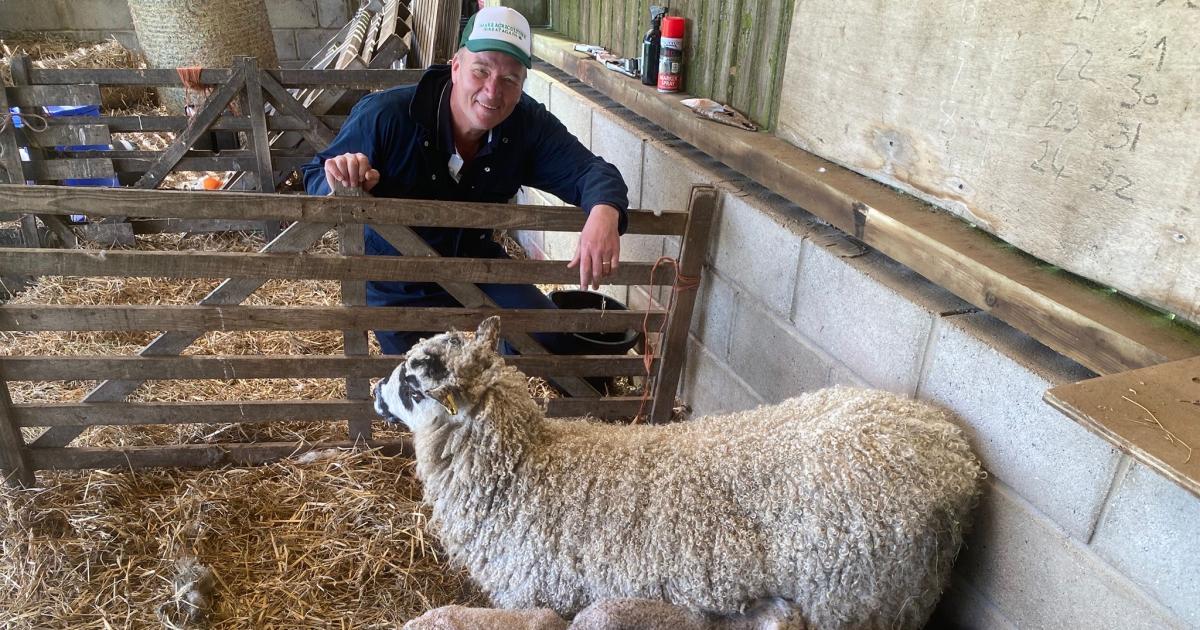
Six-year-old Quincy gave birth to five healthy lambs on Saturday (April 18), on the Swinton Estate near Masham.

Landowner Mark Cunliffe-Lister said he has “never seen anything like it before” after more than 30 years of lambing experience.

Landowner Mark Cunliffe-Lister with Quincy and five lambs. (Image: Mark Cunliffe-Lister)

Mark, who looks after a flock of 20 sheep, said he was expecting a routine delivery before he quickly realised something unusual was happening.

He said: “Normally we might have the odd triplets, but generally it’s twins or singles. I was keeping an eye on her and thought she had two, which was fine.

Advertisement

“Then there was a third, and I went back in and came out again and found four. I was thinking, gosh, I’ve never seen that happen.

“Then suddenly she had a fifth one. We really weren’t expecting that to happen at all.

“I’ve worked in lambing when I was younger and seen triplets, but this is the most I’ve ever seen.”

Mark said that despite the “one in a million event”, all five lambs were born safely.

Advertisement

However, because a ewe would struggle to feed five lambs, three of the newborns were taken to a local farmer where they could be fed, while the other two remaining lambs stayed with the mother.

While multiple births are not uncommon in sheep, four sheep are considered to be a rare occurrence, and quintuplets are considered exceptionally rare with a “one in a million” chance, according to farmers.

The landowner said: “Thankfully all of them are doing really well.

“The ewe is back out with the others, and the lambs are healthy, which is the good news.

Advertisement

“They’re all growing as they should and are now happily grazing in the field.”

Source link

Advertisement
Continue Reading

NewsBeat

Alan Osmond, the eldest member of the Osmonds, dies at 76

Published

on

Alan Osmond, the eldest member of the Osmonds, dies at 76

NEW YORK (AP) — Alan Osmond, the eldest member of the chart-topping family act The Osmonds, died Monday after decades with multiple sclerosis. He was 76.

According to a family spokesperson, Alan’s wife, Suzanne Osmond, and their eight sons were with him at his home in Lehi, Utah, at the time of his death. Prior to his passing, Alan used a wheelchair and spent a week in intensive care before returning home Thursday on hospice.

A talented songwriter and performer, Alan Osmond helped write some of the Osmond Brothers’ biggest hits, including “One Bad Apple,” “Crazy Horses” and “Are You Up There?”

Born in Ogden, Utah, on June 22, 1949 and raised in a Mormon household, Alan Osmond’s storied musical career began in the 1950s, when he and his brothers Wayne, Merrill and Jay formed a barbershop quartet. He was the oldest of the performing group and the third oldest of his siblings.

Advertisement

The brothers worked the state fair circuit in Utah until a visit to Disneyland led to a television debut on “Disney After Dark” in 1962.

The group became regulars on “The Andy Williams Show,” where they made their name and forged their wholesome and peppy image, peaking as a quintet in the early 1970s, as younger brother Donny Osmond became the breakout star. In 1971, the Osmonds tallied nine gold records, surpassing single-year bests by Elvis and the Beatles.

In the mid-to-late 1970s, Alan became a principal producer on ABC’s hit television show “The Donny and Marie Show,” starring his brother and sister.

The original Osmond Brothers — Alan, Wayne, Merrill and Jay — returned to the stage in 1982 as a country group and had a handful of hits, including “I Think About Your Lovin.’” At the time, Alan told The Associated Press he switched from recording rock to country music because it better fit their wholesome image.

Advertisement

“Country music really is the backbone of America,” he said. “It doesn’t just come and go. And we’re kind of flag-wavers. You find that in the country area, too.”

In 1987, Alan Osmond was diagnosed with multiple sclerosis (MS). It caused him to retire from performing with his family.

His brother Wayne Osmond died at the age of 73 in 2025 after having a stroke.

“He is my hero,” Doug Osmond, one of Alan’s sons, told The Associated Press over the phone Tuesday. “I’ve never met anyone more positive in my life. I never once heard him complain, not once. He would say, ‘I may have MS, but MS does not have me.’ That was his motto and he always was worried about everyone else. … Family always took priority and his faith was in everything he did.”

Advertisement

In terms of his musical accomplishments, Doug recalled witnessing other famous musicians gush over his father. “I saw that with Steven Tyler, I saw that with Brad Paisley. I saw that with Justin Timberlake and Donnie Wahlberg,” he said. “They all knew of his genius and ability.”

In a statement on social media Tuesday, Donny Osmond called Alan Osmond his “protector” and “guide,” saying he was “the one who quietly carried so much responsibility so the rest of us could shine.”

Advertisement

Merrill Osmond also paid tribute in a social media post, explaining that he saw his ailing brother two days prior.

“We talked as brothers do, heart to heart. He was struggling, but when I shared a joke or two, he found the strength to chuckle … and then he smiled,” he wrote on Facebook. “I need you to know this … he has not left me. I have felt him. I have felt his quiet encouragement telling me to keep going … to keep building faith … to keep sharing light.”

Alan is survived by his wife, Suzanne; his eight sons, Michael, Nathan, Doug, David, Scott, Jon, Alex, and Tyler; 30 grandchildren; five great-grandchildren; brothers Virl, Tom, Merrill, Jay, Donny and Jimmy; and sister Marie.

Service plans are forthcoming.

Advertisement

Source link

Advertisement
Continue Reading

Trending

Copyright © 2025