Connect with us
DAPA Banner

Tech

Unauthorized group has gained access to Anthropic’s exclusive cyber tool Mythos, report claims

Published

on

A group of unauthorized users has reportedly gained access to Mythos, the cybersecurity tool recently announced by Anthropic.

Much has been made of Mythos and its purported power — an AI product designed for enterprise security that, in the wrong hands, could become a potent hacking tool, according to the company. Now Bloomberg has reported that a “private online forum,” the members of which have not been publicly identified, has managed to gain access to the tool through a third-party vendor.

“We’re investigating a report claiming unauthorized access to Claude Mythos Preview through one of our third-party vendor environments,” an Anthropic spokesperson told TechCrunch. The company said that, so far, it has found no evidence that the supposedly unauthorized activity has impacted Anthropic’s systems in any way.

The unauthorized group tried a number of different strategies to gain access to the model, including using “access” enjoyed by the person who was interviewed by Bloomberg. That person is currently employed at a third-party contractor that works for Anthropic, the outlet reported.

Advertisement

Members of the group are part of a Discord channel that seeks out information about unreleased AI models, the outlet reported. The group has been using Mythos regularly since gaining access to it, and provided evidence to Bloomberg in the form of screenshots and a live demonstration of the software.

Bloomberg reports that the group, which supposedly gained access to the tool on the same day it was publicly announced, “made an educated guess about the model’s online location based on knowledge about the format Anthropic has used for other models.” The group in question is “interested in playing around with new models, not wreaking havoc with them,” the source told the outlet.

Mythos was released to a select number of vendors, including big names like Apple, as part of an initiative called Project Glasswing. The limited release of the model was designed to prevent its use by bad actors. The tool could be weaponized against corporate security instead of bolstering it, Anthropic said.

Techcrunch event

Advertisement

San Francisco, CA
|
October 13-15, 2026

If true, unauthorized use of Mythos could spell trouble for Anthropic, which provided the exclusive release to allay the company’s concern for enterprise security.

Advertisement

When you purchase through links in our articles, we may earn a small commission. This doesn’t affect our editorial independence.

Source link

Continue Reading
Click to comment

You must be logged in to post a comment Login

Leave a Reply

Tech

OpenAI shifts ChatGPT ads to cost-per-click as $60 CPM erodes in ten weeks and ad revenue targets hit $2.5 billion

Published

on

Summary: OpenAI has shifted ChatGPT’s advertising from CPM to cost-per-click pricing, with bids between $3 and $5, after the $60 CPM it charged at launch in February eroded to as low as $25 within ten weeks. The move puts OpenAI in direct competition with Google and Meta for performance ad budgets, while Perplexity and Anthropic have positioned themselves as explicitly ad-free alternatives. OpenAI projects $2.5 billion in ad revenue for 2026, scaling to $100 billion by 2030, as the company faces projected losses of $14 billion this year and an $852 billion valuation that investors are already questioning.


OpenAI has shifted ChatGPT’s advertising model from cost-per-thousand impressions to cost-per-click, a change that puts the company in direct competition with Google and Meta for performance advertising budgets ten weeks after it first placed ads inside the chatbot. Advertisers can now set bids between $3 and $5 per click, according to screenshots of OpenAI’s new ads manager, while the minimum spend has been cut from $250,000 to $50,000. The pivot, reported by The Information on 15 April, was driven by a practical problem: the $60 CPM that OpenAI charged at launch in February had eroded to as low as $25 in some cases, making a volume-dependent impressions model unsustainable for a company projecting $14 billion in losses this year.

The ads appear at the bottom of ChatGPT responses, labelled “sponsored” and visually separated from the answer. Product-led queries can include sponsored product cards similar to those on Google Shopping. Users on the free tier and the $8-per-month Go plan see ads. Paid subscribers on the Plus, Pro, Business, Enterprise, and Education tiers do not. OpenAI says advertisers cannot see user conversations, chat history, names, email addresses, or IP addresses, and receive only aggregated performance data showing total views and clicks. Targeting is contextual, matched to the topic of the current conversation, rather than demographic or third-party data.

Advertisement

From experiment to ad platform in ten weeks

The 💜 of EU tech

The latest rumblings from the EU tech scene, a story from our wise ol’ founder Boris, and some questionable AI art. It’s free, every week, in your inbox. Sign up now!

OpenAI first introduced advertising into ChatGPT on 9 February with a CPM model, a $200,000 to $250,000 minimum spend, and a roster of early advertisers that included Target, Ford, Adobe, Mrs. Meyer’s, and Expedia. Within two months, the pilot topped $100 million in annualised revenue with several hundred advertisers participating. OpenAI projects $2.5 billion in advertising revenue for 2026, scaling to $11 billion by 2027 and $100 billion by 2030.

The speed of the buildout has been striking. OpenAI hired Shivakumar Venkataraman, a 21-year Google veteran who led Google’s search ads business, as vice president in June 2024. Since February, the company has partnered with StackAdapt for programmatic placement, built a conversion tracking pixel supporting events including lead creation, order creation, and subscription starts, and launched a self-serve ads manager that opened to global advertisers on 15 April. International expansion to Australia, New Zealand, and Canada followed within 48 hours. OpenAI has also partnered with Smartly and Criteo to build conversational ad formats that go beyond static placements, connecting to Criteo’s network of 17,000 advertisers.

Advertisement

The CPC shift reflects the reality that impressions-based pricing was already softening. A leaked StackAdapt deck, shared with select buyers on 27 March, offered CPMs as low as $15, a quarter of the launch rate. Cost-per-click pricing ties revenue to demonstrable user engagement rather than passive exposure, aligning OpenAI’s model with how advertisers already evaluate performance on Google and Meta. OpenAI is also exploring action-based ad formats designed to drive purchases or app downloads directly from within a conversation.

The Altman pivot

Sam Altman spent two years building a public position against advertising. He called it a “momentary industry” in 2024. At Harvard, he described ads as a “last resort.” He told interviewers that “ads-plus-AI is sort of uniquely unsettling to me” and that he liked “that people pay for ChatGPT and know the answers they’re getting are not influenced by advertisers.” In a Stratechery interview, he said Instagram changed his mind, arguing that its ads “added value” to him.

On 9 February, as ads went live, Altman posted on X: “We are starting to test ads in ChatGPT free and Go tiers. Most importantly, we will not accept money to influence the answer ChatGPT gives you, and we keep your conversations private from advertisers.” Chris Lehane, OpenAI’s vice president of global affairs, defended the move by arguing that advertising helps “expand democratic access” to ChatGPT. In response to Anthropic’s Super Bowl commercials, which ran spots titled “Deception,” “Betrayal,” “Treachery,” and “Violation” with the tagline “Ads are coming to AI. But not to Claude,” Altman argued that Anthropic “serves an expensive product to rich people” while OpenAI needs to bring AI to “billions of people who can’t pay for subscriptions.”

The competitive landscape is splitting

The major AI companies are now pursuing divergent monetisation strategies in a way that would have seemed unlikely a year ago. Google is weaving advertising into 25.5% of AI-generated search results, extending its existing ad infrastructure into AI Overviews. OpenAI is building a parallel ad platform from scratch. And the rest of the market is running the other way.

Advertisement

Perplexity tested sponsored follow-up questions in 2024 and 2025, then abandoned advertising altogether, citing user trust concerns. It is now targeting $500 million in subscription revenue as the explicitly ad-free alternative. Anthropic positioned Claude as ad-free before OpenAI even launched its programme, spent millions on Super Bowl spots attacking ChatGPT’s ad decision, and saw an 11% jump in daily active users and a climb to seventh on the App Store as a result.

The split matters because it tests a foundational question about AI products: whether users treat a chatbot more like a search engine, where ads are tolerated, or more like a therapist, where they are not. An Ipsos survey found that nearly two-thirds of US adults say ads in AI search make them trust the results less. A boycott campaign called QuitGPT has gathered more than 200,000 sign-ups since late January.

The privacy question

The day ads launched, Zoe Hitzig, a researcher at OpenAI, resigned. Writing in the New York Times, she described ChatGPT’s conversation logs as “an archive of human candor that has no precedent” and warned that OpenAI risks following “the same path as Facebook.” Her concern was specific: while advertisers do not see user conversations, OpenAI must process conversation content internally to serve contextually relevant ads. Queries about health conditions, financial distress, relationship problems, and personal struggles are being analysed and categorised by the system to determine which ads to show.

OpenAI says it does not build audience segments based on demographics or third-party data and does not show ads to users it identifies as under 18. It updated its privacy policy to coincide with the ads expansion. But the structural tension remains: the same conversations that users treat as private are the signal that makes the ads work.

Advertisement

Why now

The financial pressure behind the pivot is not subtle. OpenAI generated $13 billion in revenue in 2025, a 236% increase from $3.7 billion in 2024, and is currently producing roughly $2 billion per month. It closed a $122 billion funding round at an $852 billion valuation on 31 March, led by Amazon, Nvidia, and SoftBank. But the company is projected to lose approximately $14 billion in 2026 on compute, research, and infrastructure costs. It does not expect to reach profitability until 2030. Internal targets include an IPO filing in the second half of this year and a 2027 listing at a potential valuation of up to $1 trillion.

Advertising is the fastest path to closing the gap between revenue and expenditure without raising subscription prices or conducting another funding round. The US market for AI search advertising is projected to grow from $1 billion in 2025 to $25.9 billion by 2029, representing 13.6% of all search ad spending. OpenAI’s $2.5 billion target for this year would make it a significant player in that market immediately.

The question is whether cost-per-click changes the calculation for advertisers who found the CPM model expensive and difficult to measure. CNBC reported in March that the test was “moving too slowly to meet the hype” and that OpenAI “can’t prove the ads are working” due to the absence of mature measurement tools. CPC at least gives advertisers a metric they understand: someone clicked. Whether that click leads to a purchase, and whether the broader disruption of AI search makes ChatGPT a necessary advertising channel regardless of its current limitations, will determine whether OpenAI’s advertising ambitions prove as transformative as its AI ones or as fleeting as the CPM rates that collapsed in ten weeks.

Advertisement

Source link

Continue Reading

Tech

X finally adds custom timelines

Published

on

Nikita Bier, X’s head of product, has announced the launch of custom timelines, which lets you curate what you see on your feed based on your topics of interest. He called the update “one of the biggest changes to X” and a ”huge undertaking” that took the team “many months” to develop. The feature lets you pin specific topics to your home tab, so you can switch from one to the other to see the latest discussions about your interests and hobbies.

Bier said that X’s custom timelines is “powered by Grok’s understanding of every post with the algorithm’s personalization.” You have 75 topics to choose from, including food, art, photography, business, finance, movies and TV. As you’d expect, the personalization aspect of the feature works better if it’s a topic you already engage with regularly. X’s new feature is similar to Bluesky’s and Threads’ custom feeds, which also allow you to pin topic-based timelines to the home screens of the apps, and which their users have been enjoying since 2023 and 2024, respectively.

At the moment, X’s custom timelines is still in its early access phase and is only available to Premium subscribers on iOS. It will be rolling out to Premium users on Android “very soon,” as well. Bier has also announced that X has released a tool to snooze topics on the For You tab. With the tool, you’ll be able to hide certain topics, such as politics or sports, for 24 hours from your feed. It’s now available for Premium users on iOS and the web.

Source link

Advertisement
Continue Reading

Tech

Amazon Prime Broadcast Fails Completely During Several Minutes Of NBA Playoff Game

Published

on

from the prime-time dept

With the streaming world turning into a wild, chaotic, fractured mess, there is no better example of how terrible this can all be than with live sports. We’ve already seen all kinds of issues among streaming services when it comes to sports. Buffering live games piss people off. Exclusivity deals worked out among several services for a single league can make finding where a game is being showed a Sherlock-ian experience. Local blackout rules abound and suck for the consumer.

But if there is one thing a streaming service cannot do, it’s got to be buying the exclusive rights to important games and then throwing “technical difficulties” at the viewer. And that’s exactly what happened during part of an overtime period in an NBA playoff game between the Hornets and the Heat. For several minutes at the start of the overtime period, the stream simply cut out.

As reported by ESPN, Prime Video started showing a message that read “technical difficulties” seconds after cutting off the game’s commentator in the middle of a sentence. Viewers missed a Hornets possession that included a score by LaMelo Ball. By the time the stream came back online, 22.1 seconds of playing time had passed, per ESPN, and viewers were dismayed.

“Tell me the game didn’t just cut off?!!? Am I trippin?? WTH,” LeBron James, a Los Angeles Lakers player who previously won two championships with the Heat, said, adding a face-planting emoji, on X.

Prime Video’s fumble is made worse by the fact that the streaming service had exclusive rights to air the game. The only other way to experience the game was in person or by listening to select radio stations.

Advertisement

Imagine someone signed up for Prime because of this deal with the NBA. Sure, that isn’t going to be a huge percentage of the viewership, but it won’t be zero percent of it, either. To have the stream cut out in the opening minutes of overtime is going to be incredibly frustrating.

It’s also worth noting that more traditional broadcasts also have had equipment failures, but they don’t have the resources Amazon has. And, frankly, Amazon’s streaming service doesn’t have the best reputation to begin with.

The latter point is especially concerning because, after four years of this, viewers are still complaining about audio-syncing problems on Prime Video this season. We’ve experienced this firsthand at Ars Technica and have heard commentators announce a completed three-point shot before the stream shows it happening.

“The entire year the audio has been a split second ahead of the video on half of the Amazon games we’ve watched,” Bill Simmons, a former sportswriter and current host of The Bill Simmons Podcast, said in today’s episode: “The three-pointer’s halfway toward the basket. It’s like, ‘BANG! It’s good!’ And you hear the crowd, and it’s, like, the ball hasn’t even gone in yet. How have we not figured this out yet? You guys, [Amazon], have 8 kajillion dollars.”

At some point, the NBA itself is going to have to step in here, because its reputation is going to take a hit along with Amazon’s. The league risks alienating fans that are pissed off that the league foisted broadcast partners that apparently can’t deliver a product of the quality of cable TV, of all entities. And I refuse to believe that these streaming contracts don’t come with contractual requirements for quality of service.

Advertisement

Streaming is both the present and the future. It isn’t going away. Neither are live sports. This has to be figured out and delivered in a way that fans don’t completely miss important parts of games. The alternative is lost fans for the leagues and I can promise you that won’t be stood for.

Filed Under: amazon prime, basketball, live sports, streaming, technical difficulties

Companies: amazon, nba

Source link

Advertisement
Continue Reading

Tech

SpaceX is working with Cursor and has an option to buy the startup for $60B

Published

on

SpaceX said it has struck a deal with Cursor to develop a next-generation “coding and knowledge work AI,” which includes a surprising provision — an option to buy the popular software development platform for $60 billion later this year.

Partnering with and potentially purchasing a leader in the hottest AI product category can only be seen in the context of SpaceX’s much-anticipated public offering. Investors seeking more value in the IPO might see its engagement with Cursor as another way to extract value from Elon Musk’s increasingly sprawling tech conglomerate.

The deal won’t shock those who follow the industry closely. Last week, it was reported that xAI would begin renting computing power from its data centers to Cursor, with the coding startup using tens of thousands of xAI chips to train its latest AI model. And last month, two of Cursor’s most senior engineering leaders, Andrew Milich and Jason Ginsberg, left the company to join xAI, where both report directly to Musk.

SpaceX described the partnership as a project combining Cursor’s “product and distribution to expert software engineers” with SpaceX’s Colossus supercomputer, which the company claims has the equivalent compute power of a million Nvidia H100 chips.

Advertisement

SpaceX also said that at some undisclosed point later this year, it will either pay Cursor $10 billion for its work or acquire the company for $60 billion. Last week, TechCrunch reported that Cursor was eyeing a $50 billion valuation in an upcoming private fundraising round. That figure itself reflects an astonishing series of leaps. Cursor was valued at just $2.5 billion in January of last year, climbed to $9 billion by last May, and was assigned a $29.3 billion post-money valuation when it closed on $2.3 billion in Series D funding in November.

Either figure would represent a significant expense for SpaceX, which is widely seen to be losing money following the acquisition of xAI and the social media network X and is planning extensive capital investment. The brief statement did not say if either deal could be paid in SpaceX stock.

In the meantime, the move could shore up weaknesses at each company, but it also reveals them. Neither Cursor nor xAI has proprietary models that can match the leading offerings from Anthropic and OpenAI — the same companies now competing directly with Cursor for the developer market.

Techcrunch event

Advertisement

San Francisco, CA
|
October 13-15, 2026

Cursor still uses and sells access to Claude and GPT models even as both firms roll out their own coding tools, an awkward arrangement that this new SpaceX partnership may be designed to eventually escape.

Advertisement

When you purchase through links in our articles, we may earn a small commission. This doesn’t affect our editorial independence.

Source link

Continue Reading

Tech

EV batteries that can charge in just over six minutes are here

Published

on

CATL held its Super Technology Day in Beijing, and if you care about EVs at all, this one is worth paying attention to. As reported by PR Newswire, the company unveiled several new battery technologies, and the headline act is the third-generation Shenxing Superfast Charging Battery.

The numbers are pretty incredible. Charging from 10% to 80% takes 3 minutes and 44 seconds. Charging from 10% to 98% takes 6 minutes and 27 seconds. Even at minus 30 degrees Celsius, the battery can charge from 20% to 98% in about 9 minutes. 

For context, that is faster than BYD’s blade battery and Geely’s fast charging technologies. Hell, most people take more time to fill a gas tank and grab a snack than this battery needs to charge.

CATL is also promising that the battery will retain over 90% of its capacity after 1,000 full charging cycles, which addresses the usual trade-off between fast charging and battery longevity.

Advertisement

What else did CATL announce?

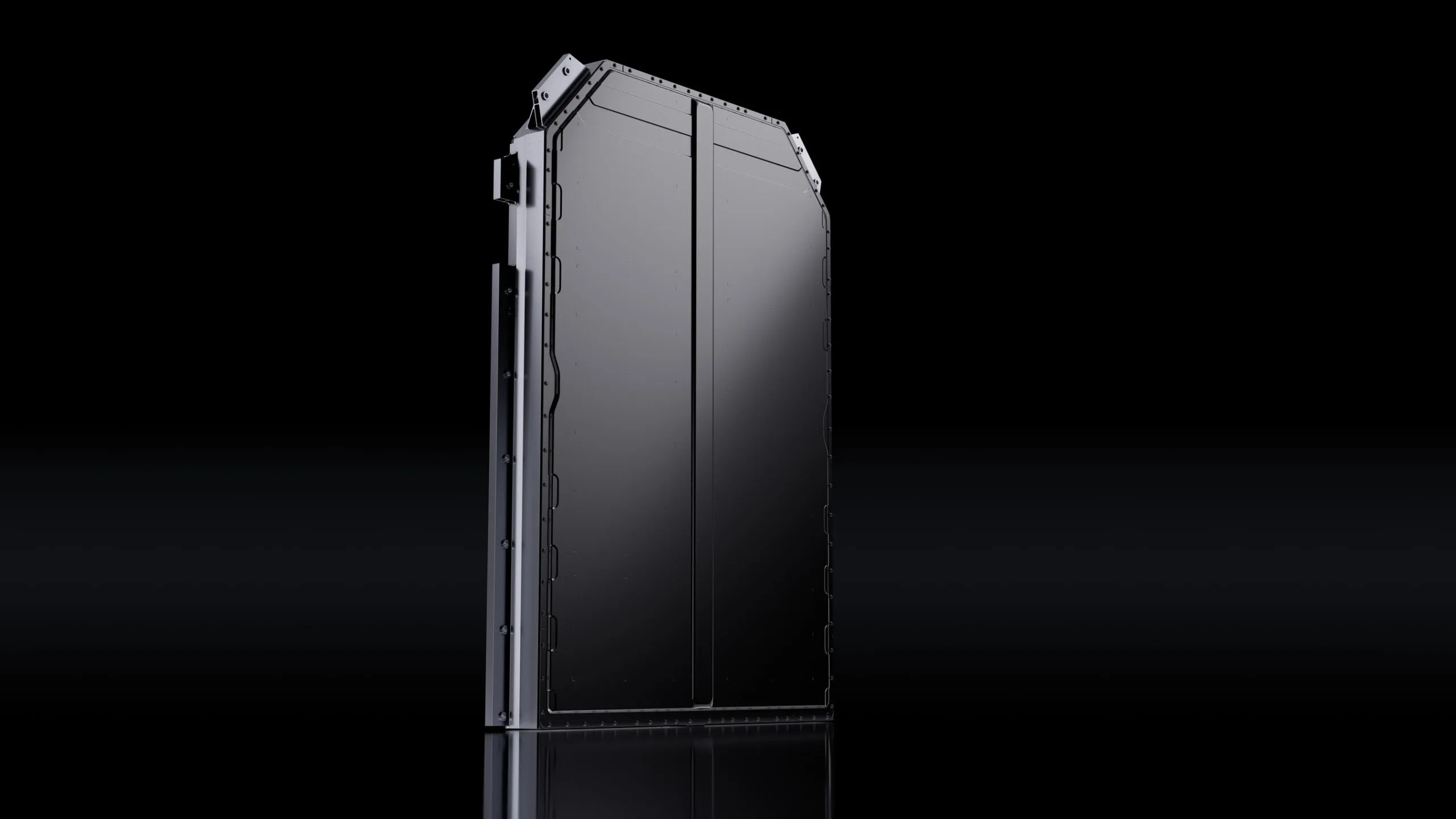
CATL did not stop at one announcement. The third-generation Qilin battery targets premium EVs with a cell energy density of 280 Wh/kg and a claimed range of 1,000 km. That should remove any range anxiety EV owners experience. 

The entire battery pack weighs 625 kg, which is 255 kg lighter than comparable systems. According to the company, the weight reduction alone improves braking distance, acceleration, and even tyre life by over 30%.

For hybrid drivers, the second-generation Freevoy Super Hybrid battery extends pure electric range to up to 600 km, with total vehicle range exceeding 2,000 km. And for those in extreme climates, the new Naxtra Sodium-ion battery is finally moving into large-scale production by the end of 2026.

What does this mean for you?

Charging and range anxiety have always been the biggest arguments against switching to an EV. CATL is making it increasingly harder to use that excuse. With fast-charging times approaching gas-station speeds and batteries that can go 1,000 kilometers on a single charge and handle extreme cold, the gap between EVs and traditional cars is getting smaller fast.

CATL plans to build 4,000 integrated charge and swap stations across China by the end of 2026. China has come to the forefront of EV technology advancements, and it’s no wonder US customers want access to their cars.

Advertisement

Source link

Continue Reading

Tech

Beatbot Sora 30 Review: Midrange Price, High-End Results

Published

on

Charging is done via the same type of power adapter that the Sora 70 uses: a proprietary, blocklike connector that slides into a hatch on the rear of the device. A hinged port cover opens automatically when you slide the adapter into it and snaps shut when it’s removed. It’s not as convenient as a plugless charging dock, but it’s close, obviating the need for screw-on port covers or other waterproofing systems that have to be manually manipulated.

Image may contain Tub Bathing Bathtub Person Hot Tub Pool and Water

ScreenshotBeatbot app via Chris Null

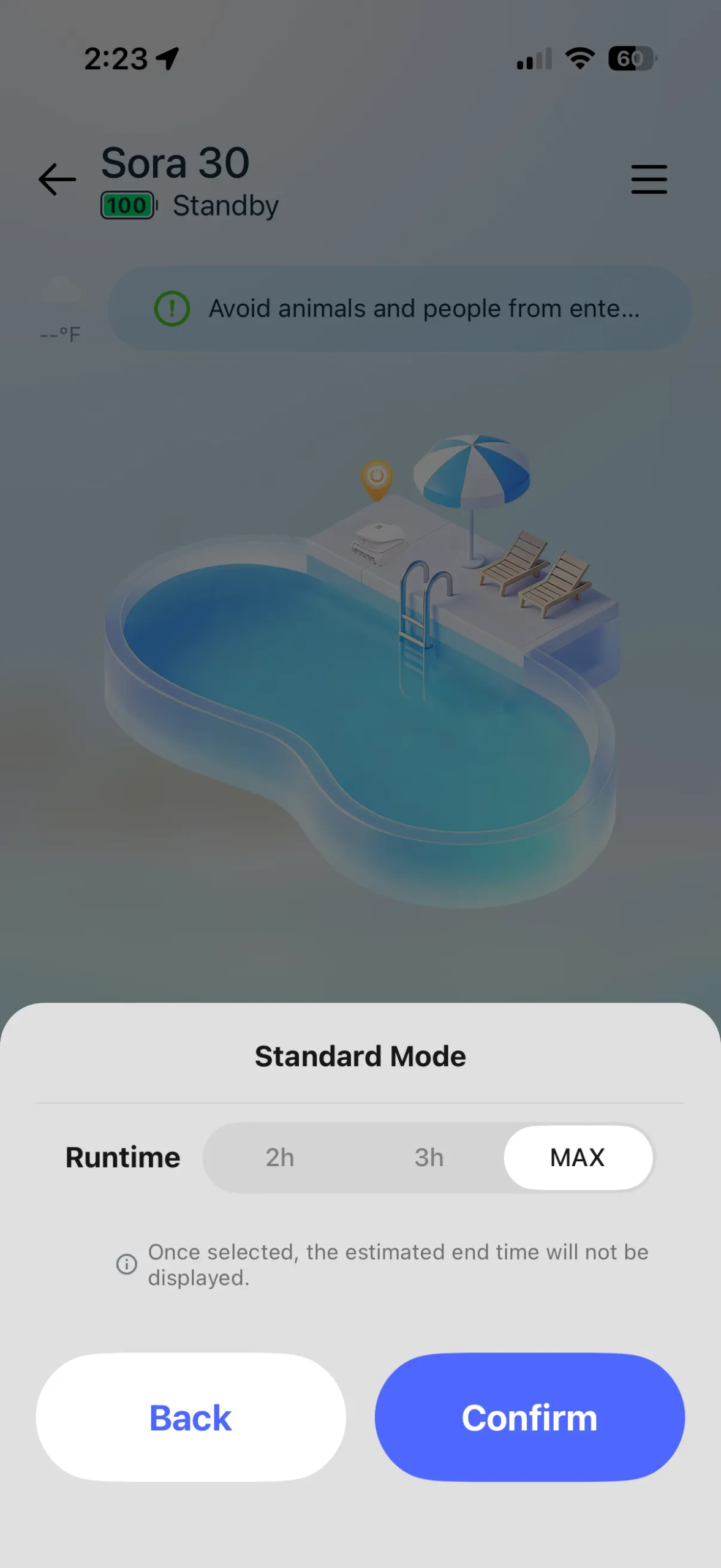
In the water, the unit offers a scant three operational modes—floor mode, standard mode (which handles floor, wall, and waterline), and eco mode (which runs a floor-only cleaning for 45 minutes every 48 hours). Both floor and standard mode offer three running-time options: two hours, three hours, or max (i.e., run until the battery’s almost dead). These can all be selected through the Beatbot app, which is available via Bluetooth or either 2.4 GHz or 5 GHz Wi-Fi. You’ll also need to set up Wi-Fi for firmware updates.

A Capable Cleaner

I spent the better part of a week testing the Sora 30 with both organic and synthetic debris and found the robot to be quite capable. Contrary to expectations, I encountered no issues with even heavier debris days, and the Sora 30 was able to suck up leaves and dirt with an average 95 percent coverage rate. It worked reasonably well on steps and platforms and is rated to run in water as shallow as 8 inches. Note that there’s no artificial intelligence or a camera that can detect debris on the fly here. This robot just goes back and forth the best it can, which turns out to be pretty good.

The only performance struggles I witnessed were in a single sharp corner area near the pool’s steps, where debris seemed to be pushed aside, unable to be effectively collected. In fact, all of the uncollected material in my test runs would inevitably end up in this one location. (The good news is that this was in the shallow end, making it easy to scoop up with a net.) It’s tough to say whether truly massive amounts of debris or larger items like twigs and branches would impact its operation to the degree the box suggests, but nothing I saw suggested this poolbot was significantly less powerful than most other devices on the market, especially in its price band.

Advertisement

Image may contain Transportation Vehicle and Car

Photograph: Chris Null

Source link

Continue Reading

Tech

Returning to What it Means to Make School Human Again

Published

on

In 2021, I was a demoralized educator: not burnt out, but demoralized. As I shared in my first article for EdSurge, demoralization occurs when teachers “encounter consistent and pervasive challenges to enacting the values that motivate their work.”

That year, the pervasive challenges seemed obvious and communal. We were all navigating online platforms, figuring out how to replicate student services virtually and struggling to make up for lost time in instruction, social-skill development and relationship-building for when students returned to in-person schooling.

When I think about what feels most pressing now, it seems those challenges persist but are perhaps less obvious to society at large. As the authors of “Going the Distance: The Teaching Profession in a Post-COVID World (2024)” wrote:

A crisis is not merely an event: it’s the context in which an event takes place and the response to that event.” The global pandemic has ended, but how much has the context changed and did the response meet the needs?

Right now, I believe teaching is the most important thing we can do. When the world is on fire, what feels most pressing is teaching students to claim their humanity and helping educators understand how much the communal learning experience matters. Five years later, I have come full circle.

Advertisement

This time, I return to that same claim with a broader and deeper understanding of what makes a school. We use that old adage, “It takes a village…” More and more, I see that we, as school communities, are the village and the villagers that we need right now. What really makes a school more human is not just the principals and teachers, but the child welfare staff, paraeducators, campus supervisors, guidance counselors, cafeteria workers, coaches, librarians, custodians and secretaries. The list is long, but it feels necessary to name the people on campus who make students feel like they belong, support them and have their backs when students need it. These are the colleagues who have shown me what it is like to truly model humanity to our students.

The truth is that the onus is on all of us to create an environment in which mutual respect and empathy are the baseline expectations. So, as an instructional coach, as a leader and as a voice of change in this context, what can I do? How do I communicate to teachers that, while they have been beaten down and blamed for society’s ills, they also have the herculean task of helping students learn how to be human together?

In 2021, I said that I was demoralized. In 2026, I am revitalized and committed to my role as an educator, instructional coach and teacher advocate.

Since participating in the inaugural cohort of the Voices of Change fellowship, I have contributed essays to The California Educator, Edutopia and EdSurge. I have joined podcast panels to talk about social-emotional learning, culturally responsive teaching and civil discourse in the classroom.

Advertisement

This fellowship showed me the power of personal writing for representation and advocacy. I have started to write children’s books about my own neurodivergent children. I have presented at local and state conferences and will continue to use my voice and my words to advocate for students, for educators, for quality professional development and schools that model the best of humanity. Writing for the Voices of Change fellowship has helped me claim my voice, my humanity and my power.

Source link

Continue Reading

Tech

Mozilla Uses Anthropic’s Mythos To Fix 271 Bugs In Firefox

Published

on

BrianFagioli writes: Mozilla says it used an early version of Anthropic’s Claude Mythos Preview to comb through Firefox’s code, and the results were hard to ignore. In Firefox 150, the team fixed 271 vulnerabilities identified during this effort, a number that would have been unthinkable not long ago. Instead of relying only on fuzzing tools or human review, the AI was able to reason through code and surface issues that typically require highly specialized expertise.

The bigger implication is less about one release and more about where this is heading. Security has long favored attackers, since they only need to find a single flaw while defenders have to protect everything. If AI can scale vulnerability discovery for defenders, that dynamic could start to shift. It does not mean zero days disappear overnight, but it suggests a future where bugs are found and fixed faster than attackers can weaponize them. “Computers were completely incapable of doing this a few months ago, and now they excel at it,” says Mozilla in a blog post. “We have many years of experience picking apart the work of the world’s best security researchers, and Mythos Preview is every bit as capable. So far we’ve found no category or complexity of vulnerability that humans can find that this model can’t.”

The company concluded: “The defects are finite, and we are entering a world where we can finally find them all.”

Source link

Advertisement
Continue Reading

Tech

Anker THUS chip breaks computing rules to put big AI models on wearable devices

Published

on


  • Anker unveils THUS
  • The new chip uses Computer in Memory
  • It could enable larger AI models on lower-powered devices

Anker is getting into the silicon business, specifically building a CIM (Compute In Memory) solution that will support onboard large model processing inside tiny, low-powered Bluetooth earbuds.

THUS is Anker’s first step in a long-term plan to bring local, large-model AI to mobile, wearable, and IoT technologies. Anker’s chip technology relies on Neural network-style computing, eschewing the traditional compute architecture in which the CPU processes the commands based on data and instructions it derives from memory. The transit from one to the other is an energy-intensive process. Neural Networks, like the human brain, don’t really respect that division. Letting it all work in one place saves considerable energy. That’s why CIM is attractive to Anker as a solution for bringing more powerful AI to its small-battery, lower-powered devices.

Source link

Continue Reading

Tech

Oppo Find X9 Ultra vs Oppo Find X9 Pro: What’s the difference?

Published

on

Oppo has just unveiled its flagship smartphone that’s “engineered to be your next camera”.

The Oppo Find X9 Ultra is fitted with “groundbreaking” lenses and “industry-leading hardware”, but how does it compare to the 4.5-star Oppo Find X9 Pro? Considering we concluded that the latter delivers a top-notch camera experience and has a spot on our best camera phones list, how does the X9 Ultra look to compare?

We’ve assessed the specs of the Oppo Find X9 Ultra to the Find X9 Pro, and highlighted the key differences between the two below. 

Otherwise, visit our round-up of the best Android phones and best smartphones to see our current favourites. 

Advertisement

Price and Availability

The Find X9 Ultra is the first of Oppo’s Ultra models to launch globally.

Advertisement

The Find X9 Pro is available to buy now, and has a starting price of £1099. However, we have seen the phone’s price drop over the last few months, so it’s worth keeping an eye out for deals. 

Oppo Find X9 Ultra has five rear lenses

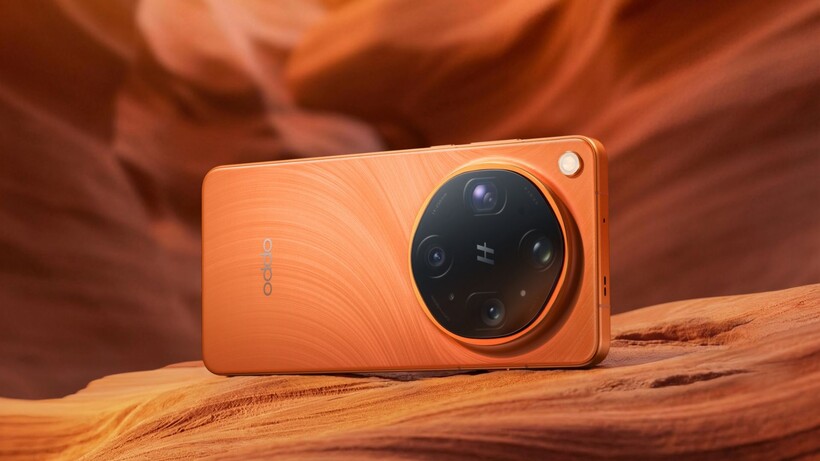
Oppo explains that the Find X9 Ultra is fitted with a new-generation Hasselblad Master Camera System, which promises to deliver a versatile and high-quality framing that spans from 14mm to 460mm. 

Advertisement

Made up of five rear lenses, the Find X9 Pro sports dual Hasselblad 200MP lenses. The first of the two is the Ultra-Sensing main lens which features the new 1/1.12-inch Sony LYTIA 901 sensor while the second is a 3x ultra-sensing telephoto which boasts the largest sensor of its type (1/1.28-inch), and doubles as a macro lens.

Oppo Find X9 UltraOppo Find X9 Ultra
Oppo Find X9 Ultra. Image Credit (Oppo)

The two 200MP lenses are supported by two 50MP cameras: an ultrawide and a 10x Ultra-Sensing Optical-Zoom telephoto. In fact, the latter benefits from an industry-first 20x optical zoom too. 

Finally, the four lenses are flanked by a new-gen True Color Camera which promises natural colour rendition.

Advertisement

In comparison, the Find X9 Pro is equipped with a 50MP main lens which, sure sounds pretty measly when compared to a 200MP alternative, but is able to capture plenty of detail and offers an impressive low-light performance too. 

Advertisement
Oppo Find X9 Pro rearOppo Find X9 Pro rear
Oppo Find X9 Pro. Image Credit (Trusted Reviews)

This is paired with a 200MP telephoto lens that can reach up to a whopping 120x zoom. While this will come at the expense of detail, using Oppo’s Hasselblad Teleconverter attachment aims to fix this issue – and we’ll explain more below. 

Both have supporting teleconverter attachments – but there’s a difference

Both the Find X9 Ultra and X9 Pro can be equipped with their own teleconverter attachments. With the Pro, the Teleconverter twists onto the 200MP telephoto lens and enables impressive zoom without compromising on quality. While it’s certainly not the most subtle of accessories, we were still impressed by its performance.

Oppo Find X9 Ultra teleconverter lensOppo Find X9 Ultra teleconverter lens
Oppo Find X9 Ultra attachment. Image Credit (Oppo)

Oppo has also created a similar 300m Teleconverter lens for the X9 Ultra edition, that mounts to the 200MP, 3x telephoto sensor. According to Oppo, this attachment will allow photographers to retain sharp detail at “30x and beyond”. That’s a bold claim, and one we’re keen to try out for ourselves.

Advertisement

Oppo Find X9 Ultra runs on Snapdragon 8 Elite Gen 5

Photography ability aside, one of the key differences between the Find X9 Ultra and X9 Pro is with their respective chips. While the latter Pro model runs on MediaTek’s Dimensity 9500, the Ultra is powered by Qualcomm’s Snapdragon 8 Elite Gen 5. 

We found during our review of the Find X9 Pro that its Dimensity 9500 chip, combined with Oppo’s Luminous Rendering Engine, enabled the flagship to fly through everyday use while feeling rapid and responsive too. In addition, although it isn’t a dedicated gaming phone, it still had no issue running titles such as Call of Duty Mobile.

Advertisement
Oppo Find X9 ProOppo Find X9 Pro
Oppo Find X9 Pro. Image Credit (Trusted Reviews)

However, Snapdragon 8 Elite Gen 5 is a tough competitor to beat. The chip is not only behind many of the best Android phones, but it can handle everything from casual tasks to generative AI tasks and gaming with ease. Having said that, we’d argue that most users will be unlikely to notice much of a difference between the chips in everyday use.

Oppo Find X9 Pro has a larger battery

With a mighty 7500mAh cell, the Find X9 Pro has one of the largest batteries found in any smartphone. This translates to comfortably being a two-day handset, although remember this will depend on your own usage. For example, we found that on days where we really pushed the phone’s limits, the handset couldn’t quite make it through a full second day.

Although it’s not quite as large, the Find X9 Ultra is still fitted with a whopping 7050mAh battery, which promises to ensure “reliable, all-day content creation”.

Advertisement

It’s worth pointing out that, although the Find X9 Pro’s battery is larger than the X9 Ultra’s own, both do boast pretty generous capacities. Considering the likes of the Samsung Galaxy S26 Ultra and Google Pixel 10 Pro XL max out at 5000mAh and 5200mAh respectively, Oppo’s Find series are certainly not to be sniffed at.

Advertisement

Oppo Find X9 Ultra comes in a familiar orange shade

Although both only come in a choice between two shades, they differ with their exact offerings. While the Find X9 Pro comes as Titanium Carbon or Silk White, the Find X9 Ultra is available in either Tundra Umber or Canyon Orange.

Regardless of the colour you choose, both the X9 Ultra and X9 Pro sport IP66, IP68 and IP69 ratings which means the handsets can withstand water submersion and even high pressure and high temperature water jets too.

Early Verdict

Although the Oppo Find X9 Pro is easily one of the best camera phones we’ve reviewed, the Find X9 Pro looks like a promising alternative for those who need even more versatility and shooting modes to play with. With a whopping five rear cameras and Qualcomm’s Snapdragon 8 Elite Gen 5 chip at play, the Oppo Find X9 Ultra is undoubtedly a promising handset for the keen photographer.

Advertisement

Source link

Continue Reading

Trending

Copyright © 2025