
Business
Thailand and the Mekong region engulfed in smoke as relentless forest fires continue

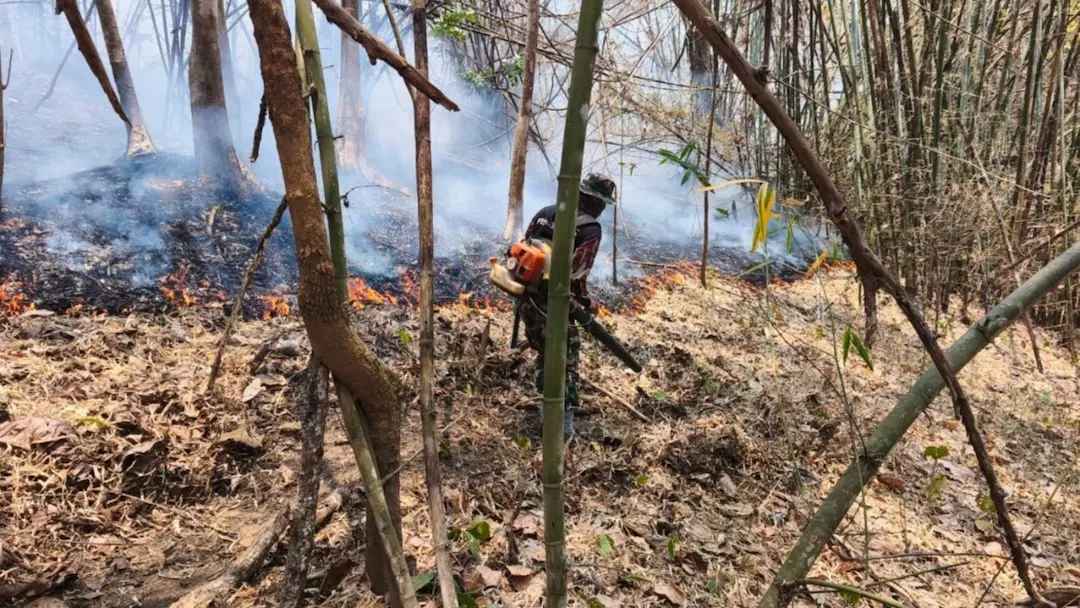
A severe environmental and public health crisis is unfolding across Thailand, Laos, and Myanmar as widespread forest fires and agricultural burning create dangerous levels of air pollution. The recurring smog, exacerbated by the region’s dry season and persistent slash-and-burn farming practices, has led to a significant surge in respiratory illnesses and sparked urgent calls for structural legislative reform, as current government efforts remain hampered by weak enforcement and a lack of regional cooperation.
Key Points
- The northern provinces of Thailand, including Chiang Mai and Chiang Rai, have been subjected to critical, long-term exposure to PM2.5 pollution, which has persisted for over two months.
- Fires are driven by a combination of natural dry-season conditions and widespread agricultural practices, particularly slash-and-burn land clearing for crops and animal feedstock.
- Cross-border pollution remains a major obstacle, as Thai officials struggle to mitigate smoke originating from Myanmar and Laos, where enforcement of burning bans is minimal.
- Medical professionals report an alarming increase in severe respiratory issues and lung cancer cases among non-smokers, attributing these health trends directly to the poor air quality.
- Volunteer firefighters in countries like Laos are currently tasked with managing large-scale blazes while relying on inadequate, basic equipment.
- Lawmakers and health advocates are pushing for the enactment of a comprehensive Clean Air Act in Thailand, arguing that the crisis is a systemic issue that cannot be solved with short-term, superficial measures.
The Rising Impact of Seasonal Forest Fires Across Thailand and the Mekong Region
The Mekong region, encompassing Thailand and its neighboring nations, is currently grappling with a severe surge in forest fires. This seasonal phenomenon has escalated into a significant environmental and public health concern, drawing attention from meteorologists, government officials, and international environmental organizations. As the dry season persists, the proliferation of uncontrolled blazes continues to threaten biodiversity, regional air quality, and the stability of local economies.
Northern Thailand is currently facing a severe environmental crisis as persistent forest fires continue to blanket the region in hazardous levels of PM2.5 pollutants. With thousands of hotspots detected across conservation and national forest areas, residents are suffering from significant health complications, while government officials and emergency responders struggle to contain the blazes. Despite ongoing firefighting efforts and proposed infrastructure improvements, the situation remains dire, prompting urgent calls for stronger legislative action to address the recurring annual air quality disaster.
The primary drivers of these forest fires are a combination of extreme climatic conditions and traditional agricultural practices. The onset of the dry season often leads to parched vegetation, creating highly combustible landscapes. Simultaneously, the persistent reliance on slash-and-burn farming techniques to clear land for seasonal crops remains a major catalyst for ignition. While many of these fires originate as managed agricultural clearing, they frequently escape containment due to high winds and prolonged drought, rapidly evolving into widespread wildfires that transcend provincial and national borders.
The environmental consequences of these fires are profound. Beyond the immediate destruction of forest cover and wildlife habitats, the blazes release substantial amounts of carbon dioxide and particulate matter into the atmosphere. This has resulted in a critical decline in air quality across several provinces in Northern Thailand, Laos, and Myanmar. The presence of hazardous levels of PM2.5 pollutants poses a significant risk to public health, leading to increased respiratory illnesses and creating long-term challenges for healthcare infrastructure in the affected regions.
Regional authorities are increasingly aware of the transboundary nature of this crisis. Because smoke and pollutants do not respect national boundaries, isolated efforts by single governments often yield limited results. In response, there is a growing emphasis on regional cooperation within the ASEAN framework. Current strategies focus on strengthening satellite monitoring systems to identify fire hotspots in real-time, enforcing stricter regulations against unauthorized burning, and incentivizing farmers to adopt more sustainable agricultural methods that do not rely on fire.
Economic activity is also significantly impacted. The tourism sector, a cornerstone of the regional economy, faces disruptions as visibility drops and air quality concerns deter travelers. Furthermore, the agricultural sector faces long-term risks, as repeated burning can deplete soil nutrients and contribute to increased land degradation, ultimately undermining the productivity of the land.
Addressing this recurring crisis requires a multifaceted approach. While immediate emergency response teams remain essential for suppressing active fires, a sustainable long-term solution must address the root socio-economic causes. Transitioning toward modern, fire-free farming technologies and enhancing public education regarding the environmental impacts of burning are critical steps toward mitigation. As the Mekong region navigates the remainder of the current dry season, the focus remains on coordinating regional resources to minimize the damage and developing robust frameworks to prevent such extensive fire activity in future seasons.
Other People are Reading

A two-member bench comprising Chairperson Ashok Bhushan and Member Technical Barun Mitra concluded hearings after arguments from Vedanta Ltd and respondents, including the Resolution Professional, Committee of Creditors (CoC) and Adani Enterprises.
Business
Perseus Mining Limited 2026 Q3 – Results – Earnings Call Presentation (OTCMKTS:PMNXF) 2026-04-22


Seeking Alpha’s transcripts team is responsible for the development of all of our transcript-related projects. We currently publish thousands of quarterly earnings calls per quarter on our site and are continuing to grow and expand our coverage. The purpose of this profile is to allow us to share with our readers new transcript-related developments. Thanks, SA Transcripts Team
Business
Our commitment for press freedom, and autonomy of public broadcast is absolute: Prakash Javadekar
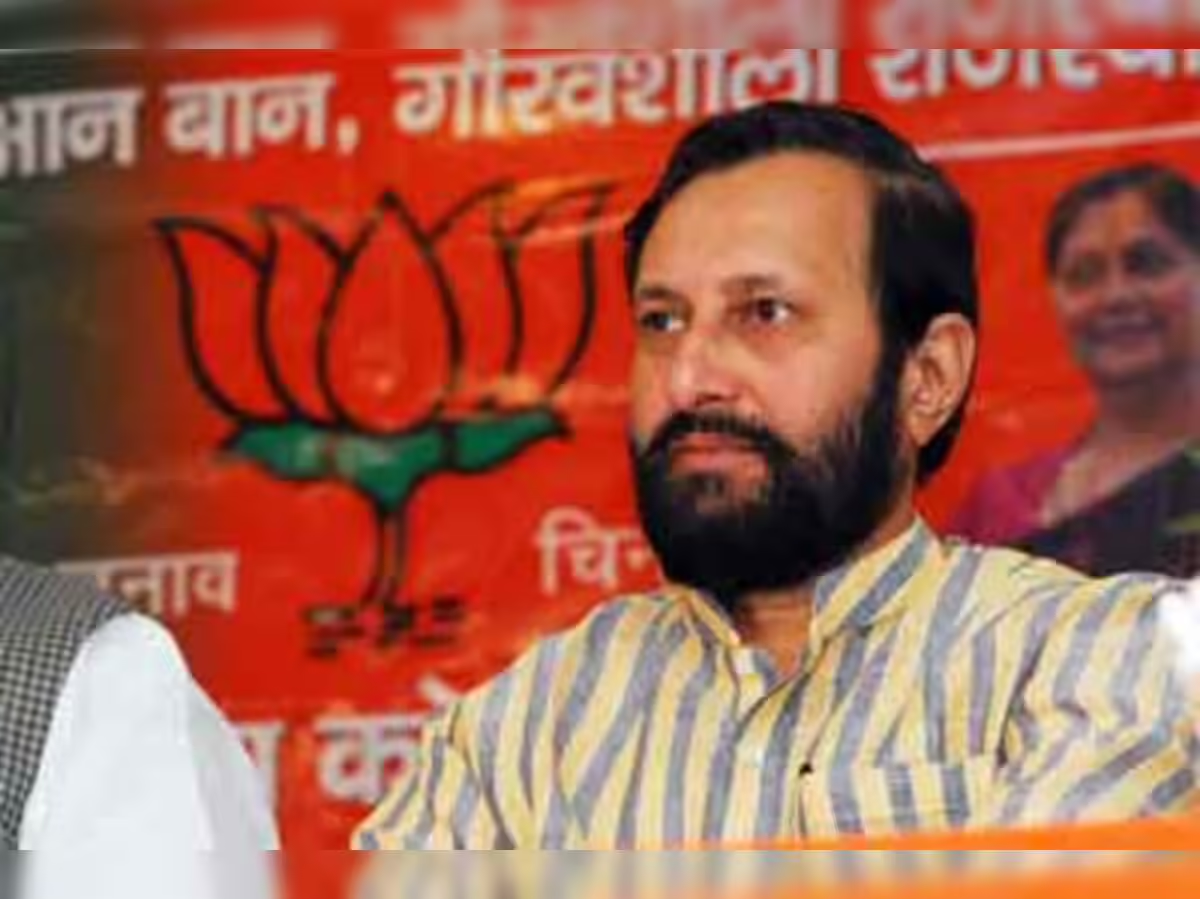
He spoke to ET on the Bharatiya Janata Party government’s approach towards media, social media, media controls and much more. Edited excerpts…
In terms of communication and messaging, the BJP’s electoral campaign has been termed an object lesson in the field. How can you translate that into the governmental structure?
All communication needs of the government will be handled in our ministry through a social media hub. I am offering this service to all ministers. Their facebook, twitter and other social media outreach will be handled by the new media wing, and the social media and communication hub.
The advantage that the party saw in reaching out through all communication media has been tremendous, and it was felt that the government too use the available platforms. Therefore, this new hub will provide all the help needed by various ministers and ministries for setting up and operating their facebook pages, twitter handles and the outreach throughsocial media. Traditional media is important, of course, but social media vehicles have to be spruced up.
What are your priority areas as far as this (I&B) ministry is concerned?
We have to ensure transparency, make our vehicles more effective. We want to be accessible and accountable too. Now there is a stage three and stage four of digitisation, we will take a call on this only after taking all things into account. The issue is that digitisation increases the revenue of paid channels, but customers want fewer advertisements.
Now 11 crore new settop boxes are required, which provides a great case for indigenisation, rather than just import them. I will take it up with the finance and commerce ministers on how this could be done.
During the elections, an interview of Prime Minister Narendra Modi set off questions on the autonomy of the public broadcaster. As I&B minister, how will you deal with it?
Right off the bat, I would like to say that our commitment for press freedom, and the autonomy of public broadcast is absolute. But freedom or autonomy has its own responsibilities.
Media has the responsibility of being neutral and objective. There’s always a concern that when the government is spending so much, it must reach the public. The public broadcaster is a tool for public awareness. Having said all of this, let me categorically state that we have no plans to enforce controls on the media.
Modi has been described as a “post TV” Prime Minister, in that he reaches out to his audience or voter directly. How would you recast the role of the traditional media?
This is a lesson for everyone on how to put your point across, in the way the Prime Minister does. Minister for law and communications Ravi Shankar Prasad and I have been deputed as spokespersons for the government and we will shortly come up with a communications plan to suit everyone’s needs. This government is different from the way it approaches issues and problems.
For instance, Modiji’s design for the Cabinet. Yesterday, there were some issues related to environment and power. Piyush Goel holds the power, coal and renewable energy portfolio, I hold the environment portfolio, and between the two of us and 10 officials we sorted things which the previous government had tied up in knots in a Group of Ministers (GoM) set up. The emphasis is on synergy. For the media too, there will be things to learn from the new government and its functioning.
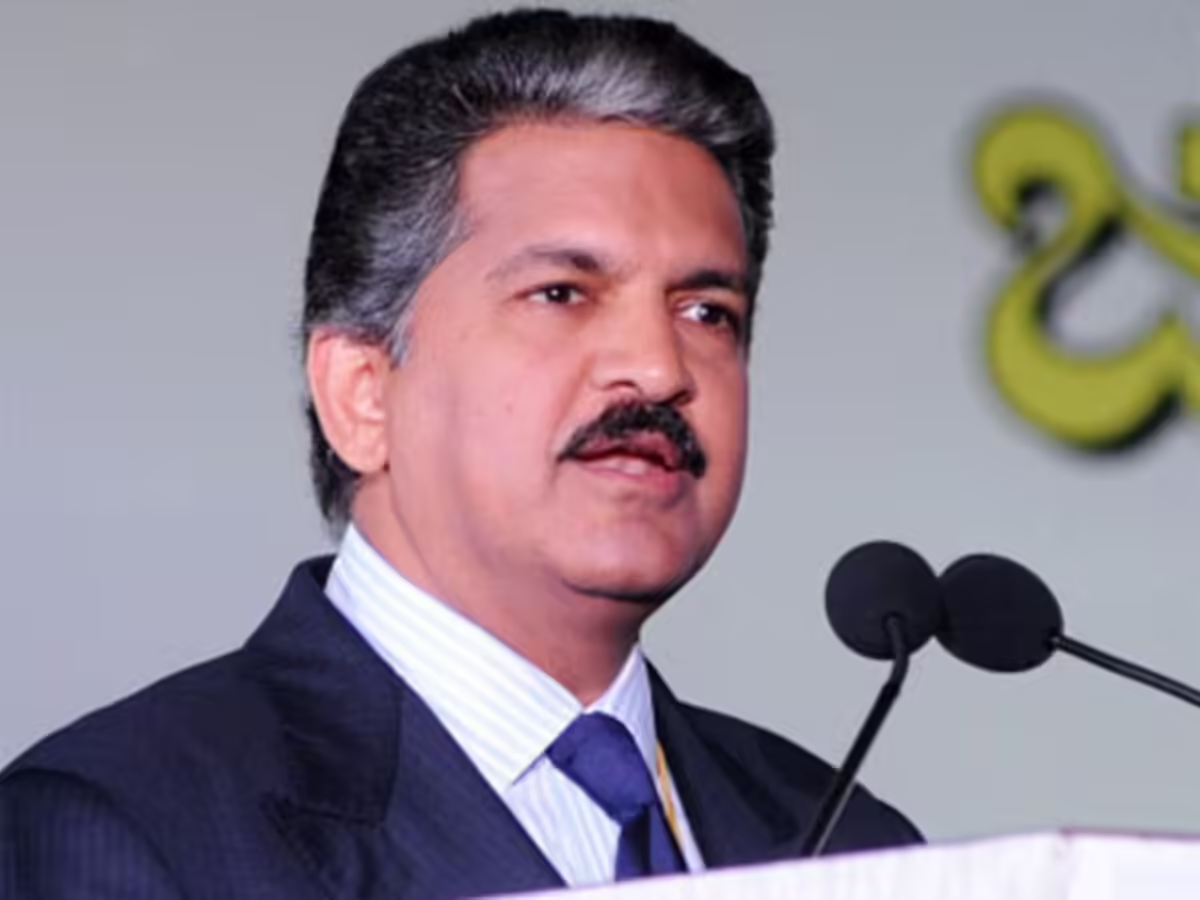
On Modi government’s 10-point agenda.
I think it is almost brilliant to put at the head of the list the fact that bureaucrats should be encouraged to take decisions without fear. In a sense he’s gone to the heart of the problem of the paralysis. The Indian government is extraordinarily large and it is difficult to try and believe that one leader can make all the change. This is a federal system. In a large bureaucracy you cannot exercise the transformation of any situation without coopting bureaucracy.
So empowerment becomes important. It’s a good sign. If you remember, one of the major apprehensions about Modi was an autocratic style of functioning. By putting right at the top of the agenda the empowerment of the bureaucracy I think one has to appreciate and admit that it is definitely not the act of an autocrat.
On disbanding ministerial groups.
Without making much heavy weather of it, he’s been a case study for business schools on how to exercise leadership and have an impact from day one in the new job. He’s setting a clear agenda and is making a clear promise of making a measurement of progress made against that clear agenda. For example, making an agenda for 100 days will make it clear what the matrix would be for measuring success of that agenda. It is important that every day some incremental progress is made towards that agenda and that progress is communicated transparently. He has got his team ready, which is a focused team. To me, every decision needn’t be a big-bang reform but a signal of proactive decision-making and removal of red tape and bureaucracy. And a promise of even speedier decision-making in the future.
On the government’s immediate priorities.
Back in the 1980s, I had written a column headlined ‘Roads to Nowhere’. At that time we were not building enough roads. (Among) America’s competitive advantages happen to be its highways and its transportation network. Those are like blood vessels to the economy and they create job opportunities. Therefore, in a funny sense, the best thing anyone can do to create an inclusive economy is ironically through building roads, because access to markets or the lack of access to markets is one of the most discriminatory things one can do to the poor, especially to the rural poor. It’s not a point that we automatically think of but roads are a mechanism to create inclusiveness in the economy. So, I think, the faster he does that the better for the economy. There is huge economic data to show that roads (give) a bigger boost to rural income than even irrigation. It will help power dual income for families and will allow a kind of diversity from dependence on agriculture which creates productivity.
undefined
On India-US ties.
I’ve been here (in the US) for quite a while now. The Indian elections have generated enormous interest. Most of the diplomatic and political pundits are now urging the leadership in Washington not to miss out on what they feel is the diplomatic opportunity for the US in reaching out to and rebuilding a very strong relationship with India. They feel US has lost ground because of the visa controversy and that they should now rediscover the ground and build a strong relationship.
There is a feeling that both Japan and China have both stolen a march on building this kind of relationship with India. There is going to be, in my opinion, a strong effort from decision-makers here to reach out to the prime minister and his colleagues to rebuild the relationship.
On the perception that the new government will tilt more toward the east — Japan, China, South Korea.
There has been significant interest shown by Japan. It is a country with a liquidity overhang and an investment surplus. Modi is well aware of that. Why Japanese investors have been holding back is because they did not perceive any of the promises we’ve given to be gaining traction.
In the area of construction and large industrial projects, they can take pole position in large projects here. That being said, everybody speculated what the position of the PM and the Cabinet would be and the PM is his own man. My contention is that our PM is a practical man and he knows that any kind of vindictiveness has no role in foreign policy.
I think his whole objective is to enhance India’s economic health and through that gain what should be India’s rightful role in the world. The fact that we are the world’s largest democracy and we are all aware that power and a role in global affairs for a nation comes from economic strength. I think, in his own way and at the right time, he will respond positively when the correct signals are sent out from the US administration.
On FDI in defence
We have been consistent from the time we entered into JVs with foreign companies. We have not changed our stance. Right from the beginning we have been representing to the government that it is a positive step to allow at least 49% investment through the automatic route. Because it encourages the foreign partner to deploy the technology into the JV. Otherwise, there is wariness on their part to provide 100% support to the joint venture. So if you really want the best technology to be manufactured here, then (it should be) a minimum of 49% stake, which we have always advocated.
On Mahindra’s investments plans.
We have never shied away from making investments. Even during downcycles, we never stopped our investments. We invested in the Chakan automotive plant when the economy was down; we also invested in the tractor plant in Zaheerabad when the tractor market was witnessing a downcycle. When the market improved for tractors we were able to ramp up our output. We always have a long-term view of the economy. We have consistently been investing. In defence, for example, if the government starts buying again for the much-needed upgrade then we’ll certainly make the investments. Pawan (Goenka) has gone on record to say that we are considering a Rs 4,000-crore investment, which is independent of the new developments. It was something we were going to do.

Earnings call transcript: Develop Global’s Q3 2025 performance boosts stock
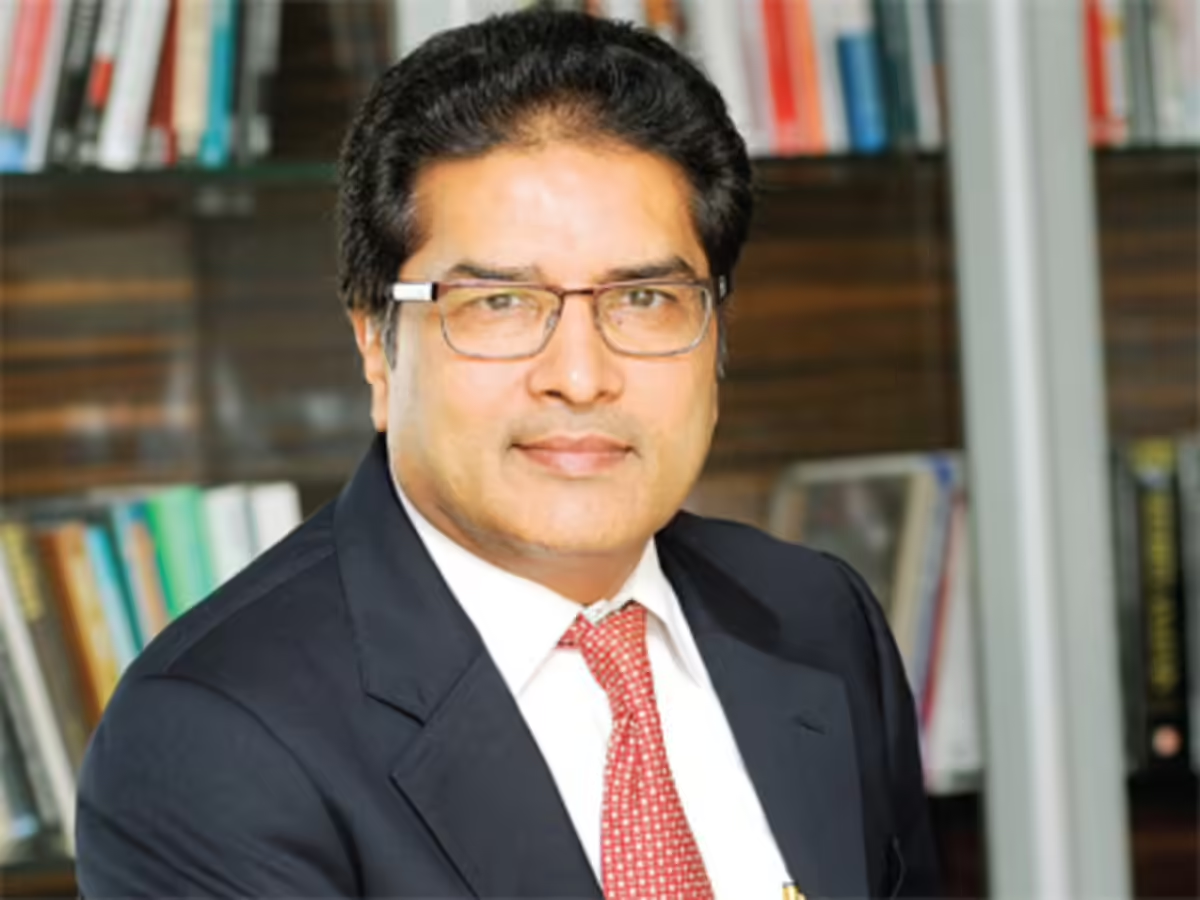
The central government has complete power with a clear mandate, but directives from the Centre have to be executed well at the state level. So, there are many things that are still not in Modi’s hands, says Raamdeo Agrawal, Joint Managing Director, Motilal Oswal Financial Services in an interview with Narendra Nathan and Sanket Dhanorkar.
Are we looking at a multi-year bull run?
I think the market has not yet priced in the full potential of the economy. For the first time, a true nationalist has come to power with a clear majority. There is a new-found energy across the nation. My sense is that the market has not yet understood the difference between 300-plus seats for NDA and 272-plus seats for BJP alone. Look at how the cabinet posts have been assigned — BJP allies have got limited posts and their negotiating power is diminished. Complete power is in the hands of the government. The political scenario is drastically different now. The economy is on the cusp of a historical positive change.
It is the same vehicle, but the driver has changed. It is now being steered by a formula-one driver. So, the acceleration will be dramatic. It will become visible very quickly. Today we are growing at 4.5 per cent. Growth is likely to pick up pace rapidly in the next few years. A lot of things will happen in five years. It will be interesting to see the index level at that time. In the process, investors will make tons of money, because the market will discount that growth two years in advance. It will not wait for the fifth year. If all domestic and global factors align, markets will go through the roof.
Are there challenges to the fragile economic recovery?
The current optimism is because a major variable — the shambolic political setup — has been corrected. There is no doubt that the new government has been fully empowered in this election; the mandate has been given to an extremely competent individual. Right now, everybody is bullish. But one must have tempered expectations. Finally, directives from the Centre have to be executed well at the state level. Otherwise it will be a waste. There are many things that are still not in Modi’s hands.
A lot of other factors will also play a role. Good monsoons, favourable global environment, peaceful borders, etc., can change the entire scenario. But, only time will tell how many stars will align. So, a lot will depend on external factors. I am also keenly watching how the new government tackles inflation, which is just a symptom of a much deeper problem somewhere else. The government has to address supply-side bottlenecks. A weak currency cannot make a strong country. That is why, inflation must go down. It will be the beginning of development, investments, and so on.
The rally, so far, has been driven by hope. When will fundamentals take over?
News headlines, and making money are two entirely different things. We should not get carried away by the headlines. The focus must be on who will actually make money. In most cases, it will be a company which is making money right now. Very rarely will a company that is broke today make money tomorrow, unless there is a complete change in business dynamics. Today, we do not have anything to go by. So, wherever there are anomalies in the economy, these will come back to normal levels. Right now, it is only about the promise of a better tomorrow. Some of these promises will have to take shape in the budget.
undefined
What should be the first priority for the new government?
India has to become much more business friendly. Finally, the country needs to create jobs for its rising young population. Who will create these jobs? More than the government, it is the businesses which will create jobs. Businesses can create jobs only if the business environment is friendly. They also cannot sustain growth without creating jobs. So, the government has to become business friendly. All hurdles should be removed. We need businesses to take more risks as it will result in more jobs.
Will mid-cap stocks continue to perform better than large-caps for now?
It really depends on the company. Mid-caps were lagging for quite some time; smallcaps even more. Eventually it has to converge. Large-caps are now looking highly priced. Investor appetite is limited at these levels. Most of the action is in the low-quality, low-priced segment. Smaller investors are clearly buying low-quality stuff, thinking that the price is low. But, even if it moves into high valuation territory, low quality will remain so. This is where the entire game ends. Sure, high quality stocks are expensive now. But that doesn’t mean you should have junk in your portfolio. If you find quality at a reasonable price, buy with modest expectations. Such names are few and far between. But, even if you get 3-4 such ideas over one year, you can make money. The challenge is to have patience and hold on to the investment. Filling with junk will be a disaster, but if it works, you get a multi-bagger. Investors in high quality may underperform in a rallying market, but will emerge better off over an entire cycle.
Can we expect an earnings upgrade anytime soon?
A 12-15 per cent earnings upgrade is definitely possible this year. As the economy recovers, sectors, such as cement, steel and automobiles, will pick up pace. Oil & gas can also contribute to earnings growth. Right now corporate profits are contributing around 4 per cent to the GDP, which is near the bottom of the band. At the peak of a cycle, this can go upto 7-8 per cent. Assuming 13-14 per cent nominal growth in GDP, it will double in rupee term to Rs 220 trillion in next six years. Now the question is whether the current profit of Rs 4 trillion will move up to Rs 8 trillion or Rs 16 trillion. If it maintains the current ratio, it will go to Rs 8 trillion. If it touches the upper end of the band, it will go to Rs 16 trillion. If this happens and the PE multiple remains the same, the market will go up four times. Profits will zoom the moment the economy moves from 5-6 per cent to 8-9 per cent growth. That is why there is a potential for the market to go up to the stratospheric levels from here.

Jenny Lennick’s colourful hair clips are sold across the US and around the world.
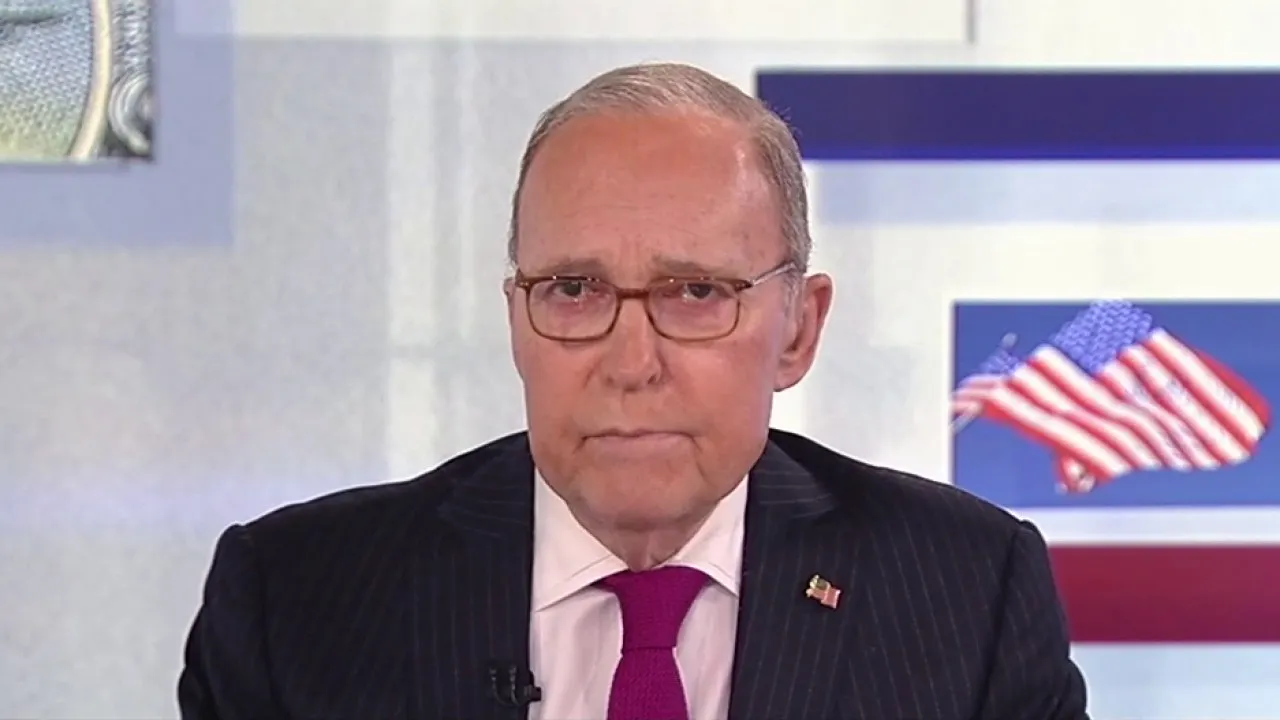
FOX Business host Larry Kudlow discusses the state of the conflict in the Middle East on ‘Kudlow.’
“The blockade scares them even more than the bombing — they’ve been bombed for years, but the blockade they hate.” That’s President Trump talking to Fox News’ Martha MacCallum in a very telling statement. And it may well be that the factionalized Iranians simply cannot come up with any kind of unified agreement to present American negotiators.
It also may well be that there’s no such thing as an agreement, other than unconditional surrender. All nuclear activity stops. Enriched uranium must be transferred from Iran to America. All proxy and other forms of terrorism must be stopped. The Strait of Hormuz must be completely open. And frankly whatever other American demands are placed on a badly defeated Iran.
In a sense, there is a ceasefire now, but American military combat operations, which are even stronger today than at the beginning of the war, may be resumed at any moment. And perhaps most importantly, the United States Navy’s blockade of Iranian ports continues. That’s the state of play and the state of war right now. No oil, no money. That’s Iran’s dilemma.
Fox News senior strategic analyst Ret. Gen. Jack Keane dissects the future of U.S.-Iran talks and President Donald Trump’s ‘no time pressure’ ceasefire stance on ‘Kudlow.’
America presumably will control the entire Persian Gulf theatre, including the Strait of Hormuz. It’s probably costing Iran something near $450 million a day, annualizing to nearly $160 billion a year, for a budget that’s estimated at only $100 billion annually. Put simply, there’s no money to meet payroll or retirement.
All the thugs, and barbarians, and Islamic Revolutionary Guard Corps and the rest of the government, and all the businesses that they have stolen and looted, and all kinds of fanatics who are just not going to get paid.
If we actually took out Kharg Island, that would knock out an additional 1.5 million barrels a day, worth about $140 million at current prices, covering 190,000 personnel, according to a NY Post op-ed by a retired United States Navy captain, Lance B. Gordon. And there may be roughly 200 million barrels a day of Iranian oil floating on the high seas mostly near Communist China, that could be worth about $20 billion. Yet the economic crunch from the blockade is the biggest and most powerful financial weapon; we’ve never tried this before, and it just might work. I’d love to see the United States Treasury seize all the bank accounts of the criminals running Iran, but that’s a separate story.
The point is for the moment, Mr. Trump is content to let the blockade inflict its punishment on Iran for the foreseeable future, perhaps as long as it takes to just bring them to their unconditional knees.
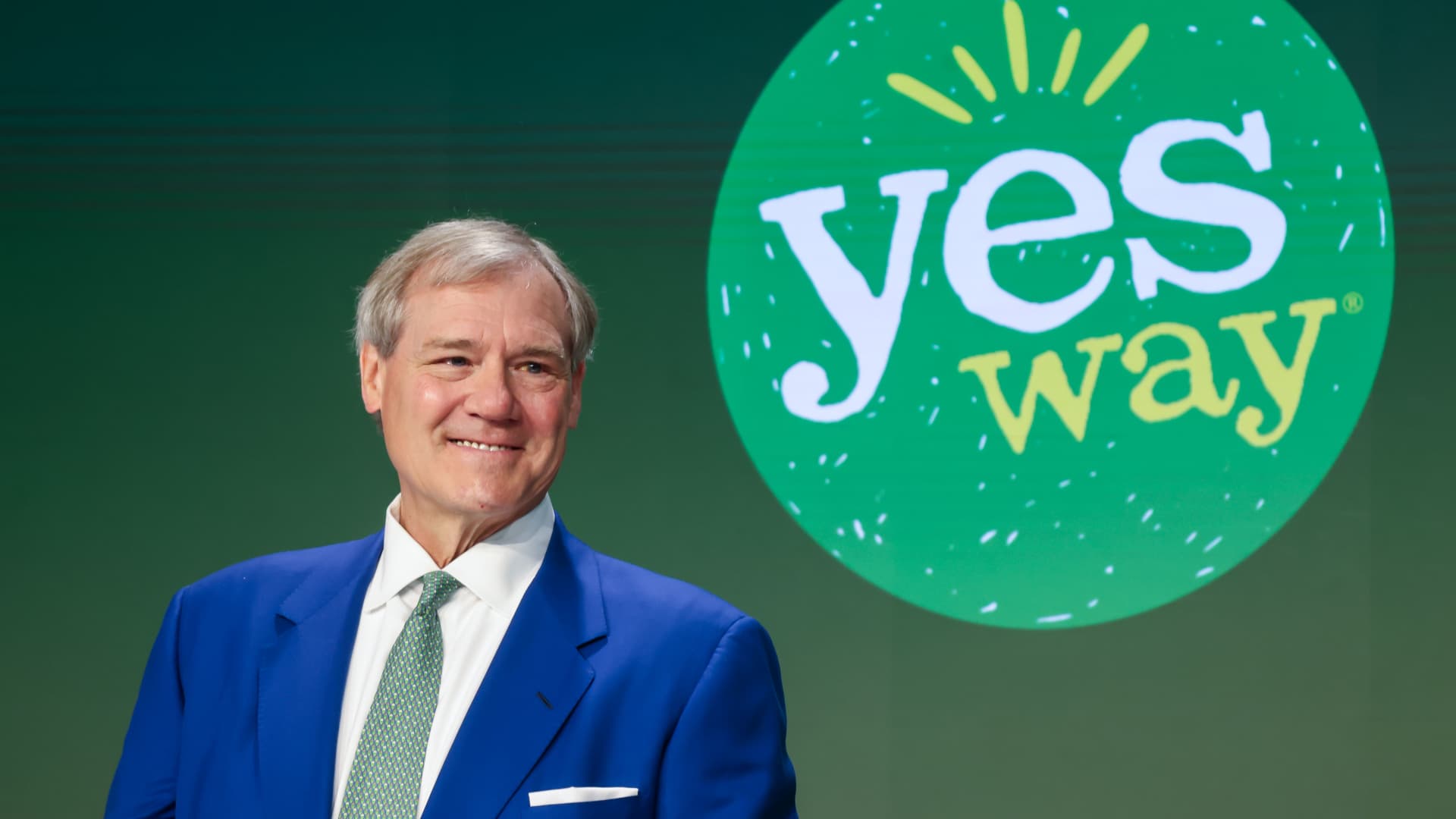
Thomas Trkla, chairman and CEO of Yesway, during the company’s initial public offering at the Nasdaq MarketSite in New York, April 22, 2026.
Michael Nagle | Bloomberg | Getty Images
Deep-fried burritos and chimichangas from convenience store chain Allsup’s are helping its parent company Yesway steal customers from fast-food chains, even with higher fuel prices, Yesway CEO Tom Trkla said Wednesday.
“A lot of the data that we get from our data providers show that our sales are up and some of their competitors’ sales are down,” he told CNBC. “We infer that we are taking some market share, both from other c-store chains and from other [quick-service restaurant chains] that sell food and compete with our burrito platform.”
Yesway made its public market debut on Wednesday, trading on the Nasdaq Stock Exchange under “YSWY.” It raised $280 million in its initial public offering, pricing shares at $20 for a valuation of $1.21 billion. The stock began trading at $22 a share.
The jump in the stock — and demand for Yesway’s food offerings — underscore how the convenience store industry has steadily chipped away at fast food’s dominance.
In 2025, Allsup’s sold roughly 41 million proprietary food products, including 24 million burritos, according to regulatory filings.
About two-thirds of Yesway’s revenue comes from fuel, while the merchandise sold inside stores accounts for the remaining third. And while fuel prices have risen as a result of the war in Iran, Yesway is still seeing high demand for its food.
“People come to our stores, not just for fuel, and that helps a lot too in these environments,” Trkla said. “The other thing I should mention is that we’re already a value shop …. We actually are already at the $4, $5, $6 price for our meals, so we’ve actually seen increases of inside merchandise sales.”
Over the last decade, c-stores have been taking market share from fast-food chains. Chains like Wawa, Buc-ee’s and Casey’s General Stores have won over customers with their fresh food, boosted by their offerings’ low prices and convenience. Breakfast, in particular, has become a battleground between c-stores and fast-food rivals like McDonald’s and Taco Bell.
The c-store industry’s overall food service sales reached $121 billion in 2024, according to data from the National Association of Convenience Stores.
Brookwood, a real estate-focused private equity firm, founded Yesway in 2015. In 2019, the company acquired Allsup’s. By the end of 2025, Yesway and Allsup’s combined had 448 locations, primarily concentrated in the Midwest and Southwest.
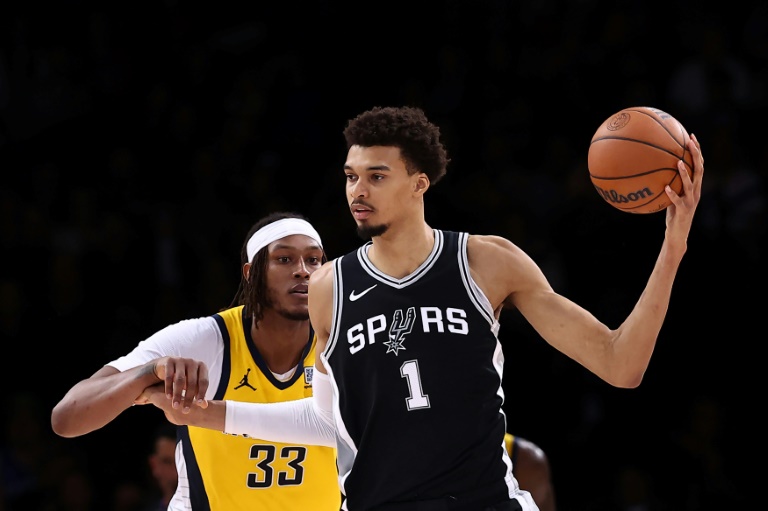
SAN ANTONIO — San Antonio Spurs superstar Victor Wembanyama was diagnosed with a concussion after a frightening fall in Game 2 of the team’s first-round playoff series against the Portland Trail Blazers, thrusting the 22-year-old phenom into the NBA’s strict concussion protocol and raising questions about his availability for the remainder of the postseason.

AFP
Wembanyama suffered the injury with 8:57 left in the second quarter of Tuesday night’s 106-103 loss that evened the Western Conference series at 1-1. Driving to the basket, the 7-foot-4 center was fouled and lost his balance, slamming face-first onto the court at full speed. He lay on the floor momentarily before struggling to his feet and heading to the locker room. He played just 12 minutes, recording five points and four rebounds.
Spurs coach Mitch Johnson confirmed after the game that Wembanyama had entered the league’s concussion protocol and would not return. NBA insider Shams Charania reported Wednesday that Wembanyama had been officially diagnosed with a concussion and would undergo further testing that day. The team provided no immediate timeline for his return.
The incident comes at a critical juncture for the Spurs, who earned the West’s top seed with a strong regular season. Wembanyama, a leading candidate for both MVP and Defensive Player of the Year honors, has been the cornerstone of San Antonio’s resurgence. His absence could significantly impact the series against a resilient Portland team featuring Scoot Henderson and Jrue Holiday.
Under the NBA’s 2025-26 Concussion Policy, a player diagnosed with a concussion cannot return to full participation without restrictions for at least 48 hours after the time of injury. The player must also complete a structured return-to-participation process and receive final clearance.
The protocol begins with coordinated medical care. Any suspected concussion triggers an immediate evaluation. If diagnosed, the player undergoes regular monitoring for the first 24 hours to track symptom evolution. Physical and cognitive exertion is limited under the direction of the team’s medical staff. This includes advising reduced screen time, appropriate sleep, nutrition, hydration and avoiding large crowds or media obligations.
After an initial period of relative rest — typically 24 to 48 hours — the player may begin a graduated return-to-participation exertion process, but only when a team physician determines it is appropriate. The process features progressive steps of increasing physical demand, each closely monitored by medical staff with focused neurological examinations:
- Stationary bike or light aerobic activity.
- Jogging.
- Agility work.
- Non-contact team drills.
A player must remain completely symptom-free at rest and during each stage to advance. If symptoms return, the player stops and restarts at the previous successful step. There is no fixed timetable; recovery varies by individual and injury severity.
Final clearance requires multiple layers of approval. The player must be symptom-free at rest. A physician with specific training in sports-related concussion management must evaluate him. The player must successfully complete the full exertion process. Finally, the Director of the NBA Concussion Program, currently Dr. Jeffrey Kutcher, must confirm that the team physician’s clearance aligns with league policy.
League officials and team doctors review game video to assess the injury mechanism, adding another layer of caution. The policy emphasizes that no player returns the same day as a diagnosed concussion.
Average recovery time for NBA concussions ranges from seven to 10 days, though some players clear the protocol faster if symptoms resolve quickly. In Wembanyama’s case, the minimum 48-hour inactivity window from Tuesday’s injury means he could theoretically begin light exertion steps as early as Thursday. Game 3 is scheduled for Friday in Portland, giving him roughly 72 hours from the time of injury.
Medical experts note that severity matters. A harder impact, such as Wembanyama’s face-first fall where his head bounced off the court, may prolong symptoms like headache, dizziness, sensitivity to light or noise, cognitive fog or balance issues. Spurs officials have not disclosed the extent of his symptoms.
This marks the latest health concern for Wembanyama this season. He previously missed time with a left rib contusion but returned to play key minutes in the regular-season finale push for awards eligibility. His towering frame and explosive style make him a defensive anchor and offensive threat, but also expose him to high-impact collisions.
The Spurs’ depth will be tested without their star. Veterans and younger contributors must step up in scoring, rebounding and rim protection. Portland, meanwhile, will look to exploit any rust or matchup advantages in Wembanyama’s potential absence.
Fan and analyst reaction poured in quickly after the fall, with many expressing concern over the visual of the lanky center struggling to stand. Social media filled with well-wishes and calls for caution, highlighting the league’s evolving emphasis on player safety following past high-profile head injuries.
NBA concussion protocols have strengthened over the years in response to growing awareness of long-term risks, including chronic traumatic encephalopathy. The current policy balances competitive needs with medical caution, requiring independent oversight to prevent premature returns.
For San Antonio, the best-case scenario has Wembanyama progressing smoothly through the steps and gaining clearance in time for Game 3 or 4. Worst case, symptoms linger and sideline him for a week or more, potentially shifting series momentum.
Spurs general manager Brian Wright and the medical staff will provide daily updates as testing continues. The organization has built a reputation for cautious handling of injuries to protect young talent like Wembanyama, selected No. 1 overall in 2023.
As the NBA playoffs intensify, Wembanyama’s situation underscores the physical toll of the postseason. Teams rely heavily on star power, yet health remains the ultimate wildcard. The protocol’s step-by-step approach aims to ensure that when players return, they do so safely, minimizing risk of second-impact syndrome or prolonged recovery.
Wembanyama’s teammates expressed support after Tuesday’s game, emphasizing the need to stay focused regardless of his status. “We prepare for every possibility,” one player said. “Wemby is our leader, but we have to execute as a group.”
With further testing scheduled for Wednesday, the basketball world awaits the next update on one of the sport’s brightest young stars. Whether Wembanyama returns for Game 3, later in the series or beyond will depend on his body’s response to the rigorous, individualized recovery process mandated by NBA rules.
The incident serves as a reminder that even in a sport defined by athleticism and resilience, brain health takes precedence. Protocols exist not just to comply with league standards but to safeguard careers and futures. For the Spurs and their franchise cornerstone, the coming days will determine if Wembanyama can help lead San Antonio deeper into the playoffs or if the team must navigate the series without its most dominant force.

Pin Up – Azrbaycann n yax kazinosu Rsmi sayt.1161 (2)

Why Mike Tomlin Will Be Perfect Television Fit for NBC

Apple fixes iOS bug that retained deleted notification data

Manchester United reach agreement with Casemiro over contract clause amid transfer speculation

Steven Gerrard disagrees with Gary Neville over ‘shock’ Chelsea and Arsenal claim | Football

US brings back mandatory military draft registration


-

 Sports6 days ago
NWFL Suspends Two Players Over Post-Match Clash in Ado-Ekiti
-

 Fashion5 days ago
Weekend Open Thread: Theodora Dress
-

 Politics5 days ago
Palestine barred from entering Canada for FIFA Congress
-
Entertainment3 days ago
NBA Analyst Charles Barkley Chimes in on Ice Spice McDonald’s Fiasco
-

 Business3 days ago
Powerball Result April 18, 2026: No Jackpot Winner in Powerball Draw: $75 Million Rolls Over
-

 Tech4 days ago
Auto Enthusiast Scores Running Tesla Model 3 for Two Grand and Turns It Into Bare-Bones Go-Kart
-

 Politics4 days ago
Zack Polanski demands ‘council homes not luxury flats for foreign investors’
-

 Crypto World5 days ago
Russia Pushes Bill to Criminalize Unregistered Crypto Services
-

 Politics2 days ago
Gary Stevenson delivers timely reminder to register to vote as deadline TODAY
-

 Tech7 days ago
‘Avatar: Aang, The Last Airbender’ Leaked Online. Some Fans Say Paramount Deserves the Fallout
-
 Business6 days ago
Creo Medical agree sale of its manufacturing operation
-

 Business15 hours ago
Rolls-Royce Voted UK’s Most Iconic Trade Mark as IPO Register Hits 150
-

 Politics6 hours ago
Disabled people challenge government SEND proposals over segregation concerns
-

 Politics6 hours ago
Making troops accountable for war crimes threatens US alliance, ex-SAS colonel warns
-

 Crypto World5 days ago
Russia Introduces Bill To Criminalize Unregistered Crypto Services
-

 Politics7 hours ago
Starmer handler McSweeney to be dragged from shadows by Foreign Affairs Committee
-

 Politics7 hours ago
Zack Polanski responds to home secretary’s taser threat
-
Politics7 hours ago
Wings Over Scotland | How To Get Away With Crimes
-

 Politics4 hours ago
‘Iran is still a nuclear threat’
-
 Crypto World4 days ago
Kelp DAO rsETH Bridge Hack Drains $292M as DeFi Losses Top $600M in Two Weeks
You must be logged in to post a comment Login