
Business
What Is NBA Recovery Protocol For Concussion?

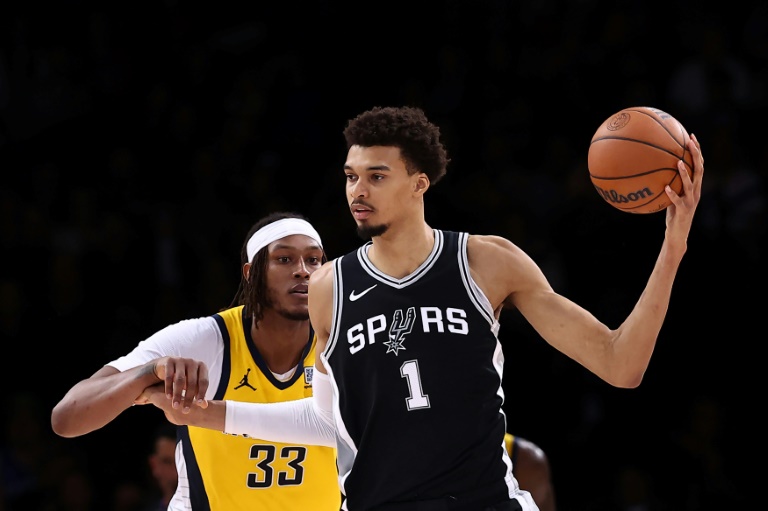
SAN ANTONIO — San Antonio Spurs superstar Victor Wembanyama was diagnosed with a concussion after a frightening fall in Game 2 of the team’s first-round playoff series against the Portland Trail Blazers, thrusting the 22-year-old phenom into the NBA’s strict concussion protocol and raising questions about his availability for the remainder of the postseason.

AFP
Wembanyama suffered the injury with 8:57 left in the second quarter of Tuesday night’s 106-103 loss that evened the Western Conference series at 1-1. Driving to the basket, the 7-foot-4 center was fouled and lost his balance, slamming face-first onto the court at full speed. He lay on the floor momentarily before struggling to his feet and heading to the locker room. He played just 12 minutes, recording five points and four rebounds.
Spurs coach Mitch Johnson confirmed after the game that Wembanyama had entered the league’s concussion protocol and would not return. NBA insider Shams Charania reported Wednesday that Wembanyama had been officially diagnosed with a concussion and would undergo further testing that day. The team provided no immediate timeline for his return.
The incident comes at a critical juncture for the Spurs, who earned the West’s top seed with a strong regular season. Wembanyama, a leading candidate for both MVP and Defensive Player of the Year honors, has been the cornerstone of San Antonio’s resurgence. His absence could significantly impact the series against a resilient Portland team featuring Scoot Henderson and Jrue Holiday.
Under the NBA’s 2025-26 Concussion Policy, a player diagnosed with a concussion cannot return to full participation without restrictions for at least 48 hours after the time of injury. The player must also complete a structured return-to-participation process and receive final clearance.
The protocol begins with coordinated medical care. Any suspected concussion triggers an immediate evaluation. If diagnosed, the player undergoes regular monitoring for the first 24 hours to track symptom evolution. Physical and cognitive exertion is limited under the direction of the team’s medical staff. This includes advising reduced screen time, appropriate sleep, nutrition, hydration and avoiding large crowds or media obligations.
After an initial period of relative rest — typically 24 to 48 hours — the player may begin a graduated return-to-participation exertion process, but only when a team physician determines it is appropriate. The process features progressive steps of increasing physical demand, each closely monitored by medical staff with focused neurological examinations:
- Stationary bike or light aerobic activity.
- Jogging.
- Agility work.
- Non-contact team drills.
A player must remain completely symptom-free at rest and during each stage to advance. If symptoms return, the player stops and restarts at the previous successful step. There is no fixed timetable; recovery varies by individual and injury severity.
Final clearance requires multiple layers of approval. The player must be symptom-free at rest. A physician with specific training in sports-related concussion management must evaluate him. The player must successfully complete the full exertion process. Finally, the Director of the NBA Concussion Program, currently Dr. Jeffrey Kutcher, must confirm that the team physician’s clearance aligns with league policy.
League officials and team doctors review game video to assess the injury mechanism, adding another layer of caution. The policy emphasizes that no player returns the same day as a diagnosed concussion.
Average recovery time for NBA concussions ranges from seven to 10 days, though some players clear the protocol faster if symptoms resolve quickly. In Wembanyama’s case, the minimum 48-hour inactivity window from Tuesday’s injury means he could theoretically begin light exertion steps as early as Thursday. Game 3 is scheduled for Friday in Portland, giving him roughly 72 hours from the time of injury.
Medical experts note that severity matters. A harder impact, such as Wembanyama’s face-first fall where his head bounced off the court, may prolong symptoms like headache, dizziness, sensitivity to light or noise, cognitive fog or balance issues. Spurs officials have not disclosed the extent of his symptoms.
This marks the latest health concern for Wembanyama this season. He previously missed time with a left rib contusion but returned to play key minutes in the regular-season finale push for awards eligibility. His towering frame and explosive style make him a defensive anchor and offensive threat, but also expose him to high-impact collisions.
The Spurs’ depth will be tested without their star. Veterans and younger contributors must step up in scoring, rebounding and rim protection. Portland, meanwhile, will look to exploit any rust or matchup advantages in Wembanyama’s potential absence.
Fan and analyst reaction poured in quickly after the fall, with many expressing concern over the visual of the lanky center struggling to stand. Social media filled with well-wishes and calls for caution, highlighting the league’s evolving emphasis on player safety following past high-profile head injuries.
NBA concussion protocols have strengthened over the years in response to growing awareness of long-term risks, including chronic traumatic encephalopathy. The current policy balances competitive needs with medical caution, requiring independent oversight to prevent premature returns.
For San Antonio, the best-case scenario has Wembanyama progressing smoothly through the steps and gaining clearance in time for Game 3 or 4. Worst case, symptoms linger and sideline him for a week or more, potentially shifting series momentum.
Spurs general manager Brian Wright and the medical staff will provide daily updates as testing continues. The organization has built a reputation for cautious handling of injuries to protect young talent like Wembanyama, selected No. 1 overall in 2023.
As the NBA playoffs intensify, Wembanyama’s situation underscores the physical toll of the postseason. Teams rely heavily on star power, yet health remains the ultimate wildcard. The protocol’s step-by-step approach aims to ensure that when players return, they do so safely, minimizing risk of second-impact syndrome or prolonged recovery.
Wembanyama’s teammates expressed support after Tuesday’s game, emphasizing the need to stay focused regardless of his status. “We prepare for every possibility,” one player said. “Wemby is our leader, but we have to execute as a group.”
With further testing scheduled for Wednesday, the basketball world awaits the next update on one of the sport’s brightest young stars. Whether Wembanyama returns for Game 3, later in the series or beyond will depend on his body’s response to the rigorous, individualized recovery process mandated by NBA rules.
The incident serves as a reminder that even in a sport defined by athleticism and resilience, brain health takes precedence. Protocols exist not just to comply with league standards but to safeguard careers and futures. For the Spurs and their franchise cornerstone, the coming days will determine if Wembanyama can help lead San Antonio deeper into the playoffs or if the team must navigate the series without its most dominant force.

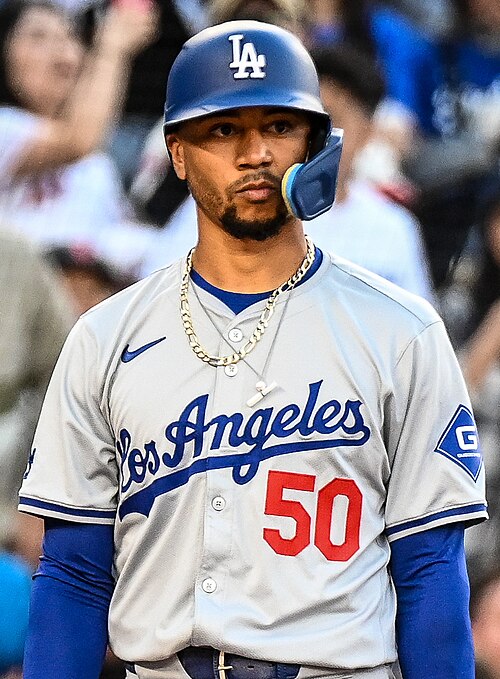
LOS ANGELES — Mookie Betts continues to rehab a right oblique strain suffered on April 5 against the Washington Nationals, with the Los Angeles Dodgers taking a cautious approach to his return as the four-time World Series champion has already missed more than two weeks of action.

Manager Dave Roberts provided the latest positive but measured update Tuesday, confirming that Betts began a swing progression over the weekend. The star shortstop has been progressing through med ball throws and light throwing but has not yet started hitting in a game-like setting. Roberts emphasized that the team will not rush Betts, noting it will still “take a while” before he is back in the lineup despite the encouraging signs.
Betts, who turns 34 in October, has echoed the cautious tone. In recent comments, he said he is able to throw without issue and that running feels manageable, though he has not begun swinging a bat. He stressed the importance of avoiding the mechanical issues that arose from a previous oblique injury last season, when he pushed through discomfort and developed bad habits at the plate. “It’s just an oblique, and it’s going to take time,” Betts said, adding that the Dodgers are prioritizing full comfort with med ball work before advancing to hitting.
Oblique strains are notoriously tricky for position players, often requiring four to six weeks of recovery. While initial optimism suggested a shorter absence — Betts was placed on the 10-day injured list shortly after the injury — the timeline has extended. He remains eligible to return as early as mid-April in theory, but Roberts and the medical staff have made clear the 10-day IL stint was insufficient. Most projections now point to a return sometime in May, potentially after a rehab assignment, though no firm date has been set.
The injury has tested the depth of a star-studded Dodgers roster that entered 2026 with championship aspirations. Betts, a versatile defender capable of playing shortstop, second base and the outfield, has been one of the franchise’s most consistent performers since joining via trade from the Boston Red Sox. His absence has created opportunities for others, most notably Korean infielder Hyeseong Kim, who was recalled from Triple-A Oklahoma City to help fill the void.
Kim, signed by the Dodgers to a multi-year deal before the 2025 season, has seized the opportunity. In limited action since the call-up, the left-handed hitter has posted strong early numbers, including a batting average around .333 with a high on-base percentage, a home run and multiple stolen bases. Manager Roberts has praised Kim’s calm, patient approach at the plate and his growing comfort in the major leagues during his second year stateside.
The 27-year-old Kim has primarily seen time at second base and shortstop, providing defensive versatility while delivering contact hitting and speed on the basepaths. His low strikeout rate and ability to get on base have helped the Dodgers maintain offensive production despite missing Betts’ elite bat and leadership. In 2025, Kim showed promise as a utility player with a .280 average, modest power and double-digit steals in limited big-league time. Early 2026 performance suggests he could develop into a reliable everyday contributor if given consistent at-bats.
Still, replacing Betts fully remains a tall order. The veteran brings Gold Glove-caliber defense, switch-hitting power, speed and championship experience that few players can match. Kim’s profile leans more toward contact and speed than Betts’ well-rounded slugging and elite defense, but his hot start has eased some of the burden on the lineup. Roberts has indicated that if Kim continues performing well, he could earn a longer stay on the roster even after Betts returns, potentially creating a dynamic infield rotation.
The Dodgers have navigated the absence without major slippage, thanks to contributions from other stars like Shohei Ohtani, Freddie Freeman and the rest of a deep lineup. However, the team’s ability to sustain momentum will be tested further if Betts misses additional time into May. Oblique injuries can linger, and the Dodgers have signaled they would rather err on the side of caution to ensure Betts returns at full strength rather than risk a setback.
Betts has used the downtime for personal milestones as well. The father of three recently shared family updates, emphasizing the joy of fatherhood amid his recovery. His positive attitude and focus on smart rehabilitation have been noted by teammates and coaches.
For fantasy baseball managers and Dodgers fans tracking the situation, the key questions remain when Betts will resume baseball activities and how effectively Kim can hold down the fort. Early indications point to a gradual ramp-up for Betts, with swinging likely to begin soon followed by simulated games or a short rehab stint. A return in early to mid-May appears realistic if progress continues without setbacks.
Hyeseong Kim’s role will be pivotal in the interim. His ability to provide consistent offense and defensive reliability at premium infield positions gives the Dodgers flexibility. If Kim maintains a high on-base percentage and adds value on the bases, he could carve out a larger role in the long term, even in a crowded Dodgers infield that includes veterans and other young talents.
The broader picture for the Dodgers remains bright. Despite the injury, the team has stayed competitive in the competitive National League West. Depth has been a hallmark of their roster construction, allowing them to weather absences better than most clubs. Still, Betts’ unique skill set makes him difficult to replace entirely, and his return will be welcomed as the season intensifies.
As the calendar turns toward May, all eyes will remain on Betts’ daily progress and Kim’s continued production. The Dodgers will balance short-term needs with long-term health, aiming to have their star shortstop back healthy and contributing to another deep postseason run.
For now, the message from the organization is patience. Mookie Betts is progressing, but oblique strains demand respect. In the meantime, Hyeseong Kim is proving he belongs, offering a capable stopgap that keeps the Dodgers’ championship hopes intact.
Business
Oil Price Today (April 23): Crude oil prices cross $100 again as Iran war ceasefire talks show no progress. $120 in sight?

Adding to concerns, Iran seized two ships in the strait on Wednesday, tightening control over the passage. The U.S. has continued its naval blockade on Iranian trade, while Iranian parliament speaker and lead negotiator Mohammad Baqer Qalibaf stated that a full ceasefire would only be meaningful if the blockade is lifted.
Crude oil price on April 23
Brent crude futures slipped 15 cents to $101.76 per barrel, after closing above $100 on Wednesday for the first time in over two weeks. West Texas Intermediate futures also edged lower by 14 cents to $92.82.On Wednesday, both benchmarks had surged more than $3, supported by larger-than-expected draws in U.S. gasoline and distillate inventories, along with continued deadlock in diplomatic negotiations.

Although U.S. President Donald Trump extended a ceasefire following mediation efforts by Pakistan, tensions remain unresolved. Iran and the U.S. are still limiting vessel movement through the Strait of Hormuz, a critical route that previously handled about 20% of global oil and LNG flows before the conflict began in late February with U.S. and Israeli strikes on Iran.
Markets remain highly reactive to geopolitical signals, with price movements driven more by sentiment than any concrete improvement in supply. Limited vessel activity through the strait highlights the ongoing uncertainty. Even if tensions ease, a full normalization of flows is expected to take several months.
Macquarie estimates that crude prices could remain supported in the $85 to $90 range in the near term, with a gradual rise towards $110 as supply conditions improve. It also cautioned that prolonged disruptions through April could push Brent prices as high as $150 per barrel.
Analysts believe the market may be entering a phase of structurally higher prices. With the ceasefire viewed as temporary, a return to pre-conflict levels of $70 to $75 may not happen quickly. In the short term, prices are likely to move within a band of $80 to $85 on the downside and $95 to $100 and above on the upside.
Nuvama Institutional Equities added that an extended closure of the Strait of Hormuz, which carries around 20 million barrels per day, could drive crude prices into the $110 to $150 range.
(Disclaimer: Recommendations, suggestions, views and opinions given by the experts are their own. These do not represent the views of The Economic Times)

Earnings call transcript: Regis Resources’ Q3 2026 highlights strong cash flow
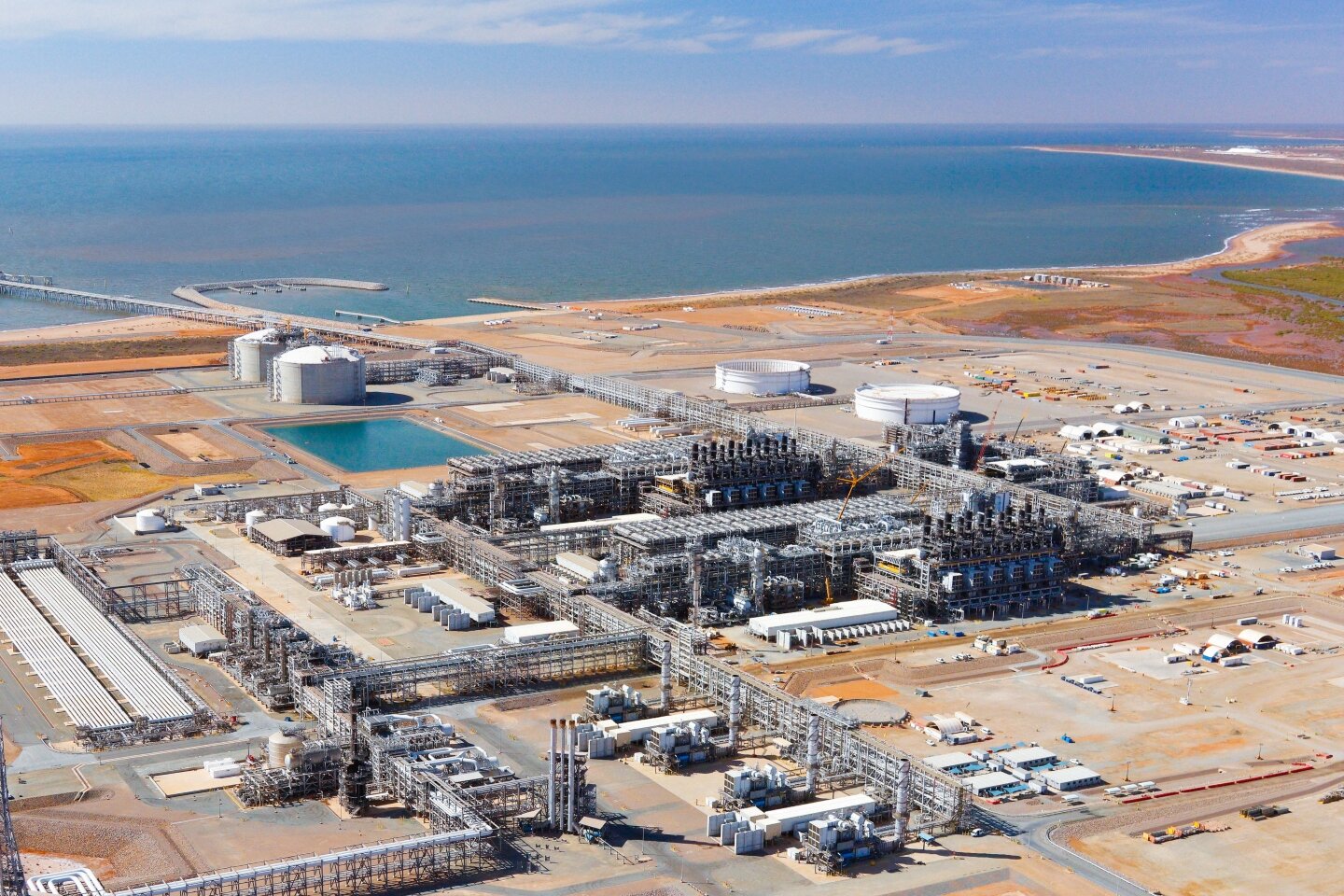
Chevron has fully restored LNG production at its Wheatstone LNG facility, almost a month after Cyclone Narelle damaged infrastructure at the project near Onslow.

Contracts for the S&P 500 Index dropped 0.4% and Brent advanced 1.3% to nearly $103 a barrel. Asian shares fluctuated at the open and advanced 0.1%.
The fluctuating moves at the open in Asia came after the S&P 500 rose 1.1% to a record Wednesday, placing the index on track for its best month since 2020. The Nasdaq 100 gained 1.7% to also set a closing peak. US chipmakers climbed for a 16th straight day, the longest-ever advance.
Stocks rose during the US session after President Donald Trump’s extension of the ceasefire marked a retreat from threats to resume bombing Iran if a deal wasn’t reached by a Wednesday deadline. The focus now is on whether talks can resume and the two sides can reach an agreement, especially as the closure of the Strait of Hormuz keeps energy prices elevated, risking higher inflation and weighing on economic growth.
Tensions remain high as the US and Iran failed to meet for a fresh round of peace talks, with both sides blocking the waterway to gain leverage during an extended ceasefire. Tehran says it has no plans to take part in negotiations imminently.
Strong corporate profits, the revival of the artificial-intelligence trade and an otherwise resilient economy have buoyed stocks despite lingering geopolitical risks. Nearly 80% of the S&P 500 companies reporting first-quarter results have beaten analyst earnings estimates so far, according to data compiled by Bloomberg.
Focus is likely to shift to Asian semiconductor stocks after the Philadelphia Stock Exchange Semiconductor Index posted a record run, as investors bet on continued strength driven by artificial intelligence-related demand.The semiconductor sector is expected to grow revenue by about 57% in 2026, according to Bloomberg Intelligence data, which is twice the pace of the overall tech sector, and well above the 9.3% growth expected for the S&P 500 Index.
“There’s a huge amount of demand because of artificial intelligence, and I think we can expect the heavy spending on AI to continue for the foreseeable future,” said Mark Grant, chief global strategist at Alliance Global Partners. “The sector still looks attractive in terms of both valuation and growth, and that should be positive for both semiconductor stocks broadly, but also the market overall.”
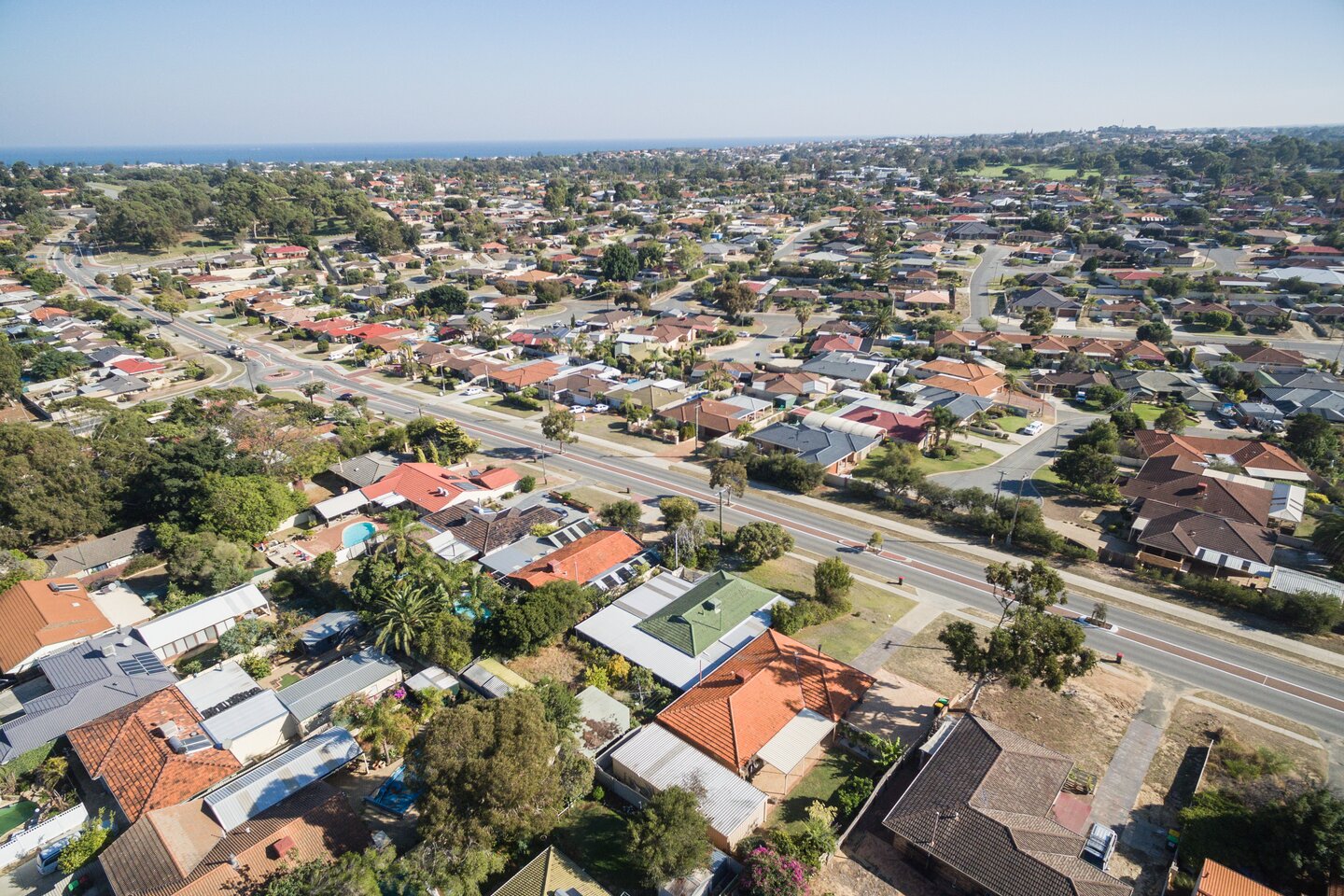
House prices for homes under thresholds for a five per cent deposit scheme are outstripping increases for all other homes.

SoftBank seeks $10 billion margin loan backed by OpenAI shares, Bloomberg News reports

NEW YORK — Fermi Inc. shares climbed sharply in early trading Wednesday, rising 13.14 percent to $5.72 as investors appeared to shake off recent volatility tied to a high-profile CEO departure and betting on the company’s ambitious plans to deliver gigawatt-scale power for artificial intelligence data centers.

The Nasdaq-listed stock (FRMI) gained 66 cents by 10:42 a.m. EDT on above-average volume, marking a partial rebound after Monday’s steep decline following news of leadership changes at the specialized real estate investment trust focused on energy infrastructure for hyperscale computing.
Fermi Inc., operating as Fermi America, develops private power campuses designed to supply behind-the-meter electricity directly to AI-centric customers, bypassing strained public grids. Its flagship Project Matador envisions an 11-gigawatt “HyperGrid” campus on more than 5,200 acres near Amarillo, Texas, combining data center facilities with on-site generation from natural gas, solar and planned nuclear units.
The company positions itself at the intersection of two explosive trends: surging electricity demand from AI training and inference workloads and chronic delays in traditional grid interconnections. By building dedicated power infrastructure, Fermi aims to offer tenants reliable, redundant energy faster than competitors reliant on utility-scale transmission queues that can stretch years.
Recent volatility stems from a leadership transition. On or around April 20, the company announced that CEO Toby Neugebauer had stepped down immediately, with the CFO also departing. The moves rattled traders, sending shares down more than 13 percent that day and contributing to broader uncertainty around execution of Project Matador. Short seller commentary, including critiques labeling the venture “not a field of AI dreams,” added pressure in recent sessions.
Despite the turbulence, some analysts and momentum investors see the dip as a buying opportunity. Fermi’s core thesis remains intact: U.S. data center capacity constraints and power shortages could drive hyperscalers toward behind-the-meter solutions. The company has highlighted partnerships, including advanced discussions with Hyundai Engineering & Construction for nuclear technology, and progress on permitting and front-end engineering design for AP1000 reactors.
Fermi went public in late 2025 via an IPO structured as a REIT, allowing tax-efficient operations while focusing on long-term leases for power and computing space. The REIT structure appeals to income-oriented investors but has drawn scrutiny over whether the company qualifies given its heavy development focus and limited current revenue.
Project Matador remains the centerpiece. Fermi has spoken of bringing the first gigawatt online by the end of 2026, with ambitions to scale to 11 GW or more. Executives have emphasized “HyperRedundant” power delivery — combining multiple generation sources for uptime critical to AI operations that cannot tolerate outages. The campus model includes land acquisition, permitting, construction and leasing to major tech tenants seeking to avoid public grid bottlenecks.
Financially, Fermi is still in the heavy investment phase. The company has reported net losses as it funds development, permitting and early construction. Recent secured financing facilities, including a $156 million committed facility announced in early April and earlier turbine equipment deals, provide runway but also raise dilution concerns if additional equity raises follow.
Analysts remain divided. Some maintain bullish price targets well above current levels, citing massive addressable demand from AI growth and Fermi’s first-mover advantage in private power campuses. Others have lowered targets or expressed caution over execution risks, lack of signed major tenant contracts to date, regulatory hurdles for nuclear components and competition from established data center REITs and utility-backed projects.
The stock’s journey has been dramatic since going public. Shares experienced sharp swings, hitting new 52-week lows in early April before rebounding on AI sector momentum and then pulling back again on leadership news. Wednesday’s 13 percent gain suggests some traders are looking past the near-term noise toward longer-term potential in the AI power infrastructure theme.
Fermi’s board and interim leadership have not yet detailed a permanent CEO search, but the company continues to push forward on strategic initiatives. Recent updates have included progress on clean air permitting in Texas and deepened nuclear collaboration talks. The involvement of high-profile figures, including former Energy Secretary Rick Perry on the board in earlier stages, lent credibility to the nuclear angle, though the company has since emphasized a hybrid generation approach.
Broader market context supports selective buying in AI-adjacent names. While major indices trade modestly higher Wednesday, stocks tied to data center infrastructure and energy have shown sporadic strength as investors weigh the massive electricity needs of next-generation AI models.
For Fermi, the path forward hinges on several milestones: securing anchor tenants for Project Matador, advancing nuclear or gas generation timelines, maintaining financing discipline and navigating regulatory processes in Texas. Success could validate the private power campus model and deliver substantial upside; delays or cost overruns could pressure the stock further given its already volatile history.
Retail investor interest has been notable, with social media and trading forums frequently discussing FRMI alongside other small-cap AI infrastructure plays. High short interest and elevated options activity have amplified swings, creating opportunities for nimble traders but also significant risk for those chasing momentum without regard to fundamentals.
As the morning session continued, Fermi shares held most of their gains, though volatility remained elevated. The upcoming earnings cycle and any fresh updates on Project Matador or leadership will likely dictate the next leg of movement.
Fermi Inc. represents a high-risk, high-reward bet on the infrastructure layer supporting the AI boom. While recent leadership changes have introduced uncertainty, the underlying demand for reliable, scalable power for data centers continues to grow. Whether the company can execute on its ambitious Texas vision will determine if today’s rebound marks the start of sustained recovery or another chapter in its volatile trading story.
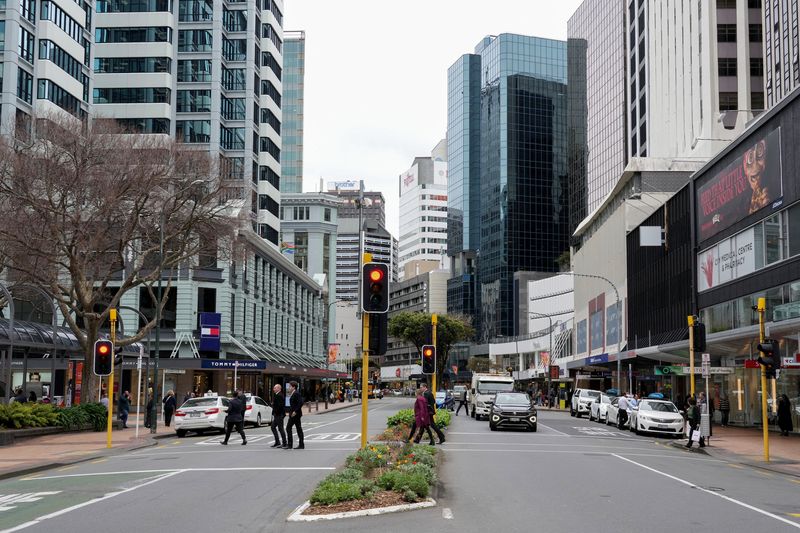

New Zealand’s economic recovery delayed but not derailed, finance minister says
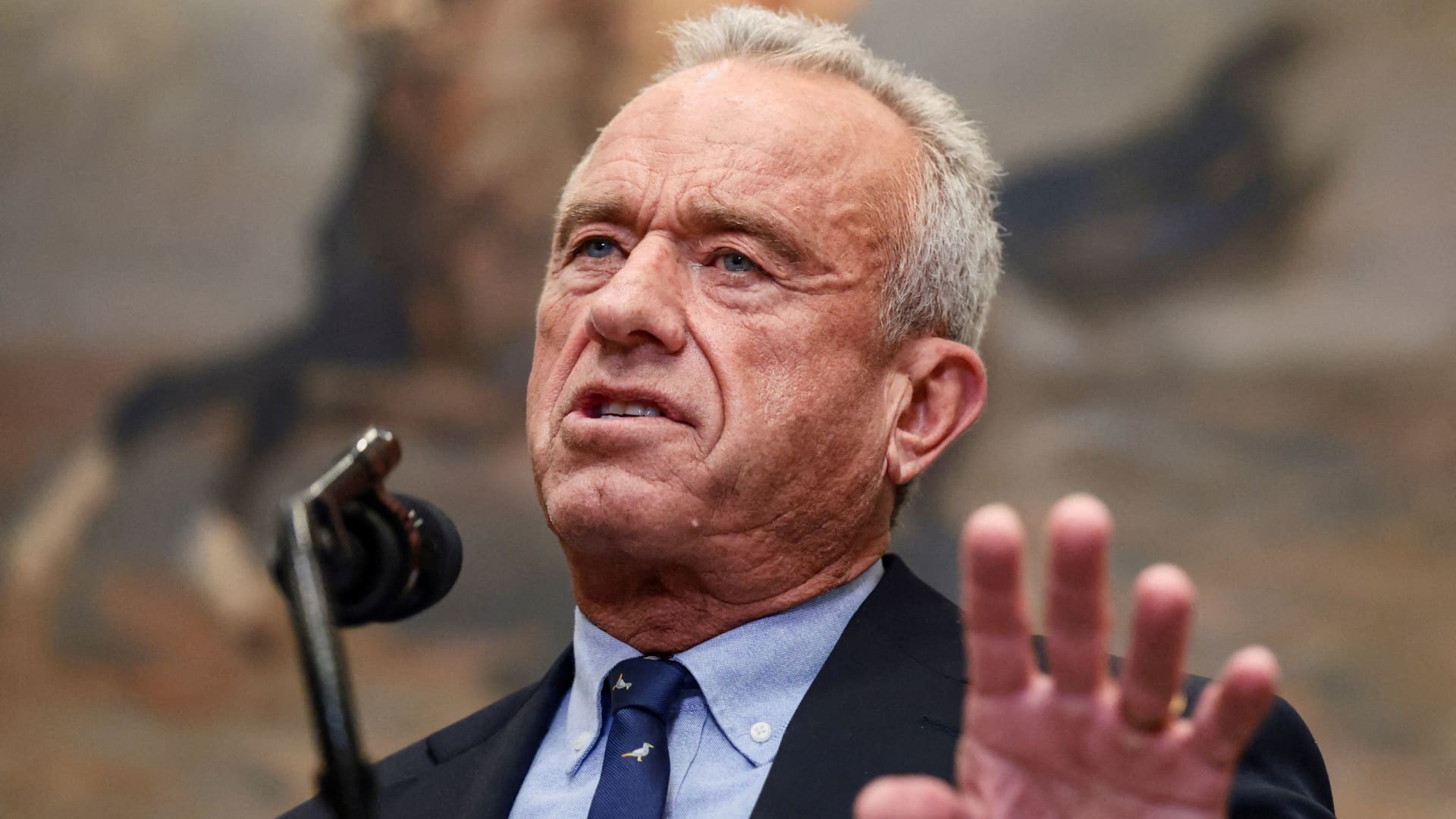
U.S. Secretary of Health and Human Services Robert F. Kennedy Jr. gestures as he speaks during an event at the Roosevelt Room of the White House in Washington, D.C., U.S., Dec. 19, 2025.
Evelyn Hockstein | Reuters
Health and Human Services Secretary Robert F. Kennedy Jr. on Wednesday said he would support a potential ban on junk food TV advertisements in the U.S. – an effort that would likely draw fierce backlash from major food manufacturers.
Speaking at a Senate Health, Education, Labor, and Pensions (HELP) Committee hearing, ranking member Sen. Bernie Sanders, I-Vt., said President Donald Trump’s nominee for surgeon general, Casey Means, had recently told the panel she supports banning junk food ads on TV.
When asked whether he agrees with a ban, Kennedy said, “I would support that.”
But Kennedy also appeared to imply that he would want the effort to be voluntary for food companies.
“The only hesitation I have was … we tried to do a smoking ban on TV, and the tobacco companies voluntarily came to the table, which was a good thing,” he said. “And I think the same arguments apply for junk food, [which is] probably even worse for Americans than smoking.”
Food, beverage and restaurant companies spend almost $14 billion per year on food ads in the U.S., with more than 80% promoting fast food, sugary drinks, candy, and unhealthy snacks, 2017 research from the University of Connecticut’s Rudd Center for Food Policy and Health shows. It is not clear how trends have changed in the years since.
The Trump administration is already exploring whether to limit food companies’ ability to market certain unhealthy foods to children, according to a “Make America Healthy Again” strategy document released by the White House in September.
HHS, the Federal Trade Commission and other agencies will consider establishing food industry guidelines on marketing to children, “including the evaluation of misleading claims and imagery,” the document said.
Two decades ago, the food industry launched The Children’s Food and Beverage Advertising Initiative as a commitment to only advertise products that met certain nutrition parameters to kids under the age of 12. But the initiative is voluntary, and children still view about 1,000 television commercials annually for unhealthy food and drinks, according to a study from the University of Illinois Chicago from 2024.
Kennedy’s testimony before the HELP committee is the last in a string of congressional hearings for him over the past two weeks around the proposed HHS budget for fiscal year 2027.
Means, during her Senate confirmation hearing in February, had stated she would “absolutely lend” her voice to support a ban on television advertisements for junk food aimed at children.
— CNBC’s Amelia Lucas contributed to this report

Mets end losing streak in Juan Soto’s return, lose Francisco Lindor to calf injury

Ping-Pong Robot Makes History By Beating Top-Level Human Players
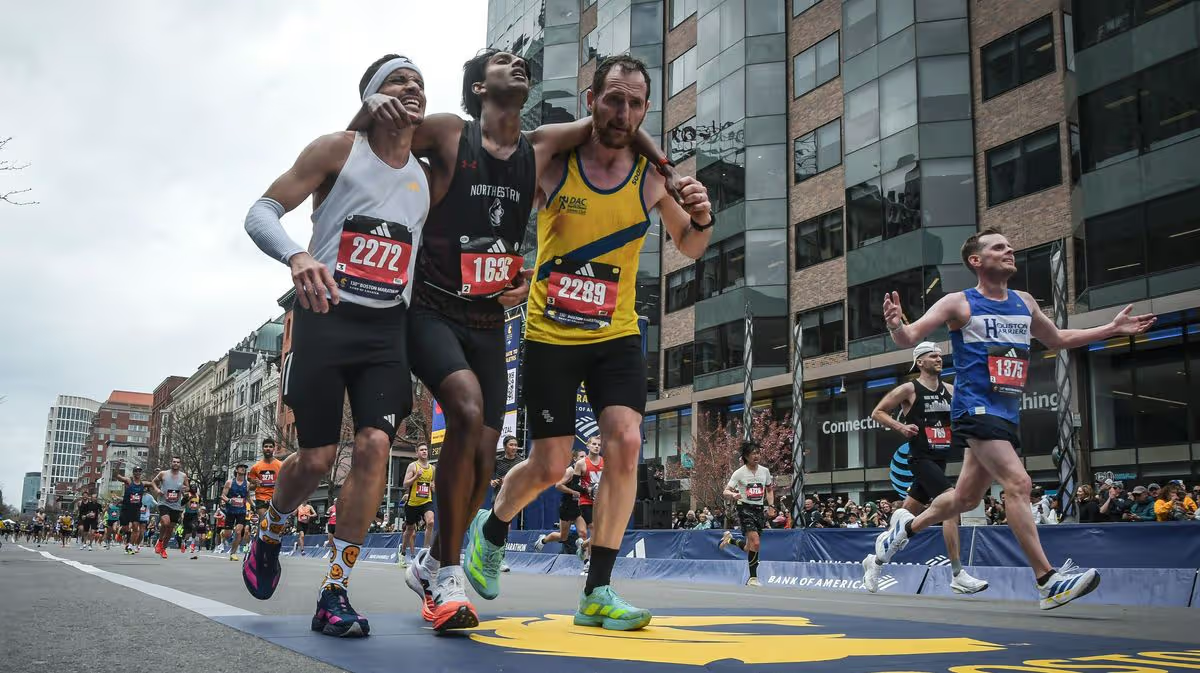
Iconic image of NI man Aaron Beggs helping fellow Boston marathon runner goes viral

Manchester United reach agreement with Casemiro over contract clause amid transfer speculation

Steven Gerrard disagrees with Gary Neville over ‘shock’ Chelsea and Arsenal claim | Football

US brings back mandatory military draft registration


-

 Sports6 days ago
NWFL Suspends Two Players Over Post-Match Clash in Ado-Ekiti
-

 Fashion5 days ago
Weekend Open Thread: Theodora Dress
-

 Politics5 days ago
Palestine barred from entering Canada for FIFA Congress
-
Entertainment3 days ago
NBA Analyst Charles Barkley Chimes in on Ice Spice McDonald’s Fiasco
-

 Business3 days ago
Powerball Result April 18, 2026: No Jackpot Winner in Powerball Draw: $75 Million Rolls Over
-

 Tech4 days ago
Auto Enthusiast Scores Running Tesla Model 3 for Two Grand and Turns It Into Bare-Bones Go-Kart
-

 Politics4 days ago
Zack Polanski demands ‘council homes not luxury flats for foreign investors’
-

 Crypto World5 days ago
Russia Pushes Bill to Criminalize Unregistered Crypto Services
-

 Politics2 days ago
Gary Stevenson delivers timely reminder to register to vote as deadline TODAY
-

 Politics8 hours ago
Disabled people challenge government SEND proposals over segregation concerns
-

 Business17 hours ago
Rolls-Royce Voted UK’s Most Iconic Trade Mark as IPO Register Hits 150
-

 Politics8 hours ago
Making troops accountable for war crimes threatens US alliance, ex-SAS colonel warns
-
 Business6 days ago
Creo Medical agree sale of its manufacturing operation
-

 Crypto World5 days ago
Russia Introduces Bill To Criminalize Unregistered Crypto Services
-

 Politics9 hours ago
Starmer handler McSweeney to be dragged from shadows by Foreign Affairs Committee
-

 Politics9 hours ago
Zack Polanski responds to home secretary’s taser threat
-
Politics9 hours ago
Wings Over Scotland | How To Get Away With Crimes
-
 Crypto World4 days ago
Kelp DAO rsETH Bridge Hack Drains $292M as DeFi Losses Top $600M in Two Weeks
-

 Politics6 hours ago
‘Iran is still a nuclear threat’
-
 Tech7 days ago
Ford EV and tech chief leaving automaker
You must be logged in to post a comment Login