
Connect with us
DAPA Banner

Tech

SpaceX S-1 warns orbital AI data centres may not be viable, months after Musk called space-based AI a no-brainer

Published

on

Summary: SpaceX’s confidential S-1 pre-IPO filing warns that its orbital AI data centre plans “involve significant technical complexity and unproven technologies, and may not achieve commercial viability,” contradicting Elon Musk’s January claim at Davos that space-based AI was a “no-brainer” achievable within two to three years. The filing comes as SpaceX targets a $1.75 trillion IPO valuation and has applied to the FCC for one million data centre satellites, while competitors Starcloud, Google (Project Suncatcher), and Blue Origin pursue their own orbital compute programmes.

SpaceX told prospective investors in its confidential S-1 pre-IPO filing that its plans for orbital AI data centres “involve significant technical complexity and unproven technologies, and may not achieve commercial viability.” The company warned that any future space-based compute infrastructure will operate “in the harsh and unpredictable environment of space, exposing them to a wide and unique range of space-related risks that could cause them to malfunction or fail.” The disclosure, first reported by Reuters on Monday, is legally standard for a company approaching what could be the largest initial public offering in history. It is also a remarkable piece of bureaucratic candour from the same organisation whose chief executive described data centres in orbit as a “no-brainer” three months ago.

At the World Economic Forum in Davos in January, Elon Musk said the lowest-cost place to put AI would be in space “within two years, maybe three at the latest.” He called space-based solar “10 times cheaper than terrestrial solar” because “you don’t need any batteries,” described the cooling problem as solved by simply pointing a radiator away from the sun at three degrees Kelvin, and predicted that more AI capacity would sit in orbit than on Earth within five years. In February, SpaceX filed with the Federal Communications Commission to launch and operate up to one million satellites as the “SpaceX Orbital Data Center system” at altitudes between 500 and 2,000 kilometres. The filing described satellites that would “directly harness near-constant solar power with little operating or maintenance cost.” The S-1, filed confidentially with the Securities and Exchange Commission ahead of a targeted June listing at a $1.75 trillion valuation and a $75 billion raise, says something different.

The physics of the problem

The contradiction between Musk’s public statements and SpaceX’s legal disclosures maps onto a set of engineering constraints that have not changed since Davos. In vacuum, all heat dissipation happens through radiation. There is no convection, no liquid cooling, no fans. To radiate just one megawatt of heat at 20 degrees Celsius, an orbital data centre would need roughly 1,200 square metres of radiator surface, the area of four tennis courts. The International Space Station’s entire electrical system produces only 0.2 megawatts; ground-based hyperscale data centres are racing toward gigawatt scale. The three-degree background temperature of space is irrelevant if the radiators needed to exploit it weigh more than the servers they are cooling.

Advertisement

The 💜 of EU tech

The latest rumblings from the EU tech scene, a story from our wise ol’ founder Boris, and some questionable AI art. It’s free, every week, in your inbox. Sign up now!

Power is equally constrained. Solar panels in orbit receive roughly five times more energy than on the ground, with no atmosphere, weather, or nighttime in certain orbits. But it would take approximately one square mile of solar array in Earth orbit to produce one gigawatt at 30% cell efficiency. The ISS produces 0.2 megawatts from arrays that span the length of a football field. Scaling to the gigawatts that a single hyperscale data centre consumes on Earth would require deploying and maintaining solar infrastructure orders of magnitude larger than anything humans have built in space.

Hardware obsolescence may be the most underappreciated constraint. GPUs depreciate as new architectures emerge every two to three years. On Earth, racks are swapped continuously. In orbit, every hardware replacement requires a launch, docking, or robotic servicing mission. Radiation exposure causes bit flips and permanent circuit damage. Radiation-hardened chips lag multiple generations behind commercial processors. Triple modular redundancy, running three parallel systems and taking the majority vote, would triple the hardware requirements. The AI’s soaring energy demands, which the IEA projects will push data centre electricity consumption past 1,000 terawatt-hours by the end of 2026, are real. The question is whether solving them in orbit creates more problems than it solves.

Advertisement

The competitive landscape in orbit

SpaceX is not the only company pursuing orbital compute, which makes the S-1 disclaimer more strategically significant than a standard risk factor. Starcloud, formerly Lumen Orbit, launched the first high-powered GPU into orbit in November 2025, an Nvidia H100 that represented 100 times more compute than had ever operated in space. In December, Starcloud became the first company to run a large language model, Google’s Gemma, and the first to perform in-orbit LLM training. By March 2026 it had raised $170 million at a $1.1 billion valuation, the fastest unicorn in Y Combinator’s history. Its next satellite, targeting 200 kilowatts and a cost of roughly $0.05 per kilowatt-hour, is planned for October.

Google’s Project Suncatcher, a partnership with Planet Labs, plans to launch two test satellites carrying Google TPUs by early 2027 and envisions one-kilometre arrays of 81-satellite compute clusters in dawn-dusk sun-synchronous orbit. Google’s analysis suggests launch costs may fall below $200 per kilogram by the mid-2030s, making space data centres cost-comparable to terrestrial energy costs at that point. Nvidia announced Vera Rubin Space-1, a chip system designed specifically for orbital data centres. Blue Origin filed its own FCC application for 51,600 data centre satellites. The a16z-funded startup Orbital is building an AI satellite constellation. The idea is not fringe. It is attracting serious capital and serious engineering talent. SpaceX’s S-1 is notable precisely because the company that controls the launch vehicles and the satellite internet constellation, the company best positioned to make orbital compute work, is the one telling investors it might not.

The terrestrial alternatives

The S-1 disclosure arrives in a week when the terrestrial alternatives are absorbing enormous investment. Massive AI infrastructure deals like Meta’s $27 billion commitment to Nebius illustrate the scale of spending on ground-based compute. Nuclear-powered AI data centres are attracting dedicated funding, with Valar Atomics raising $450 million at a $2 billion valuation to build small modular reactors purpose-built for AI workloads. The US Department of Energy has identified 16 federal sites for data centre construction adjacent to existing nuclear facilities. By 2026, 18 nuclear-powered AI facilities with a combined capacity of 31.2 gigawatts are tracked globally. Microsoft’s Project Natick deployed an undersea data centre capsule designed for AI workloads in February 2025. The tech industry spent roughly $580 billion in 2025 turning deserts and abandoned factories into GPU-packed facilities.

The pattern is consistent: every approach to the AI power problem that keeps the servers on Earth, or at most underwater, is attracting more capital and progressing faster than the orbital alternatives. Nuclear reactors are a proven technology being adapted to a new use case. Orbital data centres are an unproven technology being proposed for a use case that may not require them. The S-1 language suggests SpaceX’s own engineers and lawyers recognise the distinction, even if the company’s public messaging has not caught up.

Advertisement

The IPO context

The S-1 filing serves two masters. SpaceX needs to present orbital data centres as a credible growth story to justify a $1.75 trillion valuation, the highest ever for a pre-IPO company. It also needs to disclose the risks clearly enough to protect itself from securities litigation if the plans do not materialise. The result is a document that simultaneously promotes and disclaims the same initiative. This is not unusual in IPO filings. It is unusual when the chief executive has spent the preceding three months describing the initiative as inevitable, obvious, and cheaper than the alternatives.

The SpaceX-xAI merger in February, an all-stock transaction valuing the combined entity at $1.25 trillion, was explicitly motivated by orbital data centres. Musk said integrating Starlink’s global satellite mesh with xAI’s large language models was a primary rationale. Musk’s AI chip ambitions through the Terafab project with Intel include dedicated processors for orbital deployments. The one million satellites in the FCC filing would represent a hundred-fold increase over the current population of low Earth orbit. Ars Technica estimated the barebones deployment cost at “at least $1 trillion.” The vast majority of more than 1,000 public comments to the FCC opposed the plan, citing debris, light pollution, and the risk of Kessler syndrome, a cascading chain of collisions that could render entire orbital altitudes unusable.

SpaceX may eventually prove that orbital compute works. The company has a record of achieving what others said was impossible, most notably reusable rockets. But the S-1 filing is not the language of a company that has solved the problem. It is the language of a company that wants credit for trying and protection if it fails. The gap between Davos in January and the SEC in April is the gap between a pitch and a prospectus. Both are real. Only one carries legal liability.

Advertisement

Source link

Continue Reading
Click to comment

You must be logged in to post a comment Login

Leave a Reply

Tech

Amazon names AWS exec Prasad Kalyanaraman to S-team, promotes Dave Brown to SVP

Published

on

Prasad Kalyanaraman, VP of AWS Infrastructure Services, has been named to Amazon’s senior leadership team. (Amazon Photo)

Amazon added a new member to its senior leadership team Wednesday, naming AWS infrastructure chief Prasad Kalyanaraman to the group known as the S-team or “steam,” while also promoting cloud computing and AI services leader Dave Brown to senior vice president.

CEO Andy Jassy announced the changes internally, according to a memo viewed by GeekWire, and the company updated its public list of S-team members to reflect the changes.

Kalyanaraman oversees AWS infrastructure, including data centers, networking, and supply chain. He has been with the company for more than 20 years, starting in Amazon’s fulfillment and supply chain operations before moving to the cloud division in 2012.

Jassy’s memo praised his “customer obsession, high standards, ability to be right often, delivery, and missionary approach (always focusing on what’s best for customers — and the company as a whole vs. just his own area),” alluding in part to Amazon’s leadership principles

Dave Brown, newly promoted to senior vice president at Amazon, leads AWS EC2 and AI services including Bedrock and SageMaker. (Amazon Photo)

Brown leads AWS compute services (EC2) along with fast-growing AI services including Bedrock and SageMaker. He has been on the S-team since 2023, previously as a vice president.

“There are several reasons for his promotion, but chief among them are his outstanding delivery, propensity to look around corners and deliver services customers want, being right a lot, obsessing about customers, and continuing to develop strong teams,” Jassy wrote.

Advertisement

The addition of Kalyanaraman brings the S-team back up to 28 members. That’s still down from more than 30 when the last big round of additions was made in September 2023. 

In the meantime, the group has seen departures including Adam Selipsky as AWS CEO (replaced by Matt Garman); longtime devices chief Dave Limp, (succeeded by former Microsoft executive Panos Panay); artificial intelligence leader Rohit Prasad; grocery head Tony Hoggett; and device software leader Rob Williams. 

Here’s the full list as it stands now.

Source link

Advertisement
Continue Reading

Tech

‘Simply by doing their daily work’: Meta tracks staff activity to teach AI how to replace them

Published

on


  • Meta is recording employee clicks, keystrokes, and screen activity to train AI agents on real work behavior
  • The program is part of a broader push to build AI systems that can perform everyday tasks with minimal human input
  • The move comes just ahead of reports of layoffs at the company

Meta has begun collecting everything its employees do as they go about their normal work to train its AI models, as first reported by Reuters. The Model Capability Initiative records mouse movements and clicks, keyboard keystrokes, and even occasional screenshots from computers used by Meta employees in the U.S. The company wants to observe how people actually use software, then feed that behavior into AI models so they can learn to do the same things.

Meta essentially wants to make its systems more reliable for the small actions that define a workday. That means everything from navigating a menu and moving between windows to parsing different website formats. These aren’t easily solved with text data alone.

Source link

Continue Reading

Tech

How Gut Bacteria May Affect The Outcome Of Cancer Immunotherapy

Published

on

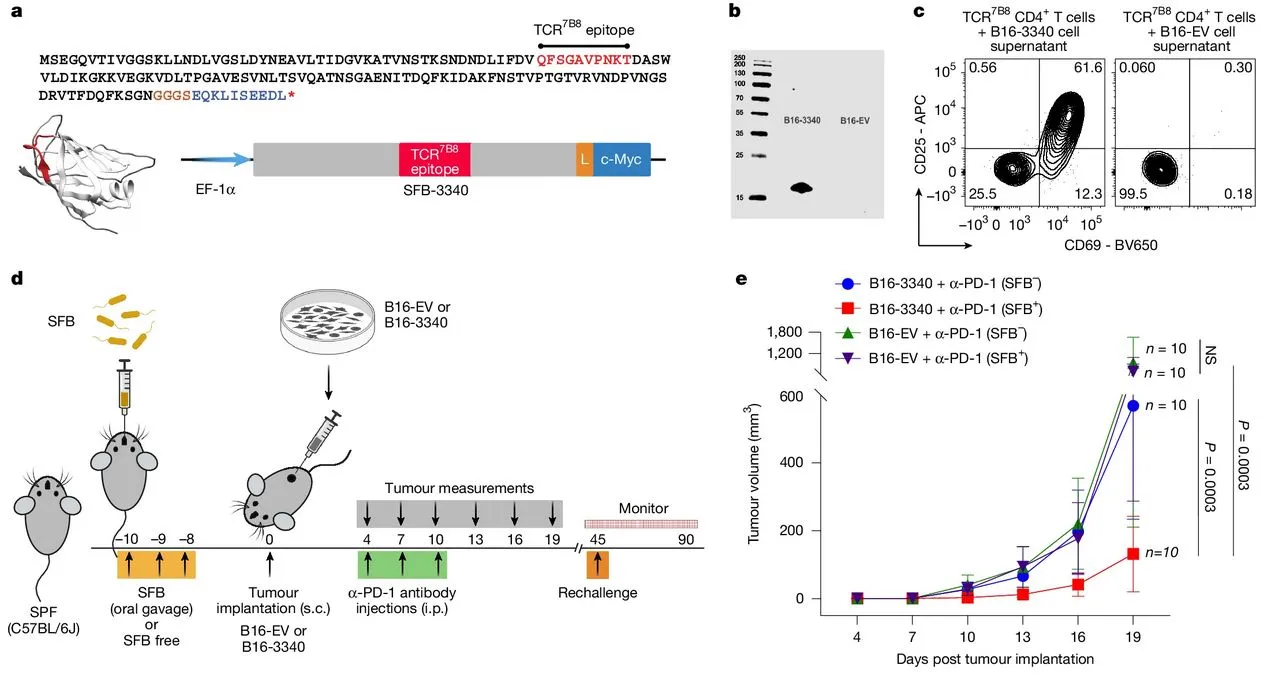
In the ongoing development of cancer immunotherapy, as well as our still developing understanding of the human immune system, there’s always been a bit of massive elephant in the room. The thing about human bodies is that they’re not just human cells, but also consist of trillions of bacteria that mostly live in the intestines. What effect these bacteria have on the immune system’s functioning and from there on immunotherapies was recently investigated by [Tariq A. Najar] et al., with an article published in Nature.

The relevant topic here is that of antigenic mimicry, involving microbial antigens that resemble self-antigens. Since these self-antigens are a crucial aspect of both autoimmune diseases and cancer immunotherapy there is considerable room for interaction with their microbial mimics. Correspondingly these mimics can have considerable negative as well as positive implications, ranging from potentially triggering an autoimmune condition to hindering or boosting cancer immunotherapy.

In this study mice were used to investigate the effect of such microbial interference, in particular focusing on immune checkpoint blockade (ICB), which refers to negative feedback responses within the immune system that some cancers use to protect themselves. In some immunotherapy patients ICB inhibiting using e.g. anti programmed cell death protein (anti-PD-1) treatment does not provoke a response for some reason.

Advertisement

For the study mice had tumors implanted and the effect of a particular microbe (segmented filamentous bacteria, SFB) on it studied, with the presence of it markedly improving the response to anti-PD-1 treatment due to anti-gens expressed by SFB despite the large gut-skin distance. Whether in humans similar mechanisms play a similarly strong role remains to be investigated, but it offers renewed hope that cancer immunotherapies like CAR T-cell immunotherapy will one day make cancer an easily curable condition.

Source link

Advertisement
Continue Reading

Tech

Complete will combine remasters and a sequel into one package

Published

on

Last year, Ecco the Dolphin creator Ed Annunizata teased plans to remaster the first two games in the series and create an entirely new sequel. Ecco the Dolphin: Complete, announced by Annunziata’s studio A&R Atelier, appears to be the result of that work. The game doesn’t have a release date yet, but A&R Atelier says it combines the planned remasters and third title into “the complete, definitive Ecco the Dolphin experience, created by the people who made the originals.”

Complete includes “all versions of Ecco the Dolphin and Ecco: The Tides of Time,” according to the developer, alongside “a brand-new contemporary Ecco game.” Besides graphical improvements, A&E Atelier says the game will introduce “built-in speedrunning support, achievements and leaderboards,” and things like the ability to create custom courses from existing levels. And while A&R Atelier’s announcement doesn’t include footage of the new game or the platforms it’ll release on, the official Ecco the Dolphin website has a countdown clock that could point to when more information will be released.

Annunziata sued Sega to try and win the rights to the Ecco the Dolphin IP in 2013, the same year he failed to get The Big Blue, a spiritual sequel to Ecco the Dolphin, fully funded on Kickstarter. Sega and Annunziata ultimately settled their lawsuit in 2016, which may have laid the groundwork for Ecco the Dolphin: Complete to happen.

Source link

Advertisement
Continue Reading

Tech

Ping-Pong Robot Makes History By Beating Top-Level Human Players

Published

on

Sony AI’s autonomous table-tennis robot Ace has become the first robot to compete against top-level human players. Reuters reports: Ace, created by the Japanese company Sony’s AI research division, is the first robot to attain expert-level performance in a competitive physical sport, one that requires rapid decisions and precision execution, the project’s leader said. Ace did so by employing high-speed perception, AI-based control and a state-of-the-art robotic system. There have been various ping-pong-playing robots since 1983, but until now they were unable to rival highly skilled human competitors. Ace changed that with its performances against human elite-level and professional players in matches following the rules of the International Table Tennis Federation, the sport’s governing body, and officiated by licensed umpires.

The project’s goal was not only to compete at table tennis but to develop insights into how robots can perceive, plan and act with human-like speed and precision in dynamic environments. In matches detailed in the study, Ace in April 2025 won three out of five versus elite players and lost two matches against professional players, the top skill level in the sport. Sony AI said that since then Ace beat professional players in December 2025 and last month. “The success of Ace, with its perception system and learning-based control algorithm, suggests that similar techniques could be applied to other areas requiring fast, real-time control and human interaction — such as manufacturing and service robotics, as well as applications across sports, entertainment and safety-critical physical domains,” said Peter Durr, director of Sony AI Zurich and leader for Sony AI’s project Ace.

The findings have been published in the journal Nature.

Source link

Advertisement
Continue Reading

Tech

Ultrahuman Launched the First Smart Ring Integration for Expert-Led Workouts

Published

on

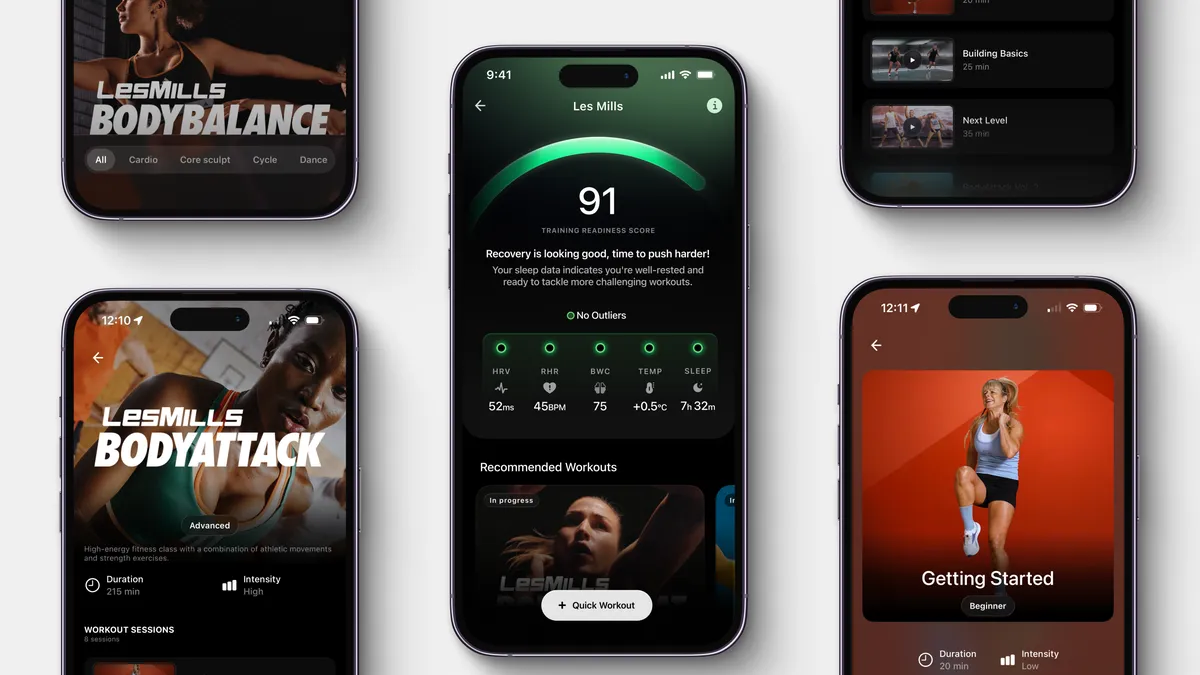
Health tech company Ultrahuman, makers of the Ultrahuman Ring Air and Ring Pro, launched a partnership with group workout brand Les Mills on Wednesday. Together, the companies created the Les Mills PowerPlug in the Ultrahuman app, which recommends workouts based on data collected by its smart rings, like sleep, recovery and cycle phase. 

Traditionally, when your smartwatch or ring tells you that your body is fatigued and that you should take it easy during your workout, it doesn’t provide the workout. With this new integration, the Les Mills PowerPlug offers expert-led, on-demand workout videos that take your current health status into account and help prevent overtraining.

“With Les Mills, we’re closing the loop — your ring doesn’t just tell you how recovered you are, it tells you what to do about it. The right workout, at the right intensity, every day. That’s what training smarter actually looks like,” Mohit Kumar, CEO of Ultrahuman, said in a press release.

Advertisement

How the PowerPlug works

Upon downloading the Les Mills PowerPlug, Ultrahuman Ring users will be asked to choose their ideal training days, session length and a fitness goal from the following: cardio, strength, flexibility or general fitness. Going forward, the app’s home screen will then recommend two to three daily workouts based on your health data, along with a quick workout shortcut. 

You’ll also have access to Les Mills’s entire workout catalog, which you can sort by goal, program or duration. Yoga, strength, HIIT and stretching are just a few examples of the type of exercises you can perform.

Phone screens over a white background showing Les Mills workouts in the Ultrahuman app.

If you have accumulated sleep debt and your body is showing signs of fatigue, the Less Mills PowerPlug will likely suggest a recovery-forward yoga session.

Advertisement

Ultrahuman x Less Mills

To select your workout recommendation, Ultrahuman uses its Dynamic Recovery score, a percentage from zero to 100 that symbolizes how prepared your body is to take on the day. It takes into account your sleep, temperature, stress rhythm, resting heart rate and heart rate variability and can change throughout the day with movement, naps and non-sleep deep rest like breathwork.

The Les Mills PowerPlug will also adapt its selections based on a user’s menstrual cycle. If they’re in a phase with more energy, such as the follicular or ovulatory phases, they’ll be advised to try a more intense workout. Low-energy luteal and menstrual phases will correlate with workouts that prioritize recovery, like yoga. During menstruation, high-impact workouts that are tough on the pelvic floor will be avoided. 

Once you complete your workout, you can then view your workout stats (duration, heart rate zones and calories), movement score, muscle group radar chart, daily goal progress and a post-workout recovery prediction that estimates your readiness for the next day.

The Les Mills PowerPlug price

Global Ultrahuman Ring Air and Ring Pro users can now purchase the Les Mills PowerPlug for $12 per month or $100 per year. 

Advertisement

Due to a patent lawsuit with Oura, makers of the Oura Ring, the Ultrahuman Ring Air was previously banned in the US. However, in March, Ultrahuman launched its Ring Pro, which the US Customs and Border Protection approved for sale in the US. It is currently available for preorder and will start shipping on May 15. With a charging case, it costs $479.

Source link

Advertisement
Continue Reading

Tech

Opera Callas Diva Special Edition Loudspeakers at AXPONA 2026: Understated Italian Design That Doesn’t Care If You Notice

Published

on

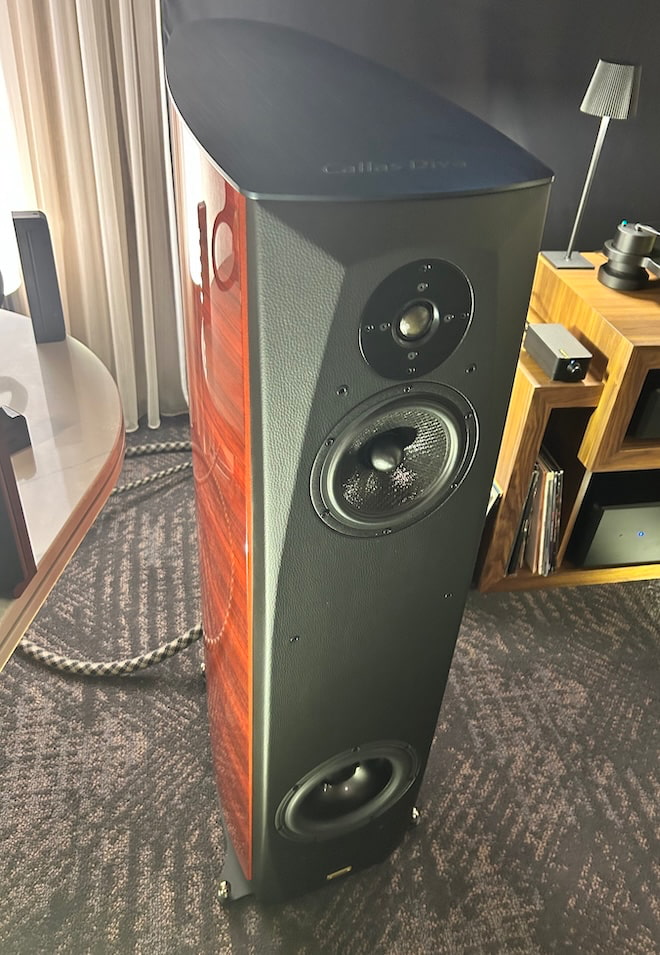
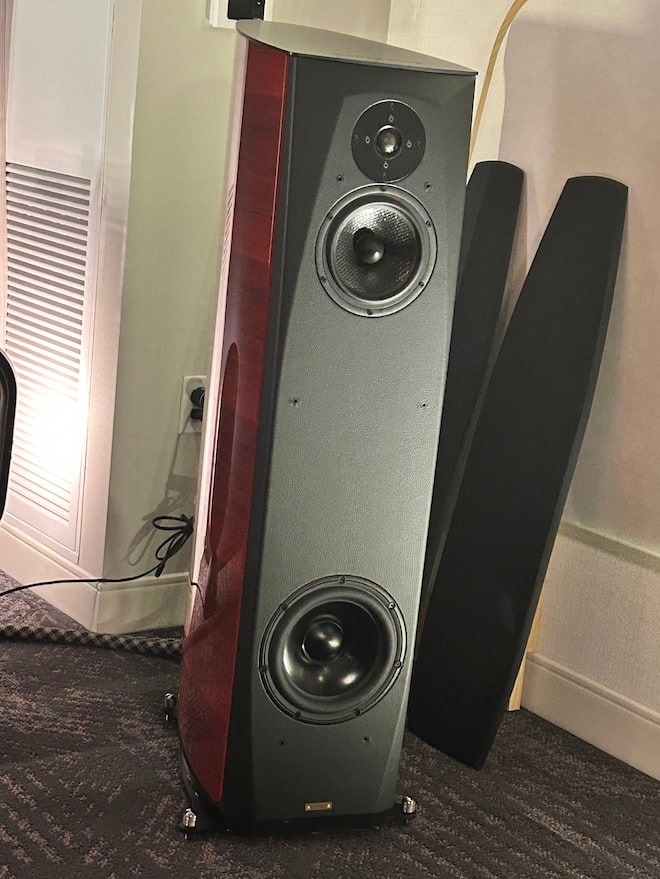
Italian loudspeakers tend to follow their own playbook, and the Opera Callas Diva Special Edition distributed in the U.S. by Fidelity Imports, leans into that identity without apology. Priced at $13,999, this is a reflex, floor-standing design with a rear-firing radiation system (dipole), built around the kind of materials and construction choices that set Italian brands apart: hand-crafted wood cabinetry, leather-clad baffles, and tank-like assembly that feels more atelier than assembly line.

Whether the leather actually changes the sound is still a matter of debate, but as with most things Italian, it’s as much about feel and intent as measurable outcome.

There’s also a clear voicing philosophy here. Like most offerings from Sonus faber and Opera, the goal isn’t clinical neutrality; it’s a more romantic, expressive presentation that leans into tone and texture. That doesn’t mean these speakers lack drama; if anything, they just deliver it with better timing and less shouting over Sunday gravy at Nonna’s house. Think Sophia Loren, not a reality TV meltdown—controlled, confident, and fully aware of the effect… the kind of presence that makes a room go quiet when she crosses her legs, looks your way, and lets you wonder if you’re worth the match.

Fidelity Imports is pushing Opera hard in the U.S. right now, and it’s not difficult to understand why. Paired with electronics from Unison Research, the system synergy is obvious—cohesive, deliberate, and unmistakably Italian. Bellissima, but not in a way that begs for attention. It just assumes you’re paying attention already.

Advertisement

Italian Engineering in a Tailored Suit, Not a Tracksuit

The Opera Callas Diva Special Edition is a reflex loaded, floor standing loudspeaker that combines a traditional forward firing driver array with a rear firing dipole tweeter system. It’s a hybrid approach that aims to balance direct sound with controlled rear radiation, adding spatial cues without turning the room into an echo chamber.

Up front, the speaker uses a single 8-inch long throw woofer paired with a 7-inch midrange driver featuring a re cooked polypropylene cone and phase plug. High frequencies are handled by a 1-inch Scan Speak 9700 tweeter, notably run without ferrofluid and incorporating a double decompression chamber, choices that typically favor openness and low mechanical damping over sheer robustness.

Around back, Opera adds two 1-inch tweeters in what it describes as a “natural dipole” configuration. This rear array expands the soundstage by introducing ambient high frequency energy, effectively making the system a 3-way plus rear dipole design rather than a conventional forward only speaker.

The crossover network is relatively straightforward, using 12 dB per octave slopes across all drivers, woofer, midrange, front tweeter, and rear tweeters, with crossover points centered approximately at 200 Hz and 2,000 Hz. This suggests a focus on phase coherence and smoother driver integration rather than aggressive filtering.

Frequency response is rated at 30 Hz to 25 kHz, covering full range playback without immediate reliance on a subwoofer. Sensitivity is specified at 90 dB (2.83V at 1 meter), making the speaker reasonably amplifier friendly, though the 4 ohm nominal impedance with a minimum above 3.2 ohms means it will benefit from stable current delivery.

Advertisement

Power handling is listed at 240 watts without clipping, and placement guidelines recommend at least 10 cm, about 4 inches, from the rear wall, which is modest considering the inclusion of rear firing drivers.

Physically, the Callas Diva Special Edition is substantial: 116 x 37 x 53.5 cm (H x W x D), approximately 45.7 x 14.6 x 21.1 inches, and each speaker weighs 65 kg, about 143 pounds, including its metal base. This is not a lightweight cabinet, so think carefully about which relative still has the energy to help you move it after sausage and peppers. And don’t forget the cannoli. Marone!

Advertisement. Scroll to continue reading.

Italian Soul, British Precision, No Passport Required

Fidelity Imports had a lot of rooms at AXPONA. Enough that you start making choices. I only had time for a few. This one, and the Ruark Audio room were the ones that actually made me stop, close my eyes and listen, and silently wish that I didn’t have 30 more rooms to cover on the next two floors.

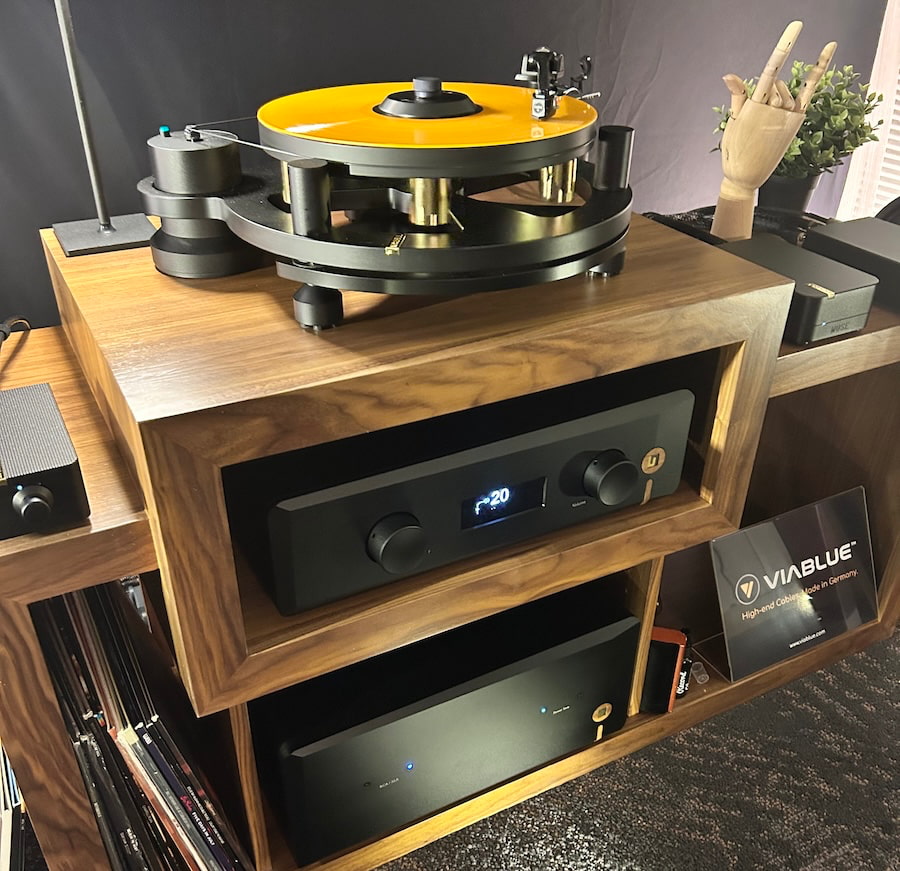
Part of it was the system; Opera speakers, Unison Research electronics, and the new Michell Gyro Turntable spinning records like it knew that a certain American competitor was MIA and that this was its moment to make everyone take notice.

Advertisement

But it was also the reaction. People didn’t just walk in and walk out. They slowed down. Took a step closer. Leaned in to look at the front baffle, then drifted over to the turntable like it might tell them something if they got close enough. Weird that. Especially because it happened more than a few times.

Nobody rushed. Nobody talked too loud. That’s usually a sign. People stood along the back of the room and listened.

I wasn’t the only one who noticed. And in a show full of rooms fighting for attention, this one didn’t have to. Steve Jain needs to make this set-up a permanent hi-fi show experience.

Michell Gryo Turntable with Unison Research Unico PRE V2 and Unico DM V2 power amplifier at AXPONA 2026

The room was driven by the Unison Research Unico PRE V2 and Unico DM V2 power amplifier. Together, they retail for $18,498 USD. That’s not inexpensive, but in the context of AXPONA, it sits well below many of the larger systems on display.

Advertisement

The Unico DM V2 is a high power, dual mono hybrid design using Unison Research’s A.S.H.A. Class A-AB output stage. The emphasis is on current delivery and stability into more demanding loudspeaker loads rather than chasing extreme specifications.

The Unico PRE V2 is a fully balanced preamplifier with a tube based input stage. It includes a well equipped MM/MC phono stage with selectable gain and loading, making it a viable option for vinyl playback without requiring an external phono stage.

There is no built in streaming platform or Bluetooth support. That appears to be a deliberate choice, leaving digital source selection to external components.

The PRE V2 does include an internal DAC based on the Sabre ES9018K2M converter. It uses a balanced output stage designed to integrate with the tube input section, with the goal of maintaining consistent tonal balance between digital and analog inputs.

Advertisement

Digital connectivity includes USB-B, two S/PDIF, and two optical inputs. USB supports PCM up to 384 kHz and native DSD up to 256, along with DoP up to 128. S/PDIF and optical inputs support resolutions up to 192 kHz.

The Unico DM V2 is rated at 220 watts into 8 ohms and 340 watts into 4 ohms in stereo operation, with stability down to 2 ohms. In bridged mono configuration, it delivers 650 watts into both 8 ohm and 4 ohm loads.

Advertisement. Scroll to continue reading.

My biggest takeaway from this room? Synergy matters. A lot.

Advertisement

Having spent time with and reviewed some of Unison Research’s tube amplifiers, the new pairing has a lot more palle, but it doesn’t trade away the qualities that made those designs stand out. The tonal balance, clarity, and sense of flow are still intact. It just brings more control and authority when the music asks for it.

Unison deserves your attention. So do these Opera loudspeakers. They’re expressive without being aggressive. They don’t grab your Members Only jacket and threaten you with brute force. They take a different approach and pull you in, keep you there, and let the music do the work.

There’s something to that. Not everything needs to hit you over the head to make its point.

More info at: operaloudspeakers.com | unisonresearch.com | michellaudio.com

Advertisement

Source link

Continue Reading

Tech

Kioxia says its new QLC SSDs can match TLC performance at lower cost

Published

on


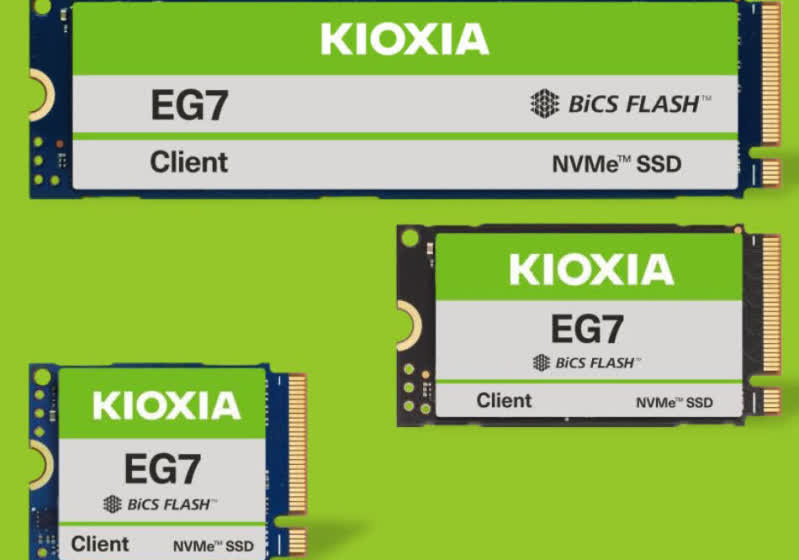
Kioxia has announced the EG7 series of solid-state drives, the company’s first SSD line built around its quadruple-level cell (QLC) technology, branded as BiCS FLASH. Despite using QLC NAND, the new SSDs are said to deliver performance comparable to TLC-based drives – at least according to Kioxia. However, the EG7…
Read Entire Article
Source link

Continue Reading

Tech

OpenAI taps Airbnb exec as first EMEA managing director

Published

on

Marill previously led financial services and automotive industry at Facebook and Instagram.

OpenAI has hired Airbnb’s former European, Middle East and Africa (EMEA) lead Emmanuel Marill as its first EMEA managing director, as the company continues to expand globally with an initial public offering in sight.

Marill, who led Airbnb’s EMEA, Australia and New Zealand operations for a number of years, also previously worked with Meta as their financial services and automotive industry lead for Facebook and Instagram.

Marill’s appointment reflects “strong momentum in EMEA”, OpenAI said. He will be based in Paris and report to chief strategy officer Jason Kwon. He will also collaborate with OpenAI’s EU headquarters in Dublin, which currently has around 80 employees.

Advertisement

“As demand for ChatGPT and Codex continues to grow rapidly all over the world, we are investing significantly in our international leadership and operations”, Kwon said.

Marill added: “There’s real momentum across EMEA, with many countries here leading globally in adoption of AI.”

OpenAI has had a tougher time in Europe than in the US. The company faces increasing regulatory pressures from EU officials, as well as resistance from businesses over digital sovereignty.

However, the company said that weekly active ChatGPT users in the EMEA region have grown by 70pc since last year, with Germany, France, the UK and Spain among its top markets for ChatGPT and Codex.

Advertisement

On its home turf in the US, OpenAI faces an even bigger challenge from the likes of Anthropic, which is fast encroaching on the company’s clientele.

Anthropic appointed long-time technology executive Pip White as the head of its UK, Ireland, Northern Europe and Israeli operations last November.

OpenAI reportedly plans to double its headcount by the end of the year. Late last year, Bloomberg reported that OpenAI and its rival Anthropic were both looking to expand their office footprints in their Dublin headquarters.

Meanwhile, OpenAI also announced its first permanent London office for next year with a capacity of more than 500. The announcement came despite an indefinite hold on the company’s plans for a Stargate UK over energy costs and regulatory burden.

Advertisement

Don’t miss out on the knowledge you need to succeed. Sign up for the Daily Brief, Silicon Republic’s digest of need-to-know sci-tech news.

Source link

Advertisement
Continue Reading

Tech

This AI Robot Flips a Thousand-Euro Coin Fifty Thousand Times in a Row

Published

on

AI Robot Flip Coin
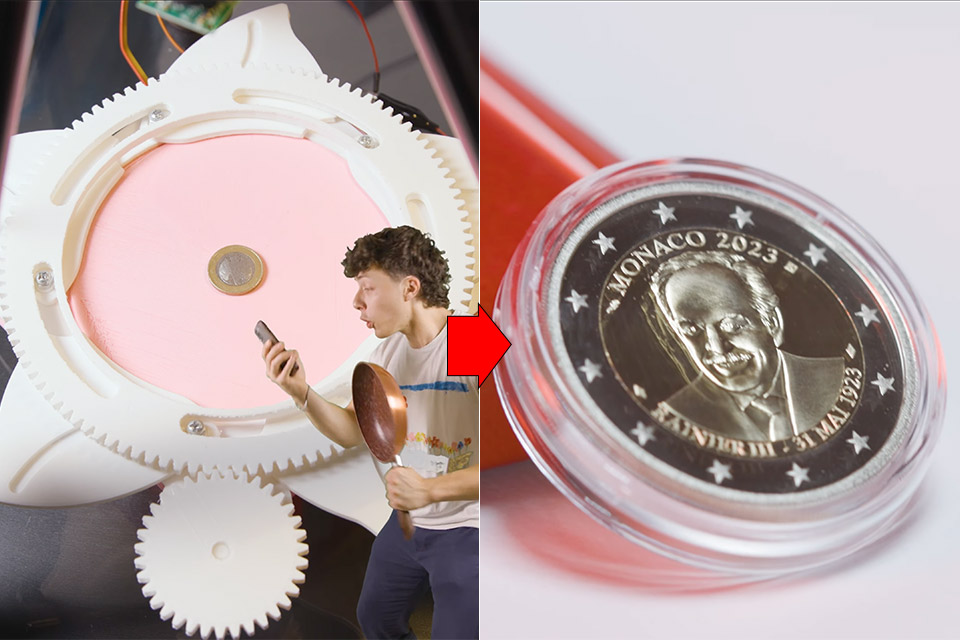
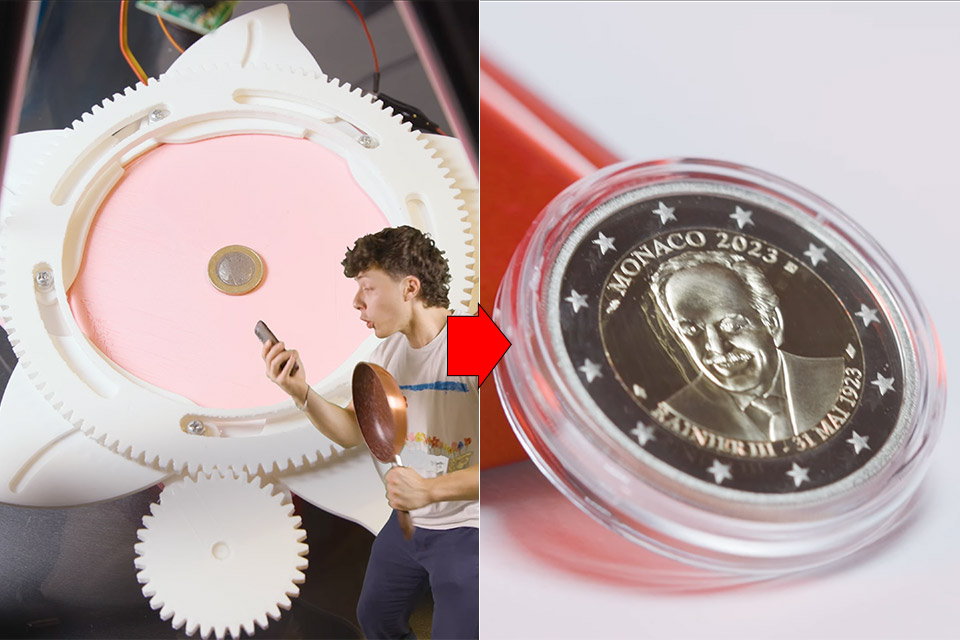
Makers are constantly coming up with innovative methods to transform everyday objects into automated displays, and Terence Grover has just added another to the list. His robot flips a rare €1000 Monaco commemorative coin repeatedly, with a live audience cheering and calling the shots the entire time. People watching his YouTube livestream give commands to choose when to flip the coin next, and the robot just does its job without troubling its inventor.


Grover began with a relatively bare-bones setup, utilizing only a bit of cardboard, a basic solenoid, and a 9v battery to get the ball going. He had created a rudimentary prototype that showed promise, but the coin kept landing off-center and refusing to play ball more than once or twice. He then upgraded to a proper design, producing a strong tray on a 3D printer and adding a set of blades placed similarly to a camera’s aperture. After each landing, the new servo motor closes those blades, nudging the coin back to the exact same area above the solenoid so the next flip may take place smoothly right away.

Sale


ELEGOO UNO R3 Smart Robot Car Kit V4 for Arduino Robotics for Kids Ages 8-12 12-16 STEM Science Kits…
  • ELEGOO Smart Robot Car: An educational STEM kit beginners (kids) to get hands-on experience about programming, electronics assembling and robotics…
  • Complete Package: Contains 24 kinds of module parts including obstacle avoidance, line tracing module, infrared remote control and also you can…
  • Easy to Assemble: All the module interface has been modified with XH2. 54 ports as to make it much easier and convenient to assemble the car and…

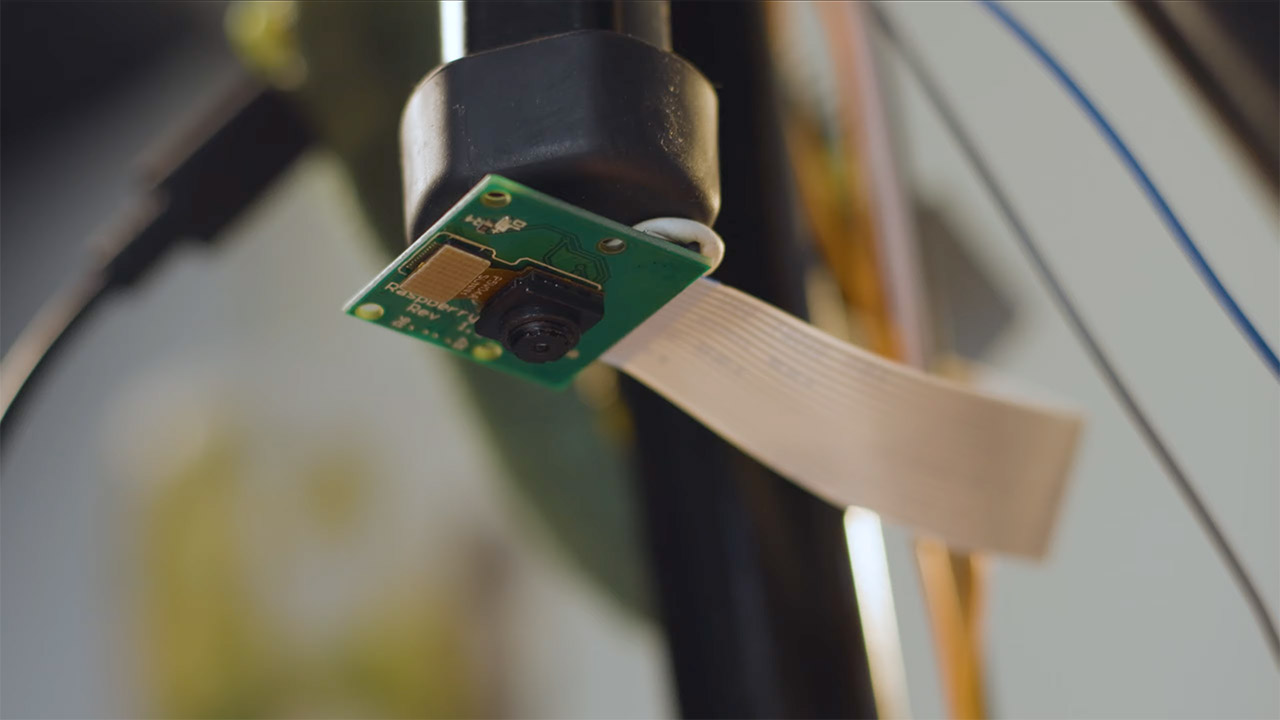
The power comes from a 12V source, which delivers a fast burst to the solenoid, propelling the coin skyward in a crisp arc. Once it’s returned to the tray, a small security camera above captures a clear 2,000-pixel image. Grover chose this cheap Amazon camera since the original Raspberry Pi camera was too weak for long sessions in changing lighting conditions.

Advertisement

AI Robot Flip Coin
Inside the Raspberry Pi, a Python script is simply sitting there, waiting for that picture to appear. OpenCV converts the image to a grayscale snapshot to look for the coin’s contour, and then a machine learning model trained on over 400 photographs of the coin that Grover had personally labeled determines which side of the coin is visible, heads or tails. The model is performed locally using Tensorflow Lite, so the decision is returned to the stream in a flash, and the results are immediately visible to everyone on the livestream.

AI Robot Flip Coin
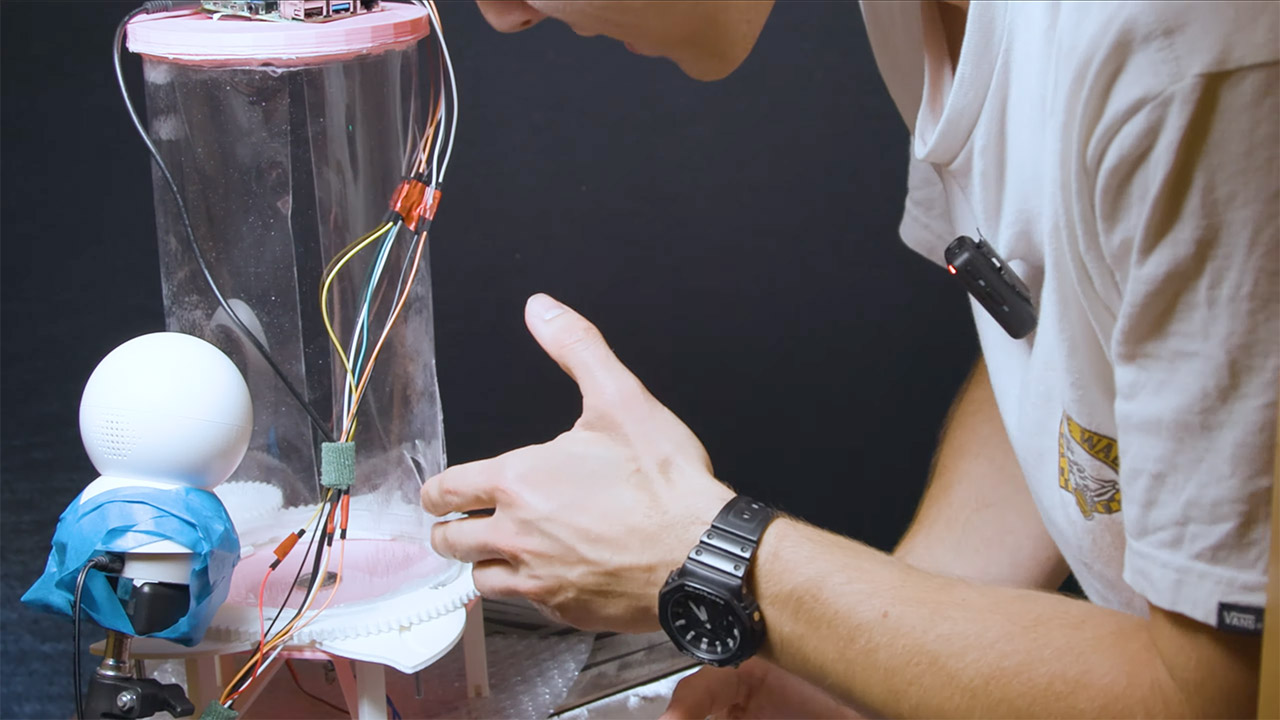
Grover set up a simple web server on the same Raspberry Pi so viewers could trigger flips through a neat and clear interface or even just talk to them on YouTube, as the relay board keeps the high-voltage solenoid safe by flipping it on command, preventing damage to the low-power electronics. Grover adjusted every timing variable, down to the fraction of a second, until everything felt absolutely smooth.

AI Robot Flip Coin
Grover was most concerned with getting the device to be reliable over time, since they’d experienced a couple jams early on when the coin landed on its edge or slid too far to one side. Every tiny adjustment to the tray and blade tension reduced the amount of times it would freeze up, eventually allowing it to continue for hours without requiring a human intervention. During a particularly long livestream session in July 2024, the machine managed to flip the coin 50,000 times in a row without requiring any user assistance.
[Source]

Source link

Continue Reading

Trending

Copyright © 2025