

Business
Earnings call transcript: Sandfire Resources Q3 2026 sees record outcomes despite challenges




In a move that has set the M&A community talking on both sides of the Atlantic, eBay has firmly slammed the door on a $55.5bn (£40.9bn) unsolicited takeover approach from American video games retailer GameStop, branding the bid “neither credible nor attractive”.
The rejection, communicated in a sharply worded letter from eBay’s board to GameStop chief executive Ryan Cohen, will come as little surprise to anyone with a passing acquaintance of the relative scale of the two businesses. GameStop, the bricks-and-mortar gaming chain that found cult status in 2021 as the original “meme stock”, is roughly a quarter of the size of the online auction house it is attempting to swallow, a David-and-Goliath dynamic that City analysts have long viewed as a near-insurmountable hurdle.
In its rebuff, the eBay board cited “uncertainty” over how the deal would be financed, alongside concerns about “the impact of your proposal on eBay’s long-term growth and profitability”. Directors also pointed to “operational risks, and leadership structure of a combined entity”, as well as questions over “GameStop’s governance”, a pointed reference, observers will note, to a company whose share price has historically been driven as much by social media sentiment as by retail fundamentals.
GameStop had attempted to bolster the credibility of its overture with a commitment letter from TD Securities for roughly $20bn of debt financing. Yet that prospective debt pile is precisely what gave eBay’s board, and a chorus of independent analysts, pause for thought. Sucharita Kodali, retail analyst at Forrester, told Business Matters the proposition was hardly “a terribly good offer”, warning that it would saddle the auction giant with GameStop’s borrowings at a moment when eBay is finally finding its feet again.
That recovery is no idle boast. Despite the well-documented competitive squeeze from Amazon, Etsy and, more recently, the Chinese disruptor Temu, eBay posted net profits of $418.4m in 2025, more than treble the $131.3m delivered the year before, even as sales softened. The board insists its turnaround strategy is bearing fruit and is in no mood to surrender the upside to an opportunistic suitor.
Mr Cohen, however, is unlikely to retreat quietly. The GameStop chief, who built his fortune through online pet retailer Chewy before becoming the unofficial figurehead of the meme-stock movement, claimed last week that eBay could be transformed under his stewardship into a credible challenger to Amazon. He has also signalled his willingness to bypass the boardroom and take his proposition directly to eBay’s shareholders, a hostile gambit that would set the stage for one of the more colourful takeover battles of the year.
For Britain’s SME owners watching from across the Atlantic, the saga is more than a transatlantic curiosity. eBay remains a vital sales channel for thousands of small British retailers, many of whom built post-pandemic businesses on its platform. Any prolonged ownership dispute, or a deal that materially loaded the company with debt, could have tangible consequences for the fees, listing policies and seller protections those firms depend on.
For now, eBay’s chairman and chief executive will be hoping the matter ends here. The bookies, and most of Wall Street, are betting it won’t.

Amy Ingham
Amy is a newly qualified journalist specialising in business journalism at Business Matters with responsibility for news content for what is now the UK’s largest print and online source of current business news.

West Midlands Police brings Operation Fearless to Handsworth.
Singapore Airlines reports 57% drop in annual profit to S$1.18 billion
Alibaba Q4 Earnings Review: AI Inflection Point Is Here


Cisco jumps on strong revenue forecast, AI push with job cuts

Osaic chief market strategist Phil Blancato discusses key economic data this week on Making Money.
Walmart is cutting or relocating jobs as the world’s largest retailer undertakes an effort to simplify its operating structure.
The Wall Street Journal on Tuesday reported that Walmart is laying off or relocating roughly 1,000 corporate workers, according to people familiar with the situation.
“We’ve made changes to simplify how the work is organized, make ownership clearer, and better align roles to the work and skills we need going forward,” Walmart head of global technology Suresh Kumar and head of global AI acceleration Daniel Danker said in a memo to employees reviewed by FOX Business.
Kumar and Danker said in the memo that the company is shifting from organizing separately for Walmart U.S., Sam’s Clubs and its international markets to building its strategy on a unified, shared platform.
WALMART TO REMODEL OVER 650 STORES, OPEN ABOUT 20 NEW LOCATIONS

Walmart is laying off or relocating about 1,000 corporate staff, according to reports. (Scott Olson/Getty Images)
The executives said that in some cases they’ve had “different teams working on similar problems,” and that staff who’ve been affected by the changes are able to apply for open roles within the company.
According to a Wall Street Journal report, many of the affected staff have been asked to relocate to Walmart’s Bentonville, Arkansas, or Northern California offices.
WALMART CUSTOMERS SEEKING VALUE DRIVE SALES HIGHER
| Ticker | Security | Last | Change | Change % |
|---|---|---|---|---|
| WMT | WALMART INC. | 131.47 | +1.12 | +0.86% |
The company has regularly pared back some of its corporate staff in recent years, consolidating business units and centralizing operations at some of its regional hubs and its headquarters in Arkansas.
Walmart’s new CEO, John Furner, is pursuing a tech-focused strategy to attract more higher-income shoppers and also build its marketplace and delivery businesses.
WHO IS JOHN FURNER, WALMART’S NEW CEO?
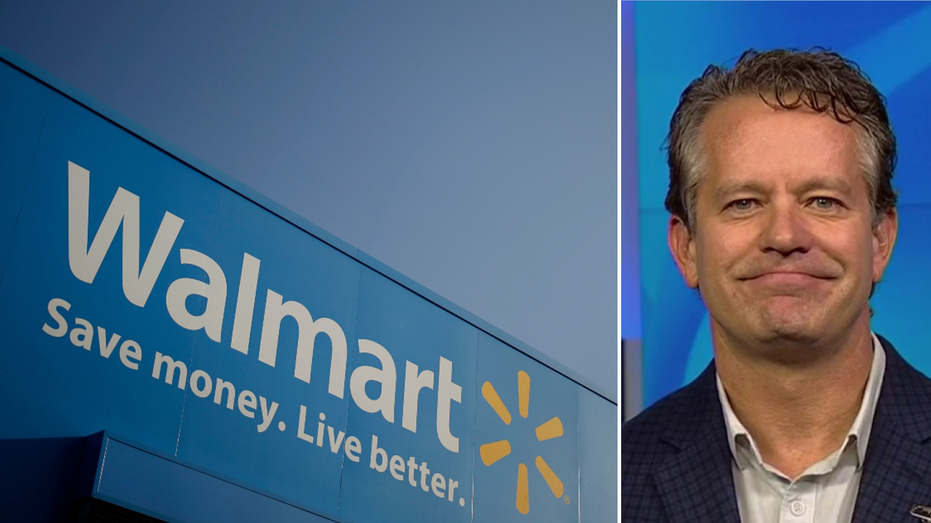
Walmart CEO John Furner is leading a digital transformation of the retail giant. (Luke Sharrett/Bloomberg via Getty Images/FOX Business)
The company is the largest private employer in the U.S. with about 1.6 million employees, of whom about 92% are hourly workers. It has about 2.1 million workers worldwide, according to a filing as of Jan. 31.
Walmart became the first retailer to ever reach $1 trillion in market value in February and has been focusing on a digital transformation to better compete with rivals like Amazon and Costco.
GET FOX BUSINESS ON THE GO BY CLICKING HERE
Reuters contributed to this report.
Business
Adani Enterprises shares jump 5% after nearly 60 lakh shares worth Rs 1,435 crore change hands in block deal
According to media reports, the block deal, valued at around Rs 1,435 crore, was executed at Rs 2,435.60 per share, representing a 2.5% discount to the previous closing price of Rs 2,500. The Economic Times could not independently verify the buyers and sellers involved in the transaction.
Adani Enterprises Q4 Results
Adani Ent reported a net loss of Rs 221 crore for the fourth quarter, compared with a profit of Rs 3,845 crore in the corresponding period last year. Revenue from operations, however, rose 20% year-on-year to Rs 32,439 crore during the quarter. Adani Enterprises said profitability during the quarter was impacted by higher depreciation charges related to newly commissioned assets at Navi Mumbai and the copper plant.Operationally, performance remained relatively stable, with EBITDA rising 3% year-on-year to Rs 4,479 crore from Rs 4,346 crore in the year-ago period. The company said its core infrastructure businesses remained resilient despite volatility in certain segments.

It added that nearly 80% of total EBITDA is now being contributed by its infrastructure and utility portfolio, improving earnings visibility and strengthening cash flow stability. For the full financial year FY26, the company reported a 3% increase in total income to Rs 1.02 lakh crore. EBITDA for the year stood at Rs 16,464 crore, while profit after tax rose 31% to Rs 9,339 crore, aided by exceptional gains during the period.
Chairman Gautam Adani said the company has transitioned into a more stable infrastructure-led business model, with a majority of EBITDA now coming from mature and long-term contracted assets. He added that this positions the group well for sustained cash generation and long-term value creation.
Among individual businesses, airports continued to deliver strong growth, with segment EBITDA rising sharply on the back of higher passenger traffic and growth in non-aero revenues. The Adani New Industries ecosystem, which includes renewable energy and green hydrogen businesses, also reported steady growth.
In the roads business, construction activity slowed considerably during the quarter. However, the company continued to expand its infrastructure pipeline by adding new hybrid annuity and toll-operate-transfer projects.
Also read: Crude@$100+: The Rs 3 lakh crore power boom you might be missing
Adani Enterprises also highlighted progress across key infrastructure assets, including the inauguration of the Ganga Expressway and capacity expansion in its data centre and airport businesses.
(Disclaimer: Recommendations, suggestions, views and opinions given by the experts are their own. These do not represent the views of The Economic Times)
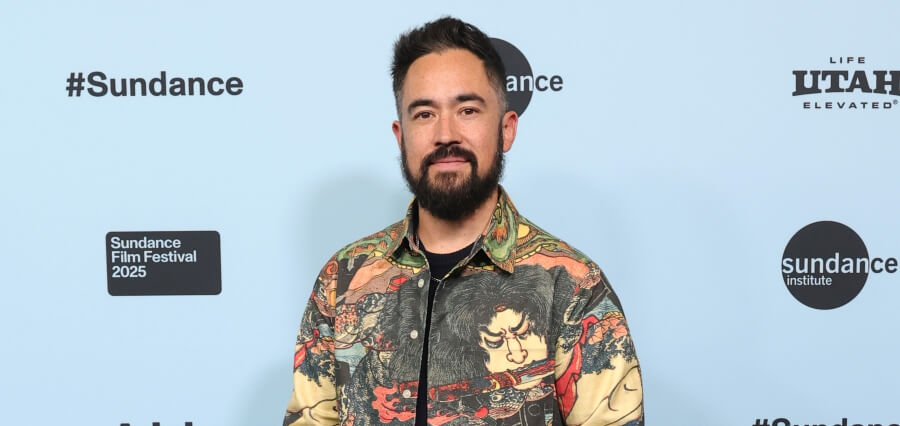
Director David Anthony Ngo has built his reputation through a combination of technical discipline, editorial precision, and a steadily expanding body of documentary work that reflects both international scope and strong creative control. Known professionally as David Anthony, the Australian-Canadian filmmaker represents a generation of directors whose authority comes not from rapid visibility, but from years spent understanding how stories are shaped from the inside out.
In documentary filmmaking, credibility is often earned long before a director’s name reaches festival programs or industry conversations. It is built in edit suites, production meetings, research calls, and long hours spent learning how stories actually function on screen. For writer and director David Anthony, that foundation began in editing, post-production, and producing, where the mechanics of narrative became inseparable from the art of storytelling.
That progression from post-production to directing has helped define his professional identity. Rather than arriving as a director first, he developed his perspective through the less visible but often more formative work behind the scenes. It is one reason his transition into directing feels less like reinvention and more like a natural extension of years spent mastering the structure of film itself.
Recently, David Anthony helmed the Sundance feature Never Get Busted!, executive produced by John Battsek, the Academy Award-winning producer behind Searching for Sugar Man, and Chris Smith, known for Tiger King and 100 Foot Wave, and co-created by Erin Williams-Weir. The documentary follows a former Texas narcotics officer who turned against the system and became known for teaching drug users how to avoid police detection. The project added significant visibility to David Anthony’s work while reinforcing his place within the international film industry .
Early Foundation in Editing and Production
Many directors begin by chasing the camera. Others begin by learning how footage becomes meaning.
For David Anthony film director, editing and post-production provided that early education. Working in producing and post-production gave him access to every stage of narrative construction, from the first structural decisions to the final emotional rhythm of a finished film. It also offered something many directors spend years trying to develop: an instinct for what actually works on screen.
He has spoken about how producing and post-production created the foundation for directing, allowing him to collaborate with a wide range of filmmakers and observe both their successes and mistakes. That exposure shaped his understanding of what strong directors consistently share: a command of craft, the ability to communicate clearly, and an instinctive understanding of story .
Editorial work sharpens discipline. An editor understands pacing because they see where momentum dies. They understand emotional impact because they watch scenes fail when the structure underneath them is weak. They understand performance because they know exactly how fragile authenticity can be once a story reaches the cut.
David Anthony’s view reflects that mindset. He places heavy emphasis on studying story structure, from plot points and character arcs to theme and dramatic progression. In documentary filmmaking, where reality rarely arrives in clean dramatic form, that discipline becomes even more important. Strong nonfiction storytelling still requires architecture. Unlike fiction, where meaning is created through the chronological construction of events, in nonfiction, meaning must be made through the reconstruction of non-chronological events through rigorous writing and editorial work.
This background has given his directing a practical clarity. His work is not built around stylistic excess, but around narrative function. Every choice must serve the story.
Transition from Production to Directing
The move from supporting a project to leading it often reveals whether a filmmaker truly understands authorship.
For David Anthony, directing emerged as a progression shaped by experience rather than ambition alone. Years spent in production meant he already understood the collaborative machinery of filmmaking. Directing required stepping into a role where those lessons could be applied with full responsibility.
He has noted that the best directors he worked with were not simply talented visual thinkers. They were strong communicators who understood every department and could guide people toward a shared result. That broader understanding made directing feel like the next logical step rather than a separate discipline.
The transition also reflects creative maturity. Documentary directing requires far more than visual judgment. It demands ethical decisions, trust-building with subjects, editorial restraint, and the ability to remain calm inside uncertainty. Particularly in true crime and investigative storytelling, directors are often navigating people in conflict, legal tension, and competing versions of truth.
Anthony approaches that work with a clear philosophy: filmmakers are there to provide the microphone, not to impose judgment. He emphasizes objectivity and the importance of allowing people to tell their own side of the story while maintaining professional impartiality .
That perspective strengthens his work as a director because it prioritizes credibility over performance. In documentaries, audiences can sense when a filmmaker is forcing the narrative instead of letting it unfold.
International Work and Global Perspective
Modern documentary filmmaking rarely exists within a single national frame. Stories travel, audiences compare perspectives, and success increasingly depends on whether a film can resonate beyond one market.
David NGO Director has developed that international perspective through both his background and his professional collaborations. As an Australian-Canadian filmmaker working across North American and global contexts, he brings a cross-cultural awareness that benefits documentary storytelling, particularly in stories built around justice, rebellion, and institutional conflict.
He has pointed out that for films to succeed financially and culturally, they often need to work internationally. That means understanding how storytelling translates across different audiences without losing specificity. Themes must remain universal even when the details are highly local.
Film festivals have played an important role in that process. Exposure to audiences across different countries offers immediate feedback on what resonates and what does not. It sharpens the filmmaker’s understanding of human themes that transcend geography.
Anthony identifies justice, rebellion, and the power of the individual as recurring themes in his work. Those subjects travel well because they are understood across cultures. Whether the setting is American true crime or another international subject, the emotional stakes remain recognizable.
This global awareness also helps position him strongly within North American documentary filmmaking while giving his work broader relevance. In an industry increasingly shaped by streaming platforms and international distribution, that perspective matters.
Documentary Recognition and Festival Success
Recognition in documentary filmmaking tends to arrive through credibility rather than celebrity. Festival screenings, executive producer relationships, and industry trust often matter more than public visibility.
Anthony’s recent work reflects that kind of professional validation. Never Get Busted! brought him into collaboration with some of the most established names in nonfiction film, including John Battsek and Chris Smith. Working alongside producers with that level of documentary influence creates both opportunity and pressure.
He has described that experience as a defining moment, noting that working with filmmakers of that caliber raised expectations immediately. Their standards required him to elevate his own work and meet a higher professional bar every day .
That environment matters for emerging directors. Festival recognition does not simply provide exposure. It signals seriousness to the industry. It tells distributors, financiers, and collaborators that a filmmaker can deliver work that belongs in competitive spaces.
Anthony is also the recipient of the PBS Human Spirit Award and has earned recognition as a screenwriter through nominations for the WeScreenplay Diverse Voices and Tracking Board Launch Pad competitions . While awards alone do not define a career, they contribute to a pattern of professional credibility that strengthens long-term reputation.
For documentary directors, consistency matters more than a single breakthrough. Recognition is most meaningful when it reflects a broader body of work and a sustained standard.
Building Long-Term Industry Authority
Reputation in documentary filmmaking is rarely built quickly. It comes from repeated proof: good work, strong collaborators, careful judgment, and the ability to keep delivering under pressure.
David Anthony documentary filmmaker appears to be building that kind of authority. His career reflects substance more than spectacle. He speaks openly about the importance of choosing the right teams, maintaining rigorous fact-checking, and understanding that filmmaking remains deeply collaborative despite the mythology of independence.
He has quoted director Jim Sheridan’s observation that independent filmmaking is often a misnomer because filmmakers are dependent on everyone, from financiers to distributors to crew. That realism reflects an industry mindset shaped by experience rather than idealism .
His emphasis on authenticity also reinforces that professional identity. He argues that style should follow the needs of the subject rather than function as a signature imposed by the filmmaker. Audiences, he suggests, ultimately respond to strong stories told well, not visible directorial self-consciousness.
That restraint often marks stronger directors. It signals confidence in the material rather than dependence on aesthetic performance.
As he continues adapting new true crime material and expanding his directing portfolio, Anthony’s long-term position appears increasingly clear: a filmmaker building a durable career through technical rigor, international relevance, and narrative discipline.
David Anthony represents the kind of director whose credibility grows steadily because it is rooted in craft. His path from editing and production into directing reflects a deeper understanding of filmmaking than title alone can convey. For David NGO Director, reputation is not being built through visibility first, but through the kind of work that makes visibility last.
Business
Preparing for Rupee at 100: What does it mean for the economy and your stock market investments?
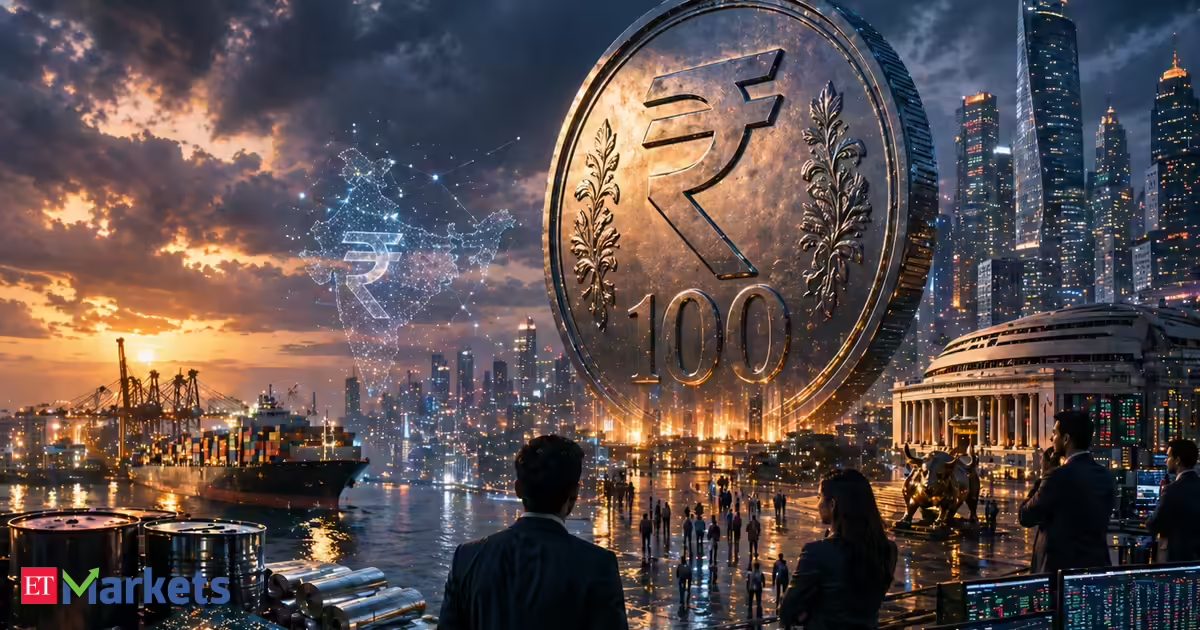
The rupee fell to a record low of 95.74 against the US dollar on Wednesday, extending a prolonged weakening trend that has accelerated amid surging crude oil prices, foreign investor outflows and growing stress on India’s external balances.
The latest pressure has largely come from the sharp rise in global energy prices following the escalation of the US-Iran conflict. Brent crude prices have jumped nearly 50% since the war erupted in late February, worsening concerns around India’s import bill and inflation outlook.
India imports more than 80% of its crude oil requirements, making the rupee particularly vulnerable during periods of sustained energy price shocks.
VK Vijayakumar, Chief Investment Strategist at Geojit Investments, said the pace of depreciation has become worrying.
“This year began with rupee at 90 to the dollar. Since then it has steadily depreciated to the present level of 95.7 to the dollar. If crude remains elevated for an extended period, rupee will move to 100,” Vijayakumar said.
He pointed to sustained selling by foreign portfolio investors as another major pressure point for the Indian currency. “Money is moving into markets like the US, Japan, South Korea and Taiwan which are doing very well. So long as the outperformance of these markets and the underperformance of India continues, FPIs will continue to sell, which, in turn, will further drag the rupee down,” he said.The rupee’s weakness is already beginning to reshape investor thinking across sectors.
A sharply weaker currency generally raises imported inflation because India pays more for commodities such as crude oil, chemicals, electronics and industrial raw materials. That eventually feeds into transportation costs, manufacturing expenses and household consumption.
Economists have already started revising inflation and growth forecasts higher and lower respectively as energy prices remain elevated.
A weaker rupee also complicates policymaking for the Reserve Bank of India. Markets have started pricing in the possibility of interest rate hikes to defend the currency and contain inflation pressures. Though RBI Governor Sanjay Malhotra recently said monetary policy can look through temporary supply shocks, he also indicated that authorities may need to respond if inflation becomes entrenched.
For equity markets, the implications are uneven. Sectors dependent on imports are expected to face the biggest pressure. Companies with high exposure to crude derivatives, imported components or foreign currency liabilities could see margin compression.
Khushi Mistry, Research Analyst at Bonanza Portfolio, said sectors such as aviation, oil marketing companies, automobiles and consumer durables are among the most vulnerable.
“A weaker rupee substantially increases India’s import bill particularly for crude oil, electronics and industrial raw materials. This furthermore fuels imported inflation and puts pressure on household spending,” she said.
She added that continued currency weakness could trigger further foreign institutional investor outflows and increase volatility in equity markets. The broader market concern is that India’s macroeconomic balances may deteriorate if the rupee weakens too rapidly.
Arpit Jain, Joint MD at Arihant Capital Markets, said a move toward Rs 100 per dollar would not be positive for the economy despite some sector-specific beneficiaries.
“India remains a larger importer than exporter overall, and a sharply weaker rupee could widen both the fiscal and current account deficits, which may hurt the economy much more,” Jain said.
Still, not all sectors lose when the rupee weakens. Export-oriented businesses generally benefit because their dollar revenues become more valuable when converted into rupees. IT services, pharmaceuticals, textiles and selected manufacturing exporters are expected to see earnings support from currency depreciation.
Vijayakumar believes pharmaceutical companies could emerge as relative outperformers if the rupee weakens further. “Pharmaceuticals will be a safe bet since the demand for pharmaceuticals is inelastic and this export sector will benefit from rupee depreciation. Textiles will also benefit,” he said.
However, he warned that the IT sector may not fully benefit despite dollar revenues because of ongoing uncertainty around artificial intelligence-led disruptions and spending shifts in global technology markets.
Jain also cautioned that even sectors often viewed as natural beneficiaries of a weaker currency may not gain uniformly. “Many companies continue to import APIs and raw materials from overseas, which offsets part of the currency advantage,” he said.
For investors, analysts say stock selection becomes far more important in such an environment. Mistry said investors should focus on businesses with strong balance sheets, pricing power and global revenue exposure while avoiding highly leveraged and import-dependent companies.
The direction of crude oil prices and foreign capital flows will remain critical in deciding whether the rupee eventually breaches the Rs 100 mark.
Vijayakumar said two developments could reverse the trend — a fall in crude prices if the Strait of Hormuz situation stabilises, or an end to the global AI-driven investment frenzy that has attracted foreign money into markets such as the US and Taiwan.
Until then, the pressure on the rupee appears unlikely to ease meaningfully, leaving investors increasingly forced to prepare for a world where Rs 100 to the dollar may no longer be viewed as an outlier scenario.
(Disclaimer: Recommendations, suggestions, views and opinions given by the experts are their own. These do not represent the views of Economic Times)
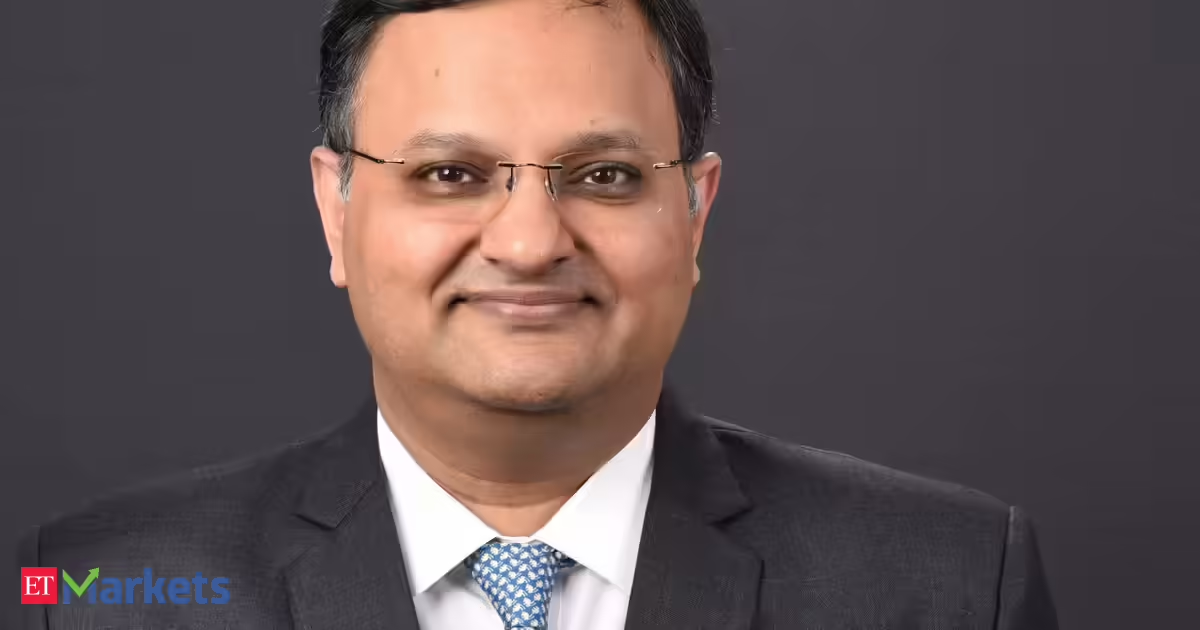
Speaking to ET Now, Rohit Singhania from DSP Mutual Fund said investors are entering a “wait and watch” phase, with risks rising steadily over the past month as the ongoing global conflict refuses to ease.
“What we have seen in the last one month or so is the risks have gone up. Till one month back, 45 days back, the view was the war is not going to last for long. But the fact is it is still going on,” Singhania said.
He added that while the full impact of higher commodity prices and supply chain disruptions has not yet filtered into the economy, the pressure is beginning to build beneath the surface.
“The pressure of commodity prices going up and the impact it may have on inflation, we have still not felt the actual impact because if you see the transport fuel prices, other prices have still not gone up a lot,” he said.
According to Singhania, prolonged geopolitical uncertainty could eventually force companies to raise prices, which may hurt demand and corporate profitability over the coming quarters.
“So, I would say yes, risks still remain in terms of supply chain disruptions, they continue. Eventually, if this continues for longer, we will see price hikes also happening. So, what it does to demand? So, it is a wait and watch period right now,” he noted.Earnings Risks Still Not Fully Priced In
Despite the correction seen in several pockets of the market, Singhania believes valuations are not yet attractive enough to justify an aggressive investment stance.
“I would say not so much currently because if you go longer-term averages if you take, 16.5-17 is a fair multiple if you look at two years forward. So, I would say risk-reward is still not favourable,” he said.
DSP has already revised down earnings assumptions and valuation expectations for several holdings, but the fund house is not rushing to deploy capital aggressively.
“We need to be aware about the potential risk which we have not seen in the last one-and-a-half months since the war started,” he added.
On market valuations, Singhania said the Nifty currently appears balanced between upside and downside risks.
“If people just looking at yesterday’s Nifty at around 23,500, it was giving me an upside of 7-8% and a downside of 7-8%. So, we are somewhere in the middle right now,” he explained.
However, he indicated that a deeper correction could create a more compelling buying opportunity.
“So, I would not be all in or all out, but yes, another 5-7% correction if at all the market corrects, that is the time I would go aggressively and buy more in my portfolios,” he said.
Largecaps Preferred Amid Uncertainty
Singhania reiterated that DSP continues to maintain a slight preference for largecaps in the current environment, though he stressed that portfolio construction remains fundamentally bottom-up rather than driven by market capitalisation labels.
“As a fund manager we do not start by saying I want to buy a largecap stock or a midcap or smallcap,” he said.
He explained that investment decisions are based on business quality, valuations, and risk visibility over the next couple of years.
At the same time, he acknowledged that smallcaps appear relatively more expensive than largecaps at present.
“In this current environment of uncertainty where there are lot of unknowns versus known, historically it tells us largecaps tend to do better in these periods,” Singhania said.
Still, he clarified that compelling opportunities in the smallcap universe would not be ignored simply because of broader valuation concerns.
Financials, Telecom and Healthcare Stand Out
Among sectors, Singhania said DSP remains constructive on financials, telecom, and select healthcare names over the next 12 to 18 months.
“We are quite positive on the financial space whether it is banks, insurance companies, few capital market plays. We also like telecom and few healthcare names,” he said.
The optimism on banks stems largely from stronger balance sheets across both lenders and corporates, a stark contrast to the stress seen in previous economic slowdowns.
“Today even if a pure commodity company comes and tells us that for the next two quarters my profits are not going to grow or maybe they can fall, we do not worry a lot because they have strong balance sheets,” he said.
On telecom, Singhania highlighted the sector’s defensive characteristics and resilient demand profile.
“They are not really impacted by what is happening globally. Like, I need to use my telecom every day. We all are using our phones. We use data,” he said.
Healthcare, meanwhile, is being driven more by earnings visibility than by valuation comfort.
“So, healthcare is a call more on the visibility of business growth rather than on valuations,” he explained, referring specifically to hospitals and diagnostic businesses.
IT Remains a “Wait and Watch” Bet
Singhania struck a cautious tone on the information technology sector, admitting that the evolving business environment has made forecasting difficult.
“So, IT again, it is a wait and watch for me at least, it is my personal view,” he said.
He acknowledged that IT stocks appear inexpensive on pure valuation metrics, but warned that business visibility remains weak amid concerns over slowing demand and margin pressures.
“Every day is a new day today. So again, we as DSP we are trying to understand what can be the actual impact. Is it a one, two, three more quarter impact or it can continue for next one-two years?” he said.
DSP’s funds currently remain slightly underweight on IT, with Singhania saying there is no strong fundamental trigger yet to turn positive on the sector.
“When you compare it with business outlook or business visibility, you feel there is maybe still time to wait it out,” he added.

CBS News Offers Update After Cameraman Has Medical Emergency

Valve Blocks Indie Dev Game For Including IP From The Same Indie Dev In Game

Taking Up Financial RESPONSIBILITY at 20 | Money Matters Ep. 112 | Ankur Warikoo Hindi

Manchester United reach agreement with Casemiro over contract clause amid transfer speculation

US brings back mandatory military draft registration

Steven Gerrard disagrees with Gary Neville over ‘shock’ Chelsea and Arsenal claim | Football
Taking Up Financial RESPONSIBILITY at 20 | Money Matters Ep. 112 | Ankur Warikoo Hindi

@SlashFinancial How China Took Over Everything #startup #motivation #money#maximumreach #hailmary

Physicist Explains the Certainty of Bitcoin’s Future Price
-
 Crypto World6 days ago
HarrisX Poll Found 52% of Registered Voters Support the CLARITY Act
-

 Fashion6 days ago
Weekend Open Thread: Marianne Dress
-

 Fashion3 days ago
Coffee Break: Travel Steam Iron
-

 Fashion3 days ago
What to Know Before Buying a Curling Wand or Curling Iron
-

 Tech4 days ago
Auto Enthusiast Carves Functional Two-Stroke Engine from Solid Metal
-

 Politics3 days ago
What to expect when you’re expecting a budget
-
 Business5 days ago
Ignore market noise, India’s long-term story intact, say D-Street bulls Ramesh Damani and Sunil Singhania
-

 Politics5 days ago
Politics Home Article | Starmer Enters The Danger Zone
-

 Tech3 days ago
GM Agrees To Pay $12.75 Million To Settle California Lawsuit Over Misuse Of Customers’ Driving Data
-

 Politics7 days ago
Simon Cowell Says He Was ‘Horrible’ To Susan Boyle During BGT Audition
-

 Entertainment7 days ago
General Hospital: Ric & Ava Bombshell – Ric’s Massive Secret Exposed!
-
 Entertainment7 days ago
Why David Letterman Called CBS ‘Lying Weasels’
-

 Crypto World4 days ago
CZ says US crypto rivals tried to block Trump pardon
-

 Sports6 days ago
Bayern Munich vs PSG UEFA Champions League SF2 live match time, streaming | Football News
-

 Entertainment6 days ago
YNW Melly Denied Bond Again Ahead Of Double Murder Retrial
-

 Tech2 days ago
GM agrees to $12.75M California settlement over sale of drivers’ data
-

 Politics7 days ago
Euphoria Creator Praises Sydney Sweeney Amid Season 3 Scenes Backlash
-
Entertainment7 days ago
Hantavirus — cause of death for Gene Hackman's wife — at the center of Dutch cruise outbreak
-

 Crypto World5 days ago
PROS explodes 48% as Upbit and Bithumb listings ignite demand
-
Crypto World6 days ago
The Hantavirus Danger: Can a Potential Outbreak Spark a New Meme Coin Frenzy?
You must be logged in to post a comment Login