
Politics
Politics Home | Experiments in Parliament


6 min read
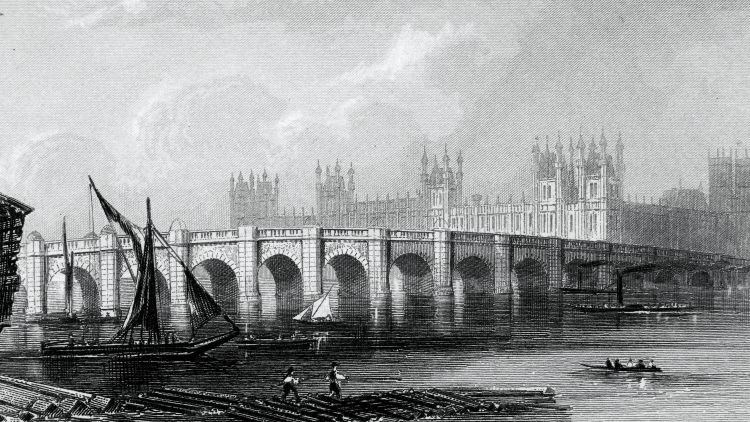
When the original Palace of Westminster burned down in 1834, contemporaries found it hard to resist a symbolic interpretation. Just two years after the Reform Act had widened the franchise, the old political landscape lay in ruins.
Sir Charles Barry, the architect selected to rebuild the Palace, faced a technically challenging site next to an open sewer and intense political scrutiny of a project that was to define the new political order. Even apparently mundane decisions – for example, the size of the press gallery or the number of committee rooms – could become politically contested.
Practical solutions and new purpose-built facilities were seen by some as an attempt to replace the sovereign deliberation of Parliament with the ‘unthinking’ methods of the modern factory.
Intriguingly, the political impasse would be broken by effectively turning the rebuilt Palace of Westminster into a cutting-edge scientific laboratory. In theory, a new consensus would form around ‘what worked’ while Parliament was partly decanted.
“There is a real flourishing of scientific culture after the Napoleonic Wars; science became fashionable and the redevelopment of Westminster gets caught up in that,” says Dr Ed Gillin, an academic based at UCL Bartlett School of Sustainable Construction and author of The Victorian Palace of Science.
“At places like the Royal Institution and the Royal Society, you get this huge overlap between the political class and the scientific elites, as well as a hope that the application of science can alleviate some of the rising social unrest and bring about national unity.”
For a brief period, nothing was off-limits. To give one example, in order to measure the foulness of the atmosphere in the House of Commons, lumps of meat were hung from the ceiling.
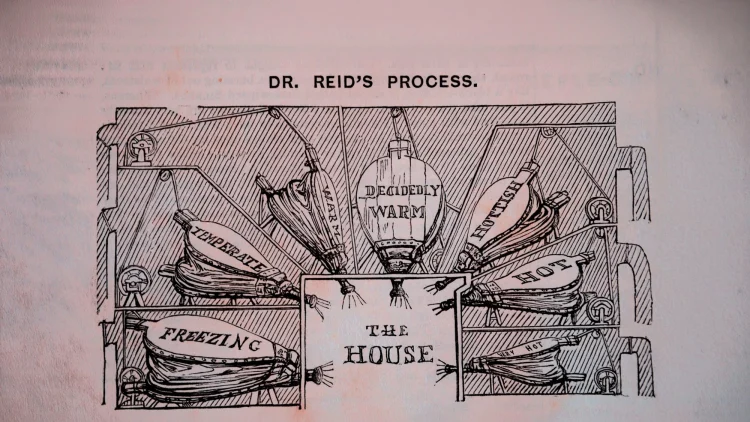
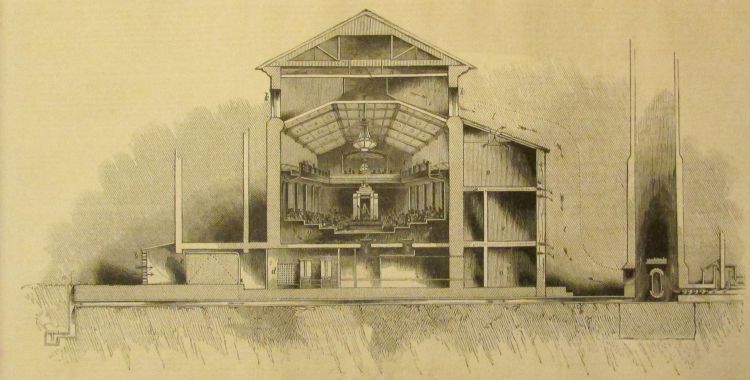
The experiment was devised by Dr David Boswell Reid, now dubbed ‘the grandfather of aircon’, a Scottish chemist brought to Westminster on account of his pioneering work in developing ventilation systems.
To win MPs over to the value of circulating fresh air, Reid hoped to demonstrate that while meat hung from 10 to 20 feet in the Chamber would go off within 24 hours, when suspended from 30 to 40 feet it could still be eaten safely several days later.
Reid was just one of a number of pioneering figures brought into Barry’s rebuilding project, as hundreds of innovations in everything from electric timekeeping to novel methods of drainage, as well as innovations in lighting and masonry, were explored.
It was a period when the status of architecture was also undergoing a rapid transformation. The first chair in architecture was created at UCL in 1841, a move that followed the creation in 1834 of the Institute of British Architects (which received its Royal Charter two years later). Part of this process entailed architects finding a balance between ‘art’ and ‘science’, which proved every bit as fractious as the political debates excited by Barry’s building.
While employing scientists might have helped to break the political impasse about the redevelopment of the Palace of Westminster, it will perhaps not be a huge surprise to learn that it did not end all argument.
Frustrated by the lack of enthusiasm for his theories, Reid began to devise ever more extreme demonstrations. To illustrate the effectiveness of his methods in dispersing ‘bad air’, he drafted a platoon of soldiers into the Chamber of the Commons and filled it with acrid smoke as well as a variety of scents from lavender to cinnamon. Despite the rapidity with which his smoke bombs cleared, MPs remained unconvinced.
“Reid begins his experiments at Westminster in 1835, is appointed to a permanent position in 1838, and is still experimenting in 1850,” explains Gillin.
“There’s just the sense that the experimenting has got a bit out of hand and Barry is driven absolutely mad by the stream of constant alterations.”
The contestability, and potential lack of durability of the scientists’ findings, made their recommendations risky and difficult to implement. Barry and his political backers slowly became impatient with visionary and experimental prototypes. Reliable methods that could be safely systemised were needed.
Disagreements over how far to incorporate new methods also played out along religious and class lines.
Barry had designed the Whiggish Reform Club building and was friends with Edward Cust, the politician overseeing the competition to rebuild the Houses of Parliament. By contrast, for illustrative example, Reid’s interest in ventilation was bound up with his evangelism; he saw the task of cleansing the atmosphere as inextricably bound up with the process of moral purification. It was a particular strand of religious thinking that marked Reid out as a Scot, and an outsider, whose ‘science’ could be more easily dismissed as crankery, whatever its practical effectiveness.
“The majority of MPs were Anglican, were educated at Oxbridge, and had a leaning towards ‘small c’ conservative sciences like geometry,” says Gillin, “whereas north of the border, science was associated with industry, practical uses of knowledge, and utilitarianism.”
While a handful of radicals wanted the new Houses of Parliament reconfigured into a centre of rational governance, most MPs wanted the new building to embody the continuing authority of Parliament and to forestall the kinds of instability that had led to the French Revolution.
Whiggish reformers had favoured rebuilding Parliament in a neo-classical style, while conservatives preferred a more regal gothic mode. By the time Barry had completed both Chambers in 1852, the end result was described as a gothic shell encasing a neo-classical interior.
Without losing its sense of grandeur, Westminster had been rebuilt as a state-of-the-art building. It was a design able to contain the wildly differing preferences of those who fantasised about a pre-Reformation (Catholic) Britain as well as those politically and aesthetically centred in post-Reformation (Protestant) Britain.
For all that that enthusiasm for the renovation to exploit the benefits of rapid scientific advances helped unite competing factions, ultimately the visionary ambitions had to be tempered by a certain degree of nostalgia.
“A fashion for ‘the olden time’ – the period of the Tudors and early Stuarts romanticised as nationalist, mercantile, imperialist, even populist – spread rapidly in the 1830s and 40s,” explains professor Peter Mandler, a Cambridge historian, “and the Palace of Westminster could be seen as an early form of that fashion.”
In the 19th century as now, popular debates about the restoration of Parliament had shifted rapidly from material issues on to far more symbolic and intractable questions about the proper form of British government.

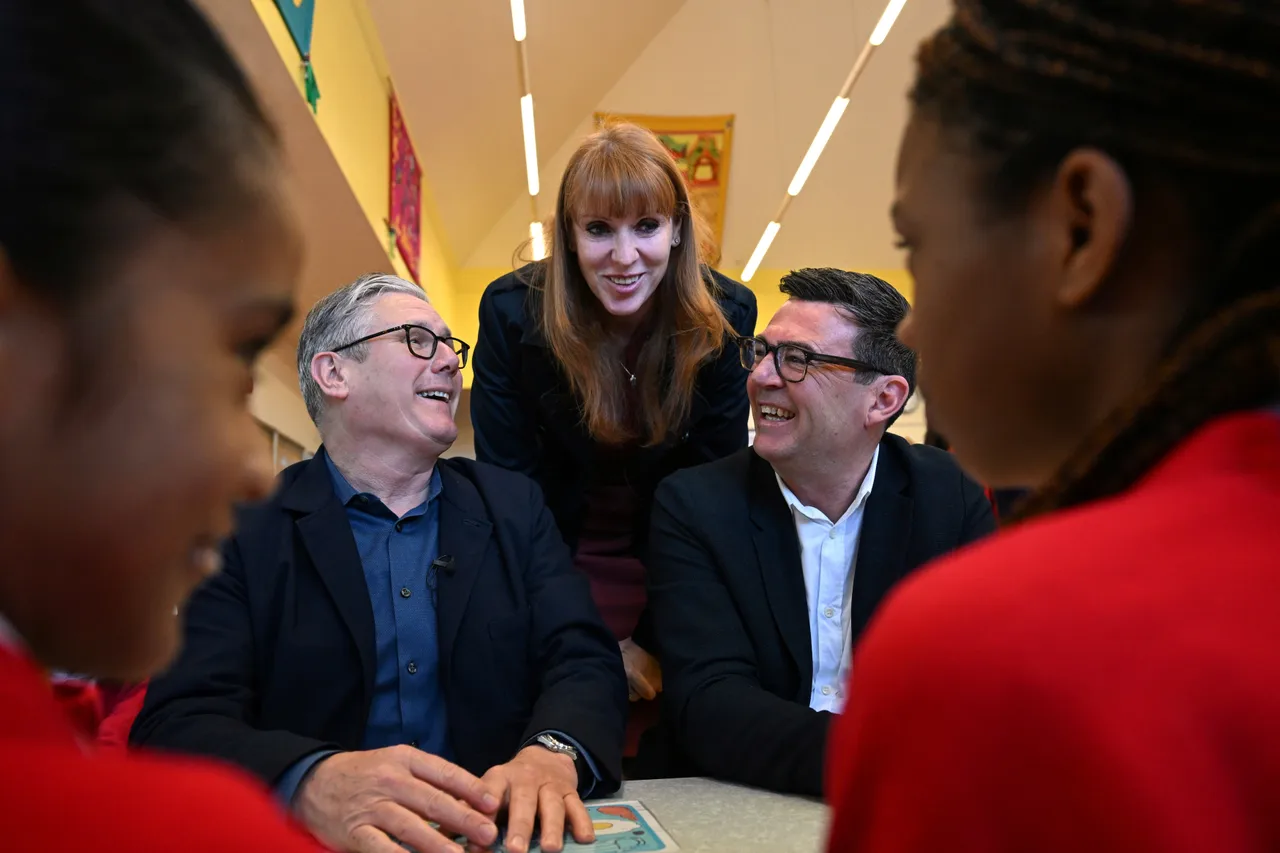
For Labour, the elections on May 7 have been looming on the horizon like a giant, immovable iceberg for months.
Every opinion poll tells the same story: voters in England, Scotland and Wales are preparing to deliver an unforgiving verdict on Keir Starmer’s first 22 months in power.
Up to 2,000 council seats are set to be lost, while the SNP will romp to another victory at Holyrood and Labour will lose a Welsh election for the first time in the party’s history.
After another hellish week for the prime minister dominated by the latest developments in the Peter Mandelson scandal, many at Westminster now think that the sheer scale of Labour’s humiliation will finally trigger moves to remove Starmer from Downing Street.
“I suspect the people round Keir know it’s coming to an end,” said one senior Labour figure. “He only has a few supporters left – they can surely see the writing on the wall?”
An idea gaining traction in some quarters is that, to end the speculation about his future, Starmer should announce when he plans to stand down.
“Post-May, MPs will start saying Keir has to set out a timetable for going,” said one proponent.
“Labour can’t make the mistakes the Democrats made in America. Joe Biden left it too late to go and helped usher in Trump. Keir is helping to usher in Nigel Farage.
“He should announce he’s going in the next 12 months to allow an orderly transition to a new Labour prime minister.
“He can then focus on legacy issues he cares about for final year. That would allow a new leader to be in place by summer 2027.”
Of course, Starmer would need to be amenable to such a scenario, and there is little sign that a man who came to Westminster relatively late in life has any desire to call it quits less than two years after becoming PM.
HuffPost UK has also learned that Downing Street officials plan to mount an “Operation Save Starmer” in the aftermath of May 7 to try and keep their boss in his job.
Another significant flaw in the plan to oust the PM is that any new leader would be under intense pressure to call an early general election, possibly as soon as next year.
“You couldn’t have a new leader coming in with an entirely different policy prospectus and not go to the country,” said one Labour insider. “The public simply wouldn’t wear it.”
For those Labour MPs who are all-but guaranteed to lose their seats, a general election in 2027 is not an attractive prospect.
Others are less certain of Starmer’s imminent demise, however, pointing to the fact that the PM’s critics cannot agree on his replacement.
“Nothing’s going to happen until the cabinet can agree on who should take over,” said a Labour veteran.
Defence secretary John Healey has his supporters, while foreign secretary Yvette Cooper – who stood for the leadership in 2015 – is said to be taking soundings from Labour MPs.
“Yvette is definitely sniffing around it,” said an insider. “There’s some talk of her doing a deal with Wes [Streeting], which could see him become her chancellor.”
Of course, Streeting has not given up his leadership ambitions, although one party grandee said the health secretary’s own links to Mandelson mean his hopes of becoming PM are now “done”.
Angela Rayner’s ongoing entanglements with His Majesty’s Revenue and Customs over her tax affairs would appear to rule out any leadership challenge in the short-term.
Andy Burnham’s enduring popularity with the public – a rarity for a senior Labour politician these days – means he is favoured by many MPs.
“The Burnham train has left the station and everybody will be clambering to get on it,” an MP told HuffPost UK.
But until he can find a way back to Westminster – he is believed to have his eye on Peter Dowd’s Bootle seat – his leadership hopes remain on hold.

“I think the best way to describe the current situation is ‘stuck’,” said one source. “But the election results are going to be disastrous and that could trigger a response – that could be the thing that unsticks it.”
One MP who remains supportive of Starmer said his removal was “not going to happen”.
“There could be a reshuffle, but nothing more,” the MP said. “None of the contenders is able to move right now.”
A cabinet minister conceded “it’s been a bad week” for Starmer, but insisted the speculation about his future was “overdone”.
“It was aways going to be difficult local elections period, but I really don’t think there’s a huge desire for change or a settled view on what any change would be.
“The point of changing is that the person with whom you replace the prime minister is definitely better than him. Who is that person?”
“Biden left it too late to go and helped usher in Trump. Keir is helping usher in Farage”
A government source said the growing campaign to oust the PM could provoke its own backlash.
He said: “I think a lot of MPs will take a dim view of what is a concerted campaign to push out a Labour prime minister, and that could lead to a ‘rally round the flag’ moment.
“If the question is who can best lead this country through a geopolitical crisis and has the gravitas to manage all these conflicts, I think Keir is pretty much the best answer to that question.
“John and Yvette are undoubtedly very capable people, but I think Keir is a better answer that Streeting, Rayner and Burnham.
“Of course it’s been a really difficult week, but I don’t think it’s going to change anything fundamentally.
“I don’t think any of the other candidates can answer the question of would they be better, or how can they manage a transition process to a new PM that doesn’t knock us out of government for a generation.”
Another insider said there was a far more pragmatic reason for the other leadership contenders not to move against Starmer just yet.
“If I was Angie or Wes looking at the economic fallout of the Iran war, I’d think that getting into power this summer looks much less appetising than it did six months ago when we were looking at a growing economy, falling NHS waiting lists and falling inflation,” they said.
“If it were me I’d be thinking ‘do I want to be in charge now’.”
The PM’s spokesman stretched credulity on Friday when he told reporters that his boss will be in charge until the next election and beyond.
“He’s very focused on the job,” the spokesman said. “He will continue to lead the government throughout this parliament and beyond.
“He’s got a huge amount of work to do, the governments got a huge amount of work to do.
“We’ve set out a significant programme of domestic reform, including bringing down NHS waiting lists, tackling the cost of living and investing in security and defence. That’s where the prime minister is fully focused.”
Few truly believe that Starmer will still be prime minister by the time of the next election.
But it is by no means certain that May 7 will trigger an unstoppable chain of events which will see him depart No.10 within weeks.
Subscribe to Commons People, the podcast that makes politics easy. Every week, Kevin Schofield and Kate Nicholson unpack the week’s biggest stories to keep you informed. Join us for straightforward analysis of what’s going on at Westminster.
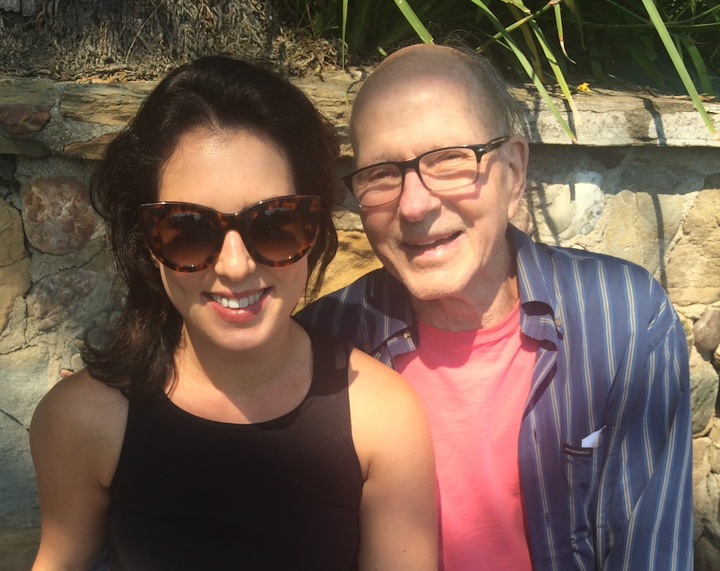
The first time a kid in my kindergarten class asked, “Is that your grandfather?” when my dad dropped me off at school, embarrassment consumed me.
My dad didn’t look like the other dads; what little hair he had was silvering, and he had deep wrinkles that sank into his face.
I remember the stubborn certainty of being six years old and wanting to blend in.
“I don’t want you to walk me into school anymore,” I told my dad.
I didn’t yet have the language for difference. I only understood sameness, who matched and who didn’t. I just wanted to fit in.
“Please? I’ll walk you to your classroom door quietly,” he asked,
But I was firm, saying: “No. Just wait here. I can go by myself.”
He slid my Little Mermaid backpack onto my tiny shoulders. Just as I reached the front gate, I turned around to see his worn Gucci loafers, thick-rimmed reading glasses and pomaded hair. He blew a kiss in my direction, and I waved to show I’d made it safely – eager to hurry him along.
I’m the only product of my dad’s second marriage (and his second divorce). With two half-siblings 20 years older than me, I grew up as an only child. I vacillated between worshipping him as the creator of all fun (he’d play Talking Heads while I jumped on the bed) to treating him as a humiliating, old appendage. His inevitable extinction was always on the horizon, and it scared me.
Today, walking up the brick staircase of my childhood home, I reach the front door, painted green now instead of red. To my right, under the mail slot, is an opaque garbage bag. I can make out a heap of Depends and baby wipes inside.
As footsteps approached the front door, I brushed the small pearls of sweat gathering at the nape of my neck. Returning home always unsettles me.
“Hi, come on in. He’s just taking a nap,” his caregiver smiles at me.
I spent 18 years in this house, and every college break after, and now it feels like an echo of what it used to be. The dining room is lined with boxes of bottled water and Ensure, and the table is piled high with mail and old newspapers.
As I make my way to the den, I see my father, now 91, lying back in his chair. Our 54-year age difference feels wider than ever. I know he has a feeding tube, though I can’t see it beneath the pile of blankets on his lap.
“Hi, Daddy!” I bellow as I sit beside him. I take his hands in mine and begin to warm them as I try to rouse him from his deep slumber. These were the hands that reached out for me in our pool when he was teaching me how to swim. The hands that once pushed me higher on the yellow Fisher Price swing now seemed tired and weak. His leathery fingers begin to wiggle, and his eyes slowly blink open.
“Hiiiiiiiii,” he croaks.
“Do you know who this is?” his caretaker asks as she begins to lift his recliner.
“A nice lady?” my dad replies through a mouth of decaying yellow teeth. He no longer allows anyone to clean them. As his memory waned, his refusals grew stronger.
I gazed into his hazel eyes. “It’s me, Jordan. Your daughter,” I answer, trying to stay as upbeat as possible while a piece of me disintegrates inside.
This happens every time. The fact that he doesn’t remember me is soul-crushing. How do you introduce yourself to the man who taught you how to play gin rummy? Watching his eyes move across your face as if he’s trying to place you. Realising that the archive of your shared life, birthdays, park adventures and driving lessons, now lives only in you.
It isn’t just that he forgets me. It’s that I remember everything alone.
In 2010, the summer I graduated from college in New York, my father was diagnosed with cancer. He decided to wait until the day after graduation to tell me about his diagnosis so as not to “ruin my big day”.
“The melanoma has spread to a lymph node in my right thigh, so I have to have it removed,” he explained.
“Do you want me to come home for your surgery?” I asked.
“No. I don’t want to disrupt your summer. I’ll be fine,” he replied.
“I really don’t mind. I can take care of you,” I insisted.
“You don’t have to,” he said, and he reached for my hand and held it tightly in his.
Then a familiar feeling swept over me: shame. But this time it was directed not at him, but at myself. I was such an ungrateful daughter. What my dad lacked in youth, he made up for in generous parenting. From crawling around on the floor with me in his dress trousers to doing a one-man singing competition of all the Disney princes, to taking me to see David Bowie in concert, his talents for making me smile were infinite.
And after all the effort and energy he put into my happiness, I’d always wanted to trade him in for a younger model. All I wanted now was to tell him how sorry I was.
“I’ll be there,” I said.
Two weeks later, I was in my childhood kitchen, fixing my dad a plate of egg salad and multigrain toast. Post-surgery, he was on bed rest. During those weeks, I showed him how to reduce his oedema by elevating his legs against the wall (I had just completed my 200-hour yoga teacher training) and brought him green tea. It was the first time I had catered to him since preparing him breakfast-in-bed for Father’s Day in 1995: cottage cheese with half a banana, and coffee with creamer.
During his recovery, I would sit at his bedside and rummage through his keepsake box, pulling out mementos from his past. He would tell me stories of his mother’s victory garden in Boyle Heights and of hiding behind blackout curtains during Japanese bomb scares in World War II.
My father saw The Wizard of Oz when it first came out in theatres and ran out into the lobby, horrified by the Wicked Witch. As a boy, he would listen to Captain Midnight on the radio and flip through Norman Rockwell pictures in the Saturday Evening Post. My father was a rivet in America’s “Golden Years.”

Photo Courtesy Of Jordan Ashley
Last year, I had important news to share with him. “Look, Daddy, this is my ring. I’m getting married in just a few months,” I projected as I flicked my wrist back and forth to show him my diamond.
“Wow, congratulations, honey,” he exclaimed as drool began to seep down his chin.
I quickly grabbed one of the many washcloths, the same ones he used to clean me with during bath time, now withered and tattered, just like he was. Through his rosy cheeks and rotting smile, a genuine sweetness radiated.
“Do you want me to read you a story?” I asked.
Going into my childhood bedroom, still filled with my picture books and stuffed animals, but now also lined with his folded laundry, diapers and medicinal lotions. Grabbing Goodnight Moon off the shelf, I thought of how he used to always read it to me.
Now living in London, I come home at least three times a year to see my dad. Sitting for 10.5 hours to fly across the world, I always remind myself that I don’t want any regrets.
As I opened the first page, I looked at him, and the same twinge of bitterness ran through me. A feeling that I always carried. This isn’t fair. Two of my best friends had married just months before, and their fathers walked them down the aisle. That was never in the cards for me.
“OK, here we go,” I said as I opened the first page.
“In the great green room,
“Goodnight stars, goodnight air…”
The lines hung between us, small and delicate, stretching across the decades that separated my father and me. I brushed a kiss over his bald head, feeling the weight of years that we never had together and the fullness of all the ways he had shown up anyway. In the quiet of that moment, I understood how much love can compress a lifetime, even when time itself is limited.
“Goodnight noises everywhere, Dad.”
Do you have a compelling personal story you’d like to see published on HuffPost? Find out what we’re looking for here and send us a pitch at pitch@huffpost.com.
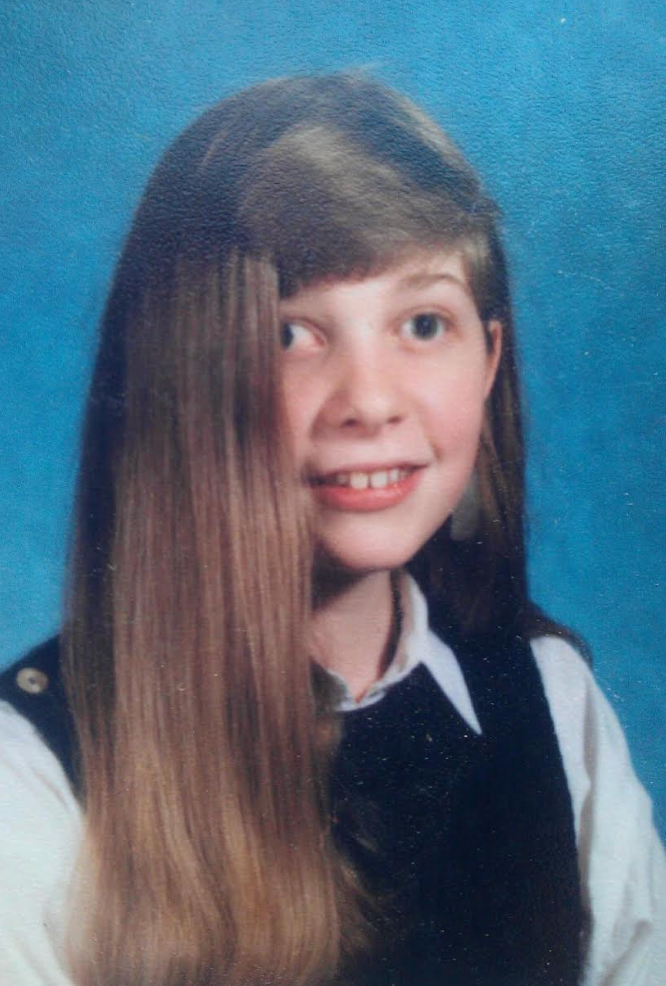
When I posted my eighth-grade school photo on TikTok and Instagram a few weeks ago, I expected to get some laughs out of my family and friends – and maybe even a couple of strangers. I didn’t expect the photo to be shared hundreds of thousands of times or be seen by over 20 million people.
The photo features me in 1989, smiling hopefully at the camera with a curtain of long brown hair covering about a third of my face. I’d practiced the look for weeks in my bedroom mirror with the goal of using my hair to cover my lazy eye in my annual school photo.
I felt like my lazy eye, known medically as amblyopia, completely defined who I was. I thought that if I could hide it just once, maybe people would see me and think of me as something more than just my eye.
When the prints came back a few weeks later, I was devastated. Not only had I failed to cover the eye with my hair, I had covered just enough of it to make it obvious that I was trying to hide it. A portion of the iris peeked out defiantly from behind the drape of hair like it was photobombing my own photo. The boys who bullied me daily saw the photo and flailed about at their desks in fits of laughter.
I showed my mother and she told me I looked beautiful and immediately slid the picture into an 8×10 frame and placed it on the mantle in the dining room. A few days later, I hid it in a drawer and rearranged the photos that had surrounded it. She noticed immediately and asked me why I’d taken it down. I told her I never wanted to see it again.

Last month, I decided to start posting comedy videos to TikTok and Instagram. I had pursued a career in comedy writing and acting a decade ago and fell into a deep depression when I got knocked down by a series of rejections.
When I recently mustered the courage to start posting jokes and sketches to my social media feeds again, I remembered the photo had been a hit with a small theatre audience almost 12 years ago.
I posted it on TikTok with a straightforward caption: “8th grade school photo in 1989 when I tried to hide my lazy eye with my hair and it did not work.” I paired the photo with the song Forever Young by Alphaville – a song frequently played at my junior high school dances, where no one ever asked me to dance.
The reel seemed to quickly get a lot of engagement, but since I was new to posting publicly, I wasn’t sure how to gauge how much attention was normal. When it passed a million views on TikTok, I started to accept that something big was happening. The photo wasn’t just being “liked”, it was being shared over and over again, and people were tagging friends with crying laughing emojis.
I felt powerful for the first time in a long time. Comedy was where I first found my power. The ability to make someone laugh is to disarm and surprise them – to make them let go of whatever they’re holding on to and bring them into the present moment where they can’t help but feel joy. Comedy, for me, is also about finding those universally hilarious moments that people don’t often talk about and dragging them into the spotlight.
I shared the post on my public Instagram profile and the response was even more incredible. Not long after I shared it, my “insights” dashboard revealed that the post had been viewed over 25 million times by more than 16 million people.
Thousands of comments poured in. One woman said she saw the post on a bus ride home and laughed for 10 minutes straight. I felt like people were laughing with me – not at me. In a single frame, I had inadvertently captured the all-too-familiar experience of a teenager trying to hide who she truly was and failing miserably.
Yes, of course, there were some comments from trolls who responded just like the boys in my homeroom class. There were dozens of comments from men comparing me to Steve Buscemi’s “Crazy Eyes” character in the Adam Sandler movie Mr. Deeds.
Others delighted themselves by asking if I’d “gotten kicked by a mule” to straighten my eyes out – a reference to a joke about a crosseyed child character in National Lampoon’s Christmas Vacation.
The comments didn’t break me down like they did when I was 13, but they did remind me of how scared I was when I sat down for that photo – and how scared I was all the time at that age.
Every interaction I had with someone was an opportunity for them to comment, criticise or ridicule my appearance. I responded to thousands of comments on my posts, but I ignored the bullies. I felt protected, in a way, by the thousands of other people who were laughing along with me.
There were also the comments from people who had lazy eyes. I repeatedly saw people sharing something I never imagined I’d ever encounter: “I had a lazy eye and did this exact same thing with my hair.”
One woman wrote, “I still do this in my 40s.” This act that I was sure no one else on earth had tried before was a “thing” for people with lazy eyes, I had just never had the chance – or means – to connect with them before.

Having a lazy eye left me isolated, anxious, depressed and desperate for connection in high school. It was more than just looking different from others. I couldn’t make eye contact with anyone. Like many people with amblyopia, my eyes did not work together. I could focus one eye (usually the left one) on the person I was speaking to, while the other eye drifted all the way to the right. Even when I was making eye contact with people, it was only with one eye, so they couldn’t tell.
I lived in constant dread. Whenever I attempted eye contact, the person I was speaking to would usually look over their left shoulder to see where my right “lazy” eye was looking. They ignored the eye that was looking at them and focused entirely on the one that was not.
My lazy eye profoundly affected my ability to socialise with others. I tried every tactic I could think of to avoid that humiliating “over the shoulder” look. I often kept my eyes on the floor when I was speaking, hoping people would think I was just shy.
When I saw a TikTok user comment, “I used to look at the floor when I was talking to people,” it took my breath away. It was like I had finally found my people.
It’s estimated that 2-4% of the U.S. population has amblyopia. In 1989, with the country’s population at roughly 247 million, that would have meant about 5 million people living with a lazy eye. With no social media at the time, there was no way for me to find and connect with any of them. 35 years later, I finally can.
While many social media users continued to “like” and share the post with its original comedic intent in mind, more and more people began sharing their own experiences of living with a lazy eye. I was flooded with questions about the treatments and surgeries I had tried. Those who looked at my current profile picture saw that the “laziness” of the eye had been corrected and wanted to know how. I even had a mother ask me how to respond to the bullying that she feared her own child with a lazy eye would face. My heart ached when I responded that I really didn’t have a good answer for her.
Not everyone with a lazy eye wants to treat it. I celebrate anyone and everyone with a lazy eye who is able to accept and embrace their condition with no desire to change it. No one should feel they have to get a medical procedure (let alone six of them like I did) to fulfil any sort of external standard of what supposedly looks “good” or doesn’t.
For me, it was a matter of survival.
I originally had two unsuccessful operations at age three that had been traumatic for my whole family. My mother was terrified of me undergoing another procedure, but as a teenager, I didn’t care about the physical pain or the risks associated with more surgery. The bullying from my peers drove me to thoughts of suicide, and I was ready to try anything.
It took a month to recover from my third surgery, which I had at 14. I immediately wanted to know when I could get another one to improve the results. A year later, I got my fourth eye surgery. Two years later, I got my fifth procedure. Each surgery got the eye closer to being straight, but doctors told me it would always drift a little.
In my late 20s, I noticed the drift more than ever. People were looking over their shoulders again when I spoke to them. For a long time, I made peace with my condition, but when I had my own child at 39, I wanted him to know I was looking at him.
Though friends and family said the drift was barely noticeable, one night a well-meaning waiter approached my table while I was out to dinner with my husband and said, “I saw you looking in my direction. Can I get something for you?”
I politely declined but after he left, I told my husband, “That’s it. I’m getting surgery again.”

My loved ones were used to the way my eye looked. The waiter, a stranger bearing no ill will toward me, was more objective. I made an appointment for surgery, but my fear got the best of me and I cancelled it. I waited over a year before making another appointment and following through with it. At age 42, I opened my eye in the recovery room and saw the surgeon give me a thumbs-up. He told me it was fixed for life.
About a week after the TikTok and Instagram posts went viral, I recorded a video to share my experience of undergoing four surgeries over 35 years. I received many fewer responses to the video than my original posts, but all of them were warm and supportive. People wished me well. People were happy for me. It was a love fest.
Having a lazy eye for 40 years profoundly impacted who I am as a person. My experience has made me fiercely empathetic and unapologetically truthful about the human condition, because I was unable to escape the experience of being misunderstood. It also made me really funny. I can call out an ironic moment like nobody’s business. I can shine a light on an absurdity like a boss. And for that, I’m grateful.
Carol Burnett once said that her mother taught her that “tragedy plus time equals comedy.” For me, it has also meant finally feeling “seen” as more than the frightened and ashamed child who was so desperate to hide who she really was.
This piece was previously published on HuffPost and is being reshared again as part of HuffPost Personal’s “Best Of” series.
Liz Brown is a mother, writer, and comedian living in Los Angeles and Northfield, Vermont. She is currently working on a memoir about spending 40 years unable to make eye contact because of her lazy eye. You can follow her on Instagram and TikTok.
Do you have a compelling personal story you’d like to see published on HuffPost? Find out what we’re looking for here and send us a pitch at pitch@huffpost.com.
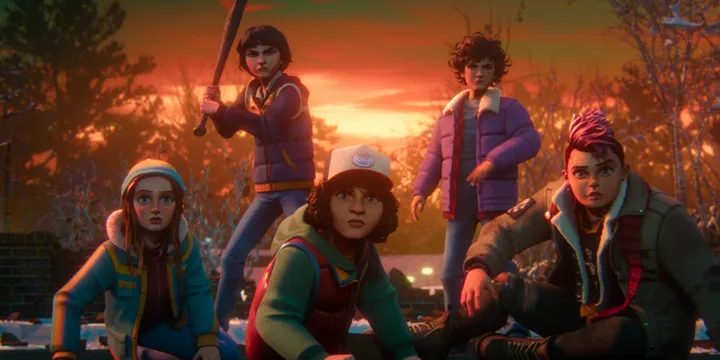
For some fans, it already feels like a lifetime ago since Netflix closed the book on Stranger Things with a fifth and final season so divisive fans even concocted a theory about a secret final, final episode.
One antidote to the turmoil of the cult show wrapping up after almost 10 years, was the promise of spin-offs, the first being an animated series shaped by original creators the Duffer brothers.
Tales From ’85 arrived on Netflix this week, and although it may have received mixed reviews from the critics, plenty of fans have been won over by the fresh invention, while others are left wondering about future instalments in the sc-fi saga outside the animated series.
Here’s everything we know about the future of Stranger Things…
Will there be a Stranger Things: Tales From ’85 season 2?

Netflix is yet to make an official announcement on that front. However, based on what the cast and creators are saying, it hasn’t been ruled out.
What we do know is that showrunner Eric Robles is interested in exploring those characters further in the future, and making sure it ties in cleanly with the rest of the Stranger Things universe.
“The hopes are, if we continue with the series, we’ll make sure that we kind of tie it right back to the beginning of season three,” he told the Radio Times, referring to Tales From ’85 and its taking place between the events of season two and three of the original Netflix series.
Meanwhile Brooklyn Davey Norstedt – who voices Eleven in the series, taking over from Millie Bobby Brown – is also keen for a fresh run of episodes.
“That would be amazing,” she enthused when asked about a second season. “I know they definitely have ideas,.
“I think, right now, they’re really focused on the launch of season one,” Brooklyn added. “I think it’s going to be a great one for families to see together. We’re just all very pumped for the first season, and if anything else comes from it, that would be great.”

What could Stranger Things: Tales From ’85 season 2 be about?
Whether or not it comes to fruition, it looks like Tales From ’85 has been left in such a way that a second season would be an easy pick-up.
As well as finishing on a cliffhanger, there are some characters still knocking around at the end of the series that we know don’t exist in the original Stranger Things universe, such as Marty Supreme star Odessa A’zion’s character, Nikki.
With showrunner Robles already saying he hopes to bring Tales From ’85 right back round to where season three of the original Netflix show begins, that means there’s some loose ends (and characters) to tie up.
Could a new season of regular Stranger Things be in the works?
Sadly, there’s no way back for the Stranger Things we know and love.
Making the wise decision to quit while they’re ahead and dodge any “gross cash grabs”, the Duffer brothers have remained firm in their stance that season five was the final chapter for the existing cast and the world they inhabited.
In an interview with the Hollywood Reporter shortly after season five finished, Matt Duffer explained: “Mike’s closing the basement door. We’re closing the door on the story.”
“That’s one reason we had the closing credits the way we did, because it was a way of saying: ‘This is finite. This is the end of their story. It’s the end of the story of Mike and Eleven and Joyce and Hopper’.” he added.
“So, no, there’s no plan or intention to tell the story because it’s a coming-of age story. Ultimately, that’s what it’s supposed to be. That’s what the show always was. When he closes the door to the basement, he’s closing the door on his childhood and he’s moving onto adulthood.”
We won’t hold our breath, then.

What about other Stranger Things spin-offs?
While it’s the end of live-action Stranger Things in its original format, the Duffer brothers have teased an intriguing addition to the universe.
“It’s early days but we’re excited about it,” Matt Duffer told the BBC back in November. “It’s new characters and a new mystery, so it’s different, but it will be in the same world as Stranger Things.”
One person who’s clued up on the spin-off is Finn Wolfhard aka Mike, who accidentally guessed the plot of the series and confirmed that, unlike Stranger Things, the new project wouldn’t be set in the 1980s.
Finn previously spoke to Variety about that prediction, saying it would be “like David Lynch’s Twin Peaks” and “sort of an anthology” with “different tones” but a “similar” or “same universe”.
Of course, there’s also still the chance to see the Stranger Things play on both the West End and Broadway

Stage show Stranger Things: The First Shadow is booking in London until 6 September 2026, or if you fancy a trip across the pond you can also see it on Broadway.
The First Shadow show is set in Hawkins, 1959 “before the world turned upside down” and is based on an original story by the Duffer Brothers.
It also features well-known characters like Joyce, Jim Hopper and Dr Brenner played by stage actors and has picked up five-star reviews for its “truly dark” take on the franchise.
Earlier this year, it was also reported that the Broadway play had been recorded for a rumoured Netflix special.
Stranger Things and season one of Tales From ’85 are both streaming now on Netflix.
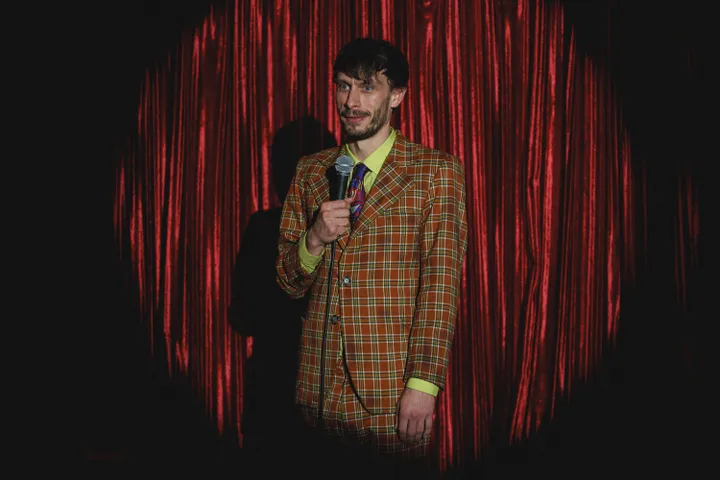
The more emotionally robust among us might have already plunged straight into Baby Reindeer creator Richard Gadd’s new series Half Man. To those people we say congratulations – and can we maybe have the number for your therapist?
Already hoovering up praise and criticism alike for its “emotionally shattering” depiction of two brothers and the fragility of male relationships, the BBC is perhaps wisely drip-feeding one new episode of Half Man every Friday, rather than releasing the whole series at once.
Meanwhile, if you’re a regular TV viewer, you’ll likely have seen more than a few members of the cast – led by Richard and co-star Jamie Bell – before.
Here’s why the stars of Half Man might look familiar…
Richard Gadd

Comedian, actor and writer Richard made his major breakthrough with the six-time Emmy-winning Netflix series Baby Reindeer, an adaptation of his one-man comedy show about his own experiences of sexual violence and being stalked.
If you don’t recognise him from that, or his irreverent stand-up comedy career, you might have seen him in the 2022 Disney+ action comedy series Wedding Season, where he had a recurring role as Conrad.
Richard has also appeared opposite Stephen Graham and Daniel Mays in cop comedy Code 404 as well as appearing in the likes of Clique, Urban Myths, Humans and Outlander.
Jamie Bell

Tiger Aspect Pics/Kobal/Shutterstock
Jamie Bell burst onto the scene as a child actor, playing unlikely ballet dancer Billy Elliot in the 2000 film of the same name, which made him the youngest person to win a Bafta for Best Actor, aged just 14.
Since then, he’s appeared as The Thing in Marvel’s Fantastic Four, as well as films as varied as The Adventures of Tintin, All Of Us Strangers (as Andrew Scott’s dad, no less), Rocketman, Nymphomaniac, Film Stars Don’t Die In Liverpool and Jane Eyre.
On the small screen, Jamie most recently starred as serial killer Harper Curtis in Apple TV+ sci-fi series Shining Girls, alongside Elisabeth Moss.
He also portrayed real-life spy Abraham Woodhull in the historical drama series Turn: Washington’s Spies, and was recently announced to be taking over from Cillian Murphy as the lead in the new Peaky Blinders spin-off.
Neve McIntosh

Neve McIntosh most recently appeared as Miss Harbottle in the Channel 5 series All Creatures Great & Small, but she had a string of TV and film appearances under her belt long before that.
You might have also seen Neve in Doctor Who, where she’s appeared as three different characters – silurian sisters Alaya and Restac as well as Madame Vastra.
Her other TV credits include Gormenghast, Doc Martin, The Hound Of The Baskervilles, Bodies, Single Father, Stan Lee’s Lucky Man, Shetland and Tin Star.
Theatre-goers, meanwhile, might have seen her in the Royal Shakespeare Company’s production of Charles Dickens’ Great Expectations in 2006.
Charlie De Melo

Soap devotees will know Charlie De Melo for his role as Coronation Street’s Imran Habeeb, which he played between 2017 and 2022.
As well as doing the soap rounds (he’s also appeared in Eastenders, Doctors and Casualty) Charlie has also appeared in The Interceptor, Still Up, Doctor Who and Ellis.
He also played Malhar Verma in three episodes of Disney+’s wildly-popular Jilly Cooper adaptation Rivals.
Bilal Hasna

Bilal Hasna made his Bafta-nominated breakthrough in the superhero comedy series Extraordinary, where he played time manipulator Kash.
He also had a lead role in Prime Video comedy thriller Dead Hot, while Black Mirror aficionados might also have clocked Bilal in season seven finale USS Callister: Into Infinity.
Over on the big screen, Bilal played the titular British-Palestinian drag queen in Layla, and more recently appeared in the Bollywood-meets-Dickens festive film Christmas Karma.
Amy Manson

As well as playing Alice Guppy in Torchwood, Amy Manson has had TV roles in everything from Casualty to Desperate Romantics, Being Human, Outcasts, The Nevers and Once Upon A Time.
Most recently, she’s appeared as Giselle in Netflix’s The Diplomat as well as Paramount+ series The Chemistry Of Death, Bodies (along with Half Man co-star Neve) and the BBC’s Scottish crime drama Rebus.
Our favourite role of hers, though, has to be when she appeared as the hallucinated Anne Boleyn in the Princess Diana drama Spencer, appearing opposite Kristen Stewart.
Stuart McQuarrie

Stuart McQuarrie has had some punchy film roles to date, appearing in 28 Days Later, Trainspotting, Blood, Mr Turner and The Nest to name a few.
On TV, you might have seen him in Taggart, Silent Witness, Foundation, The Tower, Shetland, Life Begins or The Crown, where he played British politician George Thomson.
More recently, he’s appeared in The Rig as Colin Murchison opposite Iain Glen, Emily Hampshire, Martin Compston and Mark Bonnar.
Tim Downie

Comedy fans will likely recognise Tim Downie from his appearances in classic series like Peep Show (where he played Mark Corrigan’s dodgy literary agent), as well as Toast Of London, Miranda, Heading Out, Upstart Crow, Chewing Gum and Hapless.
Tim’s also cropped up in drama series like Nicola Coughlan’s Big Mood, Jekyll & Hyde and Skins.
Film buffs might recognise him from his roles in The King’s Speech, Les Misérables, Paddington, War Machine and The Mercy.
Episode one of Half Man is streaming on BBC iPlayer now, with new instalments every Friday.
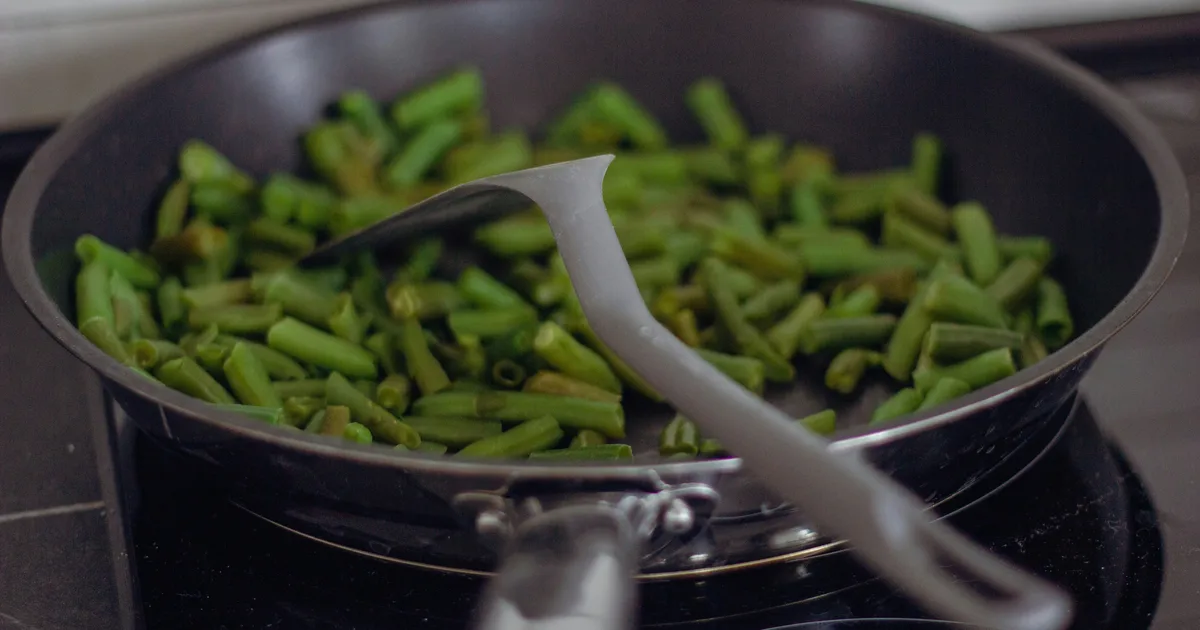
We’ve written before at HuffPost UK about how olive oil might not be the best choice for roasting spuds.
It turns out the kind of oil you use for nonstick pans matters no matter what you’re cooking in them, too.
According to cookware brand Circulon, “there are several reasons to avoid using cooking sprays on your nonstick cookware”.
Why are cooking sprays so bad for nonstick pans?
Speaking to the New York Times’ Wirecutter, Fran Groesbeck, a managing director of the Cookware and Bakeware Alliance trade association, said that – ironically – some non-stick sprays can ruin the coating on your pans.
They can leave a thin film behind after use, she said, and it’s especially hard to spot on nonstick pans.
“You can’t necessarily see that residue, because nonstick coatings are all black, but if you don’t properly clean it off after you’re done cooking, then your food will start to stick.”
This film is made up of ingredients not usually seen in non-spray oils, like soy lecithin. As they linger on an often-reheated pan, they polymerise, becoming next-to-impossible to remove.
But that’s not the only unwanted side effect. Because these sprays typically have a lower smoke point than many other oils, they begin to burn on your pan – corroding the nonstick surface further.
Speaking to EatingWell, cookware company Our Place’s associate director of product development, Stephanie Hong, said: “Many spray oils also contain chemical propellants, which are prone to breaking down under high heat. This instability can lead to scorching, residue buildup and long-term damage to the nonstick surface, ultimately causing the very sticking you were trying to avoid.”
What should I use instead?
If you want to use less oil, try wiping your nonstick pan with a paper towel dipped in your usual oil, Circulon shared.
Alternatively, you could place regular oils in a mister bottle, though Hong warns this could carry its own risks.
“The ultra-fine oil particles (even from pure oil options or refillable oil-misters) can burn and carbonise during cooking, leaving behind a stubborn residue that bonds to the pan’s surface and gradually impacts the pan’s nonstick performance,” she told EatingWell.
She added, “To preserve the quality and lifespan of your nonstick pans, skip aerosol sprays” altogether.

4 min read
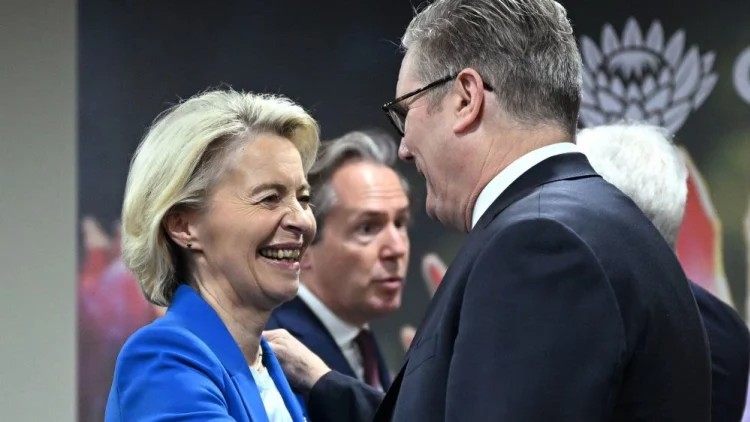
The current government’s approach to rebuilding ties with Europe is welcome and beneficial. But this alone won’t come close to reversing the damage of Brexit.
The defeat of Viktor Orbán’s odious regime in Hungary represents a potential turning point in the future of Europe and the Western alliance. For over a decade, it has felt as if Western democratic nations have been stuck on an inevitable path towards fracture and decline. Populist forces on the right have been pulling our countries apart, dismantling the rules-based global order, destabilising international alliances, and poisoning the well of our democracies. Orbán’s Hungary was an extreme example, but for the pound shop demagogues promoting his brand of politics in the UK and beyond, it was held up as an ideal.
This defeat should give us all hope that this populist wave can be defeated, and we can rebuild what has been damaged.
Péter Magyar spoke openly in the wake of his victory about rejoining global institutions and deepening international co-operation. It was what he said next that grabbed headlines here, suggesting that just as Hungary seeks to rejoin the European club, so too should the UK.
This was quickly backed up by Ukrainian Prime Minister Volodymyr Zelensky, who argued that Donald Trump’s threat to pull the USA out of NATO should prompt the UK to rejoin the EU. This kind of talk is unthinkable from politicians in London – with even the Lib Dems talking about rejoining only the customs union – but should it be? And is it time to begin a serious debate about EU membership?
Of course, the government would say they are already rebuilding relations with Europe, and they are right. There has been a significant change of tone and approach under Labour, which has been noticed and welcomed on the continent. The deals the government is negotiating, including on energy markets and agricultural and food standards, are important in their own right. I hope they go further with deeper dynamic alignment on issues such as workers’ rights and UK access to the SAFE defence funding mechanism. These would be important evidence of building on this approach.
However, this approach on its own will never come close to reversing even a fraction of the deep economic damage done by Brexit, with per capita GDP 6-8 per cent lower, and employment 3-4 per cent lower, than if we had not left the EU. More fundamentally, when European leaders gather to discuss Trump’s tariffs or AI regulation, the UK is not at the table. And if NATO starts to wither due to American indifference, then we may see important defence and security decisions being made at the EU level too.
Speaking to EU colleagues, it is increasingly obvious that the idea that the UK could enjoy a ‘best of both worlds’ situation is a fantasy. The EU is very clear: the benefits of membership come with obligations. As the leader of one of the UK’s most pro-European trade unions, it has been frustrating to watch others fail to grasp this fundamental point. Too often, the UK has been stuck talking to ourselves about which bits of Europe we would like to rejoin, without stopping to consider what will fly in Brussels. The only viable routes for European reintegration are some version of the government’s current deal or a serious conversation about membership of the EU.
Helpfully, the public seems to grasp this, according to new polling from Best for Britain. When asked about variations of the UK-EU relationship, the only two options with majority support are the government’s current position (closer alignment within their red lines) or full membership. Halfway house approaches, such as rejoining the single market or customs union, have lower support, and the latter barely makes a difference economically beyond the current approach.
The government has done the right thing by resetting our relationship with Europe. But the strategic case for the UK to consider EU membership is getting stronger by the day, and should become a serious debate as we reflect on the referendum’s tenth anniversary and look towards the next election. We should not pretend that politics will be easy; the trade-offs are real, and memories of the Brexit debates are still raw.
But the idea that this is politically unthinkable simply does not hold water.
Not only does exploring it command majority support, but it could form an obvious rallying point for progressives to unite against the threat of Reform UK. Events in Hungary should give us hope that we are not doomed to live in the world of the populists and accept the UK becoming poorer, more divided, and more irrelevant each passing year.
We can set our own destiny if we are brave and bold enough to argue for it.
Mike Clancy is General Secretary of the Prospect trade union and Chair of the UK Domestic Advisory Group on the EU-UK Trade and Cooperation Agreement
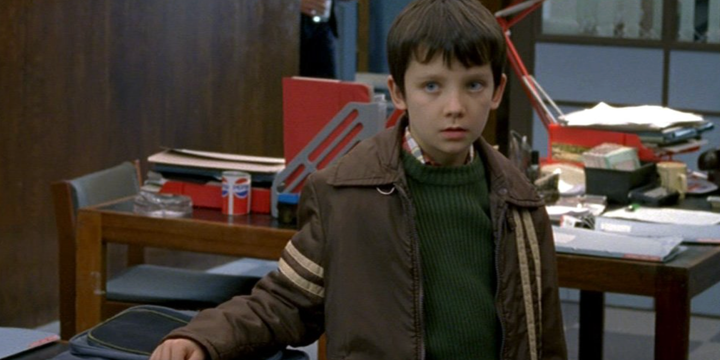
From his early beginnings as a child actor to his stand-out performance in Netflix’s Sex Education, Asa Butterfield has become one of the most recognisable British actors of his generation.
Asa recently reunited with the streaming service for the British drama Unchosen, in which he plays a lead role opposite Molly Windsor and Fra Fee.
In the dark psychological thriller, he plays one half of a young couple living in a religious sect, whose lives are turned upside down thanks to the arrival of a new face in their community, who poses questions for both of them.
But aside from the roles you might associate with Asa, there are plenty more you’ve likely forgotten all about.
Here are nine more of Asa’s past shows and films from long before Unchosen that might have totally slipped your mind…
Son Of Rambow (2007)
While people generally think of The Boy In The Striped Pyjamas, Hugo or the Nanny McPhee sequel when it comes to Asa Butterfield’s early work as a child performer, he actually started acting before any of that.
In 2007, he had a minor role in the British comedy Son Of Rambow, appearing alongside a number of other future stars of his generation, most notably Will Poulter.
Asa had a small role in the film, playing a young member of the Plymouth Brethren.
Ashes To Ashes (2008)

A year after his big-screen debut, Asa appeared in the first season of the period drama Ashes To Ashes, itself a spin-off of Life On Mars.
Then just 11 years old, Asa played a small role in the show’s sixth episode, appearing as schoolboy Donny, in an episode which also guest starred Phil Davis.
Merlin (2008)

That same year, Asa landed the role of Mordred in Merlin, a young Druid who quickly forms a bond with Morgana in season one.
Asa went on to appear in three episodes of the BBC fantasy series, which featured Colin Morgan as the titular wizard in his younger years.
Mordred was reintroduced later in the series, but had been recast, with Alexander Vlahos taking over the role from season five.
Ender’s Game (2013)

Based on the novel series of the same name by Orson Scott Card, Ender’s Game was one of Asa’s first leading roles.
In the sci-fi adventure, he played Ender Wiggin, a young man in a dystopian future who is sent to an advanced military academy where he is trained to prepare for an alien invasion.
Abigail Breslin starred as Asa’s sister Valentine, with the all-star cast also including Harrison Ford, Viola Davis, Sir Ben Kingsley and Hailee Steinfeld.
Miss Peregrine’s Home For Peculiar Children (2016)

One of celebrated director Tim Burton’s most overlooked offerings came in 2016, when Miss Peregrine’s Home For Peculiar Children arrived in cinemas.
Asa played teenager Jake Portman, one of the central “peculiar children”, in the family movie, which also featured Eva Green, Dame Judi Dench and Samuel L Jackson.
While the film itself was met with a somewhat lukewarm reception, Asa’s performance was well-received, even sparking comparisons with another former Tim Burton collaborator, Johnny Depp and earning him a Teen Choice Award nomination.
Then Came You (2018)

Asa played a romantic hypochondriac working as an airport baggage handler, who strikes up an unlikely friendship with a terminally-ill teenager, played by Game Of Thrones star Maisie Williams, in Then Came You.
When the two friends become close, Maisie’s character enlists her new pal to help her carry out her eccentric bucket list in the time she has list, helping him learn life lessons, come out of his shell and face life-long fears along the way.
Then Came You was met with a muted response upon its release in 2018, with the cast also including Nina Dobrev as Asa’s love interest, Peyton List and Tituss Burgess.
Time Freak (2018)

The same year he was sharing the screen with Maisie Williams in Then Came You, he was cast as fellow Game Of Thrones star Sophie Turner’s love interest in another film.
In Time Freak, Asa played a Physics prodigy going through a break-up, who decides to go back to the beginning of his relationship in an attempt to try and work out where things went wrong.
However, through this process, he – naturally – stumbles upon the art of time travel, which he uses to try and fix the situation. You won’t believe this… but it has complicated results.
Greed (2019)

A Troubridge/Sony/Kobal/Shutterstock
The black comedy Greed featured Steve Coogan in the lead role of a billionaire high-street fashion tycoon, loosely inspired by Philip Green, who employs a meek and mild-mannered journalist (played by comedian David Mitchell) to help him pen his memoirs.
Greed, a satire on the fashion industry and super-wealthy elite, featured a sprawling cast that included everyone from Isla Fisher and Shirley Henderson to reality star Ollie Locke and Doctor Who’s Pearl Mackie (with cameo appearances from Stephen Fry, Colin Firth, Keira Knightley, James Blunt, Keith Richards, the late Caroline Flack and, for some reason, Louis Walsh).
Asa played Steve’s character’s son, who had an unhealthy obsession with usurping his father’s position and status.
Choose Or Die (2022)

The Netflix original horror Choose Or Die centred around a fictitious video game platform that forces its users to make split decisions (putting is in mind slightly of the now-removed Black Mirror special Bandersnatch) with potentially fatal results.
Asa played one half of a pair of friends who become obsessed with the game, alongside an eclectic cast that included everyone from former Coronation Street star Angela Griffin and Eddie Marson to Nightmare On Elm Street’s own Robert Englund, playing a demented version of himself.
Unchosen is now streaming on Netflix.
This week 921,151 visitors visited 839,335 times viewing 873,526 pages. The most read and shared stories in order of popularity were: EXC: Cabinet Office Permanent Secretary In Discussions to Leave Government Role WATCH: Lee Anderson Kicked Out of Commons After Accusing Starmer of Lying Government in Turmoil Over Second Mandelson Files Release Foreign Office Permanent…
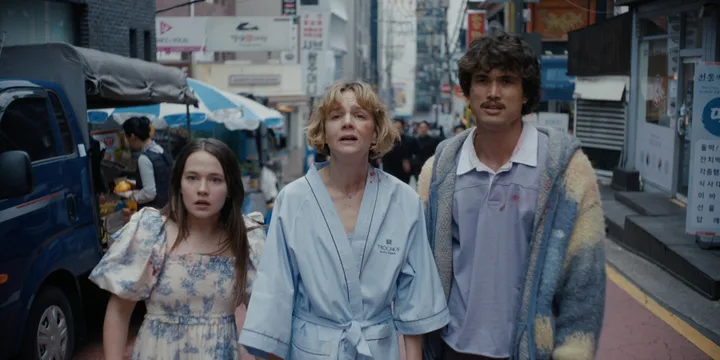
Netflix finally released the long-awaited second instalment of its hit rage drama Beef last week, with the series quickly rising to the top spot of the streamer’s most-watched TV shows, according to its public ranking system.
Season one of the Emmy-winning series starred Steven Yeun and Ali Wong as two strangers who turn a road-rage incident into a long, fury-filled feud. The 2023 series racked up awards for its writing and performances.
The second iteration features a new cast and a whole new beef, in which a struggling Gen Z couple goes head-to-head against a well-to-do millennial married couple in a blackmail saga.
Oscar Isaac stars as Josh, the general manager of a country club, who’s at odds with his wife, Lindsay (played Carey Mulligan), in season two’s opening scene. Two of the country club’s employees — Cailee Spaeny’s Ashley and Charles Melton’s Austin — catch Josh and Lindsay’s big fight on camera, and so ensues the beef that drives the season.
On top of that, the billionaire owner of that same club, Chairwoman Park (the latest screen outing for Oscar winner Youn Yuh-jung), is trying to cover up a big mess dealing with her husband, Dr. Kim (played by Song Kang-ho), and gets everyone entangled in that mess.
We’ve watched all of season two – and these are our thoughts about the show…
Let’s talk about the cast and performances in Beef season 2

I thought the ensemble cast for season two was quite a mixed bag when Netflix first announced it, but given the millennial-versus-Gen Z plot, it makes sense now.
Oscar Isaac, Carey Mulligan, Charles Melton and Cailee Spaeny all give great performances. Cailee’s Ashley is an absolute menace by the end of the season, which I’m sure was the whole point of her character’s arc, but the actor played a clingy, controlling girlfriend well. I’m still thinking about those scenes on the planes where she loses it. Oscar was great, too, at flipping the switch between calm and unhinged with his character, especially in his scenes with Carey’s Lindsay.
The real standout for me was Youn Yuh-jung as Chairwoman Park. She was the perfect unexpected villain in this scenario. I have my qualms about season two’s story, but this cast wasn’t half-bad. — Njera
Out of the main cast, I was really only familiar with Charles Melton’s work, specifically his incredible turn opposite Julianne Moore in May December. So he was an exciting lead for me.
I’m still sitting with how I felt about Cailee Spaeny, Carey Mulligan and Oscar Isaac — mostly because their characters were so terrible that I can’t imagine saying anything “good” about them. But yes, I guess that is the whole point. We’re seeing the worst of people in this show — but I just can’t help but keep comparing their character arcs and personalities to the first season’s leads. They just didn’t grab me as much as I thought they should.
That said, I can’t praise Song Kang-ho and Youn Yuh-jung’s performances enough. Make them the leads in another, better Netflix series! — Erin
The best of Beef season 2…

Charles Melton. Listen, I hated that his character was ridiculous and annoying. But he is so hot that I overlooked it during every moment that he did something questionable. I also loved Youn Yuh-jung and Song Kang-ho’s performances as Chairwoman Park and Dr. Kim. If the series had been focused more on them, I probably would have enjoyed it more. — Erin
Charles Melton’s Austin was probably my least favourite at the start of the season, simply because I couldn’t take him being the idiot boyfriend to Cailee Spaeny’s Ashley. However, I feel like he did his job because he played the role convincingly, and he may not have been as dumb as he seemed by the end!
Honestly, everyone’s characters pissed me off the whole show for different reasons, but I still think the actors delivered great performances.
The comedic moments are what really kept me tapped into season two, like when Lindsay went after that coyote trying to save poor Burberry (Lindsay and Josh’s dog) in the woods. Or when Austin thought “misc” on an invoice was a typo for “mist”. Austin’s ditzy moments actually had me screaming. He was the highlight of the show for me. — Njera
…and the worst
My biggest complaint about this second season is how incredibly overstuffed the story feels, from the plot itself to the many characters the show forces us to follow.
We start off with the basic inciting event: Ashley and Austin witness a horrific fight between Josh and Lindsay and capture it on video. They then use that footage to blackmail their boss and his wife to get Ashley health insurance and a promotion with a pay bump – nothing yet for Austin, as he points out.
But then the story unravels into all kinds of mayhem that goes far beyond each couple’s relationship turmoil and their “beefs” with each other. What starts off as a character study of these four peculiar individuals becomes some kind of suspenseful corporate thriller when the show turns its focus toward a third couple: the country club’s billionaire owner, Chairwoman Park, and her much younger husband, plastic surgeon Dr. Kim. We get into the flaws of their relationship as well, but the main focus is on the death that Chairwoman Park is trying to cover up after her husband accidentally kills a patient during surgery at their clinic in Korea. She has to pay off all the clinic employees to keep them quiet and used the country club to clean said hush money.
Somehow, this turns into a money laundering scheme/conspiracy, and while entertaining, this is where the show started to lose me. It felt so far removed from what the original premise was that it no longer felt like a follow-up to Season 1. Granted, it is an anthology series, so I knew season two wasn’t going to replicate everything from the first season, but it felt like the show tried so hard to top its breakout success that it got away from itself.
Beef season one wasn’t perfect, but there’s a reason why it resonated with so many viewers. It tapped into themes and ideas that the average disgruntled person could relate to. Season two has its moments as well, though more often than not, it trades them for wildly ridiculous plots that don’t amount to any great revelations. The finale is proof of that. — Njera

How does Beef season 2 compare to season 1?
Season one of Beef was one of the top shows of 2023. It won eight Emmy Awards, including Outstanding Limited Series, and both its stars won the Outstanding Actor Awards in the limited series categories. Steven Yeun and Ali Wong were incredible leads who you were rooting for even while they were raging against each other. You could feeeeel their energy through the screen.
Unfortunately, that same energy just did not translate for me in season two. Maybe if I’d gone into the show knowing that it’d had a very different feel from season one, I could have adjusted my expectations. But from the first moments of season two, I knew that it was unlikely the show would reach the bar season one set. I imagine it’s pretty hard to replicate that success for any TV show, but season two of Beef felt totally undercooked. — Erin
The first season of Beef immediately grabbed me within the first five minutes of the show. The road-rage incident was the perfect setup — it had action, rage, suspense and you immediately wanted to know where the story was going next. Steven Yeun and Ali Wong were excellent in their roles and proved why that debut season was such a runaway hit.
Season two gets off to a much slower start, and even Josh and Lindsay’s fight didn’t feel as dramatic as it could’ve been. The stakes didn’t feel big enough, not even when they got caught red-handed by Austin and Ashley. The plot sounded boring on paper and played out exactly like I thought it would on screen (before things went haywire).
The season didn’t feel like a drag to me because the action of the Chairwoman Park storyline made up for the parts that were lacking, but if we’re comparing one and two, there’s no competition to me. — Njera
What other critics are saying about Beef season 2

Alison Herman at Variety called it “overcrowded and unfocused” in her review. “But over eight episodes, Beef loses focus and overcrowds this already expanded premise,” Herman writes. “By the closing credits, season two is no longer mainly about the acrimony between its antiheroes and what it brings out from within them.”
Aisha Harris at NPR said ultimately the show is “well done”. “Season two is compelling enough largely because its stars gamely tap into the spirit of the show’s M.O.; at any given moment, each character may reveal the worst of themselves, which looks different for everyone,” Harris writes.
While I agree that each character has some truly terrible personality traits, I’m not convinced it taps into the same modus operandi as the first season and definitely not nearly as well.
Christopher Campbell at Rotten Tomatoes rounded up the early reviews of the season, with most critics saying season two was worth the wait. I totally disagree with that! Maybe if the show didn’t seem so sprawling — six episodes instead of eight, 30 minutes each instead of 45- to 55-minute episodes — it would have felt like less of a time investment for something not nearly as focused as season one.
It’s very interesting to see how mixed the reviews are. But I’m more curious to see what folks have to say about it on social media as more people dig in over the weekend. — Erin
So, should you watch Beef season 2?
If you’re looking for the same fervour as Season 1, skip it. But if you’re a huge Charles Melton fan, enjoy. — Erin
If espionage thrillers are your jam, you might enjoy the latter half of the season. Might not be the Beef you’re expecting, but it’s quite a series of events. Also, if you tend to get FOMO, you might just want to get this binge-watch out of the way to avoid spoilers on socials. — Njera

Keir Starmers Premiership Hang In The Balance

George Russell backs Lewis Hamilton’s take on why the 2026 F1 regulations will be good for racing

Projectors and Fog Team Up to Create Walk-Around 3D Scenes

Manchester United reach agreement with Casemiro over contract clause amid transfer speculation

US brings back mandatory military draft registration

Steven Gerrard disagrees with Gary Neville over ‘shock’ Chelsea and Arsenal claim | Football


-

 Business6 days ago
Powerball Result April 18, 2026: No Jackpot Winner in Powerball Draw: $75 Million Rolls Over
-

 Politics6 days ago
Zack Polanski demands ‘council homes not luxury flats for foreign investors’
-

 Fashion15 hours ago
Weekend Open Thread – Corporette.com
-
Entertainment5 days ago
NBA Analyst Charles Barkley Chimes in on Ice Spice McDonald’s Fiasco
-

 Tech6 days ago
Auto Enthusiast Scores Running Tesla Model 3 for Two Grand and Turns It Into Bare-Bones Go-Kart
-

 Politics4 days ago
Gary Stevenson delivers timely reminder to register to vote as deadline TODAY
-

 Politics3 days ago
Making troops accountable for war crimes threatens US alliance, ex-SAS colonel warns
-

 Business3 days ago
Rolls-Royce Voted UK’s Most Iconic Trade Mark as IPO Register Hits 150
-

 Politics3 days ago
Disabled people challenge government SEND proposals over segregation concerns
-

 Politics3 days ago
Zack Polanski responds to home secretary’s taser threat
-
Politics3 days ago
Wings Over Scotland | How To Get Away With Crimes
-

 Politics3 days ago
Starmer handler McSweeney to be dragged from shadows by Foreign Affairs Committee
-
 Crypto World5 days ago
Bank of Hawai’i (BOH) Q1 2026: Net Income Drops to $57.4M as Net Interest Margin Expands
-
Crypto World6 days ago
Kelp DAO rsETH Bridge Hack Drains $292M as DeFi Losses Top $600M in Two Weeks
-

 Politics3 days ago
‘Iran is still a nuclear threat’
-
 Crypto World4 days ago
Five Value Stocks with Recovery Potential in 2026: PayPal (PYPL), Nike (NKE), and More
-

 Crypto World3 days ago
New York sues Coinbase, Gemini over prediction market offerings
-

 Business3 days ago
The Job Benefits Most Men Don’t Know to Negotiate
-

 Crypto World22 hours ago
Michael Saylor says BTC winter is over. Market analyst disagrees, says bitcoin was in a pullback
-

 Politics6 days ago
Reform investigating candidate who ‘hates’ the NHS
You must be logged in to post a comment Login