

Connect with us
DAPA Banner

NewsBeat

Premier League title race: Do Arsenal need to change goalscoring mindset to beat Man City?

Published

on

Kai Havertz playing for Arsenal

Arsenal have missed multiple chances this season to extend their lead at the top of the table.

They could have moved 12 points clear at one stage. But back-to-back defeats by Bournemouth and Manchester City mean the Gunners have now won just six of their past 13 league games and momentum has swung towards Guardiola’s side.

Arteta has said that “everything is still to play for” but now might be the time to let his attacking players express themselves.

Someone who knows all about a title being decided on goal difference is Wayne Rooney, who was part of the Manchester United squad that finished second behind City in the 2011-12 campaign.

Advertisement

Talking on the BBC’s Wayne Rooney podcast, the former striker said his manager Sir Alex Ferguson “used to always say keep trying to score because it might be decided on goal difference”.

“At the time you’re thinking ‘it’s never going to go to goal difference’ but it did that one time.”

Kai Havertz is one of Arteta’s favourite players and he started instead of Viktor Gyokeres against City.

The German showed his ability to hold the ball up and link the Arsenal attack together but he is not a natural finisher and missed two crucial chances against City.

Advertisement

However, despite the swing in momentum, Rooney said: “I’d probably still have Arsenal as slight favourites.

Arsenal have been trying to nick 1-0 wins but they need to change that mindset and go at teams and win by three or four goals.”

Arsenal have won 10 games by just one goal in the Premier League this season.

That means almost half of their wins have been by a single goal margin (10 of 21 – 48%), the highest percentage by a potential champion since Leicester in 2016 (61%).

Advertisement

But that does not mean that the Gunners can’t win the title with that method. The average number of one-goal wins in a title-winning campaign is 10.7.

Sergio Aguero’s goal for Manchester City against Queens Park Rangers on the final day of the 2011-12 season snatched the title away from Rooney’s United in one of the Premier League’s most famous moments.

Rooney has also benefitted from narrow wins leading to league titles.

He played for the 2008-09 and 2012-13 United teams that won the trophy with the most victories by a one-goal margin – both 16 – 57% of their wins.

Advertisement

Source link

Continue Reading
Click to comment

You must be logged in to post a comment Login

Leave a Reply

NewsBeat

Approval for retrospective conversion of Scarborough South Bay arcade

Published

on

Approval for retrospective conversion of Scarborough South Bay arcade

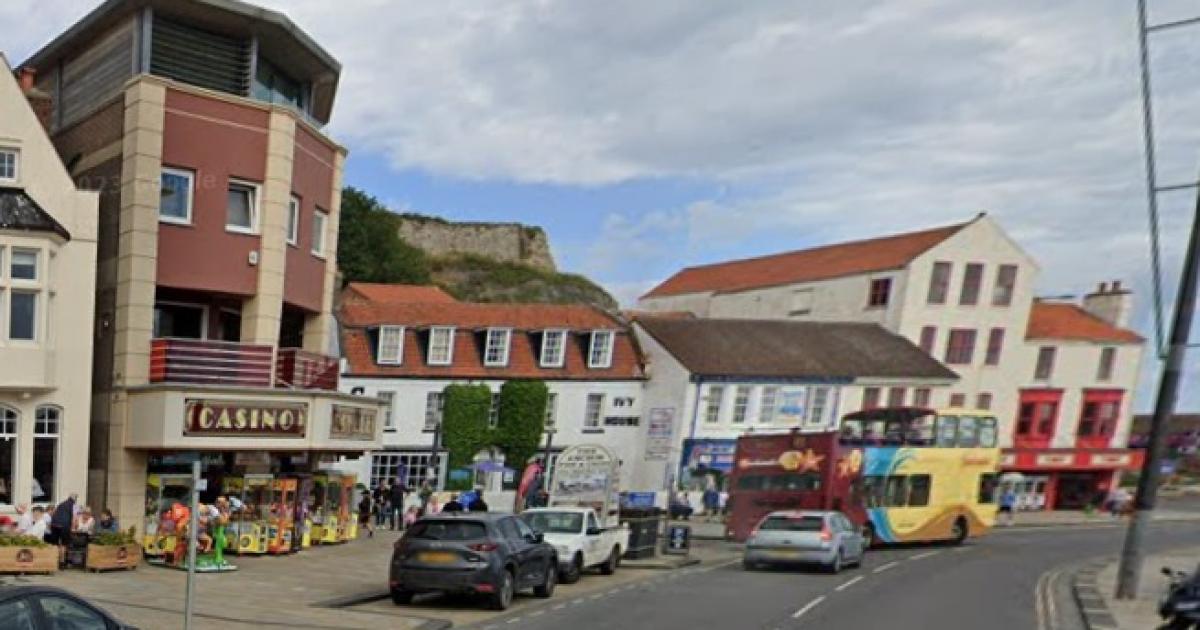
A retrospective application by ​Jimmy Corrigan’s Ltd to turn the Casino Royale amusement arcade at 47-48 Sandside, Scarborough, into a coffee shop has been approved by North Yorkshire Council.

Advertisement

​The site is located on the north side of Sandside, overlooking Scarborough Harbour to the south and southeast.

The scheme involved the creation of a coffee shop and outdoor seating area at a premise that previously had planning permission for an amusement arcade on the ground floor.

Advertisement

No objections were made by the highway authority, which said that the change of use would have no material impact on traffic conditions.

Planners said that the new use and the new shopfront were of an appropriate scale and appearance for the area and preserved the character and appearance of the conservation area, as well as preserving the setting of nearby listed buildings.

Advertisement

Commenting on the outdoor seating area, officers said the proposed area was of an acceptable scale outside the front of the building, “such that it does not encroach on the highway or cause unacceptable obstruction”.

North Yorkshire Council said the development presented “a local business which serves the local community and supports the tourism industry”.

Advertisement

A report prepared by planning officers noted: “The development represents an investment in this business, and such alterations and investments are an essential aspect of keeping such a community facility up to date.

“The coffee shop is now established in and appropriate to its location, providing services not just to the local community, and the new use is complementing the mix of cafe and retail uses within the harbourside location.”

Advertisement

Officers concluded that the development would result in a positive enhancement of an existing community facility, and the application was approved subject to conditions.

Source link

Advertisement
Continue Reading

NewsBeat

Has the Strait of Hormuz emerged as Iran’s most powerful form of deterrence?

Published

on

Has the Strait of Hormuz emerged as Iran’s most powerful form of deterrence?

One of the US and Israel’s justifications for launching the war on Iran was to ensure the regime in Tehran could never possess nuclear weapons, the ultimate deterrent against external attack. But the main lesson that has been taken from the war, according to some commentators, is that Iran’s own geography already provides it with all the deterrent it needs.

The US-Israeli strikes have inflicted massive damage on Iran’s leadership and have destroyed billions of US dollars worth of military and civilian infrastructure. However, this display of force has proved unable to stop Iran from controlling who enters the Strait of Hormuz, a maritime chokepoint through which around 20% of the world’s oil supply flows.

This has led to the suggestion that Iran could emerge from the conflict with a new blueprint for shielding itself against future threats, regardless of whether it agrees to US demands to dismantle or severely limit its nuclear programme.

Geography is arguably Iran’s greatest strategic asset. The Strait of Hormuz is shallow and narrow, with just two-mile-wide navigable shipping channels. There are also a huge number of coves and inlets along Iran’s southern coastline, providing cover for launching small boats to attack shipping or lay mines, as well as anti-ship missiles and drones.

Advertisement

And there is a vast belt of rugged mountains running from Iran’s north-western border with Turkey all the way down to the Strait of Hormuz. Iran can store, conceal, produce and launch more drones and missiles here than it would ever need to threaten Gulf shipping.

Iran’s Zagros mountain range provides the space to store, conceal, produce and launch the drones and missiles needed to threaten Gulf shipping.
Peter Chovanec / Shutterstock

However, Iran’s capacity to close the strait is not new. For decades, Iran has repeatedly threatened to respond to any external attack by closing the strait. It has also, albeit in a more measured way, demonstrated the capability to make the strait commercially unusable.

In response to Donald Trump’s “maximum pressure” policy across both his first and second terms as US president, Iran has harassed shipping with fast boats, rehearsed loading mines on to vessels, test-fired anti-ship ballistic missiles and even seized a British tanker. These are all classic forms of deterrence signalling.

Multiple analysts had warned of the catastrophic economic consequences of full-scale war with Iran precisely because of Iran’s ability to close the Strait of Hormuz. The only person who seems not to have understood this is Trump.

Advertisement

When pressed in March on whether Trump had been briefed before the war that Iran would seek to block Hormuz, his director of national intelligence, Tulsi Gabbard, would not be drawn. But she acknowledged that it “has long been an assessment of the intelligence community that Iran would likely hold the Strait of Hormuz hostage”.

Another challenge to the claim that geography may replace nuclear weapons as Iran’s primary source of deterrence is that its nuclear programme was never a core part of its deterrence. A 2019 report by Chatham House determined that Iran saw its asymmetric capabilities – particularly ballistic missiles and its ability to mobilise its proxy groups in the region – as essential to its national security. Iran’s ability to exercise control of the Strait of Hormuz is another pillar of this strategy.

There is ample reason to believe Iran was engaged in nuclear “hedging” – preserving the option to build a weapon at some point without crossing the line in a verifiable way. But if nuclear deterrence was the core aim, it is unlikely that Iran would have committed to a 2015 nuclear deal that most of the international community argued blocked its path to a bomb.

Regional implications

If a country is attacked, by definition its deterrence has failed. But the perception of restored deterrence can help create conditions for deescalation by justifying an end to the fighting and convincing an adversary that costs can still be imposed. In this sense, Iran’s control of Hormuz may help bring the current war to an end.

Advertisement

Iran’s confidence in having proven its ability to blockade Hormuz may also provide cover for dialling down its nuclear ambiguity posture. And it could compensate for the degradation of its network of proxies that has enabled Iran to project influence across Lebanon, Syria, Iraq, Yemen and Gaza.

The weakening of this so-called “Axis of Resistance” in recent years has reduced (though far from eliminated) Tehran’s ability to raise the regional cost of any direct attack on Iran. And Hezbollah, which is widely considered the strongest group in this proxy network, has paid a high price for defending Iran since the start of the war.

Iran is highly unlikely to abandon its proxies completely. However, it may now conclude that using them as a form of forward deterrence to avoid being directly attacked has manifestly failed and roll back on the strategy. This would be an extremely positive move for regional stability.

Hezbollah supporters wave Lebanese, Iranian and Hezbollah flags at a rally.
Hezbollah supporters wave Lebanese, Iranian and Hezbollah flags at a rally in Beirut, Lebanon, on April 22.
Wael Hamzeh / EPA

Iran’s demonstrated capacity to close the strait is likely to shape the regional order for some time. But Iran is unlikely to be willing to rely on this single pillar of deterrence.

Its sustained missile strikes on neighbouring Gulf states, and damage to critical infrastructure, had already created an appetite for a negotiated end to the conflict among the US’s Arab allies. Trump himself admitted he did not anticipate this reaction.

Advertisement

This makes forcing Iran to suspend its ballistic missile capability extremely difficult in upcoming negotiations, which will leave its neighbours nervous and anxious about their own lack of any deterrence capacities.

Source link

Advertisement
Continue Reading

NewsBeat

Trump says King’s US visit could ‘absolutely’ repair UK relations

Published

on

Trump says King’s US visit could ‘absolutely’ repair UK relations

Next week’s state visit from King Charles and Queen Camilla could “absolutely” repair relations with the UK, Donald Trump has said amid a growing rift with Sir Keir Starmer.

Relations between the prime minister and the US president have been fractious in recent months, with the president branding the UK’s approach to the Iran war “terrible” and repeatedly lashing out at Sir Keir – at one point describing him as “not Winston Churchill”.

Asked by the BBC whether the upcoming state visit from the King could help repair the relationship, Mr Trump said: “Absolutely. He’s fantastic. He’s a fantastic man. Absolutely the answer is yes.”

“I know him well, I’ve known him for years,” he added. “He’s a brave man, and he’s a great man. They would absolutely be a positive.”

Advertisement

Mr Trump’s comments will come as a boost to No 10, as there has been hope in Downing Street that Charles and Queen Camilla can help put the UK-US special relationship on firmer footing.

The state visit, which begins at the end of the month, will mark the 250th anniversary of American independence and herald the start of celebrations across the US, with Charles and Camilla marking the milestone at a “block party”.

The first time Charles and Camilla will meet the president and US first lady will be at a private tea only captured by cameras.

This is a breaking news story. More to follow…

Advertisement

Source link

Continue Reading

NewsBeat

The 5-minute garden check that could save you hundreds

Published

on

The 5-minute garden check that could save you hundreds

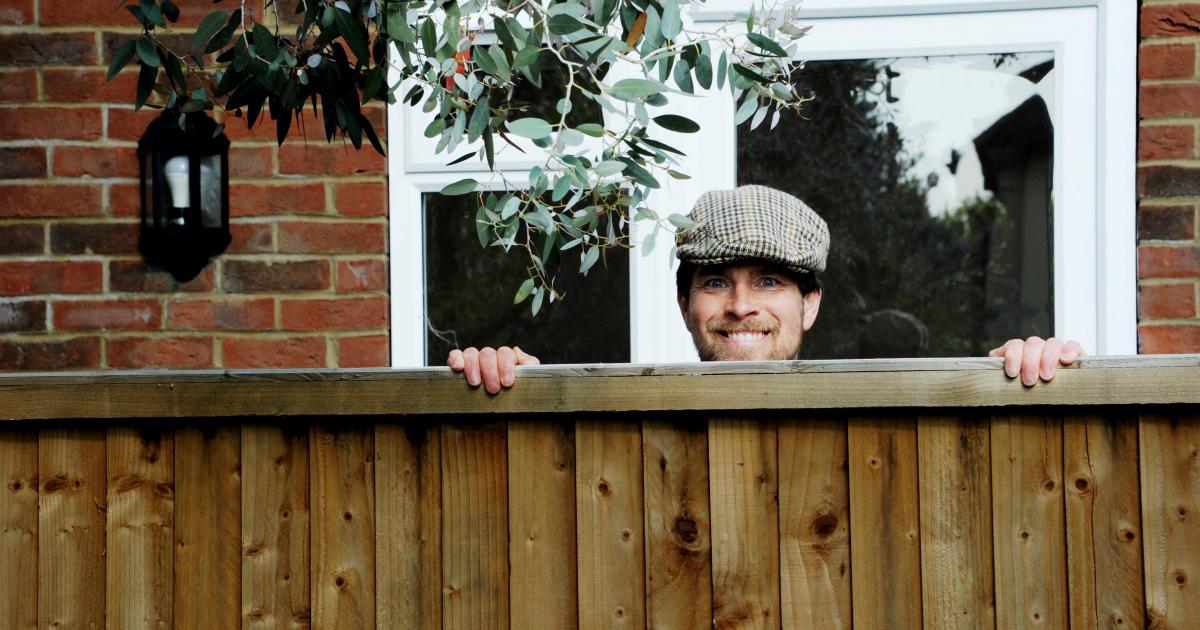
Experts say failing to check fences after winter is one of the most common mistakes households make and one that can quickly become expensive.

Damage caused by storms, strong winds and heavy rain can go unnoticed, but even small issues can spiral if left untreated.

As gardens start to dry out in spring, hidden winter damage becomes easier to spot.

Advertisement

But many people miss the warning signs until it is too late.

Problems like loose panels or leaning posts can quickly worsen, turning a small fix into a much bigger job, according to property experts.

Without a fence to mark the boundary, disputes can also become more likely.

Typical repairs can cost as little as £80, but more serious damage can run into the hundreds, especially if entire sections need replacing.

Advertisement

Risk of neighbour disputes

Poorly maintained fences are also one of the most common triggers for neighbour disputes in the UK.

Data from the Ministry of Justice shows property and boundary disagreements remain a frequent source of complaints and legal cases.

If a fence collapses and damages a neighbouring garden, homeowners could even end up footing the bill.

Advertisement

Joe Lytwyn, consumer finance expert at thimbl.com , says small issues are often ignored until they become costly.

“Winter weather can weaken fences without people noticing, especially after heavy rain or strong winds,” he explains.

“A loose panel or damaged post might seem minor, but if you ignore it, the problem can escalate and lead to a much bigger repair bill.”


Recommended reading:

Advertisement

The 5-minute check that could save you money

Experts recommend a quick inspection before starting any spring garden work.

Look out for:

  • Loose or leaning fence panels
  • Cracked or rotting posts
  • Gaps between panels
  • Signs of movement after storms
  • Damage at ground level

Fixing problems early is usually far cheaper than replacing an entire fence later.

A quick five-minute check now could prevent a much bigger bill later.

Advertisement

With repair costs rising and disputes becoming more common, experts say this is one small job homeowners should not ignore.

Do you know to tell which boundaries on your property are yours to maintain? Tell us in the comments below

Source link

Advertisement
Continue Reading

NewsBeat

Anne Hathaway stuns in tuxedo gown worthy of Miranda Priestly on red carpet

Published

on

Anne Hathaway stuns in tuxedo gown worthy of Miranda Priestly on red carpet
The navy-blue velvet gown resembles a tuxedo (Picture: Samir Hussein/WireImage)

Anne Hathaway and her stylist Erin Walsh have made sure her looks for The Devil Wears Prada 2 press tour are worthy of the iconic film itself.

So far she’s posed in sculpted Louis Vuitton, ruffled Valentino and shimmering Stella McCartney.

But that’s not all. For the most recent London premiere, Hathaway stole the show in Versace.

The navy-blue velvet gown had a high-slit skirt with a glittery top and strapless sheer bodice, resembling a deconstructed tux jacket fit with lapels and a row of buttons.

Advertisement
LONDON, ENGLAND - APRIL 22: Anne Hathaway attends
The dress was designed by Versace (Picture: by Samir Hussein/WireImage)
LONDON, ENGLAND - APRIL 22: Anne Hathaway attends the European Premiere of
Andrea Sachs is back (Picture: WireImage)

Paired with a statement high-pony with plenty of enviable volume, Hathaway looked fittingly glam and powerful as she, alongside costars Meryl Streep, Emily Blunt, Stanley Tucci and even designer Donatella Versace herself, celebrated the long-awaited sequel to the 2006 cult classic film.

What to expect from the film, you ask? Although The Devil Wears Prada 2 won’t be released in UK cinemas until May 1, early critic reviews have indicated fans won’t be disappointed.

After a 20-year wait for a follow-up, the new film sees Anne Hathaway’s Andy Sachs return to Runway magazine, where she reunites with her infamously frosty former boss Miranda Priestly, played by Meryl Streep.

Meryl Streep poses for photographers upon arrival at the premiere of the film 'The Devil Wears Prada 2' on Wednesday, April 22, 2026, in London. (Photo by Scott A Garfitt/Invision/AP)
Fans have been eager to see the return of Streep’s Miranda Priestly (Picture: Scott A Garfitt/Invision/AP)
Another of Hathaway’s recent looks (Picture: Taylor Hill/WireImage)

It’s been teased that the sequel will see Andy working alongside Miranda as the fashion titan navigates her career amid the decline of traditional magazine publishing.

We’ll also see the return of iconic character and former colleague Emily Charlton (Emily Blunt) as the now head of a luxury brand that possesses the advertising dollars which could ensure the glossy mag’s survival.

Speaking with People at last night’s premiere, Hathaway reflected on the ways the growth in her personal life mirrors that of her character’s in the new film.

Advertisement

‘I think we’re both more confident,’ she said. ‘I think that 20 years ago Andy Sachs was really worried about getting it right and she really wanted to please her boss.’

She added: ‘I think that 1776958873 she wants to be herself. And I relate to that.’

It’s also been revealed that a cameo from Sydney Sweeney was ruthlessly cut from the final film, with Entertainment Weekly stating it was removed because ‘it didn’t work structurally’.

The outlet reported that ‘the team working on the movie was grateful for her participation, making the decision to remove the bit a difficult one’.

Advertisement
Advertisement

Source link

Continue Reading

NewsBeat

Woman appears in court over death of teenager mauled by XL bully | News UK

Published

on

Woman appears in court over death of teenager mauled by XL bully | News UK
Kelcie Reed (center with hood up) attended Bristol Magistrates’ Court accused of being in charge of a dog dangerously out of control, causing injury resulting in the death of Morgan Dorsett (inset) (Picture: PA)

A woman has appeared in court over the death of her teenage cousin who was mauled by an XL bully.

Kelcie Reed, 24, attended Bristol Magistrates’ Court accused of being in charge of a dog dangerously out of control, causing injury resulting in death.

It is alleged that the dog, an XL bully named Prince, fatally injured Morgan Dorsett, 19, inside a flat at Cobhorn Drive, Withywood, Bristol, on February 26 last year.

Ms Dorsett suffered fatal bites to her neck during the incident.

Advertisement

The dog was put down afterwards.

Sign up for all of the latest stories

Start your day informed with Metro’s News Updates newsletter or get Breaking News alerts the moment it happens.

Advertisement

Reed, of Bristol, wept as the charge was read to her by District Judge Lynne Matthews on Thursday morning.

Kelcie Reed (black coat covered) leaves Bristol Magistrates Court surrounded by friends. Bristol. 23 April 2026. // A young woman has appeared in court over the death of teenager who was mauled and killed by an XL bully dog. Morgan Dorsett, 19, from Shrewsbury, died after she was mauled by a XL Bully at outside a flat in Withywood, in Bristol on February 26. Kelcie Reed, 24, of Barrowmead Drive, in Lawrence Weston, Bristol, was charged with being in charge of a dog dangerously out of control, causing injury resulting in death. At a hearing in Bristol Magistrate's Court today (23/04) Kelcie Reed spoke only to confirm her identity and details. Wearing black clothes and crying during her first appearance in court, Kelcie is facing one charge of possessing a dog dangerously out of control that attacked Dorsett. The court heard the dangerous dog involved in the attack was an XL Bully named Prince. Her lawyer said she entered a no indication plea at this stage. Photo released 23/04/2026
Kelcie Reed (center with black coat hood up) leaves Bristol Magistrates Court surrounded by friends (Picture: SWNS)
Kelcie Reed (black coat covered) leaves Bristol Magistrates Court surrounded by friends. Bristol. 23 April 2026. // A young woman has appeared in court over the death of teenager who was mauled and killed by an XL bully dog. Morgan Dorsett, 19, from Shrewsbury, died after she was mauled by a XL Bully at outside a flat in Withywood, in Bristol on February 26. Kelcie Reed, 24, of Barrowmead Drive, in Lawrence Weston, Bristol, was charged with being in charge of a dog dangerously out of control, causing injury resulting in death. At a hearing in Bristol Magistrate's Court today (23/04) Kelcie Reed spoke only to confirm her identity and details. Wearing black clothes and crying during her first appearance in court, Kelcie is facing one charge of possessing a dog dangerously out of control that attacked Dorsett. The court heard the dangerous dog involved in the attack was an XL Bully named Prince. Her lawyer said she entered a no indication plea at this stage. Photo released 23/04/2026
Kelcie Reed (black coat covered) will next appear at the crown court next month (Picture: SWNS)
FILE PICTURE - Morgan Dorsett. // A young woman has appeared in court over the death of teenager who was mauled and killed by an XL bully dog. Morgan Dorsett, 19, from Shrewsbury, died after she was mauled by a XL Bully at outside a flat in Withywood, in Bristol on February 26. Kelcie Reed, 24, of Barrowmead Drive, in Lawrence Weston, Bristol, was charged with being in charge of a dog dangerously out of control, causing injury resulting in death. At a hearing in Bristol Magistrate's Court today (23/04) Kelcie Reed spoke only to confirm her identity and details. Wearing black clothes and crying during her first appearance in court, Kelcie is facing one charge of possessing a dog dangerously out of control that attacked Dorsett. The court heard the dangerous dog involved in the attack was an XL Bully named Prince. Her lawyer said she entered a no indication plea at this stage. Photo released 23/04/2026
Morgan Dorsett was killed by an XL bully dog in February last year (Picture: Avon and Somerset Police/SWNS)

She did not enter a plea to the charge against her and the case was adjourned to Bristol Crown Court.

The judge said: ‘I send you now to the crown court at Bristol where you must appear on May 27.

‘Between now and then, you are on conditional bail.’

The bail conditions state that Reed must not own or be in control of any dog, under any circumstances.

Advertisement

Reed will next appear before Bristol Crown Court on May 27.

Get in touch with our news team by emailing us at webnews@metro.co.uk.

For more stories like this, check our news page.

Source link

Advertisement
Continue Reading

NewsBeat

Plans for Grape Tree health food shop in Richmond

Published

on

Plans for Grape Tree health food shop in Richmond

Plans have been submitted with North Yorkshire Council for alterations to the former Ken Warne shop in Richmond Market Place.

The application has been submitted on behalf of  Grape Tree, a national health food chain which has more than 175 stores around the country.

The Ken Warne store closed in 2024 after more than 30 years in the town.

Advertisement

The application seeks listed building consent for work on the shop.

Agents for the applicant say a “sensitive internal refurbishment and reconfiguration” is planned to accommodate the new tenant.

Non-original partitions, fixtures, and fittings left by previous tenants will be removed.

A lightweight, non-structural internal partition will be constructed at the rear to form a stockroom.

Advertisement

Existing ceiling tiles will be replaced with lightweight tiles, and electrical services—including lighting, CCTV, fire alarm, and power/data outlets—would be upgraded.

Floors would be upgraded with vinyl tiles on the sales floor and prepared for decoration in the back-of-house areas.

Supporting documents say the historic building would be preserved as part of the work.

They state: “The property comprises a Grade II listed ground-floor retail space dating from circa 1800, under a Welsh slate roof, with a modern shop front. The interior includes timber slats, bare plaster with peeling paint, exposed blockwork (some painted, some unpainted), and mock brickwork columns.

Advertisement

“The proposed works are designed to respect the historic and architectural character of the building while upgrading functionality, safety, and aesthetics.”

Grape Tree was founded in 2012–2013 by Nick Shutts and Nigel Morris, the former owners of the Julian Graves brand which closed in 2012.

The company focuses on health foods, nuts, seeds, and dried fruits.

Advertisement

Source link

Continue Reading

NewsBeat

Marc Webley hitman slapped with more jail time after threat to kill prison guard

Published

on

Daily Record

Grant Hunter threatened the guard while he was in jail on remand for the murder of Webley.

A hitman who murdered Edinburgh gangster Marc Webley has admitted threatening to kill a prison guard. Grant Hunter appeared at Peterhead Sheriff Court on March 23.

Advertisement

The 34-year-old pled guilty to threatening the man at HMP Grampian last August while he was on remand for the murder of Webley.

The court heard he threatened to kill the prison officer after a row about getting medication from the jail’s nurse.

Sheriff Alan Sinclair added three months to the 26-year sentence he is serving for shooting Webley outside a pub in Edinburgh on New Year’s Eve in 2023.

Marc Webley – who was cleared of two attempted murders in 2023 – was wearing a stab vest when Hunter pulled up in a stolen red Hyundai Tucson car before firing bullets. The hired gunman was captured on camera pulling down a balaclava so Webley could see who he was.

He was locked up for the murder at the High Court in Glasgow in December last year. Hunter was also convicted over the attempted murder of Webley’s pal Stewart Pearson, who was also shot during the drama.

Hunter’s ex-girlfriend Emma McVie, 27, was jailed for four years and six months after she pled guilty to attempting to destroy evidence. Another man, Gary Robertson, 22, was also jailed for six years and six months after admitting attempting to pervert the course of justice.

In the days before the Hogmanay assassination, Webley filmed himself taunting rivals to “come to the pub”. In a pair of videos obtained by the Record, Webley was seen talking directly to the camera.

Advertisement

Speaking in the first video, he said: “You could come to the pub. I’ll only be here a couple of hours. Surely gies you enough time. You’ve had all day to make an effort.

Advertisement

“Youse talk a good fight so when you’re lying in bed or talking s***e or whatever it is you’re daein, saying ‘we’re gonna get him, we’re gonna get him’, well, here I f***ing am. Stone cold sober. Come and get it. I don’t think you’ll come. You’ve not got the f***ing b*ws. Fire guns, fire windaes. Ha Ha. I’ve never missed. Enjoy your night guys. I will. Come and get it.

“We put the city on the map. Youse deal with the cops. Ha ha ha.”

A second clip shows Webley outside again and addressing the camera. He said: “Still at the pub. We bit drunk so you’d be at an advantage, it would be a good advantage.

Advertisement

“I don’t see it though. Nah, honestly I don’t. Come and give me a wee tuppence and youse get a strike that ends the show.

“We were brought up with stab wounds. Youse maim people, dinnae want to kill anyone. Don’t blame you for that. You’re just no like us Roysters. We were taught from wild, wild men. One shot can end it all.

“I hate doing social media, but I just like to call youse c****s oot cos you’re f***ing chickens. I’m here mysel tae. F***ing come. Youse will get us. I’ll get one of youse though. One of youse will come to the grave with me, believe it, believe it.

“Ask your boss if you can come. Stay off the crack guys.”

Advertisement

Get more Daily Record exclusives by signing up for free to Google’s preferred sources. Click HERE.

Source link

Continue Reading

NewsBeat

The unexpected pushback against America’s junk food culture – Positive News

Published

on

The unexpected pushback against America’s junk food culture - Positive News

Improbable guidance from Washington urging Americans to ditch ultra-processed food echoes the work of a British GP whose patients are reversing type 2 diabetes through diet

If I told you something not entirely awful has come out of the current US administration, you might start to worry about me. If I added that it was unveiled by Robert F Kennedy, the health secretary politely described as maverick (other much less polite terms are available), you’d think I’d taken leave of my senses.  

And yet… 

Advertisement

Earlier this year ‘RFK’ announced a new set of dietary guidelines, introduced with a simple message: ‘eat real food’. The advice urged Americans to move away from highly processed, sugary, additive-laden meals and towards “whole, nutrient-dense” options such as vegetables, fruit, dairy, protein, healthy fats and whole grains. From a figure better known for courting controversy, it amounted to an unexpected pushback against America’s junk food culture. 

Not everyone is convinced. Some cardiologists are uneasy about the enthusiasm for full-fat meat and dairy as part of the mix, a stance that has hardly endeared the message to vegetarians or environmentalists either. Others warn that romanticising older dietary patterns risks glossing over the health problems associated with mid-20th-century eating habits. 

Advertisement

But many see it as a welcome rejection of the ‘obesogenic’ diets which have hampered the Western world for decades. Among them, the UK’s Dr David Unwin, one of the leading lights in helping people overcome type 2 diabetes and other chronic health problems via dramatic changes in their diet – particularly cutting down on sugary carbs and processed food.  

Speaking at the Sustainable Foods Summit in London recently, Unwin gave a strong endorsement of the new US guidelines. Quick to stress that he was no fan of the Trump White House, he added that “nobody was more astonished than me when I discovered that the diet they were espousing was pretty well what I’d been advising for the past 13 years for my own patients”. 

As a GP in a working-class Liverpool suburb, Unwin has spent much of his career treating the steady rise of type 2 diabetes. When he joined his practice in 1986, just 56 patients were living with the condition. Today the number is around 570. The increase reflects a wider trend across the UK, where rates of diabetes have climbed sharply alongside diets increasingly dominated by ultra-processed food. 

Advertisement

From a figure better known for controversy, its an unexpected pushback against junk food culture

Speaking at the Sustainable Foods Summit in London recently, Unwin gave a strong endorsement of the new US guidelines. Quick to stress that he was no fan of the Trump White House, he added that “nobody was more astonished than me when I discovered that the diet they were espousing was pretty well what I’d been advising for the past 13 years for my own patients”. 

As a GP in a working-class Liverpool suburb, Unwin has spent much of his career treating the steady rise of type 2 diabetes. When he joined his practice in 1986, just 56 patients were living with the condition. Today the number is around 570. The increase reflects a wider trend across the UK, where rates of diabetes have climbed sharply alongside diets increasingly dominated by ultra-processed food. 

A sufferer from type 2 diabetes himself, which he puts down to half a lifetime of poor eating habits, like most doctors, Unwin once relied primarily on medication to manage the disease. Metformin remains the standard treatment, and newer drugs such as GLP-1 therapies have transformed care for many patients by helping control blood sugar and support weight loss.   

Advertisement

Rates of diabetes have climbed sharply alongside diets increasingly dominated by ultra-processed food. Image: iStock

Disarmingly, Unwin credits one of his own patients with his shift from drugs to diet. She’d spent time researching how the foods she ate affected her diabetes and subsequently made massive changes to her eating habits. She “came in hopping mad with me that I [hadn’t offered her this advice myself]”. How did he react? “I was interested, but sceptical.”  

Scepticism turned to surprise after tests showed that the woman’s condition had improved dramatically. He recruited a control group of 275 willing patients who had type 2 diabetes, put them on the same low-carb, low-sugar diet, and got the same results. As of this year, the approach has resulted in 150 of his patients going into remission – no longer needing drugs, and enjoying dramatically better health. They include Unwin, a living example of ‘physician heal thyself’. 

Advertisement

Nobody was more astonished than me to find that the diet they were espousing was what I had been advising for 13 years

One common objection is that healthy diets are out of reach for those on low incomes. Unwin says the opposite often proves true. When patients cut out sugary snacks, fizzy drinks and heavily processed foods, many find their weekly food bills fall rather than rise. With guidance on shopping and cooking, he says, people quickly learn practical ways to prepare simple, affordable meals as shown on his BBC documentary ‘The Truth About Carbs’. 

None of this means medication has lost its place. GLP-1 drugs have brought major advances in diabetes treatment, although doctors note that weight regain is common if treatment stops, and researchers are still studying the long-term effects of widespread use. 

His experience – and that of his patients – is a welcome reminder that we are, after all, what we eat. And if the new US guidelines – so close to those prescribed by Unwin – trigger that realisation among more Americans, then they will go down as a surprising silver lining indeed, spotted over Washington.

Main image: Julia Zolotova

Advertisement

Be part of the solution

At Positive News, we’re not chasing clicks or profits for media moguls – we’re here to serve you and have a positive social impact. We can’t do this unless enough people like you choose to support our journalism.

Give once from just £1, or join 1,800+ others who contribute an average of £3 or more per month. Together, we can build a healthier form of media – one that focuses on solutions, progress and possibilities, and empowers people to create positive change.

Support Positive News

Advertisement

Source link

Continue Reading

NewsBeat

Women’s Prize winner Rachel Clarke slams ‘empty and vacuous’ books that use AI: ‘How does that constitute art?’

Published

on

Women’s Prize winner Rachel Clarke slams ‘empty and vacuous’ books that use AI: ‘How does that constitute art?’

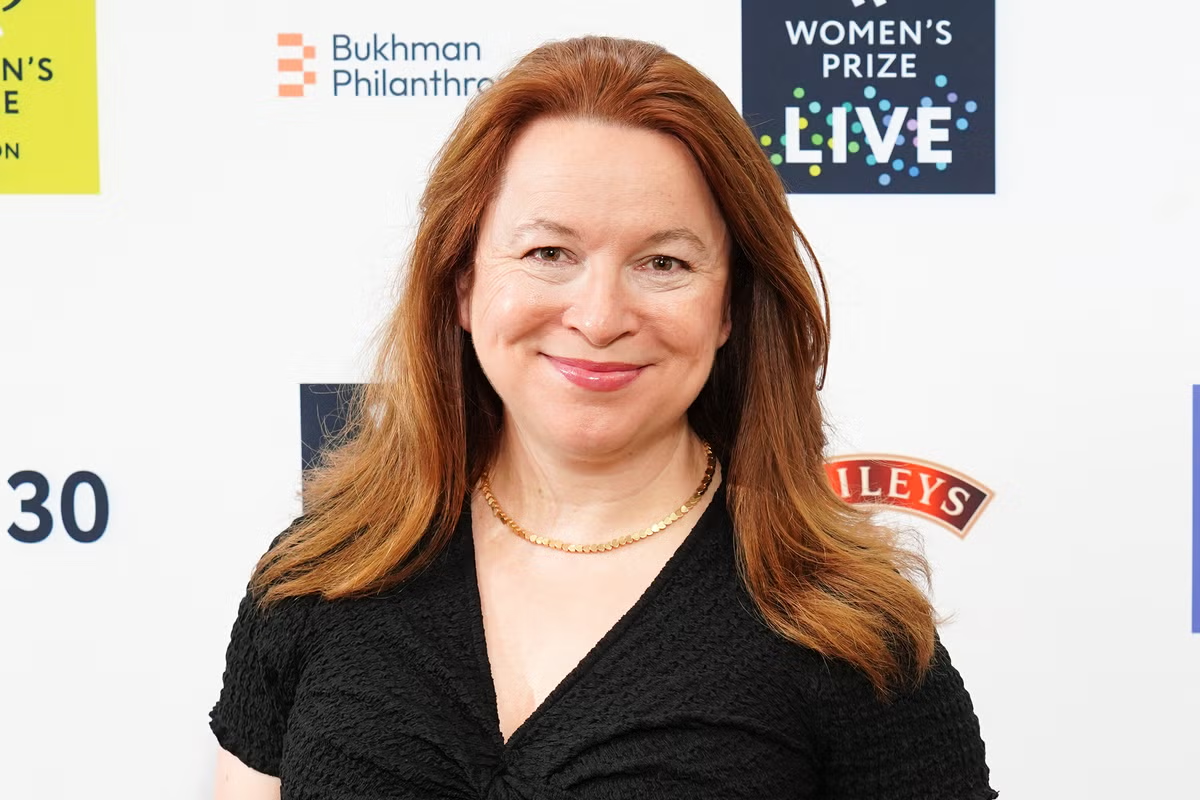
Women’s Prize for Non-Fiction winner Rachel Clarke has said that the idea of literature written by artificial intelligence is the “emptiest, most vacuous, object imaginable” – and warned that the challenge lies in distinguishing which works have used it.

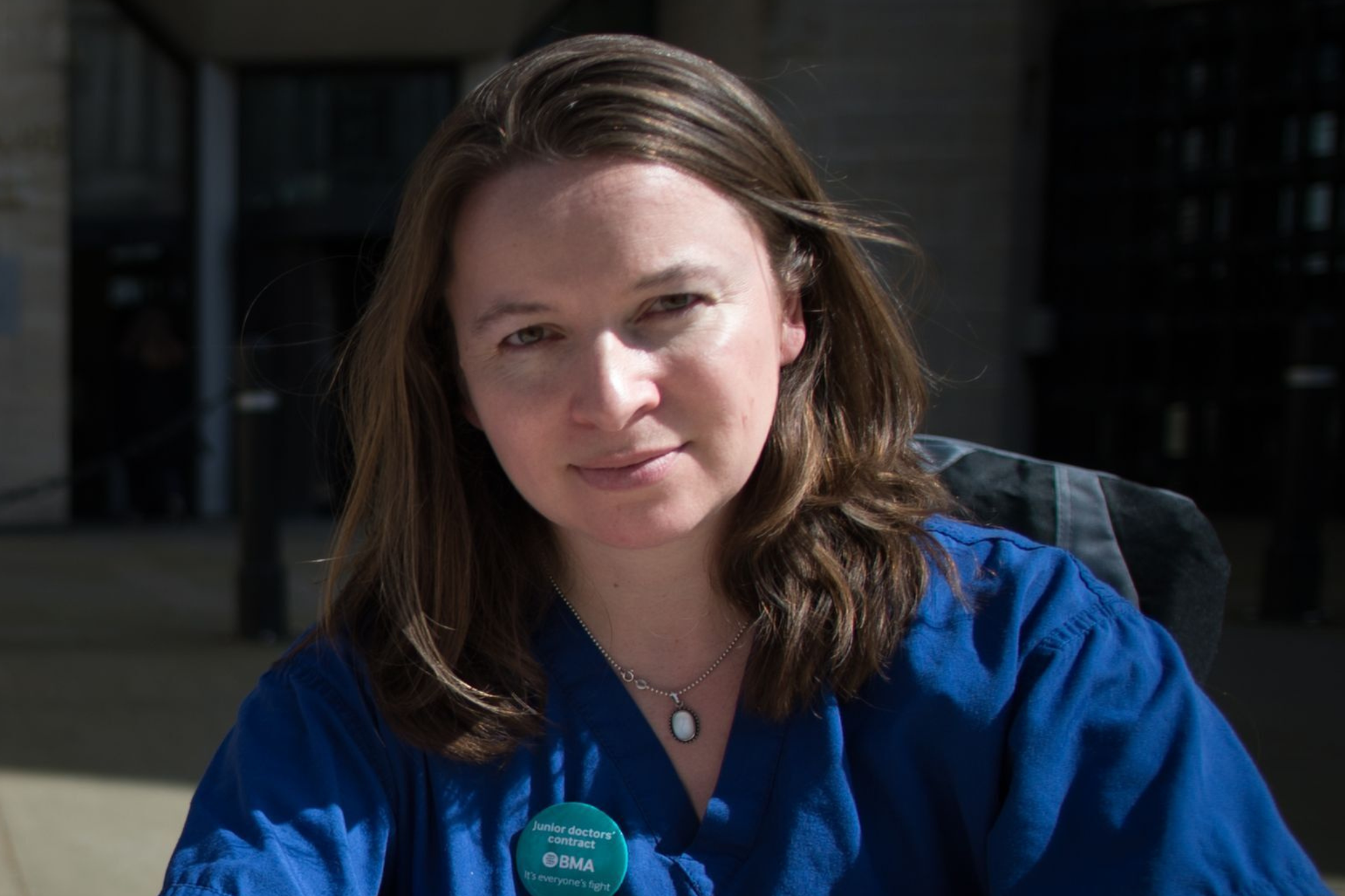
Author and NHS doctor Clarke, who is delivering the annual State of the Nation Lecture at Cambridge Literary Festival, won the Women’s Prize last year for The Story of a Heart – the story of how one child received a heart transplant from another. Her memoir about working in the NHS at the start of the COVID-19 pandemic, Breathtaking, was adapted into a drama for ITV in 2024.

Fears about the use of AI in the literary world are on the rise. Mia Ballad’s novel Shy Girl was recently pulled by publisher Hachette over accusations that it was written with artificial intelligence, while over the last few years, Amazon has been flooded with hundreds of AI-written books, ranging from fantasy fiction to self-help.

Speaking to The Independent ahead of her lecture at the Cambridge Literary Festival, Clarke said that the concern around AI is “much deeper than just ‘will this take my job?’” – and that she doesn’t think readers would ever choose to read an AI-generated book over one written by a real author.

Advertisement
NHS doctor and author Rachel Clarke wrote ‘The Story of a Heart’
NHS doctor and author Rachel Clarke wrote ‘The Story of a Heart’ (PA)

“I think it’s about trust and authenticity and what really matters to each of us as individual human beings,” she said.

“And I think with works of art, whether literary or painting or whatever the form might be, we have a bond of trust with the artist. We believe that we are experiencing something that they have created themselves that is built on the edifice of their life.”

She added that what makes a painting by Vincent Van Gough significant is that it’s related to “his life and everything he’s suffered and endured”.

“If you strip away all of that, suddenly all you’re experiencing is the product of a very clever algorithm. How does that even constitute art at all? It’s not creative, it doesn’t stem from everything this human has experienced.

“It’s nothing. It’s just a crisp packet that doesn’t even contain any crisps. It’s the emptiest, most vacuous object imaginable – and I can’t imagine there is anybody who really wants to read a book written by a computer, even if they are unable to distinguish that book.”

Advertisement

Last year, a Cambridge University study found that almost half of UK novelists feared AI would displace their work – and in March, the UK Society of Authors even launched a logo to identify books written by humans instead of AI.

While the use of AI within the literary sector is on the rise, Clarke said that reading a book is “entering into a relationship with an author” and without that, she’s “not even sure I know what the point of reading is”.

“I suspect that most people feel exactly the same,” she said. “The challenge is how do we now distinguish the authentic works from the AI-generated works, particularly if we have authors who are perfectly willing to lie and say that they’ve written something when it just stems from AI. I don’t have the answer to that question but I hope that some of the very clever Silicon Valley minds are focusing on that problem.”

In Clarke’s State of the Nation Lecture on Saturday (25 April), the author will argue that there’s a crisis of care in this country, and as a nation we have become “kindwashed”, with institutions preaching performative kindness.

Advertisement

“Kindness and empathy are qualities that are fundamentally human and what make us the remarkable species we are,” she said. “They’re under assault from all manner of different directions – from the corporate realm that tends to judge value in terms of productivity.

“The political realm – big political narratives that are dominating the headlines at the moment are about conflict, domination, Iran, Ukraine, Lebanon, Gaza. There’s also a fundamental devaluing of care, treating it as though it’s a soft, weak, feeble, optional extra rather than something profoundly important to how we live – Elon Musk loves to trash empathy as though it’s synonymous with weakness.”

Musk said last year that empathy towards undocumented immigrants was destroying society, telling podcaster Joe Rogan: “The fundamental weakness of Western civilisation is empathy.”

The NHS doctor is urging people not to “flinch away” from other people’s suffering, adding that while it’s hard to keep on caring, “the alternative is deeply corrosive to our sense of self”.

Advertisement

“We need to tell stories, not only about the power of care but also what an absence of care really looks like,” she said. “Life is tough for everybody at the moment – we don’t really want to consider more of other people’s suffering but actually we need to do that. We need to discipline ourselves not to give up and not to stop caring because once we do that, our indifferent makes us part of the problem.”

Rachel Clarke is giving the State of the Nation Lecture at Cambridge Literary Festival on Saturday 25 April.

Source link

Advertisement
Continue Reading

Trending

Copyright © 2025