Experts have discovered evidence of ‘vibrio vulnificus hotspots’ in various ponds around Long Island, New York, with those infected facing a ‘20% chance of dying within 48 hours’
20:24, 23 Apr 2026Updated 20:24, 23 Apr 2026
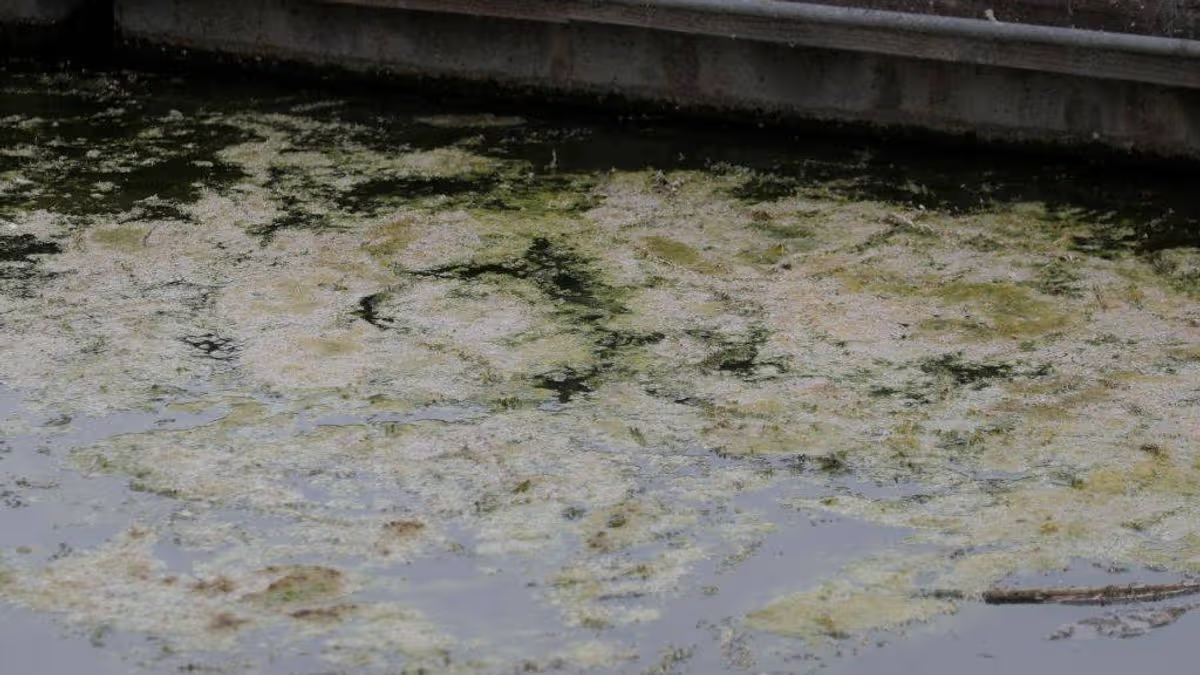
Researchers are warning about a terrifying flesh-eating bacteria found in bodies of water across an area of New York – which could kill those infected “within 48 hours”.
Dr Christopher Gobler, an ecologist from Stony Brook University’s School of Marine and Atmospheric Sciences, said his team discovered evidence of “vibrio vulnificus hotspots” in various ponds around Long Island. Those who are infected with the bacteria could face a 20% chance of dying within 48 hours, he warned.
Trump was asked about Harry’s comments after the Duke of Sussex made a surprise visit to Kyiv
Mikey Smith , Christopher Mallett and Ambarish Awale Trainee Trends, Showbiz and Lifestyle Writer
23:09, 23 Apr 2026
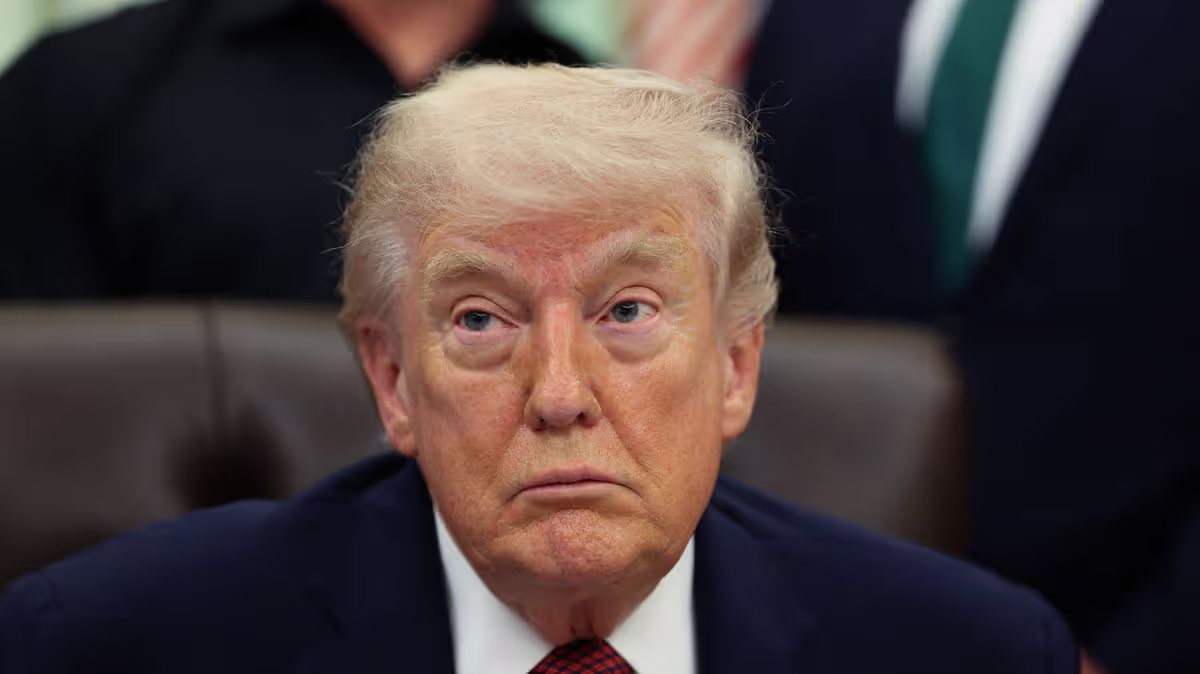
Donald Trump has responded after Prince Harry urged world leaders to do more to end the war in Ukraine, saying the Duke of Sussex does not speak for Britain.
The former US President was asked about Harry’s remarks after the royal made a surprise visit to Kyiv, where he praised Ukraine’s resistance to Russia and appealed for stronger international action.
Speaking to reporters, Trump first joked about the Duke and Duchess of Sussex before dismissing Harry’s political influence, Mirror reported.
Advertisement
He said: “How’s he doing? How’s his wife? Please give her my regards, OK?”
Trump then added: “I don’t know. I know one thing, Prince Harry is not speaking for the UK, that’s for sure. I think I’m speaking for the UK more than Prince Harry, that’s for sure. But thank him for his advice.”
Harry travelled to the Ukrainian capital this week in an unannounced visit, arriving by overnight train from Poland and reaching Kyiv’s central station at around 8am.
Advertisement
During an address in the city, the Duke spoke directly about the conflict and called for renewed efforts to bring it to an end. He praised the country’s resilience and described Ukraine’s defence as brave in the face of continued aggression.
Addressing Russian President Vladimir Putin, Harry said: “Years into this war, with immense losses and limited gains, it is increasingly clear that this path offers no victor only more loss.”
He continued: “President Putin, no nation benefits from the continued loss of life we are witnessing.”
Although he did not mention Trump by name, Harry also directed comments at the United States, referring to the responsibility of American leaders.
Advertisement
He said the US, now his adopted country, has a “singular role” in the conflict because America had pledged to support Ukraine’s sovereignty and borders when the country gave up its nuclear weapons.
He told the Trump administration: “This is a moment for American leadership – a moment for America to show that it can honour its international treaty obligations – not out of charity, but out of its enduring role in global security and strategic stability.”
The visit marked Harry’s third trip to Ukraine since Russia launched its full scale invasion in February 2022.
His arrival came shortly after reports of a Russian drone strike on a railway yard in the Zaporizhzhia region. According to Ukraine’s Deputy Prime Minister Oleksii Kuleba, a train driver was killed in the attack.
Advertisement
Harry was welcomed in Kyiv by Ramina Arseniy Yatsenyuk, executive director of the Open Ukraine Foundation, which organised the Kyiv Security Forum.
After stepping off the train, he spoke briefly to reporters and explained why he had returned.
He said: “It’s good to be back in Ukraine,” adding he wanted to remind people around the world what Ukraine is up against, and to support the those doing extraordinary work every hour of every day in incredibly tough conditions.
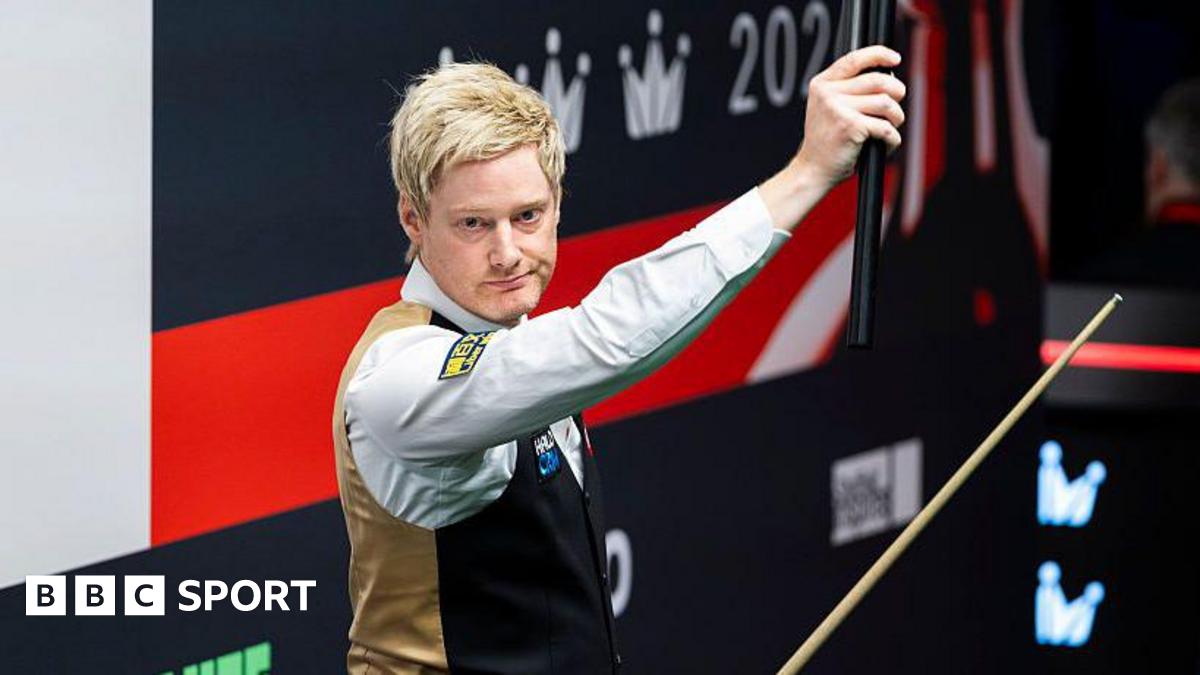
In the first of the last-16 matches, 2005 winner Shaun Murphy moved into a dominant 6-2 lead over China’s Xiao Guodong.
Murphy scraped through 10-9 against Fan Zhengyi in the first round, calling his match-winning break of 50 in the decider the best break he had ever made at the Crucible after he had trailed 53-17.
But the 43-year-old Englishman found this session to be calmer as he made breaks of 79, 103, 63 and 64 to go 5-0 ahead.
World number nine Xiao took the next two frames, but Murphy ended the session well and took the last with a run of 61 to have a four-frame lead in the first-to-13 match.
Advertisement
That match resumes on Friday at 10:00 BST and Murphy could win it with a session to spare if he wins seven of the eight frames in that session. The third session, if needed, will take place from 19:00.
Northern Ireland’s Mark Allen holds a 5-3 lead against England’s Kyren Wilson, the 2024 champion.
Two-time semi-finalist Allen made breaks of 50 and 78 to race into a 5-0 lead, but Wilson won the last three frames of the session, helped by runs of 75 and 50.
The second session is on Friday from 14:30, before it is played to a finish on Saturday morning.
Meta, the parent company of Facebook and Instagram, announced a new tool to allow parents to see what their children are discussing with its AI bots. While parents are already given alerts if their children engage with topics like suicide or self-harm, the new tool will give them a more detailed overview of their children’s AI discussions.
Beginning on April 23, parents using the supervision tools offered by Facebook, Messenger, and Instagram will have access to an “Insights” tab. One of the options within the tab is labeled “Their AI Interactions” and provides a list of topics their children have discussed with Meta’s chatbots over previous seven days.
The topics are broad categories that include subjects like school, travel, writing, entertainment, lifestyle, health and wellbeing, as well as sub-topics under each of those umbrellas, the company said.
Subtopics under well-being, for example, might include subjects like mental health or physical health, and lifestyle might list topics like fashion or food.
Advertisement
In order to make use of the Insights tab, parents will have to ensure their children are using Teen accounts, which are available on Meta’s platforms, PC Mag reports. The new tool will be available for parents in the U.S., U.K., Australia, Canada, and Brazil. The company says it will roll out a global version of the tool in the coming weeks.
Meta announced new tools for parents that will allow them to monitor the topics their children are discussing with its AI chatbots (Reuters)
Meta has also announced the creation of an AI Wellbeing Expert Council, which it describes as a “group of experts who will provide ongoing input on our AI experiences for teens, to help make sure they continue to be safe and age-appropriate.”
Company employees working on AI projects will reportedly have regular meetings with the council to discuss updates to its features and to hear feedback on its products.
The safety and health of children on social media has become a standout issue in recent months.
Advertisement
In March, both Meta and Google were found negligent for their roles in contributing to the depression and anxiety of a woman who sued the companies, claiming their products were addictive and had kept her locked into their use since she was a small child.
A court in California awarded her $6 million. The ruling marks the first time social media companies have been held liable for the ways their products affect individuals, especially children and teenagers.
The jury determined that Meta and Google’s app — in Google’s case, YouTube — were designed to be addictive and that appropriate measures to protect younger users were not put in place.
This is the text from The Conversation UK’s World Affairs Briefing email. Sign up here to receive weekly analysis of the latest developments in international relations, direct to your inbox.
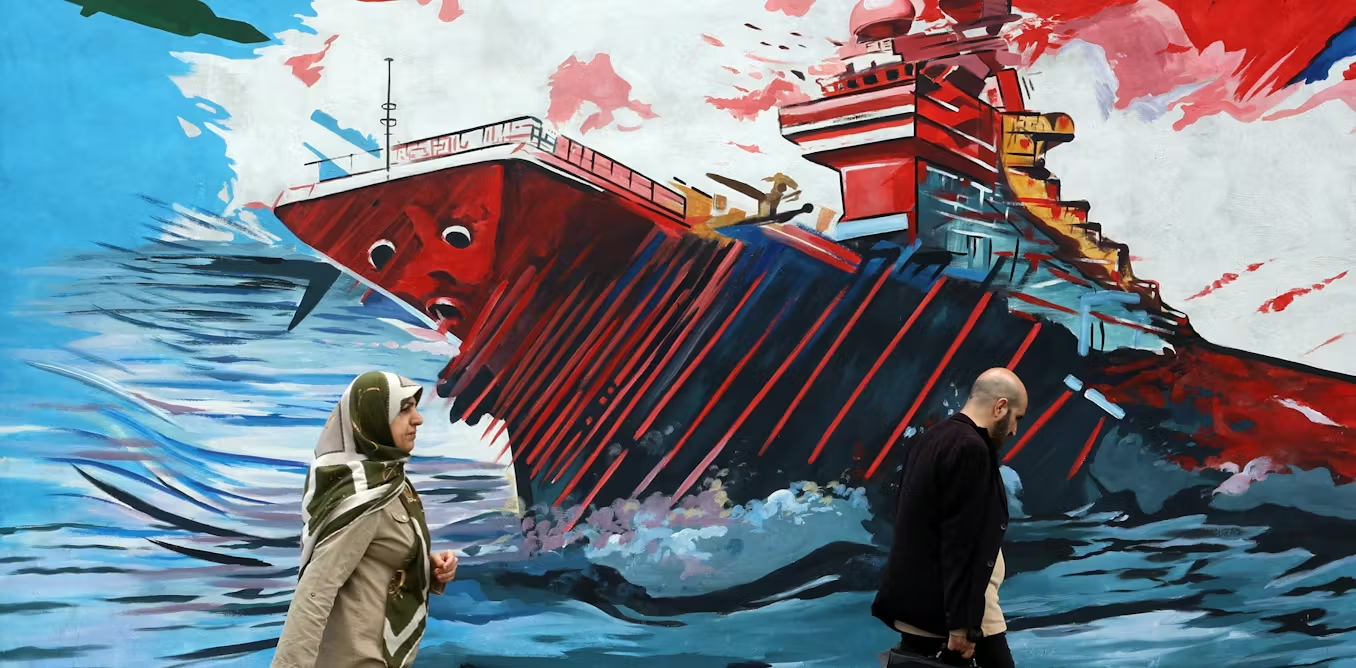
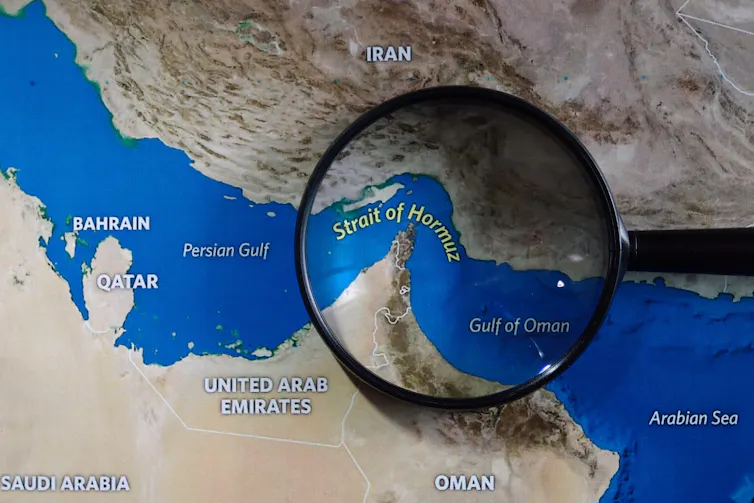
Napoleon Bonaparte is said to have commented in connection with his invasion of Russia that “geography is destiny”. Take a look at a live maritime tracker to see how Napoleon’s aphorism is playing out in the Middle East today. There are presently hundreds of vessels either side of the Strait of Hormuz, idling in either the Persian Gulf or the Gulf of Oman. But nothing is passing though.
In normal times, 20% of the world’s oil flows through this waterway. But since the US and Israel began to launch attacks at the end of February, Iran has effectively closed down the Strait, both by depositing mines and by threatening to board any ships trying to pass without their permission.
The US has countered with its own blockade. And both sides have demonstrated how serious they are in recent days by threatening, boarding or forcing vessels to reroute.
Advertisement
That Iran would close the Strait of Hormuz should have come as no surprise to anyone. The leaders of the Islamic Republic have threatened to do so every time they have felt under threat over more than four decades. Christian Emery, an expert in US-Iran relations and Persian Gulf security at University College London, believes this is why no previous US president has chosen to launch a full-scale attack on Iran.
As we’ve already seen, the ability of Iran to hugely disrupt the global economy by shutting down the Strait was obvious: “The only person who seems not to have understood this is Donald Trump,” Emery concludes.
So now there appears to be a deadlock. It’s an unwinnable war, write Bamo Nouri and Inderjeet Parmar, experts in international security at City St George’s, University of London. The US and Israel may enjoy massive military superiority over Iran, but this is beside the point, Nouri and Parmar believe.
Advertisement
While both the US president, Donald Trump, and Israeli prime minister, Benjamin Netanyahu, need to be able to demonstrate to their voters that they have emerged triumphant, Iran isn’t looking to win. It is looking to endure – while making sure that the cost of this conflict becomes unsustainable. And not just for the US and Israel, but for pretty much everybody else besides.
We’re already seeing that. Oil prices have surged and reserves are coming under strain. Supply chains are disrupted. And political friction is stressing relationships, not just between the US and its Nato allies, but – more ominously – with China, which typically buys between 80% and 90% of Iran’s oil exports and said this week that the Strait must be opened without delay.
Iran, our experts conclude, “does not need to win. It only needs to prevent its adversaries from achieving their aims. So far, it has done exactly that.”
There’s a principle in classical game theory which explains why Iran’s position is so strong. It’s known as Rubinstein bargaining, writes Renaud Foucart, an economist at Lancaster University. As Foucart explains it, this holds that in a conflict the respective strength of adversaries each depends on two things: “how badly off it would be without a resolution, and how impatient it is to get things resolved”.
As we’ve heard, all the pressure is on the US, while the leverage is mainly in Iran’s hands. “The US’s position is much weaker than first thought because of a stretch of water the world can’t do without,” he concludes.
On Tuesday, as we waited to see what might happen if the 14-day deadline imposed by Trump on April 8 expired without Tehran opening the Strait, it was clear that both the US and Iran, to varying degrees, were looking for an off-ramp. The blockade is financially ruinous for Iran – whether it is losing US$500 million (£370 million) a day, as Trump claims, we don’t know. But the shutting down of its oil exports is hitting an already parlous economy and this week the social security minister said 2 million people had lost their jobs since the beginning of the war.
Advertisement
For Trump, it’s soaring prices at the gas pumps and the prospect of rising inflation angering voters ahead of November’s midterm elections. The war is very unpopular with Americans – and, significantly, it’s beginning to fracture the Maga coalition which brought Trump to power in the 2024 election.
Fuel prices have risen in the US and across much of the rest of the world. EPA/Jim Lo Scalzo
But there are ways both sides can find off-ramps, writes David Galbreath of the University of Bath. The key thing is to find a settlement that the leaders of both sides can sell as a “win”.
For Iran, this could be an easing of sanctions and access to some of the many billions of dollars of frozen assets held overseas. It could be a recognition of its right to enrich uranium to the level needed for medical uses – particularly given the recent assertion by the Chinese president, Xi Jinping, that such a solution would “safeguard its [Iran’s] national sovereignty”.
We know a little about what Iran is prepared to offer because a great deal of it was on the table in February when the US and Israel launched their strikes. But one of the stumbling blocks for the US president appears to be that Iran’s proposals may too closely resemble the deal struck in 2015 by his predecessor, Barack Obama.
Advertisement
Signalling it is willing to open the Strait of Hormuz could be one way for Iran to signal it is willing to make concessions. But this would need to be matched by the US. Sipa US/Alamy Live News
But Galbreath concludes that as things stand, some combination of opening the Strait of Hormuz, acceptance of limits on uranium enrichment and agreeing to stringent inspections could be made to appear a “win” for Trump. This could be a starting point, writes Galbreath, in what is known in conflict resolution as “sequenced de‑escalation”. It could deliver an initial settlement and allow negotiators on both sides to get to work and hammer out the details. Obama’s treaty took 20 months to agree. It’s early days yet.
One stumbling block is likely to be that there appears to be something of a power struggle raging at the top of Iranian politics. This was seen very clearly last weekend, when Iran’s foreign minister, Abbas Araghchi, announced that the Strait of Hormuz was completely open, only to be swiftly overruled by the Islamic Revolutionary Guard Corps (IRGC), which said it would decide when and how the Strait would be opened.
Since then, a new figure has emerged at the head of the IRGC: a longtime guards member and hardline former commander of its elite Quds force, Ahmad Vahidi. And it seems that with Iran’s freshly minted supreme leader, Mojtaba Khamenei, badly injured after the attack that killed his father on February 28, Vahidi is now calling the shots in Iran. Andreas Krieg, an expert in Middle East politics at King’s College London explains the power struggle that has led to Vahidi assuming control.
Sign up to receive our weekly World Affairs Briefing newsletter from The Conversation UK. Every Thursday we’ll bring you expert analysis of the big stories in international relations.
The former Gogglebox star was eliminated from the ITV series just one day before the final
I’m A Celebrity South Africa fans were ‘devastated’ as Scarlett Moffatt was eliminated from the series just one day before the ITV reality show’s final.
Advertisement
Thursday night (April 23) marked the final pre-recorded episode of the Ant and Dec series which was filmed last year. Dominated by drama, the series will crown the second ever ‘Jungle Legend’.
Ant and Dec will be joined by the finalists and the eliminated stars on Friday night (April 24) for a live final. Broadcast live from London, there could be some tension between the stars who didn’t get on too well in South Africa.
Click here to get the biggest stories straight to your inbox in our Daily Newsletter
The final five campmates in South Africa were Coronation Street icon Craig Charles, former football manager Harry Redknapp, actor Adam Thomas, Gogglebox’s Scarlett and Olympic hero Sir Mo Farrah. Both Harry and Scarlett won their respective seasons of I’m A Celebrity.
Advertisement
It was a busy night in the jungle, with the stars receiving emotional messages from their families back home in the UK. Shortly after this, they were seen taking part in the fan favourite Celebrity Cyclone challenge. They had no time to relax as they soon had to meet Ant and Dec away from the camp.
Once there, they were informed that they would be taking on a challenge called Keep Your Eye on the Ball. The celebrities sat it in individual compartments as three different-coloured balls travelled through clear pipes.
They had to track the count for each colour while facing various unwelcome distractions. At the end of the trial, Ant and Dec selected the blue ball at random and asked the celebrities to provide the precise count.
Harry’s answer was closest to the correct answer, with his answer just seven away from the total amount of blue balls. Adam’s was second closest, whose answer was 13 out.
Shortly after Craig was confirmed to be in the final four, it was a tense moment as the ITV series took an ad break before confirming if it was Mo or Scarlett joining the three men in the final.
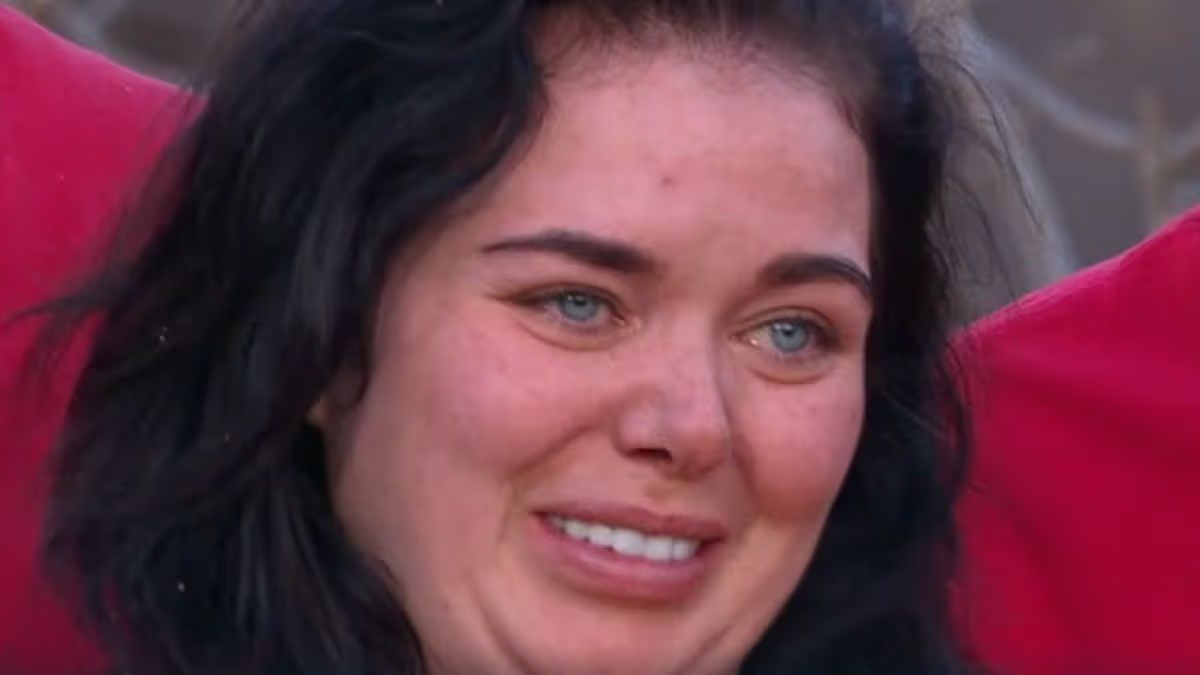
Sadly, it was confirmed that Scarlett was further away with her answer and she was immediately sent home. This means that Craig, Harry, Mo and Adam make up the final four.
Those watching the episode at home were left devastated as they rushed to X, previously known as Twitter, to express why they were left gutted by her exit.
Advertisement
@nciskxcy said: “no I’m so devastated I wanted Scarlett to be in the final #imaceleb.” @alig1972 added: “No!!! Gutted for Scarlett! She deserved to be in the final.”
@RyanSoapKing25 wrote: “Devastated for Scarlet – she is a beautiful soul inside and out and deserved to make the final. Gutted for her! #ImACeleb.” @blue_laur11 posted: “Gutted Scarlett is going home she was amazing !! For me now Adam for the win #Imaceleb.”
@xxncisaddictxx commented: “That’s a tough way to go for Scarlett, all down to bad memory. Tbf that was a tough trial, she’s been amazing. #ImACeleb #imacelebrity.” @gillyn4 stated: “Scarlett has been robbed of being Queen! #ImACeleb.”
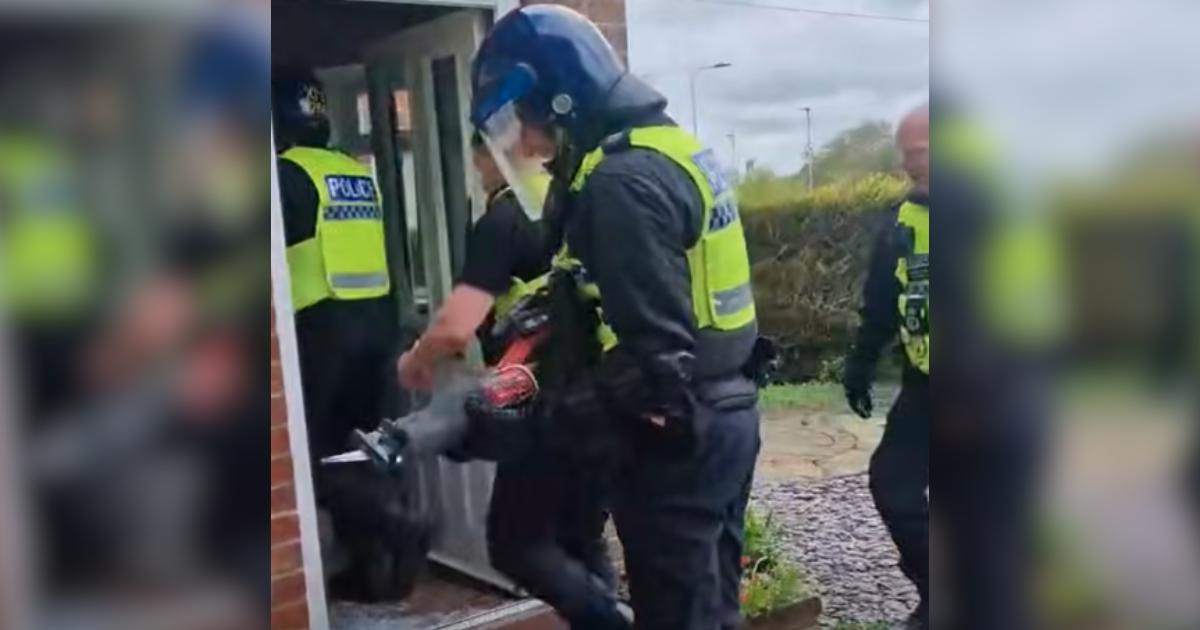
North Yorkshire Police pulled extra resources into the area for the day of action called Operation Tornado on Wednesday (April 22).
The force said it came as part of a crackdown on drug dealers, shoplifters, dangerous drivers, cross-border criminals, nuisance off-road bikers, anti-social behaviour and “enhancing safety in the night-time economy”.
Officers, joined by the force’s chief constable Tim Forber on one raid, executed four drugs warrants in Eastfield.
Advertisement
Two arrests were made in connection with ongoing investigations into the supply of drugs, and various items were seized from the properties, a police spokesperson said.
The seized items included a large quantity of suspected illegal fireworks.
Meanwhile, in Scarborough town centre five people were arrested and are now subject to investigations for theft and a robbery, police said.
Two of those arrested received community resolution disposals to address their behaviour out-of-court, “usually involving first-time offenders”, the police spokesperson said.
Advertisement
Police also made an arrest for a drug supply offence and a wanted man was located and taken into custody.
On the roads, six vehicles were seized by police for suspected offences including driving without insurance.
One incident involved the pursuit of a high-performance car in Scarborough which police said resulted in two arrests and the recovery of a large amount of cannabis and a weapon.
Today, Adam and Chris look back and assess how much danger Keir Starmer is in after another week of the Peter Mandelson saga?
They are joined by Lara Spirit, deputy political editor of The Sunday Times and former civil servant Helen MacNamara who served as the deputy cabinet secretary.
You can now listen to Newscast on a smart speaker. If you want to listen, just say “Ask BBC Sounds to play Newscast”. It works on most smart speakers.
Advertisement
You can join our Newscast online community here: https://bbc.in/newscastdiscord
Get in touch with Newscast by emailing newscast@bbc.co.uk or send us a WhatsApp on +44 0330 123 9480.
New episodes released every day. If you’re in the UK, for more News and Current Affairs podcasts from the BBC, listen on BBC Sounds: https://bbc.in/4guXgXd
Newscast brings you daily analysis of the latest political news stories from the BBC. The presenter was Adam Fleming. It was made by Jack MacLaren. The social producer was Joe Wilkinson. The technical producer was . The assistant editor is Chris Gray. The senior news editor is Sam Bonham.
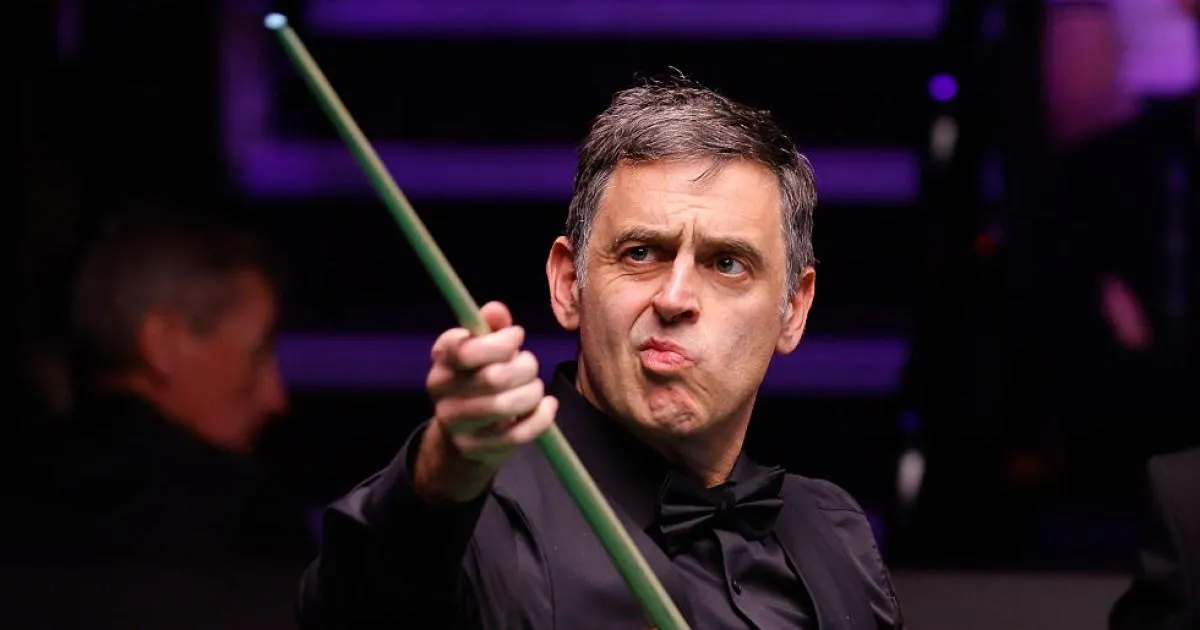
Ronnie O’Sullivan says he does not relish taking on John Higgins (Picture: Getty Images)
Ronnie O’Sullivan reckons there are mixed feelings within the Class of 92, revealing who prefers playing who among the three snooker legends.
John Higgins and Mark Williams join the Rocket in the trio of greats that all turned professional 34 years ago.
They all remain at the top of the game and two of them will meet this week in the second round of the World Championship as O’Sullivan takes on Higgins.
It is a repeat of a previous Crucible final in just the last 16 and, for some, is a clash between the two best players of all time.
Advertisement
Williams is also into the last 16 after beating Antoni Kowalski in his opening game, setting up a match with Barry Hawkins in round two.
Ahead of his latest meeting with Higgins, O’Sullivan reckons there is something of a love triangle between the three, with each preferring a different pairing on the table.
Are you snooker loopy?
You’re in the right place. I’m Phil Haigh, and I cover the game we all love for Metro.
In my new newsletter, The Table, I’ll be analysing the biggest talking points, breaking down frames and crowning the week’s winners and losers every Monday.
Advertisement
The World Championship is here, so there’s no better time to sign up.
Phil has been reporting on snooker for over a decade, since working in World Snooker’s press office in 2012
‘I think I find it easier playing Mark than I do John,’ said O’Sullivan. ‘I think John enjoys playing me. I enjoy playing Mark, and Mark enjoys playing John.
John Higgins begins his match with O’Sullivan on Saturday evening (Picture: Getty Images)
‘John doesn’t like playing Mark. It’s strange but it’s styles, whatever it is. That’s how I’ve always seen it.’
The Rocket has always been a huge admirer of the Wizard of Wishaw’s game, so much so that he feels if he had Higgins’ mindset then he would have been even more successful.
O’Sullivan looked good in his opening win over He Guoqiang (Picture: PA Wire)
‘I felt if I had his game, I’d have won more than I have now. It’s not just technique, there’s other things that make you win more,’ O’Sullivan told TNT Sports. ‘John’s an amazing player. Probably everyone’s favourite player.’
On what specifically Higgins does better than him, the Rocket said: ‘John’s grittier. Prepared to tough it out more, naturally that’s normal for him. I have to work at that, to dig in a bit.
‘His temperament is incredible. He’s got great bottle. There’s so many things to admire, he’s got a lot of good qualities.’
Mark Williams is hunting down a fourth world title (Picture: Getty Images)
Higgins certainly sounds like he enjoys playing O’Sullivan as much as the Englishman thinks he does.
After beating Ali Carter in round one, but before O’Sullivan had downed He Guoqiang, the Wizard said: ‘I would love to play him out there again. That will be special.
Advertisement
‘It might never happen again. As I had with [Mark] Williams the last few years here, they were special occasions. If Ronnie does get through it will be a special occasion.
‘Playing one of the greatest ever, it would be a great match if he comes through and we play over three sessions.’
Joan Eardley was one of the most unique and celebrated artists of her generation, but the international acclaim and recognition that her work deserves eluded her. Her paintings are not only foundational in Scotland’s cultural history, but continue to influence its creative landscape, particularly with those concerning dialogue around community and the poetics of place.
Currently on view in the National Galleries Scotland: Modern Two until June 28, Joan Eardley: The Nature of Painting, explores this popular post-war artist’s relationship to her predecessors and contemporaries.
Joan Kathleen Harding Eardley was born to a Scottish mother and English father in Sussex in 1921, and studied at Blackheath School of Art in London for a year before moving with her mother and sister to Glasgow during the outbreak of the second world war in 1939. She continued her studies at Glasgow School of Art and Hospitalfield in Arbroath, known as Scotland’s first school of fine art.
It was during this time that she began to shape her preference for painting everyday subjects. She used an RSA Carnegie Travelling Scholarship to travel through Italy and France in 1948 and 1949. On her return to Glasgow she spent time drawing and painting the industrial landscape of Port Glasgow, and Gourock. Eardley rented a studio in the city centre of Glasgow, and a few years later moved to Townhead in the east end, where local children became her favourite artistic subjects.
Advertisement
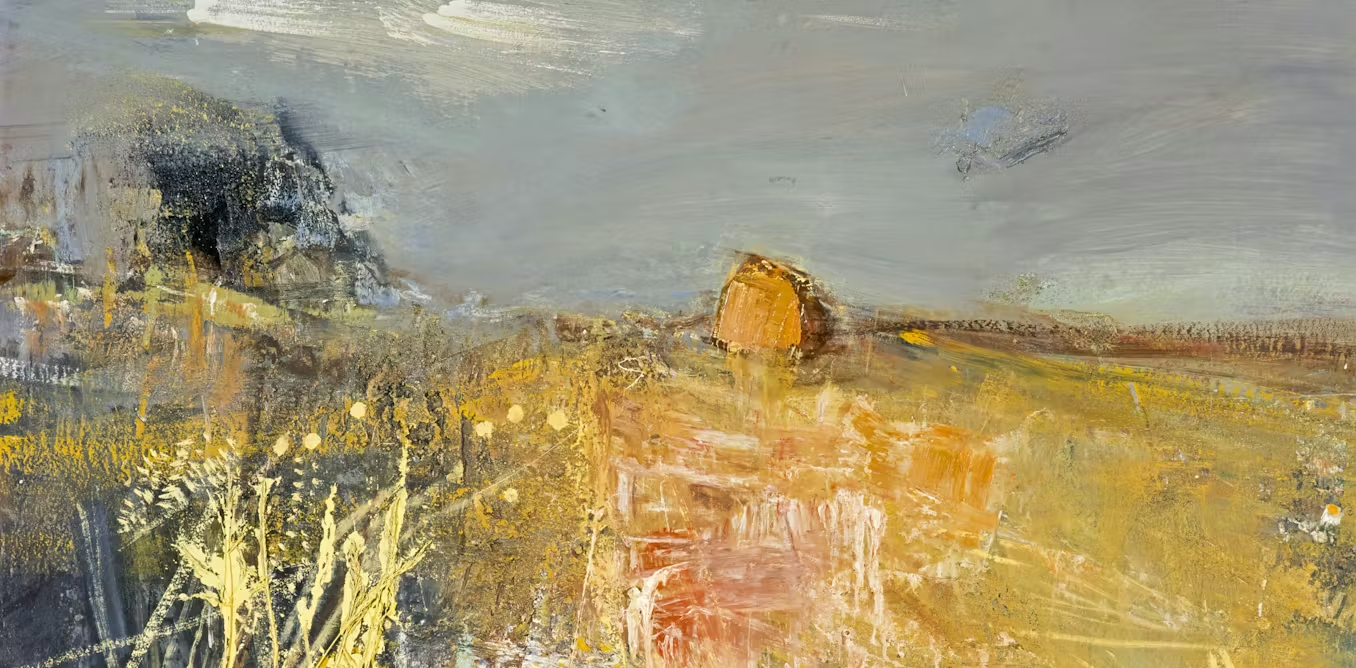
Hedgerow with Grasses and Flowers, 1962-1963. National Galleries of Scotland
More than 30 of Eardley’s artworks are juxtaposed at Modern Two alongside figures of international renown including Claude Monet, Marc Chagall, John Constable, Jean Dubuffet and Antoni Tàpies, together with her contemporaries Henry Moore, Bet Low and William McTaggart.
It places Eardley within an international art world which blends post-impressionism, social realism and abstraction. Jackson Pollok and the French Tachistes were known to have influenced her practice.
The exhibition is further enriched by a selection of archival and photographic materials containing a range of sketches, photographs and personal artefacts giving a glimpse into the life behind the artworks which are on display in the adjoining Keiller Library.
There are also several of her large works situated in Paolozzi’s Kitchen restaurant adjacent to the two exhibition spaces, alongside the likes of Scottish artist and contemporary Anne Redpath.
Advertisement
Connections with painters
The first exhibition space includes several of Eardley’s social-realist figure depictions of 1950s inner-city Glaswegian children. The works have a joyful, raw, playful spirit to them, in spite of the squalid slum environment the children were living in. No artist has painted Glasgow’s “weans” (a local word for children) in the way that Eardley has.
In Children and Chalked Wall No.3 (1962-63), sisters Mary and Pat Samson are painted in Eardley’s signature bold unsparing style, with their affectionate, endearing smiles, both huddled together. Their cheery faces, animated by Eardley’s blocks of colour, emerge from a background layered with graffiti and collage, anchoring her work in social reality.
Her work is surrounded by portraits by Rembrandt van Rijn, Jean-Francois Millet, Jean Dubuffet, Edward Hornel and Bet Low. Children and Chalked Wall No.3’s highly prized neighbour in the exhibition is Marc Chagall’s The Horse Rider (1949-53), a surreal gouache painted work with a block of azure-blue textured background with three figures and a horse, set within a Paris circus. Like Eardley’s work, it is also social-realist and figurative, with abstract elements incorporated within it. The female horse rider is a recurring theme for Chagall.
Advertisement
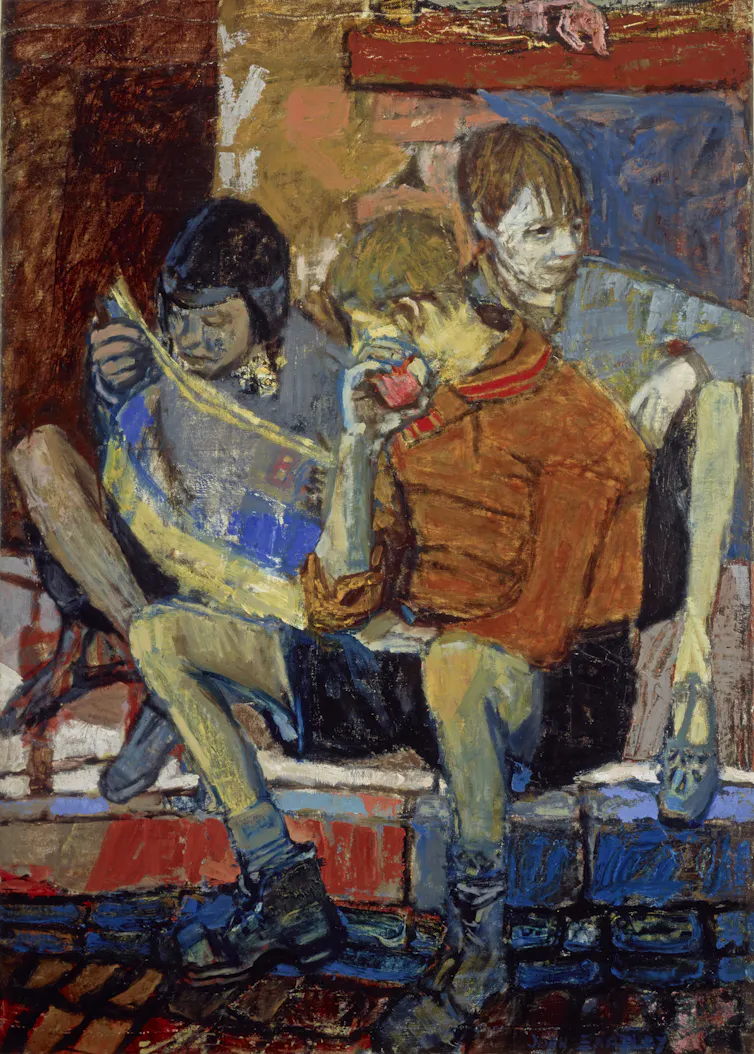
Eardley’s Street Kids (1949–51) captures a fleeting moment of camaraderie among three local boys. It is quiet and reflective, telling the stories of real Glasgow children who lived close to Eardley’s studio in Townhead, and captures the friendliness and community spirit that Eardley admired.
Street Kids, 1949-1951. National Galleries of Scotland
She does not shy away from the material conditions of post-war urban life, alluding to poverty, dirt and the presence of neglect. Again, colour is blocked in with minimum detail and repeating patterns of brickwork ground the piece. There is a respect of their resilience in her portraiture.
Exhibition space two is focused on Eardley’s relationship with Catterline, a small coastal village in the north east of Scotland near Stonehaven. In 1954, she bought a cottage to work there. Catterline’s rugged coastal landscapes and dynamic seascapes were central to many of Eardley’s paintings, providing the perfect stage setting for her expressive creativity to flourish.
Eardley worked between Glasgow and Catterline for several years and there are stories during that time of Eardley leaving Glasgow when she heard a storm was coming. Like tornado chasers, she travelled across the country to capture the coming storm’s power on the shore front where she would set up hardboard canvases to paint in its centre amid the lashing wind and rain like a woman possessed.
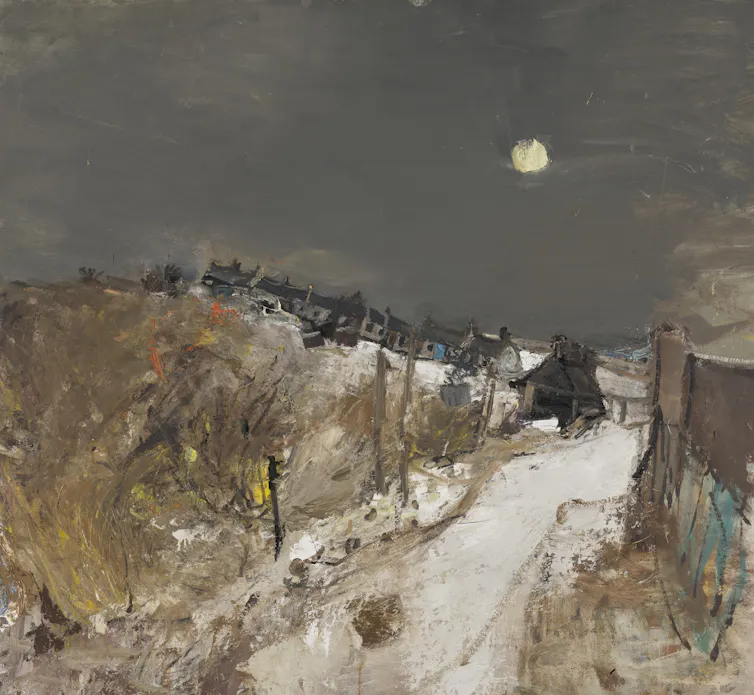
Her beautiful atmospheric painting Catterline in Winter (1963) set with a grey sky and full moon lighting up the snow-covered landscape is positioned next to Claude Monet’s Grainstacks: Snow Effect (1891). Both have an otherworldly sense about them, evoking a still and silent feeling of deep winter muffled by the frozen earth.
Advertisement
Catterline in Winter, 1963. National Galleries of Scotland
Eardley’s Summer Fields near Catterline (about 1961) with its expressive brushstrokes, shows stalks of corn in a bright golden cornfield set by a grey and black background is the highlight of the show.
She was elected an Academician of the Royal Scottish Academy of Art in 1963, just prior to her untimely passing from cancer later that year aged 42. Eardley’s ashes were scattered on the beach at Catterline, creating a lasting connection between the artist and the place which inspired her later works.
By situating her practice within a collaboration of artistic significance, the exhibition highlights the extent to which her work contributes to the central concerns of 20th-century painting. Not least the tension between representation and abstraction in her work and the enduring challenge of responding to the world, whether urban or elemental.
Joan Eardley: The Nature of Painting is on at the National Galleries Modern Two in Edinburgh until June 28
What happened when Americast’s Sarah Smith cold called the US president? In this episode, Sarah and Anthony thoroughly unpack her phone call with Donald Trump, how she planned the interview…and also, she tells us what happened when the US president unexpectedly called her back.
Listen to what Donald Trump told Sarah about next week’s state visit from King Charles and Queen Camilla, and how he thinks it could help repair relations with the UK. He also has advice for how Keir Starmer can recover after the fallout from Peter Mandelson’s appointment as US ambassador. Plus, Sarah asks Trump about his earlier threat to “wipe out” an entire civilisation in Iran.
HOSTS:
• Sarah Smith, North America Editor
• Anthony Zurcher, North America Correspondent
Advertisement
GET IN TOUCH:
• Join our online community: https://discord.gg/qSrxqNcmRB
• Send us a message or voice note via WhatsApp to +44 330 123 9480
• Email Americast@bbc.co.uk
• Or use #Americast
This episode was made by George Dabby. The technical producer was Ricardo McCarthy. The series producer is Purvee Pattni. The senior news editor is Sam Bonham.
If you want to be notified every time we publish a new episode, please subscribe to us on BBC Sounds by hitting the subscribe button on the app.
You can now listen to Americast on a smart speaker. If you want to listen, just say “Ask BBC Sounds to play Americast”. It works on most smart speakers.
Advertisement
US Election Unspun: Sign up for Anthony’s BBC newsletter: https://www.bbc.co.uk/news/world-us-canada-68093155
Americast is part of the BBC News Podcasts family of podcasts. The team that makes Americast also makes lots of other podcasts, including Newscast. If you enjoy Americast (and if you’re reading this then you hopefully do), then we think that you will enjoy some of our other pods too. See links below.
Newscast: https://www.bbc.co.uk/sounds/series/p05299nl
Radical: https://www.bbc.co.uk/sounds/brand/p0gg4k6r
The Global Story: https://www.bbc.co.uk/sounds/brand/w13xtvsd
Top Comment BBC Sounds – Top Comment – Available Episodes


















































You must be logged in to post a comment Login