Engineers squeezed a high-end TV into a panel that is only 9 millimeters thick. LG calls it the OLED evo W6, and once hanging, it truly lives true to its “wallpaper” label. Two flat mounting pads and a couple of screws hold the screen tightly against the wall, leaving no obvious gaps. A ultra slim power board at the back connects to the nearest outlet, and that’s it. What about the weighty electronics? They remain out of sight somewhere else.
The magic happens within a box called Zero Connect. Simply plug in all of your cords, including your game console, cable service antenna, and speaker if desired. Place the Zero Connect box up to 32 feet away in a closet or behind some furniture; it doesn’t even require a straight line of sight to function. It can easily deliver full 4K video and audio across the room to your thin panel TV. You get everything cleanly displayed on an OLED screen made from the same high-quality panel used in LG’s flagship G6 series.
MINILED | UP TO 600 NITS PEAK BRIGHTNESS: See more contrast on the field and off. Lots of tiny LEDs make a major difference when it comes to the…
QLED COLOR: See the exact hue of every blade of grass on the field and every line on the court. QLED Color is made up of quantum dots—very small…
PRESS and ASK | ALEXA: Just press and ask Alexa to find, launch, and control your content. Go beyond streaming to check sports scores, set timers…
The screen’s brightness is significantly higher than that of other OLED sets, thanks to Hyper Radiant Color Tech and Brightness Booster Ultra. It can go very bright without losing accuracy, even when the lights are on in the room. The unique coating on the screen won LG the first-ever Reflection Free Premium certification, which indicates that reflections are almost nonexistent. As you’d imagine, the blacks remain deep, and individual pixels light up independently, preventing the irritating halo effect surrounding bright things.
Advertisement
Gamers are going to love this bundle. With a 165 Hz refresh rate and support for variable refresh rate technologies like NVIDIA G-Sync and AMD FreeSync Premium, the display is built to keep fast-moving action smooth and tear-free. Input lag is also relatively low, though experienced gamers may wish to test the wireless connection before a major competition. The screen has 4.2 channels of down-firing speakers built in, but if you want to get serious about sound, LG’s wireless Sound Suite system is an option. Simply launch the app on your phone, and it will map out any speakers and subwoofers you have set up across the room, regardless of where they are. WebOS powers the UI, and it includes some interesting AI capabilities that learn your viewing patterns and recommend content. If the screen is idle, Gallery Plus mode activates and transforms it into a digital photo frame for displaying personal photos or artwork.
You can select between two sizes: a 77-inch set for $5,500 or an 83-inch set for $7,500. That’s slightly more expensive than the non-wireless G6s, but significantly less than the initial wallpaper OLED sets from a few years ago. Pre-orders commenced in late April 2026. So, you’ve had enough of those heavy black TV frames dominating your living room, now’s your opportunity to get rid of them for good if money is no object. [Source]
Engadget’s hottest review roundup truly has it all this week: a new pocket cam, a 2-in-1 smart grill, a pair of drones and a pricey skinny vac. And that’s before we even get to the highly capable gaming display that will only set you back $350. Read on to catch up on the reviews you might’ve missed over the last two weeks as we prepare for another slate of big events next month.
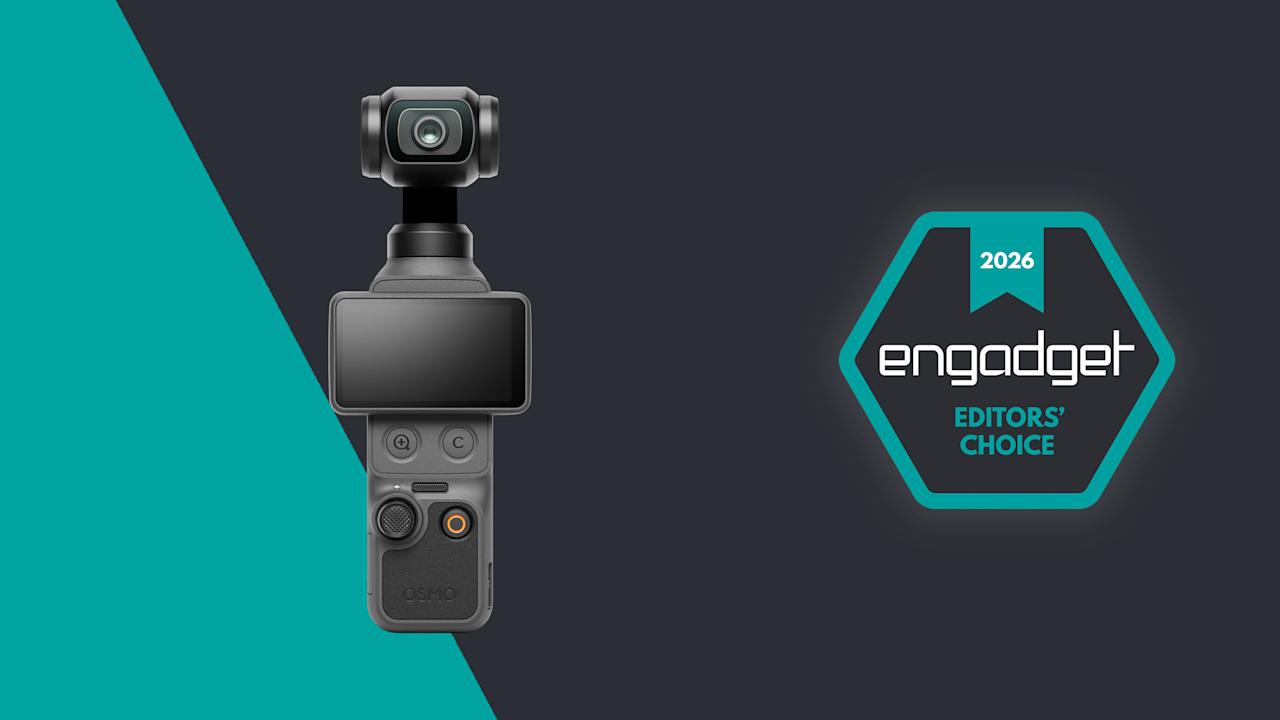
DJI Osmo Pocket 4
DJI/Engadget
The Osmo Pocket 4 is still the best pocket-friendly vlogging camera you can buy. With excellent image quality, improved photos, great stabilization and pro D-Log mode, it’s incredibly easy to record everything from simple vlogs to near cinematic-quality video. The high level of portability and extended battery life make this an easy camera to reach for whatever you’re filming.
Pros
Advertisement
Excellent image quality
Improved low-light performance
Onboard storage
Modular accessories
Cons
Still only 3K in portrait mode
No dust or water protection due to the gimbal
No optical zoom
Not available in the US
DJI’s Osmo Pocket cameras have become a staple of Engadget’s live event coverage over the last few years. They’re convenient, compact and product high-quality footage when speed matters. Contributing review reporter James Trew recently put the new Osmo Pocket 4 through its paces, concluding that “you’re getting better image quality that will pay you back over time.”
Recteq X-Fire Pro 825
Recteq/Engadget
The X-Fire Pro offers the ease of gas with the wood flavor of pellets in the same grill. While there could be more features, the build quality is excellent and the performance is reliable.
Pros
Two grills in one
Reliable Wi-Fi tools
Robust build quality
Direct-flame searing
Cons
Small pellet hoppers
No super smoke, keep warm or other handy modes
Not compatible with wireless food probes
With the X-Fire Pro, Recteq set out to make a pellet grill that would appeal to fans of gas grills. The company has done just that, offering a dual-mode device that imparts wood flavor you don’t inherently get from propane or natural gas. “Recteq has successfully combined the best aspects of pellet grills with a dedicated high-heat mode and separate controls that will be familiar to gas grillers,” I said. “This model offers robust build quality, reliable performance and Wi-Fi connectivity for extended smoking sessions.”
Alienware 27 QD-OLED monitor
Dell / Engadget
Advertisement
In a world where every piece of gaming gear seems to be getting more expensive, Alienware’s $350 AW2726DM 27-inch QD-OLED monitor feels like a gift to gamers on a budget.
Pros
Stupendously affordable
Three-year warranty with burn-in protection
Simple, straightforward design
QHD resolution with 240Hz VRR
Rich colors
Cons
Mediocre brightness
Not a ton of ports
No native G-Sync support
Can a $350 gaming monitor offer enough to get the job done? If you’re talking about the Alienware 27 QD-OLED display, that answer is a resounding “yes.”
“The AW2726DM might not have all the fancy features you get on more expensive monitors, but it’s an excellent example of a no frills gadget done right,” senior reporter Sam Rutherford said. “You get just enough ports, a straightforward design and a beautiful QD-OLED panel with a solid resolution and refresh rate — all for just $350.”
DJI Lito drones and a Dyson PencilVac
Like the Osmo Pocket 4, DJI’s latest Drones are unlikely to make it to the US. However, if you live elsewhere, there’s a lot of performance available for under $400. “The Lito series shows that DJI is intent on dominating every drone price range and category, including the bottom end,” contributing reporter Steve Dent said. “Despite their low prices, the new drones don’t skimp on features, offering full obstacle protection, ActiveTrack subject tracking, relatively high speeds and sharp 4K video quality — just like models that cost a lot more.”
Advertisement
If your spring cleaning could still use a jump start, perhaps a fancy, skinny vacuum could do the trick for light duty. “With its minimalist form factor, the PencilVac is still an engineering marvel,” UK bureau chief Mat Smith said. “Its high degree of mobility makes it easy to clean in tight corners and between furniture. I just wish it were slightly more powerful.”
Qualtrics is based in Provo, Utah, and downtown Seattle (above). (GeekWire File Photo)
Qualtrics CEO Jason Maynard shook up the company’s senior leadership team on Friday at its dual headquarters in downtown Seattle and Provo, Utah, less than three months after taking the helm of the experience management technology company.
Five executives are no longer with the company, Maynard told employees in an internal email viewed by GeekWire, calling the moves “a difficult but important step” designed to “simplify our structure and ensure we are positioned for our next phase of growth.”
The impacted leaders span Qualtrics’ business, engineering, IT, and marketing teams:
Brad Anderson, president of products, UX, engineering and security;
Eddie Chen, chief strategy and corporate development officer;
Jeff Gelfuso, SVP and chief product and experience officer;
Juan Rodriguez Estevez, chief information officer;
and Lynn Girotto, chief marketing officer.
Anderson is the most senior of the departing execs, having been at Qualtrics for more than five years, overseeing the company’s engineers, product managers, designers, and security engineers. He previously spent nearly 18 years as a high-ranking Microsoft exec. Maynard’s email singled him out, thanking him for his leadership and impact in his role.
In addition to the departures, Maynard outlined plans for a broad reorganization, reshuffling teams across marketing, customer operations, IT, and corporate development. He said in the memo that a new SVP of marketing would be named Monday, and more details will be announced internally next week.
It’s not clear how many employees were impacted by the changes overall. Qualtrics is not yet commenting publicly on the changes.
Advertisement
The priority is to “ensure we build with speed, clarity, and a relentless focus on driving stronger outcomes for customers and bringing new AI capabilities to market faster,” Maynard wrote.
Maynard took over as CEO on Feb. 3, succeeding Zig Serafin, who stepped down in October 2025. (Jim Whitehurst and Mark Gillett had served as interim co-CEOs in the meantime.) Maynard previously spent a decade at Oracle, where he was executive vice president of revenue operations, joining through the NetSuite acquisition in 2016.
Qualtrics, which employs more than 4,500 people globally, makes software that helps companies gather and act on feedback from customers, employees, and others through surveys, AI-powered analytics, and other tools. It was taken private by Silver Lake and Canada Pension Plan Investment Board in 2023.
Physicists have proposed a new kind of atomic clock based on a revived superradiant laser concept that could produce an extraordinarily stable signal with a linewidth around 100 microhertz, potentially the narrowest ever for an optical laser. “The implications of this result could stretch well beyond timekeeping,” reports Phys.org. “A laser immune to environmental frequency shifts would be a powerful tool in optical interferometry — using interference patterns in light to make ultra-precise measurements.” From the report: In a conventional laser, a mirrored cavity bounces light back and forth between atoms, building up a bright, coherent beam. A superradiant laser works differently: rather than relying on the cavity to maintain coherence, the atoms themselves act as single coordinated emitters, collectively synchronizing their light emission. Following early theoretical ideas emerged in the 1990s, the concept didn’t gain concrete traction until 2008, when researchers at the University of Colorado proposed that superradiant lasers could serve as a new kind of atomic clock.
Atomic clocks work by using laser light to probe a very precise transition in an atom, causing electrons to transition between energy levels at an extraordinarily stable frequency. Because a superradiant laser stores its coherence in the atoms rather than the cavity, its output frequency is far less vulnerable to environmental disturbances like vibrations or temperature fluctuations. Yet although this concept was first demonstrated experimentally in 2012 in a pulsed regime, the influence of heating has so far held superradiant lasers back from their full potential. To keep the laser running continuously as an atomic clock requires, atoms must be constantly replenished with energy. Doing this atom-by-atom delivers random kicks that heat the atomic sample and disrupt the lasing process, confining it to brief pulses rather than a steady beam.
In their study, Reilly’s team considered whether a modification to earlier theoretical concepts could make a continuous laser suitable for an atomic clock. In almost all previous studies, atoms were treated as simple two-level systems: an electron sitting in a ground state, occasionally jumping up to an excited state and back again. The team proposed that the heating problem could be solved by adding one extra ground state to the picture. In a two-level system, if both the pumping (re-energizing) and decay processes happen collectively through the cavity, the mathematics constrains the system in a way that prevents stable, continuous lasing. But with three levels available, pumping and decay can operate on entirely separate transitions, breaking that constraint and allowing the collective approach to work. The findings have been published in the journal Physical Review Letters.
Palantir has helped the Internal Revenue Service’s Criminal Investigations office probe a variety of financial crimes in the U.S. for much of the last decade, The Intercept reported.
The IRS has paid the firm $130 million since 2018 to use its data analysis software to pore over financial records for investigative purposes, the outlet reported, citing public records detailing Palantir’s IRS contract that were obtained by the nonprofit watchdog group American Oversight.
It was previously known the IRS was using Palantir’s products, and that the agency sees the software as a way to automate and modernize audits. Last summer, it was also reported that Palantir was assisting DOGE, the “government efficiency” initiative launched by President Trump’s executive order with a project designed to access IRS records. However, the extent of the agency’s use of the company’s tools had not been previously reported.
The software, Palantir’s Lead and Case Analytics platform, is being used to aggregate and analyze data across a variety of federal agencies. The software can find “connections from millions of records with thousands of links” between various databases, and the tool is particularly good at mapping human relationships and communications, according to the outlet.
Advertisement
Earlier this week, American Oversight sued the Trump administration for public records related to numerous federal agencies’ use of Palantir tools, including the IRS. TechCrunch has reached out to Palantir for more information and will update the article if the company responds.
You didn’t see that coming, at least not now, but Tim Cook’s successor is John Ternus and there’s so much news about both men. Plus what Apple had to update because of the FBI, how “Star Wars” benefits from the Apple Vision Pro, and more, on the AppleInsider Podcast.
If John Ternus ever had to buy his iPhones at an Apple Store, he doesn’t now – image credit: Apple
This week, Apple pulled off something special. It managed to totally surprise everyone, and yet at the same moment, surprise no one at all. It really was startling when it was announced that Tim Cook is stepping down as Apple CEO, but it wasn’t remotely unexpected that his successor would be John Ternus. Continue Reading on AppleInsider | Discuss on our Forums
OpenAI is pushing AI beyond chat with the recent release of GPT-5.5, a model designed to complete multi-step work instead of stopping at answers.
OpenAI logo
The company introduced GPT-5.5 on April 23, a new flagship AI model designed to handle multi-step tasks across software, research, and everyday computer work. It moves toward agentic systems that plan, act, and complete jobs with minimal guidance. OpenAI claims that GPT-5.5 can handle loosely defined requests by breaking them into steps. It can use tools, verify results, and continue working until the task is complete. Continue Reading on AppleInsider | Discuss on our Forums
when you’re trying to stay focused on something, there’s no shortage of distractions on your phone, through your web browser, or out the window. And with attention spans crumbling in the TikTok era, we now have an entire category of apps dedicated to helping you stick to what you’re supposed to be doing.
These apps all work more or less in the same way, giving you a straightforward method of tracking how long you’re spending on a task, and offering some sort of incentive to keep going for the allotted amount of time. Sometimes you get a few extra features as well, like the ability to block access to other apps.
In the interest of trying to write this specific article without switching between browser tabs and apps every two minutes, I gave three of the best focus tools a try. Here’s how they stack up.
Focus Friend
Focus Friend gives you a companion bean to focus with.
Advertisement
Photograph: David Nield
The vibe of Focus Friend is very much a warm and cozy one. When you first set up the app, you get your own personal bean, which you can give a name to. Once you’re through the intro screens, your bean will start knitting—and anytime you pick up your phone after that, the knitting stops.
The idea is that if you stick to the block of time you’ve set, your bean can come up with a variety of knitted creations, which can then be traded for different decorations for your bean’s living space. As you might expect, you can pay for decorations too, and a Pro subscription ($2 a month) means your bean is able to get more creative with its knitting.
It’s up to you how long your focus sessions are, and you have the option of playing some relaxing music, blocking access to other apps, or keeping the screen on while you work or study—and while your bean gets busy doing some knitting. It’s all quite whimsical and easy to set up. You don’t even need to register a user account.
How effective you find Focus Friend really depends on how taken you are by your bean and its knitting projects. At its core the app is really just a stopwatch, though the option to actually block other apps is useful. For me, the extra dollop of cutesy companionship does make a difference, and helps sticking to a task.
Advertisement
Focus Friend for Android and iOS (free or from $2 a month)
Forest
Forest grows virtual trees while you work or study.
Photograph: David Nield
The trick that Forest uses to keep you focused is growing virtual trees inside the app. The longer you stay engaged and able to avoid distractions, the more trees you get—until you have your very own forest on your phone. The app developers have partnered with the nonprofit Trees for the Future to grow millions of actual trees out in the real world too.
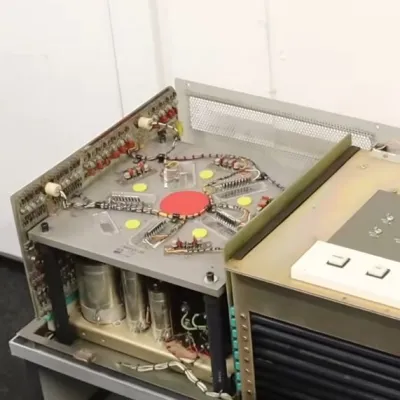
One of the nice things about magnetic storage is that as long as the magnetic layer remains intact, the data it contains should stay readable pretty much indefinitely. That raises the prospect of recovering data from really old computer systems featuring magnetic memory, such as the 63-year old LGP-21 that [David Lovett] of Usagi Electric is currently restoring. Its magnetic memory disk is nothing amazing by modern standards, but after initial testing it seems to spin up and read data just fine, raising the question of what was left on the drive when it was last used, meaning what was in memory at the time.
The read/write head side of the LGP-21’s magnetic memory. (Credit: Usagi Electric, YouTube)
Non-invasive data recovery here involves writing a program that will simply read the entire disk from beginning to end. Tracks 0 and 1 were found to be unreadable due to some kind of hardware issue, but track 2 could be backed up by looking at the output on the CRT, thus providing a track to use. Fascinatingly the LGP-21’s memory disks uses interleaved tracks to reduce the number of read/write heads as part of the overall cost-saving measures relative to the more expensive LGP-30. As you might expect, this slows down memory access a lot over its big brother.
Before any recovery attempt could begin, the Flexowriter typewriter that forms the user interface to the computer had to be given some serious maintenance, along with a few other components like a switch and the paper tape reader. This restored the ability to even properly enter data and receive output instructions.
The subsequent effort to recover the stored data involved a bootstrap program that got loaded into memory, after which the remainder of the program was loaded from paper tape. Following this everything worked swimmingly, though with the caveat that with not even a floppy drive to use, the raw hexadecimal data was hammered out on paper with the Flexowriter over the course of 1.5 hours.
Advertisement
This data will now be scanned in and OCR-ed into something that can hopefully be easily analyzed. Hopefully we’ll know before long what this system was last used for.
We spend hours testing every product or service we review, so you can be sure you’re buying the best. Find out more about how we test.
Anker Soundcore Space 2: Two-minute review
Everyone I’ve spoken to who’s used them has spoken glowingly about Soundcore’s over-ear headphones, and the latest cans from the Anker sub-brand hark very closely to their predecessors. So, are the Anker Soundcore Space 2 contenders for the best budget headphone market?
Well, not much has changed compared to the Soundcore Space One – pedants may be wringing their hands at the jump from integer to lexical name, and I concur – and these headphones will look and feel very familiar to owners of the Space One Pro too. Meet the new boss, very similar to the old boss.
Advertisement
That’s no shame, though, because it means the previous cans’ strongest point is back in force. The active noise cancellation (ANC) here is absolutely fantastic — I don’t think I’ve used a pair of headphones at this price point that comes close. It’s zealous in wiping out any noise, near or far, around you.
Though barely changed from previous generations, the distinct look and comfortable fit of the Space 2 help them stand out from other alike headphones. These might be the first pair of cans I’ve tested that my girlfriend actually recognized with any kind of familiarity.
What has changed, though, is the price: there’s been a significant step up in cost from the Space One. I know, I know, it’s 2026 and every review talks about price hikes. But it’s big enough to lift the Soundcore out of the aforementioned best-in-class competition, and higher expectations aren’t matched by a greatly improved package.
Advertisement
Take, for example, the sound. Treble is fantastic and sparkly, but there’s a distinct drop-off when you get towards the mids, and bass is indistinct and unbalanced. They’re far from the worst over-ears I’ve tested, even at this price, with the high quality going some way to retaining the excitement at listening to music. But audiophiles won’t be impressed.
Anker Soundcore Space 2 review: Price and release date
(Image credit: Future)
Released in April 2026
Debuted for $130 / £130 (about AU$250)
Price hike over predecessors
After being unveiled at MWC 2026 in early March, the Anker Soundcore Space 2 were put on sale nearly two months later on April 21.
Sign up for breaking news, reviews, opinion, top tech deals, and more.
You can pick up these headphones for the retail price of $130 / £130 / about AU$250. That price pushes them into mid-range waters, meaning that, unlike their predecessors, they’re not quite budget cans any more.
Advertisement
For some context, the Soundcore Space One cost $99 / £99 / about AU$200, while the Space One Pro went for $199 / £149 (about AU$300). So the new headphones offer a fairly significant price increase.
Anker Soundcore Space 2 review: Specs
Swipe to scroll horizontally
Drivers
40mm
Advertisement
Active noise cancellation
Yes
Battery life (ANC off)
50 hours
Advertisement
Weight
264g
Connectivity
Not specified
Advertisement
Frequency response
Not specified
Waterproofing
Not specified
Advertisement
Anker Soundcore Space 2 review: Features
(Image credit: Future)
Fantastic ANC
50-hour battery life with ANC off
Decent range of features including listening test
I’m not sure if the ‘Space’ in the Anker Soundcore Space 2 name refers to the silent vacuum of the cosmos, but it certainly could do, because the noise cancellation on these things is incredible for the price. I was constantly surprised by how adept the Space 2 were at cutting away noisy background sounds: the overground train running behind my house was impossible to hear, even when I was on it, and busy roads became quiet country lanes.
The quoted battery life is 50 hours with ANC on, or 70 hours with it turned off. Neither of those are lengths to write home about — hundred-hour-plus headphones come out pretty frequently now, usually at this price point — but they’re still solid listening times.
The Space 2 offer a selection of extra tools via the Soundcore app. There’s toggle-able wear detection, multipoint pairing, the ability to change what the noise cancellation and play/pause buttons on the ear cups do, and volume limits to stop you harming your hearing. Of the bunch, that latter stands out as one you don’t often see, so props to Anker for including it.
A listening test called HearID combines a hearing check, to pick out which tones you can hear, with a preference barrage to cater for your chosen type of music. I’ve not seen this latter factor considered before, and it solves a big problem with these listening tests — even if repeating the same song six times to check out different sound mixes is a gruelling experience.
Advertisement
There’s enough to recommend downloading the Soundcore app, even if I didn’t use it too much outside of testing.
I’ve previously heard complaints about the wear detection on Soundcore’s headphones. Here it reliably paused a song if I removed the cans, but wasn’t too hot on resuming it when I put the Space 2 back on my head.
Anker Soundcore Space 2 review: Design
(Image credit: Future)
Funky blue color and distinctive look
Light, comfortable to wear
No IP rating
I test plenty of cheap and mid-range headphones that are personality-less black semicircles, so have to give praise to Soundcore. The Space 2 look unique among peers with a funky color, curvy edges, abundance of soft padding and tapered connectors between the headband and cups. Sure, they look basically the same as their predecessors, but if it ain’t broke don’t fix it.
They’re nice and light, at 264g, and felt supremely comfortable to wear. That’s partly the weight but also the aforementioned padding overload on your ears and head. They fit securely, not wobbling when I was walking or turning my head quickly.
Advertisement
On the right cup there’s a play/pause button and volume rocker, while the left one has a noise cancelling toggle, power button, USB-C port and 3.5mm audio jack. That latter’s a nice addition you don’t always see at this price point.
You can fold the Space 2 down to make them more portable, with a cloth bag coming in the box, but I couldn’t find any information about an IP rating. So you may want to be careful when wearing them in the rain.
Anker Soundcore Space 2 review: Sound quality
(Image credit: Future)
Uses 40mm driver
Bright treble, bass and mids suffer
Supports hi-res standards, LDAC and SBC
The Soundcore Space 2 have a 40mm driver, the same size as in the vast majority of over-ear headphones, enhanced with a double diaphragm for clearer audio. I’ll admit, this end goal has been achieved; you can appreciate the lilt of a vocalist’s voice, the squeal of a guitar solo or the timbre and tremolo of a violin.
You’ll notice that these examples are all ones which sit right in the treble and high-mid space, and that’s because this is where the Space 2 shine. They’re energetic, bright and fun; I was initially won over by the cans’ sharp, clear higher-pitched sounds, but the more I listened, the more I realized something was missing.
Advertisement
That something missing is… well, anything lower. Distorted guitar riffs, punchy bass licks and acoustic instruments all lack sparkle, prominence and clarity – it really feels like there’s a hole in some songs where a kick should be. The acoustic guitar of Niko Moon’s King of the Island felt far too far back in the medley, and the hook of My Number by Foals or Save a Horse (Ride a Cowboy) by Big & Rich sounded akin to a moving company removing furniture from your upstairs neighbors.
The audio graph suddenly resurges towards the bass and sub-bass side of things, giving some oomph to songs, but it’s often ill-defined or muddy, and sometimes overblown. In Tame Impala’s The Less I Know the Better it sounds insecure, popping up now and then without distinction, while in Troye Sivan’s Rush it’s not well-defined enough to stop it overpowering everything else.
Many music fans forget that there’s more than treble and sub-bass, and the sparkling former might distract many listeners from the Space 2’s shortcomings. I was in that camp for a while, and I still have a good time when I listen to the cans. But if you want a nuanced or natural sound, you’ll find this V-shaped audio pretty severe.
Back to some technicals: the high-quality sound the Space 2 provide is helped by support for LDAC and SBC, as well as Hi-Res Audio and its Wireless counterpart.
Advertisement
Anker Soundcore Space 2 review: Value
(Image credit: Future)
Decent value for money
Matches price hike
The price hike of the Soundcore Space 2 is a shame, because at the Space One’s MSRP, they’d be fantastic value.
They’d be best-in-class budget cans if they came out below $100 / £100 / AU$200, but for a little more, there’s a lot more competition, and much higher expectations. They’re still good, but not instant-must-buy value for money like they would be.
Should I buy the Anker Soundcore Space 2?
Swipe to scroll horizontally
Soundcore Space 2 score card
Attributes
Advertisement
Notes
Rating
Features
The ANC here is fantastic, while the battery life is fine and the feature set has some stand-outs.
Advertisement
4/5
Design
The Space 2 are comfortable to wear, and look distinct in the busy ocean of over-ears.
4.5/5
Advertisement
Sound quality
The energetic treble goes some way to papering over the lacking mids.
3.5/5
Value
Advertisement
These are decent-value headphones, even if the price hike means they’re no longer must-buys.
3.5/5
Buy them if…
Advertisement
Don’t buy them if…
Anker Soundcore Space 2 review: Also consider
Swipe to scroll horizontally
Header Cell – Column 0
Anker Soundcore Space 2
Anker Soundcore Space One Pro
Nothing Headphone (a)
Advertisement
Drivers
40mm
40mm
40mm
Advertisement
Active noise cancellation
Yes
Yes
Yes
Advertisement
Battery life (ANC on)
50 hours
40 hours
75 hours
Advertisement
Weight
264g
286.2g
310g
Advertisement
Connectivity
TBC
Bluetooth 5.3
Bluetooth 5.4
Advertisement
Waterproofing
NA
NA
IP52
Advertisement
How I tested the Anker Soundcore Space 2
(Image credit: Future)
Tested for 3 weeks
Tested at home, on walks and on public transport
I used the Soundcore Space 2 for roughly three weeks ahead of their release date, in which time they were paired with my Samsung Galaxy S26 Ultra. I listened on a range of music and video streaming services, as well as in calls and playing games.
Testing was done in a pretty wide range of environments including on public transport, on walks around various neighborhoods, and at home.
I’ve been testing audio products for TechRadar for years, including some past Anker devices like the Aerofit Pro 2.
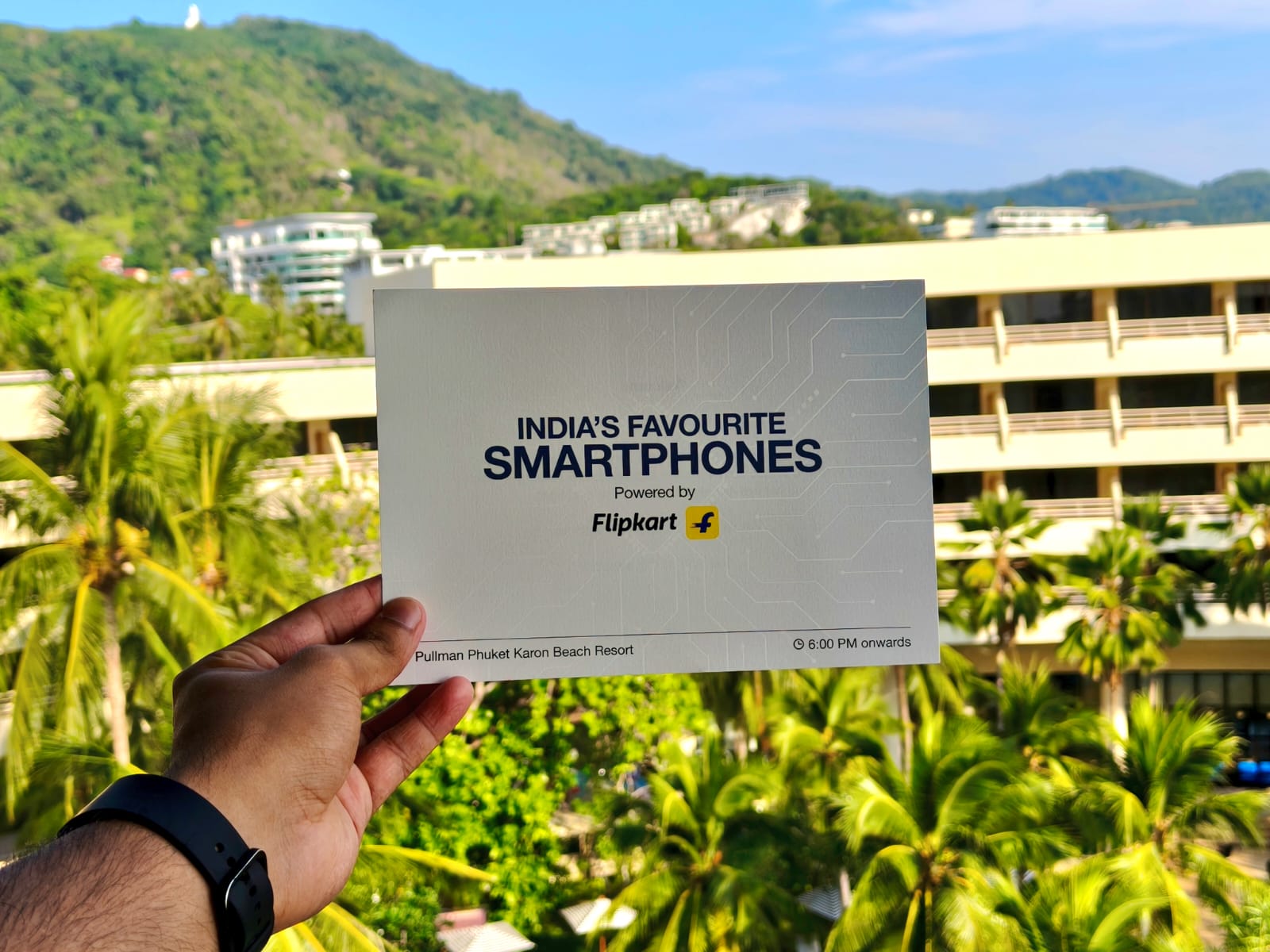
Flipkart is hosting a large-scale smartphone-focused event in Phuket, bringing together major brands, industry experts, and creators under one roof. If you’ve started seeing clips from the event online, you’re not alone. But the real question is: what exactly is the Flipkart Awards show? At its core, the event is Flipkart’s way of spotlighting the smartphone ecosystem in India—highlighting trends, recognizing top devices, and giving a glimpse into what’s coming next.
Not Just Another Awards Night
Flipkart is the biggest smartphone destination, with 1 in every 3 smartphones sold in India happening on its platform. So, it makes sense why they would host something like this. But, despite the name, this isn’t your typical awards ceremony. The Flipkart Awards event is divided into multiple segments, each focusing on a different part of the smartphone ecosystem. There are awards for standout smartphones across price segments, from premium flagships to value-focused devices. Alongside that, brands get a chance to showcase their latest innovations and upcoming products.
The event also serves as a platform for discussions about where smartphone technology is headed. Topics such as AI-driven features, camera improvements, and performance upgrades take center stage, alongside insights from brands and industry voices. In a way, it blends product showcases, industry conversations, and awards into a single event—making it more of a tech showcase than just a trophy night.
“SASA LELE” Sale Announcement
One of the biggest announcements tied to the event is Flipkart’s upcoming SASA LELE sale, expected to go live in May.
Advertisement
While exact deals haven’t been revealed yet, Flipkart is positioning it as a major smartphone sale event across price segments. The platform is also continuing to roll out features such as Open Box Delivery, exchange offers via Prexo, and No-Cost EMI options.



























































You must be logged in to post a comment Login