
Crypto World
Federal Agency Sues New York Over Prediction Market Ban



The Commodity Futures Trading Commission sued New York to block the state from enforcing its gambling laws against federally registered prediction market exchanges.
The complaint filed in the Southern District of New York seeks a declaratory judgment confirming federal preemption, plus a permanent injunction barring state action against CFTC-registered designated contract markets.
Fourth State in CFTC’s Prediction Market Fight
New York joins Arizona, Connecticut, and Illinois on the agency’s docket. The CFTC sued the other three states earlier this month over parallel enforcement campaigns aimed at registered prediction market venues.
A federal judge in Arizona granted the agency a temporary restraining order halting that state’s criminal case against CFTC-regulated platforms. The CFTC has also filed an amicus brief in the Ninth Circuit Court of Appeals defending its preemption argument before appellate judges.
New York’s regulators previously hit registered platforms with cease-and-desist letters and civil suits. Chairman Michael Selig accused the state of disregarding longstanding federal precedent by treating CFTC-listed event contracts as illegal gambling products subject to state licensure rules.
Massachusetts Amicus Filed Same Day
The agency simultaneously filed an amicus brief in the Massachusetts Supreme Judicial Court in Commonwealth of Massachusetts v. KalshiEx LLC. Attorney General Andrea Campbell previously secured a preliminary injunction blocking Kalshi from offering sports event contracts to Massachusetts customers.
The brief argues the Commodity Exchange Act preempts state laws applied to CFTC-regulated markets. Selig said Congress assigned the agency sole authority over commodity derivatives, prediction markets included.
Kalshi recently prevailed at the Third Circuit Court of Appeals in a parallel New Jersey case, strengthening the federal preemption argument. Kalshi and Polymarket together face more than a dozen state and tribal challenges over sports and political event contracts.
Trading Climbs as Prediction Markets Go Mainstream
Trading activity on both platforms has climbed through early 2026, with sports event contracts emerging as the central flashpoint between state and federal authorities. Google Finance recently integrated Kalshi and Polymarket odds data, pulling prediction market pricing further into mainstream financial coverage.
Federal courts in New York and Massachusetts will now rule on whether the Exchange Act blocks state gambling claims. Their decisions, alongside the CFTC’s Ninth Circuit amicus and the Arizona restraining order, could shape national rules for a fast-growing industry that operates across every state.
The post Federal Agency Sues New York Over Prediction Market Ban appeared first on BeInCrypto.



Mythos, the new AI model from Anthropic that has sparked fear and confusion in traditional tech and finance, is also driving a massive shift in how the crypto industry thinks about security.
For years, decentralized finance has focused its defenses on smart contracts. Code is audited, vulnerabilities are cataloged, and many common exploits are well understood. But Mythos, a model designed to identify and chain together weaknesses across systems, is pushing attention beyond code and into the infrastructure that supports it.
“The bigger risks sit in infrastructure,” said Paul Vijender, head of security at Gauntlet, a risk management firm. “When I think about AI-driven threats, I’m less concerned about smart contract exploits and more focused on AI-assisted attacks against the human and infrastructure layers.”
That includes key management systems, signing services, bridges, oracle networks, and the cryptographic layers that connect them. These components are less visible than smart contracts and are often outside traditional audit scope.
In fact, this month, web infrastructure provider Vercel, which many crypto companies use, disclosed a security breach that may have exposed customer API keys, prompting crypto projects to rotate credentials and review their code. Vercel traced the intrusion to a compromised Google Workspace connection via the third-party AI tool Context.ai, which an employee used.
Mythos belongs to a new class of AI systems built to simulate adversaries. Instead of scanning for known bugs, it explores how protocols interact, testing how small weaknesses can be combined into real-world exploits. That approach has drawn attention beyond crypto. Banks like JP Morgan are increasingly treating AI-driven cyber risk as systemic and are exploring tools like Mythos for stress testing. Earlier this month, Coinbase and Binance both reportedly approached Anthropic to test Mythos.
Early findings from models like Mythos have identified weaknesses in the behind-the-scenes systems that keep crypto platforms secure, including the technology that protects keys and handles communication between systems.
“I think there are two areas where AI models are especially valuable,” Vijender said. “First, multi-step exploit chains that historically only get discovered after money is lost. Second, infrastructure-layer vulnerabilities that traditional audits never touch.”
That shift matters in a system built on composability, where DeFi protocols can connect and build on each other’s services.
DeFi protocols are designed to interconnect. They share liquidity, rely on common oracles, and interact through layers of integrations that are difficult to map in full. That interconnectedness has driven growth, but it also creates pathways for risk to spread, as seen in recent bridge exploits like the Hyperbridge attack, in which an attacker minted $1 billion worth of bridged Polkadot tokens on Ethereum by exploiting a flaw in how cross-chain messages were verified.
“Composability is what makes DeFi capital efficient and innovative,” Vijender said. “But it also means a minor vulnerability in one protocol can become a critical exploit vector with contagion potential across the ecosystem.”
Without AI, those dependencies are hard to trace. With AI, they can be mapped and exploited at scale. The result is a shift from isolated exploits to systemic failures that cascade across protocols.
Evolution of AI attacks
Still, some industry leaders see Mythos as an acceleration rather than a turning point.
At Aave Labs, founder Stani Kulechov said AI reflects the dynamics already at play in DeFi’s adversarial environment.
“Web3 is no stranger to well-funded and motivated adversaries,” he told CoinDesk. “AI models represent an evolution in the tools used to achieve exploits.”
From that perspective, DeFi is already built for machine-speed attacks. Smart contracts execute automatically, and defenses such as liquidation mechanisms and risk parameters operate without human intervention.
“DeFi operates at compute speed, so AI doesn’t introduce a new dynamic,” Kulechov said. “It intensifies an environment that has always required constant vigilance.”
Even so, Aave is seeing AI surface new categories of vulnerabilities, including issues that human auditors may have previously deprioritized.
“The Mythos paper shows that AI can uncover old bugs that were previously deprioritized,” he said.
That breadth still matters in a system where even smaller vulnerabilities can undermine trust or be combined into larger exploits.
If attackers can move faster, the question becomes whether defenses can keep pace.
For both Gauntlet and Aave, the answer lies in changing the security model itself. Audits before deployment and monitoring after were designed for human-paced threats. AI compresses that timeline.
“To defend against offensive AI, we will need to take an AI-centric approach where speed and continuous adaptation are essential,” Vijender of Gauntlet said. That includes continuous auditing, real-time simulation, and systems built with the assumption that breaches will happen.
A ‘greater way’
Aave has already integrated AI into its workflows, using it for simulations and code review alongside human auditors. “We take an AI-first approach where it adds clear value,” Kulechov of Aave Labs said. “But it complements, rather than replaces, human-led auditing.”
In that sense, AI equips both attackers and defenders.
For builders, the long-term effect may be less disruption than divergence.
“We haven’t tested Mythos yet, but we’re genuinely interested in what it and tools like it can do for protocol security,” said Hayden Adams, founder and CEO of Uniswap Labs. “AI gives builders better ways to stress test and harden systems.”
Over time, Adams expects the gap between secure and insecure protocols to widen.
“Projects that prioritize security will have greater ability to test and harden systems before launching,” he said. “Projects that don’t will be most at risk.”
That may be the real shift. Security is no longer about eliminating vulnerabilities. It is about continuously adapting to a system in which those vulnerabilities are constantly rediscovered and recombined.
Read more: Move over bitcoin and quantum risks. Anthropic’s Mythos AI could have major implications for DeFi

The regulatory fight over prediction markets moved to the federal courts this week as the Commodity Futures Trading Commission (CFTC) sued New York state to block its gambling-law actions from applying to federally regulated event-contract platforms. In the Southern District of New York, the CFTC argued that federal law grants it exclusive authority over these markets and asked for a declaratory judgment plus a permanent injunction against New York’s enforcement efforts.
“CFTC-registered exchanges have faced an onslaught of state lawsuits seeking to limit Americans’ access to event contracts and undermine the CFTC’s sole regulatory jurisdiction over prediction markets,” said CFTC Chair Michael Selig. The complaint comes as New York has intensified its own actions against major platforms, including Coinbase and Gemini, with Kalshi having faced prior state-enforcement pressure on its sports-related contracts.
For context, New York’s push against unregistered gambling or gaming activities has been part of a broader state-led wave targeting prediction-market operators. Earlier this week, New York filed suits against Coinbase and Gemini, alleging unlicensed gambling activity. Kalshi, a prominent prediction platform, has also faced regulatory moves in the past. Related coverage has highlighted related enforcement actions in other jurisdictions and ongoing debates about the boundaries between federal financial regulation and state gambling rules.
Key takeaways
- The CFTC asserts exclusive federal jurisdiction over prediction markets and seeks a judicial ruling that New York cannot enforce its gambling rules against federally regulated platforms.
- New York has separately pursued enforcement actions against prominent platforms, illustrating a broader state-led crackdown on prediction-market offerings.
- A coalition of 37 states and Washington, D.C. filed an amicus brief backing Massachusetts in its Kalshi case, arguing federal law does not clearly override state gambling authority.
- Kalshi contends its products are “swaps” regulated under a 2010 financial law, while states argue that the law was not intended to legalize nationwide sports betting or preempt state protections.
- The evolving landscape signals greater regulatory fragmentation for prediction markets, with potential implications for users, developers, and investors.
Federal authority under dispute
The CFTC’s filing in SDNY centers on whether New York’s enforcement actions against prediction-market platforms can stand alongside federal supervision of these markets. The agency asserts that federal law grants it exclusive authority over prediction markets and that state actions risk “undermining the CFTC’s sole regulatory jurisdiction.” The CFTC’s move underscores a broader tension between federal oversight and state gambling regulations as platforms offer event-based contracts tied to real-world outcomes.
In presenting its case, the CFTC highlighted what it sees as a pattern of state-level lawsuits aimed at limiting access to these markets. The agency framed its suit as a necessary step to preserve a uniform federal framework for prediction markets and to prevent a patchwork of state rules that could complicate compliance for federally registered exchanges.
The developing legal dispute sits at the intersection of financial regulation and gambling policy, inviting questions about how federal authority should apply to products that blend financial mechanics with event-betting features. Observers will be watching not only the SDNY proceedings but also how state courts interpret the reach of federal financial statutes in relation to traditional gambling authority.
Massachusetts case and the 37-state amicus brief
In a parallel but closely related thread, a coalition of 37 states and Washington, D.C. filed an amicus brief supporting Massachusetts in its challenge to Kalshi’s sports-betting stance. The filing urges Massachusetts’ highest court to reject Kalshi’s argument that federal law permits nationwide sports betting without adhering to state rules. The amicus brief is available from the Massachusetts attorney general’s office: 37-state backing Massachusetts in Kalshi matter.
Kalshi maintains that its betting products are swaps regulated under a 2010 financial law, a position it frames as federal coverage for certain exchange-traded event contracts. States counter that the law in question was never intended to authorize the expansion of sports betting nationwide or to supersede established state gambling regimes. The states contend that preserving state oversight remains essential for protections such as licensing, age restrictions, fraud prevention, and gambling-addiction safeguards—areas not addressed by federal financial regulation.
Previous coverage has noted that the Kalshi case sits at a critical juncture for the broader debate over federal preemption in financial markets and the role of states in policing everyday gambling-related services. The amicus brief signals a broad, organized effort by state attorneys general to shape how federal law interacts with state gambling controls in the context of prediction markets.
State crackdowns intensify across jurisdictions
The past several months have seen a sharpened stance from states against prediction-market operators. Arizona, Connecticut, and Illinois have pursued efforts to enforce gambling laws against platforms offering prediction contracts. In some cases, regulators have issued cease-and-desist orders or pursued court action to curb unregistered offerings. This trend reflects a growing belief among state authorities that prediction markets straddle long-standing lines between gambling regulation and financial product oversight.
Earlier this month, a Nevada judge extended a prohibition on Kalshi’s event-based contracts within the state, siding with regulators who argued that the products function as unlicensed gambling. The Nevada ruling adds to a string of state-level actions that complicate the operating environment for prediction-market platforms and their users.
These developments come amid broader conversations about how to balance consumer protections with innovative financial instruments. While some observers see potential benefits in prediction markets for information discovery and hedging, others warn of regulatory and compliance risks that could constrain adoption and scale.
As coverage from Cointelegraph and other outlets has noted, the tension between federal preemption and state gambling authority is not new, but the current convergence of high-profile suits, amicus briefs, and court decisions raises the stakes for Kalshi, Polymarket, and similar platforms that tether financial mechanics to live events. The evolving legal framework will likely shape how next-generation prediction services design compliance programs and engage with regulators going forward.
What happens next will hinge on courtroom decisions in the SDNY action and in state courts handling Kalshi’s case. Investors, operators, and users should monitor regulatory filings and rulings closely, as outcomes could redefine the permissible scope of prediction markets in the United States and influence how these platforms structure products, licensing, and risk controls going forward.
Crypto World
Bitcoin (BTC) falls after Trump reportedly canceled Steve Witkoff and Jared Kushner’s Iran-talks trip


Bitcoin edged lower late morning on the U.S. East Coast after U.S. President Donald Trump’s comments signaled a halt to planned diplomatic travel tied to Iran talks.
The largest cryptocurrency dropped about $100 to $77,351 just before noon ET, reversing a modest earlier gain. The move came minutes after a Fox reporter posted Trump’s remarks on X, where he said he had canceled a trip by envoys Steve Witkoff and Trump’s stepson, Jared Kushner.
“I’ve told my people a little while ago they were getting ready to leave, and I said, ‘Nope, you’re not making an 18 hour flight to go there. We have all the cards. They can call us anytime they want, but you’re not going to be making any more 18 hour flights to sit around talking about nothing’,” Trump said, according to the post.
Witkoff and Kushner had been expected to travel to Pakistan for a new round of talks involving Iran. The shift came only hours after Abbas Araghchi, Iran’s foreign minister, left Pakistan, a detail that had fueled disappointment over expectations for near-term discussions.
However, the decline in BTC was limited, suggesting markets viewed the development as a short-term risk signal rather than a shift in the broader outlook.
Market participants will likely watch for follow-up statements from U.S. officials and any response from Iran. Trump is expected to speak at a crypto conference in Palm Beach around noon Eastern time.

Bitcoin hovered near the $78,000 level as fresh U.S. labour data signalled rising unemployment filings. The latest figures showed a modest increase in initial jobless claims, which shaped expectations around monetary policy. Market conditions reflected steady price action, while macroeconomic signals influenced sentiment across digital assets.
Bitcoin Holds Near Resistance Amid Labor Market Signals
Bitcoin remained close to the $78,000 mark despite recent consolidation and resistance pressure. The price showed stability, yet it struggled to break above the $79,000 to $80,000 range. This zone continued to act as a strong barrier due to concentrated selling activity.
Meanwhile, recent US labour data added a new dimension to market direction and expectations. Initial jobless claims reached 214,000, exceeding projections of 211,000 and signaling slight labour market weakness. The increase also surpassed the prior revised figure of 208,000, reinforcing concerns about slowing economic momentum.
As a result, traders adjusted short-term expectations, while price movement remained contained within a defined range. Analysts noted that failure to breach resistance could trigger a move toward lower support levels. Consequently, the $76,000 level emerged as a possible downside target under current conditions.
U.S. Jobless Claims Data Signals Economic Cooling
The U.S. Department of Labor reported higher unemployment benefit applications, which reflected a gradual shift in labor conditions. This data point often serves as an early indicator of economic strength or weakness. Even minor deviations from forecasts tend to influence broader financial markets.
In this context, the latest figures pointed to cooling job growth, although the change remained moderate. However, the trend suggested reduced hiring momentum, which could affect economic expansion. Therefore, policymakers may interpret the data as a signal to reconsider current monetary policy direction.
At the same time, expectations around interest rate adjustments gained traction across financial markets. Lower rates typically increase liquidity, which can support risk-driven assets like cryptocurrencies. As a result, market participants factored in the possibility of future policy easing.
Federal Reserve Outlook Shapes Crypto Market Direction
Attention shifted toward the upcoming Federal Reserve meeting scheduled for late April. The labour data arrived at a critical moment, influencing expectations for policy decisions. A weaker employment outlook could encourage rate cuts aimed at supporting economic activity.
In such scenarios, increased liquidity often flows into alternative assets, including digital currencies. Bitcoin tends to respond positively to looser monetary conditions, as capital seeks higher returns. Therefore, macroeconomic shifts continued to play a key role in shaping price behaviour.
Despite these factors, Bitcoin maintained a stable trajectory without significant volatility. Price action reflected a balance between resistance pressure and supportive macro conditions. Consequently, the market remained range-bound as participants awaited clearer signals from economic data and policy decisions.
Overall, Bitcoin’s movement near $78,000 highlighted the growing link between macroeconomic indicators and digital asset performance. Labour market data, interest rate expectations, and liquidity trends combined to influence price direction. As the Federal Reserve prepares for its next decision, these factors are expected to remain central to market developments.

Metaplanet Expands Bitcoin Treasury Strategy
Metaplanet has moved to expand its Bitcoin reserves through a fresh capital raise, signaling continued corporate adoption of digital assets across the business landscape. The Tokyo-based firm issued $50 million in zero-interest bonds to fund additional Bitcoin purchases and to bolster its treasury expansion plans. Metaplanet has also issued ¥8 billion in zero-interest ordinary bonds to accelerate Bitcoin accumulation, illustrating a diversified use of capital markets to build a Bitcoin-centric treasury. The bonds are structured with a stated maturity date in April 2027, enabling long-duration access to capital without immediate financing costs.
The firm allocated the bond proceeds to EVO FUND, a dedicated vehicle aimed at targeted deployment into Bitcoin purchases. This approach supports a focused treasury model built around a single digital asset, simplifying governance and execution. As a result, the company maintains a clear and consistent acquisition strategy over time.
Metaplanet continues to rely on capital markets tools, including equity and debt instruments, to fund its purchases. This method aligns with the model popularized by Michael Saylor and widely emulated by corporate treasuries seeking long-term Bitcoin exposure. Consequently, the firm strengthens its identity as a Bitcoin-focused corporate entity within a competitive global landscape.
Corporate Bitcoin Holdings Continue to Rise
Metaplanet has increased its Bitcoin holdings to 40,177 BTC, reflecting steady accumulation over recent months and a deliberate expansion strategy. The firm expanded its position after acquiring over 5,000 BTC earlier this month, signaling rapid progress in its treasury buildup. This growth highlights an aggressive approach to treasury management and capital allocation.
Earlier in 2026, the company held more than 35,000 BTC despite market volatility and valuation swings. However, it continued to add to its reserves, showing a long-term commitment to digital assets. The firm now ranks among the largest corporate holders of Bitcoin globally, a status achieved through disciplined purchasing and retention.
Meanwhile, MicroStrategy maintains a significant lead with over 815,000 BTC in holdings. The company recently expanded its reserves through another large acquisition, underscoring the scale at which leading corporate adopters operate. This contrast illustrates the disparity in size and pace between the top holders and the broader corporate community.
Long-Term Targets Signal Aggressive Expansion
Metaplanet has outlined ambitious targets for its Bitcoin treasury growth through 2027. The company aims to reach 100,000 BTC holdings by the end of 2026 and then plans to increase this figure to 210,000 BTC in the following year, indicating an aggressive trajectory.
These targets would represent a notable share of Bitcoin’s total supply, approaching roughly one percent depending on market dynamics. The strategy reflects growing confidence in Bitcoin as a long-term store of value and signals a shift from traditional business operations toward a digital asset-focused model.
The firm has transitioned from a conventional investment model to a dedicated Bitcoin treasury company since 2024. This evolution aligns with broader corporate trends in digital asset adoption, and it positions Metaplanet to compete effectively within a rapidly evolving global landscape.

TLDR:
- Purrlend lost $1.5M across HyperEVM and MegaETH in a suspected coordinated dual-network exploit.
- HyperEVM bore the larger loss at $1.2M, while MegaETH accounted for roughly $324,000 in stolen funds.
- Stolen assets included USDC, USDT0, USDH, wstHYPE, kHYPE, WHYPE, UETH, WETH, and USDm tokens.
- April 2026 is on pace to rank among the worst months for crypto theft, with over $600M lost in 18 days.
Purrlend, a decentralized lending and borrowing protocol built on HyperEVM, suffered a suspected exploit on April 25, 2026.
The attack hit two separate networks simultaneously, HyperEVM and MegaETH. Combined losses reached approximately $1.5 million.
The incident was first flagged by Kirby Ong, founder of HypurrCollective. Purrlend has since paused all protocol operations while its team investigates the breach.
Attack Drains Funds Across Two Blockchain Networks
The exploit targeted Purrlend on both HyperEVM and MegaETH in a coordinated dual-network attack. HyperEVM suffered the larger share of losses, with roughly $1.2 million drained from the protocol. MegaETH accounted for the remaining $324,549 in stolen funds.
Kirby Ong, founder of HypurrCollective, was the first to raise the alarm on social media. He posted a detailed breakdown of stolen assets across both chains. His post read: “Purrlend appears to be exploited on both MegaETH and HyperEVM.”
The stolen assets on HyperEVM included nearly $450,000 in USDC and $214,000 in USDT0. The attacker also took close to $195,000 in USDH, along with wstHYPE, kHYPE, WHYPE, and UETH tokens. On MegaETH, the attacker withdrew $163,000 in USDT0, WETH, and USDm.
Purrlend confirmed the incident shortly after through an official post. The team stated: “We have detected irregular activity on the protocol and are actively investigating.” The protocol remains paused as the investigation continues.
April Emerges as One of the Worst Months for Crypto Theft in 2025
The Purrlend exploit adds to a growing list of attacks recorded in April. More than $600 million has been stolen from crypto protocols in just 18 days this month. That figure places April on pace to surpass even the most damaging months in recent DeFi history.
The bulk of April’s losses trace back to attacks on KelpDAO and Drift Protocol. Together, those two incidents account for an estimated $577 million in losses. Both attacks have drawn sharp attention to the state of security across DeFi platforms.
By comparison, the largest single breach this year remains the $1.4 billion Bybit hack from February 2025. April’s total, however, is approaching that threshold at a rapid pace. That trend has put protocol security practices under growing scrutiny.
For Purrlend, the road to recovery will depend heavily on the findings of its ongoing investigation. The protocol has not yet disclosed the specific attack vector used by the exploiter. Until then, users have been urged to proceed with caution across all connected platforms.

Crypto World
Binance Users Are Looking Beyond Trading To Income; Varntix Is Where Some Capital Is Moving

Investors are starting to question whether traditional crypto earning methods are truly reliable. Platforms like Binance make it easy to earn through staking and advanced yield products, but returns often depend on market conditions. This means income can fluctuate without warning.
That shift is driving capital toward alternatives like Varntix. In a market where timing often fails, Varntix is positioning itself as the solution for traders who want certainty, control, and returns they can actually plan around. Instead of relying on market movement, smart investors can receive fixed and predictable returns that are agreed from the start.
Binance Offers Easy Income but Lacks Guaranteed Returns
Binance is one of the largest crypto exchanges by trading volume, and a popular choice for trading. One way traders earn on the platform is through staking. This allows users to lock up their tokens and receive rewards for supporting blockchain networks.
While this provides an easy way to earn, the returns are not guaranteed. Earnings can also vary depending on network activity and overall market trends.
In addition, the crypto exchange offers Advanced Earn products designed to deliver higher potential returns. While these products can offer attractive APRs, they rely heavily on market conditions and require a higher tolerance for risk.
Even so, Binance is easy to access and its diverse product offerings make it appealing to many investors.
However, investors’ earnings depend on the market. This means returns are not fixed and can change over time. With this in mind, many are seeking platforms with returns that do not rely on broader market performance.
Varntix Provides Clear Returns as Crypto Earnings Remain Unpredictable
Crypto earnings have become increasingly unpredictable. Strategies like staking and borrowing often depend on market performance leaving returns difficult to plan. Because of this, more traders are shifting toward structured income models that offer clarity.
Varntix is one of the platforms leading this shift. It operates as a digital savings platform for crypto, giving users access to fixed and flexible income plans with clearly defined returns.
Fixed plans offer higher, guaranteed returns over a set period. Depending on the duration and allocation, returns can reach up to around 24% APY. For instance, a $10,000 allocation at a 20% APY could yield about $6,000 over three years. The return is known upfront, removing the need to guess market direction.
On the other hand, flexible plans are designed for access. Users can withdraw their funds at any time while still earning. In real terms, a $10,000 allocation at 6% APY would earn roughly $600. All while allowing investors access to the capital.
Additionally, returns are paid in stablecoins like USDC, helping protect value. It also avoids the impact of market volatility during the earnings period.

Varntix Gains Ground as Investors Move Away From Market-Driven Yields
When yields are unpredictable, it’s hard to plan for crypto income. A user might stake with the expectation of steady returns but is disappointed by market conditions.
Binance offers ways to earn passively, but the returns are not fixed. They depend on what is happening in the market, so profits can change at anytime. Because of this, some investors are moving their capital to Varntix to get more stable and predictable returns.
The main difference is in how both platforms work. Market-based platforms like Binance are flexible and easy to use, but they are also more volatile.
Meanwhile, Varntix focuses on reducing the impact of market changes. Users can know their expected returns, how long their funds will be locked, and when they will receive payouts from the beginning.
Take a closer look at Varntix if you want your crypto to work harder.
FAQs
1. Why are Binance users looking for other income options?
Many users are exploring alternatives because earnings on Binance depend on market conditions. Returns from staking and yield products can change at any time, making income hard to predict.
2. Why are structured income models gaining popularity in crypto?
Structured income models offer clearer, more stable returns that investors can plan around.
3. How does Varntix reduce risk compared to market-based platforms?
Varntix provides predefined returns and pays out in stablecoins like USDC, helping reduce exposure to price swings and making earnings more consistent.
Disclaimer: This is a Press Release provided by a third party who is responsible for the content. Please conduct your own research before taking any action based on the content.
TLDR:
- Uniswap liquidity pools mirror Wall Street market making, letting anyone earn fees on every trade executed.
- Popular DeFi pairs have generated annualized yields between 15% and 100%, driven purely by trading volume and fees.
- Impermanent loss remains the primary risk, but high-volume pair selection and concentrated liquidity help manage exposure.
- Real-time pool analytics from DeFiLlama and Revert Finance give retail investors the same data institutional allocators access.
Liquidity pools on decentralized exchanges have opened market-making to everyday investors. For decades, firms like Citadel Securities and Jane Street dominated this space, earning billions by sitting between buyers and sellers.
Now, through platforms like Uniswap, anyone with a crypto wallet can provide liquidity and collect trading fees. The barrier to entry has collapsed, and the mechanics remain the same.
How Market Making Works in DeFi
Market making has long been the quiet engine behind Wall Street’s most profitable firms. Citadel Securities processed roughly 28% of all U.S. equities volume in 2024.
Jane Street generated over $20 billion in revenue in 2023, surpassing Goldman Sachs’s entire trading division. These firms earn by quoting buy and sell prices simultaneously and collecting the spread on every trade.
Uniswap brought this model on-chain in 2018. Instead of proprietary algorithms, it uses liquidity pools funded by ordinary users.
Traders swap tokens directly against these pools. The liquidity providers behind those pools earn a percentage fee on every transaction completed.
Fee tiers on Uniswap typically range from 0.05% to 1%, depending on pair volatility. Fees distribute proportionally to everyone who contributed to the pool. A provider holding 10% of a pool earns 10% of all fees that pool generates.
The protocol operates around the clock, every day of the year. No license, institutional affiliation, or minimum deposit is required. Tools like DeFiLlama and Revert Finance provide real-time pool data to any user, free of charge.
Yields, Risks, and What Providers Should Know
During high-volume periods, popular Uniswap pairs have generated annualized yields exceeding 100% for liquidity providers.
Even in quieter conditions, well-chosen pairs routinely produce 15–40% annually. These returns come from fee income, not speculation or token price appreciation.
The primary risk unique to this strategy is impermanent loss. When one token’s price shifts significantly against the other, the pool rebalances automatically. This can leave providers holding a ratio worth less than simply holding both tokens separately.
Providers can manage this risk by choosing pairs where they are comfortable holding both assets long-term. Uniswap v3’s concentrated liquidity feature also helps, allowing users to target specific price ranges and improve fee efficiency. High-volume pairs relative to pool size further offset impermanent loss exposure.
Smart contract risk also exists, though Uniswap’s contracts rank among the most tested in crypto history. Smaller altcoin pairs carry additional token-specific risks that providers should assess carefully before committing capital.
The formula for earnings is straightforward: volume multiplied by fee rate, multiplied by pool share, equals income.
A 10% share of a pool generating $10 million in daily volume at 0.3% produces roughly $3,000 per day. The protocol applies the same math regardless of deposit size.
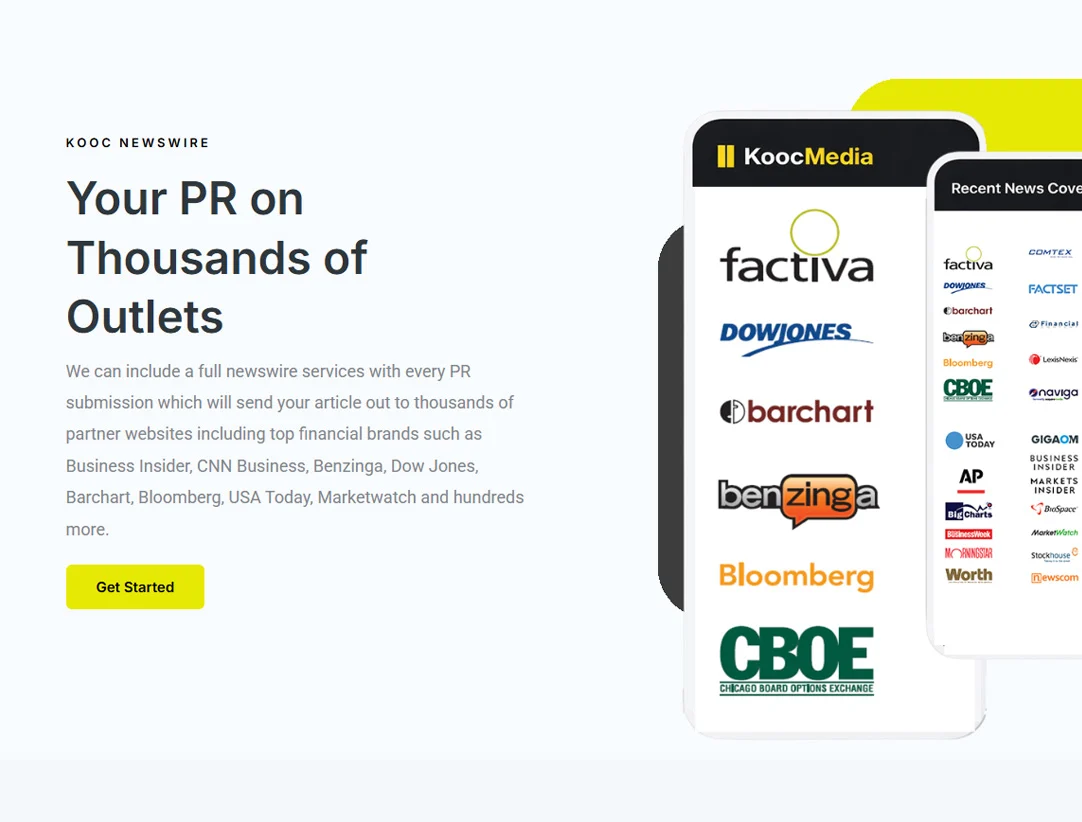
Kooc Media, a specialist PR distribution agency for the crypto, fintech, technology and iGaming industries, has announced a dedicated suite of PR solutions for DeFi protocols, NFT platforms and Web3 projects. The service provides guaranteed media placements across established blockchain, finance and technology publications, giving decentralised finance, digital collectible and Web3 infrastructure projects the visibility they need to attract users, investors and developer communities.
The DeFi, NFT and Web3 sectors have grown into major segments of the broader crypto industry, but each faces distinct challenges when it comes to media coverage and public awareness. DeFi protocols compete in an increasingly crowded market of lending platforms, decentralised exchanges and yield aggregators. NFT platforms fight for attention in a space that has moved well beyond profile pictures into gaming, music, real estate and identity. Web3 projects building the infrastructure layer of the decentralised internet often struggle to communicate their value to anyone outside a narrow developer audience.
What these sectors share is a desperate need for media coverage that reaches beyond their existing communities. And what they have in common is that traditional PR has consistently failed to deliver it.
“DeFi, NFT and Web3 projects are building some of the most important technology in the crypto space,” said Michelle De Gouveia, spokesperson for Kooc Media. “But the gap between what these projects are building and how many people know about them is enormous. Closing that gap is what our PR service does.”
Three Sectors, One Visibility Problem
Despite their technical differences, DeFi protocols, NFT platforms and Web3 projects all face the same fundamental marketing challenge. The standard channels that technology companies use to reach new audiences are largely closed to them.
Google restricts advertising for many categories of crypto products. Meta applies similar limitations. App store policies create barriers for decentralised applications. Traditional tech media covers crypto sporadically and often sceptically. Mainstream business media covers it only when prices spike or crash.
Meanwhile, the audiences these projects need to reach — crypto-native users, institutional investors, developers and mainstream adopters — each consume media through different channels and respond to different messages. A DeFi protocol trying to attract liquidity providers needs to be visible on different publications than an NFT marketplace trying to attract digital artists, even though both operate within the broader crypto ecosystem.
This fragmented media landscape makes specialist PR essential. A generic approach that treats all crypto projects the same will miss the specific audiences that DeFi, NFT and Web3 projects need to reach. Kooc Media’s crypto PR services are structured to address the specific visibility challenges that each of these sectors faces.
Guaranteed Placements on Publications That Matter
Kooc Media’s PR model is built on a simple principle: clients should pay for results, not for effort. The agency owns and operates several established online news brands including Blockonomi, CoinCentral, MoneyCheck, Parameter, Beanstalk and Computing. These in-house publications have been publishing daily content for years, with strong domain authority, organic search traffic and engaged readerships across the crypto, finance and technology sectors.
When a DeFi protocol, NFT platform or Web3 project books a campaign, the specific publications that will carry the article are confirmed before the campaign begins. There is no pitching to external journalists. No waiting for editorial approval. No risk of paying a retainer and receiving nothing in return. The article is written, reviewed and published — typically the same day.
This guaranteed model solves the most persistent frustration in crypto PR. Traditional agencies charge monthly retainers and promise to pitch stories to journalists on the client’s behalf. Whether any coverage actually materialises depends on factors outside anyone’s control. Projects can spend months paying an agency and end up with nothing published. With Kooc Media, the published article is the deliverable.
For projects that need reach beyond crypto-native audiences, Kooc Media distributes press releases through major financial and business newswire networks. Depending on the package, articles can appear on mainstream outlets such as Business Insider, Bloomberg, Benzinga, MarketWatch, USA Today and Dow Jones feeds. A DeFi protocol seeking institutional liquidity, an NFT platform courting mainstream brands or a Web3 project pitching enterprise clients can all benefit from coverage that appears alongside traditional financial and business news.
Every campaign includes transparent reporting with live links to each published article.
Tailored Approaches for DeFi, NFT and Web3
While the underlying PR infrastructure is the same across all campaigns, Kooc Media tailors its approach based on the specific sector and goals of each client.
DeFi PR campaigns focus on the metrics and mechanisms that matter to the decentralised finance audience. Coverage for a lending protocol highlights interest rates, collateral options, security audit results and total value locked. Coverage for a decentralised exchange emphasises trading volume, liquidity depth, supported chains and fee structures. Coverage for a yield aggregator explains the strategies, risks and historical performance. The content speaks directly to the DeFi user who evaluates platforms based on data rather than branding.
NFT PR campaigns address a fundamentally different audience. NFT buyers, collectors, artists and gamers respond to different messages than DeFi liquidity providers. Coverage for an NFT marketplace might focus on creator tools, royalty structures, community features and notable collections. Coverage for an NFT gaming platform might highlight gameplay mechanics, earning potential, asset interoperability and partnerships with established gaming studios. The content meets the NFT audience where their interests actually lie.
Web3 PR campaigns tackle the unique challenge of explaining infrastructure-level technology to audiences that may not immediately understand why it matters. Coverage for a decentralised storage network needs to explain the practical benefits in terms that make sense to potential users and enterprise clients, not just developers. Coverage for an identity protocol needs to connect abstract concepts like self-sovereign identity to real-world use cases that readers can relate to. Kooc Media’s editorial team has experience translating complex Web3 concepts into accessible content without sacrificing technical accuracy.
“A DeFi lending protocol and an NFT art marketplace have almost nothing in common except that they both use blockchain,” said De Gouveia. “Treating them the same in a PR campaign would be a waste of money. We build each campaign around the specific project, its specific audience and the specific publications where that audience spends time.”
Content That Technical Audiences Respect
The audiences for DeFi, NFT and Web3 content are among the most technically literate in any industry. DeFi users understand smart contract architecture, liquidity pool mechanics and yield calculation models. NFT enthusiasts understand token standards, metadata storage and on-chain versus off-chain dynamics. Web3 developers evaluate projects based on documentation quality, consensus mechanisms, throughput specifications and composability.
Writing for these audiences requires genuine technical understanding. A press release about a DeFi protocol that misuses basic terminology will be dismissed immediately. An article about an NFT platform that confuses ERC-721 with ERC-1155 will damage rather than build credibility. Content about a Web3 infrastructure project that cannot explain its consensus mechanism accurately will be taken apart by the developer community within hours of publication.

Kooc Media’s managed PR creation service handles all content production in-house. The editorial team includes writers who cover DeFi protocols, NFT platforms and Web3 infrastructure as their primary beat. They understand the technology at a level that allows them to write with precision and credibility. They know the difference between an optimistic rollup and a zk-rollup. They understand how automated market makers calculate pricing. They can explain decentralised identity without resorting to empty buzzwords.
Projects provide their technical documentation, key announcements and target messaging. Kooc Media returns finished articles that the project’s own developers would be comfortable sharing. For teams that are focused on building and do not have dedicated marketing staff, this service eliminates the content bottleneck that prevents most DeFi, NFT and Web3 projects from maintaining any consistent media presence.
Search Visibility Across a Fragmented Market
DeFi, NFT and Web3 projects compete for search traffic across thousands of relevant keywords. DeFi protocols target terms like decentralised lending, yield farming, DEX trading and liquidity mining. NFT platforms target terms like NFT marketplace, digital collectibles, NFT gaming and create NFTs. Web3 projects target terms like decentralised storage, blockchain identity, Web3 infrastructure and decentralised applications.
Each article placed on one of Kooc Media’s high-authority publications creates an indexed page that can rank for these terms and their many long-tail variations. A single article provides modest search value. A sustained campaign that places articles across multiple trusted domains month after month builds a search presence that compounds over time.
After several months of consistent coverage, a DeFi protocol has articles ranking across Blockonomi, CoinCentral, MoneyCheck and potentially mainstream outlets like Benzinga and Business Insider. An NFT platform has coverage spanning crypto-native and mainstream publications that appears whenever collectors search for new marketplaces. A Web3 project has technical coverage that reaches developers through search engines rather than relying solely on developer relations and conference appearances.
This compounding search visibility is one of the most valuable long-term outcomes of consistent PR. The coverage published today continues driving discovery for years. Each new article reinforces the project’s authority for its target keywords. Over time, the cumulative effect creates an organic traffic channel that operates independently of any paid marketing spend.
About Kooc Media
Kooc Media was founded in 2017 as a specialist PR distribution agency for the crypto, fintech, technology and iGaming industries. The company operates its own network of in-house news websites and a large partner distribution network, delivering guaranteed media coverage across high-authority publications. Services include press release writing, sponsored articles, newswire distribution, homepage placements and full campaign reporting. Kooc Media serves clients across the crypto, fintech and gambling sectors.
Kooc Media’s Crypto PR packages are available now through the company’s website at https://kooc.co.uk.
Crypto World
Mike Tyson, Tether CEO, Cathie Wood are among speakers at Trump’s ‘most exclusive’ crypto conference

A group of cryptocurrency executives, investors and public figures is set to speak Saturday at a private event hosted by U.S. President Donald Trump at his Mar-a-Lago club in Palm Beach, Florida.
The event, billed as “the most exclusive conference in the world,” started with Bill Zanker, co-founder of TRUMP memecoin and was followed by legendary boxer Mike Tyson, according to the speaker lineup seen by CoinDesk.
Other high-profile speakers include stablecoin issuer Tether’s CEO Paolo Ardoino, who is expected to address the link between financial inclusion and the U.S. dollar’s global role. Ark Invest founder Cathie Wood and crypto infrastructure provider Alchemy’s CEO Nikil Viswanathan will also speak at the conference, and each will focus on the overlap between artificial intelligence and crypto, a topic that has drawn increasing attention as both sectors expand.

Anchorage Digital CEO Nathan McCauley is scheduled to join a panel on the state of crypto and equities markets, while investor Anthony Pompliano of ProCap Financial is also set to appear on stage.

The lineup also includes traditional finance investors such as Tim Draper and Grant Cardone, as well as author Tony Robbins.
The event is touted as a major cryptocurrency and finance gathering tied to Trump’s broader push to support the digital asset industry since returning to the White House in January 2025. The conference website lists Trump as the keynote speaker and says attendance is limited to the top 297 holders of the $TRUMP token, a meme coin launched in his name.
This will mark the second time such an event has been hosted by the President. That previous dinner prompted Democratic lawmakers to lodge protests and raise concerns about Trump profiting off of his own crypto token while simultaneously championing legislation to support the industry and appointing regulators to oversee crypto.
Since taking over the Oval Office, Trump has backed several crypto-related projects, including the $TRUMP and $MELANIA meme coins, which are tied closely to the public profiles of the president and first lady rather than any underlying utility. Transaction fees generated from trading the coins have produced millions of dollars in revenue for entities linked to Trump and his family.
Nevertheless, since launching around Trump’s second inauguration, the $TRUMP token has fallen about 97% from its peak. The $MELANIA coin has dropped even further, down roughly 99% after a rapid rise and decline.
Read more: It could cost you up to $6 million to grab lunch with Donald Trump
5 Car Design ‘Improvements’ You’ll Want To Test Before You Buy

“XRP Is A Scam And Is Going To Zero” – Michael Saylor

Anthropic’s new Mythos AI is exposing the hidden cracks in crypto’s foundation

Manchester United reach agreement with Casemiro over contract clause amid transfer speculation

US brings back mandatory military draft registration

Steven Gerrard disagrees with Gary Neville over ‘shock’ Chelsea and Arsenal claim | Football


-

 Business6 days ago
Powerball Result April 18, 2026: No Jackpot Winner in Powerball Draw: $75 Million Rolls Over
-

 Politics6 days ago
Zack Polanski demands ‘council homes not luxury flats for foreign investors’
-

 Fashion23 hours ago
Weekend Open Thread – Corporette.com
-
Entertainment6 days ago
NBA Analyst Charles Barkley Chimes in on Ice Spice McDonald’s Fiasco
-

 Tech7 days ago
Auto Enthusiast Scores Running Tesla Model 3 for Two Grand and Turns It Into Bare-Bones Go-Kart
-

 Politics5 days ago
Gary Stevenson delivers timely reminder to register to vote as deadline TODAY
-

 Politics3 days ago
Making troops accountable for war crimes threatens US alliance, ex-SAS colonel warns
-

 Business3 days ago
Rolls-Royce Voted UK’s Most Iconic Trade Mark as IPO Register Hits 150
-

 Politics3 days ago
Disabled people challenge government SEND proposals over segregation concerns
-
Crypto World5 days ago
Bank of Hawai’i (BOH) Q1 2026: Net Income Drops to $57.4M as Net Interest Margin Expands
-

 Politics3 days ago
Zack Polanski responds to home secretary’s taser threat
-
Politics3 days ago
Wings Over Scotland | How To Get Away With Crimes
-

 Politics3 days ago
Starmer handler McSweeney to be dragged from shadows by Foreign Affairs Committee
-
Crypto World7 days ago
Kelp DAO rsETH Bridge Hack Drains $292M as DeFi Losses Top $600M in Two Weeks
-

 Politics3 days ago
‘Iran is still a nuclear threat’
-

 Crypto World4 days ago
New York sues Coinbase, Gemini over prediction market offerings
-
 Crypto World4 days ago
Five Value Stocks with Recovery Potential in 2026: PayPal (PYPL), Nike (NKE), and More
-

 Business3 days ago
The Job Benefits Most Men Don’t Know to Negotiate
-

 Crypto World1 day ago
Michael Saylor says BTC winter is over. Market analyst disagrees, says bitcoin was in a pullback
-

 Politics6 days ago
Reform investigating candidate who ‘hates’ the NHS
You must be logged in to post a comment Login